Assange: With the Indians or With the Cowboys? / Miriam Celaya

Photo taken from the Internet
On Thursday September 26th, the conclusion of the Youth Bloggers Interactive Workshop, taught by Pedro Miguel Arce, columnist for the Mexican daily newspaper La Jornada was held from Monday the 23rd at the headquarters of the Information Center for the Press in Havana under the auspices of the José Martí International Institute of Journalism. A video-conference was held so that fleeting shooting star and, at the time, renowned Wikileaks founder Julian Assange, could have an interchange with students, journalists and Cuban bloggers, that is, nothing more nor less than with the representatives of the official press.
On Thursday September 26th, the conclusion of the Youth Bloggers Interactive Workshop, taught by Pedro Miguel Arce, columnist for the Mexican daily newspaper La Jornada was held from Monday 23th at the headquarters of Information Center for the Press in Havana under the auspices of the International Institute of Journalism José Martí. A video-conference was held so that fleeting shooting star and, at the time, renowned Wikileaks founder Julian Assange, could have an interchange with students, journalists and Cuban bloggers, that is, no less than with the representatives of the official press.
Of course, we must not forget that Julian Assange seems to be quite candid, and, not by choice two evil women — whom now Mr. Columnist for La Jornada, an expert in communication, defines as “two dubitable Swedes” — tried to involve him in a lawsuit under “false accusations,” who knows with what intentions. By the way, I don’t quite understand the use of the adjective “dubitable” in this context, but it really doesn’t sound very kind. At first I would have wished that some of the students and young Cuban bloggers gathered there had pointed out to the editorialist that that’s not how revolutionaries refer to women, but then reconsidered when I recalled the revolutionary methods used in Cuba to treat females: the Ladies in White and other women embarrassing to the regime are living testimony of this. In comparison, it could almost be said that Mr. Arce is the perfect gentleman.
In any event, Assange contributed little to the journalists’ meeting. In addition, the invitation to the Australian was made quite late, the Assange case is already more than cold, so the issue does not qualify for marketing. As for his solidarity and sympathy with the four spies for the Cuban dictatorship, it went from being a pretty gray parley for someone who once shone in the minds of Internet freedom, but at the end is an inconsequential personal position that could be dispensed with, yellow ribbon and all.
Once there were independent Cubans who were attracted by the somewhat romantic idea of standing up to the monopolies of information and, in fact, there were those who openly declared their admiration and sympathy for Assange. Not me. Personally, experience has taught me to distrust all messiahs of any color, especially those that offer the status quo as an offset to total anarchy. We know by now that under the skin of this smiling little blond, who strives to come across as sympathetic, are hidden twisting paths, very different from the transparency he claims in his preachings.
However, this star in its twilight fell sharply into the temptation to take sides when he accepted an interchange — not with an audience representing the full spectrum of Cuban digital journalism with multiplicity of voices, proposals and thoughts which could be a real show of freedom — but with a select group of individuals who had to go through the most rigorous screenings to be elected as soldiers of that monotone barricade present in said online journalism workshop, the voice of authority of the Cuban dictatorship.
What is more, although independent blogger Yoani Sánchez was mentioned in the Assange-Castro-journalism dialogue, to brand her once again as a U.S. government mercenary agent and all the usual attributes government media have showered her with, she was not able to answer many epithets and accusations because she was not invited to the event and workshop, despite being the best known exponent and founder of the independent blogosphere, creator of the Blogger Academy and the largest blogger platform in Cuba, and has even published works on the use of Word Press. Assange, the champion of free speech, the angel of truth, did not question her unusual absence or that of other bloggers and journalists from independent digital media.
But some truths, though out of context, did come out at the meeting. For example, I agree with Assange in that the Internet “for the first time offers us the most powerful tool to destroy media control and manipulation. But we face a great battle. The Internet allows each one of us to express the truth.” Don’t we know it, the bloggers and independent journalists who use the web to express our truths and break the official media blockade, which keeps us in a constant battle, not just on the web, but also in our physical lives! The government is sure to know that it doesn’t allow the expansion of internet usage at the same time it keeps many of our pages filtered, while maintaining a constant harassment against the exercise of freedom of expression, opinion and information! That explains why it is not possible that there is a Cuban Assange.
That is why it’s interesting that Assange has declared he is impressed that Cuba “has managed to withstand 50 years of embargo within a mere 90 miles away from the U.S.”, and he doesn’t know how this has been possible. The truth is that, to clarify to ‘solidarity Julian’ the issue of “the embargo” and “the heroic resistance of the people” would be quite difficult, judging by the oblique view he has on Cuban history and reality. It’s almost pitiable the (naïve?) way this guy, so shrewd and experienced in computer battles seems to have fallen victim to the media hallucinations manufactured by the Castro totalitarianism. Personally, I don’t think so, but my readers already know that I tend to be insightful with some eccentric characters…Assange is not the exception.
However, to give him the benefit of the doubt and to assume his intentions to be good, we could give him a very brief answer, telling him that what he terms “the resistance of the Cuban people” — which, in reality is the ability of the longest dictatorship in the West to cling to power — may be due, among other factors, to the solidarity of people like him.
So, thank you, Julian, but, seriously, don’t strain yourself! We have had enough without your support. At any rate, I return the favor with this post: I may be one of the few proud Cubans who paid some kind attention to your cyber-presentation as an ally of the Castro’s long media-monopoly. After all, I’m embarrassed for you. Your unfortunate fling has brought to mind a phrase from the most authentic popular jargon, which years ago was used to pass sentence to the worst of the worst faux pas: “Yo! Your thong fell off!”
Translated by Norma Whiting
30 September 2013
Restoration of a Memory / Rebeca Monzo
 The grand colossus, a distinctive symbol of the city, remained sleeping, down on its luck. For decades dust and grime covered all of its enormous, solid structure. One day it suddenly woke up; its long-awaited moment had arrived.
Construction began during the Machado administration on one of the highest points in the city — on land where the city’s first botanical gardens originally sat — based on plans drawn up by the architect Eugenio Raynieri Piedra. Three years later, at its opening on May 20, 1929, the great neo-classical building became home to the Senate and House of Representatives and later one of the capital’s most distinctive landmarks. The period from the early decades of the 20th century until the 1950s is considered its most glorious era.
After 1959 this beautiful structure was subjected to extreme and unfortunate alterations, pillages and disastrous adaptations which gradually transformed it into the forlorn spectre we see today. Bats now shelter in its beautiful colonial chambers and fecal refuse is there to be admired on the walls of the emblematic building.
Of the many well-known stories that captured the popular imagination was the theft in 1946 of the 25-carat diamond that marked Kilometer Zero of the Central Highway. It is said to have reappeared a year later in the office of then-president Ramón Grau San Martín. It was re-installed in its original location and surrounded by an eight-pointed star crafted from Italian marble of different hues.
In 1973 the diamond was replaced with a replica. It now sits in the vaults of the National Bank of Cuba. Another restoration involves a recently discovered site that was created to honor the Unknown Mambisa Warrior. It is located directly below the cupola and the feet of its great gold-plated bronze statue, which measures seventeen feet tall and symbolizes the Republic. It is believed to be the third tallest indoor statue in the world.
The city’s official historian, Eusebio Leal, has indicated that fortunately there is no evidence of structural damage to the building. But when it comes to building’s internal systems, there are in fact many problems. At this point in time restoration of the great cupola is well underway. Work has also begun on the patios and garden areas, which were designed by the famous French landscape architect Jean-Claude Nicolas Forestier, who also designed much of Havana’s Vedado neighborhood. Similarly, the two statues flanking the grand stairway — those of a man and a woman — are being cleaned and polished. These sculptures, as well as the one symbolizing the Republic, are the work of the famous Italian sculptor Ángelo Zanelli.
Soon the Hall of Lost Steps will be returned to its former glory. The final touches are being given to all its fittings, furnishings, curtains as well as to other valuable objects such as its lamps, some of which were made by Saunier Duval Frisquet in Paris, while others were gold-plated and fitted with glass at the Societé Anonime Bague. Their value is incalculable.
All the minute details of the restoration are being carried out by specialists who work for the city’s Office of the Historian as well as by freelance artists working in collaboration with the office. The latter are currently at work restoring the bronze bas-reliefs panels adorning the Capitolio’s large main doorways.
Once restoration work has been completed, the Parliament will return to its former home. In addition to its governmental role, the doors of the Capitolio will remain open to the public, who will have access to spaces such as the Hall of Lost Steps and the library, whose walls are paneled with rare hardwoods similar to those found in the Vatican library. As Dr. Eusebio Leal might well say, “this is the restoration of a memory.”
23 October 2013
Sonia Garro and Her Husband Will be Tried at the Beginning of November / Dania Virgen Garcia
HAVANA, Cuba, October 24, 2013, Dania Virgen García / www.cubanet.org.- The opposition couple Sonia Garro Alfonso and Ramón Alejandro Muñoz González , along with Eugenio Hernandez Hernandez, will be tried on Friday, November 1, at 8:30 am, in the special chamber for crimes against State Security in a closed door session. The chamber is located at Carmen and Juan Delgado, in Vibora, in the 10 de Octubre municipality.
They are asking for a sentence of 10 year sentence for Lady in White Sonia Garro, for assault, disorderly conduct and attempted murder. They are asking for 14 years for her husband, Ramón Muñoz, for public disorder and attempted murder. For Eugenio Hernandez they are asking for 11 years, all three in case 418/2013.
Both opponents have been subjected to physical and psychological torture for a year and a half. Sonia Garro in the El Gautao women’s prison, to the east of Havana, and Muñoz at Combinado del Este on the other side of the capital.
The defense will be chaired by Amelia M. Rodriguez Cala.
Dania Virgen Garcia, dania.zuzy @ gmail.com
Cubanet, 24 October 2013
Oscar Espinosa Chepe / Rafael Leon Rodriguez
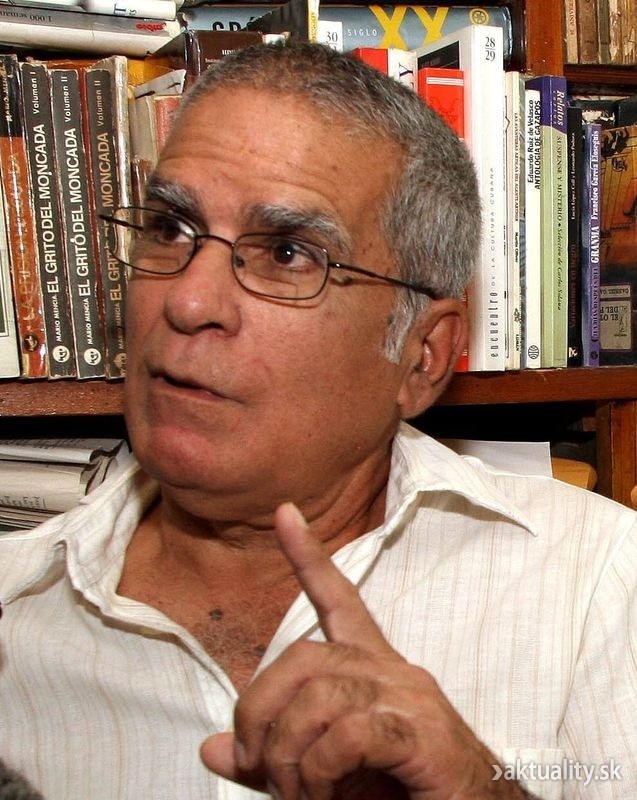
Imagen from: http://www.aktuality.sk/
I met Chepe one afternoon when we both just happened to be at the home of Elizardo Sanchez. It was the end of the decade of the ’90s of the last century, and our organization, the Cuban Democracy Project, along with others of various political stripes, were working to put together a program of economic, social and political openings, called “Common Platform.”
This, once it was completed, was sent to Cuban governemnt authorities propsing to them its implementation.
Oscar Espinosa Chepe collaborated, from his expertise as an economist, with a group called Table of Reflection of the Moderate Opposition. With measured conduct, cheerful, respectful and modest, he combined within himself the qualities that made him deserving, in the words of Cubans of old, of being called “a decent person.”
A sharp critic of the systemic blunders that afflict the so-called Cuban socialism, Chepe suffered the intolerance of the Castro regime when he was imprisoned during the Black Spring of 2003. His death, which occurred in Spain on Monday, September 23, after a long, painful and irreversible illness, deprived our nation of one of its most capable and committed sons, and for those who knew him, of a fair and cordial friend.
Rest in Peace
24 October 2013
Suicide in Cuba: A Drama Without Repercussions
From 1962-1970 the suicide rate on the island ranged between 10.5 and 12.6 per 100,000 inhabitants. Back in the 80s, the rate of self-destruction among Cubans exceeded 21 suicides per 100,000 inhabitants. According to the PanAmerican Health Organization, Cuba has the highest suicide rate in the hemisphere, with 18.1 per 100,000 population, followed by Uruguay (15.9).
Figures from the Ministry of Public Health tell us that for every 2000 patients seen in GPs’ offices, at least one commits suicide during the first two years of being seen, 10 attempt suicide each year and about 50 are suicidal.
It is rare that in a neighborhood for its residents not to know dramatic anecdotes of suicide. From an old man hanging himself naked in his home or a young woman who burns herself up, to politicians loyal to the regime who committed suicide by shooting themselves, as did Eddy Sunol, Osvaldo Dorticós and Haydee Santamaria.
In 1964, after Fidel Castro dismissed him as Minister of Labor and accused him of corruption, the commander Augusto Martinez Sanchez, then at 41, attempted suicide by shooting himself in the chest. He never returned to public life. In 2010 they allowed him to visit his eldest son in Miami. He died in Havana on February 2, 2013, at age 90.
In June, the independent attorney Veizant Boloy wrote in Cubanet that “suicide was the cause of death of at least 5 people between April and May 2013 in the municipality of Palma Soriano, Santiago de Cuba.” The most common methods were hanging, jumping into space from a high place, catching fire, poisoning with drugs and gun shots, “mainly young men who are forced, against their will, to do their military service.”
Several interviewees told Boloy that the situation the eastern provinces found themselves in after Hurricane Sandy in October 2012, which left more than 100,000 houses partially or totally destroyed, has been one of the causes of the increase in non-natural deaths in Palma Soriano.
Also in June 2013, but in Havana, independent journalist Carlos Ríos reported the suicide of the former police captain Romerico Berenguer, 69, who hanged himself at his home in Santos Suarez. The motive would have been that after four decades of service in the Interior Ministry, they retired him with 211 pesos per month ($9). Later they increased his pension to 300 pesos ($12), but it still wasn’t enough to live on. Ríos finished his Cubanet note clarifying that in less than a year, in that same block, there had been three more suicides, all men over 60.
In Mujeres (Women), a revolutionary rag, in a report published in October in Worldcrunch, Felina, one of the interviewees, told the journalist, “Last week a friend of mine burned herself up. She was a whore, like me. Her daughter said that she was watching television and suddenly her mother kissed her and went to the bathroom. She came out running, burning like a live torch. I think about suicide every day. But I don’t like to suffer. If I do it, I’m going to jump off the balcony.
After these terrifying tales, one question comes to mind: if the official media assures us that Cuba is perceived as the greatest paradise for workers, why is the suicide rate so high?
A medical specialist consulted said that the causes of suicide are varied. “From the persistent economic crisis and the lack of prospects, to mental breakdown. Many young people don’t see any prospects for their lives. They don’t persevere when they face their professional future. Personal problems overwhelm them. The same thing happens with adults and the elderly when there has been a family, political or social breakdown. There have been months when I’ve seen up to 20 cases of potential suicides.”
Suicide is a global phenomenon. It is the second cause of death after traffic accidents. Not even the experts agree on the causes that push an apparently sane person to self-destruct. In his book Anatomy of Melancholia, Robert Burton (1577-1640) defined suicide as an expression of a severe depressive state. Pierre de Boismont, in 1856, tried to be more exact: “The suicide is wretchedly unhappy or crazy.”
This concept was later refined by Sigmund Freud from the point of view of psychoanalysis, defining it as a manifestation of the soul induced by the context or of the individual. The French sociologist Emile Durkheim in his work The Suicide (1897) notes that suicides are individual phenomena essentially responding to social causes. If we give credence to these arguments, suicide is a social fact.
It’s clear that economic, personal, romantic, family or health crises often become the trigger that sets off a suicide. The Cuban government, which is proud of its achievements in social, educational or health matters, finds it difficult to digest how the frustration of a segment of the population leads them to want to end their existence.
Behind the statistics of suicides on the island are hidden stories of people who for one reason or another, consider sacrificing themselves to evade the uncertain future, broken families or a life of weakly applauding the cheats.
The regime handles the suicide statistics with tweezers. They have become a state secret.
20 October 2013
Rosa Maria Paya: One of 25 Most Powerful Women According to People en Espanol

A Sentimental Education / Regina Coyula
Phrases and slogans are often survival strategies, empty expressions that are repeated time and again until they form a part of the landscape. The University is for Revolutionaries is one of these phrases that nevertheless makes sense when we can peek inside a protest rally or act of revolutionary reaffirmation such as that held last week against the Ladies in White.
I will not dwell too much on the potential risk of filming, so evident in the distancing of Luz Escobar from what is going on all around, especially seeing and hearing the demand of some of the participants beating on the door for entrance to Laura Pollán’s house; she wasn’t disposed to let these battle-hardened classmates discover and enemy among them.
I want to call attention to the use of university students in these demonstrations of hatred. They are brought in deceitfully, taking into account the importance of gregariousness among the young, and from there, the behavior expected of them. Spontaneous or induced, the fear of showing a lack of ideological firmness which has repercussion on their professional future, to be clever and/or charismatic for different purposes.
The students are taken there during school hours, for a curricular activity that counts as attendance, they are saddled with a badly told story, and between the generalizations and omissions each constructs their own version. Later it is the individual attitude that becomes collective (again, the gregariousness).
Meanwhile, they continue singing songs, which could be annoying but not threatening, but there are always the spontaneous or the indoctrinated who want to excel, raise the stakes, and in this enervated environment these young students, those good kids who worry about the environment and look after their grandparents, I don’t say they don’t think twice, no; they don’t think to commit any vandalism in the name of THEIR revolution, a revolution that is neither theirs nor a revolution (again, emptied of content).
The Ladies in White represent a part of what in any democratic country makes up the opposition to the government. Systematically demonizing them increases their visibility, and however many videos are edited to make them appear evil, their peaceful march continues to garner sympathy.
The fairs of hatred mounted by the repressive apparatus with the government’s permission in Neptune Street, very close to the University, should be incompatible with the current campaign for economic optimization, austerity and savings. The buses and fuel to take the students from the distant universities such as CUJAE or Varona Pedagogical, snacks, a screen mounted in the middle of the street for audiovisuals, a meeting point at Trillo Park where they distribute the troops …
These fairs of hatred should also be incompatible with the current campaign to eradicate antisocial conduct and bad habits and to recover civic discipline, given the shortcomings of the New Man to perform in his environment. They serve, however, the complete opposite: recalling the shameful episodes of the eighties, Jewish children in Nazi Germany, spurring on the worst of each university compelled to scream, as you can see so well in the video.
Many will allude to individual responsibility. Every young person is already grown and knows what they are doing. And therein lies the subtlety of government repression: it doesn’t matter what you think, just scream and nothing will happen to you. The road to democracy will have as one of its biggest challenges to mend the anthropological the damage of such “subtleties.”
23 October 2013
Center for Support of the Transition Created in Havana / Rinaldo Emilio Cosano Alen

HAVANA, Cuba, October, http://www.cubanet.org — On October 5 a press conference took place in Havana announcing the formation of the Center for Support of the Transition (CAT). During a break we talked to its coordinator, attorney Roberto Díaz Vázquez.
Cubanet: What is CAT trying to achieve?
Díaz: Citizens should not only recognize they have rights but should also put them into practice. They should value those rights so they can advance economically, socially and politically. They should be in charge of the changes we so need.
Cubanet: What is its relationship with the government, assuming there is one?
Díaz: CAT has no ambition to have a dialog with the government because we are a parallel organization to the State. CAT would like the population to recognize that it has the opportunity to decide upon and put into practice the economic, social and political order that the institutional changes taking place in Cuba entail. This is especially true in the case of the private micro-businesses that could develop into medium-sized businesses in the not to too distant future and into large-scale businesses in five to ten years. This would have undeniable consequences for the decentralization of power brought on by the international and domestic financial crisis and the lack of visible support from Latin America and Europe.
The temporary solution on which the regime has settled is to develop micro-businesses, which today account for more than 40,000 so-called self-employed workers, those we prefer to call micro-entrepreneurs. Small-scale businesses could grow into large-scale business and become the economic engine of the country.
Cubanet: Does CAT have a support program for micro-businesses?
Díaz: There are various programs to help micro-businesses. One is the Guillermo Cabrera Infante Center, which sponsors courses, workshops and post-graduate conferences on economics, accounting, business management and feasibility studies. There is also the José Agustín Caballero Institute for the Education of Free Thought, which I head. It is involved in short, medium and long-term projections on the creation of micro-businesses. There is also the Independent National Workers’ Confederation of Cuba (CONIC), which brings together a sizable number of workers interested in encouraging an independent labor union movement, which is at last responding to the growing tide of change in our lives.
Cubanet: What are the functions of the institute over which you preside?
Díaz: It is having a profound impact on society. We work in close cooperation with CAT to make sure that the social gains which have been achieved are maintained through analysis, research, courses on economics and financial planning. We have a multi-disciplinary team made up of seven instructors from different branches of higher education and with different areas of expertise who can impart useful knowledge.
Cubanet: What support might the government give to micro-businesses?
Díaz: Where possible, it should be allowing investment in small-scale businesses. We can see what might be allowed if we look at production cooperatives and non-state services.
Cubanet: Officials at the Cuban Interest Section in the United States made statements in Florida several months ago that Cuba might allow investment by Cubans living overseas, including the United States. What is your opinion about this?
Díaz: It is interesting but it is not enough to overcome the restrictions of the American embargo. And the Cuban government, at least for now, will not provide this opportunity because it can’t. It knows what would happen if it were to allow foreign investment on a small scale. Politically it would mean losing control of the gold mine that state control of micro-businesses represents. Metaphorically speaking, Cuba would have a million investors in a very short period of time. It is a figure worth considering. According to the official trade union, the Workers’ Central Union of Cuba (CTC), in the event we reach a point where there are between half a million and a million independent workers, the State would have to sit down and fully analyze the situation with regard to medium-sized businesses. It would have to begin the process of political decentralization starting with economic management.
Cubanet: Are the regime’s current reforms having any influence on the official ideology?
Díaz: For years socialist philosophy has been characterized by a clear awareness of material assets. It remains bound up with the greatest corruption scandals ever uncovered in Cuba. These include the scandals involving Habanaguarex S.A., a company assigned to the Office of the Historian of Havana, and Cimex, S.A., which is under the control of the military. None of the higher-ups want to miss out on a piece of the pie. The juicy businesses are those funded with mixed capital or capital from overseas. This is what CAT is fighting for. Economic development in the United States and the advanced countries of Europe was essentially an outgrowth of small and medium-sized industry. We must adapt this experience to circumstances in today’s Cuba because our people want to find their own way forward.
Cubanet: Many thanks.
Reinaldo Emilio Cosano Alén, cosanoalen@yahoo.com
From Cubanet, Octuber 11, 2013
We Shall See / Cuban Law Association, Wilfredo Vallin Almeida
 By Wilfredo Vallín Almeida
Some Cuban citizens came to the Cuban Legal Association (AJC) seeking information and advice regarding a current issue: non-agricultural co-operatives.
It relates to forming a cooperative with a group of compatriots who–until now–have been state workers and would become members in this new modality.
But clearly they do not have the slightest idea what it is and they have not been properly informed about it.
It was nice that this morning we had a hearing in the Supreme Court related to legal recognition of the AJC as an independent NGO. The funny thing is that our counterpart there suggested, among its arguments, that all Cuban workers have at their disposal the information possible and necessary with regards to legal issues that affect that or that they would like to know about. And that was another reason that the AJC doesn’t need to exist.
Obviously there is a serious contradiction between our counterpart and the presence of these people asking us for appropriate advice.
Those living in the city, among other things, need to know
What elements are required for the existence of this form of economics, without which we can be in the presence of something, but not of a true cooperative as it is understood in the world.
What is free contracting and how does it relates to the issue of cooperatives.
What are the inalienable rights of workers in the preparation of documents that create the cooperative and its statutes.
What comparative examples do we have as background to have a broader and more accurate range of information on the matter.
What is the concept of cooperative ownership and the use, enjoyment and disposition that cooperatives have regarding it.
And some more that I will not put here so as to keep this brief.
I want to believe that what happened five years ago will not happen now, when the omnipresent and all-knowing came to tell us that WE COULD NOT EXPLAIN to our compatriots the rights which the Criminal Code of Procedure Act confers unto them.
Are these times any different from any previous ones?
We shall see.
Translated by: Shane J. Cassidy
16 October 2013
The Opposition Needs Something More Than Courage / Jorge Olivera Castillo

HAVANA, Cuba , October, www.cubanet.org – I have heard more than once that the opposition is nothing more than a symbolic “testimonial,” which will fail to turn itself into an important political reference in the short and medium term.
Most significant are not so much the affirmations, as the people (Cubans and foreigners) who make them, many of them on the condition of anonymity and without knowledge of the subject .
It has not been easy to resist in the midst of so many difficulties, and even to advance agendas that would seem impossible in such adverse circumstances. However, despite the many mistakes committed in tactics and strategies, the government repression and the unending flow of leaders into exile, the Cuban opposition has a moderate margin of credibility.
To say that all the effort of more than three decades has been a failure, would be false. Along with the many setbacks, there are successes; not many, but they represent the moral fortitude and resilience of opposition groups.
Unfortunately, many of our initiatives attest to the courage and determination of the opponents, but failed to extend our struggle to a substantial part of the people. Nor is there unity among opponents. The egotism of some and their persistence in undertaking unrealistic and overly ambitious plans continue to damage our struggle.
The regime, despite its talent for repression, is recognized in international forums. The denunciations of flagrant violations of human rights, in addition to being ignored by the mainstream press, don’t receive attention from other governments or these forums.
The hundreds of arbitrary arrests every month, the increase in the numbers of political prisoners and the beatings of peaceful opponents in the public streets, pass before the eyes of the world without consequences for the dictatorship.
To move forward we must “professionalize” our struggle. We need the humility to recognize what we are lacking and our potential. If we don’t correct our tactics we will not achieve legitimacy for our aspirations.
With our divisions, our ambitious goals, and the discourse that clamors for external corrective measures, including military intervention, the opposition grows the vicious circle.
We must maintain our fundamental principles, but readjust our strategies, and look for new, more effective, methods.

Jorge Olivera Castillo, oliverajorge75@yahoo.com
From Cubanet, 23 October 2013
Mariel: A Port For If And When They Eliminate the Embargo / Arnaldo Ramos Lauzurique and Martha Beatriz Roque Cabello
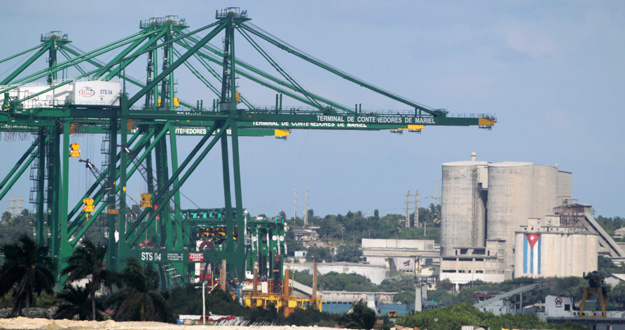 Havana, Cuba, October, www.cubanet.org – This coming November 1st the legislation published in the Official Gazette regarding the Mariel Special Development Zone will go into effect. As usual with the regime, the Council of State and of Ministers, and the Ministers of Science, Technology and the Environment, or Finance and Prices, of Interior and Labor, and of Social Security will also issue their corresponding regulations. A more than 30-page binder of regulations, very difficult to assimilate, even by the writers themselves.
But what it does make clear is that Cubans living on the island have no right to invest, they can only serve as workers.
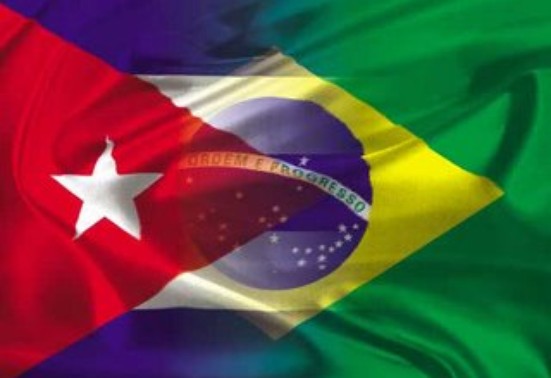
There are some features which are obvious and which ensure that the Zone is not intended for now, but for the future; there appears to be something like a hope for an understanding with the Americans, because it could be a base for ships to enter the United States of America, coming from Panama Canal.
However, it does not address how they are going to attract a massive infusion of capital, technology and the transfer of goods to the nearest principal market, the U.S., without having resolved the embargo.
 Will it benefit ordinary Cubans?
The Zone covers 180 square miles and could be determined only by persons having a knowledge of cartography, on a map, that in order to show the site details a footprint consisting of points, which in turn are coordinates. The municipality of Mariel is only 150 square miles, ranking 139th in the country in size, and the local population that would benefit would be very few, since the whole of the province Artemisa has just over half a million people.
 Perhaps the reason for choosing this Zone was to reduce the impact on the population of such a large area of foreign businesses, although thinking that no immediate development is expected.
The payment for a workforce will be agreed upon between the designated Cuban entity and the concessionaire in Cuban pesos (CUP), considering jobs of similar complexity in the demographic area of the foreign user, salaries paid to workers in Cuba and the expenses incurred by the employer in management to guarantee the supply of a qualified workforce, which involves recruitment, selection and training among other aspects.
Separating Cuban workers from the money they earn is guaranteed, when it’s stated that wages paid will start from a minimum, equivalent to the average wage at the end of the previous year in Havana province, at the time negotiations occur. It is clear in the legislation that neither the workers nor the unions will participate in these negotiations, as there isn’t the slightest attempt to address the working class and its representatives.
The Zone is subordinated directly to the Council of Ministers, giving them wide autonomy, and making no specific reference to its command structure. Presumably, it’s principal leaders are already designated, because the chief is equivalent to a minister, with great power; but nothing has been disclosed.
We can get an idea of the decision-making power of the Chief of the Office, at the national level, in the fact that he has the power to summon the bodies of the Central Administration of the State and of the governing bodies of each of the activities that take place in the Zone; and relations with the Provincial Assembly of Artemis and local governments are not subordinate, implying that these governing bodies lose almost its jurisdiction in the Zone.
Although we will have to wait to find out the extent all these changes will have on that Zone, it is clear that within it the the long road from socialism to capitalism is circumvented, which as we know well is not built.
Arnaldo Ramos Lauzurique and Martha Beatriz Roque Cabello
From Cubanet, 22 October 2013
Activist Lilvio Fernandez Luis Released from Custody / From Cubanet

The activist Lilvio Fernández Luis was released this afternoon, according to what well-informed sources in Havana told this newspaper.
He had remained in custody since yesterday, without there being an arrest warrant.
The police came to his home with a search order. They seized various electronic equipment (laptops, cameras and USB flash drivers). They imposed a 2,000 Cuban peso (~$85 US) fine on Lilvio, coordinator of the Juventud Activa Cuba Unida (Active Cuban Youth United), for “illegal possession of equipment,” according to what we could learn.
The other activists at the young people’s meeting, who had also been detained, were also released. The activists are reorganizing to carry out the event.
From Cubanet
23 October 2013
For the Mariel Boatlift Refugees of Fort Indiantown Gap / Rolando Pulido
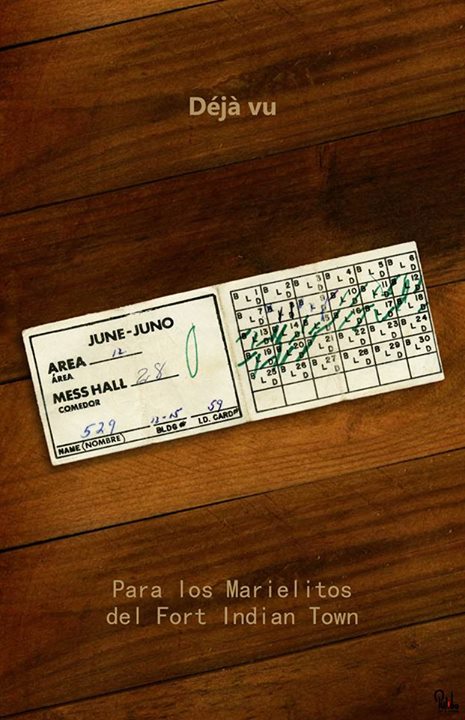
A starting point… and another…
The Pittance That Cubans Earn / Osmar Laffita Rojas
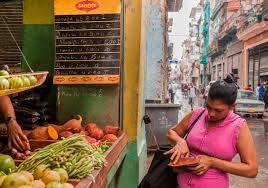 HAVANA, Cuba, October, www.cubanet.org – After five years of the presidency of General Raul Castro, the country remains trapped by severe economic problems. Instead of improving, the economy is worsening.
The Cuban economy isn’t even treading water. It’s enough to look at the low salaries of the workers, which in the period of 2008-2012, according to the National Office of Statistics and Information (ONEI), nationally averaged 17.70 dollars per worker.
The unions, directed by the government’s Cuban Workers Union (CTC), limit themselves to suggesting that salaries will increase when productivity increases.
To that we add the dual currency system, in force for twenty years.
The disastrous results in the first half of this year have led to the decapitalization of a great part of the system of production and basic services. From the monetary and financial point of view there are no real conditions to proceed with the elimination of the Cuban Convertible Peso (CUC), leaving the Cuban peso as the only currency, and much less for it to circulate with parity to the U.S. dollar.
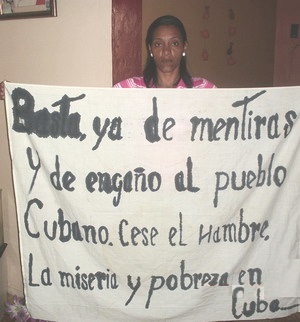
Let’s look at how wages behaved (in dollars) by province and sector in 2012.
According to the National Office of Statistics and Information, of the 15 provinces plus the special municipality of Isla de la Juventud, those reporting higher average monthly wages per worker were Ciego de Avila ($ 20.60), Matanzas ($19.32), Cienfuegos ($19.00), Sancti Spiritus ($18.92) and Pinar del Rio ($18.84).
Those who reported the lowest monthly wages were Isla de la Juventud ($18.04), Guantanamo ($17.36) and Santiago de Cuba ($17.32).
The sectors with higher wages paid in 2012 were construction ($23.20), Mining and Quarrying ($22.64), Electricity, Gas and Water ($20.80) and Agriculture and Fisheries ($20.52).
The poorest paid sectors were Services Companies ($17.28), Community Services ($17.00) and Trade, Food and Hotels ($15.04).
Such miserable salaries, that aren’t even enough to eat badly for two weeks, are the cause of the black market and corruption.
The salaries are even lower in Santiago de Cuba and Guantanamo. In both provinces in the last five years there have been no new sources of employment, young people, on reaching working age, decide — at whatever cost — to emigrate to Havana, although they have to pass through a thousand and one nights.
Young people work miracles to get a place as a shopkeeper, a worker in a snack bar or restaurant or to achieve the golden dream of a being staff in a tourist hotel. The dollars they “find” (generally no less than $200 a month), not infrequently with shady under the table deals, allow them standards of living that are horrifyingly different from what a doctor or any other professional earns.
The monetary union that the government says it is going to carry out will change nothing about the miserable salaries Cubans earn.
Osmar Laffita Rojas ramsetgandhi@yahoo.com
Cubanet, 22 October 2013