The Torture of the Retired / Lourdes Gomez

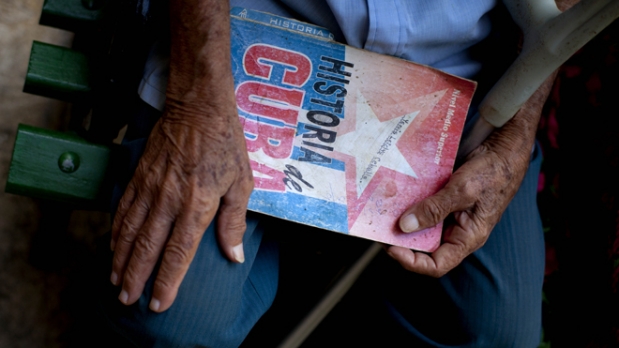
An old man with a Cuban history book.

According to the Center for Population and Development Studies of the National Bureau of Statistics of Cuba by 2025 some 26.1% of the population be 60 years and older, which makes us a country with one of the highest indices of aging in Latin America. Being retired in Cuba today means belonging to a population group distinguished not only by its lack of productivity, but also for its lack of economic resources. The “Revolution” prides itself on having bettered the quality of life for Cubans, especially in the area of health. Today we can satisfy ourselves that life expectancy is comparable to that of developed countries (75 years on average), praiseworthy if this quality is maintained in all aspects of the lives of older adults.

Today, if the retired want to supplement their income that have no other option than to turn to family members for help or to turn to “self-employment.” It’s become common to see old people in whatever neighborhood, seated or walking around, selling cigarettes at retail, peanuts, or whatever other scarce product allows them to get some money every day to be able to deal with prices that rise while salaries remain stagnant.

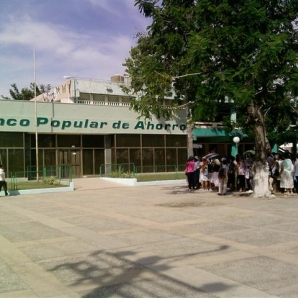
Retired people waiting in front of the bank to collect their pensions (LG-DDC)

In Santiago de Cuba its an ordinary occurrence to see, twice a month, the degrading spectacle of banks overcrowded with old people, standing in line from the night before, filling the sidewalks and parks around the banking institutions for several hours and at times even days, waiting to collect. They are men and women who have dedicated forty years or more to working for the Government that today repays them with the torture of a miserable pension.

The retirees are divided into two large groups: those who collect up to 200 pesos ($8.30 US) and those who collect more, the first at the end of the month and the second at the beginning. In fact, the banks have taken measures with respect to this: the days designated for collection of pensions have that as a priority and others are not served.

For Maria Elena, 76, retired hairdresser, the pension collection day has become the most important day in her life for the last ten years.

“In the two or three days  my pension lasts I feed my taste, I can buy a nice bite of ham and cheese, I can buy meat, and arrange some other things. But for me the most important is the food, even if it’s bad,” she said from the front of the collection line at the People’s Savings Bank.

Maria Elena belongs to the more than 2 million Cubans over 60 who receive a pension that’s less than the average wage. Many of the were imbued with the Revolutionary spirit at the start of the Revolution, they cling to the ration book and their faith that the government will protect them. They don’t understand that the announced economic changes point to a veiled market society that they’ve been isolated from.

Hilda, 81, retired from the municipal sector, said, “I live thanks to the support of my children who give me products to sell on the black market at a profit. It’s not easy for us because we also have health limitations and the chances for some other work don’t exist, much less now that they’re laying off young people.”

The challenge of old age

To address the problems of aging is a challenge for the government. In Santiago de Cuba with a population of close to half a million people, there are two nursing homes over capacity, and two “grandparents’ houses,” dedicated to their care while their children are at work. Obviously, these centers are inadequate before the growing demand.

Options have been created that provide food assistance to destitute elderly in various workers’ canteens in businesses near their neighborhoods, and they have even called on the private sector. They are early attempts of a reality that they still don’t know how to take.

Pedro Angel, a retired construction worker 86 and disabled, says he wants to go to a nursing home but can’t do so for lack of places. He has to hope that those who are there will die, “I spend the day alone at home until my daughter comes, I’m missing a leg, I get two free lunches a week at a private Italian restaurant, and with one leg I can’t take care of myself so I hope they give me a place before I die.”

Palliatives don’t solve problems. The situation also affects the working sector, as they are the children who in most cases assume the care of their parents and have to employ a person for that job or leave work themselves, because assistance costs an average of 300 to 500 pesos a month (~$12-$21)and is unattainable on the average salary.

The solutions are not in sight. Amid the “economic restructuring,” addressing the problems of the elderly is not a priority. But something must be done, as the situation will worsen. According to an article in Granma about the new Social Security Act, in 2025 the population over 60 years will surpass three million people.

Lourdes Gómez | Santiago de Cuba

From Diario de Cuba, 2 December 2013

Montreal Denounces Violation of Freedom of Expression and Shows Solidarity with Angel Santiesteban

Once again, the dictator Raul Castro and his minions had to watch, irritated and helpless, as the more they try to silence Angel Santiesteban-Prats, unjustly imprisoning him, the civilized and free world works to restore his voice and his “freedom.”

This time, at the hands of Gaétane Dufour, historian and writer, the event “Books Like Air” visited Montreal, Canada. This was a tribute to Angel along with other writers also persecuted and imprisoned for speaking freely, in other countries governed by regimes that, like that of the Castros, violate rights and freedoms with the same audacity and cruelty: Cameroon, China, Tunisia, Saudi Arabia, Tibet, Azerbaijan, Thailand, Vietnam and Qatar.

There were ten of Quebec writers in solidarity with ten writers imprisoned or persecuted in their countries and they expressed their solidarity during the 14th edition of the event “Books “Like Air,” held at the Montreal Book Fair from 20 to 25 November 2013.

Amnesty International, International PEN Quebec and the Quebec Writers Union (UNEQ) joined their voices to denounce these abuses and to commemorate the International Day of imprisoned writers held annually on November 15.

The ten imprisoned writers honored and the ten Canadian writers representing them were:

Marie-Célie Agnant with Dieudonné Enoh Meyomesse (CAMEROON)

Germaine Beaulieu with Li Bifeng (CHINA)

Jean-Paul Daoust with Jabeur Mejri (TUNISIA)

Jean-Pierre Davidts with Raif Badawi (SAUDI ARABIA)

Gaétane Dufour with Angel Santiesteban-Prats (CUBA)

Karoline Georges with Dolma Kyab (TIBET)

Pierre Ouellet with Akram Aylisli (AZERBAIJAN) Invité d’honneur du Salon du livre de Montréal et porte-parole de Livres comme l’Air

André Roy with Somyot Prueksakasemsuk (THAILAND)

Neil Smith with Vo Minh Tri and Tran Vu Anh Binh (VIETNAM)

Kim Thuy with Mohammed Al Ajami (QATAR)

From left to write and top to bottom: Akram Aylisli, Dolma Kyab, Dieudonné Enoh Meyomesse, Jabeur Mejri, Li Bifeng, Mohammed Al Ajami, Raif Badawi, Somyot Prueksakasemsuk, Tran Vu Anh Binh, Angel Santiesteban-Prats y Vo Minh Tri.

Gaétane Dufour dedicated to Ángel Santiesteban-Prats a copy of her book LA MODERNITE DEVIENT PATRIMOINE:

The Editor

5 December 2013

Dining Rooms for the Elderly Are Pathetic / Gladys Linares

Havana, Cuba, November, www.cubanet.org – The Cuban Constitution, in Article 48 says: “The State protects through social assistance the elderly without resources and any other person unfit for work who lacks family members in a condition to lend them help.” In Law 105 of Social Security and Regulation 283 the requisites are established for fulfilling the mentioned article.

But in spite of the government propaganda about the important resources that it invests in social assistance, for old people it is very difficult to achieve this protection because of the series of obstacles that are imposed on them.

Tomasa is one of these old people.  She says she never worked for the government: she used to sew for the street and now arthritis prohibits her from doing so.  She made efforts to get the aid, but as she has a son, they refused it for her.

“I live alone,” she says, “because although my son is listed in the Address Register and in the ration book (I do not want him to lose the little room when I die); he is married, has two children and lives with the woman. His salary is not enough for them.  What conditions does he have to help me?  And in spite of that, he gives me money to pay for the refrigerator and to get my quota on the ration book.”

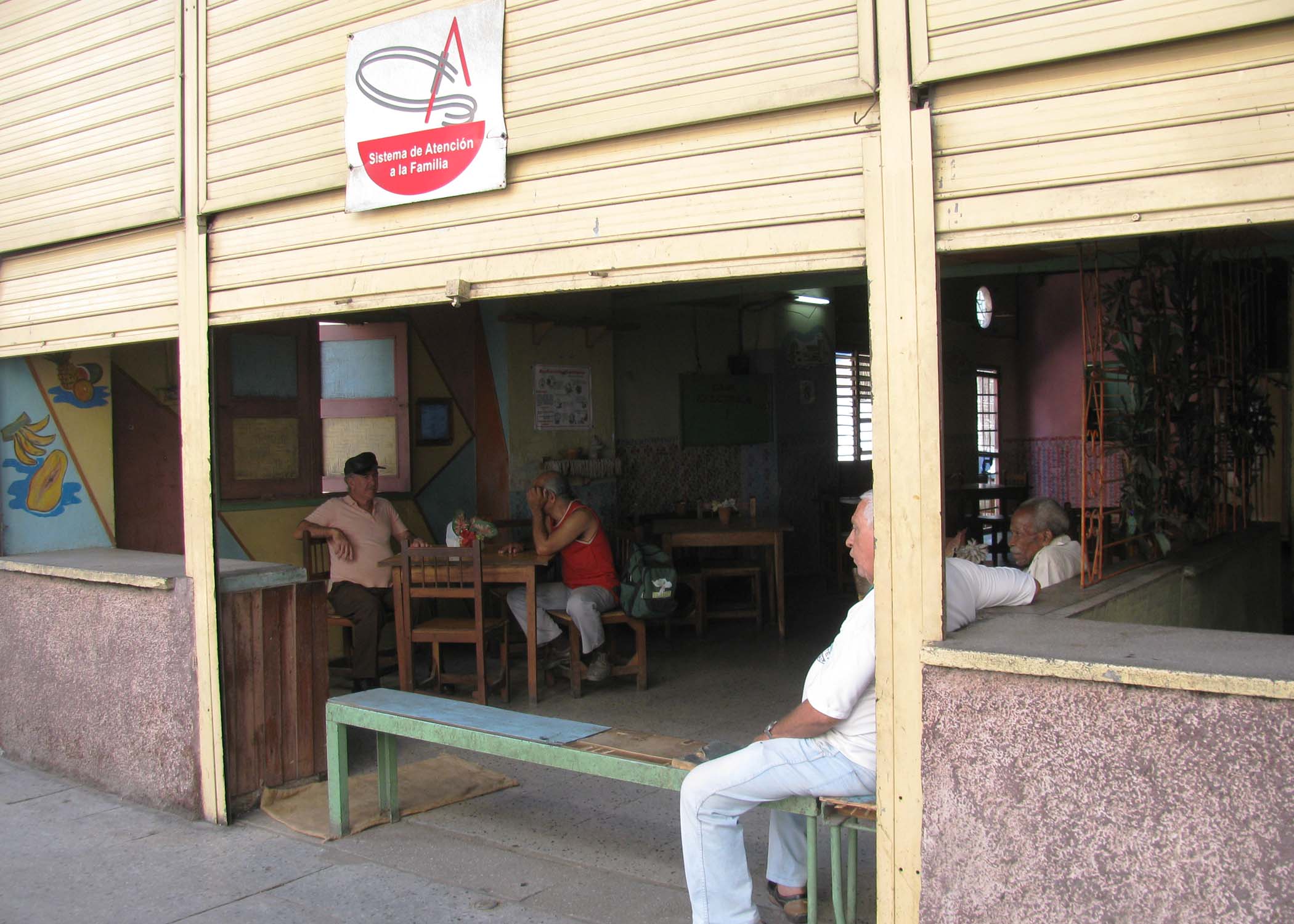
In Cuba there are 2,045,000 old people, who represent 18.3% of the population according to figures from the most recent census carried out in 2012 and published in the newspaper Granma on November 8, 2013.  As a strategy to confront the aging population, 17 years ago the System of Attention to the Family (SAF) was created, consisting of dining rooms to sell cheap food to the elderly who receive a pension of 200 Cuban pesos or less (around $8 US).

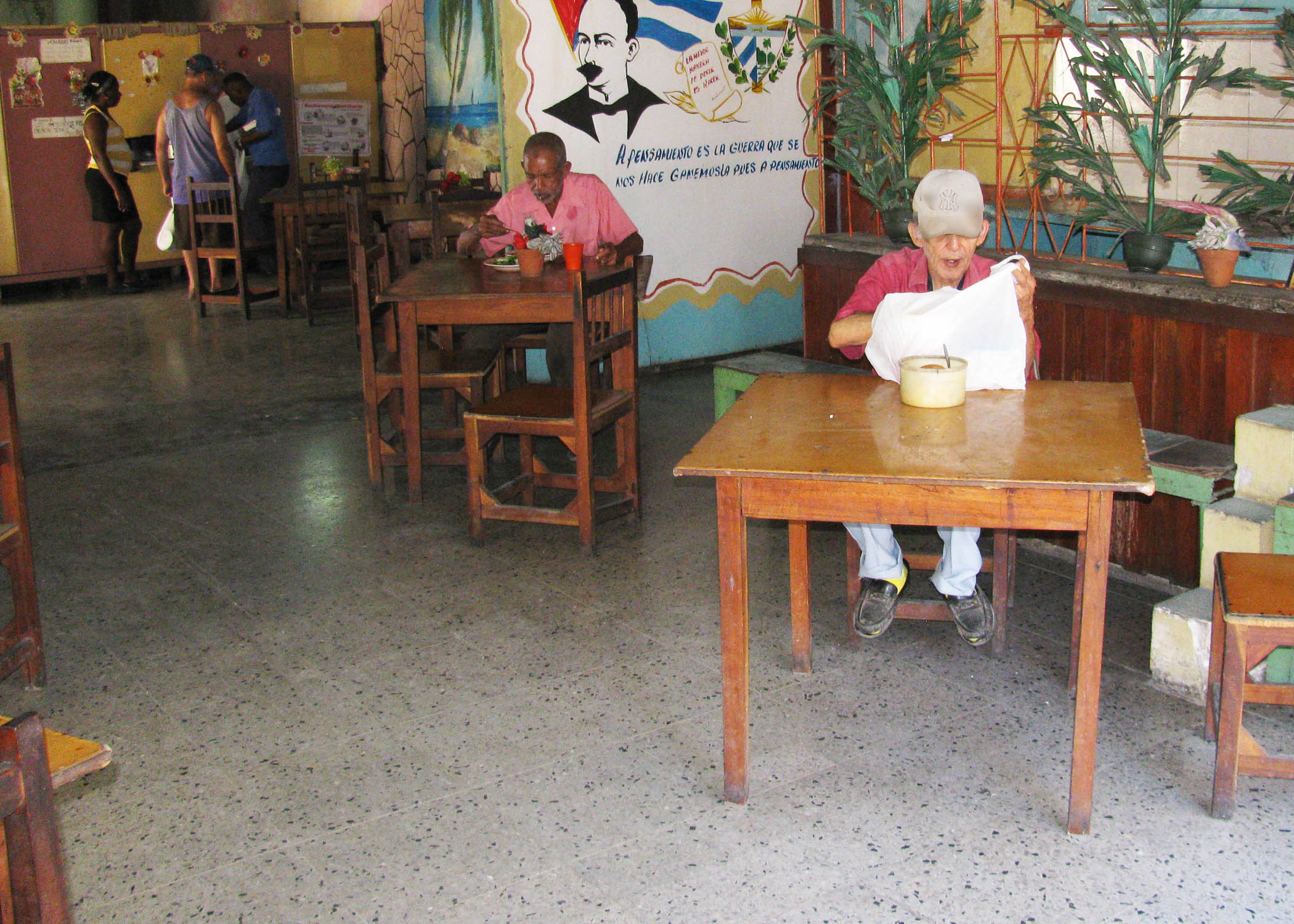
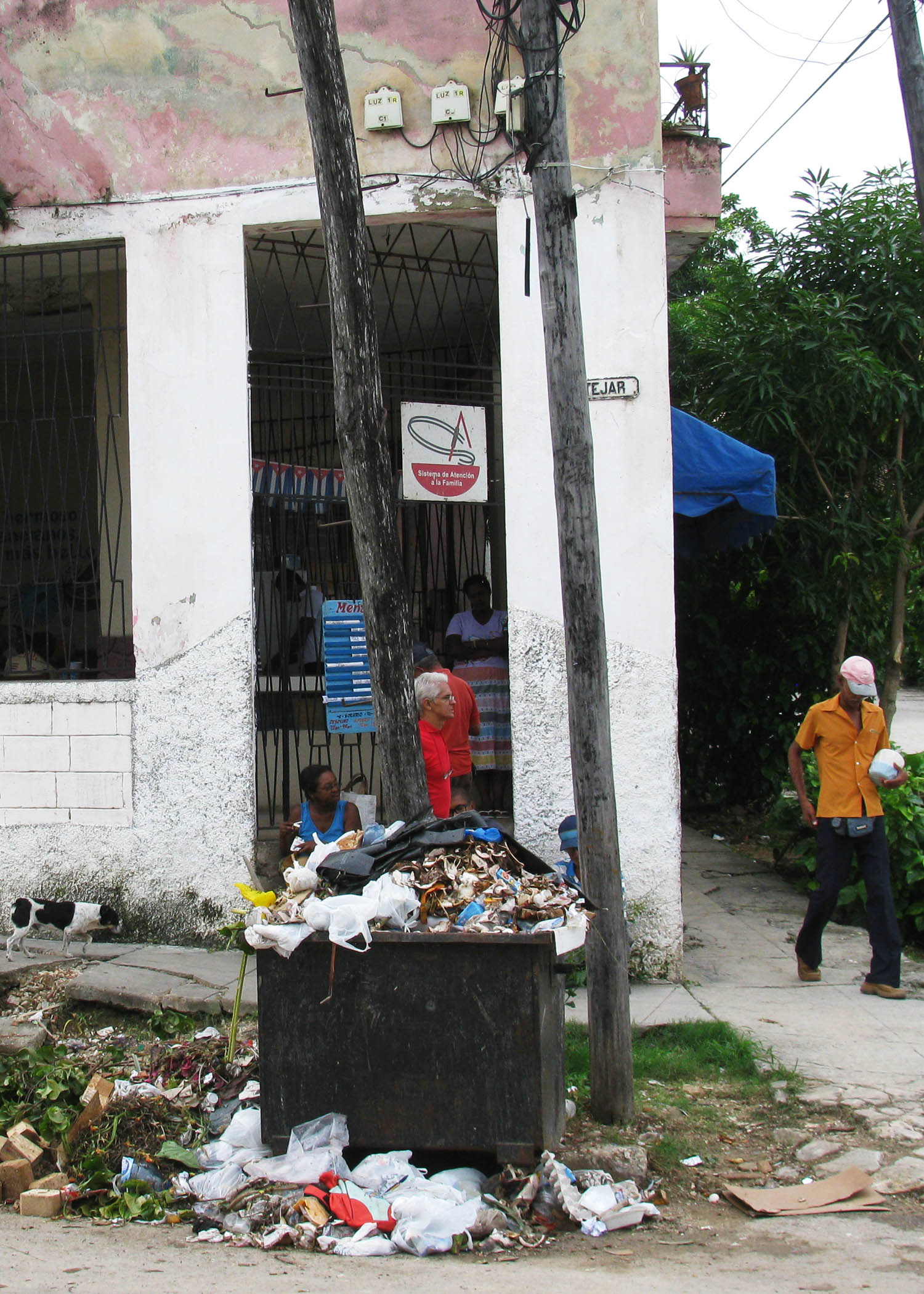
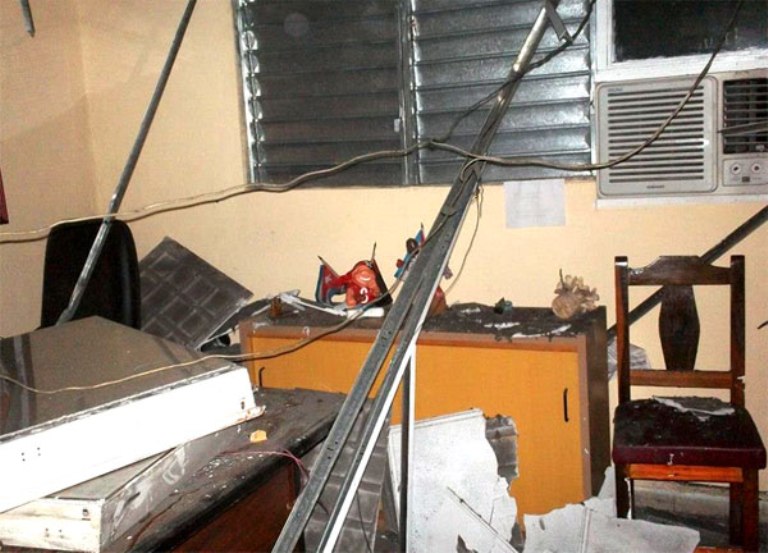
In all these years, the SAFs have not increased. Very few exist in each township. Some have closed because of the danger of collapse, and in almost all the rest the building conditions are bad. The kitchens are improvised and the lack of sanitation is alarming.

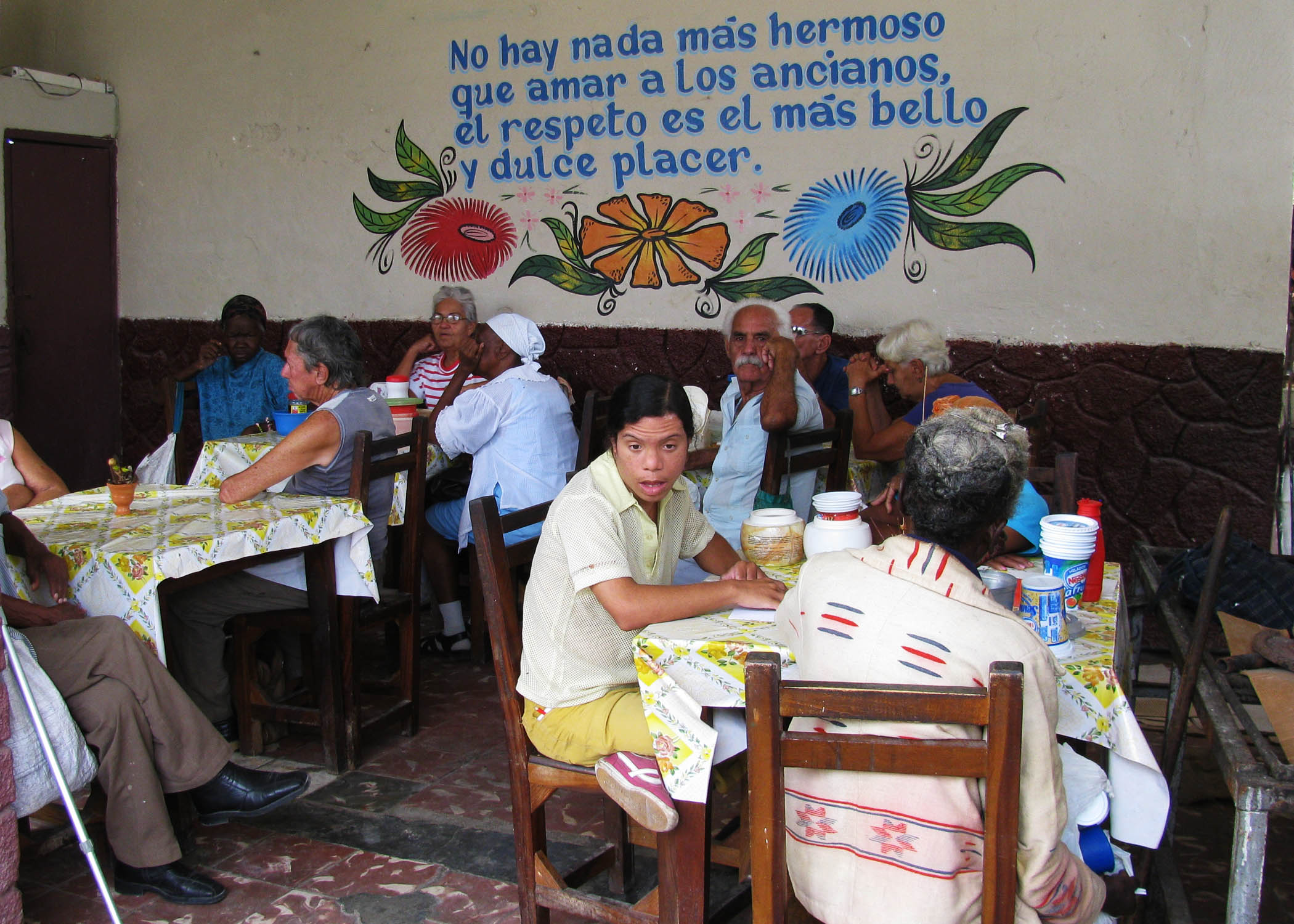
It is depressing to pass through one of these places and see the elderly standing in line while they wait to be served in their containers the badly prepared food that they then improve in their homes.

But still knowing all these difficulties, the elderly fight to be enrolled.  Rebeca is one of these. She used to receive help from her sister abroad, but the sister died, and Rebeca is not economically solvent.  She complains that the requirements for social assistance are many.

In the year 2010 with the policy of suppressing freebies, many old people who used to receive social assistance were excluded. Linet is 73 years old. She used to live with an older sister who had a son with mental retardation. On her death, the young man was awarded her pension. Linet, who had worked almost always as a domestic, then sought social assistance, and they awarded it to her.

Nevertheless, in 2010, her assistance was withdrawn. As much as she has written to all the authorities, they have not restored it to her because a pensioner lives in her house — the nephew — who supposedly is obliged to support her.

The part about the relatives “who have conditions” having to help the elderly without resources, is supremely debatable, if one takes into account that in Cuba they are quite few (if there are any) the people who are self-sufficient on their salaries alone. The responsibility for apportioning a decent existence through social assistance falls to the State.

Gladys Linares

Cubanet, December 2, 2013.

Translated by mlk

Animal feed, then… more feed / Yoani Sanchez

Photo: Luz Escobar

It’s five in the morning and they are beginning to pile a few pieces of port on the stand. They’ve made the long and rugged journey from a private farm to get to this market in the city. They will only have meat to sell until mid-morning, because the demand exceeds what the sellers can offer. A good part of the domestic economy will be determined by this product. Its rising price affects the cost of a steak sandwich that a bricklayer might eat at his work site, or that of the chicharrones that a mother puts on the table for her children’s lunch. So many things revolve around those extra pounds of fat, bone and fibers, that any shortage or lack affects the everyday fabric of survival.

However, behind the chops and sausages is a product as important as it is difficult to get: the feed for the pigs. The weakest link in the agricultural chain is “food for the pigs,” a real headache for many Cuban peasants. The State remains the leading manufacturer of this product, in part because the private sector doesn’t have the raw materials or the technical capacity to obtain it.

After decades pf accumulated complaints and of underweight animals, Cuba still has not managed to achieve stable high quality nutrition for farm animals. Traveling through the fertile plains that make up the western and central areas of the county, one is surprised by the great amount of uncultivated land. It could be planted with grains and vegetables that would help to increase the mass of the country’s swine. For now, these extensive land abound in weeds.

The State entities sell pigs after they are weaned, and also part of the feed they consume, to the producers. The farmers incur a debt that they will repay with the animals themselves after they are slaughtered, leaving some profit for themselves. Explained in this way, it seems fair. However, the whole process is full of irregularities, diversion of resources and corruption. The functionaries of the agricultural sphere sometimes falsify the weights, artificially increasing what they deliver to the farmers and reducing what they receive from them. In addition, the distribution of the feed is not completed, or simply never occurs.

To be able to fatten the animals, the private producer then uses products that are contraindicated for the health of the consumers. Excessive doses of antibiotics, food scraps collected from garbage dumps in the large cities, and even the offal and remains of the pigs themselves. In some cases so-called “fishmeal” will be the only thing the pigs ingest in their brief lives, giving the meat a now characteristic flavor in many Cuban dishes.

When a pound of pork is slaughtered, in most cases it’s because feed is scarce. A close relationship that alters the domestic economy and quality of life for so many Cubans. It starts with a sack of feed that doesn’t arrive on time to the farm trough, but ends with a woman who leaves the market with an empty sack.

8 December 2013

Danger, collapse! / Alberto Mendez Castello

PUERTO PADRE, Cuba, November, www.cubanet.org — The latest collapse in this city, that of the carpenter’s shop El Nivel, and the next that presumably will occur, that of the Plaza Hotel, make the residents of Puerto Padre ask themselves:  How long will this town destroy itself without the government doing anything to stop it?

Of the five hotels that used to be, only two are still in service, Villa Azul and Campana.  Comodoro and Plaza remain closed, falling to pieces, and of Colon there remains only a foundation.

The Sierra, one of the best restaurants that was, remains scrapped, as Hurricane Ike left it in the early morning of September 8, 2008.  And The Vaquerito, a cafeteria that used to offer various dishes at affordable prices to people of low income, also had to close its doors given its calamitous state.

In the same city center, the shoe store has already come tumbling down, and the principal repair of the Hospital Docente Guillermo Dominguez, today in the worst state of sanitary health, fails to materialize.

“As of today we cannot say that we have the resources to undertake these projects,” said the president of the Municipal Assembly of Popular Power, Miguel Jorge, interviewed by local television last week.

Mr. Jorge’s claim is a fallacy: Puerto Padre does generate financial resources capable of achieving its restoration, but they are not going to wind up in the municipal chests but at other lofty bodies of Power.

Nothing serves better than this example: in the same city center where the mentioned collapses have occurred, and where others will occur for lack of undertaking urgent repairs, seven “hard currency collection stores” (TRDs) — as these State stores are called — are operating.  In one of those, for certain the smallest, they have daily sales in excess of three thousand five hundred convertible pesos.

This small TRD alone annually collects more than a million and a quarter convertible pesos, with only the work of three employees.  And the profits of a TRD are well-known: “With what I sell in a day, they can pay me my salary for a year with money left over,” an employee told me on condition that I not reveal his name to the press.

Thousands of Puerto Padre residents live abroad, mainly in the United States, and except for stingy people forgetful of their origins, they all send help to their family members, in many cases old people, who, without the remittances from their relatives, would remain malnourished if not dead if they relied on food rations.

Food, clothes, shoes, domestic appliances and construction materials are sold at prices much higher than the realistic sales figures, producing earnings which, if only a part of them were spent on the municipality, today Puerto Padre would not present, in most places now, this image of a bombed city.

In addition to having the Antonio Guiteras headquarters, the major sugar producer in Cuba, Puerto Padre counts on another privileged “industry”: that of the remittances.

But while their absent children send heavy sums from abroad in convertible currency, a great part of which is going to wind up in the cash registers of the TRDs, the city collapses, without the authorities doing anything to stop it.

Remember this a crime against humanity.  The historical legacy of people is not only destroyed by action, with bombs, but also by omission, on the part of those who have the responsibility of preserving it for new generations, and yet they remain with arms crossed, while the cities collapse.

Notices warning “Danger, collapse!” are not rare in this city.  Hopefully those posters soon will have no place in Puerto Padre, and the Plaza Hotel will not end up in ruins as did our emblematic Hotel Colon.

Hopefully. We children of this town work for that, those of us who remain here, and those who left, and no one, through whatever powers they may possess because of their cannons and tanks of war, is entitled to divert the channel of our sweat to add gold braid to their uniforms.

Translated by mlk

27 November 2013

Chimeras, Transitions and Stages / Yoani Sanchez

Screen Shot 2013-12-07 at 11.16.07 PMThe article that I published in Issue 19 of the journal Voices

“Every frustration is the daughter of an excess of expectations,” a friend repeated to me when the forecasts of beautiful tints that I invent every now and then fell short. The last decades of my life — like that of so many Cubans — have been a kind of unfulfilled forecasts, scenarios that never materialize, and archived hopes. A sequence of cabals, rites of divination and staring at the moon, that collide head-on with the stubborn reality. We are a people of frustrated Nostradamuses, of soothsayers who won’t win at life, of prophets who weave predictions together, without getting any of them right.

In our national history the nineties held the greatest concentration of failed prognostications. I remember imagining people in the street, the shouts of freedom, the pressures of need and social misery exploding in a peaceful revolt that would change everything. I was a teenager and we were a beardless society… we still are. So the mirage of before and after, of an event that would again split the calendar of the nation, of our going to bed one night thinking of political change and before the sun set again it would be done. Like all immature people, we believed in magicians. In those who will come with a wand or banner or dais, to resolve everything.

And then it happened. Although it didn’t seem anything like what I had imagined. We had the Maleconazo in August of 1994, but what brought people to the streets wasn’t an attempt to transform the country from within, but rather to bypass the insularity and escape to another place. There was no flag waving, no shouts of “Viva Free Cuba!” Rather doors were torn off to make rafts with a long delayed goodbye on our north coast. My wise friend repeated it… “I told you, you’re disappointed because you always expect too much.”

Two decades have passed, our society never matured but some stubborn gray hairs started to appear on my head. I now know that between desire and events most of the time there is a divorce, an uncomprehending widow. I became pragmatic, but not cynical. Everything I learned about reality — paraphrasing a good poet — was not everything there was in reality. When I woke up thinking “this system already died,” then its capacity to be the “living dead” for fifty-four years bit me.

So now I’ve stopped believing in the solutions accompanied by smiles and hugs in the street. Hard times are coming. The transition will be difficult and there won’t even be a day to celebrate it. Most likely there will be joy and singing. We have been late to everything, even change. The images of the Berlin Wall falling to pieces were only possible once. For us, and here I venture another prophecy, there will be a gray transformation, without snapshots to record it.

A day after the Castros… if after the Castros there is a day.

One day we will look back and realize that the Castro regime fell or simply ceased to exist, taking with it the best years of my mother, my best years, the best years of my son. But perhaps it’s just as well, not having another January first, no photos of Greek-profiled gentlemen with pigeons perched on their shoulders. Perhaps a change that goes through the waters of apathy is better than another carnivorous revolution that devours us all.

Afterwards, afterwards there won’t be much time for festivities. The bubble of false statistics will pop and we’ll be struck by the country we actually have. We’ll realize that the infant mortality rate isn’t what we’ve been told all these years, that we aren’t the “most cultured people in the world” and that the nation’s coffers are empty… empty… empty. We will hear a chorus of “with Raul Castro everything was better.” We will have to start to change the name of the Stockholm Syndrome and relocate it to this tropical geography.

Responsibility will come, a concept few are prepared for. Taking over our own lives and putting “Daddy State” in its rightful place, without protectionism but also without authoritarianism. Democracy is profoundly boring, so we’ll get bored. That permanent fear that we listen to, that panic that a neighbor or friend could be an informer for State Security, will no longer exist. Then we will see if we dare to say out loud what we are thinking, or if we prefer that the politicians of tomorrow can comfortably manage our silence.

The first free elections will find us arriving early at the polling stations, talking and smiling. But by the third or fourth time the turnout at the polls will be around half the population. Being a citizen is a full-time job and, as you already know, we are not used to efficient and constant work, nor to tenacity. So eventually we’ll again delegate our responsibility to some “sweet talking” populist who promises us paradise on earth and assures us that in the dilemma between “security and freedom” he will be charged with enforcing the first. We will fall into his trap, because we are an immature people, a beardless people.

The scars will take a long time to fade, but the new wounds are rapidly appearing. This combination between high level professional and low level ethics will be a bitter pill for us to swallow. It wouldn’t surprise me if we become an emporium of drug manufacturing and trafficking. This would be another of the many legacies left to us by the Castro regime: a predatory people, where the word “values” is uncomfortable… and unnecessary.

Lurching to the fiercest consumption also seems inevitable. Years of rationing, shortages and pitiful goods with outdated labels, will make people hungrily throw themselves at the market. Time will pass before we see environmental movements, natural food movements, or we are called to moderation and to not be wasteful. The appetites to have, to buy, to show off, will skyrocket and will also be a part of the sequels left to us by a system that preaches austerity while the higher ups exercise hedonism.

We will see them mutate, like chameleons swearing “I never said such thing.”  We will watch them exchange ideology for economics, their Manual of Marxism for a Guide to Business, their olive-green uniforms for suits and ties. They will speak of necessary reconciliation, of forgetting, and remind us that “we are all one people.” They will go from acts of repudiation to amnesia, from spying to continuing to spy because once an informer, always an informer.

Every person who was once critical of the government will be, for these “converts” of tomorrow, deeply uncomfortable. Because to look at them will be a reminder that they did nothing to change things, that, from cowardice and opportunism, they kept their mouths shut. So among their objectives will be to bury what was once the Cuban dissidence. They will use it and set it aside. We will hear stories of people beaten and incarcerated being told by the forgotten old men of social security; like today we see Olympic boxers begging on the street. The medals of the past will be offensive to the cynics of the future… there will be no space for heroism, because it’s uncomfortable.

The dates celebrated in the textbooks will change. Many statues will be removed and in their place they will erect some whose names we will have to learn and at whose bases we will have to leave flowers on their anniversaries. One epoch will be replaced, another will be established. With all those who will then say they were opponents and helped “to overturn the Castro regime” we could, right now, establish a civic force of millions of individuals. There will be a competition to see who is more responsible for the change and has more medals to hang on their lapels.

Bad predictions, good preparation

Tired of throwing flowers at the future and imagining its luminosity, I have come to believe that the more we paint it in dark tones the more energy we can put into changing it. The time to think about tomorrow is now because the Castro regime has died but still walks, breathes, tightens its fist. The Castro regime has died because its life cycle expired some time ago, its cycle of illusion was brief, its cycle of participation never existed. The Castro regime has died and we must begin to plan for the day after its funeral.

I look forward to reading proposals and platforms that address the dilemmas that will confront us one hour after the coffin of this so-called revolution rests under the earth. Where are the programs for that moment? Are we prepared for this gray change, without heroes or falling walls, but that will inevitably come to pass? Do we know how we are going to face the new problems that will arise, the problems that will appear on all sides which are here now, but muted and distorted?

If we prepare ourselves for the worst case scenario, it will be a sign of maturity that will help us overcome it. The civic network will play a key role in any case. Only by strengthening this civic structure can we stop ourselves from falling into the arms of the next political hypnotist or into networks of chaos and violence. We are not looking for presidents — they are already here — we are looking for citizens.

Let’s forget the river of people celebrating in the streets and the Ministry of the Interior opening its archive to find out who was and wasn’t an informant. Most likely, it won’t be like that. The enthusiasm for public demonstrations is exhausted and the most revealing documents will no longer exist, they will have burnt them or taken them. We have come late to the transition. But that doesn’t mean it will go badly for us, that we will regret taking it on.

We can, this at least we can, start from scratch in so many things. Drinking in the experiences and disasters of others; realizing that we have the chance to sow the seeds of democracy in world where so many try to straighten a trunk that was born crooked. If our change turns out badly, we will have half the planet pointing at us and asking, “Is that what they wanted for Cuba? Is that the change they yearned for?” With no apologies, we have a responsibility not only to our nation, but to the better part of humanity that believes it can still transition successfully from an authoritarian to a participative system.

Realization is the daughter of a difficult challenge

I know what my skeptical friend will say when reading this article. He will chuckle and say, “Even when you’re pessimistic you’re still a dreamer.” But he will also recognize that I am no longer that teenager who hoped to one day wake up to cries of joy in the street, to join the crowd and head to the statue of José Martí in Central Park. I know it won’t be like that. But it can be much better.

6 December 2013
Strange Coincidence of Attacks Against Regime Opponents and Independent Journalists / Michel Iroy Rodriguez Ruiz

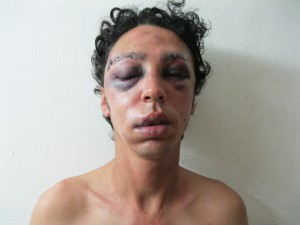
Mario José Delgado González after he was beaten

HAVANA, Cuba, Dec. 6, 2013, Michel Iroy Rodríguez Ruiz / www.cubanet.org.- In recent weeks, several independent journalists and opposition have been victims of kidnappings, assaults and theft. Many blame this on State Security.

On 7 November, between eight and eight-thirty in the evening, Mario José Delgado González, correspondent of the Social Agency of Independent Journalists ( ASPI ) and member of the gay community was the victim of a brutal beating.

González Delgado says he wanted to take a taxi back to Alamar, where he lives, he called the driver of an old American car for hire — one of the so-called almendrones — that was white or light beige and parked next to the Hotel Saratoga across the street from Fraternity Park, in Havana, and he said jokingly he was waiting to take him to Alamar.

After he got in he realized there were only two passengers aboard. Then the car changed direction and headed to Lawton, in the Diez de Octubre municipality. The car parked near the train line, where two men overpowered him and gagged him. Then they dragged him out of the car by force, and beat him with a rock in the face. The aggressors stripped him of a copy of El Nuevo Herald, his cellphone, his backpack and a USB notebook that had the names and phone numbers of his work contacts.

Mario José Delgado is convinced that this was the work of state security. “There aren’t any thieves who steal these items and much less use a car to steal something of so little value,” he said.

González Delgado is not the only one who has been attacked. According to journalist José Alberto Álvarez Bravo, in recent weeks others attacked include Jose Diaz Silva, leader of the Movement for a New Republic, regime opponent Vladimir Ortiz Suarez, blogger Joisy García Martínez and independent journalists Julio Rojas Portal and Emilio Castillo González.

“The modus operandi of the attackers was similar in all cases,” Alvarez Bravo said.

Joisy Garcia has been attacked twice in just over a month. They also beat him in the face and stole his cellphone.

Julio Rojas Portal was attacked by two unknown people after being provoked by a drunk when he was with a friend at La Taberna, a nightclub in La Lisa, on Saturday night, November 30. After the fight, when he picked his wallet up off the floor, Rojas discovered that they had stolen all the money it contained.

On November 14, Emilio Castillo González was the victim of a beating in his own home in La Conchita, Pinar del Río. Castillo recognized his attackers, Orleidys and his father Juan Valentin, both agents of State Security, who warned him he would pay with blood before leaving the country.

Apparently , the lives of opponents and independent journalists are in danger. It can’t be categorically affirmed that it is a strategy of State Security, but we can not rule out that possibility.

yeikosuri11@gmail.com

6 December 2013

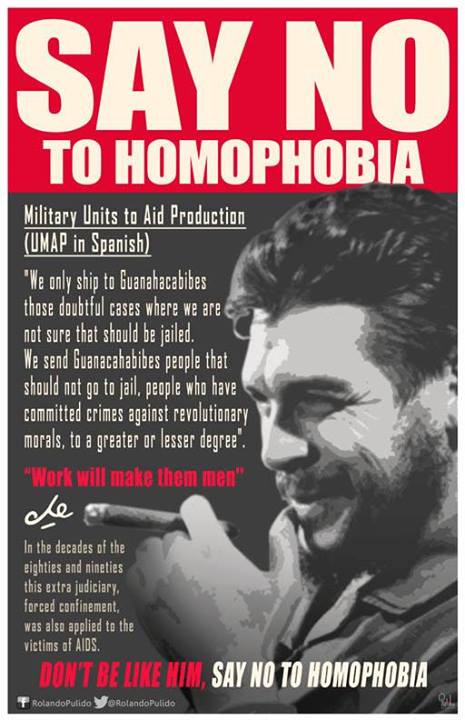
Cubans Want Changes / Rosa Maria Paya, Rolando Pulido

Ba7NHj1CUAE37l9

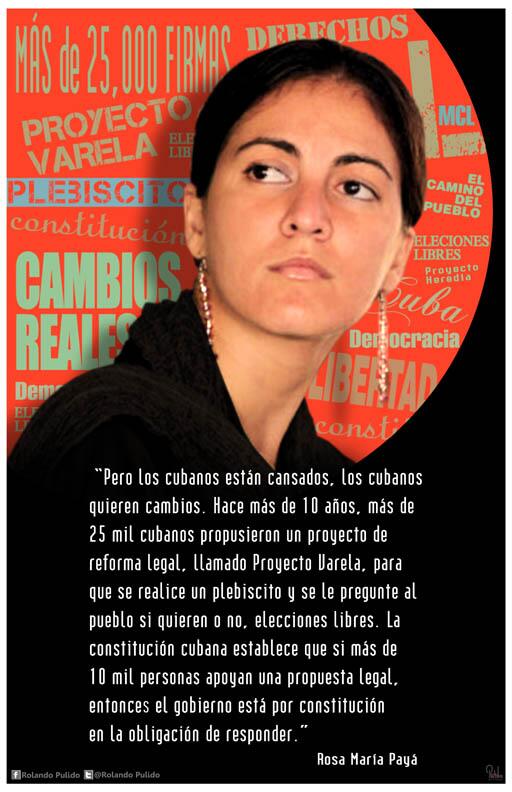
“But Cubans are tired, Cubans want changes. More than 10 years ago, more than 25,000 Cubans supported a project of legal reform, called the Varela Project, to hold a plebiscite and ask the people whether or not they wanted free elections. The Cuban Constitution establishes that if more than 10,000 people support a legal proposal, thed the government is obliged by the constitution to respond.”

Rosa María Payá

Poster by Rolando Pulido


Cuban State Security Agents Arrest Berta Soler at the Airport / Ladies in White

31-300x163This afternoon, on her return from the Netherlands, Lady in White Berta Soler was arrested in Terminal 3 of José Martí International Airport in Havana.

Her husband, Ángel Moya, a former prisoner from the Group of 75 from the 2003 Black Spring, was waiting for her at the airport along with other family members and Ladies in White, who were not able to see her, because Berta was taken out through a back door and put in a State Security car, where they kept her for close to half an hour, and then later took her to her house where she arrived around 6:00 in the evening.

Cubanet spoke with Soler via telephone, and she related the incident which started when State Security agents, dressed as Customs Agents, started to provoke her. Berta responded to the provocations with shouts of “Down with Fidel, Down with Raul,” in the presence of foreign tourists. The agents then violently dragged her from the area.

Berta told Cubanet that she wasn’t afraid to say the same things in Cuba that she says in Holland or any other place in the world.

Cubanet, 7 December 2013

Closed Doors / Fernando Damaso

Photo: Rebeca

In Havana in the 1950s stores, cinemas, theaters, clinics and hospitals had great open doors. (With the advent of air conditioning they were alternately opened and closed to maintain the pleasant indoor temperature.) This allowed citizens to easily come and go without unnecessary crowding and inconvenience. Back then, which according to the current official propaganda were “the bad old days,” doormen (who were to be found only in places like hotels, cinemas, theaters and the like) were there to welcome you and invite you to come it, or to take your ticket if it was a cinema or theater. You could go in with wallets and handbags and you did not have to check them or suffer the humiliation of having to hand them over to someone else as though you were a criminal.

Over time things changed. The grand doors were closed, leaving only small openings through which to enter and exit, which is now done under the watchful eye of a doorman, whose job it was to keep you from entering with wallets or handbags, and to check your purchases to make sure they matched your sales receipt. The smile has disappeared, replaced with a disinterested “Come back soon,” said perhaps in hope of a tip that never comes. Now that everything is so great — again, according to official propaganda — everything is behind metal bars. Even glass doors have matching metal ones, the kind that sometimes extend across the display windows, unless they have been replaced with concrete block walls or metal pull-down shutters that seal them off entirely.

This is an example of the secrecy syndrome applied to businesses and other public spaces, one in which the first concern is to hide and then later complicate access. An innovation of tropical socialism! Let us hope that new private businesses will do away with this ridiculous custom so that once again these great doorways — open to all or repeatedly opening and closing to retain all the air-conditioning — might once again return to the city.

7 December 2013

A Tour through My Neighborhood / Rebeca Monzo


My neighborhood, Nuevo Vedado, was one of the last to be developed in the 1950s. It promised to be among the most modern and beautiful, with well-designed two and three-story single-family homes and large rental properties. Along with these beautiful residences were some more modest ones as well as others which displayed an outpouring of good taste and architectural distinction, designed by architects such as Porro, Cristófol, Miguel Gutierrez and Frank Martínez to name but a few. It also boasted the magnificent Acapulco park as well as wide sidewalks, streets and avenues.

On 26th Avenue and Kohly Avenue there were some lovely planting areas filled with pink and white oleander. The beautiful Acapulco cinema, one of the most comfortable in the city, screened the latest foreign films every week.

Today, during a brief tour from the 26th and 41st to 26th and 17th in search of hair dye, which unfortunately I did not find in any of the area’s understocked stores, the images I observed left me only with worry and sadness.

6 December 2013