Food sales are declining overall, while car deliveries are holding steady, and, for the first time, small private businesses are authorized to purchase fuel
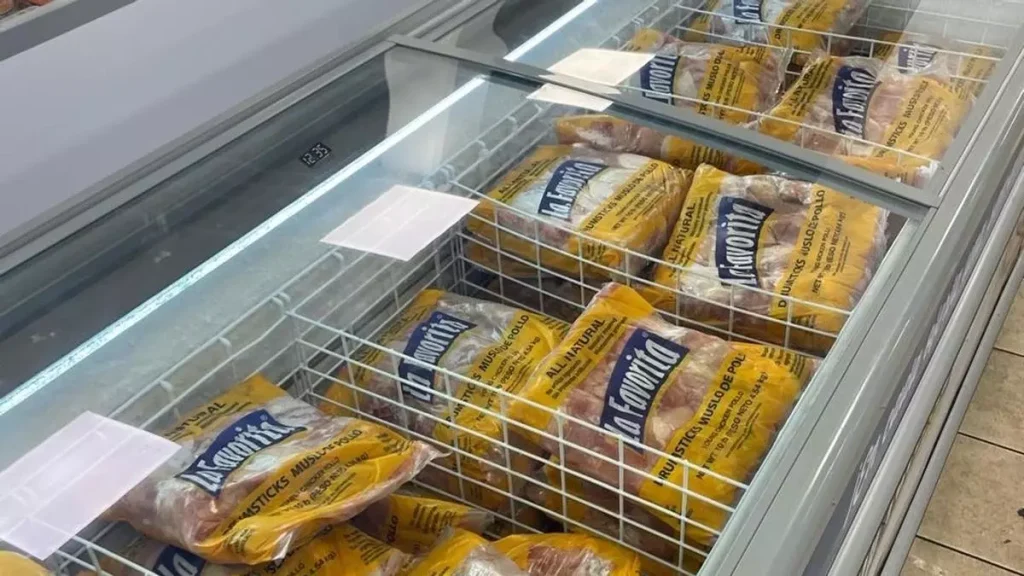
 14ymedio, Havana, April 9, 2026 – The crisis in Cuba is also being reflected in the drop, since the beginning of this year, in food imports from the United States. Chicken, the product most purchased by both the State and small private businesses since records have been kept, plummeted this February both in tonnage and value compared to the previous month.
A total of 13,121 tons were purchased for 15.87 million dollars, a drop of 19.6% in quantity and 21% in value compared to January. Moreover, compared with the month of December, when around 23,000 tons arrived, the situation is much worse. Regarding the year-on-year decline, in February 2025 Cuba imported 25,474 tons for 32.46 million, which means that the availability of the Island’s main source of animal protein has been reduced by nearly half in one year.
The data comes from the U.S. Department of Agriculture and reflects limitations in the purchasing capacity not only of the State, but also of private actors. Long blackouts, which prevent the maintenance of the cold chain, and distribution difficulties from ports, as a result of the oil restrictions imposed by the U.S. on the Island at the end of January, are worsening the already diminished purchasing options for the population.
The data comes from the U.S. Department of Agriculture and reflects limitations in the purchasing capacity not only of the State, but also of private actors
The figures are consistent with those also published this Wednesday by the U.S.-Cuba Trade and Economic Council, which revealed a 36.6% drop in imports of food and agricultural products, including frozen chicken, compared to February 2025. In the second month continue reading
In the first two months of the year, the value reached 65,831,522 dollars, also below the 93,168,816 dollars recorded in the same period of 2025, equivalent to a year-on-year contraction of 29.3%.
The report shows that frozen chicken continues to be, since 2012, the most demanded product by Cuban importers and accounts for nearly half of total food purchases in February. Next on the list is rice, with 1,926,996 dollars. It is followed by sweetened milk and cream, frozen pork, juice mixes, roasted coffee, and bone-in pork cuts.
In total, the 10 main products purchased in February amounted to 22,140,544 dollars, which represents 73.3% of the total exported by the United States to the Island under the framework authorized by exemptions to the embargo, which mainly allow the import of food, health products, and automobiles, always paid in cash and in advance.
The figures continue to show that the much-discussed food sovereignty remains far from being achieved. During the first nine months of 2025, Cuba imported 355 million dollars in agricultural products from the United States, 15% more than recorded in the same period of 2024, according to figures from that country’s Department of Agriculture. At that time, one of the products that increased the most was pork. Between January and September last year, the Island purchased 33.6 million dollars of that product from its northern neighbor, more than double the same period in 2024, when it spent 16.3 million dollars.
This month’s report also notes that, once the Trump Administration added fuels to the list of products authorized for export to private actors in Cuba, there were purchases totaling 2,573,594 dollars.
This month’s report also notes that, once the Trump Administration added fuels to the list of products authorized for export to private actors in Cuba, there were purchases totaling 2,573,594 dollars
In that regard, growth in exports of cars from the United States is also reported, with a total amount of 16,238,357 dollars in the first two months of this year. The cumulative value since 2022, when the first license to import vehicles to the Island was issued, exceeds 416 million dollars. Of this figure, more than 243 million correspond to electric and gasoline vehicles, both new and used, as well as bicycles, trucks, motorcycles, and mopeds, in addition to parts and components. The year with the highest spending on these products was 2025, closing at 149,413,031 dollars.
The spending figures presented in the report only include the price of products exported from the United States, without including transportation or other associated charges.
In February, Cuba also ranked 51st among 215 U.S. agricultural export markets. In 2004 it reached position 25 in annual data and 29 in 2008, before falling to 49 in 2024 and 2025.
Translated by Regina Anavy
______________________
COLLABORATE WITH OUR WORK: The 14ymedio team is committed to practicing serious journalism that reflects Cuba’s reality in all its depth. Thank you for joining us on this long journey. We invite you to continue supporting us by becoming a member of 14ymedio now. Together we can continue transforming journalism in Cuba.



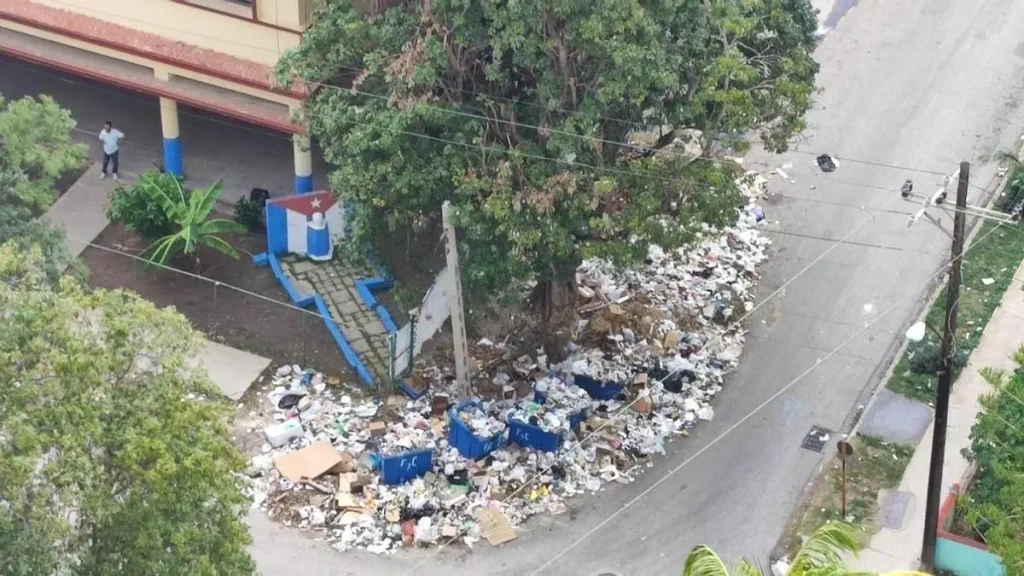
 Sackcloths hiding the statue of Martí at the corner of Factor and Conill streets in Nuevo Vedado. / 14ymedio