The phenomenon could cause effects on the island such as high temperatures, drought and the risk of a cyclone
 EFE (via 14ymedio), Havana, August 17, 2026 / Cuba’s Institute of Meteorology (Insmet) warns that this year the presence of the El Niño climate phenomenon could cause effects such as high temperatures, drought and the risk of a cyclone affecting the island.
Known as El Niño-Southern Oscillation (ENSO), it is an interaction between ocean and atmosphere that occurs when surface temperatures in the eastern and central equatorial Pacific rise above their usual values, explains an article published this Sunday on the state-run site Cubadebate.
Among the possible effects associated with El Niño, Cuban specialists foresee a summer with high temperatures and a lack of rainfall due to a combination of atmospheric and oceanic factors that could favor the occurrence of meteorological drought and water stress in the country. In addition, they point out that under El Niño conditions, which will extend until the end of 2026, cyclonic activity in the Atlantic basin usually decreases, but its influence does not eliminate the risk of a cyclone’s impact.
Insmet’s forecast anticipates a cyclone season “less active than normal” and estimates a 40% probability that Cuba will be directly affected by at least one hurricane during the current cycle, which runs until November 30.
In the case of tropical storms, the probability of a direct impact rises to 75%
Meanwhile, in the case of tropical storms, the probability of a direct impact rises to 75%.
According to the forecast, up to eleven tropical cyclones are expected to form, eight of them developing in the Atlantic Ocean basin, two in the Caribbean Sea and one in the Gulf of Mexico.
Five of the cyclones are anticipated to potentially reach hurricane strength, and two would be classified as major hurricanes (category 3 or higher on the Saffir-Simpson scale).
Among the hurricanes that have affected Cuba in recent years are Melissa (2025), Oscar and Rafael (2024) and Ian (2022).
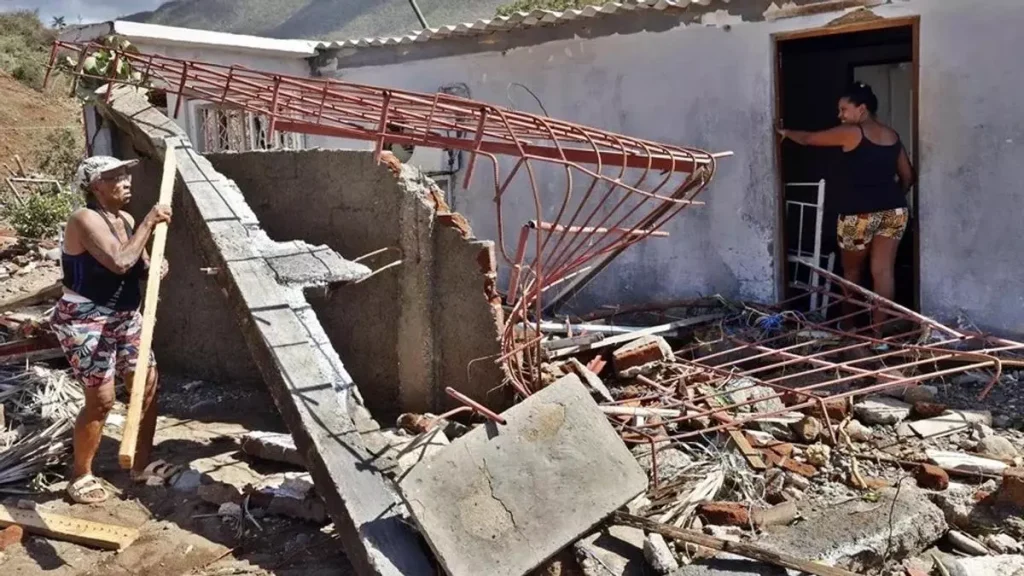
Cuba has still not fully recovered from the devastation caused by the impact of Melissa in the eastern provinces of Guantánamo, Granma, Holguín and Santiago de Cuba – with winds of 200 kilometers per hour and rainfall of up to 400 millimeters in some parts of the country.
Its impact caused no fatalities, but did cause extensive material damage to more than 116,000 homes, as well as 600 state medical facilities, more than 2,000 educational centers, some 100,000 hectares of crops, and transportation, telecommunications, electricity and water supply infrastructure.
Translated by GH
______________________
COLLABORATE WITH OUR WORK: The 14ymedio team is committed to practicing serious journalism that reflects Cuba’s reality in all its depth. Thank you for joining us on this long journey. We invite you to continue supporting us by becoming a member of 14ymedio now. Together we can continue transforming journalism in Cuba.