The passing of a writer who lived through revolutionary enthusiasm, knew the great names of the Latin American ‘boom’ up close and ended up finding in exile the freedom he had lacked on the island
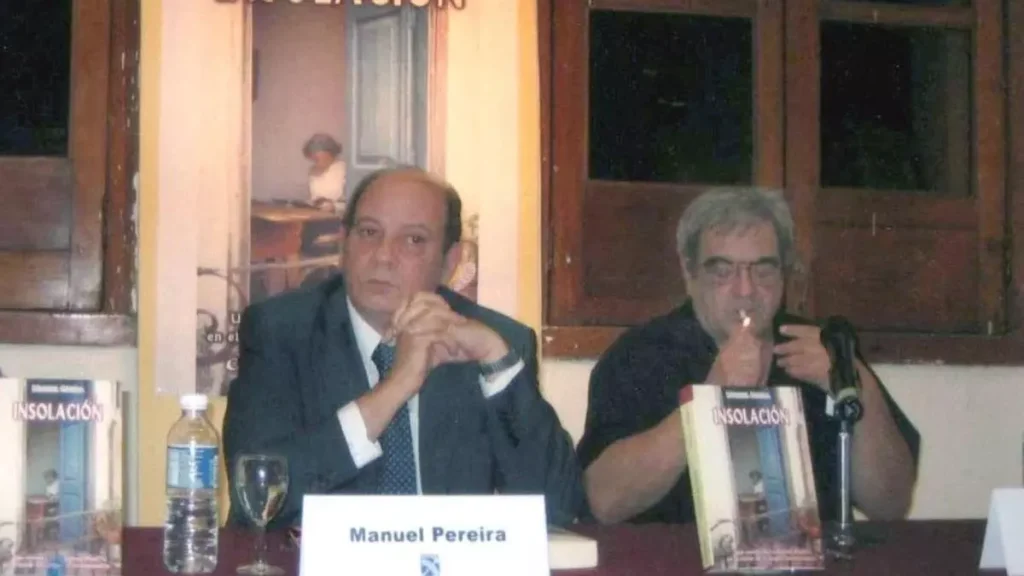
 14ymedio, Havana, October 12, 2026 / Manuel Pereira, one of the last disciples of José Lezama Lima and a singular voice in contemporary Cuban fiction, died this Saturday in Mexico, just three weeks short of his 78th birthday. His death marks the passing of a writer who lived through revolutionary enthusiasm, knew the great names of the Latin American boom up close and ended up finding in exile the freedom he had lacked on the island.
Born in Havana on October 31, 1948, the son of Galician emigrants, Pereira liked to point out that he had not simply been born in Cuba, but in Old Havana. That geography of narrow streets, old buildings and colorful characters fed much of his literary imagination. The city would stay with him even when thousands of miles separated him from its doorways and cobblestones.
He studied Fine Arts at the San Alejandro Academy, but soon found his true calling in words. He worked as a journalist and a screenwriter, published numerous feature stories in the magazine Cuba Internacional and held positions of responsibility at the magazine Cine Cubano. However, one of the defining experiences of his youth took place in the house on Trocadero Street where José Lezama Lima lived.
There he learned from the author of Paradiso a way of understanding literature as an adventure of knowledge. Pereira would retain throughout his life his devotion to that master who taught him to look beyond appearances. Years later, in his memoir El curso délfico, he would leave a testimony of an intellectual and human relationship that never faded.
Alejo Carpentier hailed him as a born novelist and Gabriel García Márquez went so far as to say it was the novel he would have liked to write about Cuba
His first novel, El comandante Veneno, written between 1972 and 1974 and finally published in 1977, made him a well-known author within Cuba. Inspired by his experiences during the literacy campaign, the work was initially rejected by a military jury that found in its pages foreign-leaning influences and passages considered pornographic.
Alejo Carpentier hailed him as a born novelist and Gabriel García Márquez went so far as to say it was the novel he would have liked to write about Cuba. That praise opened doors for a young writer who also cultivated friendship and intellectual exchange with figures such as Julio Cortázar. His book of essays La quinta nave de los locos became cult reading among young Cubans.
But Pereira’s career was marked by a painful break. During his posting as a cultural diplomat to Unesco in Paris, he watched the Soviet reforms of perestroika with hope. His disenchantment with Cuban political stagnation led him to resign from the post in 1988. Three years later he left the island for good.
Berlin, Barcelona and finally Mexico City were the stations of an exile during which he continued writing, translating and teaching literature. He published novels such as Toilette, Insolación, El beso esquimal and Un viejo viaje, as well as essays and short stories that confirmed his intellectual curiosity and his resistance to any pigeonholing.
In an interview with 14ymedio, Pereira described himself as an essayist who wrote novels. Behind that statement lay a conception of writing as constant exploration, but also the experience of a generation that had believed intensely in a political project and ended up deeply disillusioned.
Mexico, where he had lived since 2004, was his last refuge. There he taught, wrote and continued to evoke a Havana he never entirely left behind.
Translated by GH.
___________________________
COLLABORATE WITH OUR WORK: The 14ymedio team is committed to practicing serious journalism that reflects Cuba’s reality in all its depth. Thank you for joining us on this long journey. We invite you to continue supporting us by becoming a member of 14ymedio now. Together we can continue transforming journalism in Cuba.