Thieves are turning historic buildings, schools, and former factories into sources of reusable or sellable materials
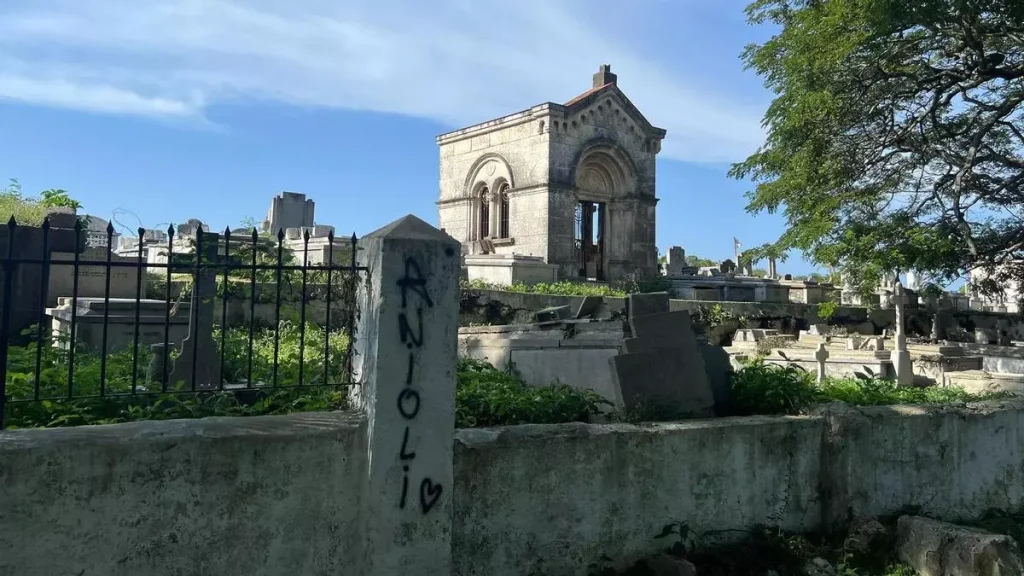
 14ymedio, Darío Hernández, Havana, August 15, 2026 – Just over a year ago, this newspaper visited the old Guanabacoa cemetery to show the neglect of one of Havana’s oldest burial grounds. At the time, weeds were devouring the pathways, the remains of religious rituals were accumulating beside the graves, and the tombs displayed the scars left by metal theft. If in 2025 the theft of the grilles appeared as yet another symptom of neglect, today the dismantling of the site has only accelerated.
On the perimeter wall, the gaps left by the iron grilles are striking. Where bars once stood, only the masonry pillars remain, evidence of the looting suffered by the site. The metal pieces are a coveted prize in a country where a kilogram of iron can translate into a few pesos to survive.
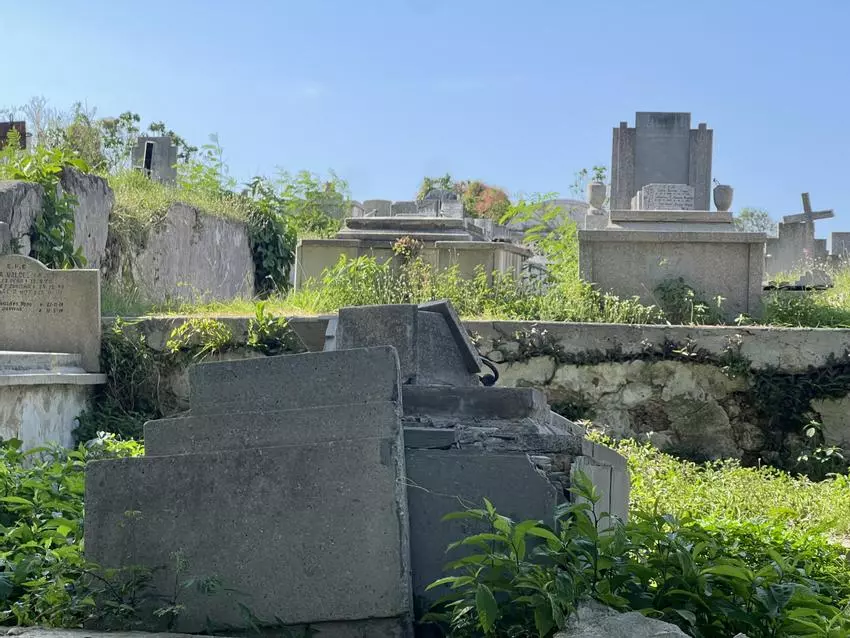
Designed in 1814 next to the Potosí Hermitage, the cemetery began receiving burials in 1821, as part of sanitary reforms that sought to move burials outside churches and their surrounding areas. Considered the oldest cemetery in Guanabacoa, a municipality that contains the largest number of cemeteries in Havana, it was declared a National Monument in 1997. It preserves mausoleums and structures of significant heritage value. Among them is the hermitage itself, built in the 17th century and considered one of the oldest buildings in the municipality.
Today, that historical legacy survives amid damaged walls and neglect that threatens to erase two centuries of memory. The graves show new signs of vandalism, with fractured tombstones, opened structures, and missing ornamental elements. Many graves remain overrun by vegetation, while the neglect is evident in every corner.
“They have started taking the grilles,” says Javier, who has several relatives buried in the cemetery and has witnessed the progressive deterioration of this historic burial ground.
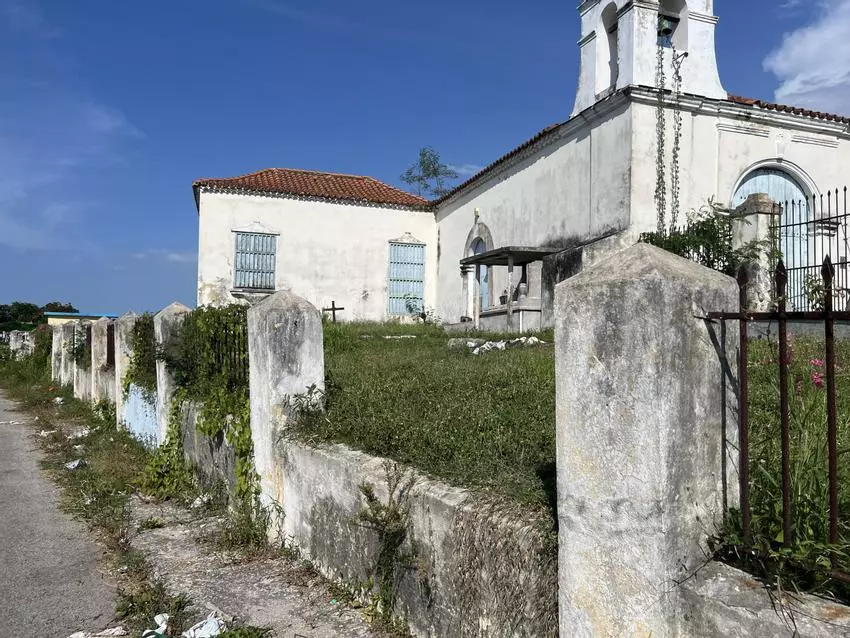
Nor have the workers escaped the wear and tear caused by the constant insecurity. “They have had to restore the church’s wood several times after thieves broke in repeatedly,” Javier explains. Each repair seems to last only a short time. Soon afterward, there are more breakages, forced entries, and attempts to steal anything of economic value.
The church, one of the cemetery’s most emblematic buildings, has also become a target for criminals. The lack of surveillance and the shortage of resources to protect the site facilitate nighttime incursions. What were once sporadic thefts of metals or funeral ornaments have evolved into the gradual dismantling of the infrastructure.
When this newspaper visited the cemetery in May 2025, several workers attributed the deterioration to a lack of personnel, low salaries, and the impossibility of maintaining the site properly. They also reported the constant theft of copper rings, metal plaques, and other elements from the graves. A year later, those problems have worsened.
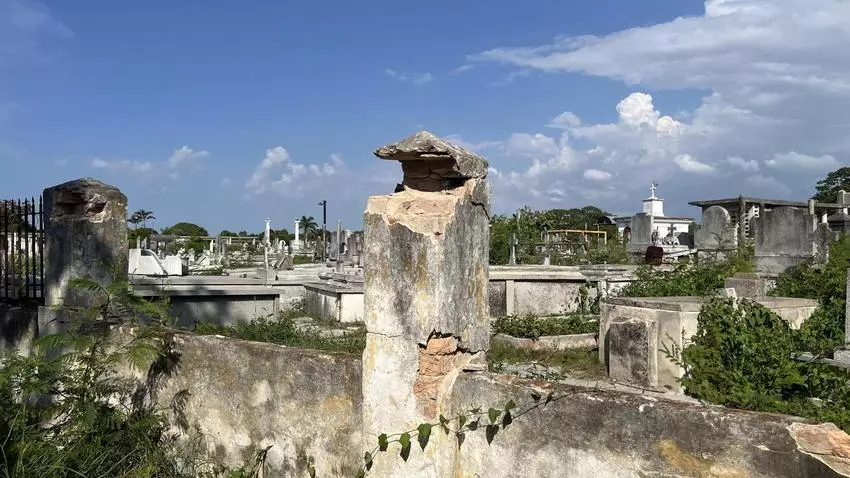
Now the looting is no longer limited to the graves. The cemetery’s own grilles are gradually disappearing, while sections of the wall have open fractures to facilitate their removal. “The cemetery is currently abandoned; apparently, no one cares anymore,” Javier laments.
The economic crisis, the informal metals market, and the absence of surveillance are turning historic buildings, schools, factories, and cemeteries into sources of reusable or sellable materials. What cannot be protected ends up being dismantled piece by piece.
At the old Guanabacoa cemetery, that process is especially painful. It is not only objects of material value that are disappearing. A place filled with memory is also deteriorating, a place where generations of families rest and where every damaged grave represents a part of local history that is being lost. For now, the decline shows no signs of stopping.
Translated by Regina Anavy
______________________
COLLABORATE WITH OUR WORK: The 14ymedio team is committed to practicing serious journalism that reflects Cuba’s reality in all its depth. Thank you for joining us on this long journey. We invite you to continue supporting us by becoming a member of 14ymedio now. Together we can continue transforming journalism in Cuba.