“Those police officers who showed up at my door didn’t look like police, they looked like criminals”
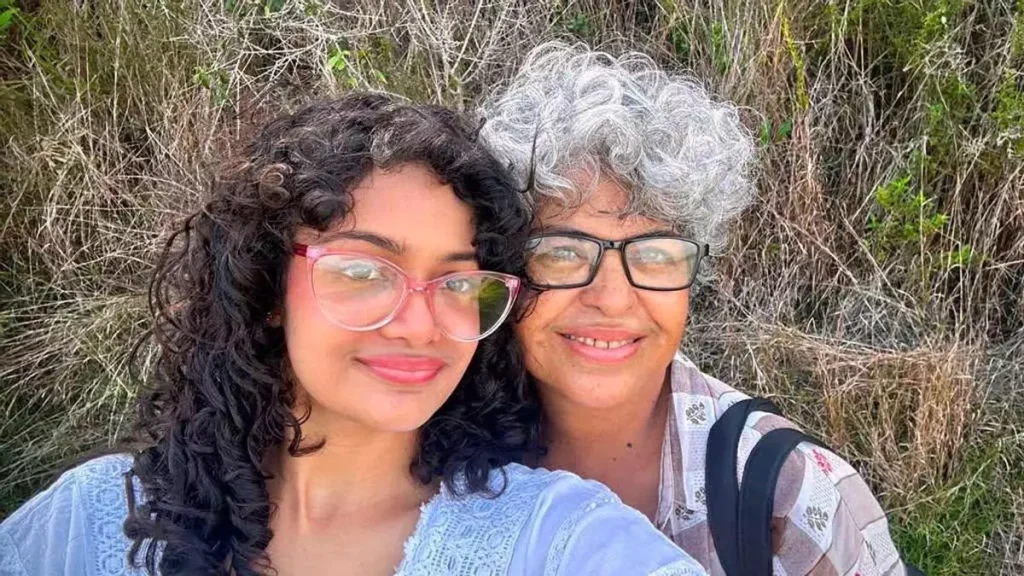
 14ymedio, Luz Escobar, Madrid, August 14, 2026 / Influencer and activist Anna Sofía Benítez, known as Anna Bensi, began by posting on social media like just another content creator, with videos of humor, music, and everyday situations from her life. But as she began using those same platforms to describe what was happening around her and to denounce the problems and abuses she experienced in Cuba, pressure from State Security also began. To each episode of surveillance, interrogation, restrictions, or internet cuts, Bensi responded by doing the same thing she had started doing on social media: reporting it publicly and denouncing it. That escalating repression, she recalls in an interview with 14ymedio, eventually reached her mother as well.
Now both will have to face a criminal proceeding for distributing a video recorded at the entrance to their home this past March. The case had been shelved in April, but was reopened months later following a complaint filed by a police officer who claims to have felt offended. In conversation with this newspaper, haltingly, through audio messages, Bensi speaks from Havana about the trial, the repression she has suffered since she began raising her voice, and her decision to keep speaking out: “They’re not going to silence me.”
Question. The case against you and your mother had been shelved in April, and now the court has confirmed you will be brought to trial. How did you receive the news?
Answer. On Monday, July 6, two people from the court came to my house to inform my mom and me that they were going to open a criminal proceeding on the same charge that had already been shelved in April. Our lawyer filed a petition to have the police officer’s complaint declared inadmissible – the officer who felt offended by the post I made in March.
Supposedly, they shelved the case in April because the police officer who considers himself offended didn’t have a lawyer to represent him, and now he does.
But since we know how things work here in Cuba, that step was practically just to buy time, because the court always follows whatever State Security orders. Obviously, they weren’t going to reject the complaint. In the end, the court decided to deny our lawyer’s petition and move forward with the process to bring us to trial.
Question. What explanation have they given you for reopening a case that had been shelved?
Answer. Supposedly, they shelved the case in April because the police officer who considers himself offended didn’t have a lawyer to represent him, and now he does. That’s the explanation they give.
But the real explanation is that this was something they had on hand and could pull out at any time. My mom and I obviously
knew that. So far, the only thing we know is that they are indeed going to bring us to trial, but there’s still no official date.
Question. The accusation is related to Article 393 of the Cuban Criminal Code, which covers “acts against personal and family privacy, a person’s own image and voice, and another person’s identity and data.” On March 10, you decided to record the officer’s arrival and publish the footage as a protective measure. If you could go back to that moment today, would you take out your phone to record it again?
Answer. Of course, I would do everything exactly the same again. I don’t regret anything at all, because I haven’t committed any crime. My statement remains the same. I posted the video on social media for my own safety and my mom’s. Honestly, when those police officers showed up at my door, they didn’t look like police officers, they looked like criminals.
I never referred to him specifically in the video, nor did I incite anyone to do anything. What other people may say about it is not my responsibility.
When we hold views that go against what the dictatorship likes, Cubans lack the favor and goodwill of the authorities. That’s why I had to expose all the repression a person suffers. Besides, the initial reason behind what those police officers brought was never even stated.
The reality is that I simply posted the video on social media to leave a record of what had happened at that moment. And if the officer felt offended by the comments and posts other people may have made, that’s no longer my problem.
I never referred to him specifically in the video, nor did I incite anyone to do anything. What other people may say about it is not my responsibility.
Question. How is your mother experiencing this whole process? Has it changed the relationship between you two, or the way you deal with pressure from the authorities?
Answer. My mom is a brave woman. She has supported me every step of the way from the very beginning. I imagine that, as a mother, she must have her worries about this whole process, but she’s also confident that we’ll come out of all this as well as possible, with God’s help. She’s standing firm, just like I am.
Question. Since March, you have both been subject to measures restricting your movement. What is your daily life like now?
Answer. The truth is, we’ve never been ones to go out much, but it’s not the same to stay home by our own choice as it is to be forced to limit ourselves by an order, especially when that order is unjust.
I haven’t been able to work anymore since State Security caused me to lose my old job.
We try not to let this whole situation affect us too much, but we’re always aware of the surveillance State Security keeps on us with every move we make.
I haven’t been able to work anymore since State Security caused me to lose my old job [at a privately run beauty salon]. Thank God, my sister who lives in the United States helps us with household expenses.
But it means living constantly with internet cuts, knowing our phones are tapped, that they listen to our calls and read our messages. Many times we’re left completely cut off.
We’re under surveillance at the house, especially around dates they don’t like, dates the dictatorship doesn’t want marked. They call the landline at the house. Sometimes they stay silent and all you can hear is breathing. Other times they identify themselves as State Security and can call at any hour.
All of this is meant to destabilize my mom and me and send a message of pressure, to let us know they’re in control.
Question. What worries you most about the trial? A possible conviction, the consequences for your freedom, or what might happen during and after the process?
Answer. Obviously we’re worried about what might come of the trial, because nothing is clear. We know that everything being done has ulterior motives. It’s an unjust process in which they’re going to look for every possible way to make it even more unjust.
What we’re really being judged for is the way we think, not the alleged crime they claim. But we don’t know what will happen that day.
What we’re really being judged for is the way we think, not the alleged crime they claim. But we don’t know what will happen that day.
Question. What do you think the Cuban regime is trying to achieve by taking this case to the courts? Do you think they want to silence you?
Answer. I started raising my voice here in Cuba since last September, and now I’m even more resolute; I’ve never once thought about staying quiet, because I haven’t done anything wrong. All I’ve done is express myself.
What’s happening is that my convictions don’t suit the Cuban dictatorship, but that’s not going to stop me. Here in Cuba we all know there’s no separation of powers. The court answers to whatever suits the dictatorship. The courts are just another arm of the dictatorship’s repressive apparatus, and I’m obviously one hundred percent certain that all of this is one more strategy to intimidate everyone who raises their voice – in this case, my mom and me.
They have a clear target, because my voice already bothers them, it makes noise for them, and they’ve made that very clear in the interrogations they’ve put me through. Since that hasn’t worked for them, they keep raising the level of repression, to see how long it takes before one gives in and they get what they want. In this case, to silence me.
Question. How important is it to you that other governments and organizations are following what’s happening to you?
Answer. I’m honestly so grateful to every media outlet that wants to give visibility to my case and my mom’s. That’s how people find out how the dictatorship operates.
It’s very important that they feel the pressure of the international press when they know what they’re committing is an injustice.
It’s very important that they feel the pressure of the international press when they know what they’re committing is an injustice. And I don’t say that just for myself, but also for all the cases of people who suffer repression in Cuba for raising their voice, and even more so for political prisoners.
Question. What would you say to a young Cuban who is thinking about starting to publicly denounce what’s happening in the country, and who sees your case now and is afraid?
Answer. Since I started this whole process, to everyone who comes up to me and says they want to raise their voice and speak their mind freely, I give them my support, but they also need to be advised.
I tell them to put their cards on the table and look at everything they could lose by staying true to their convictions. If that person is willing, then go ahead and do it.
And I also tell them to do it well, with wisdom, with strategy, and to always speak with respect. I say with strategy because we know we have to be careful. When you raise your voice in Cuba, it’s like being on a tightrope with a hundred crocodiles drooling below, waiting for the slightest slip of balance to devour you and leave nothing behind.
And another thing I always say is that, if you’re going to do it, do it without expecting anything in return.
Translated by GH.
______________________
COLLABORATE WITH OUR WORK: The 14ymedio team is committed to practicing serious journalism that reflects Cuba’s reality in all its depth. Thank you for joining us on this long journey. We invite you to continue supporting us by becoming a member of 14ymedio now. Together we can continue transforming journalism in Cuba.