
In 2021, 133,726 Migrants Passed Through the Darien Gap, One of the Most Dangerous Border Crossings

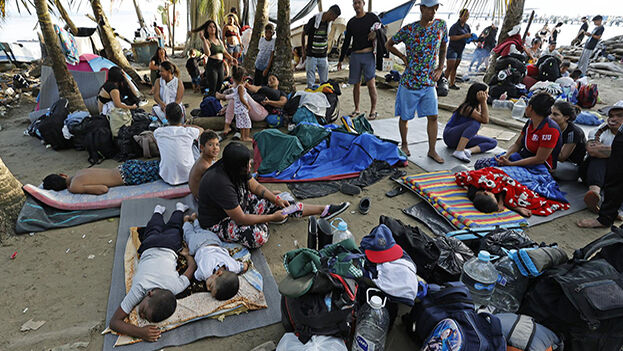
Migrants wait to board a boat to the border with Panama in Necoclí, Colombia. (EFE / Mauricio Dueñas Castañeda)

14ymedio biggerEFE (via 14ymedio), Necoclí, Colombia, 8 October 2022 — In the Colombian town of Necoclí they are already used to hundreds of people camping on their beaches every day to wait for boats that will take them to the border with Panama, on a migration to the United States that is constantly growing and threatens to “explode.”

It’s an uninterrupted flow of people from all over the world, entire families who walk together and share the desire to get a better future at any cost, even that of passing through one of the most dangerous border crossings in the world: a week-long adventure through a lush, mountainous jungle, which they say swallows people.

Last year, according to figures from the Panamanian authorities, 133,726 people crossed the Tapón del Darién, a number that had never been recorded before due to the difficulty of the journey. The numbers are constantly increasing, and in the first nine months of this year  151,572 have already passed through.

Necoclí is the first stop on the route through the Darién. This is an Antioquia town located on the east coast of the Gulf of Urabá, in the Colombian Caribbean, where, lulled by the vallenato and salsa music of the beach kiosks, migrants rest, laying on the sand while their children swim in the sea or make castles with dominoes. continue reading

“The situation is difficult. This problem is going to explode in our faces,” says a person from Capurganá, the town that receives them on the other side of the Gulf of Urabá, almost on the border with Panama and who knows the business well. He says that between 1,200 and 1,600 people pass every day, while last year, due to limitations of the Colombian Government, only 650 could pass.

Since it began to receive this constant exodus of people in transit, a phenomenon that has always existed but that skyrocketed last year, Necoclí has evolved. Migration is a business that is easy to perceive.

Now the company that manages the boats for the migrants — the same ones used by tourists who want to enjoy this paradisiacal corner of Colombia — is expanding; the company has bought three more boats.

There are more hotels and informal businesses selling food and rubber boots or exchanging dollars that flourish along the humble passage where garbage accumulates in the corners and migrants walk back and forth gathering what is necessary for the jungle crossing.

The wooden plank dock of just 200 meters now looks suspiciously at the brand new cement dock, which they built quickly, but which cannot be inaugurated because it’s too high for the boats.

Those who pass by here have also changed. While in previous years most were Haitians and Cubans, this year more than 70% are Venezuelans, some of whom get on the boats humming Pedro Navaja, by the Panamanian Rubén Blades, when they hear it in the background.

Leonardo hasn’t got tickets until Sunday, so his family, the 40 people who accompany him, will have to wait until then on the beach.

“Some say that Venezuela has improved, but it’s a big lie,” says Yasmari, one of the members of this large family. They come from Venezuela — or from other countries where they first tried their luck, such as Peru, Chile or Colombia itself — encouraged by acquaintances from the United States who tell them that things are better there.

They don’t hesitate to confess that they’re afraid of what they have in front of them, a jungle in which the risks of flooding rivers, insect bites, steep hills full of mud and torrential rains come together with robberies, rape and other dangers.

But that, they say, is better than staying where they come from. Fear doesn’t overshadow the will to achieve a future, although that means entering a reality that borders on the unreal and, above all, the inhuman.

Translated by Regina Anavy

____________

COLLABORATE WITH OUR WORKThe 14ymedio team is committed to practicing serious journalism that reflects Cuba’s reality in all its depth. Thank you for joining us on this long journey. We invite you to continue supporting us by becoming a member of 14ymedio now. Together we can continue transforming journalism in Cuba.
Thais Mailen Franco, One of the Detainees from the Obispo St. Demonstration, Arrives in the U. S. by the ‘Route of the Volcanoes’*

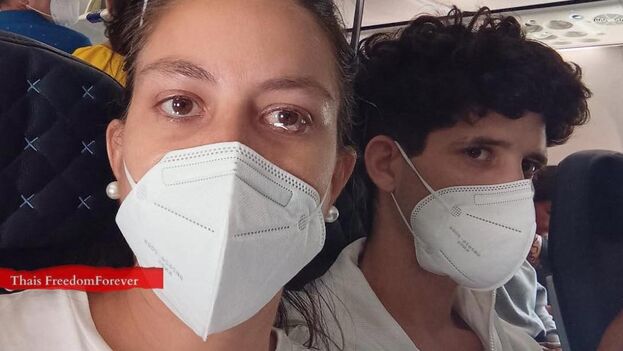
Thais Mailén Franco and her eldest son, leaving the Island by plane on August 12 (Facebook)

14ymedio bigger14ymedio, Havana, 7 October 7, 2022 — Thais Mailén Franco, one of those arrested for the demonstration on Obispo Street in Havana in April 2021, has been in U.S. territory since the early hours of Wednesday. “Crossing the California border, crossing the entire desert,” says the activist herself in a video posted on her social networks in which she shows that she is, at night, next to the fence built on the border with Mexico.

“We have gone through a lot on the crossing,” she confesses, “and we’re going to surrender to the United States Army right now,” she says before starting to cry. Franco is currently detained by the immigration authorities, according to the usual procedure in these cases.

The opponent left Cuba on August 12 with her eldest son, leaving the other two, 9 and 10 years old, in Havana. In a post on her Facebook page, next to a photo where they were both seen on a plane, she reported that her son had “been called to Compulsory Military Service” and she was threatened with “being returned to prison.”

“Painfully, the resources that we received, with a lot of sacrifice on the part of those who donated, shared, helped, weren’t enough for the two youngest children to leave as well,” she said in the same text.

A few weeks ago, on September 21, Franco herself, who kept her whereabouts secret until now, denounced that State Security had summoned her minor children for a “special services program.” “Special services of what?” the activist cried indignantly in a broadcast, where she affirmed that this “only happens in a dictatorship.”

That very day was exactly one year since she had been released without trial from El Guatao prison after five months of imprisonment for the protest on Obispo Street. Afterwards, she was sentenced to eleven months of house arrest, until July 12, 2022. continue reading

On April 30, 2021, in Old Havana, several activists tried to approach the house of the artist Luis Manuel Otero Alcántara, who was then carrying out a hunger strike, when the police prevented them from passing. At that time, they sat down to protest against what they considered a limitation of their right to free movement.

Their video, broadcast live, provoked broad solidarity with the detainees that day. Amnesty International was one of the first international organizations to ask for the immediate release of the protesters.

Together with Franco, Inti Soto, Ángel Cuza, Yuisan Cancio, Mary Karla Ares and Esteban Rodríguez were detained for months. Of them, all but two — Cuza and Cancio — are out of Cuba today.

Regarding the political prisoners of the Island, the U.S. Secretary of State, Antony Blinken, spoke harshly to the Organization of American States (OAS). “The Cuban regime continues to keep in prison hundreds of people unjustly detained in the protests of July 11, 2021, for the alleged crime of taking to the streets to peacefully ask their government to meet their basic needs and give them human rights. Some of those prisoners are minors; others were sentenced to decades in prison just for saying what they thought,” Blinken recalled.

Translator’s note: See

Translated by Regina Anavy

____________

COLLABORATE WITH OUR WORKThe 14ymedio team is committed to practicing serious journalism that reflects Cuba’s reality in all its depth. Thank you for joining us on this long journey. We invite you to continue supporting us by becoming a member of 14ymedio now. Together we can continue transforming journalism in Cuba.
Belize and Cuba Will Talk About the ‘Worrying’ Increase in Migrants From the Island

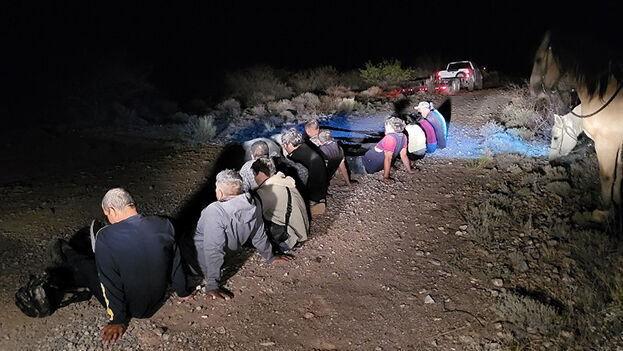
To get to the United States, Cubans also use the Guatemala and Mexico route, entering through Belize. (CBP)

14ymedio bigger14ymedio, Havana, 7 October 2022 — The Government of Cuba and Belize will hold bilateral meetings at the end of October to discuss the increase in the number of Cuban citizens arriving in the Central American country.

Eamon Courtenay, Belize Minister of Foreign Affairs, Trade and Immigration, pointed out that Cuban migrants are the “most worrying” group for the Belizean government, either because they enter in transit to the United States or to stay in the country, as published in the local newspaper Breaking Belize News.

“We’ve noted a singular increase in immigrants, illegal and irregular,” Courtenay told the local newspaper, “and the Cubans increased significantly.”

Belize, on the Caribbean coast of Central America, has become a transit destination for Cubans who leave the Island, submerged in its worst economic and social crisis in recent history. In their eagerness to reach the United States, some try to cross the sea in rustic boats in the Florida Straits, and others resort to the route from Guatemala to Mexico, entering Belize.

Courtenay said that this situation was a central issue at a recent meeting of the Immigration Department, in which “recommendations” were prepared that will be delivered in a document to the Cuban Government.

For Courtenay, the “most important challenge” is to deport Cubans to the Island, because there are no direct flights between the two countries. Some migrants were transferred on Panamanian Copa Airlines flights, but, the official said, in the last deportation exercise the migrants caused problems, and the airline warned the Government that it will no longer accept this type of passenger. continue reading

The Belizean government will seek rapprochement with the Biden Administration to receive assistance because “preventing migrants from passing through Belize also serves the interests of the United States.”

In this regard, Courtenay posted a photograph on Twitter on Thursday with U.S. Secretary of State, Antony Blinken, accompanied by this message: “It was good to catch up to discuss matters of importance for Belize and the United States. We are committed to continuing to work on issues of mutual interest.”

The migration crisis in Cuba remains unstoppable. U.S. authorities have intercepted 6,182 balseros [rafters] since October 1, 2021, the highest figure since 2016, while the Government of Mexico reports that Cuban citizens are the second largest group that requests asylum when crossing their borders.

The Mexican Refugee Aid Commission reported that 14,056 Cuban migrants have requested protection, up to the end of September 2022, only surpassed by Honduras, with 23,146.

Translated by Regina Anavy

____________

COLLABORATE WITH OUR WORKThe 14ymedio team is committed to practicing serious journalism that reflects Cuba’s reality in all its depth. Thank you for joining us on this long journey. We invite you to continue supporting us by becoming a member of 14ymedio now. Together we can continue transforming journalism in Cuba.

A Chinese Company Will Resume the Russian Project to Improve the Railroad in Cuba

Among the points of the agreement are the restoration of the railway and locomotive workshops that are in the Special Development Zone of Mariel. (14ymedio)

14ymedio bigger14ymedio, Madrid, 7 October 2022 – The first edition of the International Transport and Logistics Fair held in Cuba closed this Thursday with great joy but without much concreteness. The minister of the sector, Eduardo Rodríguez Dávila, said that almost 40 contracts and more than 100 business agreements and “intentions” for land, sea and air had been signed.

However, there is information about the one signed with a Chinese company to improve the railway, a project that was already attempted with Russia but was paralyzed by Moscow in the face of repeated non-compliance by the Cuban side.

The Union of Railways of Cuba (UFC) and Beijing Fanglian Technology signed “two letters of intent for the gradual recovery of part of the railway infrastructure,” according to the official press last Tuesday.

Among the points of the pact are the restoration of the railway and locomotive workshops that are in the Mariel Special Development Zone, and the import of parts and pieces of the equipment.

Luis Roberto Roses Hernández, general director of the UFC, said this would make it possible to acquire “the necessary parts for the maintenance of high-scale Chinese locomotives and the gradual improvement of their reliability, which guarantee a better quality service in cargo and passenger transportation.”

Beyond that agreement, which reflects an intention for now, Rodríguez Dávila believed that the event served to “renew old contacts and make new ones” in order to recover the sustainable development of transport in Cuba. continue reading

There was also time to hold the United States accountable for the poor quality of service. Carlos Alberto González González, deputy director of the Directorate of Passenger Transport, said that “the supply deficit” is due to “the insufficient technical availability of the means and the diesel fuel due to the pressures exerted from Washington.” In addition, an official note from the ministry highlights that “the complex context” — which also affects the burden — is due to the “blockade of the United States Government.”

In October 2019, Cuba experienced the prequel to the episode that just happened with China. At that time, the Russian state railway company RZD signed an agreement with the Cuban Railway Union to modernize the entire Cuban railway structure. Moscow was in charge of the funding, with a value of 2,314 million dollars destined for the modernization of the infrastructure in this case (1,000 kilometers of road, materials, technology and training), as well as a traffic control center.

At the end of 2020, the director of RZD, Sergey Pavlov, temporarily concluded the project. “Unfortunately, we have had to suspend our project of comprehensive modernization of the Cuban railway infrastructure due to economic difficulties and quarantine restrictions on the Island, but we hope to resume work after the situation has stabilized,” he said.

During that period, Russia sent locomotives to the Island, but sources in the railway sector told 14ymedio that the machines were not suitable for the reality of the country. “They are high consumers of fuel. Compared to other locomotives on the market, they demand a large amount of fuel for their operation, and it’s now known that this is a problem here, because the supply we have is not always stable,” they said.

The shutdown of the Russian railroad continues to this day. In 2020, the executive secretary of the Russian-Cuban Intergovernmental Commission on Trade, Economic, Scientific and Technical Cooperation, Oleg Kucheriáviy, warned of the massive cancellation of investments in Cuba due to Havana’s noncompliance.

The official told the Russian press that of the 60 joint projects, only ten were being carried out, and he said at a meeting of the Senate Committee on International Affairs that the last session of the intergovernmental commission, which was to be held on the Island, was canceled due to the “silence” and “stalling” of the Cuban authorities.

In addition, Yuri I. Borisov, deputy prime minister of Russia and in charge of economic relations with Cuba since 2018, said in reference to the Cuban side: “They are complicated businessmen, I’m not going to hide it, the mentality of the past is constantly weighing on them. During the negotiations, in the positions they take, it always appears that we are an outpost of the world revolution and they simply have to help us,” he said.

With the pandemic, which was especially hard for the Island in 2021, none of this has improved, and public transport is still anchored in the past without managing more than the shipment of some equipment that is clearly insufficient, such as electric buses from Japan or Belgian buses.

The only announcement with support from the authorities is the creation of the title of Transport Engineer, a new career for professionals trained in the administration of human and material resources in that sector.

“The new transport engineer will participate in the technology transfer processes, act with economic awareness taking into account the Cuban reality and master legal elements related to his professional activity,” said Juan Cogollos, president of the national career commission and full professor at the University of Cienfuegos, where the specialty will be taught.

The new studies will last four years and have subjects such as transport engineering, electricity and automation, statistics and operational research, economics and process management, and transport technology and operation.

The authorities announced that graduates will be able to work in the Ministry of Transport and its business system, the private sector and other agencies linked to the specialty at a time when young people seem more encouraged to leave the Island due to the lack of opportunities or the miserable salaries they receive after having studied for years.

Translated by Regina Anavy

____________

COLLABORATE WITH OUR WORKThe 14ymedio team is committed to practicing serious journalism that reflects Cuba’s reality in all its depth. Thank you for joining us on this long journey. We invite you to continue supporting us by becoming a member of 14ymedio now. Together we can continue transforming journalism in Cuba.
Aerovaradero Allies with Maravana US Cargo to Expedite the Shipment of Packages to Cuba

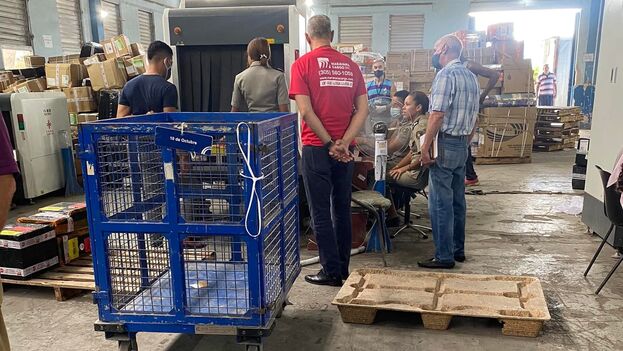
Maravana Cargo, created two years ago in Hialeah, assured that now deliveries will arrive “with the greatest security” to their recipients. (Facebook/Maravana Cargo Inc.)

14ymedio bigger14ymedio, Havana, 8 October 2022 — Cubans living in the United States will be able to send more easily non-commercial packages, such as medical supplies, to their relatives on the Island after the state company Aerovaradero S.A. and the American company Maravana Cargo signed an agreement this Friday to shorten the times in cargo transport.

The agreement was signed on the last day of the International Transport Fair, held this week in Havana, the official agency Prensa Latina reported. About 23 small and medium-sizes businesses, as well as self-employed workers and state institutions, will benefit from this alliance.

Alejandro Martínez, president of Maravana Cargo, a company created two years ago in Hialeah (Miami), assured that now maritime deliveries and flights will arrive “with the greatest security” to their recipients, who import, above all, medicines and products that they cannot find in the Cuban market.

Aerovadero assumes the “commitment and responsibility to make deliveries in the shortest possible time,” said the general director of the state company, Mayelin Gotera, for whom a “way to gain credibility” is for the recipient to receive his package without damage or adulteration. continue reading

The agreement includes the transport of goods by sea, but Gotera clarified that Aerovadero will continue to focus on the air sector, because it’s a “well-regulated” alternative for large-volume loads.

The official also announced that they work in other alliances, without specifying which ones, to expand parcel services and reduce correspondence rates “with the aim of benefiting customers in the face of the limitations and low availability of goods products in the domestic market,” said Prensa Latina.

In August 2022, a package of easing measures for the import of non-commercial goods by natural persons from the United States came into force. One of these provisions allowed doubling the weight of packages that Cubans can bring up to 20 kilograms at a cost of 200 dollars. For the same amount before, it was only possible to transport 10 kilograms.

The weight of the package for which no tariff is paid was also increased from 1.5 to 3 kilograms, in addition to reducing the customs levy charged depending on the volume of the merchandise.

Translated by Regina Anavy
____________

COLLABORATE WITH OUR WORKThe 14ymedio team is committed to practicing serious journalism that reflects Cuba’s reality in all its depth. Thank you for joining us on this long journey. We invite you to continue supporting us by becoming a member of 14ymedio now. Together we can continue transforming journalism in Cuba.
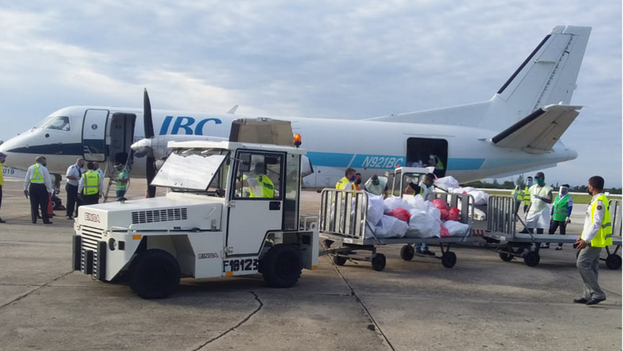
Despite the Embargo, U.S. Humanitarian Donations to Cuba are Growing

In August 2022 alone, donations from the United States exceeded $3.3 million after Hurricane Ian, which devastated the Island. (Archive/Customs of Cuba)

14ymedio bigger14ymedio, Havana, 9 October 2022 — While the Cuban regime devotes a lot of energy to make believe that the shortage of food on the Island is due to the Washington embargo, mass imports of chicken from the United States continue and, above all, the humanitarian donations of that country are growing, which in the first eight months of this year have already exceeded those of all of 2021.

According to the U.S.-Cuba Economic and Economic Council, the inputs received during the first eight months of 2022 represented more than 12.14 million dollars, a figure that exceeds by 9.6% the total received in 2021, by 11.07 million. In August alone, donations reached $3.39 million, which meant an increase from the 2.26 million received in July.

Last month, western Cuba suffered significant damage from the passage of Hurricane Ian, particularly in agriculture and economic infrastructure, in addition to a widespread blackout throughout the Island, which lasted almost a week and generated protests in various parts of the country.

The Council reported that Cuba had not only received more donations from the United States, but that imports of food and agricultural products in August 2022 grew by 6.2% compared to the same month last year.

In its report, this independent economic analysis group based in New York pointed out that food imports represented just over $29.28 million compared to the $27.65 million recorded in 2021.

Among the main imported products are cookies, condiments, beans, frozen chicken meat, sea cucumbers, coffee, non-alcoholic beverages, deodorants, soap, insecticides and disinfectants. Only health care supplies accounted for a little more than $879,628 in August, although the Cuban government doesn’t report on their destination. continue reading

The United States is Cuba’s main supplier of chicken, which accounts for almost 90% of total imports. However, this year the Island had to pay more for poultry meat, since the kilo reached $1.1 in July, the highest price in the last three years.

From January to August 2022, imports from the United States exceeded $197.03 million, 4.5% below the $206.43 million recorded in the same period of 2021.

In addition to food and agricultural products, the Biden Administration has just approved an exclusive license in favor of the Maryland-based Premier Automotive Export (PAE) distributor, so that it can sell motorcycles and electric skateboards from the United States on the Island.

Translated by Regina Anavy

____________

COLLABORATE WITH OUR WORKThe 14ymedio team is committed to practicing serious journalism that reflects Cuba’s reality in all its depth. Thank you for joining us on this long journey. We invite you to continue supporting us by becoming a member of 14ymedio now. Together we can continue transforming journalism in Cuba.
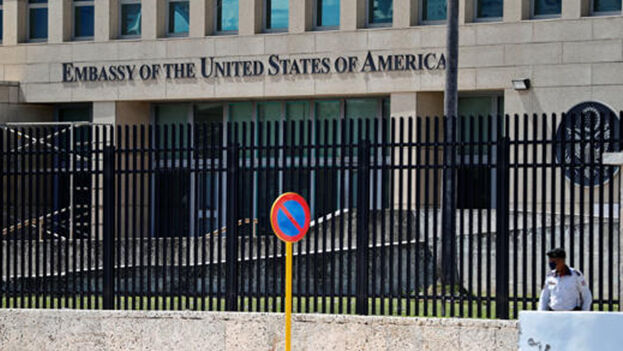
For the First Time Since 2017, the United States Meets the Quota Of 20,000 Visas for Cubans

This Friday at 12 noon, the U.S. Embassy in Havana announced that it will have a question and answer chat on its Facebook page to clarify doubts about its services. (EFE/Ernesto Mastrascusa)

14ymedio bigger14ymedio, Madrid, 7 October 2022 — The United States has complied with the immigration commitment agreed on with Cuba for the first time since 2017, and has delivered more than 20,000 visas this fiscal year. According to figures from the State Department, as of August, Washington had issued 19,743 permits for immigrants from the Island, and the September data would be well within the negotiated amount.

This has been confirmed by sources from the State Department to Cibercuba, which quotes an Administration official. “The preliminary data for September indicate that we issued more than 250 immigrant visas to Cuban nationals at the embassies in Havana and Georgetown,” he told the independent media.

So far, the non-compliance with the quota of visas granted has been insistently cited by the Cuban government, which accuses the United States of the risks faced by its citizens by exposing themselves to illegal exits precisely because of the lack of visas. However, about 200,000 Cubans have reached US territory by land just in the last 12 months, an number 10 times greater, indicating that the exodus by legal channels is out of control. Added to that is the more than 7,000 rafters who left by sea.

The largest number of visas was granted in August, almost 3,800, a figure much higher than in October 2021, when only 323 were issued. The closure of consular services in 2017 after the crisis generated by Havana syndrome — neurological disorders detected in American and Canadian officials in several countries, the first of them Cuba — caused delays that stalled the procedures.

With the restoration of services in Havana, a rapid rise began in May, and since then more than 2,200 visas per month have been exceeded without interruption. Previously, the diversion of this procedure to Guyana resulted in much lower data. continue reading

By categories, most of the visas were given to relatives and children of permanent residents, a total of 7,211. Behind those are parents claimed by Americans under the age of 21 and 4,834 for husbands and children of these citizens.

In addition, the visa lottery program has processed 557 requests from the 975 winners, and next year, with the lottery just opened on October 2, there are expected to be 1,358 lucky ones.

This Friday at 12 noon, the U.S. Embassy in Havana announced that it will maintain a question and answer chat on its Facebook page to clarify doubts about its services, which will resume next year under normal conditions.

On September 1, the diplomatic headquarters began processing pending applications for the Cuban Family Reunification Parole Program (CFRP), also suspended since 2017.

According to data from the State Department, there are 100,000 family visa applications from Cubans, of which 22,000 correspond to this program.

In addition, 3,798 business visas and family visits, and 533 for humanitarian reasons, were issued up to September.

The programs that still haven’t resumed are the five-year visitor visas and the multiple entries (B-2), as well as the admission of refugees for those seeking to emigrate to the United States because of persecution and political reasons.

Translated by Regina Anavy

____________

COLLABORATE WITH OUR WORKThe 14ymedio team is committed to practicing serious journalism that reflects Cuba’s reality in all its depth. Thank you for joining us on this long journey. We invite you to continue supporting us by becoming a member of 14ymedio now. Together we can continue transforming journalism in Cuba.
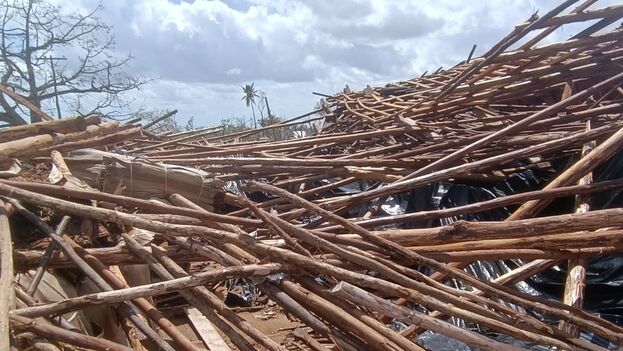
An Exile Foundation in Miami will Send $5 Million in Medical Material to Cuba

Damage from Hurricane Ian in Pinar del Rio (14ymedio)

14ymedio biggerEFE (via 14ymedio), Miami, 6 October 2022 — The Legal Rescue Foundation (FRJ) of Cubans exiled in Miami announced on Wednesday the shipment to the Island of 5 million dollars in medical equipment to help the population, after the damage caused by Hurricane Ian.

The president of the FRJ, Santiago Álvarez, announced at a press conference that the aid is now ready to be sent, although he clarified that work is being done on the delivery conditions for the material through diplomatic channels, without giving details.

“The aid will be delivered to hospitals and victims,” Álvarez told EFE, after noting that, in any case, it will go through the Cuban authorities.

“The containers with the material are ready to be shipped, but the Government of Havana will not touch them,” Álvarez stressed at the American Museum of the Cuban Diaspora in the city of Miami.

Although the aid had been planned for a long time, due to the deterioration of the living conditions of the Cuban population, efforts intensified after Hurricane Ian hit the west of the Island with special virulence last week.

In addition, the passage of Ian further complicated the situation of the electrical system, causing a breakdown that almost completely turned the entire country dark. continue reading

The scourge of the hurricane, the first to hit Cuba in the current cyclone season, left a provisional figure of five deaths and serious material damage, so far only partially quantified.

Álvarez said that the Cuban authorities intend to “sell” the aid that arrives for their compatriots, in addition to ensuring that “thousands of Cubans live in shelters after the passage of previous hurricanes” and that he hopes that after Ian “it will not be different.”

“Inefficiency and negligence” are the words that Álvarez used to define the Government’s response to the hurricane.

Alexis Abril, of the Miami Medical Team Foundation, a group of medical professionals in South Florida that helps countries suffering from disasters, told EFE that there are teams ready to join the FRJ shipment, but that they are waiting for the approval of the authorities.

Cuba has so far received solidarity aid from the Governments of Mexico, Venezuela and Argentina, as well as from international organizations such as the World Health Organization (WHO).

Hundreds of protesters took to the streets of Cuba at the end of last week to protest the lack of electricity, which added to a widespread cut in the mobile Internet service, a problem that is added to the general shortage.

During the press conference, Álvarez also announced that the FRJ establishes two annual awards in recognition of the fight against the “Cuban regime,” the Virgilio Campanería and the Carlos Alberto Montaner, both endowed with 5,000 dollars and whose winners will be made public on October 10.

Translated by Regina Anavy

____________

COLLABORATE WITH OUR WORKThe 14ymedio team is committed to practicing serious journalism that reflects Cuba’s reality in all its depth. Thank you for joining us on this long journey. We invite you to continue supporting us by becoming a member of 14ymedio now. Together we can continue transforming journalism in Cuba.
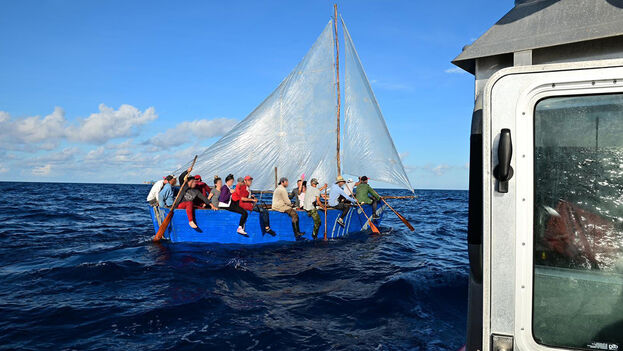
US Coast Guard Intercepts Five Boats With Cubans in 48 Hours

The US Coast Guard repatriated 120 Cubans aboard the ship Reliance. (Twitter/@USCGSoutheast)

14ymedio bigger14ymedio, Havana, 7 October 2022 — Between Wednesday and Thursday of this week, the United States Coast Guard “prevented illegal migration,” without specifying the number of crew members, of five boats with Cubans heading to Marquesas Key. The rafts were detected from the air, in actions “to prevent illegal and unsafe ventures,” according to the authorities on social networks.

In fiscal year 2022, concluded on October 1, there was a record number of 6,182 Cubans detained while trying to reach the United States by sea. This Thursday, the Coast Guard confirmed that despite the hurricane season, rafts are coming from the Island  almost every day. In seven days of this month, “66 rafters have been arrested,” Lieutenant Connor Ives confirmed.

The five recent interdictions occur two days after the US authorities repatriated 55 Cubans on board the ship William Trump.


continue reading

The US entity alerted people to the danger of the crossing on rustic rafts. One of these vessels with 27 natives of the Island was shipwrecked on September 28 in its attempt to reach Florida. Nine survived from the shipwreck near Cayo Hueso; 11 were not found, and the bodies of seven dead were recovered. Two of these, the Florida Sheriff’s office announced in a statement, were found near Boca Chica.

In an attempt to prevent the arrival of the balseros [rafters], the Coast Guard announced on Friday that staff from two companies joined the routes “to prevent, deter and intercept attempts at illegal migration by sea.”

Neither Hurricane Ian nor the reinforcement of surveillance has prevented the arrival of rafts or speedboats. The head of the Border Patrol has reported on his social networks that so far 86 Cubans managed to reach land in October.

Among the many boats, on Wednesday a raft arrived at Tortugas Secas National Park with planks on empty plastic tanks and rubber chambers adapted as floats. That day, Slosar reported the arrival of 15 Cubans, who were placed in custody.

This Thursday, 36 Cubans managed to land. A group of 26 people arrived on board a boat to Cayo Vizcaíno, an island linked to Miami by bridges and with one of the highest living standards in South Florida. Another 10 migrants were arrested in Key Colony Beach.

Translated by Regina Anavy

____________

COLLABORATE WITH OUR WORKThe 14ymedio team is committed to practicing serious journalism that reflects Cuba’s reality in all its depth. Thank you for joining us on this long journey. We invite you to continue supporting us by becoming a member of 14ymedio now. Together we can continue transforming journalism in Cuba.

The Cuban Government Will Deliver Food Packages with the Support of the United Nations

Lines for the delivery of donated food packages during the pandemic in Cuba. (14ymedio/Archive)

14ymedio bigger14ymedio, Madrid, October 5, 2022 — The authorities will begin distributing food packages this Thursday in the provinces most affected by Hurricane Ian, in a attempt to calm the population. Havana, where more protests have occurred in recent days, will be the last to start receiving them, in the middle of the month, “because of the large number of people,” the Minister of Internal Trade, Betsy Díaz Velázquez, said on television on Tuesday.

The population of Pinar del Río, Artemisa, Havana, Mayabeque and Isla de la Juventud will benefit from a “food supplement” that includes three more pounds of rice for the entire population and canned meats per family nucleus. “This measure will benefit more than 3,553,000 consumers,” she said.

The initiative assumes that all inhabitants, regardless of their needs, will be treated equally, a formula criticized by the Cuban economist Elías Amor Bravo, who is stunned — although accustomed to being so — that such a strongly centralized model doesn’t know how to “discriminate aid based on the personal circumstances of the applicant.” Similarly, in construction, the regime has decided to offer a 50% subsidy on construction materials regardless of who is the beneficiary.

“The minister still has time to change the aid formula and stop distributing products as if it were an old parish charity office,” says the expert, annoyed by the public management carried out by the regime. continue reading

In detail, the additional food planned for the west of the Island also includes two pounds of potatoes for Pinar del Río and, later, for Havana; while in Artemisa, the amount will depend on the provincial authorities. Also in Batabanó, Mayabeque, potatoes will be received, without further details about the quantity or clarifications with respect to the rest of the territory. Grains are increased for these areas, as well as cleaning products, whose distribution “has been affected in recent months.”

The World Food Program, which will be responsible for delivering the packages in some municipalities, has provided some products, including tents, tarpaulins, lamps, mobile warehouses for food protection and kitchen kits, in addition to 478 hygiene kits, which were delivered in the Surgidero de Batabanó and to vulnerable people.

But the first problems with special aid after Hurricane Ian have already begun to appear. The Government promised to finance mattresses for those who requested them, and, according to the minister herself, not everyone will get one “because the effects [of the hurricane] are still being felt, but there’s a level of support for cases that need it.”

Díaz Vázquez tried to explain during her speech that another consequence of Ian is the delay in the delivery of the family basket, given that the dates have coincided. But then she began to relate the number of products that are being distributed now but with a delay of months.

“We’re concluding the distribution of coffee, except on the Isla de la Juventud and Holguín; a substitute for yogurt that couldn’t be produced is being completed and the delivery of meat products from last month in eight territories such as Havana, Mayabeque, Pinar del Río, Sancti Spíritus, Matanzas Ciego de Ávila, Holguín and Granma. In addition, she acknowledged the delays with salt and added that it hasn’t been possible to distribute the oil in Pinar del Río because the flow meter to measure it only works with electricity. “Yesterday the marketing of rice, other grains and sugar began in all the ration stores,” she added after saying that they have already finished distributing milk for the children, which had been the priority.

Díaz Velázquez assured that all the products in the basket are in the country and asked the population for calm, although the discomfort is evident and not limited to food.

One of the most disturbing reports provided by the minister was that the distribution of charcoal for cooking has begun in Pinar del Río. “That is, back to the most remote past,” says Elías Amor.

Of the 871 retail stores that were damaged with the passage of Ian, 520 were state ration stores, and within them, 429 were in Pinar del Río, a province for which everything is bad news.

It has even been necessary to set up offices to serve the population and multiply points of sale for construction materials. In addition to the blow to its main crop, tobacco, there are 63,133 damaged homes, of which 7,107 are totally collapsed. Díaz emphasized the innovation of the installment sale of construction materials and recalled that bank credit can also be accessed and evaluated for the 50% subsidy.

“What is processed in a unique and generic way, is the same for the Cuban who earns 2,500 pesos per month as the one who receives 5,000 pesos. That is communist equality, which then ends up generating painful distortions in society,” writes Elías Amor. “But, in addition, 50% of the materials are subsidized for those who are without housing or shelter, destroyed by the hurricane, and where only a roof or a wall has collapsed that requires minor work. Has no one thought about adjusting the percentage of the subsidy?” asks the economist based in Spain, for whom the measures are “pure communist demagoguery and show little desire to work for the benefit of the community.”

Translated by Regina Anavy

____________

COLLABORATE WITH OUR WORKThe 14ymedio team is committed to practicing serious journalism that reflects Cuba’s reality in all its depth. Thank you for joining us on this long journey. We invite you to continue supporting us by becoming a member of 14ymedio now. Together we can continue transforming journalism in Cuba.
The Agricultural Development Development Fund Has Been a Failure

14ymedio bigger14ymedio, Elías Amor Bravo, Economist, 3 October 2022 — One of the most resounding failures of the 63 measures approved by the Cuban communist regime to increase agricultural production has been the so-called Agricultural Development Fund. One year after its creation, the balance sheet cannot be more demoralizing. The official state newspaper Granma explicitly recognizes it when it points out that “in Ciego de Ávila there could be more credits approved, because it’s a purely agricultural province,” but only 22 credits have been granted in the amount of about 230 million pesos. A trifle. For it to be useful,they have to keep in mind what they intend to do in Pinar del Río, selling construction materials at half the price to fight the destruction of Hurricane Ian. This type of measure doesn’t work.

But let’s go to the case in question. The 63 measures that sought to encourage the progress of agriculture and speed up food production haven’t worked a year later. It’s logical, since they are poorly designed and try to achieve objectives without first making structural transformations.

Far from attributing responsibilities for the failure to the banks of Credit and Commerce and Popular Savings, which are only transmission belts of a program, which, I emphasize, is poorly designed, the only ones who should respond to the failure is the regime, the ministry and even Díaz-Canel himself for relying on measures that are imprecise, poorly designed and of little social utility, such as this fund.

Why do we say that the design is incorrect? continue reading

Well, basically because of those who apply for and get the credits from the fund. These are state companies that will be supported by political and partisan criteria. Since this financial modality was launched, the banks have also approved reduced loans with a small amount, destined for state companies, such as Arnaldo Ramírez and Porcina.

Very few independent farmers benefited from the loans. Those who benefited from the Agricultural Development Credit have been state companies with a weight in food production, such as Agropecuaria La Cuba, Agroindustrial Ceballos, Agropecuaria Chambas, and integral Agropecuaria, and only three entities in the cooperative sector participated, which received 108 million pesos for the cultivation of bananas, guava, potatoes and the promotion of pasture for livestock.

On the other hand, Granma’s note reported that the Agricultural Development Bank approved 2.8 billion pesos for the planting of cane, in addition to other amounts for the production of pork, protected crops, the planting of cassava, corn, soybeans, sweet potatoes, rice, fruit trees and protein plants for animal feed. And yet, the sugar campaign was the worst since colonial times. Bandec is now in charge of managing the committed debt, but, as Granma says, the greatest responsibility lies with Agriculture and Azcuba, responsible for defining the natural and legal persons who meet the requirements to receive the loan and are in a position to increase production, as intended, and be able to repay it.

This is the question. What is the requirement to be met? It seems that we are talking about irrelevant issues, but efficient banking practice is clear about it. Property rights are a necessary, but not sufficient, condition for an effective financial policy. If this relationship is not established transparently and with the utmost legal respect, things cannot go well. And so, after a year, as Granma says, the credits approved in a purely agricultural province are scarce, and it is recognized that, “even though all the scenarios have been used to divulge the advantage of the initiative, it’s never enough, because it doesn’t always go directly to the producers.” Once again, communication, and start blaming the complex situation of the economic and social environment for failure.

Translated by Regina Anavy

____________

COLLABORATE WITH OUR WORKThe 14ymedio team is committed to practicing serious journalism that reflects Cuba’s reality in all its depth. Thank you for joining us on this long journey. We invite you to continue supporting us by becoming a member of 14ymedio now. Together we can continue transforming journalism in Cuba.
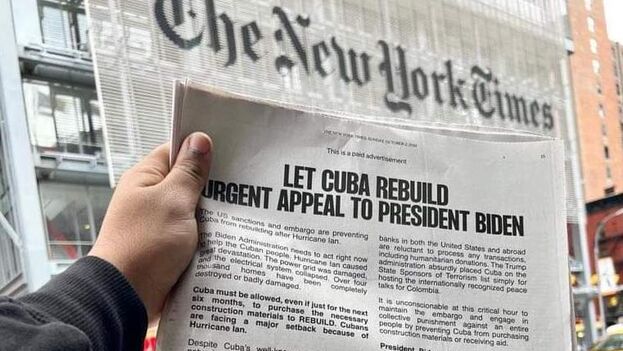
The New York Times Publishes a Deceitful Ad in Favor of the Cuban Regime

A paid ad last Sunday in The New York Times in favor of the Cuban regime. (Cubadebate)

14ymedio bigger14ymedio, Frank Calzón, 5 October 2022 — The New York Times has published an ad asking President Joe Biden to respond affirmatively to the Cuban government’s call for the lifting of economic sanctions for six months “so that Cuba can reconstruct after the hurricane.”

The text contains a catalogue of fallacies and half-truths.

It’s not true, as it says, that the US embargo impedes the purchase of construction material. Cuba buys everything it wants from countries around the world. The problem is that the countries that previously forgave the regime’s millions of dollars of debt now refuse to extend credit to Havana, since the debt won’t be paid.

One of the consequences of the U.S. embargo is that Cuba has to pay cash for what it buys from the U.S., like the tons of frozen chicken it imports from New Orleans. Otherwise, the U.S., like the Spanish, French, Argentinian and other governments, would stop subsidizing the regime.

As for the blackouts and the disaster of the thermoelectric plants in Cuba, to pretend that it’s because of Hurricane Ian, speaking diplomatically, lacks truth. For more than thirty years, the readers of the official newspaper Granma have been informed in which neighborhoods, on which days and at what times the power would be shut off. continue reading

For Cubans familiar with the craziness of Fidel Castro, like the Ten Million Ton Harvest and the closing of most of the sugar mills, which made the spectacular development of the country possible for two centuries, the regime can’t tell them that the blackouts are the fault of the hurricane or the Yankee embargo.

Many years ago, Fidel ordered the removal of stovetop cookers that used kerosene and charcoal and obliged the population to buy electric cookers to replace them. This increased the price of electricity. Fidel gave classes on television to Cuban housewives about the advantages of electric pressure cookers.

Ignoring the analysis of the experts, they used the national oil, which unfortunately has a high sulphur content, in the thermoelectric plants. The result, as in the case of the almost-disappeared sugar industry, is the energy crisis, with or without a hurricane.

The ad alleges that President Trump put Cuba back on the list of countries that facilitate international terror because Cuba was the seat of the peace negotiations for Colombia. But it doesn’t say that the F.B.I., for years, has offered thousands of dollars for information that might lead to the capture of U.S. terrorists who have sought refuge on the Island. Among them is Joanne Chesimard (alias Assata Shakur), an African-American extremist [member of the Black Liberation Army] who received a life sentence in 1977 after killing a New Jersey state patrol officer in cold blood when she was stopped for speeding in 1973. She escaped from prison in 1979 and was granted political asylum in Cuba. Her case isn’t the only one.

And what about the suggestion that Washington should stop basing its policy towards Cuba on the paradigm of the Cold War? Suffice it to point out that, even for Havana’s friends in Washington, it’s impossible to ignore the role of the regime’s propaganda in favor of President Vladimir Putin’s criminal war in Ukraine. Havana was one of the handful of dictatorships that voted against suspending Russia from the United Nations Human Rights Council and tried not to allow the recorded appearance before the General Assembly of the president of Ukraine, Volodymyr Zelensky, who could not attend for obvious reasons.

The Biden Administration has denounced all of the above, while the Plaza de la Revolución is preparing to send “volunteers” to Ukraine under the orders of Russian officers.

There’s more, but even so, President Biden shouldn’t ignore the regime’s request, according to the The New York Times ad. If the president wants to help the Cuban people, he must offer to establish a humanitarian channel with the following conditions:

1. That the aid is clearly marked “Free gift from the people of the United States to the Cuban people. FORBIDDEN TO SELL.”

2. That the aid be distributed in Cuba by staff of the American Red Cross and the Agency for International Development, and that both be allowed to monitor the impact of the aid on the population on the ground.

If not, it’s possible that the same thing would happen as years ago, when a shipment of medicines and food that the Catholic Church wanted to distribute on the Island was sent to Haiti, because some Cuban mothers in Florida had written on the boxes “With the love of your brothers exiled in Miami.” Something similar to the Cuba Decide shipment of humanitarian aid, confiscated in the Port of Mariel in 2020, in the midst of the pandemic.

It’s not true that the sanctions hinder the reconstruction of Cuba after Hurricane Ian, because the blackouts and lack of electricity across the Island precede Hurricane Ian by years. Homelessness, although it has been worsened by the hurricane, is basically the result of more than 60 years of lack of maintenance of the buildings where Cubans live. According to the regime’s priorities, millions of dollars are spent on the construction of luxury hotels for foreigners, while the country’s homes, aqueducts, sewage systems and infrastructure in general have deteriorated disastrously.

The ad regrets the destruction of the tobacco production, pointing out that 5,000 farms have been destroyed. But it doesn’t say that these farmers, if they dare to sell their tobacco to Cubans and not to the state monopoly, are sentenced to prison, like others who dare to sell their chickens, rice or the milk of their cows.

President Biden should order the Administration to implement its promises to provide free Internet service for the Cuban people. And if Havana rejects Biden’s offer, Washington should lead an international United Nations coalition to suspend Cuba from the Human Rights Council, as was done with Vladimir Putin’s regime.

The true friends of the Cuban people in the United States Congress, who are a majority, should immediately address Biden to make sure that the president doesn’t turn a deaf ear to the claim of thousands of protesters throughout Cuba, who don’t shout against the U.S. embargo, but in favor of their own freedom. For doing so, peacefully, there are a thousand young people in prison after the social explosion of Sunday, July 11, 2021.

The sponsors of the ad, as well as the editors of The New York Times, are complicit in omitting these details. Once again, they make the victims of repression on the Island invisible, while they whitewash the face of the human rights violator.

Translated by Regina Anavy

____________

COLLABORATE WITH OUR WORKThe 14ymedio team is committed to practicing serious journalism that reflects Cuba’s reality in all its depth. Thank you for joining us on this long journey. We invite you to continue supporting us by becoming a member of 14ymedio now. Together we can continue transforming journalism in Cuba.

Silvio Rodriguez is Saddened that ‘The Humble’ for Whom the Cuban Revolution Was Made are Protesting

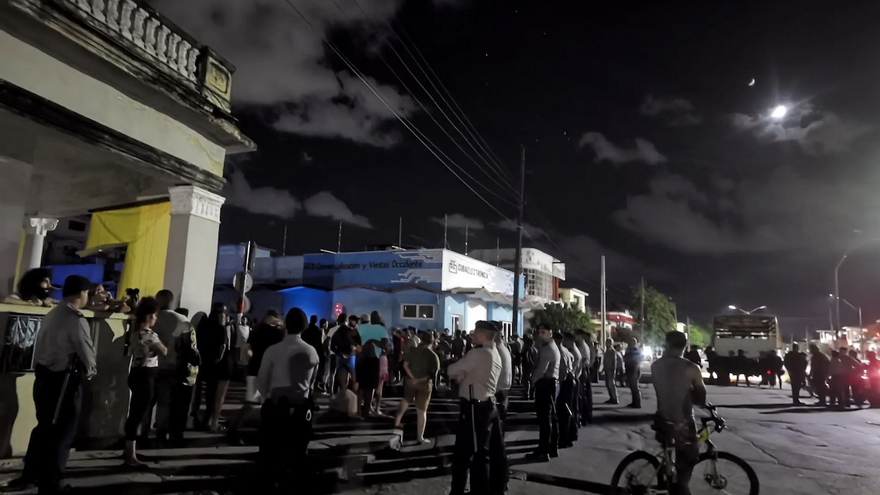
Demonstration in Havana, guarded by uniformed and civilian agents, on Saturday night. (EFE/ Yander Zamora)

14ymedio bigger14ymedio, Madrid, 4 October 2022 — Singer-songwriter Silvio Rodríguez sees “something positive” in last Friday’s mass demonstration on 31st Avenue in the Havana municipality of Playa: it “was guarded by law enforcement but not repressed.”

In a post published on Saturday on his blog Segunda Cita (Second Date) the troubadour confesses that the protest, which took place after almost 100 hours without electricity due to a widespread blackout on the Island after Hurricane Ian, made him “sad.” The reason, he says,  is that “they didn’t seem to be of the  privileged classes who rebuke a inheritor government of a Revolution that was made in blood and fire for the humble.”

“How is it possible that such a distortion has been reached? Is it a mirage for the intensification of a six-decade blockade, or because of how difficult it has become to get food after the pandemic, or because of the havoc that the hurricane caused us?” Rodríguez asks, suggesting again and in his own way a slight criticism of the system that he doesn’t reject.

Taking, as on other occasions, both a hard and soft line, the musician concedes on one hand that “it’s worth asking how much responsibility belongs to those of us who have bet, more than our lives, our history, on an emancipatory project,” but, on the other, affirms that “essentially, I’m sure we weren’t wrong — and I’m not enumerating the virtues, the resounding benefits for the Cuban people that the revolutionary process meant.” continue reading

Rodríguez’s text was published on precisely the same day that, for the first time since the demonstrations began after the hurricane, the regime unleashed the usual repression.

Police officers, but above all State Security agents and military service recruits dressed in civilian clothes and armed with sticks responded on Saturday night to a spontaneous protest that took place in the middle of Vedado in Havana, on Línea and F. There, the neighbors had blocked the street with barricades made from overturned garbage containers, branches of fallen trees and other objects.

In addition, as shown in videos released by the Spanish agency EFE, the demonstrators faced the authorities and the official civilian brigade — which shouted revolutionary slogans such as “Fidel, Fidel” or “Viva Díaz-Canel” — demanding not only “light” but “freedom” and chanting “down with the dictatorship” and “Díaz-Canel motherfucker.”

Although the regime has wanted to sell the idea that in no case was there repression and that the agents responded to “provocations” of violent demonstrators, images disseminated by international media, such as Reuters and The Associated Press, show that those who were armed were the government agents.

On Tuesday, the Justice 11J platform updated the number of detainees since September 30, which has now reached 26. The last arrests registered by the organization are Rafael Zamora Mederos, José Adalberto Fernández Cañizares ( both 38 years old), Alejandro Guilleuma Ibáñez (29), Hillary Gutiérrez (26 ) and Frank Artola (18).

According to Justice 11J, Zamora Mederos,  a member of the Movement of Opponents for a New Republic, was arrested on Saturday and is in the Vivac prison of Havana accused of public disorder “just for walking through the streets on a day of protest.” The platform reports that his relatives have tried to raise 16,000 pesos for his bail, but it’s been impossible, and Mederos  is “on a hunger and thirst strike.”

About Fernández Cañizares, nicknamed Pepitín, acquaintances of his family confirmed to this newspaper that he was hit in the head and was transferred to the Calixto García hospital to be given 37 stitches, according to the doctor who attended him, his own mother. In addition, they fractured his nasal septum. The young man is accused of public disorder and resistance.

Alejandro Guilleuma Ibáñez, Hillary Gutiérrez and Frank Artola are locked up in the DTI 100 detention center and Aldabó, also in the capital, for the same crimes.

Witnesses also claim that this last group was mistreated. Frank “is an exemplary teenager who attends the parish church on Línea in El Vedado. He suffered a fracture of the septum; his lips were split and one of his eyes was swollen because of the blows he received,” wrote Adrián Martínez Cádiz, who added: “His sister, Hillary Gutiérrez, is a good girl. She has a little girl who cries because of her mother’s absence.”

Justice 11J emphasized that “the reports of people injured, brutally beaten and currently in detention for protesting are alarming.”

Translated by Regina Anavy

____________

COLLABORATE WITH OUR WORKThe 14ymedio team is committed to practicing serious journalism that reflects Cuba’s reality in all its depth. Thank you for joining us on this long journey. We invite you to continue supporting us by becoming a member of 14ymedio now. Together we can continue transforming journalism in Cuba.

A Senior Migration Official in Mexico Demands $70,000 from 14 Cubans to Avoid Deportation

In recent months, several Cubans have been arrested during their journey through Campeche. (Captura)

14ymedio bigger14ymedio, Ángel Salinas, Mexico,30  September 2022 — “You have 72 hours or you’ll be deported.” In this way, an agent of the National Migration Institute threatened a group of 14 Cubans in Mexico City. The alternative is blackmail: “They’re asking for $5,000 for each, $70,000 for the group,” a close friend of the detainees who wants to remain anonymous tells 14ymedio.

The group formed part the 103 Cubans detained in the Mexican state of Campeche, who were forced to remain on a bus without food for 24 hours. A Migration officer recommended to the source interviewed by this newspaper to “get moving” with the money.

In an audio to which this newspaper had access, the telephone warning of the agent, identified as the deputy director of the Las Agujas migration station in the Mexican capital, is heard. “I want to know if they’re going to get their hands on it,” asks the official, who warns that “the amount will be considerable” if the group wants to be freed.

The voice also proposes the alternative of allowing their deportation and then negotiating a new entry. Although, it clarifies, now this was going to “stain their passports.” “It’s going to be a little more complicated, I think,” says the man, who recommends that the Cubans act quickly.

“The group had been divided,” explains the same source. “Some of them were taken to the Escárcega migration station, in Campeche, but others were transported to the prosecutor’s office, after spending more than a day without eating, until they were moved to Cancun, then to Chetumal and now they are in Las Agujas,” he says. continue reading

Those who moved to Cancun offered money to the agents and achieved their release in Chetumal. A minor, Jimmy Jorge Céspedes Sánchez, who presented health problems derived from the asthma he suffered during the retention, and also Yaimet Sánchez Selles, Yaimet Selles Velázquez and Jorge Luis Sánchez Proenza, are part of this group.

It’s not the first time that Cubans have reported abuses by Las Agujas Migration agents.

In the last week of July, Angélica María Rodríguez Varela, Isael Meléndez Castro, Junier Blanco Hernández and two other Cubans were arrested despite having legal protection to pass, during their transfer to the border with the United States.

Rodríguez, Meléndez, Blanco and other nationals of the Island were robbed of the little cash they had. Their passports were taken away, the chips from their mobile phones removed and they were kept incommunicado for several days. The agents demanded the payment of $2,000 from each one to be released and have their documents returned. Thanks to the intervention of an activist, they were allowed to leave and are currently in El Paso, Texas.

The journey of Cubans through Mexico has increased significantly in recent months. In the last 45 days, immigration authorities reported the arrest of 220 people who entered the country illegally.

What they don’t say is that there are hundreds of prisoners in Migration prisons. “That’s a crime,” says the 14ymedio source, who warns Cubans not to rely on money to avoid deportation. “It’s crazy, they want $70,000.”

More than 177,000 Cubans have arrived by land in the United States and more than 5,000 by sea since October 2021.

Translated by Regina Anavy

____________

COLLABORATE WITH OUR WORKThe 14ymedio team is committed to practicing serious journalism that reflects Cuba’s reality in all its depth. Thank you for joining us on this long journey. We invite you to continue supporting us by becoming a member of 14ymedio now. Together we can continue transforming journalism in Cuba.

Angel Pena and Yadier Batista Join the Long List of Escaped Cuban Baseball Players

The prominent former baseball player Ángel Peña left the Island to embark on the crossing like thousands of Cubans through Central America in order to reach the United States. (Cubadebate)wewew

14ymedio bigger14ymedio, Havana, 3 October 2022 — The list of expatriate Cuban baseball players already forms a sports catastrophe. So far in October, the abandonments of retired pitcher Ángel Peña and left-handed pitcher Yadier Batista have been confirmed. These athletes join David Mena, Jefferson Delgado, Ciro Silvino Licea, Adriel Labrada, Juan Carlos Hernández, Sergio Pérez, Dismany Ortiz and Yunior Charadan, who left the Island in September.

Peña, according to journalist Francys Romero, left Cuba “in the late hours” for the United States going through “the Central American route,” the same one taken by Mena, Delgado, Licea and Labrada a few days ago.

People remember that the “Falcon of March 13,” as they call Peña, earned more than 1,027 strikeouts in the National Series. In 2013 this baseball player became the fourth pitcher in Sancti Spíritus to reach that mark in the category, beneath only Yovani Aragón (1,926), Roberto Ramos (1,151) and Maels Rodríguez (1,148), as published in Escambray.

In his career he won 132 games. In the beginning, he stood out as a U-15 and U-18 World Cup player in the 1990s, but little was known about this athlete until he decided to emigrate with his family, according to a comment on Facebook. continue reading

“Cuban society continues to emigrate massively, including active players, retirees, coaches and athletes from other disciplines,” Romero said on his social networks. He anticipated that given the possibility of flights to Nicaragua, there would be several departures before the First Elite League, which will begin on October 8.

El pelotero Yadier Batista puede lanzar entre 88-91 millas. (Collage)

Meanwhile, he has left for the Dominican Republic. This 18-year-old hopes to continue his career with a U.S. Major League team. “In the recently finished National U-23 Championship he made news by pitching a game without a hit or any runs,” posted Baseball FR!

“Now he’ll go through new processes. In the first he will seek to perfect his tools and polish his entire command,” Francys Romero said. “The second part is to apply for free agency and receive permission from the MLB to be able to sign with a professional team.” This athlete, originally from Ciego de Ávila, 6’3 tall and 180 pounds in weight, can throw between 88-91 miles per hour.

Batista can pitch at a speed between 94-95 miles per hour, and according to the specialized journalist, “he has a profile of opener, command and sufficient repertoire. His body still has much more space for the development of those tools.”

Batista is preceded by his performance in 2019, when he left a statistic of 5-0 in 46 innings, and 52 strikeouts in the Nacional 2015-16. At that time he was one of the 13 pitchers who averaged fewer than three clean runs per game.

Translated by Regina Anavy

____________

COLLABORATE WITH OUR WORKThe 14ymedio team is committed to practicing serious journalism that reflects Cuba’s reality in all its depth. Thank you for joining us on this long journey. We invite you to continue supporting us by becoming a member of 14ymedio now. Together we can continue transforming journalism in Cuba.