
The Central Bank of Cuba as a Repressive Instrument of the Regime

A line at the doors of a bank in Havana (14ymedio)

14ymedio bigger14ymedio, Elías Amor Bravo, Economist, August 3, 2023 — The Central Bank of Cuba announces Resolution 111/2023 of August 2, which establishes a maximum limit of 5,000 Cuban pesos (23 dollars at the current informal exchange rate) per operation for collections and cash payments arising from a contractual relationship between the subjects included in the resolution, as well as for the increase of small cash intended for minor payments. If the amount exceeds that figure, the operation will have to be carried out by electronic means. This represents an increase compared to the 2,500 Cuban pesos that were regulated by Resolution 369, of December 29, 2021, of the Minister President of the Central Bank of Cuba.

This rule annuls the previous one of only two years and gives an idea of the monetary expansion produced on the Island by the uncontrolled increase in inflation. That 2021 rule regulated cash payments derived from a contractual relationship between Cuban state legal entities, and the payments of these and foreign legal entities to natural persons authorized to work independently and in non-state forms of management.

The new resolution recognizes that the increase in the use of cash in economic and financial transactions has caused a decline in the levels of banking and financial inclusion in the country, to which are added the high costs associated with its issuance, transport, processing and storage, as well as the growing demand for more ATMs for the extraction of cash. The regime feels overwhelmed and tries to regain control. And it offers precarious arguments to justify this new turn of economic policy.

Under such conditions, the new resolution requires that collection and payment operations that exceed the figure of 5,000 Cuban pesos be carried out through payment instruments and credit securities other than cash, and execution through electronic payment channels is prioritized. This means practically any transaction, given the low amount established. continue reading

Those subject to the resolution are state companies; higher business management organizations, budgeted units; non-agricultural cooperatives; agricultural cooperatives; agricultural producers; individual farmers; commercial fishermen; micro, small and medium-sized enterprises; local development projects; self-employed workers; artists and creators; the modalities of foreign investment and the associative forms created under the Law of Associations.

In other words, practically all economic actors are included in the regulation. And it is expressly stated that the provisions of the resolution are applicable to natural or legal persons not included in the previous relationship, if they carry out legally authorized commercial and service activities.

The mandatory use of payment instruments and credit titles other than cash — in particular, the means of electronic payments recognized in current banking legislation — is an organizational effort for many economic actors, especially the private and smaller ones. They will have to adapt to the requirements of the regime, despite the fact that their preferences for cash collections and payments of operations with the bank are usually organized with cash inflows and outflows, either directly and in person, or by means of a check or other payment instrument issued to be cashed by its beneficiary. This option becomes problematic with the new resolution, at least in the field of formal economics. But if they don’t comply, they can have their accounts confiscated.

In addition, the rule requires economic actors to guarantee their customers the access and use of electronic payment channels for the acquisition of goods and the provision of services, and payments arising from obligations to the state budget must be made through payment instruments and electronic payment channels from current accounts and for tax purposes.

To be clear, it’s an open and shut case. With this resolution, the regime  intends to convert the Central Bank of Cuba into a conveyor belt for the transmission of orders from the executive to the banking system, for the withdrawal of funds in the accounts. And let no one be deceived, repression does not admit questioning. For example, the deadlines for the application of the rule are accelerated in a surprising way, because it is announced that the provision enters into force three days after its publication in the Official Gazette of the Republic of Cuba.

Some economic actors have felt trapped in a financial “corral” in poor taste, at the wrong time. The regime’s financial situation  must be bad, very bad, so that overnight, in the dark and with treachery, the authorities gave an unexpected turn to their banking system, with consequences that can be dire for the economy.

And to make it clear that they are serious, the communist resolution warns that if the bank presidents, or the persons they delegate in writing, decide to suspend banking services or close the accounts to customers, “they repeatedly fail to comply with the provisions of the Third and Fourth sections of this Resolution.” Once again, arbitrariness is at the center of decisions: “repeatedly,” what it is, how many times, in what way.

That is, it’s not a joke but a full-blown threat to navigators, that you have to get ready to comply with what’s established, no matter how irrational and inefficient it may be. Or if not, be willing to lose everything. To emphasize here that this is a case of confiscation unrelated to the provisions of the communist constitution of 2019, where is the public utility or the social interest in these maneuvers of suspension or closure of banking services by the banking authorities? Castroism is showing its worst face once again.

And what do these two sections of the same old thing say that become a sword of Damocles?

The Third section provides that the cash income in Cuban pesos received by the subjects of the resolution as a rule must be deposited in their current accounts no later than the next banking business day from the date of its receipt. Why that precautionary delay, and what implications does it have on the operation of the actors? It is clear that the cash they deposit will not be available immediately.

On the other hand, in the case of non-state forms of management, there are more demands, because the deposit or payment is made in the account recognized for tax purposes to the National Office of Tax Administration, which has obvious effects of tax control and supervision. In addition, to make the deposits you can hire the services of the securities transfer companies authorized to carry out that activity.

Without prejudice to the provisions, the subjects of the resolution can agree with the bank, in the current account contract, on other deadlines for the cash deposit, but then certain conditions must be respected:

A) The extension of the term may not exceed 5 calendar days between one and the other deposit.

B) Every time the sum of the cash income received reaches the figure of 100,000 pesos (454 dollars, at the current exchange rate), the deposit must made on the next banking day.

Excepted from the provisions of the previous case are those in which the services of the securities transfer companies are contracted, whose terms are in accordance with what is agreed by the parties to the contract.

The subjects of this resolution who at its entry into force are not banking, after agreement with the bank and for a period of up to 6 months, can make cash withdrawals in Cuban pesos exceeding the limit of 5,000 pesos (22 dollars at the informal exchange rate), but in this case, the use is restricted to payments of: a) Wages, premiums, gratuities and other remuneration for workers, as long as there is no direct debit for payroll; b) Student loans; c) Alimony and child support; and d) medical diets. This covers only a small part of the social cash needs, and for only 6 months.

The Fourth section indicates that cash withdrawals for the payment of salaries, subsidies and other social security benefits and student benefits must be made, at most, 3 working days before the date established for payment. That is, one must notify with more time because otherwise, the money will not be available. Three days seems like an excessive term that overflows any rational financial planning, but in Cuba it is already known that everything that works is put at the service of state inefficiency.

In short, there are more limits and conditions. As if the above were not enough, the cash extracted from the branch for the payment of salaries, subsidies and other social security benefits and student loans, that are not paid to their beneficiaries within 7 bank working days following the date of payment, will be returned to the same branch on the next bank business day. Banks must include in current account contracts the terms and conditions set forth in this resolution for the deposit, extraction and holding of cash in national currency.

The executing arm of these measures is the Central Bank of Cuba, which should be independent of the regime, focused on the execution of an efficient monetary and financial policy. Surprisingly, it establishes a period of 30 working days, counted from the entry into force of this Resolution, in conciliation with the banks, the agencies of the Central Administration of the State and the provincial governments of People’s Power, to draw up a schedule for the incorporation of economic actors into the banking program.

The curious thing about this is that the communist state has cooked up this resolution with the banks, and once the schedule is completed, compliance will be demanded from the economic actors. Hierarchical decisions that turn their backs on reality usually go wrong. These will be a good example. And the haste of the regime resurfaces: the schedule cannot exceed 6 months, counted from the entry into force of this resolution, and is only renewable for those who subscribe for the term of up to 3 months.

What can one expect from this whiplash to the private sector? Well, many actors, especially the smallest and those with less capacity to assume the regime’s demands, will be able to opt for informal activity, concentrating their resources and priorities in that sector, in which it is easier to find what they need, and where it can even be generated at the same level as the foreign exchange market, a financial market that fills the shortcomings and demands of the state system. This Cuban private banking sector can be closer than ever and contribute to consolidating structures that at the moment can’t achieve due to communist obstacles.

Translated by Regina Anavy

____________

COLLABORATE WITH OUR WORKThe 14ymedio team is committed to practicing serious journalism that reflects Cuba’s reality in all its depth. Thank you for joining us on this long journey. We invite you to continue supporting us by becoming a member of 14ymedio now. Together we can continue transforming journalism in Cuba.
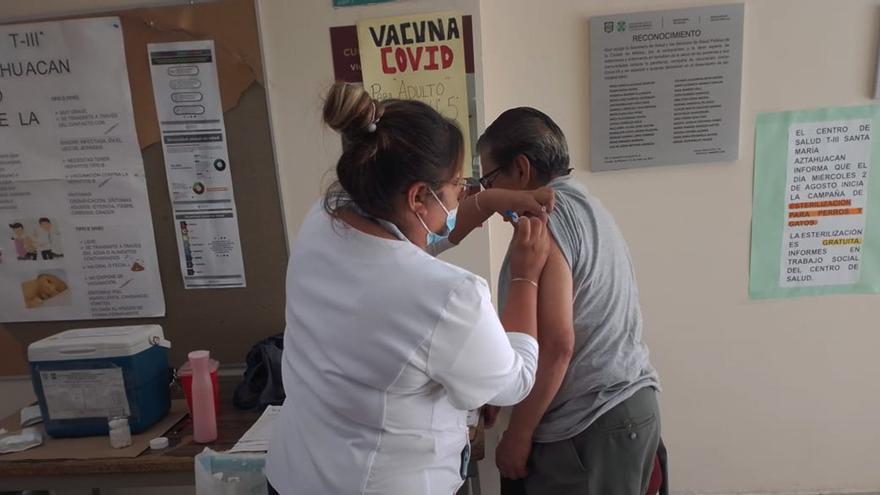
The Mexican State of Coahuila Will Destroy 70,000 Expired Cuban Abdala Covid Vaccines

In Mexico City, the Cuban vaccine Abdala prevails in the campaign against COVID-19. (Twitter/@SSaludCdMx)

14ymedio bigger14ymedio, Mexico, 2 August 2, 2023 — A total of 70,000 doses of the Cuban Abdala vaccine for Covid that expired this month will be destroyed in the Mexican state of Coahuila. According to the local health manager, Roberto Bernal Gómez, people “distrust” this vaccine because it does not have the endorsement of the World Health Organization (WHO). However, for President Andrés Manuel López Obrador, his detractors are “hardcore conservatives” whom he mocked this Wednesday in his morning press conference, saying that “they think Abdala is going to turn  them into communists.”

Bernal Gómez informed local media that in January the federal government sent them 99,200 doses, which were under lock and key by the Secretariat of National Defense. However, the population disdained this option. “It’s time for the booster, and the one accepted by the world authority is the bivalent one,” like that of Pfizer and Moderna, which includes components of the original virus strain and the omicron variant.

The official noted that the state tried to return the doses before they expired, but they were not accepted by the federal Ministry of Health. The general director of the National Center for Preventive Programs and Disease Control, Ruy López Ridaura, urged them to continue with the campaign. According to the protocol, they needed 10 candidates before they could open a bottle, but in the face of disinterest, the agency suggested opening the vials even if there was only one interested party, and the rest were discarded.

It only remains to define whether it is the Army that is responsible for the destruction of these vaccines or whether it will be the Coahulia Ministry of Health. Government sources told this newspaper that there were about 227,449 doses of Abdala distributed in the states of Chihuahua, Jalisco and Puebla that expired between July and August of this year. continue reading

Saying that it is a matter of national security, the Government of Mexico guards the data on the number of Cuban vaccines given, as well as the cost of the 9,000,000 it bought from the Island. Faced with the criticism of the effectiveness of Abdala, President Andrés Manuel López Obrador reiterated that it will be the “certified” option that Mexicans will have.

“Why would you get another vaccine if it has the same effect?” he said on Tuesday. He offered to rely on “all vaccines,” including the Mexican Patria, “which is ours.” In addition, the Federal Commission for Protection against Health Risks endorsed this week the use of the Cuban Soberana as an option for children.

The information came up on Tuesday when the National Autonomous University of Mexico recommended the use of the face mask in its facilities due to the increase in COVID-19 infections.

The Patria vaccine, developed by a group of scientists at the ICAHN School of Medicine at Mount Sinai (USA), whose patent was negotiated by the Mexican laboratory Avimex, is in the review and approval stage of the last phase of clinical trials. María Elena Álvarez-Buylla Roces, director of the National Council of Science and Technology, said last May that from September to December there would be the capacity in the country to produce up to four million vaccines.

The infectious disease specialist of the Medical Center, Francisco Moreno Sánchez, said that at the moment there are no updated vaccines in Mexico and that the use of a bivalent against coronavirus is not planned. “The doses that are circulating, even the Abdala, which does not have approval, were made based on the original variant, which was the variant that China suffered from in 2019,” he told MVS Noticias.

Moreno Sánchez stressed that the WHO suggests that “the first choice should be the bivalent vaccine, if you can get it. The second choice would be to use a vaccine that is approved by the WHO.”

Translated by Regina Anavy

____________

COLLABORATE WITH OUR WORKThe 14ymedio team is committed to practicing serious journalism that reflects Cuba’s reality in all its depth. Thank you for joining us on this long journey. We invite you to continue supporting us by becoming a member of 14ymedio now. Together we can continue transforming journalism in Cuba.

Brazil, the New Destination of the Cuban-Russian Couple Who Escaped From Havana

Carlos Jiménez Vasco and his wife Daria this Thursday in line to process their situation in Brazil. (14ymedio)

14ymedio bigger14ymedio, Havana,3 August 2023 — Cuban Carlos Jiménez Vasco and his wife Daria, of Russian nationality, managed to travel to Brazil after months of unsuccessful waiting to obtain political asylum in Trinidad and Tobago. Harassed by State Security in Havana, the couple escaped from Cuba in April and requested help from the UN Refugee Agency (UNHCR) in Port of Spain. The delay of the officials and the procedures forced them, once again, to leave.

From Brazil — where they arrived by bus after traveling to Guyana — Jiménez tells 14ymedio this Thursday that he and his wife are already being looked after by the authorities of that country, which are much more “competent” than those of Trinidad. “They have better conditions and a quicker system, which offers us basic human rights,” he says with relief.

“We are going to be protected by the law of this country and they will not be able to do anything to us,” he adds, alluding to the surveillance by Cuban counterintelligence, that, he says, they suffered during their stay in Port of Spain. Jiménez estimates that by Thursday they will already have “the necessary papers” to regularize their situation in the Latin American country as refugees.

The couple wants to maintain discretion about the steps they will take next and tells this newspaper that they consider it important that it is known which country they are in, “so that the Cuban dictatorship does not secretly try anything against us.” continue reading

“Brazil does have refuge agreements included in its law,” says Jiménez, who believes that leaving Trinidad was, like escaping from the Island, a triumph. “No matter how much the dictatorship tries, human beings can do more. We beat them, they couldn’t destroy us. That’s how we feel now,” he concludes.

Despite the fact that the independent media closely followed the case and numerous activists denounced the precarious conditions suffered by the couple, the UNHCR office in Port of Spain did not give a positive response to the young couple. The officials ignored the case and avoided meeting with Carlos and Daria, despite the fact that they “planted” themselves on more than one occasion in front of the agency’s headquarters.

Both young people had fled St. Petersburg, where Carlos was about to be recruited by the Russian Army to fight in Ukraine, and then from Havana, where he had official residence. The ideological discrepancies with his family, who support the regime, and the harassment of counterintelligence caused the couple to move, in an odyssey that they describe as “a daily battle for survival.”

The biggest fear was that they would be deported. “That would be fatal for us because they would separate us and send us to our own countries where we would not be safe and could be arrested,” Jiménez explained to 14ymedio at the time.

In Port of Spain they were scammed by the owners of the place where they stayed, with scarce resources and “sleeping with rats.” When denouncing the situation in the Living Water Community – “UNHCR’s right-hand arm in Trinidad” – the officials seemed to suggest that the owners of the house were right to throw them out.

They survived all this time thanks to the Cuban community in Trinidad and Tobago and some organizations that provided them with food and help. However, the situation became unsustainable and forced them to look for a better destination. Now they once again ask for help from Cubans outside the Island to start life in Brazil. “The process is going well,” summarizes Jiménez, from the immigration offices. “What in Trinidad takes months, here they do in a day.”

Translated by Regina Anavy

____________

COLLABORATE WITH OUR WORKThe 14ymedio team is committed to practicing serious journalism that reflects Cuba’s reality in all its depth. Thank you for joining us on this long journey. We invite you to continue supporting us by becoming a member of 14ymedio now. Together we can continue transforming journalism in Cuba.

The Cuban Regime Prohibits Boxer Robeisy Ramirez From Using the Cuban Anthem and Flag in Japan

Cuban boxer Robeisy “El Tren” [“The Train”] Ramírez escaped in 2018. (Twitter/@RobeisyRamirez)
14ymedio bigger14ymedio, Havana, 24 July 2023 — Cuban boxer Robeisy “The Train” Ramírez will not be able to appear in his fight in Japan this Tuesday with the anthem of the country that gave birth to him and from which he fled in 2018. According to the athlete himself on his social networks, the Cuban embassy in Japan contacted the television station that will broadcast the event, which will take place at Ariake Arena in Tokyo and in which The Train will defend his World Boxing Organization title of featherweight against the Japanese Satoshi Shimizu; the embassy prohibited his use of the national anthem. It is, says the boxer, “a vile attempt at intimidation.”

“I’m a free man,” cried Ramírez, double Olympic champion (London 2012 and Rio de Janeiro 2016), who says that they offered him the U.S. anthem or none at all. “I’m not going to enter with the U.S. anthem,” replied the boxer, annoyed, who couldn’t believe that the Asian promoter accepted the imposition. “If I don’t enter with the one from Cuba, I enter without an anthem. It’s my homeland; what a lack of respect!”

The fighter is grateful that the U.S. opened its doors for him to continue his career but explains that he will not use the American anthem, because “its not what I represent.” In professional fights, the organizers use the hymns of the country from which the fighters originate, although it is not mandatory. On the Cuban Boxing Facebook page, he stressed that “what bothers me the most is that in Japan there are 12 or 15 lackeys and fat people living life who don’t care what the average Cuban is going through, literally living from what his family outside sends him.”

Total indignation. Share this video everywhere, let the world see everything that the Castro dictatorship and the communist system are doing. The Cuban boxer @RobeisyRamirez this coming July 25 will have a fight to defend his world title in Japan, the Castro regime… pic.twitter.com/tVFRoI2uRC — Marcel (@Marcel_305) July 24, 2023. The athlete, a native of Cienfuegos, attacked the regime, which, he says, has been pursuing him since he decided, five years ago, to make a career outside the Island. “They demanded that I not use the Cuban flag on my uniform or anywhere else.”

The 26-year-old boxer warned that far from “shutting me up” with this type of intimidation, “they have motivated me more to achieve success and continue to raise my voice and cry out for the freedom of my homeland. Now more than ever, Homeland and Life! continue reading

The young man’s coach, Ismael Salas, also joined the protests after the official boycott: “That is a lack of respect from the Cuban Embassy. I say this so everyone can understand what communism is and why I’m against all those communists.”

For his part, the collaborator of Pelota Cuba USA, Yordano Carmona, described as “incredible” that the “tentacles of the Cuban dictatorship” reach all the way to Asia.

Ramírez says that in 2018 he made his best decision. At that time he wanted to leave “so I wouldn’t remain an amateur, but the main reason for my decision was all the problems that happened with the managers of boxing and INDER [National Institute of Sports, Physical Education and Recreation], who created them, but every day they got worse,” he told Play-Off Magazine. “All I had left was to leave or go back to Cienfuegos to survive as I could.”

Translated by Regina Anavy

____________

COLLABORATE WITH OUR WORKThe 14ymedio team is committed to practicing serious journalism that reflects Cuba’s reality in all its depth. Thank you for joining us on this long journey. We invite you to continue supporting us by becoming a member of 14ymedio now. Together we can continue transforming journalism in Cuba.

The Pool Where Cuban Olympic Swimmers Trained Is Now a Garbage Dump

The president of the Municipal Assembly of People’s Power argued that local authorities can do little because the property is in the hands of Emprestur. (Ahora!)

14ymedio bigger14ymedio, Havana, 27 July 2023 — The Olympic pool in Gibara, Holguín, has long since left its golden years behind as a training center for Cuban athletes who competed in international events. The lack of maintenance and the passage of two hurricanes have left the facilities in such a state that even the official press echoes it. Today the place is a “macro garbage dump,” in the words of the provincial newspaper Ahora! in a report published this Tuesday.

The text describes the “stumbling blocks” that, for more than 50 years, have affected the Waldimiro Arcos Riera pool, inaugurated in the late 1970s. Located in the vicinity of the Holguin coast, initially it only had stakes embedded in the sea that formed a quadrilateral. These precarious conditions did not prevent Cuban athletes from training and obtaining good results in international events.

According to the newspaper, it was not until 1979 that the facility gained its “Olympic” status, after the local residents themselves carried out “volunteer work” to build the pool. Gibara was already in the middle of a drinking water supply crisis, so the pool remained empty.

Andrés Ricardo Rivas, president of the Municipal Assembly of People’s Power, argued that the local authorities can do little because the property is in the hands of Emprestur, which is dedicated to the construction of tourism facilities, and they will be in charge of rehabilitating the facilities. He did not say why there is no communication with the state company nor what plans it has to reactivate the swimming center. continue reading

Among the professional swimmers who have trained in the pool are Rafael Leyva, national and Central American champion with the butterfly and free-style technique; Oscar Periche Cardet, goalkeeper of the Cuban national water polo team for more than 20 years and participant in four Olympics; and Juan José Soler González, national swimming runner-up.

In 2008, Hurricane Ike considerably damaged the facilities, but the United Nations Children’s Fund (UNICEF) financed its repair using materials with greater resistance to salt water and a pumping system directly from the sea.

In addition to recovering its initial function of sports training, the investment provided for the creation of conditions for the pool to be used by people with disabilities and by children. A significant part of the investment was allocated to lighting the pool, so that it could also be used at night.

The complex was again destroyed in 2017, when Hurricane Irma, category 5, devastated much of the Holguin coast. Since then, the authorities have done nothing more for the pool, and it ended up becoming a garbage dump that, the newspaper acknowledges, “affects the environment and the neighbors.”

Translated by Regina Anavy

________________

COLLABORATE WITH OUR WORKThe 14ymedio team is committed to practicing serious journalism that reflects Cuba’s reality in all its depth. Thank you for joining us on this long journey. We invite you to continue supporting us by becoming a member of 14ymedio now. Together we can continue transforming journalism in Cuba.

If Cuba and the Cubans Aren’t Doing Well, ‘It’s Not the Fault of Tourists,’ a Spanish ‘Influencer’ Defends Herself

Some Cuban “influencers” have strongly criticized the visit of young Spaniards to Cuba, accusing them of “romanticizing a dictatorship.” (Facebook/Enjoy Travel Group)

14ymedio bigger14ymedio, Havana, 20 July 2023 — The Spaniard Marina Rivera, who was one of the more than twenty influencers who arrived in Cuba this July to promote tourism, invited by the travel agency Enjoy Travel Group, published a video on her Tik Tok profile on Wednesday to respond to the accusations of “white-washing the dictatorship” by many of her followers and Cuban content creators.

“I didn’t think this would be necessary, but let’s talk about Cuba,” the influencer begins her three-minute video in which she exposes, above all, that both she, the rest of the group and her agency had not been paid for the trip that was made to promote the recently inaugurated Barcelona-Havana flight. “We weren’t paid a euro for anything. They just invited us on the trip,” she says.

Rivera also explains that she is not to blame for the socioeconomic and political situations of the countries she visits and that many have a lack of “freedoms and rights and have horrible political situations, but that is not the fault of tourists.”

Marina Rivera also compared the Cuban regime to the Franco dictatorship: “In Spain we had 40 years of dictatorship, and some of us lived from tourism. It’s exactly the same in Cuba. People live from tourism. And thanks to all those tourists who came to Spain during the dictatorship, a lot of people were able to eat. We wanted to do the same thing through tourism to Cuba.”

“We enjoyed the Island and left money in local businesses,” concludes Rivera, who said that the group of influencers had distributed medicines, water, sweets and money among the people of Havana, and added: “We were not going to say this because we did it in a disinterested way. For example, the Twin Melody gave away 400 euros in cash to the street children.” continue reading

Some Cuban influencers, such as Claudia Tropiezos and Royniel2, have strongly criticized the visit of young Spaniards to Cuba, accusing them of “romanticizing a dictatorship.” They were joined by the Cuban Dina Star, who has lived in Madrid for two years, who, after publishing a video on the subject on YouTube, was invited to the Spanish program Todo es Mentira [It’s All a Lie]. This same program witnessed, during the July 2021 protests, how Cuban State Security arrived at the YouTuber’s residence in Havana to take her to the Zapata and C station while she broadcast live.

Diego Moreno, executive director of the talent agency Nickname, which represents the influencers who traveled to Cuba, was also invited to the program, broadcast on July 18.

Moreno explained that the influencers were invited by the travel agency Enjoy Travel Group, based in Barcelona, which had also previously hired them to promote air routes to countries such as Mexico, the Dominican Republic and the Maldives. He also said that none of the influencers “has received one single cent.” He admitted, however, that all costs of lodging, transportation, food and events were covered by the tour operator agency that, as part of the contract, demanded a non-defamation clause. Outside of that paragraph — which is very common in promotional contracts, according to the director — “there was no limitation of any kind.”

The representative also recalled that many of the Cubans with whom they had contact on the Island were grateful for their visit and for the fact that they were promoting the country as a paradise destination. “The people who are in Miami are the ones who are criticizing and trying not to promote tourism.”

Faced with Moreno’s version, the Cuban influencer argued that she did not doubt that people would receive them gratefully. “If you spend the money in a private restaurant or if you record videos of the people who dance from sunup to sundown on stilts, they will thank you with a smile from ear to ear,” she replied while explaining that the real problem was in promoting tourism that does not benefit the common Cuban. “Promote a natural tourism; don’t go to five-star hotels built by the Government. Go to private homes, soak up the real Cuban culture and not the one they show you,” the young Cuban concluded.

In an attempt to placate the debate, Nickname’s representative commented that the influencers were inexperienced young people who had come to confuse Ernesto Guevara’s monument in the Plaza de la Revolución with an image of Diego Armando Maradona. “I think the influencers aren’t really that ignorant, because one of them offered to look for ways to help people in Cuba,” was Dina Star’s response.

Both representatives of the agency and the influencers themselves have explained that it is not the job of these young people to show the political situations or the shortcomings of any country because they are not journalists, who are required to be truthful and responsible with the content they disseminate.

Translated by Regina Avany

____________

COLLABORATE WITH OUR WORKThe 14ymedio team is committed to practicing serious journalism that reflects Cuba’s reality in all its depth. Thank you for joining us on this long journey. We invite you to continue supporting us by becoming a member of 14ymedio now. Together we can continue transforming journalism in Cuba.

In Order To Keep Functioning, Cuban Factories Are Using Oil Residue

The Cienfuegos Petroleum Refinery sends the oil sludge to the cement factory for use as fuel. (@CanalCaribeCuba)

14ymedio bigger14ymedio, Havana, 25 July 2023 — The energy crisis that turns Cubans upside down has also forced state industries to look for alternatives to keep their boilers operating. This is the case of the Cienfuegos Cement factory, which uses oil sludge residue obtained from the oil refinery in this province, the largest in Cuba.

The general manager of the company, Irenaldo Pérez, explained to Prensa Latina this weekend that the provincial refinery transfers the waste resulting from the production of liquefied petroleum gas, gasoline, diesel, turbo fuel and fuel to the cement plant.

The official said that this waste can also be used in smelters and sugar mills — large consumers of fuel — which, precisely because of the widespread shortage on the Island, have had to stop their production lines repeatedly. Without detailing the volume of the sludge obtained from the oil plant, the official news agency assures that its use reduces the “considerable dependence on imported fuel” while compensating its environmental footprint by eliminating potential sources of pollution.

Cuba shows slow progress in the diversification of its power generation matrix, which is highly dependent on crude oil. The Government promised in 2014 that renewable generation — which at that time accounted for 4.3% — would represent 24% of the installed capacity by 2030, but by the beginning of 2022 it had barely reached 5%. continue reading

In addition to the energy crisis, Cuban families are facing greater interruptions in drinking water service. The provincial newspaper Periódico 26 acknowledged on Monday that Las Tunas shows one of the biggest delays on the Island in terms of the installation of the most effective equipment for water supply. In the province, 146 stations were expected to enter operations in October of this year, but the meager results to date — only 22 have done so — warn that this goal will not be met.

Of the few facilities, not all are in operation, warned Óscar Carralero, director of the Provincial Aqueduct and Sewerage Company of the province. The official explained that three of the new stations already have electrical problems due to control failures, and two cannot be activated because the networks have not received maintenance for years or are not available due to theft.

Therefore, the manager recognizes, they do not yet represent “improvements in the community,” which maintained the “dream of receiving water in the short or medium term in a stable way.”

In its report, Periódico 26 points out that several stations with a capacity of 10 kilowatts are being installed in remote areas with a small population, where families had reported that the pumping devices had been broken “years ago” and they could only receive water from tanker trucks.

However, the work is not progressing given the shortage of materials to make the assemblies for solar panels, said Marco Antonio Sánchez, a specialist of the Provincial Directorate of Aqueduct and Sewerage. They also don’t have enough fuel or means of transport to take the supplies to remote areas.

“We feel a little alone,” complained Sánchez, who explained that the authorities are committed to projects, but at the time of finalizing the assembly, they lack resources that depend on other industries. “Advancing like this is more complex,” he said.

The newspaper, however, is optimistic that, once the 146 stations are installed, there will be a savings of 73,000 kilowatts of electricity, and an improvement in water service for 11% of the households in the province.

Translated by Regina Anavy

COLLABORATE WITH OUR WORKThe 14ymedio team is committed to practicing serious journalism that reflects Cuba’s reality in all its depth. Thank you for joining us on this long journey. We invite you to continue supporting us by becoming a member of 14ymedio now. Together we can continue transforming journalism in Cuba.

Three Detainees Are Prosecuted for the Murder of a Photographer in Eastern Cuba

In the image, one of the motorbikes and some belongings stolen from the photographer Orlando Tamayo. (Facebook/Edwin Levis)

14ymedio bigger14ymedio, Havana, 25 July 2023 — The Ministry of the Interior of Guantánamo province announced, in a brief statement, the arrest last Saturday of the murderers of photographer Orlando Tamayo Guevara. The three detainees, whose identities have not been revealed by the authorities, were found in possession of money and two electric motor bikes belonging to the victim.

The information, disseminated on Facebook by the government official Edwin Levis, emphasizes that the three were captured “in less than 24 hours” and that they “admitted their direct participation” in the murder of Tamayo, who owned Burlesque Studio. The aggressors will be prosecuted for homicide.

Levis published images of the stolen objects including backpacks, a pair of sneakers and some plastic bags stolen from the photographer’s residence, 703 Máximo Gómez Street, between Narciso López and Jesús del Sol in the city of Guantánamo.

On social networks, users who reacted to the publication about the crime are asking for justice. “Enough regarding with pity all those who murder, assault and want to implant disorder, fear and anxiety,” said Javier Barrientos, a resident of Guantánamo. Other more radical comments, such as from the habanera Ofelia Rosa Díaz Velázquez, asked for the “death penalty” for the confessed murderers. continue reading

The Commission on Constitutional and Parliamentary Legal Affairs, meeting on July 18, offered figures for crime on the Island and the ones that they consider a priority. The homicides were not on the list. Last June, however, the Government revealed that violent crimes accounted for 8.5% of the total illicit activities that took place in the first half of 2023.

Days before Tamayo’s murder, Cuban authorities reported the capture of three people involved in the murder of radio announcer David Alexis González Joseph, also originally from Guántánamo. The collaborator of the official radio station CMKS was killed inside his home on April 26.

In an editorial published last June, the official newspaper Granma said that these cases are “shamelessly magnified or manipulated by digital enemy websites.” For the regime, the information “stimulates” an alleged scenario of instability that seeks to “discredit Cuba’s international prestige as a safe tourist destination, in order to hit one of the country’s main economic sources.”

Recently, before the National Assembly, Miguel Díaz-Canel said that there is an “imperial commitment” to fabricate a climate of tension and citizen distrust that erodes “popular unity” in Cuba.

Translated by Regina Anavy

____________

COLLABORATE WITH OUR WORKThe 14ymedio team is committed to practicing serious journalism that reflects Cuba’s reality in all its depth. Thank you for joining us on this long journey. We invite you to continue supporting us by becoming a member of 14ymedio now. Together we can continue transforming journalism in Cuba.
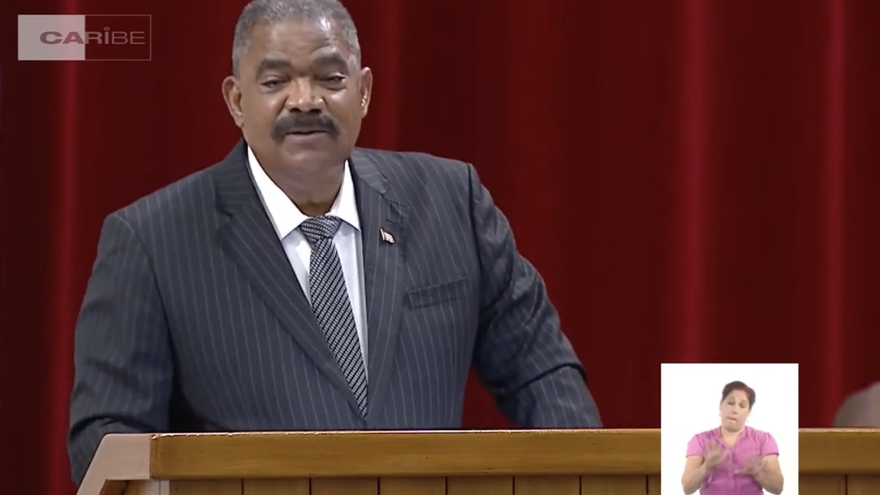
Revalidating the Death Penalty in Cuba To ‘Defend the Revolution in the Face of Very Serious Threats’

Rubén Remigio Ferro, president of the People’s Supreme Court, in front of the Cuban Parliament this Thursday, at the moment when he defends the death penalty. (Canal Caribe/Screen Capture)

14ymedio bigger14ymedio, Madrid, 21 July 2023 — The long speech this Thursday by the president of the People’s Supreme Court, Rubén Remigio Ferro, before the National Assembly of People’s Power, to present the Law of the Military Criminal Code, had its most prominent moment in the argument made by the official for the death penalty on the Island.

Defending that the new law reduces the crimes for which a person can be punished with the death penalty, Ferro recalled that a “death penalty” has not been applied for twenty years, since “those events of the hijacking of the boat and all that situation  took place.”

With those words, the president of the Supreme Court referred to the hijacking in 2003, by a group of mostly young people, of the ferry that made the journey between Regla and Old Havana with the aim of reaching the United States. The boat soon ran out of fuel, and ten people were arrested and prosecuted. Among them were Lorenzo Copello, Bárbaro Sevilla and Jorge Martínez, who were shot after a nine-day summary trial.

“There is no official statement about it, but all this elapsed time is a kind of undeclared moratorium,” Ferro said regarding the death penalty. “That does not mean that it doesn’t exist and that it is the most serious penalty for several crimes,” he specified, giving as an example the “crime of terrorism,” precisely for which the hijackers of the Regla ferry were convicted, despite the fact that they only wanted to flee the Island.

The president of the Supreme Court justified: “We have to have it there as an element of defense of our society, as a defense of our State, of our Revolution, in the face of the very serious threats in which we permanently live. And also for citizen tranquility.” continue reading

After Ferro’s appearance, as expected, the deputies approved the Military Criminal Code Law, which updates the Military Crimes Law of 1979.

The objective, according to the Government, was to “consolidate legal security, the protection of citizens’ rights, institutionality, military and social discipline and internal order, in accordance with the Guidelines of the Economic and Social Policy of the Party and the Revolution.”

Among the novelties of the law highlighted by the official press is the elimination of certain types of crime now included in the new Criminal Code, approved last year. Also, according to the authorities, “it adjusts the content of the international treaties in force for the Republic of Cuba, such as the United Nations Convention on the Law of the Sea, the Geneva Conventions and its two additional protocols.”

The law presumes to establish “differentiated criminal treatment for those over 16 and under 18, to comply with the precepts of the Convention on the Rights of the Child.” However, it retains from the previous law the prison sentences for young people who evade the now so-called active military service (SMA). In the 1979 rule, those who do not comply with this obligation could be punished with one to five years in prison; now they can be sentenced to between two and five years.

The abuse of SMA cadets in tasks for which they are not prepared had its most tragic episode in the disaster of the Matanzas supertanker bases, where several of them lost their lives in the impossible work of extinguishing the fire. Last week, another fire, this time in Manzanillo (Granma), cost injuries to some recruits.

The draft ruling received testimony about the conditions in which young Cubans are recruited for what the regime considers “an honorable duty” and forced to carry out tasks from loading containers to repression of demonstrators.

Reports of deaths from accidents, suicides and murders among recruits are rarely mentioned in the official Cuban press. However, independent journalists have recorded numerous incidents that, in many cases, involve the use of regulatory weapons.

Translated by Regina Anavy

____________

COLLABORATE WITH OUR WORKThe 14ymedio team is committed to practicing serious journalism that reflects Cuba’s reality in all its depth. Thank you for joining us on this long journey. We invite you to continue supporting us by becoming a member of 14ymedio now. Together we can continue transforming journalism in Cuba.
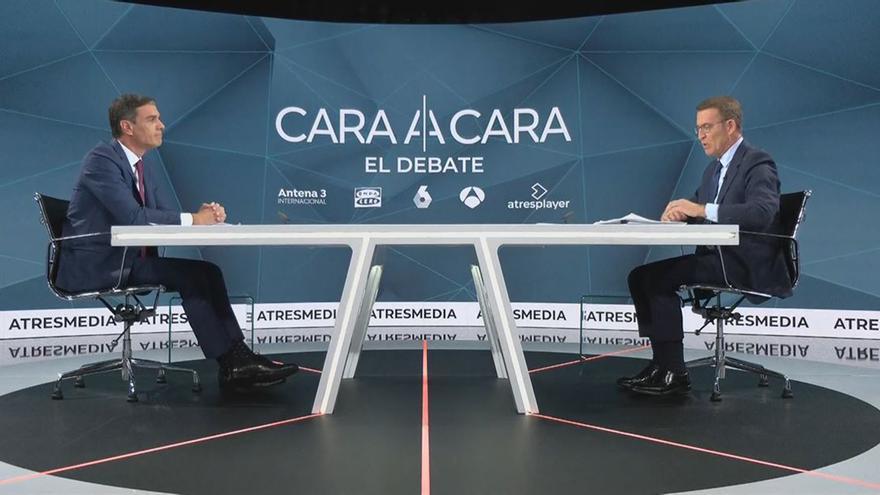
Cubans in Spain: ‘Coming Where We Come From, We Can Only Vote for the Right’

Nearly 250,000 Cubans, residing on the Island or in Spain, can vote in the general elections that will take place this Sunday, July 23. (EFE)

14ymedio bigger14ymedio, Madrid 23 July 2023 — about 250,000 Cubans, residing on the Island or in Spain, can vote in the general elections that take place this Sunday, July 23. Several weeks of debates, campaigns and tensions have kept the four great political forces of the country, occupied: the Popular Party (PP), the Spanish Socialist Workers’ Party (PSOE) – whose leader, Pedro Sánchez, is the current head of the Government – the conservative Vox party and the left-wing Sumar coalition.

This newspaper interviewed several Cubans who will give their vote to one of these parties and asked them the reasons for their decisions.

Joaquín – a retiree who has lived in Tenerife (Canary Islands) for twenty years – is blunt: “I think Vox is the party called to largely solve Spain’s problems and to rescue a social ethic that is in sharp decline,” he says. However, his main reason is that the formation led by Santiago Abascal from Bilbao “will not allow even the shadow of communism. Only then will we be able to sleep peacefully,” he adds.

Despite his support for Vox, Joaquín believes that the winning party will be the PP, whose leader, Alberto Núñez Feijóo, has high popularity ratings in electoral polls. In that, he agrees with Héctor, a 35-year-old engineer from Cienfueguero who works in Barcelona. “It’s better to keep away from anything that smells of the left, like Pedro Sánchez. Any Cuban will tell you this,” he says. continue reading

“Although I agree with Vox on many things,” says Hector, “in others I don’t. In that sense, I prefer the PP project.” The only argument that Cuban émigrés could have in favor of socialists, he reflects, is that the Law of Democratic Memory has facilitated the emigration of many descendants of Spaniards. “But here, on the Peninsula, the Law has done a lot of damage and caused a lot of division,” he says.

Alina, a caregiver of patients in Salamanca, has participated in several campaigns to support Vox and is affiliated with the party. “This Sunday we will vote for Abascal. Cubans who live in Spain cannot betray Vox or its ideology. We have to give them the opportunity to show what they can do, even if they don’t come out on top in these elections,” she says. ” Coming from the country we come from, a country that sponsors terrorism, it’s impossible for us to vote for any party that’s not on the right.”

The Cubans’ sympathies for Vox are understandable, argues Ignacio, a lawyer who arrived in Madrid more than forty years ago, “but the only adult party that Spain has is the PP, and the only mature politician that this country has is Feijóo.” The PP neglected the Cuban issue, he concedes, and that is why many of the emigrants from the Island now see in Abascal the “strong man” that the PP did not offer them.

“Cubans see Vox as the ’bravo’ party, brave – I won’t say ’macho’ –  that faces up to the communists of the Spanish Government. In addition, Abascal’s group has known how to cultivate the vote of Cubans.” But, in short, “Vox is not to be trusted,” says Ignacio, for “its ways, the violence, with which it deals with the issues.”

An example, he offers as proof, is emigration. Vox proposes a “hard line” to achieve a regular flow of migrants, but it doesn’t usually reflect on the causes of emigration. “It comes close to being inhumane,” he points out, speaking about the way in which Vox intends to control borders. “You have to look for the origin. Nobody leaves their country because they want to. You have to think about how to change the situation from its starting point, but not by dialoguing with dictatorships or mafias – as the Spanish Government has done with the Havana regime – but by proposing development projects. If not, whatever fence you build, thousands will still break through to come in.”

Ignacio defines Vox and Sumar as “adolescent parties,” as were other political formations at the time – such as Podemos or Ciudadanos – that have ended in failure.

However, in democracy you have to know how to dialogue, summarizes Ignacio: “Vox is a constitutional party. It is not a cavern or fascism. It has no murderers in its ranks, and it wants the unity of Spain. The PP will have to learn how to work with it.”

Ignacio’s biggest concern, however, is not so much Vox’s proposal as the ease with which Cubans assume its postulates, just because of its radical opposition to communism. “Cubans are passionate,” he explains, “and we run the risk that, coming from authoritarianism, we end up copying it ’the other way round.’”

Finally, Ignacio notes, “and as strange as it may seem,” there are also Cubans who will vote tomorrow for the leftists, PSOE and Sumar. “They are a new, varied generation. But the ’old’ Cubans, who have been here for decades, will never vote for a Spain where a psychopath like Sánchez commands.”

Among the Cubans interviewed by 14ymedio, opposition to Sánchez is the only common factor. Although some opt for the stability promised by the PP or follow the radical line of Vox, the current head of government does not enjoy the slightest popularity.

“Pedro Sánchez has made a pact with the communists; he has laundered money for Basque terrorists and Catalan independence fighters. He has been shown to have an authoritarian, manipulative and harmful personality. How could Cubans vote for a man who wants to break up Spain?”

Translated by Regina Anavy

____________

COLLABORATE WITH OUR WORKThe 14ymedio team is committed to practicing serious journalism that reflects Cuba’s reality in all its depth. Thank you for joining us on this long journey. We invite you to continue supporting us by becoming a member of 14ymedio now. Together we can continue transforming journalism in Cuba.
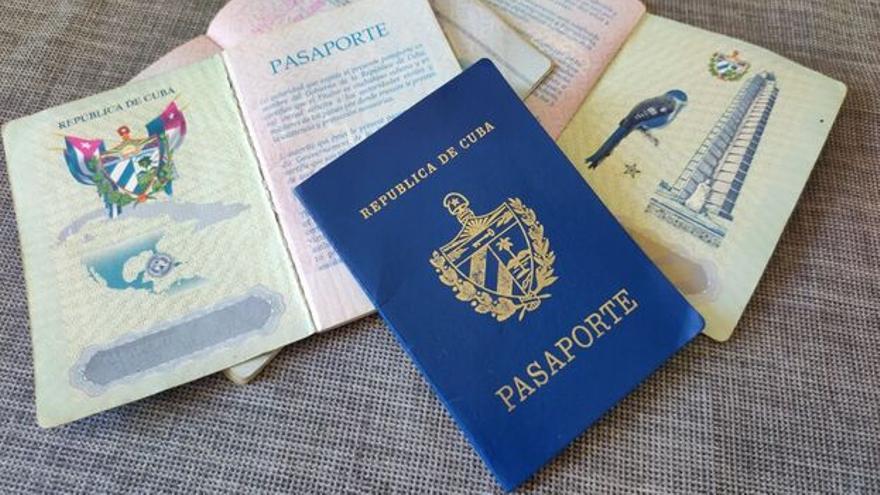
Eight Times More Cubans Applied for Asylum in Germany in the First Half of the Year

Cubans commonly buy ticked to places where they don’t need a visa and then ask for asylum in a different country on a stopover. (14ymedio)

14ymedio biggerEFE (via 14ymedio), Berlin, 23 July 2023 — The number of Cubans seeking asylum in Germany multiplied by eight during the first half of the year compared to the same period of 2022. “The number of asylum applications from Cuban nationals this year, as of July 2, 2023, has increased compared to the same period last year, from 73 to 607,” a spokesman for the Ministry of the Interior confirmed to the newspaper Bild.

According to the media, Cubans use a mechanism that consists of buying a plane ticket to a destination for which they do not need a visa, for example Belgrade or Dubai, with a stopover in the German city of Frankfurt.

There, where transiting passengers do not need a visa, they appear at the Federal Police and apply for asylum.

According to the spokesman, in 2022, 302 Cubans were identified who mainly used this transiting privilege to apply for asylum. continue reading

He added that “not even half” of these Cubans follow the law; that is, they do not later show up at the corresponding center of the immigration office “after expressing their desire for asylum with the Federal Police” at the airport and registering their data.

The newspaper points out that about 300 Cubans have disappeared in this way.

“It is unacceptable that the Schengen border code can be undermined by a simple trick, with a stopover flight. The right of asylum and Schengen rights must be urgently reviewed,” demanded the head of the German police union, Heiko Teggatz, in statements to Bild.

The newspaper points out that about 95% of asylum applications submitted by Cuban citizens are rejected. In 2021, 38 asylum requests from Cubans were registered; last year, 187.

Bild also recounts the case of the González family — father, mother, and two children — and two other Cubans who had left Havana on May 27 on the Condor airline bound for Dubai via Frankfurt, where they were intercepted in the transiting area by the Police.

In statements to the Police, the woman confessed that they wanted to emigrate illegally to Spain, for which they had to seek asylum first in Germany. Then they would be picked up at the reception center by smugglers who would take them to Madrid by car, and who had charged them 25,000 euros (27,750 dollars) for the service.

Translated by Regina Anavy

____________

COLLABORATE WITH OUR WORKThe 14ymedio team is committed to practicing serious journalism that reflects Cuba’s reality in all its depth. Thank you for joining us on this long journey. We invite you to continue supporting us by becoming a member of 14ymedio now. Together we can continue transforming journalism in Cuba.
The ‘Five Heroes’ That Are Missing in Cuba: Chicken, Picadillo, Sausages, Detergent and Oil

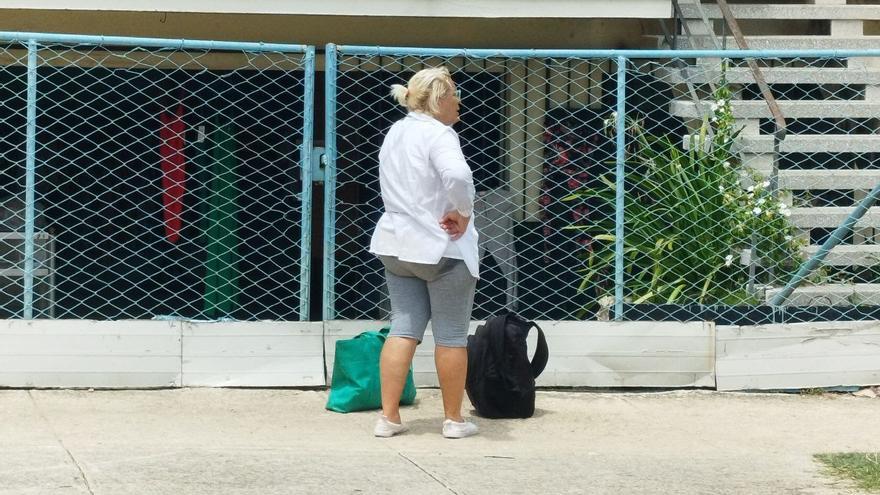
This Wednesday, in the middle of Vedado, a women waits to exchange handmade cheese for bars of soap. (14ymedio)

14ymedio bigger14ymedio, Juan Diego Rodríguez, Havana, July 21, 2023 — The neighbors of the Luyanó neighborhood, in the Havana municipality of Diez de Octubre, are more than tired. This July, the only products of the ’combo’ they have been able to buy are oil and detergent. And not even in the same store.

In the shop on Melones Street — sadly famous for the death of an old man who uncovered a network of thieves last year and for its reputation of persistent corruption — promised sausages did not arrive, and there was only chicken for about 600 people. “I have the number 1,800, and I don’t even know when I’ll get the meat. We will have to wait until July 26 to eat chicken,” Rosa said ironically on Thursday, referring to the anniversary of the assault on the Moncada barracks, a notable date for the regime.

Cubans do not overlook the fact that the Government manages the calendar at will, to celebrate a propagandistically relevant day or to avoid “grievances.” Thus, Rosa’s daughter, Karla, points out how on July 11, the second anniversary of the historic protests in Cuba, and after weeks of transportation shortages, the buses multiplied on the streets of Havana, to the point that many of them were empty. “Now ten days have passed and there are no taxis. To get one is like the Way of the Cross,” complains the young woman. continue reading

The Government cannot hide the difficulties of supplying the population with the ’basic basket’. The president of the National Assembly of People’s Power, Esteban Lazo, referred to this last Tuesday, saying that the country “does not have the resources to continue the level of imports we have” and recognized that “practically 100% of the family basket is being imported.”

Since May, without going any further, in Guantánamo chicken is no longer available for those over 13 years old, and protests are frequent both on social networks and in private: “Neither the sausage nor the detergent has arrived in my store, the revolutionary model is increasingly broken,” Yusuan said as he left a warehouse in Centro Habana, where mortadella arrived: “half a pound per person.”

That they distribute the basket as promised by the authorities is nothing short of a miracle. “They said they were going to give a bottle of oil, 10 pounds of chicken, two packages of Mexican picadillo, a package of sausages and one of detergent,” explains Ernesto, a resident of Central Havana. “Sometimes they sell something else, like on one occasion two cans of condensed milk, but the ’combos’ are rarely complete.”

Although Ernesto’s situation is not good, like that of the vast majority of the population, he had to bring a few cans of beans that he got “on the left” for an old friend with two children who could only buy rice.

The habaneros take all this with humor and refer to the combos as the “modules of misery” or “the five heroes” for the number of products offered – chicken, picadillo, sausages, detergent and oil – a mockery of the five spies who were imprisoned in the U.S. until their release, a product of negotiations with then-President Barack Obama

The shortage leaves scenes on the street, such as barter operations, not seen since the 1990s, during the Special Period. This Wednesday, in the middle of Havana’s Vedado district, two women proclaimed: “Cheese for exchange, cheese for exchange!”

Coming from another province, they explained to customers that they exchanged handmade white cheese for bath soap, scarce where they live. It is a product that provokes many complaints in the population because of its coarse quality, but it can be found in the informal market at a price between 130 and 150 pesos per bar.

Translated by Regina Anavy

____________

COLLABORATE WITH OUR WORKThe 14ymedio team is committed to practicing serious journalism that reflects Cuba’s reality in all its depth. Thank you for joining us on this long journey. We invite you to continue supporting us by becoming a member of 14ymedio now. Together we can continue transforming journalism in Cuba.
The Deputies Confirm the Deplorable State of the Aqueducts in Cuba but Don’t Offer Solutions

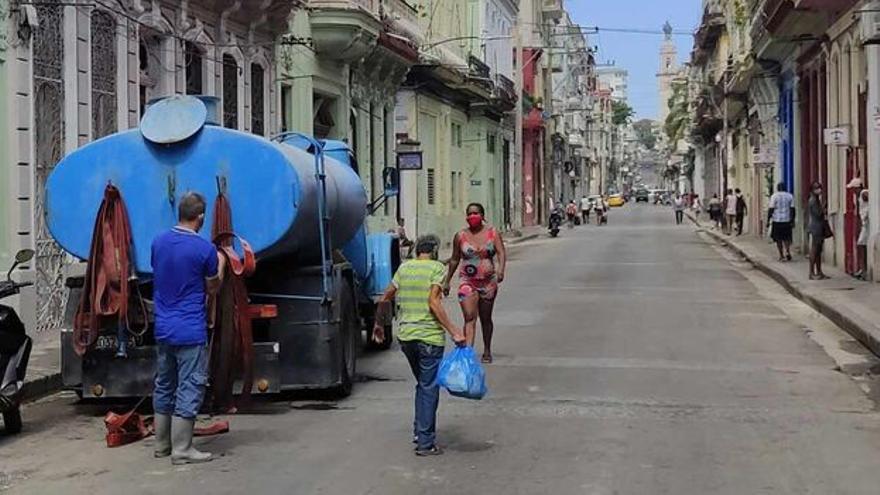
Almost a million Cubans are currently supplied by water trucks. (14ymedio)

14ymedio bigger14ymedio, Havana, 21 July 2023 — At least 156,000 people do not have safe and stable access to water service in Cuba, Antonio Rodríguez, president of the National Institute of Hydraulic Resources, revealed on Wednesday. During one of the sessions of Parliament, the official warned that the constant breakdowns of the Island’s aqueduct system due to obsolete equipment and damaged pipes, cause “substantial losses” daily of both water and money.

According to the Institute’s records, in Cuba there are 10.9 million inhabitants (98.6% of the total population) with coverage of the basic water service through aqueducts or pipes. Of these, 475,000 are “permanently” dependent on tank trucks.

Some 20% of the water available on the Island is dispatch through the aqueduct systems, where much of the liquid is lost due to the poor technical state of the hydraulic infrastructure.

About 2.07 million people receive water in their homes intermittently, every three or more days. Similarly, the families of 478 population settlements, where 2,000 Cubans live, have a totally or partially damaged aqueduct system. continue reading

Rodríguez reported that in the past month alone there were 260 breakdowns on the Island, which left more than 380,000 people without access to water. The situation led the inhabitants in the neighborhood of Guatemala, in Mayarí, Holguín, to take to the streets in the early morning of June 27 to demand the restoration of water after being without service for three months.

The crisis affected the population in Havana from the poorest neighborhoods to the inhabitants of the exclusive Miramar neighborhood, where the diplomatic headquarters are housed. The Government reported that the deficit in water service affected more than 200,000 families in the capital, 10% of the population.

The water deficit has also increased the number of thefts. A resident of Luyanó, in Havana, told 14ymedio that they must be alert so that the neighbors do not steal water from the residential connections with hoses. “You have to be aware at night, when the dogs are barking,” he added.

To alleviate the crisis, the president of the Institute said that 1,390 new pumps are expected in the next two years, and their operation will not depend on the National Electrical System. This machinery will provide service for 481,342 Cuban families.

Rodríguez acknowledged that the “tense situation” has not been resolved in the last five years due to difficulties in importing the parts to repair the electric pumps. The official pledged to solve the problem in the next three years, and more than 1.3 million dollars have been allocated to bring in the equipment.

However, the projections are not encouraging for Cuban families because the water level, both from the surface and underground sources, has been reduced with the drought. In Guantánamo, for example, the Hydraulic Samping Company confirmed that the aquifer mantle is scarce due to the characteristics of a poorly permeable soil.

This leads to more wells being drilled in search of water, without satisfactory achievements in many cases. According to a note from the provincial newspaper Venceremos, the company initiated a plan to dig six new wells in the face of the lengthening of drought periods.

Translated by Regina Anavy

____________

COLLABORATE WITH OUR WORKThe 14ymedio team is committed to practicing serious journalism that reflects Cuba’s reality in all its depth. Thank you for joining us on this long journey. We invite you to continue supporting us by becoming a member of 14ymedio now. Together we can continue transforming journalism in Cuba.
The Dictatorships Are Responsible for the Cuban and Venezuelan Exodus, Not the U.S. Sanctions

Since 2020, Cuba and Venezuela have contributed to the U.S. migration crisis by just 5.8% and 5.5%. (EFE)

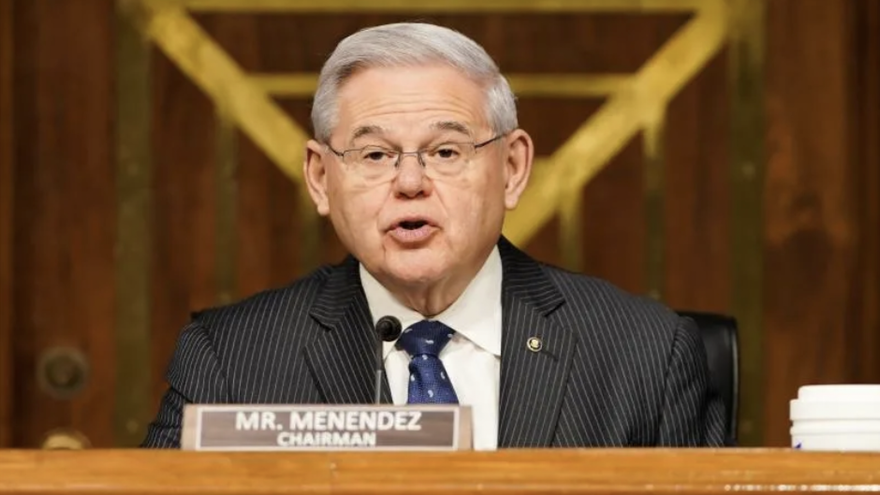
14ymedio bigger14ymedio, Havana, 21 July 2023 — Cuban academics Juan Antonio Blanco and Emilio Morales, who preside over the Cuba Siglo 21 organization, criticized on Thursday the content of two letters signed by U.S. members of congress and economists who accuse Democratic Senator Bob Menéndez of using a “false narrative” in his defense of U.S. sanctions against the regimes of Cuba and Venezuela.

Last May, a group of congresspeople led by Democrat Veronica Escobar sent a letter to the White House demanding that the Joe Biden Administration remove sanctions on Cuba and Venezuela    under the pretext that the economic suffocation caused by this measure causes Cubans and Venezuelans to emigrate to the U.S.

Menéndez, who chairs the Foreign Relations Committee, responded by denying that there was a relationship between sanctions and the migratory stampede, which he attributes rather to the lack of human rights and the presence of “brutal dictatorships” that “have destroyed the economies of their countries.”

At the beginning of July, another letter criticizing Menéndez was signed by 50 economists and academics, among them the Pulitzer Prize winner Greg Grandin, repeating  Escobar’s claim. In addition, it alleged that there was “no serious investigation” that supported the senator’s arguments.

Two articles published on the Cuba Siglo 21 website by Blanco and Morales have now been added to the discussion. Both academics discredit the proposal of the members of congress and economists, arguing that the regimes of Cuba and Venezuela are the “causes of the deplorable socioeconomic situation” of both countries. continue reading

“We must start by saying that Cuba and Venezuela are not, by far, the main countries that contribute migrants in this crisis that has occurred since Joe Biden entered the White House,” says Morales, who offers data from the U.S. Customs and Border Protection Office to support his argument.

Cuba and Venezuela occupy the fourth and fifth place respectively among the countries that send migrants. Since 2020, both have contributed to the migration crisis by just 5.8% and 5.5%, while Mexico (with 2,323,278 migrants), Honduras (690,888) and Guatemala (683,031) together represent 49.5% of the migrants who reached the U.S. in the same period. However, these three countries receive funding and investments from Washington and are not subject to embargoes or sanctions, which shows that blaming the U.S. sanctions for the exodus is a fallacy.

The causes of Cubans going into exile, Morales says, must be sought in government repression. The stampede “broke out after  the dictator Miguel Díaz-Canel gave the order to repress the demonstrators on July 11, 2021,” he explains. The academics ignoring, in their letter to Menéndez, the effect of surveillance, fear and police violence on the Island turns them, in the eyes of Morales, into “goodies” who comfortably ignore the reality of the country and display, at the very least, their “intellectual shallowness.”

The problem of Cuba and Venezuela does not come from U.S. sanctions, but from the dictatorships that for decades “have internally destroyed their respective economies with the unpunished theft of state resources and policies of control that prevent their citizens from generating wealth,” Morales insists in his article.

Several examples offered by the academic refer to the Cuban economy that – even analyzing the official figures – is in the red. Morales says that it is enough to look at the income from the nine most important items of the Island’s economy – remittances, tourism, mining, medical services, tobacco, sugar, fish, seafood and agricultural products – to verify that they have been in progressive degradation since 2013.

“This decline is not due to the embargo, nor to the sanctions implemented by the Donald Trump administration against the Cuban regime, but to a regime with totalitarian political and economic institutions to which is added the ineptitude of the power elite and their government,” he summarizes.

For Morales, the $7 billion in food that Cuba imported from the U.S. between 2001 and 2023 shows that the embargo does not have much impact on the Cuban economy, but it is used by the regime to justify the shortages.

“In the case of Venezuela, something similar happens. The deterioration of the Venezuelan economy is not due to the sanctions imposed by the Donald Trump Administration, but to the embezzlement and corruption of Chavismo, which led Venezuela to financial bankruptcy,” he added.

The conclusions of Morales and Blanco are identical and defend the position of Menéndez, who insists on intensifying his position towards the island’s regime. Both ask the academics who signed the letters against the senator to demand, rather, the return of freedoms to the citizens of Cuba and Venezuela, their right to generate wealth and to express themselves freely. Otherwise, they conclude, their position makes them accomplices of two of the most criminal dictatorships on the American continent.

Translated by Regina Anavy

____________

COLLABORATE WITH OUR WORKThe 14ymedio team is committed to practicing serious journalism that reflects Cuba’s reality in all its depth. Thank you for joining us on this long journey. We invite you to continue supporting us by becoming a member of 14ymedio now. Together we can continue transforming journalism in Cuba.
The Cuban Parliament Defines the Profile of Teenage Mothers: Poor, Black and Out of Work

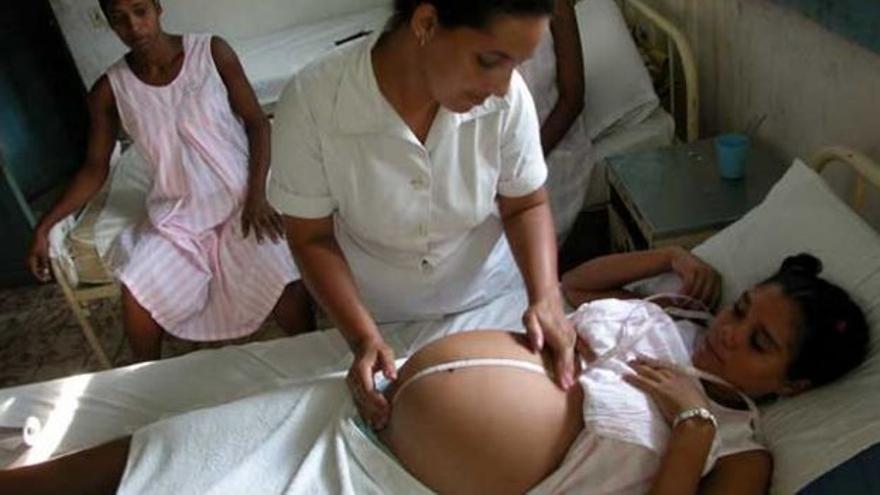
A pregnant woman receives medical care in Cuba. (Interpress Service)

14ymedio bigger14ymedio, Havana, 19 July 2023 — The Cuban Parliament reported on Tuesday that in the first half of 2023 there were 7,953 pregnancies corresponding to women between 12 and 19 years of age, out of a total of 41,761 reported nationally. The situation is more worrying in the rural context, where, say the deputies, early mothers have a specific profile: poor, black and out of work.

The figure, which represents 18.9% of the total number of pregnant women in the country so far this year, exceeds by 291 (3.7%) the 7,662 early pregnancies of the same period in 2022. If the cases are analyzed by province, the percentage is even more alarming; 22.7% of those born in Las Tunas are born to underage mothers, while in Camagüey the number is 21.4%, in Granma, 20.4% and, in Holguín, 20.3%.

For Arelys Santana Bello, president of the Parliament’s Youth Care Committee, “social factors” intervene in the upturn of precocity. In the Cuban countryside, it is common for a minor to feel forced to have children, either to get out of poverty – if the father is able to respond economically for the child and his mother – or to emigrate, if the father is a foreigner.

“In the places visited by the deputies, mestizo and black adolescents, living in rural environments, detached from study and work, in low-income homes and in precarious conditions, were more prone to early pregnancies,” she explained.

There are other social factors that affect the problem, such as lack of access to sexual and reproductive health services, Santana said. The official also mentioned the “influence of gender inequities,” which limit the woman’s decision to terminate a pregnancy. continue reading

She also regretted that, although educational and social communication actions are “prioritized,” these are “insufficient” due to the complexity involved in convincing rural minors to “adopt responsible behaviors.”

Adolescents resort less to the use of contraceptive methods than adult women, she said, leaving in the background the low availability of these supplies in the Island’s pharmacies.

In Cuba, teenage pregnancies not only have serious consequences for women’s health but also have a profound socioeconomic impact on families. After pregnancy, many young women are pressured to get married and have children, reducing their access to higher education or a decent job. On many occasions, the children end up being raised by grandparents.

The solutions to this problem that Parliament raised on Tuesday once again focus on the promotion and education of sexual health through the media and on the promise of strengthening the 168 municipal family planning services by adding staff and renewing the supply of contraceptives.

The deputies also proposed that emphasis should be on the continuity of studies for pregnant adolescents, who usually see their educational process interrupted. Similarly, it was proposed to create a maternal home in each municipality that doesn’t have this type of center.

Yamila González Ferrer, vice president of the Union of Jurists of Cuba, added that the issue is also legally complex. Marriage between a minor – usually a girl – and an adult remains, under Cuban law, a crime: “It is a crime of rape, because she is a minor. We need our doctors and teachers to be trained,” she concluded.

She also criticized the fact that, often, it is the parents of the teenager who encourage the relationship with older men and early pregnancy, despite the fact that voluntary interruption is legal.

For his part, Antonio Aja Díaz, director of the Center for Demographic Studies of the University of Havana, pointed out that fertility in Cuba has been decreasing in the last five decades. After the baby boom in 1960, the number of pregnancies began to decline, beginning in 1978. Currently, the general fertility rate on the Island is 1.4 children for each woman of childbearing age (15-49 years old), a figure that Aja relates to the indicators of developed countries and that he does not hesitate to attribute to the “policies of the Revolution.”

Commenting on the increase in the number of pregnant minors, Aja could not sustain his optimism and agreed with Santana and González: the alarming situation is a reflection of the “social problems” of Cuban families.

Translated by Regina Anavy

____________

COLLABORATE WITH OUR WORKThe 14ymedio team is committed to practicing serious journalism that reflects Cuba’s reality in all its depth. Thank you for joining us on this long journey. We invite you to continue supporting us by becoming a member of 14ymedio now. Together we can continue transforming journalism in Cuba.