
Saramago’s Havana Book

“The house which I see in the photos is obviously not the house of a proletarian, but of an accomplished and wealthy novelist.” (14ymedio)

14ymedio bigger14ymedio, Xavier Carbonell, Salamanca, 4 December 2022 – A colleague of mine went to Lanzarote – the most eastern island of the Canaries archipelago – and on her return she sent me some photos of the house where José Saramago lived.  I’ve always been an admirer of the Portuguese writer, famous for his large spectacles, his bitter, faithless prose, his reflective atheism and his fervour – scarred with age – for a communist utopia.

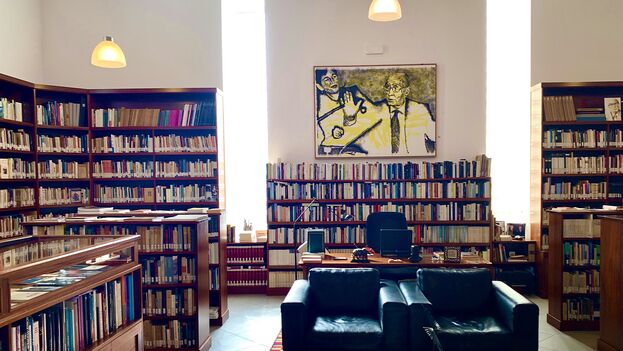
The house which I see in the photos is obviously not the house of a proletarian, but of an accomplished and wealthy novelist (he deserved it, without a doubt. He earned it – through his writing, not through government fawning and handouts). There’s a collection of beautiful inkpots on a shelf, pictures of some friends, the bed in which he died, a small green table where I’d like to sit and smoke, palm trees and cactuses on the patio, and, in the distance, a landscape which he described as “dark, and covered in bits of crushed lava”.

And books. Many books. Legions of heavy tomes which now rest on top of armchairs and bookshelves. Titles in various languages and from many cultures. Volumes, owned by a writer who travelled, dreamt and invented with intensity – though not about the other way in which we should live, dream or invent.

Not very much more than a few days ago – on 16 November – Saramago would have been 100. Few people remembered him in Cuba – a rough and volcanic island, much like Lanzarote – where the novelist was welcome, until he made a famous pronouncement which mortified Castro: “I’ve come this far” [“…and if Cuba is to continue their journey I’m staying behind”]. continue reading

I believe [when he died, in 2010] the National Library hung up a few posters and the usual crew got together to formalise his burial. Saramago donated the rights to his works to an island that ended up executing, much to his horror, the three Cubans who attempted to abandon our oppressive stone raft in 2003.

“The worst thing about Islands”, the lucid Portuguese novelist had written a couple of years earlier, “is when they start to imitate the sea that surrounds them. Under siege [from the sea], they [put their people under] siege”

Amongst the photos is one of Saramago’s bedside table. Underneath his spectacles, which now lie closed for ever, is one of his Lanzarote Notebooks: his diaries 1993-1997, which, either through boredom or excess of work, he abandoned. The following year, and after a long wait, the Swedes awarded him the Nobel Prize for Literature.

It’s a frenetic decade: the end of the century. In publisher Alfaguara’s classic edition of the Notebooks that I have in my hands, he reflects upon the hypocrisy of Diana Princess of Wales and Mother Teresa, the embarrassment of Gorbachev appearing in a pizza comercial and the failure of the communist project; there are transcriptions of letters from Christian believers, infuriated by The Gospel According to Jesus Christ and there’s an account of how An Essay on Blindness was written; in these, Saramago is intimate, courteous, ironic and endearing, as if he’s conversing at the little green table on his Lanzarote patio.

And of course there’s an abundance of  references to Cuba, to Roberto Fernández Retamar – the grey prominent figure at the Casa de las Américas – to  Cuban writer Cabrera Infante, to the Castro-Guevara duo, and to the local version of socialism during the ‘Special Period‘.

In May 1993, the young poet Almelio Calderón – in exile today – sent him a letter written in pencil. “Our editorial policy is very slow. At the moment there is a huge paper crisis”, he told him before admitting nervously: “There isn’t any”. Fueled by a hope for change that didn’t happen, the young man with no pen concluded by saying: “Here we are living through historical moments, very unique, very important, very intense, and I hope that history will know how to record them in its pages”.

I continue turning the pages. On 5 January 1994 a planned journey to the Island falls through, a journey which he interpretes as “the last opportunity to return to the socialist Cuba that I admire”. At the end of that year he even pledged to stand up for Castro with Clinton.

The most intense link with Cuba in the Notebooks was the obsession which took over him after reading the beautiful Muestrario del mundo (The World’s Sampler) by Eliseo Diego. In 1993, Eliseo -“one of the greatest poets of this century, and I’ve said this both inside and beyond Cuba”, Saramago noted, – had just won the Juan Rulfo Prize. Shortly after, death came knocking at his “modest door”.

Heartbroken by the friendship that was not to be, the novelist retired to his library to read all of Eliseo’s poetry works. And it’s here he makes a discovery: “Matías Pérez” – proclaims a known passage by the Cuban, and which sounds to him [Saramago] like an incantation – “toldero [a seller of canopies] by profession, what was there in your huge pretensions that took you away with such elegance and haste”.

He feels the possibility of a new novel like it were a command from the dead. “Matías Pérez, who are you?” he notes down various times – in Lanzarote, in Lisbon, in Madrid or in Río de Janeiro. He dreams about the hot air balloon and starts to investigate – “I wanted to know the how and the when of such an appealing story” – and he writes to Retamar asking him for a clue, a lead, a ’silhouette’ of this Portuguese guy who disappeared forever over the rooftops of Havana. “Who knows, maybe I’ll go to Cuba to uncover the mystery of Matías Pérez. If not, I’ll just have to invent him, from head to toe”, he notes, and throws in the towel.

The end of the story is, I’m afraid, not very romantic. The sinister Retamar replies years later with a letter. Inside the envelope, carefully folded, there is a newspaper cutting about Matías Pérez, written in almost forensic tones, ending with: “The military authorities of the day carried out a thorough investigation. There was no trace. But months later, the remains of a hot-air balloon were found, in the coastal keys close to the Pinos Islands”.

Saramago must have destroyed the actual article – who knows whether or not he was instructed to by ‘inspector’/ curator Retamar, in order to deter him from writing the story – the ‘Havana novel’ that José Saramago might have written. Retamar, like Mephistopheles, later came to demand a favour: in exchange for that newspaper cutting he wanted a “brief portrait” of Guevara for his magazine.

On 2 July 1996, in his Lanzarote library, Saramago mentioned Matías Pérez for the last time: “If I get the time and I keep my determination up, perhaps one day I’ll get out and look for him”.

Translated by Ricardo Recluso

*Translator’s note: Matías Pérez was a nineteenth century Portuguese-born Cuban, who was a canopy tradesman and an amateur balloonist, who disappeared mysteriously during one of his balloon flights from Havana.

____________

COLLABORATE WITH OUR WORKThe 14ymedio team is committed to practicing serious journalism that reflects Cuba’s reality in all its depth. Thank you for joining us on this long journey. We invite you to continue supporting us by becoming a member of 14ymedio now. Together we can continue transforming journalism in Cuba.

‘There is Only One Person Responsible: Fidel Castro,’ Reinaldo Arenas Wrote on December 7

Reinaldo Arenas was born in 1943 in Holguín, a telluric and difficult region, from which Guillermo Cabrera Infante, Fulgencio Batista and Castro himself also emerged. (Reinaldo Arenas Archive) 

14ymedio bigger14ymedio, Xavier Carbonell, Salamanca, 7 December 2022 — On 7 December 1990, 32 years ago, Reinaldo Arenas committed suicide “without first having to go through the insult of old age.” He himself recounts that, when they told him that he would soon die of AIDS, he went to his apartment and made a wish, half a prayer and half an insult, in front of the portrait of Virgilio Piñera.

“Listen to what I am going to tell you,” he snapped at the deceased, “I need three more years of life to finish my work, which is my revenge against almost the entire human race.” With unfortunate punctuality, three years after that sentence, and maintaining “equanimity until the last moment,” he killed himself in New York.

Of all Arenas’s texts, the most brutal and serene was his brief farewell letter, written to be published. “There is only one person responsible: Fidel Castro.” The phrase falls back on the Cuban reader, lapidary and current. “The sufferings of exile, the pains of exile, the loneliness and the illnesses that I may have contracted in exile, surely I would not have suffered if I had lived free in my country.”

Arenas was born in 1943 in Holguín, a telluric and difficult region, from which Guillermo Cabrera Infante, Fulgencio Batista and Castro himself also emerged. Of Guajira origin, he always kept the rusticity and innocence of a boy from the provinces. Ruffled with hair and imagination, with a deep and seductive speech, the young man soon made his way in Havana and maintained a long friendship with José Lezama Lima and Virgilio Piñera. continue reading

His best-known book, Antes que anochezca [Before Night Falls*], attests to the surveillance, persecution, and imprisonment to which he was subjected by Castro’s political police. The cruelty of the State against the writer, the cornering of him in the most unusual settings – from Lenin Park to a precarious boat heading to the US – could only engender in Arenas a lucid, spiteful memory that was true to itself.

His novels – which he had to secretly send abroad – had already made him famous. But when a journalist traveled to Havana to interview him, he had to solve a labyrinth of clues and tricks, audacity and passwords, to find Arenas in the end, like a happy minotaur, in some dilapidated lot.

The succession of photographs that accompany Before Night Falls allow us to see how his face, mischievous in childhood, flirtatious in youth, and sad and sentimental about to board the boat in Mariel, becomes spectral and serene in 1990.

More than three decades after his death, the work of Reinaldo Arenas continues to be terra incognita for the majority of Cuban readers and almost none of his books are published in his country, thanks to the censorship of the same government that exiled him.

Reading El Mundo Alucinante [Hallucinations*] or Celestino Antes del Alba [Celestino Before Dawn*] clandestinely, enjoying the pages of La loma del ángel [Graveyard of the Angels*] or savoring his poems by the sea, continues to be the most endearing way to remember Arenas on the anniversary of his death.

*Translator’s note: The translated titles are not necessarily direct translations but rather those used in the English editions

____________

COLLABORATE WITH OUR WORKThe 14ymedio team is committed to practicing serious journalism that reflects Cuba’s reality in all its depth. Thank you for joining us on this long journey. We invite you to continue supporting us by becoming a member of 14ymedio now. Together we can continue transforming journalism in Cuba.

A Stranger is Shipwrecked in Cabo Lagarto, Land of Tobacco and Forbidden Women

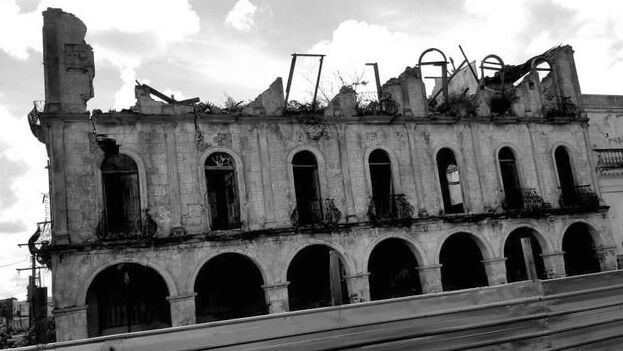
The ruin and demolition site of the  Hotel Cosmopolita, in Camajuaní, originating from 1880, inspired a number of passages from Náufrago del tiempo (Castaway in Time). (Elena Nazco)

14ymedio bigger14ymedio, Xavier Carbonell, Salamanca, 26 November 2022

The village lives in a perpetual silence, as though words had the power to unleash a tempest. The women believe that any festivities would bring bad luck and catastrophe; the men never speak to one another and the children are forbidden from playing outside, to avoid the wind from disorientating them and snatching them away from their mothers.

When my daily work is done, someone from the village will usually give me the basics to survive. They think I’ve gone crazy because I keep breadcrumbs, fruit skins, grains and bits of anything digestible in the deep pockets of my shirt. These are for the little cat that follows me day and night, which is, after all, the only companion I have in the old hotel.

It’s to him that I owe the old pallet that I use as a bed, and the continual revelations that I have about the building.

His body is as skinny and ghostly as a blade, and it’s because of this that he’s able to understand the anatomy of the hotel better than I do. He knows all the passages, all the cracks that lead into the bedrooms, the crevices between the bricks, the strange creatures that live in all the pipes and tubes.

I try to sleep when I arrive back at the old hotel, in order to save any energy I get from the little food I have to eat. Even from within the ruins you can feel the electrified air and an atmosphere that becomes more and more charged, as though a hurricane were to come and shake the village’s foundations at any moment. continue reading

Sometimes the insomnia is too strong and I only get to sleep as morning approaches. In those moments I drift in and out of dreaming like someone drowning at sea, I hear all kinds of vermin scratching at the hotel’s walls, I see my father’s face, and the women’s faces. At the same time the creatures start to move, scuttle inside the piping, watching me with their little eyes, burning with night blindness. I know I’m not just imagining these creatures because the cat, which is my night guardian, also follows them with his hunter’s eyes.

Yesterday, thanks to my companion, I found a hotel bedroom door that was easy to break down. After I’d cleaned up the debris I was able to sleep, once again, this time on a relatively soft mattress.

I get the impression that everything I do is somehow bound up with the cat. He guides me through the hotel’s darkness, a veritable labyrinth that he knows better than I do, and he shows me which wall to tear down or when I should sleep. Whilst I get hungrier and hungrier and can start to see my ribs showing, he grows fatter, feeding on whatever I bring him each evening, as an offering to stop him from abandoning me to my fate in the middle of the storm that will soon arrive.

***

Since the dawn, the cat has started to nibble affectionately at my big toes. He does it to demand food, or when he wants to show me something new in the hotel. Obstacles broken through, and new passages discovered, the cat has brought to my attention a shaft of light, very weak, coming from the other side of a wall where I’d thought there were no more rooms.

I looked for the iron bar that I use for pulling down walls and gave this one a blow. On the third attempt the bricks gave way and I walked through the cloud of dust and into the space where the cat wanted to take me.

What I found there was both marvellous and terrible, and words themselves are useless at describing it properly.

***

In one place, as the prophets had foretold, there was the serpent and the dazzling bird, the stream filled with fish of every colour, docile beasts which grazed on grass and creatures that crawled up into the branches of the trees, the scaly bright lizard, bees, moths and ants in search of food; there were all kinds of plants, clinging onto healing stones and onto walls sculpted by time, fruit which ripened in seconds and fell to the ground only to become at one with the soil and the coldness there; and there was light, a golden, greenish light, almost as if the air itself were covered in moss, all a brightness and a heaven, with no indication at all of the approaching storm.

It was then that I remembered the hotel had once been a monastery; perhaps, before being a monastery it had been a piece of Eden itself, later recovered by the very words spoken by the monks.

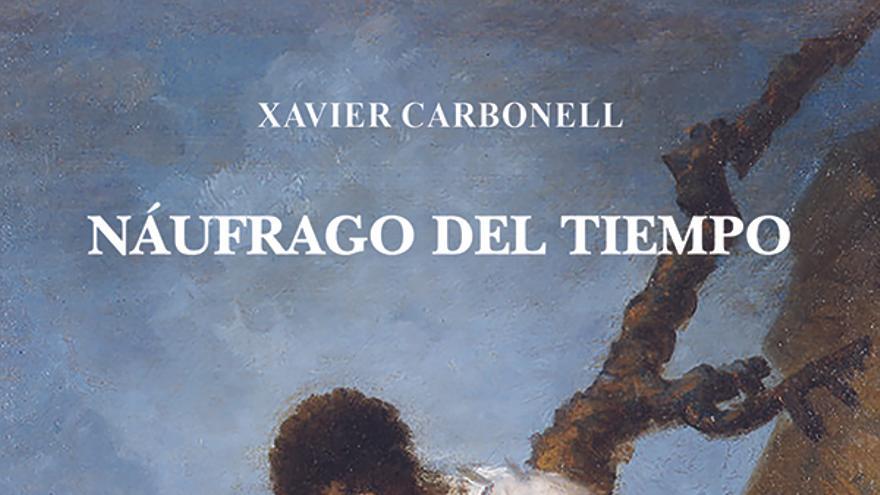
Cover of the novel ‘Náufrago del tiempo’ (’Castaway in Time’) released in November by the Spanish publisher Verbum.

But there, in the middle of all that, there was also a man, sitting at the head of a long wooden table, being served with fruit and other delicacies, which the animals had brought for him. He remained completely still, eyes half open, naked as though it was his turn to be the Adam of that garden. His hands, long and bony, were ploughed through with small wounds that looked as though they’d been caused by a needle.

The cat jumped onto the table, took a bite from the fruit and lay down, very close to the man. Cautiously, because one doesn’t expect anything good to come out of Cabo Lagarto, I asked the man who he was, and where were we.

“I am the rock which supports the world”, he said to me, hardly opening his lips. “And when I fall, the globe too will fall”.

***

The man’s throat sounds deep and dusty, full of words, but from a place where time gets bogged down and becomes stone, bones, motionless matter. A rheumy liquid runs from his wrinkles, as though he had never closed his eyes. His grey beard covers his throat and his chest, and he spreads his hands as if, indeed, the very destiny of the cosmos depended on his steadying of the table and everything on it.

When we speak the animals look at us, from the grey cat to the lizards whose bodies are impossible to see completely because of all the weeds covering them.

The man speaks little and always replies in riddles. On the first day I limited myself to looking around the cloisters or the inner courtyard of the hotel, which was already a small universe for me. As the days went by the man became more revealing.

Sometimes he would say:

“I am as old as the stones and the mountains; the moon gave birth to me, the sun gave me life; I pronounced the first word ever spoken in the world, but I forget what it was. That’s why I’m here.”

Or he’d lower his forehead until it touched the table, and then changed his story:

“I fought hard during the war. The victors accused me of being a spy; the vanquished said I brought them ill fortune. Both sides sentenced me to death and decreed they’d erase my name from everywhere. I escaped and came here to take up this monastery”.

His hands appeared to be tied by some invisible chain. He moved them only once: to explain to me why he didn’t eat any of the delicacies on the table.

“I swore I’d kill the world and the world never forgets”, he said, as he moved his fingers to reach out for an orange. “Watch what happens if I dare to contradict my own blasphemy”.

At that moment, mice, cockroaches, insects and other vermin I can’t even name began to climb up the table legs. Birds came flying down from all parts of the ruin, and, while the old man tried to reach the fruit, the animals bit his fingernails and pecked his hands until his thick blood began to mess up the food along with the birds’ feathers and all the bugs.

“Now do you understand the weight that I carry?”

I wanted to reply, but I couldn’t speak, I was too full of revulsion for what I’d just witnessed. The only thing I could do was run, knock down the walls, get covered in dust and fall exhausted onto my rickety bed in the reception hall.

Translated by Ricardo Recluso

____________

COLLABORATE WITH OUR WORKThe 14ymedio team is committed to practicing serious journalism that reflects Cuba’s reality in all its depth. Thank you for joining us on this long journey. We invite you to continue supporting us by becoming a member of 14ymedio now. Together we can continue transforming journalism in Cuba.

“The Silences and Scandals of Cuban Freemasonry” is Presented at the Miami Book Fair

Acosta defines the post-1959 stage as the “decay of Cuban Freemasonry.” From one of the nations with the greatest influence of the order worldwide, it became one of the weakest. (14ymedio)

14ymedio bigger14ymedio, Xavier Carbonell, Salamanca, 18 November 2022 — The book, Del templo al temple. Silencios y escándalos de la masonería cubana [From Temple to Temple. Silences and Scandals of Cuban Freemasonry] (Editorial Primigenios, 2022), by journalist Camila Acosta, will be presented from November 18 to 20 at the Miami Book Fair. It’s a history of the Masonic order on the Island, which details in a special way the order’s vicissitudes after 1959.

Acosta’s research, which had as its background a documentary that she recorded for her graduation thesis at the University of Havana, is presented as the reverse of the story that the regime — in the figure of historians such as Eduardo Torres Cuevas — has attributed to Cuban Freemasonry.

In the back-cover note, the writer and Freemason Ángel Santiesteban Prats points out that the book allows access to a history that “had been extinguished for six decades because that was decided by Fidel Castro,” and he affirms that Acosta has provided a “response to the censorship of the totalitarian regime” on the circumstances in which the order was forced to operate after the revolutionary triumph.”

“Camila Acosta entered a world forbidden to those outside the Masonic fraternity,” continues Santiesteban, who also regrets that the “majority of the Masons themselves barely knew about their own history.”

In a volume of 422 pages that is now for sale on Amazon, Acosta reviews the historiographic tradition that precedes the order and provides details about the female branch, the Daughters of the Acacia, and about the Masons who, in turn, have participated in movements opposed to the Government. continue reading

Criticizing the material she addresses, Acosta defines the post-1959 stage as the “decay of Cuban Freemasonry.” From one of the nations with the greatest presence and influence of the order worldwide — with more than 34,000 members — it became one of the weakest in its context. Confiscations of property, infiltrations and aggressive propaganda against its postulates were part of Castro’s strategy to dismantle Cuban Freemasonry.

Obsessed with the possibility that institutions such as fraternities, secret orders and churches would form an opposition front, the Revolution launched systematic attacks on the Masonic infrastructure and threatened young people not to join its ranks.

The exile of many Cubans — including numerous Masons — between 1959 and 1970 is another cause for the decay of the order, says Acosta. Those who remained in the country were forced to report to the Government who attended the meetings, what issues were discussed and who espoused them, as well as “deliver copies of the minutes” and “pay heavy fines for not doing so or delaying,” she says.

“The very fact of belonging to Masonry or some fraternal or religious institution was interpreted by the authorities as a symptom of lack of revolutionary devotion,” Acosta explains in the ninth chapter of her book, which details the schism that the order experienced when it tried to move the headquarters of the Great Lodge of Cuba to Florida.

From the more or less intense persecution of those years, the Cuban Freemasonry organized different initiatives such as the Clandestine Masonic Movement, with expressly anti-communist guidelines.

After several decades of tension, with the arrival of the so-called Special Period, after the collapse of the Soviet Union and the loss of its financial support, and the return of Cubans to religion and other related practices, Freemasonry experienced a boom in membership. However, in 2011, the program Razones de Cuba [Cuba’s Reasons] revealed the complicity of former Masonic Grand Master José Manuel Collera Vento with State Security, which increased disappointment with the order and suspicion among its members.

This episode triggered numerous difficulties and tensions between the Government and the order, and exposed the constant “manipulations” — in Acosta’s opinion — that Freemasonry suffered at the hands of the Office of Religious Affairs of the Communist Party.

The most recent stage in the history of the order, including the imprisonment of several Freemasons during the so-called Black Spring of 2003, or the letter signed by the Masonic Grand Commander to Miguel Díaz-Canel against the police repression of 11J [the protests of 11 July 2021] are also addressed by the journalist in her investigation.

Acosta, born on the Isla de la Juventud [Isle of Youth] in 1993, is a correspondent for the Spanish newspaper ABC in Havana and writes for several independent media. From Temple to Temple was published by Primigenios, a Cuban publishing house based in Miami with a catalogue of almost 500 titles, directed by the writer Eduardo Casanova Ealo.

Translated by Regina Anavy

____________

COLLABORATE WITH OUR WORKThe 14ymedio team is committed to practicing serious journalism that reflects Cuba’s reality in all its depth. Thank you for joining us on this long journey. We invite you to continue supporting us by becoming a member of 14ymedio now. Together we can continue transforming journalism in Cuba.

‘Life in Cuba is Almost a Heroic Act’

Adrián Martínez Cádiz has had to “chat” several times with the political police. (Facebook)

14ymedio bigger14ymedio, Xavier Carbonell, Salamanca, 25 October 2022 — Silent, emphatic, direct in what he thinks and says, the young Havanan Adrián Martínez Cádiz has had to “chat” several times with State Security. The agents are difficult interlocutors and gesticulate too much. The last appointment, on October 21, lasted an hour, with an effusive and rough lieutenant colonel who calls himself “Kenya,” a well-known stalker of numerous activists.

Martínez, who works as a journalist in several initiatives of the Catholic Church in Cuba and for the EWTN network, tells 14ymedio what it’s like to “dialogue” — so to speak — with the G2 officers, at the police station in Plaza de la Revolución.

“The gestures, the looks, the tones and the manner were threatening all the time,” says the young man, who spent an hour in interrogation with Officer Kenya and another soldier who identified himself as José Antonio.

“They wanted to officially warn me that I’m engaging in pre-criminal behavior by posting on my networks, ’inciting a crime’ and publishing texts that disparage Díaz-Canel, which they consider contempt,” says Martínez, who was threatened with criminal proceedings if he continued to be critical of the Government on his social networks.

The agents showed him photos of himself with activists and opposition figures such as Anamely Ramos, Omara Ruiz Urquiola, Rosa María Payá and rapper El Funky. “They won’t do anything for you,” they told him. “What they want is to send you to do things from the United States and ’perform theater’.” He replied that Ruiz Urquiola and Ramos, for example, had been prevented from entering the country. continue reading

Lieutenant Colonel Kenya then raised his voice and said that “it was a lie,” and that the Government didn’t prevent anyone from entering the Island. “Almost at the end he asks me what I was committed to, to write it in the warning act,” Martínez says. “Nothing at all,” he said, refusing to sign the document.

“Better for me,” the officer spat and left the room. After the interrogation, the police let in two officials of the Ministry of Communications. Martínez left the station with a fine of 3,000 pesos, although — by order of the officers — they didn’t confiscate his phone.

That day, activist Adrián Cruz, known as “Tata Poet,” a friend of Martínez, was also questioned. A group that included several Catholic priests was waiting for both young people outside the station.

“They’ve never clearly told me to ’get out of Cuba’,” he says, but indirect campaigns have become increasingly aggressive.  Ciberclarias [online “catfish”], he continues, are increasingly active in the groups that buy and sell, on common access sites or popular pages. “And, unfortunately, there are people who still believe them. I have friends in Camagüey who went to a family member’s house where I was the subject of conversation, saying  that I’m paid from the United States to publish and tell the truth,” he says.

Another notable difficulty arises when it comes to temporarily leaving the country. “It’s an odyssey,” complains Martínez. “They always review me exhaustively and ask me questions. Upon my arrival from a trip I was interrogated for 45 minutes in a room at the airport, and I was threatened with jail if I kept publishing.”

On that occasion they examined his luggage piece by piece, and kept “under investigation” two laptops, hard drives, USB sticks, cameras and other items related to communication. “When the objects were returned to me, the laptops had been forced and didn’t close well.”

For Adrián Martínez, life in Cuba is almost a “heroic act.” To the daily difficulties, blackouts and shortages, the surveillance of the political police is added. Religious spaces, such as Catholic university groups and “problematic” parishes, are continuously infiltrated by young agents.

“We Cubans have an ’extra sense’ to recognise them,” says Martínez, although he can’t specify what it is that immediately betrays the spies. “However, you have to be sure before accusing someone,” he says, “because there is also a tendency to think that we are always monitored. In addition, those of us who are disturbed, attacked and harassed can fall into the excess of thinking that everything bad that happens to us is caused by them.”

“There are infiltrators and collaborators at all levels,” he adds, “but you have to live without fear. We do nothing but tell the truth and try to do good.”

The persecution and surveillance of State Security on activists, religious leaders, artists and intellectuals has caused people of different ideologies to be united against the Government’s oppression. This has also contributed to many priests and nuns of the Island, such as Lester Zayas, José Luis Pérez Soto, Jorge Luis Gil and Nadieska Almeida, taking a more radical position against the regime in the capital.

’Each one of us has gone through these interrogations, through the threats, and we know what they represent,” says Martínez. “I understand that people are afraid, I am too, but there are things bigger than fear: that is what unites us in front of a police station to accompany, to embrace those who are being repressed not only for defending their rights, but also the rights of others. It’s not fair to abandon someone who is defending my right.”

The young man believes that State Security has managed to expel many “inconvenient” Cubans from the country. Those who remain on the Island — “those who are remaining” — will have to face the viciousness of the Government. “As for those who have left, I respect and hug them. I fight every day, like so many others, against the temptation to leave and forget everything.”

Regarding the passivity before the regime of which the Cuban bishops, who met last Friday with Pope Francis, are accused, Martínez points out that “many times I don’t agree with ways of proceeding, with particular opinions or other things. When I have the opportunity, I let them know and set out my opinions. I have always been listened to with respect.”

Translated by Regina Anavy

____________

COLLABORATE WITH OUR WORKThe 14ymedio team is committed to practicing serious journalism that reflects Cuba’s reality in all its depth. Thank you for joining us on this long journey. We invite you to continue supporting us by becoming a member of 14ymedio now. Together we can continue transforming journalism in Cuba.

Cuba: The Last Place for Home

Image of the interior of the José Lezama Lima House Museum, located at 160-162 Trocadero Street, in Central Havana. (José Lezama House Museum)

14ymedio bigger14ymedio, Xavier Carbonell, Salamanca, 25 September 2022 — Although we are wandering creatures, we are always looking for a home. For no one is a house enough; we must affirm our domain with small ornaments, paintings, touches, ashtrays, scratches on the wall, even breaks. That’s why hotels — no matter how luxurious they are — have something sterile and prostibulary  that expel us to welcome the next one.

The trip exists to get home, no matter if it’s real or imaginary. The young people make lists and draw maps, and symbolically anticipate that coming home through small talismans: a lamp, a portrait, a book to which they cling. If these objects represent anything, it is loyalty to ourselves, the confidence that there will be a future and it will be — even in poverty — warm and welcoming.

Nothing is frivolous inside a house; everything has its meaning. Cuban mothers — for whom all junk is a treasure — were enraged when, carelessly, we broke a plate. Or if the cat we raised with care and civility knocked down a vase with its tail.

The secret space between the wall and the door was the favorite hiding place of childhood, as was the interior of the closets, where the jackets and ties of the old people made us sneeze. On the hallway boards, my brother and I marked our height with pencil: our whole life is contained in those lines of graphite, year by year, inch by inch, until we stop growing. continue reading

Inside the home there are free spaces and forbidden regions. The first time I opened a drawer, I did it with fear. The wardrobe, formidable, threatening, had three doors. I took hold of the handle and looked, on tiptoe, at the contents of the drawer.

There is no way to list what I saw — what we all saw at some point — because already the memory, treacherous as it is, populated it with false artifacts, invented by me. However, the only thing I clearly distinguish is a pair of gold-mounted mirrors, which belonged to a deceased relative.

Even now I remember the effect they caused on me, when I put them in front of my face: vertigo, dizziness, the terror of looking with the eyes of the deceased. From then on I was more suspicious of drawers.

“The dead should die with their things,” García Márquez wrote with disgust. Nothing worse than looting the memory of those who left. One feels — and rightly so — that he is disrupting the portion of existence that it took others a lifetime to accumulate. However, it’s natural that books, statuettes and lead soldiers don’t hinder the flow of the lives to come. We have to make room for them.

Sentimentality leads me to make only one exception: libraries.

Every reader of Lezama has embarked on the pilgrimage to the house at Trocadero 162, in Havana. There, library and home are one thing. The forgetfulness of the bureaucrats has been good for the place. They haven’t removed the figures that he had on his shelves and that acquire so much meaning in his work. Their gravity remains in the pictures and seats, and it could not be destroyed even by the cyclone that flooded the house a few years ago.

His friends, who still live and remember him, return to that time and to that library. Dislocating the showcases and disrupting the order of the specimens would mean, in a way, burning a fragment of their legacy.

Libraries, therefore, have to survive us.

The last station in the home, the one we have left when we have left or are far away, is the void. It was the master of Trocadero himself, heir to the Chinese dragons and the Japanese sages, who taught us how to taste it. The word is tokonoma, the empty creator of the house, a refuge made of nothing and silence where we can enter and rest.

The emptiness is the “unsurpassed company, the conversation in a corner of Alexandria,” which “surrounds our whole body with a silence full of lights.” There is nothing abstract about this. In fact, it is the only real thing when — in the cold and waiting for the train at the station — we look for the lukewarm interior of our pockets. In the background, intact as a ghost, is the promise of home.

Translated by Regina Anavy

____________

COLLABORATE WITH OUR WORKThe 14ymedio team is committed to practicing serious journalism that reflects Cuba’s reality in all its depth. Thank you for joining us on this long journey. We invite you to continue supporting us by becoming a member of 14ymedio now. Together we can continue transforming journalism in Cuba.

A Documentary Rescues the Writer Lezama Lima from the Clutches of the Cuban Regime

The film collects the vision of 28 ‘witnesses’ about the writer. (Ivan Canas)

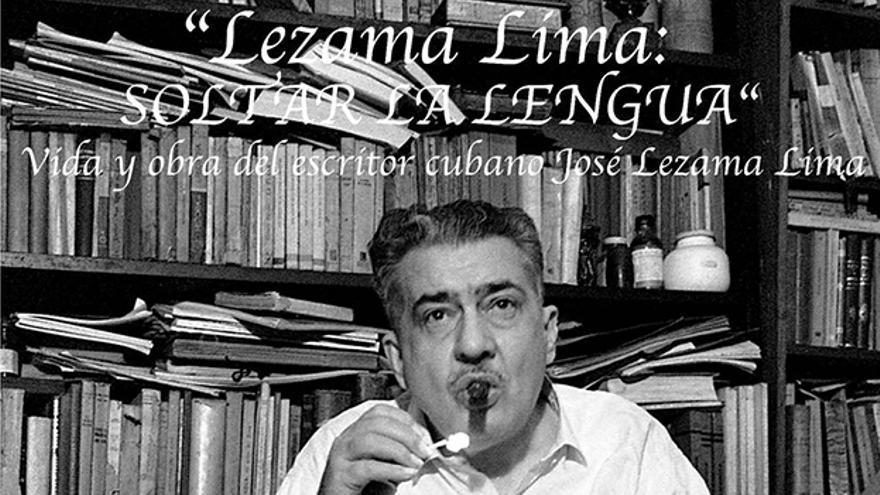
14ymedio bigger14ymedio, Xavier Carbonell, Salamanca, 21 August 2022 — In order to “stir up the anthill,” on the 45th anniversary of the death of Cuban writer José Lezama Lima (1910-1976), last Sunday the filmmaker Ernesto Fundora, at the Rosario Castellanos Bookstore of the Fund for Economic Culture, in Mexico City, screened his documentary “Lezama Lima: Soltar la Lengua” [Lezama Lima: Loosen the Tongue].

The film assembles fragments of interviews with friends and disciples of Lezama, collected by Fundora between 2009 and 2015, and finally edited in 2018. Despite the fact that the post-production of the documentary is modest and that there are excessive and almost primitive visual effects, his mind does a wonderful job in remembering the formidable author of Paradiso.

Except for images of his participation in a couple of congresses and around hundreds of photographs, very little visual material on Lezama is preserved. Hence the difficulty that we get the sense that Lezama is being offered to us as something more than a voice and a presence among books. However, Fundora succeeds in having those who knew the author evoke a Lezama who is vital, convincing, and nearby.

Just when he had published one of the essential novels of the Spanish language and was getting recognition outside Cuba, death came to him

Some of the testimonies, such as those of Cintio Vitier, Fina García Marruz, César López and Antón Arrufat, shared the friendship of the Cuban teacher since the beginning and middle of the century; in others, such as those of Manuel Pereira, José Prats Sariol, Enrico Mario Santí, Froilán Escobar and Félix Guerra, his influence and teaching during his youth was essential.

For the devotees of the “Lezama Cult,” the writer is still awaiting continue reading

recognition. The 1959 cultural bureaucracy kept him in the crosshairs as “republican junk” until, after the so-called 1971 Padilla Case, he was banished from editorial and public spaces.

Just when he had published one of the essential novels of the Spanish language and was getting recognition outside Cuba, death came to him without the expected “restoration” and in almost absolute solitude.

Several young writers who accompanied him in his last days, such as Prats Sariol and Reinaldo González, recall their sadness at the empty house and the abandonment of his friends, whom State Security “recommended” not to frequent 162 Trocadero Street. He died on August 9, 1976.

During the Special Period, the movies Fresa y Chocolate and Lista de Espera recovered the Lezamian cultural imprint and were, in a way, promoters of the “liberation” of the taboo. Young people avidly sought dramas that were not only disturbing and difficult, but also marked by exclusion, such as the books by Severo Sarduy, Guillermo Cabrera Infante, and Lydia Cabrera.

The truth however, is that bureaucrats have done everything possible to bury the ‘Lezamian’ work, cancel its study and constantly define it as “hermetically sealed”

The regime and its cultural machinery then began a meticulous work of biographical rewriting, in which old colleagues such as Vitier took part, presenting Lezama as an author “of the Revolution,” an admirer of Castro and Guevara as “messiahs” of a new “imaginary era,” Latin American, according to the paradigm of Casa de las Américas, and a writer who “some officials” did not “correctly” understand.

The truth is, however, that the bureaucrats have done everything possible to bury Lezama’s work, cancel its study and constantly define it as “hermetic,” “intricate,” “incomprehensible” and “elitist.” The celebration of his centenary was mediocre and there is still no center of study named after him. His scattered and poorly organized library is inaccessible to scholars, and no Cuban publishing house has issued critical or annotated editions of Paradiso, La Cantidad Hechizada, or any of his major books.

Hence, Lezama Lima: Soltar la Lengua acquires an exceptional value as rescue and recollection. Exceptional are the last frames, which offer information and clarity about the ostracism, the false promises of rehabilitation with which the Communist Party deceived him, and the unusual conditions in which he agonized and died.

As Fundora himself states, almost half of the 28 individuals who rendered testimonies of him have died, so the film, enriched by photographs and fragments of poems, recollects the final vision of many of them about the writer.

In addition, the documentary works as an excellent initiation for those who have not read the work of José Lezama Lima and deny, through authorized voices, each of the myths with which the regime has tried to appropriate one of the greats of Cuban culture.

Translated by Norma Whiting

____________

COLLABORATE WITH OUR WORKThe 14ymedio team is committed to practicing serious journalism that reflects Cuba’s reality in all its depth. Thank you for joining us on this long journey. We invite you to continue supporting us by becoming a member of 14ymedio now. Together we can continue transforming journalism in Cuba.

The Furthest City

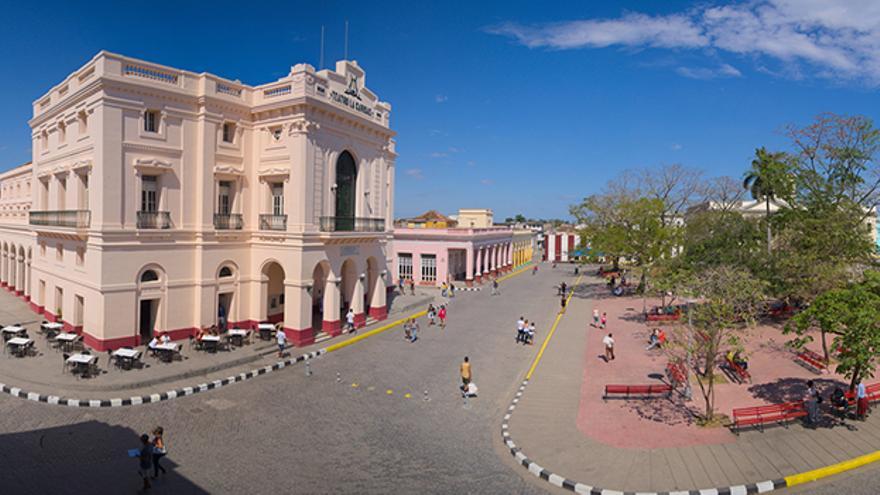
View of Vidal Park and the La Caridad theater, in Santa Clara. (CC)

14ymedio bigger14ymedio, Xavier Carbonell, Salamanca, 14 August 2022 — Rarely can an exile choose the city in which his days will end. Fortune intervenes, rolls the dice, and the cards are shuffled. Wherever we fall, we live, and we try to make sense of the trip. The city that welcomes the exile can be dizzying or peaceful, but one approaches it as one who caresses a cat. It can receive us but also bite us.

Reinaldo Arenas said that, upon leaving Cuba, he felt the same relief as those who escape from a fire. One is happy to have been saved, but then he understands that his house, his people, his island were definitively burned down. And not only because of the impossibility of returning, but also because the exile already abolished a territory from the map and turned it into a memory.

That distance that establishes the memory between you and your country characterizes the emigrant. And if, years later, we return, it is only to prove that the border is firmer than ever.

Like the fragment of [José María] Heredia that we read as children with boredom and reluctance: “What does it matter if the tyrant thunders? Poor, yes, but I find myself free: Only the soul of the soul is the center.” There are few more resentful verses in our literature. Heredia contemplates from afar, from the boat, the homeland denied to him, and his revenge is to affirm that not even the earth matters, but the soul, the personal memory. continue reading

“Without a homeland but without a master,” José Martí repeats this decades later. That is why the furthest city is not the one that receives the exile, but the one that he leaves behind.

For me, that city was Santa Clara, compact, provincial, quiet. I spent my early youth between the Central University — isolated like a monastery — and the library of the former Passionist convent that is now the bishopric. I lit my first cigars in its cafes and became fond of smoking on the terraces of Vidal Park, wasting the Creole afternoon.

I was not bohemian nor did I participate in the literary life of the city, populated by vultures and poets. Disguised as an editor, librarian and vagabond student, I wrote novels in silence and let myself be carried away by the pirates, conquerors, ships and creatures of the bestiary.

Although my town was the space of myth and dreaming, in Santa Clara the memory of the Island opened up for me. Without it, I wouldn’t be able to write. In the library — the strangest space in the city — I held the only preserved cylinder of the organ from the Parroquial Mayor church, demolished by Machado in 1923. In that same place I browsed books and autographs of patriots, writers, presidents and illustrious people.

I used to sit in the park, looking at the old Gran Hotel Santa Clara Hilton, to guess in which of its rooms Cabrera Infante had spent his first honeymoon and in which other room the insomniac Lezama had stayed; if he had endured being far from Havana, would have been a professor at the Central University. All those characters met in memory with José Surí, the poet apothecary, the benefactor Marta Abreu and the old mambises troops [insurrectionists], who claimed a drink at the mysterious Café del Muerto.

During my last months in Santa Clara, however, everything shut down, like the country. Restaurants closed, the library stopped receiving visitors, smoking was banned, buildings collapsed. Diseases and violence came after the protests. Like many young people, the island crushed us until we had to leave.

Like Heredia on the ship that dragged him into exile, I last saw the contour of the city last winter. We picked up a few books, my great-grandfather’s pipe, two boxes of cigars, some family relics, and we landed in Madrid, a city that I never managed to fully appreciate.

Then I boarded a train that traveled along the Castilian plain to Salamanca. I arrived sad, and the cold prevented me from smoking. However, a walk through the city was enough for me to understand that, from all over Spain, this was a favorite place for exiles, pilgrims and wanderers, like Miguel de Unamuno. I now live next to the Roman Bridge that crossed the Lazarillo, over the Tormes, in front of the cathedral, the university and the orchard of Callisto, Melibea and the bizarre Celestina.*

Salamanca secretly and endearingly rhymes with Santa Clara, as Cuba does with Spain. It is also small and quiet, ideal for writing and retreat, and when I travel outside it, through the Peninsula, I long to return home. Here, between books and thinking about the Island, at last “the soul of the soul is the center.”

Exile, despite the distance, is also adventure and learning. I don’t know when we will be able to return to the furthest city, but — like the ancient Trojans after the invasion — I carry with me the relics of the Island, memory, cigars and old words: any place is my country.

*Translator’s note: Comedia de Calisto y Melibia, written by Fernando de Rojas and published in 1499, was a medieval novel in the form of a series of dialogues, usually performed as a play and considered the first work of the Spanish Renaissance.

Translated by Regina Anavy

____________

COLLABORATE WITH OUR WORKThe 14ymedio team is committed to practicing serious journalism that reflects Cuba’s reality in all its depth. Thank you for joining us on this long journey. We invite you to continue supporting us by becoming a member of 14ymedio now. Together we can continue transforming journalism in Cuba.

Havana Historian Eusebio Leal, Two Years After His Death His ‘Oblivion’ is Decreed

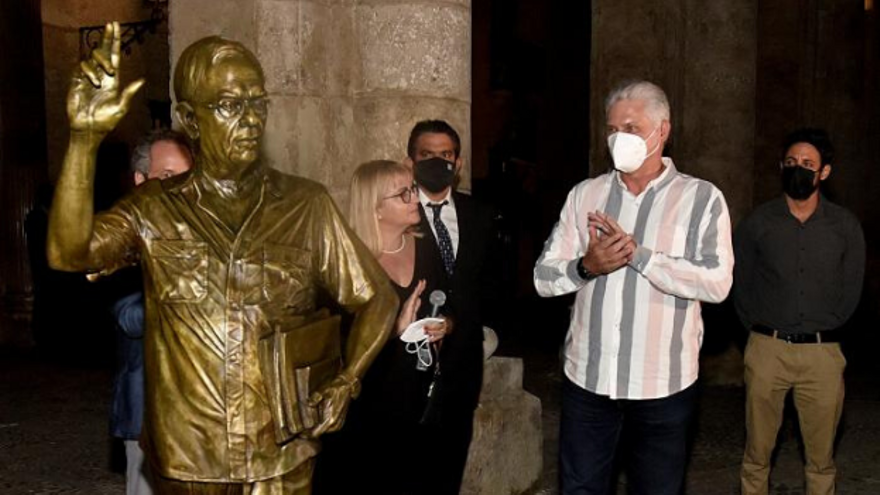
The regime, fond of funerary statues and monuments, summoned José Villa Soberón to “capture the essence” of Leal in a sculpture. (Granma)

14ymedio bigger14ymedio, Xavier Carbonell, Salamanca, 2 August 2022 — The legacy of Eusebio Leal, after two years of his death, fits in a couple of showcases and some tearful speech. An exhibition at the Elvira Cape Provincial Library, in Santiago de Cuba, was the greatest tribute to which the historian of Havana could aspire, far from the city to which he dedicated his life.

The Office of the Historian, dismantled in practice by the Armed Forces, exists as a symbolic skeleton to take advantage of the influence gained in life by Leal, although deprived of its business background.

Eusebio Leal died on July 31, 2020, and while the Government was preparing the funeral to embalm one of its most skilled managers, the military bureaucracy was grinding its teeth to reorganize the Office. A wave of dismissals, relocations, betrayals, departures from the country and petty battles for the favor of the new masters took hold of the most independent institution in Havana.

“They don’t have money for anything and the projects they used to have to help people in poverty were limited,” says a former worker at the Office. “It was the case of the department that was in charge of Humanitarian Affairs, from which the old people of Old Havana received help and donations. Now, they cannot even drink a glass of milk.”

The man points to Perla Rosales, deputy director of the Office and daughter of Division General Ulises Rosales del Toro, former Minister of Agriculture and one of Raúl Castro’s “incombustible” faithful, as responsible for the “surrender” to the military.

“I worked with them for many years, before the decline began,” he says. “The old directors retired or left the country, because they knew the misery that was coming: with Perla Rosales nothing can be ’resolved’, only she has ‘authorization’ to fill her pockets.” continue reading

“The residences for the elderly, very different from the asylums,” says the former worker. “They tell me that the employees, with a key to the apartments, usually enter and rob the old people with impunity. That did not happen with Leal.”

Havanans had become accustomed to a certain “activity” in the main arteries of the city. Stores, agencies, projects or museums promoted by the Office or by its economic arm, Habaguanex.

However, in 2016 the progressive dismantling of this corporation began, involving, according to rumors, an unprecedented embezzlement that the Government took advantage of to limit the functions of the Historian.

Leal himself admitted to this newspaper that many of the Office’s establishments were being transferred to Gaesa, directed by the late General Luis Alberto Rodríguez López-Calleja, a conglomerate that the historian defined as “a development company with investment capacity and prestige,” although he would retain “the power to advise on the conservation of the work and also on new projects.”

“It hurts us, yes, that at a time when perhaps the greatest respect for life circumstances is required, the mediocre ones who lack any work, and the poor in spirit, take advantage of it to hurt and harm the many who have worked over the years to save the heritage of a nation, whether in Cuba or any latitude on earth,” he added then.

Leal had forged a multinational network of influence, achieved almost exclusively personally, which was extremely useful for the Cuban government. Two years after his death, perhaps the most scandalous thing in the state management of the Office is not having already chosen a new Historian of Havana.

In addition to economic and hotel management, Eusebio Leal recovered the former academic splendor of the Office. Founded in 1938 by Emilio Roig de Leuchsenring, the first historian of Havana, the original vocation of the Office was to rescue the capital’s heritage, both the intangible and the buildings in the historic center of the city.

The opening of the Colegio San Gerónimo in the same place where the old University of Havana was located; the financing of the Cuban Academy of Language and History; the foundation of a publishing house, Ediciones Boloña, and an extraordinary magazine, Opus Habana, formed a cultural ecosystem that Havana had lost with the cultural supremacy of the Revolution.

The “glorious ruins” that the Elvira Cape Provincial Library in Santiago de Cuba exhibits in display cases of terrible taste testify to this active editorial work.

The regime, fond of funerary statues and monuments, summoned José Villa Soberón to “capture the essence” of Leal in a sculpture. A few hours before the anniversary of his death, in the portals of the Palacio de los Capitanes Generales, some tourists were taking photos next to the bronze figure, to which a prankster had placed, in his outstretched hand, a paper cup of granizada.

In an interview granted to the official journalist Randy Alonso, during the 500th anniversary of the founding of Havana, Eusebio Leal said: “I don’t aspire to anything, I don’t even aspire to what they call posterity.”

The Cuban Government, the Armed Forces and the cultural bureaucracy have enthusiastically complied with the wish of their historian.

____________

COLLABORATE WITH OUR WORK: The 14ymedio team is committed to practicing serious journalism that reflects Cuba’s reality in all its depth. Thank you for joining us on this long journey. We invite you to continue supporting us by becoming a member of 14ymedio now. Together we can continue transforming journalism in Cuba.
Che Guevara Was Not James Bond and That’s Why it Ended Badly

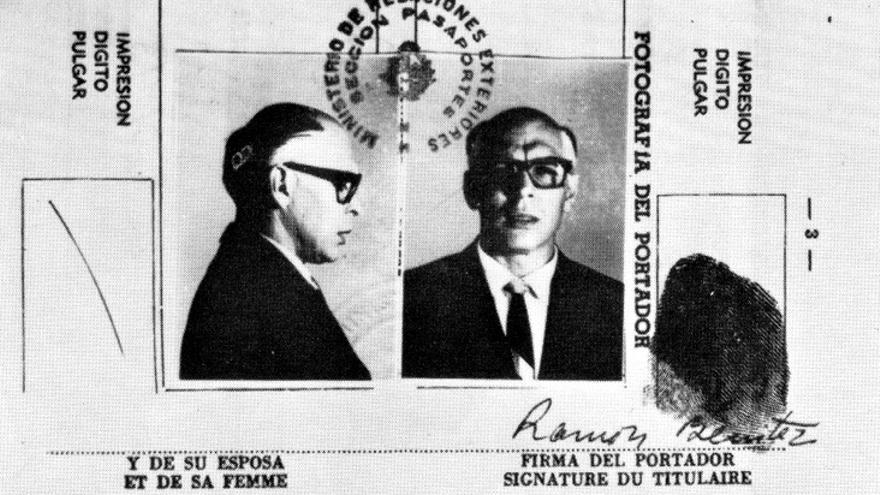
Disguised and with false documents, Ernesto Guevara traveled to Bolivia in 1966. (Diario del Che en Bolivia)

14ymedio bigger14ymedio, Xavier Carbonell, Salamanca, 16 July 2022 — Ernesto Guevara’s incursion into Bolivia to organize a guerrilla is the only espionage story that Castroism tells children. The story has all the ingredients of a James Bond movie: a charismatic and cynical protagonist, false passports, codes and code words, disguises to mislead the enemy and, of course, a license to kill.

Unfortunately for Guevara – who ended up dead, a trait that differentiates him from 007 and other agents – his adventure in Latin America also depended on the tension between the United States, the Soviet Union and the local communist parties which, aligned with the Kremlin, did not welcome with great enthusiasm the presence of a scolding and authoritarian Argentine, no matter how enlightened he thought he was.

Fidel Castro, the Richelieu of this fable, should be added to the equation; Fidel’s pro-Soviet moves showed Guevara that he had nothing left in Cuba.

A careful reading of these last days of Guevara is offered by the writer Alberto Muller in his book Why Did Fidel Abandon Che?, published this year by the publishers Betania (Madrid) and Universal (Miami).

According to Muller, the rupture between Guevara and Castro began with Guevara’s withering anti-Soviet speech in Algeria, during the Economic Seminar of Afro-Asian Solidarity in 1965. At that time, the Cuban Revolution had gone from the utopian hallucination of Fidel to an increasingly obvious guardianship of the Soviet Union. Guevara had already promoted the drastic executions of La Cabaña and failed in his management as a minister and president of the National Bank.

Between 1964 and 1965, at numerous international forums, he continually preached about the need for a revolutionary utopia. He traveled to the Congo, Guinea, Egypt, China, as well as Algeria, where he accused the Soviet Union of exploitation similar to that of the United States and of political pettiness with underdeveloped countries.

Upon his return to Havana, a harsh discussion took place between Guevara and Raúl Castro, in which the latter offended the guerrilla and accused him of being a Trotskyite, without Fidel defending him. After this dispute, Guevara discreetly breaks with the dome of power in Cuba. continue reading

Muller describes that the escape responded to a pattern of behavior in Guevara. Asthmatic since childhood, he had incorporated in his psychology the desire to move away from the suffocation of the center towards the periphery. Among the derivations of this escape is his constant abandonment of home and the family in search of adventure.

In 1965, Guevara had already disappeared from public life. He was in hiding in Prague after the failure of the guerrilla in the Congo, which Egyptian President Gamal Abder Nasser had mocked in a previous interview. The president had asked him if he believed himself to be Tarzan, because “a white man like him had no business” among the Congolese guerrillas, who smeared dawa magic ointment and got drunk with pombe to be invulnerable to bullets.

After the African failure, Guevara begins to plan his incursion into Latin America, with the aim of taking Argentina as a base for a continental revolution. However, Castro and Manuel Piñeiro Barbarroja –- the famous architect of Cuban State Security -– redirected him to Bolivia, a country that did not offer favorable conditions for the guerrilla focus that Guevara intended to organize.

Disguised as a bald and myopic economist, Ernesto Guevara landed in La Paz on November 3, 1966.

Mario Monje, president of the Bolivian Communist Party, had held several meetings in Havana with Castro, Guevara and other officials in the first five years of the 1960s. In them he had argued that Bolivia would not respond to any revolution because the peasants owned their lands and the Party was against the armed struggle.

For this reason, Muller argues, the interference in Bolivia was a strategic suicide, since not even the communist cadres themselves supported the guerrillas. In a meeting with Monje in Ñancahuazú, the Bolivian leader leaves enraged by the guerrilla’s authoritarianism. Guevara, of course, interprets it as a betrayal of his movement.

Monje informs Fidel of the rupture –- which the American Central Intelligence Agency would also find out about -– but he never reveals the letter to the guerrillas, who are already going through their worst moments. Muller notes that, in the famous Diario del Che in Bolivia, Guevara writes feverishly, over and over again: “Total lack of contact with Manila.” Manila was the code name for Havana and Fidel Castro.

After an accusation, the guerrillas engage in combat with the Bolivian army in the Quebrada del Churo, on October 7, 1967. Guevara is captured by the military, who order his execution, despite the US request to keep him alive.

Guevara’s death was the result of what Muller calls “links of abandonment” between Fidel Castro and the Argentine. Because of his inflexibility and his criticism of the Soviet Union – Guevara preferred the alliance with China – he had become undesirable on both sides of the Iron Curtain.

The writer affirms that the abandonment was a tactical procedure that Castro carried out frequently. That is why his book includes a long and documented list of historical figures whom Fidel eliminated or dislodged – from Huber Matos to General Arnaldo Ochoa – considering them an obstacle.

“El Diario del Che en Bolivia,” according to Muller, “is the great prosecutor against Fidel Castro. There is no need for subterfuge or speculation or inventiveness. The document is available to everyone. Read it.”

Lastly, the book contains a collection of key files to understand the estrangement between Guevara and Castro, and how the latter turned the former, after his death, into one of the most invoked amulets by the international left.

The master move came from Castro himself, who built a mausoleum in Santa Clara in 1992 to house the supposed remains of the guerrilla and those of his fallen comrades. It was the definitive step to consolidate the romantic myth of Che Guevara and attract those nostalgic for communism to visit the Island.

_________________

The author of ¿Por qué Fidel abandonó al Che?, the journalist and professor Alberto Muller, was born in 1939 in Havana and spent 15 years imprisoned in Castro’s dungeons. Even today, an official encyclopedia defines him as a “terrorist.” When he met Jorge Luis Borges in 1983, in Caracas, and they talked about the Island, the Argentine writer pronounced the phrase with which Muller titled his memoirs: “Poor Cuba!”

¿Por qué Fidel abandonó al Che?  Editorial Betania-Ediciones Universal, Madrid-Miami, 2022, 227 pages.

____________

COLLABORATE WITH OUR WORK: The 14ymedio team is committed to practicing serious journalism that reflects Cuba’s reality in all its depth. Thank you for joining us on this long journey. We invite you to continue supporting us by becoming a member of 14ymedio now. Together we can continue transforming journalism in Cuba.
‘If They Order You to Kill Us, Will You Do It?’ The Cuban Policeman Answered: ‘Probably’

Ermes Orta, one of the young people arrested in Sancti Spíritus because of 11J, offers his testimony to ’14ymedio’

14ymedio bigger14ymedio, Xavier Carbonell, On 16 July 2021, five days after the massive protests throughout Cuba, State Security forcefully entered a house on Calle Independencia #77, in Sancti Spíritus. There, they detained several young people, none of whom had gone out on the streets on 11J.

Based on private videos and audios, they were accused of criminal association and contempt. Three of them were prosecuted and sentenced to prison terms: Leodán Pérez Colón received 5 years; Yoanderley Quesada, 2 years, and Yoel Castillo, 1 year and 8 months. The others were released a few at a time during the following weeks and they testified later at the trial, held on January 18th.

Ermes Orta Bernal was one of the ones who testified. Almost a year after those events, Ermes spoke with 14ymedio by telephone from the United States, where he now resides, to offer his version. The story reveals the regime’s strategies in jailing boys who did not even protest publicly.

 “No crime was committed, it was just a punishment they wanted to inflict on the residents of Sancti Spiritus,” confirms the 20-year-old

“No crime was committed, it was just a punishment they wanted to inflict on the residents of Sancti Spiritus,” confirms the 20-year-old

Ermes tells that, after July 11th, a group of friends from Sancti Spíritus decided that they had to demonstrate peacefully once again, to demand the freedom of political prisoners Luis Mario Niedas Hernández and Alexander Fábregas. To that end, they joined a WhatsApp group called “Todos por la Libertad” and agreed to march as soon as possible.

That July 16th, at Leodán’s house, he says, “there was never a weapon, a machete, nothing, just a thermos of coffee on the table.” The police knocked on the door and entered without the residents’ consent. The boys turned their phones on and began broadcasting directly through their social networks. “We have nothing to talk about,” they told agent Orelvis Pérez Díaz, who had “taken an interest” in them for some time.

More strangers began to enter the house. Apparently, according to Ermes, State Security knew the purpose of the meeting, and had brought more people to support the arrest. “When we asked them to see an arrest warrant, they told us that it was not necessary, that they just wanted to talk.”

The atmosphere began to heat up when one of the officers discovered a recording phone and violently slammed it against a table. The boys remained calm in the face of the agent’s attitude and agreed to leave the place.

His phrase of choice was “They are ready to be transferred to Nieves Morejón,” referring to the maximum-security prison in Sancti Spiritus

“When we left the house there were a lot of people outside,” recounts Ermes, “there was police presence, many cars, people with sticks and stakes yelling “delinquents!” at us. Those people had been taken from their workplaces for an “act of revolutionary reaffirmation” against the young men, under the pretext that they had stoned the windows of a foreign exchange store. continue reading

They were transferred two by two to the Sancti Spíritus Bivouac. The cars: a police car, a Jeep and a black Geely. “We know the type of people they are, and they have been followed up,” snapped the officer who received them.

The first thing they did was to isolate them for an hour in personal dungeons less than 22 square feet in size. They were then led through a gated courtyard to the infirmary, where they were weighed and measured. They repeated the process later, with new officers, but this time they recorded them with cameras and “worked on their psychology,” according to Ermes.

Their phrase of choice was, “They are ready to be transferred to Nieves Morejón,” in reference to the maximum-security prison in Sancti Spiritus. After the medical check-up, they were kept in their cells. Little by little, they were called to interrogation rooms.

“We began to shout from dungeon to dungeon. Then an officer would come and silence us by hitting the bars hard. At night, they did the same thing with tin cans, they wouldn’t let us sleep. The interrogations were even done at dawn.”

“We did our business in a hole, a latrine, from which water came out twice a day, to be flushed. The stink was nauseating”

When Ermes read the order of disturbance in his precautionary disposition, he noticed that the document accused him of protesting on July 11th. It was difficult for him to rectify that manuscript, which also stated that they had thrown stones at the stores and had offended Díaz-Canel.

“On the third day of being locked up, they fumigated us with chlorine,” recalls Ermes. “A man came, an old man, with a chlorine gun, and he sprayed the liquid on us. I got intoxicated and told the officer: ‘I’m going to die, I’m allergic to chlorine, look what’s happening to me’. The old man replied that he didn’t care, he just did what he was told. ‘And if they send you to kill us, will you kill us?’ The policeman’s response was withering: “Probably.”

According to Ermes, the prison food was not as bad as might be expected, but the hygienic conditions were appalling. We did our business in a hole, a latrine, from which water came out twice a day, to be flushed. The stink was nauseating”

“There was a time,” he says, “when the showers were not working and we had to take some bottles that our relatives brought us. We filled them up with collected water from the trench to be able to wash ourselves.”

As the days went by, they were transferred to other cells, forming pairs with alleged 11J protesters. According to their new condition, they were assigned a number and the interrogations continued.

“They asked us who was paying us. They made us fight among ourselves. The questions were violent. They confronted each other.” The police frequently carried out nasal tests to verify if they were infected with covid-19, fumigated them with chlorine again and demanded the passwords of their phones.

“They asked us who was paying us. They made us fight among ourselves. The questions were violent”

“With all that pressure we had no choice but to deliver them.” From that moment on, the Police had access to the detainees’ messages and private photos.” They showed us naked photos of some of us, our text messages, they continued with the abuse.”

Ermes states that every day they asked the agents: “When are we leaving?” “Tomorrow,” they said, without the promise being fulfilled. Despite frequent chlorine intoxications, they were denied medical assistance.

The initial period in prison was the hardest, particularly for Yoel Castillo, who was 21 years old and is still in prison. Yoel attempted suicide twice. “After the first attempt, they took him to the infirmary where he tried again, hanging himself with a sheet. It was too much pressure for him.”

“They assigned a single lawyer to us, since “they were being so kind to us,” because the office was not working. When you went to find out who the woman was [Dunia Mariana Rodríguez del Toro], it turned out that she had been a State Security prosecutor. She ended up being the lawyer for Yoan and the others. Everything was ‘fixed’. She told us, cynically: ‘Don’t you want me to defend you?'”

Ermes Orta had a lawyer close to him: his own father, but at first, they did not allow him to serve as his attorney. Then they relented, and when he demanded to see the file, they tried to delay at all costs. Examining the documents, he realized that there was nothing of substance written, no real cause formed.

“Someone sent some photos of some machetes and some arrows through the WhatsApp group, but they immediately removed them. We did not send them. That boy was never detained, he was never in court.”

They were released a few at a time, each with a different mandate. Ermes was accused of contempt and conspiracy to commit a crime, without any evidence of violent acts. “It was a mousetrap, to teach everybody a lesson,” he concludes.

“On the record, they even accuse us of wanting to attack a police station in Sancti Spíritus. Six boys! No one believes that”

As a requirement for his phone to be returned, he had to pay a fine. The trial, held in January of this year, was a farce. The accused were called one by one, and the alleged witnesses did not even know them. The courtroom was filled with State Security officers, informers and policemen.

“On the record they even accuse us of wanting to attack a police station in Sancti Spíritus. Six boys! No one believes that. It’s a joke.”

Since he was in high school, in 2019, Ermes Orta was in the sights of State Security. When the long lines began during the pandemic and he denounced the situation on his social networks, an officer began to “observe” him. He was kicked out of boxing training for having “the Statue of Liberty tattooed on his ribcage.” They sanctioned him and, after the events of July 16th, warned him that he was “regulated.” [Ed. note: A euphemism meaning forbidden to travel.]

“You put up with jail, but when you get out, your friends’ parents ask you not to see them anymore. Then, since no business in Cuba is clean, the people you work with tell you: ‘Don’t come here anymore, because you’re going to have me marked.’ And one needs to understand.”

State Security began to harass him with the idea of leaving the country. They put pressure on his mother, who ended up crying every day. “The only way we are going to leave you alone is if you leave,” they told him.

His brother spent a lot of money from the United States on two flights through Copa Airlines, but the company canceled his ticket days before Ermes could board. Finally, he left the Island on January 27th, through Aruba, on a charter flight. He had to leave his 8-month-old son behind.

“What happened in Sancti Spíritus to us and with those who are still imprisoned was an injustice. After 11J Cuba has gotten much worse and they knew it. That’s why they turned on the valve. But people are no longer afraid because they have children and they don’t want the same for them.”

In exile, where he is preparing to debut as a professional boxer, Ermes says that he has understood what freedom, democracy and the possibility of having a future means. “That same freedom,” he asserts, “is what I want for Cuba.”

Translated by Norma Whiting

____________

COLLABORATE WITH OUR WORK: The 14ymedio team is committed to practicing serious journalism that reflects Cuba’s reality in all its depth. Thank you for joining us on this long journey. We invite you to continue supporting us by becoming a member of 14ymedio now. Together we can continue transforming journalism in Cuba.
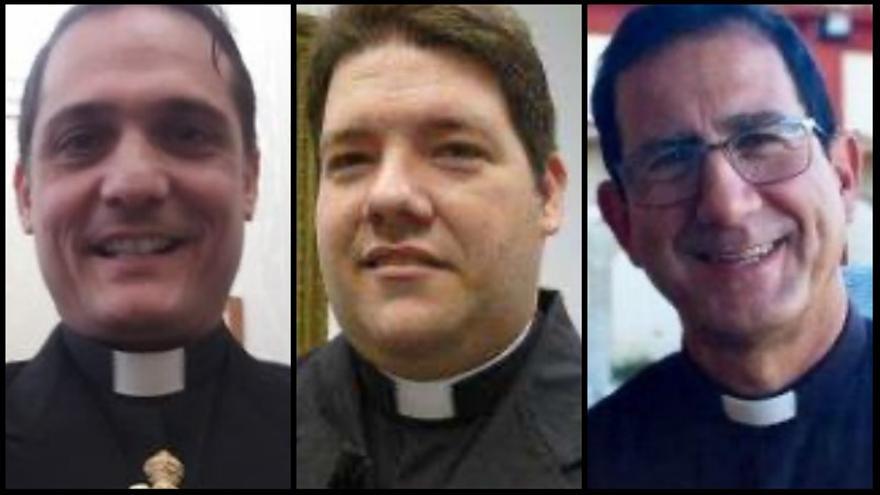
July 11th (11J) Was a ‘Bright Day’ Three Cuban Priests Agree

Three Cuban Catholic priests offer ’14ymedio’ their experience of the 11J (July 11th) protests a year later. (14ymedio)

14ymedio bigger14ymedio, Xavier Carbonell, Salamanca, 14 July 2022 — The oldest man in the cells wears a clerical shirt and a bandage on his head. Four stitches have been sewn over the wound. In the midst of the tumult of 11J in Camagüey, between the sweat and the cries for freedom, a hitman unloaded a bat on his forehead. With the same impetus, the aggressor returned to his group: it is not for nothing that they call this stampede of enraged proletarians rapid response brigades.

Dizzy, hungry – he had not been able to eat lunch – with a bloody head, the man called for help. Police, who take his reputation as a saint and a Samaritan seriously, escorted him to the hospital. There they patched up the wound as best they could and took him, of course, to prison.

That night, Cuba understood that the government was willing to go where it had not dared to go before in order to punish the 11J protesters: attack and imprison a priest. It was not until the following day – and with much pleading from the archbishop – that Castor Álvarez was released.

“That day everything was a party, all that was missing was the drum,” the priest tells 14ymedio, without rancor, a year after the protests. “There were many young people and the elderly came out of their houses astonished, to see that, as if to say: ’Is it true?’.”

When it all started, Father Castor was at the home of actress Iris Mariño. Seeing the vehemence with which that woman accepted the news, he fell to his knees and begged for a little enlightenment. He had to leave.

He walked three hours with the young people until the encounter with the military. “I told them no, that they weren’t there to hit the people. They had to let the people speak.” The police, he assures, were not as aggressive as the furious “cordon” of civilians, who were already wielding sticks to carry out Díaz-Canel’s “combat order.” continue reading

In the dungeon, the boys – of all colors, religions and ages – asked him if God had crossed Cuba off the map. “I told them that the opposite was true, and we began to pray together and talk,” adds the priest. “I was able to understand those young men, what they were risking. And I knew from their expressions that they would not stop risking.”

From the Special Period, the Cuban began an unstoppable “path of liberation”, reflects the priest. However, the most urgent challenge is “to believe in politics, to believe that a human association can be made with certain rules. We cannot think only of the family, which is perhaps the group to which Cubans advance in association, but also in the country.

For this priest, 11J was a “bright day,” which awakened the old happiness of Cubans. However, some hope gained in the protests “was frustrated by what happened around 15N [15 November].”

“We cannot despair,” he adds, “because the path through violence may be quick, but less durable. The peaceful path is slower, but having the conviction of the hearts and the agreement of men and the wills of all is more successful, more harmonious.”

In Havana, another priest, Jorge Luis Pérez Soto, was also moved to walk with the people during 11J. “I remember that afternoon I left the streets for an hour to go celebrate mass. It was a mystical moment, because spiritually accompanying this people is also urgent.”

The social networks, the growing burden and the generational change are transforming the Cuban reality, he thinks. In addition to light, 11J brought a lot of pain, both for those who “did not know how to peacefully claim their rights,” and for those who were supposed to be “guarantors of citizen order” and ended up calling for “brother against brother” violence.

Several photographs show the priest standing at the entrance to the police stations in Havana, demanding proof of life from the disappeared. Many of the prisoners were Catholic lay people, people of faith and culture, and minors, people about which the establishment in which they were detained was not even known.

It was decisive then, recalls Father Jorge Luis, that the Conference of Religious Men and Women of Cuba organized an accompaniment service for prisoners and their families. In a year of work, the Conference has provided numerous legal, psychological and counseling resources to families who have felt helpless in the face of the harsh sentences of 11J. This service has put the Catholic Church, regularly monitored at all levels, in the sights of State Security.

However, “the repression has been very harsh. Certainly international and media pressure have managed to reduce some sentences, but even so, they continue to be unjust and morally unacceptable for the most part.”

Father Jorge Luis agrees with his colleague from Camagüey that “the Cuban people must learn to listen and welcome each other. Individual agendas must be postponed by common agendas. Violence cannot be viewed in any way as a way to solve anything. The civic education of the people is urgent.”

11J surprised Alberto Reyes outside of Cuba, but this priest would have liked to “experience the protests in the first person.” It is no secret that the G2 has a particular viciousness towards him and that his surveillance file must be extensive and thorough. Despite this – and many other misunderstandings, even within the ecclesial environment – ​​Father Alberto is a voice of resistance and radicalism.

“From a distance, I experienced 11J with a mixture of emotions, with joy and hope that the demonstrations would open a path of definitive change,” he tells 14ymedio. Then came the “profound sadness,” “concern and anger at the repression that was unleashed, and at the opportunity that the government was once again missing to start a dialogue with civil society that would lead to change.”

Although it does not publicly acknowledge it, the power leadership is also experiencing “a situation of continuous wear and tear.” According to the priest, this political system “has more than demonstrated its inability to build a society that is not only prosperous, but also capable of responding to the most basic aspirations of human beings.”

“We are a tired and worn-out people,” he continues, “we are a people whose life is running out in the struggle for survival; we are a people who have learned to defend ourselves as best we can and who go out to parade and applaud energetically while preparing our definitive emigration from the country. We are a people submerged in misery and precariousness where it becomes increasingly difficult to cultivate the values ​​of the spirit. And we are a people who no longer believe in the empty promises that their rulers insist on repeating.”

A burning issue around 11J has been the attitude of the Conference of Catholic Bishops of Cuba, accused of weakness in the face of government pressure. Father Jorge Luis, however, assures that “the bishops have interceded a lot, from silence, to help the detainees; they have also spoken in various messages. Their action has been discreet, from anonymity, but they have been present.”.

“In my case,” Father Castor agrees, “my bishop was there both days to get me out of prison,” adding that “many of our laity were also arrested. Many people have expressed approval of our attitude in confronting the authorities in favor of justice, respect, freedom of expression.”

In these three priests a critical spirit and civic roots coexist that they share with many priests and nuns, such as Rolando Montes de Oca or the superior of the Daughters of Charity in Cuba, Nadieska Almeida.

“It is true that not all the pastors have been involved,” recognizes Father Castor, “but you also have to understand the charisms. I believe that there has been a light within the pastors of the Church towards the people. And the people know that they can always find support there.

____________

COLLABORATE WITH OUR WORK: The 14ymedio team is committed to practicing serious journalism that reflects Cuba’s reality in all its depth. Thank you for joining us on this long journey. We invite you to continue supporting us by becoming a member of 14ymedio now. Together we can continue transforming journalism in Cuba.
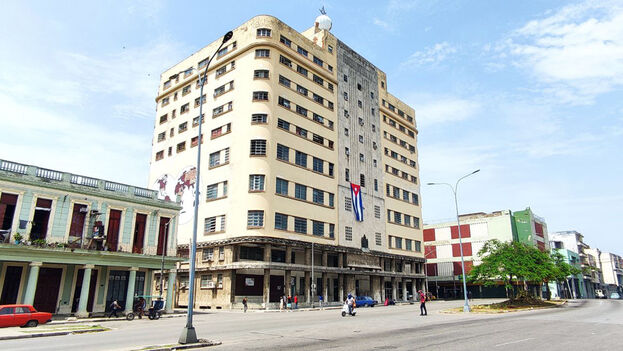
No Cuban University Student Foresees a Fulfilling Future

Built on the idea that the universities should be protected spaces, the buildings of Villa Clara’s Marta Abreu Central University are located outside the city. (Trabajadores)

14ymedio bigger14ymedio, Xavier Carbonell, Salamanca, 18 June 2022 — The majority of university students in Cuba were born between 1998 and 2003. According the Ministry of Higher Education, as reported in the newspaper Granma, preliminary enrollment for the 2021-2022 academic year was 292,507 students, distributed across Cuba’s fifty universities and 113 majors. The most prestigious schools, all founded before the 1959 Revolution, are the University of Havana (UH), the University of Oriente (UO) and the Marta Abreu de Las Villas Central University (UCLV).

Founded on the idea that the universities should be protected spaces, UCLV’s buildings are located on the outskirts of the city. To get to campus, students and teachers must take a motoneta, a six to eight-seat vehicle which requires waiting in a long line. Those who cannot afford this option have to wait for the Line 3 bus, which is always full and whose drivers often do not stop to pick up passengers. The UCLV campus is bright and spacious. Seen from above, its three main buildings spell out LUZ, the Spanish word for light.

14ymedio talked to one UCLV student about daily life at Cuban universities, economic insecurity, transportation issues, the scholarship situation and the desire to emigrate.

Question. What’s it like to be a Cuban college student today? Do you feel you are achieving something, getting ahead, building a future?

Answer. One  of the hardest things to be in Cuba today is a student, especially a college student. You need money to survive in this country and the meager stipend the university gives you only lasts two weeks, if you economize. And though many of us have chosen majors because we like them, because we are passionate about them, we don’t see a future in them.

Economically speaking, college students in Cuba are no different from anybody else. Once they get their degrees, the only thing most will have to show for it is “a little piece of paper to hang on the wall.” They will have find work in something outside their field of study.

Economically speaking, college students in Cuba are no different from anybody else. Once they get their degrees, the only thing most will have to show for it is “a little piece of paper to hang on the wall”

Q. Talk to me about the scholarship. What is a normal day like at the university?

A. It’s really trying. Beginning every morning, you have to hide any small appliance we might have brought from home so university staff doesn’t see it. We are not allowed to cook on campus because [they claim] the electrical wiring isn’t compatible.

We also cannot have water heaters. You have to bathe using cold water, both summer and winter. If you do have a water heater, you have to hide it or you risk losing your scholarship indefinitely. And then there is the big taboo: You cannot have people of the opposite sex in your building (though everyone is an adult) and you cannot play loud music.

Q. Do you feel you are being watched? Are there informants in your classroom or among your teachers? What role does the  University Student Federation (FEU) and the Young Communist League (UJC) play in university life?

A. What Cuban today does not feel he is being watched every day? Politics and controversial views are things best discussed in the privacy of the continue reading

bedroom or, even better, not discussed at all if you don’t know the other person well. I don’t think there are informants in my classes. I am not sure about the professors but certainly among the department heads there are. The FEU and the UJC are almost like ghosts. They do not address the real needs of the student body. You only hear from them when they need to hold a meeting or organize some political activity.

We also cannot have water heaters. You have to bathe using cold water, both summer and winter. If you do have a water heater, you have to hide it or you risk losing your scholarship indefinitely

Q. How is the quality of instruction there? Is there a lot of ideology in class content?

A. The quality of instruction varies. There are professors with PhDs who make a real effort to impart everything you will need to know in your chosen field and more. But there are those with masters degrees who go out of their way to give the most boring, useless classes you could imagine. For most professors, ideology is our daily bread. Students can be called upon at
any given moment to engage in “ideological work” because apparently three courses on Marxist theory — full of seminars and conferences designed to train students to paraphrase what the professor says like a robot — are not enough.

Q. How much money do you need and what does it go towards?

A. As the saying goes, “education is free but it will cost you.” Theoretically, it’s possible to attend university without having to pay for anything except transportation. But depending on where you live, that can really add up. In my case, the cost can be anywhere from 30 to 150 pesos per trip.

These days it’s impossible to survive the rigors of college life solely on the deplorable food they serve in the dining hall. A cup of coffee costs 5 pesos but a decent meal can go for almost 100 pesos. That would come to more than 300 pesos a week if a student ate only at the school cafeteria and dispensed with many things such as going to parties with friends. Stipends range from 200 to 400 pesos depending on what year a student is attending school.

Very few still believe they can be a force for change. Most use social media to express their opinions.

Q. Cuban universities were once restless, modern places. Students were often the first to join protests and demonstrations but the revolution seems to have put an end to that. What are Cuban college students thinking about today? What do they have to say about today’s domestic situation and political prisoners?

A. For the most part, Cuban college students just try to quietly get through what are supposed to be the best years of their lives. Studying and getting good grades, working towards a degree they can later use to find work, hanging out with classmates and avoiding as much as possible anything that might disrupt this routine.

Others simply tolerate any injustices they might see in the country or at the university. Very few still believe they can be a force for change. Most use social media to express their opinions in spite of the problems this might cause them at school.

As I said before, one of the main activities of the university is ideological work. The university is one of the few places where, if you don’t get information on the domestic situation from your own sources, whether that’s the official press or independent media, then you’re not going to find out what’s going on in the rest of the world.

I remember that, when the San Isidro Movement began, none of my classmates knew what was going on until they got home. Only when events had gained momentum did the university director make every effort to “explain” what was happening. In other words, to let us know what we should think or say in case we wanted to comment on the matter.

It’s incredible that there are still young people who blindly believe everything the government or the university tells them

Q. What do you think when you see someone your age becoming a propagandist for the regime?

A. You have no idea how much this question is discussed at the university. It’s incredible that there are still young people who blindly believe everything the government or the university tells them. Many find it intolerable that there are those among us, going through the same program that we are, who are cynical enough to say with total certainty that the country is advancing, that it is broadening its ideology or, as they told me, that [the regime] is beginning to accept the voice of dissent.

Q. Do you read the independent press? How do you know what is really going on in Cuba? Do you watch the nightly news or follow programs such as Con Filo or La Pupila Asombrada?

A. To be honest, I had no idea what was going on in the country until recently. A couple of years ago I started following some independent outlets. The demonstrations that took place in Cuba have forced me to search out unofficial news sources to understand what was really going on, things the nightly news was definitely not covering.

Since I spend weekdays on my studies, I can only watch the news on weekends. But even then, most of the time I lower the volume so I don’t have to listen to all the nonsense they’re “reporting.” Con Filo or Hace Cuba are some of the worst programs produced in this country. There are programs that feed on a lot of bogus news, most of it self-generated, or defame journalists and independent media by simply claiming “they are paid by the CIA to say that.”

Q. Would you leave Cuba to study or work somewhere else? Would you stay? What future do you see for yourself?

A. If you ask that question of most of this country’s students, university or not, the answer would be, yes, they would leave. No conscientious young person in Cuba sees a future in which he can feel fulfilled, in which he can practice his profession and use the knowledge he has spent years studying to acquire, years when most people were already working, making small fortunes through self-employment. I don’t think anyone who had the chance to leave, even if it were for a short time, would turn it down.

The future I see for myself is very uncertain. Maybe I’ll be lucky and end up like one of the few who can practice his profession. But I really doubt I’ll feel that I’ve accomplished very much in my life. I might just be one of those Cubans who spends his youth studying only for knowledge-sake, not to make money. I don’t know. We’ll have to wait and see how this university adventure turns out and what’s waiting for me at the end of the tunnel.

____________

COLLABORATE WITH OUR WORK: The 14ymedio team is committed to practicing serious journalism that reflects Cuba’s reality in all its depth. Thank you for joining us on this long journey. We invite you to continue supporting us by becoming a member of 14ymedio now. Together we can continue transforming journalism in Cuba.
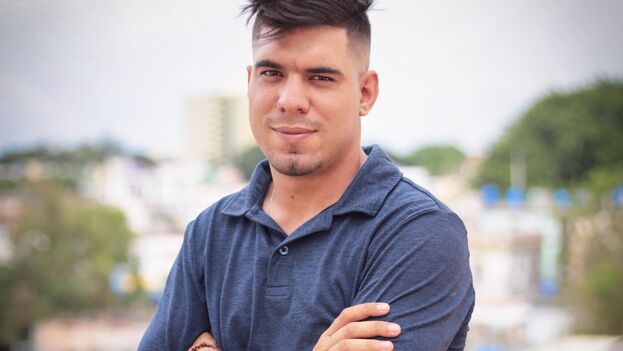
Fifteen Years of a ‘Little Grey War’

Desiderio Navarro left a solid and useful work, but he died alone, embittered. (Granma)

14ymedio bigger14ymedio, Xavier Carbonell, Salamanca, 19 June 2022 — When I met Desiderio Navarro he was already an old man worn out by cancer. He used crutches and had little muscle left, little desire to speak. I did not know—he did—that the entire “universe” of Criterios*, the magazines, books, and translations, was about to disappear, to the relief of bureaucrats, private enemies, and public antagonists.

Desiderio withered quickly. He left a solid and useful work, but he died alone, bitter, like the proverbial dog. Now he exists as a signature at the end of a prologue or in the credit of a translation, and we will gradually push him into oblivion, because the memory of the Cuban works at irregular intervals and does not distinguish between learning and trauma.

We also forget the hornet’s nest that, fifteen years ago, caused the television appearance of three former cultural commissioners in a context that could not have been more slippery: Fidel Castro’s illness after his collapse in Santa Clara, like a broken statue, and country’s the turn of the gears.

Demanding favors that reward some old loyalty is a characteristic of mafias. It was natural, therefore, to establish a link between the butchers of the Five-Year Grey Period, exhumed on television, and the rise to power of their longtime comrade, the man who put them on the board: Raúl Castro. continue reading

The appearance of those decorated mummies in 2007 could not be a good sign, and this was understood by the legion of intellectuals and artists who, precariously connected to their computers, began to send messages into cyberspace, asking for explanations and reading events between the lines.

That was called the “little email war,” although there was no such struggle — the “opponents” never responded — but rather a slow appeasement campaign. “It started in surprise and ended in a hangover,” Norge Espinosa said accurately. Desiderio Navarro, then a vigorous and stylish guy, officiated as marshal in what seemed to be the decisive moment for the Cuban intellectual so far this century. Time for criticism and frankness, defying in some cases the borders of the dying caudillo: the inside and the outside of the revolution.

There was no writer, musician, journalist or painter who remained silent. The debate, held for months in cyberspace, then took the form of “protected” meetings with culture officials, ministers and such. Bad thing. The first survival lesson for the intellectual is not to be locked in the same room with an official. It does not matter if it is a room or a theater, it will always lead to a torture chamber, a court or a cell.

Desiderio himself played a central role in the castration of that debate. He contributed to giving it a more peaceful, academic, politically correct character, when reality boiled beyond the lectures and halls. They were, if not the first, the already irreversible symptoms of national malaise and the state’s impatience to cut the matter short. The “little war” turned into an ambush; the ambush, into a firing squad; and then came silence.

A few weeks ago, on the primetime news broadcast, a mournful group of writers and artists placed flowers before the Great Stone, the Stone of Stones, the Stone-in-Chief. They made a profession of faith before the journalist who interrogated them, some cried, another remembered the el comandante and hugged the grave. I recognized several of the “pilgrims” and I confess that I never would have expected such a tearful display of affection. I wondered if they had always been so faithful, so unconditional, and then I remembered the old literary joke: no one seemed, but everyone was.

Where are the others? Those who have not been pacified by official anesthesia, those who did not sign the armistice after the “little war” and its aftermath. Most in exile; the others, crushed, imprisoned or jaded, battling the blackout to send the last email.

In his book on the events that concern us, Villa Marista en Plata, Antonio José Ponte made it clear that if the timorous and complicit intelligentsia that rules in Cuba is fighting for something, it is not because of privileges, trips and publications. They fight, even if it seems unreal, to gain time. “A time unconcerned with all accountability, free from checks… The borderless time within which the work is done. The time they will never find in capitalism.”

But doing business with Cuban power is always volatile and double-edged. There is no longer room for the innocence or passivity of Desiderio, to whom the government showed that it would not forgive even “soft” and organized dissent. Those to whom he offers a space are the usual mediocre, lame in talent, hallucinated, fanatical and snitches with guitar or microphone. Of course, they must be loyal like a Doberman.

Just take a look at the Higher Institute of Art or the Ministry of Culture, the University of Havana or Las Villas; to glorified puppets like Michel Torres, Israel Rojas or Humberto López, to gauge the agony of the new commissioners. They have air conditioning, they recite poems, they line up for gas at the Geely, they enjoy the Armed Forces’ beggar’s hotel, but they are hollow and would give their kingdom for a little trip where they can finally disappear into the crowd.

That is why, as long as they can live, they go to the Santa Ifigenia cemetery to pray so that that unnecessary “little war” will never be repeated, not even in fifteen years. They put flowers, they kneel and tremble, because that Gray Boulder will become – sooner rather than later – their wailing wall.

Translator’s note: *Navarro founded the journal Criterios in 1972. 

____________

COLLABORATE WITH OUR WORK: The 14ymedio team is committed to practicing serious journalism that reflects Cuba’s reality in all its depth. Thank you for joining us on this long journey. We invite you to continue supporting us by becoming a member of 14ymedio now. Together we can continue transforming journalism in Cuba.
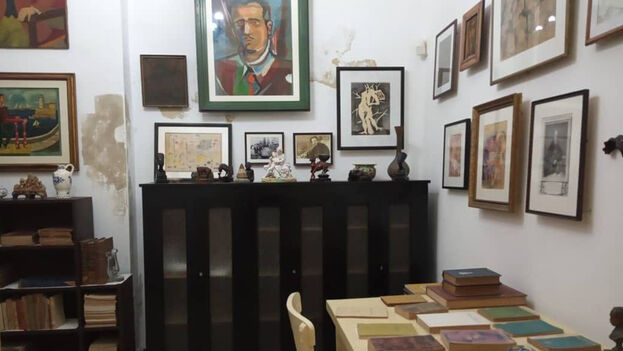
Cuban Teenagers No Longer Have Fears or Complexes

A group of Cuban high-school students share audiovisual content through a cell phone. (14ymedio)

14ymedio bigger14ymedio, Xavier Carbonell, Salamanca, 1 June 2022 — If anything surprised the Cuban government during the July 11th (11J) protests, it was the large number of teenagers who took to the streets. Engaged in the surveillance of activists and independent media, or focusing their attention on workplaces and universities, it seems that State Security neglected boys under 18 years of age.

They were the ones, cell phone in hand, who managed to keep the VPNs active and inform their families about the situation in the country. The price they paid was high: according to the Attorney General’s Office, of the 760 prosecuted after the protests, 55 are between 14 and 17 years old. Since then, caution has been redoubled in secondary and pre-university (high) schools.

However, and despite the fear injected in schools and families by the regime, the boys “have not learned their lesson.” Through Twitter, Facebook or Instagram, thousands of adolescents speak — loudly, using their own jargon, through codes and double meanings — about their main problems: the lack of a future, the need for money, family anguish due to blackouts or food, migration, indoctrination in the educational system, military service, and precocious habit of snitching at school.

Despite the fear instilled in schools and families by the regime, the boys “simply never learn their lesson.” Thousands of teenagers speak out from Twitter, Facebook or Instagram

I tell K. — let’s call him K., like the Kafka character — that I’m interested in knowing what Cuba looks like from the daily life of an adolescent. That notion is relatively new. My grandparents — born and raised in the most provincial of small-towns Cuba — believed that, at 16 years old, boys were men and girls were women. Today, adulthood is delayed, at least until 18; life runs at a different pace.

This does not prevent K. from having opinions — most of them clear and affirmative — about politics, society and the economy of his country. He sometimes watches the news, likes coffee and makes a habit of singing the choruses of reggae songs. “Music gives everything a bit of color,” he says, “otherwise I’d be burned out by now.”

He’s in his second year of ‘pre-university’ — as high school is called — but that’s just a saying. In Cuba no one is preparing for university, and even less for the future. But that’s where he has his friends and he has to pass the time somehow. continue reading

“I get up in the morning, eat the breakfast that my mother works so hard to obtain. On the days that I have classes, under a Caribbean sun at its highest point, I walk more than two kilometers to school, since there is no consistent or efficient public transportation system.”

I am acquainted with the route: a long street that crosses the city and where only horse carts roam. The dust, the manure, the potholes and the coachmen – surly and unfriendly – give the road the atmosphere of a western movie.

“Well,” continues K., “at lunch time, I come home from school. The same story of the sun and the walk is repeated. I arrive, take a shower, eat something for lunch and return, walking through the sad streets and seeing the facades destroyed by the path of ‘hurricane dictatorship’. I enter my classroom with the cement floor full of holes. Heat, mosquitoes. The bathroom smell is overwhelming.”

“And in addition, with no desire to study: a Cuban degree is useless anywhere in the world. I return home. Calculate this: I have already walked eight kilometers on foot. I arrive exhausted, take off my uniform and lie down to rest for a while. When I get up, the “boring process” begins: there aren’t even any parks to go to. So, I sit on the armchairs for a while to talk with my family about the near future outside this prison-island. Afterwards, I go to sleep.”

“If communism failed, I would not stay. Cuba is going to take many, many years to become a country. And those who do not know their history are condemned to repeat it”

I made the mistake of asking K. how he saw Cuba in five years. “I don’t even want to imagine it,” he replies. “If communism failed, I wouldn’t stay. It will take many, but many years for Cuba to become a country. And those who don’t know their history are condemned to repeat it.”

Sometimes K. speaks with the bad habits of an adult, as if he had had to put up with too many blows. It’s natural. The Cuban child is almost always educated among older relatives and in very small households. As he grows up, domestic problems and anxieties are passed down, discussed, and grieved together.

It is the accumulation of these concerns at the wrong time that makes the Cuban teenager more aware and more mature, but it also throws him into a kind of congenital bitterness which he carries throughout his whole life.

An additional factor of that anxiety is the Military Service — “the green” — mandatory in Cuba, which functions as a rite of passage in the totalitarian society. “There is a part of the parents who think that ‘the green’ makes us more manly but, for me, that does not influence anything. It is unfair because it is forced. You cannot even ‘pledge to the flag’ personally. Another person does it for you. And if you protest about that…”

K is not far from the Military Service, but he is more concerned about high school and what it has become: “There is massive indoctrination. The classes are the worst. They teach us a number of absurd things. We hardly have any teachers. Everything is a mess.”

I ask if there are snitches in his classroom. “All my friends are frustrated by the situation in Cuba,” admits K., “and our only topic of conversation is about leaving the country. The idea of one day leaving here completely dissociates us from everything. With things being so unattainable for our parents’ pockets, we cannot dress as we would like. It is obvious that I want to leave. Some are afraid to say it because of the great repression that exists, and because some girls report to the teachers. They snitch on you for just about anything.”

“And what can I tell you about the neighborhood? You already know how a neighborhood functions here, so you can complete that part.” he tells me, already a little bored by the “questioning.”

K has a cousin his age in the United States. His father recently “sponsored” him, and after nearly a month in Guyana he managed to get him on the plane to Hialeah. I ask him the same questions as K., but now I am interested in understanding how one feels about Cuba when one leaves so young.

“Living in this country doesn’t change me as a person. But it’s hard for me to get used to it. One has always been there. I miss my family. It’s a bit difficult, because one longs for the family”

“From the outside, Cuba looks like a backward country. And there are times when you don’t realize how backward it really is. My life, of course, is different. What I did there has nothing to do with what I do here. Living in this country doesn’t change me as a person. But it’s hard for me to get used to it. One has always been there. I miss my family. It’s a bit difficult, because one longs for the family.”

K.’s cousin doesn’t talk much and has always been discreet when talking about the government. But now there is no problem. He can tell me —without fear of an agent listening in — that they are “a shameless gang, eating up the people with lies. That’s what I think, but I don’t really care much about politics. I don’t care, really.”

I want to know if he will ever return to Cuba. “I don’t know. I suppose so. I suppose that if communism fails, things will improve.”

K and his cousin agree on something. One inside and the other outside, they belong to a generation that no longer has fears or complexes. They know they are being watched, they understand the limits of the manipulation and fear that comes “from above,” but they care very little when they see the family’s asphyxia. They feel responsible, they are tired. But they are stronger than ever.

I ask K. what pseudonym he prefers me to use when I write about him. “What are you going to use? My name with his two surnames, of course.” I tell him no, that I have to protect his identity, the source and all that. “Well, then write…”

I am not going to say the names that he told me next, because they could offend the sensibilities of the ministers and presidents of the republic. But be warned: there is a hurricane coming.

Translated by Norma Whiting

____________

COLLABORATE WITH OUR WORK: The 14ymedio team is committed to practicing serious journalism that reflects Cuba’s reality in all its depth. Thank you for joining us on this long journey. We invite you to continue supporting us by becoming a member of 14ymedio now. Together we can continue transforming journalism in Cuba.