Varadero Resort For Cubans ‘All Inclusive Scam’

The once luxurious resort of the Hicacos peninsular has been feeling the shadow of what it once was for quite a while. (14ymedio)

14ymedio bigger14ymedio, Juan Diego Rodríguez and Olea Gallardo, Havana, 14 September 2023 – In the bus back home to Havana from Varadero, Manuel and his wife, like many other local tourists, talked about nothing else. Every one of them, though having stayed in different hotels, felt that they had been swindled; that despite the stratospherical amount of money they had had to pay for their holiday, in return they had seen only food shortages and terrible service.

Manuel doesn’t even want to remember the name of the establishment where he stayed for four nights in August and payed almost 40,000 pesos for “all inclusive”. “All inclusive? All inclusive scam. All that was available to eat every day was cod or chicken in fricassee, or in sauce, but no pork or beef”, he tells this paper. And he goes on: “The rice was hard, the soft drinks weren’t even the normal canned ones but made up from squash, and the beer was warm, with just a whiskey here or a rum there, terrible, that was all there was to drink.

So, in the end, the couple ended up spending an extra twenty-odd thousand pesos on food from other restaurants, “which in themselves weren’t any big deal”, says Manuel. Even there they didn’t find much satisfaction as the ones that accepted Cuban pesos were the ones that offered limited menus and smaller portions.

In addition, the man lamented: “The room they gave us was dirty, full of hair, with just one tiny towel and nothing else to dry ourselves on. It doesn’t surprise me that we hardly saw any foreign tourists, if they go to Varadero they’re going to be shocked. continue reading

“The room they gave us was dirty, full of hair, with just one tiny towel and nothing else to dry ourselves on”

The once luxurious resort of the Hicacos peninsular has been feeling the shadow of what it once was for quite a while. The most recent decline began during the Covid pandemic, when the country’s borders were closed and the tourist industry was paralysed worldwide, and the residents of Varadero were confined in their homes to avoid infection. The resort has not yet managed to crawl out of this hole, a hole which the so called Tarea Ordenamiento — the ’Ordering Task’* — itself has contributed to, as reported by this paper repeatedly in recent years.

Foreign tourists have abandoned the option of Varadero, says a Spanish tourist, Francisca – who travelled to Cuba in July on a tour which took in the entire island but didn’t include the resort in the Matanzas bay area. “We didn’t go there, on the advice of a relative who had just been there and told us that the beach was disgusting, with a lack of services”, she said. “And actually all the ones we did go to – Costa Verde (in Holguín) and Cayo Santa María (in Camagüey) – also seemed very dirty to us”.

In the face of depleted numbers of international tourists, hotels tried to throw themselves into internal tourism, which, viewing general commentary on social media, hasn’t resulted in a satisfied clientele. And the complaints are not limited to Varadero.

One customer of the Starfish Hotel in Cayo Largo said that the buffet at this five star establishment left “much to be desired” and she did not reccomend the place. Another said: “I’ve just come from the Starfish Cayo Guillermo and there was no sugar even for coffee, I had to bring my own flour so that they could bake me a mini cake because they didn’t have flour either, and they were using honey as a sweetener”.

A third Cuban settled the matter of the island’s beach hotels saying: “My opinion is don’t go to any of them. They’re all bad and what’s more, expensive. There’s no correlation between what you pay and the actual quality, especially with the food”.

*Translator’s note: The “Ordering Task” [Tarea Ordenamiento] is a collection of measures that include eliminating the Cuban Convertible Peso (CUC), leaving the Cuban peso as the only national currency, raising prices, raising salaries (but not as much as prices), opening stores that take payment only in hard currency which must be in the form of specially issued pre-paid debit cards, and a broad range of other measures targeted to different elements of the Cuban economy.

Translated by Ricardo Recluso

____________

COLLABORATE WITH OUR WORKThe 14ymedio team is committed to practicing serious journalism that reflects Cuba’s reality in all its depth. Thank you for joining us on this long journey. We invite you to continue supporting us by becoming a member of 14ymedio now. Together we can continue transforming journalism in Cuba.

The Other Cuba: Luxury, Good Taste and Outrageous Prices from the Hand of a Successful Italian

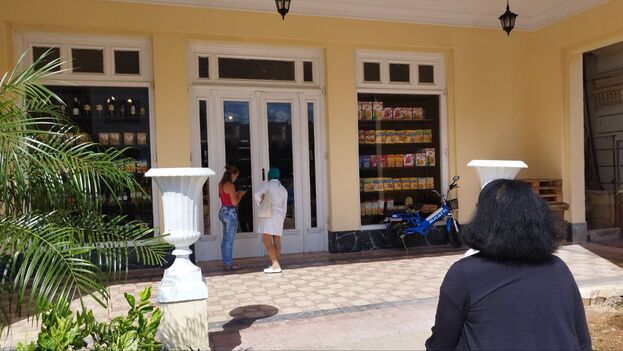
The new Home Deli store in El Vedado, Havana, is a magnet. (14ymedio)

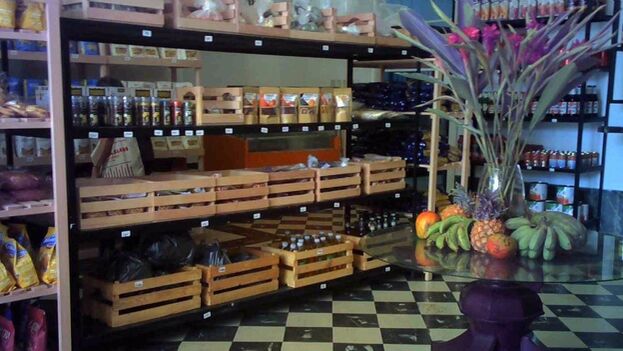
14ymedio bigger14ymedio, Juan Diego Rodríguez and Olea Gallardo, Havana, 26 June 2023 — The new Home Deli food store on Calle 12, between 21 and 23 in the heart of El Vedado, Havana, was inaugurated at the beginning of June and is not like the ones you usually see in Cuba. Clean and stocked, decorated with a certain European “rustic” style, it became a magnet days after it officially opened its doors. The emotion waned when checking the prices of the products, almost all imported.

A bag of bread, with six pieces costs 800 pesos, a small bag with washed and cut lettuce, 70 pesos, and 2,100 pesos for a small cheese. The cost of the meat was stratospheric: 20 pork skewers for 1,400 pesos, 4,500 pesos per kilogram of beef, 2,000 for chicken breast, 2,000 for ground beef, 3,000 for Italian sausage.

The powdered milk bag, similar to the one sold in other places, looked repackaged, unbranded, and cost 1,900 pesos for a kilogram and 950 pesos for half a kilo. As a curiosity, they had “artisan” pasta for sale, pumpkin and moringa, at 450 pesos a bag.

Home Deli looks clean, stocked, and decorated in a certain European “rustic” style. (14ymedio)

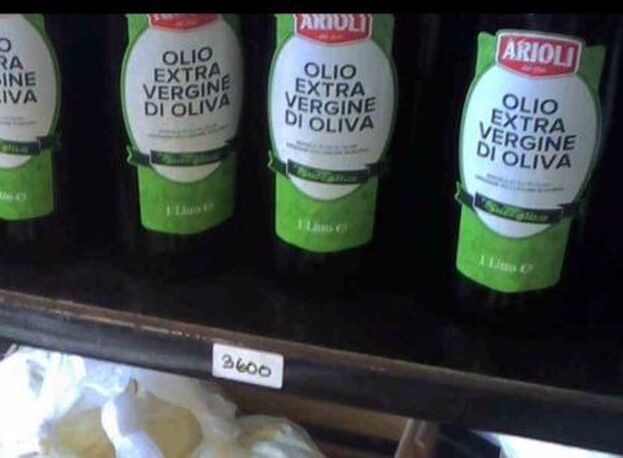
Promoted as a store specializing in Italian products, they offer Arioli oil (3,600 pesos a liter), Balocco and Mulino Bianco biscuits, De Nigris vinegar, De Cecco pasta, Lavazza coffee or Scotti rice. Also, other import labels, such as the Spanish Vima or Carbonell and the Japanese Kikkoman.

The store employees, all young and good-looking, are lavish with attention and kindness towards any possible client, although they do not stop watching the slightest movement and discourage taking photographs with a severe gesture. continue reading

Most of those who entered the store, dazzled by the variety and quality of the products, left discouraged after a tour of the shelves. “It’s very pretty and well put on, but this is the most expensive market I’ve seen so far,” said one woman as she left empty-handed.

Arioli brand olive oil is 3,600 pesos per liter. (14ymedio)

However, the law of supply and demand is implacable even in Cuba: if they set those prices, it is because someone pays them. This newspaper is aware that Home Deli has a large clientele among diplomats stationed in Cuba, in addition to emigrants who, through pages such as Katapulk or TSO, buy food for their relatives in the country in hard currency.

Those who can shop at the store are happy, despite the costs. “It’s the only place where I can get the products that a true Italian recipe requires,” says Lucía, a Cuban who lives in Milan and is on vacation in Cuba visiting her parents.

In addition, she praises her loyal clientele, “they make really tasty and unique spinach tarts in Cuba, not to mention the desserts. It’s not like other private companies, who live by reselling products.”

Homemade pumpkin and moringa pasta sold at Home Deli for 450 pesos a bag. (14ymedio)

The success of Home Deli has been amazing. Not only does it have that new store in El Vedado, but another in the municipality of Playa (19 avenue between 74 and 76) and a third in Cerro (318 Daoiz street, between Colón and Pizarro). In addition, they have a point of sale at the 3rd and 70 market. An efficient home delivery system makes it as modern a business as any in a country where the free market rules.

The company, however, does not only operate with that brand. Directed by the Cuban Diana Sainz and her husband, the Italian Andrea Gallina, as they appear on their social networks, is registered under the name of Mercadiana in the list of micro, small and medium-sized companies (MSMEs) and with the purpose of “gastronomic services”. In Italy, they have the company Gainz SRL, a name that combines the surnames of Gains the owners and that at the time is the provider of Home Deli.

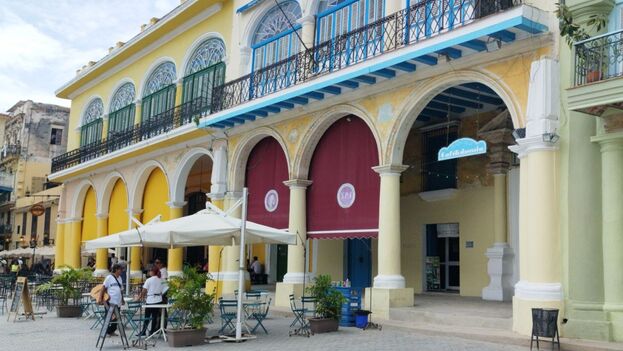
Café Bohemia, adjacent to Estancia Bohemia, is a meeting place for cultural officials. (14ymedio)

Together, they also run the Café Bohemia and the adjacent hotel, Estancia Bohemia, in Old Havana, as well as the Paseo 206 Boutique Hotel and the café on the ground floor, Ecléctico, in El Vedado. It is not uncommon to see them in one of these places, serving the clientele with exquisite treatment, as this newspaper has verified.

“The word standard does not exist for us,” Gallina declared for a report published in “OnCuba” about his establishment on Paseo 206, which they define as “a place with its own stamp, born from the combination of both cultures” and “a warm hug between Cuba and Italy”, and where luxury and good taste are evident.

The same is observed in Estancia Bohemia (San Ignacio 364), where a one-night stay costs 187 dollars, according to the reservation pages. The Café Bohemia is, moreover, a meeting place for culture officials, ostensibly from the Office of the Havana Historian, according to its own publications on networks.

Since they began to proliferate in the streets of Havana, more than a year ago, private businesses generate, in the first instance, mistrust. The fact that some of these (MSMEs) operate in state premises without any type of announcement or public tender, only increases suspicion.

Diana Sáenz, at her Café Bohemia. (14ymedio)

If we add to this the agreements between Cuba and Russia, the last of which were ratified last month at a business forum between the two countries in Havana and which show that Moscow wants to play a leading role in the imminent economic opening of the Island, doubts are difficult to dispel.

On the other hand, especially in all private and successful businesses in the country, since self-employment was allowed, they always raise questions: “They don’t let just anyone do this, what influential figure will be behind it?”

It is not uncommon to see both Diana Sáenz and Andrea Gallina serving their premises with exquisite kindness, (14ymedio)

In the case of Home Deli, its owners have never hidden themselves, on the contrary, they boast of their achievements both in their networks and in business forums and even official media. “Diana is a Cuban entrepreneur who has established important guidelines in the leisure and food sector in Cuba,” they extol in an Instagram post.

The firm has given sensible capitalist advice: “Mercadiana, a food marketing and production MSME, emphasized the need to eliminate bureaucracy when managing business procedures, as well as a review the high tax amounts that go with how prominent they are, since it could jeopardize the survival of companies”, indicated as an example Cuba en Resumen last year.

However, Diana Sainz has not said why she suddenly decided to change the surname that she inherited from her father, Ricardo Sáenz, one of the founders of the Prensa Latina agency and the Bohemia magazine.

Translated by Norma Whiting

____________

COLLABORATE WITH OUR WORKThe 14ymedio team is committed to practicing serious journalism that reflects Cuba’s reality in all its depth. Thank you for joining us on this long journey. We invite you to continue supporting us by becoming a member of 14ymedio now. Together we can continue transforming journalism in Cuba.

Unpaid Salaries and a Limit of 5,000 Pesos in ATMs Due to the Shortage of Banknotes in Cuba

Lines to withdraw money from ATMs at the Metropolitan Bank of 23 and J. (14ymedio)

14ymedio bigger14ymedio, Olea Gallardo, Havana, 11 May 2023 — For six days Roberto has been trying to withdraw cash from an ATM in Havana, the last one this Thursday. In vain. One by one, he verified what all the inhabitants of the capital say this week: you can barely extract money.

The announcer Yunior Morales posted this Wednesday with humor on his social networks. “You go to any ATM and there is no money. And tremendous cristóbal colón,” he joked, referring to the immense lines [colas in Spanish]. At the time of making his transmission, an acquaintance greeted him: “What’s wrong, Yunior?” He replied: “Here with hunger, boy, I’m hungry.” “Why don’t you eat something then?” to which he replied: “I have to withdraw money first and no ATM works.” And he ends his video jokingly exaggerating: “I have a CDR [Committees for the Defense of the Revolution] meeting about my hunger in my stomach. CDR because, you know, the CDR is hunger, gossip and conflict.”

The situation seems to spread to many other cities in the country. In Holguín, a teacher tells 14ymedio that Education workers now have their salaries divided in two: “one payment on the 5th and another on the 28th,” because “there is almost no money.” In addition, she says that “not even the employees of a bank know when there will be cash at the ATMs.”

A doctor from Sancti Spíritus says that in Public Health they are only paid by electronic transfer: “They deposit on the card, but for those who pay cash for things there is no money.” continue reading

More serious is what a state worker points out. “With payrolls made and everything, the bank does not accept payment through the cards because they don’t have money; the railroad is not an isolated situation,” he says referring to the unusual spontaneous strike organized on Tuesday by Artemis railway workers, in protest against the non-payment of their salaries in the last two months.

In Santiago de Cuba, complaints proliferate that “there is no money in the ATMs,” while groups in which human ATMs operate have multiplied on social networks. “Will exchange money in transfer for cash. I have the cash,” some say; “Will exchange CUP [pesos] transfer for cash,” say others. Some include the precise amount, such as 17,000 pesos, something unthinkable to extract in a bank.

Roberto from Havana tells this newspaper that he has verified in ATMs of “at least three municipalities” that, where before up to 10,000 pesos could be withdrawn in an operation, “and then there were 500 or 1,000 bills in the ATM, now they only allow 5,000 to be extracted,” and only in 20-peso bills.

This newspaper was able to verify this in the branch of the Metropolitan Bank (Banmet) on 23rd and J, in El Vedado, with such a central location that until recently it guaranteed any withdrawal, but the situation was chaos this Thursday. To begin with, you had to endure a gigantic line, divided into two: one to enter and another, the longest, for the ATMs. Of the six ATMs only two worked.

Inside the branch, for those who chose to extract money at the counter, the uncomfortable atmosphere was widespread and contagious. The employees were rude to people and arguing with each other; the customers were tremendously disgusted. Two elderly ladies were about to come to blows when one of them lost her place in line to go visit her sick daughter in the hospital and the other refused to let her back in: “Right now we are here,” said the latter, who lowered her voice when the threatened woman called the police.

A cashier rolled her eyes when an old man asked her what denominations she had, because he didn’t want the “little ones.” The man intended to get 40,000 pesos [$1,667] and he couldn’t. “That can happen because there are very few large bills,” the employee told him.

“Every day the same thing,” said another lady in line. “They let people pass in front who are going to deposit pesos, and if you are going to extract them, no matter the amount, they give you bills of 20 pesos.”

“They are giving priority to those who are going to deposit national currency, but almost no one comes to do that. “Do they let someone who comes to deposit pesos go first because there are none?” asked another woman who had just arrived from another cashier, from which she had tried to withdraw cash unsuccessfully. “Let them tell the truth: there is no money.”

However, the authorities are silent these days. Last month, in the face of the citizen rumor that state workers would not be paid, the Sancti Spíritus government was in a hurry to deny it. On those days, however, 14ymedio verified that cash could not be extracted at the city’s 11 ATMs.

The problems were repeated in Havana, where the provincial government reported that 150 of the 521 Banmet ATMs in the capital (30%) were broken. Then, they also said that from April 8 to 14, cash withdrawals exceeded 200 million pesos per day.

No one knows what is happening in May, but citizens are increasingly desperate. “We are going to have to pay with cocoa seeds, because paper cash is an illusion,” says Roberto, who fears that “the entire country could be paralyzed at any time.”

Translated by Regina Anavy

____________

COLLABORATE WITH OUR WORKThe 14ymedio team is committed to practicing serious journalism that reflects Cuba’s reality in all its depth. Thank you for joining us on this long journey. We invite you to continue supporting us by becoming a member of 14ymedio now. Together we can continue transforming journalism in Cuba.

Poverty and Hunger are Spreading in Cuba

The scenes are comparable to the previous great crisis, which at least was baptized with one of the greatest euphemisms that Castroism ever came up with: “the special period in time of peace.” (14ymedio)

14ymedio bigger14ymedio, Juan Diego Rodríguez / Olea Gallardo, Havana, 30 March 2023 — The crisis that Cuba is experiencing is not only reflected in the official data, independent reports and the unstoppable exodus. In the streets, at every step, the poverty is evident. Ana María, a middle-aged neighbor of Central Havana, mentions an example: “A few days ago, on Infanta Street, a man in his 50s was going to pick up some croquettes from the floor, and when he saw that I saw him, he was embarrassed. The truth is that I was more ashamed than he was.”

These scenes are comparable to the previous great crisis, which was at least baptized with one of the greatest euphemisms that Castroism ever came up with: “the special period in time of peace.” It was common then, in the 90s, to see its imprint on the wrinkled and emaciated bodies of Cubans. Thousands of them suffered from diseases like neuropathy, which left them blind and was caused by malnutrition and the abuse of homemade alcohol.

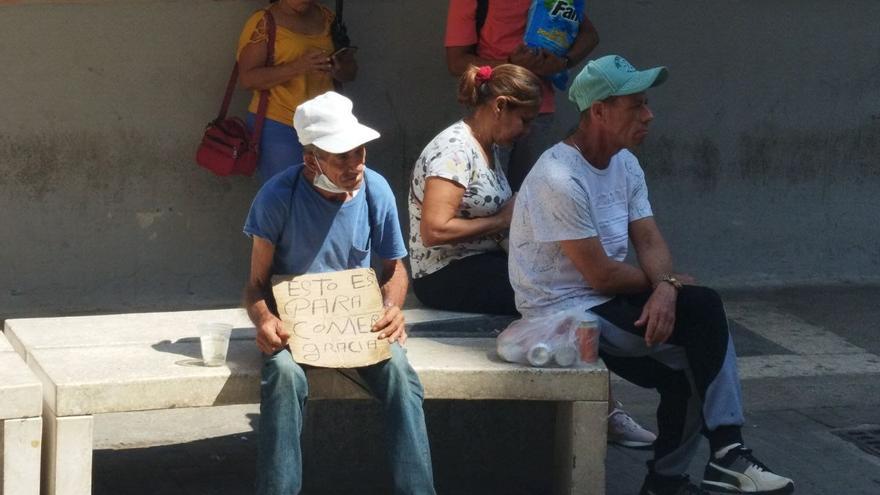
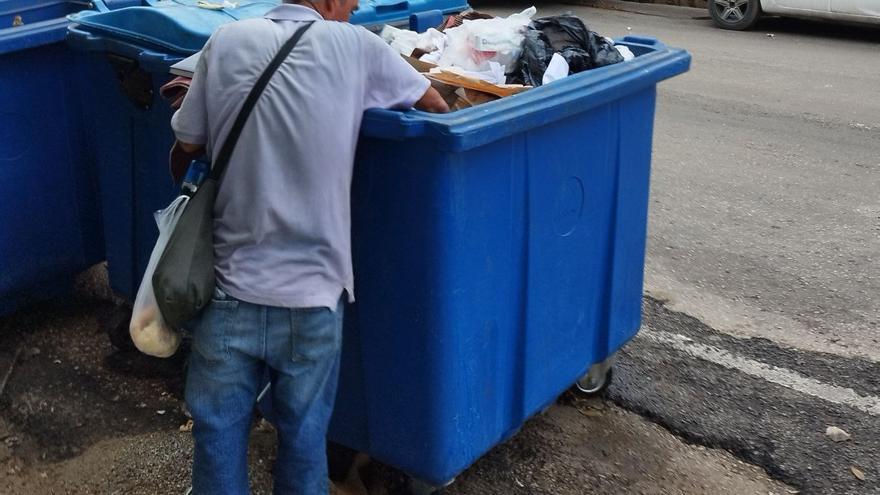
Today’s crisis has no name, but it does have the same face: the increasingly empty cities, especially of young people and those who fall down unconscious from drinking “train-spark” (homemade alcohol), and the elderly (and not so old) who rummage through containers or beg on the street.

And it doesn’t just happen in Havana. Jorge, from Holguín, says he encounters a similar situation every day. “It has increased a lot, but a lot, the number of people on the street who are rummaging through the trash and asking for money. Today I was having a pizza and soft drink in a private place and a 70-year-old man with crutches, who couldn’t even walk, came in begging, and I bought him the same thing I was eating. Yesterday a woman who saw me counting some money on the street approached and said: ’oh, give me something for the peas’. Right after, another woman asked me if I could buy her some cassava fries. I wanted to give her 100 pesos but she asked me to buy them for her: ’They scammed me,’ she told me crying. And what breaks my heart the most is the children who implore: ’could you give me five pesos?’” continue reading

Jorge attributes the scarcity mainly to inflation, which does not let up: “One pound of pork is 400 pesos ($16.70), and you buy four pounds and they are two of meat and two of bone and fat, which doesn’t work. A carton of eggs here is worth 1,500 pesos ($62.50), a liter (33.8 ounces) of cooking oil is 1,300 ($54). People make it to the end of the month almost without oil, without rice.”

To have something to put in their mouths, people even eat the impossible.. (14ymedio)

Caption – The scenes are comparable to the previous great crisis, which was at least baptized with one of the greatest euphemisms that Castroism ever came up with: “The special period in time of peace.” (14ymedio)

Thus, families are reducing the quantities. They eat rice with a little bit of vegetables, they eat only a banana, they get used to not having animal protein. “I have a neighbor who stops having lunch to give it to her son, who is in high school. Many times I see that they eat rice cooked in bean sauce with two tomato slices because they don’t have a main course,” Jorge explains.

Something similar is told by Lisandra, from Sancti Spíritus. “I recently brought a friend a picadillo that I cooked, after lunchtime, and I realized that her boy had been given rice with beans and she had not eaten anything.”

To have something to put in their mouths, people even eat the impossible. “My mother discarded a horrible picadillo that she had boiled in hot water because someone told her that it looked like ham and she wanted to give it to the neighbor’s dogs. The neighbor let it dry because she wanted it for herself.”

Sometimes, as happened to Ana María with the man who picked up the croquettes in Centro Habana, there is shame for both parties. “When I went to say hello to a friend from the university, at lunchtime, her children interrupted her all the time while we talked: ’Mom, I’m hungry’. And I realized that she didn’t want me to see what they were going to eat,” continues Lisandra, who says: “People don’t say it, but they are going hungry.”

From San Antonio de los Baños, Artemisa, the epicenter of the mass protests of July 11, 2021, Caridad recounts: “The famine is widespread. Soon we will not exist, because we’re going to starve, and we won’t have a doctor to help us.”

The woman, in her thirties with a young daughter, lashes out at the Government: “They can’t solve anything, and they want us to keep electing people we don’t even know. Last week the power didn’t go out because there were elections, and now that there are no elections? If only we could eat all the blackouts.”

Caridad’s list is long, from electricity (“without electricity you can’t live”), to water (“we haven’t had it for five days”), food (“milk is a forbidden product and soon we’ll be talking about beans at 200 pesos [$8])” to increasingly precarious health services (“there is no medical assistance because doctors have no medicines and they are not magicians.”) “I can’t really explain how we are still alive,” she concludes.

“It has increased a lot, but a lot, the number of people on the street who are rummaging through the trash and asking for money.” (14ymedio)

“My sister and I bought a yogurt that cost us more than 250 pesos [$10] for 1.5 liters [53 oz.], and we had to pay on the informal market. When a state truck comes, it’s a slaughter, with the cost of  yogurt close to 100 pesos [$4], or 70, 80, 90 pesos. You don’t have any meat, a chicken thigh, or a piece of pork. There is no onion even if someone can pay for it,” she lets fly and continues with her litany of sorrows.

Rice, she says, is a “hot item.” “Here in this town they are selling a speckled rice, I don’t know where they get it, which contains transparent pebbles. It’s enough to make God weep. Not only do you have to spend two hours removing these particles, but on top of that they can break a tooth, and then where do you find a dentist? Everything is a stack of dominoes, and now the game is over.”

For Caridad, the moment that Cuba is experiencing could be called “minute zero,” because “we have no options at all.”

There is another widespread comment: what is most worrying are the children. “I suffer bitterly because I have a girl under the age of seven and I worry about the day to day. Even the schools don’t function now. The teachers don’t want to work because they are also hungry,” says Caridad.

For Ana María, the situation with the children is “a disaster,” and she recounts the torment of her grandchildren, who not only have to endure an insipid rice with peas every day but all kinds of propaganda in their classes. “My girl has to show something tomorrow, after a week sick with asthma,. One homework was about the tax system, nothing more and nothing less, and another about Fidel’s life as a child until he was a revolutionary leader,” the woman says. “And the boy had to talk about the Zanjón Pact and Martí’s attitude at that time and also about the elections. Tell me something I don’t know!”

Neither propaganda nor servility nor ordinary work frees Cubans from suffering. “A relative of mine, retired military and doctor, that is, with an above-average retirement, has just celebrated his 80th birthday, and between his brothers-in-law and nephews they collected something to celebrate, because he barely has any money,” says Ana María. She gives another example, her own sister, now retired from the state sector, who was “once pretty but now is skin and bones.”

Another neighbor of Ana María, a health worker, went to her house recently to implore her for something to eat, even if it was only chicken skins, because she couldn’t buy anything.”

As if that were not enough, it’s no consolation to have money to spend in stores in freely convertible currency (MLC): “Even those who have people abroad [who send them hard currency] can’t get food, because the stores are empty. Everything has to be paid to the people who steal it from state places, buy it in Havana or I don’t know where and sell it here so that people can live,” protests Caridad, the young woman from San Antonio de los Baños.

All in all, she, like Ana María, Jorge and Lisandra, are part of that 30% of Cuban families that differ from the rest because they receive help from abroad, the most paradoxical inequality created in 64 years of communism. The rest, most of them, have to settle only for what comes through the rationed market, which is not enough to last the month.

Ana María, who has no way to leave the Island, laments: “I’m now depressed when I go out on the street, the poverty, the grime, the miserable people, the starving animals. I want the aliens to take me, because it makes me want to cry.”

Translated by Regina Anavy

____________

COLLABORATE WITH OUR WORKThe 14ymedio team is committed to practicing serious journalism that reflects Cuba’s reality in all its depth. Thank you for joining us on this long journey. We invite you to continue supporting us by becoming a member of 14ymedio now. Together we can continue transforming journalism in Cuba.

New Stores are Born in Cuba with a Strange Alliance Between the Private and State Sectors

La Bodeguita de San Rafael, on the Boulevard of the same name, in Havana. (14ymedio)

14ymedio bigger14ymedio, Juan Diego Rodríguez/Olea Gallardo, Havana, 20 February 2023 — A new market in the heart of Centro Habana, a ration store with various items, a stationery store in the Miramar Trade Center, a fabric and upholstery store in El Vedado, a re-opened Italian pizzeria in the same neighborhood… these establishments have three things in common: they have recently opened or reopened in the capital, they have very high prices, and now — with a new or former name — they are in private hands.

In the middle of Boulevard de San Rafael, the colorful poster of a large and well-stocked shop, inaugurated this Saturday, La Bodeguita de San Rafael, is a surprise. “The best of all I’ve seen so far; it’s one of the most beautiful,” said a customer, surprised at what the state clothing store that used to exist in that place had become.

But what left most people speechless were the prices: 34-oz. soft drinks at 450 pesos ($19), condensed milk at 550 ($23), a small tetrapack of tomato puree at 380 ($16), a pound of lentils at 400 ($17), a kilo of wheat flour at 590 ($25), two pounds of rice at 650 ($27), a simple glass of yogurt at 120 ($5).

“A woman spent almost 33,000 pesos ($1,375) in front of me,” said another man who went shopping. “I don’t know what she had in her shopping bags.”

Inside the store, a couple, a foreigner and a Cuban woman were talking. He asked her: continue reading

“Why do you go to the store in MLC [freely convertible currency] if they sell here in pesos?” She replied: “Because the prices are much higher; they are inflated. For example, that package of rice will cost 2 MLC or $1.90, and here it costs 600 Cuban pesos ($25).”

“It looks like they are reselling things from the MLC stores, but that’s not supposed to happen because it’s not allowed,” speculated an old man.

What seems clear is that, once again, the same scheme of the recently inaugurated grocery store of the Miramar Trade Center is being repeated, the same as what happened with the branches of the Sylvain chain and before that, the Fress. A variety of businesses have now gone from state hands to private hands overnight, without competition or prior notice.

Therefore, the inauguration the same Saturday of a “sodería-hamburger” shop called Complejo Zapata y 12, in that same municipality of Plaza de la Revolución, was striking. It was attended by Luis Antonio Torres Iríbar, first secretary of the Provincial Committee of the Party, and Reinaldo García Zapata, Governor of Havana.

Tribuna de La Habana reflected the same thing in a note published this Sunday. The initiative, reports the official press, is due to the “productive chain” between the state Provincial Company of the Food Industry (EPIA) and the private company Epcc, “with one person responsible.”

In this association, the text released by the director general of the EPIA, Abdelín González Mesa, explains, “The state entity provides the premises, the labor force and the technological infrastructure, while the private company supplies all the imported raw material and is involved in the manufacturing  process.”

With this joint production, Tribuna continues, “the private actor has fewer costs and therefore can set more affordable prices for customers,” alluding to the surprising financing of the private company with public resources.

As stated with pomp, the establishment offers “several varieties of ice cream made in the unit itself, using natural fruits collected in the country and from imported components (chocolate, lemon, strawberry, orange and pineapple).” In addition, they boast that the offer “is marketed at prices lower than those currently set by other forms of private management”: the ice cream scoop costs 35 pesos ($1.45), and the simple hamburger costs 150 ($6.25).

This is one of the few occasions in which the official press publishes something related to new private businesses, whose proliferation was ratified by the meeting, last January, between Cuban President Miguel Díaz-Canel and Kremlin adviser Boris Titov.

As revealed by Russian media at the time — not by Cuban officials — both parties agreed to transform Cuba’s economy into a “private enterprise” one. For voices in exile such as the Cuba Siglo XXI ideas laboratory, this means an imminent transition from a “state-controlled economy model” to the “old elite oligarchic Soviet scheme” of taking control of numerous businesses.

Translated by Regina Anavy

____________

COLLABORATE WITH OUR WORKThe 14ymedio team is committed to practicing serious journalism that reflects Cuba’s reality in all its depth. Thank you for joining us on this long journey. We invite you to continue supporting us by becoming a member of 14ymedio now. Together we can continue transforming journalism in Cuba.

Cubans and Foreigners Linked to the Regime Take Over State Companies Without Competition

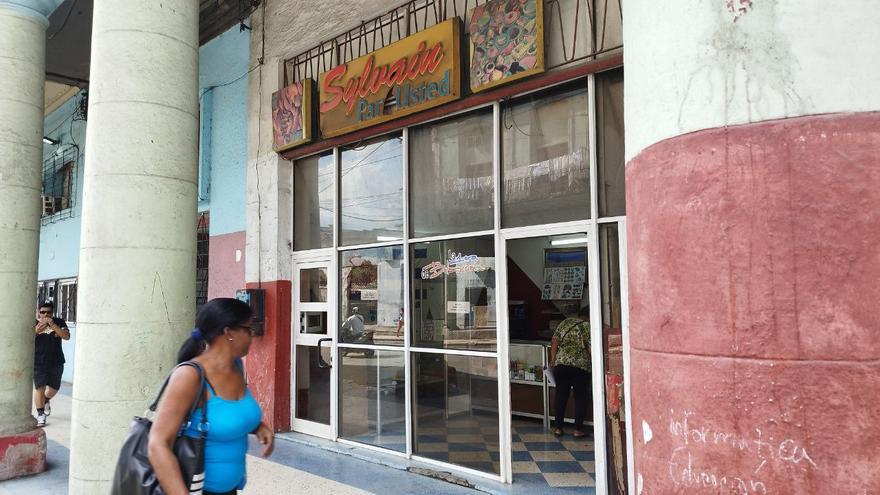
Sylvain de Zanja and Belascoaín, in Centro Habana. (14ymedio)

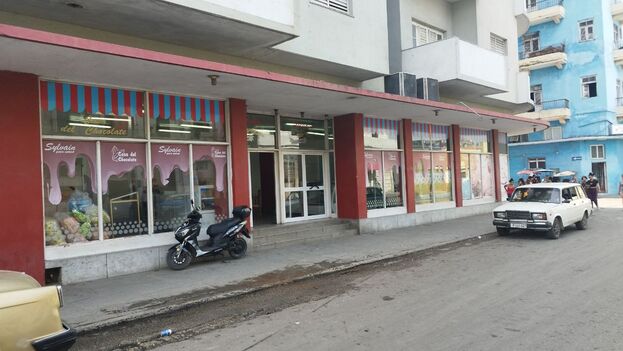
14ymedio bigger14ymedio, Juan Diego Rodríguez/Olea Gallardo, Havana, 26 January 2023 — A tetrapak of fried tomato sauce weighing 8 ounces for 630 pesos, some even smaller containers of mayonnaise at 280 pesos, and packet of cookies for 380 pesos, a 3.5 ounce bag of chips for 150 pesos… All imported and at reasonable prices unattainable for the average Cuba, is the new product line at the Sylvain establishments, which used to sell sweets and bread. And on some vague day at the end of the year they went from being state-owned to ending up in private hands.

Or at least, in part. The store on Zanja and Belascoaín, in Centro Habana, located on the ground floor of the famous building known as Super Cake – for the pastry shop it housed before 1959 – is divided into two, according to an employee speaking to 14ymedio: one state-owned and the other private.

In the first, the only thing for sale is garlic paste and the occasional spice for seasoning, but it is closed. “It’s empty because we don’t have materials or products to work with,” explained the worker, who, like other women, is working in the private area “to guarantee us a job while supplies arrive on the other side.”

On the private side, “there is everything,” as the neighbors marvel, “but we cannot afford it.” Not even the powdered milk: at 1,800 pesos for 2.2 pounds.

The Sylvain store on San Rafael Boulevard, in the same Havana municipality, has also been “privatized,” offering imported and expensive products similar to those at Super Cake, and the the store at San Lázaro and Hospital, which sold food before, now offers office supplies, as does as the Belascoaín branch between Monte and Campanario.

The case of the Sylvain chain is not unique, and it is part of a list that has been growing for months: that of state establishments that become rented by individuals overnight, without any kind of notice. continue reading

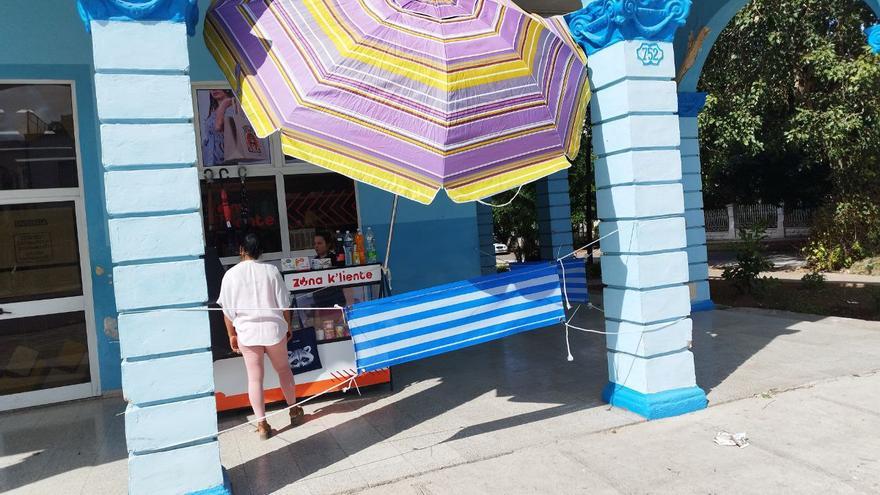
The same thing happened in the so-called Mercadito Ideal at 23rd and C, in El Vedado, whose outdoor area is occupied by a private stall where the items are, according to the visitors, “for the elements.” Namely: umbrellas at 2,300 pesos, soda bottles at 350 pesos or shopping bags at 850.

The Sylvain de San Lázaro y Hospital branch now offers office supplies, as does the Belascoaín branch between Monte and Campanario. (14ymedio)

Another example is the Coppelita ice cream parlor within the Hola, Ola complex, reopened last July, which a few months later accumulated several complaints on=line about the high prices of ice cream – 170 pesos for two scoops – the turbidity of having “reemployed” state workers and the scarcity of products to sell.

“How do they give that place, in a privileged area, just fixed up, to people who have nothing, who offer nothing?” some onlookers wondered at the time.

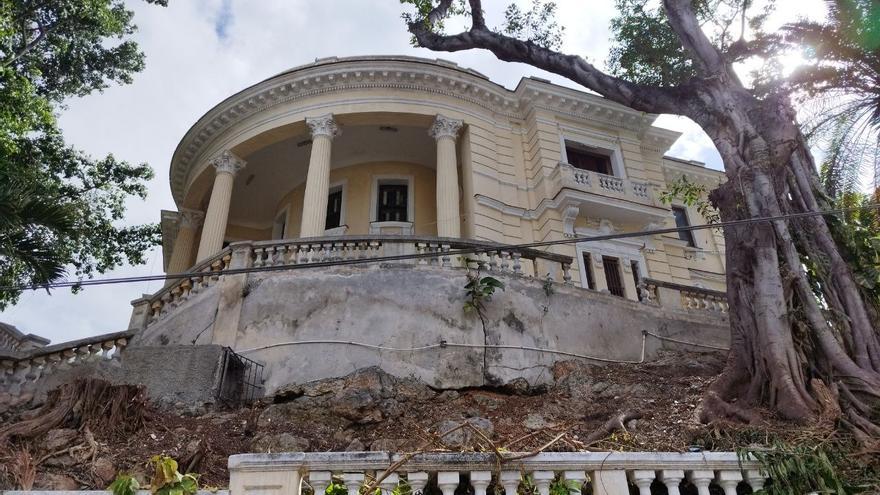
But if there is a place that has passed to a private owner and offers a service with stratospheric costs, it is the Palacio de los Matrimonios [Wedding Palace] in El Vedado. Nestled at 25th and N, in an old mansion from the early 20th century that fell into disrepair little by little, a couple could get married at the cost of just a 5-peso stamp.

Now, and after a slight remodeling that, according to the neighbors, was carried out by a foreigner to whom they “gave” the business, the place is called ModaHabana Novias, and sold as “Havana’s Italian atelier.” It offers the following, according to information sent to its clients: “We are dedicated to the rental of wedding dresses and men’s suits, the organization and coordination of the entire wedding, venue management, we also offer micro-wedding services in private residences, photography and photoshooting around the city, makeup and hairdressing, catering services, buffets, wedding cakes, management of alliances in jewelry stores, among other options.”

Mercado Ideal at 23rd and C, another of the state premises leased to private hands. (14ymedio)

The firm’s offers range from an “economic line,” which consists of a wedding dress between 8,000 and 10,000 pesos and the “maid of honor” dress included, to a “luxury” line: a wedding dress for 70,000 CUP and, “free”, an “Italian” suit for the groom, from the Carlo Pignatelli brand, the tornadoda (reception) dress, those for the bridesmaids and the ladies and gentlemen, make-up and hairstyle service at home, the bouquet with imported flowers and a garter belt.

In addition, the company offers a hairdressing service for 4,000 pesos and a bouquet with five imported roses for 5,000 pesos, prices that are equivalent to the monthly salary of a state worker.

“They are privatizing the country little by little and silently,” lamented a client who left the place in terror after asking about prices. “What worries me is that they are the ones keeping things for themselves. Nothing is said in the state media or on television.”

Last week’s meeting between Miguel Díaz-Canel and the Kremlin adviser Boris Titov confirms this trend that has been seen on the street for months. The meeting showed not only that Cuba wants to take its relationship with Russia to “a higher moment,” as the island’s president declared, but this consists of letting Moscow guide in a future opening.

Coppelita ice cream parlor, inside the Hola, Ola recreation center, in Havana. (14ymedio)

As revealed by the Russian media – in no case by the Cuban officials – both parties agreed to create a center to transform the Cuban economy “from private companies.” This means, for voices in exile such as the Cuba Siglo XXI [21st Century Cuba] think tank, the imminent transition from a “model with a nationalized economy” to the “Russian market mafia scheme,” in which the old Soviet oligarchic elite took control of numerous companies.

In reality, there are rules on the Island that regulate the bidding for the rental of state premises by individuals, but the truth is that the official press, always given to propagating any trifle that suits the regime, has not publicized this.

The Official Gazette of April 21, 2022 specifically establishes the procedure in detail. Among its articles, there is the one that indicates which principles should govern the tender: transparency (“the knowledge of the actions and decisions of the tender that the participants have for an effective social and popular control”), equality (“that the participants have equal rights and opportunities”), publicity (“that the different actions and decisions of the bidding procedure are public”), concurrence (“all those who meet the general conditions that are established have the right to participate in the bidding”), competition (” the possibility is guaranteed to all potential bidders to participate in the process, without being able to introduce limitations that have no technical, legal or economic basis”) and “reasonable efficiency” (“that the selection is most convenient for the public interest”).

The process, in any case, requires the “existence of establishments that it is decided to lease, working or closed” and that “the Council of the Municipal Administration or the Governor, as appropriate, make the call for the start of the bidding process for the lease of the establishment,” according to an official website in May. Everything can take a minimum of 15 business days.

Curiously, the day after the publication of that Gazette, and to date, no public tender or the name of its owner has been known, Fress reopened in the Plaza de Carlos III as a restaurant and store in Cuban pesos.

Three days after the publication in this newspaper of that news and of numerous complaints on-line due to the high prices of the premises, the establishment was closed “due to technical problems,” and the company’s premises in Playa, a restaurant with home delivery, also suspended activities.

Wedding Palace, in the Havana neighborhood of El Vedado. (14ymedio)

“They held an emergency meeting here in Carlos III because of the criticism on social networks, and starting tomorrow they can only sell processed food,” some workers explained to 14ymedio, which collected the testimony of several customers during those days.

The general opinion was summed up in the following: “I have nothing against the privates, but the problem is not that it is private, but that it was impudent. Why some yes and others not?”

The questions remain unanswered. Last August, the newspaper Sierra Maestra published a list of state premises that were going up for tender in Santiago de Cuba, the results of which is unknown. Some of them were Soditos, the state-owned cafeterias spread over various neighborhoods that sold everything from ice cream to condoms, including bread, tea, juices and soft drinks, with great success among the population.

Just a few weeks ago, the Habana Radio website reported the tender for three other properties by Gestión del Patrimonio: Obispo 328, O’Reilly 107 and Obrapía 107. All of them are historic buildings located in Old Havana.

The call for the first, however, expired on November 24, 2022. The second expires on February 5 and corresponds to the establishment where the Sargadelos store was located, a Spanish firm from Galicia that disassociated itself from that project on the Island about five years ago. Finally, the term of the third call ends on February 8.

To find out all these details – property, conditions, dates – it is necessary to opt for the tender, and to follow the intricacies of several clicks, something far from the “transparency” and “publicity” that the law establishes.

____________

COLLABORATE WITH OUR WORKThe 14ymedio team is committed to practicing serious journalism that reflects Cuba’s reality in all its depth. Thank you for joining us on this long journey. We invite you to continue supporting us by becoming a member of 14ymedio now. Together we can continue transforming journalism in Cuba.

A Depressed Employee Among Empty Shelves, a Reflection of Cuba’s Misfortune

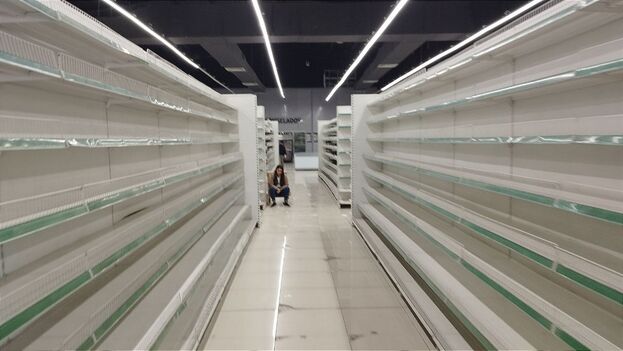
The Pan-American Store at Boyeros and Camagüey, in Havana, this Monday. (14ymedio)

14ymedio bigger14ymedio, Juan Diego Rodríguez/Olea Gallardo, Havana, 16 January 2023 — A few years ago, through one of those entertaining TED conferences that spread like wildfire on social networks, Barry Schwartz popularized the expression “the paradox of choice” which can be summed up as follows: choosing between too many options produces paralysis and dissatisfaction, which can cause a kind of very negative stress in modern industrial societies.

None of this will happen to the customers of the Panamericana store on Rancho Boyeros and Camagüey avenues, in Havana, where the shelves looked almost completely empty this Monday.

“How come it’s like this!” a surprised customer remarked — one of the very few in the store which requires payment in freely convertible currency (MLC). An employee responded, sighing with resignation: “Do you see how it is? The last time there was a more or less decent assortment here was in December and we’ve been like this ever since.” continue reading

On the shelves there were hardly any very expensive products that people do not usually buy, such as beef that is unaffordable to the average Cuban, or Christmas munchies at 16 MLC, or the occasional wrinkled and expensive package of beans.

Gone are those images of the establishment in which the refrigerators looked full and the lines at the door stretched four blocks. That was in July 2020, just after the Government announced the sale of food and toilets in MLC, a measure harshly criticized by the population, a large part of which does not have access to foreign currency.

Although a year later the same market, one of the largest in the capital along with Cuatro Caminos, in Centro Habana, and 3rd and 70th, in the municipality of Playa, was in crisis due to shortages, it cannot be compared to its present state. .

“There’s nothing, this is stripped, let’s go,” a couple commented among themselves.

To explain the “paradox of choice” there are scientific studies that speak, for example, of the damage of an “overload of alternatives” in the brain if there are many options to choose from. Thanks to the Revolution, the Cubans’ brains are safe.

____________

COLLABORATE WITH OUR WORKThe 14ymedio team is committed to practicing serious journalism that reflects Cuba’s reality in all its depth. Thank you for joining us on this long journey. We invite you to continue supporting us by becoming a member of 14ymedio now. Together we can continue transforming journalism in Cuba.

Lopez Obrador and Cuba, a Honeymoon that Doesn’t End

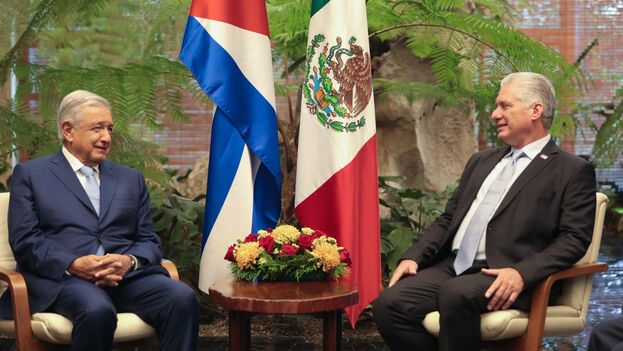
The Mexican president, Andrés Manuel López Obrador, and his Cuban counterpart, Miguel Díaz-Canel. (Presidency of Mexico)

14ymedio bigger14ymedio, Olea Gallardo, Havana, 28 December 2022 — Miguel Díaz-Canel’s first public statement on Wednesday was a message to his Mexican counterpart, Andrés Manuel López Obrador. “It was very pleasant to talk on the phone with Brother President López Obrador,” the Cuban president wrote on Twitter, reiterating “the deep gratitude to the people and Government of Mexico for the generous and supportive help provided to Cuba.” Both expressed, he said, “satisfaction with the excellent state of bilateral relations.”

Díaz-Canel did not specify what “generous and supportive help” he was referring to, but he did note one fact: despite the historic cordiality between the two countries, bilateral relations have never been so “excellent.”

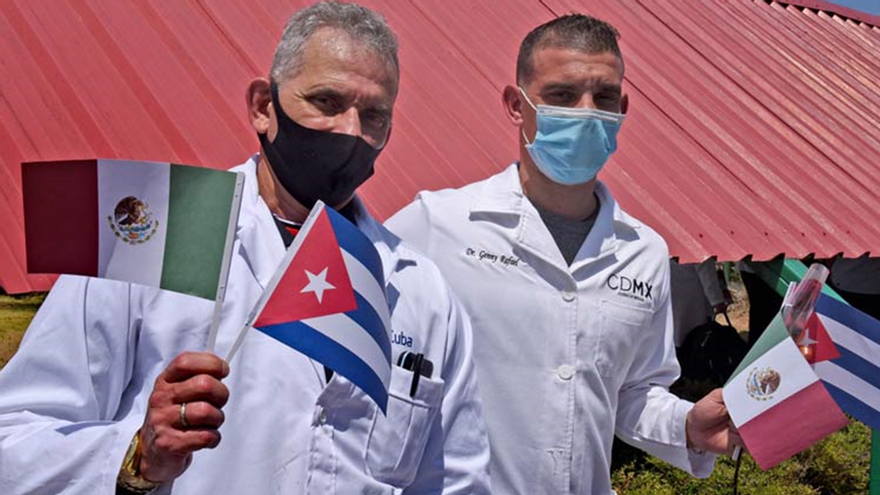
The latest milestone is the hiring of 119 more Cuban doctors, as announced on Tuesday by the director of the National Social Security Institute of Mexico, Zoé Robledo, at López Obrador’s usual “morning” press conference.

These health workers will arrive in January “to provide their specialized services,” said Robledo, who recalled the 491 additional doctors who are “in 11 states, in very difficult and marginal places, helping to provide coverage every day and at all times in the hospitals where they are prominent.”

At the beginning of December, this newspaper found that one of those areas for which these doctors were promised, the inaccessible and violent Montaña de Guerrero, still does not receive Cubans. continue reading

Beyond that, neither of the two countries has made public how much money Mexico has spent on Cuba since López Obrador took office, on December 1, 2018. The Mexican president’s affinity for the Cuban Revolution is evident, in speech and in action.

The honeymoon began on another honeymoon: the one that López Obrador took with his first wife, the late Rocío Beltrán, in Cuba, in 1979, and continued with the import of the Sandino housing construction system — extended on the Island after the triumph of the Revolution — when the current president was a member of the official PRI party and director of the National Indigenous Institute of the state of Tabasco, at the beginning of the 80s.

After his election as president, the man from Tabasco gave free rein to that old love, which, in the midst of the deep crisis in Venezuela, supplier to the Island for the last two decades, was immediately reciprocated.

For example, the first official visit of Miguel Díaz-Canel after being appointed president was to Mexico, in October 2019.

Since then, the closeness has been characterized by controversy and opacity. In April 2020, medical brigades began to be sent in support, according to the Mexican authorities, of the fight against the COVID pandemic. Schools and public opinion questioned them for not being prepared to face the health emergency and for doing little work. It would then become known, thanks to the investigations of the press and the opposition, that their presence in Mexico cost almost eight million dollars. The official Cuban press itself has given the exact number of health-workers sent to Mexico for that contingency between 2020 and 2021: 1,479.

Despite the controversy over these health workers, the Mexican government won further criticism for the lack of transparency about the scholarships for medical residencies abroad, which began in 2020. The final destination would end up being only Cuba, for which Mexico paid the regime one million dollars, as revealed at the time by the Latinus portal.

Another milestone was the presence of Miguel Díaz-Canel on the presidential stand during the celebrations for the independence of Mexico, in September 2021, where he was even allowed to give a speech, something that had never happened in the country’s history with any foreign head of state.

Last May, López Obrador was reciprocated with the José Martí Order, on his official visit to the Island – one of the very few countries to which he has traveled as president. For those days, and during the Havana Book Fair, in which Mexico was the guest of honor, the opening of a branch of the legendary Mexican state publishing house, the Economic Culture Fund, had been announced,. It would end up happening in August, precariously, and again without information about the amount invested.

The list of solidarity of the current Mexican Administration with Cuba includes the sending of staff from Petróleos Mexicanos (Pemex) and the Ministry of National Defense to help put out the gigantic fire, in August, of the Matanzas Supertanker Base, and members of the Federal Electricity Commission after the passage of Hurricane Ian, in September, as well as the purchase of anti-covid vaccines — not yet approved by the World Health Organization — and the import of Cuban gravel for the construction of one of López Obrador’s emblematic projects, the so-called Mayan Train, on the Yucatan peninsula.

The romance, of which neither Mexicans nor Cubans know the total cost, is far from over.

Translated by Regina Anavy

____________

COLLABORATE WITH OUR WORKThe 14ymedio team is committed to practicing serious journalism that reflects Cuba’s reality in all its depth. Thank you for joining us on this long journey. We invite you to continue supporting us by becoming a member of 14ymedio now. Together we can continue transforming journalism in Cuba.

A Hotel with an Unknown Owner and Rates of up to 100 Dollars per Night Opens in Centro Havana

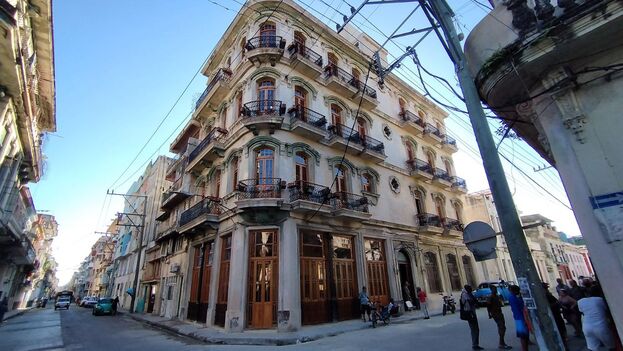
The Tribe Caribe Cayo Hueso Hotel opened on Saturday in Havana. (14ymedio)

14ymedio bigger14ymedio, Juan Diego Rodríguez / Olea Gallardo, Havana, 13 December 2022 — The neighbors of the hotel Cayo Hueso, in Centro Habana, watched with intrigue, for months, the remodeling  of the building located at Aramburu 253, at the corner of Neptune. Little by little, the property — built in the 1930s and in decline, like all its surroundings — was becoming a luxurious establishment, judging by what could be glimpsed through the windows of the ground floor.

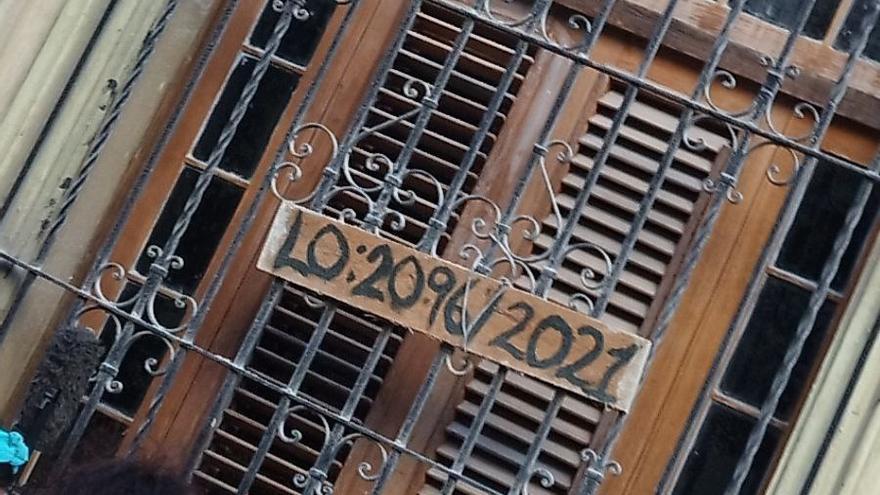
Nothing, however, reported its future use, and the only sign it displayed was the work license number written on a piece of cardboard and poorly hung on a window. The gossip  began to flow without confirmation: a yuma had bought the property and was turning it into a hotel.

And not only that, but he had bought other houses and planned to relocate everyone who lived there.

If it was true that the project was for an American, in any case he had to be influential. In this regard, several residents of the place tell another anecdote. One day a cement truck was parked in front of the building, and a police patrol car arrived to ask the construction workers for identification. One of them phoned someone, and, after having a brief conversation, passed the device to the policeman: “Someone wants to talk to you.” “The policeman changed his expression, apologized, and they never bothered the workers again,” says a neighbor who asks for anonymity.

Thus, a name began to be repeated during the last few weeks by the neighbors. They dared to say that behind the project, headed by two American businessmen, was none other than Raúl Castro’s daughter. “There the meter is running, but it’s not for the Americans. That’s not theirs, but Mariela’s,” the residents said confidently, insisting they saw her on Friday inside the building.

True or not, no one saw Mariela Castro last Saturday, when the hotel was inaugurated and several unknown people were cleared. To begin with, its name: Tribe Caribbean Cayo Hueso (Key West). continue reading

The only sign that the establishment had was the construction license number written on a piece of cardboard and poorly hung in a window. (14ymedio)

On its webpage, where you can now book a room for 150 to 550 dollars a night — booking a full floor costs 1,000 — the “founders” appear: an American investor, Chris Cornell, and music producer Andrés Levín, born in Venezuela but with a US passport. In Cuba, Levin is known for participating in several cultural projects such as the Havana Biennale, in addition to his marriage to Cuban-American singer Cucú Diamantes.

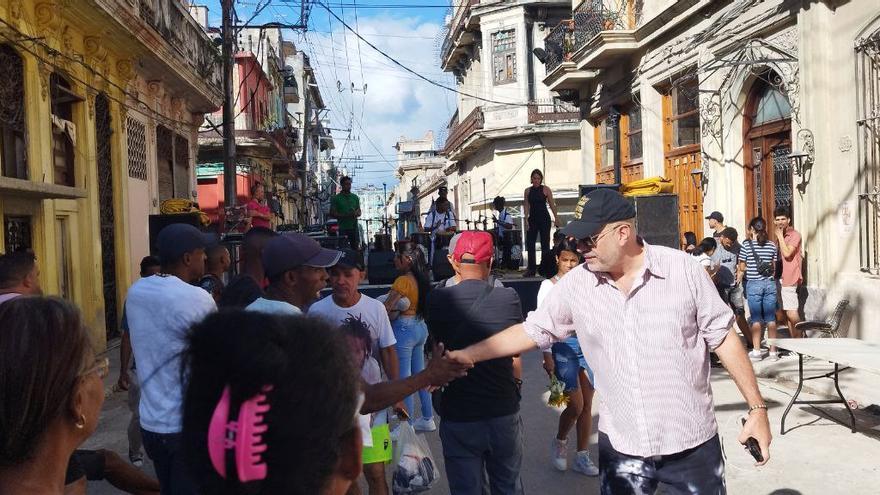
Hence, he was the most recognizable figure on Saturday, at an unusual “neighborhood” inauguration party, which lasted six hours and included an exhibition by photographer Juan Carlos Alom, the sale of items by private businesses such as the Clandestina brand and musical performances. “Here in Cuba this is not allowed for just anyone,” commented a young man, who stopped humming what they were singing on the stage: El Necio [The Fool], by Silvio Rodríguez, to the rhythm of salsa.

Levín, with a cap and characteristic dark glasses, came and went, smiling, greeting with familiarity the neighbors gathered in front of the street stage, for whose installation the traffic on Aramburu Street between Neptune and San Miguel was closed off.

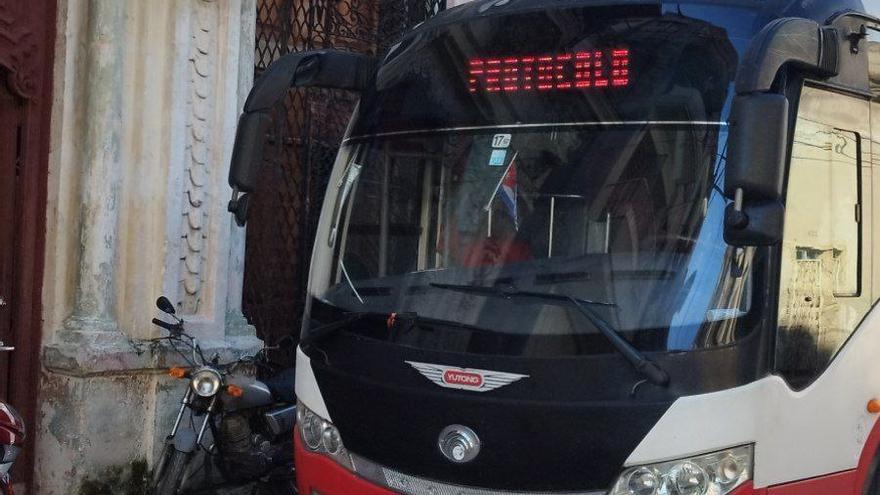
Nearby was a bus with the electronic sign “PROTOCOL” in capital letters, and the various Lada vehicles with drivers normally used by public officials, parked nearby, were obvious.

A group of young people dressed in T-shirts saying “Tribe Caribe” prevented people from entering the hotel and monitored the movements of the curious.

Tribe Caribe is a company registered on April 30, 2021, in Florida, with the address 1521 Alton Road 460, in Miami Beach. Levín and Cornell both appear as directors. The company, linked to the world of music, affirms that it “promotes and distributes exceptional original Caribbean content,” according to its website, and is “a proactive force, a voice and an educator in the continuous emergence of the rich cultural offerings of the Caribbean.”

On the hotel’s page, Chris Cornell points out that he is “a long-time professional entrepreneur and investor in arts, creative businesses and impact projects, who provides momentum and entrepreneurial spirit to the project,” and who “has directed all the important decisions of restoration, construction and design of the hotel, and is deeply aware of how these decisions affect the neighborhood, the local cultural identity and the preservation of the artistic heritage of Cayo Hueso.”

Andrés Levín iba y venía sonriente, saludando con familiaridad a los vecinos congregados delante del escenario callejero. (14ymedio)
Andrés Levín came and went smiling, familiarly greeting the neighbors gathered in front of the street stage. (14ymedio)

Of that mysterious investor, with unknown biography and background, there are no traces other than his alleged signature in the office in North Palm Beach, Florida, where the Tribe Caribe company was created. Of course, his name and surname coincide exactly with those of the famous singer of the Audioslave band, the first American rock group to play live in Cuba, in May 2005, at a venue none other than in the Anti-imperialist Bandstand, and for hundreds of thousands of fans on the Havana Malecón.

Levín emphasizes that he has been nominated for 26 Grammy awards — he won one in 2009 for the recording of the musical In the Heights — and that he has “propelled initiatives and produced numerous cultural events in Cuba, including TEDxHabana.”

Founder of the Afro-Cuban band Yerba Buena, the producer has collaborated, as mentioned on the official website, with artists such as Miguel Bosé, Aterciopelados, Orishas, David Byrne, Caetano Veloso, D’Angelo, Julieta Venegas and Tina Turner.

In addition, he is the producer of several film projects such as Amor crónico, directed in 2012 by the Cuban Jorge Perugorría, with whom he has a personal friendship, according to the photographs that show them together and messages.

An actor who prefers not to give his name and who was in business with Levin years ago, tells 14ymedio that both had agreed to collaborate on several projects, but that the producer cut off all communication after the artist’s participation in the demonstration on November 27, 2020 in front of the Ministry of Culture.

At that time, the actor attended two parties organized by Levín. One, in a house that he had rented in the municipality of Playa, near 5th Avenue, and another, in Siboney, where the mansions expropriated by the main architects of the Revolution are located, to celebrate the birthday of the producer’s father.

The source did not see, on any of these occasions, “anyone who was a heavyweight in politics,” but just “plain show business.”

Nearby was a bus with the electronic legend in capital letters “protocol”, and the various Lada vehicles with drivers were obvious. (14 and a half)
Nearby was a bus with the electronic legend in capital letters “protocol,” and the various Lada vehicles with drivers were obvious. (14ymedio)

But if he is associated with Mariela Castro, it is because Levín himself appears on social networks next to her, for example, in an “anti-homophobia” gala held in 2016. The Spanish singer Marta Sánchez, who performed on that occasion, also posted on Facebook about it: “Thank you Cuba for so much love and recognition! Thanks to Mariela Castro for that support to those who choose in this country to love as they want! Thanks to Andrés Levín for counting on me!”

In addition, the producer himself mentions Raúl Castro’s daughter in an interview granted in 2016 to Tablet, a magazine on issues of the Jewish community (the producers’s roots, whose parents, “very left-wing” according to their own description, were Argentines exiled in Caracas).

“It seems to me that I was at a dinner with you a few years ago and there were secret service people there and one of the Castros was with us or something like that. What happened?”, asks the interviewer, to which Levín replies that he does not remember well, but that it would surely have to do with the TEDxHabana event, in which he collaborated with “designers, programmers, artists and scientists” of the Cuban LGTBQ community.

The “neighborhood” opening party, last Saturday, lasted six hours and included an exhibition by photographer Juan Carlos Alom, sale of items by private parties such as the Clandestina brand, and musical performances. (14 and a half)
The “neighborhood” opening party, last Saturday, lasted six hours and included an exhibition by photographer Juan Carlos Alom, sale of items by private parties such as the Clandestina brand, and musical performances. (14ymedio)

“One of the most advanced LGBTQ sex education programs in Latin America is led by Mariela Castro,” says the musician, who recognises having collaborated with her “on many projects related to culture and education.”

And then Levín unravels into praise for the Cuban people, whom he affirms “have a lot of potential and desire to prosper and are very different from what people think,” and who have “things that most of the world doesn’t have”: “Healthcare and education. Eleven million educated people. It is the most educated country in the world,” he says.

Tribe Caribe Cayo Hueso is offered precisely as a cultural project: “We continue a 25-year mission to preserve and pay tribute to Afro-Cuban culture and its musical legacy, we celebrate multi-generational artistic expression, and we come to share our exclusive access to a side of Cuba that visitors and guests could not experience on their own.” Not a word about the business purposes, nor the obvious opulence that the project exudes, nestled in the depleted heart of Centro Habana.

Translated by Regina Anavy

____________

COLLABORATE WITH OUR WORKThe 14ymedio team is committed to practicing serious journalism that reflects Cuba’s reality in all its depth. Thank you for joining us on this long journey. We invite you to continue supporting us by becoming a member of 14ymedio now. Together we can continue transforming journalism in Cuba.

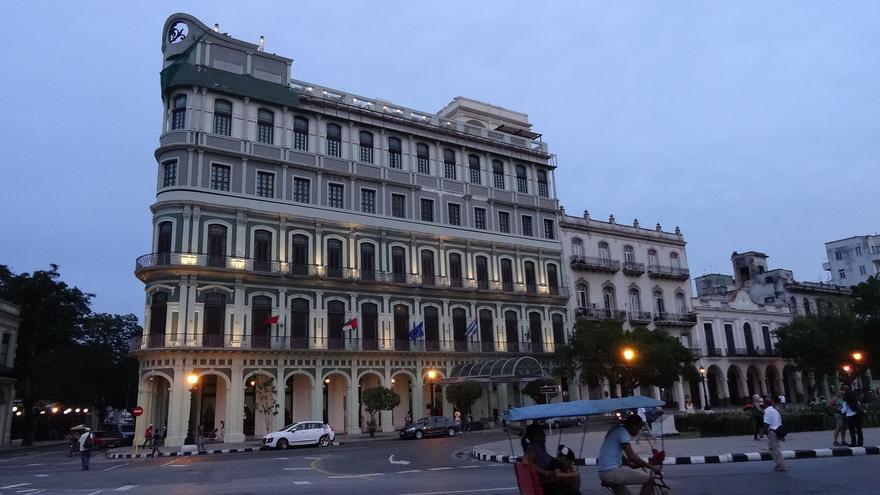
The Saratoga Hotel’s Decline Began as Soon as the Military Took It Over

The Hotel Saratoga in all its splendor, in March 2014, after it had been restored. (CC/LukaszKatlewa)

14ymedio bigger14ymedio, Juan Diego Rodriguez / Olea Gallardo, Havana, 11 May 2022 — Though an explosion at the luxurious Saratoga Hotel last Friday led to the deaths of at least forty-three people and the destruction of an iconic Havana landmark, the seeds of its demise were planted within its walls much earlier.

Specifically, this was in 2016,  when the Armed Forces Ministry seized the property from Habaguanex — a company had been operating under the auspices of the then all-powerful Office of the Historian of Havana, directed by Eusebio Leal — and handed over to the Gaviota group.

Leal’s agency had been successfully operating a number of tourist-related commercial properties when they were taken over by the Revolutionary Armed Forces Business Administration Group (Gaesa), led by Raul Castro’s former son-in-law, General Luis Alberto Rodriguez Lopez-Calleja.

“The Gaviota people were driving the Saratoga into the ground,” claims one former employee, a man in his forties who prefers to remain anonymous. He quit working there two years ago and swears he will never go back. “Everything became run down and they weren’t taking care of anything,” he reports. continue reading

This was a far cry from 2005, when the Saratoga — built in 1880 and operated as a hotel at the corner of Prado and Dragones since 1933 — reopened as modern five-star establishment after a long period of decline that began with the triumph of the Cuban revolution. The restoration was carried out the Office of the Historian and financed by foreign investors.

One of those investors, who prefers to remain anonymous, tells 14ymedio that the tab for refurbishing the Saratoga — part of an ambitious plan by Leal to restore Havana’s historic city center — was on the order of fifteen million dollars.

“An English developer sought out investors in several European countries, including Spain,” he explains. That developer was Coral Capital, a company founded by Amado Fakhre, an Anglo-Argentinian with roots in Lebanon. “We liked this project because we always believed, and still believe, in the future of  Cuba,” says the investor. “And we never thought the current governent would last this long.”

According to this investor, however, everything changed once the property was transferred to Gaviota. “It all went downhill from there,” he says, though he acknowledges that investors also realized that the developers, led by Fakhre, did not have much experience in the hotel business. “They tried to make agreements with international [hotel] chains but were not successful. And, on the whole, the way they handled the negotiation with Gaviota was disastrous.”

The relationship of Fakhre and Stephen Purvis, his partner at Coral Capital, with the Cuban military brings to mind the popular fable about the frog who agrees to transport a snake across a river only to be stung by the scorpion in mid-stream, dooming them both. The two men were arrested — first in 2011 and again in 2012 — and accused of bribery. They remained in detention until their trial in 2013, when they were found guilty of “misdemeanor corruption” and released.

However, some media outlets report that Fakhre was forced to sign a confession stating that he had been detained for “having revealed state secrets” and spent twenty months being interrogated by the political police in a government safe house.

According to a 2016 article published in Vice, his business had invested a total of tweny-eight million dollars in the Saratoga.

Eusebio Leal’s star shone brightly even when Fidel was still in power and it did not dim until a long time thereafter. A flattering 2009 article in the official press noted that Habaguanex, which was created in 1994, operated no fewer than 300 tourist facilities. These included restaurants, shops, markets, cafes and lodgings with a total capacity of 546 rooms. These operations were touted as examples of “sustainable” development, whose profits went to “both the rescue of buildings that make up the Historic Center and to various social programs.”

“One morning, the elderly were invited to an extravagant breakfast at Casas Museos as part of a cultural event. And this was no run-of-the mill event,” reports a dancer who who worked with the Office of Humanitarian Affairs, which was also affiliated with the Office of the Historian

“Everything was carefully worked out,” she explains. “Partnership agreements and donations from from overseas as well as the income that Habaguanex generated as a company from all its hard-currency stores and hotels.”

“Not just anyone worked for them,” says the artist, who defends the management skills of Eusebio Leal, who died of cancer on July 31, 2021. “The Office of the Historian was a country within a country. They were powerful but they did things well. I worked there for many years and I know the efforts that were made.”

“In the end, they were audited and everything was taken away from them,” she says, alluding to the moment the Armed Forces took control of Habaguanex’s most attractive assets.

Once its foreign investors pulled out, the Hotel Saratogo languished under Gaviota’s management. Other former employees report deteriorating working conditions and the loss of financial incentives that the hotel’s foreign managers often provided on an informal basis to their workers in addition to their salaries.

“The first thing to go at the Saratoga was the art. But before that was the class,” says another former employee. “When it was part foreign-owned and part Habanguanex-owned, the Anacaona restaurant on the ground floor was packed on Christmas Eve. But under Gaviota, it wasn’t even a shadow of its former self.”

Gaviota — proprietor of the luxurious Grand Hotel Manzana and manager of the Kempinski — has close to sixty hotels and villas throughout the island with close to 30,000 bedrooms, most of which are administered by foreign companies.

It is the operations under foreign management that enjoy the best reputations while the hotels over which the military conglomerate has exclusive control have not managed to achieve the same level of customer satisfaction.

____________

COLLABORATE WITH OUR WORK: The 14ymedio team is committed to practicing serious journalism that reflects Cuba’s reality in all its depth. Thank you for joining us on this long journey. We invite you to continue supporting us by becoming a member of 14ymedio now. Together we can continue transforming journalism in Cuba.

‘They Want to Get Rich at the Expense of the Pain of Cubans’

There are still dozens of Cubans in Guyana, spending money that is beginning to be unsustainable for their families. (14ymedio)

14ymedio bigger14ymedio, Olea Gallardo, Havana, 8 April 2022 — Juan and Ernestina (fictitious names) arrived in Georgetown, Guyana, on March 15 to process their family reunification visas. They had been ’claimed’ by their daughter, Miriela, based in the United States since 2011, who also prefers to remain anonymous because she insists that her parents are “in the hands of a mafia.”

The process — mandatory since the United States Embassy in Cuba suspended services in 2017 after the appearance of diplomats with strange symptoms known as “Havana syndrome” — should have been simple, but it has become a trial of anguish and expense.

Before arriving in Guyana, the couple, who are around 70 years old, had “12 days of anguish,” says their daughter, first because there was no ticket on any airline. “We spent hundreds of dollars calling Copa [Airlines] and they didn’t sell us a ticket because, according to them, they were full until July.” Thanks to a contact, they got a flight with a stopover in Panama, at no less than almost 5,000 dollars each.

A few days after buying that ticket, the Panamanian Embassy in Havana announced that Cubans would need a transit visa to set foot on its territory traveling a third country. Although the decision, which provoked demonstrations for days in the vicinity of the consular headquarters and continues to be a source of protest, mainly affected those who planned to emigrate to the United States irregularly via Nicaragua, it also hit those who, like Juan and Ernestina, had undertaken a legal route. continue reading

Both had the consular interview between March 16 and 30, just the dates for which the immigration authorities forced the rescheduling of tickets , since the transit visa had to be requested 15 days in advance. At the last moment, the option of flying to Guyana via Trinidad and Tobago on Caribbean Airlines came up and they took it. Paying, yes, says Miriela, “another ridiculous price.”

Once in Guyana, the problems were far from diminishing. To begin with, the accommodation was not what they had been promised in the advertisement. “In theory, the hostel is a small house with all the minimum conditions. At first they tell you that they charge 90 dollars a day, but when you arrive, it turns out that they charged 100 a day for an apartment,” says Miriela. Similarly, the price included breakfast, lunch and dinner.

However, the quality and quantity of that “full board” was slight, so her parents had no choice but to go to a market to buy what they needed. With the excuse that the accommodation “is not in a very good area,” Miriela denounces, “they charge them to take them to a market far from there, by taxi.”

However, the serious part came with the clinical exams required by the US Embassy as a requirement to grant the visas. “My parents had the tests exactly 15 days ago and supposedly the results are not there,” says Miriela, who insists that “if you give them 200, 300, 400 dollars, depending on how hard you press them, or if they suppose that you have it, the analyzes appear in a matter of seconds.”

That clinic, International Medical Center, was certainly the subject of a scandal in November 2021, when its owner, Dr. Colin Roach, was murdered, a crime for which two employees were arrested, without their identity being revealed.

Miriela calculates that currently the clinic’s workers are 80% Cuban and the other 20% Guyanese and Venezuelan. For this woman from Sancti Spiritus, it is obvious that the clinic and the hostel are involved in “corruption.”

As an example, she relates how one Saturday from the lodging they offered to go to the medical center to collect the tests. “If the clinic only works from Monday to Friday, does it make any sense that the owner of a hostel, who has no relationship with the patient, shows up at her business with the results of the tests?” Miriela wonders “There is obviously influence peddling and an unequivocal link.”

Cuban Berta García Reyes, who went through the same ordeal of obtaining a family reunification visa a few months earlier, in December, argues that “the flow of people is so great that many Cubans don’t have time to get checked before going to their consular interview, so they are forced to reschedule an additional appointment at the embassy to bring the results of the medical checkup, which can take 10 or 12 days, and after bringing those results to the embassy, ​​you have to wait for them to give them to give you a date to finally pick up your visa.”

This, she explains, “has led people to turn to these corruption mechanisms in clinics to speed up their check-ups and results. And it is common for it to be in hostels where they are told who they should go to to resolve their case.”

García Reyes does not know the sum of money in all cases, but she does know “with certainty” that “there are those who have paid a thousand dollars for an accelerated and valid check-up.”

In her case, her problems began at the consular interview itself, when, to her surprise, she was told that she had to “complete and conclude the medical check-up,” even though she had already had those tests six days earlier. “At the hostel, I found out that they had called from the clinic to let them know that I had to go to the hospital,” says García Reyes.

At the clinic, the doctor told her that “a shadow” had been observed on the X-ray image and she diagnosed her with “cystic fibrosis,” and that she should therefore undergo a sputum test “for suspicion of tuberculosis.” There were also other Cubans there whose plates also turned out to be “suspicious,” the woman narrates, “and they had to undergo the same sputum analysis. In some cases they were asthmatic people, and there were also those with COPD [chronic obstructive pulmonary disease]. They informed us that they had to follow the protocol, that is, the sputum test to rule out tuberculosis in all cases.”

All this was very alarming for García Reyes, because the results of the sputum test took between six and eight weeks, which, of course, delayed the time until she would be reunited with her daughter in the United States, but, above all, it made it made the whole process more expensive. “She had to continue to cover my lodging and food expenses – which until then was 45 dollars a day and, by having to extend the accommodation, they lowered it to 35 dollars a day – as well as other additional expenses, for transportation and telephone,” says Bertha.

Added to the anxiety produced by all this was one more concern: “Cubans always feel fear, especially when we are in the process of entering the United States and we believe that they can deport us for anything.”

So at first she went along with it, but it didn’t last long. “As the days went by, I felt I had to do something. We Cubans who were in that situation ended up connecting through the networks. I knew about cases that were in Guyana even before me, since the first week of December, and I also knew that the last sputum test for previous cases had been done on November 11, when the reagent ran out [to process the sputum sample].”

At that time, they concluded that “either the doctors at the clinic were incompetent, incapable of establishing an accurate diagnosis and proceeding accordingly, or else behind everything there was a business involving the clinic and the owners of the hostels, which benefited from the extension of the Cubans’ stay in Guyana.”

The rumor was that the clinic “accepted bribes in exchange for repeating X-rays or changing the results of medical examinations from those who were willing to pay for it.” Meanwhile, hostels were “keeping all their rooms occupied at full capacity.”

García Reyes alludes to the fact that the consular headquarters is fully aware of the situation. “We shared in the hostels with all the other Cubans, who arrived and left with their perfect medical results, those who, if we had tuberculosis, would have brought the disease to the United States. That clearly indicated to us that the medical personnel and even the embassy officials knew that we were not actually sick, so they were not even the least bit concerned or interested in resolving the situation.”

However, each time they pointed this out to officials, they were told that they were just “following protocol.”

“Many of us think that the rumors that began to spread in February (officially confirmed in March) about the restart of the consular services of the US Embassy in Havana were in some way influencing an increase in corruption among the medical centers in charge of doing exams for immigrants and the hostels where they stay, urging them to make the most of it while Cubans continue to be forced to do the paperwork in Guyana,” García Reyes details.

The wheel “began to unlock” for her after her statements to various US media, such as América TeVé and Telemundo, which publicized the problem. From there, congressmen like Marco Rubio also began to demand solutions for the Cubans stranded in Georgetown.

After Berta’s complaint to US television stations, and although without referring to the complaints, the Embassy authorized an additional doctor, Dr. Arya Devi Karyampudi, from St. Joseph’s Mercy Hospital, to perform medical examinations on visa applicants.

Until then, and since Colin Roach’s murder, only Dr. Yonnette Roach had been staffing the International Medical Center. She was the one who saw Juan and Ernestina.

In this regard, Miriela continues to express her doubts about the responsibility of the United States Embassy: “If they are rescheduling most of the appointments because they are showing up without the documents, isn’t it obvious that something is happening with the clinic? What are they going to do about it?”

On March 22, without referring to the complaints, the US consular section in Guyana added two other doctors: Zulfikar Bux, from St. Joseph’s Mercy Hospital, and Dev Persaud, from the Midway Specialty Care Center.

The delays, in any case, are not new, and for this reason last December the United States announced the increase in personnel at its diplomatic headquarters in Georgetown.

With not much success. Laments like those of Juan, Ernestina and Berta multiply in the Facebook group “Cubans united for family reunification,” many of them pointing directly to the consular headquarters as being responsible for the situation.

“You have to denounce these people, those from the embassy are in a plot with the hostels so that you have to spend more time here,” says Justo Toledo Luis. “When you go to the interview they ask you what hostel you are stayig in. Nobody leaves here in less than a month.”

Nierys Bermúdez refers to the owners of the hostels as “fraudsters,” charging guests $300 to “resolve” their medical check-up. “They want to get rich at the expense of Cubans’ pain, it’s too much,” she says, in the same vein as Zurileydis Domínguez Vichot: “What I think is that, as always, they make a lucrative deal off of our suffering.”

The criticism in the Facebook group has turned into praise, thanks and blessings since, this Wednesday, when the United States Embassy announced that it will resume processing in Havana the IR-5 category visas, which recognizes parents who are being claimed by US citizens.

In spite of everything, the diplomatic headquarters in Cuba insisted again that next month’s will be a “limited” resumption, which means that the Embassy in Georgetown “will continue to be the main place of processing for the majority of Cuban immigrant visa applicants.”

In addition, the embassy warned that applicants who have been notified before April 1, 2022 that their case is ready to be processed, will continue to be required to fly to Guyana. Those who have been notified after that date will have their interview scheduled in Havana.

“Given the limitations of their resources,” they added, they are not accepting “transfer requests from applicants.” They also do not have “an exact date” for when the diplomatic headquarters “will begin to process the full range of visa services for immigrants and non-immigrants,” but they assured that they will continue to provide “essential services to US citizens and a limited processing of emergency visas for nonimmigrants.”

For Berta García Reyes, the process was “without a doubt, the worst and most stressful experience” of her life, the cost of which “has been countless humiliations, mistreatment, indifference, contempt, helplessness, abandonment, anguish, to such an extent that some wanted to return to Cuba and wait for a new date.”

There are still dozens of Cubans in Guyana, spending money that is beginning to be unsustainable for their families. Miriela and her husband have spent 14,000 dollars, not counting the tickets from Guyana to the US. “And the old man’s interview is on April 22. Calculate how many dollars an average family needs for this process,” she laments with this newspaper. “Coming illegally to this country is cheaper than leaving through legal channels.”

____________

COLLABORATE WITH OUR WORK: The 14ymedio team is committed to practicing serious journalism that reflects Cuba’s reality in all its depth. Thank you for joining us on this long journey. We invite you to continue supporting us by becoming a member of 14ymedio now. Together we can continue transforming journalism in Cuba.

123 Cuban Healthcare Workers Return from Mexico and the Secret of Their Location is Revealed

The sending of Henry Reeve brigades to Mexico has been characterized by controversy and opacity. (Latin Press)

14ymedio bigger14ymedio, Olea Gallardo, Havana, 30 March2021 –The details of the mission of the Cuban doctors in Mexico continues to be learned drop by drop. This Monday, when 123 medical personnel from the Henry Reeve Brigade returned to the island, of the nearly 500 deployed in that country since December, the official Cuban press confirmed that they had been working in military institutions.

“The aid workers treated a total of 408 suspected or confirmed patients with SARS-CoV-2 in the operational units of temporary hospitalization Chivatito, Campo 1ª and Sixth Mortar Battalion,” reports Prensa Latina, who says that “the performance of these 84 doctors, 38 nursing graduates and a specialist in electromedicine won them the recognition of the Ministry of Health of Mexico, the Ministry of National Defense and the Government of the capital of the country.”

Until now, neither Mexico nor Cuba had specified the hospitals where the health workers who arrived in December were assigned, and the Cuban State newspaper Granma limited itself to saying that they were “in the temporary hospitalization operating units,” without giving further details. continue reading

The first center mentioned on Monday by the official news agency (Chivatito) is the Covid-19 Installation Military Hospital created by the Ministry of Defense on one side of Los Pinos, the former presidential residence, where source who preferred to reserve his identity told 14ymedio at the time that at least 260 doctors were working in Mexico.

According to that source, these were housed “in units without being able to leave them, they sleep in bunks, and were divided into three brigades,” and two of them deserted.

The group that returned this Monday is the third group of those deployed in December to have returned to Cuba: a first contingent (of 160) did so on March 1 and another (of 95), two weeks later.

The sending of Henry Reeve brigades to Mexico has been characterized by controversy and opacity. On March 15, it was learned that the Mexican Government had paid one and a half million dollars more than what it had originally said (about six million) for 585 health workers on the island who had been working between April and July 2020.

The information was provided to the Mexican digital medium La Silla Rota only through a request to the transparency portal InfoCDMX — to which public institutions are, in principle, obliged to respond by law — and after a wait of half a year.

That they have been housed in military institutions has made it more difficult to learn about the ’mission’ that began in December. In theory, the Ministry of Defense is subject to the same rules when it comes to requesting information via transparency, but in practice, the authorities often refuse to provide it, alleging national security reasons.

Another thing happened in June of last year, when complaints about the work carried out by Cubans in hospitals in the Mexican capital came to light both on social networks and in the main Mexican newspapers.

For the rest, it remains unknown how much Mexico paid for the almost 200 healthcare workers that were stationed in Veracruz on the same dates or for the 500 that it imported in December, of which 378 have already returned to Cuba.

It is also unknown which government agency made the disbursement. The response to La Silla Rota, via transparency, named the Ministry of Health of the Mexican capital, but at the time, both the owner, Oliva López Arellano, and the head of Government of Mexico City, Claudia Sheinbaum, emphasized that Cubans were hired “through an agreement with Insabi,” the Health and Welfare Institute created by President Andrés Manuel López Obrador, which has been the target of numerous criticisms in the country.

____________

COLLABORATE WITH OUR WORK: The 14ymedio team is committed to practicing serious journalism that reflects Cuba’s reality in all its depth. Thank you for joining us on this long journey. We invite you to continue supporting us by becoming a member of 14ymedio now. Together we can continue transforming journalism in Cuba.

While the Government Proposes to Limit Acopio, Farmers Want to Eliminate It

Farmers believe that the new measures support only “on paper” what they had already been doing. (Archive)

14ymedio bigger14ymedio, Olea Gallardo, Havana, 6 November 2020 — Measures announced on this Thursday’s Roundtable TV program suggest a tentative relaxation of the agricultural market.

For example, private farmers will be able to sell part of their production on their own, provided that they first comply with Acopio’s* agreed deliveries. This is what emerges from the convoluted words of the Minister of Agriculture, Gustavo Rodríguez Rollero, during his television speech: “Products that, due to their logistical or financial problems of collecting and trading entities cannot be purchased in accordance with the provisions established in contracts, may be sold through other forms of commercialization”.

This will resolve a frequent complaint of Cuban farmers: that Acopio lets part of the products rot by not having the means to collect them. continue reading

The minister stated that with this new policy “the country intends to make the entire collection and marketing system more flexible, and eliminate the monopoly role of Acopio, the Business Collection System”.

“This month, the product balance is 100,000 tons, that is, we still have a product deficit of over 50,000 tons that we have not generated”, acknowledged the Minister of Agriculture

Rodríguez Rollero acknowledged that agricultural production is far from meeting the basic needs of the population: “30 pounds per capita per month, per inhabitant, some 154,000 tons of agricultural products, whether meats, vegetables and fruits,” the minister explained. “This month the balance of products is 100,000 tons, that is, we still have a deficit of over 50,000 tons of products that we have not produced.”

To try to alleviate the severe food crisis that Cuba is plunged in, the Council of Ministers announced other provisions. Among them, flexibility in the hiring of workers by “individual producers, landowners and usufructuaries (leasers), those having the legal right of enjoying the profits of property belonging to another”, the approval of “tax incentives” and the “recovery of bovine livestock.”

“This does not affect or benefit us in the least,” Rolando Villegas, a farmer from the Guane area in Pinar del Río, tells 14ymedio. “The crops that are a distribution monopoly, such as the tobacco that we produce, continue the same way, as is the case with coffee growers and those who grow cocoa or potatoes”, he warns.

“In addition, the goals that Acopio sets for us to sell to the State are high and prices are low. Many times, we have more losses than profits to meet those amounts”, Villegas points out. “what little remains after complying with these standards often goes to our families’ self-consumption, and there are farmers in this area who for years have had direct agreements with paladares (private restaurants) and food businesses” for direct sales.

“What is the difference?” a farmer asks himself. “That now we can declare on paper what we have been doing for a long time”

“What is the difference?” a farmer asks himself. “Now we can declare on paper what we were doing a long time ago,” he says. “I did not watch The Roundtable program yesterday because we didn’t have power, but some friends told me that they were going to announce the death of Acopio but it didn’t happen, it’s still alive, kicking and screwing us.”

Raúl Castro’s government had already implemented similar measures in 2011 aimed at opening up the field, but reversed them in 2016 without offering an explanation.

Cuba imports more than 60% of the food it consumes, as well as a large amount of agricultural consumable goods, and Cuban producers have been asking for a relaxation of the rules for the countryside for years.

Last April, with growing shortages due to the closure of the borders due to the COVID-19 pandemic, the League of Independent Farmers and the Cuban chapter of the Latin American Federation of Rural Women launched the initiative “Without the Countryside There is No Country” which asks the Government for five concrete measures to liberalize agriculture: freedom for production and distribution, freedom to set market prices, freedom to import and export without State mediation, elimination of taxes for ten years and delivery of permanent property titles to all producers.

*Translator’s note: Acopio is Cuba’s State Procurement and Distribution Agency

Translated by Norma Whiting

____________

COLLABORATE WITH OUR WORK: The 14ymedio team is committed to practicing serious journalism that reflects Cuba’s reality in all its depth. Thank you for joining us on this long journey. We invite you to continue supporting us by becoming a member of 14ymedio now. Together we can continue transforming journalism in Cuba.

Cuban Priests Are Tired of ‘Two Types of Dictatorships: The Ecclesiastical and the Governmental’

Father Fernando Heria, priest of Ermita de La Caridad, in Miami. (Facebook)

14ymedio bigger14ymedio, Olea Gallardo, Havana, 5 November 2020 — Fernando Heria, a priest of the Ermita de La Caridad, in Miami, spread a message on his social networks in which he expressed his solidarity with Father Alberto Reyes, parish priest of the church of San Jerónimo, in Esmeralda, Camagüey. On November 1 Father Reyes published  a text on his Facebook wall in which he lamented the fear and oppression suffered by Cubans, in addition to criticizing the silence of the ecclesiastical curia.

“I share the cries of hunger and thirst for justice that a brother priest, Camagüey’s Father Alberto Reyes, has bravely shouted on behalf of all the children of the country, from the throats of our patriots: Mariana Grajales, José Martí, Carlos Manuel de Cespedes, Máximo Gómez, Antonio Maceo and many other brothers and sisters, a firm cry for the freedom and dignity of los hermanos,” says Heria in his posting made public on Monday.

“For years in each ad limina visit [the visit that bishops must make from time to time to Rome] with the Pope, they always ask: why are there so many Cuban priests who leave their homeland and go to serve in the diaspora?” continues the Father. “To which the Cuban bishops have always responded unfairly: because of the attraction of money. Enough of so many farces!” continue reading

Heria explains that if the priests stay in the diaspora, they do so because “they are tired of living under two types of dictatorships: the ecclesiastical and the governmental,” and he thanks Father Alberto Reyes “for making clear what this priest (me) has been telling the Cuban bishops, that it is their fallacy, regarding you, the priests, with the odor of sheep, who are the only hope of a noble people who wait, wait and wait for their freedom and respect for their dignity of being.”

The letter ends with an appeal to the 17 Cuban bishops, both ordinary and emeritus, to shout “enough is enough” and ask that they “set our noble Cuban people free for the love of God and the country.”

In his publication last Sunday, Father Alberto Reyes lamented suffering “the silence of my bishops.”

“It is not true that the Church has not spoken, it is not true, because all of us are the Church, and many lay people, priests, religious, even a bishop speaking personally, we have said what we think and we continue to say it,” the priest continued. And he clearly stated, “This country needs a change, it needs a transition, it needs to live and stop dragging its existence, and at this moment, in my opinion, only the Catholic Church is in a position to lead a dialogue and propose a transition.”

For this reason, Reyes concluded, “the people look to the bishops, and expect a clear position in favor of justice, freedom, in short, the Gospel.”

Reyes is one of the three Cuban priests who in recent weeks has been very critical of the social and political situation on the island. The first was Jorge Luis Pérez Soto, parish priest of San Francisco de Paula, in the municipality of Diez de Octubre, in Havana, who at the end of October said in a homily that “the Catholic cannot be apolitical, that is a lying word that only speaks of cowardice.”

“When a ruler is not willing to resign, is not willing to get out of the way for the common good, for the good of his people, for the good of his society, that Caesar is a tyrant,” Pérez said at a Sunday mass.

A few days later, Father Laureano Hernández Sasso lamented the deafness of the Cuban leaders. “Why do we have to beg? Why does President Miguel Díaz-Canel talk and talk and never say anything? Or do we have to tell our president that we cannot continue like this?” the priest wrote in his Facebook account.

In the past, several statements signed by the Cuban bishops have raised hives in the ruling party. One of the best known was the pastoral letter “El amor todo lo espera” (Love waits for all), signed by the Cuban Conference of Catholic Bishops in September 1993, during one of the hardest years of the economic crisis after the fall of the socialist bloc of Eastern Europe.

“The fight for justice is not a fight against which one can remain neutral, because this would be tantamount to putting oneself in favor of injustice,” the bishops said in that letter that was directly criticized by official spokesmen, including the journalist Lázaro Barrero, who called it a “telenovela title.”

Two decades later, the bishops published another pastoral letter entitled “La esperanza no defrauda” (Hope does not disappoint), which was read in all the churches of the country and which made a profound assessment of the Cuba of that time: “A new generation of Cubans, born in recent decades, has its own interpretation of our reality, with its own aspirations and interests, different from those of their predecessors. This generation lives with the firm desire that not only the present is better than the past, but that the future is better than the present,” they wrote.

The various declarations of priests inside and outside the Island are taking place a few days before the biannual celebration of the Conference of Catholic Bishops of Cuba. Many parishioners and members of the Church hope that a pronouncement on the acute crisis the country is experiencing will emerge from this meeting.

____________

COLLABORATE WITH OUR WORK: The 14ymedio team is committed to practicing serious journalism that reflects Cuba’s reality in all its depth. Thank you for joining us on this long journey. We invite you to continue supporting us by becoming a member of 14ymedio now. Together we can continue transforming journalism in Cuba.

The Covid Outbreak in Ciego de Avila General Hospital is Due to Negligence

Doctor Antonio Luaces Iraola General Hospital of Ciego de Ávila. (Radio Reloj)

14ymedio bigger14ymedio, Olea Gallardo, Havana, 18 September 2020 — With 19 positive cases of Covid-19 reported this Friday, Ciego de Ávila continues to be the second province in number of infections, behind Havana, and its situation is not improving. The most worrying data is that it accounts for 9 of the 19 critically ill or seriously ill patients in the entire country, even more than the 6 in the capital province, according to official data published by the Ministry of Health.

One of the most active local sources of contagion is the one that began at the Doctor Antonio Luaces Iraola General Hospital, the main one in the province, from which a hundred coronavirus patients were transferred to neighboring Camagüey — where there is still no contagion — last week.

When the news of the outbreak became known, through the official press, the hospital authorities held the workers responsible for the situation and their “non-compliance with the protocols.” Later, the local media gave space to praising the work carried out by the hospital, and described it as “almost a war maneuver to carry out routine procedures such as childbirth or tracheal intubation.” continue reading

However, a doctor and a nurse, who offered their testimony to 14ymedio on condition of anonymity, insist that the cause is negligence. “The corresponding tests were not being carried out on the patients who appeared with respiratory problems, and instead they were being treated as if it were asthma, allergies or bronchitis,” details the doctor.

“For years we have had a bus that transfers patients who must undergo hemodialysis,” adds the nurse. “As the transportation issue has become more complicated with the pandemic, other patients are also collected, including asthmatics and people who need routine treatments.”

“The problem was that in the same bus, patients who needed dialysis coincided for several days with others who obviously had Covid-19,” said the nurse. “The result is that at one point we had more than half of the patients in the nephrology ward also infected with the coronavirus.”

“When we found out, these nephrological patients had already spent time with their families, entered other areas of the hospital and had direct contact with doctors and nurses who had no protection,” she denounces. “A disaster and irresponsibility.”

Within the official data, in fact, it can be observed that several of Ciego de Ávila’s critically ill or seriously ill patients also suffer from kidney failure. This is the case for an 82-year-old citizen of the capital municipality, as well as another age 66 with kidney failure, a third age 65 with hydronephrosis, and a fourth age 68 with chronic kidney disease.

The province fell back to phase 1 on September 9, when it registered a total of 17 local contagion events. At that time, Miguel Díaz-Canel again blamed the outbreak on the “indiscipline” of the citizens.

Meanwhile, the keys, a popular tourist destination in the same province, are preparing to receive another flight from Canada, and the ruling party insists that “rigorous epidemiological control measures” are being carried out in Jardines del Rey to protect tourists and employees.

_____________

COLLABORATE WITH OUR WORK: The 14ymedio team is committed to practicing serious journalism that reflects Cuba’s reality in all its depth. Thank you for joining us on this long journey. We invite you to continue supporting us by becoming a member of 14ymedio now. Together we can continue transforming journalism in Cuba.