The Spanish Government Will Approve an Extraordinary Regularization of Migrants by Decree, Including Cubans

The measure will affect people who were residing in Spain before December 31, 2025
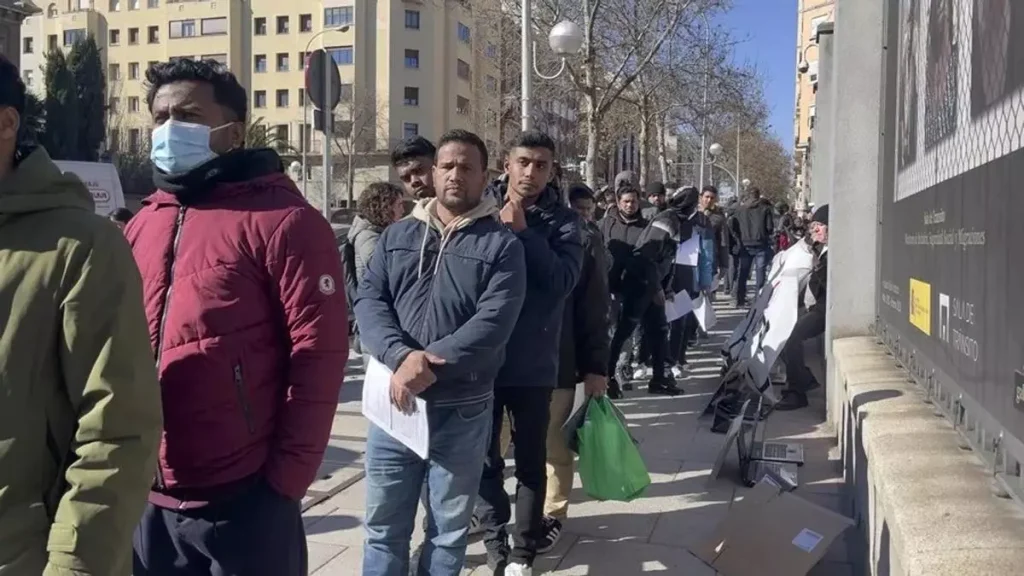

Line at a foreigners’ office. / EFE/Macarena Soto

14ymedio biggerEuropa Press / EFE/ 14ymedio, Madrid, January 26, 2026 — The Government will approve this Tuesday, January 27, at the Council of Ministers, an extraordinary regularization of migrants by royal decree, following an agreement between the Spanish Socialist Workers’ Party (PSOE) and the far-left Podemos, sources from the Ministry of Inclusion, Social Security and Migration confirmed to Europa Press.

These same sources explained that this extraordinary regularization, first reported by the progressive Partido Morado [Purple Party], applies to foreigners who are already in Spain, and added that it will be carried out “with the aim of guaranteeing rights and providing legal certainty to an existing social reality.” Because it is being approved by decree, it will not need to be ratified by Congress.

The initiative revives the mandate of the Popular Legislative Initiative (ILP), backed by more than 700,000 signatures and supported in 2024 by all parliamentary groups except the conservative Vox Party (310 votes in favor and 33 against), although it remains stalled in the lower house.

Montero said that beneficiaries will have to prove at least five months of stay in Spain, for which they will need to provide proof of registration, medical reports, or money transfers

The Podemos Member of the European Parliament, Irene Montero, revealed the agreement with the PSOE on Monday during an event in Madrid focused precisely on the regularization of this group. There, she said the measure will apply to people who were residing in Spain before December 31, 2025.

In addition, Montero explained that beneficiaries will have to demonstrate at least five months of residence in Spain, for which they will need to submit proof of municipal registration, medical reports, or money transfers. Upon submitting the application, a provisional residence authorization will be granted.

Montero also said that Podemos will ensure the process is “swift and effective” and that it is necessary to guarantee the rights of these individuals in the face of “racist violence.”

The Funcas think tank (Savings Banks Foundation) estimates that about 840,000 migrants live in Spain in an irregular administrative situation, representing 17.2% of the foreign population from non-EU countries.

This estimate is based on the difference between the population actually residing in Spain according to the National Statistics Institute (INE) and foreign nationals who do have residence permits, are beneficiaries of international protection, or are in the process of obtaining it.

Funcas estimates that around 840,000 migrants live in Spain in an irregular administrative situation, representing 17.2% of the foreign population from non-EU countries.

These data, as of January 1, 2025, point to a notable and sustained increase in the number of foreigners in an irregular situation since 2017, when the estimated figure stood at around 107,000, or 4.2% of the non-EU foreign population residing in Spain.

By origin, nationals from the American continent stand out (760,000), representing 91% of total irregular immigration, especially Colombians (nearly 290,000), Peruvians (almost 110,000), and Hondurans (90,000). African (50,000), Asian (15,000), and European (14,000) nationalities trail far behind.

The report does not specify the exact number of Cubans in an irregular situation, but the thousands estimated to be in this situation will also be able to benefit from the government measure.

The data predate the latest reform of the immigration regulations, which came into force in May 2025 and introduced changes to make access to regularization through social ties (arraigo) more flexible, which “would tend, in principle, to reduce the number of irregular migrants.”

The new regulations will allow 900,000 people to be regularized over three years. However, Funcas notes that if current trends continue, even if the government’s estimates are met, the number of residents in an irregular situation would not decrease, but rather stabilize.

For Funcas’s Director of Social Studies, María Miyar, the figures once again demonstrate “the characteristics of the Spanish migration model of the last 25 years,” which “assumes that a significant proportion of immigrants go through a long period of irregularity before obtaining administrative regularization.”

The think tank highlights the “lack of planning in Spanish migration policy, without a clear strategy regarding the volume of immigrants received or their characteristics.”

While acknowledging that the new regulations “will surely contribute to the social integration of many immigrants,” they add that it “still does not entail real planning.”

To truly reduce the figures, the report points to the need for measures that improve the management of migration flows and that are framed within a broad strategy of economic growth and productivity, directing immigration toward sectors of the economy with labor shortages and qualification requirements.

Translated by Regina Anavy

____________

COLLABORATE WITH OUR WORK: The 14ymedio team is committed to practicing serious journalism that reflects Cuba’s reality in all its depth. Thank you for joining us on this long journey. We invite you to continue supporting us by becoming a member of 14ymedio now. Together we can continue transforming journalism in Cuba.
Cuba Votes Against Resolution Condemning Executions of Peaceful Protesters in Iran

Human Rights Council calls for end to repression following protests

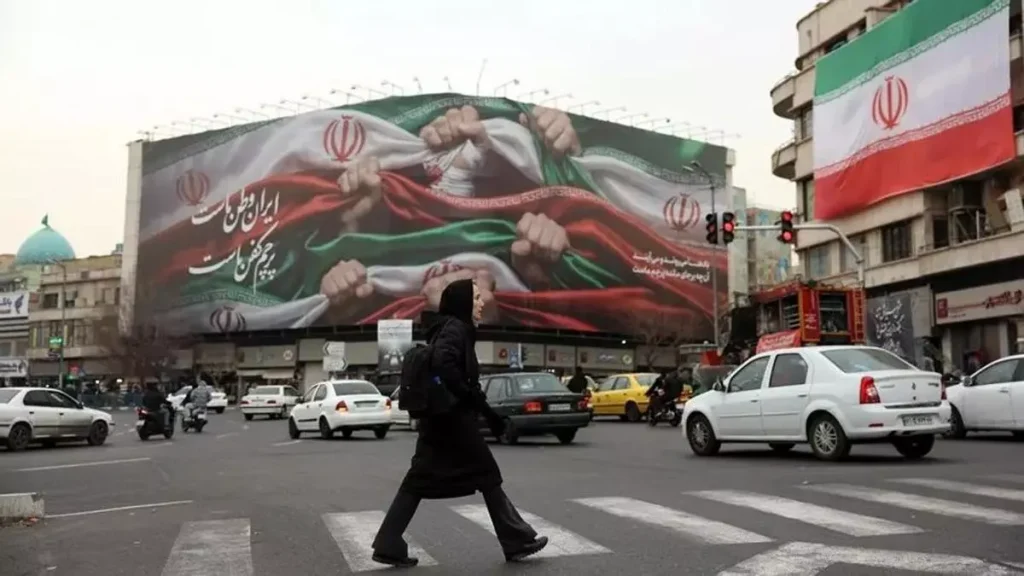
The state response to peaceful protests has resulted in the deaths of thousands of people, including children, and a large number of injuries. / EFE

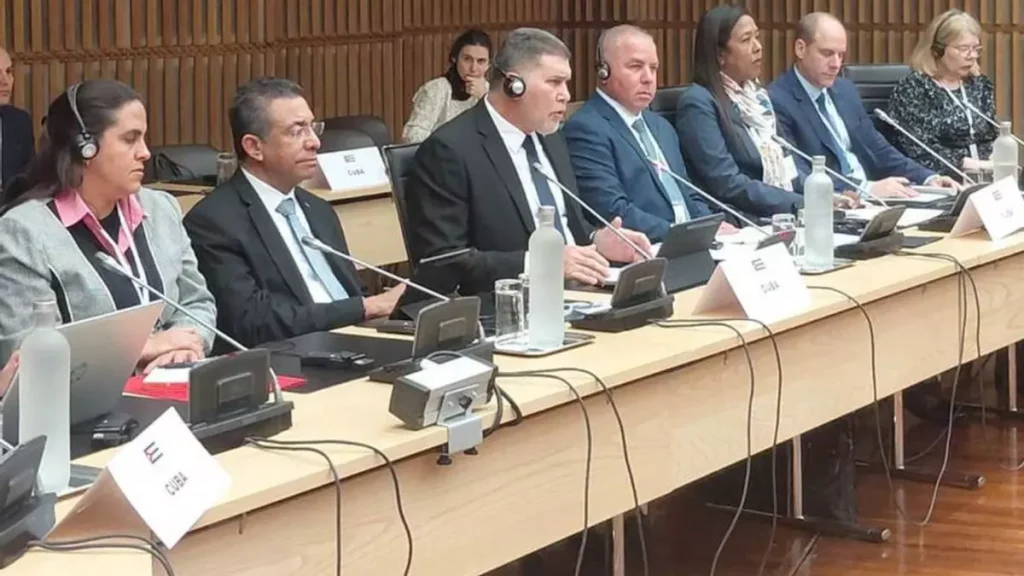
14ymedio biggerEFE/14ymedio, Geneva, 24 January 2025 — The UN Human Rights Council on Friday approved a resolution demanding that Iran end extrajudicial executions, enforced disappearances, torture and other abuses committed against peaceful protesters. In the vote, Cuba aligned itself with the regimes that rejected the text, a position that once again places Havana on the side of states accused of covering up or minimising serious human rights violations.

The resolution was adopted after a special session held in Geneva to discuss the repression unleashed in Iran since late December. The document “deeply deplores” the human rights situation in Iran, where the state’s response to peaceful protests “has resulted in the deaths of thousands of people, including children, and a large number of injuries,” according to the approved text.

The Council also urges the Iranian authorities to ensure that no one is sentenced to death or executed for crimes that do not reach “the threshold of the most serious,” and explicitly prohibits the imposition of capital punishment for acts committed before the age of 18. The resolution also stresses the need for all criminal sentences to be handed down by “competent, independent and impartial” courts, a requirement that clashes with repeated allegations of summary trials and proceedings without guarantees.

As part of the measures, the Council extended the mandate of the Independent International Fact-Finding Mission on Iran for two years, requesting an urgent investigation into abuses committed during recent protests, including the executions of demonstrators and the systematic repression of dissent. continue reading

Only seven countries voted against: Cuba, China, India, Indonesia, Iraq, Pakistan and Vietnam.

The text was approved with 25 votes in favour from the 47 members of the Council, including Bolivia, Chile, Colombia, the Dominican Republic, Ecuador, France, Italy, Japan, Mexico, the Netherlands, Spain and the United Kingdom.

Only seven countries voted against it: Cuba, China, India, Indonesia, Iraq, Pakistan and Vietnam.
The vote came after more than three hours of debate in a body from which the United States and Israel withdrew last year.

Havana’s vote reignited criticism from organisations and activists who question the legitimacy of a state with a sustained history of internal repression holding a seat on the Council. Several NGOs point out that Cuba does not allow peaceful demonstrations, criminalises dissent, imprisons opponents for political reasons and lacks independent courts.

For these groups, the presence of governments that systematically violate the fundamental rights of their citizens not only erodes the credibility of the Council, but also turns its debates into an exercise in double standards where perpetrators judge and acquit other perpetrators.

Translated by GH

____________

COLLABORATE WITH OUR WORK: The 14ymedio team is committed to practicing serious journalism that reflects Cuba’s reality in all its depth. Thank you for joining us on this long journey. We invite you to continue supporting us by becoming a member of 14ymedio now. Together we can continue transforming journalism in Cuba.
The Cuban Government Blames Trump for Its Failure To Pay Its Paris Club Creditors

The countries acknowledge the Island’s efforts and highlight the importance of maintaining “the ties achieved”

The Cuban delegation met in the French capital with representatives of the Paris Club. / PL

14ymedio bigger14ymedio / EFE, Havana, January 22, 2026 – The Cuban government met with its main creditors in the Paris Club to take stock of the agreement signed a year earlier to restructure its debt payments.

According to a note in the official press, the delegation, headed by Vice Prime Minister Oscar Pérez-Oliva, met in Paris with representatives of more than a dozen countries that acknowledged the Island’s “efforts” to comply with its debt repayment commitments.

The Cuban side laid out the “complex” economic and financial situation facing the Island, which it attributed to six decades of U.S. sanctions, “a policy intensified to unprecedented levels since Trump’s return to the White House in January 2025.”

The Paris Club agreed with Cuba, the note says, on the importance of maintaining “the constructive ties achieved” over the past year.

In January 2025, the Cuban authorities and the Paris Club agreed to modify the terms of the 2021 and 2015 agreements in light of Cuba’s inability to meet its obligations. continue reading

The Cuban authorities and the Paris Club agreed in January 2025 to modify the terms of the 2021 and 2015 agreements in light of Cuba’s inability to meet its obligations

In a statement, the group of creditors indicated that the new pact offered Havana “more favorable conditions to address its economic and financial difficulties in the coming years,” as well as the possibility of “preserving” the financial relations between the parties.

In 2015, Cuba signed a historic agreement with the Paris Club, which forgave $8.5 billion of a total debt of $11 billion, with Havana committing to repay the remaining amount in installments through 2023.

However, following partial defaults in 2019 and 2020, the Island declared itself unable to make the corresponding payments and requested a two-year moratorium on a total of about $200 million in overdue payments. The Paris Club agreed only to delay the deadlines by one year, though with the possibility of renegotiation.

In mid-2021, the parties agreed on an additional extension for the commitments undertaken in 2015, but Cuba’s economy has only continued to deteriorate at a rapid pace.

The Paris Club includes Australia, Austria, Belgium, Canada, Denmark, Finland, France, Italy, Japan, the Netherlands, Spain, Sweden, Switzerland, and the United Kingdom.

In addition, the Island has substantial debts with other states, as well as countless private companies from various countries.

Translated by Regina Anavy

____________

COLLABORATE WITH OUR WORK: The 14ymedio team is committed to practicing serious journalism that reflects Cuba’s reality in all its depth. Thank you for joining us on this long journey. We invite you to continue supporting us by becoming a member of 14ymedio now. Together we can continue transforming journalism in Cuba.

Cuba Operates a Digital Surveillance System Against Dissent, Prisoners Defenders Reports

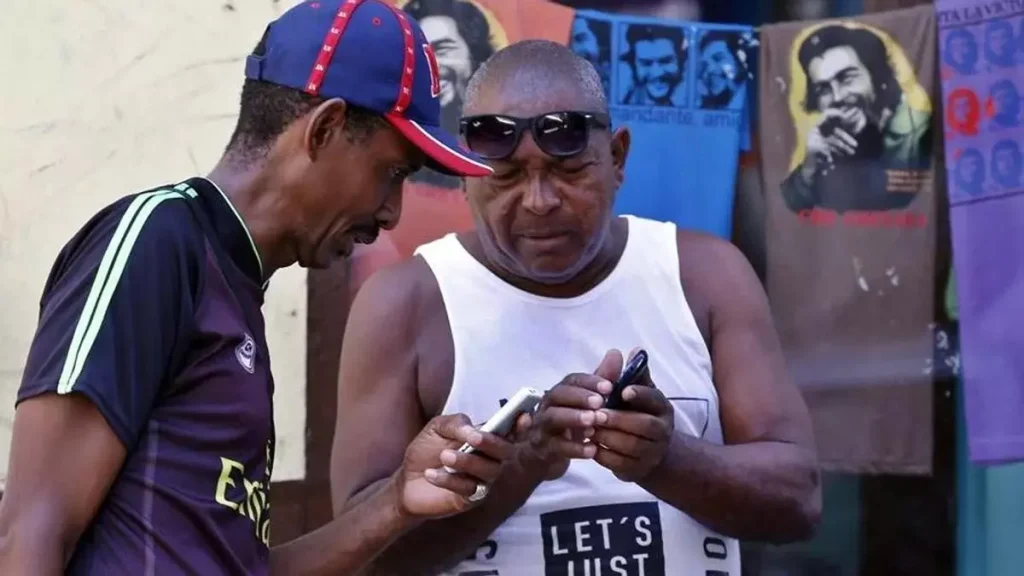
Some 46.5% of those surveyed by the NGO stated that they suffered direct interference with their communications in messaging applications

The NGO identified 10 surveillance patterns, including “cyber-patrolling,” selective internet outages, and “coercive digital intrusion.” / EFE

14ymedio biggerEFE (via 14ymedio), Madrid, 20 January 2026 —  Cuba has consolidated a digital surveillance system designed to “neutralize dissent” based on “punitive” laws, spyware and other means of technological intrusion, according to the First Comprehensive Report on Digital Surveillance in Cuba by the organization Prisoners Defenders.

In the document, based on 200 testimonies from victims inside and outside the country, the NGO accuses the Cuban government of operating under a “Big Brother” logic – referring to the all-powerful character in George Orwell’s novel 1984 – in order to dismantle “independent social, civic and political networks, as a form of subjugation.”

During the presentation of the report, held this Tuesday remotely, the president of Prisoners Defenders, Javier Larrondo, lamented the level of “self-censorship” that the cyber-surveillance system has caused on the Island.

“The level of self-censorship is tremendous, the terror among the population of posting on social media or even talking on WhatsApp.”

“The level of self-censorship is tremendous, the terror among the population about posting on social media or even talking on WhatsApp,” he denounced.

The report highlights that 46.5% of respondents stated that they suffered direct interception of their communications on messaging applications, such as WhatsApp, and that the content of their conversations was mentioned by the police during interrogations or arrests without warrants.

“It is not a temporary technical phenomenon, but a central component of a political control model,” the text emphasizes.

Along those lines, the report documents that virtually all respondents (98.5%) have suffered “sanctions or threats” because continue reading

of the content of their digital conversations or publications.

Among the 200 testimonies, the presence of activists (51%), relatives of political prisoners (33.5%) and independent journalists (15%) stands out.

The NGO’s investigation identified 10 surveillance patterns, including “cyber-patrolling” (systematic observation of publications and communications), selective internet shutdowns, and “coercive digital intrusion.”

“These practices eliminate any reasonable expectation of privacy”

This last practice consists of forcing victims to unlock their phones without a court order, an action that affected 65.5% of the sample.

Once access is obtained, according to the report, the authorities not only review the information, but also intercept private communications on messaging applications (reported by 46.50% of respondents).

After the intrusion, it is common for victims to detect sessions opened from unknown locations (49.5%).

Another key finding in the text is the blocking of internet access, a phenomenon experienced by 77.5% of respondents. These outages mostly coincided with events such as protests or symbolic dates, such as the anniversary of the Island-wide anti-government protests of 11 July 2021.

“These practices eliminate any reasonable expectation of privacy. This pattern demonstrates that private communications are not protected in Cuba. Surveillance operates without controls, without judicial authorization, and without clear limits, directly violating the right to privacy, intimacy, and freedom of expression,” criticized Caren Herrera, legal director of the organization.

On the other hand, the NGO also criticized the “instrumentalization of the law,” pointing to regulations such as Decree-Law 370 and the new Penal Code. These laws, it stated, allow for the imposition of hefty fines and the confiscation of equipment for disseminating information contrary to “the public interest,” a term the organization describes as “vague and discretionary.”

____________

COLLABORATE WITH OUR WORK: The 14ymedio team is committed to practicing serious journalism that reflects Cuba’s reality in all its depth. Thank you for joining us on this long journey. We invite you to continue supporting us by becoming a member of 14ymedio now. Together we can continue transforming journalism in Cuba.

Trump Will Have Lunch With María Corina Machado This Thursday After Praising Delcy Rodríguez

The Chavista leader, described by the president as a “fantastic person,” announced a new political moment in Venezuela and said that 400 people have been released from prison.

Maria Corina Machado will have lunch with Trump at 12:30 at the White House. / Screenshot

14ymedio biggerEFE (via 14ymedio), Washington / Caracas, 15 January 2026 — United States President Donald Trump and Venezuelan opposition leader and Nobel Peace Prize laureate María Corina Machado will have lunch this Thursday at the White House to discuss the situation in Venezuela following the capture of Nicolás Maduro.

According to the US president’s official agenda, the lunch will be held at 12:30 Washington time in a private dining room of the White House and will take place behind closed doors, without access for the press.

The meeting, the first between the two, will take place less than two weeks after the United States ousted Maduro during an attack in Venezuela on January 3 in which the Chavista leader and his wife, Cilia Flores, were captured and taken to New York to be tried for drug trafficking.

During her visit, Machado will be accompanied by a large group of collaborators gathered in the Comando Con Venezuela the most visible face of which is the former mayor of El Hatillo, David Smolansky, well connected with Marco Rubio’s circle and with Republican members of congress from Florida incuding María Elvira Salazar and Carlos Giménez.

During her visit, Machado will be accompanied by a large group of collaborators involved in the Commando Con Venezuela

In addition, this week Leopoldo López, the former mayor of Chacao and founder of the opposition party Popular Will, was in Washington, while Juan Guaidó, recognized by part of the international community as the interim president of Venezuela between 2019 and 2023, gave numerous interviews to US media from Florida, where he now resides.

The meeting comes a day after the president praised interim president Delcy Rodríguez following a phone call. “We had an excellent conversation today, and she’s a fantastic person. In fact, she’s someone we’ve worked very well with,” Trump declared in continue reading

the Oval Office of the White House. The call was “long,” the Republican leader indicated, adding that they covered “many topics” and that he is getting along “very well with Venezuela.”

According to sources consulted by EFE, the former Venezuelan ambassador to the United Kingdom, Félix Plasencia, is also in Washington to work on the new relations between Washington and Caracas that led to that conversation.

Later, Trump reiterated the same idea on his social media account, Truth Social, where he said: “This morning I had a very good call with the interim president of Venezuela, Delcy Rodríguez. We are making tremendous progress as we help Venezuela stabilize and recover.” In the conversation, he said, they discussed “many topics, including oil, minerals, trade, and, of course, national security.”

“This partnership between the United States of America and Venezuela will be a spectacular one FOR ALL. Venezuela will soon be great and prosperous again, perhaps more so than ever before!” he added.

Shortly afterwards, Rodríguez herself confirmed the information and announced the beginning of a “new political moment” in her country, after stating that more than 400 political prisoners had been released.

“The message is a Venezuela that is opening up to a new political moment that allows for understanding from divergence and from political and ideological diversity,” declared the acting president from Miraflores, who appeared before national and foreign journalists flanked by her brother and the Minister of the Interior and Justice, Diosdado Cabello.

However, she conditioned this new phase on its being carried out with “respect for others” and “for human rights.” “Messages of hate, intolerance, and acts of violence will not be permitted,” she concluded.

Delcy Rodríguez affirmed on Telegram that her conversation with Trump was “productive and courteous.” “We discussed a bilateral work agenda for the benefit of our people, as well as outstanding issues in the relationship between our governments,” she noted.

We addressed a bilateral work agenda for the benefit of our people, as well as outstanding issues in the relationship between our Governments.”

The conversation took place after authorities from both countries announced last week that they had begun an “exploratory process” to rehabilitate their formal diplomatic channels.

Rodríguez also asserted that the process of releasing people who were imprisoned, which she attributed to Maduro, “remains open,” since, she said, “it began last December with 194 releases.” “As of this day,” she added, “we can say that there are already 406 releases planned for these days.” According to her, this “arduous” process is being led by Cabello.

In December, the Ministry for the Penitentiary Service announced the release of 88 people on Christmas Day and another 99 on January 1st, of which local NGOs verified about half. From last Thursday until 2:30 p.m. local time this Wednesday, the United Democratic Platform (PUD), which brings together the main opposition, had verified 100 releases.

For its part, the NGO Foro Penal confirmed 72 releases as of 1:50 p.m. local time on Wednesday. On Tuesday, Jorge Rodríguez made the “lists” available, which have not yet been made public, a fact demanded by NGOs, activists, family members, and political parties.

Among those released are 19 journalists and media workers, out of a total of 24 that the National Union of Press Workers (SNTP) had reported as detained. According to the union’s list, five journalists remain in custody, including former opposition congressman Juan Pablo Guanipa, a known ally of Nobel Peace Prize laureate María Corina Machado.

Among those released is a group of 19 journalists and social communicators, out of a total of 24 that the National Union of Press Workers

One of those released is Roland Carreño, also an activist with the opposition party Popular Will (VP), who was arrested on August 2, 2024. This was the second time, as he had already been arrested on October 26, 2020 and released on October 18, 2023, following an agreement signed at that time between Chavismo and the Democratic Unitary Platform (PUD) in Barbados.

For his part, the archbishop of the Venezuelan city of Barquisimeto (west), Monsignor Polito Rodríguez, applauded the recent releases of political prisoners, but asserted that “many others still need to be freed.” “It will be a gesture of reconciliation and justice if they are released as soon as possible,” the prelate stated during the massive gathering for the 168th procession of the Divina Pastora, patron saint of Barquisimeto, capital of Lara state (west).

Outside some of the prisons where political prisoners are being held, family members and activists are maintaining vigils to demand the full freedom of all of them, which the NGO Foro Penal estimated to be 806 individuals as of January 5.

____________

COLLABORATE WITH OUR WORK: The 14ymedio team is committed to practicing serious journalism that reflects Cuba’s reality in all its depth. Thank you for joining us on this long journey. We invite you to continue supporting us by becoming a member of 14ymedio now. Together we can continue transforming journalism in Cuba.
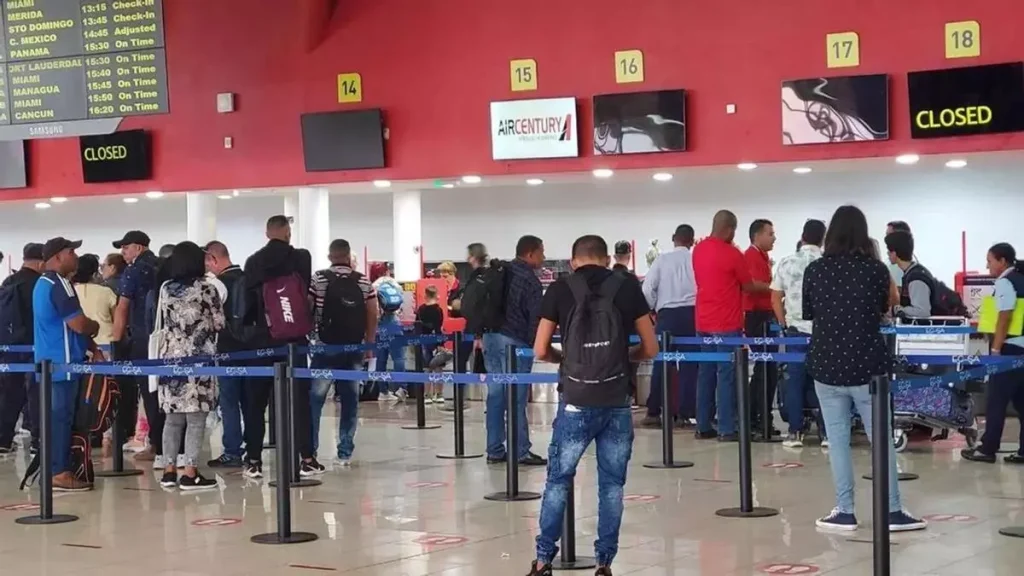
Cuban President Díaz-Canel Denies the Talks With the US Announced by Trump

  • Venezuela expresses its support for the island in a statement that conspicuously lacks any mention of oil.
  • The US president suggests he will keep ExxonMobil “out” of Venezuela after a comment by its CEO that displeased him.
Collage / 14ymedio

14ymedio bigger14ymedio/EFE, Madrid, January 12, 2026 — Confusion reigns regarding the situation in Cuba hours after US President Donald Trump declared that the island would no longer receive money or oil from Venezuela. In brief remarks aboard Air Force One, the president stated he was in contact with Cuban authorities and maintained that news would be forthcoming, information that the regime denied on Monday.

“We are talking with Cuba, and you will know very soon. One of the things I want to take care of, one of the groups I want to protect, are the people who came from Cuba, who were forced to leave under coercion, and today are great citizens of the United States. We have many people who were unjustly expelled from Cuba, so we are going to preserve what is most important right now, which is the people who came from Cuba, who are U.S. citizens or are in our country,” he said.

Trump didn’t mention anything concrete, neither dates nor people involved in the alleged talks, nor any timeframes; but the island’s official press has reported the news as mere speculation. Furthermore, Cubadebate presents the information not as its own, but with Alma Plus TV—a channel linked to the Latin American left—as its source, and it also fails to offer a denial or an alternative version from the regime, as one might expect from a state-run media outlet.

It wasn’t until Monday morning that the Cuban regime’s position became known, and they denied the existence of any such contact. “There are no talks with the US government, except for technical contacts in the area of ​​migration,” Miguel Díaz-Canel wrote in X.

“We have always been willing to hold a serious and responsible dialogue with the various US governments, including the current one, on the basis of sovereign equality, mutual respect, principles of International Law, reciprocal benefit, without interference in internal affairs and with full respect for our independence,” he added.

President Díaz-Canel attributed the excessive migration, which has serious consequences, to the “extreme tightening of the embargo” and the “privileges of the Cuban Adjustment Act.” “They are now victims of the change in policies toward migrants and the betrayal of Miami continue reading

politicians. There are bilateral migration agreements in force that Cuba scrupulously adheres to. As history demonstrates, for relations between the U.S. and Cuba to move forward, they must be based on international law instead of hostility, threats, and economic coercion,” he concluded.

Meanwhile, the mystery remains about what economic relations with the government of Delcy Rodríguez will be like from now on, which on Sunday released a statement of support for the island but without any practical commitments.

“The relationship between the Bolivarian Republic of Venezuela with the Caribbean and the Republic of Cuba has historically been based on brotherhood, solidarity, cooperation and complementarity,” the text states.

Caracas reaffirms its “historical position within the framework of relations with the Republic of Cuba, in accordance with the Charter of the United Nations and international law, regarding the free exercise of self-determination and national sovereignty.”

Furthermore, it concludes by saying: “Venezuela reaffirms that international relations must be governed by the principles of international law, non-intervention, the sovereign equality of States, and the self-determination of peoples. We reiterate that political and diplomatic dialogue is the only way to peacefully resolve controversies of any nature.”

Beyond politics and diplomacy, the statement omits any reference to the closest link between the two countries and the one at the heart of the controversy: oil.

The government of Delcy Rodríguez has spent the entire week moving in an ambiguity that combines political gestures – from demands for the release of the one she publicly considers the legitimate ruler, Nicolás Maduro, to acts such as the awarding of medals to the Cubans who died defending Maduro – with facts, such as the meeting she will hold with Trump, as confirmed this Sunday by the president.

“We are working very well with the leadership, and we’ll see how it all turns out,” Trump told reporters aboard Air Force One, adding that Rodriguez offered the United States “50 million barrels of oil” that are on their way to the country.

At the moment, it is unknown whether there will be any kind of agreement between the three parties to allow oil to reach Cuba, after Trump said that the island has been “living for years” thanks to Venezuelan money and crude in exchange for “security services” for the “last two dictators (Hugo Chávez and Nicolás Maduro).”

“BUT NO MORE!” Trump exclaimed on his Truth Social network, where he stressed that “most of those Cubans are DEAD from the latest US attack” and Venezuela now has the “most powerful” army in the world, that of the United States, to protect itself.

Cuban authorities responded by asserting that they “do not receive and have never received” monetary or material compensation for security services provided to any country and insisted on demanding that Washington end the “brutal kidnapping” of Maduro and Flores, which they labeled “illegal” and a “judicial and media farce”.

Cuban authorities responded by stating that they “do not receive and have never received” monetary or material compensation for security services provided to any country.

Furthermore, Foreign Minister Bruno Rodríguez asserted Cuba’s right to import fuel from markets “willing to export it,” as well as its right to develop its trade relations “without interference or subordination to unilateral coercive measures by the United States.” “Law and justice are on Cuba’s side,” he declared.

What is known is that the US oil companies Chevron and Shell, the Spanish company Repsol and the Italian company ENI will “immediately increase” their investment in Venezuela, according to US Energy Secretary Chris Wright.

“We had Chevron, Shell, Repsol, and ENI—four of the world’s largest oil companies—saying, ‘We will immediately begin to increase our investments and grow our production.’ I have a team of American oil prospectors who say they’re going there this week,” he told Fox News.

Wright’s remarks come after Friday’s meeting between Trump and oil executives at the White House, where the president asserted that there will be an investment of “at least $100 billion of their own capital, not government money,” to revitalize Venezuela’s infrastructure.

However, Exxon CEO Darren Woods opined that the South American country “is uninvestable today,” something that has earned him threats from Trump.

“I didn’t like Exxon’s response. We have many who want it. I would probably be inclined to leave Exxon out. I didn’t like their response. They’re trying to be clever,” said the US president.

Wright, for his part, asserted that Exxon’s opinion is “atypical,” stating that there are “at least a dozen” companies ready to return to Venezuela. This includes “five large” companies that are already “there and will quickly increase their production, and probably between six and a dozen others” that are “ready to enter.”

“I didn’t like Exxon’s response. We have many who want it. I’d probably lean towards leaving Exxon out. I didn’t like their response. They’re trying to be clever.”

“So the speed at which we will see investment and change in the trajectory of Venezuela’s production is impressive,” the secretary said.

Energy analysts have expressed skepticism about Trump’s plan for Venezuela, which apparently has the world’s largest reserves, equivalent to 364 billion barrels or 17% of the total, but production that only represents 1% globally, according to data from Standard & Poor’s (S&P).

Among the reservations cited were the obsolescence of Venezuela’s infrastructure and political uncertainty. In this context, Trump declared a “national emergency” this Saturday to protect Venezuelan oil revenues held in U.S. Treasury accounts, preventing Venezuelan creditors from claiming the funds.

Following the oil expropriation, there have been nearly 60 arbitrations against Venezuela since 2000 for an estimated total value of $30 billion, almost 15% of its international debt, according to data from the Center on Global Energy Policy (CGEP) at Columbia University.

____________

COLLABORATE WITH OUR WORK: The 14ymedio team is committed to practicing serious journalism that reflects Cuba’s reality in all its depth. Thank you for joining us on this long journey. We invite you to continue supporting us by becoming a member of 14ymedio now. Together we can continue transforming journalism in Cuba.
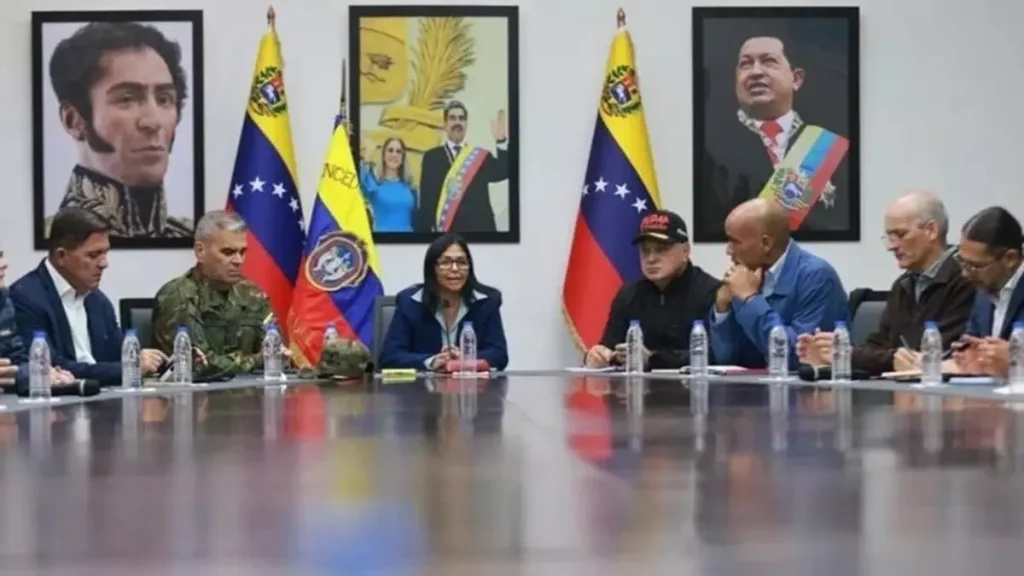
The US Adds Venezuela and Cuba to the List of 25 New Countries Requiring Bonds for Visa Applications

A deposit of up to $15,000 may be required to apply for entry into the United States, and the required visa document is not guaranteed.

The change will take place starting January 21st / 14ymedio

14ymedio biggerEFE (via 14ymedio), 7 January 2025 — The U.S. government has added Venezuela and Cuba to a list of 25 new countries whose citizens must post bonds of up to $15,000 to apply for entry into the United States, the State Department said this week.

The change will take place from January 21st and the expanded list includes nations such as Algeria, Angola, Gabon, Nepal, Senegal, Zimbabwe and Uganda.

Any citizen or person traveling with a passport issued by one of those countries and who is eligible for a B1 or B2 visa will be required to deposit a bond of $5,000, $10,000 or $15,000, an amount that will be determined at the time of the applicant’s interview.

The B1 visa allows travel for business purposes, and the B2 visa authorizes entry for tourism, personal, or medical reasons. In total, the list now includes 38 countries, most of them in Africa. continue reading

If someone pays the fee without the guidance of a consular worker, that money will not be refunded.

The State Department specified on Tuesday that the bond does not guarantee the issuance of the visa and noted that if someone pays the fee without the guidance of a consular worker, that money will not be refunded.

As a condition of the bond, those who have deposited it must enter and leave the country through Washington Dulles International Airport, New York’s John F. Kennedy Airport, or Boston’s Logan Airport.

Failure to comply with this requirement, it is noted, could result in the denial of entry or cause the departure to not be properly recorded.

The digital site Axios notes that the State Department has not specified whether the inclusion of Venezuela is related to the military operation that resulted in the capture of Nicolás Maduro.

The arrest of the deposed Venezuelan leader, who is now in a New York prison, took place on January 3 in Caracas along with his wife, Cilia Flores.

The formal indictment accuses Maduro, among other charges, of conspiracy to commit narco-terrorism.

The formal indictment accuses Maduro, among other charges, of conspiracy to commit narcoterrorism and conspiracy to import cocaine, to which he has pleaded not guilty.

Following the operation that led to his capture, US President Donald Trump stated that Cuba “has always survived thanks to Venezuela” and emphasized that now the island “is about to fall.”

The Executive has not justified the inclusion of any of the added countries.

Last week Washington had added seven to the list of nations whose passport holders must post bail – Bhutan, Botswana, the Central African Republic, Guinea, Guinea-Bissau, Namibia and Turkmenistan – thus until this latest communication there were only 13 nations affected.

____________

COLLABORATE WITH OUR WORK: The 14ymedio team is committed to practicing serious journalism that reflects Cuba’s reality in all its depth. Thank you for joining us on this long journey. We invite you to continue supporting us by becoming a member of 14ymedio now. Together we can continue transforming journalism in Cuba.
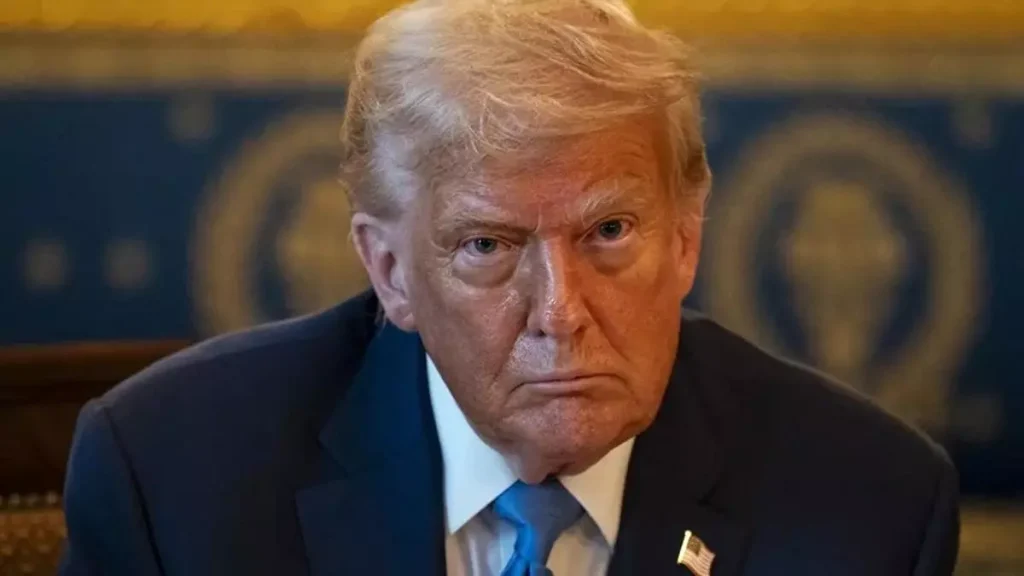
Venezuelan Exiles Ask the U.S. to Intercede for Political Prisoners and Rein in Cabello’s Power

González Urrutia considers it an “act of revenge” that his son-in-law has been detained for a year

Trump described Maduro as a violent man who, he said, “tortured” people. / EFE

14ymedio bigger14ymedio/EFE, Washington, January 7, 2026 –The Organization of Venezuelans Persecuted Politically in Exile (Veppex) asked the U.S. government on Wednesday to intercede for the “unconditional” release of all political prisoners in Venezuela and to put an end to the influence of Interior Minister Diosdado Cabello, following the capture of the ousted president, Nicolás Maduro.

“We respectfully request that the U.S. Government, within the framework of its policies toward Venezuela, prioritize and act decisively on these two points: the unconditional release of all political prisoners (and) effective measures to prevent Diosdado Cabello from continuing to wield de facto power to block democratic change,” the group said in a statement.

Veppex added that the situation “is complex,” but argued that these two requirements are “basic and urgent” to build confidence and move toward the country’s democratic normalization.

If Cabello, the second power in Chavismo, is not neutralized, the organization warned that “any transition will be extremely fragile and reversible.” It also accused Cabello of participating in “drug trafficking activities, corruption, and serious human rights violations.”

Over the weekend, the group of Venezuelans in exile had called for the arrest of several high-ranking officials of the Venezuelan regime in addition to Cabello, including Defense Minister Vladimir Padrino López, interim president Delcy Rodríguez, and the president of the National Assembly, Jorge Rodríguez. continue reading

“Right now what we want is to fix the oil, fix the country, bring it back, and have elections”

The issue of political prisoners in Venezuela has been sidelined, at least in public statements, in the new chapter that Caracas and Washington appear to have opened in their relations, marked by the interest of U.S. President Donald Trump in the South American country’s oil.

After the attacks on Venezuela and the capture of Nicolás Maduro and his wife, Cilia Flores, Trump said that political prisoners are a secondary issue: “We haven’t gotten to that. Right now what we want is to fix the oil, fix the country, bring it back, and have elections,” the Republican said on Monday.

The president said on Tuesday that the Venezuelan government, now led by acting president Delcy Rodríguez, is willing to deliver between 30 and 50 million barrels of oil for sale on the U.S. market, and that he would control the proceeds from the sale “to ensure,” he said, “that it is used for the benefit of the Venezuelan people and the United States.”

Earlier, during a speech to Republican lawmakers at the Kennedy Center in Washington, Trump described Maduro as a violent man who, he said, “tortured” people.

“They have a torture chamber in downtown Caracas that is now being shut down, but it tortured people,” Trump said without giving further details. Although Trump did not name it explicitly, some Venezuelan NGOs assumed he was referring to El Helicoide, the Caracas headquarters of the Bolivarian National Intelligence Service, which has been identified as a torture center.

After Maduro’s capture, Trump said that political prisoners are a secondary issue.

However, this Tuesday there were no reports in Venezuela of releases or pardons. While Trump did not explicitly name it, some Venezuelan NGOs assumed he was referring to El Helicoide, the Caracas headquarters of the Bolivarian National Intelligence Service, which has been identified as a torture center.

The NGO Justice, Encounter and Forgiveness urged the Venezuelan government on Tuesday to release all detainees if the closure of that center is confirmed.

The organization Foro Penal, which leads the defense of political prisoners, counts 863 cases in the country, 86 of them involving people of another nationality.

On Christmas and New Year’s Day, Venezuelan authorities announced the release, under precautionary measures, of 99 and 88 political prisoners, respectively. However, local NGOs have not been able to verify all the cases.

So far, Maduro’s executive branch has claimed that the country is “free of political prisoners” and that those labeled as such are imprisoned for the “commission of terrible criminal acts.”

The International Criminal Court opened an investigation into Venezuela in 2018 for alleged crimes against humanity committed since 2017.

The government of Nicolás Maduro repeatedly attempted to halt the case, arguing that its judicial system was carrying out internal investigations, but the Court rejected that position in 2023 and authorized the resumption of the inquiry.

“I took it from the beginning for what it really is: pressure being put on me, and he is paying for being Edmundo González’s son-in-law”

Separately, opposition figure Edmundo González Urrutia said on Wednesday that it is an act of “revenge” against him that his son-in-law, Rafael Tudares, has been detained for exactly one year, a detention that occurred three days before Nicolás Maduro’s inauguration, after the latter was proclaimed reelected president in what the opposition and international observers say was a fraudulent process.

“This is more revenge than justice,” González Urrutia said on his X account. In this regard, he stated that the charges against him, stemming from an investigation and an arrest warrant in Venezuela, were “transferred” to Tudares, who was sentenced to 30 years in prison for the crimes of “forgery, conspiracy, terrorism, association, money laundering, and financing.”

“I took it from the beginning for what it really is: pressure being put on me, and he is paying for being the son-in-law of Edmundo González, the presidential candidate who won the election and whose victory this regime stole,” the opposition leader said, referring to the July 2024 presidential election.

He also reiterated that his son-in-law is in a situation of “enforced disappearance,” noting that his daughter, Mariana González, does not know his whereabouts or the place where Tudares has been held for the past year, a period González Urrutia described as “marked by the absence of information, legal guarantees, and justice.”

“Rafael has not been afforded respect for due process guarantees, access to private defense counsel, adequate medical care, dignified detention conditions, and effective judicial oversight, quite the opposite,” the opposition figure denounced.

He further argued that Tudares’s case “is not isolated,” but rather “part of a pattern that affects hundreds of people in Venezuela, including women and children, subjected to arbitrary detention, enforced disappearances, and systematic deprivation of rights.”

“As long as these practices persist, it will not be possible to speak of peace or democracy, or guarantees for anyone. Venezuela needs truth, justice, and freedom for all,” concluded the opposition leader, who claims the presidency from exile, asserting that he defeated Maduro in the 2024 presidential election.

Mariana González also said on Wednesday, in a message on X, that a year has passed without her husband: “One year without answers. I have no more words. Just truth, justice, and humanity. That is all we ask,” she said.

Tudares was detained on January 7 of last year, when human rights defender Carlos Correa, since released, and former opposition presidential candidate Enrique Márquez, who remains in prison, were also arrested.

Translated by Regina Anavy

____________

COLLABORATE WITH OUR WORK: The 14ymedio team is committed to practicing serious journalism that reflects Cuba’s reality in all its depth. Thank you for joining us on this long journey. We invite you to continue supporting us by becoming a member of 14ymedio now. Together we can continue transforming journalism in Cuba.

Trump Demands that Venezuela End Relations with Cuba, China, Russia, and Iran

Beijing denounces U.S. “intimidation” in asking Caracas to break with China

Beijing denounces U.S. “intimidation” in asking Caracas to break with China

14ymedio biggerEFE (via 14ymedio), Beijing, January 7, 2026 — The administration of U.S. President Donald Trump has informed Venezuela’s interim president, Delcy Rodríguez, that the country must comply with ending relations with Cuba, China, Russia, and Iran as part of a series of demands before extracting and marketing its oil, according to officials cited by The ABC network.

According to one of the officials quoted by the network, Secretary of State Marco Rubio said in a private briefing with lawmakers that the U.S. believes it can pressure Caracas because its oil tankers are full, and warned that Venezuela would have only a couple of weeks before falling into financial insolvency if it fails to sell its reserves.

In an interview with ABC News, Senator Roger Wicker confirmed that the plan is based on control of Venezuelan oil and said it does not contemplate the deployment of U.S. troops.

So far, Venezuela, provisionally led by Rodríguez, has not issued any official statement regarding the demand put forward by Trump. continue reading

Delcy Rodríguez has not issued any official statement regarding the demand put forward by Trump.

In response on Wednesday, from Beijing, China denounced what it described as “intimidation” by the U.S. in demanding that Venezuela break its economic relations with Beijing, and affirmed that the South American country is a sovereign state with full control over its natural resources.

Chinese Foreign Ministry spokeswoman Mao Ning said at a press conference that Venezuela “is a sovereign country and enjoys full and permanent sovereignty over its natural resources and all economic activities within its territory,” when asked about reports published by the U.S. network ABC News regarding alleged demands from Washington to Caracas.

She described the alleged pressure as a “blatant use of force” and maintained that the attempt to have Venezuela dispose of its energy
resources according to a “United States first” approach constitutes “a typical case of intimidation” that “seriously violates international law, gravely infringes Venezuela’s sovereignty,” and “harms the rights of the Venezuelan people.”

“It seriously infringes Venezuela’s sovereignty” and “harms the rights of the Venezuelan people.”

“China firmly condemns this behavior,” the spokeswoman emphasized, adding that “it must be stressed that the legitimate rights and interests of China and of other countries in Venezuela must be protected.”

The spokeswoman also reiterated Beijing’s position in defense of economic cooperation among sovereign states and stressed that China “has always carried out exchanges and cooperation with other countries on the basis of mutual respect, equality, and mutual benefit.”

Her remarks come amid growing international tension following the capture of Venezuelan President Nicolás Maduro by the U.S. and in the midst of an intense diplomatic debate over the legality of the use of force and the management of Venezuelan energy resources.

Translated by Regina Anavy

____________

COLLABORATE WITH OUR WORK: The 14ymedio team is committed to practicing serious journalism that reflects Cuba’s reality in all its depth. Thank you for joining us on this long journey. We invite you to continue supporting us by becoming a member of 14ymedio now. Together we can continue transforming journalism in Cuba.

The US Adds Venezuela and Cuba to the List of 25 New Countries Requiring Bonds for Visa Applications

Up to $15,000 must be deposited to apply for entry into the U.S., and the visa is not guaranteed.

The change will take effect starting January 21st / 14ymedio

14ymedio biggerEFE (via 14ymedio), January 7, 2026 — The U.S. government has added Venezuela and Cuba to a list of 25 new countries whose citizens must post bond of up to $15,000 in order to apply for entry into the U.S. the State Department specified this week.

The change will take effect on January 21; the expanded list includes Algeria, Angola, Gabon, Nepal, Senegal, Zimbabwe, and Uganda.

Any citizen or person traveling with a passport issued by one of those countries who is eligible for a B1 or B2 visa must post a bond of $5,000, $10,000, or $15,000. The amount will be determined at the time of the applicant’s interview.

The B1 visa allows travel for business purposes, and the B2 authorizes entry for tourism, personal, or medical reasons. In total, the list now includes 38 countries, most of them in Africa.

Paying without consular instruction will not be refunded

The State Department specified on Tuesday that the bond does not guarantee the issuance of a visa and warned that if someone pays the fee without being instructed to do so by a consular officer, the money will not be refunded.

As a condition of the bond, those who have posted it must continue reading

enter and leave the country through Washington Dulles International Airport, New York’s John F. Kennedy Airport, or Boston’s Logan Airport.

Failure to meet that requirement, it is warned, could result in denial of entry or cause the departure not to be properly recorded.

The digital outlet Axios notes that the State Department has not specified whether Venezuela’s inclusion is related to the military operation that resulted in the capture of Nicolás Maduro.

The arrest of the ousted Venezuelan leader, who is now being held in a New York prison, took place on January 3 in Caracas, along with the arrest his wife, Cilia Flores.

The formal indictment charges Maduro, among other offenses, with conspiracy to commit narco-terrorism

The formal indictment charges Maduro, among other offenses, with conspiracy to commit narco-terrorism and conspiracy to import cocaine, charges to which he has pleaded not guilty.

Following the operation that led to his capture, U.S. President Donald Trump stated that Cuba “has always survived thanks to Venezuela” and emphasized that the island is now “about to fall.”

The U.S. administration has not justified the inclusion of any of the newly added countries.

Last week, Washington added seven countries to the list of nations whose passport holders must post a bond: Bhutan, Botswana, the Central African Republic, Guinea, Guinea-Bissau, Namibia, and Turkmenistan. Before this announcement, 13 countries had been affected.

Translated by Regina Anavy

____________

COLLABORATE WITH OUR WORK: The 14ymedio team is committed to practicing serious journalism that reflects Cuba’s reality in all its depth. Thank you for joining us on this long journey. We invite you to continue supporting us by becoming a member of 14ymedio now. Together we can continue transforming journalism in Cuba.

The Council for Democratic Transition Advocates for the Leadership of Edmundo González in Venezuela

The Cuban opposition platform considers it to be the “expression of citizen sovereignty”

The Venezuelan diaspora has taken to the streets to celebrate the arrest of Nicolás Maduro in various parts of the world / EFE [Text: “Nicolas Maduro fell. The time has come for Freedom.”]
14ymedio bigger14ymedio/EFE, Havana, 5 January 2026 —  The Council for Democratic Transition in Cuba (CTDC), one of the main platforms for organizing the opposition on the island, called this Sunday for a peaceful transition to democracy in Venezuela, following the US operation in Caracas and the arrest of Nicolás Maduro.

“We recognize that the origin of this situation lies in the profound national and international illegitimacy of the government of Nicolás Maduro, allied with groups and countries recognized as terrorists and immersed in drug trafficking,” the opposition platform on the island said in a statement.

The CTDC stressed that sovereignty “cannot be invoked by regimes that have violated the basic principle of democratic legitimacy” and cited the island as an example. “Beyond their impact on Venezuela, a country with which we share a common history and which we consider a brother, these events have direct implications for Cuba ,” it added.

“These events have direct implications for Cuba”

It also stated that the fall of “an authoritarian figure and the likely collapse of a power structure based on repression, international crime and illegitimacy highlight an inescapable reality.”

Furthermore, the CTDC considered that Maduro “ignored the popular will expressed in the elections of July 28, 2024, where Edmundo González was elected, supported as president by the majority of the people and the Venezuelan democratic opposition,” and he affirmed that “as an expression of citizen sovereignty, he supports without reservation.”

However, for the United States, as stated by Secretary of State Marco Rubio, who is leading this process, the elections continue reading

in which Edmundo González participated were “illegitimate,” affirming this Sunday on NBC that the process lacked “democratic validity.”

The Venezuelan opposition has regained strength and has begun to mobilize around the world

Following Maduro’s capture, the Venezuelan opposition has regained strength and begun mobilizing worldwide. One example of this is the conversation between Canadian Prime Minister Mark Carney and María Corina Machado , in which he expressed his country’s support for a “peaceful, negotiated, and Venezuelan-led” transition process, in contrast to recent statements by the Trump administration.

The head of government’s office said in a statement that Carney conveyed to Machado his “unwavering support” and that the transition process must be anchored in the “sovereign right of the Venezuelan people to decide and build their own future in a peaceful and democratic society.”

Both the Canadian Prime Minister and Machado stated that it is “important to seize this opportunity for freedom, democracy, peace and prosperity in Venezuela.”

The European Commission expressed a similar sentiment on Monday, calling for a democratic transition in Venezuela that includes María Corina Machado and Edmundo González, through its spokesperson Anitta Hipper at the commission’s daily press conference.

The European Commission called for a democratic transition in Venezuela that includes María Corina Machado and Edmundo González.

While the steps Venezuela will take following Maduro’s capture are being outlined, the Venezuelan diaspora around the world continues to celebrate. In Miami, for example, the festivities continued this Sunday with the hope that Machado or Edmundo González—considered the winner of the 2024 elections—will eventually assume the presidency.

“They started with the stupidest one (referring to Maduro), but the transition has already begun and we are tremendously happy,” Adán Acosta, a young Venezuelan who participated in the demonstration called in Miami by Machado’s party, Vente Venezuela, told EFE.

Hundreds of Venezuelan compatriots gathered near the El Arepazo restaurant, one of the most emblematic places in the city of Doral, where a large part of the Venezuelans live – the largest community in the US – in the Miami metropolitan area.

“If you’re not Venezuelan, you can’t understand what it feels like. I’ve been waiting for this moment for 26 years.”

Many of them said they hadn’t slept since early Saturday morning, when they learned of the US attacks on Venezuela, but described it as a “happy insomnia.” Others were thrilled at the thought of reuniting with their families: “If you’re not Venezuelan, you can’t understand what it feels like. I’ve been waiting 26 years for this moment,” said Elías Benasayag.

As for Edmundo González Urrutia, the man under intense scrutiny, it was reported this Sunday that his X account was hacked. The Democratic Unitary Platform (PUD), Venezuela’s largest opposition coalition, reported the incident hours after the opposition leader posted a video calling for the release of political prisoners to normalize the country.

“We are informing you that President Edmundo González Urrutia’s account, X, was hacked after a video was posted today (Sunday) at 5 pm,” the coalition stated in a brief message posted on that social network. They added that the recovery of his account will be announced “in due course.”

Edmundo González Urrutia’s X account was hacked after a video was posted.

Shortly afterward, a message was posted on González Urrutia’s account, which was later deleted. The post addressed the freedom and sovereignty of Venezuelans following the US military attack on Caracas and other parts of Venezuela, which resulted in the capture of President Nicolás Maduro and his wife, Cilia Flores.

At the end of the message, $LIBRA was promoted, a cryptocurrency token that operates on blockchain, which was promoted last year by the Argentine president, Javier Milei, and from which he later distanced himself after learning about a possible link of this token with virtual scams.

Earlier, the former presidential candidate stated in a video on X that what happened in Venezuela after the capture of Maduro by the United States “constitutes an important step, but not enough,” and that “the real normalization of the country will only be possible when all Venezuelans deprived of their freedom for political reasons are released.”

____________

COLLABORATE WITH OUR WORK: The 14ymedio team is committed to practicing serious journalism that reflects Cuba’s reality in all its depth. Thank you for joining us on this long journey. We invite you to continue supporting us by becoming a member of 14ymedio now. Together we can continue transforming journalism in Cuba.
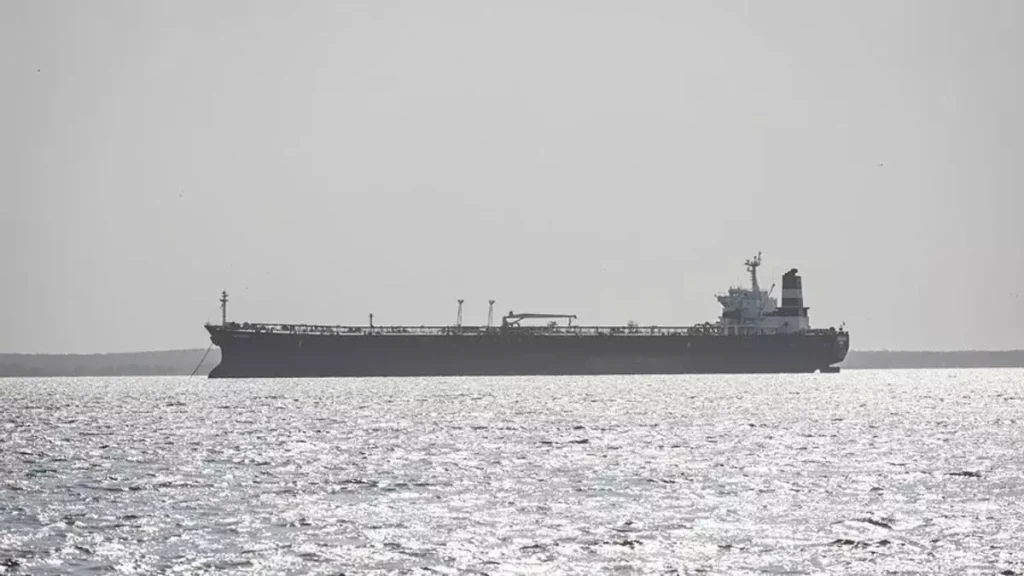
Switzerland Freezes the Assets of Maduro and His Associates With Immediate Effect

The measure will last at least four years

Nicolás Maduro and his wife, Celia Flores, as they are transferred to a New York court / EFE

14ymedio biggerEFE (via 14ymedio), Geneva, January 5, 2026 — The Swiss government announced this Monday that it has frozen the assets of Nicolás Maduro and his associates in the country with immediate effect “as a precautionary measure” and in view of the “volatile situation” created after the arrest of the Venezuelan leader by U.S. armed forces.

Swiss authorities stated in a communiqué that the asset freeze will not affect any member of the current Venezuelan government.

With this decision, which will remain in effect for four years, the government sought to ensure that no assets that may have been acquired illicitly are transferred out of Switzerland under the current circumstances.

The government sought to ensure that no assets have been acquired illicitly

Swiss authorities clarified that the reasons behind Maduro’s fall, or the question of whether it constituted a violation of international law, did not play a decisive role in the decision to block the funds.

“The decisive factor is that a collapse of power has occurred and that it is now possible for the country of origin to initiate judicial proceedings in relation to assets acquired illicitly,” the authorities continue reading

explained.

Switzerland invoked a federal law that provides for the freezing of assets belonging to “politically exposed” foreigners when there are reasons to assume they were acquired through corruption, criminal mismanagement, or other serious crimes.

Switzerland invoked a federal law that provides for the freezing of assets belonging to “politically exposed” foreigners.

If the latter is confirmed in future judicial proceedings, “Switzerland will strive to ensure that they benefit the Venezuelan people.”

Switzerland recalled that, following Maduro’s arrest, it has called for de-escalation, restraint, and compliance with international law, “including the prohibition on the use of force and the principle of respect for territorial integrity.”

The country has “repeatedly” offered its good offices to all parties to help find a peaceful solution to the political crisis in Venezuela, it noted.

Translated by Regina Anavy

____________

COLLABORATE WITH OUR WORK: The 14ymedio team is committed to practicing serious journalism that reflects Cuba’s reality in all its depth. Thank you for joining us on this long journey. We invite you to continue supporting us by becoming a member of 14ymedio now. Together we can continue transforming journalism in Cuba.

The Chevron Oil Company is Sending At Least 11 Tankers to Venezuela

They will arrive at the ports of José and Bajo Grande to load crude oil, two more than in December

An oil tanker in Lake Maracaibo / EFE

14ymedio biggerEFE (via 14ymedio), New York, January 6, 2026 — Chevron has sent at least 11 oil tankers to Venezuela and they are expected to arrive at two ports controlled by the Caribbean country’s government amid changes following the arrest of Nicolás Maduro by the United States, Bloomberg reported on Tuesday.

The ships, two more than in December, have been chartered by Chevron, the only oil company with an export license despite US sanctions on the Venezuelan industry. They will arrive at the ports of José and Bajo Grande to load crude,  Bloomburg reports, using its own preliminary data.

“Chevron remains focused on the safety and well-being of our employees, as well as the integrity of our assets. We continue to operate in full compliance with all applicable laws and regulations,” a spokesperson told EFE when asked about the matter, declining to comment on commercial issues.

“We continue to operate in full compliance with all relevant laws and regulations.”

According to Bloomberg, at least 12 oil tankers bound for Venezuela have had to turn back due to the US military presence in the Caribbean Sea.

Venezuelan crude exports fell to their lowest level in 17 months in December, amid the blockade imposed by US President Donald Trump on tankers carrying Venezuelan crude, Bloomberg added.

President Trump has said that the United States will “control” Venezuela until there is “a safe transition,” and that they will recover oil assets for US companies. President Trump has also threatened new attacks if the new government of Delcy Rodríguez “does not behave well.”

____________

COLLABORATE WITH OUR WORK: The 14ymedio team is committed to practicing serious journalism that reflects Cuba’s reality in all its depth. Thank you for joining us on this long journey. We invite you to continue supporting us by becoming a member of 14ymedio now. Together we can continue transforming journalism in Cuba.
Trump Claims that Venezuela’s ‘Interim President’ Delcy Rodríguez is ‘Cooperating’ with the United States

  • Marco Rubio, Pete Hegseth and Stephen Miller will be in charge of Venezuela
  • The US president rules out a quick call for free elections in the South American country
US President Donald Trump in a file photo. / EFE/EPA/Will Oliver/Pool

14ymedio biggerEFE (via 14ymedio), Washington, January 6, 2026 – US President Donald Trump said on Monday that Secretary of State Marco Rubio and Secretary of War Pete Hegseth, and the National Security and Migration Advisor Stephen Miller, will be in charge of coordinating the transition in Venezuela, while assuring that the country’s interim president, Delcy Rodríguez, is “cooperating.”

“I have a feeling that she’s cooperating. They need help. And I have a feeling that (Rodriguez) loves her country and wants her country to survive,” Trump said in a phone interview with NBC News about the woman who was Nicolás Maduro’s vice president before his capture on January 3 by U.S. forces.

The president added that there was no contact from Washington with Rodríguez before the military operation that arrested Maduro and his wife, Cilia Flores, at their residence in Caracas, where several locations in Venezuelan territory were also bombed. Rodríguez was sworn in as acting president of Venezuela on Monday before her brother, the Chavista Jorge Rodríguez, president of the National Assembly (Parliament), which also inaugurated a new legislative session dominated by el oficialismo that same day.

Trump also included his vice president, JD Vance, on the team in charge of Venezuela.

In the same interview with NBC, Trump also included his vice president, JD Vance, on the team in charge of Venezuela, although he has remained in the background since Saturday continue reading

when a large military and special operations deployment stormed Caracas to capture Venezuelan President Nicolás Maduro and his wife, Cilia Flores.

When asked who in that group would be primarily responsible for making decisions about Venezuela, Trump simply stated that he would have the final say. “It is a group of everyone. They’re all experts in different fields,” the president asserted in the phone interview.

The Washington Post reported on Sunday night that the White House was considering Miller, the architect of the Trump Administration’s anti-immigrant policy, for “a higher role” in managing Venezuela.

Secretary of State Marco Rubio explained on Sunday that U.S. officials in charge of leading the transition in Venezuela will do so from a “policy” perspective and that it will be a “national security effort.”

Trump outlined a longer-term transition in Venezuela and reiterated that the priority is repairing infrastructure.

On Saturday, Trump said the US would govern Venezuela, and yesterday he asserted that “we are in charge” of the country, while warning Rodríguez, who has gone from Maduro’s vice president to acting president of the country, that she faces a future worse than Maduro’s if she does not “do the right thing.”

In an interview with NBC, the US president ruled out holding elections in Venezuela within the next 30 days, until the country “recovers its health.” Trump outlined a longer-term transition in Venezuela and reiterated that the priority is repairing the country’s infrastructure.

“First we have to fix the country. There can’t be elections. There’s no way people can vote,” Trump said when asked about the possibility of elections within a month. “No, it will take some time. We have to help the country recover,” he concluded.

He also seemed to rule out the possibility of holding elections in Venezuela anytime soon. “I think we’re focusing more on fixing it, on preparing it first, because it’s a disaster. The country is a disaster,” he said.

____________________

COLLABORATE WITH OUR WORK: The 14ymedio team is committed to practicing serious journalism that reflects Cuba’s reality in all its depth. Thank you for joining us on this long journey. We invite you to continue supporting us by becoming a member of 14ymedio now. Together we can continue transforming journalism in Cuba.

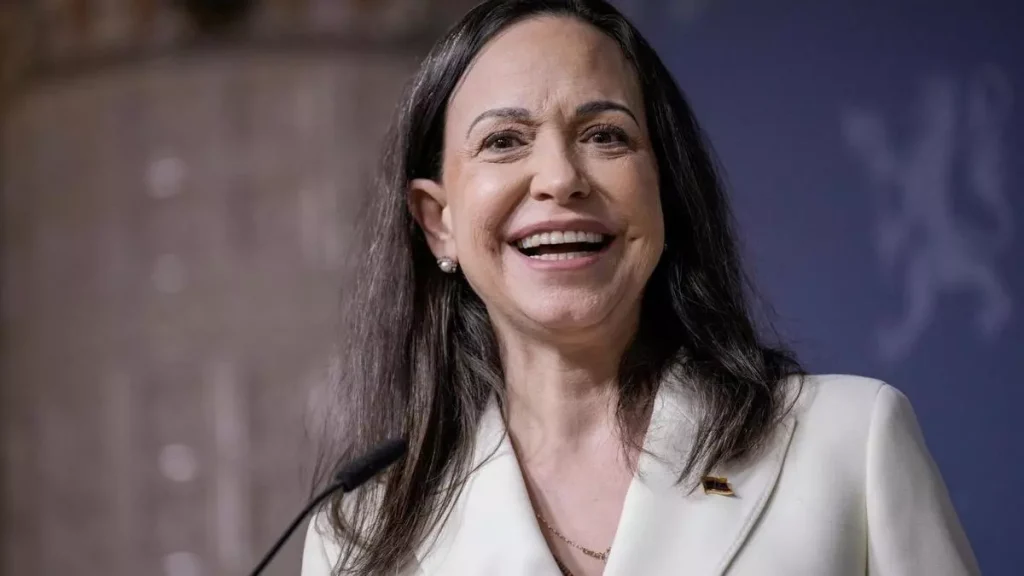
Machado Proposes to Trump That They Share the Nobel Peace Prize and Announces That She Will Return to Venezuela

The opposition leader says she would facilitate the return of Venezuelans who fled the country during Maduro’s government.

María Corina Machado, winner of the 2025 Nobel Peace Prize / EFE

14ymedio bigger14ymedio/EFE, Washington DC, January 6, 2026 — Venezuelan opposition leader Maria Corina Machado, winner of last year’s Nobel Peace Prize, told Fox News on Monday that she wishes to share the award with US President Donald Trump and thank him personally for Washington’s military intervention in Venezuela, which ended with the capture of Nicolás Maduro last Saturday.

“I would certainly love to be able to tell him personally that we, the Venezuelan people, believe—because this is an award of the Venezuelan people—we certainly want to give it to him and share it with him,” Machado said during the interview with host Sean Hannity.

She recalled that when she won the Nobel Prize, she dedicated it to Trump. “If I thought he deserved it in October, imagine now. I think he has shown the world what it means,” she added. Regarding this, she said, “January 3rd will go down in history as the day justice defeated tyranny. It is a milestone, and not only is it enormous for Venezuelans, it is a great step for humanity, freedom, and dignity.”

“If I thought he deserved it in October, imagine now. I think he has shown the world what it means.”

In the same interview, the opposition leader said she plans to return to Venezuela as soon as possible and specified that she has not spoken with Trump since Maduro’s capture by the United States.

Furthermore, Machado maintained that the opposition she leads would transform Venezuela into an energy hub for the Americas, restore the rule of law to guarantee the security of foreign investment, and facilitate the return of Venezuelans who, she said, fled the country during Maduro’s administration. It is estimated that, since 2014, 7.7 million Venezuelans, approximately 20% of the population, have left the country.

The opposition leader claimed her movement would win “more than 90% of the vote” in a free and fair election. However, Trump has publicly refused to endorse her and has ruled out calling for new elections in the near future. continue reading

Machado had signaled, through a message on social media, that “the freedom of Venezuela is near”

Hours earlier, Machado had signaled, through a message on social media, that “the freedom of Venezuela is near” and that “soon” its citizens, including those who are abroad, will “celebrate” in their own country.

The former congresswoman indicated in the message that the Venezuelan people “took to the streets in 30 countries and 130 cities around the world to celebrate a huge step that marks the inevitability and imminence of the transition” in the South American country.

“We are going to shout, pray and hug each other as a family, because our children will return home,” said Machado, who shared a video of some of these mobilizations in various countries along with the message.

“Let’s shout, pray, and hug each other as a family, because our children will return home.”

In addition, she stated that Venezuela “will be the United States’ main ally in matters of security, energy, democracy and human rights.”

However, Trump has questioned whether the opposition leader, who left Venezuela last December to receive the Nobel Prize in Oslo after nearly a year in hiding, has the capacity to govern, stating that she “does not have enough respect or support” in Venezuela.

____________

COLLABORATE WITH OUR WORK: The 14ymedio team is committed to practicing serious journalism that reflects Cuba’s reality in all its depth. Thank you for joining us on this long journey. We invite you to continue supporting us by becoming a member of 14ymedio now. Together we can continue transforming journalism in Cuba.