Cubalex Denounces the Death of a Man in Baracoa, Cuba, After a Police Beating

A resident of the Joa district, Sanamé was detained by the Police “in the Puente de Miel area, town of Cabacú.”

14ymedio bigger14ymedio, Havana, 30 September 2023 — The Cuban Elionorkis Sanamé Durán died on September 26 as a result of a beating by the Baracoa Police, Guantánamo, according to a complaint made public by Cubalex, which confirmed the information with sources from that locality.

A resident of the Joa district, Sanamé was detained by the Police “in the area of ​​Puente de Miel, town of Cabacú, when he was transporting half a bag of powdered milk,” details a posting on Facebook . “They handcuffed him and took him to the PNR (National Revolutionary Police) station where, with the handcuffs on, he was sprayed with gas in the face and beaten by several officers.”

Cubalex adds that “several sources in the area stated that Sanamé’s screams could be heard from outside the station.” “He was transferred to the Octavio de la Concepción y de la Pedraja General Hospital, in Baracoa, where he died of a heart attack, according to the doctors’ findings.”

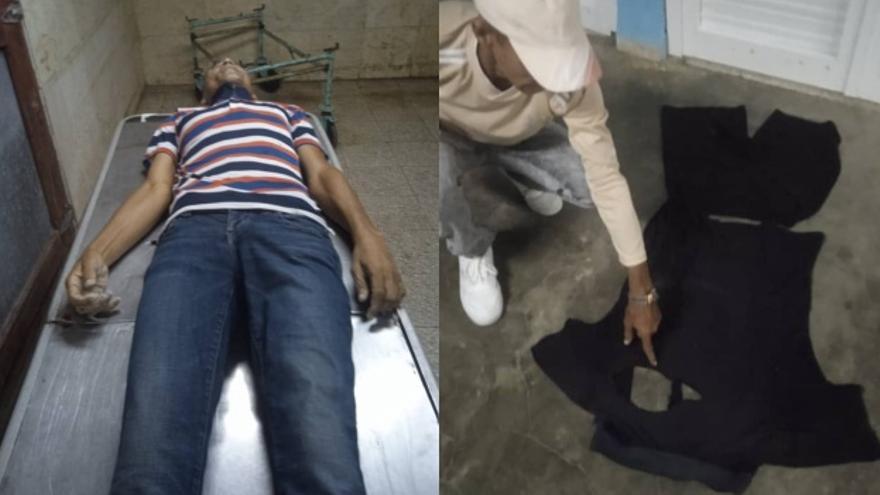
In its complaint, the organization clarifies that “in photos of the body published on Facebook by the independent journalist Yoel Acosta, injuries can be seen” on the man’s body. continue reading

“They handcuffed him and took him to the National Revolutionary Police station where, with handcuffs on, he was sprayed with gas in the face and beaten by several officers”

The émigré Ricardo Galbán, who runs the page “Baracoa People Denounce” page, details that several years ago the family of the deceased had had a dispute in court over “the injustices that are committed daily in that town.” Sanamé “was convicted and had only been on the street for 27 days, after serving his sentence, when they killed him.”

“The police murdered him handcuffed and the Baracoa coroner certified that it was a heart attack although he knows that he was beaten by the police. It was the police who killed him,” Galbán emphasizes.

Sanamé’s death is not an isolated event. After the Island-wide mass protests of 11 July 2021, episodes of police violence have been increasing. One of the most unfortunate and tragic cases was in Santa Clara, the murder of the young man Zinédine Zidane Batista Álvarez.

On July 1, Batista Álvarez was involved in a brawl over a property in the El Condado neighborhood. As a result of the police intervention, an agent immobilized the young man and finished him off with his pistol.

The father of the murdered man, Yosvany Batista, told 14ymedio that “the police did not try to calm the situation but instead intensified the violence.” The family tried, without results, to initiate legal proceedings against the officer who committed the murder, with license plate number 15388 and identity unknown.

It is not the only case, although it is one of the most serious, in which the impunity with which agents of the Ministry of the Interior act has been confirmed. Following the “combat order” issued by Cuban President Miguel Díaz-Canel on 11 July 2021, the officers, uniformed and dressed in civilian clothes, have beaten, arrested and harassed numerous citizens on the Island.

____________

COLLABORATE WITH OUR WORKThe 14ymedio team is committed to practicing serious journalism that reflects Cuba’s reality in all its depth. Thank you for joining us on this long journey. We invite you to continue supporting us by becoming a member of 14ymedio now. Together we can continue transforming journalism in Cuba.
‘They Are Afraid That Other Cubans Will Decide To Do the Same as Me: Desert’

Joel Suárez suffered harassment by the State, as well as a period of imprisonment, obstacles to finding work and “moral assassinations.” (Screen capture)

14ymedio bigger14ymedio, Havana, 28 September 2023 — Joel Suárez Orozco, the former Cuban diplomat who denounced last week, in an interview with journalist Mario Vallejo, the harassment to which State Security had subjected him after abandoning his job in the Cuban mission at the UN, responded to the accusations of “traitor” launched by the official Cuban press.

In a new conversation with Vallejo this Tuesday, Suárez responded to an article in Granma signed by Michel Torres, spokesman for the regime and presenter of the program Con Filo. Torres’ text begins by promising an “unmasking” of Suárez, which never arrives. “A traitor does not gestate spontaneously. If we review his story, his road map, we will find the trail of a person who is two-faced,” he dramatizes.

“The fate of traitors is always the same: they end up condemned to universal contempt”

“Betrayals, outrage, disgust – even on rare occasions they can hurt, but the fate of traitors is always the same: they end up condemned to universal contempt,” continues the presenter, who ironizes about the “lies” that the former diplomat told Vallejo during the protests of Cubans on September 19 in front of the UN headquarters, after the arrival of Miguel Díaz-Canel in New York.

Torres also takes the opportunity to question the veracity of the “serious and objective ’free press’,” which, he assures, is not interested in “triangular sources” if the interviewee already says everything that is expected of him. Torres presents himself as the connoisseur of the truth about the diplomat with whom, he explains, he has friendships in common. Several paragraphs later the reader, who waits for the delivery of the “impostor” on a silver platter, is disappointed, because the alleged revelations are never shown.

In Tuesday’s interview with Vallejo, asked about Torres’ article, Suárez responds that, if a dictatorship calls him a traitor, “that means I’m on the right side of history.” continue reading

“In the article there are extraordinary displays of power; there is even a demonstration of banishment, although I had already been banished from the moment I realized that in Cuba I was never going to be a person again,” the Cuban continues. “It is also a call to discipline because they are afraid that others [diplomats] will decide to do the same thing as me: desert.”

Faced with the questioning of his ties with the Government of the Island, Suárez responded that it is “common” to have such doubts. “In a country as rarefied as ours, where we have been taught to fear, to distrust, where it is a common practice to introduce spies – because State Security works that way – there is a legitimate space for doubts,” he said.

What kind of person would I be, if I were willing to sacrifice my family for the regime?”

However, he said, “it would be a very nicely interwoven story on the part of counterintelligence.” “My daughter and my wife crossed all of Central America alone to reach the United States. They crossed rivers on inflatable rafts and faced corrupt police officers along the way. What kind of person would I be, if I were willing to sacrifice my family for the regime?” he argued.

“Who hasn’t the Cuban government deceived? Who hasn’t been a victim of that country’s deception? Who wasn’t a prominent pioneer*? Who didn’t get a kiss from the homeland?” asked the former diplomat. He also said that, after the protests of 11 July 2021, many Cubans began to notice the government’s tactics to maintain control.

“Those who work for the Cuban government today know that they work for a dictatorship. No matter how great the brainwashing is or their personal interests in working for a dictatorship, they know it, and many of them suffer from that work,” he added.

Suárez worked throughout 2020 in the Cuban United Nations mission, located on the third floor of the headquarters of this international organization, south of Manhattan (New York). “While you are in Cuba you can’t know what freedom is (…), and this country (USA) gave me that. It gave me the possibility to look over the wall and say: ’They have lied to me all my life,’” Suárez said to Vallejo, present to cover the demonstrations called by exiled Cubans.

During the interview, which lasted about 10 minutes, Suárez recounted the frequent obstacles and harassment he suffered from the State when he told them that he would not continue working in the Cuban mission at the UN, which even included a period in prison, the inability to find work and “moral assassinations.”

*Translator’s note: The José Martí Pioneer Organization was created in 1961 to replace the banned Association of Scouts of Cuba.

Translated by Regina Anavy

____________

COLLABORATE WITH OUR WORKThe 14ymedio team is committed to practicing serious journalism that reflects Cuba’s reality in all its depth. Thank you for joining us on this long journey. We invite you to continue supporting us by becoming a member of 14ymedio now. Together we can continue transforming journalism in Cuba.

The Cuban Economy is Close to Collapse

Cubans’ wages grew insignificantly compared to the increase in inflation and even lost a lot of value at the exchange rate with the dollar. (14ymedio)

14ymedio bigger14ymedio, Elías Amor Bravo, Economist, September 29, 2023 — In the latest edition of the State TV’s Roundtable program, Cuba’s Minister of Economy Gil reaffirmed the “socialist” model to get the Cuban economy out of the rut, a combination of rejection of the market and a determined commitment to planning that are, in short, the causes of the vicious circle in which the economy finds itself. There is no better way to die by killing. Castroism, in the terminal phase, can still cause a lot of damage to Cuban society. Because contrary to what the minister said in the program, Cuba’s economy is not on “any path of economic recovery.” It’s very close to collapsing. No one should be fooled.

There is not a single indicator of the economy that improves. In fact, the Roundtable gave examples of short-term anxiety for survival and mentioned the case of children’s milk, which is not assured, or coffee deliveries that are increasingly dependent on imports. There is no area in the Cuban economy that shows positive data, and it cannot continue like that.

Even the renowned “regulated basic basket” is at the center of citizens’ concern, because there have been delays and products that have not been able to be delivered in the corresponding month. External dependence on food requires having foreign currency that the people don’t have. The solution for the communists is to stop importing and to reduce the population’s food. A disaster. continue reading

The Roundtable focused on the analysis of the “complex situation that the country is experiencing in terms of electricity generation due to fuel deficit, as well as the impact on other priority aspects for the people,” with the participation of the aforementioned Alejando Gil and the Minister of Energy and Mines, Vicente de la O Levy.

Vicente de la O Levy was in charge of starting the program and explained “the country’s strategy to guarantee the stability of electricity service, especially in the months of July and August” with high level of consumption. He referred to an action plan aimed at increasing the hours of planned maintenance, in order to recover power and not have to work against the accumulating effects. In that sense, he cited the recovery of Unit 6 of the Mariel Thermoelectric Plant and the sites of Mariel and Moa themselves, which allowed the incorporation of more than 300 megawatts (MW). However, blackouts continued to occur.

He also talked about the drilling of two Energás gas wells, which were not available due to lack of fuel and the maintenance to Felton. The minister said that all these actions bore very good fruit, and that, despite a record increase in consumption in July and August, it was possible to maintain service with minimal effects, which only reached 2% compared to the previous year, maintaining the well-known blackouts, always present in the reality of the country.

The minister also said that there is now greater availability in terms of power than in previous moments, but he said that “the problem is in the fuel,” and despite the efforts made with all the fuels, the problem remains. At that point, he said that “we have not reached zero, nor are we going to reach zero” – a really disturbing phrase that gives a fairly approximate idea of the current situation.

Regarding the energy matrix, consumption is still highly concentrated in non-renewable energies. The current model has really changed little from the one that existed in Batista’s time, despite the fact that 64 years have passed. This is the case of diesel, of which Cuba consumes between 120,000 and 130,000 tons per month.

So that in the face of the impossibility of acquiring fuel, the only way to alleviate the shortage is by reducing consumption, and here the minister spoke of energy-saving measures, both in the state and residential sectors, the latter with the highest consumption of that service. Yes, energy savings in Cuba. Seeing is believing.

The minister is asking Cubans to live in the dark, since, he said, a 20-watt light bulb turned off in four million homes, means a savings of about 8 MW, which is what a municipality consumes on average. The minister wants a better organization and rational use of air conditioning equipment, but although he didn’t say it, that means turning everything off and returning to the caves.

And at this point, after explaining the severity of the moment, he pointed out that an improvement can occur from October, with the entry of Energás, and again, the gradual arrival of fuel. This argument served for the usual bravado against the northern neighbor and the embargo/blockade, which, according to the minister, continues to be the main obstacle to accessing spare parts and other necessary resources in the maintenance of thermoelectric plants. False. The main obstacle is Cuba’s lack of credit in the international financial markets because of not paying its debts. Things have to be explained, and the truth should always be told.

He then said that he continues the action plan to recover the generation units with the use of national fuels, which are highly polluting and go against any environmental effort. He also said that the Electric Union, in its strategic development, is moving towards renewable energies, to achieve independence from imported fuels, but he did not cite percentages or investment value.

At this point, the Minister of Economy Gil said that saving does not mean to stop doing but to consume less without paralyzing activities, and he added “that the top management of the country, in a meeting with the authorities of all the provinces, analyzed in detail the strategies that are to be adopted in each territory.” And here came the surprise of the night when the minister recognized that among the decisions are those of “postponing activities that are not of an urgent nature, resuming teleworking where possible, and reducing the use of high-consuming equipment, such as air conditioners in offices,” measures that recalled the times of the pandemic.

These decisions, although the minister does not acknowledge it, imply a decrease in the level of activity in some workplaces, which accentuates the severity of the economic stagnation and recession in which the Cuban economy finds itself, and with it the difficulties to get out of the current crisis. The solutions and alternatives that the authorities are looking for, once again, go against the economic situation that is meant to be fixed.

The decision to prioritize fuel to agriculture in this period of deficit, to guarantee the production and supply of food to the agromarkets, is a desperate action that says very little in favor of who adopts it if then there are effects due to lack of fuel in public, local, intermunicipal, interprovincial, workers’ transport, and the ferry to the Isle of Youth.

The most serious of all is that this set of measures arise from an exercise of central economic planning, which is still in the DNA of the Cuban communist regime. This is summarized by Minister Gil when he says, “All those who receive fuel designations know the amount decreed and can better organize themselves to look for  available alternatives. It’s a momentary experience that we can maintain.” Does he really think that’s the case?

The minister was convinced that there will be palpable effects, and that the economy is approaching a scenario of contraction, but “there will be no collapse.” It is not so clear that this will be the case since Prime Minister Marrero, a few days ago, said about the energy saving measures that they “must be extended to all economic actors,” in clear contradiction to that discrimination expressed by the minister. The Cuban economy has been collapsing for a long time, and, what is worse, to deny it or not recognize it is a reckless attitude of the authorities. They should take a look at themselves.

Translated by Regina Anavy

____________

COLLABORATE WITH OUR WORKThe 14ymedio team is committed to practicing serious journalism that reflects Cuba’s reality in all its depth. Thank you for joining us on this long journey. We invite you to continue supporting us by becoming a member of 14ymedio now. Together we can continue transforming journalism in Cuba.

Moscow Is ‘In Contact’ With Havana About the Cubans Hired To Fight in Ukraine

The Cuban Government insists it has no participation in the recruitment of its citizens to fight with Russia. (Mario Vallejo)

14ymedio biggerEFE (via 14ymedio), Havana, 28 September 2023 — The Russian ambassador to Cuba, Viktor Koronelli, said on Wednesday that Moscow and Havana are “in contact” and “working” to clarify the issue of hiring Cubans in both countries to fight on the Russian side in the war in Ukraine. Koronelli made these statements to the international media outside an act of gratitude by the Cuban Government for a donation of 650 tons of vegetable oil from Russia and the World Food Program (WFP).

“The competent bodies are working and are in contact with both the Russian and Cuban sides,” said the diplomat, who acknowledged that his embassy is aware of Cubans who had gone to Russia “to prepare militarily,” but that he did not know the specific figures.

The Cuban government announced earlier this month the dismantling of an alleged Cuban recruitment network, after various media reported that there were groups of mercenaries from that country fighting on the Russian side in the invasion of Ukraine.

The competent bodies are working and are in contact with both the Russian and Cuban sides

A team of Ukrainian hackers leaked images, obtained from the mail of a Russian soldier, of about 200 passports of Cubans who are allegedly serving as mercenaries hired by Russia. continue reading

As a result of these incidents, the Cuban Foreign Ministry categorically rejected any form of participation in the invasion of Ukraine and stressed that mercenarism is a crime in their country.

The Cuban government has regularly used the Kremlin’s rhetoric to refer to the invasion of Ukraine but has chosen to abstain in the majority of votes on Ukraine at the United Nations.

Cuba and Russia have been close political allies for decades, as a result of the strengthening of their ties during the Cold War (1945-1991). Bilateral relations have received a new impetus in recent months, especially with the visit to Moscow of Cuban President Miguel Díaz-Canel.

Political contacts have multiplied, and ways have also been sought to increase economic exchanges, which in 2022 totalled 451 million dollars.

Translated by Regina Anavy

____________

COLLABORATE WITH OUR WORKThe 14ymedio team is committed to practicing serious journalism that reflects Cuba’s reality in all its depth. Thank you for joining us on this long journey. We invite you to continue supporting us by becoming a member of 14ymedio now. Together we can continue transforming journalism in Cuba.

The Spanish Police Says That the ‘Clairvoyant Monk’, Leader of an Extortion Ring, Escaped to Cuba

Juan Herrero during a participation in the television program “First Dates.” (Screen capture)

14ymedio bigger14ymedio, Havana, 28 September 2023 — The alleged leader of an extortion ring targeting celebrities in Spain, Juan Herrero, could have been sustaining the entire operation from Cuba, the Spanish National Police revealed this week. According to the Spanish media, which had access to the statements, they planned to request assistance from the authorities of the Island to capture the alleged ringleader, known as the “Clairvoyant Monk” for publishing videos of “prophecies” on the Internet. The press also revealed that Herrero has been in Cuba since at least January, and two orders have been issued to search for and capture him. However, during an interview with the TardeAR program broadcast on Tuesday, the alleged criminal stated that he was simply under investigation and was in his “residence” in Bilbao, in the Basque Country.

During the program, the Spanish journalist Malu Zamora, who said she had followed the case of the Clairvoyant Monk for two years, explained that her “sources in Cuba” had managed to locate Herrero in Havana, that he also maintains several businesses “that are doing quite well” on the Island and has “Russian citizenship.”

According to Spanish media, the authorities are aware that the fugitive profits from online divination services from the Island

The journalist noted that, during the investigation of Francis Montesinos, a fashion designer and one of the victims of the blackmail, it was discovered that the phone number through which they tried to extort the money was Cuban.

According to the statements of the Police to the press, the criminal organization recruited minors under the age of 18 whom it sent, through telephone contacts, to have sexual relations with personalities from Valencia, declaring that they were already of legal age. Days later, the young people contacted the celebrity again to ask for large sums of money in exchange for not sharing the recordings in which they had sex. continue reading

In the interview presented in TardeAR, Herrero denied all accusations and any relationship with the criminal network. He even alleged that he was a victim himself and explained that in 2022 he had relations with a young man who ended up extorting him in the same way as the rest of the victims. “A day after leaving he called me and told me that he was actually 15 years old and that if I didn’t send 100,000 euros to an account in Morocco he would share a compromising video on social networks,” he said.

The Valencian newspaper Las Provincias, which has also closely followed the story of Herrera, reported that the judge of Liria, a municipality of Valencia, denied a first request from the National Police to request assistance from the Cuban authorities and requested that they present evidence that the fugitive was on the Island.

According to the media, the Police are aware that the fugitive profits from online divination services from Cuba and, among the evidence that incriminates him as the leader of the extortion ring, there is a conversation he had on WhatsApp with the minor who blackmailed Montesinos about the amount of money demanded of him in exchange for not disseminating the intimate video.

Translated by Regina Anavy

____________

COLLABORATE WITH OUR WORKThe 14ymedio team is committed to practicing serious journalism that reflects Cuba’s reality in all its depth. Thank you for joining us on this long journey. We invite you to continue supporting us by becoming a member of 14ymedio now. Together we can continue transforming journalism in Cuba.

Cubans Go without Food as the State Grants Concessions to Government-Controlled Businesses

Three organizations proposed several measures that would have ended state control of farmers, farmland and private businesses. (14ymedio)

14ymedio bigger14ymedio, Havana, September 27, 2023 — Three independent organizations released a statement on Tuesday calling on the Cuban government to grant greater economic and market freedoms to address the structural crisis facing the country. The League of Independent Farmers, the Latin American Federation of Rural Women and the Independent Trade Union Association of Cuba also condemned the government for granting privileges to micro, small and medium-sized and businesses (MSMEs) —  many of which operate simply as importers — instead of prioritizing domestic production to alleviate what they describe as a “famine” plaguing the island.

They claim MSMEs, which began playing a dominant role in the Cuban economy last year, are simply a mask that allows the government to pretend it is creating a market-oriented economy. “Nothing could be further from the truth. They are not a step towards economic freedom but rather another ruse to avoid it,” the statement reads.

The document also claims that the objective of this “fake private sector” is to avoid foreign sanctions on the state sector

The document also claims that the objective of this “fake private sector” is to “avoid foreign sanctions on the state sector,” specifically sanctions by the United States. In reality, officials have for years tried to financially strangle hundreds of private-sector businesses.

“MSMEs, have to go through a long approval and registration process that subjects them to ideological discrimination. They are not even the first step in the right direction… That would involve the creation of a genuine private sector and full respect for a basic set of freedoms,” the document states. continue reading

“We do not need food import companies like Gaesa [a business conglomerate run by the Cuban armed forces] and its MSMEs, but economic freedom to grow it in Cuba. Crushing agricultural producers while granting privileges to MSMEs is not the way to ensure the nation’s food supply. When the freedoms that we demand are respected here, the Cuban diaspora will be the primary initial investor in the reconstruction of a country with full rights,” the statement continues.

The organizations also point out that, in April 2020, independent Cuban farmers proposed five measures to guarantee food security. “None of the were adopted. Instead, more than sixty that proved unworkable were decreed,” they add. “This was acknowledged during the last session of the National Assembly. Today the specter of hunger haunts Cuban citizens.”

Among the measures being demanded of the state is the establishment of a title registry without “selective and exclusive authorizations” of lands, undertakings and private businesses; respect for the farmers’ authority over their lands, what they produce and the right to sell their production without state intermediaries; the freedom of each business to choose the investors, partners, employees and marketers it prefers, inside or outside the country; authorizing the private sector to participate in auctions on an equal and transparent footing; and the establishment of guarantees against expropriations, as well as the management of legal conflicts through an independent court.

“This crisis is, above all, the result of a failed system of state control that hinders domestic economic freedom. This is not something that can be corrected through dialogue. Free expression, even on the Internet, is now impossible without running great risks under the new penal code. But it is our right and duty to do so,” explained the organizations, which also demanded the release of all political prisoners.

Some analysts, such as the Cuban economist Pedro Monreal, have also expressed concerns over the political nature of these companies. “MSMEs are not just businesses; they are political expressions,” claims Monreal in a post on X (formerly Twitter). “Even a partial and incomplete economic transformation involving dynamic new players has political ramifications in the sense that it suggests a redistribution of control over assets and income, which is one of the bases of power.”

No matter how you dress them up, MSMEs will always be perceived as a calculated risk by the politically powerful who authorized them.

“No matter how you dress them up, MSMEs will always be perceived as a calculated risk by the politically powerful who authorized them,” he claims.

Release of the document coincided with a meeting in Miama between seventy Cuban businesspeople living on the island and a group of Cuban-Americans trying to encourage Cuba’s private sector. Days earlier, during a visit to New York to attend the United Nations General Assembly, President Miguel Díaz-Canel met with a group of U.S. businesspeople to discuss “new business opportunities” in Cuba.

Several officials from the Cuban delegation reported, without providing further details, that the regime is considering allowing Cuban-Americans to own businesses on the island and, to this end, is preparing to adopt economic “transformations” to attract potential partners.

____________

COLLABORATE WITH OUR WORKThe 14ymedio team is committed to practicing serious journalism that reflects Cuba’s reality in all its depth. Thank you for joining us on this long journey. We invite you to continue supporting us by becoming a member of 14ymedio now. Together we can continue transforming journalism in Cuba.

Huge Puddles on the Street and No Water at Home Due to the Rupture of a Pipe in Havana

The broken water pipe and the roadworks have left a huge swimming pool a few meters from the Ministry of Agriculture. (14ymedio)

14ymedio bigger14ymedio, Havana, 26 September 2023 — A huge swimming pool has been formed a few meters from the Ministry of Agriculture, located in the capital neighborhood of Nuevo Vedado. Just one block away, on Marino Street on the corner of Santa Ana, the Havana water company has been making repairs since Monday on the pipe that supplies the Palatino tanks, built at the end of the 19th century in the municipality of Cerro.

Yesterday, the provincial press echoed an announcement by the company on social networks explaining why, since the early hours of the morning, there were residents from a large part of the municipality of Plaza de la Revolución without water, and many replied that they had already spent four days without a supply.

“The maintenance and repair brigades worked uninterruptedly with the aim of restoring service in the shortest possible time.”

“Once the repair work is finished, water service will be restored to its normal hours,” the text reads. continue reading

This Tuesday there was no one working on repairs. (14ymedio)

Around noon this Tuesday, the Editorial Board of 14ymedio, located in the affected area, which had been without service for more than 48 hours, although the most significant thing, as can be seen in the image that accompanies this text, is that no one was working on the repairs.

The report speaks of an “unforeseen” break, but for years the residents have denounced the deterioration of the road that passes over the pipe. The street had been sinking for a long time, and many warned of its possible collapse.

Three months ago, this newspaper reported a pothole a few meters from the current break, which now had to be opened to repair the structure. The depth of the hole was so alarming that the residents chose to sign it on their own, trying to avoid a misfortune.

The disdain with which the authorities have dealt with this street clashes with the high presence of official buildings, where there is also the headquarters of Panataxi, the fleet of “yellows” destined to transport tourists from José Martí International Airport to Havana, where numerous officials park their vehicles.

Translated by Regina Anavy

____________

COLLABORATE WITH OUR WORKThe 14ymedio team is committed to practicing serious journalism that reflects Cuba’s reality in all its depth. Thank you for joining us on this long journey. We invite you to continue supporting us by becoming a member of 14ymedio now. Together we can continue transforming journalism in Cuba.

A Man Dies in Another Partial Collapse in Central Havana

A group of neighbors gathered at the door of the affected home, silent and observing the passersby with suspicion. (14ymedio)

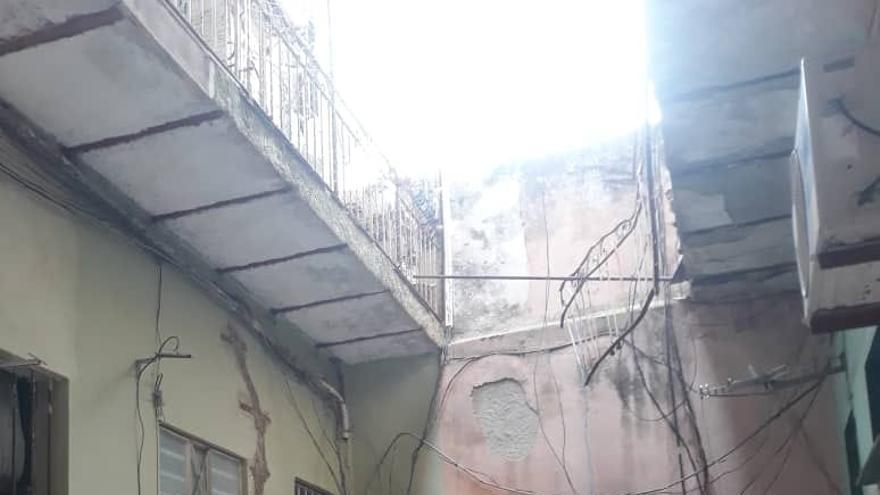
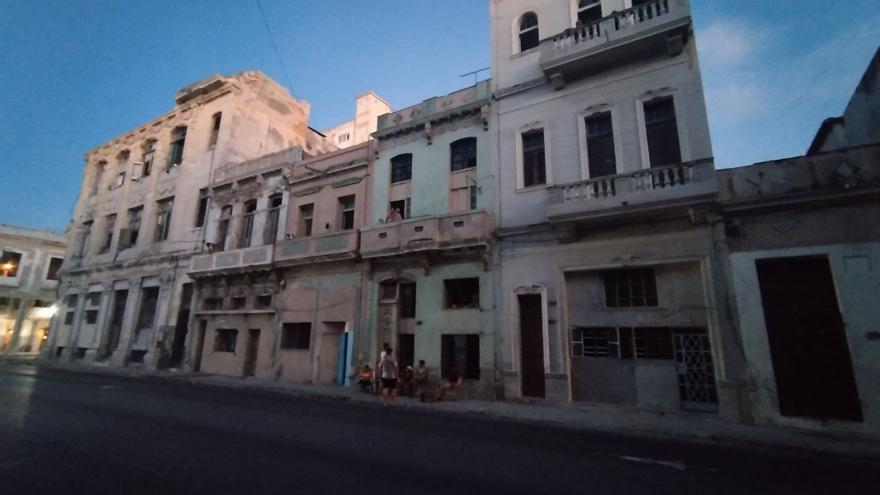
14ymedio bigger14ymedio, Juan Diego Rodríguez, Havana, 28 September 2023 —  A man lost his life early this Thursday in a partial collapse in Central Havana. The Municipal Assembly of People’s Power itself reported the event on its networks. It took place on Maloja Street, between Oquendo and Márquez González, when the roof of a house fell off and, with it, part of the structure collapsed. They did not give any information about the deceased.

In the images released by the authorities, firefighters and other emergency services can be seen before the sun had dawned, but around 11:00 in the morning, 14ymedio witnessed very little trace of the tragedy. A group of neighbors gathered at the door of the affected home, silent and observing the passersby with suspicion. Parked a few meters away was a truck from which some workers were unloading wooden poles, the kind normally used to prop up collapsed buildings. “Can you bring me some more wood?” one of them asked the driver. “It’s to resolve a little house there.”

“Can you bring me a little more wood?” one of them asked the driver. “It’s to resolve a little house there.”

This Thursday is the second accident of this nature that has occurred in the Cuban capital in just over a week. On September 20, another man, Jorge Luis Jorrin Guides, 54, died in an interior collapse in Old Havana, specifically at number 913 Compostela Street, between Velasco and Desamparados.

Both Central Havana and Old Havana are frequent scenes of building collapses due to the lack of maintenance of old structures. The situation is complicated by the accumulation of humidity and the incidence of saltpeter.

Last March, a woman and her baby were injured in another similar incident. Discontent over the precarious conditions of the infrastructure led to a group of families on Habana Street, between Aguiar and Muralla, in the oldest area of ​​the capital, taking to the streets with their belongings in August 2022 as a sign of protest, after the roof of the building collapsed and days passed without a solution. continue reading

The event took place when the roof of a house fell off and, with it, part of the structure collapsed. (Facebook/Municipal Assembly of Popular Power)

Some buildings do not resist and end up collapsing completely, as happened in November 2022 in Refugio, between Prado and Morro, where a large operation of fire trucks and even rescue dogs was required to remove three people from the rubble.

A month earlier, in Old Havana, a girl died and three other people were injured, two women and a child. The four were trapped under the roof that collapsed on them, early in the morning, on the lot where they lived, on Sol street, between Egido and Villegas.

____________

COLLABORATE WITH OUR WORKThe 14ymedio team is committed to practicing serious journalism that reflects Cuba’s reality in all its depth. Thank you for joining us on this long journey. We invite you to continue supporting us by becoming a member of 14ymedio now. Together we can continue transforming journalism in Cuba.

The Committees for the Defense of the Revolution Celebrate 63 years With a Deficit of ‘Cadres’

Cuban president Díaz-Canel attended the CDR decoration ceremony this Wednesday while his ministers announced bad energy news. (Capture/Caribbean Channel)

14ymedio bigger14ymedio, Havana, 28 September 2023 — While his Ministers of Economy and Energy arranged their faces to confirm the tough savings measures in the face of the umpteenth fuel crisis in Cuba, Miguel Díaz-Canel was going to a party, although his face was more like it was a funeral. The photographs published in the official press about the decorations ceremony of the Committees for the Defense of the Revolution (CDR), which turns 63 today, show the leader happier than he appears to be on television.

He had no shortage of reasons, since, even though he had been assigned the amiable part of the day, something was being buried yesterday and it is not very clear if it was the Revolution itself, drowned in the country’s crisis, or the CDRs themselves, which are approaching retirement age more than symbolically.

Valdimir Sauri Bermúdez, national vice coordinator of the mass organization, admitted that, between 2019 and July 2023, vacancies in CDR cadres increased by 177 and warned that this data is a priority in the organization of work. Even clearer: the management workforce is only 74.1% covered. continue reading

Between 2019 and July 2023, vacancies in CDR cadres increased by 177 and warned that this data is a priority in the organization of work. Even clearer: the management workforce is only 74.1% covered

The (remaining) members of the CDR tried hard to keep up appearances this Wednesday. From social media accounts, CDR members were called to tweet between 8 pm and 12 am – with the hashtag of the 10th Congress – during the previous evening in which activists meet to eat the ajiaco that they have renamed stew. Gerardo Hernández Nordelo himself, national coordinator of the organization – as well as a well-known former spy – encouraged the spread of photos of the celebration, and got many enthusiasts encouraged to do so, but also a shower of insults and reproaches.

The Roundtable program had just ended, where ministers Alejandro Gil Fernández and Vicente de la O Levy had recognized that “the country is in a very tight situation” and the only reason to celebrate was to keep the ranks tight.

But the CDRs will have to make a lot of efforts, judging by what has emerged from their 10th Congress. The working commission indicated that “the situation presented by the organization in terms of the stability of the cadres and their reserves at all levels is not favorable, with deficiencies in most of the country’s provinces.”

Their work, Sauri Bermúdez pointed out, is essential to “close the path to crime,” as the State newspaper Granma headlined this Thursday. Under this premise, a long series of tasks is understood to be reduced to a single one: maintaining surveillance over others. Delegates recognized that the crime rate is increasing in all areas, from home and ration store robberies, to drug sales and consumption, not to mention more serious cases of violence.

In the short term, and in addition to the usual tasks, the national coordinator of the organization assigned the CDR members duties: “ensure that families make rational use of energy, as a strategic task.”

The CDR members called for “the preservation of revolutionary values” to avoid all these and other evils that afflict the country, although based on what was discussed in the conclave, there is no reason to be alarmed. Roberto Morales Ojeda, member of the Political Bureau and Secretary of Organization of the Central Committee of the Party, said in his speech that “there may be dissatisfaction, but it is also gratifying to see what has been achieved throughout the country.”

The fact that around 35% of grassroots leaders are young was presented as positive, recognizing, however, that there are many who distance themselves

Former Minister of Public Health Morales Ojeda also praised the work of the CDR members in the worst moments of Covid-19 – “you were one of the reasons why Cuba was able to win” – and affirmed that the organization “does not stop its march.”

After the solemn speeches, the voices of the delegates revealed the opposite. The fact that around 35% of grassroots leaders are young was presented as positive, recognizing, however, that there are many who distance themselves. There were also 852 “CDR youth detachments,” with some 23,440 members, but “not all of them function, due to the lack of attention given by professional cadres and grassroots leaders.”

Hernández Nordelo reported that there are 137,803 committees and 17,384 zones, of which 3,229 have “operational problems,” 66% of which were solved during the organic process of Congress. In short, the dwindling forces have been reorganized.

“The continuity of the CDR is the continuity of the Revolution,” said Polanco Fuentes, the party’s ideological leader, also present at the event. And because of that, perhaps, is why Díaz-Canel’s face in the El Laguito Hall.

____________

COLLABORATE WITH OUR WORKThe 14ymedio team is committed to practicing serious journalism that reflects Cuba’s reality in all its depth. Thank you for joining us on this long journey. We invite you to continue supporting us by becoming a member of 14ymedio now. Together we can continue transforming journalism in Cuba.

The Cuban Regime Claims Not To Have Fuel or Money, But Oil Tankers Continue To Arrive on the Island

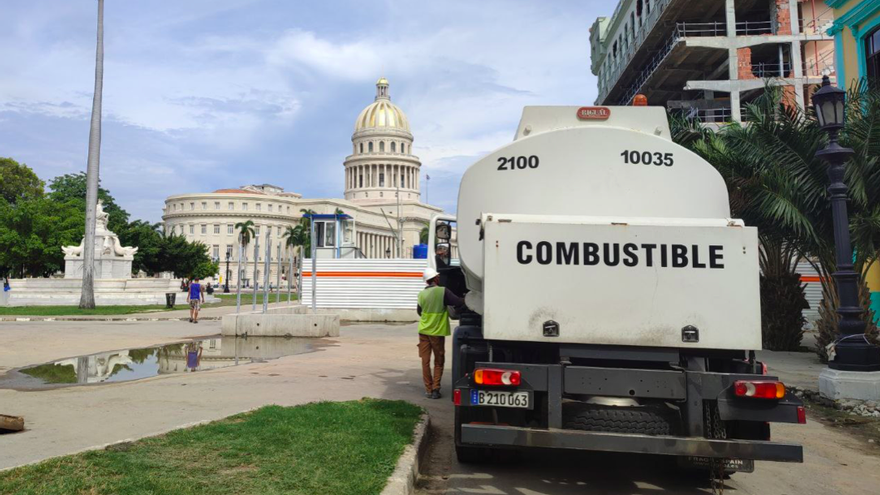
Who are the fuel suppliers whose non-compliance has led the country, according to the official, to the current situation? (14ymedio)

14ymedio bigger14ymedio, Havana, September 28, 2023 —  The intervention of the Cuban Minister of Energy and Mines, Vicente de la O Levy, this Thursday on the State TV Roundtable program has left more doubts than explanations among those who have closely followed the energy fluctuations of the Island. Who are the fuel suppliers whose non-compliance has led the country, according to the official, to the current situation? Where is all the oil that has entered the Island in recent months? What is the current situation of the Turkish floating power plants, called patanas, contracted by the Island to the Karpowership company?

For Professor Jorge Piñón, a specialist in the oil sector at the University of Texas (USA), the minister was incoherent in his description of the Cuban energy panorama, about to enter a new stage of worsening blackouts and cuts in activities.

“There is no fuel or crude oil to refine,” summarizes Piñón. “There is no money to buy in international markets and the suppliers – which cannot be other than Russia, Venezuela and Mexico – are not complying with Havana.”

A clear indicator of the debacle is that the Cienfuegos and Santiago de Cuba refineries – with processing capacity of 55,000 and 17,000 barrels per day (bpd) of crude oil, respectively – are not processing fuel, while the one in Havana, reports Piñón, is refining only 8,532 bpd, when its capacity is 22,000. continue reading

The Government has problems with the quality of the fuel oil they are receiving, which will affect the operation of the Turkish floating power plants

In addition, the Government has problems with the quality of the fuel oil they are receiving, which will affect in the operation of the Turkish floating power plants, which work with that fuel,” he adds. “They’re expecting supplies for October. Will that cargo solve the problem?” The shortage of diesel, from which the generating sets are supplied, and the never-resolved lack of maintenance of the thermoelectric plants also darken the horizon.

“It is not surprising that countries like Russia, Mexico and Venezuela now recognize the value of the ’free’ supplies they send to Cuba. They prefer to receive the benefits. At the end of the day, those countries need it,” says the expert.

The minister also did not respond, Piñón emphasizes, about what Cuba does with the continuous supply of fuel that arrives to the Island in tankers flying the flags of different countries. This Thursday, maritime tracking applications indicated the presence of three oil tankers in the Bay of Havana, the Alicia , the Ocean Mariner and the Ocean Integrity (Cuban, Panamanian and Liberian flags, respectively).

In Matanzas, where three tankers are already anchored – the Cubans Aquila and María Cristina, and the Panamanian Aquila – the arrival of the Caribbean Alliance, with the Panamanian flag, from the Mariel Special Development Zone, is expected. Finally, the arrival at the port of Moa, on October 8, of the tanker NQ Morina, flying the Maltese flag, is expected.

According to Piñón, the monthly report on Venezuela’s oil exports to its partners, including Cuba, from the British agency Reuters – about to be published – could shed a little more clarity on De la O Levy’s remarks on the crisis.

This Wednesday, the minister appeared on the Roundtable program and assured that, even “having a greater average availability” in electricity generation compared to “previous times,” today’s situation is alarming with “fuel.”

“We are not at zero fuel,” he pointed out, but “the country is in a very tight situation.” The energy deficit expected for the next few days is 400 megawatts, he said, while blaming the situation on the closure of the Cienfuegos and Santiago refineries due to “problems with suppliers.” By October, he estimated, the situation could improve, since the country will receive “some quantities of fuel” that, of course, he did not reveal.

“We are not going to have the level of fuel that we need or that we had in previous months, much less what we need, but we are going to increase distributed generation and supply to the economy in the coming days,” he concluded. “Cuba is not going to turn off, that does not exist, it will not exist,” was his umpteenth promise.

____________

COLLABORATE WITH OUR WORKThe 14ymedio team is committed to practicing serious journalism that reflects Cuba’s reality in all its depth. Thank you for joining us on this long journey. We invite you to continue supporting us by becoming a member of 14ymedio now. Together we can continue transforming journalism in Cuba.

Private Stores Selling Imported Clothing Outperform State-Sponsored Second-Hand Stores

Private and informal clothing stores, like this one in Sancti Spíritus, operate more efficiently than state-run stores.

14ymedio bigger14ymedio, Havana, 26 September 2023 — The Cuban government had planned to import six shipping containers of second-hand clothing from Canada, India and other countries but, with just a few months till year’s end, none of them has shown up at the nation’s ports. The low-quality garments, which cost the country 1.32 million dollars in 2021 according to state news media, have proved to be a tough sell. It seems Cubans prefer to buy their clothing from private retailers.

Senior officials at the Ministry of Domestic Trade in Ciego de Ávila are predicting a revival of so-called trapi-shopping.* The figures they released — very reluctantly according to the provincial newspaper Invasor — tell a different story, however. The province saw only 11.4 million pesos in clothing sales. Officials acknowledge that most customers prefer to buy from private stores and online shopping platforms despite their high prices.

In 2014, officials in Sancti Spíritus had to reduce the price of clothing by up to 70%

In fact, as Invasor reports, the government has already ordered a freeze on clothing imports until the surplus now being stored in its warehouses can be sold. The same thing happened in 2014 when officials in Sancti Spíritus had to reduce the price of clothing by up to 70% after realizing it was stuck with 17-million-pesos worth of clothing with no commercial value. continue reading

While not confirming whether or not the government has put a hold on imports, local leaders such as Pablo Acosta – director of Ciego de Ávila’s state-owned Empresa Universal – acknowledge that there has been a significant drop and that state clothing sales hardly constitute a vital retail sector.

Since 2018, the last time six freight containers of garments arrived, “the quality of the clothing had fallen drastically.” Some customers called state-run retail stores to find out if anything in their size had come in. Others who waited for hours in long lines just to get into the stores did not see their efforts rewarded. Shirts were usually stained, pants were too big and multi-piece outfits were badly worn or just plain ugly.

A 2016 study conducted by several official media outlets revealed that young people only bought used clothing from state-owned stores when they had no other choice. It had nothing to do, Invasor explains, with an interest in “sustainable, alternative or affordable fashion.”

To illustrate the decline in imports, the Invasor relies on – without completely accepting – an unofficial figure provided by Uruguayan journalist Fernando Ravsberg: In 2015 the Cuban government bought five-million-dollars worth of clothes from Canada, India and Angola. It arrived in twenty-by-forty-foot shipping containers, each holding varying quantities of hundred-pound bundles.

If anything seems inevitable, it is the demise of the old trapi-shopping stores

Though Invasor accepts this figure — the paper calls it “unproven but irrefutable” —  it is critical of Ravsberg for focusing more on “illegal resale chains.” The first links in the chain are prison farms where, according to Ravsberg, inmates set aside clothing that arrives at the port. They are the first to open the bundles, sometimes swapping out their own clothes for better ones. On other occasions, they take the best-quality garments for future resale.

If anything seems inevitable, it is the demise of the old trapi-shopping stores. On the bright side, however, Acosta notes that, in the corridors of the Ministry of Domestic Trade, there is talk of “resuming the sale but changing the rules of the game.”

One option, he claims, is to “hook up” with small and medium-sized businesses (MSMEs), the touchstone for this type business, since they have already capitalized on this market niche.”

These days, MSMEs operate as wholesalers, offering retailers hundred-pound bundles of clothes for prices that range from 90,000 to 115,000 pesos. Some prefer to take their payment in dollars, which can go as high as $400 if the seller tries to “take advantage,” says Invasor. When it comes to new, brand-name clothing, the hapless state-run trapi-shopping stores cannot compete.

*Translator’s note: from the word trapo, meaning “rag”.

____________

COLLABORATE WITH OUR WORKThe 14ymedio team is committed to practicing serious journalism that reflects Cuba’s reality in all its depth. Thank you for joining us on this long journey. We invite you to continue supporting us by becoming a member of 14ymedio now. Together we can continue transforming journalism in Cuba.

First Meeting in Miami of Cuban Small Businesspeople With Cuban-American Businesspeople

Photo of the businesspeople’s meeting in Miami published by El Nuevo Herald. (NH)

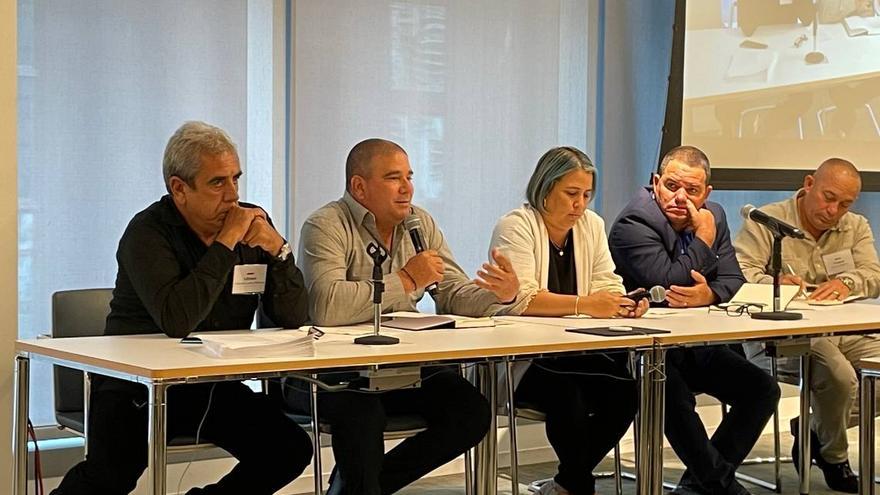
14ymedio bigger14ymedio, Madrid, 26 September 2023 — About 70 businesspeople living on the Island have been attending an event in Miami this Monday, sponsored by Cuban-Americans who are trying to give wings to the private sector in Cuba, according to El Nuevo Herald on Tuesday. Both the trip and the seminar are organized by a law firm, Akerman, and the opening of the event was carried out by the former mayor of Hialeah, Raúl Martínez.

“The Cuban-American community believes that an essential part of a future democratic and prosperous Cuba includes a system of free enterprise,” said former Democratic congressman for Florida Joe García, who, in November 2022, had a controversial meeting with Miguel Díaz-Canel himself during a trip to the Island, made with the aim of opening cooperation between Florida and the Island through the MSMEs (micro, small and medium-sized enterprises).

The purpose of the meeting, its promoters say, “is to demonstrate that these companies are real and not a facade of the Cuban Government, as their critics in Miami have said.” So much so, that billionaire Mike Fernández, a health sector entrepreneur, asked ironically: “How many State Security agents are there in the room?” After the joke, he went on to give recommendations on how to succeed in the United States and circumvent the restrictions of the embargo. continue reading

The purpose of the meeting, its promoters say, “is to demonstrate that these companies are real and not a facade of the Cuban Government, as their critics in Miami have said

“It is the beginning of something monumental that will change [the country]. If Cuba doesn’t receive aid from another country, it will continue to go backwards,” he warned. The rumor is circulating that Joe Biden’s government could facilitate the process for these private entrepreneurs by allowing them to open bank accounts in the U.S. or by providing credits.

Among the guests was Hugo Cancio, one of the most controversial businesspeople for the Cuban exile, which accuses him of profiting by doing business with the regime. “That Cuban businesspeople from both sides of the Florida Strait meet, exchange, collaborate and explore joint opportunities in Miami not only is historic, but it also is the future. At Katapulk we already collaborate with many of the MSMEs present here. Now we are also exploring investment opportunities and partnerships,” he told the Herald.

Ariel Pereda, who sold food to the state-owned Alimport and now exports to the private sector, also participated. He is less optimistic and more suspicious – the changes are going to “take time,” he said – but he is enthusiastic about “the volume, the level of activity, the inventiveness of the private sector and its persistence.”

Among those who traveled to Miami were many who did so for the first time, according to the article, which highlights the diversity of areas of the companies involved: transport, construction, software development and clothing, among others. Among the success stories, it cites a company from Villa Clara, D’Cabellos, which has its plant in Camajuaní and is dedicated to hygiene and beauty products. According to the press kit they took to the United States, since January 2022 they have sold goods worth 2.2 million dollars.

The attendees agreed that the current moment of crisis can overcome the resistance of both sides. “The Cuban State is bankrupt,” said Aldo Álvarez, owner of Mercatoria, a company that imports “large quantities” of wheat, chicken and cooking oil to sell on the Island.

“I feel super hopeful with all these measures that President Biden is announcing; the news about bank accounts is wonderful,” said another entrepreneur in the tourism sector. “We are not asking for money, loans or credits; we are asking for the possibility of conducting negotiations independently without people having to mediate.”

“Of course, the [Cuban] Government can destroy it tomorrow if it wanted to, in the same way that our [US] regulations could destroy it as well”

Joe García put the governments of the U.S. and Cuba on the same level when he demanded to take advantage of a good moment that could change. “Of course, the [Cuban] Government can destroy it tomorrow if it wanted to, in the same way that our [US] regulations could also destroy it, because the United States is the most natural market to do business with Cuba,” he said.

Among the issues that most interested the owners of the MSMEs were the efforts to reduce the costs of intermediaries and a market that does not push them towards resellers. Many things are still forbidden.

Some also asked if it is possible to open a company in the United States to sell or buy inputs, but the answer was negative, due to the restrictions of the embargo. For other reasons, the same thing happens in Cuba, where a person cannot have a company unless they are a resident of the Island. However, that could change, some warned, if the plan outlined by Miguel Díaz-Canel in his meeting in New York with businesspeople he spoke to about “transformations (…) to facilitate the investments of Cuban Americans and let them be owners of MSMEs registered in Cuba” comes to fruition.

Translated by Regina Anavy

____________

COLLABORATE WITH OUR WORKThe 14ymedio team is committed to practicing serious journalism that reflects Cuba’s reality in all its depth. Thank you for joining us on this long journey. We invite you to continue supporting us by becoming a member of 14ymedio now. Together we can continue transforming journalism in Cuba.

Baseball Player Pedro Pablo Revilla Breaks His Contract With the Cuban Baseball Federation

Cuban baseball player Pedro Pablo Revilla will look for an opportunity in the United States after breaking with the Cuban Baseball Federation. (@francysromeroFR)

14ymedio bigger14ymedio, Havana, 26 September 2023 — Cuban baseball player Pedro Pablo Revilla, from Guantánamo, broke off relations with the Cuban Baseball Federation (FCB). A few hours after finishing the season with the Dragones de Chunichi of the Japanese Professional Baseball League, he “advanced his departure” from Japan, as confirmed by the FCB.

The FCB pointed out in a brief message on its social networks that the 24-year-old athlete “did not return to Cuba,” where he was expected to join the Cuban team, Industriales, as a reinforcement for the controversial Elite League.

In May 2022, the contract of Cuban baseball player Pedro Pablo Revilla with Chunichi’s Dragones team was formalized. (Cubadebate)

Revilla’s disassociation destroys the FCB business with Chunichi’s Dragones team. According to the news portal Pelota Cubana, the athlete’s contract was around $100,000. To that amount is added the 20% that the Island charges the club for “training rights” of the athlete, which is the commission announced by the treasurer Luis Daniel del Risco. continue reading

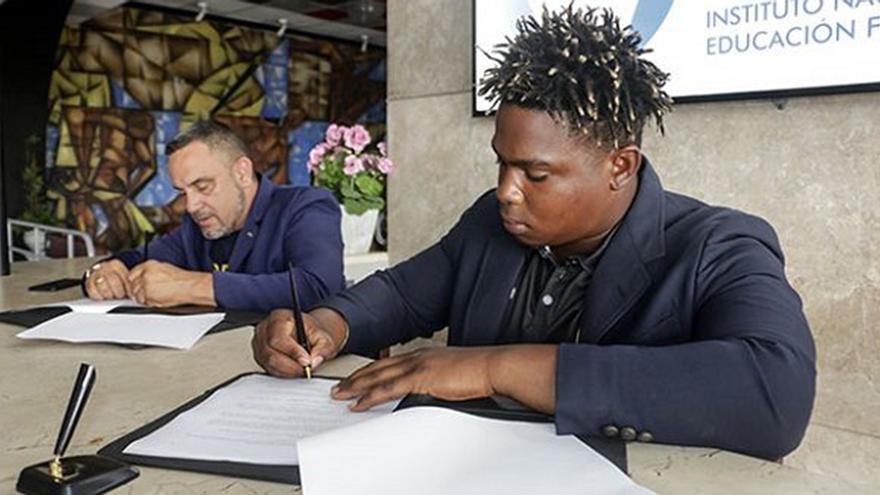
The FCB offered Pedro Pablo Revilla in 2022 to the Japanese team after his outstanding offensive campaign with the Indios del Guaso. In May of that year, the official press disclosed the agreement for a season in a ceremony at the Colosseum of the Habanera Sports City. The athlete would join the Cubans Ariel Martínez, Raidel Martínez and Yariel Rodríguez, the latter also disassociated from Cuban sport since March to look for an opportunity in the U.S. Major Leagues.

During his stay in Japan, Revilla had 64 turns at bat, hit a home run and collaborated to get three runs. Last March he was fined by the Japanese Professional Baseball League with $382 for drawing a line with the bat near home plate, an action that is considered an indiscipline.

The Cuban Samuel Sánchez signed the contract that unites him with the Detroit Tigers. (@francysromeroFR)

The case of the guantanamero athlete comes a day after the Facebook account Cubansp1ke confirmed the escape of the 19-year-old volleyball player, José Gómez. The player left the team in Edmonton (Canada), where the Island’s representation finished in fourth place in the Final Six.

This Monday, 16-year-old baseball player Samuel Sánchez signed the contract that binds him to the Detroit Tigers. Journalist Francys Romero indicated that the young man, who left the Island when he was 14 years old, will receive a bonus of $350,000.

The journalist stressed that Sánchez has power and speed. “He has a consistent exit speed in the swing as a contact batter, and these are his main tools at the moment.”

Translated by Regina Anavy

____________

COLLABORATE WITH OUR WORKThe 14ymedio team is committed to practicing serious journalism that reflects Cuba’s reality in all its depth. Thank you for joining us on this long journey. We invite you to continue supporting us by becoming a member of 14ymedio now. Together we can continue transforming journalism in Cuba.

The Energy Crisis in Cuba Returns With the Announcement of Drastic Measures

The authorities ask that only the necessary lights be turned on for safety. (14ymedio)

14ymedio bigger14ymedio, Madrid, 26 September 2023 — Another hard October is coming, despite the promises. The Cuban authorities are reinstating the measures they took during last year’s energy crisis, which include everything from the total or partial stoppage of production to the shutdown of air conditioning systems and telecommuting. The actions are to “reduce the consumption of electrical energy and make rational use of energy carriers,” and are “mandatory for all actors in the economy.”

The information has been disseminated by Cuban Television journalist Lázaro Manuel Alonso, who has published on his Facebook profile the order of the provincial governments of Villa Clara and Cienfuegos with identical measures, so everything indicates that they will be extended to the rest of the Island.

The list calls for the cessation of all non-basic activity between 11 am and 1 pm, and from 6 to 10 pm. Air conditioning will be allowed only from 8 to 11 am, and electric ovens must be turned off during peak hours. Nor can water be pumped in that time slot, except in the case of supply to the population, which will be “reorganized.”

As for “continuous production” services, plans to organize the load will be applied, and the use of lighting must be reduced, especially in shopping centers and industry

As for “continuous production” services, plans to organize the load will be applied, and the use of lighting must be reduced, “especially in shopping centers and industry,” limiting use only to what is necessary for “safety.” continue reading

Owners of small businesses are concerned, since they are being asked to “disconnect refrigerators, refrigeration equipment and cold rooms during peak hours, as long as the condition of the products is not affected.” “Measures like that greatly affect the private sector of services,” says a user. “It acts to the detriment of income for the forms of non-state management, which in turn harms salaries, investments, etc.; because at the time when income decreases, there will invariably be salary cuts and replanning of budgets, which, coupled with the taxes that exist, could lead to the bankruptcy of more than one. Private companies are not rescued from bankruptcy at the expense of the state budget,” he reflects.

The authorities have also asked the residential sector to apply the measures and to be responsible consumers. They indicate that priority will be given to fuel delivery, health services, funeral homes, electric barriers and solid waste collection, among others.

The information from the Energy Council of Cienfuegos is dated last Thursday, September 21, and offers more exhaustive and bureaucratic details, although it includes some picturesque data such as the intention to “activate youth contingents for the promotion of savings measures” or systematically publish in the media and institutional networks the importance of the rational use of energy.

In addition, it urges the “control by the energy councils in each territory of the consumption of non-state forms of management so that they don’t increase usage, taking as a reference the historical average consumption.”

“The issue is more about fuel than the thermoelectric plants,” Alonso responds laconically

“So to save, do we paralyze the country?” a user asks. “We have to motivate workers in the electricity sector. There are no qualified personnel in the thermoelectric plants; everyone has looked for other alternatives in the face of the economic crisis,” he says, adding that the 2,000 pesos/month these workers earn are insufficient even for transportation. “The issue is more about fuel than the thermoelectric plants,” Alonso responds laconically.

In the last month, Cuba has continued to receive significant amounts of Venezuelan oil, despite the fact that PDVSA decreased the barrels exported. The Island obtained, however, its generous share of 65,000 barrels per day from Caracas, more than the estimated average in the 2000 agreements (although less than what it received in the best moments). Also, the arrival of Mexican oil tankers to the national ports has been numerous in recent months, including the one in progress.

With these data, Cubans already see more closely the prolonged blackouts in a systematic way, like the ones occurred in September and October 2022, ending with the departure from the position of the previous Minister of Energy and Mines, Liván Arronte. The arrival of his replacement, Vicente de la O Levy, coincided with a slight improvement encouraged by the December weather, and he announced a series of scheduled maintenance that would leave the thermoelectric plants ready for May, in addition to committing to a year with brief and infrequent blackouts.

At the same time, Cuban President Miguel Díaz-Canel continued to plan international alliances to capture crude oil, which has been ineffective in the face of the very deep crisis that the country is experiencing.

Translated by Regina Anavy

____________

COLLABORATE WITH OUR WORKThe 14ymedio team is committed to practicing serious journalism that reflects Cuba’s reality in all its depth. Thank you for joining us on this long journey. We invite you to continue supporting us by becoming a member of 14ymedio now. Together we can continue transforming journalism in Cuba.

The ‘Committee for the Defense of the Revolution’, a Parapolice Organization Lacking Empathy With Cuba’s Crisis

A sign in Yoani Sánchez’s building in Havana asking for ‘from a clove of garlic’ to support the upcoming celebration.

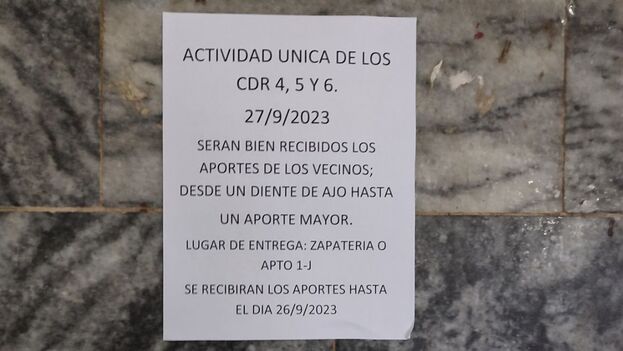
14ymedio bigger14ymedio, Yoani Sánchez, Generation Y, Havana, 26 September 2023 —  “From a clove of garlic,” says the poster that has been placed on the ground floor of our building in Havana to call for donations of resources for the celebration of the Committee for the Defense of the Revolution (CDR). The parapolice organization, which is experiencing its lowest moments, plans to celebrate its 63rd anniversary in the midst of a deep crisis that especially affects access to the most basic foods. The commemoration of its birth also comes accompanied by its tenth congress, which will be held starting this Wednesday despite the red numbers of the Cuban economy.

While measures are dictated to shorten working hours, disconnect refrigerators and air conditioning devices during certain hours of the day, the CDR spares no resources to bring together its managers, show off its political muscle and celebrate birthdays and a congress in the same week. It would be very annoying if it weren’t for the fact that the organization that was created to monitor and control Cubans at the neighborhood level does not enjoy any popularity these days and few give it even a thought. Like an unburied corpse, it stumbles around waiting for the last shovelfuls of dirt to be thrown on it from above.

A resident looks with curiosity on the sign posted by the CDR. (14ymedio)

Aware of the death of the once giant of family and domestic espionage, many of its former defenders have slowly withdrawn from the responsibilities at the head of the CDR. Those who a few years ago, in our building, knocked on our door with enthusiasm asking for some yuccas, some malangas or some onions for the watered-down soup – renamed “caldosa” [stew] in the official language – no longer even appear. They have their own personal dramas to endure and they know that the CDR will not be there to help them stretch their pension, convince vendors to lower the price of their food or arrange medications for them.

However, in my house we are going to offer more than a clove of garlic for the occasion. We are willing to get rid of a complete head that will stave off an organization that has only brought division and fear to the lives of Cubans. Like a vampire thirsty for other people’s intimacy and that feeds on anyone who has ideas of their own, we are going to hang a complete string on the door… to scare it away.

____________

COLLABORATE WITH OUR WORKThe 14ymedio team is committed to practicing serious journalism that reflects Cuba’s reality in all its depth. Thank you for joining us on this long journey. We invite you to continue supporting us by becoming a member of 14ymedio now. Together we can continue transforming journalism in Cuba.