The United States Reopens an Office in Cuba for Asylum and Family Reunification Procedures

The office, administered by the Citizenship and Immigration Service, will conduct the relevant interviews and study the applications. (14ymedio)

14ymedio bigger14ymedio, Havana, 17 August 2023 — The United States Government announced on Thursday that it will reopen an office in Havana with the aim of processing applications for family reunification programs and relatives of political refugees, a service that has not been available for five years. The announcement coincides with the return to the Island of 29 Cubans, deported from Miami by air.

In a statement, the U.S. Department of Homeland Security said that the office in Havana, administered by the Citizenship and Immigration Service, will conduct the relevant interviews and study the applications.

The objectives of this reopening, according to the US Secretary of Homeland Security, Alejandro Mayorkas, are to help “reduce the number of irregular crossings” at the border, leave human traffickers without resources and “simplify access to legal, safe and orderly routes for those seeking humanitarian relief” in the United States.

The office will also provide other services, such as the processing of refugee cases and the collection of biometric data for U visa applicants, for victims of criminal acts. continue reading

While the announcement was being made public, a flight with 29 Cubans arrived in Havana from Miami. The migrants returned on this trip, the fifth of their kind since last April, tried to enter the country “without authorization,” explained a brief statement from the U.S. Embassy in Havana.

Among the Cubans who arrived on the Island is Ariel Zayas Muñoz, who escaped from the Island five years ago and whose deportation came after his arrest, three weeks ago – by virtue of a deportation order I220B – while attending an appointment of the Immigration and Customs Enforcement Service (ICE).

As usual in every deportation notice, the U.S. authorities officially warned Cubans not to put their safety or that of their family at risk with illegal travel.

After the resumption of repatriation flights last April, the U.S. returned 123 Cubans to the Island. The following month, a second operation returned 66 migrants to Havana.

Last June, 36 Cubans were deported from Miami International Airport. The U.S. authorities warned that “they will not be able to return to the U.S. in the next five years. In July, another 33 Cubans were expelled on a fourth flight.

The return by air was adopted by the Barack Obama Administration in 2017 as a “limited” tool to curb the number of Cubans crossing the U.S. border with Mexico, but it was suspended during the coronavirus pandemic.

Data from the Customs and Border Protection Office (CBP) specify that the number of Cubans who have crossed the southern border has increased from 38,139 in fiscal year 2021, to 220,321 in 2022 and to more than 110,000 in the first 9 months of the current fiscal year.

During the current fiscal year, which began on October 1, more than 6,800 Cubans have been intercepted and returned by the U.S. Coast Guard.

Translated by Regina Anavy 

____________

COLLABORATE WITH OUR WORKThe 14ymedio team is committed to practicing serious journalism that reflects Cuba’s reality in all its depth. Thank you for joining us on this long journey. We invite you to continue supporting us by becoming a member of 14ymedio now. Together we can continue transforming journalism in Cuba.

A Florida Judge Dismisses a Lawsuit Against Several Hotel Agencies Linked to Cuba

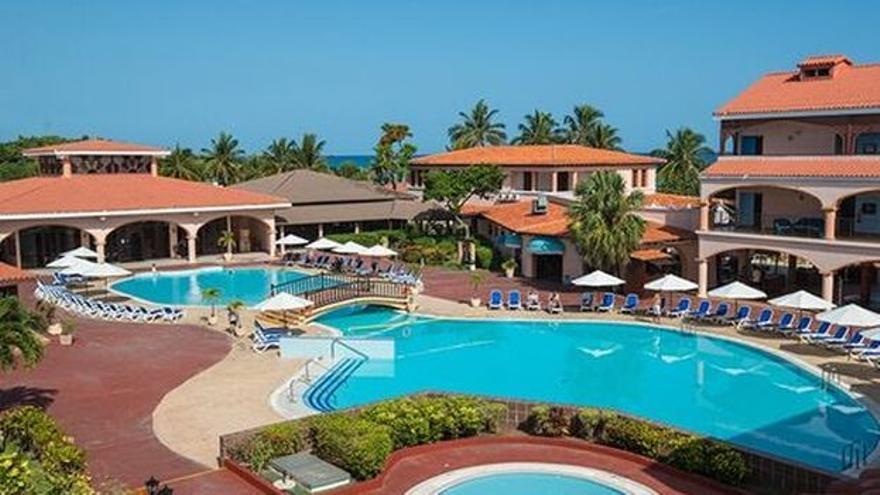
The Starfish Cuatro Palmas is one of the hotels built in the area expropriated from the plaintiffs. (Kayak)

14ymedio bigger14ymedio, Havana, 15 August 2023 — For the third time, South Florida district judge Robert N. Scola has dismissed the claims of the heirs of several properties confiscated by the Cuban regime after the triumph of the Revolution against the travel agencies Booking, Hotels, Expedia and Orbitz. The plaintiffs, who inherited the land on which the Starfish Cuatro Palmas hotel and the Memories Jibacoa resort were built, have been trying to obtain compensation from the four companies since 2019, under Title III of the Helms-Burton Law.

In a resolution, partially published on the page of the U.S.-Cuba Trade and Economic Council, the judge again rejected the claim, amended for the third time, for the reasons he had previously alleged.

The magistrate points out that the plaintiffs, Mario del Valle, Enrique Falla, Angelo Pou and Mario Echeverría obtained ownership of the land by inheritance in 2004 and 2014, which excludes their right to claim in accordance with the provisions of the Helms-Burton rule approved in 1996 by then-President Bill Clinton. Title III of the law authorizes Americans affected by the Cuban State’s confiscations, who were owners before the law went into effect, to make a claim.

The judge emphasizes that due to this fact, lawsuits of this type have already been dismissed, and he cites them in the verdict. continue reading

In addition, according to the magistrate, the businessmen still have not duly proved that the agencies were aware of intentionally “trafficking” with those properties. The court considers that, for all the reasons analyzed in the resolution, there are no reasons to initiate a compensation process, and, without going into the merits of the matter, it again puts an end to the procedure.

“These findings are sufficient to resolve the amended third lawsuit, which must be rejected and, therefore, dismissed. The Court refrains from addressing the rest of the parties’ arguments related to the law, its definitions and its application,” the court said.

In February 2023, the Court of First Instance of Palma, in Spain, agreed with the Cuban State entity, Gaviota, in a lawsuit against the hotel Meliá, filed in 2021 by the Sánchez-Hill family. The judicial headquarters alleged the lack of jurisdiction of the Spanish courts in this process since the confiscation was a “sovereign act carried out by Cuba through its own laws.”

In 2019, the plaintiffs filed a legal action against the Balearic chain Meliá for the operation of two hotels, Paradisus Río Oro y Sol and Río y Luna Mares, on land that belonged to their family before 1959. On that occasion, the judge issued the provisional file of the case for the same reasons as now, but the Sánchez-Hills appealed to the Provincial Court (higher authority), considering that the tax domicile of the company made the lawsuit possible.

For its part, the State company maintained that Cuba enjoys immunity from jurisdiction and, since the lawsuit was directed against the Island, the privilege was extended to the rest of the defendants. In addition, Gaviota added that meeting the demand meant ruling on goods located within Cuba without extraterritorial effects in Spain, as well as something impossible: ruling on sovereign acts of a State.

Translated by Regina Anavy

____________

COLLABORATE WITH OUR WORKThe 14ymedio team is committed to practicing serious journalism that reflects Cuba’s reality in all its depth. Thank you for joining us on this long journey. We invite you to continue supporting us by becoming a member of 14ymedio now. Together we can continue transforming journalism in Cuba.

Cuban Hammer Thrower Yasmani Fernandez Escapes in Paris, Prior to the World Athletics Championships

Cuban hammer thrower Yasmani Fernández in an international competition. (Escambray)

14ymedio bigger14ymedio, Havana, 16 August 2023 — The hammer thrower Yasmani Fernández, who was included at the last minute in the Cuban team that will participate in the World Athletics Championships, escaped this week. According to the information published this Wednesday by the pro-government media Jit, he “abandoned” the delegation during his stopover in Paris (France). According to the national commissioner of the specialty, Rolando Charroo, the rest of those selected are “focused” on obtaining their best results.

Fernández, according to the same media, was included on a list of 21 athletes due to his location in the ranking. His best record was achieved this year in Havana with a 249.5-foot throw that he recorded during the José Barrientos Memorial, which was held at the Pan-American Stadium.

Cuban athletics is going through a crisis, which increases with Fernández’s abandonment. Commissioner Rolando Charroo said the team of 20 athletes was “in very good shape,” and he limited himself to talking about the number of possible medals they hope to achieve.

“Lázaro Martínez and Cristian Nápoles among the men, as well as Leyanis Pérez and Liadagmis Povea among the women, are the best candidates for medals,” published Play-Off Magazine prior to the Cuban delegation’s trip to Budapest. continue reading

The Cuban team is concentrated in the Danubio Arena Hotel. So far two groups have arrived, one from Havana and another from the Spanish town of Guadalajara, where they “trained for several weeks.”

Cuba will open the competition this Saturday, when Ronald Mencía seeks to qualify for the hammer throw. From Sancti Spiritús, he arrives with a personal record of 251.5 feet from last June. In the afternoon of the same day, the discus thrower Mario Díaz will make his debut. His best record is 213.9 feet (2022), but this year he reached a maximum of 209.7.

“The triple jumpers Lázaro Martínez and Cristian Nápoles will be the ’main course’ for the followers of athletics in Cuba,” according to Jit, which also proclaimed Martínez’s record with a jump of 57.7 feet.

Translated by Regina Anavy

____________

COLLABORATE WITH OUR WORKThe 14ymedio team is committed to practicing serious journalism that reflects Cuba’s reality in all its depth. Thank you for joining us on this long journey. We invite you to continue supporting us by becoming a member of 14ymedio now. Together we can continue transforming journalism in Cuba.

The Unfortunate Laziness of Our Liberty

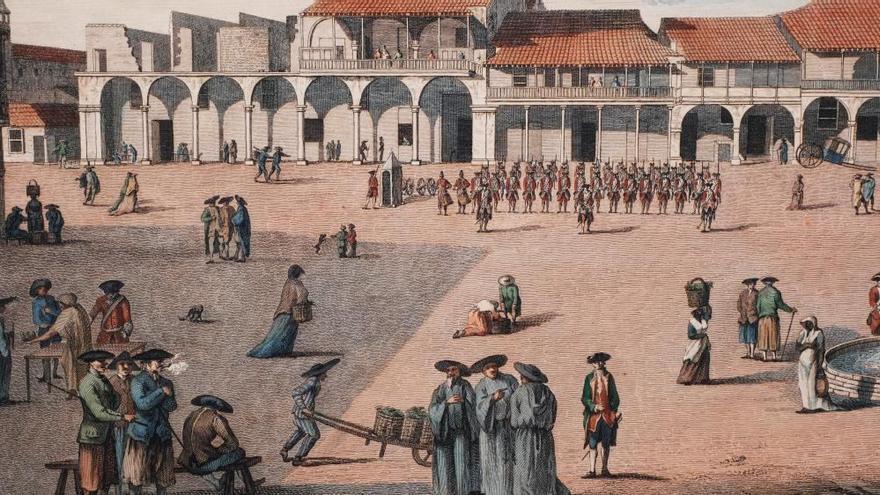
An engraving of Havana’s Plaza Vieja in 1763 during the British occupation, by Elias Durnford.

14ymedio bigger14ymedio, Yunior Garcia Aguilera, Madrid, August 16, 2023 — Why did it take Cuba so long to gain its independence? By the time most of its neighboring colonies had won their freedom, why was Cuba still known as “the ever loyal one”?

So why has the Castro regime lasted so long? Jorge Videla was dictator of Argentina for only seven and a half years, Augusto Pinochet ruled Chile for seventeen and Francisco Franco was caudillo of Spain for thirty-six. But Castro-ism has been entrenched in Cuba for more than six decades! And we are not talking just about exile, repression and censorship. These years have been marked by poverty, financial ruin and backwardness. How is it possible that we have not been able to get ourselves out of this pothole?

I try to avoid looking back on our past with pessimism, though at times it is inevitable to find some examples of history repeating itself. “Continuity” (another term for laziness), “loyalist reform” (change so that everything can stay the same), and “creative resistance” (I am suffocating but I enjoy it) are faults that have almost always been with us, making us prone to fatalism

During Havana’s eleven years under British occupation, its inhabitants never much bothered trying to learn English. In language, religion and culture, we have always felt closer to Madrid than to London. It is said that local peasants refused to sell the invaders fruit and that some even tried to poison the “redcoats” by feeding them bananas while they were intoxicated.

Nevertheless, the British never really faced much opposition. In some stately homes tea began being served at five in the afternoon, at which time more than one local official gladly offered his services to them. Their uniforms were the color of the mamey,* so tea time came to be known as “the hour of the mameys.” But, bottom line, the mamey proved to be quite a luscious fruit. A popular rhyme of the period went something like “The girls of Havana have no fear of damnation. / You can find them with the British / In the barrels at the rice plantation.” In July of 1763 the English traded us for Florida and sailed off… leaving us not much worse for wear. continue reading

It was then that Spain began to pamper us a bit, heaping enlightened despotism on top of natural paternalism: “Everything for the people, but without the people.” Cuba gave birth to one of the greatest and most brilliant men of the time, as some say: Don Francisco de Arango y Parreño. The American historian and hispanicist Allan J. Kuethe says of him, “He could have been a Bolivar, but he died like a true bureaucrat.” Beyond his contributions to trade and the island’s development, Arango y Parreño was a reformist, an smart guy, a man loyal to the crown.

Haiti was one of the first countries in Latin America and the Caribbean to obtain its independence.  And today some pro-Castro ideologues claim Cuba and Haiti are two spurs from the same rooster. What is undeniable, however, is that, after the Haitian revolution (1791-1804), the Cuban elite did everything possible to keep the same thing from happening here. “Fear of the black man” was stronger than the urge to be free. Rather than showing solidarity, what Cuba actually did was take over Haiti’s position in the world market. For us, that was what” having spurs” meant.

Cuba is undergoing the worst crisis in its history and today others are benefitting from our misfortune. How many businesses in other latitudes are prospering because there is a dictatorship in Cuba?

The regime has its reformists, whose responsibility is to patch things up from time to time. But the system is more tattered than a carnival banner. Neither Murillo, nor much less Gil,** could fill Arango y Parreño’s shoes.

There are those who opt for satire or memes, like the residents of Havana during the time of the mameys. Others are more lukewarm and prudent, seeing themselves as legitimate partners. There are those who give very radical speeches but deep down prefer Cuba to remain the same, if for no other reason than to serve as a bad example. There are even those who feign a radical, extremist stance, then spend every hour of the day attacking any objective attempt, any realistic initiative, to attain democracy.

But laziness in not conducive to liberty. It has always come at the cost of blood, sweat and tears. We are up to our eyeballs in tears and blood. It’s time for us to get a little wet. Sweat is the blood of our times.

Translator’s notes:
*A tropical fruit popular in Latin America and the Caribbean.
**Minister of Economic Planning Marino Murillo and Economics Minister Alejandro Gil.

____________

COLLABORATE WITH OUR WORKThe 14ymedio team is committed to practicing serious journalism that reflects Cuba’s reality in all its depth. Thank you for joining us on this long journey. We invite you to continue supporting us by becoming a member of 14ymedio now. Together we can continue transforming journalism in Cuba.

With a Delay of Five Years and Foreign Machinery, the Baracoa Cocoa Factory Is Up and Running

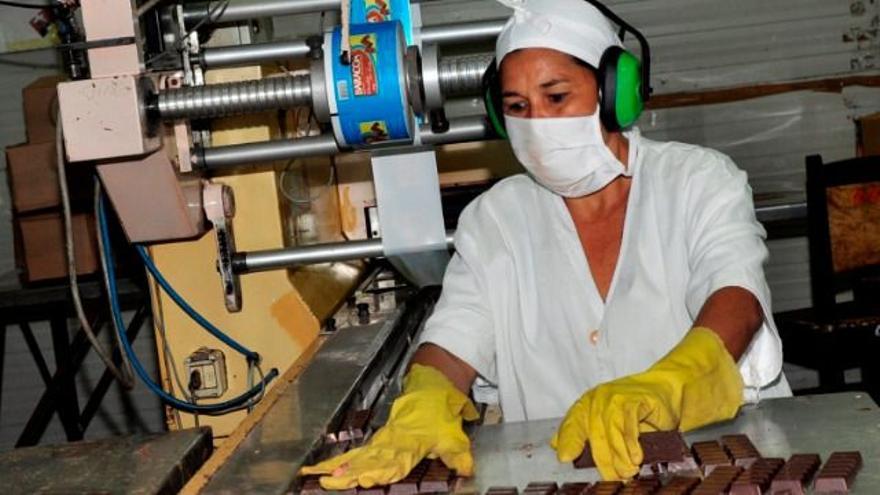
The factory managers say that with the new machinery, the noise and high temperatures (up to 104 degrees F), have been reduced. (Archive/Venceremos)

14ymedio bigger14ymedio, Havana, 14 August 2023 — The Baracoa cocoa factory begins production five years after the announcement of a million-dollar investment of unknown amount. The official press puts the amount at “43,000,000 between national and foreign currency,” which in practice means not revealing the amount. Of that money, “it owes thousands in MLC to the Empresa Forestal y del Coco de Baracoa, but the authorities already dream – as Granma headlines – of “getting revenue from the delicacy,” outside the Island, of course.

The official media dedicates a report to the factory, installed in the same space where it was inaugurated by then-Minister of Industry, Ernesto Che Guevara, in 1963. Two industrial processing lines will improve the product, making it profitable, and it will be “shipped abroad at excellent prices,” says Reynaldo Mosqueda Martínez, an engineer and investor. According to his account, two containers of cocoa butter and another two containers of micro-pulverized cocoa are currently being prepared for export.

Delay, as usual, has been the tendency since the reconversion of the factory was triumphantly announced in 2017. Those responsibile in this case are “the foreign manufacturers from whom the technology was purchased,” the Swiss Bühler and the Italian Mazzetti, who delayed sending technicians to train the Cubans, assemble and test the equipment, according to Granma.

In November 2021, the local press took up the issue again and stated that the pandemic had forced the delay in implementing the start-up of the plant, especially since national workers had to return to their provinces of origin and foreigners to their countries. That stopped the assembly of the machinery and all the subsequent phases, but the confidence was finally enough to begin, coinciding with the reopening of borders (on the 15th of that month and year). continue reading

As expected, the wait was prolonged, and only in November 2022 was the new industrial cocoa processing line launched, while the other line, responsible for the production of bon bons and bars, has been in testing since April and awaits a technical validation that has not yet happened.

Granma lyrically describes the operation of the “new” machine, which had its first effect on employment. The old one needed two workers, while the new needs only one. “We had to relocate forces to other areas,” says Juan Miguel Martínez, the brigade chief.

With the new technology, the cocoa bean is peeled, ground, pulverized, separated from the butter and packaged. The raw material is also dried, toasted and rid of bacteria. There is a new laboratory that makes sure that international standards are followed, and other areas have also been improved, from administrative to logistics and transport. “In the control room there is silence, just a computer and a girl with her hand on the mouse and her eyes fixed on the desk; Yisel Ochoa Llorente does not write, she clicks,” says the official newspaper, extolling the modernity of a computer rather than pencil and paper in the middle of 2023.

But where technology really makes a leap is in the quantities to be produced, as long as the forecasts are met. Mosqueda Martínez claims that before, seven tons of cocoa were processed in 16 hours. “With these teams we do twice that volume in the same amount of time.” The powdered cocoa bagging machine also doubles the speed: 42 seconds to fill a 33-pound bag. In 16 hours, the factory produced 2.5 tons of bars and jams that will now increase to 9.6. And the chocolates, he says, will also increase the revenue, because since April, bitter chocolate paste is being sold to the factories of Ciego de Ávila, Camagüey, Baracoa, Santiago de Cuba and Granma.

The new air conditioning to preserve the product also sounds promising. “Everything before ended in the same place: the cakes came out of the press burning hot and were stored here. We had to subject them to a cooling process that sometimes forced us to wait 24 hours to begin micropulverization. The most we achieved was a hundred sacks in one day. Now we can double that; the change has been like from night to day,” Martínez adds.

In addition, the product is “more refined, with a better finish, superior in terms of taste, smell and texture; in short, more competitive.”

However, the new industry suffers an evil that the old one never stopped suffering as well. “The tablet wrapping machine faces difficulties in synchronizing, and we need foreign technicians to make the readjustment. They are expected to arrive in the coming days, the director of the UEB, Pedro Azahares Cuza, confirmed to Granma. (…) Wish us luck.”

Translated by Regina Anavy 

____________

COLLABORATE WITH OUR WORKThe 14ymedio team is committed to practicing serious journalism that reflects Cuba’s reality in all its depth. Thank you for joining us on this long journey. We invite you to continue supporting us by becoming a member of 14ymedio now. Together we can continue transforming journalism in Cuba.

Cuban Rice Producers Threaten to Stop Growing if the State Limits Their Own Consumption

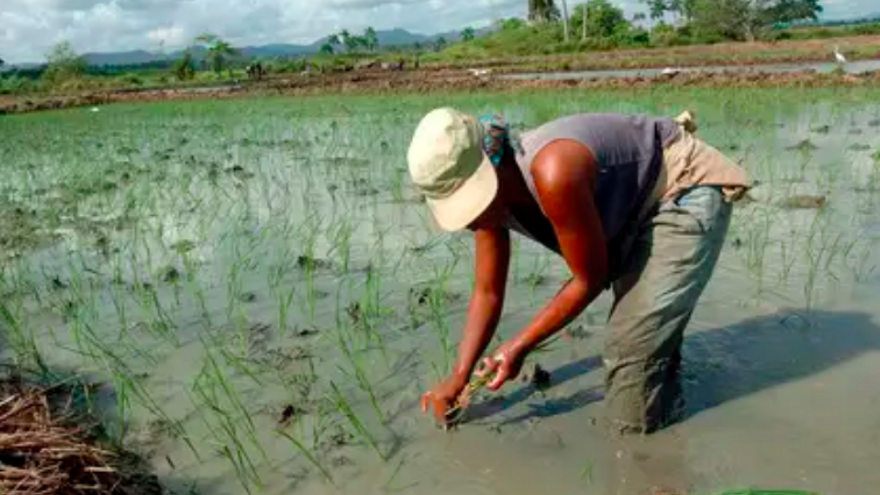
The norm will take into account whether the rice grower has met their cereal production targets. (EFE/Archive)

14ymedio bigger14ymedio, Mercedes García, Sancti Spíritus, August 17, 2023 — With the lack of rain, the departure of Vietnamese technicians and, now, a new state regulation that will limit the amount assigned for producers’ consumption, the rice-growing region of La Sierpe, in Sancti Spíritus, is living through difficult times. This norm, which has not yet gone into effect, is part of a new package of measures to prevent the cereal from ending up on the black market while the country is suffering a profound food crisis.

Actually, most farmers who grow rice in La Sierpe use state lands — leased to them under usufruct — hence must abide by any norms of the Ministry of Agriculture and other official entities. Disobeying any regulation of this kind could cost them their use of the land and the loss of what they have already invested in those lots.

“How can they know if the rice we separate for ourselves is enough or too much for our own consumption?” asked Daniel, one of the producers who will be affected by the new measure, which is being prepared to be applied in the coming months. “They say we are selling it on the black market but it’s that in my house, for example, each time there is less to put on the plate and rice is what we have left.”

Several officials from the area have visited the farmers to warn them of the new norm, although they have not talked about quantities for the moment. “They have come house to house and say the machete will come down in the coming months. They say that next year we will need to adjust to a smaller quantity,” explained Daniel to 14ymedio. continue reading

Authorities have warned that they will base their calculations on the number of people in the producer’s family and whether they have other crops such as root vegetables, fruits or vegetables that could complete the household food supply. They will also take into account whether the rice producer has met the cereal production targets and whether there have been previous complaints that they have diverted part of the harvest to the informal market. The formula for arriving at the total number of sacks each farmer can keep is not simple and raises suspicion.

Producers believe that the motivation for this reduction is “the low production and that people are very unsatisfied with the price of rice in the markets. Of course, now they want to punish the same people as always because the rope breaks where it is thinnest,” says Daniel. “What is going to happen with this is that farmers will leave, in the same way that the Vietnamese left.”

In 2022 a rice project began in La Sierpe in collaboration with Vietnam, which supplied equipment and machinery to producers in several regions of the Island, with the support of dozens of specialists and technicians. They bet mainly on the plains of Sancti Spíritus in this collaboration and there they made dikes, cleared canals and trained local specialists.

However, after a few years during which cereal production increased significantly, the yields of rice fields took a nose dive and was unable to meet the expectations of the Vietnamese, who also had to deal with the convoluted state bureaucracy and the inefficiency of Empresa Agroindustrial. The final blow to the project was the current fuel crisis.

“Here, most rice producers are new generation usufructuaries and a few are cooperative members,” an administrative employee of the company explained to us. “They are the ones who took the land when the Vietnamese left and the state wanted to increase production. They were fields that had been worked for this crop, which is hard and difficult, and also very dependent on rains and irrigation,” said the employee.

“Everyone knows that if producers do not have extra earnings selling some of the rice they declare as being for their own consumption, very few people would want to work in these fields because it is a lot of effort every day for the low price the state pays for each sack,” said the woman.

After the departure of the Vietnamese, the area’s productivity has gone off a cliff. If in 2015 they managed to produce up to five tons of cereal per hectare, in 2023 they barely get three. In the agricultural markets of Sancti Spíritus this week one pound of rice sells for 160 pesos and the product leaves a lot to be desired among clients due to the high proportion of split grains.

Now, with the announcement of the upcoming measure many are thinking, “pack up everything and leave the crops half way,” said Daniel. Either way, he has let his close family and friends know to purchase and store rice. “It could reach 200 pesos or more per pound before the end of the year,” he predicts.

Translated by: Silvia Suárez

____________

COLLABORATE WITH OUR WORKThe 14ymedio team is committed to practicing serious journalism that reflects Cuba’s reality in all its depth. Thank you for joining us on this long journey. We invite you to continue supporting us by becoming a member of 14ymedio now. Together we can continue transforming journalism in Cuba.

Russia Buys 26 Tons of Medicines From the WHO for Donation to Cuba

The donation, according to the official press, includes “wide-spectrum antibiotics, analgesics, anti-inflammatories and antihypertensives.” (ACN)

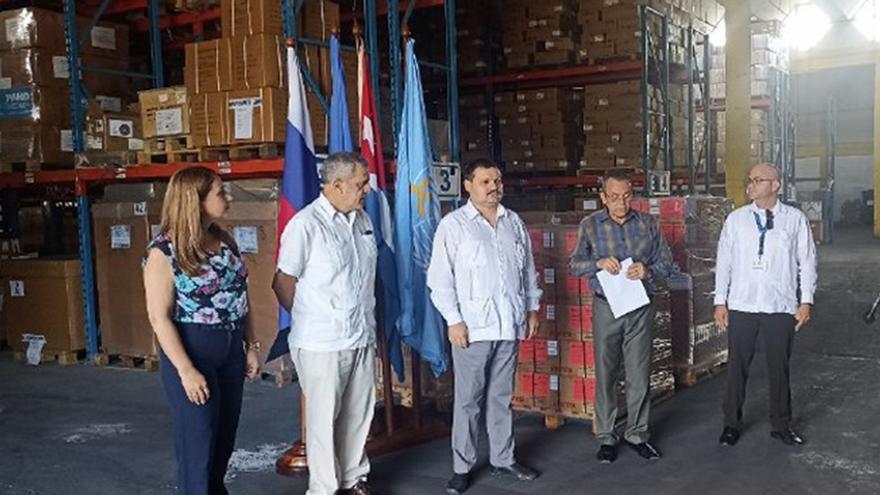
14ymedio bigger14ymedio, Havana, 16 August 2023 — Some 26 tons of medicines and medical equipment purchased with Russian funding were received this Wednesday in Havana by the authorities of the Ministry of Public Health. Moscow bought the supplies from the World Health Organization (WHO), and its diplomats on the Island attended a “thank you” ceremony in medical supply warehouses in Havana.

The donation, according to the official press, consists of four containers 12 meters long by two wide, with medicines that have been absent for a long time in the Island’s pharmacies. Although the quantities were not specified, Russia sent antibiotics of various types, drugs against diabetes mellitus and heart disease, analgesics, anti-inflammatories and antihypertensives.

In addition, syringes, disinfectants, instruments, surgical equipment, suture thread and materials for sanitation were received – items that, for months, Cubans must request from their relatives abroad before going to the hospital – as well as sphygmomanometers, stethoscopes, glucometers, oximeters and other materials.

The ceremony, held in the warehouses of the Medical Supply Marketing Company, was attended by the chargé d’affaires of the Russian Embassy in Cuba, Serguei Oboznov, the representative on the Island of the Pan American Health Organization, José Moya Medina, and the director of the Ministry of Public Health, José Larronte. continue reading

Although neither Cuba nor Russia revealed the cost of the medicines, the containers arrived in the middle of a 40% deficit of the basic pharmaceutical table, according to figures from the state group BioCubaFarma.

The president of the business group, Eduardo Martínez, explained in a session of the Cuban Parliament that the country lacked almost 251 drugs. The supply crisis not only affected national production but also caused numerous difficulties for imports, for which it blamed the United States embargo.

He also added that there was a lack of raw materials needed to manufacture the 369 medications that, supposedly, would be generated by BioCubaFarma. Last May, the director of Operations and Technology of that state entity, Rita María García, told the official press that the plant – which is allocated 60% of the production of basic medicines at the national level – managed to reactivate some high-demand drug production lines with the arrival of inputs purchased by the Government and other “managements,” without specifying whether they corresponded to donations.

Among the drugs that were going to be manufactured again are the injectables of aminophylline, labetalol, fenoterol and morphine of 10 and 20 milligrams (mg), widely used in hospitals for patients in intensive care. The laboratories dedicated to the manufacture of these drugs were paralyzed for almost four months because they did not have the containers – ampules, plungers and casings – due to the shortage of glass.

In this panorama, Russia’s donation represents a temporary relief, although it is expected that Moscow will continue to send health supplies to Havana – through the WHO or its regional channels – as part of its recent alliance with the Government of the Island, the most significant since the Soviet era.

Translated by Regina Anavy 

____________

COLLABORATE WITH OUR WORKThe 14ymedio team is committed to practicing serious journalism that reflects Cuba’s reality in all its depth. Thank you for joining us on this long journey. We invite you to continue supporting us by becoming a member of 14ymedio now. Together we can continue transforming journalism in Cuba.

Ideological Slogans Dominate Diosdado Cabello’s Visit to Cuba

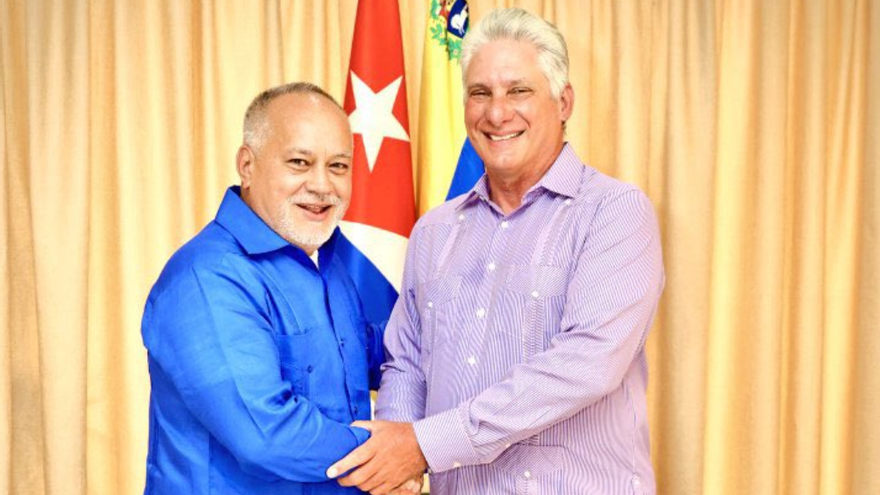
Diosdado Cabello and Miguel Díaz-Canel this Thursday in Havana. (X)

14ymedio bigger14ymedio, Madrid, 11 August 2023 — The visit to Cuba of Venezuelan President Nicolás Maduro’s number two, Diosdado Cabello, ended as it began: with a political-ideological allegation, this time by Cuban President Miguel Díaz-Canel. Gone are the cryptic agreements signed with Ricardo Cabrisas, head of foreign trade on the Island – including the construction of a warehouse in the port of Mariel, to make way for the slogans.

The Cuban president opened the meeting, according to the official press, with a message also published on his X account (formerly Twitter): “Cuba and Venezuela, always together.” That was the framework that both leaders wanted to use in a context in which Caracas is no longer the essential partner of Havana that it was for almost two decades. The Venezuelan economic crisis has forced Cuba to look for more profitable allies, such as Russia, China and even Mexico, which is already the second oil supplier on the Island behind Russia.

Venezuela, despite the fluctuations in fuel shipments, still maintains the status of the main supplier to Cuba, but yesterday’s meeting makes it clear that the alliance, especially in ideological terms, continues to be a priority.

“Both leaders talked about everything that politicians can do in the articulation of the leftists of our time, who today face a huge media and communications war, based on lies, slander and campaigns of discredit,” says the official article, fortified by photos of the two leaders shaking hands in shirt sleeves. continue reading

Díaz-Canel made Cabello the bearer of his message of gratitude to Maduro — afflicted these days with an ear infection that prevented him from participating in the Amazon Summit — for his “permanent solidarity” with the Island and his “support in the most complex moments.” In addition, Cabello, the presenter of Con el mazo dando* – of which the Cuban declared himself a fan and spectator – was charged with giving an “extensive hug” to the entire Venezuelan government team.

The Cuban leader also resorted to his X account to proclaim the positive impact of the meeting – “embracing a brother at home is the greatest joy” – but he did not deprive himself of throwing a dart at his critics in the same message: “Now you will see our adversaries speculate. We only reiterate that whoever messes with Venezuela messes with Cuba, and vice versa.”

Then came Cabello’s turn, and he did not hesitate to re-establish the architects of the fruitful exchange of interests, the deceased former presidents of both countries. “The presence of Fidel, his legacy and history gives joy to the Venezuelan comrades, as a sign of brotherhood, unity and the perennial reminder of the friendship between two giants: Fidel Castro and Hugo Chávez.”

Shortly before, the Venezuelan visited the Fidel Castro Ruz Center, along with its director, René González Barrios, who, “accompanied by all the staff,” set out “to provide all the information about the life and work of the Commander-in-Chief.” Cabello recalled “the legacy of friendship and closeness between the historical leaders of the Cuban and the Bolivarian Revolutions,” which he summarized in one sentence: “The love of Commander Fidel and Chávez is reflected in their people.”

Cabello, the first vice president of the United Socialist Party of Venezuela (PSUV), told the media that among the objectives of his visit, which ended this Thursday, was laying the institutional foundations to expand the collaboration and interrelationship between the PSUV and the Communist Party of Cuba.

In addition there will be “an in-depth review” of the state of bilateral relations, “from what has been done in the past, the future potentialities and what remains to be done.”

The first vice president of the PSUV said, in a press conference, that the valuable visit will allow the two parties to deepen collaboration and economic cooperation. He stated that the Venezuelan delegation “will return to its country filled with new energy and more love” for Cuba.

“Both countries,” he said, “are marked by the same enemy: imperialism,” although the hostility is not reflected in the economic recovery that Venezuela is experiencing since the United States decided to ease the oil sanctions, the main source of foreign exchange for the South American country.

According to the latest information from Reuters, Caracas sold 877,032 barrels of oil a day last July thanks to its contracts with the American company Chevron, which since November has had a license from the Treasury Department to trade with the state PDVSA.

Among the main events of Cabello’s visit to Cuba have been the visit to Castro’s tomb, in Santiago de Cuba, the signing of the agreement for exchange and cooperation with the PCC, and the tour of the Mariel Special Development Zone, in Artemisa.

Cabello returned at night to Venezuela, where the opposition has criticized the visit to the Island, accusing the leader of going to receive “guidelines” and instructions to liquidate anti-Chavista politicians, including María Corina Machado, who has recently denounced threats.

“We still have many struggles and battles together, always together, Cuba and Venezuela always together, and no matter what they say, there is no way that they can manage to separate or divide us,” Cabello insisted. He thus closed the circle he had started when he arrived in Santiago on Monday, where he said: “Cuba and Venezuela continue under the same flag.”

*A political opinion television show that frequently accuses and incriminates the Venezuelan opposition. The phrase is shortened version of “a Dios rogando y con el mazo dando” — roughly: Pray to God but keep rowing, or God helps those who help themselves.

Translated by Regina Anavy
____________

COLLABORATE WITH OUR WORKThe 14ymedio team is committed to practicing serious journalism that reflects Cuba’s reality in all its depth. Thank you for joining us on this long journey. We invite you to continue supporting us by becoming a member of 14ymedio now. Together we can continue transforming journalism in Cuba.

Cuban Baseball Player Jaider Suarez, 14, Flees to the Dominican Republic

At just 14 years old, Jaider Suárez connected three home runs and was the leader in stolen bases in the last U-15 National Championship. (@francysromeroFR)

14ymedio bigger14ymedio/EFE, Havana, 16 August 2023 — The home run leader of the last Cuban Under-15 National Championship, Jaider Miguel Suárez, took a flight to the Dominican Republic this week. According to journalist Francys Romero, he is already training at the Javier Rodríguez Academy and is preparing to be recruited by a U.S. Major League team in the international period of 2025.

At just 14 years old, the young man hit three home runs and was the leader in stolen bases in the last championship by getting 17, in addition to finishing with a batting average of 0.33%. “He produces (results) with consistency for any part of the terrain and is aggressive and competitive when he should be,” Romero characterized him.

The journalist also stressed that with the departure of Suárez there are 15 players who have emigrated from the team of 20 players from the Island who participated in the U-15 World Cup in 2022, which represents a new record.

Before Suárez, Alex Santiago, Pedro Danguillecourt, Dulieski Ferrán, Ernest Machado, Yosniel Menéndez, Roberto Peña, Segian Pérez, Alejandro Prieto, Danel Reyes, Ronald Terrero, Jonathan Valle, Yunior Villavicencio and Cristian Zamora left the Island. All under 15 years of age. continue reading

The constant flight of baseball players has had an impact on the quality of Cuban baseball. Last March, just after the World Classic, the Island’s team was in seventh place with 3,151 points from a list of 36 teams that was led by Japan (with 5,323 points), the United States (4,402) and Mexico (4,130).

This Tuesday, according to the ranking of the World Baseball and Softball Confederation, Cuba fell one place. With 2,880 points, it is now in eighth place, following the Netherlands (3,87) and Venezuela (3,744).

The sports authorities reported last Tuesday that Cuba will attend the 2023 Baseball Champions League of the Americas, to be held in Mérida (Yucatán, Mexico) from September 28 to October 1, with a selection of 25 players.

The Island’s team will participate in the event organized by the World Baseball Confederation (WBSC) along with three other league champion teams in the 2022 season: Mexico, Colombia and the United States.

The Island’s selection will be made up of players from the Alazanes team, from Granma province, winner of last year’s National Baseball Series title. It will have 15 reinforcement players from other teams, including some players who belong to the Leñadores de Las Tunas team, which last week won the crown of the 2023 national baseball championship.

Translated by Regina Anavy 

____________

COLLABORATE WITH OUR WORKThe 14ymedio team is committed to practicing serious journalism that reflects Cuba’s reality in all its depth. Thank you for joining us on this long journey. We invite you to continue supporting us by becoming a member of 14ymedio now. Together we can continue transforming journalism in Cuba.

August Doesn’t Offer Cubans a Truce: Blackouts Multiply Throughout the Island

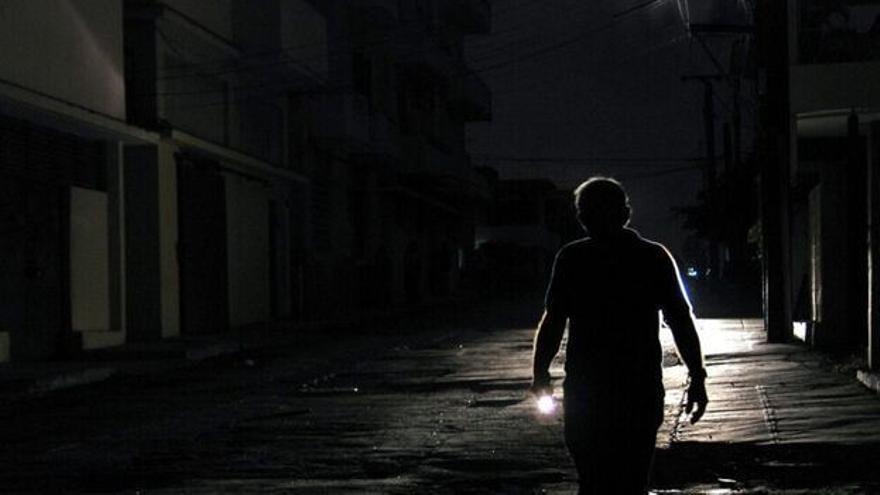
The population of Havana continues to suffer the consequences of the fuel crisis and the failures of the electricity infrastructure. (EFE)

14ymedio bigger14ymedio, Havana, 9 August 2023 — It is one more year, just at the time of the highest temperatures, when Cubans face the growing shortage of energy and, with it, the dreaded blackouts. For this Wednesday, the Electric Union of Cuba (UNE) forecasts a deficit of 430 megawatts, with an availability of 2,650 MW and a maximum demand of 3,080 MW, so the “affectation” will be 500 MW during peak hours.

On Tuesday, the State notified that “the service was affected by a shortage of generation capacity throughout the day,” until the “affectation” was restored at 3:52 in the morning, a situation that coincided with high temperatures both day and night.

“We’re going to run out of refrigerators. One of the two I have overheated, and I had to defrost it to turn it on. The same thing happened to my neighbor, but with a few taps it turned on again,” said a resident of Key West in Central Havana, who suffered six blackouts this Tuesday. “To top it off, there were two this morning,” he says, with little hope that the situation will change.

Another inhabitant of the same neighborhood tells 14ymedio about the ordeal she had to go through when she visited the Joaquín Albarrán polyclinic in the municipality on Wednesday to get an electrocardiogram. There was no electric service at the site. continue reading

“When I arrived there was electricity, but about 20 minutes later it went out,” said the woman, who witnessed the doctors working without electricity. “I heard a doctor tell his patient that he couldn’t take his blood pressure if the light didn’t come on. That seemed strange to me because the blood pressure monitors I’ve seen are manual or battery-powered.”

Despite not knowing exactly what time the service would be restored – essential for performing electrocardiograms – she decided to wait. “If I left and the light came back on, I would have wasted all that work.”

At home, the situation was not far from that of the hospital. “When I arrived there was no service either, but it came back right away. Now you have to take advantage of it as long as it lasts,” she reasoned.

Centro Habana is not the only area that suffers the consequences of the fuel crisis and the failures of the electrical infrastructure. This week, the Havana municipality of Playa has also been one of the most affected.

On social networks, dissatisfied citizens have already uttered complaints and insults against the Electric Union due to the frequent outages and the inconsistency of the electric current. “I’ve been in a blackout for 9 hours. You can’t live like that,” one alleged while another denounced the cut at night: “It sucks when we don’t have electricity during prime time.”

In its report this Wednesday, the UNE also announced the exit of the Santa Cruz thermoelectric plant (Mayabeque) from the national system: unit 6 of Nuevitas, units 3 and 5 of Renté and unit 2 of Felton. Other units are under repair, and one of the patanas [floating generators] that produce energy from the ports was disabled due to lack of fuel.

In less than two hours this morning, the Electric Union had reported the explosion of three transformers in the capital municipalities of Plaza de la Revolución, Habana del Este and Arroyo Naranjo. Just moments before – in the early morning – it had  managed to stabilize the breakdowns of the previous day.

Some of the citizens’ concerns translate into more global problems that escape the home context. People wonder, for example, the relevance of the banking reform — the so-called “bankification” — in a country that cannot generate enough kilowatts to keep ATMs, electronic collection devices or bank windows in operation. “Wanting to ’bankify’ without electricity is like building on water,” says a user who sees no future for the measure, no matter how much they “sell” it on Cuban Television.

Exactly one year ago, in August 2022, hundreds of inhabitants of Nuevitas (Camagüey) demonstrated against the long blackouts that affected the town. The event has been one of the biggest since the mass protests of July 11, 2021.

This summer has not been exempt from popular demonstrations either. At the end of July, a dozen residents of Centro Habana blocked the traffic at Belascoaín and San Lázaro in protest against the shortages in water and electricity services.

Rapper Eliexer Márquez El Funky, who shared a video of the event on his social networks, explained that the neighbors had been “more than three days without electricity” and that they would not move until the authorities took care of the problem. Some users, however, claimed that the days without service amounted to ten.

Faced with a situation that has now become unbearable, some citizens decide to raise their voices and others simply surrender to the impossibility of moving forward in a country without guarantees of well-being. “It’s very difficult to be calm here; you run in front and the problems come from behind, chasing you. There is no escape.”

Translated by Regina Anavy

____________

COLLABORATE WITH OUR WORKThe 14ymedio team is committed to practicing serious journalism that reflects Cuba’s reality in all its depth. Thank you for joining us on this long journey. We invite you to continue supporting us by becoming a member of 14ymedio now. Together we can continue transforming journalism in Cuba.

Cuban Officials Offer a Fifteen-Day 6 Percent Discount on Electronic Payments

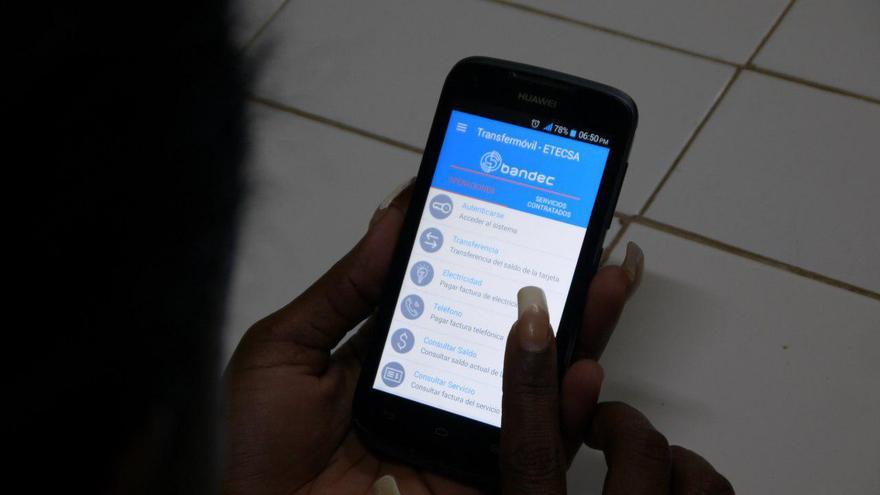
The 6% discount is for payments made through Transfermovil, a Cuban electronic payment platform. (14ymedio)

14ymedio bigger14ymedio, Havana, 15 August 2023 — As of Tuesday, August 15, Cuban banks will offer their customers a 6% discount for using electronic payment options. However, the offer will not last long, only until the 30th of this month. The vice-president of the Central Bank of Cuba (BCC), Alberto Quiñones, announced the measure on Monday in a statement on Cuban television and said customers will receive the discount regardless of the type of product or service being purchased, or the type of business, whether state-owned or private. The only requirement is that payment be done using a bank card or payment platform.

The measure is part of a program by the BCC to discourage the use cash in favor of other methods of payment. Referred to as bancarización,* the  measure was approved on August 1 and took effect on August 3.

During his television interview, Quiñones discussed the problem of customers having to wait two to three hours in line at bank branches, a situation that he described as “critical.” He denied that the delays are due to the new banking measure and claimed that, on the contrary, the program is an attempt to rectify the situation by prioritizing electronic payment options.

The delays are being caused by cash withdrawals, not deposits, he said, confirming what customers already knew. For months, many of them have complained about not receiving their pensions or salaries due to a cash shortage affecting the entire country, one of the many consequences of year-over-year inflation, which official data indicates at over 45%. However, that figure does not take into account the unofficial informal market, which dominates the national economy, or the devaluation of the peso, whose exchange rate to the dollar has fallen by at least 70% since January 2022. continue reading

To deal with this situation, the Cuban government took the decision to give banking a greater role in the nation’s economy while imposing limits on customers’ cash withdrawals. “Those limits will disappear as the country’s cash situation improves,” Quiñones told the journalist Lázaro Manuel Alonso yesterday.

On Thursday, Julio Antonio Perez Alvarez, general director of Operations and Payment Systems of the BCC appeared on the television program Mesa Redonda [Roundtable] to discuss the banking measure that Quiñones and his superior, BCC president Joaquin Alonso, had already explained. Perez Alonso said that the training process for bank empoyees had already been completed though it was obvious that there was still much confusion among the public as well as in bank offices themselves.

On Monday, however, Perez Alvarez himself told the Cuban News Agency that the bank had initiated comprehensive training program aimed at bank-sector workers, the public and businesses which would lead to “the slow and gradual implementation of electronic payment systems in the country”.

He said the training, which had supposedly ended a week ago, consisted of “conferences, workshops, forums, seminars and other types of financial orientation and education” that, he claims, will benefit all institutions and governmental bodies as well as political and mass organizations at all levels.

He said that this training was intended to provide a greater awareness of the new banking measure.”

Although the government has insisted that the use of electronic payment methods is not mandatory, businesses of all types will be required to provide customers with the option to use them if they so choose. Businesses will have a six-month period in which to implement the measures by providing customers access through cell phone apps or bank cards. Those who fail to do so can be penalized by having their business licenses suspended by the Ministry of Domestic Commerce as stipulated in the statute.

Several days later the BCC’s directors asked for calm, claiming that, at least initially, businesses in sectors, such as fishing and agriculture, that lacked the necessary infrastructure would be exempt from the regtulations

*Translator’s note: An awkward term recently coined by Cuban officials that, as yet, has no English equivalent. It refers to a government effort to increase the use of digital payment options and reduce the use of cash in the Cuban economy.

____________

COLLABORATE WITH OUR WORKThe 14ymedio team is committed to practicing serious journalism that reflects Cuba’s reality in all its depth. Thank you for joining us on this long journey. We invite you to continue supporting us by becoming a member of 14ymedio now. Together we can continue transforming journalism in Cuba.

Two Cuban Players Play in Mexico with Fake Birth Certificates

Cuban baseball players Onelki García and Lázaro Alonso have fake birth certificates with Mexican nationality. (Collage/Instagram)

14ymedio bigger14ymedio, Mexico, 9 August 2023 — At least 21 foreign players, including two Cubans, who play in the Mexican Baseball League (LMB), have fake birth certificates. A report from the weekly Proceso revealed that the guantanamero Onelki García of the Yucatan Lions has a document that recognizes him as Mexican thanks to the fact that his father, Osmani García Maso, is a native of that North American country.

However, García Maso, a farmer who lives in Guantánamo, has never been to Mexico, much less seen Concordia, a small town located in the municipality of Sinaloa, where Onelki García’s birth certificate as Mexican was allegedly issued.

On the roster of the Yucatan Lions appears the infielder Lázaro Alonso, from Pinar del Río, who also has an apocryphal birth certificate that endorses him as Mexican. The Civil Registry officer, Eduardo Lizárraga, who attested to the records of these Cubans, does not exist. Nor can the book and folio of the birth certificates be found in the office.

In this Yucatán team there is a history of these cases, such as that of Josh Fuentes, of Cuban descent, who in 2022 signed a Minor League contract with the Atlanta Braves. During his stay in Mexico, he presented documents that accredited him as Mexican. continue reading

This scandal occurs at the start of the playoffs, where the Yucatan Lions, with the line-up of the designated players, beat the Tabasco Olmecas 7-1 on Tuesday. Another of the indicated teams is Tecolotes of the two Laredos. American and Dominican baseball players are also on the list of altered documents.

The case has already transcended the sport. The director of the Civil Registry of Sinaloa, Margarita Villaescusa, ordered the revocation of the birth certificates of 13 players of the Yucatan Lions and asked the National Population Registry to annul the Single Population Registry Key, an official identification document for residents in Mexico.

The fake birth certificates have home addresses in the records of Concordia (Sinaloa), Castaños (Coahuila) and La Huacana (Michoacán). Since January of this year, the LMB entrusted to the Álvaro Magaña and RCH offices of Ricardo Chew everything related to the review of passports and birth certificates, but so far there is no position on them.

Faced with the series of anomalies, the businessman and owner of the Tecolotes of the two Laredos, José Antonio Mansur, demanded a review of the birth certificates of 230 players who are part of the dual nationality group in the LMB.

This Wednesday, Mexican President Andrés Manuel López Obrador acknowledged that he knew about the scandal but didn’t mention  a punishment. “The teams are cheating,” he said. “They are hiring imposters” to reinforce themselves. “They got them the birth certificates and then they violate the regulations about the number of foreigners per team.” The LMB allows the hiring of seven foreign players.

López Obrador urged the teams and players to “rectify the issue of the birth certificates” and commissioned the head of the National Sports Commission, Ana Gabriela Guevara, to investigate the case.

Translated by Regina Anavy

____________

COLLABORATE WITH OUR WORKThe 14ymedio team is committed to practicing serious journalism that reflects Cuba’s reality in all its depth. Thank you for joining us on this long journey. We invite you to continue supporting us by becoming a member of 14ymedio now. Together we can continue transforming journalism in Cuba.

Respectful Birth in Cuba: A Right in Words Only

There is no evidence that a process to stop obstetric violence is underway in Cuba, not even in the few hospitals where it was announced that the first changes would occur. (Partos Rotos) [ Broken Births]
14ymedio bigger14ymedio, Claudia Padrón Cueto and the team at Partos Rotos, Havana, 11 August 2023 — The obstetric violence suffered by Cuban women had the attention of the authorities for a brief period. In fact, in 2022, the problem was recognized in the State press, and a guide was presented to improve childbirth care. Action plans were announced. However, so far there is no evidence that a reform process is underway, not even in the few hospitals where it was announced that the first changes would occur.

Lídice Crespo, a 32-year-old woman, arrived at the Ramón González Coro Hospital in Havana on September 20, 2022. She was in the 38th week of her pregnancy, about to give birth to her first child, and she had many questions. How should she push? What would the hospital’s protocols be? Was someone going to explain how to breastfeed the baby?

The answers to these questions should have been received during the six psychoprophylaxis sessions that, in theory, pregnant women start having at week 34.

However, Lídice, like so many other women, did not receive any preparation for childbirth.

Full of fear, but excited about seeing her baby, she entered the preparation salon around 10 in the morning. There, in a room she shared with other pregnant women, they gave her a gown and asked her some routine questions, such as her blood type.

The findings highlight the weakness of the Cuban strategy to confront obstetric violence. (Partos Rotos)

Although her water had not yet broken and she hadn’t expelled the mucous plug that protects the uterus during pregnancy, two signs that birth is imminent, she was hooked up to a bag of oxytocin, the hormone that accelerates childbirth. It was the first of a total of five bags that were administered in the next 24 hours.

While she was waiting, she was not allowed to eat anything. “That day I didn’t eat any food, just a cookie. I even asked them to get me the food that my family brought and they didn’t do it,” says Lídice. She could only drink. They didn’t allow her to be accompanied either. She would have liked to have been with her husband. “I was alone there. I had to depend on what they wanted to do to me,” she says. continue reading

At dawn, she was exhausted and in pain as a result of the contractions and multiple vaginal touches from medical students. Then she began to despair. “When I couldn’t do it anymore and saw that my baby wasn’t coming out, I requested a cesarean section. At that moment a doctor passed by and spoke loudly to me, and without any sensitivity told me that I was the one who had decided to get pregnant so I had to handle the pain myself and take deep breaths,” she says.

Lídice urinated and defecated on herself. She begged for a new gown and was denied. Thanks to a student who interceded, they finally offered her clean clothes. In the morning, she was taken to the delivery room in a wheelchair. Nobody told her that she could choose the position to give birth, that she could do it standing up if it was easier. They only ordered her to lie down and push.

“In the salon they performed a Kristeller’s maneuver on me (pressing the abdomen to push the fetus). After each maneuver I suffered immediately. It was hell. Finally, at 9:28 am on the 21st, the love of my life was born. They didn’t let me touch him, or see him. The boy was taken away immediately,” says Lídice.

Then, while pushing to expel the placenta, she felt a very intense pain in her ovaries and began to bleed. The young mother suffered a serious hemorrhage that required emergency surgery to remove the uterus. However, no one explained to her what was happening or why.

In theory, none of this should have happened.

Almost two months before Lídice gave birth, the authorities of the Ministry of Public Health (MINSAP) published a guide or recommended practices

Almost two months before Lídice gave birth, the authorities of the Ministry of Public Health (MINSAP) published a guide that establishes which practices are recommended in childbirth and which constitute forms of what is called “obstetric violence.”

In addition, on the same dates, at the beginning of August 2022, the MINSAP announced that the new recommendations on respectful childbirth would begin to be applied in a pilot project that would be developed precisely at the González Coro hospital, where Lídice gave birth, and in other health centers. However, practically none of the recommendations established in the guide were complied with in the childbirth that Lídice experienced.

Lídice should have received six sessions of preparation for childbirth to understand everything that was going to happen to her. They should have allowed her to be accompanied and to eat something light, if she wanted to. They should have encouraged her to give birth in a vertical position or at least inform her that there was such a possibility.

They shouldn’t have begun to induce childbirth with oxytocin at such an early stage and should have allowed her to take the necessary time to dilate. They should never have practiced Kristeller’s maneuver or immediately separated her from her baby. At all times, she should have been informed of what was happening  to her.

All these recommendations are part of the guide published by the authorities, which, in theory, the health professionals of the González Coro hospital, among the hospitals that enjoy the best reputation in Havana, must have known and should have applied. None of that took place, and Lídice’s case is not an isolated one.

The visibility of obstetric violence in Cuba by independent journalists, activists and academics contributed to last year’s announcement by the State that it was trying to change this phenomenon.

Thus, they promised that Cuba would begin to apply the standards of respectful childbirth that are already common in other countries and promoted by the World Health Organization (WHO). However, after interviewing six mothers who recently gave birth at the González Coro and health personnel who work in this and other hospitals, it was found that the official promises are far from being fulfilled.

According to the sources consulted, the guide that aimed to reform childbirth care is not really mandatory but a “consultation document

According to the sources consulted, the guide that aimed to reform childbirth care is not really mandatory but a “consultation document,” with recommendations that professionals can ignore. The pilot plan to apply the guide consisted of a series of talks in which professionals in the sector were informed of its existence.

Women like Lídice, who gave birth in hospitals where the pilot plan was applied, told of traumatic childbirth experiences, very similar to those that hundreds of mothers from all over the country had reported in the Partos Rotos project. None of the main practices of respectful childbirth were applied when they gave birth.

These findings highlight the weakness of the Cuban strategy to confront obstetric violence, a global phenomenon that many countries are trying to combat. Experts from Spain, Bolivia and Argentina consulted for this report pointed out that in order to be successful, multiple measures must be applied at the same time; for example, the promotion of laws that establish the right to a respectful childbirth, the creation of observatories on obstetric violence and the dissemination of statistics that make the problem visible and allow monitoring of its evolution.

The specialists also agreed on the need for countries to involve civil society, especially women’s movements, professional associations, scientific societies and patient associations.

Cuba, an authoritarian country in which civil society is ignored or persecuted and where the only health statistics that are disseminated are usually those that confirm the success of its health system, is not doing any of this. About 270 pregnant women continue to give birth every day in a system that, as the authorities themselves now recognize in the new guide, violates and harms women and babies.

The Guide and the Pilot plan 

In recent years, obstetric violence has gained visibility in Cuba. Several academics have focused their research on this problem. On social networks, the testimonies of pregnant women who reported mistreatment, bad medical practices or lack of empathy during their deliveries, which caused them physical and psychological damage, have multiplied. The topic has also been the focus of attention of independent journalism projects like this one.

A year ago, we published research that shows how obstetric violence in Cuba is systemic. Through a survey, we collected information about 514 births. The women told us how they felt and what kind of medical practices were carried out when they gave birth.

The panorama they offered was that of a medical system in which the pregnant woman is considered a passive subject who should only obey orders and whose well-being is rarely taken into account.

They also reported how in Cuba there are practices that are in disuse in other countries: women are prohibited from being accompanied, eating or barely moving; episiotomy is abused, (a cut in the perineum to facilitate childbirth) without even informing pregnant women that it will be done; manual dilation of the cervix and Kristeller’s maneuvers are also used to speed up the time of natural childbirth.

After the publication of the research, the State appeared to react. In the official press, especially in the provincial media, articles addressing the subject began to appear. Leaving the official line of propaganda, which usually portrays Cuba as a medical power and the professionals of the system’s health system as heroes, media such as Periódico 26 de Las Tunas published articles in which it was recognized that childbirth could involve violence and trauma.

In these publications, something essential was ignored: many of the practices considered obstetric violence do not happen because of the initiative of doctors or because of their lack of empathy or knowledge. That is, they are not a breach of the rules, but rather they are in compliance with the strict protocols of childbirth care that exist in the country’s hospitals.

Many of the practices considered obstetric violence do not happen because of the initiative of doctors or because of their lack of empathy or knowledge

But, even so, the existence of obstetric violence was recognized, and this term was openly used, something new in the official discourse (EcuRed, the Cuban wikipedia, incorporated the concept in 2021).

In some cases, it was also announced that the health system was already working on the problem and that it was a priority issue. The Sancti Spíritus newspaper, Escambray, even went so far as to report that the country was already at the forefront of the world in the fight for respectful childbirth.

In parallel with these publications, on August 4, 2022, the authorities presented the so-called Action Guide for the care of respectful childbirth. In this official document, for the first time, it was admitted that an excessively medicalized approach to childbirth prevails in the country and that this prioritizes the needs of doctors over the well-being of pregnant women and their babies.

The guide is the result of collaboration between national specialists and the the United Nations Population Fund (UNFPA), headquartered in Cuba. This UN organization has been a pioneer in introducing the problem of obstetric violence to the country. Already in 2018, it organized the first workshop on respectful childbirth that was given to officials from MINSAP and to health personnel.

The document recognizes the magnitude of the problem and also establishes a series of recommendations. The goal is for pregnant women to be the true protagonists of their childbirth, to be respected and listened to.

The guide also advises or asks that practices that are common in hospitals, which are considered manifestations of obstetric violence, be minimized. Basically, the document proposes a childbirth protocol opposite to the existing one.

It insists on the need for psychoprophylaxis sessions to be fulfilled. It introduces the idea that women make a childbirth plan in which they explain how they want their time giving birth to be, what they want to happen and what they don’t, something that is already common in some countries.

The document also asks that women be allowed to be accompanied, to eat, move, push in the position they want and to be in contact with their babies after birth. In addition, it advises limiting as much as possible the practices that are now applied almost universally, such as episiotomy or the Kristeller’s maneuver.

The guide is aimed at professionals who are part of childbirth care throughout the country and insists that its recommendations be taken into account

The guide is aimed at professionals who are part of childbirth care throughout the country and insists that its recommendations be taken into account. At the same time, the document is careful not to present its recommendations as mandatory.

However, since its existence was announced, the authorities seemed to show a willingness for the guide to be applied in the real world. In fact, as part of the same project developed with UNFPA, MINSAP launched a pilot plan at the beginning of August 2022, which would consist of starting to apply the recommendations of the guide in a series of hospitals.

First, as announced, the pilot plan would be executed at the González Coro Hopsital in Havana and at the Camilo Cienfuegos Hospital in the provincial capital of Sancti Spíritus, between August and November 2022. Then, as early as 2023, the plan would be extended to six other centers, although it was never specified which ones.

In addition to the hospitals, the pilot plan also included the polyclinics that depend on them. As explained, their participation would be key to carrying out the childbirth sessions and to encourage pregnant women to make birth plans.

The little official information available about this plan describes the pilot as a program to train staff on how to apply the new childbirth care practices. It also explained that the “research action” methodology would be followed. This is a common form of research in Cuban medical science, which involves working on a problem where it occurs. The goal is to know the reality at the same time as it is transformed.

The provincial press of Sancti Spíritus even said in an article published in December 2022, that the pilot plan had been applied in real births. They specified that, for the first time, pregnant women were allowed to give birth accompanied.

The effective application of the guide also contributed to the announcement that the pilot plan would have a series of indicators that would be monitored, and that once concluded in the first hospitals, a report would be presented to evaluate the experience.

The Reality

However, since these announcements were made with great fanfare a year ago, neither the official press nor the State institutions have referred again to the guide, the pilot plan, or the concept of respectful childbirth.

For this report, we depend on UNFPA’s point of view on how the experience of starting to change such deep-rooted medical practices is turning out. In an email, the UN institution said that they could not offer statements without authorization from MINSAP. When we requested permission from the Ministry, we never received a response. We also tried to contact by mail and networks the professionals from Cuba who created the guide, but no one responded.

However, González Coro professionals did describe in some interviews what the pilot plan really was like and its limited scope. An OB-GYN with more than ten years of experience attending deliveries in the hospital confirmed that there is currently no trace of a pilot plan nor use of the new guide.

According to this professional, who like all those consulted asked not to be identified for fear of reprisals, efforts to reduce obstetric violence were reduced to a series of meetings. There was no implementation of the new protocols, no indicators, no evaluation.

“They met with the doctors, made (the guide) known and it was all over. In this hospital (González Coro) no pilot plan is being implemented in practice, nor was it ever implemented,” the doctor said.

Two other nurses linked to obstetrics in the same center confirmed that they never observed a change in childbirth care protocols. One of them, despite working in the postpartum salons, even said that she did not understand the concept of respectful or humanized childbirth, nor was she aware of the existence of a new guide to treat pregnant women.

We tried to interview professionals who work in the other hospital where, according to the published information, the pilot plan was implemented, the Camilo Cienfuegos of Sancti Spíritus, but it was impossible to find anyone willing to talk.

In other hospitals in the country, which could be among the additional six in which the pilot plan has been implemented, a similar version of what happened at the González Coro was obtained: a meeting to report on the guide and no specific changes in childbirth care.

An OB-GYN from the Abel Santamaría hospital in the provincial capital of Pinar del Río explained that, at the beginning of May 2023, the hospital management gathered the specialists of the maternal and children’s wing of the hospital and explained to them the new procedures introduced by the guide.

“They only summarized the document for the group so we could know it existed. No one gave an opinion. We all knew that it was not going to be implemented and that we only had to comply with knowing about the text,” said this doctor.

As she explained, in that session the nursing staff was not even invited, which is key in the care of pregnant women, so she deduced that the intention of the hospital management was never to really apply the new model. “The humanized childbirth guide exists, is known and will not be implemented,” said this professional.

The Mothers’ Experiences 

This version offered by health personnel is consistent with what we were told by women who gave birth at the González Coro hospital in the last months of 2022 and the first months of 2023.

Partos Rotos designed a short survey with 15 questions about the key changes recommended by the guide.

Some questions refer to basic issues of well-being. For example, we asked if mothers were able to choose the position for giving birth, if they were allowed to walk freely, to be accompanied during childbirth or to hold their baby at birth.

We also asked about other recommendations related to excessive medicalization of childbirth, such as the use of oxytocin at the right time or episiotomy.

Six women answered the questionnaire. Although all the questions could be answered as yes or no, we also interviewed the women in more depth. They all offered a very similar childbirth experience, in which the basic standards of respectful childbirth were not met.

Only on the question about whether they were allowed to walk during dilation, did they all answer yes. But they also all said that they were not encouraged to do so, unlike the guide’s recommendation.

They all suffered either manual dilation by the so-called tourniquet, the Kristeller’s maneuver or episiotomy. Some suffered all these practices, which contributed to unnecessarily painful births. The women reported that even the simplest recommendations were ignored.

The vaginal touches can be painful and most women consider them uncomfortable or annoying. In addition, especially in long births, they can increase the risk of infection

For example, the new guide limits the number of vaginal touches that should be performed on pregnant women to one every four hours (more than that is considered unnecessary in most cases) and recommends that they always be performed by the same person.

The vaginal touches can be painful and most women consider them uncomfortable or annoying. In addition, especially in long births, they can increase the risk of infection. In Cuba, infections during the postpartum period are one of the main causes of maternal mortality.

Despite this, it is common for Cuban professionals to routinely perform vaginal touches every two hours or less, even if childbirth has not evolved, or to ask medical students to do them for learning purposes.

It’s just the change of a professional habit, but with their answers, the mothers showed that even this type of improvement is far from being applied. Half of the respondents said that they were touched at least once every hour, and they all agreed that this was done by more than one person.

All the questions that refer to the availability of a new resource recommended by the guide, such as gowns that allow breastfeeding without having to undress, the use of balls for sitting to relieve pain or some type of installation that allows vertical birth, were answered negatively by all the respondents.

“I saw none of that” or “that doesn’t exist,” the mothers said. The same thing happened with the question about being accompanied. They all said that they were not allowed to have their partner or a family member around. This, according to González Coro staff, is a privilege that is only sometimes granted. “Since 2017 or 2018, we had been told that parents could be allowed at the time of delivery, but this was never put into action in a general way. Only in some cases of friends. Today the pregnant women are still alone,” confessed an obstetrician from this center.

The International Experience 

The limited Cuban approach to obstetric violence of creating a guide and disseminating it among some professionals contrasts with the one adopted in other countries. Spain, for example, has undertaken a strategy with multiple measures, according to Rosario Quintana, a respected gynecological expert in childbirth, who directed the public health services of the Cantabria region, in the north of the country.

Quintana explained that the first thing was to try to create a new consensus in the medical system on the need for all the practices carried out in childbirth to be based “on the best available scientific evidence” and to put the mother at the center.

That is, in Spain a specific document was not created to define a respectful childbirth that interested people can use, as Cuba has done. They worked directly on updating how all births are handled. The intention was to eliminate all practices whose benefits are not scientifically proven – for example, doing continuous vaginal touches or indiscriminate episiotomy – or those which evidence shows should be avoided, such as separating babies from mothers at birth.

In this work, the expert explained, different actors in the health system participated, as well as women’s movements such as El Parto es Nuestro [It’s Our Childbirth], researchers and patient associations.

The result was a document called “Normal Birth Strategy” that then began to be disseminated, among others, by a Women’s Health Observatory, created a few years earlier.

This, Quintana explained, triggered great interest in the subject. Workshops and conferences were organized, and the authorities presented more documents to guide health system professionals.

More recently, a law was passed that establishes respectful childbirth as a right.

Quintana stressed that, since obstetric violence is partly a cultural problem that involves the whole of society, it is essential to involve all sectors in the solution to the problem.

“I think it’s very important to have a women’s movement organized around pregnancy and respectful childbirth, with good training in evidence-based medicine. And the health authorities should be forced to initiate these changes,” Quintana said.

In other Latin American countries, a similar approach has also been adopted with the approval of laws on respectful childbirth and the publication of statistics that allow observation of the evolution of certain indicators, such as the percentage of cesarean sections or the creation of observatories on obstetric violence.

Ana Lía Bertoldi, an Argentine doula (a specialist in accompanying childbirth) who is part of the Observatory of Obstetric Violence of Bolivia, said that there are three necessary requirements to combat this problem. First of all, statistics: collect and publish data that show the problem and make it visible. Second, the approval of a respectful childbirth law that takes into account the needs of all women of any race, urban or rural. And finally, promote a cultural change by training health personnel and preparing mothers.

Bertoldi shared a success story about this in Argentina: that of the Estela de Carlotto Maternity, a public hospital in Buenos Aires, which has made advances in respectful childbirth.

“The doctors there say that the progress has not been because of laws, large infrastructures or large investments, but because of a cultural change. It’s not about doing some workshops and leaving it at that. It’s about forming a team determined to make that change from within. A decision from the board is important, and then a lot of horizontal work in the team and also with the mothers, who are sometimes not prepared,” Bertoldi said.

Resistance 

This cultural change and the rejection that can arise among health professionals is one of the main problems faced by health systems to change childbirth care, explained the Spanish expert, Quintana.

“(Doctors) have been trained in a pathology model. They believe in the superiority of technological childbirth. And, of course, they feel totally authorized to act for the protection of the fetus by passing over the desires of the women,” Quintana explained.

The Cuban professionals interviewed for this report expressed their rejection of the practices of respectful childbirth or made it clear that, in their opinion, any change in Cuba is unfeasible.

For many of them, their job is to preserve the life of the mother and the baby. Any other consideration not only occupies a secondary place but can represent an obstacle to their work.

Some of these professionals consider respectful childbirth to be typical of rich countries, which can build new hospitals where mothers have calm and privacy, or bathtubs to give birth in water.

Some of these professionals consider respectful childbirth to be typical of rich countries, which can build new hospitals where mothers have calm and privacy

In this way, they tend to overlook that respectful childbirth, in reality, consists of a wide variety of practices, many of which are feasible in Cuba.

One of the doctors interviewed at Abel Santamaría, for example, argued that the new guide cannot be applied because those who wrote it did not take into account the precariousness in which they work.

“Those separate rooms that they mention (in the guide) with CTG (equipment to monitor the fetus) for each patient do not exist,” she said. She questioned how changes can be promoted in childbirth protocols when they face a shortage of such basic things as gloves and sutures. The doctor mentioned that they cannot do all the cesarean sections that are required due to lack of supplies. Also, they do not have the specific suture for episiotomies and are forced to sew with generic thread. This, as she said, harms the healing. “You have to ’invent’ with what there is,” she concluded.

“In this country many things are done to follow the world practices, to pretend that we are on a par with the advances, but everything is fictitious. They put anything they want on paper and don’t concentrate on the real conditions. Here we will never be able to do what the guide says if we continue as we are, and we are going from bad to worse,” said the OB-GYN at Abel Santamaría, from Pinar del Río.

To the problems she mentions, which in her opinion hinder the implementation of respectful childbirth in the country, are added the conditions in which they work, according to the testimony of other professionals consulted.

When we asked them why a woman is not allowed to be accompanied, some professionals argued, vaguely, that it is not possible because the rooms do not have the required conditions

In her opinion, waiting for the dilation to occur naturally or allowing the new mother to have at least 50 minutes to be in direct contact with her baby (as the guide establishes), are luxuries that they cannot afford. They simply don’t have that time because they need to attend to the next birth.

“We have days where it’s one birth after another. There is neither the space nor the number of specialists needed,” said the OB-GYN at González Coro. However, when addressing an issue such as the possibility of pregnant women being accompanied while giving birth, the staff explained that the obstacles faced in Cuba are not only from a lack of resources.

When we asked them why a woman is not allowed to be accompanied, some professionals argued, vaguely, that it is not possible because the rooms do not have the required conditions. But others openly admitted that it is easier for them if the pregnant women are alone.

“The patients and their families are very undisciplined and don’t follow the rules,” said one of the nurses interviewed at the González Coro hospital. “Women who give birth get very spoiled, and if they have a companion they don’t let us work,” said a doctor from the Abel Santamaría hospital in Pinar del Río.

Another Cycle

Although the new guide and the creation of the pilot plan are the most public efforts made so far in Cuba to reduce obstetric violence, they have not been the first.

For more than 15 years, a regulation has been in force that encourages low-risk vaginal deliveries – which are the majority – to be attended mainly by specialized nursing staff. This is provided in Ministerial Resolution 396-2007.

The idea behind this rule was to demedicalize childbirth, give greater prominence to nursing staff, whose area of knowledge is care and well-being, and limit the intervention of the doctors to what is essential.

This would reduce the cascade effect that happens in many births, in which medical intervention leads to situations that can only be resolved, precisely, with more medical intervention.

The resolution promised great changes; however, it has barely been applied. Partos Rotos has surveyed hundreds of pregnant women who have given birth in Cuba since this rule came into force in 2007, and all were treated by doctors. The supremacy of the OB-GYN in the delivery room seems unquestionable, and Resolution 396-2007 is an old forgotten document.

Now history repeats itself. With the publication of the new guide for childbirth care, a period of reform in the health system was opened, such as the one promised by the Resolution. But as happened with the resolution, everything seems to have been left on paper.

Translated by Regina Anavy 

____________

COLLABORATE WITH OUR WORKThe 14ymedio team is committed to practicing serious journalism that reflects Cuba’s reality in all its depth. Thank you for joining us on this long journey. We invite you to continue supporting us by becoming a member of 14ymedio now. Together we can continue transforming journalism in Cuba.

The Banes Court Accuses a Cuban Activist of ‘Discrediting’ State Security on Facebook

Pupo explained that he would not take his phone with him because he had already lost one during arrests, of which he was a victim. (Leandro Pupo/Facebook)

14ymedio bigger14ymedio, Havana, 15 August 2023 — Cuban activist Leandro Pupo Garcés appeared this Monday before the Banes Court, Holguín, charged with “offending and discrediting” the Ministry of the Interior in a post on his Facebook page. The Prosecutor’s Office asked for four years of forced labor with internment for these charges, in a case that the young man considers purely “political.”

Several friends of the activist said a few hours after the trial that he was well and back home, and that he would later give details of the process. A day before the hearing, Pupo explained that he would leave one of his friends in charge of his Facebook page and that he would not take his phone with him because he had already lost one during arrests, of which he was a victim.

On July 11, the holguinero denounced the harassment he suffers from State Security – since he participated in the mass protests of 2021 – which has worsened in recent months despite the fact that the young man claims to have abandoned activism.

“They watch me, pressure and threaten all those who somehow approach me. They exclude me from society like I have the plague, then they call me ’unemployed’,” Pupo wrote in a post, in which he attached an indictment of crimes that accuse him of publishing content “against the revolutionary process.” continue reading

The document cited another post from March 11 in which Pupo criticized courses taught by the Ministry of the Interior. “The people need freedom, and what the dictatorship offers to young people are these courses to turn them into informers, into minions, to continue repressing and enslaving Cubans,” he said.

According to the text, the publication had been pointed out and denounced by agents of State Security, “who had him arrested because of his actions.” It also points out that the activist “associates with people of maladjusted social behavior” and that he is being watched as a “person of interest” for inciting the population “to hold protests.”

Pupo has been charged with the crime of defamation of institutions and organizations. “They plan to judge me by a Facebook post: defamation, that’s what they say. We all know that it’s for political reasons.” Pupo said in one of his posts that he himself had been defamed by being called “crazy” by the regime. “I have never felt obliged to attend a trial. I have never committed a single crime for which I should be tried,” he added.

Pupo has denounced numerous times the constant harassment and detentions he suffers for his political position, which have come to affect his friends, relatives and his own son, whom he does not plan to send to military service. “My son wants to study; he has other aspirations. I understand that there are rules that cannot be violated. I understand that a country at war recruits its young people, but what about a country like this that no one has attacked or is going to attack?” he asked in an interview with Martí Noticias.

Several Facebook pages reported the activist’s situation after the trial. “Friends, Leandro Pupo Garcés is at home. He is tired, and as soon as he recovers from the bad time that this dictatorship makes him go through, he himself will make you aware of everything. He thanks you for all the support given,” they wrote.

Translated by Regina Anavy

____________

COLLABORATE WITH OUR WORKThe 14ymedio team is committed to practicing serious journalism that reflects Cuba’s reality in all its depth. Thank you for joining us on this long journey. We invite you to continue supporting us by becoming a member of 14ymedio now. Together we can continue transforming journalism in Cuba.

A Former Cuban Political Prisoner Who Had Been Missing for Days Was Found Dead in Florida

The Cuban dissident Nelson Molinet Espino during a discussion. (ICLEP/Facebook)

14ymedio bigger14ymedio, Havana, 11 August 2023 — Former Cuban political prisoner Nelson Molinet Espino, 59, was found dead in Florida, where he had lived for years, after disappearing for several days, according to his good friend Normando Hernández, general director of the Cuban Institute for Freedom of Expression and Press and announced on Facebook this Friday.

“Cuba is in mourning. Unfortunately, I inform you that the prisoner of conscience Nelson Molinet Espino, who had been missing since Monday the 7th, was found dead inside a car in Hallandale (Broward County, Florida),” Hernández wrote along with two photographs of the dissident. “Our deepest condolences to your family. May God welcome him in his glory,” he added.

The opponent Ángel Moya also expressed regret for the departure of Molinet Espino. “The patriot, a member of the group of 75, has died.” “Dismayed by tragic news,” he added, “the brothers of cause… who reside in Cuba, express our heartfelt condolences to the relatives of the former Cuban political prisoner and exile in the United States.”

Molinet Espino, an independent union activist sentenced to 20 years in prison during the 2003 Black Spring, went into exile in 2010 after seven years in prison. He was one of the 52 dissidents who accepted, under pressure from the Cuban regime, to go into exile in Spain. continue reading

The release of the dissidents in 2010 were the result of a dialogue initiated by the Archbishop of Havana, Cardinal Jaime Ortega, and the mediation of the Minister of Foreign Affairs and Cooperation of Spain at the time, Miguel Ángel Moratinos.

Nelson Molinet Espino, who on the Island was the president of the Conference of Democratic Workers of Cuba, was sanctioned in a summary trial full of irregularities. He lived in Miami for more than 10 years.

The dissident’s daughter, Karen Molinet, in statements to América TeVé this week, said that her father, for the years he was imprisoned and after leaving Cuba, “began to suffer from post-traumatic stress disorder,” in addition to “loss of memory and inability to communicate well.” The last time he was seen before being reported missing had been last Monday near Hialeah.

https://www.facebook.com/photo.php?fbid=6718764954851347&set=a.571790182882219&type=3&ref=embed_post

CUBA IS IN MOURNING. Unfortunately, I inform you that the Prisoner of Conscience of the Group of 75, Nelson Molinet Espino, who had been missing since Monday the 7th, was found dead inside a car in Hallandale. Our deepest condolences to his family.   MAY GOD WELCOME HIM IN HIS MOST HOLY GLORY

Translated by Regina Anavy

____________

COLLABORATE WITH OUR WORKThe 14ymedio team is committed to practicing serious journalism that reflects Cuba’s reality in all its depth. Thank you for joining us on this long journey. We invite you to continue supporting us by becoming a member of 14ymedio now. Together we can continue transforming journalism in Cuba.