
Without Water There Won’t be Squash in Urban Gardens

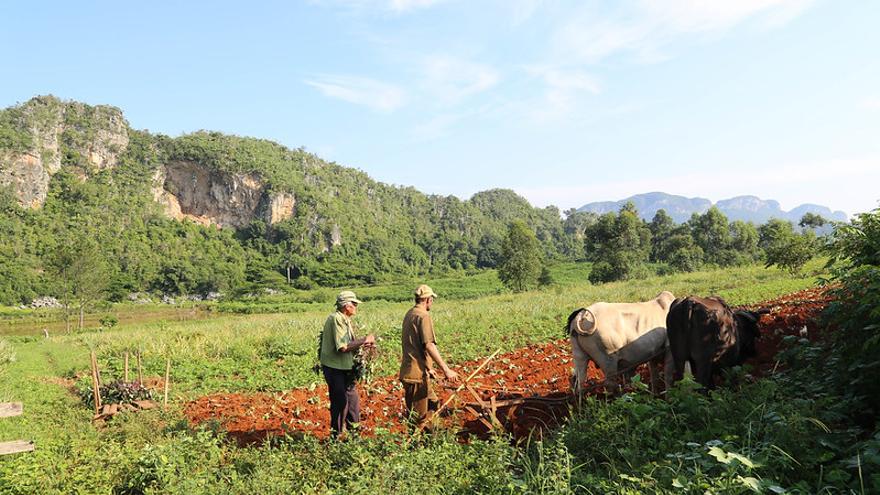
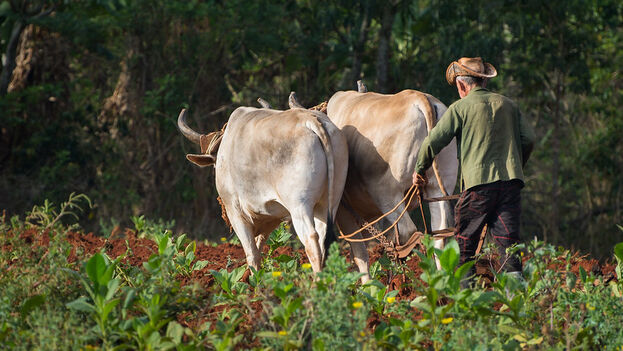
On the official list of commercial varieties of squash that the Ministry of Agriculture maintains there are almost 20 names. (14ymedio)

14ymedio bigger14ymedio, Marcelo Hernández, Havana, July 14, 2020 – Boris grows cucumbers, some varieties of garlic and aromatic herbs on the patio of his house in La Lisa, Havana. He says he’s preparing “for what’s coming, which will be hard,” so he’s filled about 20 plastic containers, which used to hold paint, with a little earth and gravel, and the incentive of necessity.

“I’m not going back to living in another Special Period,” he explains to 14ymedio. “When I was 12 they sold some little chicks that we had to raise at home, but they all died a little later because in my family there are mechanics, engineers and even a dentist, but no one knew how to grow food or raise farm animals.

Once he noticed that the present crisis was going to get worse, this graduate in geography, who works as a waiter in a paladar (privately-owned home restaurant) decided to learn the A-B-Cs of creating a garden on his patio, in a space of about four or five meters with a concrete soil, at the end of a hallway with several apartments on each side. Now he spends most of his time there. continue reading

In the last few months, as the shortage of products grew and Boris’ family spent more and more time finding certain condiments, he planted oregano. “It grows anywhere, so it’s a good way to prove that I can do it.”

“Then I added basil, garlic, several rosemary and parsley plants, which also did very well. As I felt more secure, I added cucumber and chili peppers, but I’ve had the most success with herbs for seasoning or making tea,” he says. “We can’t survive with this but at least we’ll have something to give taste and variety to the food.”

Several of his neighbors also benefit from the garden, something that has brought relief in the middle of the pandemic, with the farmers markets in the zone very short of food and the little carts almost missing from the streets because of police control. “I’ve turned into a real guajiro!” jokes the improvised farmer.

But now that he’s conquered his initial inexperience, Boris is facing other problems. “The delivery of water is what causes the most harm, because in this zone it’s been almost a week without it coming,” he laments. “I’ve had to carry water from other neighborhoods not only for the bathroom and mopping, but also for irrigation.”

Last March, the capital had 111 water supply sources damaged, 89 partially and the other 22 totally, and only one of the five water systems is in good shape, a situation that barely has changed with the passing weeks. Some neighborhoods in the capital have spent almost two weeks without receiving service.
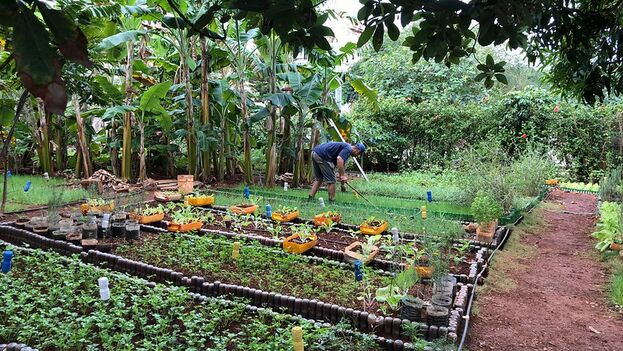
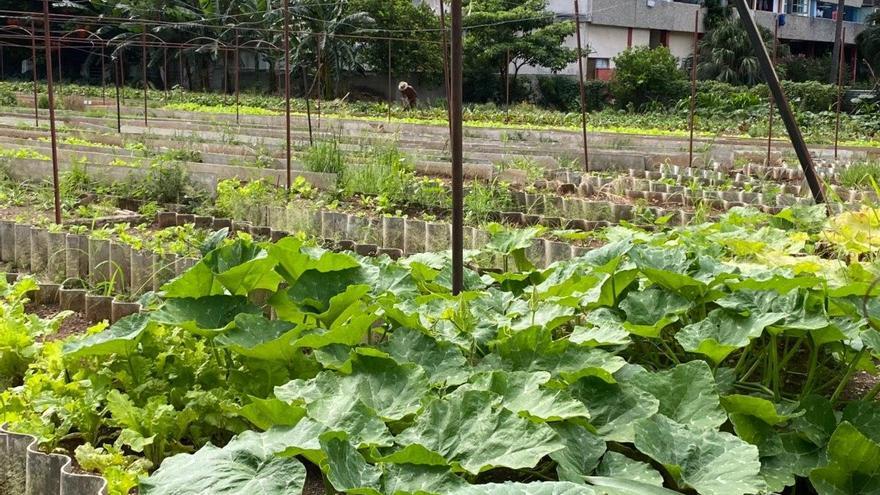
As the shortage of products grows, many Cubans take a chance on growing aromatic herbs and vegetables on their patios. (Flickr/Alexander.Kafka)

“A garden in every house and in every neighborhood sounds very good, but when people start growing everywhere, what’s going to happen with the little water we have?” asks Boris’ neighbor, who approves of the practice of growing food but worries about the building’s cistern “drying up”. However, he admits that the garden’s garlic and chives have “saved several meals”.

“You throw a few seeds, wait a few days and there it is,” is how Felipe Agüero describes it. He’s a retired truck driver who began planting on a small parcel behind his building in Reparto Bahía in Havana. Cucumbers, aromatic herbs and several papaya plants are his greatest pride, but these days it’s the squash that is the butt of most of his neighbors’ jokes.

“I had squash before all this racket started, and it’s not one of the most interesting things to plant,” he clarifies.

Gerardo González, Vice President of the Committees for the Defense of the Revolution (CDR) and ex-spy imprisoned for years in the U.S., called for a massive planting of squash, triggering  all kinds of jokes on social media. “If every CDR produces one squash and there are 138,000 CDRs in the country, then there would be 138,00 more squash,” affirms González during a visit to Camagüey.

On the official list of commercial varieties of squash that the Ministry of Agriculture maintains they are almost 20 names, but, in practice, there are six which are the most common on tables. The differences go from the form, passing to the size, the texture of the shell and even the arrangement of the seeds inside.

“You can grow squash year-round, but you have to be very careful in the months of July and August because there’s a lot of blight when it’s hot,” warns Agüero. “What I produce here is very small, but to grow it seriously, you must have good seed and keep the irrigation stable, something very difficult to do in the city.”

He waters his small garden by a hose connected to the building’s water supply. “When there’s no water it’s lost work because all the strength in the seeds can be gone in a few days, which has happened to me many times.”

“Here what I can get are seasonal herbs for cooking, but it’s clear that my family can’t live only on this,” says Agüero. “Sometimes it’s only a distraction for me, to pass a little time outside the house and think about something other than my problems, but the fear I have now is that they’re saying if you already have a garden, you don’t need to buy in the bodega (ration store).”

It’s better not to talk to Agüero about pineapple. “Anyone who asks you to plant pineapple everywhere knows nothing about agriculture,” he points out. “It’s a very aggressive plant because its leaves poke and cut,” and it’s not advisable at all to plant pineapple on a patio, a terrace or in a garden because it’s a danger for people, animals

“When I was a boy and lived in Quivicán, my father used to plant pineapple to separate the other crops, like a kind of natural barrier to prevent the cows from getting into the more sensitive crops, and also to dissuade thieves,” he remembers.

“It’s better for me to continue with my herbs to solve my problem a little, and I’ve even been able to sell some. Basil is the favorite because people use it a lot for religious cleansings,” explains Agüero. “With the money I get for the basil, I go and buy the pineapple or squash that I can’t find in the store.”

Translated by Regina Anavy

_________________

COLLABORATE WITH OUR WORK: The 14ymedio team is committed to practicing serious journalism that reflects Cuba’s reality in all its depth. Thank you for joining us on this long journey. We invite you to continue supporting us by becoming a member of 14ymedio now. Together we can continue transforming journalism in Cuba.

Miami Judge Dismisses the Application of Helms-Burton to Carnival

Carnival began its cruises to Cuba in 2015, after relations were re-initiated between Havana and Washington under Obama’s mandate. (EFE)

14ymedio bigger14ymedio, Havana, July 13, 2020 – A federal judge in Miami last week dismissed the lawsuit against Carnival Cruise Line brought by a Cuban American, Javier García-Bengochea, who says he is the legitimate owner of the property seized in the port of Santiago de Cuba.

García-Begochea, a neurosurgeon and resident of Jacksonville, inherited the property from a cousin who lived in Costa Rica, and the Cuban Government appropriated it in 1960.

In the judgment of the magistrate, James Lawrence King, although the plaintiff legally received his inheritance, non-U.S. citizens are not allowed to claim confiscated properties in the U.S. by taking advantage of the provisions of the Helms-Burton Law, something that Congress, said the Judge, had tried to avoid. continue reading

The plaintiff’s lawyers announced that they are considering possible options for the future, although some media, like The Wall Street Journal, consider that this could set a bad precedent for the hundreds of claimants in a similar situation, either because the court dismisses their lawsuits or because this case disincentivizes the presentation of others.

Carnival had already requested last year that the complaint be dismissed. The cruise company alleges that the heir who originated the claim wasn’t in conformance with Costa Rican law. In addition, García-Bengochea acquired the land in 2000, after the cut-off date specified by Helms-Burton, which is March 12, 1996.

John Kavulich, President of the U.S.-Cuba Trade and Economic Council, and contrary to the re-activation of Title III of Helms-Burton, said that the judge in Miami “has set the tone for other judges”.

When Title III took effect, an avalanche of demands was expected, since nearly 6,000 claims valuing over two billion dollars had already been certified by the U.S. Government for citizens who had lost property in Cuba.

However, barely thirty lawsuits have been filed against hotels, airlines or financial institutions, including hotel search companies. Among those affected are Amazon, Melía, Société Générale S.A. and American Airlines.

According to Kavulich, many were waiting for the first judicial pronouncements to calculate the probabilities they had for winning some compensation by virtue of the law.

García-Bengochea also had claimed in 2017 a compensation of more than six million dollars from Communications Construction Company Ltd., headquartered in Peking, for “trafficking” with the same property in Cuba.

Translated by Regina Anavy

_______________

COLLABORATE WITH OUR WORK: The 14ymedio team is committed to practicing serious journalism that reflects Cuba’s reality in all its depth. Thank you for joining us on this long journey. We invite you to continue supporting us by becoming a member of 14ymedio now. Together we can continue transforming journalism in Cuba.
Cuba’s Cimex Stores, Ready to Open, Will Sell Food Products in Dollars

State stores in Cuba are preparing to begin marketing goods in freely convertible currency. (Facebook)

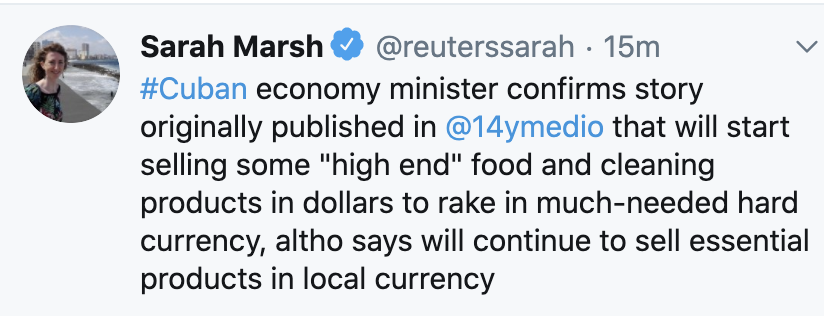
14ymedio bigger14ymedio, Havana, 14 July 2020 — Cuba’s government-owned hard currency stores will now market food and hygiene products, as confirmed by 14ymedio sources from the state corporation Cimex. Most provincial capitals are currently preparing premises to operate in freely convertible currency including the sale of these basic necessities.

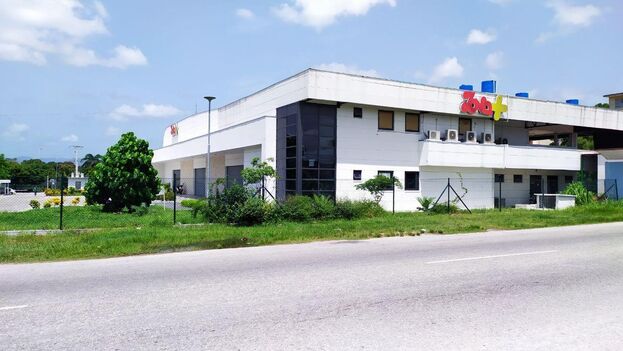
“In the city of Sancti Spíritus the state markets selling in Cuban pesos and hard currency have little on the shelves, there are only bottles of water and rum, but the two largest stores in the city are closed and preparing to open with products for sale in freely convertible currency,” says Maikel, a resident of the city.

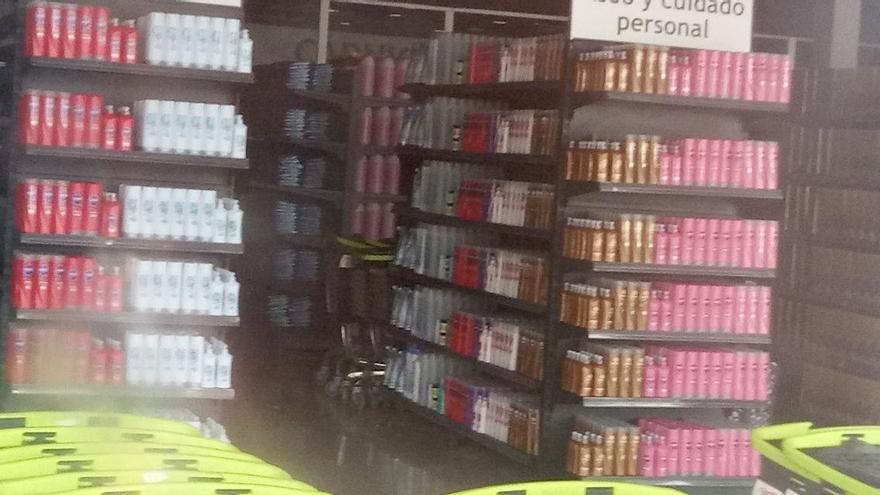
“Through the windows, you can already see the shelves of these well stocked stores filled with toiletries, such as soaps, gels, shampoo and deodorants; there are also foods that have not reached the other stores in a while,” added the native of Espiritu. “People are concerned that now you have to have dollars to buy food.” continue reading

The so-called convertible currency stores began to open late last year in an attempt by the Cuban government to collect income from abroad, given the lack of liquidity in the national economy. In this trade network, cash is not accepted, only magnetic cards issued by state banks.

Initially these premises were tested in Havana with the marketing of high-end appliances such as split air conditioners, flat screen TVs, washing machines, parts for vehicles and electric motorcycles. These options were expanded in February of this year, when cars, PCs, laptops, computer parts and pieces, security systems, electric generators, heaters, cold storage, minibars, range hoods, and lawn mowers were included in the products for sale.

But until now, toiletries and food have not been offered in this network of hard currency stores. “Little by little, new stores will be incorporated and the assortment will be expanded to other products and supplies,” a source from the Cimex Corporation, the state group managed by the military that is in charge of this type of sales, confirmed to this newspaper.

“Anyone who has a bank account, deposits currency or receives it and has their magnetic card will be able to buy in these stores, as they have been up to now. The novelty is that they will now have a broader catalog of merchandise,” adds the Cimex employee.

In Santiago de Cuba, customers also maintain that several stores, in the most central streets of the city, are currently closed for conversion into convertible currency stores as are others that are already operating under that system. “This is how the La Plaza store is right now once it started requiring payment with bank cards,” protests a user on the social network Facebook.

One of the stores that will be set up for sale in foreign currency in the city of Sancti Spíritus. (14ymedio)

The customer published an image of the store with the shelves full of hygiene products that are barely found in the network of markets in national or Cuban convertible pesos. “It is a tremendous lack of respect that we have to risk our health standing in line for hours to buy soap in the Caribe Chain of Stores to pay in chavitos [Cuban convertible pesos] and that this is so easy if you have dollars,” laments Lydia Esther, another Internet user, indignant.

“We are going to open to the public next week with an offer of furniture, toiletries and food, the appliances will be sold in another store also in convertible currency,” confirmed by telephone an employee of the Management of the La Plaza Shopping Center. “We are now in the final preparations to train staff and implement the entire card payment system.”

“At first, there will also be limited quantities that each customer can buy of each product to avoid hoarding,” adds the worker, who confirms that frozen foods, canned foods, and a wide variety of cereals and sauces will be sold.

A practice that has spread among the customers of these stores is the informal “rental” of the card required for payment. This is an informal transaction between individuals which allows consumers who do not have a foreign currency bank account to shop in the store. They pay the owner of the hard currency bank card a percentage of the total amount of the purchase. This informal business could be extended in the coming weeks when the number of stores of this type grows significantly.

In recent months, the network of state stores has gone through moments of great shortages, long lines and rationing of the quantities that each consumer is allowed to buy.

In addition to the use of magnetic cards in US dollars in the state’s network of retail stores in the country and in the importing of merchandise through official entities, the authorities recently allowed non-residents on the Island to open accounts in convertible currency that they can use on the same conditions as those applied to residents.

For decades, the possession of foreign exchange was heavily penalized in Cuba. Until its authorization in 1993, possession of a foreign currency could carry a sentence of up to four years in prison.

_______________

COLLABORATE WITH OUR WORK: The 14ymedio team is committed to practicing serious journalism that reflects Cuba’s reality in all its depth. Thank you for joining us on this long journey. We invite you to continue supporting us by becoming a member of 14ymedio now. Together we can continue transforming journalism in Cuba.
Susely Morfa Continues Her Meteoric Career in the PCC, now in Matanzas

In 2016, Morfa was elected a deputy to the National Assembly of People’s Power and a member of the State Council. (Radio Rebelde)

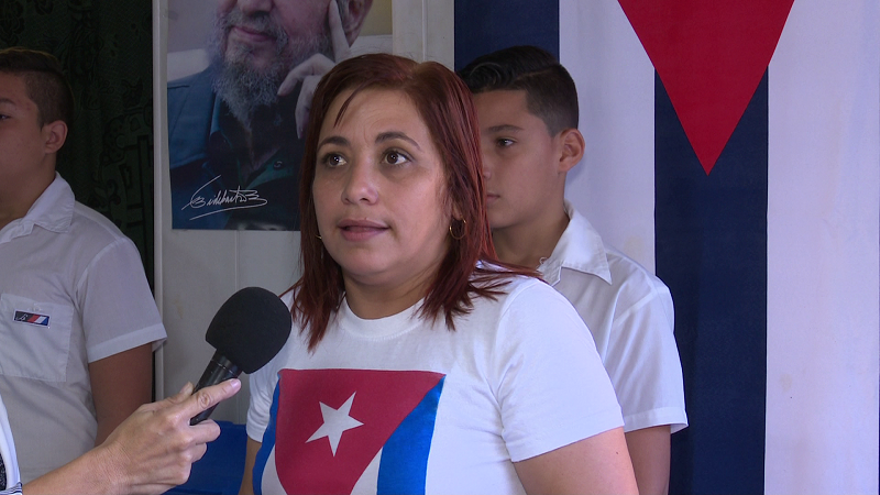
14ymedio bigger14ymedio, Havana, 14 July 2020 — Susely Morfa has climbed a new step in her meteoric career by being appointed to lead the ideological political section of the  Cuban Communist Party (PCC) in the province of Matanzas. After standing out during the acts of repudiation against Cuban activists at the Summit of the Americas, in 2015 in Panama, now the psychologist aims to become a high cadre of the PCC.

Until last May, Morfa, 38, was at the head of the Union of Young Communists, a position in which she was replaced by Diosvany Acosta Abrahante. The note on her departure from the UJC made it clear, according to the official language codes, that she was leaving on good terms to assume “new responsibilities in the Party”.

For an organization like the UJC, in which a part of its leaders have been ousted during their terms, and some of them have even been prosecuted, as is the case of Luis Orlando Domínguez, Morfa’s triumphant departure points to her continuing career in the PCC, where she is already a member of the Central Committee. continue reading

Although Morfa’s new position has not yet been officially announced, the website of the city of Matanzas presented her last June as being in charge of “attending to the political-ideological sphere” of the PCC in that province. The only partisan force allowed in the country is, moreover, enshrined in the Constitution as the “leading force” of the nation.

Susely Morfa González became famous for her combative performance at the Summit of the Americas in Panama in which she starred in several acts of repudiation and labeled as “lackeys, mercenaries, self-financed, underpaid by imperialism” the activists and exiles who participated in a parallel event with civil society.

In that performance, Morfa was questioned by a journalist from a Florida media outlet, who asked her about the resources with which she had paid for her passage and stay in Panama. In the response she gave to the cameras, she asserted that she had paid for her passage to Panama with her salary as a psychologist.

In Cuba, a health professional receives a monthly salary that does not exceed the equivalent of 50 dollars, while a round-trip ticket to Panama costs around 500. To that response the social networks responded with dozens of jokes, memes and criticism in which they called her “the millionaire psychologist”.

In 2016, Morfa was elected a deputy in the National Assembly of People’s Power and a member of the State Council. That same year she was appointed to the head of the UJC, after having held various positions in the youth organization, first in her native municipality of Rodas (Cienfuegos) and later as a provincial leader.

____________

COLLABORATE WITH OUR WORK: The 14ymedio team is committed to practicing serious journalism that reflects Cuba’s reality in all its depth. Thank you for joining us on this long journey. We invite you to continue supporting us by becoming a member of 14ymedio now. Together we can continue transforming journalism in Cuba.
Melia Suffers a Reverse in a Spanish Court Over Its Hotels in Cuba

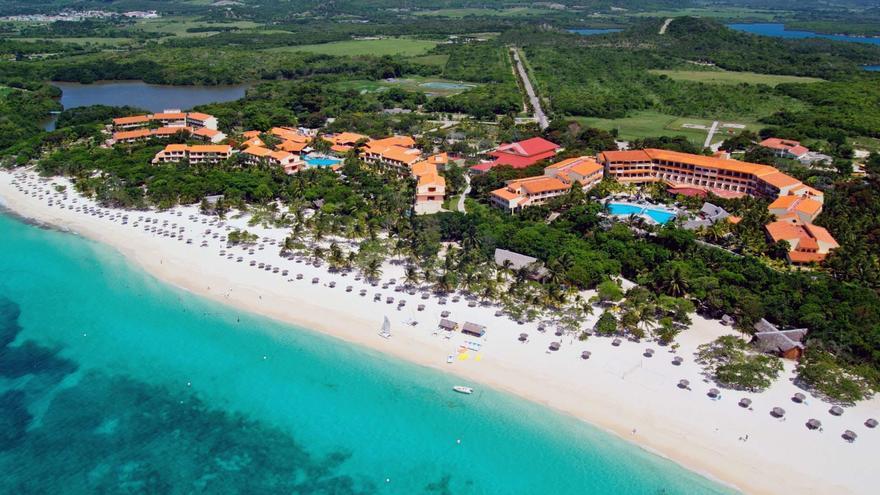
The Hotel Sol Rio y Luna Mares, in Playa Esmeralda, Holguin, is on land that belonged to the Sanchez Hill family before 1959.

14ymedio bigger

14ymedio, Havana, July 10, 2020 – The court of Palma (Baleares),which is in charge of the Sánchez Hill family case against the Melía group over the exploitation in Cuba of two hotels, has rejected three petitions from the company, according to Vozpópuli, which revealed on Friday the contents of the resolution approved on July 6.

Melía, which managed the hotels Paradisus Rio de Oro and Sol Rio y Luna Mares on lands expropriated in Holguín from the family after the 1959 Revolution, alleged that the demand is a covert attempt on the part of the heirs to evade the European rules and apply extraterritorial law in Spain. At the root of the adoption of the Helms-Burton Law in 1996, the European Union preventively created a cutoff statute that annulled the effect of foreign resolutions.

The court rejected this allegation upon considering that this supposed intent isn’t proved. The Sánchez Hills initiated the lawsuit in 2019 under the U.S. law, but the Spanish court dismissed the case for lack of jurisdiction, so the family decided to invoke the crime of illicit enrichment, which can be investigated in Spain. Upon reopening the case for this presumed crime, the court believes that there is no proof of intent to use Helms-Burton. continue reading

Melía’s second petition raised a prejudicial question to the European Union Tribunal of Justice so that it would indicate how to proceed. This type of consult is done by European judges so that the cases raised are adjusted to the communitarian right when there is some doubt. The Palms court thinks it’s not necessary to appeal to Luxembourg and that the case can be resolved with the strict application of applicable Spanish law.

Finally, Melía asked that measures be adopted to maintain the confidentiality of the trial and requested the Sánchez Hill family to sign a non-disclosure agreement, since they think the documentation could be used for a future trial in the United States. The Court considers that there is no reason to adopt measures that are “restrictive and contrary to the principle of publicizing the proceedings in a democratic society”.

Melía told the Spanish newspaper that it is not surprised by the decision and is sure that the court will rule in its favor because “there are elements of facts and rights so the lawsuit will be dismissed in its entirety”.

The Spanish court can’t judge claims for goods confiscated in Cuba, but it can pass judgment on what is raised now as a personal claim of action for compensation from a company headquartered in Spain.

However, the hotel still will enter an appeal before this Saturday. If it does so and is rejected, proceedings could be initiated for the Sánchez Hill family to reclaim 10 million euros.

Translated by Regina Anavy

________________

COLLABORATE WITH OUR WORK: The 14ymedio team is committed to practicing serious journalism that reflects Cuba’s reality in all its depth. Thank you for joining us on this long journey. We invite you to continue supporting us by becoming a member of 14ymedio now. Together we can continue transforming journalism in Cuba.
‘Granma’ Hides the Anniversary of the Sinking of the ’13 de Marzo’ Tugboat

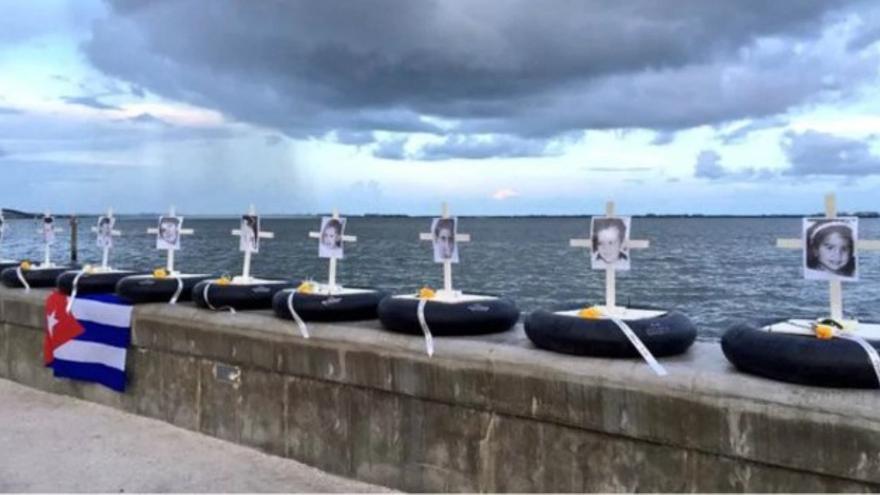
Image of an act of tribute in Miami to the victims of the ’13 de Marzo’ Tugboat. (Twitter)

14ymedio bigger14ymedio, Havana, 13 July 2020 — The official newspaper Granma chose to commemorate the arrival in Cuba of the alleged remains of Ernesto Che Guevara, while it hid the anniversary of the sinking of the ’13 de Marzo” Tugboat, and the anniversary of the shooting of General Arnaldo Ochoa on Monday, both events that occurred on July 13, 1994 and 1989 respectively.

The official organ of the Communist Party, much given to marking historical dates and reminders, has overlooked one of the most fateful events in Cuban history. The sinking of a boat in the summer of 1994, which left 37 people dead, including at least several children between the ages of 6 months and 12 years.

In the early morning of July 13 of that year, 62 people tried to escape from Cuba to the United States aboard the 13 de Marzo tugboat. The ship was intercepted and sunk by three other ships, Polargo 2, Polargo 3, and Polargo 5, according to testimonies collected from survivors. Many of the bodies of the deceased were never retrieved. continue reading

Unlike the drum and the cymbal with which the remains of Guevara were received on the Island in 1997, the sinking of the tugboat was barely reported in the official press and those involved were never tried, despite the fact that witnesses reported that the Polargo rammed the ship and blasted jets of water onto the deck to prevent its exit from Cuban waters.

A day after the sinking, Granma published a note from the Ministry of the Interior in which it was stated that the boat had “capsized” and that only “antisocials” were traveling on it. Shortly after, when the details of what happened were revealed, the official newspaper assured that the Polargos had been involved in a “regrettable collision” during the maneuvers to prevent the theft of the boat.

No one was tried for the sinking of the tugboat and the event was erased from the calendar, public debates and academic research. Something similar to what happened with Case 1 of 1989, for which another July 13, five years earlier, General Arnaldo Ochoa, Colonel Antonio de la Guardia, Captain Jorge Martínez and Major Amado Padrón were shot.

Much of the trial against these officers, for an alleged drug trafficking crime, was broadcast on national television and for many analysts it marked a before and after in the Cuban political process.

The alleged links of the accused with the Colombian cartels, their shady deals with ivories in Africa, and the trafficking activities attributed to them during the oral hearing have for decades been the source of speculation about a possible involvement of the Cuban leadership, especially Fidel Castro, in such maneuvers.

At the Supreme Court, presided over by General Juan Escalona Reguera, then Attorney General of the Republic, capital punishment was requested for four of the accused, a sentence that was supported and ratified by the Council of State a few days later.

For many faithful party militants, the execution of Ochoa catalyzed their break with the Communist Party and their disappointment with the political model. In the international community, numerous voices also rose in rejection of what they called “institutional murder.” But, despite its importance, the official press has not referenced that court case or its implicated parties.

On the other hand, the authenticity of the remains of Ernesto Che Guevara that rest in the Santa Clara Mausoleum has been questioned on several occasions. An extensive investigative report published in the Mexican magazine Letras Libres casts doubt on the finding. “Only a DNA test carried out by totally independent experts will make it possible to verify whether the skeleton attributed to Che really belongs to him,” says the report.

____________________________

COLLABORATE WITH OUR WORK: The 14ymedio team is committed to practicing serious journalism that reflects Cuba’s reality in all its depth. Thank you for joining us on this long journey. We invite you to continue supporting us by becoming a member of 14ymedio now. Together we can continue transforming journalism in Cuba.
Some 40 Cuban Health Workers Have Fled From Qatar In The Last Few Years

The Cuban Hospital of Qatar, inaugurated in 2012, is considered “the jewel in the crown” of the international Cuban medical missions”. (Facebook)

14ymedio bigger14ymedio, Havana, July 12, 2020 — In spite of the vigilance and fear of being discovered in the middle of preparations, some 40 Cuban health workers have escaped from the official mission in Qatar. In order to accomplish this, they had to pretend, lie or disguise themselves, according to an extensive report published on Friday in the Spanish newspaper El Mundo.

The article reports the testimony of three professionals who worked in the modern installations of the Cuban Hospital in Dukhan, 80 kilometers west of Doha. The health workers relate the story of their flight, “worthy of a Cold War spy movie”, says the text, in which the anonymity of those interviewed is preserved in order to avoid possible reprisals.

“I remember I was very afraid of being discovered. I dressed like an Arab. I put on a tunic and a scarf. I had to disguise myself every time I visited the U.S. Embassy in Qatar,” said Yadira, a young nurse who escaped from the official mission and now lives in the United States. continue reading

The Cuban Hospital in Qatar, inaugurated in 2012, is considered “the jewel in the crown of the international Cuban medical missions”, a prosperous business managed by the Company for Cuban Medical Services. Yadira worked for more than two years in the installation and remembers the control over the Cuban staff.

“I’ve always been a rebel, and it’s very difficult for me to follow orders I don’t find logical. Some people accept certain things; others, no. They wouldn’t let me get married. There were many reasons why I didn’t feel free to choose,” she explains. “I had time to prepare my flight; I trained myself mentally and avoided doing anything that could give me away.”

Alexis, another nurse who served in the hospital for more than three years, shares similar experiences. “The pressures start when you arrive. In the airport, before saying hello, they take your passport and make you know that all your movements will be controlled. They make you aware that you are simply a chess piece and that you will be moved as they choose.”

Qatari Government sources insist that the hospital center is a private organization, but the lack of transparency even involves the amount of money that Cuba receives for each professional. “They never told us how much the Corporation was paying for each one of us. Unofficially it was said that they were paying 13,200 euros monthly for each nurse. We were receiving a monthly salary of 1,000 dollars,” comments Alexis.

The location of the hospital, in a zone with very high temperatures the whole year, near the main gas and oil field of Qatar Petroleum, also favors control over the personnel. “It seemed incredible how in the middle of a desert there could have been something so amazing. It had technology that I couldn’t even imagine existed,” admits Rolando, another of the nurses who escaped from the Cuban mission.

The three health workers benefited from the parole program for medical professionals created by the U.S. in 2006, which was in force for more than a decade. “I had to go several times to present documents and tests that showed my identity. And yes, that was very stressful. I had to go disguised to the appointments. If they found out what I wanted to do, they surely would have sent me back to Cuba,” remembers Rolando.

“After some months they advised me that my request had been approved. But as I didn’t have my passport, I had to wait until I could take my vacation in Cuba. Once in Holland, with a visa in hand, I could buy a ticket for Miami,” he says.

The fear of reprisals if the authorities detected their intentions obliged the workers to sharpen their wits. “A short time after arriving at the hospital, the abandonments began. They started by going to Europe and the U.S. The pressure on us grew. We had to attend weekly meetings and listen to constant political harangues. There were people dedicated to controlling us,” says Alexis.

“At the peak of the exits, two or three professionals were deserting every 15 days. Around 40 people left, and there would have been much more if the program hadn’t been abolished in 2017,” commented the nurse, who also had to resort to dissimulation to avoid the possible presence of snitches.

After making contact with the U.S. Consulate in Qatar, Alexis acquired the traditional attire of Qatari men—a thawb, the white tunic, and a ghutra, the scarf—to go to his meetings in the embassy.

“Through a fake email account I made contact with the Embassy. It’s very complicated because the Cuban personnel in Qatar are isolated in the desert, and the Government of Cuba is interested in keeping them there. They have control over your movements, they know when you go out and the hours you do. You have no right to take private transport and can only travel in buses to specific places and at concrete times,” he relates.

“It was hard to make appointments at the Embassy when you supposedly were going somewhere in Doha to buy something and to leave from there disguised as an Arab to go to the Embassy, with the fear that they were photographing you and that someone might see you,” Alexis says.

“I made four visits to the U.S. Embassy, all incognito, with my cell phone turned off and a very high stress level. I used parasols, caps and everything that could keep someone from recognizing me. The Embassy is about 300 meters away from a highway, in a flat space where there’s nothing. You have to cross it and it’s said there are people from Cuban State Security taking photos of everyone who enters and leaves.”

The “deserters”, as the official Cuban propaganda calls them, are punished with being prohibited from entering the Island for a minimum period of eight years, the loss of their professional accreditation and family separation, but even so the escapes continue. “There was a psychological shock. Everyone was speculating, jokingly, about who would be the next to abandon the mission,” says Alexis.

“There were previous cases that didn’t turn out well, and you had to have a plan B and C.  The consul escorted me on the return trip to Cuba. The layover in Holland offered me the opportunity to do what I had to do to escape. It was a hard decision, because since then, I haven’t been able to hug my family,” remembers Yadira.

The coronavirus, with infection rates going up on the Arabian Peninsula, has been converted into a buoyant economic opportunity for the battered economy of the Island. To the 300 professional health workers who recently landed in Kuwait are added almost 200 of the Henry Reeve contingent who were working in a field hospital in the Industrial Zone of Doha.

“We were isolated in a golden cage, and we couldn’t drink alcohol or eat pork, which in Qatar is a right for foreigners who can get a license to buy them. They weren’t letting us do so many things and there wasn’t much we could do,” Alexis concludes bitterly.

Translated by Regina Anavy

_______________

COLLABORATE WITH OUR WORK: The 14ymedio team is committed to practicing serious journalism that reflects Cuba’s reality in all its depth. Thank you for joining us on this long journey. We invite you to continue supporting us by becoming a member of 14ymedio now. Together we can continue transforming journalism in Cuba.

Violating Private Correspondence: Routine At Correos de Cuba

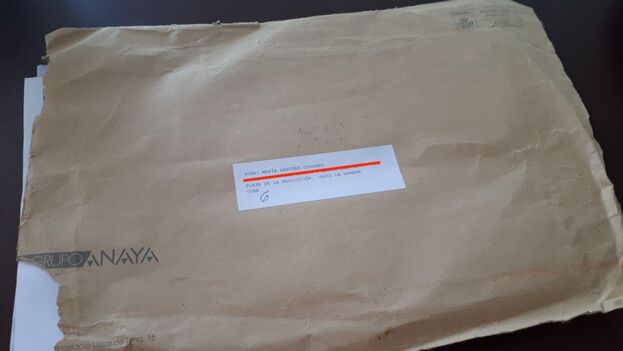
The envelope sent by the Anaya publishing house was opened and reached its recipient this Monday morning. (14ymedio)

14ymedio bigger14ymedio, Yoani Sanchez, Generation Y, Havana, 13 July 2020 — The envelope was placed over our apartment’s mailbox. The postman never rang the bell, no one alerted us that there was a letter to collect, but there it was. My first feeling was surprise, and then relief that, finally, and after months without receiving even a telegram, some correspondence could reach the “cursed” address where I live.

However, the joy was short-lived. The envelope was opened roughly and the papers inside were visibly wrinkled. The letter had traveled from distant Madrid and the sender is the publisher Anaya, with whom I have published several books on the WordPress content manager, but not even the “innocent” letterhead of a publishing house nor the distance traveled by the shipment had deterred someone from violating my correspondence.

It is nothing new. Disrespect for privacy has become the norm of life on this island, where the institutions themselves violate the intimate space of citizens and the State postal service, Correos de Cuba, is one of the many scrutinizing eyes of State Security and the political police. It would be strange if the envelope had reached my hands intact, respected and on time. continue reading

It matters little that the Constitution establishes that “correspondence is inviolable. It can only be seized, opened and examined in the cases provided by law.” We all know and intuit that in this country, the right to privacy is held almost as an immoral and petty-bourgeois act. Those who opened the envelope that should have come to my hands sealed do not accept the intimate space and fear any individual zone that they cannot access.

These are the same people who condemned me during my adolescence to board at a pre-university where dozens of students had to bathe in showers without doors or curtains; those who confiscated school notebooks to read the verses that we scribbled on the last page and those who have fueled the hundreds of thousands of eyes throughout the country dedicated to monitoring every block through the Committees for the Defense of the Revolution.

Today, an opened envelope that arrived at my door suddenly reminded me of all that.

__________________

COLLABORATE WITH OUR WORK: The 14ymedio team is committed to practicing serious journalism that reflects Cuba’s reality in all its depth. Thank you for joining us on this long journey. We invite you to continue supporting us by becoming a member of 14ymedio now. Together we can continue transforming journalism in Cuba.
Independent Journalism: A Risky Profession in Cuba

Jorge Enrique Rodríguez, an independent journalist who writes for Diario de Cuba and the Spanish newspaper ABC. (Radio Televisión Martí)

Iván García, July 6, 2020 – To do objective journalism in Cuba is an abstraction. You cannot obtain data or statistics from official institutions, as there is no public information office. What is normal in any other country in the world – knowing the president’s agenda or itinerary, accrediting yourself at a minister’s press conference, or participating in a given event – is an impossible mission on the Island.

Knowing the budget of the stealthy military business monopoly GAESA, or how much it has invested in the construction of luxury hotels, is considered a state secret. Even information about the remittances that former ‘worms’ [exiles] send to the Island is classified. Cuba is a mixture of police control, failed welfare state, and a scheme of government in the style of the former Soviet Union’s powerful bureau. Is Cuba communist? The facts indicate that Marx’s ideology was adopted to camouflage Fidel Castro’s political and military caudillismo and thirst for power.

The regime’s ideological contortions to survive could fill an anthology. At a certain stage – following the collapse of the USSR – Catholicism, Santería, and other religious currents were authorized to join the membership of the Communist Party, provided they expressed loyalty to the comandante. continue reading

Right now, an authoritarian government exercises the worst state capitalism in Cuba. It combines anachronistic command-and-control institutions with a planned economy, pockets of capitalist market economy, and a military business conglomerate that controls 90 percent of the currency that circulates in the country.

Vis-à-vis the international gallery, the olive-green* autocracy wants to sell itself as reformist and open to dialogue and foreign investment. Internally, the story is different: fear that small family businesses will make a lot of money, high taxes to curb private work, and a pseudo-nationalist discourse intended to bolster the cult of personality of the late Fidel Castro.

Although the welfare state is a drain everywhere, the regime clings to its immobility and proclaims that it is the solution to the pressing problems that Cubans suffer due to the serious economic crisis and alarming shortages of food and housing. In this unproductive system, the official press plays a fundamental role.

There is a whole network designed by the Communist Party to control the media and its journalists. The Department of Revolutionary Orientation (DOR) is the entity that supervises the press and conveys the guidelines of the highest leadership to directors, deputy directors, and chief editors. A scheme copied from the Soviet era and that works according to the top leadership’s linkages and interests.

Opinions and judgments about the international press are classified in terms of friendly, enemy, or neutral countries. Regarding the “friendly” countries – Russia, Iran, North Korea, Nicaragua, Venezuela, China, Vietnam, or Mexico – you will not read or see criticism of their governments and institutions in newspapers and television newscasts. Condemnations of human rights violations, articles highlighting the increase in poverty, police violence, unemployment, or economic crisis, are reserved for “enemy” countries, mainly the United States.

Such is the amount of human resources dedicated to the “Number One Enemy of the Revolution” that whole departments are assigned to the United States. The number of specialists and expert journalists on that nation far exceeds that of academics who should seek solutions to Cuba’s structural malfunction.

There are three national newspapers: Granma, Juventud Rebelde, and Trabajadores. The three compete to see who is the most misinformed. Granma is the organ of the Communist Party of Cuba (PCC), Juventud Rebelde of the Young Communist League (UJC), and Trabajadores of the Workers Central Union of Cuba (CTC). But only one should be published – thereby saving paper – because both the UJC and the CTC fall under the umbrella of the PCC. Pure libels.

The fifteen Cuban provinces and the special municipality, Isla de la Juventud, have their newspapers, which are more of the same. Dozens of national, provincial, and municipal radio stations, ten national and several regional television channels, are in operation. Magazines are published that vary only in name but hardly in content.

The study of journalism in Cuba is an ideological field, controlled by the Communist Party. The most irreverent journalists who have their own opinions are left without jobs. A Cuban official journalist is a type of scribe. S/he cannot write about a topic of choice, and the censor’s red pen can mutilate paragraphs

In the late 1980s, an attempt was made to populate this information desert by various journalists who came from the official press, such as Indamiro Restano, Rolando Cartaya, Tania Díaz Castro, and Rafael Solano. Solano was awarded the 1988 Rey de España prize in journalism for his articles focused on political issues. In the mid-1990s, independent press agencies emerged, among them Cuba Press, the most professional of all, directed by Raúl Rivero, and which began covering social issues, publishing stories about prostitution, drug use, illicit gambling, and other problems of national life that did not appear in the state press.

The testimonies of those who had no voice expanded the journalistic tuning fork and relegated political hack writing to the background. In addition, it was more cost-effective to tell stories of jineteras, drug addicts, beggars, and families residing in houses in danger of collapsing, since no authorization was needed to conduct the interviews, only the consent of the interviewees. But, it was still difficult to find other points of view, the necessary journalistic balance, because state officials almost never offered their impressions to an independent communicator.

With the passage of time, things changed. Visibility on the internet and international recognition of the independent press has been of great help. Journalists without muzzles began to publish pieces in newspapers of wide circulation such as El Mundo, El País, El Nuevo Herald, Diario Las Américas, The New York Times… Recently, Abraham Jiménez was appointed as a columnist at  The Washington Post.

What is the most difficult thing about doing quality journalism in Cuba? From my point of view, it is having good sources. This is done with trust and respect for diverse political opinions. Many citizens, including middle-ranking state officials, take advantage of their friendly relationships with a freelance journalist to uncover corruption cases or provide classified data and statistics. Since Cuba functions as a police state, we free journalists must take care of and protect our sources.

My advice to novice journalists seems more like a manual for spies. Among my tips: Have phone cards that are not in the name of the journalist or any close family member. When aiming to cover a high-risk event – such as the June 30 call for a peaceful demonstration to protest the murder of young Hansel Ernesto González Galiano by a policeman and against police violence in Cuba – one of the first measures that State Security takes is to cut the phone lines and disable internet data traffic.

So that we are not left without means of communication, the thing to do is to have more than one blank SIM card that would allow one to communicate with sources. Always use secure channels – not SMS, phone calls, or email. So that our plans do not leak, it is essential to be discreet, walk alone, and not talk about your plans in front of a group of people. The political police have infiltrated much of the dissident movement and of independent journalism.

To demonstrate that it is not a bloody dictatorship, Castroism boasts that a journalist has never been murdered in Cuba. This is true. It is also unnecessary. They use other methods. They murder your reputation, they try to demean you socially. They resort to disqualifications and insults, calling you ‘traitor’ and ‘mercenary’. Or they prevent you from leaving the country. This harassment has taken its toll on young and brilliant journalists and that is why they decided to emigrate.

Others, such as Camila Acosta, Mónica Baró, Abraham Jiménez or Jorge Enrique Rodríguez, have been subjected to intensified harassment.  In Rodríguez’s case, he was arrested on Sunday, June 28, on a charge of “contempt of authority,” and the authorities told him that they were going to put him on trial on Wednesday, July 8. Following a large gathering mobilized inside and outside the Island, he was released on Friday, July 3. The next day he had to report to a police unit, where he was fined 800 pesos, to be paid within ten days.

As the economic crisis worsened and with the arrival of the Covid-19 pandemic, State Security redoubled the repression, increasing brief arrests against independent journalists, as well as seizures of work equipment. Until June 16, 28 journalists had been charged under the absurd Decree 370 (or, the “Scourge Law”) and fined 3,000 pesos, eight times the minimum wage. Since September 2019, the lawyer and journalist Roberto Quiñones, 63, has remained behind bars, accused of “disobedience” and “resistance”.

It is increasingly difficult to do serious, objective, and balanced journalism in Cuba. But not impossible. Something does get done.

 *Translator’s note: A reference to the color of the combat fatigues worn for years by Cuba’s top echelon of leaders.

Translated By: Alicia Barraqué Ellison


A New Call For Possible Dialogue In Order To Overcome The Crisis

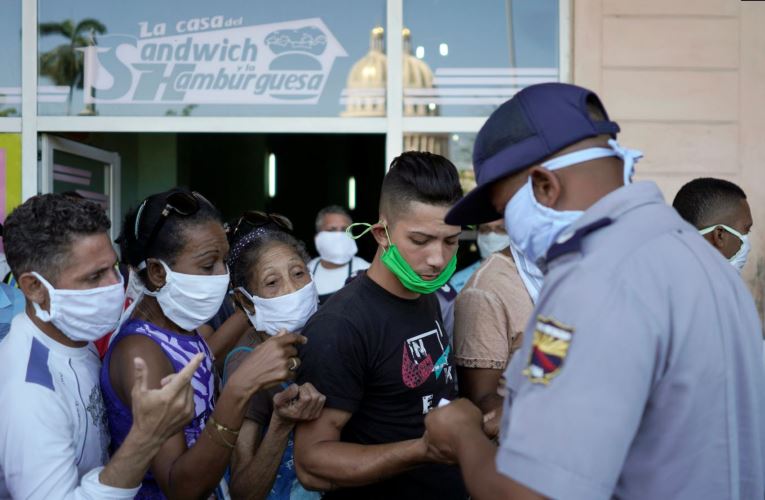
Masked police agent controls line to buy food in Havana (File photo)

14ymedio bigger14ymedio, Elías Amor Bravo, Economist, July 8, 2020 — The virulence of the economic crisis that is battering Cuba, as a consequence of containment measures for the Covid-19 pandemic, is becoming more serious and profound than expected. Spaces for dialogue are opening up because of the surge in outbreaks, which create uncertainty about the future.

The data and information trickle in drop-by-drop for the authorities to confirm. And if it’s true that no data exist on the economic situation, some that are known, like the statistics on travelers, are frightening. In May, only 993 visitors arrived, which represents a decrease of 99.7% compared to the same month last year. Tourism has disappeared from the Island, and possibilities for recovery are scarce.

Certainly it won’t happen in 2020. The authorities will go back to their sales pitch to explain the failure, but they won’t have far to go. The forecast for economic development in Cuba has to be revised downward and thus assumes that the economy can collapse, given the great importance of the State in all economic activity. continue reading

There is nothing now that allows anyone to have any real confidence in the future of the economy. Our estimate of the drop in the economy’s GDP was initially situated around -6.2% when CEPAL* showed only -3.8%. The data and information that come from the Island require caution and point to a particularly important decline, probably in the neighborhood of -10%, almost three points lower than the initial estimate. This puts Cuba among the countries that could be the most affected by the crisis in Latin America, although it won’t be the only one.

The fact that we’ve revised our initial prediction downward shows the lack of confidence and credibility in the authorities to surmount the present crisis. It’s difficult for any country to try to confront such a situation on its own, so this whole experience is going to be harder and more complex than was believed.

In reality, there isn’t any analyst who thinks that a true recovery of the Cuban economy will happen in the last two quarters of the year, so 2020 will be remembered as a time when the Cuban economy came close to collapse, because of the intensity and unexpected origin of the crisis.

The updated forecast contemplates a complex international scenario for tourism, with risk factors of difficult control from the Cuban perspective, which will have a potential negative effect on recovery. This downward trend of tourism will coincide with lower remittances, a low level of foreign investment and fewer exports of minerals and tobacco.

As a consequence, hard currency will be scarce, and that will put the brakes on imports. In addition, on the internal front, the agricultural sector won’t be capable of producing sufficient food for the whole population. The authorities know this, and the building industry isn’t going to bail out the economy because the State’s budget has committed resources to current expenses, which will have limited impact in terms of growth.

In sum, these factors, together with inattention to the self-employed, abandoned to chance by the Government, depend on the political goodwill of the leaders and their ability to promote measures that really serve to bring the economy out of the hole it’s in. Perhaps if, instead of making individual decisions based on communist orthodoxy, all sectors of the economy, State and private, came to the table for a dialogue, the Regime leaders would realize the enormous importance and the social support they would have; for example, if they approved a special fund to help the economy recover.

Decisions of this type could serve to establish the basis of an economy centered on a common goal, incorporating an integral plan of reforms and support for the private entrepreneurial fabric. At the same time, resources could be generated for the social protection of the least-favored groups because of the crisis.

The authorities of the Cuban Regime still haven’t accepted that they have a long and difficult process of recovery ahead of them, a great challenge in the coming months, which will demand far-reaching measures that, alone, might not give them the results they need. The moment for dialogue and consensus has arrived.

Unilateral Communist decision-making must end. If they want to light the way to the first fruits of recovery, they have to participate in all the plans for aid proposals, and they must have the funds and tools available to transform the economy. Díaz-Canel’s government must understand that the survival of the Cuban economy depends on being able to confront the task of economic reconstruction by collaborating with all State and non-State economic agents, and by promoting  a climate of political and social dialogue on new foundations, which will help Cuba return, as soon as possible, to a sense of sustainability and fiscal consolidation.

The challenge in the next few months is to support a progressive return to growth and consolidate the first fruits of the recovery. Without dialogue, it will be impossible.

*The United National Economic Commission for Latin America and the Caribbean

Translated by Regina Anavy

______________

COLLABORATE WITH OUR WORK: The 14ymedio team is committed to practicing serious journalism that reflects Cuba’s reality in all its depth. Thank you for joining us on this long journey. We invite you to continue supporting us by becoming a member of 14ymedio now. Together we can continue transforming journalism in Cuba.

Blackouts and Covid Outbreaks Appear in Havana

The authorities will control the perimeter affected in Lawton from 8:00 pm as well as the seven bus stops on routes 1 and 23 so no one can get off. (Amy Goodman/Flickr)

14ymedio bigger

14ymedio, Havana, July 9, 2020 — The epidemiological situation is complicated in Havana, and the light at the end of the tunnel never arrives. This couldn’t be better said. On Wednesday, while part of the capital was living in a blackout that lasted for nine hours, the authorities, in their daily meeting about supervising the pandemic, were claiming that the “consumption of electricity” is stable.

It was only one of many good-news articles that they wanted to send through the official press. There’s chicken, “there’s no problem with the supply of flour,” the bank branches in the whole country are working and Guantánamo and Santiago de Cuba are keeping a lid on Covid-19.

Transport is also in a favorable situation, and even the sale of tickets is beginning on Thursday in the province of Matanzas, which has entered into phase two, for travel beginning on Tuesday, according to Eduardo Rodríguez Dávila, the Minister of Transport. continue reading

Everything is going well, according to the Government. Less so in Havana, of course, where there hasn’t been electricity, transport doesn’t function (the First Minister said he received complaints of overcrowding, and the President requested staggering work hours to avoid crowds), and the pandemic hasn’t abated.

On Tuesday, they activated isolation measures for four blocks of Pilar-Atarés, in the municipality of Cerro, yesterday they announced the closure of a quadrant of Lawton, in Diez de Octubre, and the strengthening of monitoring measures in Arroyo Naranjo. Without forgetting that a focus point in Centro Habana is still active.

Some 7,000 people were affected by the isolation in Lawton, where they detected four cases of coronavirus in the last few days, covering the perimeter between Fonts, Aguilera and Calle 13 to the west; Calle D in the south, Porvenir to the west, and Calle 14 y Juanelo to the east. The area is divided, in turn, into two zones: one for the population that lives in one of them, which includes 10 blocks, where PCR (polymerase chain reaction) tests were given; while for the remaining group, 16 blocks long, they will do rapid testing.

Among the measures that the residents have to live with, in addition to tests and monitoring, is the use inside and outside their homes of masks, which is difficult to supervise; although, according to the official press, severe actions will be taken if citizens violate the provisions.

In addition, hawking remains prohibited, as does the increased sale of chlorine, hypochlorite and disinfectants, and the homeless population will be attended to. The authorities also have said that they will distribute food and water to homes of the vulnerable population and will organize commercial activity to minimize the usual tumult associated with buying.

The authorities will control the perimeter from 8:00 pm, as well as the seven bus stops on routes 1 and 23, so that no one will get off.

Until the results of the tests are released, no one can leave the zone, insisted Luis Antonio Torres Iríbar, President of the Consejo de Defensa Popular (Popular Defense Council). He urged that food be guaranteed for the residents and asked for “conscience and discipline.”

The situation in Arroyo Naranjo is different. There have barely been two cases of Covid-19 in 15 days, with known sources of contagion and contacts, who tested negative. However, its proximity to the province of Mayabeque, where there have been cases, has been the motivation for taking measures.

In this sense, the norms are more general: maintaining distance, using a mask, washing hands, disinfecting homes and other areas with a solution of water and alcohol.

Also, more medical attention has been requested, and supervision for taking temperatures and testing the population, beginning with work centers. Supplies of food and articles of hygiene are equally needed.

“You have to remember that these places are on the front line of Covid, not in the first phase of recuperation, and, thus, they must comply with all the measures,” said Torres Iríbar in reference to the affected zones in the capital, like Centro Havana, San Miguel del Padrón, Cotorro and Cerro. In Cerro, the most recent, confirmed cases now reach 20, although El Cotorro continues to be the municipality with the highest rate of incidence.

Yanet Hernández Pérez, the Vice Governor of Havana, claims that the province fulfills the five criteria noted for being in the first phase of recuperation: the rate of incidence, the reproductive index, the number of active cases, the positives whose source of infection is known in the last 15 days and number of events open to the public.

Translated by Regina Anavy

_________________

COLLABORATE WITH OUR WORK: The 14ymedio team is committed to practicing serious journalism that reflects Cuba’s reality in all its depth. Thank you for joining us on this long journey. We invite you to continue supporting us by becoming a member of 14ymedio now. Together we can continue transforming journalism in Cuba.
‘Scientific’ Meetings Don’t Put Food on Cuban Tables

Current Cuban president Miguel Díaz Canel, when he was vice-president, with then General-President Raul Castro. (Archive)

14ymedio biggerElías Amor Bravo, Economist, 11 July 2020 — A brief note in the state-owned newspaper Granma, reports on a meeting between Cuban president Díaz-Canel and scientists and experts from prestigious Cuban institutions, held to discuss issues of food and nutritional sovereignty. The article offers an analysis of the problem that has always affected the Cuban economy, exacerbated as a consequence of COVID19, and all of this, says Granma, “from an integral point of view, where all the links with regards to food and nutrition are considered.” Pure propaganda.

On this occasion, experts from the Soil Institute addressed the analysis of the needs of Cuban agriculture, from the perspective of fertilizers and pesticides. Nothing new. These are intermediate products that have to be imported because they are not produced on the Island, but which, in the absence of foreign exchange cannot be imported, thus limiting the objective of producing more. As usual. A problem caused by the poor development of an economy subsidized and led by the state for too many years, with criteria that are not the most appropriate. While these issues are addressed, valuable time to take action is lost.

But no. It does not seem that this is the objective of these type of meetings with scientists, but that there is a certain disposition in the official propaganda to follow a script already written in the “scientific” article that Díaz-Canel published some time ago. The matter goes a long way, without a doubt. continue reading

And from this “scientific” perspective that Díaz-Canel wants to use to analyze the problems that affect his government, it was said at the meeting that the traditional unproductiveness of Cuban agriculture to generate food for the entire population must be “addressed taking into account other processes that also intervene, such as the introduction of scientific results, problems in marketing and distribution, affordable consumption, nutrition, good habits and, ultimately, the role of food and nutrition in the health of our people.”

Believe it. Said and done. Not a single reference to the crucial issue that grips the Cuban countryside and prevents it from being prosperous: the legal framework of property rights, the land tenure regime, in short, allowing Cuban farmers to truly be the owners of the production factor and to freely decide what they want to do, without interference from the communist state.

This question, essential for sufficient food to be produced, was not raised at Díaz-Canel’s “scientific” working meeting, and I am very much afraid that it is beyond any consideration under official communist doctrine. In fact, at the first “scientific” meeting, similar issues such as “the design of policies and legal norms for agricultural extension and also for bioproducts” were discussed, but nobody raised the need to return the ownership of the land to those who work it and produce Strange as it may seem, there is not a single jurist in Cuba who publicly defends this need, which the longer it goes on, makes it increasingly difficult to avoid the imminent collapse.

In the same issue of Granma, there is a report of a visit to the provinces of Artemisa and Mayabeque by Machado Ventura (age 89 and serving as second secretary of the Cuban Communist Party). At the time of the visit, recent rains had had a negative impact on the supply of food products to the capital. The problems of Cuban agriculture come from yesteryear, and they no longer respond to the proclamations and messages of leaders such as Valdés Mesa (age 75, Politburo member), Marrero (age 57, prime minister), Machado or himself. All these messages fall on deaf ears and lose their validity because numerous problems accumulate in the countryside that have to do, essentially, with the legal framework of property rights.

The Raulista reforms — implemented under former president Raul Castro — based on the delivery of land under lease, have not served to increase production, because the farmer legitimately aspires to be the owner of his land, and not a mere tenant of the state. We must review the model, and stop talking about nonsense, such as bioproducts, local food production in pots in the cities, the cultivation of pineapple by the local CDRs (Committees for the Defense of the Revolution) and other nonsense that we have heard from leaders of the communist regime.

The issue is that in 2020 there is no pork, nor rice, fruit trees are scarce and vegetables even more so, while state security represses and denounces the road workers for doing their work serving the population, and the markets are empty because nobody moves the products from the fields to the city. That Díaz-Canel tells me that this whole and very real problem has to do with scientific research, undoubtedly of quality, that is carried out in the country. Nada.

If the Cuban leader really wants to undertake the production of food he needs to meet with the independent agrarian producers, who have already created associations to defend their interests outside the communist government. He needs to listen to what they are going to tell him, and he needs to willingly accept their advice, and if he sees fit, he needs to arrange for the adoption of some of their proposals, and things will go much better.

This, and no other, is the dialogue that is urgent in Cuba, and as soon as possible, to avoid the food crisis announced by the United Nations World Food Program.

By meeting with independent producers, he will get first-hand information about what is happening in the Cuban countryside, and not the distorted advice that comes from Machado Ventura or Valdés Mesa.

The Cuban guajiro knows what has to be done to produce more and is aware that, if the accounts don’t balance, it is the fault of the government, which subjects him to ideological obedience, aggressive taxation and local communist control, to prevent him from prospering. The food crisis is not only due to a problem of importing fertilizers and pesticides for the soil, but there is much more, and that even though scientific contributions can help, there are many other things that need to happen to solve the problem of producing enough food for everyone.

________________

COLLABORATE WITH OUR WORK: The 14ymedio team is committed to practicing serious journalism that reflects Cuba’s reality in all its depth. Thank you for joining us on this long journey. We invite you to continue supporting us by becoming a member of 14ymedio now. Together we can continue transforming journalism in Cuba.
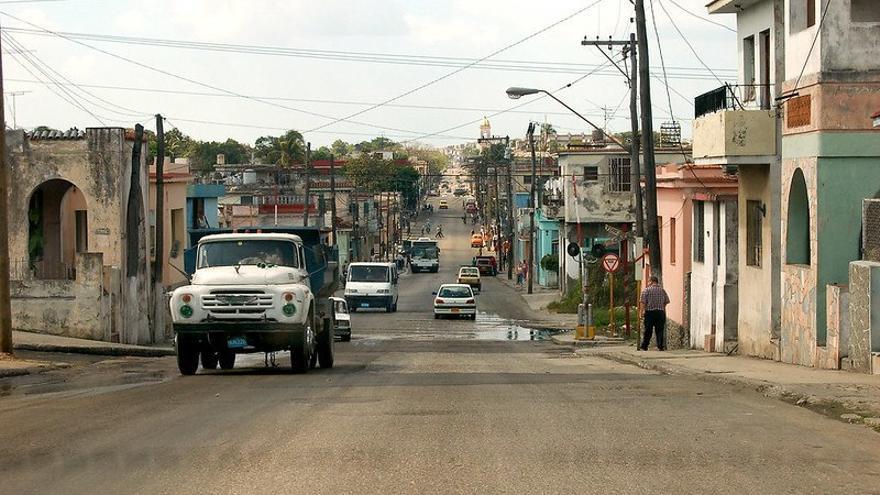
Farmers Must Provide Food to the Ration Stores

The authorities are calling on the campesinos to plant every meter of land available. (Flickr/tTnman6)

14ymedio bigger

14ymedio, Havana, July 9, 2020 —  Beginning now, the campesinos (farmers) who are members of farming cooperatives will be responsible for supplying the bodegas (ration stores) in their region. According to what several of them told 14ymedio in the province of Pinar del Rio, the farmers must take 30 pounds of food for each consumer to the nearby bodegas.

An employee of the administration of the Hermanos Saíz cooperative in Pinar del Rio confirmed the implementation of this measure, which would apply to the whole national territory. “These are times of sharing the little that we have and for the community to involve itself more,” he clarified to this newspaper. “We are reuniting with the campesinos and explaining the difficulties of the moment to them, and up to now, all have committed themselves to supplying the bodegas”.

“Yesterday we had a meeting with the First Secretary of the Communist Party of the cooperative, and he told us that we have to supply part of the food to the bodegas near our fields,” Roberto, a farmer and proprietor of a farm in San Juan y Martínez (Pinar del Río) told us. continue reading

He warns that “If there isn’t food in our town, it’s the fault of the 15 or 20 campesinos with farms who live nearby.” The measure was announced to the farmers on the tour that José Ramón Machado Ventura, the Second Secretary of the Communist Party (PCC), is making across the Island.

Machado Ventura got together with the First Secretaries of the PCC in each province and also with municipal Party authorities to communicate the decisions taken in the face of the supply crisis that is happening in the country. “He’s giving a policy talk, mentioning the international situation and Donald Trump, and he calls for planting everything that can be planted,” comments Roberto.

“But there’s no fuel, no supplies, no fertilizer, and the Government doesn’t contribute anything,” he complains. In the meeting held this week in the cooperatives of San Juan y Martínez, they were told that “if the campesino achieves a harvest, 80% will go to the State and 20% to him,” because “they have to guarantee food for the people and avoid imports.”

Roberto, who owns his land and has been a member of a cooperative for two decades, explains that if he manages to harvest 1,000 ears of corn, he must give 800 to the State so they can distribute it “with very low prices, because they pay .80 Cuban pesos (~3¢ US) for each ear, although it’s the highest quality, and in the street we can sell it for 2 or 3 Cuban pesos (8 to 12 cents US).”

“This is feudalism,” concludes this campesino. He graduated in agricultural engineering and belongs to a long line of producers of meat, fruit and grain. “They are counting the number of people on each farm in order to calculate how much food for self-consumption can stay with the farmer, but they’re acting like they’re doing us a favor to leave something.”

The Ministry of Agriculture has distributed a list for each Cooperative of Credits and Services (CSS) and Cooperative of Agricultural Production (CPA) with the number of users inscribed in the closest bodega. “Now the 30 pounds per capita is the responsibility of the campesinos who form part of these cooperatives.”

“Inside every cooperative they have assigned quantities for each farmer, who is required very month to bring to the store meat, vegetables and fruit, but it’s expected that soon this will also include rice and beans,” says the campesino. “For example,I have to supply 12 families, and I don’t know how I’m going to do that.”

The residents in the zone who aren’t farmers but buy in the rationed market fear that this is the preamble to eliminating the quota of rice, mainly imported, which is sold through this system. “Here people sense that the next thing is that the State won’t send anything more to the ration stores.”

“I don’t know, what’s the Government going to do? If they’re saying that everyone who has a yard has to grow pumpkins and pineapple, and now they tell us that we are the ones who are going to supply the bodegas, then what are they going to take care of?” he questions.

Carlos Manuel, a neighbor in the same location, has a lot of doubts. “Now they’ve created a system of paying by invoice for this method; if I have two bunches of bananas, I have to go to the bodega to deliver them, and they give me an invoice to collect in the bank, in less than 72 hours they say, but no one believes them because they’ve owed us money from the harvest for several months now that they haven’t paid.”

Cuban farmers have been hit hard by lack of inputs, fuel shortages and drought. (Flickr / Kuhnmi)

“If there’s a moment of overproduction, which is unlikely because the drought is affecting us a lot this year plus there’s almost no fuel, then we can be left with the extra if the State isn’t interested,” he adds. “The only thing that’s going to happen is to take away more enthusiasm from the farmers, who are already very upset with everything that’s happening.”

“Every year they try to get us to commit to something, and eventually tons of forms are filled out, but the food exists only in the reports and formal commitments that no one fulfills, and it isn’t achieved or guaranteed,” says Carlos Manuel with skepticism. “We farmers here are waiting for the waters of failure to calm, but for now we have to bring something to the bodega in order to comply and not be singled out.”

For years there has been speculation about the end of rationing in Cuba, a system of distribution created in 1963. The officials have repeated on several occasions that it’s preferable “to subsidize people and not products”, but the rationed quota still is given to every citizen equally, even to those who have a level of income that is higher than the average.

Rice, grains, oil, sugar, salt, eggs, chicken and bread are some of the foodstuffs that are still subsidized, while other goods have been removed from the ration book, among them liquid detergent, bath and laundry soap, toothpaste, beef and cigarettes.

With the arrival of the pandemic in Cuba, some products, like sausage or frozen chicken, which before were sold in the free market, have returned to the ration book.

Translated by Regina Anavy

________________

COLLABORATE WITH OUR WORK: The 14ymedio team is committed to practicing serious journalism that reflects Cuba’s reality in all its depth. Thank you for joining us on this long journey. We invite you to continue supporting us by becoming a member of 14ymedio now. Together we can continue transforming journalism in Cuba.

Spelling is Indeed Important on Cuba’s Black Market

Last year, an image went viral in which a teacher greeted the beginning of the course with a ’Benbenidos’ [Correct spelling: Bienvenidos] on the board. (@ SofiaJimnezMar1 / Twitter)
14ymedio bigger14ymedio, Marcelo Hernández, Havana, 8 July 2020 — “What is the mattress size and what quality?” It was the message that Ángel Guzmán received through WhatsApp a few hours after posting an ad on an online classifieds site. The fact that the client wrote in this way “so correct, with the accents and everything” prompted him to take the merchandise to his home even though he’d never seen his face.

“People who write me with mistakes do not look good to me and I cannot risk moving a product from one municipality to another and meet someone who’s not serious who rejects the mattress or does not want to pay me,” the sharp merchant tells 14ymedio. “Someone who writes me calling me puro, bro, asere or tío, I don’t even answer them. I don’t do business with people who write like that.”

Nothing in his education seemed to destine him to have that level of demand in the use of the language. From working-class parents, as a teenager, most of his Spanish classes in elementary school were taken through the so-called teleclasses. “No one was watching the television and the ‘emerging teacher‘ we had wrote with a lot of misspellings on the board.” He admits that he has not read much either and that in his house “there is not a single book.” continue reading

The most important language lesson of his life was learned when he lost a big transaction. “A woman contacted me through Telegram and told me that she was interested in a complete bedroom set: bed, mattress, display cabinet, chest of drawers and bedside tables. It totaled were more than 2,500 convertible pesos,” says this 25-year-old man from Havana.

It took Guzmán three days to organize the order with the help of carpenters dedicated to the private production of furniture. “I rented the truck and prepared everything, but I did not notice that all the messages that woman sent me were very poorly written. I hardly understood anything and that should have warned me she wasn’t a person capable of closing on an order like that.”

The suspicion materialized. The day he arrived in front of the customer’s door with all the furniture on the truck, she told him that she had changed her mind. “She treated me very badly, in a very rude way, even the husband threatened to call the police if I didn’t take back the entire order. They didn’t even look at the bedroom set, they just changed their minds or maybe they never had all the money. I stayed and they hosted me,” he regrets.

In 2009, the Ministry of Higher Education, alarmed by the evident deterioration of written expression in Cuba, decided to take measures to prevent future professionals from leaving the universities with serious misspellings. A national diagnosis made in the middle of the same year brought to light alarming problems with accents, punctuation and verbal conjugations.

But little has changed in a decade. Errors in writing and speaking are frequent in the national media. Recently, a presenter on the television newscast called Juan Guaidó “the intrauterine president of Venezuela” instead of using the correct word: “interim.” The headlines of the main news programs are riddled with a lack of accents, changed letters and incorrect uses of certain words.

Nely runs a thriving home delivery business that has grown significantly with the pandemic. Through instant messaging services, she offers her products, closes deals with customers and plans delivery. “They once wrote to me asking if I had chickpeas but the word was written in a way that I didn’t understand what they wanted.”

Nely admits to turning on the automatic spellchecker and asking someone close to her whenever she has a question about how to spell a word. “My business is to convince clients without having to call them, because that consumes more data and can be more dangerous, so I have to write well without excessive familiarity or mistakes.”

The popular greetings used on the street — “¿Qué bolá?” (What’s up) or “¿Cómo está la cosa?” (How’re things) — are not appreciated either. “It’s one thing in a Telegram group where people are sharing information on merchandise and prices, but it’s another thing when you’re putting in an order with a seller. Then you have to seem serious and respectful, and if you don’t see it that way, I say I don’t have any of the product left and that’s it.”

“Vusco toayas de taya grande,” [‘I’m looking for large towels’ – with 3 of 5 words misspelled], reads a merchant on her mobile phone. She imports furnishing, appliances and household goods from Panama. “I never bragged about having good spelling, because I didn’t even finish the 9th grade, but I have to ask my son to help me understand what they are trying to say in that message.”

“My son who is studying at the university told me: Mami, you don’t have to wait for Cervantes* to sell something, but be careful with those people who write with their feet,” acknowledges the informal vendor.

For “At Your Service,” a small private business that was born with the restrictions of the pandemic to bring products to the homes during the confinement, it is very clear. “The person who communicates via WhatsApp and takes the orders is a graduate in philosophy and has very good spelling, the rest of us are only dedicated to transporting orders.”

“When someone writes to us, they can be sure that we will say ‘good morning’, we will be kind and we will write without mistakes. With that we already have half the business done,” he says.

At “Your Space,” another food delivery business, they have also chosen to shore up their written communication. “Before, I worked in a restaurant and when we wanted to hire waiters, I was looking for young people with good looks, mainly beautiful people with a nice smile,” says Jorge Ángel Chang, the manager of the initiative.

“Now, when I had to look for the two people to manage our WhatsApp account, and Telegram and the messages on Facebook, I only paid attention to whether — if they were women — they had short nails, because typing with long nails is very problematic, whether they knew how to write well and treat customers with kindness, and of course, they had to have excellent spelling because that is ‘our face’’ today. In the end, I have a retired teacher and an editor working from home.”

*Translator’s note: Miguel Cervantes (b. 1547) is a Shakespeare-like figure with regards to his use of and influence on the Spanish language. See here.

________________

COLLABORATE WITH OUR WORK: The 14ymedio team is committed to practicing serious journalism that reflects Cuba’s reality in all its depth. Thank you for joining us on this long journey. We invite you to continue supporting us by becoming a member of 14ymedio now. Together we can continue transforming journalism in Cuba.