
Ruiz Urquiola Proposes a Campaign for the Return of Cuban Exiles to Besiege the Government

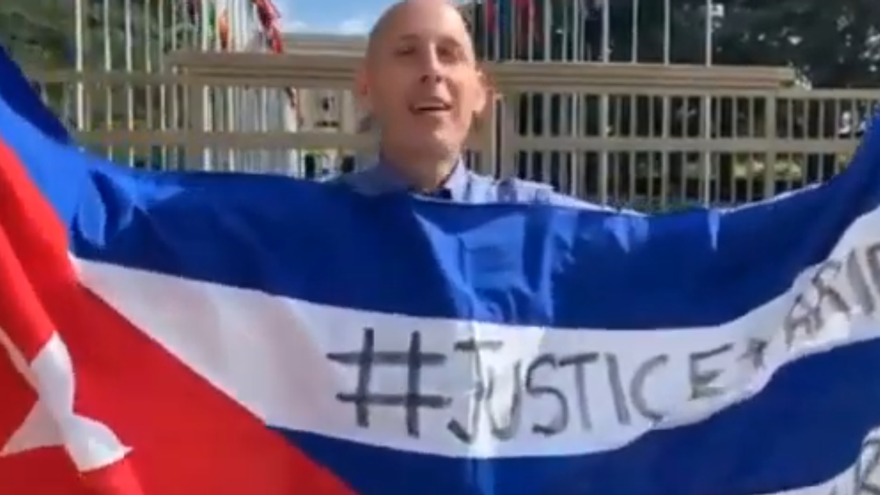
Ariel Ruiz Urquiola at the entrance to the United Nations headquarters in Geneva.

14ymedio bigger14ymedio, Havana, 2 July 2020 —  Ariel Ruiz Urquiola today proposed to Cuban exiles that they return to the Island all at the same time to limit the Government’s ability to react. The biologist and activist, who has called his proposal Operation Return, has spoken in Geneva from the esplanade in front of the United Nations headquarters where his intervention, scheduled for the plenary session this Thursday, has been postponed until tomorrow.

“Long live free Cuba,” Ruiz Urquiola has demanded, dressed in a shirt and tie and holding a flag of the Island on which Justice4Ariel and No+ [More] Dictatorship could be read. “They may imprison some people, but if all Cubans living outside of Cuba unite, they cannot imprison us all, they cannot kill us all. I think that would be an unprecedented way of peacefully destroying a dictatorial regime which has been in power for six decades,” he said in his plea.

At the end of the morning session in Geneva, with Ruiz Urquiola not yet having spoken, many of his followers expressed their concern, but the activist has clarified that his presentation was postponed, presumably, without the time limit that he was going to have today. The activist, who smiled as he presented his accreditation and explained in detail the good attention he received, has taken the opportunity to reject the today’s presentation by the Cuban delegation in regards to human trafficking. The biologist recalled that medical brigades are comparable to this type of crime. continue reading

Subsequently, the activist has once again asked Cubans living outside the island to participate in Operation Return, an idea that had been previously raised by other exiles. “It is up to us to remove them, put them out with peaceful and civic activities. They cannot control us any more. Freedom or liberation,” he cried. “They will be able to crush one ant but they cannot crush all the ants, we are three million and we cannot live like rats.”

A week ago, UN Watch assured the activist that he could use his speaking time before the United Nations Human Rights Council after Ruiz Urquiola protested at the office of the High Commissioner, Michelle Bachelet, to whom wanted to deliver a letter asking to present his case “without intermediaries in plenary, as a victim of a crime against humanity, of torture, by the Cuban dictatorship.”

In the letter, the activist stressed that Cuba has been a member of the UN Human Rights Council since 2006 and that, although it has signed international covenants on Civil and Political Rights, as well as Economic, Social and Cultural Rights in 2008, these have not been still ratified by Havana.

Furthermore, he recalled that, in May 2018, the working group on Arbitrary Detention supported his complaint when he was detained for a year and that Amnesty International recognized him as a prisoner of conscience.

In December 2019, the activist reported to several German NGOs that his country’s government inoculated him with the human immunodeficiency virus (HIV). Ruiz Urquiola insists that he has medical evidence that a strain of the virus was inoculated at the Abel Santamaría Provincial Hospital in Pinar del Río, when he was in the final phase of his previous hunger and thirst strike. “All tests are in the hands of Swiss and German infectologists,” said Ruiz Urquiola.

Tom Haeck, an official of the UN High Commissioner for Human Rights, approached last Wednesday to speak with the scientist, who had started a hunger and thirst strike to demand his positions and who the Swiss police had to ask to leave. This morning, the agents also approached the group of Cubans to inquire about the reasons for the recording at the United Nations headquarters.

Haeck, in charge of Mexico, Cuba and Brazil in the agency, listened to the Ruiz Urquiola demands and assured that he would try to convince his contacts so that the activist could present his case and be heard.

A biologist and doctor of science, Urquiola has participated in several research projects on Cuban biodiversity, especially related to marine and terrestrial species. He was expelled from the Center for Marine Research under the official excuse of unexcused absences, but, according to the scientist, it was a plot against him for not being “reliable” for the authorities of the scientific center due to his political inclinations.

Urquiola has previously conducted at least three other hunger strikes. One of them was in front of the Oncology Hospital in Havana, when his sister, Omara, was not given a medicine for the cancer she suffers from. The other two were carried out during his arrest in 2018 when he was sentenced to one year in prison for the alleged crime of “contempt.” On that occasion, the fast ended with the liberation of the scientist.

The plenary session this Thursday has dedicated a space to the situation of human rights in Nicaragua. Bachelet has stated that there continue to be “persistent human rights violations against those whom the (Nicaraguan) government perceives as opponents, including human rights defenders, journalists, social leaders and political voices.”

“The right to peaceful assembly continues to be systematically curtailed with police deployments, arbitrary arrests and attacks by pro-government elements when critics of the government try to peacefully meet,” he said, among others.

In addition, regarding the pandemic, which was analyzed in today’s session, “there is little transparency and lack of clarity in public information on cases” of Covid-19. Government measures do not conform to the recommendations of the World Health Organization and the Nicaraguan medical community, especially regarding physical distancing, and the pandemic has increased violence against women, added the high commissioner.

The Nicaraguan delegation defended itself against both accusations and accused the High Commissioner of not taking into account the authorities’ version. “Nicaragua, in addition to fighting the pandemic, must also combat disinformation and hatred campaigns emanating from sectors adverse to the Government of reconciliation and national unity,” it said.

______________

COLLABORATE WITH OUR WORK: The 14ymedio team is committed to practicing serious journalism that reflects Cuba’s reality in all its depth. Thank you for joining us on this long journey. We invite you to continue supporting us by becoming a member of 14ymedio now. Together we can continue transforming journalism in Cuba.
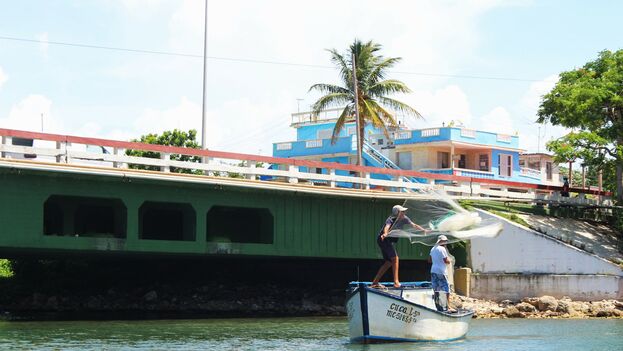
Fishermen in Matanzas, Cuba

The old fishermen are humble people with salt-tanned skin. (Roma Díaz)

14ymedio bigger14ymedio, Roma Díaz, Boca de Camarioca, 2 July 2020 —  Watching the small boats on the quay is a real spectacle, listening to the stories of old fishermen, of humble people with salt-tanned skin, reveals the absolute connection between people and the sea.

As sunset approaches and some of the fishermen go out to look for their catch, my camera lens captures these images and the click of the shutter breaks the silence. Despite the rustic look and stench of the bay, my eyes focus only on capturing the surroundings.

With the incessant sweat caused by the hot summer days and in precarious conditions, the fishermen go out daily in search of a good tide. Most of them in a small boat, which they call a “paca-paca” because of the deafening noise it constantly emits.

With a doubt, the ancient activity of fishing is for many a hobby, but for others it has become a resource for survival.

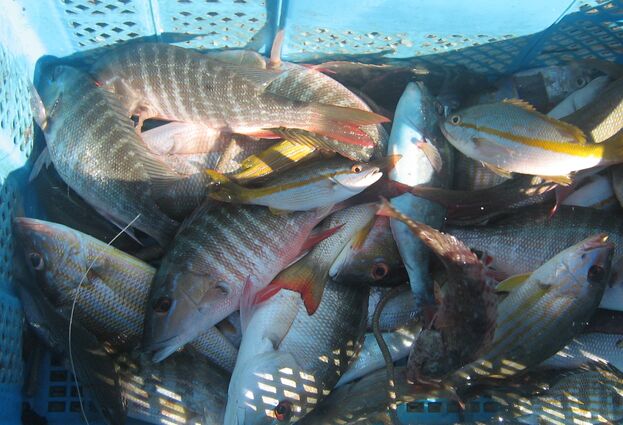
Snappers, parrots or yellowtails are caught in this area. (Roma Díaz)

______________

COLLABORATE WITH OUR WORK: The 14ymedio team is committed to practicing serious journalism that reflects Cuba’s reality in all its depth. Thank you for joining us on this long journey. We invite you to continue supporting us by becoming a member of 14ymedio now. Together we can continue transforming journalism in Cuba.
Mules Fear New Customs Restrictions May Be Permanent

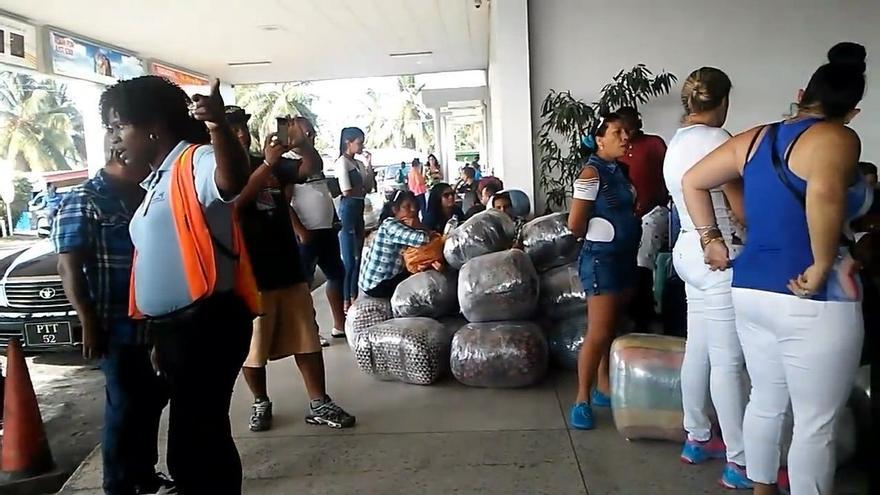
“Mules” at the airport in Georgetown, Guyana. (14ymedio)

14ymedio bigger14ymedio, Fernando Donate Ochoa, Holguín, June 27, 2020 — Miguel envisioned his prosperous business going bankrupt when authorities announced on March 2 that, due to Covid-19, residents of Cuba would not be able to travel abroad until further notice. He now fears that travel and import restrictions will remain in place long after the pandemic is over.

For six years the Holguín resident, who prefers to use a pseudonym to avoid trouble, travels to Trinidad and Tobago, Guyana, Russia and Panama to buy household appliances, clothing, footwear and other merchandise that he then sells on the informal market.

Over time, Miguel learned how to get around customs barriers, avoid having his goods confiscated and overcome the endless hassles inherent in being a “mule,” a profession that operates in a legally gray area. continue reading

Although importing a limited number of products is legal — up to three mobile telephones or two computers — reselling them on the black market can result in fines, confiscations and jail time.

The 2013 Immigration Reform Act that made it easier for Cubans to travel overseas but mules have never had to face anything like the Covid-19 pandemic, which has all but decimated their businesses.

In Cuba there are thousands of people like Miguel who buy products in other countries that are scarce on the island. They typically travel to nations that do not require them to have a visa. Back home they get their goods through customs by claiming them as personal belongings before later selling them on the black market.

It is difficult to say exactly how many private importers sell their merchandise in Holguín province. Those involved in the business avoid giving details and guard their identities to avoid being prosecuted.

Importers often pay family members or friends to travel with them so they can bring back more merchandise. It is common for them to set up support networks and to travel overseas in groups in order to reduce lodging expenses

But since the borders were closed at the end of March, this army of mules has been on hold. The people involved in this trade fear that, even it things return to normal after the Covid-19 pandemic, authorities will keep the restrictions in place, hindering their operations.

Among the government decisions announced that March 24, there was one that caused particular unease: Cubans who were still abroad could return to the island, but, if they did, they would not be allowed to bring back more than one suitcase and one carry-on bag.

This announcement brought Sylvia to the verge of collapse. The Holguín resident was in Haiti at the time, buying clothing, footwear and various hardware products. It was her third trip to the poorest country in Latin America, where — because she was of African descent and spoke French — she could buy goods more easily.

Silvia had to leave a large portion of her purchases behind, with her cousin. Her biggest worry now is paying off her expenses. “I don’t know when I will be able to go back and, with what I brought with me, I am not recouping the money I invested,” she says.

For Silvia such unforeseen circumstances are nothing new. As an importer she is used to the risks that come with this kind of work. On her previous trip, in early 2020, more than half of the items she bought were seized by authorities during a police raid in Holguín.

“It was my bad luck to borrow money for this trip,” she says. But with restrictions now preventing many of these products from entering Cuba, Silvia does not plan on sitting idly by. She and her husband are looking into other kinds of informal business in order to stay afloat.

One of the options she is considering is selling products that command three times the price normally charged on the informal market. Scarcity has driven prices up but, in the midst of a public health emergency, what buyers are prioritizing is food.

Silvia suspects that the government’s decision to limit the amount of baggage that can be brought in is not a coincidence and worries the restrictions could be extended. She believes that the authorities took advantage of the pandemic to do away with jobs like hers. “They’ve been wanting to get rid of us for a long time and the coronavirus gave them the perfect excuse,” she says.

Marisol is another informal merchant who fears for the future of mules, an occupation that has allowed her to make a living until now. Before the borders closed, she was in Guyana, where she bought clothes and shoes. “The day before my flight, customs restrictions took effect and I had to leave a lot of what I bought at the house I was renting.”

Marisol has had to start taking sleeping pills because her anxieties have prevented her from getting a good night’s rest. She is afraid that she will not be able to recover her merchandise or recoup the money she has invested but she is especially afraid of what the future holds.

But it is not just the mules who are worried. After three months without imports, the effects are beginning to be seen in the streets of Holguín. Prices in the informal market have risen while product availability has fallen. Costs for the most commonly imported items — clothing and footwear — have skyrocketed.

“We will look like we’re starving and in rags,” says a woman who has visited several clandestine points of sale in Holguín looking for a pair of tennis shoes for her son.

_____________

COLLABORATE WITH OUR WORK: The 14ymedio team is committed to practicing serious journalism that reflects Cuba’s reality in all its depth. Thank you for joining us on this long journey. We invite you to continue supporting us by becoming a member of 14ymedio now. Together we can continue transforming journalism in Cuba.
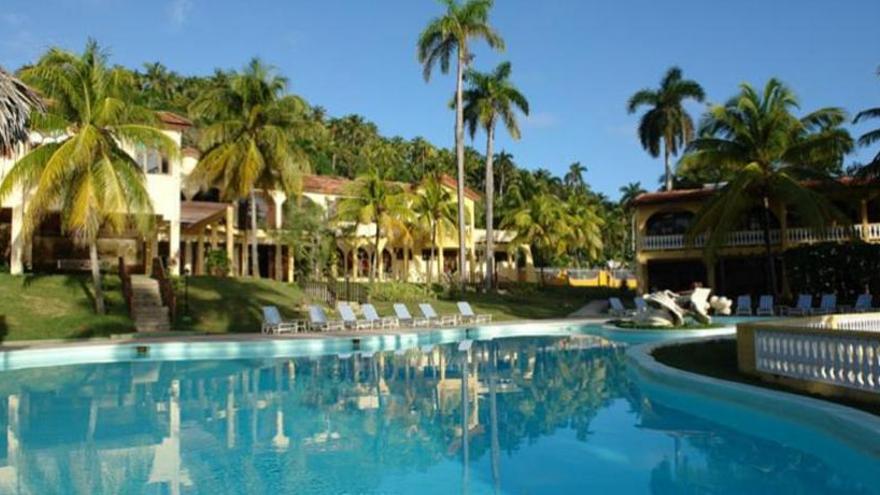
Cuba Tourism Opens Up on the Whole Island Except the Capital

The three-star Hotel Porto Santo, in Baracoa, is one of those that will open to national tourism on July 1.

14ymedio bigger

14ymedio, Havana, June 29, 2020 – On July 1, only some three-star hotels will open and in no case will inhabitants of Havana be able to reserve them yet. So tourism will start again on the Island after three months of being paralyzed by the Covid-19 epidemic.

With the provinces entering the first stage of the de-escalation, some tourist businesses have started to sell their services. But, if you’re from the capital, where reopening still hasn’t begun, you can’t even make a reservation.

For example, Gaviota, part of the Gaesa military consortium, has already begun offering packages for national tourism in some hotels, the majority of them three stars. The higher-range facilities are available only to foreigners. continue reading

“Today I read that now they opened Varadero and you can reserve in some hotels, but if you’re from Havana, you still don’t qualify,” Lidia Domínguez, a resident of the municipality of Playa, told 14ymedio via Messenger.

“For the opening of tourism to the internal market, Cuban citizens and resident foreigners in the country can stay at the hotel Porto Santo in Baracoa, Villa Pinares de Mayari in Holguín, Villa Gaviota Santiago and the Tourist Complex Topes de Collantes,” the press official said.

According to Trip Advisor, these hotels are described as “middle range,” and most of them receive the worst scores from clients.

Gaviota clarifies that the rest of the hotels and destinations “will begin operations gradually based on demand and the epidemiological conditions of the country.”

Cubanacán also announced this weekend that 13 of its three-star installations already have offers available for the Cuban public, among them Los Jazmines and the hotel Rancho San Vicente, in Pinar del Río; the hotel Caracol and Gran Club Santa Lucía in Camagüey; Atlántico Guardalavaca in Holguín and the Versalles and Brisas del Mar in Santiago de Cuba.

It also explained that restarting operations for international tourism will occur only in the second phase, and only in zones like Cayo Largo, Cayo Coco, Cayo Guillermo, Cayo Cruz and Cayo Santa María, all with high-range hotels.

Foreign tourists won’t be able in this stage to do city tourism, so they will have to limit their stay to the environment on the key where they find lodging. The information doesn’t clarify whether their family, friends or next of kin, or Cuban residents abroad who stay on the keys would have the possibility of going to visit those guest houses.

The residents of Matanzas already entered the first post-pandemic phase on Tuesday, and they can go the beach in Varadero, according to Ivis Fernández Peña, a delegate of the Ministry of Tourism in this region. “You always have to maintain the physical distance required,” warned the official.

In addition, he said that sales in the reservation bureaus will begin this Wednesday for Islazul and Gran Caribe in Varadero. He also pointed out that only when the demand of clients reaches 60% capacity, will others open, but gradually.

The president of Islazul, Rasiel Tovar, told the press last Tuesday that reservations can be made at points of sale and also on Islazul’s web page.

“We’ve been waiting for this news for some time at home, but we still don’t think we can reserve in any hotel, because none of our favorites are available right now. So we’re all going to Varadero to spend the day with the family on the beach,” Janet Meneses told 14ymedio from Matanzas.

“You have to take advantage now because when people from Havana can come it will be full of  buses so that weekends will bring hundreds of people to spend the day and everything will be full. Here they said that you have to keep a distance, but I still don’t know how they’re going to accomplish this,” she added.

The Government issued the order to close its borders and most tourism services since March 24, with the goal of minimizing the entry of coronavirus cases to the country.

Translated by Regina Anavy

_________________

COLLABORATE WITH OUR WORK: The 14ymedio team is committed to practicing serious journalism that reflects Cuba’s reality in all its depth. Thank you for joining us on this long journey. We invite you to continue supporting us by becoming a member of 14ymedio now. Together we can continue transforming journalism in Cuba.
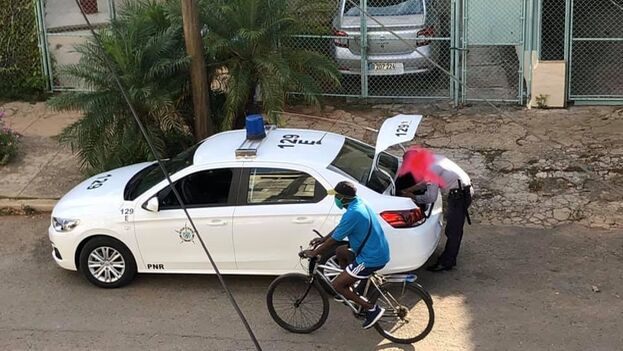
The Aborted Protest

A police operation at Mónica Baró’s house. (M.B./Facebook)

14ymedio bigger14ymedio, Yoani Sanchez, Generation Y, Havana, 1 July 2020 — It was going to be a Tuesday like any other amid the restrictions imposed in Havana by the pandemic. A day of long lines to try to buy food, of walking enormous distances in the absence of public transport and of calling friends to find out if they are in good health and if the coronavirus had not knocked on their doors. But the official repression to avoid a peaceful protest made the last day of June break the mold of any routine.

By 11:00 in the morning, on a corner that is the left atrium of the heart of the Cuban capital, activists of various tendencies had gathered. They sought to raise their voices for numerous reasons, but especially for the death — last week — of a young black man at the hands of the police. A shot in the back ended the life of Hansel Ernesto Hernández Galiano and to the outrage over his murder was added the irritation that the  official press barely reported the news and the authorities justified what happened as an act of self-defense on the part of the officer, while describing Hernández as an aggressive criminal.

The event, which occurred in the poor neighborhood of Guanabacoa, has fueled a popular anger that has been incubating for decades. It is a social unrest that has been reached for multiple reasons. The police excesses and racial discrimination that continue to mark the attitudes of those in uniforms towards citizens are part of what motivates this anger, but added to this is the discomfort caused by the repressive turn of the screw applied by the Government which it justifies by the Covid-19 health emergency. A feeling of suffocation runs through the country, where, on top of the virus, the economic situation has deteriorated significantly in recent months.

This Tuesday’s protest sought to show some of that annoyance, in a national context where the official Cuban media has exploited to extremes the death of the American George Floyd, with numerous public figures in Cuba condemning the excessive violence used against an African American during his arrest in Minneapolis. The same informational spaces and voices on this Island which, until a few days ago, did not hide their support for the Black Lives Matter movement, now remain in complicit silence before the bullet that struck the young Cuban. For mote in the eye of others is always easier to denounce than the enormous beam of responsibility blocking your own vision.

At the time when the protest in Havana was due to start on June 30, the meeting place was surrounded by police and military personnel, the homes of numerous activists were guarded, and several artists and independent reporters were detained. With a disproportionate deployment, the regime aborted the initiative before any of those heading to the protest could even reach the corner of 23rd and L streets. The arrests were joined by the cutting of telephone service and verbal threats. Amidst the crisis of shortages hitting the country, the repressors spared no resources to prevent a peaceful demonstration.

Only hours later the first releases began, but on Tuesday things had definitely gone wrong.

________________________

This text was originally published by Deustche Welle’s Latin America page .

_______________________

COLLABORATE WITH OUR WORK: The 14ymedio team is committed to practicing serious journalism that reflects Cuba’s reality in all its depth. Thank you for joining us on this long journey. We invite you to continue supporting us by becoming a member of 14ymedio now. Together we can continue transforming journalism in Cuba.
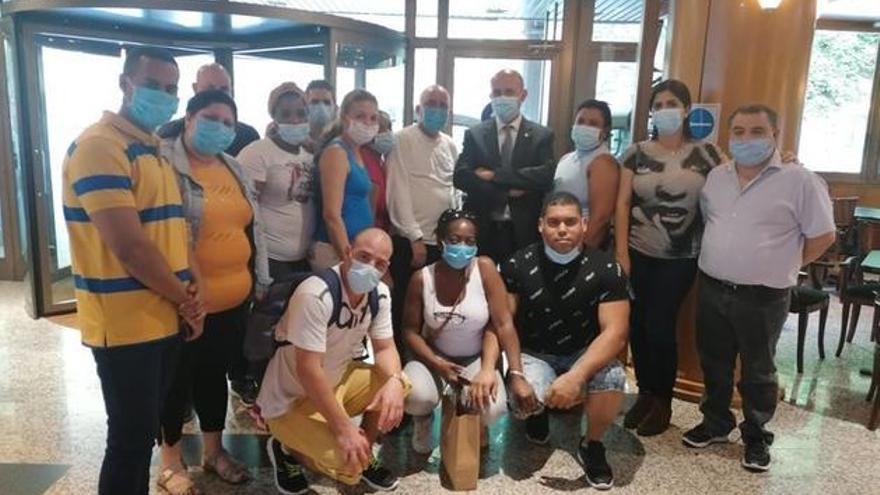
The Andorran Press Mocks the Cuban Medical Brigade

The medical brigade with the Andorran Minister of Health, Joan Martínez Benazet. (Capture)

14ymedio bigger14ymedio, Madrid, July 1, 2020 — The last members of the medical brigade in Andorra now fly back to Cuba without having made the least mention of the two members who abandoned the mission this past week. The head of the group, Luis Enrique Pérez Ulloa, said goodbye to the European principality with self-praise, affirming that they are leaving “with their duty accomplished.”

The health workers left Andorra in a bus around 4:30 in the morning this Wednesday for Spain, which has a connection only by highway, and they boarded a flight in Barcelona to take them to Havana, where they hope to be received with honors by the the Government general staff.

According to the official press, which dedicated a lot of coverage to the brigade’s work but didn’t mention the defection of two of its members, the Minister of Health of Andorra, Joan Martínez Benazet, said good-bye to the group at the Hotel Panorama, where they were staying. continue reading

“It’s been a luxury to have the Cuban medical brigade in Andorra,” said the Minister in a video recorded by Prensa Latina, calling it a “sister brigade.” We had a rate of infection of 1,100 persons per 100,000 inhabitants, the equivalent of the most affected cities in Europe,” he said. Martínez Benazet attributed the “rapid control” of the pandemic as well as the ability to treat everyone who was sick without exclusion to the discipline of citizens, the good condition of the health system and the reinforcement from the Cuban health workers.

The number of positive cases detected in Andorra is barely 855, and of these it is known that 52 died and 799 recovered. According to official data, the country’s rate of deaths per 100,000 inhabitants is the third highest in the world, behind San Marino and Belgium and ahead of the UK, Spain and Italy.

Pérez Ulloa related the great achievements of the Cuban brigade, among them that there were more than 64,170 individual instances of providing treatment to a patient. In addition, treatment for cases of Covid-19 were listed as “a total of 178 medical procedures, including mechanical ventilation and deep venous treatments, two temporary pacemaker implants essentially by our professionals (…), four pleurectomies  (pleural drainage), nine continuous dialyses, 19 deep vein thrombosis interventions, 14 treatments for airway disease, 31 mechanical ventilations, 56 anesthetic procedures, 14 hemodialysis catheter insertions and more than 540 patients recovered,” he added.

En Andorra, poco acostumbrados a los panegíricos de Cubadebate, la prensa ha mostrado su perplejidad, incluso llegando a la burla en el caso del diario Altaveu.

In Andorra, little accustomed to the panegyrics of Cubadebate, the press showed its bewilderment and, in the case of the daily Altaveu, even resorted to mockery

“If you read the assessment that the media of the Castro Regime has of the delegation (…), it is thanks to Cuba and the Cuban health workers, that the pandemic, the coronavirus, hasn’t swallowed up Andorra and the Andorrans. It’s been a miracle. (…) The figures are such that it’s evident that the brigade has saved the principality from Covid as, in his day, Charlemagne (medieval emperor who determined Andorran independence and the configuration of Europe) saved these latitudes from other threats,” recites the text.

Furthermore, the article, entitled “The Cuban health workers leave ‘with their duty accomplished’ ” raises doubts about the quantity of treatments cited by Pérez Ulloa.

“Supposedly they treated 821 critically ill patients in the Intensive Care Unit of the Nostra Senyora de Meritxell hospital. It’s obvious and it’s clear that the entire ICU of the hospital hasn’t treated this number of patients, there’s just no way. Its collapse would have been brutal. But in Cuba, of course, they will be heroes. They have been decisive in the recovery of more than 700 patients, which is the total number of all officially counted cases cured, and the Cuban health workers saw barely 20% of them,” the article said.

Altaveu also notes the silence around the “deserters.” “ ‘We return in good health, none of us has fallen ill and we have given the best of ourselves’,” stated the nurse, Leidysbet López. They all return minus two, it’s now known, but not one word was said about the defections. Clearly, it’s as if they didn’t exist,” the newspaper says.

This past Wednesday the leading story was the defection of Dariel Romero, one of the leaders of the brigade, a military doctor with family members in politics. The anesthesiologist presumably fled to Spain, where he has family members, with a Cuban nurse whose identity is unknown and with whom he is suspected of having a sentimental relationship that began in Andorra.

Although the details aren’t yet known, this personal situation, along with the climate of discontent with the Cuban consul in Barcelona, Alain González, who supervised the brigade in an authoritarian manner, are among the decisive factors for the “desertions,” according to Andorran sources.

The 39 Cuban health workers arrived in March in the small European state, a tax haven of almost 80,000 people situated in the Pyrenees between Spain and France, as a result of a contract whose terms are still unknown and which was financed by a millionaire family linked to Andorra, the Sirkias.

Translated by Regina Anavy

____________

COLLABORATE WITH OUR WORK: The 14ymedio team is committed to practicing serious journalism that reflects Cuba’s reality in all its depth. Thank you for joining us on this long journey. We invite you to continue supporting us by becoming a member of 14ymedio now. Together we can continue transforming journalism in Cuba.
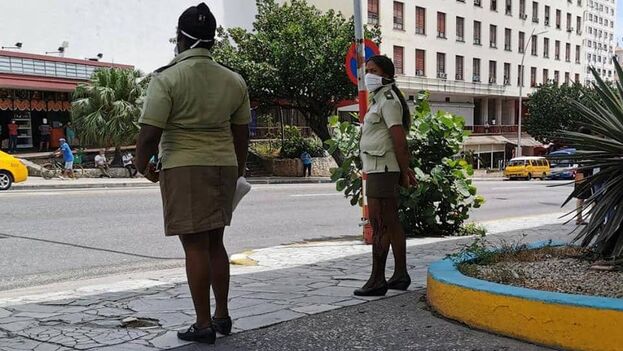
Detentions and Threats to Prevent a Demonstration in Front of the Yara Cinema

The zone around the cinema, at the corner of Avenue 23 and L, in the center of the capital, threatened to be overrun by agents of the Ministry of the Interior. (Facebook/Jesús Jank Curbelo)

14ymedio bigger14ymedio, Havana, June 30, 2020 – Several activists have denounced detentions and threats this Tuesday after being prevented from attending the demonstration called for 11:00 in front of the Yara cinema in Havana, to request justice for the murder of Hansel Ernesto Hernández at the hands of the police this past Thursday.

The zone around the cinema, at the intersection between Avenue 23 and L, in the center of the capital, threatened to be overrun by agents of the Ministry of the Interior, according to several witnesses. One of them said that in the streets next to the theater, there were several buses with soldiers inside, one of them with only women, dressed in green.

The artist Tania Bruguera was detained early in the morning by agents of State Security when she left home, according to her Facebook page. continue reading

“Tania Bruguera was taken (we still don’t know if it was by soldiers or police dressed as civilians – a kidnapping) leaving her house at this precise moment (6:17 Cuban time) to prevent her presence at the peaceful demonstration that will take place today in several points of the country against #PoliceViolence,” said the publication.

Other activists, artists and independent journalists also reported on their networks, with the hashtag #30JunioCuba, that they were surrounded at their homes or received warnings from State Security to not go out in the street today.

The writer Ariel Maceo Téllez says that two State Security agents woke him up to tell him that he was under house arrest for eight hours without clarifying the reason. In the same way, the independent journalist María Matienzo said on her social networks that a “supposed Major Alejandro” knocked on her door to prohibit her from leaving for the whole day.

The activist Juan Antonio Madrazo Luna, coordinator of the Citizens Committee for Racial Integration, said on his Facebook page that the night before, he went to throw out the garbage and was “kidnapped” by agents of State Security and a police official and taken to the police station.

“Now at 5:30, Major Alejandro interrogated me to tell me that my movement was limited, that I wasn’t to leave my house today, that they’re not going to allow the protest, that there won’t be rebelliousness of any kind, and that whoever protests today will be detained even for “propagation of the epidemic,” he said.

He says he was “escorted” to his home and they warned him that he could be criminally prosecuted “under the Law in Time of Emergency and War”.

The journalist of the digital magazine El Estornudo, Abraham Jiménez Enoa, also said that he is under “house arrest.”

“Several State Security agents dressed in civilian clothing and a patrol car with four officers were stationed on the ground floor of my house to prevent me from going out to cover the march protesting the death of Hansel Hernández,” the reporter complained.

The film maker, Carlos Lechuga, wrote this morning: “I woke up smoking an exquisite cigar so that the smoke would keep away the fat agent they had stationed outside my house.”

The organizers of the protest are asking for justice in the case of Hansel Ernesto Hernández, but also for the activist, Ariel Ruiz Urquiola, who will speak this Thursday at the headquarters of the United Nations in Geneva, and for Silverio Portal Contreras, a member of the opposition organization “Cuba Independent and Democratic,” and a prisoner since 2018, for humanitarian reasons due to his health.

Besides the concentration in Havana, the promoters have called on people to come out in every province.

Hernández’s death was discovered last Thursday when his aunt reported the facts on social media. The young man, 27 years old, had an altercation with the police, who went beyond what was necessary, and he was killed by an agent’s gunshot.

According to the official version, published in Tribuna de La Habana three days later, Hernández was caught robbing spare parts from a bus. A patrol tried to intercept him, and he responded by throwing stones, after which the police discharged a weapon.

According to the Cuban Observatory of Human Rights (OCDH), with headquarters in Madrid, although the official version was adjusted to the facts, there was no proportionality in the police act.

Translated by Regina Anavy

_____________

COLLABORATE WITH OUR WORK: The 14ymedio team is committed to practicing serious journalism that reflects Cuba’s reality in all its depth. Thank you for joining us on this long journey. We invite you to continue supporting us by becoming a member of 14ymedio now. Together we can continue transforming journalism in Cuba.
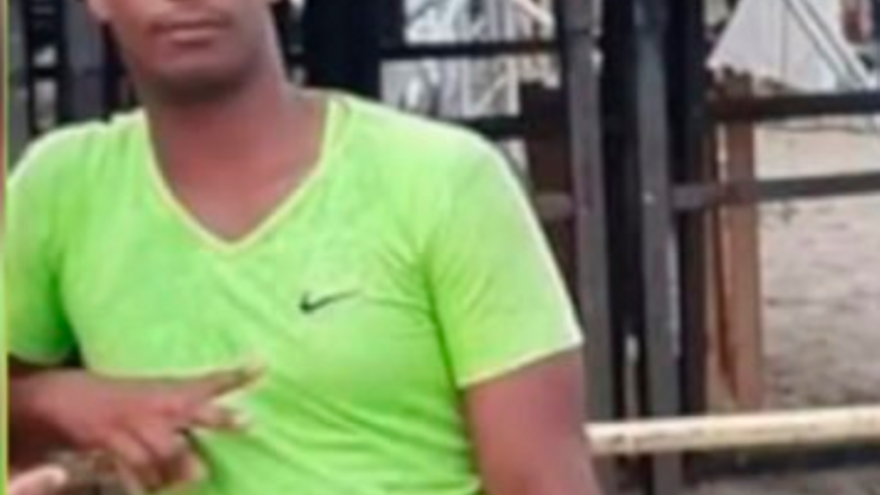
Human Rights Group Asks Cuban Government for Transparency in Case of Young Black Man Killed by Police

Hansel Ernesto Hernández Galiano resided in Guanabacoa and was 27 years old. (Facebook)

14ymedio bigger14ymedio, Havana, 29 June 2020 — The Cuban Observatory for Human Rights (OCDH), based in Madrid, has demanded transparency from the Cuban Government in the case of the death, at the hands of the Police, of the young black man Hansel Ernesto Hernández Galiano.

“The version given by the Ministry of the Interior confirms that Hansel Ernesto Hernández Galiano died as a result of police shooting. The story, which is intended to justify police action, is hardly credible and has significant discrepancies with the versions of the facts at the popular level which affirm, for example, that he was shot in the back,” said the OCDH.
Hernández’s death happened last Thursday when his aunt denounced the events, which were reported by the independent press.

The Government, through the official local newspaper Tribuna de La Habana, acknowledged what had happened although, according to their account, the victim was “a citizen who had stolen parts and accessories from a bus stop” caught “red handed” by a police patrol which tried to catch him and, during the chase, Hernandez threw stones at them and was then shot, causing his death. continue reading

The OCDH emphasizes that, even sticking to the official version, “it is very difficult to justify the alleged proportionality in the response” of the agent who shot the young man dead. “We wonder how Hernández Galiano went from fleeing to avoid being captured to becoming a real and imminent threat to the life of the police officer, what the other officer was doing in the meantime, or what other method of neutralization they used before going on to shoot.”

The human rights organization believes that in the government version there is an attempt to “discredit the victim with real or alleged criminal records” and rejects the bellicose official language.

“We also do not understand why the official statement in one part refers to the police as ‘the military’ and in another part speaks of ‘our combatants’, when it is not a fact the Army which intervened and, to our knowledge, the country is not at war,” it stresses.

The OCDH recalls that last year, in June 2019, another black citizen Raidel Vidal Caignet, 27, was killed by the police in Holguín.

“The death of these citizens is closely linked to the repressive scenario that the country is experiencing, where the police act with impunity with methods that are currently questioned throughout the world,” they lament.

____________

COLLABORATE WITH OUR WORK: The 14ymedio team is committed to practicing serious journalism that reflects Cuba’s reality in all its depth. Thank you for joining us on this long journey. We invite you to continue supporting us by becoming a member of 14ymedio now. Together we can continue transforming journalism in Cuba.

A Young Man Dies in Guanabacoa Presumably at the Hands of the Police

Hansel Ernesto Hernández Galiano. (Facebook/Maykel Osorbo)

14ymedio bigger14ymedio, Havana, 25 June 2020 — The death of Hansel Ernesto Hernández Galiano, allegedly at the hands of the police, has shocked the La Lima neighborhood in Guanabacoa in the city of Havana. According to the deceased’s aunt, Lenia Patiño, the 26-year-old was hit by a bullet fired by men in uniform.

“We, the family members, ask for mercy that this cruel act at the hands of our supposed national security may in no way go unpunished,” Patiño demanded in a text that she published on her Facebook profile on Thursday afternoon. However, the woman did not specify the initial reason for the altercation between Hernández and the agents.

“Because a police officer, a uniform, does not give the right to murder anyone in such a way,” added the woman in a text that immediately accumulated hundreds of comments. Some of the Internet users said that Hernández worked at the Guanabacoa bus terminal and that he was a “very calm” young man. A neighbor, who works in the same workplace as the father of the deceased, confirmed this information to 14ymedio. continue reading

“Why then did they have to go to their firearm and take a son from a mother, a father, a nephew from his aunt, a brother from his younger sister,” questioned Patiño, who insisted that the young man “was never armed.”

According to other sources, the bullet that the young man received entered him in the back “near the left kidney and came out from the right side of his chest.” The wake was held the same Wednesday night at the Guanabacoa funeral parlor. Witnesses present at the scene tell of a fight between the relatives of the deceased and some police officers who approached to give their condolences.

Several commentators demanded that the national television report the incident, as it did with the death of two police officers and the injuries suffered by two others a few weeks ago in Calabazar, south of the Cuban capital. “Put it on TV as they did with the one who killed the police,” demanded Internet user Lisandra Navarro.

______________________

COLLABORATE WITH OUR WORK: The 14ymedio team is committed to practicing serious journalism that reflects Cuba’s reality in all its depth. Thank you for joining us on this long journey. We invite you to continue supporting us by becoming a member of 14ymedio now. Together we can continue transforming journalism in Cuba.