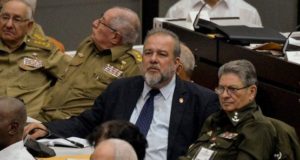
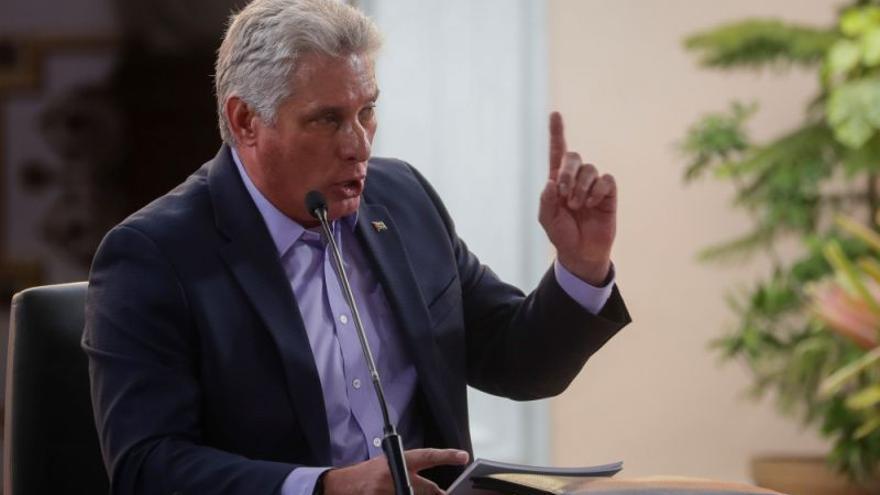
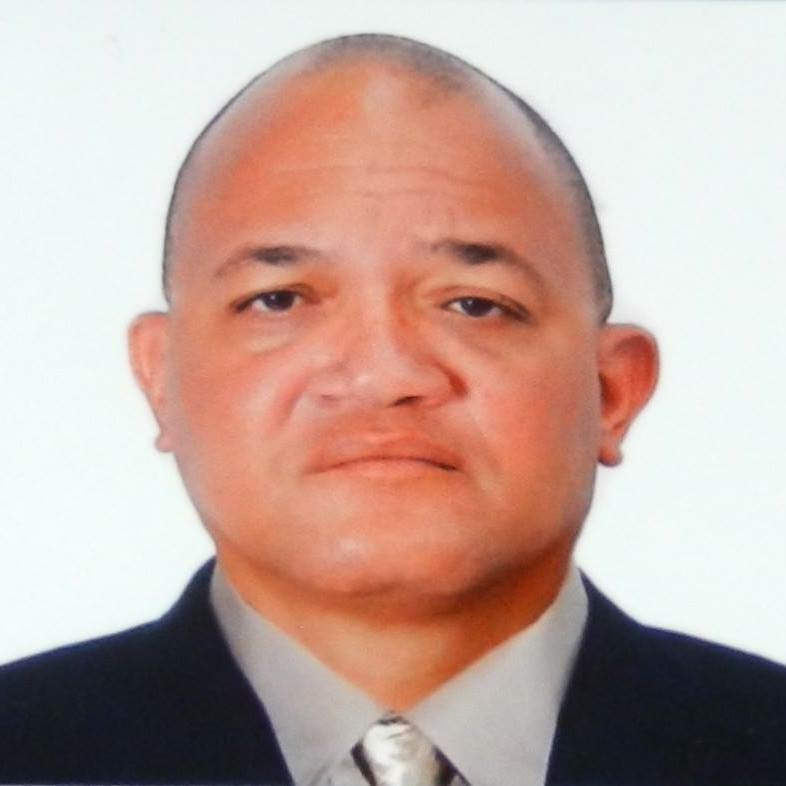
The photo of Manuel Marrero Cruz surrounded by officers in uniform at the time of announcing his appointment to the plenary perhaps explains this inexplicable designation.
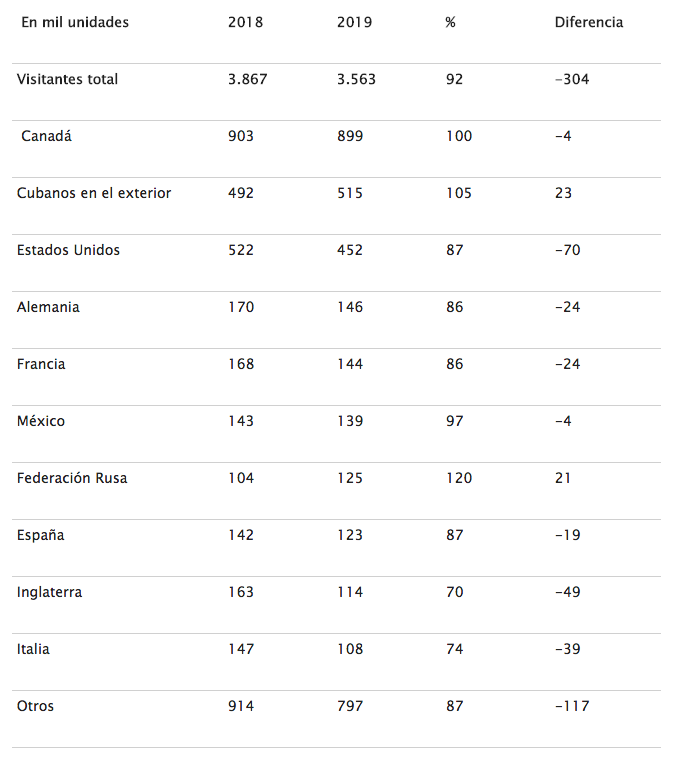
SOMOS+, Germán M. González, 6 February 2020 — Reviewing the results of the tourism sector in the current year, we have the following outcome:
The arrival of visitors decreases, the official explanation is the restrictions the Trump Administration has put on Americans’ travel to Cuba, including stopping the cruise ships, but the truth is that destinations having little or nothing to do with the coercive measures of the US government are decreasing. Let’s look at this from January to October according to the National Bureau of Statistics and Information www.onei.cu:
Only the visitors from the community (larger every day) and from Russia are increasing, representing 3.5% of the total and those from Europe and the rest of the world are decreasing by -280 thousand visitors, 210 thousand more than the decrease of those from the USA (-70 thousand). In this issue, as in others, if there were no “blockade” (embargo actually) it would necessary to invent it. continue reading
These trends continued in November and from January to September, we noticed that stays per visitor were only 4.4 days and revenues 503 CUC, in both cases, below the total of 2018.
The average occupancy rate is 38%, 1.7 percentage points below the percentage accomplished in 2018 and the most serious problem: since the early 2017 there is no occupancy over 60% in any month of the year.
In general, both absolute and relative levels in the indicators of the rates in 2019, are lower not only than 2018 but also in 2017; that is to say that the alleged locomotive of the Cuban economy has been in recession for two years.
According to the Cuban News Agency (ACN, for its acronym in Spanish), the first Deputy Minister of Tourism (now Minister), Juan Carlos García, reported in the recently concluded session of the National Assembly of the People’s Power that there are 11,000 empty rooms due to “insufficient preventive maintenance, lack of priority to prevention, solution and control fulfillment of the designed plans.”
In general, he acknowledged important breaches in maintenance and remodeling issues and listed a series of deficiencies, such as a deficit of suitable investors, technical documentation and equipment completion; insufficient preparation of the construction works; changes in the original projects; failure to fulfill the executive schedules: deficit in the supplies of the national industry; failure to accomplish the import plan; lack of skilled labor force, fuel shortage.
There were also problems in the operation of the elevators in the hotels that were not a cause for shutting rooms down, but impacted the service quality.
The performance of the other sectors must have been really poor for the minister Manuel Marrero Cruz to be designated as Prime Minister! Or is it that they took into account — as it usually happens in the system copied from the Soviet Union — considerations outside the efficiency and effectiveness in management.
This promotion recalls those made in favor of Inés María Chapman and Roberto Morales Ojeda, both with lower results than the usual inefficiency. Or worse, J.R. Balaguer’s promotion from Health Minister to Secretary of International Relations of the Party when the death of over twenty patients of Mazorra Psychiatric Hospital (from cold and starvation) resulted into prison sentences for staff of that hospital.
And how is it possible to justify that the investment program for 2019 foretold a hotel capacity growth of more than 3,800 rooms and the restoration of another 5,000? Why, considering the 38% occupancy rate that only exceeds 50% during one month of the year?
If parliament members were not appointed based on their unconditional support for the leaders, as the President of the Assembly has just proclaimed, if they were representatives of the Nation, they would have asked these and many other questions instead of unanimously approving every document presented before them and the decisions taken of which they are, like the cuckold of the story, the last ones to find out.
Iván Amaro Hidalgo, on the left, was arrested in August 2016 wearing a shirt with the motto Democracy YES! Dictatorship NO!
14ymedio, Havana, 17 February 2020 — The Working Group on Arbitrary Detention of the United Nations Human Rights Council considers that jailed Cuban opponents Josiel Guia Piloto, Marbel Mendoza Reyes and Iván Amaro Hidalgo were convicted of vague crimes and without adequate legal defense.
After learning of the cases from the Cuban Prisoners Defenders (CPD), an NGO, and evaluating the allegations of the Government of Cuba, the agency reached these conclusions and calls on Havana to grant the activists “immediate, full freedom” and grant them “the effective right to obtain compensation and other types of reparation, in accordance with international law.”
Josiel Guia Piloto, president of the Republican Party of Cuba (which is not legally recognized), was arrested 22 times between 2011 and 2014. In 2016 he was arrested and, a year later, was convicted of “contempt and public disorder.” The UN considers it proven that the police stopped him without justification in order to “generate an exchange of words” that resulted in his arrest and prosecution “from the fabrication of a suspicion by police.” continue reading
Marbel Mendoza Reyes, of the Patriotic Union of Cuba (Unpacu), was charged and sentenced to two and a half years in prison for social-pre-criminal dangerousness, a crime that the Cuban government uses very regularly. According to Cuban Prisoners Defender, there are 11,000 people imprisoned in the Island under this charge, which is applied to people the government believes are involved in activities contrary to “socialist morality.”
The CPD report also alleges that Mendoza’s sentence was extended six months for an alleged crime of contempt based on the complaint of a single official, something that is allowed by law in Cuba.
Iván Amaro Hidalgo, an activist with the Pedro Luis Boitel Party for Democracy (also illegal), is the third person referenced in the report. He was arrested in August 2016 wearing a shirt with the motto Democracy YES! Dictatorship NO! and Down You Know Who. In March 2017, he was sentenced to three years in prison in a closed-door trial in which the only witness was a police officer.
The report of the Working Group questions the criminal definitions of “contempt, disorder, danger and attack, contained in the Criminal Code, they are extremely vague and lack the requirement of sufficient accuracy to provide the population with legal certainty.”
In addition, the Inter-American Commission on Human Rights (IACHR) has already asked for the elimination of the crime of pre-criminal-dangerousness from the Criminal Code, as have other NGOs such as Human Rights Watch and Amnesty International.
The document laments that it is not the first time that it has to deal with matters such as this and that “there have been no significant changes in the State justice system since the presentation of its initial report in 1997. In particular, it notes with concern the lack of independence with respect to the executive and legislative powers of both the judiciary and the role of lawyers,” it emphasizes.
The Working Group will refer these three cases to the Special Rapporteur on torture and other cruel, inhuman or degrading treatment or punishments, and asks Cuba to ratify the International Covenant on Civil and Political Rights, which was signed by Cuba in 2008 but not ratified and put into practice, and to follow up on the case and the application of recommendations.
One of the requests made in the report to the authorities in Havana is “to disseminate the present opinion [in reference to the report] by all available means and as widely as possible,” although it does not seem likely that they will do so.
__________
COLLABORATE WITH OUR WORK: The 14ymedio team is committed to practicing serious journalism that reflects Cuba’s reality in all its depth. Thank you for joining us on this long journey. We invite you to continue supporting us by becoming a member of 14ymedio now. Together we can continue transforming journalism in Cuba.
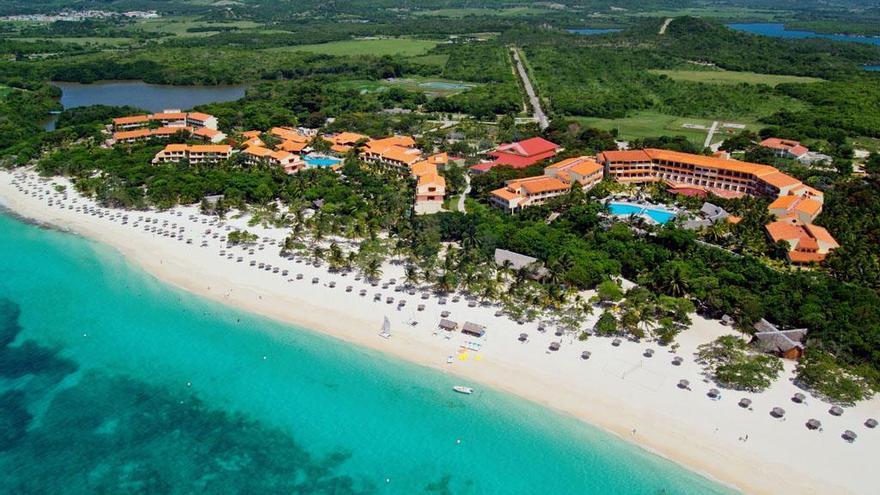
The hotel Sol Río De Luna y Mares, of the Meliá chain, is advertised on a web platform. (tripadvisor)
14ymedio, Havana, 17 February 2020 — Andrés Rivero Mestre, the lawyer who defends several of the families that claiming compensation for the expropriation of their assets by the Cuban Government after the Revolution in the 1960s, calculates that the Meliá Mallorcan hotel chain should pay his clients more than 150 million dollars, as he has told the Spanish newspaperEl Mundo.
Rivero, a Cuban of Spanish descent, is defending the interests of the Sánchez-Hill, Mata, López Regueiro and Echevarría families, among others, from his office in Florida.
“We claim, under the law, three times the value of the 39 hotels, which obviously now exceeds 150 million dollars,” he explained to El Mundo. The estimate is based on the calculation made by an expert who valued the hotel deemed to have the lowest value at about five million dollars. “If that is the least valuable, I estimate that the collection would exceed 150 million, but the truth is that I don’t know, I would be speculating if I gave an exact figure.” continue reading
The accounts have been using estimates of the room rates and occupancy levels of the hotel in recent years.
Rivero’s idea is to claim compensation from the Meliá chain and then extend that to the rest of the chains. The families he represents have claims on 15 of the 39 facilities that Meliá manages in Cuba, but the demands can be extended using aclass action lawsuit that allows claims on behalf of all those affected.
At the moment, the prospects for success are not high. Earlier this year, a Florida judge removed the Mallorcan company from a case for claims because it was not within his competence to rule on land expropriations in other countries. In addition, the European Union has activated the blockade statute, a rule created in 1996 to protect against the Helms-Burton Act.
The US State Department, for its part, is in contact with Rivero’s office. “We have asked them to impose sanctions and do everything possible: remove visas, whatever, in order to support the actions of my clients,” he said
In early February it was confirmed that Gabriel Escarrer, vice president of Meliá, and other 13 executives are prohibited from entering the United States for this reason, but the hotel group is confident that the law protects them.
Rivero’s strategy, as he told El Mundo, is to focus the current process on the websites that sell hotel stays in Cuba, such as Expedia and Booking, and leave Meliá out at first, based on the fact that these platforms market rooms that can be reserved and paid for from Florida.
“If we win with Expedia and Booking we will have the entire foundation to include Meliá again,” since they can also market their rooms to Florida consumers from their website.
If the plan works, he will continue with Iberostar, Barceló and Blau Hotels and hotels in other countries, he announced.
________________
COLLABORATE WITH OUR WORK: The 14ymedio team is committed to practicing serious journalism that reflects Cuba’s reality in all its depth. Thank you for joining us on this long journey. We invite you to continue supporting us by becoming a member of 14ymedio now. Together we can continue transforming journalism in Cuba.
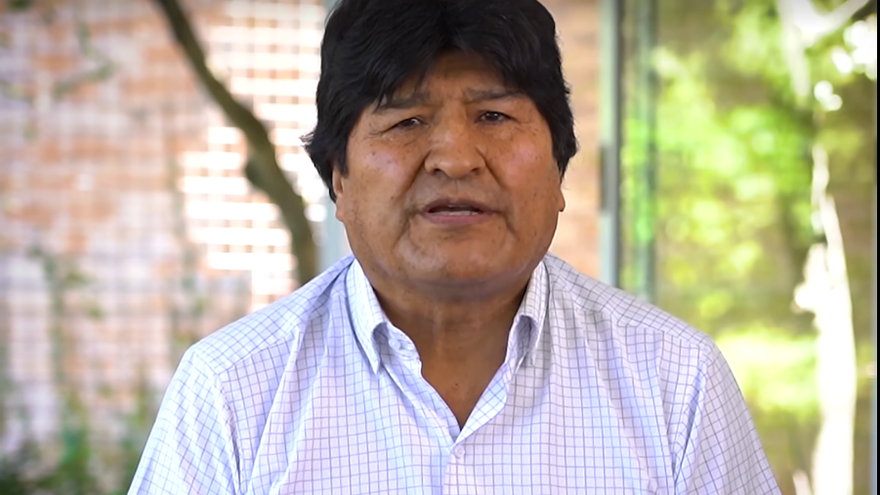
Morales was in Cuba, presumably for a health treatment that continues in Havana.
14ymedio, Havana, 17 February 2020 — Evo Morales returned to Argentina on Sunday after a brief stay in Cuba, allegedly for medical reasons. Starting Monday, today, the former president will dedicate himself, from Buenos Aires, to preparing for the Bolivian elections of May 3 and will start a series of meetings, which include a meeting between the candidate from Bolivia’s Movement for Socialism (MAS), Luis Arce, and Argentine President Alberto Fernández.
“There will be el compañero Luis Arce Catacora, candidate for president, and then he has a meeting with Argentine President Alberto Fernández; it will be an important meeting between a candidate and a president,” Morales said in an interview this Sunday.
In addition, the former president who, in his statements, made it clear that he is leading the campaign, announced a meeting with departmental and national leaders of his party to plan the road to the elections. continue reading
“Tomorrow morning starting at 8:00 we will be gathered to listen and for them to listen to me, share campaign experiences, and an important issue that we are going to discuss is how we will deal with the post-election issue of May 3, how are we going to protect the vote of the people, from the polls, the constituencies, some proposal must be raised, hopefully we will approve it and in this way we will be prepared,” he said.
Before leaving the Island, Morales said in an interview that he is “in very good health.” Both the former leader and his party in Bolivia and even the Cuban Government, not generally given to discuss these cases, have spread that his presence in Havana was allegedly due to a medical treatment.
In March 2017, Morales was treated in Cuba for an alleged throat condition and a month later he was operated for a nodule on the vocal cords, also at the Surgical Medical Research Center (Cimeq).
On this occasion, on the other hand, although it has been emphasized that his passage through Cuba was due to a health issue, the issue itself has not been clarified, which arouses speculation about the real reasons for this trip.
The last voting survey, released on Sunday by Ciesmori, puts the MAS in first position with 31.6%, although it remains to be seen if the Supreme Electoral Tribunal (TSE) will approve the former president presenting himself as a candidate for senator.
The second option would be the one presented by the also former-president of the country Carlos Mesa, with the Citizen Community Party (CC), with 17.1%. In third place, with 16.5% is the candidacy of Jeanine Áñez, who is on the ballot with the Juntos alliance.
__________________________
COLLABORATE WITH OUR WORK: The 14ymedio team is committed to practicing serious journalism that reflects Cuba’s reality in all its depth. Thank you for joining us on this long journey. We invite you to continue supporting us by becoming a member of 14ymedio now. Together we can continue transforming journalism in Cuba.
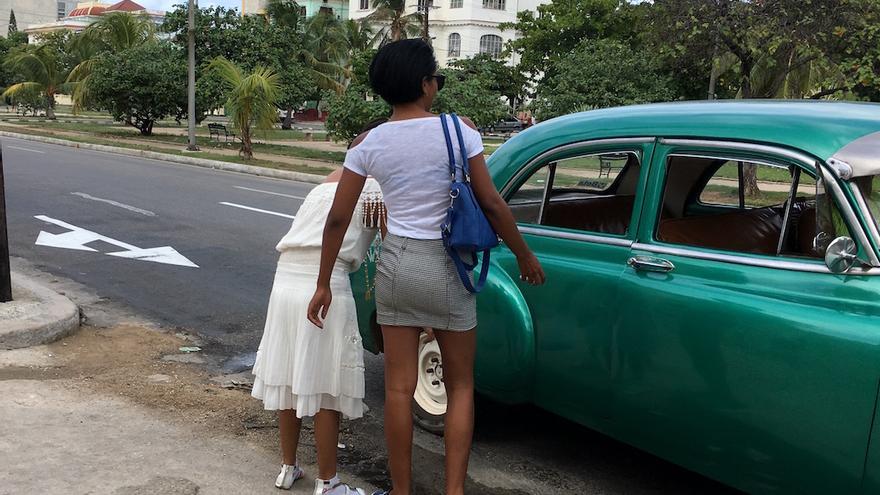
Two woman get in a shared-taxi in Havana; the vehicles are known as almendrónes, after the “almond-shape” of the classic American cars generally used in this fixed-route service.
14ymedio, Havana, 14 February 2020 — The Cuban Association of Autonomous Carriers (ACTA) in Havana, Mayabeque and Artemis provinces, released a document on Thursdays with five demands of the Government which, if not satisfied, will lead them to maintain the work stoppage that began several days ago, after new regulations governing the sector went into effect.
The demands are: freedom of movement is authorized for private taxi drivers; the approval of a single passenger license; permission to work throughout the Island, including tourist areas; the ability to buy fuel based on consumption; and the end of ’capped’ fare prices.
Esteban Hernández González, coordinator for the western region of the Self-Employed Coalition of Cuba, explained to Radio Martí that between 70% and 80% of drivers are supporting the strike to try to get the government to negotiate. “So far there has been no response to the demands,” he said. continue reading
In the interview, Hernández added that private carriers move around 80% of passengers, which encourages them to think they will be heard. “The Ministry of Transportation has no capacity [to carry that number]. There is no equipment, no means,” he confirms.
However, he also admits that his associates cannot remain unemployed for much longer and are considering other forms of follow-up, such as working on alternate days.
On February 1, new measures for private transport entered into force, including those affecting rates. The boteros, as taxi drivers are called — the word means “boatmen” — should charge a maximum of 10 CUP per passenger in vehicles with up to 14 seats, and 5 CUP per passengers in trucks and vans converted for passenger use.
Hernández explained that the authorities, in any case, are not strictly applying the regulations. “The position of the authorities has been to let it go: there are practically no inspectors on the streets today and the police are not stopping the cars, as they did at the beginning, because they know that the situation is beyond their control,” he says.
In recent years, the Government has tried to impose distinct regulations on private passenger transport, but the amount of changes in the regulation suggests that they have not yet found a working formula.
The problems of public transport in Cuba, very specifically in the capital, where the concentration of residents is very high, make it impossible to move the population without resorting to private transport, either through state taxis or the private boteros. But the former, by themselves, are also insufficient, which ups the negotiating capacity for private parties.
COLLABORATE WITH OUR WORK: The 14ymedio team is committed to practicing serious journalism that reflects Cuba’s reality in all its depth. Thank you for joining us on this long journey. We invite you to continue supporting us by becoming a member of 14ymedio now. Together we can continue transforming journalism in Cuba.
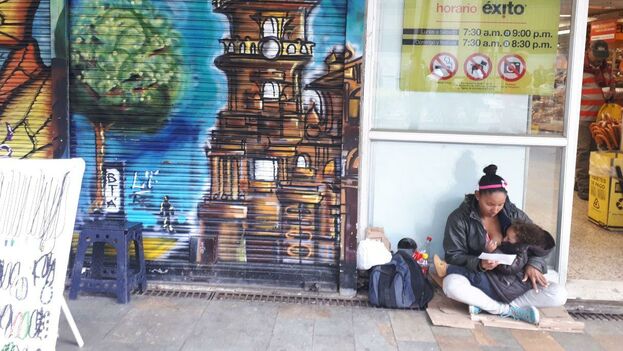
Many Venezuelans walk hundreds and thousands of kilometers, carrying their children, to get to Bogotá in search of work and economic relief. (14ymedio)
14ymedio, Yoani Sanchez, Bogota, 15 February 2020 – There are three of them and they are sitting on a wall in front of a restaurant in the Chapinero neighborhood. The girl is restless and the mother tries to keep her from walking into the busy avenue. Meanwhile, the father asks for money. He is about 20 years old and all the bones of his face are visible. “We come from Caracas, we arrived here last week,” says the young Venezuelan, who identifies himself as Andrés.
I start a conversation and just listening to my accent he pulls back, on guard. The few syllables I pronounce act as a threat to his ears. “Relax, I’m Cuban, I’m not a Castro supporter,” I say, to calm him, but the fear is in his eyes, opened wider than a second ago, in his nervous stutter, and in his grabbing of his belongings.
I sit down next to him to allay his suspicion and tell him it’s my fault, a heavy weight that I carry on my shoulders. “I understand what you are living through, we are responsible in some way,” I say. I keep talking and it eases the tension and he talks. “We left with what we had on, madre, our feet are still destroyed by the journey,” and he shows me his shoes with holes big enough to put his little finger through. continue reading
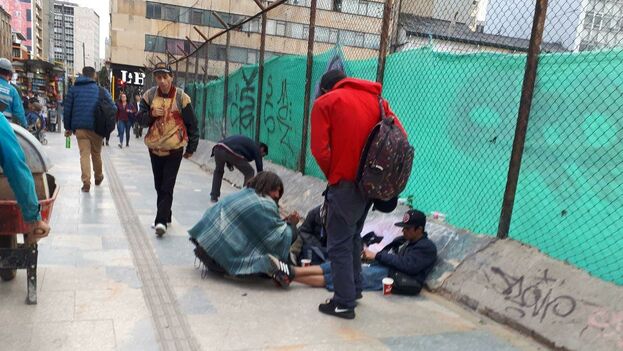
It’s noon and the Bogota street is a swarm of people leaving their offices for lunch. For most of those who pass by, these three Venezuelans are virtually invisible. The city is full of them, at every corner, at every traffic light and in every neighborhood. According to figures published by Migration Colombia last August, at that time there were 1,408,055 of these migrants in the country, an increase of 11% compared to the first quarter of 2019.
However, the numbers may be far from the reality because many migrants are in the country irregularly, or are in the process of legalizing their status. It is enough to travel the streets of the Colombian capital, approach the border towns or spend a few hours in some office where the paperwork is prepared to get an identity card, to realize the impressive scale of this exodus.
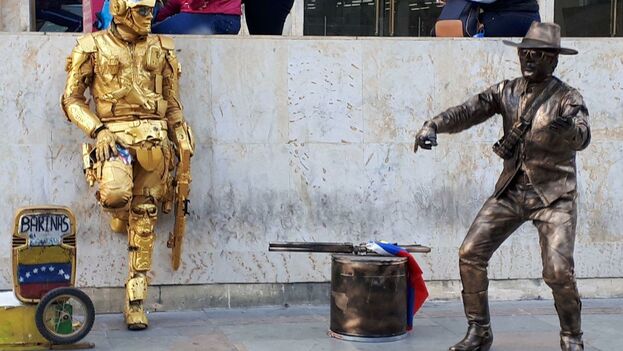
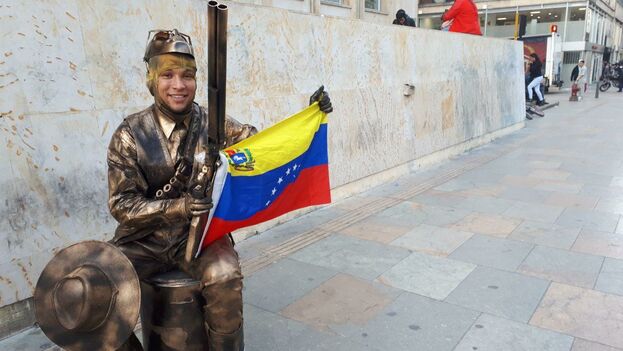
Scrubbing windshields, performing as “living statues” or asking for alms, Bogotá is overflowing with displaced Venezuelans. (14ymedio)
Outside a Carulla supermarket, Elmer, 16, sells empanadas and arepas. For two thousand Colombian pesos (about 60¢ US), he offers his merchandise warm and wrapped in napkins. “I came with my grandmother, my mother and my two sisters, but I am the only one in the family who can work now,” he says. “In Venezuela we left my other two brothers and my grandfather, so we have to send them money.”
Elmer dropped out of school more than three years ago, when the economic situation in his nation hit bottom. “All my friends left and in the end it was my turn,” he explains. He has the look of an old man who has seen the ups and downs of life, he speaks without hope and, every so often, checks the coins he has earned, polishes them and collects them in a small pile.
“On a bad day I make 50,000 Colombian pesos in this corner,” he says. That’s less than 15 dollars, a small fortune in his country, where shortages and inflation have turned money into a balloon that goes up and up to the stratosphere. But in Bogotá, Elmer and his family can barely survive with that, after the remittances they have to send home and the rent of a tiny apartment.
The family entered the country through the border city of Cúcuta. Elmer does not like to talk about his time in that border region, but only says “there, my older sister and my mother took charge.” It is not necessary to add anything else, the prostitution of Venezuelan women in that area has skyrocketed in recent years and in the brothels doctors, nurses, engineers and teachers take turns, due to the economic despair that has led them to sell their bodies.
A customer heading into the Carulla approaches Elmer to buy some empanadas. “Two meat and one cheese,” he specifies, and the young man’s hands, wrapped in plastic gloves, dip into a small pot. He is also wearing a facemask, which in these times of the coronavirus implies another meaning. “No, it’s that customers don’t like us to breathe on the merchandise,” he says.
Elmer’s younger sister is called Cinthia; she is a girl of about eight who appears past noon bringing more empanadas. She was born in March 2013, shortly before Hugo Chavez died, and of her country all she has left are some of her brother’s photos, some of the flavors still served in her family’s kitchen, and nostalgia. She already has some Colombian friends she met in public school.
When Elmer was born, Cuba was living high on the hog, supported by the Venezuelan subsidy. Those were the years when the Battle of Ideas, the Energy Revolution and all the ideological excesses that Havana could afford were at their peak expression. Home appliances were distributed at preferential prices, public acts of revolutionary vindication were organized every week and ideological propaganda reached amazing levels.
So Elmer’s drama is partly a consequence of our waste and folly. On an island that has always had continental aspirations, this propensity to suck the resources of great powers became an official practice in the last half century. Some even point to Cuba as among the causes of the Soviet Union’s implosion, but what does seems certain is that we are one of the great reasons for the Venezuelan debacle.
The year that Elmer’s younger sister Cinthia arrived in this world, the bubble had begun to burst. Chávez was ill, his popularity in a tailspin, the Plaza of the Revolution increasingly mentioned as the cause of a good part of Venezuela’s problems and life in Caracas was very uncertain, dangerous and difficult. In Cuba, most of us did not even realize the drama we had caused in one of the richest nations in Latin America.
Some Venezuelans can only survive thanks to public charity. (14ymedio)
It is tremendously hot in Bogotá. I look at both siblings, buy an empanada and eat it near the steaming pot, along with a low-sugar lemonade Elmer, who is almost ten years younger than my son, has prepared for me himself.
Uber was kicked out of Colombia on January 31, so when I can’t wait for public transportation I must appeal to Beat, a mobile application that has partly replaced the American giant. I enter the address, request a car and Joaquín arrives, a Colombian with a good-natured smile who splashes the conversation throughout the trip with jargon like huevón (“bro” and also “dickhead”), marica (faggot) and gonorrea. I do not flinch, I know that in Bogotá these are phrases almost of love.
Joaquin works more than twelve hours every day. I get into the vehicle by the door next to the driver, because they prefer it for safety reasons, and then he starts complaining about the extremes of the weather, ranging from 1 degree Celsius in the morning to more than 25 at noon. “You have to be like an onion and take off your clothes as the day progresses,” he explains. The vehicle moves with a desperate slowness, about 10 or 15 kilometers per hour because of the trancones (traffic jams). The red light catches us and a young man throws himself on the windshield and announces, with a Venezuelan accent, his services before starting to spray a liquid on the glass.
“Some come here to work but others do not,” Joaquin tells me while pointing to the young man. Then start he starts enumerating the issues against migrants that could be heard anywhere in the world. That “they work for less and displace local workers”; that “they are not like the people here and do not know how to behave”; that “they are everywhere and this is already unbearable”; that “we are not prepared for the arrival of so many people”… I listen in silence and when he pauses, I take advantage of it and say:” Nobody leaves their country with a smile.”
Joaquin looks at me as if he had just discovered me. He inspects my face and takes the opportunity to add: “All emigration is full of pain.” The young man finishes drying the windshield, the traffic light turns green and Joaquin leaves him some coins before stepping on the accelerator and heading down 70th Street. “And where are you from, who knows so much about this?” he asks me. “I’m from the place where part of the problem began,” I say and shut up.
“Take care, little lady,” says Joaquin, as I get out of the car. “Not everyone is good in this city, watch out for the venocos, he says, in an allusion to Venezuelans, and in that last sentence I notice – underneath it – a certain Argentine accent. Joaquin who seemed more Colombian than the poet José Asunción Silva – whose face is on the 5,000-peso bill – turns out not to be from here either and has come from another place, like me, like Elmer and Cinthia… like Andrés.
I’m at the Colombian Migration office on 100th Street. The line starts early. There is everything: Europeans, Americans, South Americans, but especially many Venezuelans. A guard at the entrance listens to each case and indicates which line to follow once inside the place. In front of a machine with a touch screen, several migrants gather.
Some will be redirected to the top floor, to a ticket office on the right hand side, or rejected because they still do not have all the requirements to request an identity card. The Venezuelan Marcia and her two children manage to move to the upper floor where they take fingerprints, take some photos and tell them that, in about a week their identification card will be ready. Outside, some friends who are waiting for them hug them as if they have been born again.
Nostalgia, memories of how they lived in their country and a dream of returning in the future, are feelings shared by these Venezuelan migrants. (14ymedio)
“In silence I have suffered so many sorrows / because my soul is so good and I cannot control it,” sings Vanessa on the corner; another Venezuelan, 22. She comes from the state of Zulia. Every morning she goes out to raise some money with her cousin Juan Carlos. They carry a huge wireless speaker and stand on a corner of Bogotá’s Carrera 11*. “If I have never given motives / I don’t know selfishness / and I do no one any wrong,” the speaker roars.
The vehicles stop with the red light, Vanessa steps up her singing, which mimics the interpretation of Reynaldo de Armas, also known by the nickname Cardinal Sabanero. The heat tops 80 degrees and the young woman wears leather pants and wields a microphone with the mastery of someone who is on a glamorous stage. Some coins fall into the hat under her feet.
“If this is the life / the one that marks our way / the way we must travel / for bad or for good / I must take this route / and we are going to follow it / even if we lose, she sings, and after her emotional performance she pauses. I approach her and introduce myself, but I try to imitate the local accent because I don’t want to scare her. “Cuban, right?” she snaps as soon as she hears me. I just shake my head, what else can I do.
What could I say to her? That she is on that corner repeating the same song hundreds of times, to a large extent because my country swallowed up the resources of hers, because we exported a failed model to them, one that has condemned our Island to begging and Venezuela, practically, to dismemberment. But Vanessa is not interested in my apologies. “I’m still not resigned / let me keep fighting / my desire is to win,” she begins to sing as soon as she sees the traffic light change color.
*Translator’s note: In Bogota’s street system calles run east-west and carreras run north-south.
_________________
COLLABORATE WITH OUR WORK: The 14ymedio team is committed to practicing serious journalism that reflects Cuba’s reality in all its depth. Thank you for joining us on this long journey. We invite you to continue supporting us by becoming a member of 14ymedio now. Together we can continue transforming journalism in Cuba.
SOMOS+, 16 February 2020 — Lidier Hernández Sotolongo, coordinator of Somos+ (We Are More) in Uruguay and a human rights activist, was arrested today in Cuba when he was going to fly back to Uruguay (Lidier’s current country of residence).
Lidier has already been released and is at his relatives’ house; however, he was served an official subpoena for Monday from MININT (Ministry of the Interior) in addition to being denied his return to Uruguay.
It is important to highlight the active work of Lidier within our movement as well as other groups, such as Actions for Democracy; and his strong political work in Uruguay, where he has actively participated in several protests despite the hostile position and harassment of communist groups.
Somos+ demands the immediate release of our coordinator, and once again reports the intolerance of the Cuban dictatorship.
Evo Morales was in Cuba two months ago, presumably for the same medical reasons (EFE)
EFE / 14ymedio, Buenos Aires, February 10th, 2020 – the Head of State of Argentina, Alberto Fernandez, stated that Evo Morales, ex-president of Bolivia, left Buenos Aires Monday morning, to go to Cuba.
“As I understand it, he was undergoing certain medical treatment, and had to go. He spoke to me a few days ago and made the comment when he was on his way”, Fernandez said to Radio Continental when asked about Morales’ trip to Havana.
The ex-president had arrived in Argentina mid-December, where he sought refuge, after having been given asylum for a month in Mexico, following his resignation, under duress by the armed forces, on November 10th.
Fernandez emphasised that “as a political refugee, there was nothing to stop him going to Cuba”.
Morales was already on the island at the beginning of December for a medical appointment, when he was in asylum in Mexico, the first country that accepted him when he left Bolivia, and before he left for Argentina. Morales’ departure for Havana was timed some hours after the Bolivian Supreme Electoral Tribunal announced that it had concerns about his candidacy to be a senator for Cochabamba, representing his Socialism Movement (MAS) Party.
Additionally, there was concern about the candidacy for president of Luis Arce, from MAS, who had not complied with certain requirements for participation in the elections the following May 3rd.
Translated by GH
________________________
COLLABORATE WITH OUR WORK: The 14ymedio team is committed to practicing serious journalism that reflects Cuba’s reality in all its depth. Thank you for joining us on this long journey. We invite you to continue supporting us by becoming a member of 14ymedio now. Together we can continue transforming journalism in Cuba.
Miguel Díaz-Canel was not invited to the inauguration of President Lacalle Pou in Uruguay, scheduled for this March 1. (EFE)
14ymedio, Havana, 12 February 2020 — The presidents of Cuba, Venezuela and Nicaragua are not invited to the inauguration of the newly elected president of Uruguay, Luis Lacalle Pou, a gesture that marks the distance between the new executive and the leftist governments of the region.
Uruguayan media report that the decision to exclude the leaders of the so-called 21st Century Socialism countries is based on the lack of democratic standards in their nations.
The appointed Foreign Minister, Ernesto Talvi, said that the exclusion of Cuba, Venezuela and Nicaragua was made on the basis of Article 1 of the Inter-American Charter of Human Rights.
“The peoples of the Americas have the right to democracy and their governments have the obligation to promote and defend it. Democracy is essential for the social, political and economic development of the peoples of the Americas,” says the charter, which has not been signed by Cuba.
One of the invitations that is still under consideration is that of Bolivia, where a transitional government is in place after the resignation of former president Evo Morales, who is now a refugee in Argentina.
The inauguration of President Lacalle Pou is scheduled for March 1. His government is expected to recognize Juan Guaidó as interim president of Venezuela and leave the so-called Montevideo Mechanism, a group convened by the governments of Uruguay and Mexico to support a consensual exit to the Venezuelan crisis by way of negotiations with the regime of Nicolás Maduro.
_________________
COLLABORATE WITH OUR WORK: The 14ymedio team is committed to practicing serious journalism that reflects Cuba’s reality in all its depth. Thank you for joining us on this long journey. We invite you to continue supporting us by becoming a member of 14ymedio now. Together we can continue transforming journalism in Cuba.
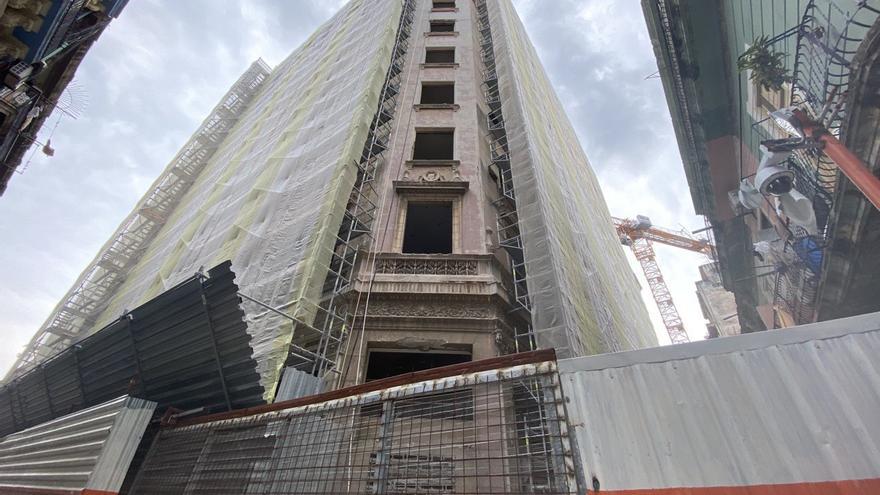
In the center of Havana, hotels continue to be built while the housing stock continues to deteriorate. (14ymedio)
14ymedio/EFE, Havana, 12 February 2020 — Cuba will continue to build hotels as a long-term strategy despite the decline in tourism. The Minister of Tourism, Juan Carlos García, answered the question that many ask themselves, one that, without a doubt, he wanted to answer, since it was asked this Tuesday during his appearance on the Roundtable program on Cuban Television.
The Cuban official who heads up the activity said that Cuba would never received more than four million tourists if, in the 90s, Fidel Castro and his brother Raul had not decided to develop the sector with a program that included, in addition to Havana and Varadero, Holguin and the Cuban Keys.
Thus, even though the latest figures for the last year showed a 9.3% drop in foreign visitors, the Government will continue to focus on increasing the capacity of hotels and related services. continue reading
“In the beginning the country was marketed as a sun and beach destination, and the investment efforts were focused on this type of tourism. But today the expectations of the tourists go beyond that, they want to enjoy the hospitality of the Cuban people, their culture” said Garcia.
“For the growth of tourism in the capital, a more up-to-date hotel infrastructure was required. The hotels we build today are high-tech, coinciding with what the country needs. We work with solar panels, saving lighting, even when we are in a highly automated process,” he added.
In addition, competition in the region, according to the minister, is very strong, so investments will continue.
For this year, tourism authorities have set a goal of 4.5 million international visitors this year and hope to reverse the decline suffered in 2019 with the growth of the market in Russia and the recovery of traditional numbers from European countries.
“It is not the first time that tourism has declined in Cuba. That happened earlier in 2001, 2007 and 2008, but we have had the possibility of recovering. We are sure that we are going to reverse this situation,” he said.
Garcia recalled that this decline came after the strengthening of the economic embargo measures applied by the United States Government, such as the suspension of cruises from that country, as well as things like the bankruptcy of tour operators such as the British Thomas Cook.
The Russian market went from tenth to fourth place at the end of 2019, during which it grew by 30%, sending a record 178,000 travelers to Cuba; and this year the Cuban Tourism Fair will be dedicated precisely to the Eurasian nation as a guest of honor.
The highest authority of the sector outlined other measures to recover the growth of previous years and rescue of tourism, including from events and looking at traditional markets such as Spain, Germany, France, Italy and Great Britain, along with the incorporation of new markets and continuing the investment in hotel rooms and facilities.
Other lines of growth to which the Cuban market aspires are the increase in the share of tourism by Cubans, which the authorities are focused on. In 2019, 600,000 more Cuban clients were accommodated compared to the previous year and the chains are making special offers that so that these visits will continue to rise. In Varadero, the minister argued, there were more than 7,000 national customers at the end of the year.
“We are engaged in the north of Holguin, in a project that includes eight campsites, four of which will be inaugurated in 2020, always taking advantage of the natural beauty of the environment,” he said.
Other strategies cited were the increase in internal connections in the country, seeking the Chinese market as a potential large source of tourists, and offsetting the embargo with a package of unspecified measures.
In addition, the minister announced that the cruise sector is not being ignored, despite the fact that the main market — cruiseships from the US — is now prohibited.
Although in 2019 the bar was set at the reception of 5.1 million foreign visitors, that official forecast was revised downwards, first to 4.7 and finally to 4.3 million.
But at the end of 2019 the registered figure was 4.27 million tourists.
Tourism is Cuba’s third source of income behind remittances and the sale of professional services abroad, contributing 10% to gross domestic product (GDP) and generating approximately half a million jobs, according to official
___________________
COLLABORATE WITH OUR WORK: The 14ymedio team is committed to practicing serious journalism that reflects Cuba’s reality in all its depth. Thank you for joining us on this long journey. We invite you to continue supporting us by becoming a member of 14ymedio now. Together we can continue transforming journalism in Cuba.
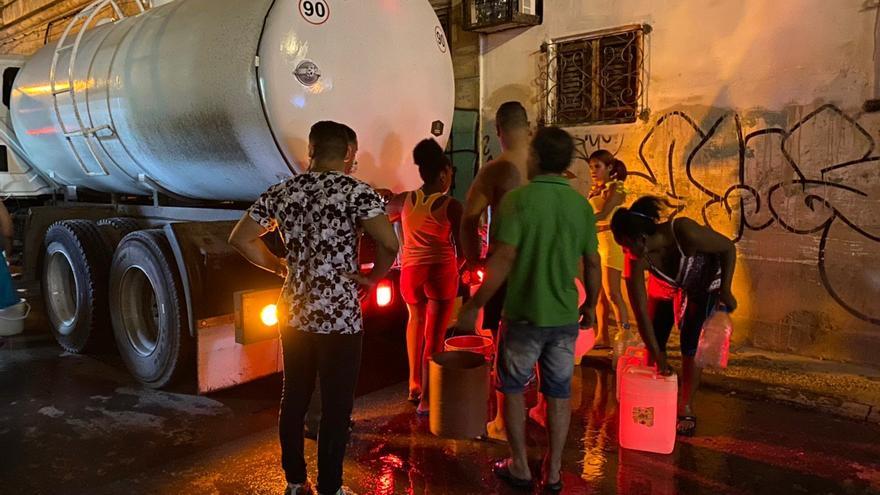
In recent days Havana’s water shortage has worsened. (14ymedio)
14ymedio, Havana, 13 February 2020 — Since dawn, in many of the capital city’s neighborhoods, the question is when the water will come. The supply has been zero for weeks in some areas and in others the cycles have lengthened and 10 days can pass without the liquid running through the pipes.
“In this block there hasn’t been water for more than a week, not a drop. It is incredible, because you can go around the corner and there’s water, and there’s none here,” says Raquel while rushing with her bucket in hand to try to fill it from a tanker truck that just arrived.
“Look, sometimes you lose patience, it is not easy not to have water for the basics. The other day, in front of the fire station, the neighbors closed the street to get attention. It is not the first time they’ve done it. When you see that nobody cares what we are going through, it is understood that these things will happen,” says Raquel.
“I do this voluntarily. I came to fill the hotel cisterns when it closed and I was surplus. I came for people to get them at least a little water, because I know the situation well,” said the driver of the water truck. “I know what this is like because I was born and raised here, in the heart of Old Havana.”
Women, men and children go from one place to another with their containers. It is a scene that is repeated every day.
______________
COLLABORATE WITH OUR WORK: The 14ymedio team is committed to practicing serious journalism that reflects Cuba’s reality in all its depth. Thank you for joining us on this long journey. We invite you to continue supporting us by becoming a member of 14ymedio now. Together we can continue transforming journalism in Cuba.
SOMOS+, Adalberto R. Mes Duarte, LLB, 7 November 2018
Now you will see what legality really is … And these were the exact words of the Head of the Municipal Unit of the National Revolutionary Police in the City of Cienfuegos, Captain (I don’t even know his name), when he showed up in my house, at exactly 06:55 hours in the morning, accompanied by more than twelve policemen, three patrol cars, a Jeep and two motorcycles, handcuffing me and indicating, without a probable cause, my arrest and driving me heavily escorted, in front of my family and neighbors, like an extremely aggressive and dangerous criminal.
WHAT VIOLATIONS OF HUMAN RIGHTS AND THE CONCEPT OF LEGALITY WERE COMMITTED?
I was arrested (again, without previous explanations) at 06:55 hours on October 26, 2018, at my front door, in the presence of my family, by a dozen uniformed men and several vehicles of the above-mentioned institution. However, due to strange, and so far, unknown reasons, my detention appears registered on that same day, but at 09:50, that is THREE HOURS AFTER the scandalous and public police operation.
In this case, I hope that nobody comes up with the stupid idea of altering, or forging the document that I signed the first day of my arrest, and to which I had access on the seventh day of my confinement through the Chief Prosecutor of Criminal Procedures of the Provincial Prosecutor of Cienfuegos, who, above all, gives the impression of being a serious person. continue reading
For about an hour and a half, of the THREE DARK HOURS in which I remained NOT OFFICIALLY DETAINED but indeed, “LEGALLY DISAPPEARED” I endured PHYSICAL TORTURE, as some of my captors tightened the cuffs so strongly, that the metal penetrated in my skin and created injuries that left scars that I still have today.
If you ask yourselves: Why this bad blood? Well, the policemen who were in the place where I was held captive, approached me from behind and looked forward to a complaint or a groan of pain, which of course, would never happen.
Then, a policewoman came in and ordered them to take off the cuffs from me, and to take me out of there. All this was in the presence of the Police officer in the charge who remained unaffected, as if nothing illegal was happening around him. I showed him my hands totally swollen, bruised and furrowed by the metal and blackened as well, and told him: this is a reflection of what you commit every day to the defenseless citizens! … In response I only received silence, total silence.
This very same officer did not allow me to use my eyeglasses to read the statements that irrationally and incoherently made up around what was already seen as an absurd manipulation of the Judicial System by the Ministry of the Interior. According to this same officer, I knew that I stood accused of being “alleged perpetrator of crimes of Slander and Disobedience” (I will talk about this in the second part of this document)
The Police officer in charge himself,a young man seriously affected by his poor grammar and spelling knowledge of the beautiful Spanish language, refused at all times to grant me the right to phone my relatives so they would know in which police station I was.
I was denied the right to have access to the Experts of the provincial Department of Legal Medicine so that, prior to the body examination, they could certify the physical injuries that I presented in my hands.
From the moment the officer in charge made my detention official and made me sign an Arrest Certificate, without clearly stating the crime or crimes for which they kept me under arrest, besides the fact that I was detained after 09:50 hours, therefore leaving almost three hours in which I do not physically exist as detained anywhere, I declared myself on a HUNGER STRIKE until my rights are restored and I strictly demand the presence of a Prosecutor to whom I could inform on all the physical and mental mistreatment that I was enduring so far.
At approximately 10:20 hours on October 26, 2018, I was transferred from the Municipal Station to the Station of Region No. 1 for Criminal Prosecution, where I remained for twenty-four (24) hours. And according to Lieutenant Colonel Franklin, the reason why I was there is because one of my brothers was under custody in the Municipal Station and we could not “be together”; furthermore, I had to give up my Hunger Strike so that I could be granted all the rights I was claiming.
In the afternoon of October 27, the Police officer in charge appears (I do not know his name because he did not say it) and notifies me that there is a court order for “Preventive Custody” imposed against me by the Municipal Prosecutor, Aimara Almeida, and that later in the afternoon I would be transferred to the Provincial Unit of Criminal Procedure, where the perpetrators of the most serious crimes committed in the jurisdictional area of the province remain detained. I want to make clear that this is the most rigorous military institution of imprisonment and prosecution in Cienfuegos, even higher than the Provincial Prison in terms of the regimen.
In this military unit, I was confined to Cell No. 12, alone, isolated, incommunicado and identified as inmate No. 494. A completely sealed place, with artificial (electric) light twenty-four hours a day, two steps and a half wide by three steps long, where it is not allowed to speak or shout under penalty of punishment.
Here the damage or torture is psychological. Although there were never complaints of my behavior, from the moment I entered that place, I declared my political position against the government, as well as my only demand: “to restore my freedom and my rights.”
I would be lying, if I said that I was physically or verbally abused there. The health and security staff kept an eye on my condition, and constantly asked me if I wanted to eat any kind of food, or if I wanted to drink water, something that I emphatically refused. Many of them expressed their knowledge that my stay there was totally unjustified, but that they were only following their superiors’ orders.
Once my demands were known, the Head of the Criminal Prosecution Unit, informed me in an interview that he can only agree to bring me a Legal Physician to certify the bodily injuries that I presented, but he would keep the Certificate that the expert would issue, meaning that he was not going to deliver it to me, and that there was no other guarantee he could offer me since: “I WOULD NOT HAVE ANY RIGHTS FOR AS LONG AS I AM ON A HUNGER STRIKE, FURTHERMORE, IF SOMETHING HAPPENED TO ME, I WOULD BE THE ONLY ONE RESPONSIBLE; THEREFORE, I WAS TO REMAIN IN SOLIDARITY CONFINEMENT AND WITHOUT RIGHTS FOR AS LONG AS I KEEP MYSELF IN VOLUNTARY INANITION, WHICH WHAT THEY CALLED THE POSITION I HAD ASSUMED.”
On October 31, I cannot specify what time it was, they took me to one of the interrogation rooms, and finally: “What I assumed from the first day appeared, that was the engine that was moving all the threads for my detention, permanence and status there.”
The Department of State Security showed up in the person of one who called himself First Lieutenant Daryl, a decent individual, very temperate and interested in my demand, but with the double intention clearly visible, to tell me that I could be convinced that he was there on behalf of the prosecutor that I was demanding so insistently. That the complaints for which I was being prosecuted were already in court, and that he had the ability to have access to them and destroy them, as well as the power to solve the situation of my brother and the rest of my relatives.
After about an hour or more, of fruitless discussion, the conversation ended up in these two points, by the Department of State Security:
a) I would immediately suspend the Hunger Strike and commit myself that once released, I would not make any new complaints against the National Police;
b) The Department of State Security promised to immediately release my relatives and impose administrative fines (they did not define amounts).
On November 1, 2018, in the afternoon, I was taken to one of the interrogation rooms where the Chief Prosecutor of Criminal Proceedings of the Province of Cienfuegos awaited. He confirmed to me that my brother had only been detained for 48 hours, and the rest of my relatives had not been arrested. My IMMEDIATE FREEDOM was decided, and this official is the one who assured me that my official detention had started at 09:50 hours on October 26, and not from 06:55 when it actually happened.
To get an idea: I am 1.85 m (6’ 1″) tall. At the time of my arrest, I was in perfect physical and mental shape. I entered the police criminal detention and prosecution system, with 115.0 kilograms (253 pounds) in weight. I only suffer from high blood pressure (controlled), Bronchial Asthma and Chronic Allergy. When my IMMEDIATE FREEDOM was decreed, after only SEVEN DAYS, according to the daily weighing and the vital parameters measured by the Ministry of the Interior (MININT, for its acronym in english) Medical Service experts, I barely reached 104.0 kilograms (229 pounds).
I left that place suffering from a strong flu, provoked by the conditions of permanent humidity inside the cell in which I was held, which is why I am now under antibiotics treatment. I am suffering from sleep disturbances, as well as severe abdominal pain, and persistent dizziness. From these, I am still recovering today.
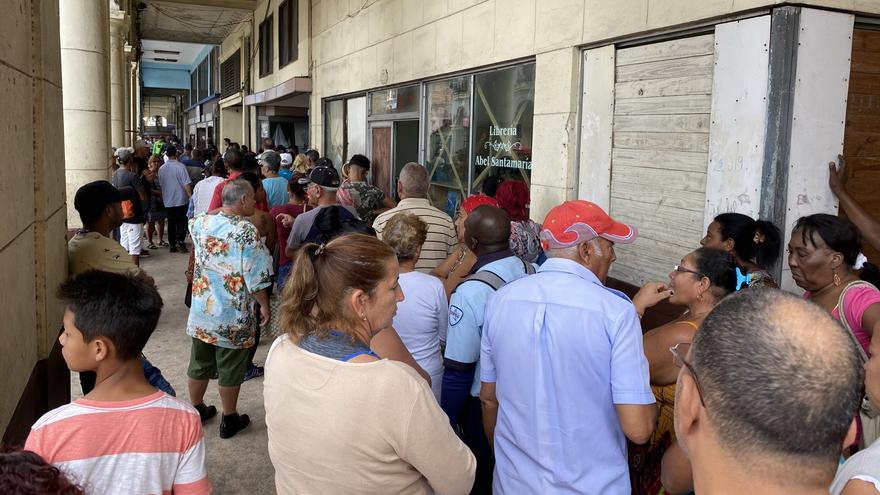
A long line in Havana to buy detergent, one of the products that has been missing from the markets. (14ymedio)
14ymedio, Havana, 11 February 2020 — The authorities of the Ministry of Internal Trade have not stopped insisting in recent days that cleaning products will not disappear in February and March while recognizing their scarcity and announcing the availability of these products in April. This Monday, Francisco Silva, general director of Sales of Merchandise of the ministry, indicated that the sales of soaps will grow 40% and those of toothpaste 35%, compared to the previous year.
According to the official Communist Party newspaper Granma, several executives of the Ministry of Internal Trade anticipate the improvement in the supply for April, as its head, Betsy Díaz Velázquez, said last Tuesday. The state and independent press then echoed the words of the official, who admitted that these products had been missing in January. “We are not going to have the demand satisfied in February or March, but we hope that with several measures that are being adopted, we can stabilize, by April, the production of cleaning products by the industry and with it the availability to the population,” she said.
The minister’s words provoked a reaction of fear, especially in Miami, where relatives of emigrants fear that the aggravation of the crisis on the Island will require them to meet more of their relatives’ needs than usual.
On Saturday, the Ministry of Internal Trade issued a statement to indicate that the products are available, although scarce, and accused “unscrupulous and traitorous persons” of misrepresenting the information. “What is true is that until March the demand and stability will not be satisfied, since the total amounts needed to meet it are not available and that the products must be stabilized at appropriate levels from April,” according to the statement.
“Once again the lackeys of imperialism manipulate information to damage the image of the Revolution, which they will not achieve, as they will not be able to undermine the unity of the people,” they emphasized.
Two days later, the person in charge of emphasizing the message was Silva, who added the customary attribution of blame to the United States in the clarification of information on the products.
The manager attributed the shortage to the lack of timely arrival of raw materials from different countries that do not escape “the harassment to which Cuba is subjected, because of the economic blockade of the United States Government,” the note said. “Given this scenario, the industry has had to look for alternatives, which means not only financial resources, but also to new sources of supply. All these actions must be reflected in a higher level of stability from the second quarter,” Silva said.
Silva has referred to more commodities with problems, one of which is cooking oil, which, according to the official, is being produced normally in the three factories that deal with it, located in Havana, Camaguey and Santiago de Cuba.
“In 2019, 15,586 more tons were sold than in 2018, and for this year there must be stability in the assurances,” she said, adding that crude and refined oil is available, in addition to the imported oil included in the plan.
As for grains, another of the products that suffers shortages, Silva indicated that black beans or peas have been delivered this February “according to the availability in each province” and noted that beans are being imported to meet the needs. Last week, officialdom admitted that the production of this staple food has collapsed. “About 25,000 tons were planned, which represents less than 50% of the previous period,” said Yojan García Rodas, head of the Department of Various Crops of the Ministry of Agriculture.
Silva said that in February and March the products of the standardized family basic basket, such as coffee and pasta, are guaranteed to the territories to which they are entitled, in each month’s deliveries. And with regards of coffee and bulk milk powder, solutions are being sought to be able to package them.
The official said that the year just ended, more meat products were sold than in 2018 and the same is expected for 2020, although in the Cuban pantries it was not especially noticed. Chicken was one of the products that suffered frequent shortages and only sausages or turkey hash were available in a stable supply.
But the statements of the officials calling for calm have failed to calm the anxiety of consumers who form long lines outside the stores that carry products such as soap, detergent and dishwasher. Families especially look for small bags of detergent, cheaper and harder to find right now.
Others, in the face of the shortages, return to the practices that spread throughout the country during the Special Period: melt small bars of soap to make a bigger one, or prepare it at home with animal tallow, caustic soda and other aromatic ingredients.
In Artemisa, the Martínez family, which has been selling milk, cheese and yogurt in the informal market for more than two decades, has also, in the last month, included manufactured soaps that they produce in their own patio. “There is a lot of demand and it is used primarily for washing because it is hard soap and it is used slowly,” says one of the vendors.
Others appeal to their relatives abroad to send a package with detergent or to buy the product from the online classified sites that deliver on the Island. On those websites, about 200 grams of detergent costs more than $2.50 (USD), while a package with 34 washing capsules exceeds $42.00 (USD).
______________________
COLLABORATE WITH OUR WORK: The 14ymedio team is committed to practicing serious journalism that reflects Cuba’s reality in all its depth. Thank you for joining us on this long journey. We invite you to continue supporting us by becoming a member of 14ymedio now. Together we can continue transforming journalism in Cuba.
14ymedio, Havana, 11 February 2020 — The police have had to intervene to prevent the lynching of an alleged rapist in Santiago de Cuba, according to several independent media outlets on the Island.
According to residents of the area, last Saturday the detainee allegedly raped a girl just 8 years old, who had to be admitted to the Hospital Infantil Sur, known as La Colonia.
The aggressor, Diario de Cuba recounts, tried to hide at a friend’s house in the neighborhood of Nuevo Vista Alegre, but a crowd surrounded him and threw stones at him.
The police had to lead the man inside the house to prevent the situation from getting worse and even the presence of special agents was required.
When the agents removed the detainee to put him in the patrol car, the population threw objects again until a confrontation with the police began in which shots were heard.
Apparently, the girl, a neighbor of the San Pedrito neighborhood, had attended a birthday party and the alleged aggressor picked her up claiming that her mother had sent him to look for her.
In the images that have circulated through the networks, the enraged crowd is seen attempting to take justice in their own hands and the police forces trying to disperse the mob by means of tonfas.
____________________
COLLABORATE WITH OUR WORK: The 14ymedio team is committed to practicing serious journalism that reflects Cuba’s reality in all its depth. Thank you for joining us on this long journey. We invite you to continue supporting us by becoming a member of 14ymedio now. Together we can continue transforming journalism in Cuba.
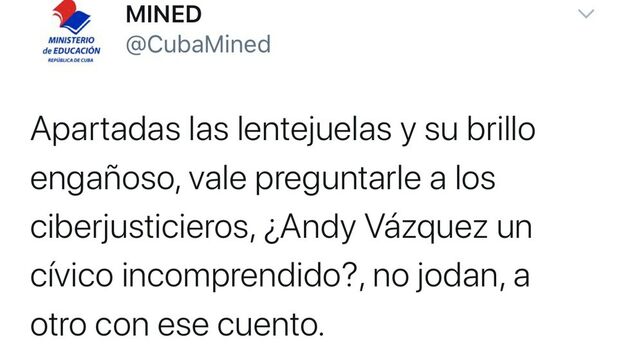
Screen capture of a message, now deleted, published by the Ministry of Education on Monday. “When the sequins and their deceptive brightness are removed, it is worth asking the cyber justices, is Andy Vázquez a misunderstood civic-minded type? Don’t fuck with me, try it on someone else.”
14ymedio, Yoani Sanchez, Havana, 11 February 2020 — Ministries, institutions or public figures, no matter where you look, the Cuban government is losing the battle on social networks and the hardest blows come from their own ranks. Vulgarities, threats, challenges to physical fights and tons of typos are some of the most repeated stupidities on the Twitter and Facebook accounts that give voice to the authorities of the Island.
The most recent stumble is the responsibility of the Ministry of Education (Mined), which reproduced in a tweet, now deleted, without mentioning that it was a quote or putting it in quote marks, a text against the actor who plays the popular character Facundo on TV. “Is Andy Vázquez a misunderstood civic-minded type? Don’t fuck with me, try it on someone else,” says the message that has caused an avalanche of criticism for the foul language used by this educational institution.
However, it’s not the Ministry’s tweet that is the greatest vulgarity that has been published in the account of a Cuban institution nor is it something unusual in the official discourse, accustomed to revolutionary bravado and using an arboreal language believing it thus places itself closer to the people. Actually, it has been a very old practice in the propaganda of Castroism, which stands out for everything from its sexual metaphors, to direct allusions to male gonads as symbols of patriotism and courage. continue reading
The difference is that while everything remained in the field of the articulated word, of the shout launched in the middle of an act of repudiation against a dissident or reduced to a motto written on a fence on the street, the diffusion was minor. But now, with thousands or millions of eyes on the official accounts of social networks, every little slip, every rough word and every aggressive phrase multiplies the reactions and reaches an incalculable number of Internet users on and off the Island.
The mixture of secrecy, rudeness, insults and worn out slogans of the past that make up the communication policy of partisan institutions, ministries and leaders in the networks, are also born of their prejudices towards new technologies. It is worth remembering that they launched themselves on them almost forced by the reality that the independent speech of bloggers and tweeters had gained a lot of terrain on those grounds.
Also, their attitudes show the sluggishness in addressing certain issues, spreading news or issuing a judgment that characterizes the information channels controlled by the Communist Party. Until the Plaza of the Revolution has spoken, its followers cannot do it and by the time it does it dictates from the focus on hashtags, which ones should be used. Hence the boring blather or the uniform repetition of hashtags that defines their accounts.
Creativity, the proper opinion and the phrase with a mixture of humor and freshness can be costly, something that some enthusiastic tweeters have learned that, having distanced themselves just a few millimeters from the government discourse, have had to erase their publications, amend the plan and even close their accounts on Facebook, Twitter or Instagram to avoid upsetting their superiors.
Network administrators are often tied hands. They can master technology, know the best way to reach the audience and have the desire to undertake new paths in political communication, but they run into a strong informational discipline based on polarization, the exclusion of differences, arrogance, control excessive information and an absolute inability to dialogue.
The engineers graduating from the University of Computer Science or graduates in the faculties of Journalism that are part of the “communications” teams of must suffer from this situation. Some of them, no matter how much they try to convince their bosses you no longer speak this way in the 21st century and that on public networks public officials must exercise good manners and be receptive to the opinions of citizen, they encounter the wall of discursive practices formed in the verbal guerrilla warfare of more than half a century.
Right now, when a tweet is published in a ministerial account, on the timelineof an official or on the Facebook wall of an institution, there will be those who, within the official structures, cross themselves and think: “To the trenches, ours are coming.” And they will be right. There are no stronger blows to credibility, than those Castroism is causing to itself.
______________
COLLABORATE WITH OUR WORK: The 14ymedio team is committed to practicing serious journalism that reflects Cuba’s reality in all its depth. Thank you for joining us on this long journey. We invite you to continue supporting us by becoming a member of 14ymedio now. Together we can continue transforming journalism in Cuba.