Bernie Sanders, Cuba and Super Tuesday

In recent days, the issue of Cuba has broken into the United States presidential campaign with unusual force. (Livenewsnow)

14ymedio bigger14ymedio, René Gómez Manzano, Havana, 29 February 2020 — In recent days, the issue of Cuba has burst with unusual force (and not entirely deserved) into the US presidential campaign. Especially among the many leaders of the Democratic Party who are struggling to win the nomination in opposition to the Government of Donald Trump.

The trigger for that issue — which does not have to have a primary importance in that political debate but which has acquired such relevance — were statements made by the septagenarian Senator Bernie Sanders — a self-proclaimed “socialist” — who, for now, is leading in the polls for the nomination of the “blue” party.

In an interview with an important national television network, the Senator from the state of Vermont ratified his previous statements, favorably assessing certain facets of Fidel Castro’s performance. Specifically, he spoke about the literacy campaign carried out by the late Cuban dictator and declared it a positive. continue reading

These statements admit several objections. The first is the that formulated correctly by the blogger Yoani Sánchez: Is it possible to applaud that hundreds of thousands of citizens are taught to read and, at the same time, to ignore that the Castro regime, for those same literates and millions of other Cubans, for ideological reasons, prohibits access to books that this regime considers “undesirable”?

But we can also ask ourselves: is it permissible to point out a positive aspect of the public performance of a dictator while silencing the essentially negative balance of his Government? To give an example: can we find it good — say — that someone praises Adolph Hitler for having built the highways or having significantly reduced unemployment?

If it were a colloquium of specialists talking about the construction of public roads or a convention dedicated to employment policies, perhaps it could be tolerated that the performance of the Nazi leader in these areas be cited, without entering into an analysis — or even a mention  of other facets of the dire acts of that macabre character.

But it is inadmissible for a politician to act in the same way. Whoever devotes himself to the public trust is obliged, by virtue of his own profession, to take into account all the implications that anything he does or says may have on the different sectors of the electorate.

Should we assume then that Mr. Sanders is a public man with little aptitude? The he praised Fidel Castro out of ignorance? That is not the case. He, with the remarkable support he has managed to gain among the sectors of the extreme left of his party, has demonstrated his extraordinary political ability.

The problem is that Mr. Bernie has no empathy in courting those extremist groups of Democrats. It is a human conglomerate whose little hearts, after sixty years of an anti-democratic regime and economic involution in Cuba, and despite the arrival at the American coast of a couple of million fugitives from Castroism, continues to beat in unison with the ringleaders in Havana.

This should not surprise us, because in the sect of the “socialists” the many sins committed by those who uphold these doctrines are easily forgiven. And regardless of whether the measures taken by their governments have produced tens of millions of deaths (as in the cases of “little father” Stalin and “great helmsman” Mao), or “only” millions, as in the case of Kim of North Korea, Pol Pot or Mengistu … aren’t they all co-religionists! Then it’s about simple venial sins!

In the case of the American leftists with respect to Castro, the matter is complicated a little, due to the extreme anti-Yankeeism maintained by the man. It is an orientation not only demonstrated by decades of political decisions, but also confessed in the well-known letter that, before his rise to power, the founder of the Cuban dynasty addressed to his confidant Celia Sánchez, telling her, “When this war ends, a much longer and greater war will begin for me: the war I am going to wage against [the Americans].  I realize that is going to be my true destiny.”

But all these are minor inconveniences for the Vermont senator. This, in order to win the sympathies of the extremists of his party, does no less to seek to make an enemy of the Cuban exiles (most of whom are citizens of the United States and vote in that country). I suppose Mr. Sanders made a very simple calculation: You are not going to vote for me anyway!

In the meantime, I believe that President Trump and his friends have every reason in the world to pray that the ineffable Bernie continues to win party primaries and caucuses and that he ultimately achieves the Democratic nomination. Everything seems to indicate that, in such a case, the current tenant of the White House would continue to live there for another four years.

As altogether different thing is what the traditional sectors of the blue party think, dreaming that their nominee will be a more moderate leader, capable of obtaining, in the presidential election of November, the support of the political center.

We will have to see how the voting turns out next Tuesday, when the voters of numerous states, including some as important as California and Texas, will pronounce themselves.  It’s not for nothing that it is called “Super Tuesday.”

______________________

COLLABORATE WITH OUR WORK: The 14ymedio team is committed to practicing serious journalism that reflects Cuba’s reality in all its depth. Thank you for joining us on this long journey. We invite you to continue supporting us by becoming a member of 14ymedio now. Together we can continue transforming journalism in Cuba.
The Reason for Your Trip Doesn’t Matter, the Problem is Who You Are

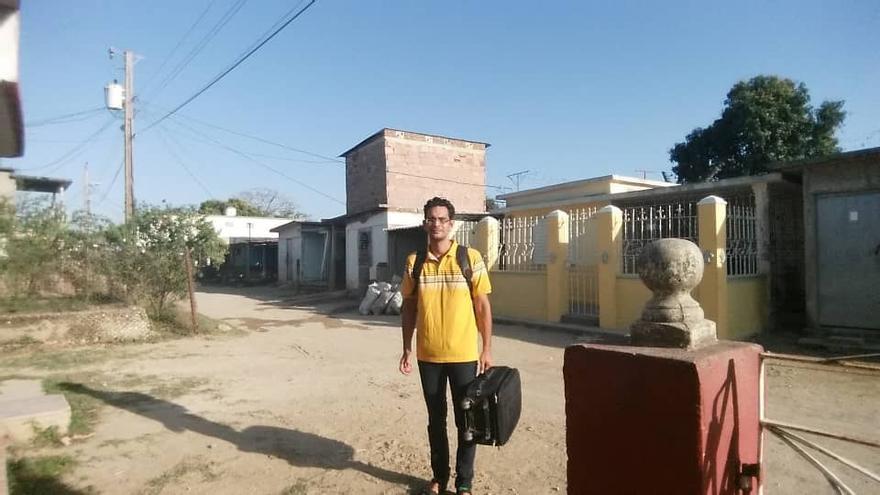
“We will not allow any counterrevoltionary to go to Santiago de Cuba,” they told the reporter and religious activist. (14ymedio)

14ymedio bigger14ymedio, Ricardo Fernández, Camagüey, February 21, 2020 — You pack your bags, full of plans and dreams, but you discover with anger that freedom of movement in Cuba is conditioned on the way in which you think and speak. It doesn’t matter how many times it happens or where you were going, it is always frustrating when the authorities arbitrarily tell you that you cannot travel.

On February 17, a captain of the Department of State Security (DSE) informed me that, again, I couldn’t travel. This time I wasn’t at José Martí International Airport, nor was I heading abroad. I had been invited to the church of pastor Alaín Toledano Valiente, in Santiago de Cuba. It was a purely religious event, but the reason of your trip doesn’t matter, the problem is who you are, or that’s what the DSE official whose pseudonym I can’t even remember said.

“We will not allow any counterrevolutionary to go to Santiago de Cuba,” he said emphatically before ordering two police agents to put me in patrol car number 424 which brought me to the Third Police Unit of Montecarlo in Camaguey. There they searched my belongings for filming equipment that could have betrayed that the purpose of my visit was journalistic. They found nothing, but the sentence against me didn’t change. continue reading

Being someone who thinks and acts according to his ideas, whenever they don’t agree with their own, it seems, they deprive us of all the rights that citizenship and the Constitution grant us. It is not the first time that they arbitrarily spoiled my plans. Nor is it the first time that they left me with no explanation about what happened. Once again I had to make conjectures, look for some logical reason that would abate the ire I was feeling.

Putting two and two together, it occurred to me that it is possible that the Government is trying to control the situation in the city, where a few days ago a group of residents confronted the Police, who were trying to prevent the lynching of an alleged rapist of an eight-year-old girl. The obvious question is: What do I have to do with what happened in Santiago? Am I a real risk in face of a possible social explosion, despite being openly pacifist?

Speaking about the Cuban reality without sugarcoating has put me on the same level as terrorists and drug traffickers, which is how I was treated by the State Security captain during the two and a half hours that my detention lasted. So that it would be on the record, the agent wrote an “official warning” that of course I refused to sign. The text says: “If he is detected in the Eastern provinces he will have committed a crime of disobedience.” And adds: “That is three years in prison.” Three years in prison for trying to visit the church of a friend in my own country.

As I was leaving the police station the same official passed by me on the typical Suzuki motorcycle and, as if I were an old friend, said to me: “If you want I can take you, public transportation is bad.” “Are you going to Santiago?” I responded in the same ironic tone.

Apparently he didn’t like my response, because he accelerated and disappeared in the distance while I was calling my wife, who thought I was on my way to Santiago, to tell her that the trip had been short…and in a patrol car.

Translated by: Sheilagh Herrera

___________________

COLLABORATE WITH OUR WORK: The 14ymedio team is committed to practicing serious journalism that reflects Cuba’s reality in all its depth. Thank you for joining us on this long journey. We invite you to continue supporting us by becoming a member of 14ymedio now. Together we can continue transforming journalism in Cuba.
Police Surround Palace of Justice in Santiago de Cuba for Trial Against Jose Daniel Ferrer

Ferrer, 49, spent almost eight years in prison after his arrest, in 2003, as part of the 75 dissidents who were victims of the Black Spring. (EFE)

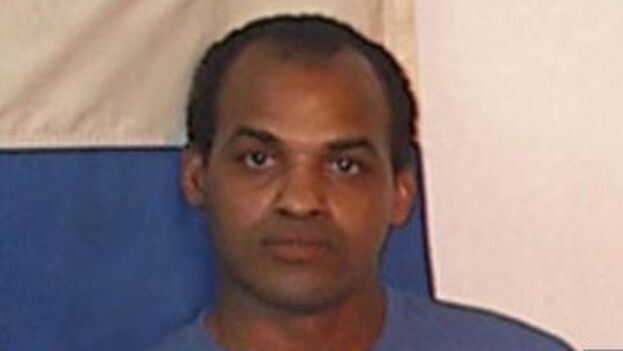
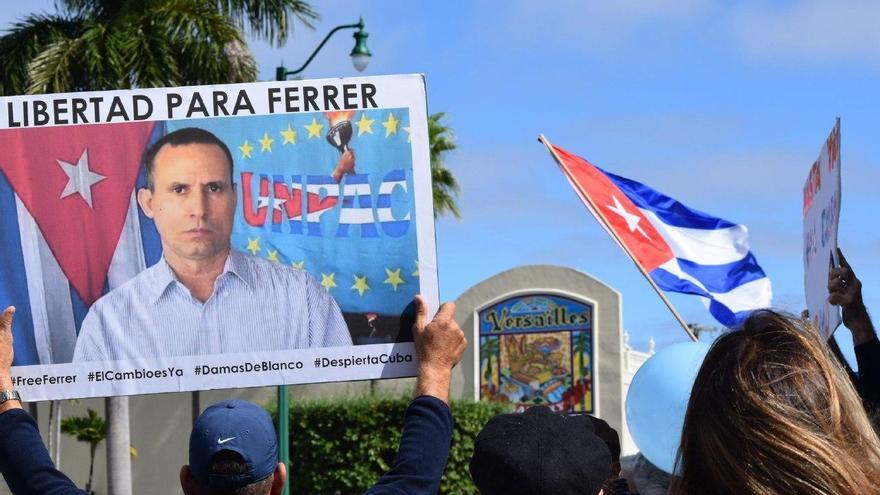
14ymedio bigger14ymedio, Havana, February 26, 2020 — The trial against José Daniel Ferrer, leader of the Patriotic Union of Cuba (Unpacu), began this Wednesday morning in the city of Santiago de Cuba , without having been previously announced in the official press, which has launched a massive smear campaign against the opposition figure in recent months.

Ferrer, 49,  one of the Cuban dissidents with the greatest international renown at, has been imprisoned since October for an alleged attack on another man, a charge that his relatives deny while insisting that it is a crime “prefabricated” by the Government. The prosecution is asking for nine years in prison for the Unpacu leader, who spent almost eight years in prison after his arrest, in 2003, as part of the 75 dissidents who were victims of the Black Spring.

This Wednesday the telephones of several Unpacu coordinators as well as that of Nelva Ortega, Ferrer’s wife, are “out of coverage,” as 14ymedio was able to confirm. continue reading

Since Monday afternoon, activists from the opposition organization have denounced the Police and State Security siege on their headquarters in Santiago de Cuba and the arrest of their coordinator in Havana, Zaqueo Baéz.

The activist Joanna Columbié, who lives in Miami, denounced in the morning hours the detention of her brother Dariem Columbié, who is coordinator of the movement Somos+ (We Are More). According to her, the young man was arrested in the area around the Palace of Justice when he was trying to attend Ferrer’s trial.

At the time of his arrest, Joanna was communicating with her brother and published a screenshot of the conversation in which her brother said that the Palace of Justice was surrounded by Security and political police agence to prevent access.

The opposition leader had asked his family, during a visit to him in prison on February 14, to begin a campaign with the hashtag #YoSoyElQueAcusa (I am the one who accuses).

“It is José Daniel who accuses the Castro dictatorship of crimes against humanity, of violating his rights and liberties, as well as those of all Cubans, of raiding and looting his home on repeated occasions,” explained his sister, Ana Belkis Ferrer.

In the operations they have employed “even firearms,” she says on social media, where she also denounces “the terrifying acts of repudiation against him, his family, and other members of Unpacu, attempted murder on three occasions, threats, slander, savage beatings, defamation campaigns, physical and psychological torture, depriving him of his liberty and putting his life at risk.”

In October in an interview with 14ymedio, Nelva Ortega explained that the habeas corpus she presented to obtain information on Ferrer’s situation was rejected by authorities.

Along with José Daniel Ferrer, the activists Fernando González Vaillant, Roilán Zárraga Ferrer, and José Pupo Chaveco, members of Unpacu, were accused of damages, deprivation of liberty, and assault.

“I have few expectations that José Daniel Ferrer will have a fair trial,” the European Union’s vice president responsible for Latin America, Dita Charanzová, told the Spanish newspaper ABC.

“Since they arbitrarily arrested him, there have been all sorts of irregularities in the process, in addition to the abuse and torture that José Daniel was subjected to. Thus, the European Parliament will be closely following the case and will react accordingly,” added Charanzová, who is also the representative of the Czech Republic in the European Parliament.

Hours before the trial the US Secretary of State, Mike Pompeo, urged in a letter to his Cuban counterpart, Bruno Rodríguez, to “immediately” release the dissident José Daniel Ferrer, leader of Unpacu.

Groups like Amnesty International and institutions like the Organization of American States have also asked for his release on several occasions.

Translated by: Sheilagh Herrera

____________________________

COLLABORATE WITH OUR WORK: The 14ymedio team is committed to practicing serious journalism that reflects Cuba’s reality in all its depth. Thank you for joining us on this long journey. We invite you to continue supporting us by becoming a member of 14ymedio now. Together we can continue transforming journalism in Cuba.
Maria Werlau Calls for End to Cuban Dominion Over Venezuela

María Werlau wants to put this material “at the disposal of analysts and governments.”

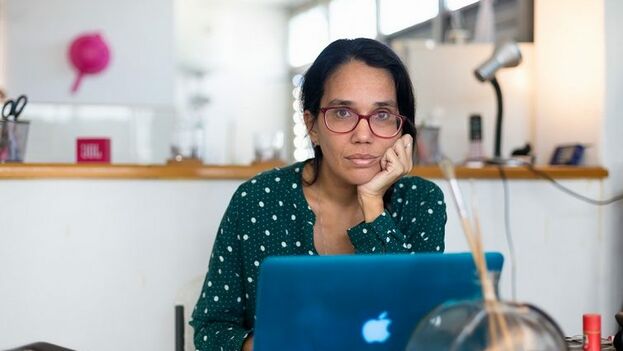
14ymedio biggerEFE (via 14ymedio), Jorge Ignacio Pérez, Miami, February 26, 2020 — The Cuban-American researcher María Werlau had to fit together the pieces “like a puzzle” for her new book, in which she tackles in a comprehensive manner what she defines as the “asymmetric occupation” of Venezuela by Cuba, which, as she tells Efe, is “worse” than she imagined when she started.

“There are a few books and a lot of journalistic material, so I had to assemble everything. I don’t believe that there have been serious academic works of the kind that it is necessary to bring to this matter,” she said just before presenting this Wednesday in Miami María Werlau calls for end of Cuban dominion over Venezuela.

“There was a lot of loose and scattered material on different angles of the Cuban intervention, but there hadn’t been anything comprehensive on what was happening in Venezuela,” says Werlau, who arrived to the United States as a political refugee at eight months old. continue reading

“It was like a puzzle. On the way I realized that it was worse than what I had imagined,” she emphasized. Werlau, who is also an independent consultant, wants to put this material “at the disposal of analysts and governments.”

The volume, with almost 300 pages and 11 chapters, is published by the Free Society Project and is available in English and Spanish, although the additional chapter, The insurrectionary offensive of 2019: a change of tactics already tried, is only available in Spanish.

Cuba’s Intervention in Venezuela: A Strategic Occupation with Global Implications has around 1,600 bibliographic citations, more than 800 sources on the subject, and of those, more than 30 primary sources.

The volume goes back to the time of Venezuela’s constitutional government of Rómulo Betancourt (1959-1964), whom Fidel Castro immediately visited to propose “the same thing that he proposed to (Hugo) Chávez,” the “radical alliance” between the two countries, which remains in place despite the deaths of its architects.

“Fidel arrives in Venezuela (in 1959) 15 days after entering Havana (…). He arrives with the entire top brass of the rebel army and meets with Rómulo Betancourt and proposes to him the same thing he proposed to (Hugo) Chávez,” says the executive director of the NGO Free Society Project, better known as Cuba Archive.

According to Werlau, Castro was obsessed with Venezuela because of its geopolitical situation, as the doorway to the Caribbean, as well as its oil wealth.

The book, which according to the author “could have been the genesis of the Castro-Chávez relationship,” has a much broader content.

“It explains how, although Cuba is much smaller, poorer, and under-developed, it achieved the dominant role with a methodology derived from the totalitarian nature of its system,” as is read in the notes of the presentation.

Among the oral sources that Werlau consulted are retired generals in Venezuela and abroad, as well as experts in computer science.

One of those is Anthony Daquin, specialist in computer security systems, who spoke to Werlau about the fiber optic underwater cable that connects the two countries.

When Werlau says that to eradicate Cuban dominion over Venezuela “it’s necessary to cut the cable and start from zero,” it’s not a metaphor.

“In Cuba they said that (the cable) didn’t work, but I was impressed with what had been achieved,” she says.

“Cuba takes control of all the identity information of Venezuelans, manages communications, social media. The program to monitor this is called Estela [Wake]. Cuba has access to all of the identity of Venezuelans; I won’t even talk to you about the electoral register,” says the author.

“You don’t need a military force or weapons in the street to take a country,” explains Werlau on her concept of “assymetric occupation.”

But the author goes further and goes deep into the “social engineering” employed by Castroism, in the chapter Santeria, a sophisticated invasion. “Cuba had 20 more years to prepare its urban scenes, since Venezuelan money entered into the equation,” she says.

For this researcher, the lives of Castro and Chávez have a certain parallelism from both having received amnesty when in prison.

“Cuba sends a contingent of forces to help in the election campaigns of Chávez, who said he wasn’t a socialist, lying, because that was part of the plan,” she affirms.

“When Chávez went to Cuba in 1994 it was already arranged. Castro had proposed to him this role as his dauphin in taking the continent,” says the author.

“Fidel is the one who brought him to Havana and, although they have lied about this, there is a source who confirms that Fidel sent him to get him,” adds Werlau, who worked for three years in Venezuela with Chase Manhattan Bank.

For the author, “the socialism of the 21st century, as they orchestrated it in Venezuela, has important structural faults, because it requires a lot of time and money to break up democratic institutions from the inside.”

“The methodology works, the concern is what is going to happen without the quantity of Venezuela’s money at its disposition. That’s why they created the Pueblo Group and launch this new form of insurgency, which they have done best in Chile,” indicates Werlau.

Translated by: Sheilagh Herrera

__________________

COLLABORATE WITH OUR WORK: The 14ymedio team is committed to practicing serious journalism that reflects Cuba’s reality in all its depth. Thank you for joining us on this long journey. We invite you to continue supporting us by becoming a member of 14ymedio now. Together we can continue transforming journalism in Cuba.

‘Tips’ From Cuban State Security for a ’14ymedio’ Reporter

Luz Escobar is “regulated” and must remain in her house when State Security believes there is an important even in Cuba. (El Estornudo)

14ymedio bigger14ymedio, Luz Escobar, Havana, 27 February 2020 — Citations from Cuba’s Ministry of Interior always leave many questions. What will it be for now? What do they want from me? What do I do when I face them? What to answer, what not to answer? Yes, because there are accusations it is better not to respond to, not to offend, such as when they insist that we independent journalists work “for four pesos,” not like members of State Security who do so for the love of their country.

This time there were two officers, but only one spoke while the other pointed to his schedule. I have never felt obliged to describe one of these individuals before but this time it is very necessary. I look into his eyes when he speaks and he holds his gaze, he is thin, of medium height and has a face like thousands. He dresses correctly, well ironed shirt, polished shoes and wears a commitment ring on his ring finger.

I see conviction in everything he expresses and note, in every word he says, his hours of study and preparation. He smiles when he feels it necessary, he seems sincere — or so he wants to be perceived. continue reading

For almost two hours I listened in silence to his opinions about the journalistic work of the media that he called “alternative,” along with his recommendations on what is the best way to do journalism in today’s Cuba. He says that I prepare well for these interrogations because “I always have the same attitude.” He does a bit of theater and tries to imitate me: “I don’t know what’s wrong with the work I do, I think it’s very necessary,” he said, putting on a high-pitched feminine voice.

However, after the friendliest start they went on to show their arsenal. The weapons they have against us, the independent journalists who work in the field, were put on the table, all shown one by one, sharpened there, in front of my face. He spoke first of Decree Law 370, then about a regulation “related to behavior on public roads,” and, finally, of the ‘usurpation of legal capacity’*, “because you are not a journalist because of the many courses you have passed,” he told me.

The official, who identified himself as Jorge, once again questioned my presence at the march of the LGBTI community last May 11 in Central Park, “the impact” of the publications I post to on the networks, some of the articles I write for 14ymedio and even my daring to “violate a security cordon” when the Spanish royals visited Havana.

He also explained to me that it is not correct to make audio recordings or take images of the cordons they establish to prevent me from leaving my house when there is “an important date” so that I cannot “influence,” and so that the activities and celebrations they organize can be carried out in peace “for the enjoyment of the people.”

That I must think of my two daughters “who have a future ahead of them” and also of my father.

In a flash he reiterated an old proposal: the “ideal” would be for me to ask permission every time I want to go out to practice journalism; my life would become a paradise in which I would not lack anything and I would have a lot of tranquility.

The real objective of the conversation was that: let’s reach an agreement so your daughters and your father will be safe. They assure me that I don’t have to give up my principles, as if my freedom were negotiable.

In 14ymedio topics are discussed, discussed, taken to the editorial board. Nobody dictates an agenda as this officer asserts without blinking. He was very critical of the newspaper’s editorial line because he says it responds to the interests of a “change of government” in Cuba.

When I get home, my daughters are waiting for me, hungry. I look at them without saying anything and I wonder if what I do is good or bad for them. So they can sleep peacefully, I don’t tell them anything about that conversation. I don’t want to disturb them with the evil that is on the other side.

*Translator’s note: “Usurpation of legal capacity” is the term used by the Cuban government to define the criminal act of practicing a profession one is not officially licensed to practice.

__________________

COLLABORATE WITH OUR WORK: The 14ymedio team is committed to practicing serious journalism that reflects Cuba’s reality in all its depth. Thank you for joining us on this long journey. We invite you to continue supporting us by becoming a member of 14ymedio now. Together we can continue transforming journalism in Cuba.
The Ideological Weaknesses of the Cuban Communist Party

Marxism-Leninism and communism as a goal keep appearing in the conceptualization of the Cuban model and in the Constitution of the Republic. But something is moving. Banner: “No one surrenders here.” (EFE)

14ymedio bigger14ymedio, Reinaldo Escobar, Havana, February 25, 2020 — The cliché has been coined that in that process called the Cuban Revolution, the first 30 years were those of the greatest ideological intolerance.

The firing squads, the Military Units to Aid Production (UMAP) [agricultural forced labor camps for gays, religious and non-conformists], the obligatory atheism, the Revolutionary Offensive, the university purges, the parameters of the “Five Gray Years“*, the imposition of a rigid mold to form the New Man, the repudiation rallies, and an exhausting etcetera were caught up in the rhetoric of Fidel Castro and the strict application of what the inquisitors of the time understood to be Marxism-Leninism.

The smallest deviation from the canon was viewed with suspicion. The catechism had to be recited exactly as it was written in the classics and, in the worst cases, as it was interpreted in the manuals, on pain of being accused of “ideological weaknesses,” which usually meant as a consequence loss of party membership, expulsion from the workplace or school, and even prison. continue reading

The extinction or collapse of the socialist camp, what the then-Maximum Leader called the “desmerengamiento“** [literally, cake-melting], brought for Cuba a couple of “subjective consequences.” On the one hand, the discredit that theory suffered by being refuted by stubborn reality, and on the other, there was no longer anyone outside supervising. However, instead of taking advantage of the opportunity to get out from under the heavy burden of a failed dogma, stubbornness prevailed and it was established that this Island would be the impregnable bulwark for the socialist banners.

As if it was a curse, another 30 years have passed relapsing in that barren whim. Marxism-Leninism and communism as a goal keep appearing in the conceptualization of the model and in the Constitution of the Republic.

But something is moving on the board, more in words than in facts. The clear intention of remaining in power has run into the necessity of modifying language.

The first detail is that the president of the Republic and the announced next first secretary of the Party do not tire of repeating their mantra: “We have to think as a country,” which gives cause for the question of the devil’s advocate: So it’s no longer necessary to think as a working class?

Throughout those first thirty years, a slogan of that nature would have cost the membership card of any activist, because according to dogma, class interests are placed above nationalist interests.

If since the beginning we had been thinking as a country, we would have better considered the confiscations, which brought the embargo as a response; the installation of Soviet nuclear missiles, which came to the point of physically destroying us; the guerrilla interventions in Latin America, which we had to pay for with isolation; the military campaigns in Africa, for which the final payment was Cuba’s dead to install a new corrupt oligarchy in Angola.

But in those years there was only one person thinking and deciding.

Another novel detail of current times is the insistence that we must change mentality, said with the lightness of one suggesting changing a vehicle’s tires and with the vagueness of one throwing out a riddle. Nobody substantiates, nobody suggests the keys to understanding which neurons have to be retired.

Recently Ernesto Estévez, a notable scientist whose political opinions appear in the official newspaper Granma and other pro-government places, published in the official organ a disconcerting text entitled Dogmas, apocalypse, and the conquest of heaven, where he warns: “Cuba is today in the process of rupture with an exhausted paradigm.” And he points out: “But our antidogmatic rupture cannot be the return to capitalism, but rather to another order that allows us to advance further toward the attainment of a more just society.”

What is that “exhausted paradigm” called and when did Cuba begin to rupture with it? Supposing that his allusion to “today” isn’t referring to 1959, but rather 2020, and if the paradigm that we used to venerate is now exhausted, and it isn’t about a “return to capitalism,” then where do we go?

More recently, in his participation in a party event at the University of Information Sciences (UCI), Luis Antonio Torres, member of the Central Committee and first secretary in Havana, indicated to the center’s activists that it was necessary to “contribute to the economy, but also to produce revolutionary ideology.”

At this event it was suggested that the subjects that had to be brought to schools were “Why is the Cuban Revolution the only one? Why is there no other Party on the Island? Why is socialism the only option for a people like this one?” In other words, it is no longer necessary to go to the classics or to the philosophical essences, but “to the practical thing itself” and the explanations will have to be taken out of the concept of revolution that Fidel Castro turned into dogma in May of 2000.

The repeated phrase that Cuba will not renounce its principles, nor give in a millimeter on them, leaves open many questions, above all what a change of paradigms proposes.

Forgetting that the material is before the spiritual, that the working class is the most revolutionary, that when the means of production behaves as a straitjacket for the development of productive forces, it is the way that must change, are grave ideological weaknesses, without mentioning the acceptance of private property as a complementary element and the opening to foreign investment led by multinational companies.

There is a little less than a year until the very likely holding of the VIII Congress of the Party. In this period, which is brief, it will be necessary to produce a notable rearrangement of discourse. For this they rely on the forgetfulness of the people, the opportunism of those who manage the process, and the naivete of those who want to see identity changes where there will only be cosmetics.

The current and future “ideological weaknesses” of the only party allowed in Cuba will be the bedrock of strength of those who aspire to keep themselves in power, at whatever cost necessary.

Translator’s notes: 

*Parametrados / parametracion: From the word “parameters.” Parametracion (parameterization) is a process of establishing parameters and declaring anyone who falls outside them (the parametrados) to be what is commonly translated as “misfits” or “marginalized.” This is a process much harsher than implied by these terms in English. The process is akin to the McCarthy witch hunts and black lists and is used, for example, to purge the ranks of teachers, or even to imprison people.

**Desmerengamiento was a pejorative term coined by Fidel Castro to refer to the unraveling, the desmoronamiento (collapse, breakdown, undoing, crumbling), of the socialist bloc after the fall of the Berlin Wall in 1989. Cuban cakes and desserts are commonly made with meringue.

Translated by: Sheilagh Herrera

________________

COLLABORATE WITH OUR WORK: The 14ymedio team is committed to practicing serious journalism that reflects Cuba’s reality in all its depth. Thank you for joining us on this long journey. We invite you to continue supporting us by becoming a member of 14ymedio now. Together we can continue transforming journalism in Cuba.
Jose Daniel Ferrer’s Trial Will be Held February 26, According to His Sister

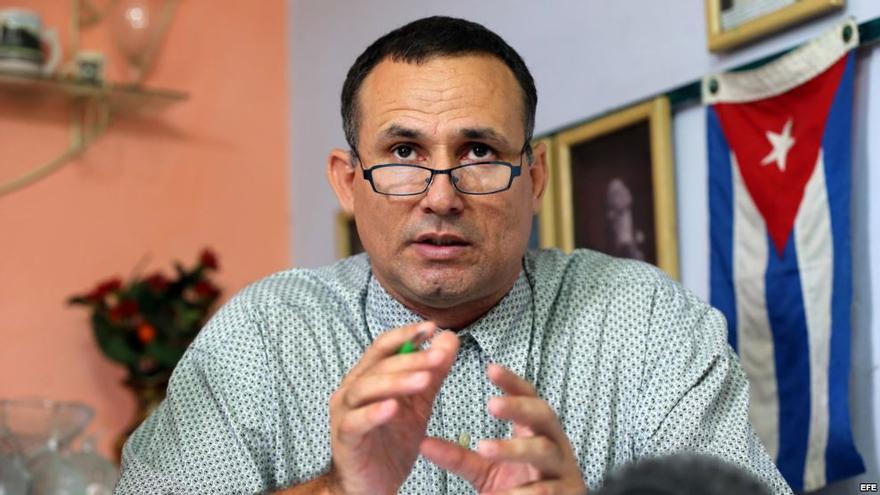
José Daniel Ferrer, leader of the Patriotic Union of Cuba. (EFE)

14ymedio bigger14ymedio, Havana, February 24, 2020 — The trial against the opposition figure José Daniel Ferrer, detained since October 1, will be held on February 26, according to a post by his sister Ana Belkis Ferrer on Facebook.

“The legal farce will be held on the 26th of this month at 8:30 at the Municipal Court of Santiago de Cuba, however they have not advised our family members,” wrote the sister of the leader of the Patriotic Union of Cuba (Unpacu).

In her message, Ana Belkis explains that they only learned the date of the trial via a summons to testify in the trial received by the coordinator of Unpacu, Ebert Hidalgo. However, she made clear that the citation did not mention the charges of which José Daniel Ferrer is accused. continue reading

The district attorney is asking for nine years in prison for the Unpacu coordinator for the alleged crime of damages, according to claims by his wife, Nelva Ortega, in a video last month.

The opposition figure asked his family, during a visit on February 14, to begin a campaign with the hashtag #YoSoyElQueAcusa (I am the one who accuses).

“It is José Daniel who accuses the Castro dictatorship of crimes against humanity, of violating his rights and liberties, as well as those of all Cubans, of raiding and looting his home on repeated occasions using firearms, of terrifying acts of repudiation against him, his family, and other members of Unpacu, of attempted murder on three occasions, of threats, slander, savage beatings, defamation campaigns, physical and psychological torture, of depriving him of his liberty and putting his life at risk,” said the opposition figure’s sister.

José Daniel Ferrer spent almost eight years in prison after his arrest, in 2003, as one of the 75 dissidents who were victims of the Black Spring.

This Monday marks 146 days since his arrest, during which various bodies and institutions all over the world have asked for his release. On social media his freedom has been demanded with the hashtag #FreeFerrer.

Translated by: Sheilagh Herrera

_________________

COLLABORATE WITH OUR WORK: The 14ymedio team is committed to practicing serious journalism that reflects Cuba’s reality in all its depth. Thank you for joining us on this long journey. We invite you to continue supporting us by becoming a member of 14ymedio now. Together we can continue transforming journalism in Cuba.

Used Cars for Sale in Cuba at Rip-Off Prices

Many Cubans have described the prices as “rip-offs” in the comments section of the company’s Facebook page.

14ymedio bigger14ymedio, Havana, February 21, 2020 — On Friday the state-owned company Cimex published on its website a price list for used cars that it will begin selling next week. The list includes thirty models priced from $34,000 to $90,000, which must be paid for up front using a bank card or credit card.

The company, which is controlled by the Cuban military, released a memo stating that the sale of second-hand cars would begin on Tuesday, February 25, and indicating that payment, which previously could be made in convertible Cuban pesos (CUC), must now be made in “freely convertible currency” (MLC).

Many Cubans have described the prices as “rip-offs” in the comments section of the company’s Facebook page. continue reading

“The managers handling this process have shown a great lack of respect in releasing a price list from almost 10 years ago and discounting it only 10%. They have not taken into consideration that these car prices, last published in 2013 or 2014, were for cars that were already at least at five years old at the time. The vehicles are even more depreciated now,” wrote Valentina Montalvo.

In her comments Xiomara Cruz Hernández used the word “rip-off,” adding at the end, “If nobody buys them, they will either have to discount them or eat them…”

The young actor Pedro Rojas wrote that Cimex should “keep in mind the value of these automobliles on the international market,” where “prices would not be based on the little pieces of colored CUC paper” but on dollars. He concludes, “These prices are not real. They are very inflated… A bit of objectivity and market analysis… And furthermore they are used.”

At the start of this month it was announced that Cubans would be able to buy cars through the government for hard currency. “Even if this measure won’t have a direct impact on the majority of the population, it will contribute to the improvement of public transport,” said then minister of transport Eduardo  Rodríguez Dávila.

Rodríguez Dávila noted that autos are in high demand due to difficulties getting around on public transportation. He also took pains to emphasize that 85% of the proceeds from their sales will go to a fund to develop public transport, a fund to which companies must contribute at the end of each month.

Vehicle prices will be reduced 10% as part of the sale, which will begin in the capital before being extended to the rest of the island. Methods of payment will be the same as for home appliances and electronics, which took effect in Cuba last October.

Imports of new vehicles will be made upon customer request to the agency, as has been the cases with hard currency purchases since 2014. Imports of engine motors will be handled through the state-owned companies Cimex or Zaza.

The range of products (including automobiles) extends the dollar’s scope as a currency in the domestic market, sounds the “death knell” for the convertible peso (CUC) and reduces the functional capacity of the Cuban peso (CUP).

— Pedro Monreal (@pmmonreal) February 7, 2020

After the announcement, the Cuban economist Pedro Monreal said on Twitter that this sale of cars to Cubans through government companies sounds the “death knell” of the CUC and confirms the dollarization of the domestic market. “The growing range of products (including cars) expands the dollar’s scope as a currency in the domestic market.”

Meanwhile, the economist Elías Amor stated on Radio Televisión Martí, “What the government is trying to do is raise more hard currency to cover the state budget, but this won’t benefit or address the needs of the Cuban people.”

____________________

COLLABORATE WITH OUR WORK: The 14ymedio team is committed to practicing serious journalism that reflects Cuba’s reality in all its depth. Thank you for joining us on this long journey. We invite you to continue supporting us by becoming a member of 14ymedio now. Together we can continue transforming journalism in Cuba.

Creditors Grow Impatient with Cuba’s Nonpayments

The liquidity crisis in Cuba is extreme and, although the authorities do not want to stop payments, their creditors do not trust them. (14ymedio)

14ymedio bigger14ymedio, Havana, 24 February 2020 – Cuba was to reimburse its creditors of the Paris Club between 32 and 33 million dollars last year, of the total of 82 million dollars owed, according to the information provided to Agance France-Presse by diplomatic sources.

The irritation of the creditors is evident in the statements made to AFP by several sources. “They said they would pay their debts. There is no plan, and there is a lack of credibility,” a diplomat informed the agency.

“We met [Ricardo] Cabrisas earlier this year,” says another source, who explained that the Deputy Prime Minister showed a defeatist tone, but expressed that the Island’s intention of not entering into a debt moratorium. continue reading

In an official letter addressed to the Director General of the French Treasury and President of the group of creditor countries of Cuba, Odile Renaud-Basso, to which AFP had access, Cabrisas promised that Cuba will pay in May. The nonpayment in February by the Island could result into a 9% surcharge on the debt.

“They have to propose a precise schedule,” an Ambassador, who admits that the Cuban government “is having a bad time,” informed AFP, adding, “They have no liquidity.”

Since Cuba entered into a debt moratorium, in 1986, access to international markets was closed until 2010 when the outstanding Chinese debt of 6 billion dollars was forgiven; as was that of Mexico, for 400 million dollars and finally Russia, its biggest creditor, for about 35 billion dollars.

In 2015, the Paris Club, consisting of 14 countries, forgave Cuba 8.5 billion dollars of the 11 billion owed. The rest was restructured in payments until 2033 and in investment projects in the Island.

Ever since then, the European Union has been one of the biggest investors and business partners of the Island, with an exchange of 3.47 billion dollars in 2018; however, the situation has become complicated in recent times.

Cuba’s main ally, Venezuela, has fallen and the pressure by Donald Trump’s administration has increased with the use of sanctions; furthermore, problems in the main economic pillars of the Government are added. On the one hand, the sale of medical services suffers due to the changes in political parties in several governments in the area, such as Brazil, Ecuador and Bolivia. These countries hired professional services from Cuba, primarily medical, but have now broken the agreements, or demanded from Cuba a variation in the conditions of the professionals if the nation wants to keep them; something that Havana refuses to do.

Tourism is another area that has shown a great weakness this year affected by the tightening of the embargo, but also by the decline in the European market. In 2019 Cuba’s revenue in this sector dropped 9%.

According to the latest official numbers, the external debt has increased by 53% between 2013 and 2016, reaching 18.2 billion dollars.

According to AFP, Spanish companies are owed for nonpayments totalling 300 million euros, about 325 million dollars.

The London Club has also been trying to negotiate an agreement with the Island for years without success. Last week it turned out that the CRF I Ltd investment fund has taken the case to court, according to the Bloomberg economic agency.

“The board of CRF have made clear that the legal process now underway will not be halted unless there is a satisfactory prior negotiated settlement with the Cuban government,” the company announced in a statement.

The amount of the claim is unknown, but the company has been waiting for thirty years for the debt to be paid. “We are losing our patience,” said chairman David Charters.

“If [Cuba] wants to regain access to the international financial market, they have to fix this.”

Translated by Francy Pérez Perdomo

________________

COLLABORATE WITH OUR WORK: The 14ymedio team is committed to practicing serious journalism that reflects Cuba’s reality in all its depth. Thank you for joining us on this long journey. We invite you to continue supporting us by becoming a member of 14ymedio now. Together we can continue transforming journalism in Cuba.
10 Years: A Guy Named Ivan Writes from Havana

July 2009. Iván writing on the first laptop he had, in the room of his daughter, who was then six years old.

Iván García, January 20, 2020 — Three years ago I had a smart phone for the first time. It was a gift from Celeste Matos, a journalist in Miami, with whom I worked for a time. It was robbed, and she offered me another, which was blocked because I couldn’t remember my account ID.

In January 2009, when I began this adventure of opening the blog Desde La Habana (From Havana), I didn’t have a laptop. I used to type on a portable Olivetti Lettera that my mother left me before going into exile in Switzerland in the autumn of 2003.

The Black Spring, as you know, was a repressive wave ordered by Fidel Castro, that imprisoned 75 dissidents, among them 27 independent journalists. It was a tremendous blow to uncensored journalism, and there was a logical retreat. continue reading

My friend Luis Cino, an unsurpassed chronicler, started working as a custodian in a dairy. In order to support my daughter, born February 3, 2003, I had to sell pizzas, snacks and fruit juice from home.

A Swiss reporter used to visit Havana in the month of December and we would meet in the home of Reinaldo Escobar and Yoani Sánchez. I heard Yoani talking about the blogosphere for the first time.

Later I read a very interesting article in Newsweek in Spanish about the importance of personal blogs in the media. This was in 2007. Cino and Juan González Febles had founded Primavera Digital (Digital Spring), an independent site considered illegal by the Regime, and they invited me to collaborate.

In April 2007, Yoani opened her blog, Generación Y (Generation Y*). Her posts were short, well-edited and irreverent. The Sánchez-Escobar couple are like a push-button box: you press a button and out comes an idea. And it occurred to them to open a Blogger Academy in their apartment, on the 14th floor of a Soviet-style building in the suburbs of Nuevo Vedado.

It was then that Yoani invited me to become part of her initiative to set up a platform of bloggers living in Cuba. You are your own publisher, censor and editor. You can write whatever you want. You’re on your own. One month before, I had done an interview with Yoani, which, because of its length, was divided into two parts.

I posted the first part, Conversation with Yoani, on the blog Penúltimas Días (Penultimate Days) on February 9; and the second, Yoani apunta con pistola (Yoani Aims a Gun) on El Blog de Tania Quintero (The Blog of Tania Quintero). It took me a lot of work to convert this long conversation into an interview, since the keyboard on my laptop was in German and didn’t have Spanish accent marks.

Finally, the blog Voces Cubanas (Cuban Voices) created a platform with the name of a musical group containing some 30 bloggers who were keen to win over the world. The idea appealed to me, but I preferred a blog that was more tilted toward journalism. So I invited the independent journalist, Luis Cini, and the lawyer, Laritza Diversent, to write a column.

Each one had their own plan, but I proposed to Laritza that she dissect the convoluted Cuban laws that not even the Government itself complied with. And I, like Cino, wrote posts about the Cuba that the Regime wanted to hide. Also, I tried to monetize the blog to earn some money for the three of us.

As for the Blogger Academy, there I learned everything I know about technology tools. Yoani had insisted that we open our own Twitter accounts. In one class she showed us an iPhone, the first I’d ever seen.

A little later, colleagues in the U.S. gave us modern laptops with Spanish keyboards and decent cell phones. In October 2009, Manuel Aguilera, a world-class journalist, discovered me from the blog Desde La Habana. He hired me for the American edition of El Mundo that Aguilera directed, where I wrote until 2012. In 2013 I began to publish in Diario Las Américas. This was something positive from the journalistic and monetary point of view. The pay for my collaborations allowed me to support my family without many hassles.

But the exclusivity of the blog was lost. The whirlwind of work prevented me and prevents me from writing original posts. Although my texts are reproduced and published on Diario Las Américas and other sites, I haven’t been able to return to writing specific texts for the Desde La Habana blog and El Blog de Iván García y sus amigos. Now I have more time. My daughter is about to enter university, and at present I’m writing only for Diario Las Américas.

For the 10th anniversary of the blog, I promise readers to return to exclusive stories. At least once a month. Up to now I’ve published in private, official, or commercial media. Desde La Habana has been like one of my children. It has opened doors and allowed me to know wonderful people, like Carlos Moreira from Portugal, who has been our administrator for 10 years, as well as innumerable readers who have contacted me through the blog and whom I later met in Cuba.

After a decade, the time to renew oneself has arrived. We will try to do things differently, to incorporate new writers, include videos. I will be telling you along the way what I have in mind.

*Translator’s note: The name refers to the generation born in Cuba during the Cold War whose parents were inspired by Russian names beginning with the letter “Y”.

Translated by Regina Anavy

A Year After Tornado in Cuba, Luyano Residents Still Swallowing Dust

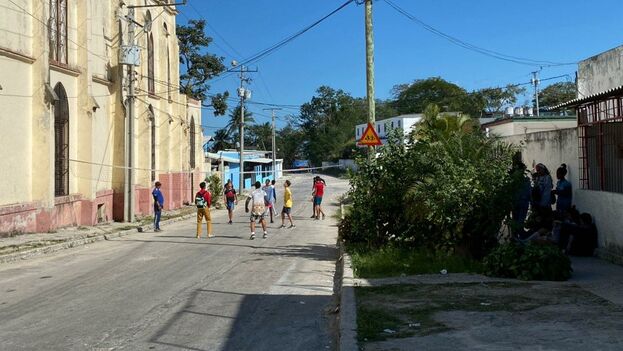
In the street to the side of the church that lost its belltower, kids play volleyball, raising lots of dust. (14ymedio)

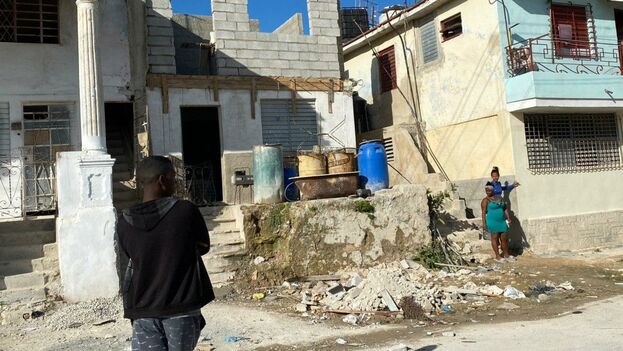
14ymedio bigger14ymedio, Luz Escobar, Havana, January 26, 2020 — First it was necessary to see everything. To walk through Mangos, Pedro Perna, San Luis, Quiroga, Melones, Reyes. All those streets of Luyano which, a year ago, showed a scene of terror after a tornado passed through on the night of January 27. Later, returning the same way, to see every new house that has been raised with its tin doors and windows and others still under construction.

Never before had a tornado been seen there. Twelve months have passed and the little kiosk where newspapers are sold is now again in its place.

In the street to the side of the church that lost its belltower, kids play volleyball, raising lots of dust. Some are in the shade, making fun of a girl and laughing like crazy, while others, under the sun, smack the ball. A year ago no one was laughing or playing in these streets. People would walk up and down without knowing what to do, with anguish and desperation painted on their faces. continue reading

In the street to the side of the church that lost its belltower, kids play volleyball, raising lots of dust. (14ymedio)

Yes, the dust is still lying on the ground, and the rubble, and pieces of beams, old buildings. From the wooden house that broke in two that day there is now no more than a lot full of stones and some wood. Beside it an identical house survived, with two of its inhabitants seated at the front door, drinking coffee and answering. “Yes, of course, we remember it well, how could we not remember that day? It seemed like an airplane was landing at our door. Since that day here everyone has been doomed to swallow dust,” one affirms.

An older man, resident of the block, remembers that when he was a boy something similar happened in Bejucal. “It was December 26, 1940. I remember it well because my second brother was born that day and my mother was very scared because of the news.”

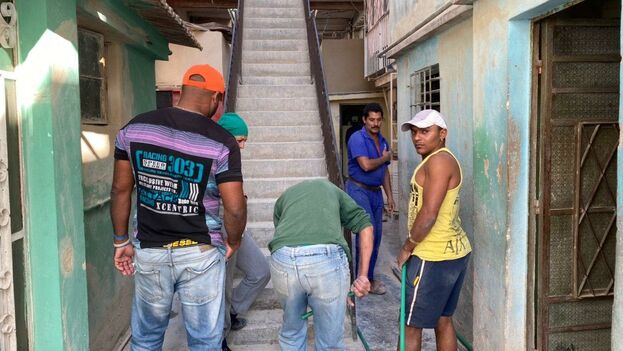
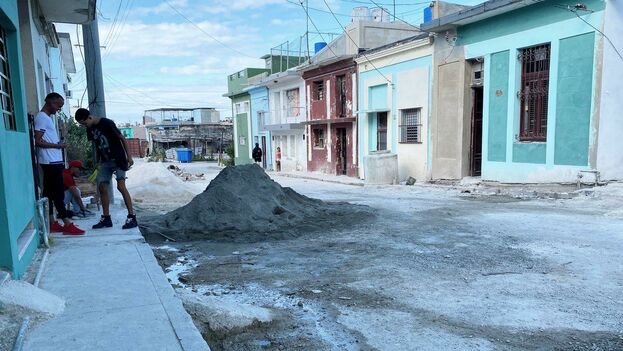
On Calle San Luis, between Remedios and Quiroga, the hustle and bustle of a construction crew interrupts the street. Mounds of sand and other materials accumulate in piles in front of houses. In a walkway at the back a group of builders cuts pipes, sifts sand, or eats lunch. For all of the residents around here they are: “the brigade.”

A brigade of builders has been working for months on Calle San Luis but work is advancing slowly because often there is no fuel to bring in the workers. (14ymedio)

One woman, with a scarf on her head, brings coffee to the men and explains that “on that day” she wasn’t in her house. “I had stayed with my mother. When I arrived was when I saw the destruction. A column came down and the wall over there of the room as well,” she says.

When in Luyano someone says “that day” everyone knows that they are talking about the night of January 27, 2019.

“Here there wasn’t any subsidy or anything, it’s this brigade that you see working there that is repairing everything and they bring what is needed. They began a while ago, but it was about two months ago that they began to make progress. They already did my bathroom, now I’m waiting for the water installation, and in the room they only have part of the brickwork left to do, the roof is like new,” she said.

After the tornado the Government sent construction crews and cooperatives to rebuild the houses and buildings affected in addition to reconfiguring state owned places to serve as housing. In many cases subsidies were given to the victims to pay for the construction work and they were given discounts on prices of construction materials.

Calle San Luis is full of construction materials, on the sidewalk some young people listen to loud music while builders come and go in their work. (14ymedio)

The head of the San Luis crew explains that “everything is going well” with the work but that sometimes “the work becomes a little difficult because now there is no fuel to bring the workers each day, sometimes not even enough fuel to bring lunch or materials.”

Outside, on the sidewalk, a young woman dragging a carriage with her baby explains that her patience has run out. “I got tired of waiting, because I wasn’t seeing that they were making progress, so I moved. I come to take a walk here because all my friends are here,” she says, seated beside some young people listening to a loud reggaeton song that repeats “bebesita” again and again while she rocks the carriage without ceasing. She seems nervous. She says that she also had to leave because her daughter was getting sick a lot from all the dust.

There are things that don’t change. In the Luyano bakery the line to buy bread is almost the same as on that day.

The school on Pedro Perna street was made new, almost unrecognizable. “On this street they have given new homes to many people, some have come out winners and now they live better than before, their little houses here were really bad. Others are still waiting for construction to finish,” says a gentleman who, from his doorway, speaks with everyone passing by. Walls of yellow, blue, pink, green, all recently painted. Many houses still have bare walls, in others they are still laying bricks or putting up the framework.

It was night when the tornado came, so few people could see it. What everyone does remember is the fear that it brought to the people. “I couldn’t see anything, but from the booms it seemed like the world was coming down, horrible. I got under the little kitchen table, I was really scared, nobody had seen anything like it,” he adds.

Caption 5: A year after the tornado passed through Havana, many are still raising their houses from the foundations, others repair, while others already have new homes. (14ymedio)

The tornado wasn’t a small thing. It reached F-4 on the Fujita scale (winds of 300 kilometers per hour, equivalent to a category 5 hurricane) and its passing affected the municipalities of 10 de Octubre, El Cerro, Regla, Guanabacoa, and part of East Havana. According to official data there were seven fatalities and more than 200 who suffered injuries. More than 1,600 trees fell in the devastated area and 7,761 homes were affected, of which 730 were totally collapsed and others partially.

At dawn on January 28 in the street, hundreds of electricity and telephone posts were on the ground, one thing atop another, everything mixed together. Cars were upside down and crushed after turning over in the street.

Many doors and windows were also pulled out and water tanks flew like birds. The air column ended up dragging the weakest buildings like small kiosks and makeshift houses, as well as fences and traffic signs.

A year ago nothing else was talked about in Havana. In face of the horror many people mobilized to help those who had lost everything. House by house they came, giving the little they had: water, food, clothing, coats.

There are few photos and no video of that tornado. A security camera was able to capture part of its route and thus many were able to put a face on the horror they experienced that night. Social media was filled with questions that night, some sharing their first impressions of “booms” heard or “balls of light” seen in the sky, but the news on Cuban Television said nothing.

It was the next day that certainty came and the images of the disaster began to circulate, frightening half the world.

Translated by: Sheilagh Herrera

____________________________

COLLABORATE WITH OUR WORK: The 14ymedio team is committed to practicing serious journalism that reflects Cuba’s reality in all its depth. Thank you for joining us on this long journey. We invite you to continue supporting us by becoming a member of 14ymedio now. Together we can continue transforming journalism in Cuba.
Tourists to Cuba Prefer Foreign Hotels or Government-Run Operations

Competition in the region is fierce. Cuba is overshadowed by tourist destinations like Cancún and the Dominican Republic. (I. Merodio)

14ymedio bigger14ymedio, Marcelo Hernández, Havana, 17 February 2020 — “Non-stop to Varadero!” a taxi driver happily shouts outside the José Martí International Airport in Havana after getting two customers who have just landed on the island. The tourists, who are visiting Cuba for the first time, have a reservation at an all-inclusive resort hotel run by a foreign company. They will not venture out of it until their return home.

With crystaline waters, white sand and a worldwide reputation, Varadero remains the most important Cuban beach resort and the only tourist destination that has experienced significant growth during the current decline of foreign visitors to the island. But the reasons it remains the sector’s driving force could be something other than its natural beauty.

“Several factors are shielding Varadero from the crisis. One of them is that all along the peninsula there are numerous hotels run by prestigious foreign companies and tourists know that these properties meet international standards,” says Rebeca Williams, a Cuban who emigrated after marrying a Brit. At first, her trips to the island were just family visits but she ended up returning and now organizes tour groups. continue reading

“When tourists arrive at the airport, whether in Havana or here in Varadero, they know that their hotel room is only a short, safe ride away, and that is an advantage. At other destinations people are forced to transfer to domestic flights and that cools their enthusiasm for venturing to a more faraway spot,” she says.

“After the plane crash in May 2018 I had a lot of tourists who canceled trips that required flights within Cuba and opted instead for Varadero. It’s like an old acquaintance who never disappoints. Even if a place there doesn’t offer good service, it does offer nature and tranquility” adds Williams. “There have also been a lot of reports of tourists being victims of traffic accidents so customers now prefer to stay put.”

Competition in the region is fierce. Cuba is overshadowed by tourist destinations like Cancún and the Dominican Republic. “To be a player in a market like the Caribbean, it’s not enough to show people some photos of old cars or promise a safe stay. You have to make customers fall in love so that, when they leave, they recommend the destination for its high quality. And that is where we still fall short,” she explains.

Recently, the Ministry of Tourism published the figures on this so-called smokestack-free industry which confirmed that Cuba’s most important sun-and-sand tourism desitination had grown 12% in January of this year. This is in contrast to the 9.3% decrease in foreign visitors to the island in 2019.

“Demand has been falling and is now concentrated in the hotels affiliated with recognized foreign brands,” acknowledges a tourism official who prefers to remain anonymous. “This is a phenomenon that is happening even in the domestic tourism market. Now when they buy a package, locals don’t just ask about the price and the hotel’s amenities. They also asks if it’s managed by a foreign firm.”

According to the official, hotels run by foreign companies have acquired good reputations and are better supplied, especially in their food service operations. Additionally, they have foreigners on staff who make sure customer service is very professional and that Cuban workers fulfill their obligations in accordance with the required standards.

“But it can also be said that these foreign firms are more aggressive in advertising their products to the international market. They already have their own voice and a wide network of offices with catalogs that feature their hotels. That is something that takes many years to build and that requires big investments in marketing that Cuba cannot do right now, as it should.”

“But what influences a lot of people are the comments that customers leave on travel sites such as TripAdvisor. And they are much more favorable when the hotel is a joint venture or under foreign management. Unfortunately, hotels under Cuban management have not gotten very high ratings,” he acknowledges. “People want to read visitor comments before they get here and they find that non-Cuban companies have the best ratings.”

Idalmis and Nestor are neither officials nor foreign tourists but have a very strong opinion about why Varadero is doing so well. “We go to an all-inclusive resort two or three times a year because we have two children who live overseas and spend their vacations in Cuba at different times,” says the woman, a retired chemical engineer who had never set foot in a hotel until March 2008, when the ban prohibiting Cuban nationals from accessing hotels was lifted.

“Since then we have stayed in almost all the country’s best hotels,” she proudly claims. “After many snags and disappointments, we now only choose hotels run by Spanish chains Iberostar and Meliá, Canada’s Blue Diamond or other foreign companies. The ones that are under all-Cuban management are not of the same quality.”

“The last time we stayed at a hotel run by Gaviota,” a tourism conglomerate operated by the Cuban military, “we were very disappointed,” she says. “The food was almost rationed even though we paid for an all-inclusive package. There were problems with the room and we often felt the employees were monitoring how many times we went to the buffet table,” she says.

“For the last three years we have stayed only at ’foreign’ hotels,” she adds. “In Varadero there is a larger number of those hotels and many of them offer all-inclusive packages, which makes it our favorite destination.” Usually, the couple’s children purchase a tourist package overseas but at other times the parents themselves make reservations at the offices of a travel agency.

One of Cubatur’s busiest offices is on the ground floor of the Habana Libre Hotel in Havana’s Vedado District. An employee here is showing a catalogue to a newlywed couple hoping for a quiet getaway. She is trying to sell them on a few days in Trinidad or Cienfuegos, or a stay at a Havana hotel, but they only want to know two things: if the hotel is all-inclusive and if it is under foreign management.

Although this is the first time they will have reserved a hotel on the island, which they are able to purchase with savings and with financial help from their respective families, they have a very clear idea of what they want thanks to advice from friends and family. “We are looking for something for three nights, where everything is included and that is run by a prestigious company. That way we know things will turn out better,” says the husband.

“They told us that differences between an all-Cuban management and foreign management — from the amount of butter they give you at breakfast to the cleanliness of the rooms— is huge,” says the young man. “Also, complaining to a foreign company when something isn’t right versus complaining to a Cuban one, especially one run by the military, is not the same.”

In the end the couple decided on a room at Iberostar Selection Varadero, which was a little more expensive than the other options the agent suggested but, as the young woman observed, “it’s a way to play it safe and ensure that a vacation doesn’t turn into one giant hassle.” The scene is repeated several times that morning, with the best selling packages looking a lot like each other.

More than sixty miles away, the two newly arrived tourists who caught the taxi at the airport have already checked into their room at a Meliá hotel in Varadero. There they will find imported towels, tiny containers of imported bath products, small packages of a Spanish-brand jam, and an administrator with a Andalusian accent welcoming customers at the reception desk.

_____________________________

COLLABORATE WITH OUR WORK: The 14ymedio team is committed to practicing serious journalism that reflects Cuba’s reality in all its depth. Thank you for joining us on this long journey. We invite you to continue supporting us by becoming a member of 14ymedio now. Together we can continue transforming journalism in Cuba.
The Death That Changed Our Lives

Orlando Zapata Tamayo died in February of 2010 after a long hunger strike. (Screen capture)

14ymedio bigger14ymedio, Yoani Sanchez, Havana, 22 February 2020 — The phone rang with a distant sound, as if it were at the end of a long hallway. I responded and the voice on the other end spoke of death, a hunger strike, and prison and mentioned a name I had never heard. On February 23, 2010, Orlando Zapata Tamayo died, after 86 days without eating, and his death led to one of the most painful and fruitful moments in Cuba’s recent history.

There was a time when news traveled slowly, when we learned years later what had happened in our own country and just a few meters from our house. But that long era of secrecy and information darkness began to break down one day ten years ago, after the death of a man who refused to eat in protest of the conditions of his imprisonment.

Zapata was born in 1967, he worked as a bricklayer and at the time of his death he was little known. But he had already starred in several actions on the street and appeared in the book The Dissenters, which the ruling party had prepared to denigrate its opponents. When he stopped breathing, there were only a couple of public photos of him, but in a few days his face, with its sunken eyes and protruding cheekbones ,became familiar to millions of people inside and outside the Island. continue reading

“He was already dying when they authorized medical attention for him,” an opponent I called the same night asking for details told me. In 2010, there were still very few activists with cellphones and reconstructing the story of what had happened was very complicated. Not only did we have to deal with fear of police sources and cordons, but also with the difficulties in communicating.

Thus, I learned that the family was from Banes and that his mother had come to be with him in the ward of the Hermanos Ameijeiras hospital where he spent his last night. “The hospital is occupied by State Security and there is no way to get close,” said a human rights activist who had tried to get more details about the time of death and a possible funeral.

By that time, it was less than two years after the first Twitter accounts controlled by citizens had appeared in Cuba, and the fundamental way to get updates was through text-only messages. These were “blind messages” because it was only possible to broadcast content, but not to read replies or to retweet to third parties. Nevertheless, the little blue bird was the main way to get news from the island.

I remember that, on the same day Zapata died, State Security’s nervousness was very visible in the face of the effort that was winning the news cycle. The houses of several opposition leaders were surrounded by police operations and their telephone service was cut off. Obtaining information was increasingly difficult.

My husband, the journalist Reinaldo Escobar, and I decided to go to the Havana Institute of Legal Medicine, because we guessed that the body would be there. It was night and Rancho Boyeros Avenue had large areas without lighting, so we moved through the shadows. As we approached we saw a surveillance operation and pretended to be a couple seeking privacy. The trick worked and we took a sharp turn to the right to get closer to Legal Medicine.

There, under a dimly lit sign which barely allowed us to distinguish her face, was Reina Luisa Tamayo, the mother of the opponent. We had never met each other but pain has the ability to weave bonds and as soon as I asked her, she began to talk. In just a few minutes she would go to dress her son’s body and she was still in the phase of not believing she would never see him again. I took out my cell phone and asked her for a few words about what happened.

That brief message, filmed in daunting darkness, was the first direct testimony of what happened to Zapata Tamayo. Neither of us could imagine what that video was going to unleash. For it would be the beginning of a long road of grievances and denunciations, and, for me, a transcendental step in my journalistic work. “It was premeditated murder,” she said clearly that night and I still remember today the mixture of firmness and sadness in her words.

The mother, accompanied by one of her daughters, explained that her son had been locked in a cell in the prison when he declared a hunger strike, and that as a punishment they limited his water and when they finally authorized taking him to the hospital they already knew that little could be done. Nor had she even been able to say goodbye to him, because on that bed in intensive care was an inert and cold body.

We remained close to the mother’s side, and around us the police operation was narrowing while the  State Security  members were very upset because we had managed to outwit surveillance. The minutes that elapsed between that moment and when we managed to get out of there to publish that video have been among the longest of my life. We split our forces, and Reinaldo managed to attract the majority of the seguros – the agents – to follow him, while I slipped away through a small street near the Torrefactura Café factory.

An hour later, from a hotel internet connection, we were able to publish the images. In a few hours the text messages were coming and going from one mobile phone to another; everyone wanted more details and the protest was increasing. In the middle of that maelstrom, the first hashtag born inside the Island emerged and quickly went viral. It was the simple three letters #OZT, but it quickly turned into a tide of rejection

In the hours after Zapata’s death, one of the most inspiring processes of unity and cohesion of independent civil society I can remember occurred. Now, when criticism is exacerbated by the disunity of the opposition and the lack of common goals among civil society groups, it would not hurt to remember those momentous times when dissidents, independent journalists, bloggers and activists joined forces.

The official response was disproportionate. Massive arrests, the cutting off of phone services, and an intense campaign to kill the reputation of the deceased took place in the official media. With regards to Zapata, Cuban Television News said that he had a “long criminal history” and even transmitted a hidden camera recording of his mother inside the hospital, violating every ethical principle of privacy

Although the Cuban government insisted that Orlando Zapata Tamayo (2nd from right) was just a “criminal,” in the government issued book “The Dissidents” he was already mentioned as an opponent. (Screen Capture)

But, despite defamation and repressive acts, they could not prevent the news from shaking all of Cuba, nor several international organizations condemning what had happened, nor the main international media reporting the death, nor Orlando Zapata Tamayo becoming a point of confluence for the democratic forces.

There were days of social mourning and, at the same time, it was a small victory over the Communist Party because we managed to take away their monopoly on reporting about the life of the nation. Unlike the death of the student leader Pedro Luis Boitel, in 1972 after a hunger strike, Zapata’s death was reported with sufficient immediacy to provoke extensive repulsion. Months after his sacrifice, the process of releasing the prisoners of the Black Spring began.

Although the “official history” wanted to give credit for those releases to negotiations between the Vatican, the Spanish Government and the Plaza of the Revolution, in truth it was the death of the hunger striking opposition figure that put Castroism on the ropes. His death, together with the increase in protests by the Ladies in White in the weeks after that February, and the hunger strike of Guillermo Fariñas, resulted climate of outrage against the Cuban government it found untenable.

A decade has passed and although the lack of freedoms continues to mark daily life on this Island, that February 23rd of 2010 is undoubtedly the event from which we began a new stage. A man who refused to eat and used his own body as a weapon of protest changed the Cuba we knew and helped to transform us in the deepest part of our essence.

_________________________

COLLABORATE WITH OUR WORK: The 14ymedio team is committed to practicing serious journalism that reflects Cuba’s reality in all its depth. Thank you for joining us on this long journey. We invite you to continue supporting us by becoming a member of 14ymedio now. Together we can continue transforming journalism in Cuba.
A Worsening Economic Crisis in Cuba Raises Concerns in Miami

A long line in Havana to buy detergent, one of the products in short supply at retail stores. (14ymedio)

14ymedio bigger14ymedio, Havana, 9 February 2020 — Connected to Cuba by an umbilical chord of family relations and remittances, Cubans in Miami are following with concern the news of a resurgent economic crisis on the island, which has begun exhibiting itself in a shortage of basic goods.

Faced with a reduction in Venezuelan subsidies, the latest U.S. sanctions on Havana for its support of Nicolás Maduro and a sizable foreign debt, Cuba is now experiencing a liquidity crisis that has forced authorities to buy fuel on the international market that Venezuela had been providing at subsidized prices.

“(Cleaning products) have been in shortage supply during the month of January. We still will not have satisfied demand by February or March but we hope that, with the various measures that are being adopted, we will be able to stabilize production and provide these products to consumers,” said Betsy Diaz Velazquez, minister of Foreign Trade. continue reading

In Miami, the city with the largest Cuban population after Havana, news of a new period of austerity is being followed with concern. In an interview with El Nuevo Herald, Lazaro Alberto Dominguez, a Cuban living in Hialeah, said, “All of my family is in Cienfuegos. A week ago I had to send them a package with coffee, lentils, garbanzos and other things because the situation keeps getting worse.”

Dominguez reports that, in addition to the hundred dollars a month he sends to his mother in Cuba, he has to periodically send packages of food, medicine and clothing.

“There’s nothing in Cuba. Even if you have money, you can’t find things in the stores. The government lays all the blame on the blockade [American embargo] but hotels manage to get everything they need,” he observes.

The 34-year-old man arrived in the United States two years ago by way of the Mexican border after requesting political asylum. However, he is not active in any opposition group.

“I don’t plan on returning to Cuba. I download Otaloa but I have to send things to my family,” he adds.

Alex Otaola is a Cuban influencer who hosts a daily program on Youtube seen by more than 10,000 people and who has led campaigns against remittances, travel and shipments to the island.

Remittances constitute the Cuban economy’s second largest source of hard currency. According to the Havana Consulting Group, Cuba received about 6.6 billion dollars in 2018 in the form of cash remittances and consumer goods, with 90% of remittances coming from the United States.

In the battered Cuban economy, income from remittances is exceeded only by the export of services, which in recent years has averaged around ten billion dollars. The Trump administration has set a limit of $1,000 per quarter on remittances, which can only be sent to relatives, in an attempt to force Cuba to abandon its ally and benefactor, the government of Nicolás Maduro.

The Cuban government has said that, due to US sanctions, it has had to choose between “maintaining a stable food supply” or paying for cleaning products. And the Cuban economy is highly dependent on imports.

Among the products in short supply are coffee, grains, fuel, gas, detergent, soap and toothpaste. In recent month shortages of items such as vegetable oil, chicken, meat and flour, as well as all products made from them, have also been reported.

With its network of inefficient state-owned businesses, Cuba must spend more than a billion dollars to import food that could be produced domestically. Nevertheless, the government persists in prioritizing ideology over the market in spite the advice of its own economists.

Belkis Veitía has lived in Little Havana for more than fifteen years. The only members of her family left in Cuba are two cousins; she and her two brothers left the country aboard a speedboat, arriving at the southern coast of Florida. The trip cost them almost $30,000, money they obtained from family members and by selling all their belongings in Cuba.

“I can’t forget the people of Cuba. Those of us who have lived through this tragedy know that those who are left behind need our help,” she says.

Veitía helps the local Catholic Church collect donations that are later sent to Cáritas Cuba and other NGOs working on the island.

“We ship a lot of medication, clothing and food to Cuba. The situation is hardest on the elderly. Thanks to the Catholic Church a lot of them are guaranteed lunch or dinner. They get government pensions but they are little more than ten dollars a month,” she says.

_________________

COLLABORATE WITH OUR WORK: The 14ymedio team is committed to practicing serious journalism that reflects Cuba’s reality in all its depth. Thank you for joining us on this long journey. We invite you to continue supporting us by becoming a member of 14ymedio now. Together we can continue transforming journalism in Cuba.
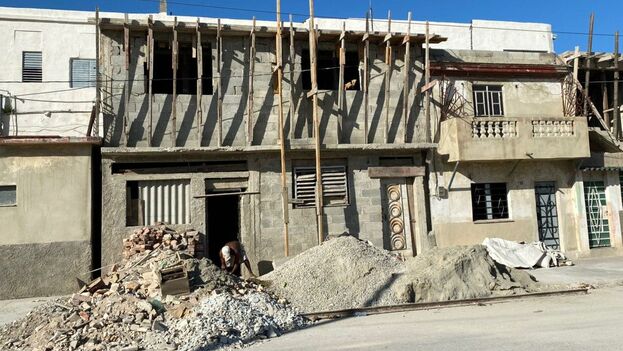
Participants of the Lynching Attempt in Santiago de Cuba Are Arrested

The events took place last Saturday, when the minor was attending a birthday party from where she was taken by the alleged aggressor, a friend of her parents’. (Facebook / Leonar Rente)

14ymedio bigger14ymedio, Havana, February 14, 2020 — The many videos that have circulated on social networks about the attempted lynching of the person who raped a minor in Santiago de Cuba have had a double effect. Thanks to these images, the authorities have identified the citizens who intervened in the events and have begun to arrest and prosecute them.

“From the videos seized, we have begun to identify the people who attacked the Police and the arrests and prosecutions by the criminal investigation body of our province have started,” Lt. Col. José Luis announced on Thursday on Tele Turquino, the local TV channel of Santiago de Cuba.

“The people who assaulted the law enforcement officers taking advantage of this circumstance will be presented to the Prosecutor’s Office,” said Rolando Reyes Speck, a prosecutor in the Department of Criminal Justice. continue reading

The interviewee said in the broadcast that the minor remains hospitalized, however her condition is not life threatening; meanwhile, the alleged culprit has confessed his crime and “the full weight of the law will fall upon him”. According to the official statement, the alleged aggressor was identified by the residents of the area after committing the crime and “the moment of great sensibility was used by unscrupulous and opportunistic elements” to alter public order.

The officers insisted that the cause resulting from the investigation in this case of rape will have all the guarantees and that no one should take justice into their own hands as this process is in the Constitution “which every decent Cuban”, said Antomarchi, voted on last year.

The events occurred on February 8 when the victim, an 8-year-old girl, attended a birthday party and was taken by the detainee, an acquaintance of her parents, to rape her. The crime was immediately discovered by the neighbors, who went after the rapist to beat him and stone him, at which point the police had to intervene.

The authorities explained that the presence of the riot police was required when the agents were overpowered in their attempt to prevent a lynching. They explained that the law enforcement officers “never attacked the people” and simply tried to cool down the situation, but several individuals charged at the police and firefighters.

“The investigation and process shall be carried out applied equally to every accused person in our country,” said Reyes Speck, and assured that both the rapist and the protesters can count on the “legal guarantees that every defendant has.”

“For every person who commits a crime, however aberrant it may seem, the rule of law establishes procedural guarantees,” the prosecutor insisted.

Darina Ortega León, professor of Law at the Eastern University (Universidad de Oriente, Spanish name), participated in the program quoting Martí to defend the respect for the rule of law and privacy. In recent days, several images of the alleged aggressor, as well as some comments, many of them unconfirmed, have circulated on social networks and some media about the alleged health condition of the minor.

The hostess regretted that the videos of the lynching attempt presented a bad image of the citizens. “It is very unpleasant that the population of Santiago has been exposed in social networks in the way it was presented, because that goes against what we are defending as a social project.”

Ortega urged “not to follow the lead of these individuals that could damage the image of the people” and “encouraged the population to be very careful with things that are uploaded to the social networks (…). We have to avoid damaging, the image of our people in particular, who do not deserve it.”

The official media has taken several days to report this news and has only done it to accuse those who have informed the population and to proclaim that these events are isolated, that Cuba is a safe place and that this incident “responds to a campaign orchestrated from abroad”. The Tele Turquino hostess finished her presentation with a solemn phrase: “The truth is like the light, no matter how much you try to conceal it, it always blazes”.

 Francy Pérez Perdomo

_____________

COLLABORATE WITH OUR WORK: The 14ymedio team is committed to practicing serious journalism that reflects Cuba’s reality in all its depth. Thank you for joining us on this long journey. We invite you to continue supporting us by becoming a member of 14ymedio now. Together we can continue transforming journalism in Cuba.