Jose Daniel Ferrer ’Has the Look of a Very Sick Old Man,’ Claims His Family

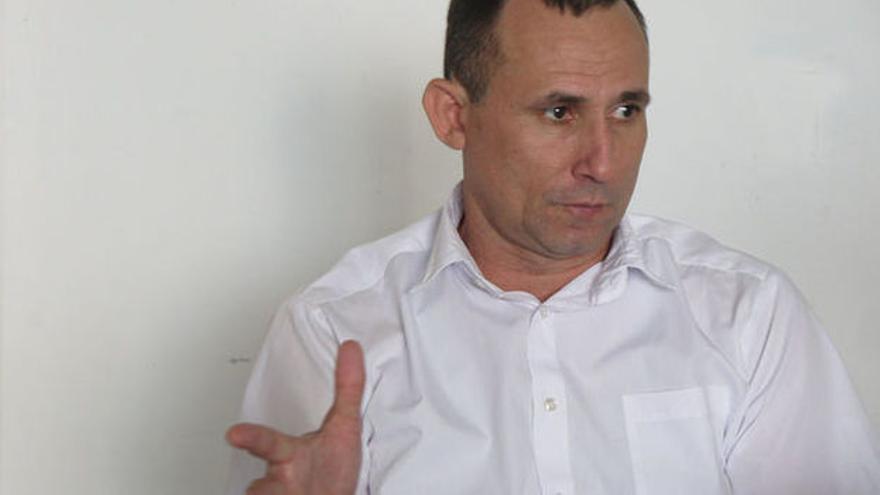
José Daniel Ferrer, leader of the Patriotic Union of Cuba. (14ymedio)

14ymedio bigger14ymedio, Havana, November 7, 2019 — This Thursday José Daniel Ferrer’s wife visited the opposition leader in the Aguadores prison, in Santiago de Cuba, 38 days after he was detained. Nelva Ortega was accompanied by three of Ferrer’s children, according to a statement from the Patriotic Union of Cuba (Unpacu).

Ferrer’s meeting with his family occurred in an area of the prison in the presence of an official and lasted barely five minutes, a time in which the opposition figure narrated “very quickly” everything he has experienced in prison during the last month, according to the document that Unpacu passed on to 14ymedio’s editorial team.

The visit ended when Ferrer “ripped off the prison uniform that they had put on him by force, a moment in which his family could see the marks of torture all over his body,” specifies the text. continue reading

His wife affirms that Ferrer is “stooped” and that he has lost “body weight.” She also explains that upon seeing his family members “he could barely hug them” because of his deteriorated health.

“He has the look of a very sick old man,” emphasizes the report from Unpacu. Suspected bruises on the thoracic and abdominal areas, on the upper and lower extremities, and the back complete the portrait that the family reports.

Ferrer said that he had been on a hunger strike for 25 days, that he began the protest on October 6 at the Provincial Criminal Unit of Santiago de Cuba in response to the “fetid water” and “food in a bad state” that he had received.

On October 9 the ex-political prisoner of the Black Spring was transferred to the Aguadores prison and brought to a punishment cell in which he affirms he suffered reprisals and threats.

“They beat him periodically, they keep him half-naked in a damp and cold cell, they chain up his hands and feet, they drag him and cause burns from the friction, daily he is insulted and verbally mistreated, and they constantly repeat to him that he will not get out of there alive,” warns the document disseminated by his organization.

Ferrer was arrested on October 1 and his family has only been able to visit him once. Amnesty International sent a letter to King Felipe VI asking that, when he travels to Cuba next week, in his bilateral meetings with authorities he take an interest in the opposition figure.

Translated by: Sheilagh Herrera

___________________

The 14ymedio team is committed to practicing serious journalism that reflects Cuba’s reality in all its depth. You can help crowdfund a current project to develop an in depth multimedia report on dengue fever in Cuba; the goal is modest, only $2,000. Even small donations by a lot of people will add up fast. Thank you!

In Spanish Election Debate Opposition Criticizes Royals’ Visit to Cuba

https://youtu.be/3hLPAWf3a2I

14ymedio bigger14ymedio, November 5, 2019 — The televised debate held this Monday in Spain ahead of the elections of November 10 brought to light the opposition’s harsh criticisms of Pedro Sánchez’s Government for its policy toward Cuba, Venezuela, and Nicaragua. The head of the Spanish Socialist Workers’ Party (PSOE) heard reproaches for the position he has assumed toward Nicolás Maduro and for organizing King Felipe VI’s visit to Cuba for the celebration of the 500-year anniversary of Havana.

The visit has been very controversial and has generated strong criticism in Spain, among Cuban exiles, and in civil society on the Island. It is considered the first official visit of a Spanish king and queen to the old colony and will happen on November 11.

“Where is Sánchez’s Government in Venezuela? The last in line and always dragging its feet,” the president of Citizens (centrist), Albert Rivera, reprimanded. “It’s necessary to defend democracies, in Latin America as well. We cannot look the other way in face of dictators, not only dead dictators, we also have to be brave in face of living dictators, while you hide from Maduro and his like,” he added, in reference to Moncloa’s procedure last month to exhume the remains of Francisco Franco from the Valley of the Fallen. continue reading

Rivera reproached Sánchez for not looking up from the podium and challenged him to have “a quarter of the courage that he has with dead dictators*” to treat “living dictators and their dictatorships.”

The leader of the Popular Party (righ-wing), Pablo Casado, lamented that Sánchez was sending the king and queen “to the dictatorial gerontocracy of Cuba” and remaining silent in face of the situation in Nicaragua, governed by the Sandinista couple Daniel Ortega-Rosario Murillo and victim of a wave of repression that claimed hundreds of dead.

“I felt ashamed when the United States of America was considering sanctioning Spain for its collusion with a dictatorial regime that according to Bachelet, not suspected of being on the right wing, has committed 7,000 summary executions,” declared Casado.

“Mr. Sánchez is not leading the response to put an end to the financial and real estate assets of the Chavista bigwigs,” he added. According to several journalistic investigations, Spain has been one of the preferred places for the big Chavista leaders to plunder the state-owned oil company PDVSA and invest billions of dollars.

Santiago Abascal, candidate for Vox (right-wing), also declared himself against the trip. “The Government has sent the king to Cuba and will force him to take a photo with the Castrists, Maduro, and Daniel Ortega,” he lamented. “I would appreciate it if the Government of our homeland and especially our Majesty, the king, could avoid that photo,” he said.

Vox also solicited from the Permanent Delegation the suspension of the Spanish king and queen’s trip to Cuba. “We urge the Government led by Pedro Sánchez not to use the Crown as a tool in favor of of its shady and partisan policies,” the leader of that party proclaimed.

Pedro Sánchez, who visited Cuba in November of last year and appeared alongside the designated leader Miguel Díaz-Canel, defended himself from the criticisms with the argument that Spain’s links weren’t with the Cuban Government, but rather with the people.

Spain is one of the principal investors in Cuba and has strong interests in tourism. Its companies were complicit in the Cuban Government’s apartheid policy that prohibited Cubans from accessing the same facilities as foreign tourists until 2008.

Cuba imports more than $1.2 billion in merchandise annually from Spain and exports to it products to the value of $180 million, according to official Cuban statistics.

Translated by: Sheilagh Herrera

________________________________

The 14ymedio team is committed to practicing serious journalism that reflects Cuba’s reality in all its depth. You can help crowdfund a current project to develop an in depth multimedia report on dengue fever in Cuba; the goal is modest, only $2,000. Even small donations by a lot of people will add up fast. Thank you!

Protest Time

If arrogant and contemptuous do not take urgent measures, and just sit around waiting for the protests, the next thing to arrive will be nothing other than Armageddon.

14ymedio bigger14ymedio, Ariel Hildalgo, Miami, 6 November 2019 —  On Cuban tables the plates are almost empty, at the bus stops there are swells of people on the hunt for crowded transports, many homes on the verge of collapse are overcrowded with three and even four generations, and the blackouts and so-called “energy savings” increase the exhaustion and despair.

In Cuba, the current president of the United States, Donald Trump, is blamed for the calamities, his restrictive economic measures providing huge help to the leaders of the Palace of the Revolution by granting them a great alibi, despite the fact that the so-called período coyuntural (temporary period/crisis) was announced long before. But what does the latter matter? Is it not well known that people have little memory?

But they cannot deceive the academics, artists, journalists, professionals, civic activists and students, among others. That many today do not speak openly, or say otherwise, does not mean that they do not know. What they do is one thing, what they think another, and what they say something else, so far. continue reading

But everything has a limit. Despair and outrage can reach a point where they overcome prudence and fear, and empty pans can become musical instruments* of a national concert. This would not be all, because that symphony could be only the prelude to a storm. Any spark can light a fire.

A complaint on a corner can turn into a neighborhood protest and, from there, growing to a tsunami that sweeps the whole city is a matter of the blink of an eye.

Then there will be no mobs of repudiation or quick-response detachments that can stop crowds ravaging the stores, nor raging concentrations in the Plaza of the Revolution. What will the party leadership do then? Take to the streets in tanks? Repeat another Tiannanmen Square massacre? Cuba is not China, nor are we on the other side of the world, far from the West.

Then it will not be the fault of those who only sinned out of despair, or of the dissenters, or of imperialism, but of those who have not wanted to hear the voice of the people in time.

No one in their right mind who really loves their homeland wants this. Such a scenario can be avoided, and not through threats, arrests, or states of siege, because there will not be enough prisons to lock up so many people.

So far, only reforms have been made, but reform really means changing the structure. What needs to be done now is more than that. They can call it or interpret it as they wish, perhaps as a “revolution in the revolution,” but if they don’t make radical constructive changes from above, there will come changes, also radical, but destructive and from below.

What, then, should leadership do to avoid the latter? The keyword is called freedom. Proceed according to the advice of Abraham Lincoln, who said he destroyed his enemies by making them friends. Convert the self-employed into allies by lowering taxes and licensing costs.

Issue permits for many other professions and provide them with means of work, as well as permits to acquire microcredits from abroad, and you will see how in the midst of tribulations, miracles will be present everywhere, with people solving their problems on all sides.

The treasury coffers will be filled with money, because a swell of small informal producers will leave the black market to integrate into the formal economy. And if they want more productivity in state industries, share the profits with the workers who produce them and grant them the right to have a voice and vote in the affairs of their workplaces or companies.

Grant small agricultural producers freedom to sell their products at the market price to the population. Then many others will want to and give them land, because the State has enough to give and we will see how in a very short time the markets will be filled with fruits, vegetables, grains, and many other foods.

And if they want to get rid of the alleged “internal” enemies, allow human rights activists, those who have more credibility among the critics, to form a National Committee with access to all prisons on condition that reports of violations are delivered to them, which would be very advantageous.

First because they will have the opportunity to correct these evils without the need for international organizations to condemn them, and secondly because constructive criticisms would allow them to provide detailed information on what happens in the multiple instances and sectors, in order to correct them and prevent corrupt and abusive officials who might encourage anti-government animosities. Don’t kill the messenger!

Allow dissidents to run as candidates with the possibility of obtaining seats in the National Assembly, which will have, as an advantage, broadening the horizon of views in conflict resolution, and the framework of ideas that allow a greater variety of proposals for the prosperity of all the people.

I know that making these recommendations or similar ones is almost like demanding pears from the elm tree. But if only a small group of that leadership had the courage to ignore the warnings of the so-called “hard core” (those who are filled with dread even on hearing someone say “democracy”) and begin to take the steps that circumstances demand, they would not be alone, because the entire people would support them.

But if they ignore those who propose things like these and cross their arms, if they do not listen to the warnings of those who only wish to avoid greater evils to the country, if they continue to be arrogant and contemptuous ad do not take urgent measures, and wait for the time of the cacerolazos* — the protests — next will come nothing but Armageddon.

*Translator’s note: The original title of this post is “La hora de cacerolazos”: commonly in Latin American countries people protest by beating on empty pots and pans (cacerolas).

__________________

The 14ymedio team is committed to practicing serious journalism that reflects Cuba’s reality in all its depth. You can help crowdfund a current project to develop an in depth multimedia report on dengue fever in Cuba; the goal is modest, only $2,000. Even small donations by a lot of people will add up fast. Thank you!

Cuban Government Denies Being Behind Protests in Latin America

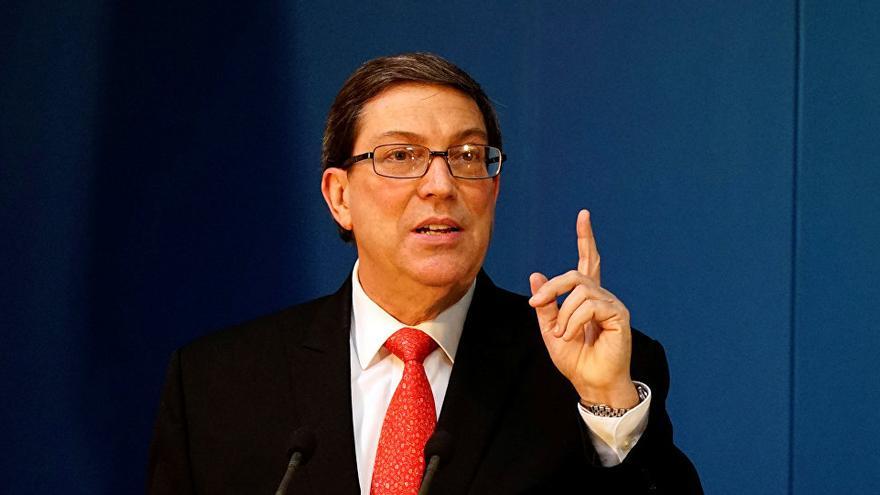
Bruno Rodriguez Parrila, Cuba’s Minister of Foreign Affairs. (EFE)

14ymedio bigger14ymedio, Havana, 2 November 2019 — On Friday, Cuba’s Minister of Foreign Affairs, Bruno Rodriguez, denied the allegations assured by the OAS and the Trump administration that his government is behind the social protests in Latin America as well as supporting the government of Nicolas Maduro in Venezuela.

“Maliciously, Cuba is accused of being guilty of what is happening in Venezuela and of the recent popular demonstrations against the ruthless neoliberalism that is advancing in the region,” Rodriguez said during the so-called Anti-Imperialist Encounter in Havana.

Washington also assures that Cuba militarily supports the government of Nicolás Maduro in Venezuela, an important ally and fuel supplier of the Island. continue reading

“The United States needs to blame Cuba for its resounding failure in Venezuela, and it needs to justify the tightening of the blockade” against the island, the minister added before an audience of international left-wing groups.

Last week, the secretary general of the Organization of American States (OAS), Luis Almagro, denounced a “pattern” of destabilization coming from Venezuela and Cuba, oriented first to Colombia and Ecuador and then to Chile.

Almagro attributed a responsibility in the massive anti-government mobilizations in the region to these two countries.

For his part, U.S. President Donald Trump called his Chilean colleague Sebastián Piñera to express his support before the wave of social protests and denounced that there are “foreign efforts to undermine institutions” in that country.

A State Department official, who asked not to be identified, reported that Russia — an ally of Cuba’s — carried out activities “to give a negative impact to the debate in Chile.” Moscow also rejected the accusations.

Trump’s call to Piñera came at a time when Cuban President Miguel Diaz-Canel was concluding a visit to Russia.

“We have no participation or involvement in the protests in Latin America other than, as Che Guevara said, that of the example of the Cuban Revolution,” said Foreign Minister Rodríguez.

Translated by: Rafael Osorio

___________________

The 14ymedio team is committed to practicing serious journalism that reflects Cuba’s reality in all its depth. You can help crowdfund a current project to develop an in depth multimedia report on dengue fever in Cuba; the goal is modest, only $2,000. Even small donations by a lot of people will add up fast. Thank you!

Repression Grows in Cuba: Ferrer Remains "Disappeared" and Number of "Regulated" Rises to 200

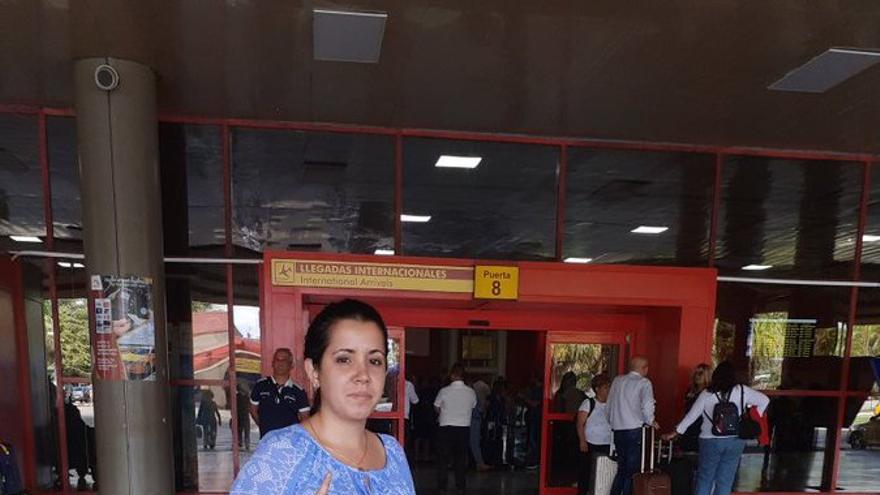
Camila Acosta at the airport — making the “L for Libertad” gesture — at the moment of learning that she couldn’t travel by order of the Government.

14ymedio bigger14ymedio, November 4, 2019 — Data revealed by various sources last weekend indicate a climb in repression in Cuba, which translated into an increase in the number of “regulated” and an inexplicable silence from the authorities on the whereabouts of the opposition figure José Daniel Ferrer, detained since October 1. [“Regulated” is the term the government has chosen to apply to Cubans who are forbidden to leave the country.]

The independent journalist Camila Acosta reported on Sunday that authorities had prevented her from boarding a plane to Buenos Aires, where she was going to attend a course.

Also prohibited from traveling were Dayanis Salazar Pérez and Juan Michel López Mora, two young opposition members of the Pinero Autonomous Party. continue reading

My suitcase was checked in by the airline, but it was emigration was where they prohibited me from leaving. I had to wait then for them to return my bag, just by the exit door. That’s why I saw the check-in [ticket]. If you look carefully, it has today’s date, Nov 3. pic.twitter.com/yBoaLMxRyP

– Camila Acosta (Twitter), November 3, 2019

With Acosta, a reporter for Cubanet, the number of “regulated” has now reached 200, although some have gotten out of that situation.

“They told me that I have a prohibition on leaving. They have no explanation for that. Only that my name appeared in the system…I was seen by Yoel Núñez, chief of Immigration at the airport. He says that I have to go to the Immigration office of my municipality and ask for an explanation. But we know that they won’t respond to any of that. But I’m still going to present my complaint,” the young woman told CiberCuba, which she contributes to.

“My suitcase was checked in by the airline, but it was at emigration where they prohibited me from leaving. I had to wait then for them to return my bag, just by the exit door,” pointed out the journalist in a Twitter message with a photograph that showed it.

“The consequences that the state security agents warned me about begin,” she first alerted, with the hashtag #Ni1ReguladoMás (#Not1MoreRegulated) with which those affected and those in solidarity with this cause reject this repressive measure that the Government is using more and more to block the freedom of movement of opposition figures, journalists, and critical activists.

Acosta was referring to the prior instance of last Wednesday, when she was detained in the airport as she returned from a program on gender violence which she attended on a scholarship. At that time they seized from her several pamphlets in English on the internship’s theme that authorities described as “subversive propaganda.”

In the interrogation they warned her that “I was going to begin to feel the weight of the consequences of being a human rights activist and independent journalist,” Acosta told CiberCuba.

This time, according to the reporter, she was invited by the Center for the Opening and Development of Latin America (CADAL) to participate in a program called Goodbye, Lenin and to cover the second round of elections in Uruguay.

The journalist has explained that she will look into appealing via the legal route once she has a lawyer, although she doubts the effectiveness it could have. The practice of limiting in a discretionary manner the freedom of movement of opposition figures has become an habitual tactic of control for the Plaza of the Revolution and is frequently denounced by human rights bodies, but the list continues to grow.

For his part, 14ymedio’s contributer, Ricardo Fernández, this Saturday was unable to board a plane to Serbia, where he was invited to take part in several conferences on religious freedom in Cuba.

Despite the fact that at the Immigration and Foreign Matters office in the city of Camaguey they assured Fernández that he wasn’t “regulated” and could leave, after checking in at the counter of the airline Aeroflot, an immigration official told him that he couldn’t leave the country.

The Patmos Institute keeps a list of those affected by the measure, and information can be contributed to keep up the list via email or social media. The organization, linked to the Baptist church, explains to and advises those affected so that they can individually communicate their cases to the United Nations (UN).

To this data is added the new balance of arbitrary detentions in the month of October, which the Cuban Observatory of Human Rights (OCDH) places at 301. The organization, headquartered in Madrid, made public this number in a press release distributed this Monday in which it notes that throughout the year there have been 2,768 arrests of this type and that in Cuban prisons there are a total of 119 political prisoners, with firm sentences.

This is the context surrounding the visit of the king and queen of Spain, who will arrive in Cuba on November 11 to begin the official agenda on Tuesday the 12th in what the OCDH considers “the worst repressive situation on the Island since the so-called Black Spring of 2003.”

The OCDH notes that the month began with the arrest of José Daniel Ferrer García, leader of the Patriotic Union of Cuba (Unpacu), whose whereabouts remain unknown as rumors circulate that he could be in a life-threatening situation.

“The leader of the biggest opposition group in Cuba has been detained for more than a month. Neither the European Union nor the Spanish Government has reacted in the face of the gravity of this issue. We demand an urgent pronouncement, given that his bodily integrity is at risk. In general, the repressive situation is very worrying, as is the current policy of appeasement toward the Havana regime,” stressed Alejandro González Raga, executive director of OCDH.

In recent days, an alleged letter from Ferrer to his family has emerged whose authenticity is not yet verified and which was distributed by Cuban Prisoners Defenders, an organization with links to Unpacu and headquartered in Madrid.

“On thirst and hunger strike. They’ve done everything to me. A thousand tortures and violence. They have dragged me and chained my feet and hands, they have put me in the sun for 15 days in my underwear in a cell full of mosquitos and cold in the morning. Risk of pneumonia. My life is in grave danger,” reads the brief letter.

Although it is not known how this letter reached the hands of his family, the opposition figure’s sister, Anna Belkis Ferrer, who lives in the United States, affirms that an Argentinian expert, Fernando Andrés Asorey, who works with Argentina’s federal police, has validated the veracity of the letter and that it cannot be from a previous detention because of the age of the ink.

Unpacu sources have assured 14ymedio, however, that they will only accept as proof of life a visit of Ferrer’s friends and family to the opposition figure.

Translated by: Sheilagh Herrera

_______________________________

The 14ymedio team is committed to practicing serious journalism that reflects Cuba’s reality in all its depth. You can help crowdfund a current project to develop an in depth multimedia report on dengue fever in Cuba; the goal is modest, only $2,000. Even small donations by a lot of people will add up fast. Thank you!

"All of Us Cubans Who Live Abroad Are Political Exiles"

The director is remembered in Cuba for several documentaries that honestly address social issues and in which journalism and art are mixed. (14ymedio)

14ymedio bigger14ymedio, Luz Escobar, Havana, 1 November 2019 — The filmmaker Eliecer Jiménez went on a trip to the United States five years ago to “catch a break,” but in the end he decided to stay in that country. This week he returned to Cuba invited by the Hanna Arendt Institute of Artivism (Instar) to exhibit several of his works and confirm that the Island is still the point around which his life revolves.

“I went on a trip to Miami and then I tied it to another to New York and there the doors began to open. When my wife arrived, we went to Miami and began to create a life from scratch with the help of many friends. It is a city full of the best of Cubans, like Cuba, but we don’t know it because the people here [in Cuba] cannot speak with absolute frankness,” he tells 14ymedio, a day before his return to the United States.

Jiménez confesses that he did not travel outside the Island with the idea of staying. “Upon arriving in the United States we were building a life little by little until last year I decided to start as a student of the bilingual master’s degree in journalism at the FIU (Florida International University),” he says. continue reading

The director is remembered in Cuba for several documentaries that honestly address social issues and mix journalism and art, such as The Face of the Waters and his first work, Usufruct, for which he won the prize of the International School of Cinema and Television of San Antonio de los Baños, at the Gibara Film Festival.

Jiménez says he has never completely left the country. “On a formal level, the United States is what I want, on a conceptual and spiritual level what I want is Havana, Vertientes, Camagüey.” Something that he corroborates also when he sleeps. “The space where my dreams are developed is Cuba, it is with my father, the cows and in my origin as a guajiro.”

The door of the return to the Island remains open for him. But “it is very difficult to do it because Havana is screwed up and the rest of the country is worse, but on a spiritual level for me it is a nice bath of the  warm water of affection for people who are very grateful,” acknowledges the artist.

In the American academic world he has seen everything. “I have been invited to many universities to give talks about my work in independent and documentary films.” To those who ask stereotyped questions about the reality of the Island, he recommends “living a year” in Cuba, and doing it in the way that ordinary Cubans live. “And then w will talk later.”

“It is very clear to me that all Cubans who live abroad are political exiles. If you leave here because you are hungry, it is because the government did not do something to avoid that, and that is called politics,” he clarifies to those who want to label him as an economic emigrant.

“If you leave because you do not find space for your vocation, it is because there is a government that is malfunctioning and if you leave because you shit on the mother of the ruler, which seems very authentic to me, then it is the same. A governmental mechanism has not been generated. in which all people are included.”

In his five years living in the United States he has been a metal worker, film projectionist, producer, editor and cameraman. “Now in addition to having two jobs I am also a student. I have found a space for myself but I am still more or less the same person.” Because “there are things that change but not the essence, it is very difficult to escape from Cubanness, you can’t.”

In that country he has made six short films and also remains attentive to the cinema that is made within Cuba. Especially those “cimarrones [escaped slaves] like Jorge Molina, Miguel Coyula, Alejandro Alonso, Ricardo Figueredo and Yimit Ramírez.” Audiovisual creators who said that “no one stops them, there is no revolution to stop these people.”

He claims not to hold a grudge because he had problems at the University of Camaguey, where he studied journalism, with two materials considered “conflicting.”

“Then I went to film school in San Antonio with a small grant and wanted to enroll in the regular day course but a teacher warned me that they would never accept me there. I felt that every time I wanted to get put my head up, they knocked me down.”

What he has taken from those years has been productive. “In the end I have been what I wanted to be. Those who insulted me and humiliated me are what other people have wanted them to be.”

In October he met again with part of his Cuban public at the headquarters of Instar in Old Havana, with a personal exhibition that included twelve works, of which six had not been released in Cuba: Now (2016), Elegía (2016), TPara Construir Otra Casa (2016), Semiótica de la Mentira (2019), Mater Dei (2019), and El Eterno Retorno (2019).

These works have also been the result of a great personal sacrifice, stealing minutes from rest and paying a good part of the expenses. “When you get there, the CIA does not receive you, the American Government and Yankee imperialism do not receive you. None of them give out money to produce films, that is false,” says Jiménez.

“You have to do it all with your own means, generate your spaces and your time to do that. What did I do? In my time to sleep I did everything, between the jobs I’ve had, I did the movies and filmed on the weekend, editing at four in the morning, that was my choice. I feel sad when people give up.”

Jimenez would like to see a Cuba where there was an art and rehearsal cinema where he could present his films without anyone shouting “counterrevolutionary” or insulting him. “I am not interested if it is a radical communist who stands up to give an opinion about my film, I appreciate that, now the insults seem to me regrettable.”

“I have two very strong struggles in the United States, one is not to become a cynical and another is to deal with my dreams.”

_________________

The 14ymedio team is committed to practicing serious journalism that reflects Cuba’s reality in all its depth. You can help crowdfund a current project to develop an in depth multimedia report on dengue fever in Cuba; the goal is modest, only $2,000. Even small donations by a lot of people will add up fast. Thank you!

Under Threats, Parents of Baby Killed by Vaccine Leave Cuba

On October 16th, 2019, Caballero and her husband were summoned, via phone call, to appear on the same day for an appointment at the Public Health Ministry Headquarter in Havana. 

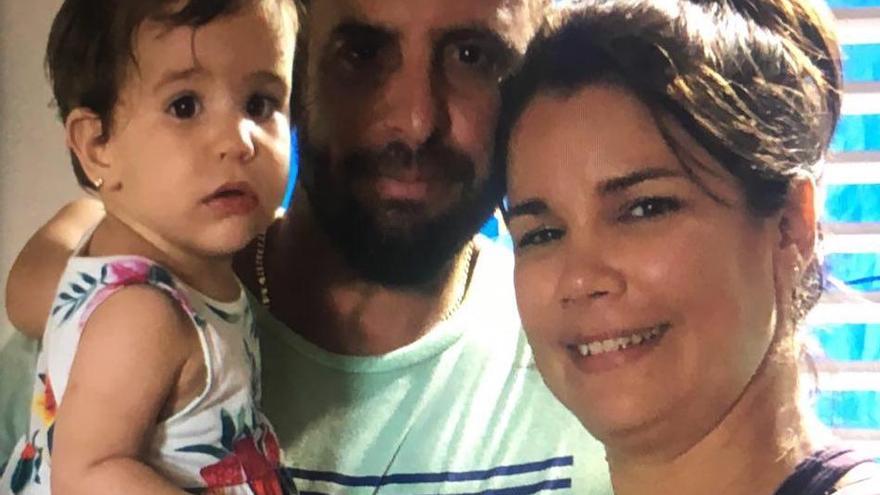
14ymedio bigger14ymedio, Luz Escobar, Havana, 6 November 2019 — Yaima Caballero, mother of the 1-year-old baby girl who died last October after receiving a vaccine, decided to leave Cuba to Mexico after receiving threats from the State Security (political police). “They told me I could end up in jail for making unfounded allegations,” she told 14ymedio.

On October 16, 2019, Caballero and her husband, Osmany Domínguez Soler, were summoned via phone call to appear, on the same day, at the Public Health Ministry Headquarters in Havana. Supposedly, the meeting was to give them “updated news” on the investigation about the death of their daughter, Paloma Domínguez Caballero, on October 9th, after receiving the MMR vaccine (mumps, measles and rubella) in a clinic in Alamar, a suburb in Eastern Havana.

Upon their arrival to the appointment, two officers from State Security were waiting for them to warn them about the allegations they had been sharing on social media in the past few weeks. Instead of receiving details about the cause of death of their daughter, the agents urged them to keep it quiet. continue reading

“We were escorted to a huge meeting room with a very strong air conditioning. And no phones allowed,” says Caballero. A while later, the head of the Mother and Infants Department showed up, with Roberto Álvarez Fumero, and three other men who did not identify themselves.

Two of the individuals interrogated the parents about several details of their life and the moments before and after the death of their little girl. After Caballero and her husband repeatedly asked for it, one of the agents identified himself as Lieutenant Colonel Hernández Caballero and the other one, who was wearing the logos from the Ministry of Interior, only shared his last name, Arrebato.

“They asked a million questions, included the date of my very first period and how the nurse held the vaccine vial,” remembers the mother. Outside the building, several family members were waiting for the couple, whom had warned them if “in three hours” you haven’t heard back from us, report the situation right away to the independent press.

“They kept repeating all the time that they knew about our publications on social media,” explains Caballero. The grieving mother was reprimanded for having made “false and grave accusations” in which she said “my daughter was killed, murdered” and that is not how this works, one of the officers told them.

“We are doing our job and that takes time,” one of the agents explained to the parents and repeated to them, in several instances, that “it is a crime to make false allegations against other people and institutions, and those crimes are punished with jail time.” The mother demanded information on how to legally file “a formal complaint or press charges because what happened was a homicide. I don’t know who or what did it, what I do know is that my daughter was killed.”

Before their daughter’s death, the parents had been planning a trip to Mexico. They did not have a final date for it, and Caballero’s passport was expired. “I renewed my passport last Monday and was told it would take 20 days, but after that meeting on Thursday, I received a phone call the following day and was told my passport was ready.

The mother insists she was coerced during that meeting in the Ministry’s Headquarters. “I was threatened that if I continued making unfounded accusations, I would end up in jail. I had to leave the country because I will not be silenced.”

Dr. Roberto Álvarez Fumero, Director of the Maternal-Infant Program at the Public Health Ministry, who was present during the meeting, told El Nuevo Herald that it was a routine interview to gather more information about the baby.

“We asked her about previous immunizations, about the conception, labor and delivery. We spent almost two hours talking technicalities needed for the investigation conducted by the ministry,” said the doctor via phone interview from Havana.

Álvarez Fumero said he could not confirm the attendance of State Security Agents to the interview. “I personally invited the parents to the headquarters, and as far I can remember, it was a cordial interview. The mother was the one who did most of the talking,” added the doctor, who is recovering from a car accident.

Álvarez Fumero reiterated that, due to his own recovery from the accident, he was unable to stay on top of the investigation surrounding Paloma’s death and he still does not know if a final official report has been issued, explaining the baby’s cause of death.

According to the Criminal Code, the crime of “defamation against institutions and organizations” can be construed against anyone who “publicly slanders, denigrates or belittles said institutions, carrying sentences from three months to a year in prison and a fine of $300 Cuban pesos.

While the commission from the Public Health Ministry investigates the cause of death of Paloma Domínguez Caballero and the hospitalization of other four children, experts point out two probable scenarios: a problem or failure in the vaccine’s manufacturing process or a failure to follow the procedures to store the vaccines.

In the first scenario, the responsibility will fall on the world’s largest producer of vaccines, the Serum Institute in India. On the second one, the blame would be on the Cuban side.

Almost a month after her daughter’s death, Yaima Caballero continue to speak out on social media and demand justice.

Translated by: Mailyn S. Cappuccio

_________________

The 14ymedio team is committed to practicing serious journalism that reflects Cuba’s reality in all its depth. You can help crowdfund a current project to develop an in depth multimedia report on dengue fever in Cuba; the goal is modest, only $2,000. Even small donations by a lot of people will add up fast. Thank you!

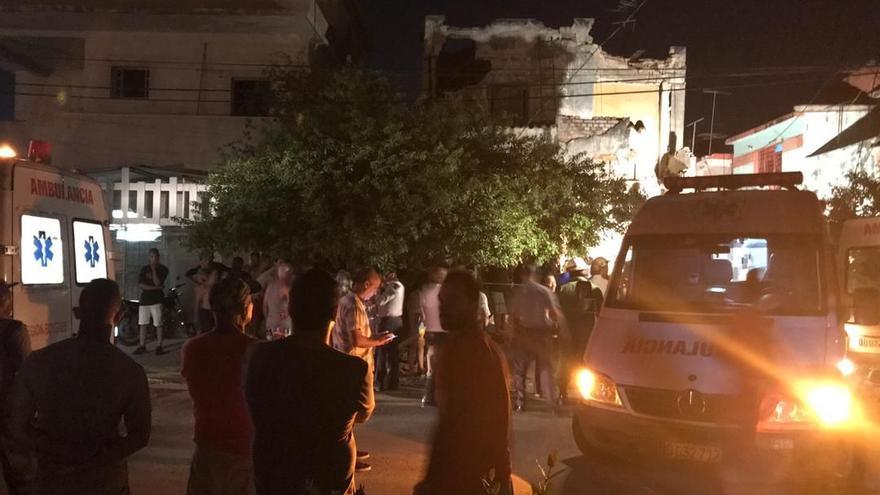
A Girl and her Mother Die After a Building Collapse in Havana

A large number of people crowded around while rescue work was underway on Sunday. (14ymedio)

14ymedio bigger14ymedio, Havana, 5 November 2019 — A 13-year-old girl and her mother died after the collapse of a housing unit located in the garage of the remains of a house on 21st Street, between 30th and 34th, in Havana’s Playa District.

Neighbors in the area told 14ymedio that the building collapsed at around 10 p.m. Sunday, burying three people, the two who died and the girl’s grandmother. The grandmother is now hospitalized in serious condition because of the injuries she suffered.

A large number of people crowded nearby while rescue work was underway on Sunday, alerted by the coming and going of ambulances, fire trucks and even the deployment of a crane to lift the debris. “Immediately three ambulances and a rescue and life-saving car arrived. The grandmother was first one pulled out and they took her to the hospital. Then, at about twelve o’clock, they brought out the girl and finally the mother,” says a neighbor.

On Monday a police operation controlled access to the scene during the cleanup work carried out by several trucks.

“That house had been so bad for many years, it was a matter of time for a tragedy like this to happen,” laments the woman, who identified the victims as Yanet, Isabel and Amparo (mother, daughter and grandmother, respectively).

According to official data, of the total of existing properties currently in the capital, almost 40% are in poor or bad condition and at least 500 are in critical condition.

______________

The 14ymedio team is committed to practicing serious journalism that reflects Cuba’s reality in all its depth. You can help crowdfund a current project to develop an in depth multimedia report on dengue fever in Cuba; the goal is modest, only $2,000. Even small donations by a lot of people will add up fast. Thank you!

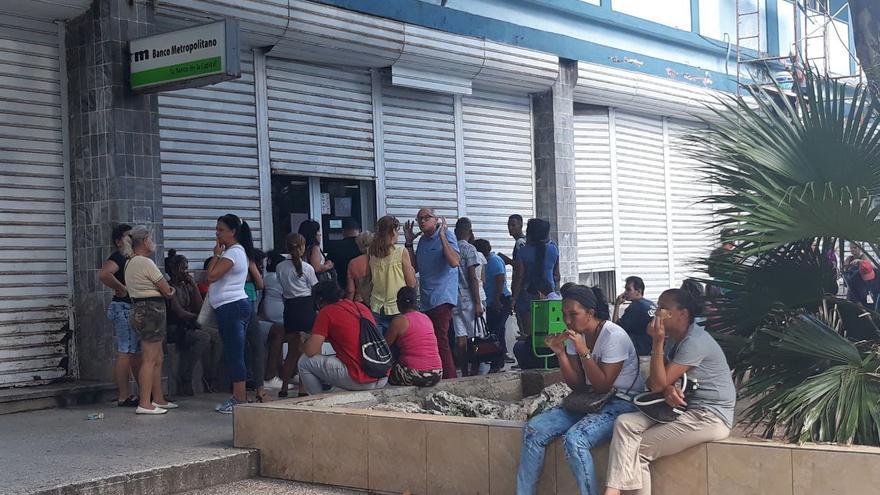
Cubans Unable to Withdraw Money from Accounts with Foreign Currency

Every day, banks start with long lines of clients interested in opening accounts with the newly legalized magnetic cards to receive deposits in dollars, euros and other foreign currencies. (14ymedio)

14ymedio bigger14ymedio, Zunilda Mata, Havana, November 5th, 2019 — Bank accounts freezing has been implemented in Cuba and not many knew about it. Marta Karla just learned it the hard way when she tried to withdraw $500 US she deposited in her account six months ago, which she was required to do to qualify for a Panama visa at that country’s consulate in Havana.

The resident of Havana, age 38, now must wait three weeks to recover her own money, deposited in Fincimex, the financial branch of the Cuban military conglomerate Cimex.

Hundreds of Cubans are in a similar situation; in the past few days they have tried to withdraw dollars from their bank accounts and they have been met with elusive excuses. “I am being told they have put my name down in a waiting list and they will let me know when they have the money,” said Maria Karla. continue reading

At the Fincimex office located on 3rd Avenue and 6th Street, in the Playa municipality in Havana, an employee confirmed this situation to 14ymedio. “All withdrawals from accounts in foreign currency are delayed because right now we do not have the cash,” she explains. “We have to wait until we are back to having a cash flow in the given foreign currency, then we can start giving the money back to each client that makes the withdrawal request.”

In the middle of the cash flow crisis Cuba is going through, authorities have kicked off a new chain of stores. It is the State’s attempt to pocket the dollars that the “mules” are taking out of the island to acquire merchandise in foreign countries. That outflow of hard currency is also aggravated by the purchases of foreign currency being made by Cubans seeking to emigrate.

In the waiting line at the Fincimex office, José Raúl Pacheco is waiting to withdraw his money and close his bank account, but holds little hope that he’ll go back home that day with his dollars in his pocket. “They told me I have to wait, but I need my money now. A bank’s role is to safe keep our money until we need it, not until whenever they want to return it to me.”

Fincimex is a financial entity that works as an intermediary for the remittances sent to the island, and issues magnetic debit cards that, unlike those cards issued by the state-controlled banks (Popular, Bandec, Metropolitano), can be used in economic transactions anywhere in the world and to make online purchases.

Fincimex deposit accounts are often used by Cubans seeking to emigrate out of the island, as an evidence of their financial self-sufficiency, a common consular requirement prior to issuing a visa, mostly to Panama, Mexico, Colombia and other countries in the region.

After the Cuban government’s announcement last October that the dollar and other foreign currencies will be allowed to legally circulate again on the island, the value of the dollar has increased significantly in the black market, and the value of the “convertible peso” (CUC) has tanked, and there is also an increased demand for the commonly called “verdes” or “fulas” [American dollars].

Within the black market, where “private” or “individual” transactions take place, the dollar value just rose to $1.18 CUC, well above the official exchange rate of $0.95 at the beginning of 2019. This hike has motivated many people like Pacheco to withdraw their dollars from the bank to resell them in the black market. A young man who is set to emigrate to Puerto Rico and wants to bring some money with him is his first client.

“I have saved $900 dollars from a car I sold last year, and part of the payment was in hard currency,” he adds. “I wanted to keep it in the bank because I do not have safe conditions to keep that kind of money in my house, and because at Fincimex I was given a magnetic (debit) card.”

Now Pacheco has learned the hard way that blue card he was issued back then is good for nothing; it cannot be used for purchases in the new hard currency stores being opened all over the island. “To do that, I was told I need to open an account in another bank, or a different account with Fincimex and wait for them to issue me a green card.”

These hurdles pushed Pacheco to make the decision to withdraw all his dollars from Fincimex and resell them to make some additional profit. Although in the official exchange offices (Cadeca) the prices have not changed ($0.87 dollars for $1 CUC) because it is the State-controlled exchange market, those offices do not sell dollars, they only buy them back for the government.

“I have been in several banks in three different municipalities to buy dollars because I have t0 travel this week, to no avail,” explains a woman outside the Metropolitan Bank office on 23rd Ave and J Street in Vedado. “Here the employee told me they only have $30 dollars in the register and I need $70, so I will have to wait and see if they get more (cash) in throughout the day,” she complains.

Since the opening of the new stores operating only in hard currency was announced, more than three weeks ago, every day the banks wake up to long lines of clients waiting to sign up for the new magnetic (debit) card to use with their accounts in dollars, euros and eight other foreign currencies. “I am going to stay out here but I will have to get back in the line later on, to ask again if they have enough dollars to sell me.”

The woman adds that, even though the liquidity of foreign currencies in the banks has decreased in the last few months, “it was already a problem that have been affecting clients for over a year.”

In 2018 she had to “rent” $1000 dollars to use them as financial statement requirement for her older son to apply for a visa, and after he showed the statement in an European consulate, she had to return the money, paying a small fee for the temporary loan of the dollar bills.

The increased demand for the dollar is not only prompted by the opening of the new stores; it is also fueled by the fear of a sudden monetary exchange that would merge both currencies now circulating in the nation: the CUP and the CUC. Hoarding the “verdes” has become the safest alternative for Cubans planning to travel abroad, to open a small business or simply because they want to safeguard their life’s savings.

The decreased in tourism from the United States has also contributed to the scarcity of “the enemy’s currency“, as ironically, dollars are called in the Cuban streets. After the diplomatic rapprochement between Washington and Havana, lots of small private businesses located in high traffic tourist areas started accepting this currency as form of payment.

“The dollar is under a search and rescue (operation),” jokes a young Cuban American outside a Metropolitan Bank office in Linea this past Monday. “Last year when I came to visit my family, nobody wanted to accept my payments with American dollars because they’d lose money at the exchange and today everybody is asking me if I brought fulas.”

Translated by: Mailyn Salabarria Cappuccio

__________________

The 14ymedio team is committed to practicing serious journalism that reflects Cuba’s reality in all its depth. You can help crowdfund a current project to develop an in depth multimedia report on dengue fever in Cuba; the goal is modest, only $2,000. Even small donations by a lot of people will add up fast. Thank you!

Leonardo Padura: There Was More Fear In The Cuba Of The Nineties Than Now

The Princesa de Asturias de las Letras Prize in 2015, Leonardo Padura has just visited Tenerife. (EFE)

14ymedio biggerEFE (via 14ymedio), Eloy Viera, Puerto de la Cruz (Tenerife) November 1st, 2019 — Three decades after he created detective Mario Conde, his most famous character, the author Leonardo Padura thinks that today’s Cuba “is different” from that of the 1990s, among other things, because the Cuba of the past “was much more afraid than today’s”.

Premio Princesa de Asturias de las Letras in 2015, this portraitist of Cuban society has just visited Tenerife to participate in Periplo, the International Festival of Literature for Travels and Adventures, organized by Puerto de la Cruz.

The novelist landed in Tenerife still with the good impression left by his latest novel La transparencia del tiempo (2018), in which he returns to the adventures of Mario Conde, an anti-hero with a critical and disenchanted look, whom Leonardo Padura describes as the grandson of Raymond Chandler’s Marlowe and son of Manuel Vázquez Montalbán’s Carvalho. continue reading

Since 1988, when he premiered as a novelist with Fiebre de caballos, Cuba is an essential part and another protagonist of the narrative universe of Padura’s novels.

You’d have to wait two more years to meet detective Mario Conde through Pasado perfecto (‘Past Perfect’ translated as Havana Blue), the book that opened the Four Seasons series, which was later completed by the novels Vientos de cuaresma (Havana Gold), Máscaras (Havana Red) and Paisaje de otoño (Havana Black).

In an interview with Efe, Leonardo Padura recalls that the first novels in Conde’s series are set in 1989, a moment before the fall of the Berlin Wall and the disappearance of the Soviet Union, “and from there to here there has been a lot of water under the bridge in Cuba and the world.”

He says that, sometimes, “people get the impression that Cuban society is static because it has not had great changes and the political structure and the economic system remain the same”, but “Cuban society has undergone an intense 30 years in which a whole series of positive and negative processes have occurred.”

“It’s my belief that Cuban society is a society that has freed itself much more from fears, repressions, and silences, and at the same time has been further burdened with a lack of urban planning, solidarity and respect for the rights of others,” says the author, who has also been a journalist and screenwriter.

The writer does not believe that “today’s Cuba is better or worse than 1989’s,” but sees it as “different. “And that’s in terms of the personal economy, in their way of life and in the way they see the world”, he explains, although “if I had to choose between better and worse I would say that the Cuba in 1989 was much more afraid than the one today”.

Cuba has breathed new life because for the last seven or eight years Cubans have been able to travel freely without having to ask for permission from an authority – which meant “a very significant step towards liberation in that society” – together with the fact that people can have small private businesses or that Internet access today has improved, although not completely; “elements that are becoming liberating for certain people and the ways of seeing and understanding life”.

Leonardo Padura cannot comprehend his life without that of his literary companion Mario Conde: “It has been an essential piece in my work as a writer and, therefore, in my life as a person,” he confesses.

They’ve spent 30 years together chronicling contemporary Cuban life, and a literary journey has led Padura, in his own words, “from the apprentice writer of Pasado perfecto to a writer to whom things have happened in his literary life that he never would have imagined.”

His latest novel, La Transparencia del Tiempo, is from 2018, but has not yet been published in Cuba. It is supposed to come out next year and “there’s never a better time to say that, at the moment, there is, once again, a very difficult economic situation in Cuba, and one of the areas that is going to be most affected is cultural production and, specifically, publishing,” he explains.

Padura outlines a hopeless publishing scene in Cuba, where large publishing houses have only three or four books in their publishing plans next year because they lack money and paper for printing.

“There is a shortage of materials in Cuba and, sometimes, the political will for my books to be published is not there; they take a long time to come out or come out and do not circulate well; part of the print run is lost and then it appears on the other side… but, fundamentally, the problem would be attributed to economic issues,” he insists.

Padura concludes the interview by alluding to how new technologies in general, among which are cultural distribution platforms such as series, “affect reading a great deal, not so much literature, which is still being done, but consumer spaces, which have been reduced by the tremendous impact of the digital revolution”.

Translated by Rafael Osorio 

______________________

The 14ymedio team is committed to practicing serious journalism that reflects Cuba’s reality in all its depth. You can help crowdfund a current project to develop an in depth multimedia report on dengue fever in Cuba; the goal is modest, only $2,000. Even small donations by a lot of people will add up fast. Thank you!

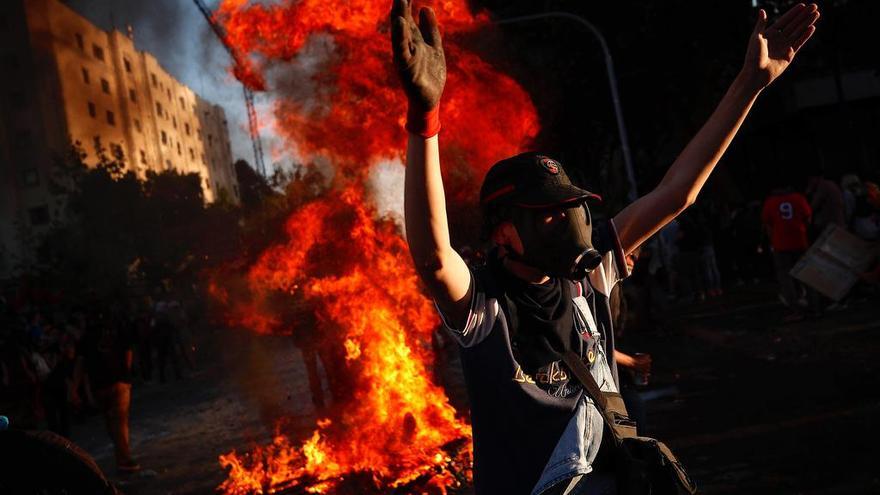
In Chile, The Failure Is Not The Model But Its Defenders

Protestors in Chile (el Nuevo Herald)

14ymedio bigger14ymedio, Mauricio Rojas, Santiago November 2, 2019 — What happened recently in Chile is not the result of the failure of its development model, but of its success. What has failed is a short-sighted center-right government incapable of managing the profound transformations that model’s success made essential. In short, it is not the model but its defenders who have failed.

Chile’s progress over the past thirty years has been extraordinary, turning Chile from a fairly mediocre country into the brightest star in the region. It has been, by far, the society with the greatest reduction of poverty, generalized increase in welfare, expansion of higher education, expansion of middle classes and social mobility. Even inequality, although still too high, has been reduced.

According to data provided by Michelle Bachelet’s former finance minister, Rodrigo Valdés, the Gini coefficient fell from 0.573 to 0.477 between 1990 and 2015. In that time the disposable income of the poorest increased much faster than that of the richest (the income of the richest ten percent increased by 208% between 1990 and 2015, while that of the bottom ten percent increased by 439%). continue reading

This extraordinary progress has generated a country totally different from the one that existed thirty years ago. Its social composition and standards of living have changed substantially, but also the ways of perceiving what is just and unjust, what is acceptable and unacceptable, what is dignified and unworthy. This has profoundly altered social demands and what until recently defined the aspirations and common sense of society has become obsolete.

President Sebastián Piñera recently used a well-known phrase spread by Mario Benedetti that synthesized what recently happened to the defenders of the model, and even to some of its detractors: “when we thought we had all the answers, suddenly, all the questions changed”.

However, in this case, these events did not occur right away. It became evident as early as 2011, when new qualitative questions about the justice of society were given old quantitative answers about growth rates or the level of GDP per capita. But this gap between new questions and old answers has become even more evident in recent days.

Basically there was, and still is, a deep misunderstanding about what I called already in 2007 the “malaise of success”, which has to do with what in the 1950s was called the “revolution of rising expectations”. Basically there was, and still is, a deep misunderstanding about what I called already in 2007 the “malaise of success”, which has to do with what in the 1950s was called the “revolution of rising expectations”.

This phenomenon is especially prominent in a country like Chile, which left extreme poverty behind in such a short amount of time, saw the emergence of broad middle classes and experienced an unprecedented educational expansion that multiplied the number of students by ten in the span of three decades.

Such a situation puts the country on its head in the face of the paradox of relative poverty, whereby the feeling of poverty can increase at the same time as poverty is drastically reduced. Absolute poverty is about fighting for the most basic things in life, while relative poverty is about everything one could want but not get, and the latter grows exponentially when we can lift our eyes above the most pressing and our horizons are broadened by greater access to education and the media. Frustration and discontent can grow despite our progress, not least when others enjoy what we lack.

At the same time, there is growing anguish at the possibility of losing the social gains recently won, thus giving rise to what the German sociologist Ulrich Beck called a “risk society” (Risikogesellschaft), dominated by the feeling of insecurity and precariousness in the face of an endless number of contingencies that may threaten the foundations of our lives.

Meanwhile, to the extent that the most basic needs are satisfied, there is, especially among young people, a shift in priorities. According to the concepts that Ronald Inglehart coined to understand the European youth revolt of 1968, as welfare increases societies move from “materialistic values”, characteristic of the hard struggle for subsistence, to “post-materialistic values”, where preferences tend to be directed towards “a good life” and personal self-realization. In this way the material conquests previously reached are devalued, or even despised, in order to orient themselves towards the search for a different society, defined as more human, collaborative, altruistic and egalitarian.

Therefore, it represents a confluence of situations and demands of a very varied nature, which in a given moment – the one we are living now, for example – combine to create what Ernesto Laclau has called, in his book on Populist Reason, an “equivalential chain” of discontents and negations, where the repudiation of a series of very dissimilar situations unites and makes a very broad and diverse spectrum of rejection and change wills equivalent. There is no common social project, but there is a common rejection, and it is precisely this that creates the conditions that, added to a “void of representation” on the part of the existing political elites, make a chaotic and open moment such as the one we are experiencing possible.

The emergence of this broad and multifaceted rejection of something diffuse that some call “the (neoliberal) model” or, to put it more concretely, a society of abuse, injustice and insecurity, is the paradoxical result of the progress gained when it coincides with the failure of its defenders to understand the new demands that arise from that progress and to propose, in a vigorous manner, the reforms necessary to structure a new social pact that is equal to the development achieved, especially in terms of inclusion, equity, the fight against abuses, equality of opportunities and solidarity.

As the current government testifies, it is not that some valuable efforts have not been made in that direction, but they have clearly been insufficient. The prolongation of a series of “social emergencies” – such as the generally miserable level of pensions, the high pharmaceutical costs or the brutal impact of “catastrophic diseases” — of blatant abuses — such as automatic TAG (automated toll) hikes or other motorway tolls — or violent price hikes for basic services — such as electricity or transport — have been fatal.

But then there are the more fundamental shortcomings, such as those affecting public health or education, and, more generally, the lack of a social safety net to ensure a minimum of dignity and a safeguard against unforeseen events, especially in view of the neglected demands of the new middle classes.

The dogmatic defense of the current tax rates, particularly for the wealthiest and most income earning sectors, has been a key impediment to progress in this direction. However, so has the anachronistic fixation on a social policy focused on the Chicago School, that is to say, that only points to the needs of the poorest.

Ignoring the need to build a modern welfare state, that is, without monopolies and that combines significant levels of redistribution and equality of opportunities with citizen empowerment and freedom of choice and enterprise in the areas of welfare guaranteed for all citizens (as in the case of countries such as Sweden), has been nefarious.

Today we are faced with such a crisis of legitimacy of the prevailing system that the doors are opened to raise, and even accept, all kinds of nonsense, such as chavista assemblyism, plebiscite democracy, public monopolies or fiscal indiscipline.

Today’s panic is spreading among many who did not know how to defend the model of development that has brought us so much progress, instead reforming it in due time and attending to social urgencies in a forceful way.

When the doors to evolution are closed, they can be opened to revolution and disorder. As Arturo Alessandri so often said, it is necessary to advance “without hesitation along the paths of evolution to avoid revolution and upheaval.” This should be the greatest lesson of these dark days.

Mauricio Rojas is a researcher at the Department of Economics and Business of the Universidad del Desarrollo, in Santiago de Chile, and a Senior Fellow of the Fundación para el Progreso.

Translated by: Rafael Osorio

__________________

The 14ymedio team is committed to practicing serious journalism that reflects Cuba’s reality in all its depth. You can help crowdfund a current project to develop an in depth multimedia report on dengue fever in Cuba; the goal is modest, only $2,000. Even small donations by a lot of people will add up fast. Thank you!

Go To Bed, Or The Neoliberal Will Come To Eat You

Díaz-Canel congratulated Alberto Fernández and Cristina Kirchner and wrote on Twitter: “Deserved triumph that propitiates (sic) a defeat to neoliberalism.” (Capture).

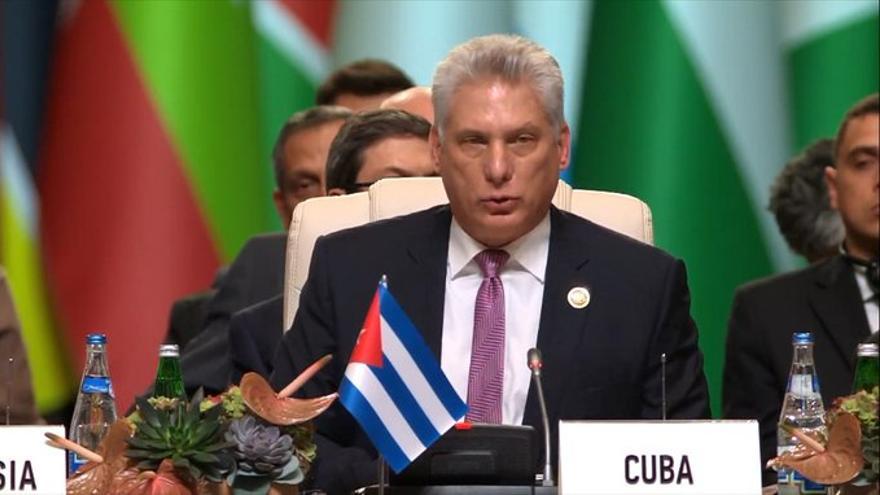
14ymedio bigger14ymedio, Carlos A. Montaner, Miami, November 3, 2019 — Diario de Cuba counted 22 diction errors in the 17-minute speech of Miguel Díaz-Canel, president of Cuba, to the “Non-Aligned.” It’s true: he speaks “with tobacco in the mouth,” although he doesn’t smoke cigars, unlike certain Villa Clara natives, and he reverses the R and the L, habitual in certain areas of Andalusia and the Caribbean.

But more serious was what was highlighted by 14ymedio, another opposition publication: a monumental blunder in the sphere of homophony and paronymy. Díaz-Canel confuses the verbs “propitiate” and “deals.” The Cuban leader was congratulating Alberto Fernández and Cristina Kirchner and wrote on Twitter: “Deserved triumph that propitiates [sic] a defeat to neoliberalism.” I suppose that he meant to say “deals.”

Nor does he know that “neoliberalism” doesn’t exist. It’s an empty label used by socialists of all stripes to discredit their adversaries. Ricardo López Murphy, a brilliant Argentinian economist, threatens his grandchildren with that terrifying fabrication: “Go to bed or the neoliberal will come to eat you.” The phantasmagoric neoliberal is the modern version of the “bogeyman.” continue reading

What do exist are certain sensible economic measures that we liberals defend, although it goes without saying that liberalism is, first, a moral conviction; second, a legal question; and, finally, certain economic proposals arisen from experience. For example, controlling inflation (the most devastating phenomenon against the poor), having a low tax burden, limiting public spending and the number of officials at the revenue level, and having few regulations (the indispensable ones), given that experience shows us that that is the crevice through which corruption usually seeps.

It’s not about the State disappearing, but rather that it performs the tasks we have entrusted to it well. Fundamentally, that it protects the security of individuals and their property; that crimes and violations of the law do not go unpunished, including hooded rioters and looters; and that it impartially safeguards and stimulates the presence of open markets absolutely hospitable to entrepreneurs.

As for health and education, it’s very important to promote them as a joint effort of society, but without placing them directly under the control of the State. It’s preferable to pay for those services via vouchers so that families can choose the best hospital or school, like they have done in Sweden since the failure of statism at the beginning of the nineties, to ensure that institutions compete and don’t rest on their laurels.

That is the true distinction between liberals and socialists. We liberals think that individuals are the ones most capable of making personal decisions, while socialists are sure that it is preferable that the State make that choice.

The works of the economics Nobel laureate James M. Buchanan should have put an end to that eternal dispute. Buchanan and his disciples demonstrated with their studies (Virginia school) that officials and politicans, like everyone else, make decisions in pursuit of their own electoral and economic benefits and not in the interest of a hypothetical “common good.” [The Calculus of Consent: Logical Foundations of Constitutional Democracy, by James M. Buchanan and Gordon Tullock]

For that reason, privately capitalized accounts and pension savings (for example, the American 401k or the Chilean AFP) are infinitely preferable to public funds, always in reach of the “creative accounting” of dishonest politicians and officials interested in boosting their clientele with the money of others.

This is not to say that individuals always make the correct decisions. Argentinians have been systematically making mistakes for seventy years. We Cubans deliriously applauded Fidel Castro’s arrival to power. Venezuelans did it by majority with Hugo Chávez and, later, with Nicolás Maduro. The dictators Daniel Ortega of Nicaragua and Evo Morales have the support of at least 20% of the national register. To err is human, but much more human is to persist in error.

Translated by: Sheilagh Herrera

_________________

The 14ymedio team is committed to practicing serious journalism that reflects Cuba’s reality in all its depth. You can help crowdfund a current project to develop an in depth multimedia report on dengue fever in Cuba; the goal is modest, only $2,000. Even small donations by a lot of people will add up fast. Thank you!

A Lost Gastronomic Legacy / Rebeca Monzo

Rebeca Monzo, 23 October 2019 —  The loss of Cuba’s gastronomic legacy began in 1959 when private companies, factories and businesses began to disappear after the so-called “triumph of the Revolution,” appropriated entirely by the totalitarian regime.

Back when Cuba had six million inhabitants, there were also six million head cattle along with many sheep, goats, horses and pigs. This was considered normal.

Family meals typically included beef. On any given day, Monday through Thursday, there would be ropa vieja, fried cow, beef tenderloin, ribeye or filet steak, roast beef, meat with potatoes, pot roast, beef-stuffed green peppers, meatballs and the famous picadillo, which was made with chopped beef, small fried potatoes, olives, capers and raisins. continue reading

Fish was often eaten on Friday because, at the time, most people were professed Christians. Meals featured roast snapper, bass soup, small fried porgy or bream, fish croquettes with parsley, and shellfish such as lobster and shrimp.

On Sundays there was chicken: arroz con pollo garnished with baby peas and roasted red peppers, roast or fried chicken and chicken croquettes.

Pork, turkey and Guinea hen were eaten mainly at Christmas. Cuban factories and private companies also produced many wonderful varieties of pork sausages and ham.

Cuban companies such as Nela, Guarina and Patagras produced high-quality butter and cream cheese as well as the so-called yellow cheese. White cheese was generally an artisanal product.

Every street in Havana had tiny spots, known as kiosks, which offered fresh oyster cocktails on a daily basis. Many others sold cold sugarcane juice. Some specialized in fried foods as well as hamburgers made with top quality beef.

Something else that has been lost is Cuban caracolillo coffee, which was one of the best in the world. You could buy it at almost every bus stop and at small shops for three cents a cup.

The wonderful tradition of Creole desserts has also been lost: grapefruit in syrup, poached orange peel, guayaba jam, grated coconut, sweet papaya, caramelized coquitos, white and tight coconut, mango kisses, mango jam, mango in syrup, flan, fruit pudding, milk and pumpkin custards, the typical sugarcane fritters and the famous rice pudding, made with Valencia rice and with two different kinds of milk.

Also gone from homes and restaurants are corn fritters, corn bread, sweet corn flour pudding and creamed corn soup with pork to name just a few of the most popular Cuban dishes.

With all of these dishes gone, Cuba’s culinary culture has been reduced to the here and now. I think any cookbook written today ought to be called “What Do I Have; What Can I Make.”

Once Again Havana Boulevard Has Been Resurrected

Taking a walk on the popular Boulevard is no longer a disagreeable experience (14ymedio)

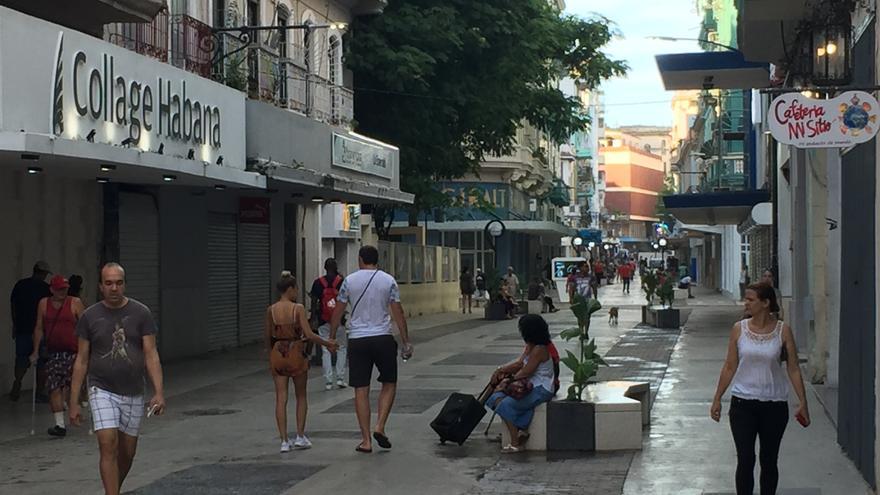
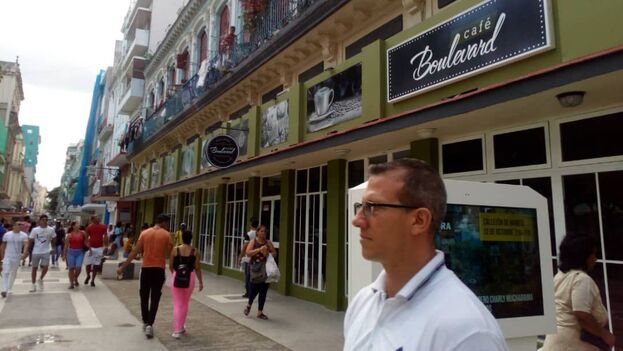
14ymedio bigger14ymedio, Frank Abel García, Havana, 3 November 2019 — The last remodeling of Havana Boulevard, located in the initial section of San Rafael Street, comes with the reopening of some spaces administered by the State. After years of complete abandonment, this old commercial area begins to revive thanks to the improvement plan put in place to celebrate the 500th anniversary of the foundation of the Cuban capital.

Taking a walk on the popular Boulevard is no longer an unpleasant experience. Although it has not recovered its former splendor and numerous premises are still closed during the work of remodeling, that part of Centro Habana is becoming attractive and offers some surprises at affordable prices.

Entering the Paseo del Prado on Boulevard 66, where you can enjoy works of renowned artists for a price much lower than the scandalous rates charged at tourist places in Old Havana. La Calesa ice cream shop is proud of its four flavors of ice cream (condensed milk, strawberry, vanilla and butter). It can be said that the prices here are proportional to the quality of the service provided. I wasn’t able to enter the legendary ice cream shop on Boulevard El Arlequín, because a truck from Matilda, its supplier, was unloading its merchandise and was blocking the entrance. continue reading

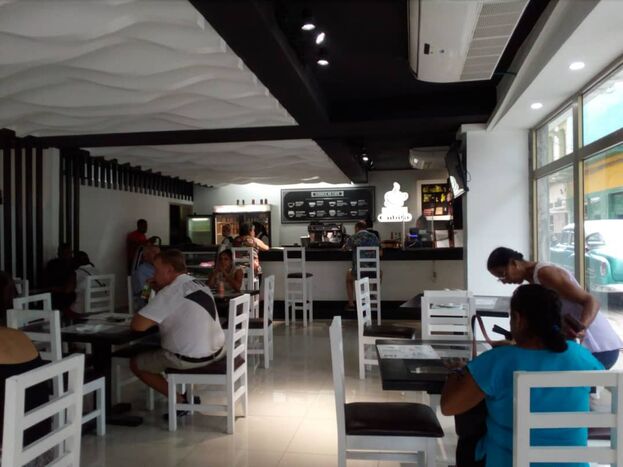
Nautilus Hamburgers has opened with a varied menu. The establishments that attract the most customers are El Café Cubita, the restaurant Almirante specializing in Spanish food, the Bazar Francés cafeteria and the Boulevard cafe. It is striking that none of these are operated under the newly authorized cooperative structure. They are state-owned and according to the clerk at the door of the French Bazaar. Before the almost provocative question of whether the establishment was private, he replied: “No. This is State run,” he replied and kindly invited us in.

Although there is no doubt that all this represents competition for private cafes and restaurants, there are more than a few customers who out of preference or experience continue to seek out private businesses. (14ymedio)

Although there is no doubt that all this represents a competition for private cafes and restaurants, tthere are more than a few customers who out of preference or experience continue to seek out private businesses. A girl who was having a snack in one of these private cafes commented: “I like it better here, I have been eating here for a long time, and I prefer it to the one across the street, which is state owned.” One of the employees of the same cafes added: “We thought that so many new and cheap places were going to affect sales, but our sales still sell the same.”

The old Duplex and Rex cinemas, inaugurated 81 years ago, were emblematic for Havanans in the mid-twentieth century, but already in the ’80s they became the cradle of disaster and rot. Now their theaters, for a long time lacking seats or stages, house a private business, dedicated to lit ads. It has not been possible to remove the musty smell from the pores of its walls.

But turning every corner of the brand new Boulevard, the dream of restoration disappears and you trip over the usual dirt of the capital. “Yes, they have repaired the most visible part, but the rest remains the same; garbage is not collected, and the buildings are getting worse and worse,” says a neighbor.

The litmus test of the renaissance of the Boulevard is precisely the audience to which it reopens. (14ymedio)

Fin de Siglo, another of the historic sites of the Boulevard, is currently in what seems to be under deep repairs. After going through the humiliation of becoming a bazaar of street vendors, the once luxurious store, one of the first in Cuba with escalators, shows signs of wanting to to be resurrected. Along the street benches have been placed that are used mainly by those who want to connect to the Wi-Fi zone. Several markets of the PanAmerican chain have a very picturesque aspect, as if they were moving in the context of commercial competition, especially when compared to most of the underserved and deteriorated state stores anywhere in the country.

Finally, a series of establishments associated with the Cuban Fund of Cultural Property have a variety of offerings, among them GráfikaAmigo (decorative stationery), Ensamble (furniture and interior design) and Douglas y Lucas.

The litmus test of the renewed Boulevard is precisely the audience to which it reopens. The boys walk on the benches and in the Pan-American store the employees are more worried about watching that nothing is stolen than in selling. Although there are baskets for trash (insufficient), on the floor you can see soda cans, papers, cigarette butts and other trash.

Almost all the provincial capitals have enabled some type of pedestrian promenade in the most central part of the city in the style of Havana Boulevard. They are also dominated by the state sector and, as in San Rafael Street, there are concentrated efforts by the Government to create the illusion of a prosperity that is not reflected in the rest of the country.

________________

The 14ymedio team is committed to practicing serious journalism that reflects Cuba’s reality in all its depth. Thank you for joining us on this long journey. We invite you to continue supporting us by now becoming a member of 14ymedio. Together we can continue transforming journalism in Cuba.

Journalism Today: Between Ethics and Technology

In the end, we are storytellers. Our field is not fiction, as in the case of novelists or playwrights, because we tell real stories. (Rafael Alejandro García)

14ymedio bigger14ymedio, Yoani Sanchez, Generation Y, Havana, 3 November 2019 – [This text was delivered at the graduation ceremony for the Master of Journalism of the Spanish newspaper El País.] More than a decade ago I crossed a thin red line and took a path that – even if I had wanted it to – has no turning back: I went from being a citizen who consumed the little information that came to her hands, to becoming a blogger, reporter and a news source in a country like Cuba, with 11 million inhabitants thirsty to know what is happening inside and outside its territory.

I did not decide, I did not take a minute to reflect, I did not even weigh what would come after taking this step, simply journalism knocked on my door and there was no way not to open up, to not let it pass or to prevent myself from turning my life upside down. There was so much to tell that it would have been an act of civic apathy and reprehensible indifference not to have assumed the responsibility of narrating my country.

Those were the years when the Arab Springs were forged and when the emergence of smartphones and social networks made one think that a screen, a keyboard and a brief message on Twitter were enough to awaken consciences and change realities. But it was also the beginning of a period of deep crisis for journalism. continue reading

Thus, years arrived when the media seemed to have lost its way. A single person, with a cell phone in hand, could achieve the most important coverage of an event and many times the teams of reporters, photographers and editors arrived late for what was already a story broadcast to exhaustion in forums, chats and Facebook walls.

The so-called “native digital” media emerged, while others became hybrid creatures, almost information chimeras that still, today, try to enhance their digital versions while attempting to keep the paper copies alive, which in most cases have been relegated to a second place less dynamic and important.

Also, a decade ago, many were betting that the new journalism that was going to emerge from all these changes would have to be ever faster and immediate, with greater integration of audiovisual elements, more interactive, more democratic and – of course – flooding social networks and the new content dissemination channels. Most of the time in that equation the central point of any reporting work was underestimated, beyond ornaments or technological tools: the story.

In the end, we are storytellers. Our field is not fiction, as in the case of novelists or playwrights, because we tell real stories, what happened a few minutes or several decades ago, our strength based on truthfulness, where we convey certainty. A well told story, with beautiful language, with a variety of sources consulted and backed by research, remains the core of our work.

And to tell a story it is not enough to have the luck or the patience to find an event worthy of our readers. It is not enough to use gerunds well and master a vocabulary that makes the reporting, the chronicle or the simplest informative note a pleasure for the eyes and the intellect. No, it is not enough. Nor is it enough that we publish stories characterized by novelty and revelation. Language and ethics make up the main cement that must unite all the elements of good journalism.

First, the mastery of the language (in our case of the beautiful Castilian language) is one of those subjects in which no one ever graduates completely, but in which good grades can be achieved through reading, linguistic curiosity to inquire about the meaning and origin of words, an unspoken acceptance of imported words and the boldness to combine terms and break with the idea that journalism should be written in a dry, direct language and one that never soars.

But ethics, this is more difficult to achieve because it is born from personal commitment to objectivity and truth. It also comes from understanding the human measure of a journalist in a society and accepting the responsibility we assume with each disseminated reportage.

The ethics in the press begins by being honest in the handling of the reporting raw material, conscientious in the verification of data and consistent with the reality of what we are reporting.

In the case of authoritarian societies, where information is still seen as treason and the press has only two possible positions: applaud the power or be condemned to exist in illegality and harassment. Information ethics also does not give way to pressures or self-censorship. In those regimes, allergic to information freedom, the reporter becomes an activist for truth.

Although new technologies have partially pierced the information monopoly walls erected by dictatorships, these years have also served for us to understand that political and social changes need much more than touch screens and calls on the networks. On the other hand, the same devices that are used for a liberating and democratizing purpose are also used by the political police to monitor activists, control the independent press and distort information.

Let’s not fool ourselves. There is no more effective ‘fake news’ and post-truth factory than populism, nor a laboratory from which the most finished and even “convincing” hoaxes come than within an authoritarian regime. Hence, exercising ethical and quality journalism in these circumstances is of vital importance in these times.

The most worrying thing is that these predatory attitudes of information freedom are not exclusive to authoritarian systems, but also extend to democracies. The exercise of journalism is now in the spotlight of too many powers.

In countries like Mexico and Honduras, a piece of reporting can cost an author their life; while in nations like Cuba, the ruling party boasts that journalists are not killed on the Island, although the truth is that they have killed journalism by force of threats, arbitrary arrests, confiscations of the tools of the trade and pressures to go into exile.

On the other hand, in societies where citizens see violations of their rights every day, and where there is no separation of powers and the courts are fiefdoms of a group that administers justice at will, the independent press (here it is worth using the qualifier “independent” given that these regimes are given to creating their own pseudo press or propaganda soundboard) it assumes new responsibilities. It becomes a loudspeaker for a gagged citizenship, with a share of heroism but also of the commitment that this role brings.

And how do young journalists fit into this complex scenario? What words of encouragement can I offer you for the path you have just started out on? Few and many. You have come to the press at a tipping point and time of doubts. You will disembark in newsrooms tormented by debts and obsession with ‘hits’; probably many of you will practice in societies where you will be playing with your lives, prison and prestige when publishing on certain topics. It is very likely that in certain circumstances you will avoid even confessing to others that you are journalists so as not to listen to the old epithets of “pencil pushers,” “news vultures,” “yellow journalists” or “fifth columnists.”

Your nights will become intense hours, you will never be able to look at a television screen, the front page of a newspaper or a digital site with that touch of healthy naiveté you once had; you will also learn that this is not a profession for making friends and that as you develop better skills animosity and criticism will grow around you. But also, you will enjoy the thrilling moment of following a story, the adrenaline rush that seizes you when you are only a few seconds or a click away from publishing a report on which you have worked for a long time.

You will enjoy that moment in which the publication of a story helps to improve reality, or correct an injustice or give voice to those who have long been silenced. They are brief moments, but they are strongly rewarding.

You will hate and love your editors, you will have to respond to the anger of some readers and also take responsibility for the reprisals suffered by your sources. You will drink more coffee than you can even imagine now and you will understand that in the face of any topic that you discuss in your articles there will always be someone who knows more than you about that matter and who will be there, carefully reading every line you publish, ready to find an error.

And when you believe that the day is over, because the text you have pampered like a child has already been delivered, edited and seen the light… and then you will have to start over at the beginning because a new day will come, with other stories to tell and an insatiable audience that awaits you. So I can only promise you: a lot of responsibility, little rest and even less boredom.

________________________________

The 14ymedio team is committed to practicing serious journalism that reflects Cuba’s reality in all its depth. Thank you for joining us on this long journey. We invite you to continue supporting us by now becoming a member of 14ymedio. Together we can continue transforming journalism in Cuba.