In Spite of Hurricanes, Easterners Manage to Survive / Iván García

Two men from the village of Paraguay, in Guantánamo, moving with their suitcases to a more secure place before the arrival of Hurricane Matthew. Taken from The Daily Times.

Ivan Garcia, 5 October 2016 — Right now, it’s easier to get to Miami than to Santiago de Cuba. To visit the second largest city on the Island, there are two daily flights that are rarely on time; you have to take a train for around 20 hours, or buy a bus ticket, a whole adventure where you get a mix of satire, drama, and, of course, the chance to pay five or ten convertible pesos under the table as a bribe.

If anyone knows hardship, it’s the Cubans who live in the eastern regions. Living far away from the coasts of Florida, diplomatic headquarters and media focal points, their first step toward migration is to escape to Havana. continue reading

Havana is a city where, to their misfortune, the Cuban Adjustment Act doesn’t exist. Long before Donald Trump tried to enter the White House, with his primitive isolationism and huge stupidity, Fidel Castro advanced a project to build a legal wall: Decree 217, or the Law of Internal Migratory Regulations, which, since April 22, 1997, restricts those born in the east of the Island from living in the capital, which supposedly belongs to all Cubans.

The worst things in Cuba happen to easterners. Regulations, laws to put the brakes on their internal migration, being exposed to earthquakes, drought, and, in 2012 to Hurricane Sandy, and now, with the imminent arrival of Hurricane Matthew, they suffer more devastation caused by natural phenomena than the central and western provinces.

Their sing-song accents, extended mania for throwing down rum and for living in subhuman conditions, are the stuff of jokes with racist and xenophobic overtones made by habaneros, residents of Havana, who call them palestinos, Palestinians.

If you visit any of a hundred illegal slums set up in the darkness of night and constructed with recyclable materials in different districts of Havana, you will see that most of the residents are orientales, easterners, who are fleeing from poverty in search of better salaries.

Néstor is one of them. For seven years he has lived in a hut made of poorly arranged bricks with a tile roof, in a foul-smelling and dingy field that is a stone’s throw from the landfill of Calle 100, in Havana’s Marianao district.

He lives from garbage. He earns money by collecting raw material that has apparently ended its useful life, like shoes, electric appliances and sports watches, which, after a process of repair, are sold at low prices in the traveling stalls that are set up in Havana.

“The eastern part of Cuba is at death’s door. There’s no money or food. I worked as a custodian in a school and earned 225 Cuban pesos a month — around eight dollars — and when I went to a shop to buy a pair of shoes, the price was from 500 to 600 pesos. Havana is dirty, many houses are held up by a miracle, but you can find money there,” says Néstor.

Luis, a santiaguero, resident of Santiago de Cuba, living for 10 years in Santos Suárez, a neighborhood south of the capital, sells tamales. While driving his tricycle-trailer, he hawks his hot tamales as soon as they’re made.

“Not even in the distant past was nature in favor of santiagueros. Earthquakes, drought, and now we’re also threatened by this powerful hurricane. There people are butting their heads against the wall trying to invent money. Recreation is dancing reggaeton and drinking homemade rum. Things in Cuba are bad, but in the east everything is much worse,” points out Luis.

With the arrival of Hurricane Matthew, thousands of easterners who are settled in Havana worry about the future of their relatives. “Every evening I call my mother and brothers, and I pray that the hurricane won’t carry away their little house. We are from San Pedrito — a neighborhood in Santiago de Cuba — and we have more trouble than a slave working under the sun. It’s pitiful. As soon as they get up, people start drinking alcohol and gossiping about the neighbors,” says Lucila, a worker in an agro-market in El Cerro.

The disgust of many people from Havana toward easterners is provoked a little by the myth and by the rude behavior toward the citizens by the police, composed mainly by natives of those regions*.

“Easterners are known for being informers, bums, and alcoholics. It’s all the same to me if the hurricane goes through Oriente, and if it does, the orientales can piss off,” sneers Octavio, a habanero who kills time by talking nonsense on street corners.

Carlos, a sociologist, considers that many people have a real problem with Cubans born in the east. “What bothers habaneros the most is the terrible treatment by the police – their lack of culture, bad manners and inferiority complex. Probably they’re not pleased that most of the State officials, headed by Fidel and Raúl, come from the eastern provinces. There is the false belief that cheap whores and hustlers arrive by train from the east to create more problems in the capital. The State, with Decree-Law 217, opened the door to xenophobic feelings that have always existed below the surface in a segment of the population born in Havana. I don’t think it’s a serious problem. But more attention should be paid to the frankly pejorative attitude towards easterners,” indicates the sociologist.

Like any group of Cubans, Havana is only the first step for the easterners. The next trip, if they get enough money or are claimed by their relatives on the other side of the pond, is to land in Miami.

Iván García

Hispanopost, October 3, 2016.

*Translator’s note: Easterners are recruited to be police officers in Havana with the incentive not only of a steady job but also of the nearly-impossible-to-obtain permit to live in the capital city.

Translated by Regina Anavy
Cuban Human Rights Group: 570 Arbitrary Arrests in September / 14ymedio

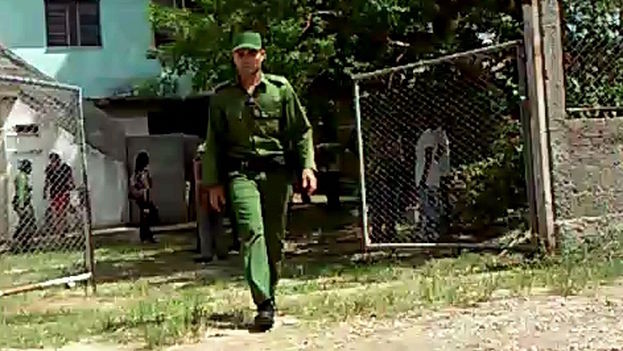
The September report places special emphasis on the police assault suffered by the independent law firm Cubalex shown in this photo. (14ymedio)

14ymedio bigger14ymedio, 5 October 2016 — The Cuban Commission for Human Rights and National Reconciliation (CCDHRN) reported Wednesday that, during the month of September, there were at least 570 arbitrary arrests for political reasons, more than the 517 similar arrests of the previous month.

The monthly report of the independent organization, headed by activist Elizardo Sanchez, places special emphasis on the police assault suffered by “the independent law firm Cubalex, an office that has provided free legal assistance to countless people in need of legal protection.” Julio Alfredo Ferrer, one of the workers of the center, remained in a high security prison at the time the report was written.

The text also recalls that the Ladies in White continue to be the group most affected by this type of repression, as systematically reflected in reports of recent years.

Two vice president of the Cuban Commission for Human Rights and National Reconciliation have been affected by the arbitrariness of State Security, as denounced by the center. Arturo Guillen Acosta was prevented from traveling to an international conference on human rights in South Africa, and documentation brought from a conference in Medellin, Colombia by Juan del Pilar Goberna was photocopied in the José Martí International Airport in Havana.

Baracoa, The Face Of Disaster / 14ymedio, Yunier Reyes

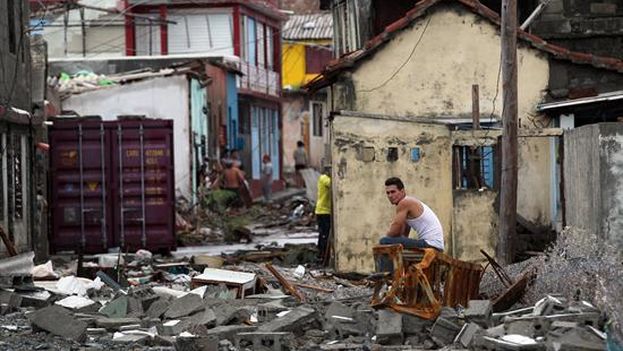
Hurricane Matthew left serious damage in Cuba at the eastern end of the island, with total and partial collapses of houses, electricity poles and roads completely cut off. (EFE)

14ymedio bigger14ymedio, Yunier Reyes, 6 October 2016 — Baracoa has taken a pounding. Everywhere you look roofs have blown off and the residents are trying to save any pieces of their homes that can be reused. They walk over the mounds of bricks, climb over the bits of stairs that no longer lead anywhere, and salvage the window frames that were once set into walls. The city looks like a ruin, but the growing roar of survival persists.

Hurricane Matthew has already traveled far from Cuba’s eastern tip, although the passage of this unwanted visitor will linger for years in the memories of Baracoans. “I’m looking for the photo of my grandfather that was in the living room,” says Cira, 58, a resident who on Tuesday collected the little she had and went to the house of some relatives who had a “sturdy roof” to face the strong winds. continue reading

The woman has now returned to the place where her home was, to find barely the outline of the foundations. “My room was here,” she says, and two steps further on, under a mountain of debris the pure white toilet peaks out. She lost everything: her television, mattress, coffeemaker, a mahogany table she inherited from her mother and the portrait of her grandfather that she used to put “flowers in front of every day.”

Cira’s story is not the most serious. In Baracoa everyone has been touched by the misfortune. Luisito, age 8, can’t find his dog, which he called for all Wednesday afternoon before returning to the house of some cousins where his family took shelter; by the end of the day he hadn’t seen the dog’s tail nor its white back anywhere. “I’m sure he hid, he’s very smart,” his mother said to comfort him.

No deaths have been reported in the wake of the devastating hurricane, but the city looks like a corpse. The firefighters and military brigades that are arriving advise the residents to stay away from the wreckage and be careful around shards of metal and the broken boards and glass all over the ground. But few heed them.

They are in a battle against the clock. They want to retrieve all the materials they can for the partial or total reconstruction of their homes. They fear that when the area is militarized they’ll be moved far from their homes and will be unable to continue salvaging their personal belongings that remain dispersed along the ground.

People console themselves knowing that the situation is even more serious in other parts of Guantanamo province, which no one has been able to get to yet. The road to Maisi is blocked by trees and chunks of asphalt torn out of the higheway. Hardly anything is known about what happened to “the crocodile’s snout” – the easternmost point of the island.

The rivers are still swollen and in the area of San Antonio del Sur the roads are torn up and the lines in front of the bakery are growing. The more farsighted, who managed to buy some food before the beginning of the first gusts of Matthew, declare they have nothing left. “There isn’t much to eat,” complained a woman near the state store, one of the few in the whole town with an electric generator.

On the outskirts of Baracoa the air is filled with the buzz of chainsaws from a technical military brigade, intent on trying to break through to the villages that have been cut off. The phone lines are cut and cellphones can’t be recharged because of the lack of electricity.

Nobody knows anything about what happened to the residents of Purialess, a small town in the area. There is no communication by landlines or cellphones and radio and television signals don’t reach them. The huge repeater antenna of Radiocuba is deaf and mute, having falling on a roof.

One of the worst scenarios is in the section between Bagá and the area known as La Curva del Sapo – the curve of the toad. Electricity pylons have collapsed and the ground is covered with a carpet of banana plants that did not withstand the winds. The tomato fields are damaged and concern about a food shortage is widespread.

The greatest drama falls on those who have completely lost their homes. This Wednesday night some didn’t want to move from the place where they once loved, slept and cooked. The walls and the roof are gone, but “this is my home,” says Cira, flashlight in hand, as she continues to search for the photo of her grandfather.

In the Midst of a Hurricane, Mariela Castro Remodels Her Mansion / Juan Juan Almeida

Juan Juan Almeida, 3 October 2016 — At the same time that Hurricane Matthew is setting off alarms throughout the island, especially in the eastern part of the country, the wall of secrecy surrounding the Castro family is starting to crack, allowing us to see that the Cuban government is spending more money on remodeling Mariela Castro’s house than on relief aid to deal with the approaching storm.

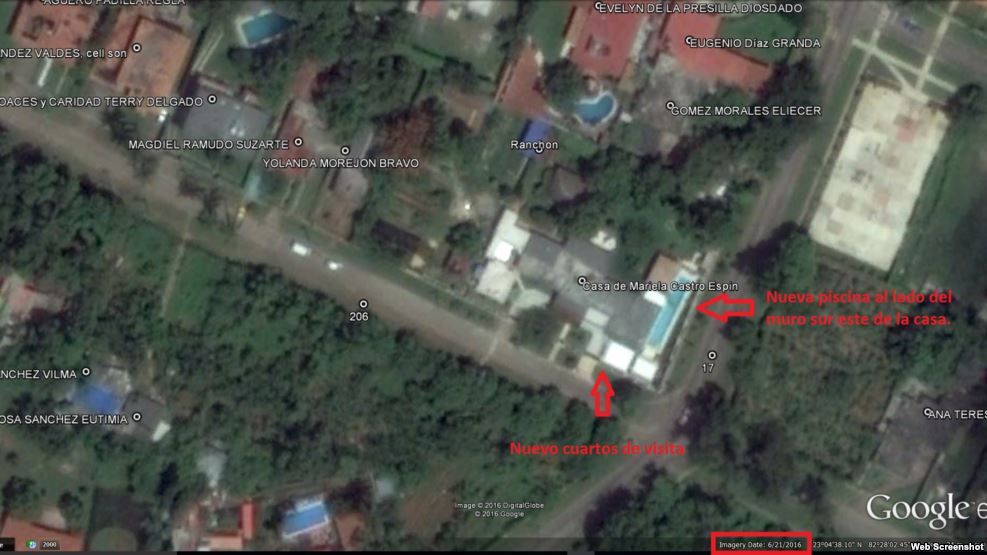
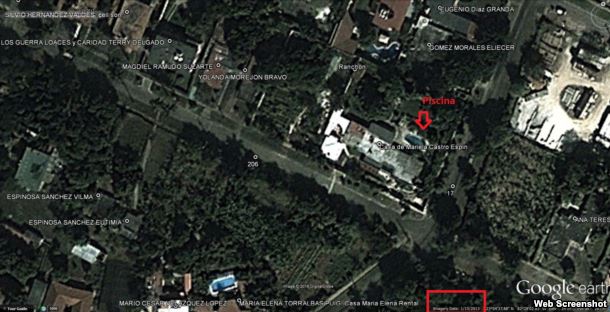
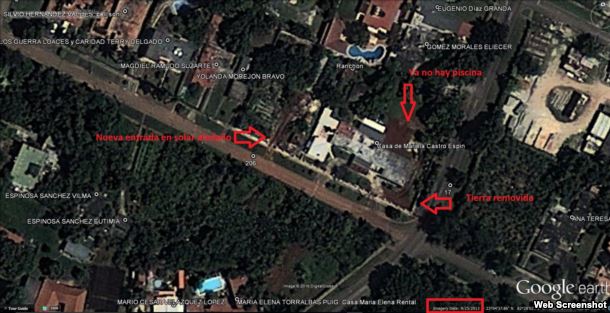
The numbers speak for themselves. If nothing else, Hurricane Matthew has exposed the sins of Raúl Castro’s family. Satellite images, which do not lie, reveal that from 2013 to the present the government has invested more than double the money at triple the quality on remodelling Princess Mariela’s house — located at 1513 206th Street (between 15th and 17th) in Havana’s Atabey district — than on preparations for the area that, as of Saturday, remains under a hurricane warning. continue reading

On October 1 General Raúl Castro appeared in Santiago de Cuba flanked by the ministers of Transport, Energy and Mines, Construction, Communication, Agriculture and Domestic Commerce. The group also included the president of the National Institute of Hydraulic Resources, the first deputy minister of Public Health and the deputy minister of the Revolutionary Armed Forces, General Ramón Espinosa Martín.

The presidential party arrived in eastern Cuba with a shipment of aid that included fiber cement construction panels, zinc, steel and wood panels, asphalt roofing materials, electrical generators, food and water.

The entourage also inspected the preparations by the General Staff for Civil Defense for food distribution, stockpiling of agricultural products and the evacuation of those living in low-lying areas to higher ground.

The resources are insufficient, I believe, because turning the official residence of General Castro’s daughter, who is also director of the Cuban National Center for Sex Education, into a bunker required diverting resources and state assets to invest in construction materials for an expanded housing complex which now includes a perimeter stone wall, lined on its inside face with Jaimanita limestone, and a new security system.

The remodeling project involved replacing the property’s original pool, previously located behind the house, with a new rectangular imported one, now located along the side of the house. An “old shack” was demolished and replaced with a new structure which features precious woods from the Guanahacabibes peninsula, one of Cuba’s principle nature preserves. As though that were not enough, designers and construction workers were used to build and furnish an adjacent bungalow-style guest house. The entire project — including labor, transportation and refreshments for the construction crews — was coordinated by the Revolutionary Armed Forces.

The Hurricane Matthew alert confirms just how much disdain the classless ruling class has for the Cuban people. If General Raúl Castro really wants to stamp out corruption by the root, he should start by cleaning up his own house.

First Light of Dawn Finds Cuban city of Baracoa Desolated and in Ruins / 14ymedio, Yunier Reyes

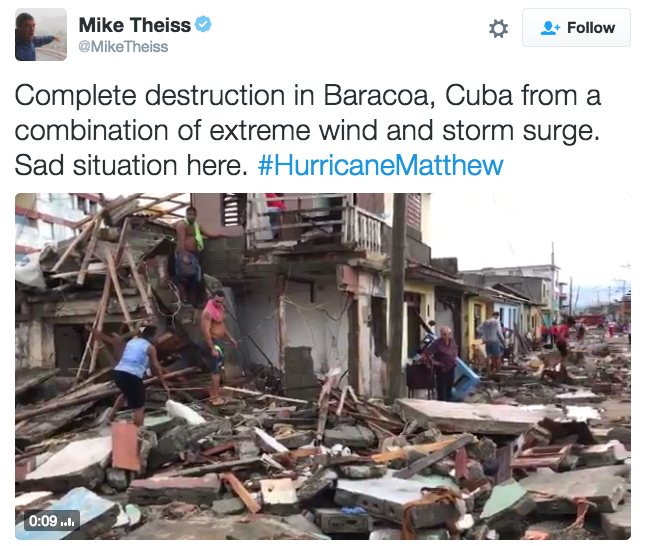
14ymedio bigger14ymedio, Yunier Reyes, Baracoa, Cuba, 5 October 2016 – A grief-stricken Christopher Columbus – who first touched land in the Americas in this place – observes the chaos that emerges with the first rays of the sun in Barancoa. The sculpture of the sailor stands a few yards from the sea and shows the marks of having confronted the winds of Hurricane Matthew on Tuesday night. Columbus has stood up to this new and harrowing voyage, but the same cannot be said for the city that unfolds before his eyes.

People come out into the streets with tear-filled eyes and deep despair. A resident holds her head in her hands while looking at the remains of her modest house some 200 years from the sea. “Mi’jo (my son) this is going to take me the rest of my life to rebuild,” she says, to the few residents who have dared to venture forth this early in the morning. continue reading

A Tweet from National Geographic photographer and storm chaser Mike Theiss

In Baracoa the ground is covered with branches, the seafront Malecon is missing pieces that have come down several yards away, the roof of the Primada Vision telecommunications building has flown off in several pieces and its metal tiles litter the streets. The electrical wires are down and entangled in the columns of houses that were once standing.

A few people rummage here and there to rescue pieces of wood, nails and tiles that will allow them to rebuild their lost roofs. The inhabitants of the area have learned long since that state help to the victims will be too late, plagued with the “diversion” of resources, and frequently there won’t be enough for everyone. For now, they try to do whatever they can for themselves.

“If they don’t deliver food quickly, I don’t know what is going to happen,” complains a young man who has improvised a rod with a metal hook on the end as he digs through the wreckage in search of “planks to cover the little room.” He says he has two small children who are sheltering with his wife at a nearby school, but he did not want to go. “I couldn’t leave the house unattended, someone had to stay to keep an eye on the refrigerator.”

The city’s central park is a sequence of fallen trees, like soldiers killed in a battle with the gusts of the hurricane that topped 130 miles per hour. The drugstores like El Turey also lost part of their roofs and even the houses under construction have seen their few walls, raised with so much effort by their owners, collapse.

For Baracoa’s residents this has been the longest night in memory. Many barricaded themselves in their homes with a few cans of food and some crackers to resist Matthew’s onslaught. High waves covered the Malecon starting in the afternoon and in the coastal areas few dared to stay in their homes for fear that the sea, in addition to taking all their belongings, would also take their lives.

The most stubborn refused to move from their homes and in the midst of strong winds the firefighters had to rescue several families trapped in partially collapsed buildings.

Official figures say that 749 homes have been affected by flooding, four of them completely destroyed and nine partially destroyed. More than 38,000 people were evacuated, the majority of them to the homes of family or friends.

The legendary hotel La Rusa lost its roof, and a part of its structure is seriously damaged. The emblematic lodging is in ruins this morning, barely standing. The Castillo Hotel suffered structural damage due to the onslaught of the winds.

Saying goodbye to the few belongings the inhabitants of this poor city possess has been very difficult for many. You can take almost nothing with you to the shelters and people worry about the mattress left at the mercy of the rains and possible thieves, those ne’er-do-wells who prey on natural disasters.

When the sun set, you couldn’t even see your hands in front of your face. Like a ghost town, Baracoa was plunged into shadows, crossed by howling winds and with no connections to the rest of the island. The phones were cut, electricity stopped flowing and prayers rose asking that everything would pass “quickly and without deaths.”

Just two months ago Baracoa celebrated the 505th anniversary of the foundations of its first villa. Today, they are facing the challenge of rebuilding it.

Youth Leadership, a Dangerous Sequel to the US-Cuba Rapprochement / Cubanet, Miriam Celaya

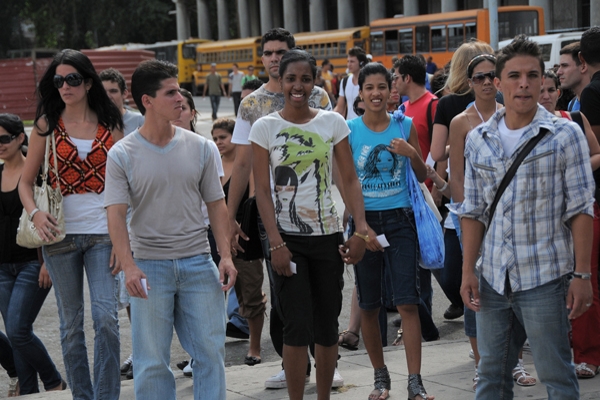
Cuban youth (Photo: aulasabiertas.net)

cubanet square logoCubanet, Miriam Celaya, Havana, 30 September 2016 — This Friday, 30 September 2016, the fourth session of the Cuba-US Bilateral Commission is meeting in Washington, an occasion which the Cuban regime has selected to present their rejection of “endorsing programs that Washington is promoting without the consent or consultation by the official channels established for exchanges of this kind.”

This statement by Mr. Gustavo Machín, vice president of the Cuban Foreign Ministry in the United States, refers to the summer scholarship program that the non-governmental World Learning Organization grants young students around the world, although the official Press in Cuba and officials instructed in the case have been orchestrating in recent weeks in an all-out media spectacle aimed at convincing domestic public opinion that this is another grisly imperialist plan aimed only at encouraging young Cubans to subvert the political and social order within the country. continue reading

It would seem that the roughly 40 Cuban students who have had the opportunity to pass these summer courses in 2015 and 2016, respectively, constitute a real threat to the stability of a dictatorship that has survived for nearly 60 years in power. Or that the White House has concocted the bright idea of annually forging a handful of youth leaders who, after several weeks of classes in a free society, where they will exchange with other young people from the US and other countries, will be willing and prepared to end Castro’s revolution.

Such presumption suggests, on the one hand, the fallacy of the ideological solidity of the Cuban youth, so touted by the olive green regime; and on the other, that the political system has begun to suffer from a butterfly fragility in the heat of the exchange programs promoted by the US after the restoration of relations between the two governments.

The apotheosis of nonsense is the list of “subversive” practices acquired by students benefitting from World Learning summer course scholarships, shown on the organization’s website, citing verbatim the press monopoly scribes of the Castro regime: developing public speaking skills, teamwork, negotiation, consensus building, conflict resolution, defense of one’s rights and troubleshooting.

Only for a reality like that of Cuba could such a program be termed “subversive”. No leader with a modicum of decency – especially in our underdeveloped, poor countries with serious institutional problems – would be offended in the least by their country’s youth receiving this type of instruction and acquiring these skills that, according to the website, “help the next generation of world leaders to get a greater sense of civic responsibility, to establish relations across ethic, religious and national lines, and to develop skills and knowledge to transform their communities and their countries.”

But it is not difficult either to understand the alarm of the Druids of the Plaza of the Revolution, well-versed in subversions. Nothing is as dangerous to them as a “leader” who does not emerge from the “Ñico Lopez” Party High School where, nevertheless, dozens (or more) guerrilla leaders have been formed who have sown conflict, war and death in this region. Not a few leaders of the FARC and other leaders of the most corrupt Latin American radical left have passed through its classrooms and have received diplomas and awards from their mentors. Some have even attained the president’s chair in their own countries, with known disastrous results.

Young participants in World Learning programs (blogs.worldlearning.org)

And not to mention the indoctrination and systematic brainwashing of thousands of young people from the Third World who have studied Medicine and other specialties in Cuba over the last decades. The Castro regime, the most perversely “generous” dictatorship in recent history, has even extended its “charitable” mantle to lower-income American students, though it has not requested their government’s permission to do so.

And it is specifically at that point where the apex of insular authoritarianism reveals itself. Assuming that the US government and the NGO World Learning need to go through the prerequisite of requesting authorization from the Cuban government to provide summer scholarships for Cuban youth, they are placing the young people in an obvious position of slaves who need the benevolence of their masters (the State-Party-Castro Dictatorship) to access certain training. At the same time, the government places itself in the position of the feudal lord who turns down success opportunities for his serfs.

At the same time, they ignore once again the leading role that should belong to the young people’s parents and relatives, who would be best suitable to decide and support, or not, their children’s education, especially since the timing of such instruction – student’s vacation period – will not interfere with the school year set by the Cuban educational system.

Far from it, and to legitimize the “national outrage” of the colossal offense, the Cuban authorities have ordered middle school, pre-university and technical school students to engage in the traditional protests against the twisted imperialist maneuver leading them down the wrong path. The most histrionic teenagers have screamed their heads off chanting slogans and waving nationalistic signs, they have learned by heart the speeches they might have to utter before the news cameras and the world press, while their own government has yet to offer an alternative with a future.

I see these fresh faces, hear their voices repeating the thousand platitudes of several generations lost in the national shipwreck, and I cannot stop thinking about how this corrupt regime has sown duplicity in the spirit of the nation. I just hope, for the sake of these young people and of Cuba, that scholarships like these will become more prevalent, that our youth will be taught as free individuals and that they will be granted lofty dreams and strong wings so they can achieve them. By then, they will have forgotten the slogans and will provide ideas and actions to overcome the long Middle Ages of the Castros. Meanwhile, let more “subversive like this” scholarships come, until Cubans won’t have to leave their national borders to learn to lead the destiny of their own country.

Translated by Norma Whiting

Cuban Youth From US ‘World Learning’ Course Find Themselves Amid Slogans And Fear / 14ymedio, Mario Penton

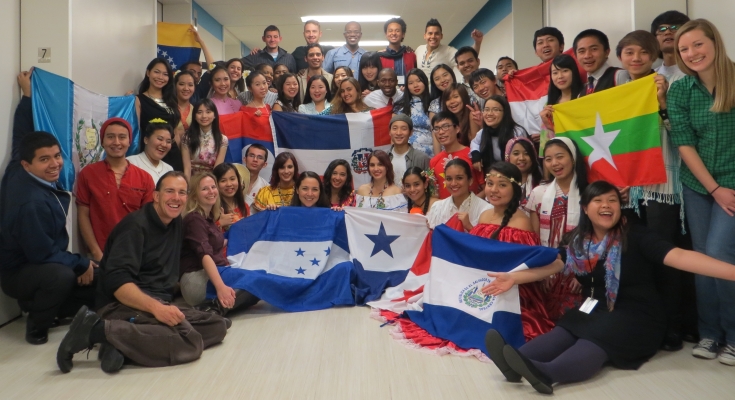
Young Cubans during the 'World Learning' program in the United States. (Courtesy)
Young Cubans during the ‘World Learning’ program in the United States. (Courtesy)

14ymedio bigger14ymedio, Mario Penton, Miami, 1 October 2016 — Their names are barely known, but now they find themselves in the middle of acts of political reaffirmation and facing police interrogations. They are young people between the ages of 16 and 18, high school and polytechnic students who participated in the World Learning program by attending a summer course in the United States. Today their lives pass amid slogans and fears.

On condition of anonymity, this newspaper contacted several of the young people who spent four weeks in the program in the United States. None wanted to reveal their identity, out of fear, although at this point the people they fear know who they are. continue reading

“What did you do there. What did they say to you? What did they want you to do when you returned to Cuba? Who paid for your trip?” These are some of the questions that the Department of Technical Investigations (DTI) from the National Police have repeated to many of them in recent months.

The young people went for the joy of knowing another country and interacting with teenagers from other parts of the world, only to be cited by the police on their return to Cuba. In these meetings they were also warned that they should not talk to the press nor with anyone else about this matter.

According to the teens, the worst was not the interrogations, but being compelled to participate in political events to repudiate the US organization. In their own schools and amid the shouts of revolutionary reaffirmation, they constantly have their hearts in their mouths for fear of being singled out and repudiated.

The work of the DTI was not the end of it, also involved are the Secondary Students Federation (FEEM) and the Young Communists Union (UJC). In morning assemblies and meetings, the leadership of both organizations explained to the young people “the true intentions” of the summer courses and warned them they should reject World Learning if they don’t want to be considered counterrevolutionaries, and in the worst case, lose their chances for higher education and a career.

The president of the FEEM, Suzanne Santiesteban, went a step further and cataloged the rallies against World Learning as “acts of repudiation” in the style of those traditionally made against activists and opposition on the island. The young woman called for extending these actions to schools in Havana, and the “rest of the country.”

However, after the hubbub of public events they have also been subject to pressures in the classroom. “I tried to read what was written to show that there was nothing subversive in those classes, but they gave me a paper with things that I didn’t even know what they meant and forced me to read it out loud in front of everyone,” says one of the young people who traveled to the United States between 2015 and 2016.

“In this program we never talked politics and we were never forced to do anything we didn’t want to do,” he told 14ymedio .

World Learning organized English classes for the Cuban students, along with training in leadership skills such as public speaking, network building and skills a leader can use to connect with others and identify with the aspirations of their collective.

In a statement from the president of the organization, Carol Jenkins, sent to Martí Noticias, she stated that “The program was designed to help students form personal ties between high school students in the United States and Cuba. During the two years, fewer than 100 Cuban teenagers participated in the program in the United States, for one month. They were divided into groups and traveled to communities in Virginia, Texas, Illinois, Michigan, Washington, Oregon, and Missouri.”

Jenkins added, “While they were in the communities that hosted them, they volunteered with young Americans in activities such as local food banks, cleaning parks in collaboration with recycling centers, and reading books to young children in youth centers.”

“What they taught us was how to use the internet and things we could do with the technology. But it was never anything violent or anything having to do with politics,” emphasizes the uneasy student.

Another teenager who traveled to the US spoke about the four weeks spent there. “The only thing I regret is not having had the opportunity to stay. Now I realize it was a mistake to come back here,” he says.

In addition to language classes they were told about the history of the United States and taken to historical sites in Washington and other states. They cooperated in the work and lived in the home of a family that welcomed them as a member.

“What’s subversive about that? I still don’t understand,” he says.

Another of his peers is more radical in his statements:

“Me? A traitor? Why? For going to some summer classes with other people from all over the world? Betrayal is making the whole country a prison. Betrayal is everyone who has collaborated on the absurd current system of my country.”

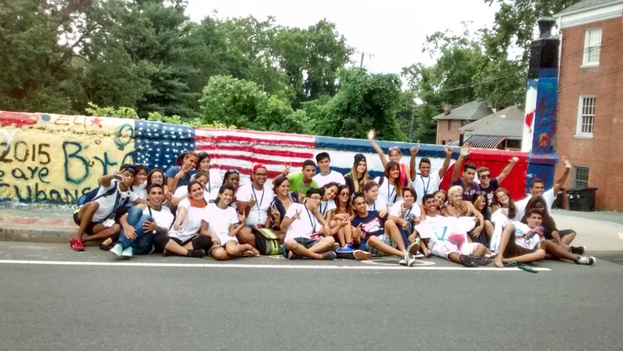
The first group of young Cubans who attended World Learning summer courses. (Courtesy)

Another of the students involved in the projects recalls, with an almost childlike tone, that when he was in the United States they took him to eat in a restaurant with Cuban food and always considered his opinion.

“They were educated (the teachers). They treated us with a lot of respect, we engaged in participation games to get to know each other, and we became like siblings. They did anonymous surveys to find out what we thought about the program and took our opinions into account in adapting the program so we were more at ease. They hosted us in places and hotels comfortable for young people, they didn’t overwhelm us, and they were concerned about our wellbeing the whole time,” the young man said.

The Cuban government has undertaken a campaign almost like the one that demanded the “liberation” of the child rafter Elian Gonzalez, or the release of the five spies serving prison sentences in the United States. Classroom by classroom and school by school the young people have been called to participate in acts of repudiation and of “revolutionary reaffirmation.”

As a part of the government’s campaign, a special edition of the Roundtable TV show was held with Alejandro Sánchez as a guest, one of the youths who participated in the courses.

The young man explained on camera how the summer school was developed. According to Sánchez, the objective of the program is to foment civil society on the island (during the first session, in 2015, 34 young people participated). “Even many of us participating in the program expressed our concern about the growing politicization,” he said.

Sánchez detailed the “subversive” topics they were taught in the United States, including how democracy works, what life is like in that country and what human rights are.

During the first days of the program, which passed in a villa in Virginia, Sánchez considered it suspicious that, “We could not post pictures or videos of any of the activities we were doing in the program, under the pretext of safeguarding our security and avoiding repression once we returned to our country.”

For the Cuban Government the curriculum seeks to “capture” young people to fabricate “false leadership” and implement change on the island. The main accusation is that World Learning receives funding from USAID.

This newspaper tried to contact one of the US teachers who is a part of the course and who deals, in particular, with the graduates, but the teacher said he was not authorized to give statements to the press.

American Patients Could Receive Medical Treatment in Cuba / Juan Juan Almeida

Juan Juan Almeida, 23 September 2016 — With some urgency the Cuban government has decided to pretty up the most important medical facilities in Holguin province. According to sources — it’s no secret but it has not yet been reported by the official media — there will be a visit on Friday September 30 by a US official. The purpose of the trip is to inspect clinics and hospitals where presumably Americans will be allowed to seek medical treatment on the island.

A significant source of Cuba’s foreign exchange earnings comes from leasing its professionals to various healthcare programs overseas. Nevertheless, reaching an agreement with the Americans would go a long way to offsetting the reported economic losses from agreements with Venezuela and Brazil. continue reading

The idea is to redirect Cuban medical cooperation to other countries while increasing healthcare services to foreigners on the island. To achieve this, the minister of Finance and Pricing, Lina O. Pedraza Rodriguez, signed Resolution 145/2016 on April 5. It allows doctors to collect 5% of the fees charged by Servicios Médicos Cubanos S.A. (Cuban Medical Services, Inc.) to foreign tourists.

The facilities to be inspected are Villa Quinqué, Villa Cocal and the rooms reserved for foreigners at Vladimir Lenin University Hospital and Lucía Iñiquez Landín Surgical Clinic.

“The department heads of the various health care centers have been instructed to make sure nurses and auxiliary personnel remain vigilant during the visit, even about things like dust on the windows, in case the visitor swipes a finger to check the hygiene,” says one of cleaning staff at Lenin Hospital.

After the visit, the hope is — at least on the Cuban side — that a bilateral accord on medical collaboration between the two countries will be signed.

“We are hoping… the US consul will come here to this center and to Villa Cocal and will also visit the health tourism wards of Lenin and Lucial Iñiguez hospitals with an eye towards reaching an agreement to treat American patients at our facilities,” claims an employee at Villa Quinqué, a center that treats foreign patients with addictions.

For several years some Cuban patients have been sent by the Ministry of Public Health to hospitals in the United States as part of various “interconsultation” agreements. A few months ago I met one of them, a gentleman who travelled to Miami with his wife for eye surgery at the presitgious Bascom Palmer Eye Clinic.

The Flame Tree of Discord / Regina Coyula

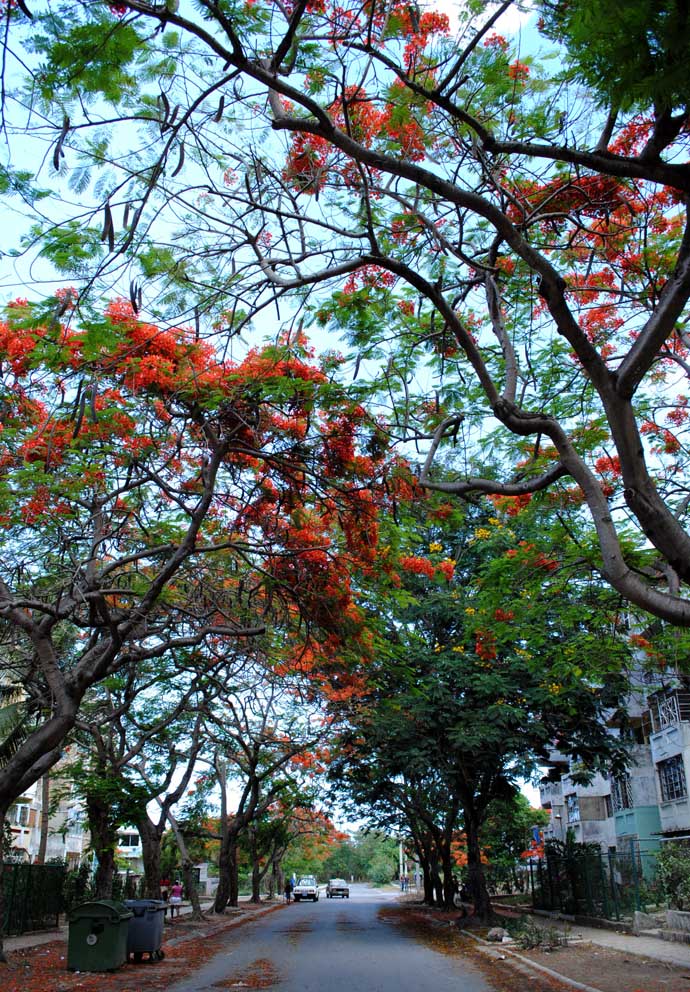
Flame trees in Havana, dropping their petals int he street. Source: Caridad, Havana Times
Flame trees in Havana, dropping their petals in the street. Source: Caridad, Havana Times

Regina Coyula, 3 October 2016 — A powerful flamboyán tree, in English often called a flame tree, dominates the entrance to my house, more beautiful at this time of year with its explosion of fire, which also provides shade and spreads its colorful petals across the ground.

But two of my neighbors don’t see it that way; they dislike the dirtiness of it and feel obliged to sweep the sidewalk almost every day. And they protest greatly, but I never feel it’s about me, even though the other day they were gossiping and not imagining that I could hear them, one of them said, “I’m breaking my back over that filth, and ‘la Señora’ (a marked edginess in señora), who owns the bush acts like it’s nothing.”

I am not the owner of the flame tree, I didn’t plant it, it is in the parking strip and it is beautiful; and the señora sounded very nice coming from one trying to mark a difference between us. And so, without reaching for her style — inimitable for me as I am neither volatile nor rude — to her surprise I told that that the flame tree isn’t mine, but the red flowers that line the sidewalk don’t bother me at all, unlike the bags, cans, boxes and other trash that lines the city, product of indolent humans.

Colombians Say ‘No’ To Impunity / 14ymedio, Reinaldo Escobar

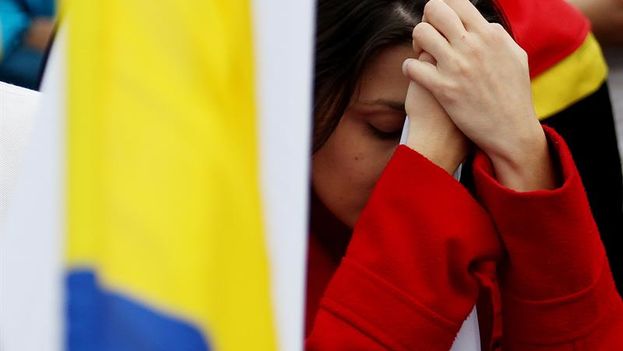
Colombians react after hearing the results of the plebiscite on Sunday in Bogota. (EFE / L. Muñoz)
A Colombian reacts after hearing the results of the plebiscite on Sunday in Bogota. (EFE / L. Muñoz)

14ymedio bigger14ymedio, Reinaldo Escobar, Havana, 3 October 2016 — Encouraged by international support and the consensus of governments that support the agreements to achieve peace in Colombia, most of the media and experts predicted that the “Yes” side would win Sunday’s plebiscite. The results, however, have caused a shock in the region and a real earthquake on the front pages of newspapers.

Some 50.2% of voters opted for “No” against 49.8% who inclined to “Yes.” Although it is a small difference and was affected by a high rate of abstentions — more than 60% — it shows that Colombians disagree with the terms of the negotiations and the results of the talks that have been taking place for years in Havana.

The long-awaited peace is now in a very difficult situation in which everything depends on what the signatories to the rejected agreement do or don’t do. continue reading

At this point, the pact needs to be revised under new principles. Some of these have already been set out by President Juan Manuel Santos in his first speech after learning of the failure of the plebiscite. The president has offered to maintain the bilateral ceasefire and revitalized his commitment not to give up until peace is achieved

Among the competing opinions explaining what happened, no one suggests that the rejection of the agreement is because the voters see it as too favorable to the government and too damaging to the Revolutionary Armed Forces of Colombia (FARC). Quite the contrary, the negative feedback is based, among other things, on the belief that the guerrillas received too many prerogatives and indulgences.

Those who opted for “No” reproach Santos for giving the guerrillas the same legitimacy as the state and for granting impunity in order to convert them to a political force.

The results seriously damage the guerrillas’ dreams of recycling themselves as a political party without having to pay for their crimes.

The question everyone is now asking is what is going to happen after the adverse outcomes to the agreement. The FARC have not surrendered their weapons, but have taken steps difficult to reverse. They are a failed guerrilla movement, with no future and with little popularity.

The lesson for us this Sunday is that people do not seem willing to pay any price for peace, especially if the cost includes renouncing their desire for justice.

Among the losers of this plebiscite are also the entire international community and, in particular, the Government of Cuba, which was not only a neutral guarantor but a driver of the demands of the guerrillas. Raul Castro convinced the FARC Commander in Chief Rodrigo Londoño Echeverri, known as Timochenco, to yield in some respects and promised the government negotiators that the FARC leader would honor the pact. This Sunday Colombians have also voted against Cuba’s general-president.

Making a Living in Cuba on Gambling / Iván García

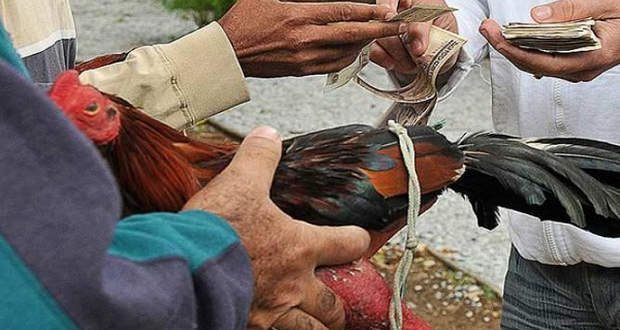
Betting on a cock fight in Cuba. Source
Betting on a cock fight in Cuba. Source: Cubanet

Iván García, 26 September 2016 — Although the bleachers of the old stadium in Cerro are deserted, the overcast sky promises rain and the poor quality of the baseball game between Industriales and Sancti Spiritus invites a siesta, a chubby mulato with arms tattooed in Chinese writing — let’s call him Óscar — sits on the left side in the bleachers to place bets.

“Some years before, betting on baseball had more followers. But present-day baseball is so depressing that people prefer to see a European-league football [soccer] match. But there’s always something that comes along,” he says, agreeing to a bet of 10 Cuban convertible pesos (CUC) with a gray-haired man who smokes a mentholated cigarette.

There are various types of bets, explains Óscar. “There are bets that cover you, which are when you see you can lose, and then you opt for what we call rapid bets. An example: Ten pesos that some player is out or that the pitch is a strike. It’s really a booby trap, since in baseball there are more outs than hits or men on base, and the pitchers have to throw more strikes than balls.” continue reading

Bets or gambling where money flows is an old passion in Cuba. In the Republican era, the average Cuban played the lottery and the bolita or charada.* And he bet on cock fights, baseball games, or a match of billiards or dominoes.

A sector of the wealthy class went to the casinos and the grand Havana hotels to play roulette, dice or cards, or they went to the Hippodrome, to bet on the best horses. After Fidel Castro came down from the Sierra Maestra and took power, betting was prohibited.

Opportunistic soldiers and diehard supporters of the bearded revolutionaries wrecked the billiard tables, slot machines and roulette tables in the casinos with baseball bats and meat cleavers.

The delusional aim of the Castro brothers and the Argentine, Che Guevara, to construct a laboratory man who would work for free without pay, obey the Regime and hate Yankee imperialism, would happen, among other things, by prohibiting betting.

Cuban laws punish, with prison sentences that range from three months to five years, those who facilitate or manage illegal casinos, lotteries or make bets.

But the prolonged economic crisis that has lasted for 27 years has postponed alienating social experiments and their corresponding punishments.

“Now the police don’t interfere with the betters or the fanatics who gamble for money. It has to be an operation in search of some criminal who goes to clandestine gambling houses. But when they get you, they give you a fine of 60 Cuban pesos (around three dollars); they confiscate the money and release you without opening a file,” says Mauricio, owner of a burle, an illegal gambling house in popular slang.

The burles sprout like flowers in Cuba. There are various classes. The authentic dens are set up in grimy quarters where poor people, pickpockets and rogues gamble a handful of pesos at cards or by throwing dice. But there are also comfortable residences where people go who have money from stealing in tourist centers or prostituting themselves with foreigners.

“In my burle, in order to sit down to gamble, you have to put 5,000 Cuban pesos or 200 Cuban convertible pesos on the table. We also accept dollars, euros, Swiss francs or pounds sterling,” indicates David, the owner of a clandestine casino in the old part of Havana.

According to Mauricio, the preferred games are “three with three, a Creole variation of poker, the longana, which is played with domino tiles, baccarat and Cee-lo, which came from the Orient and is played with dice.” And he says that Cee-lo as well as diverse variants of card games “surged in the prisons, where the prisoners, instead of betting with money, bet with sugar cubes, powdered milk or pornographic magazines.”

In some burles, they also hold cock fights, one of the oldest traditions in rural Cuba. After 1959, pens for fighting cocks were prohibited, but now they’re tolerated on the whole Island and involve a lot of money.

The furor for soccer has generated clubs that make discreet bets. In the absence of a betting game, Román notes in a school notebook the bets for the weekend matches in the European leagues.

“There are those who gamble 5 CUC. But there are bets of 500 CUC and more. It depends on the importance of the match. In the Madrid-Barcelona match, a lot of bills were flying around. People bet until someone gets a goal,” emphasizes Román.

New technologies have incentivized other forms of bets. “There are groups, above all of young people, who gamble in clandestine video-game networks and place big bets. It also pays to have five or six computers with video-games and rent them at one cuc an hour,” explains Ángel, who has set up an illegal business of video-games.

The owners of the burles earn 10 percent of the bets in every game. Films of car races, like The Fast and The Furious, brought to the destroyed Cuban roads the competition of cars and motorcycles for money.

There are no Ferraris, Toyotas or Lamborghinis in Cuba. The races are run, in general, with old U.S. autos, fabricated in the workshops of Detroit 70 years ago, and upgraded cars from the Soviet era. In the rural areas, they organize races of “spiders” or horse carts.

“In the car races, bets can go up to three or four thousand Cuban convertibles. They always choose the best stretch of the road. And every police patrol car is paid 20 CUC to ensure security for the area,” says an organizer of these races.

Other variants of prohibited games are dog fights and clandestine boxing. But the star game of betting in Cuba is the bolita, a local variant of the lottery.

Hundreds of thousands of people play it. From guys with bulging pockets to pensioners who earn nothing. For every peso bet, the bank pays between 80 or 90 pesos at a fixed number. Twenty-five pesos invested and 900 or 1,000 pesos in a trifecta or a combination of two numbers. You bet from one to 100, and every number has one or more meanings. The results come from the lottery in Miami, and there are two rounds of bets.

Any Cuban who hasn’t tried his luck in the bolita, raise your hand.

Iván García

Hispanost, September 8, 2016.

*Translator’s note: *”Little Ball” was a type of lottery which involved 100 small, numbered balls. The charada assigned names of animals to the numbers. This created a superstitious method for betting, often basing a choice on a dream or an animal seen during the day. The horse was number 1; this is why Fidel Castro was often referred to as el caballo.

Translated by Regina Anavy
Ethics Commission Rejects Appeal by Journalist Expelled from Radio Holguin / 14ymedio, Mario Penton

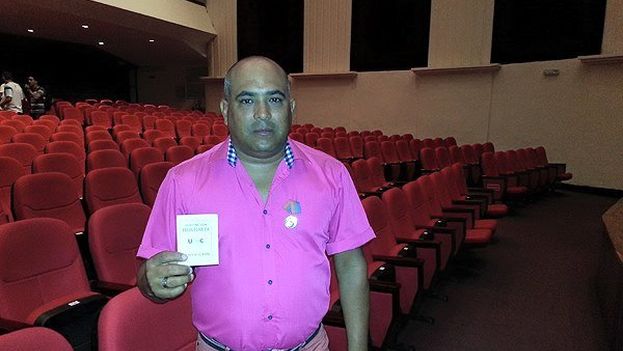
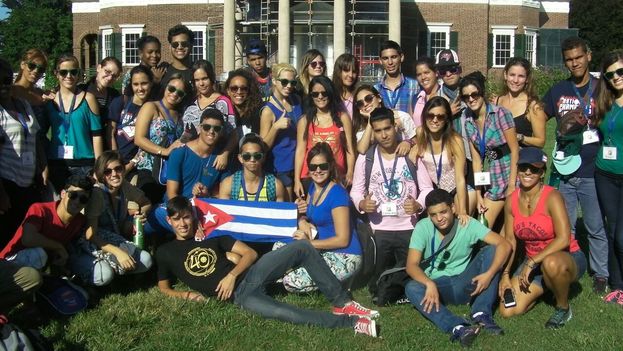
Journalist Jose Ramirez Pantoja shows the medal that was conferred on him by UPEC before he was fired (courtesy photo)

14ymedio biggerMario J. Penton, 14ymedio, Miami, 30 September 2016 — The National Ethics Commission of the Cuban Journalists Union (UPEC) this Thursday ratified the expulsion of journalist Jose Ramirez Pantoja from Radio Holguin. The ousted professional now will be able to appeal to the UPEC Congress, which could encourage the debate currently taking place about the role of censorship and the protection of the Communist Party over the press.

The move comes after a long series of appeals since Ramirez Pantoja was expelled from his job last July 11. The journalist was penalized with removal from office for five years at the end of which he could return to work, provided he “has an attitude that comports with UPEC’s ethics code.” continue reading

14ymedio spoke by phone to Ramirez Pantoja who declined comment but did not deny the ruling.

“He is being pressured a lot by the authorities. They have told him that when he spoke with the independent press he complicated his case and in this trial they did the opposite of what they had announced: they treated him like dirt and affirmed an unjust sentence,” says a Holguin source close to the journalist.

“It was no use for Arnaldo Marabal [official journalist for the daily Giron in Matanzas] to try to ‘clean him up’ writing an interview in which he assures that Joseito is and always will be a revolutionary. They wanted him to pay the price in order to scare the others and so that no one dares to speak without permission,” adds the same source.

The Holguin journalist was dismissed from his job after publishing on his personal blog some controversial comments by the vice-president of the newspaper Granma, Karina Marron, about the current economic crisis in Cuba.

At the beginning of September, the recently elected president of the National Ethics Commission for UPEC, Luis Sexto Sanchez, visited Holguin in order to interview Ramirez Pantoja. After the interview and even though different people assured him that the situation would calm down and he would be able to return to his job, he received the ratification of the decision at both a provincial and national level.

Before the incident with Marron, Ramirez Pantoja even had been recognized with the highest distinction that UPEC awards, the Felix Elmusa. On that occasion, the same authorities who today condemn him to ostracism awarded him for fighting “from an ethical premise,” in order to make “the truth about Cuba” known to the world and “for educating, informing and revealing that Cuba is now free.”

Translated by Mary Lou Keel

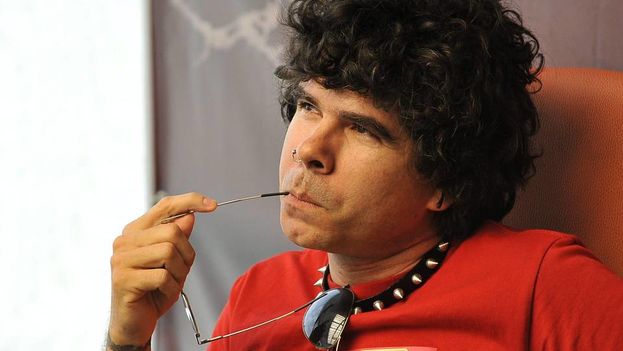
Gorki Águila: “The Castro Regime Wants To Mutate Into A Perfect Tyranny” / EFE – 14ymedio

The musician Gorki Águila, leader of Porno para Ricardo. (EFE)

14ymedio biggerEFE (via 14ymedio), 29 September 2016 — The dissident and leader of the Cuban punk-rock band Porno para Ricardo, Gorki Águila, said in Miami on Thursday that the “plan” of the Cuban regime is “to mutate into a perfect tyranny” with an “image much more whitewashed before the world. ”

The government of “the Castros needs a lot of money, and they are taking good advantage of this situation,” Águila told EFE, speaking in reference to an economic opening to foreign investment on the island, at the end of a news conference at the Institute of Cuban Studies and Cuban Americans, at the University of Miami (UM). continue reading

The event was attended by Cuban dissidents, activists from exile and leaders and legislators of the Cuban-American community in Miami who expressed their commitment to the Todos por Cuba Libre/All for Free Cuba campaign, an initiative that will be presented this coming October 11 in Miami to demand “real change… toward freedom”

Águila, like other participants, bluntly criticized the widespread view in the United States that encouraging commercial investment on the island will support openings toward freedom and the restoration of the rights of Cubans.

“The Castro regime is a Mafioso regime and to place real confidence in them is impossible. Their whole lives they have lied and betrayed,” said the activist and musician who asked, skeptically, “How are you going to do business with the Castros and think that freedom is going to be possible at some point?”

He said that the current worsening of repression on the island is not only against dissidents, but also against the self-employed who have shown their discontent with the stifling of and restrictions on their activities by the authorities.

Referring to his own case as a musician and composer, Águila said he is “deeply censored” and watch by a coercive power that bans him from performing in Cuba. “To me, they say it very clearly: you are not going to play in this country,” he denounced.

“I can’t play or even practice in my own home. There is a surveillance camera on an electric pole aimed at my balcony. They have me under total surveillance and I don’t even remember my last attempt to play in Cuba,” he said indignantly.

Despite all these calamities, Águila was “optimistic” about the crucial historical change being pushed by Cubans, what the musician called a “Cuba with two shores.”

For his part, the regime opponent Antonio Gonzalez-Rodiles, director of the critical forum Estado de Sats (State of Sats) stressed the importance of galvanizing the fact that all Cubans are “fed up” with the system at a time when, he warned, the “regime is trying to effect a transfer of power.”

A “transfer” that, according to the press conference remarks of the ex-political prisoner Jorge Luis García Pérez – known as “Antúnez” – should be called “an intended dynastic succession” of a regime that has imposed a “single, criminal and genocidal blockade for sixty years” on Cuban society.

Antúnez, who is also national secretary of the Orlando Zapata Tamayo National Resistance Front, was very confident that the Todos por Cuba Libre/All for Free Cuba campaign will be a “great success and give fuel to those fighting for freedom.”

Claudio Fuentes, a dissident photographer from the Forum for Rights and Freedoms, expressed disappointment at the “voices” who express their enthusiasm for opening Cuba to foreign investment, as long as it is obvious that “without freedom there is no prosperity.”