
Happy Independence Day!
Congratulations to all the American people!
Rebeca Monzo, 4 July 2016
English Translations of Cubans Writing From the Island
Happy Independence Day!
Congratulations to all the American people!
Rebeca Monzo, 4 July 2016
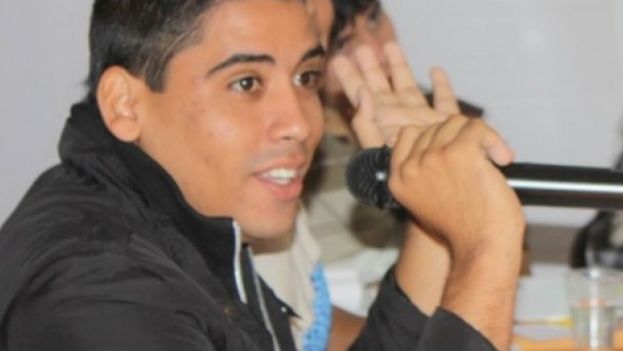
 14ymedio, Havana, 3 July 2016 – This Sunday several independent organizations are holding the first Cuban Youth Congress in the city of Santiago de Cuba, under heavy police pressure and after dozens of arrests. Among those arrested is the activist from the Patriotic Union of Cuba (UNPACU) Amel Carlos Oliva, who was arrested last Thursday, according to sources from UNPACU.
Oliva’s family and friends told 14ymedio that they lost telephone contact with the dissident hours after he met in Havana with Eliecer Avila, president of the Movement Somos+ (We Are More), an organization also participating in the youth event. continue reading
Oliva returned from Washington the same day he was detained and, according to the leader of the UNPACU, Jose Daniel Ferrer, was “kidnapped by the repressive forces” as he traveled from the Cuban capital to the east.
Since Saturday some members of both organizations were also victims of arbitrary detention, while others were subject to strong police operations around their homes. However, a few managed to reach the Santiago headquarters of UNPACU, where the Congress is now taking place.
Joanna Columbié, a member of Somos+, was arrested on the outskirts of the meeting. She managed to report her arrest by telephone, seconds before being put in the police car. According to reports from the organizations involved in the Congress, more than a hundred activists have been arrested.
The wave of arrests on Sunday is the continuation of the dozens of arrests from the day before, when several members of UNPACU were violently arrested while protesting to demand the immediate release of Carlos Amel Oliva.
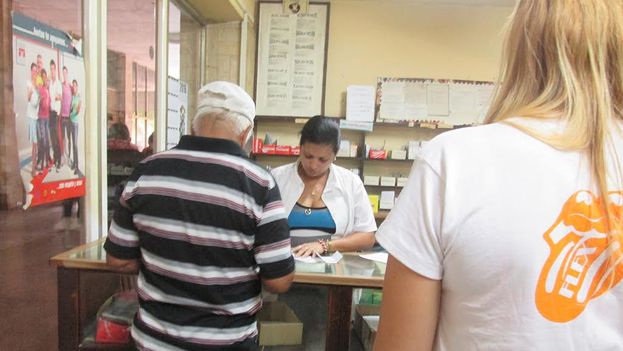
14ymedio, Regina Coyula, 28 June 2016 – Unless it’s for a purchase of contraceptives, the pharmacy generally comes through when someone nearby is ill or is being treated for a chronic illness. The pharmacies themselves do not raise one’s spirits. Many are poorly lit or poorly ventilated or in need of paint or all of the above. The workers’ initiative is “embellished” with decorative garlands of various kinds and informative murals with indecipherable writing. The medications are arranged according to use, with each group in a little cardboard box in which the inventory is carried.
If you decide to put together a home first aid kid, be patient and visit the pharmacy assiduously to gather the basics. For the most part, medications are subsidized by the state. This does not prevent an aging couple with chronic conditions (don’t forget the aging of the Cuban population) from spending on medications the full retirement pension of at least one of them. continue reading
There are medications that do not require a prescription, among which are the “artisanal” and “green” medications for a cough or such like, but they are not always there when you need them. Others are dispensed by prescription and controlled by the “Tarjetón” – your ration card for medications.
The Tarjetón is a piece of cardboard that each patient receives, where medications and other health supplements whose monthly sales are regulated are recorded. The doctor gives you a certificate valid for one year, stamped with her seal with her name and both surnames and her practice registration number. Despite these unique data for each physician, there is still one unavoidable step missing, the seal of the healthcare institution. After standing in line (there is almost always a line), the “stamp issuer,” who is not a doctors nor has a list, nor writes on a computer, nor makes notes on paper, stamps the seal and continues to the next. With this paper, in the pharmacy nearest to your home among the 2,141 in the country, you get in line, deliver the certificate, show your identity card, register, and receive the Tarjetón.
Despite such rigor, it may be at the time of purchase, that the medications have run out, have arrived incomplete, or are “missing.” For insulin-dependent diabetics the Tarjetón controls disposable syringes. It says right on the packaging “sterile insulin syringe for single use,” but the patient only receives between two and five syringes a month. If you complain, the clerk peevishly tells you that this disposable “isn’t really” and you can reuse it and even boil it and nothing will happen.
When the medication on your Tarjetón is “missing,” which is not uncommon (data in the press from last year shows that this is the case, on average, for 40 medications a week), you have to see a doctor for a substitute. If the medication only needs a prescription it is simpler; if it needs the Tarjetón the process starts again, even if it’s a temporary certificate.
But there are items that have no substitute, such as colostomy bags. In that case, the pharmacy employee shakes his head sorrowfully, and advises you to solve the problem immediately by talking with the doctor at your hospital, but to look for a safe way, while accompanying the counsel with a wave of the hand in the air which alludes to very far distances, because the supply of the bags is usually very unstable.
Regardless if the difficulties are their own or others, if they have it or not, the purchase cannot be made retroactively and experience dictates that one should not leave it to the last days of the month because things run out. This largely explains the existence of an active black market.
To locate a drug that is not in your pharmacy assures hatred of the line. The employee is obliged to locate it, and the phone used for this is delayed because it is busy on the other end, or they don’t answer, or they don’t have it either. If the search is crowned with success, they will give you a paper (yes, it’s the Tarjetón), which reserves the medication for you, but not for 8 hours, nor for 16 or 24 hours, but only up to midnight of the same day.
If a lifelong treatment combines medications on the Tarjetón with other prescriptions, the patient is required to regularly go to their neighborhood doctor to wait for the prescription that completes their treatment. The staff shrug their shoulders and raise their eyebrows when asked why these drugs are not included on the Tarjetón.
I have left for dessert the issue of the sanitary pads received by women between ages 14 and 55. Outside this range women must document early menarche or late menopause. Fertile women must bring, in addition to their ID card, the ration book for food where their receipt of these items is marked; the book will show an item called a “torpedo,” a form that registers the monthly packet of ten sanitary pads, responsible for one of the most painful events that must be coped with.
Do not despair. There is always the appeal in extremis to spending Cuban convertible pesos [known as CUCs, each one worth about a dollar or one-twentieth of the average monthly wage] in clean, bright and air-conditioned hard currency-pharmacies, where there is no queuing or prescription required.
14ymedio, Zunilda Mata, Havana, 4 July 2016 – Along with high temperatures, summer has begun in Cuba with cuts in electricity consumption in state facilities, a gasoline shortage in the capital’s gas stations, and a fear of the return of the Special Period. According to sources consulted by 14ymedio, authorities have informed Communist Party militants and some unions of a possible return of the hardships of the nineties if the president of Venezuela, Nicolas Maduro, is forced to leave power.
According to a source who has requested anonymity, a document circulating in collective law firms since last month recommends preparing for an increase in crime due to “economic problems and the arrival of more travelers to the country.” continue reading
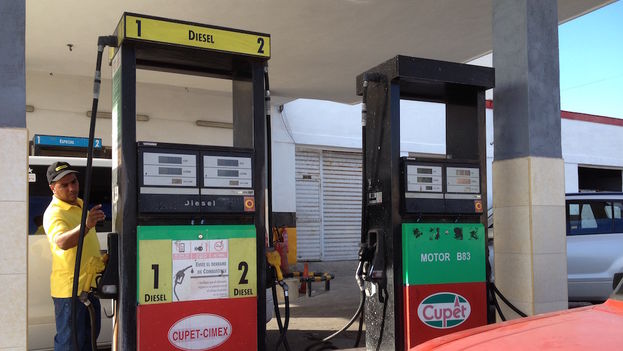
This Sunday, the signs of an economic slowdown were already felt with the shortage of regular gasoline in most of the service stations managed by the Fuel Marketing Company (Cupet) in the capital. At least 17 of 20 gas stations visited by this daily demonstrated a deficit of fuels.
A Cupet employee said by telephone that there is a “shortage crisis,” although the official press has not made any reference to the matter. The worker denied that the lack of gasoline was due to an imminent price reduction, as rumored days before among the populace. “How are they going to lower the price if there is none?” she admitted.
Cuba receives subsidies from Venezuela valued at approximately 10 billion dollars a year, including 66% of the petroleum that is consumed on the Island.
With the drastic reduction that oil prices experienced in the international market, Cuban consumers have waited months for a reduction of gas prices in the retail market. Currently a liter of regular gasoline sells for 1 CUC, while the same amount of special grade hovers at 1.2 CUC.
The shortage of regular gasoline was repeated this Sunday at the Cupet in Ciudad Deportiva on Via Blanca and Pizarro streets, and at the gas station known as El Principal in the Boyeros district, and also at the establishment on Ayestaran Street. At others, like El Forestal at Independence Avenue and Santa Catalina, only special gasoline is sold at the moment, the same as at the El Nuevo business on Porvenir Avenue in Lawton.
“All morning from one place to another looking for regular gasoline, and it’s lacking,” protested Omar Suarez, 58 years of age and driver of a Russian-make Moskovich auto. The driver pointed out that such a thing “has not been seen since the years of the deep Special Period” and complained about having to buy special gasoline, which is more expensive and not “of the quality that they advertise.”
The fuel scarcity has come with cuts in the working hours of state facilities as a savings measure, together with stricter rules against entities that exceed their electricity consumption quota. The meat market in the Plaza Carlos III center was closed several days last week with only a counter at the door for the sale of yogurt, chicken and sausages.
“We can’t keep the place open and all the refrigerators running because we would be spending more than we earn from sales,” says one employee. “The warehouse is almost empty, and it doesn’t pay if we don’t have merchandise to put on the shelves.”
Translated by Mary Lou Keel
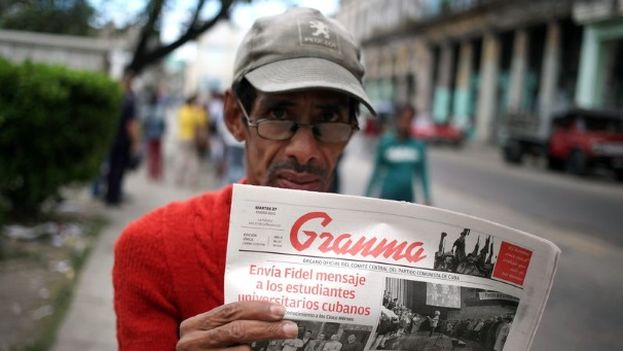
14ymedio, Reinaldo Escobar, Miami, 2 July 2016 — In October of 1988, students of the School of Journalism at the University of Havana, formulated 28 awkward questions posed to Fidel Castro at a meeting held in the theater of the Central Committee of the Communist Party in Havana. One question touched on the thorny issue of a personality cult in the media. The then all-powerful Carlos Aldana, head of the Department of Revolutionary Orientation, assured his boss that an incident of this nature would never be repeated.
Nearly three decades later the militants of the Young Communist League (UJC) of the Vanguardia newspaper in Santa Clara province, bursting with bravery (or innocence) sent a letter to the Union of Cuban Journalists in which they denounced the limitations on freedom of expression experienced by information professionals, limitations that come, according to them, from “the extra-journalistic forces that investigate us in our workplaces and in the CDRs (Committee for the Defense of the Revolution); that follow our every step and call us to account for the publication of comments or controversial works.” continue reading
In addition to complaining about the censorship of the media where they are paid by the state, they exposed the declining wages of the sector and asked why it is looked on so badly if they collaborate with alternative media, which is not controlled by the political apparatus of the Communist Party.
All these militants of the UJC received, in their time, excellent grades to be able to choose the career they studied and all of them passed through an ideological filter at the time they were hired. Is it perhaps that they have been infiltrated by the counterrevolution which is trying to form a fifth column? Of course not.
What is at issue is that the “gag-love” that endures and that hardens the affection and militant discipline, focused on democratic centralism, has as its limit the individual conscience, which serves mainly to determine what is right and what is wrong and to act accordingly.
The thermometer does not decide the temperature of a body, because it is an instrument that only serves to measure it. Equally, the mechanisms of control fail to faithfully determine the level of unconditional loyalty of the troops they target, because loyalty can be focused more on ideas than on individuals and can be conditioned more by a sense of duty than by fear.
It is likely that some of these young people reproached their parents one day for their complicit silence before the mistakes made, and perhaps in their days as students they mocked the triumphalist headlines of the official press, and perhaps, in small confabs or to themselves, they promised that they would not reproduce the mold of the mask, and that when they themselves were in the newspaper newsrooms, or in the TV studios or in the booths at the radio stations, they would use what they’d learned to tell the truth, at least their truth.
It is not necessary to believe that they will join the opposition, or even that they are willing to break all ties. But what they have done is more than enough to show the cracks, the fragility of a discourse that boasts of a monolithic invincibility.
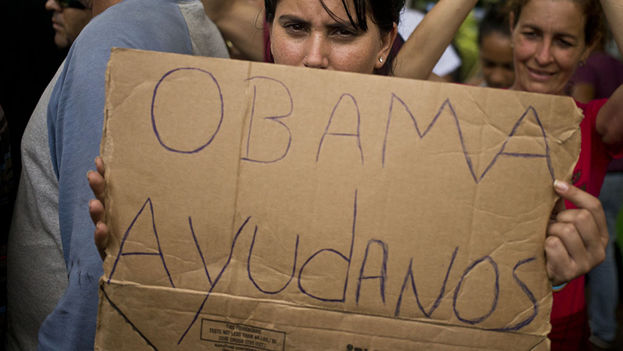
14ymedio, Eliecer Avila, Havana, 3 July 2016 – A great deal has been written in recent months about the permanent crisis of Cubans stranded in different Latin American countries. Those living outside the island and the few “connected” (i.e. on-line) within it, are certain to have read some of the news and have access to the emotional videos circulating which include ones of families with little children desperately asking for a way out that will allow them to reach the United States.
The truth is that the governments of the countries involved seem to be determined not to cooperate in any way to address the current wave of immigrants. Cuban’s own foreign minister took on the task of persuading them in a tour of the affected countries and managed to get a unanimous commitment for the sake of the “security and stability” of the region. continue reading
What is really worrying, incredible as it may seem, is that the vast majority of the Cubans who live on the island have not been aware of the seriousness of the situation their families and friends confront in those countries. This is the direct consequence of the censorship of information in the official media, where references to the subject are scarce and vague.
As a result, I’m amazed and frightened to hear about the number of people who at this very moment are packing their bags. Today, two friends I am very close to came by to say goodbye, and to ask for some details about airports and about “what we need to say” when immigration asks them hard questions.
One of them who is nearly 50 and works in the hotel industry told me, “I’m going to Guyana, a buddy left and is already there, and it connects to Mexico and there are cab drivers…” Right then I interrupted and said, “Compadre, have you looked at a map? Do you know where Guyana is? I go to the map and show him. It was something to see the look of amazement on his face on seeing that Guyana is on the far side of Venezuela and Columbia.
I asked the two of them if there were aware of the crisis and the dangers and they told me, “Well… yeah, it’s always hard but I know someone who already went and told me you can do it.” I looked at them and saw the faces of two people whose desire to leave is greater than any warning, and who had already sold even their pregnant dog to get the money.
The eldest, who was a doubtful after realizing his geographical error, told me, “All things considered compay, I think I’m going to go via Russia. Show me where Russian is.” I showed him and looking from right to left and seeing that at Russia is at one edge of the map and the United States is at the other he mutters, “Wow, but this is a lot longer, this is a boat at least…” I explain patiently, reminding him that the earth is round and that the extreme right of Russia is almost next to Alaska, separated by the Bering Strait. I also tell him, however, that there are direct flights from Cuba to Moscow, which is next to Europe, and that it would take a lot to get to the other end, less populated and at best difficult to access.
My friend looks at his friend and reaffirms, “Look, at least this is just one country and I even remember some Russian phrases. Let’s go that way,” he concludes.
The whole time my mind is filled with the idea of talking about political parties, human rights, market economies, civic resistance and Somos+, but the truth is that when someone is under the influence of a frenzy like this, it is as if rational thought is annulled by the obsession that is driving him.
The most complicated task is to stand in front of a human stampede and try to change the direction of its steps for good of everyone, the nation, the future, when the majority of these sacred things sound like blah-blah-blah.
So I decided to abandon the role of weighty protective father and give them a strong embrace. I said goodbye to them recognizing at least that in this season of the year, the Russian landscape should be gorgeous.
Ivan Garcia, 20 June 2016 — The choice facing Yolexis was simple. Either he studied teaching, or he would have to do two years in the armed forces. At the age of 18, he couldn’t think of anything worse than putting on an olive-green uniform and marching around for hours in the hot sun.
So, he decided to study to become a teacher in the east of Havana. “To be a teacher in Cuba is the last card in the deck. My parents told me that, before the triumph of the Revolution, to be a teacher was a source of pride in society. Now, to be a teacher is just shitty”, says Yolexis, who, because of the shortage of primary teachers in the capital, gives classes without proper academic training. continue reading
In order to add to his meagre 425 pesos a month salary (about $19), Yolexis offers tutoring lessons in the living room of his house. “I charge 20 pesos a lesson. Doing that I get over a thousand pesos extra, double my teacher’s salary.
If there once existed an ethical limit which ensured a teacher’s observation of certain rules and commitments, for quite a while now many Cuban teachers have been just jumping right over those precepts.
It is normal now to see directors of primary, junior high and high schools, giving private classes or tutoring for topics which then appear in the exams.
Let’s call her Olga. She is an assistant director of a Havana primary school. After 6 in the afternoon, she is providing tutoring classes to half a dozen pupils from her own school.
She charges 6 CUC (Cuban Convertible Pesos) a month for each child, and in the neighbourhood she is well-known for covering the material which is almost exactly what then comes up in the final exams. “It’s a kind of hidden fraud. But what can we do? With such poor education, what every parent wants is that their kids get good grades” is what I am told with an air of resignation by Oscar, a father whose son is in the sixth grade.
Academic fraud on the island is old news. You could analyse different reasons for that detrimental behaviour. But let’s be blunt. It is Fidel Castro who is to blame for the fraud in Cuba, in whichever form it takes.
In his eagerness to set up a model system of public education, he established weird standards which encouraged academic fraud as a tool to promote the highest possible grades for students.
Let’s leave to one side the highly doctrinaire education, subsidised by a silent tax on incomes. The structural distortion of Cuban education started at the same time as Castro designed the system as a display cabinet to highlight his work.
Elsa, a retired teacher, remembers that time of schools in the countryside, in which “if a teacher did not pass more than 95% of his pupils, he was being troublesome, and even counter-revolutionary. On the day of the exam, I shamelessly whispered the exam answers to my pupils. That was when the fall in the quality of education started.”
Although there are more than a million university graduates in Cuba, Eugenio, professor of higher education, considers that quality standards leave much to be desired.
“There have been cases of fraud in the University, but not as serious as in primary, junior high, or high schools. The problem with university education is quality. More and more well-trained teachers are leaving the country. Our universities are not listed in the 300 best in Latin America. The recruits we are getting now have clear gaps in their knowledge of maths and grammar”.
In an article published June 3rd in the Vanguardia de Villa Clara newspaper, it was revealed that, out of the 3,300 applicants who sat the university entrance exam in that province, 1,200 failed in mathematics.
Eugenio repeated that, “There is a lot of talk about the poor standard of primary and secondary teaching, but there has also been a big drop in the quality of higher education”.
According to pupils studying for their degrees, some teachers sell exam papers for 20 CUC. “The final exams cost up to 40 CUC. On exam day, the teachers tells you the answers and then charge you outside the school. Those who are screwed are the pupils whose parents don’t have the money to pay for tutoring or the exams,” says a female student in the third year of High School.
Caridad pays between 25 and 30 CUC a month to a retired teacher who helps her two children do their homework. “It isn’t easy. After they have spent 8 hours in secondary school, many adolescents pass another hour and a half studying, because in school, with the teachers’ deficiencies, they find it difficult to take in their lessons. On top of that there is the money for a snack and lunch, which in my case is 50 CUC a month, quite apart from ’presents’ for the teachers and directors to get them to look after my kids”.
Maria Elena has lost count of the money she has spent on gifts and favours for her daughter’s teacher. “Those extra expenses started in the first grade. I usually bring her lunch, buy her clothes and cellphone cards. The more parents do for their childrens’ teacher, the better the grades that they get”.
René, father of an eighth grade student, complains about the number of requests made by the school. “They’ve got a cheek. They ask you for fans so that the students are not too hot in the classrooms. In my son’s secondary school, the parents have provided detergent, paper, curtains, electric sockets … and then the government says the education is free”.
The final exams are coming up, and more than a few few families open their wallets to pay for extra tutoring, or give subtle bribes to certain teachers. Juan Carlos recognises that perhaps it isn’t the best way to motivate his kids to be interested in their studies, “but what we are talking about is them getting good grades so they can get into a good university course. If I have to pay, I pay”.
What with gifts for teachers, English classes and tutoring, Yolanda spends a hundred of the two hundred dollars sent to her every month by family members living in Miami. “What is important is that my daughter learns and studies English in a private school. If she works hard she could get a scholarship to a university in the United States.”
After the re-establishment of diplomatic relations between Cuba and the United States, many families have started to value the teaching in Cuban schools as a first stepping stone.
They see their kids’s professional future outside the island. And they are thinking big. University of Florida, Harvard, or perhaps the Massachusetts Intitute of Technology. It doesn’t cost anything to dream.
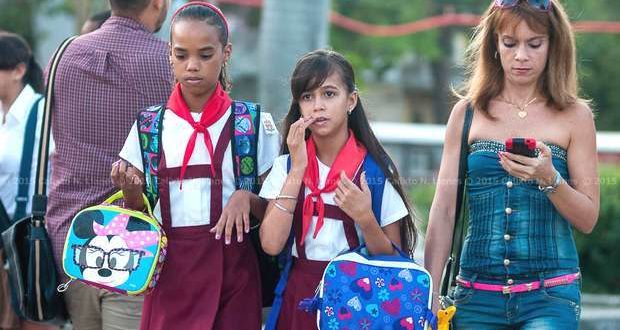
Photo by Calixto N. Llanes, taken from the blog Siluetas de Cuba. Primary school pupils with their satchels and lunch bags on the first day of classes of the academic year 2015-2016.
Translated by GH
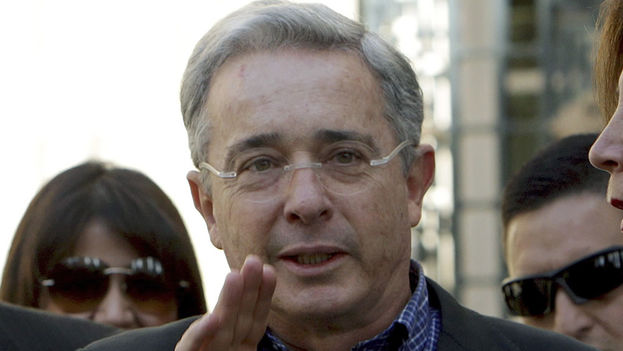
14ymedio, Carlos A. Montaner, Miami, 2 July 2016 – Cesar Nombela is the chancellor of the Menendez and Pelayo International University located in Santander, Spain. He is a renowned researcher in the world of microbiology. It occurred to Dr. Nombela and the Governing Council to award former Colombian president Alvaro Uribe the institution’s Medal of Honor, as they had done previously with other politicians from the democratic West, and immediately the totalitarian left, which has it in for Uribe, launched a protest.
In the face of the orchestrated scandal, the institution’s authorities, startled, decided to delay the award ceremony and to “widen the inquiries.” Uribe, who had exerted no effort to receive the unexpected honor, asked that it be revoked and urged the Chancellor to promote a good debate about the topic of Colombia. A person whose enemies have tried to assassinate him 15 times is more interested in substance than vanity. continue reading
This is a perfect example of the growing climate of intolerance cultivated in Spain by the totalitarian left. In 2010, then-professor Pablo Iglesias organized an escrache at Madrid’s Complutense University in order to prevent Representative Rosa Diez, an open and tolerant social democrat, from being able to express her ideas. Escrache is a sinister lexicographic contribution from Argentina, apparently of Langue d’Oc origin, which describes violent acts undertaken to silence an ideological adversary.
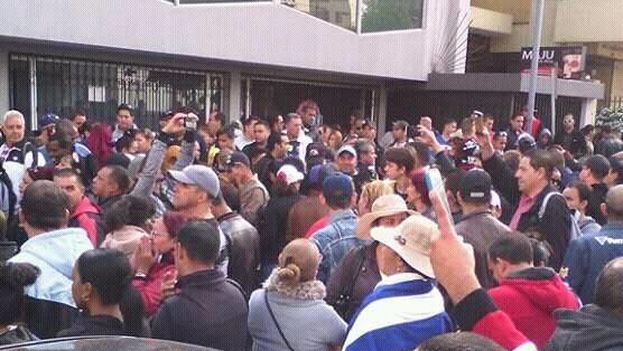
14ymedio, Miriam Celaya, Havana, 29 June 2016 — About 400 Cubans who remained ensconced in front of the embassy of Mexico, in the city of Quito, Ecuador, demanding an airlift to allow them entry to the United States, were violently evicted from the place by police in the early hours of Sunday, 26th June. It was the culmination of a protest that began on Saturday 18th
Days earlier, the Mexican authorities had informed the thousands of Cubans in Ecuador that there is no possibility for its government to establish a new airlift, which leaves unresolved this chapter of the immigration crisis for the Cubans fleeing the questionable benefits of Raul Castro’s socialist model. continue reading
Mexico, through whose mediation several thousand Cubans managed to arrive in the US this year, has noted the need for a solution through “dialogue,” without specifying who would take part in it or when it would take place. It is fair to point out that Mexico is not responsible for solving the Cuban migratory crisis. During the month of May, more than a thousand Cubans in Ecuador had been mobilized for the same reason: to find a safe exit to follow their route to the US, with no results.
Some leaders in the region have attributed responsibility for the steady stream of emigrants, especially those coming from Ecuador, Venezuela and Colombia, to the existence of the Cuban Adjustment Act
As usual, the official Cuban press has stayed tight-lipped about this drama, part of that stream of refugees that continues to flow silently, as a kind of plebiscite without polls, very clearly showing how insignificant the performance of their government is to Cubans and where their real hopes for the future reside.
While the Cuban government remains mute and deaf, Cubans continue to invade the forests of South and Central America or to defy the Gulf Stream on rickety boats in the unpredictable waters of the Florida Straits to reach US territory, spraying the Cuban crisis throughout the entire regional geography.
Much has been argued about the causes of the current Cuban migration. Following the crisis sparked last April by the constant arrival of Cubans in Costa Rica and the closing the Nicaraguan border, which caused a traffic jam of refugees and strong diplomatic frictions between the governments of Central America, some leaders in the region have attributed responsibility for the steady stream of migrants, especially those coming from Ecuador, Venezuela and Colombia, to the existence of the Cuban Adjustment Act
Some analysts, while deploring the preferential treatment of US authorities towards Cubans arriving in their territory, have indicated that the fears among Cubans that the Act will be repealed after the restoration of relations between the governments of the US and Cuba is the main source of such a constant and increasing exodus.
The preferential treatment includes immediate legal protection and access to the Federal Program for Refugee Resettlement, thanks to the 1980 amendment of the Cuban Adjustment Act. In addition, in just over a year, most get their permanent residence, regardless of their reasons for leaving Cuba.
Other migrants are returned to their countries of origin, despite the real violence of the situations they suffer in their countries, related to wars or drug trafficking
In contrast, migrants from South and Central America, Mexico, and elsewhere, are returned to their countries of origin when they are caught, either at any of the border crossings or by immigration authorities within the US, despite the real violence of the situations they suffer in their countries, related to wars or drug trafficking, criminal gangs linked to drug cartels, murder, kidnapping, the aftermath of the guerrillas, paramilitaries, poverty and other situations that Cubans within the Island do not endure.
The Adjustment Act has thus been turned into the alleged determining cause—and, therefore, the obstacle to eliminate in solving the problem of migration from Cuba—when the real causes for the Cuban exodus are the hopelessness, the absence of opportunities, the generalized poverty and the failure of the “revolutionary project” of Castro-communism.
In fact, the government’s economic program stemming from the VII Congress of the Communist Party of Cuba under the guise of the documents Conceptualization of the Cuban Economic and Social Development Plan and National Economic Development and Social Plan until 2030, are, all by themselves, a stronger incentive for the national stampede than a hundred Adjustment Laws.
However, to focus the discussion of the migratory drama in the search for the alleged responsible villain, be it the Cuban Adjustment Act or the olive-green caste enthroned in power, not only masks and delays the solution of the problem, which undoubtedly is in the hands of Cubans themselves, but diffuses the explanation of the basic issues, which are not the mere existence of a particular foreign law that rules the personal future of émigrés from the island, but the fundamentals of the existence of a dictatorship in Cuba that has dominated the destiny of a nation for over almost 60 years, largely thanks to the acquiescence of Cubans themselves.
It is, therefore, about a vicious circle that seems to not have an end, because, though the main cause of the Cuban exodus is a situation resulting from a suffocating, long-lived dictatorship that nullifies the individual—and not a law enacted 50 years ago by a foreign government—it is Cubans’ incredible capacity for tolerance that has allowed the survival of the system to date that drives them to look for their future beyond the horizon.
It is the Cubans’ incredible capacity for tolerance that has allowed the survival of the system to date that drives them to look for their future beyond the horizon
The mobilizing ability of some bargain-basement “leaders” among Cuban émigrés is extremely noticeable. They are ready to demand from foreign authorities what they were not capable of demanding from the Cuban government, and implicate in such demands significant numbers of individuals including families with minor children.
It is also hard to believe that several hundreds of Cubans can organize themselves, demand a solution to the crisis they have provoked, and prepare themselves to make statements to the press and cameras that will show their faces to the world.
Are they the same individuals who remained silently acquiescent to the abuses of power in Cuba? Are they the same ones who accepted the ideological indoctrination of their children, the ration card, the dual currency, the high prices, the most miserable wages, the blackouts, the government-sponsored marches and all the existential humiliation under dictatorial conditions?
How can so much political willpower to demand rights in a foreign land that are not theirs be explained, when they were stripped of natural rights in their own land and accepted the humiliation in fearful silence? Is it less dangerous to traverse jungles and mountains riddled with dangers and drag their people into such an unpredictable adventure than to simply refuse to cooperate with the Castro regime that condemns them to eternal poverty?
The issue deserves a thorough anthropological study of the nature of the Cuban people and the catastrophic effects of more than half a century of dictatorship, beyond any logic of solidarity with their cause or wishes for the successful outcome for the efforts of those fleeing the Island.
There are signs that also indicate how deeply the uprooting from their land has infiltrated so many Cubans. For over half a century, the Castro regime has stripped the Cuban people to such a point that a significant number of Cubans don’t even feel the impulse to defend in their own country what is theirs by birth, history and culture.
The native moral duality becomes more evident especially when it comes to seeking immediate solutions to current problems, carefully avoiding any political involvement and placing on the shoulders of others the weight of problems that are ours.
This is what is happening now, when refugees stranded in Ecuador are defining their situation as a “humanitarian crisis,” though the issue is not about groups fleeing from a war, or about the politically persecuted, or about survivors of a natural disaster, of a famine, or ethnic conflict. Paradoxically, they are making demands in countries already facing their own national crises, without the need to put up with the Cuban crisis.
Paradoxically, they are making demands in countries already facing their own national crises, without the need to put up with the Cuban crisis.
What is more, these Cuban migrants do not risk jail or death if returned to their country of origin. They even declare: “We have nothing to do with politics and we are not against the Cuban government. Our aim is to reach the U.S.”
It is about generations shaped in the philosophy of survival, brought up in permanent simulation, of “pretending to go along,” where anything goes, in a society where the principle of every man for himself reigns, so they resort to any means to reach their objective, in this case, reaching the U.S. That is why they present themselves as subjects trapped in a “humanitarian situation” that, nevertheless, they have chosen not to associate with the political situation in Cuba.
Of course, there’s no denying the humanitarian principles of support for the needy or remaining indifferent to the fact that most Cuban migrants caught in transit to the US—just like other hundreds of thousands of migrants of so many countries in the region—lack the means and resources to survive, have no access to health care and other essential social benefits, such as a secure roof, basic housing conditions, water service, appropriate hygienic food and clothing, so they depend essentially on the solidarity of others. But they have voluntarily placed themselves in that situation.
We are facing a situation which doesn’t seem to offer any short-term answers, and, in any case, whose ultimate solution depends on surmounting Cuba’s internal crisis, whose essence is markedly political, though, by their irresponsibility, the government and those governed continue to pretend to ignore it.
Translated by Norma Whiting
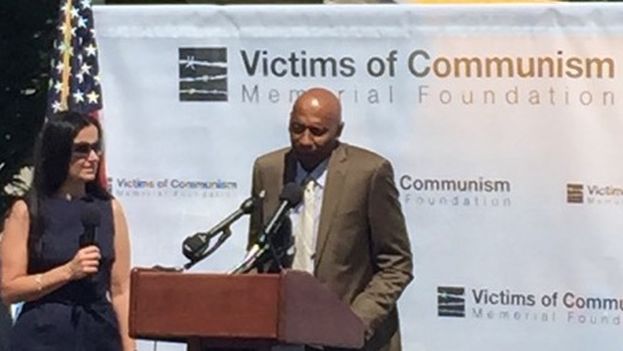
14ymedio, Havana, 1 July 2016 — In the same week, the Democratic Action Roundtable (MUAD) has lost two of its most representative organizations. On Tuesday, the Patriotic Union of Cuba (UNPACU) withdrew from the organization of opponents, and Thursday the United Anti-totalitarian Front (FANTU), led by Guillermo Fariñas, made public its departure.
In a note circulated by email within the island, the FANTU National Council said that MAUD “is permeated by a majority of organizations and personalities that are not representative of the entire non-violent opposition.” Something that, according to the group, distances them from those who daily confront “in the streets, the Castro’s totalitarian regime.” continue reading
The statement, signed by eight activists among whom is Fariñas, winner of the European Parliament’s Sakharov Prize for Freedom of Thought, said that FANTU’s members believe that the opponents who belong to the United Roundtable reject the carrying out of “actions in the public rights-of-ways” and “reject the methodology” of the organizations that hold them.
Unlike UNPACU’s more diplomatic declaration of withdrawal from MUAD, the FANTU note offers very harsh criticisms of the entities that make up MUAD. In their opinion, they are “very popular in the media, but with few members in their ranks,” at times only one person, “and act only towards the exterior of Cuba.”
Manuel Cuesta Morua, one of the main drivers of the MUAD initiative, told 14ymedio that MUAD is preparing “a well-thought out” response to these criticisms.
For its part, FANTU has reproached MUAD for using “methods to buy and get commitment as well as votes from opponents, which consist of facilitating travel abroad”; a way that seeks to “defend the postures and opinions of certain personalities within this rebellious entity.”
The document notes that “the struggle must be carried out within Cuba and not be [going] constantly from airport to airport [since] the real scenario for the democratization our country is within the island itself.”
Cuesta Morua recognizes that the withdrawal of these organizations “is a blow” for the MUAD project, because both groups “have worked hard and are very prestigious within Cuba.” However, he dismissed the seriousness of the rupture, which he described a “a growth crisis” that “will not end” the umbrella organization.
Cuesta Morua, who is the leader of the Progressive Arc, said that there is still “a lack of maturity in the coexistence between the same proposal from different viewpoints, distinct concrete strategies of change, of how to push democratic change.” He notes that “the doors remain open from FANTU and UNPACU,” if in the future they want to return” to the organization.
Fariñas is setting his sights on the Second National Cuban Meeting, an event that will take place in San Juan, Puerto Rico, between this August 12th to 14th. That is “another attempt at unity in which we are involved,” the opponent emphasized to this newspaper.
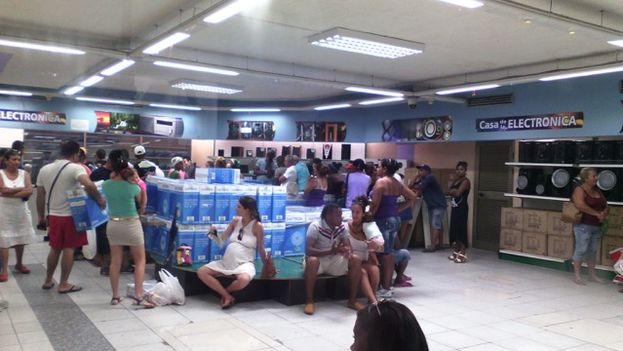
14ymedio, Yosmany Mayeta Labrada, Havana, 30 June 2016 – The star of home appliances in Cuban homes is not the television, nor even the powerful refrigerator. In the summer, the leading role belongs to a less serious but very important object for heat relief: the fan. But what happens when buying one of these pieces of equipment becomes a real battle against shortages, lines and bureaucracy?
For several weeks, temperatures have exceeded 86 degrees throughout the country, and like every year, the demand for fans is skyrocketing. However, in the government’s chain of “Hard Currency Collection Stores” (TRDs), the supply of these devices fails again, especially in Havana’s most populous districts, among which are Centro Havana, Cerro and 10 de Octubre. continue reading
Last weekend customers in the long lines in the centrally located Carlos III Business Plaza were alerted about the arrival of a new batch of fans. “They came!” shouted an employee to those awaiting the unloading of the coveted merchandise. Two hours later, more than a hundred people waited to carry home their “friend” with blades and motor.
“They didn’t come for more than a month,” explained an employee to 14ymedio while he helped test one of the devices for a family that arrived with two small children. Consumers came from several areas of the city since it’s the “only place they’ve supplied with them,” commented a worker from the nearby Nguyen Van Troi clinic.
The great flow of customers and the poorly functioning air conditioning in the well-known store made fan buyers resort to newspapers or magazine covers in order to fan themselves in the midst of the intense heat of the facilities.
“I don’t leave my house without my personal fan,” explains Eneida, a teacher who is dedicated to tutoring students for university entrance exams. “This is my special fan, it never fails, I don’t have to wait hours to buy one, and it doesn’t need electricity,” the woman says ironically about her popular fan, made with a thin wooden slat and colored cardboard.
One of the rooms in which they sell scarce equipment was also set up to relieve the long lines in the Carlos III Plaza electronics department. The prices of these pieces of equipment approached 34.45 CUC, the monthly salary of a Public Health professional, in spite of the fact that they are of low quality and have a high rate of returns because of technical defects.
A tour carried out by this daily of other stores in the city yielded similar results. In the majority of them there are no fans for sale, not even the most expensive ones that commonly “don’t sell as fast,” according to an employee of the Puentes Grandes mall.
The location, in the west part of the capital, has not received devices of this kind for more than four weeks and “all those that arrived last month were returned by customers because they had problems,” added the worker.
Other provinces also suffer the fan shortage, among them Santiago de Cuba, known for its high summer temperatures. In the store at Troch and Cristina, a scalper whispers of the sale of a turn in line to access the business and reach one of the few fans on display. At a price of 39.45 CUC, the devices ran out before midday, to the annoyance of buyers and under the watchful gaze of several police officers who were guarding the place to prevent hoarding and fights.
The black market is delighted with the shortage situation of the in-demand appliance. In the illegal distribution networks prices have soared, and advertisements on digital classified sites offer products that are scarce in the state sector.
“I have pedestal fans called Cyclones that throw out a world of air,” said a young man outside of the Carlos III Plaza among the eager buyers who were waiting to enter the electronics department. “They are made in the USA and have remote control,” proclaimed the salesman who, for 90 CUC (roughly $90 US), heralded “a bargain and no waiting in line.”
Translated by Mary Lou Keel
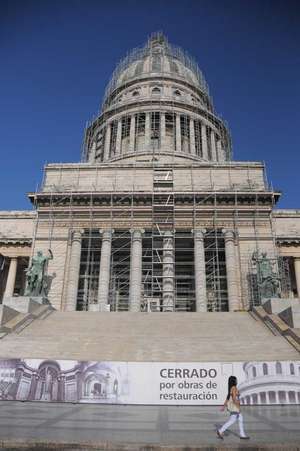
Ivan Garcia, 28 June 2016 — The northern end of the “Capitolio,” Cuba’s National Capitol, is already completely restored. Scaffolding has now been erected at the southern end of the colossal building
Some of the beautiful gardens and wrought iron lampposts surrounding it have been rescued. The hustle and bustle of construction workers and technicians is constant.
Sections of the Paseo del Prado surrounding the Capitolio have been restored. The avenue’s new pavement is made from cast concrete and parking has been banned. Dozens of palm trees have also been planted and streetlights installed. continue reading
Three months ago the state-run Cuban News Agency reported that, beginning in April of 2016, the National Assembly of People’s Power would occupy the north end of the building, though this has not been confirmed.
Ileana Mulet, head of the Office of the Historian’s Prado Investment Group, was quoted by the official press as saying that air conditioning had been installed in part of the lower floor and well as on the third and fourth floors, noting that the work would not affect the chambers’ aesthetics.
Mulet confirmed that security systems appropriate to a building of this type were being installed, including technology to detect explosives and break-ins as well as closed circuit television.
The investment specialist added that each seat in the semi-circular legislative chamber — the space where National Assembly deputies will meet only twice a year — will offer simultaneous translation, electronic voting, a telephone and internet access.
Some 90% of the materials used in the restoration are imported, mainly marble from Italy, which she notes “has on many occasions impacted the speed at which the restoration is being carried out.”
The restoration project is supposed to be completed by 2018, though Mulet acknowledges that the work “is far behind schedule.” The city’s Office of the Historian will be responsible for maintenance and conservation of the building.
A cabinetmaker working on the project estimates that, in the best case scenario, the Capitolio’s completion date “could be the middle of 2019 or even the beginning of 2020.”
Cuba’s National Capitol was built in four years under the direction of architect Eugenio Raynieri Piedra, who was appointed by Cuba’s president at the time, Gerardo Machado. It was inaugurated in 1929 and housed both chambers of Congress, the Republic of Cuba’s legislative body.
Inspired by the US Capitol, the building has a neo-classical facade and a dome which measures 91.73 meters at its highest point. Situated in the center of the capital and bordered by Prado, Dragones, Industria and San Jose streets, the Capitolio marks the official starting point of the 1,139-kilometer-long Central Highway, built between 1927 and 1931.
After Fidel Castro took power in January 1959, Congress was dissolved and the building became the headquarters of the Ministry of Science, Technology and the Environment as well as the Academy of Sciences.
For some analysts, the future home of the well-trained one-note parliament raises some interesting issues.
In 1958 legislative power on the island was held by two chambers: the House of Representatives and the Senate, which was made up of fifty-four senators, nine for each of the then six provinces (Pinar del Rio, Havana, Matanzas, Las Villas, Camagüey and Oriente). The House of Representatives had one delegate for every 35,000 constituents or fractions thereof larger than 17,500 constituents. Both chambers combined had a total 220 members (for a population of six million).
The current National Assembly has 612 members for a population of slightly over eleven million. But the numbers do not add up.
The chamber of the House of Representatives contains only two-hundred seats. If — as specialists from the Office of the Historian insist — physical changes to the Capitolio are being carried out without violating its original design, the million-dollar question is: How will it work if 412 members do not have a place to sit?
It is clear the current National Assembly is bloated. It is proportionally larger than the legislature of China, a country with more than 1.3 billion people.
A new election law has been brewing in the sewers of power for the last three years. Presumably, it will reduce the number of delegates while expanding their privileges and autonomy.
For now, everything is speculation. Another interesting question is how sessions of the National Assembly will be conducted. When the Capitolio was the legislative seat of the Cuban republic, its meetings were open to the public.
Even Cuba’s 1976 constitution — a carbon copy of the Soviet constitution — anticipated sessions would be open the public, something that has never occurred.
These are not the only questions. Moving to the Capitolio will involve reforms to the constitution, of which there have been many rumors.
There are several events that happen to coincide. Raul Castro will retire in 2018, probably before the Capitolio becomes fully operational.
The outlines of the Cuban political scene is becoming a conundrum due to a lack of transparency.
What is evident is that the island’s autocratic system of government might endure long after the Castro brothers are gone.
With the Capitolio or without the Capitolio.
 Dear Readers:
After the experience of a webpage, we decided to return to the popular format of a blog. We will have greater visibility here, but above all, from inside Cuba, the page loads better and faster, and the “cascading” format allows readers to read the published posts even when people haven’t been able to connect to the internet for several days.
27 June 2016