The United States Denies Visa For Poet Rafael Vilches / Luis Felipe Rojas

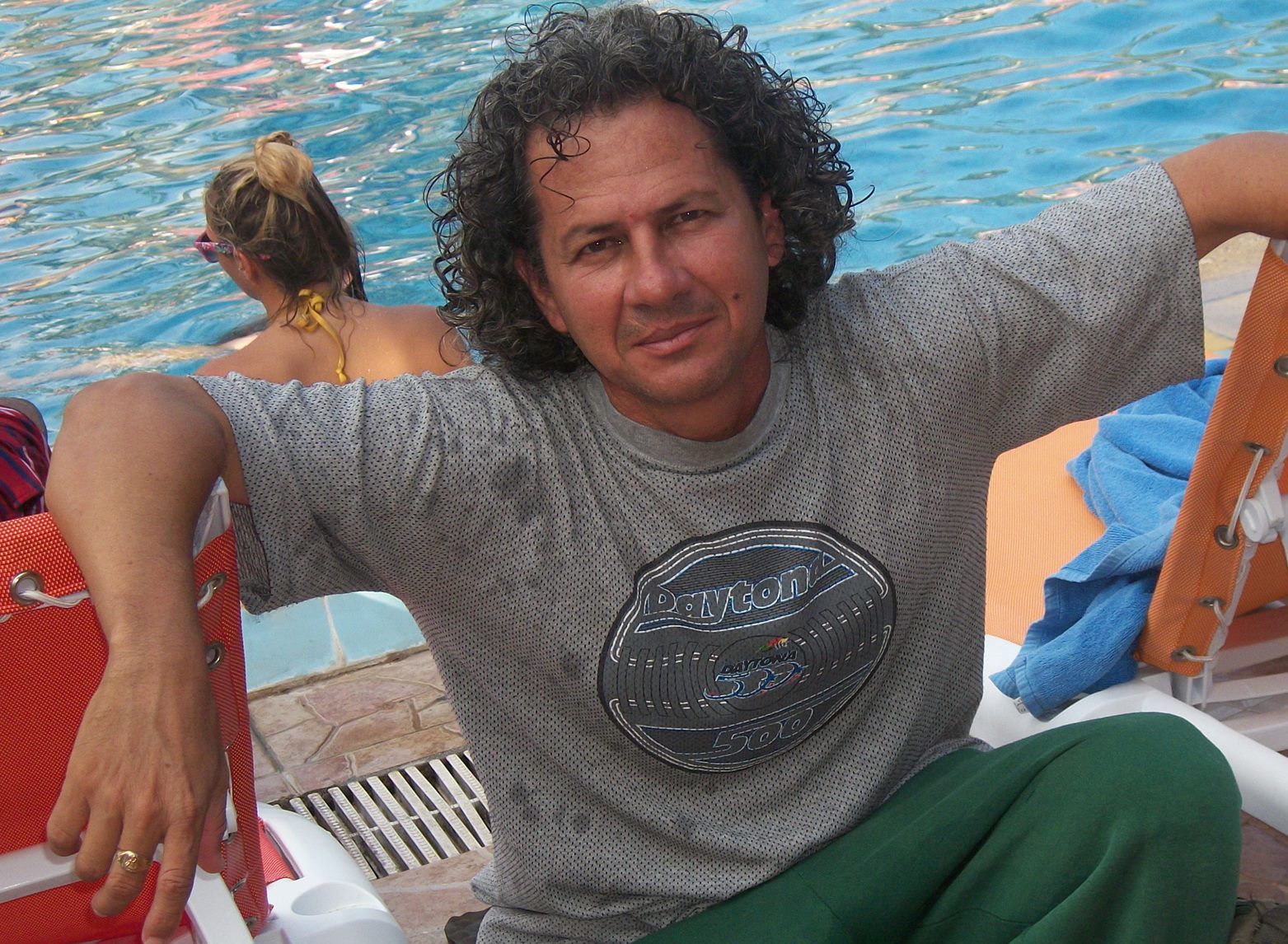
Rafael Vilches, Cuban writer.

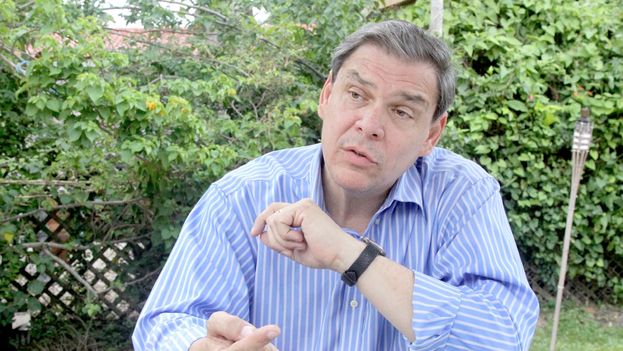
Luis Felipe Rojas, 1 July 2016 — This Friday I was informed that Cuban writer, poet, novelist, and cultural advocate Poemario de Rafeal Vilches was denied a visa by the United States embassy in Havana. Vilches has become an problem for those who claim that things have changed in Cuba. He has been arrested, interrogated by State Security, and remains in an intellectual shadow now that he is no longer invited to official literary soirees on the island.

It is a pattern. It happened some months ago to Danilo “El Sexto” Maldonado (although the matter was resolved in three days after a diplomat urgently asked me for his contact information), and to the musician Renay from the band Prono para Ricardo. The writer Ernesto Pérez Chang was denied a visa at least twice. continue reading

A week ago I spoke with Yoel Bravo, a resident of Villa Clara. He told me that they denied him a visa to travel to a meeting of Cuban activists in Puerto Rico. “They do not give reasons, they only ask you to return in a year,” said Yoel, who has been arrested, brutally beaten, and  threatened with death after he was accused of putting up anti-Castro posters opposing the communist regime.

It is the decision of an official, a diplomat whose look and tone can sharpen in that certain way when dealing someone who speaks up in the face of abuse and tells it like it is. They are not the first dissidents who have been prevented from traveling to the United States to seek freedom and to talk about censorship outside a country that stifles them and chokes them off like birds in pen.

Vilches was invited to participate in the Festival of Art and Literature Summit, that was organized by the restive Armando Añel and his wife Idabell Rosales in Miami. The prize winners and Neo Club authors are not the sort of people to keep quiet. They include prominent intellectuals like Jorge Olivera Castillo, who was sentenced to eighteen years in a Cuban prison because the words rattling around in his head happened to coincide with those that came out of his mouth — a habit that many, but not all, Cubans have lost.

Vista has become a beacon of independent cultural thought, a picture of what a future country might be, just as powerful hands are trying to bind it to a long fifty-seven-year-old past marked by terror and low blows.

Such are the changes in Cuba. Now in Miami unabashedly militant communists, police collaborators, members of the “rapid response brigades,” who respond to the regime’s call to scream down any sign of dissent, and people openly supportive of the Castro regime — those who have enjoyed the benevolence of those whom they are now thwarting — embrace us along with the poet Rafael Vilches.

Ice Cream Parlors in Cuba or How Gelato Killed Coppelia / Juan Juan Almeida

Juan Juan Almeida, 7 July 2016 — Yanetsi Azhares is a young Cuban woman who leaves nothing to chance. Only twenty-eight-years old, she knows what she wants. Her mother was a pastry chef who lived close to the Alondra ice cream parlor and whole life was spent saving up enough money to buy a little sweets shop. After a lot of work, she now has the privilege of owning the best and busiest ice cream parlor in Havana.

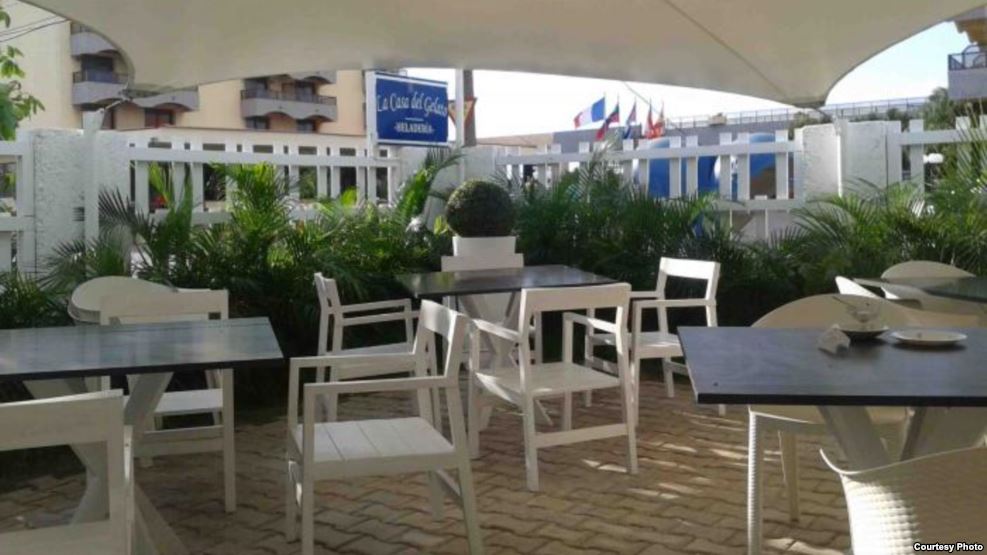
Located across from the Copacabana hotel, Gelato is an Italian-style creamery that produces its own ice creams. It has five employees and offers a little over sixteen flavors, all artisanally produced and based on traditional, exotic and extravagant fruit combinations. continue reading

Every week Gelato introduces a new delight. “We have two or three flavors in reserve to replace the ones that run out,” says the owner. “Wednesday is the day for the mystery flavor. We are always innovating. We’ve made flavors from unimaginable sources. From beet, avocado, wheat, fig, mamey, guava, sweet potato, beer, mojito. We also make milk-free and fat-free ice cream for those who are lactose intolerant and for those who are watching their figures. But of all the flavors the best-selling are vanilla, almond, cherry and vanilla chip. ”

In 2009 Yanetsi married an Italian and moved to Italy. When she first tried gelato, the regional version of ice cream, she said to herself, “This is what Cuba needs.” She nurtured her dream, passed a course on gelato-making at the University of Gelato and figured out how to combine Cuban raw materials with Italian technique and machinery. On August 3, 2014 Gelato became the first Italian gelateria to open its doors in Cuba.

“Havanans prefer Gelato because they realize we offer an artisanal Italian product. They understand that Coppelia’s* is mass-produced, is priced differently, is of a different quality and has a different clientele,” says the entrepreneur.

It has not been easy. She must buy sugar, fruit and anything else that might benefit the island’s economy from local retail stores. What she cannot find in Cuba — things like chocolate, pistachios and hazelnuts — she buys overseas and imports at inflated prices as personal items because Cuban law still prohibits private businesspeople from importing their own raw materials.

Gelato’s prices range from 1.50 CUC for a cone, 2 to 5 CUC for a cup and 16 CUC for a kilogram of ice cream, which is sold in a carry-out thermal container.

At the moment Gelato is expanding and is hoping to open new outlets in Havana, Varadero, Trinidad and other tourist destinations. In spite of her success, the young ice cream maker jokes, “In Cuba you have to be ready for anything. You have to be able use your imagination and to adapt.”

*Translator’s note: Coppelia is a state-owned ice-cream producer, which operates a vast ice cream parlor in Havana.

The Christian Section of the ‘Weekly Packet’ / 14ymedio Luz Escobar

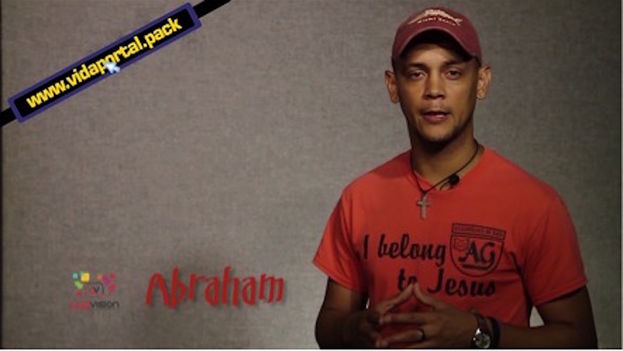
Abraham Campos, from team 'Luzvisión'. (Frame)
Abraham Campos, from team ‘Luzvisión’. (Frame)

14ymedio bigger14ymedio, Luz Escobar, Havana 8 July 2016 – For decades, Cuban evangelicals have lost the ability to operate their own schools, to defend their ideas on the radio, and to distribute their written publications in the newsstands throughout the country. However, new technologies have allowed them to place their new audiovisual media in the popular ‘weekly packet,’ where political topics are not allowed, but religious ones are.

In 2009, group of young developers involved with the Communications Center of the Assembly of God in Havana, began creating a compendium of videos with news, proselytizing and life tips, which they call LuzVisión (Light Vision). It is promoted as the “Christian family channel” and updated weekly on the alternative distribution networks. continue reading

Abraham Campos is one of the five members of the team that designs “a varied program, which is both informative and dramatic,” he explains to 14ymedio by phone. Since this initiative began, he emphasizes, they have wanted to prioritize the promotion of the activities of the Evangelical Church.

When selecting materials, he clarifies, everything “goes through a filter of the doctrinal purity of our denomination,” which ensure that it does “not affect any other sector of the country, neither social, nor political, nor economic.”

Campos says that the benefits of expansion through the weekly packet are numerous, as it has opened the possibility for their product to reach those who do not receive material through disks or magazines and serialized publications, such as Arpeggio or Buenas Noticias (Good News).

Although they have not found a reliable way to measure their audience, they receive constant signals that the message is now reaching a larger number of users. “We are signing up more people and the acceptance is very good.”

Several distributors of the weekly packet have told this newspaper that the folder with the “Christian” label containing the LuzVisión productions is in “high demand.” There are more than 900 churches and 1,640 homes of worship legally authorized in Cuba, according to an article by the Ministry of Foreign Relations on Ecured, a state-managed website.

On San Lazaro’s central street and a few yards from Infanta Street, lives Juan Carlos, 33, one of the sellers of a weekly packet, an alternative compendium of videos, TV shows and digital sites.

“What most people want are telenovelas and newly-released films, but I have several clients who are looking for religious material,” says the vendor. He explains that many of them are “older people, mainly women, but there are also young people who live in religious families or who attend church.”

Campos does not mince words. The objective of the channel is “to concentrate God’s people in one point,” but also to reach “those who do not know the Word. It is, also, an evangelistic medium, although the principle focus is to concentrate on the church and its edification.”

He says that LuzVisión draws on all of the collaborators in their “different denominations.” In addition, he professes that it is very useful for young people who want their work and the Church to be known, and it is greatly enriched by the international Christian music that is included every week. “It helps to expand your music archive and repertoire,” he says.

In his selection he also collects a summary of “activities and community events” that are held in churches and on the street. One of the objectives of Campos and the rest of the creators is that “the young Christian, instead of subscribing to the weekly packet to feed on other things that perhaps distance him a little from his religious activity, obtains instructional materials within his faith.”

LuzVisión is something that for many is starting to be established, but “nobody knows how it will play out tomorrow.” Campos dreams of having, in the future, “a radio station or a TV channel,” although he confesses that he has prayed for it for many years but has not achieved it. “But in the end it will come,” he says optimistically.

The young man says that the distribution through the weekly packet is “training” that helps them to involve themselves “naturally in this communication medium. We all want, when the time comes, to have a space on national television and for that we must prepare,” he says.

Zona+ Hopes to be Cuba’s First Wholesale Store / 14ymedio, Reinaldo Escobar

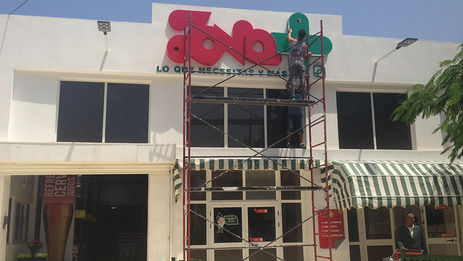
Zona+ from the outside.
The new Zona+ store from the outside.

14ymedio bigger14ymedio, Reinaldo Escobar, Havana, 9 July 2016 – A week after its opening the store Zona+ still hasn’t received permission to offer its products at wholesale prices, Located on Calle 7th A, between 66th and 68th in Havana’s Playa district, it has a strong competitor about 300 yards away in the market on 70th Street, one of the most well-stocked in the capital.

The commercial slogan of the new store says that clients can find what they need there “and more.” Although it has not been officially announced in any national media, it’s already known that its most promising attraction is that it will operate under the concept of a wholesale market, one of the most common demands of private entrepreneurs, especially those who have restaurants, cafes, or rent rooms with meals included. continue reading

“We are just waiting for directions, otherwise everything is ready,” one of the clerks who identified herself as Sonia told 14ymedio. However, no employee was able to respond with certainty whether there will be some kind of identification required to shop there, proving a customer is self-employed, or if there will be a certain quantity of merchandise that is is sold at “warehouse prices.”

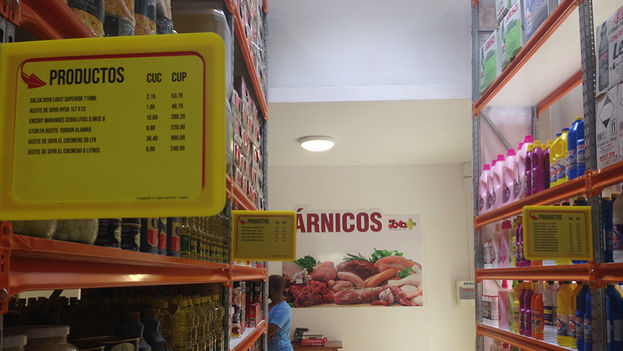
If it is compared to other stores that sell in hard currency, clearly its offerings are more varied, especially in the areas of food, cleaning supplies and personal hygiene items. The merchandise is also available in larger sizes and wrapped in containers appropriate for carrying larger volumes than would be needed by a customer buying for family consumption.

Such is the case for the 20 liters of soybean oil at a price of 38.40 Cuban convertible pesos (CUC). However, the new establishment is still a long way from parity with similar outlets of any chain in the international market in other countries. A man of middle age, with the aspect of a “man of the world,” on leaving the store expressed his hope that the store would continue as it is, clean, well ordered and with pleasant air conditioning. “The problem is we have no ‘fixer’ to ensure this and we can confirm that a new broom sweeps clean. Come and check at the end of the year,” he said, with a certain air of skepticism.

The store manager, Javier Muñoz, explained on another occasion that there is an intention to open two more of these markets in Havana, which, according to his version, can be supplied smoothly because the “necessary reserves” exist. Some optimists see in this step the unmistakable sign that soon the creation of small and medium enterprises will be allowed, which could not exist if they had to purchase their inputs in the retail market.

Some of the products sold here, like boxes of frozen chicken pieces or the sacks of powdered milk, belong to the group of goods whose prices have recently been lowered on a widespread basis. These offerings, however, do not appear in the all markets and here they do have them, but that does not mean they are selling at wholesale prices, which has generated confusion about whether Zona+ will be allowed to do that.

The custom of announcing as fact what is intended has resulted in many people thinking this is already a wholesale store, but even if all the workers are optimistic and predict that the authorization will be here soon, the truth is that it still is not working under that definition.

The Zona+ store does not yet have permission to sell their products at wholesale prices. (14ymedio)

The Blackboard Mafia / 14ymedio, Miriam Celaya

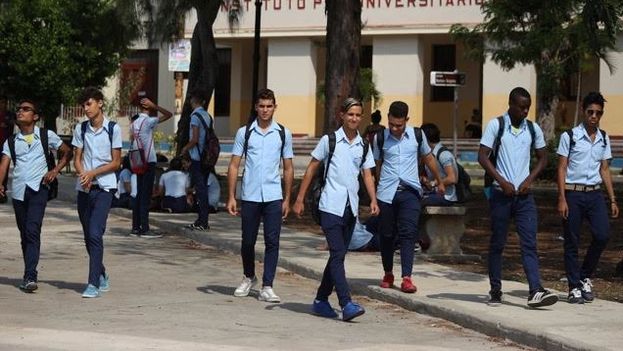
High School Students in Havana (14ymedio)

14ymedio, Miriam Celaya, Havana, 5 July 2015 — “Everyone knows which teachers accept money,” a group of young people tells me. In fact, some not only accept, but clearly require it from students who know they would not be able to pass the exam on their own.

The final days of the 2015-2016 school year are here, and once again the recurring theme of fraud by students and teachers surfaces, poor preparation of students, low quality of education and the shocking loss of values among not a few education professionals.

A group of five 10th and 11th graders of the pre-university Gerardo Abreu Fontán, of Centro Habana, agreed to offer their testimony on the subject under conditions of anonymity, in an interview that lasted more than two hours and uncovered before me a broad and deep network of corruption. continue reading

“You know you are going to have to come straight with me…” says a professor to a bad student, in a full classroom and in the presence of all other students. A phrase that, from a pure semantics point does not say much, but that in marginal code says it all. The aforementioned understands and abides: the game’s move is set.

Around this sunspot there is a whole system of tariffs and strategies that work seamlessly interlocked with the precision of a Swiss watch. Impunity in this maze of fraudulent trickeries is almost absolute.

The teacher acting as proctor will charge 5 CUC for each student thus strategized in the case, of which he will pay a portion of the professor who teaches the subject and another to the person in charge that year.

There is a kind of unwritten agreement In Havana that stipulates an approximate rate, depending on the type of examination (whether oral or written), the period evaluated (if the test is partial or final), the neighborhood where the school is located (which is usually indicative of the purchasing power of the student’s family) and quality and/or experience of the professor.

Thus, to achieve a good grade on a mandatory mid-term (known as a “Partial Control Work” with the initials TCP), a student from a relatively solvent family who is generally behind must pay between 2 or 3 CUC (Cuban convertible pesos) to the subject’s teacher. Some teachers, however, charge at a rate of 4 CUC per grade per question, so, considering that a TCP contains three questions; the cost can go up to 12 CUC for each TCP for each core subject.

Meanwhile, the final exam contains five questions, but the system and the going rate in this case vary, depending on what manoeuver is used. For example, a variant is that a certain number of students previously disclose to the subject’s teacher their interest in paying for the proctor during the exam so he will let the students cheat, whether it is looking up each correct answer in books or notebooks or copying among themselves.

The proctor, in turn, charges 5 CUC for each student involved in the plot, from which he will pay a portion to the professor who teaches the subject and another to the person in charge that year, who will turn a blind eye when he makes the classroom rounds to guarantee the transparency of the evaluation process.  So the circle of what we might call a blackboard mafia is closed.

Assuming that there are four subjects with written finals—Spanish, Math, Biology and History—and that there are an increasing number of students interested in using this negotiated evaluation process, it is easy to conclude that the dividends to these “educators” stemming from fraud far exceed their paid wages.

Dividends obtained by these “educators” through fraud far exceed the amount of their wages.

Another variation, usually applied when the teacher has a close relationship with the student and his family, is to conduct the review of examinations at either the home of the student or teacher, where the professor will dictate the correct answers to the student, thus allowing for corrections of mistakes made in the classroom. In these cases, payment is not in the form of cash, but masked in the form of a more or less expensive gift, accompanied by the corresponding eternal “gratitude” of the adolescent’s family.

Finally, there is also the old trick of altering official assessment records, so the teacher gives the student a higher grade than the grade received in the evaluations, which raises the student’s rank so he will have easy access to better university career choices once he finishes high school.

However, the juiciest peculiarity takes place at the provincial level, where the tests are prepared and the final exams and revaluations are “guarded.” According to the students interviewed, both can be bought for a price of about 30 CUC, although the student or his family must know the right person to contact, because otherwise it could mean severe sanctions.

Meanwhile, the new form of oral assessment for subjects like Physics and Chemistry in pre-university education, which was established in the 2014-2015 school year to “facilitate” student grades and elevate their advancement, has only managed to diversify the corruption behaviors of teachers to defraud the system.

These tests are performed through paper forms known as “ballots,” developed at the provincial level. The procedure is simple: the “paying” student will speak to that subject’s professor, who in turn will coordinate the gimmick with some member of the hearing panel to whom he will deliver a list with the names of those students who will pay for their grade in advance. Meanwhile, on the date of the exam, the corrupt faculty panel member, once he has verified the student’s name on the list, gives the student a ballot containing the answers, or he points out the answers to the incorrect ones written by the student, in cases when the student chooses to fill out the ballot himself.

Another variation is to conduct the review of examinations at either the home of the student or teacher, where the professor will dictate the correct answers to the student.

Each subject has a different price, depending on its complexity. A Physics test, for example, costs 15 CUC this year. Chemistry is often cheaper, 5 to 10 CUC, or a gift, which can be anything from perfume, a wallet, or any article of clothing to a bottle of rum.

Evaluations of subjects that are “not important,” such as Political Culture, English, or Computing, almost always are bought, because they are cheap and almost everyone can do it, and so you get it off your mind easily with 2 or 3 CUC or a modest gift, if it is a TCP”.

For a final exam, those who can will pay 5 CUC so they won’t have to make a presentation at the evaluation seminars, which is how they are evaluated. “Sometimes you pay the teacher to give you seminar from a previous year, and you can then transcribe it, as if it was your own work.”

“And all that without taking into consideration that, in addition, on Teachers Day, they get lots of presents,” says M, the most lively of the students interviewed.

But the corruption of the education system is not limited to the evaluation process. According to testimonies from students and parents, access at the end of the ninth grade (secondary school) to a pre-university slot higher than the student’s rating would entitle them to, costs about 100 CUC, paid directly to the school board, or it is “negotiated” through some municipal official with the Ministry of Education (MINED) responsible for the “grants.”

Judging by these statements, corruption is decaying the previously formidable Cuban educational system and it is sprinkling into everyday life, so much so that even students who have not succumbed to the mechanism of fraud—whether for moral reasons or their family’s financial limitations—perceive it as commonplace, perhaps a questionable issue, but not a crime at all.

Each subject has a different price, depending on its complexity

“It’s normal to some extent,” states G, an 11th grader who dreams of making a career in design. “It’s not that I feel respect for those corrupt professors, but I don’t care. It’s not my problem.”

In the case of R, an adolescent with beautiful features and pleasant manners who wants to be a doctor, he believes that what these educators do is not right, but “each person is worthy of respect, that is their livelihood.  If we had a different economy, other wages, different teacher training … perhaps it would be different.”

Once again, M intervenes with a sharp reflection for his young age.  He expresses himself with ease: “The problem is that the Government doesn’t pay them enough. It doesn’t invest in professors or their training, because they don’t produce immediate gains, as in the case of doctors, for instance, who go to foreign assignments and the government takes almost all the money they get paid abroad. Of course teachers are looking for any way to make money, especially the younger ones, who want to go out, have fun and buy fashionable clothes and shoes, just like us.”

All the teens assent in tacit agreement, while something akin to despair invades my being. These youngsters have offered me a glimpse of the true dimension of the damage inflicted to the spiritual body of Cuban society, not just to the economy. I am impressed by the colossal task that will be entailed in rebuilding the moral fragments of our nation, once the long nightmare of the Castro regime has ended. Of course, I don’t accept defeat in advance, but, for now, corruption is continuing to spread its tentacles and threatening to win the game.

Translated by Norma Whiting
Raul Castro Dismisses Culture Minister and Names Abel Prieto / 14ymedio

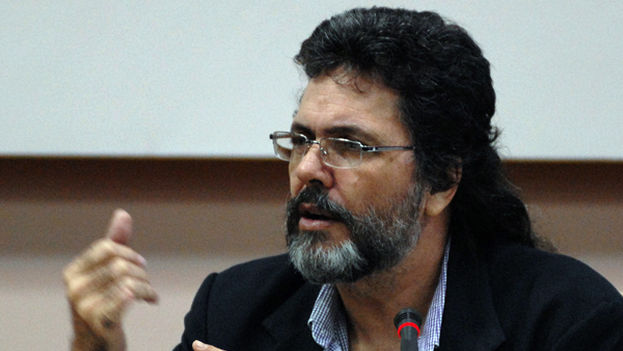
Abel Prieto will serve, provisionally, as Minister of Culture

14ymedio bigger14ymedio, 8 July 2016 — Abel Prieto is the new Minister of Culture after Raul Castro decided to “release from his duties” the person previously responsible for this area, Julián Gonzalez Toledo.

The designation of Prieto, until now advisor to the president of the Councils of State and of Ministers, is provisional, according to the note published in the Party newspaper Granma. continue reading

González Toledo had assumed the portfolio of Culture in March 2014, after two years as deputy minister, replacing Rafael Bernal Alemany after a notorious scandal over the theft of dozens of works in the Museo Nacional de Bellas Artes, which could have cost the outgoing minister his job.

Toledo Gonzalez previously led the National Council of Performing Arts from 1999-2011.

His last public appearance as minister occurred on July 1 when he inaugurated the new edition of the Art Fair on La Rampa, and in particular the exposition Fidel, Soldier of Ideas by photojournalists Livorio Noval and Ismael Francisco González.

Prieto, originally from Pinar del Rio, now returns to a position that he previously served in between 1997 and 2012. A graduate of the University of Havana in Hispanic Literature and author of the novel The Flight of the Cat and Other Stories, he was director of the publishing house Letras Cubanas and president of the National Union of Writers and Artists of Cuba (UNEAC).

As an advisor to Raul Castro, in forums with artists and youth on artists he has been prodigious in his criticisms of “new forms of cultural consumption, like that of postmodern relativism that accepts everything as good.”

Dozens of UNPACU Activists Detained Attending a Funeral / 14ymedio

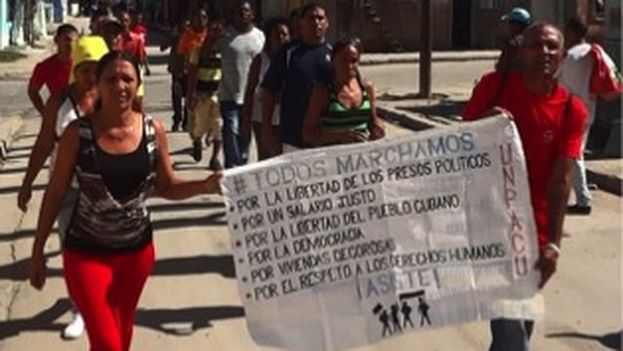
Patriotic Union of Cuba activists carry out marches in spite of frequent arrests (UNPACU)

14ymedio bigger14ymedio, Havana – Dozens of activists from the Patriotic Union of Cuba (UNPACU) in Santiago de Cuba were arrested this Tuesday and on Wednesday morning when they tried to go to the funeral of one of their members. The detentions coincided with the burial of Maximilliano Sanchez Pereda, 72 years of age, who died Tuesday morning at the Juan Ambrosio Grillo Hospital.

“They set up several police cordons in order to prevent brothers from arriving to show their sympathy to the family of the deceased,” said opponent Ovidio Martin to 14ymedio via telephone. The visitation was held on Tuesday night at Sanchez’s house, “because that was his will,” he added. continue reading

Martin explained that during the day in the area of Palma Soriano “they arrested about 30 activists” and “more than 20 in the area of Santiago de Cuba.” They were all set free that same night, and the police warned them that they could not attend the funeral.

At dawn on Wednesday, near Palmarito de Cauto, another 35 members of the organization were arrested and “kept in an enclosed truck for hours in sub-human conditions, completely closed and without a bathroom,” said Martin. The same source says that on Wednesday afternoon, “they were all set free” although “they suffered arbitrary and in some cases violent arrests.”

The burial of the deceased took place Wednesday morning, and the activist says that at the moment of the burial there arrived at the cemetery “a truck full of paramilitary forces dressed as civilians pretending that they were community services.”

Martin thinks that the purpose was to prevent a cross from being left at the grave on behalf of the family members and activists on which appeared the deceased’s day of birth, the burial date, and the acronym UNPACU. “Right there a dispute broke out because the paramilitary forces pulled the cross from the grave saying that the abbreviation could not go there.”

Eventually the opponents returned “to put the cross in place.”

Translated by Mary Lou Keel

Marabou and the Government: Making the Life of the Cuban Farmer an Ordeal / 14ymedio, Ricardo Fernandez

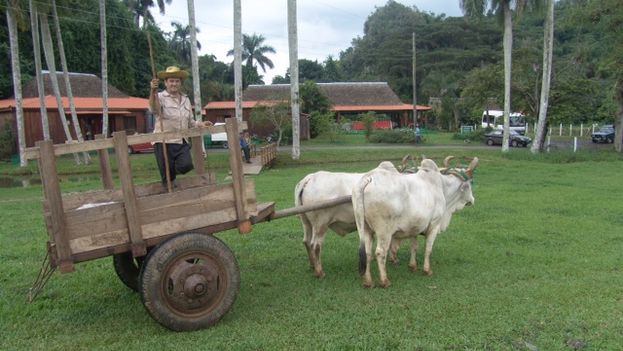
When Raul Castro promoted the leasing of idle land to the farmers, he invited them to make it productive with oxen. (14ymedio)

14ymedio bigger14ymedio, Ricardo Fernandez, Pinar del Rio — The Cuban farmer has only two problems in being productive: the invasive marabou weed and everything else.

When Raul Castro promoted a plan to lease idle land to the farmers and invited them to make it productive using oxen, he overlooked the fact that these parcels, in many case, has been infested with marabou weed for over 20 years. It is an invasive species that is very difficult to eradicate because to spreads through long rooms and creates numerous shoots that rise to the surface and multiply in the subsoil when the plants are cut or burned. continue reading

This means that it is impossible for any farmer to manually clear his 66 acres of marabou. It is when using technology that the odyssey begins. Typically, a crawler-type tractor—operating on tracks instead of wheels—with front blades is used to cordon off the marabou and burn it. But the farmer has no right to directly contract for this service with state entities, which are the ones who own the heavy equipment. Thus, the application has to go through the board of the cooperative, but it turns out that the tractors are broken or belong to companies that they cannot contract with. The solution: wait for a miracle to happen while “doing something” with the land for fear of having it taken away.

It is likely that, given the delays, then end up resorting to private individuals with their exorbitant rates. So the farmer has to go to the bank for a loan and on asking for the promised credit, the producer discovers that they won’t give you more than 20,000 Cuban pesos (about $800 dollars), if you don’t have anything to put down as collateral. With that money you might be able to pay to clean up about half your allotted land, so you make an inventory of the few things you can pawn: The house? An engine? The old tractor?

If you managed to burn the marabou, the government guarantees you at least five years of suffering chasing after herbicides and tools to control the persistent shoots. Every time you prepare your land you will have to turn to the black market in fuel because what the state has assigned you is barely a symbolic amount.

The legal alternative would be to buy the gas sold in hard currency on the highways by Cupet, but this could cost you 3,000 Cuban pesos for a day’s work, because a tractor with the plowing attachment can consume 120 liters of diesel a day. That is if the farmer owns an old tractor, because if not, it again becomes the story of an impossibility, that of contracting with a state enterprise. Then you have to add the expense of the contract with the private owner and the fuel.

When the farmer, finally, manages to have cleaned his land for production, you can see that a new chain of obstacles and problems opens before his eyes. He will have to sow on dry land, because pumping water is a privilege with too many conditions attached: availability of surface or well water, electricity or fossil fuel, a turbine with capacity and an irrigation system.

Opting for the state “technology package”—which includes seed, fertilizer and pest controls—implies selling the production to the state company Acopio at extremely low prices (in comparison to what private buyers will pay). In addition, they don’t deliver all the components of the package at the same time.

When the time comes to market the products, the farmer will find that if the buyers are individuals they cannot buy the entire crop, and the State Collection System of Agricultural Products will leave many of the fruits to rot in the field while the population in the city lacks them.

See also:

Decree-Law 300 Will Not Make the Land Produce / Dimas Castellano

Beans, ah, the beans! / 14ymedio, Yoani Sanchez

Land Leases, a “Half-ownership” / 14ymedio, Juan Carlos Fernandez

Crisis in Agriculture: Land for Those Who Work It / Dimas Castellanos

Cuba’s Journalists Missing in Action / 14ymedio, Yoani Sanchez

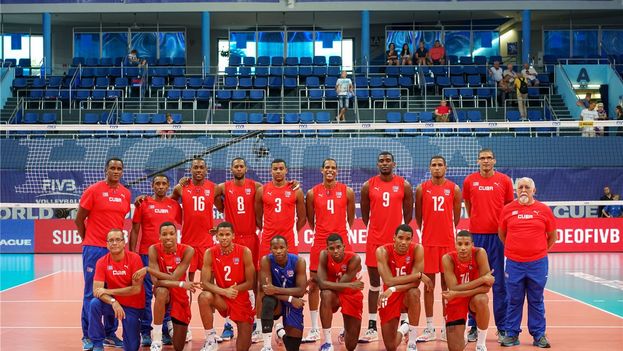
Six members of the Cuban volleyball team have been detained in Finland without the press explaining what crime they are accused of. (Volleyball World League)

14ymedio bigger14ymedio, Generation Y, Yoani Sanchez, Havana, 7 July 2016 — My father came home with his head spinning. “What is the crime that several Cuban athletes in Finland are accused of?” He had only heard the official statement signed by the Cuban Volleyball Federation read on primetime news on Monday and published in the written press. The text did not clarify the imputed misdeed, so my father speculated: “Illegal sale of tobacco? Theft? Public scandal?”

The rape of a woman, for which the athletes are presumed responsible, was not mentioned in the statement, which constitutes an act of secrecy, concealment of the truth and disrespect for the audience. The official press acts as if we are small children with delicate ears to whom they cannot mention any gory details. Or worse still, as if we don’t deserve to know the seriousness of the accusations. continue reading

What happened, again makes clear the straitjacket that prevents information professionals from doing their jobs within the Communist Party-controlled media. This is something that many of them bear with pain and frustrations, while others—the most opportunistic—take advantage of the censorship to do work that is mediocre or convenient for the powers-that-be.

Why has no prominent Prensa Latina correspondent in Europe gone to Finland to report minute-by-minute on what is happening with the athletes from the island?

We suffer omissions of this type every day in the national media. These absences, now chronic, belie the winks that accompany Cuban first vice-president Miguel Diaz-Canel’s call for a journalism more attached to reality and without self-censorship. Where, now, is that official to urge the reporters to investigate and publish the details regarding the fate of the volleyball players?

It is very convenient to urge the journalists to be more daring and to take the time to guide them to be cautious or to remain silent. Such duplicity has been repeated so many times over the last five decades that it has inculcated in the collective imagination the idea that the press is synonymous with propaganda and with being an informer, a representative of the government.

The damage inflicted on Cuban journalism is profound and systematic. Repairing it will take time, a framework of respect for such an honorable profession and even the emergence of a generation of informers who are not marked by the “vices” of the current academy of Cuban journalism. These young people, without compromises with power, are the only hope left to us.

Ecuadorian Police Evict Cubans From Quito Encampment / 14ymedio

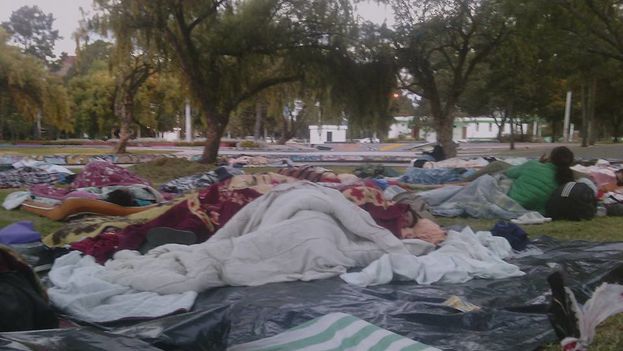
14ymedio bigger14ymedio, Havana, 6 July 2016 – In the early morning hours of Wednesday the Ecuadorian police intervened to evict Cubans from an encampment in Arbolito Park in Quito, and about one hundred migrants without proper documents were loaded into four buses to take them to trial.

Lazaro Ramos, one of the spokesmen for the Cuban National Alliance in Ecuador, told 14ymedio that the Cubans were arrested for being undocumented, although all of them were released later on Wednesday morning, with the exception of Efrain Sanchez Mateos, accused of assaulting a police officer. continue reading

Ramos added that lawyers from Quito and Pichincha in solidarity with the Cuban cause will represent the migrants during a hearing to be held this Wednesday.

According to the testimonies of Cubans and their relatives, police violently broke up the encampment, destroying the tents and belongings of some of those staying there, amid shouts and protests from the foreigners.

After a week of camping in front of the Mexican Embassy in Quito to demand humanitarian visas that would allow them to travel to the United States, the migrants were evacuated in late June by the Ecuadorian security forces. The Cubans argue that they then obtained a permit from the Municipality of Quito to install their encampment in Arbolito Park.

On Monday, hundreds of people demonstrated outside the Cuban embassy in Quito to “repudiate” President Raul Castro and the recent statements issued by the embassy in which they were accused of “seeking points” to reach the United States.

Cubans March Against Raul Castro In Ecuador / 14ymedio, Mario Penton


14ymedio bigger14ymedio, Mario Penton, Miami, 6 July 2016 — Hundreds of people went to the Cuban embassy in Quito in Monday with the purpose of “repudiating” President Raul Castro and recent statements issued by the embassy in which they were accused of “seeking points” to reach the United States.

“This is not about seeking points, but defending the truth. We fled a dictatorship, the longest this continent has ever had, so we condemn the Castros and we do so at in their own embassy. We have lost the fear,” Enrique Santana, one of the protesters, told 14ymedio. continue reading

“We stopped the traffic. The police guarded our way to the embassy. We wanted to deliver a statement of repudiation. There were about 500 people,” said another of the Cubans.

According to witnesses, the diplomatic representatives of the island accepted the document with the words of migrants who are spending the night at El Arbolito Park in Quito, after they were evicted by the police from a demonstration in front of the Mexican Embassy when they asked for humanitarian visas to enable them to reach the United States.

“They did it through a crack, but they accepted our demand,” said Jorge Sanchez, another of the protesters, who also says that “it was the first time” something happened.

“Yes, we are counterrevolutionaries. At the embassy it doesn’t matter that they mistreat us and even beat our children, so now we respond that we are not afraid,” said Efrain Sanchez Mateo, coordinator of the group. According to what Sanchez Mateo explained to this newspaper, his family on the island has been threatened by State Security because of his demonstrations in Ecuador. “They told me they’re going to deport me to Cuba. They are afraid of me,” he said.

In the document delivered to the embassy, Cubans say they have had to leave their country “because of the police corruption” there. They also reject the Cuban interference in Ecuador, manifested in the refusal of Ecuador to welcome more professionals from the island.

“The press release from the Cuban embassy in Ecuador demonstrated once again their intent to continue hiding the truth of a people who have been deceived for more than 50 years,” the document added. It also says that the Cuban people “starve while corrupt leaders engage in politics” and reminds that there is no democracy in Cuba, but rather a regime in that imposes orders that are not discussed.

Last week, hundreds of Cubans who were in La Carolina Park in Quito received permission from the municipality to move to El Arbolito Park, which since then is known as “the mambí encampment” or “the freedom encampment.”

Members of the X Cuba Movement participated in the demonstration Monday in solidarity with migrants and others in the Cuban community in Ecuador.

In 2008 when Ecuador ended the visa requirement for Cubans, the country became the largest springboard to cross the United States and hosted one of the largest communities of Cuban nationals abroad Island. The economic crisis facing the country, together with measures to discourage emigration, has led thousands of Cubans to remain undocumented in the country, so that they can go to the United States in order to benefit from the Wet Foot/Dry Foot policy that allows them to legally enter the country and facilitates their obtaining the residence.

In previous initiatives, more than 5,000 Cubans have delivered lists with their names to the embassies of Mexico and Canada to allow them to travel to their countries in order to follow the US border, but so far both countries have denied this request.

The Cuban Embassy in Quito Accuses Migrants of “Seeking Points” From The US / 14ymedio, Mario Penton

Cubans in El Arbolito Park, where they were moved by Quito authorities. (14ymedio)

14ymedio bigger14ymedio, Mario Penton, Miami, 2 July 2016 — With the language of the Cold War, the Embassy of Cuba in Ecuador has responded through an official statement to the situation of thousands of migrants from the island who are undocumented in Ecuador and are asking for a humanitarian bridge that allows them to reach the United States.

The answer comes after dissimilar attempts to obtain information from the embassy that kept a veil of silence over the protests carried out by migrants which included a demonstration in front of the Mexican Embassy and requests to the United Nations High Commissioner for Refugees and the embassy of the United States in the Ecuadorian capital for assistance. continue reading

“The embassy of Cuba wishes to clarify to public opinion that these people left our country, overwhelmingly in a legal way, and none of them is persecuted for their political ideas,” says the document, which also accuses the undocumented “seeking points” from the US government.

The document, which was published unsigned on the embassy’s social network site, directly accused the Wet Foot/Dry Foot policy of being responsible for the current wave of migration affecting Central and South American countries. “Once again it is demonstrated that the current immigration policy of the US government towards Cuba is inconsistent with the current bilateral context.”

Reactions to the embassy statement by the Cubans in Ecuador were not long in coming. The social networks are filled with messages of both repudiation and support of the statement.

A migrant living in Ecuador, Carlos Ramirez Durades, explains that “it such is the disappointment that, even being in situations unfavorable for their lives, no one decides to return to Cuba.” That is a sign, he says, that “the sheep are not as tame as they want to paint them.”

A political organization established in Ecuador to support freedom in Cuba, the X Cuba Movement, issued a statement in solidarity with the undocumented migrants and asked the Cuban embassy to stop being “an instrument of the regime and put yourself on the correct side of history.”

Ephraim Mateo Sanchez, leader of the Cubans who installed themselves in front of the embassy of Mexico in Quito, said meanwhile that they are preparing “a clear and strong response” to the statement issued by the Cuban embassy.

Several Cubans living in Ecuador, such as Lucía Camacho Ríos and Karel Gómez Velázquez, have expressed agreement with the statement issued by the embassy. Some have also come out against the actions of the protesters. “They want to be put on plane, shouting ‘down with Fidel’ in the streets of Quito, but they didn’t do that in Havana. All my friends who went to the United States, took the ‘little road,’ it is best that they do the same,” Maritza Suarez, a Cuban who has lived in Ecuador for 26 years, told 14ymedio.

“With or without the Cuban Adjustment Act Cubans will continue leaving Cuba. When one goes sometimes we don’t know if they do it for political reasons, because on the island we don’t even know what freedom is. Finally, whether for economic reasons or not, when the essence goes, the people leave Cuba because the system doesn’t allow them to be what they want to be. In the end, everything has to do with politics,” said Lazaro Ramos, a Cuban who is a member of the Cuban National Alliance of Ecuador (ANCE) who emigrated to Ecuador less than a year ago.

Recently, Cuban migrants who have been evicted from outside the Mexican Embassy in Quito, received authorization to move to El Arbolito Park in the Ecuadorian capital. There they have established what they call “The Cuban Encampment,” or “The Mambí Encampment.” Several hundred people live in tents in precarious conditions in hopes that some country will serve as a trampoline to enter the United States, where legislation allows natural persons from the island to be admitted.

“It’s Very Possible That I Will Try Again,” Says Rafter Repatriated To Cuba / 14ymedio, Yoani Sanchez

The failed rafter Walter Marrero Velazquez arrived in Las Tunas Monday. (Courtesy)

14ymedio bigger14ymedio, Yoani Sanchez, Havana, 6 July 2016 — Bearded, hungry and full of frustration, Walter Marrero Velazquez returned to the same island that saw him leave on a flimsy craft. On 20 May the group, consisting of 24 rafters, was intercepted by the US Coast Guard while clinging to the American Shoal lighthouse, eight miles off Sugarloaf Key in the Florida Keys. The case ended up with four of them deported to Cuba and the other 20 taken to the US Naval Base at Guantanamo, to await further action.

Marrero Velaquez arrived in Puerto Padre, Las Tunas on Monday and only now is seeing the information about “the lighthouse rafters” published in the international press and by independent reporters. A few hours ago he learned about the emergency appeal presented by five attorneys from the Democracy Movement and its rejection by Judge Darrin P. Gayles, whose decision opened the way for them to be deported. continue reading

The rafter remembers each one of the 42 days he spent in the custody of American authorities. “At first we were in a smaller boat, but then they put us in at least three larger ships, known as ‘cutters’ or ‘mother ships,” he told 14ymedio by phone.

The repatriation occurred on 30 June, with the first stop in Havana, and on the 4th of July, American Independence Day, the rafter was taken to Las Tunas, where lack of fuel meant that the police could only transfer him to Puerto Padre hours later. Others of those repatriated were returned to the same province, while two of them reside in Havana.

In the Cuban capital, immigration authorities and the police asked them some questions about the origin of the fragile craft’s engine. “They wanted to get information out of us,” said the rafter, who had to sign his statement but didn’t receive a “warning letter.” In the interrogations they never suggested to him not to repeat the illegal departure from the country.

While on the “mother ship,” Marrero Velaquez came to count 160 Cubans intercepted at sea who were returned to the island. “The amount of food they gave us was very small, like enough for a six-month-old baby,” he complained. “I lost 15 pounds during the days I spent there,” he said.

The young man, 20, said that when they protested the meager ration they were pushed and handcuffed. The hullabaloo raised by the group was not expected in such cases, but it did little good, he recalls. Situations like that led them to write a collective letter which they threw into the sea in a bottle, like desperate castaways.

“We have spent 37 days sleeping on the floor, the food is for dogs, they mistreat us to the point of violence and we have companions who are sick in the head, it is hell,” explained the two-page missive written by hand. The bottle was fund by a fisherman who didn’t even speak Spanish and who gave it to the authorities. Held incommunicado, without the ability to contact attorneys, that letter was the only chance the rafters had to tell about what they were experiencing.

The SOS message managed to get the case re-heard, and gave them the chance to travel to the Guantanamo Naval Base, an area administered by the United States in eastern Cuba. But the young man from Las Tunas preferred not to take advantage of that opportunity.

“In the interview we had with the consul, one by one, the paper they made us sign said that, if we went to Guantanamo as refugees, then we would end up in a third country.” The rafter said that they made it clear that with this option they would lose the right to enter the United States. “I decided to come to Cuba because it is very possible to try again,” he says with determination.

Questions Like Stones / 14ymedio, Reinaldo Escobar

Juan Manuel Cao during the interview. (Ivan Canas)

14ymedio bigger14ymedio, Reinaldo Escobar, Miami, 4 July 2016 — For more than two years, the Mirror program, broadcast by America TeVé, has counted on the drive of Cuban journalist Juan Manuel Cao. The channel abounds in information, opinions, debates and especially interviews where, with great frequency, the issue of Cuba emerges.

Cao, born in 1961, is a Cuban educated under the current system: he was a young “pioneer” in primary school, he attended one of the “schools in the countryside,” he was awarded a scholarship, he lived on the ration card, stood in endless lines and knows what it is to travel hanging out the door of a packed bus. To complete his Cuban experience he spent two years in prison accused of enemy propaganda, and finally emigrated. His book “The Impertinent” (2015) is filled with amazing stories of his professional life.

On 21 July 20016, while covering the 30th Mercosur Summit being held in Cordoba, Argentine, he had a close encounter with Fidel Castro and took the opportunity to demand the release of a noted Cuban scientist, Dr. Hilda Molina, whom the government was not allowing to leave the island.

Escobar. A few days after your encounter with Fidel Castro he issued his “Proclamation from the commander to the people of Cuba” where he renounced all his posts for health reasons. Some see the disgust that you caused him as the direct cause of that situation. Ten years later, how do you assess that episode?

Cao. The Cuban people, to which we belong, go back and forth between seriousness and mockery. This statement is an exaggeration. On 30 July 2006, shortly after Fidel Castro made his announcement, I was on 8th Street and I found myself among graffiti that said “Cao gave him a KO” and others that were similar, between seriousness and a joke. Over the years people have continued to repeat this legend and it still amazes me.

Escobar. But the fact is that when he announced his illness he mentioned “the enormous effort made to visit the Argentina city of Cordoba” among the reasons that his health “has resisted all medical analysis, it was subjected to extreme stress, and it was broken.”

Cao. Yes, I remember that’s what he said, but I think he was referring to an incident with President Kirchner and his wife Cristina who was then the first lady. I remember that Fidel Castro had no intention of participating in that Mercosur Summer, but he went because Hugo Chavez invited him. Today we know that in midair he received a message signed by the Argentine president where (on the initiative of Cristina) he was asked to let Dr. Hilda Molina travel to Argentina to see her family.

They say he was so upset that he gave the order for the plane to turn around and go back to Havana. He didn’t do it because Chavez himself persuaded him that he should participate in the event.

Escobar. But the disagreement was limited to that message, was not it?

Cao. Not exactly. At the first official dinner hosted in honor of the presidents, Fidel Castro did not attend, and not only that, but he asked Chavez, Lula and Evo Morales not to go. As a result of this sabotage they had to fill those spaces with figures from the second line of the governments so the absences wouldn’t be noticed so much. Cristina was furious and threatened to go to Havana to meet with the Ladies in White. The situation was very tense.

Escobar. Can you relate the details of that encounter?

Cao. As is known, Cuban journalists are not allowed to get close to senior government leaders. Not even officials. An interview like the one Castro granted to Barbara Walters in 1977 has not been given to any Cuban journalist, not even to the official press. So when an opportunity arises all you can do is ask questions from the barricade, like throwing stones at the top of your lungs.

That day they were scheduled to take the traditional “family photo” with all the leaders and suddenly it was a big mess which led to not only photographers entering the room but several reporters. Shortly before I’d asked Carlos Lage the question and tried to ask Foreign Minister Felipe Perez Roque, but without results.

Escobar. Why were you so interested in Dr. Hilda Molina? Perhaps there were more “journalistic” questions?

Cao. The right question, from the information point of view, would have been what was Cuba doing in Mercosur and surely there were others more interesting. On my return almost no one mentioned the matter in Miami.

Escobar. Do you remember how you formulated that question and why it was considered an attack?

Cao. Long ago, among journalists in exile there was debate over how to address Fidel Castro. One looks like a fool screaming like the rest “Fidel, Fidel” or like a subordinate soldier saying “comandante.” I chose to omit any nickname and said directly, “Dr. Hilda Molina, why not release her, why not let her see her grandchildren?” At that time I did not know the history of the Kirchners having asked, it was just the question that came to mind in the midst of a battle with other journalists for mine to be listened to.

Escobar. How would you describe Fidel Castro’s reaction?

Cao. Initially he just asked my name and I said, “My name is Juan Manuel Cao, I am Cuban.” And then, as I saw he was listening to me, I repeated the question about Dr. Molina, to which he replied: “Who pays you for coming to ask questions like that?” I just managed to tell him that that was my job, that nobody paid me for asking that question. Almost immediately they took me out of the place.

Later I learned that he justified his absence at another meeting arguing that my friends could be preparing an attack. Also something very nice happened. Another journalist, I think he was an Argentine, asked if he had already prepared his transition to leave power and Castro gets confused and thinks that journalist is me and explodes into a real crisis of anger that motivates his assistants to take him out, almost dragging him away from the press. Everything is recorded and is on YouTube.

Escobar. Who were you working for at that time?

Cao. Starting in 1992 I worked at Telemundo and then I began at America Tevé. I did not want to go to the summit, actually I was tired of hearing the same lies, the same justifications. Miguel Cosio, who was the news director, was the one who insisted I go to Mercosur.

Escobar. If you had the opportunity to meet with Raul Castro now what would you ask?

Cao. Why, if you are so confident of popular support have you not held competitive elections? One could also ask him why he hasn’t simply declared as a hereditary monarchy already…

Escobar. After almost 28 years of absence, would you like to go back to Cuba?

Cao. It wouldn’t make sense to let me in if my books aren’t allowed in, my opinions, my TV reports. I want to enter as a whole being, I’m not interested in being in Cuba physically if I can’t be there spiritually.

Escobar. You don’t feel nostalgic?

Cao. I have no nostalgia. I just heard a new song from the group Orishas. It gives the impression that the Malecon, the sea, the color of the sky, palms are more important than the right to speak, the right to meet with others to discuss. Maybe it looks very cool on my part, but it seems to me a cheap, silly, frivolous nostalgia. I have seen in other latitudes skies bluer than Cuba’s and even so I don’t stop being Cuban. Almost 30 years after having left the island today I know the history and reality of Cuba better than what I would have known if I wasn’t far away. Outside, here, I have learned information that makes me feel more Cuban.

Escobar. What if the necessary changes happen in Cuba, then would you go back?

Cao. Then I would have to ask Cuban society if they are interested in someone like me reinserting himself into it.

The Cuban Adjustment Act Is Not The Main Cause Of The Exodus / 14ymedio, Pedro Campos

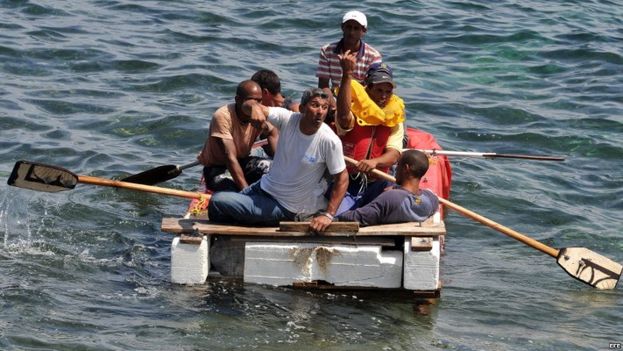
Cuban boat people arrive in Florida / Archive. (EFE)

14ymedio bigger14ymedio, Pedro Campos, Havana, 4 July 2016 — The Colombian government labels the Cuban Adjustment Act “perverse” and calls on other Latin American governments affected by the flow of migrants from the island to pressure Washington to repeal it.

Without a doubt, the countries closest to Cuba are recipients and “victims” of the vast wave of Cuban emigrants trying to get to the United States, and have been forced to confront complex situations in which thousands of people’s lives have been in danger. They have had to offer them shelter, medical care and other services, and all this without the slightest help from the Cuban government, always quick to display its solidarity with humanitarian crises anywhere else in the world.
continue reading

However, the Cuban Adjustment Act is not the main cause of this wave. The main culprit is the populist-authoritarian system, the Statist-wage model, which has exhausted all its possibilities and is advancing irretrievably to its final phase, impoverishing its population more and more and shutting down every prospect of development and prosperity for the majority, given its refusal to democratize the political system and the economy.

The Cuban Adjustment Act, although it does provide a certain stimulus to the exodus, is designed to provide assistance to Cubans who leave, fleeing the regime, and even if it is true that many of those who come to the United States, didn’t dare utter a peep when they were in Cuba, it is not false that everyone leaves in search of the freedom and possibilities that they cannot find in Cuba.

The Cuban people are tired of dealing with so many absurd regulations over their lives and their way of organizing their subsistence and reproduction, always mediated by an all-powerful state, one that makes all decisions, abrogating all the rights of citizens, expropriating all their businesses and factories, large, medium and small, and paying them nothing for the value of their labor, curtailing all their chances for development and imposing on them who they must work for and what their income will be.

The repression against the opposition movement is abusive, because they systematically violate all the freedoms and civil and political rights of citizens. The people cannot choose other leaders. As democratic socialists we have taken a position of not seeking confrontation but rather seeking understanding, and also have been repressed in various ways.

Certainly the Cuban Adjustment Act gives some privileges to Cubans who reach the United States, but if it were repealed, if such privileges did not exist, most likely Cubans would continue coming to the coasts and borders of the United States and would be willing to live there illegally, as hundreds of thousands of other Latinos do, until they can legalize their situation, as long as in Cuba nothing is fixed and we cannot achieve a democratic system of government and a prosperous economic model.

The privileges currently enjoyed by Cubans, through the Cuban Adjustment Act, are given precisely because of the kind of government that exists on the island, which, despite the rapprochement and changes in US policy, continues to have its blinkers on and shows no willingness to change its authoritarian model.

Latin American governments concerned and affected by this situation, willing to pressure the US to change its laws, should also show the same willingness to pressure the Cuban government to change its laws, which prevent the democratization of the system and hinder the economic development of the country.

If the established government in Cuba decided, for the sake of its people and its own history, to initiate a process of democratization of the politics of the country and to take real steps to begin denationalizing the economy, turning it over to society, workers, employers and entrepreneurs, surely most Cubans who are planning to go, would remain, and many of those who have left would be willing to return and invest in their country, directly or indirectly, the capital they have accumulated outside the country.