The identities of those affected, accused of being involved in a form of forced labor, are unknown at this time.
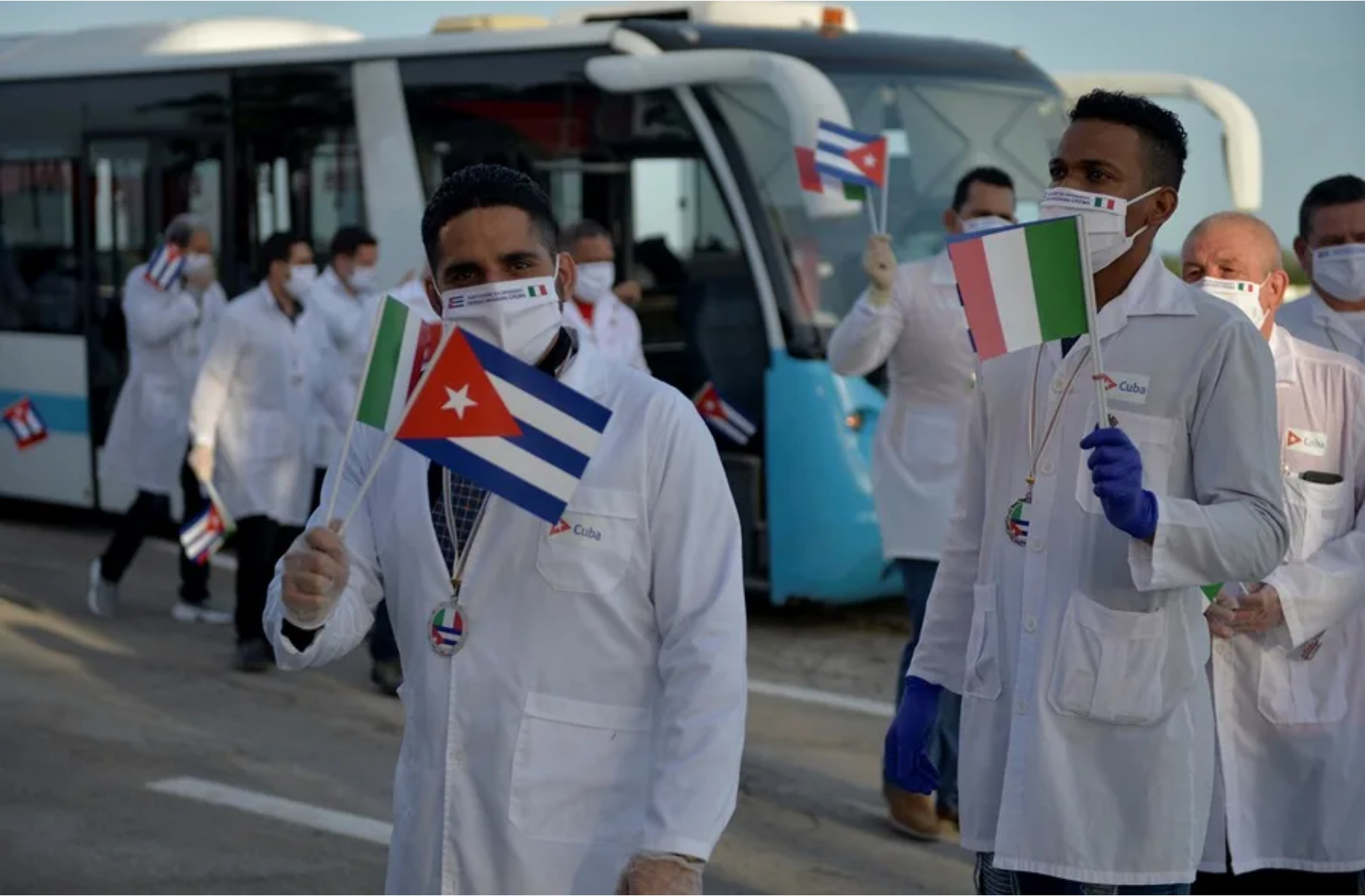
 EFE / 14ymedio, Washington, 4 June 2025 — US Secretary of State Marco Rubio announced on Tuesday the withdrawal of visas from several Central American government officials who collaborate with Cuban medical missions, although he did not reveal their identities.
In an official statement, the head of US diplomacy said that these officials are involved in contracting for Cuban medical missions in their countries, which, according to the Trump administration, constitutes a form of forced labor.
“The Cuban labor export program abuses its participants, enriches the corrupt Cuban regime and deprives the citizens of the island of essential medical care that they greatly need,” said Rubio.
“The Cuban labor export program abuses its participants, enriches the corrupt Cuban regime and deprives the citizens of the island of essential medical care that they greatly need”
With the implementation of these visa restrictions, he added, the United States is sending “a clear message about its commitment to promoting human rights and respect for labor rights around the world.”
Rubio, of Cuban origin, also urged other countries to adopt similar measures
In February, the United States had already extended its policy of restricting visas to people who benefit from what it describes as “labor exploitation” of Cuban workers abroad, including those involved in organizing medical missions.
Cuba, for its part, has categorically rejected Washington’s accusations, defending its medical cooperation program, one of the country’s main sources of foreign exchange, and denouncing what it considers a “campaign” against itself and its health professionals.
Along the same lines, leaders of the Caribbean Community (CARICOM), whose health systems depend to a large extent on Cuban medical personnel, defended the hiring of these professionals and denied that it was a form of exploitation.
Along the same lines, the health systems of the Caribbean Community (CARICOM) depend to a large extent on Cuban medical personnel
At the beginning of May, Rubio held a meeting with, among other Caribbean leaders, the Prime Minister of the Bahamas, with whom he discussed this issue. Philip Davis assured that the health workers working in the archipelago are not victims of slavery and that the program is similar to those carried out by the US to hire temporary workers.
He said, however, that they would study options to pay the Cuban doctors directly and stated that the Secretary of State was satisfied with his explanations. The organization Cuba Archive, however, pointed out that this would not be a solution, since professionals could be forced to give up wages “voluntarily.”
Translated by Regina Anavy
____________
COLLABORATE WITH OUR WORK: The 14ymedio team is committed to practicing serious journalism that reflects Cuba’s reality in all its depth. Thank you for joining us on this long journey. We invite you to continue supporting us by becoming a member of 14ymedio now. Together we can continue transforming journalism in Cuba.