In Cuba, blackouts have turned residents into experts at counting the hours of darkness.
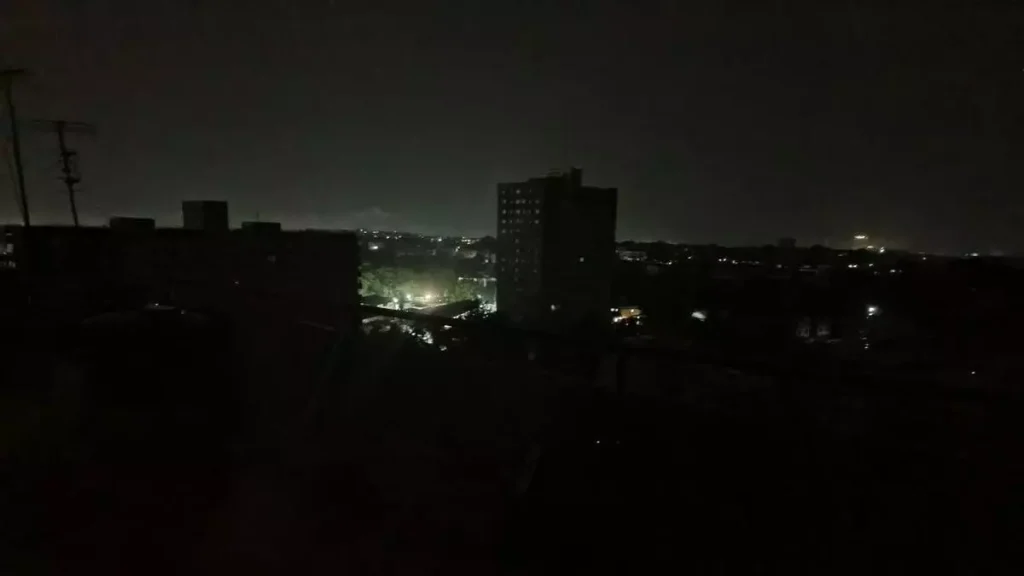
 14ymedio, Yoani Sánchez, Havana, October 18, 2026 / On Friday, at 5:30 in the afternoon, an invisible clock started ticking. It had no hands, made no sound, and no one knew when it would stop. Its mechanism was simple: to count every minute without electricity in our Havana neighborhood. This Sunday, it would finish its journey after ticking for 37 hours and 19 minutes.
During that time, this zone of high-rise buildings was left suspended in a kind of parentheses. Saturday ceased to be Saturday and became “the day entirely without electricity.” Sunday began as “the second daybreak without power” and finally ended with the return of electricity.
The sad thing is that we’ve learned to measure the absence of electricity with a precision we apply to almost nothing else. We don’t know how many hours we lose waiting for a bus, how much time we’ve dedicated to searching for medicine, or how many days of our lives have been spent standing in lines. But we can say, without hesitation, that we’ve been without power for 18 hours and 43 minutes.
We’ve also developed a strange hierarchy of suffering. Someone who’s been without electricity for 12 hours listens with a certain embarrassment to someone who’s accumulated 24 hours. Someone who’s been without it for 30 seems to have the right to interrupt any conversation. And there’s always someone, from another province, like Matanzas, ready to remind us that what we’re going through is nothing, because they’ve been without it for more than 70.
Each activity depends on an intangible authorization that is granted when the current arrives and is revoked with its subsequent disappearance.
Electricity ends up occupying more space in our minds when it iss absent than when it is present. In addition, a blackout robs us of the ability to improvise. We can no longer freely decide when to read, to cook, to work, or simply to do nothing. Every activity depends on an intangible authorization granted when the power arrives and is revoked with its next disappearance.
That is why, this morning, when the power finally came back on, I didn’t exactly feel relief, but rather urgency. I had to charge the batteries, do the laundry, get ahead on everything that needed energy, make the most of every watt, and prepare for the next blackout. I looked at the clock that only my neighbors and I could see: 37 hours and 19 minutes had passed.
I prepared myself to start counting again.
______________________
COLLABORATE WITH OUR WORK: The 14ymedio team is committed to practicing serious journalism that reflects Cuba’s reality in all its depth. Thank you for joining us on this long journey. We invite you to continue supporting us by becoming a member of 14ymedio now. Together we can continue transforming journalism in Cuba.