Experts also point to the “hyper-centralization” that the State maintains over the sector as an obstacle.
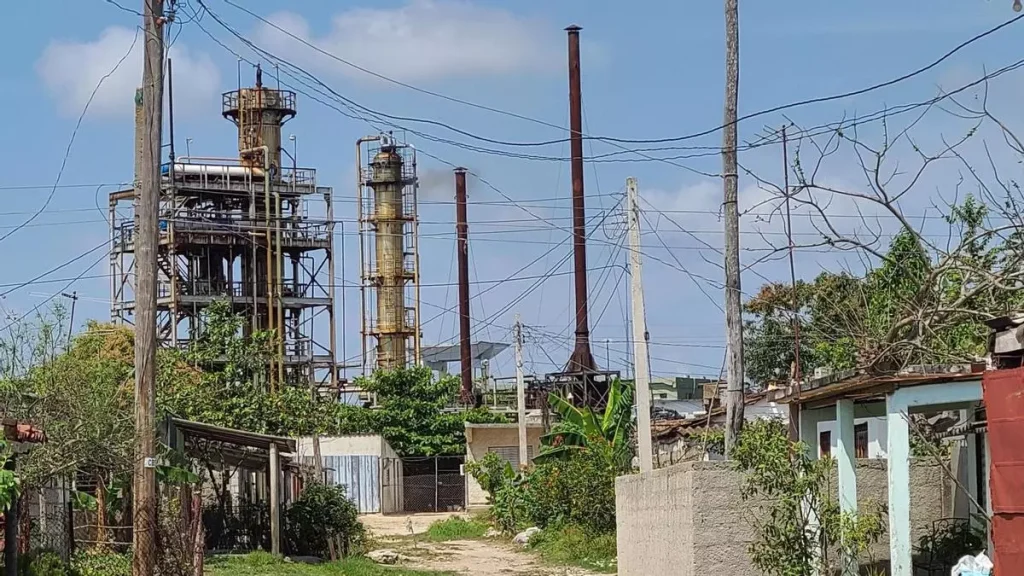
 14ymedio, Madrid, October 19, 2026 – State hyper-centralization and the private sector’s financial inability to undertake the large investments required by the hydrocarbon industry are the main threats facing a sector that completes its opening this Monday, with the entry into force of the new legislation announced seven days ago.
The regulatory package published last Monday in Official Gazette No. 85, which also encourages investment by Cubans and foreigners in the oil and gas sectors, allows fuel to be sold directly to the public and authorizes refineries to market their products wholesale, among other things.
Speaking to the Spanish news agency EFE, Cuban economist Daniel Torralbas warns that “regulatory authorization will not resolve the financial bottleneck, because this is a capital-intensive type of activity.” The expert has argued that “the Cuban private sector is small by definition,” and that this industry requires “investing a great deal of money and a considerable amount in technology, machinery, and training.”
Where “private-sector participation in the oil value chain can indeed expand is in areas where it has already begun investing: marketing, importing, storing, and selling fuels”
“This is an activity,” he added, “for large industries and companies that depend on economies of scale, and the Cuban economy will not be able to meet the financing needs involved.” In his view, “private-sector participation in the oil value chain can indeed expand in areas where it has already begun investing: marketing, importing, storing, and selling fuels.”
The agency published these statements as figures for fuel exports from the United States to the Island were being consolidated. Despite a downward revision, the volumes and prices involved continue to rise. Through August, the Island had imported petroleum derivatives worth $231.7 million.
These shipments are handled by private companies on the Island that have received authorization from the regime, which has been granting such permits since February, following the oil blockade decreed by Donald Trump. The Republican administration, in turn, gave U.S. companies permission to sell fuel to the Island, provided it was destined for the private sector and did not end up in the hands of the State, a condition that is not being met in practice.
In July, Prime Minister Manuel Marrero announced that more than 100 private companies had been authorized to market fuels wholesale. He also reported the approval of an initial business venture with foreign investment to import, distribute, and sell fuel. Although he did not identify the company, he was presumably referring to A granel, a private enterprise with foreign capital whose facilities 14ymedio visited on Avenida del Puerto in Havana.
So far in 2026, the trade has been driven mainly by private companies on the Island that transport diesel and gasoline to meet their needs, particularly those related to transportation or their own businesses.
Cuban economist Omar Everleny Pérez, also consulted by EFE, expressed regret that the State continues to refrain from liberalizing the hydrocarbons sector as would be desirable. The law, he said, “seeks to organize and normalize everything related to oil and gas exploration, but the regime reserves for itself ‘very strict control and hyper-centralization’ over these resources.”
“All permits for anything anyone wants to do must be approved at the highest levels of government (…), which continues to use rhetoric emphasizing extensive control“
All permits for anything anyone wants to do must be approved at the highest levels of government (…), which continues to use rhetoric emphasizing extensive control,” the specialist alleges.
Pedro Abigantus León, director of Oil and Gas Investments and Business at the Ministry of Energy and Mines, explained when presenting the new regulations a week ago that the reform “covers a value chain that begins with hydrocarbon exploration and extraction.” He said it seeks to ensure that “the development of the sector does not depend solely on the incorporation of capital for extraction operations,” while also facilitating the mobilization of “national capacities in the various services and activities required by the industry.”
Pérez, however, argues that “although when discussing the participants it is said that both individuals and legal entities can take part, in practice this is a business for large companies.” That kind of business ecosystem does not currently exist on the Island, although foreign capital could make it possible.
Translated by Regina Anavy
______________________
COLLABORATE WITH OUR WORK: The 14ymedio team is committed to practicing serious journalism that reflects Cuba’s reality in all its depth. Thank you for joining us on this long journey. We invite you to continue supporting us by becoming a member of 14ymedio now. Together we can continue transforming journalism in Cuba.