The businessman turned the destitution of exile into an empire and left as his legacy the ability of Cubans to rebuild themselves far from their country
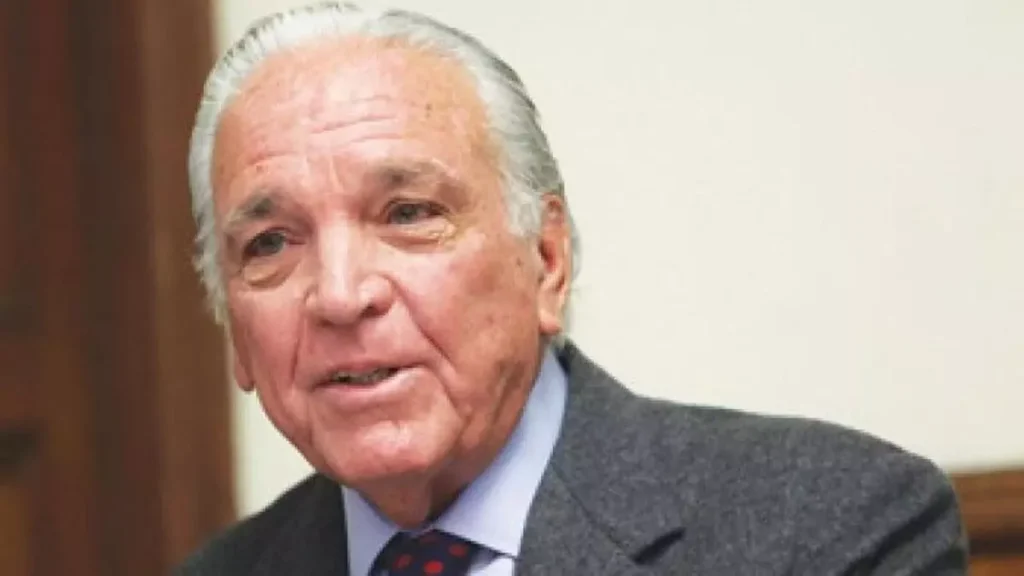
 14ymedio, Rolando Gallardo, Madrid, August 5, 2026 / Alfonso Fanjul remembered with perfect clarity the day his world crumbled. He was sitting in the family office in Havana, yellow notepad and pencil in hand, when Fidel Castro’s men entered to discuss the fate of the company. They sat down with the lawyers, talked for a while, and then the leader of the delegation picked up a machine gun, placed it on the table, pointed to the map where the family’s properties were marked, and declared: “We’re going to dismantle everything.” Fanjul was barely 22 years old. He had just graduated from Fordham University, ready to inherit an empire of ten sugar mills, three distilleries, and properties scattered throughout the island. Instead, he inherited exile.
His story, told in this cold way, might seem exceptional. And in a sense, it was: few Cubans ended up building one of the largest sugar fortunes on the planet. But at its core, Fanjul’s story is the story of tens of thousands of Cubans who, in 1959 and the years that followed, saw the work of generations—a house, a business, a farm, a workshop—vanish overnight under the same pretext: the revolution claimed everything. What distinguishes Fanjul is not having lost more than others, but having demonstrated, with the force of six decades of success, that that confiscation had a limit that not even machine guns could cross.
They took away his land, his sugar mills, his mansions, but they couldn’t confiscate his knowledge. The Fanjul family had been in Cuba since the mid-19th century, when a small group of farmers of Asturian origin set out to extract sugar from sugarcane. A century of experience, of trial and error, of knowing how to read a harvest and negotiate a loan, couldn’t be contained by any expropriation decree. That knowledge traveled with Alfonso Fanjul to Florida, and with a mere $640,000 raised among several exiles, he rebuilt a sugar mill by Lake Okeechobee in Palm Beach County. With his three brothers, he founded Florida Crystals and started from scratch, but they weren’t starting from nothing: they were building upon generations of entrepreneurial acumen that no regime can nationalize.
The talent dispersed around the world in the Cuban diaspora, often forged in exile and against all odds, remains an undiminished asset, waiting for a country where it can be reinvested.
With that reconstruction came wealth, and with wealth, the ability to finance his own dreams and those of others. For decades, Fanjul was one of the main financial backers of the anti-Castro movement in exile, channeling resources to organizations and causes that sought to pressure the Havana regime. He didn’t fight with a rifle, but with the tool he knew best: the capital and influence he had built with his own hands.
He was, above all, a pragmatic man. This pragmatism led him, in the final stage of his life, to explore a possible opening toward Cuba, a stance that generated discomfort and even ruptures with some of the more militant members of the exile community. Pragmatism, by definition, is not guided by sentimentality, and this—like every decision that prioritizes calculation over nostalgia—generates misunderstandings. But it is also, probably, that same quality that allowed him not to be paralyzed by loss and, instead, to construct something new.
Therein lies the most profound lesson of this story for the Cuba to come. Fanjul was not only a successful businessman: he was living proof that the Cuban character—builder, insatiable, lover of prosperity—survives dispossession. Wealth can be confiscated; the instinct to create it cannot. That is precisely the promise that should underpin any project of national reconstruction: that the talent scattered around the world in the Cuban diaspora, forged often in exile and against all odds, remains an intact asset, waiting for a country in which to reinvest it.
Alfonso Fanjul died at 89, as all men die. It is the natural course of life, and in that sense, his death is nothing exceptional. But for Cubans who still dream of a prosperous island, his passing is also a reminder: the Cuba that Alfonso Fanjul left behind in 1959 remains, six decades later, held hostage by the same people who one day placed a machine gun on a table and decided to dismantle everything. The sugar king is dead. But the character that made him king lives on in every Cuban who insists on building a better future outside of Cuba, while waiting for the day they can do so at home.
______________________
COLLABORATE WITH OUR WORK: The 14ymedio team is committed to practicing serious journalism that reflects Cuba’s reality in all its depth. Thank you for joining us on this long journey. We invite you to continue supporting us by becoming a member of 14ymedio now. Together we can continue transforming journalism in Cuba.