In San Lázaro, a young man slumped against a wall barely manages to attract the attention of passersby.
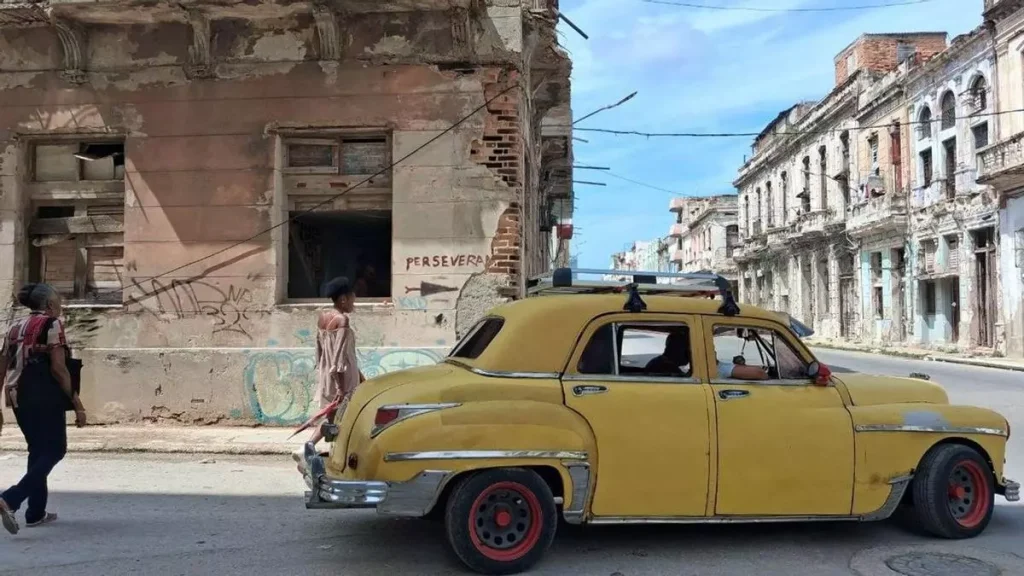
 14ymedio, Havana, Yoani Sánchez, September 27, 2026 / In San Lázaro, you have to look both up and down at the same time. Up, to avoid the sight of gutted balconies, exposed beams, and pieces of buildings that seem to be calculating when to collapse. Down, to avoid tripping over the holes in the sidewalk and discovering, from time to time, someone else who has also fallen.
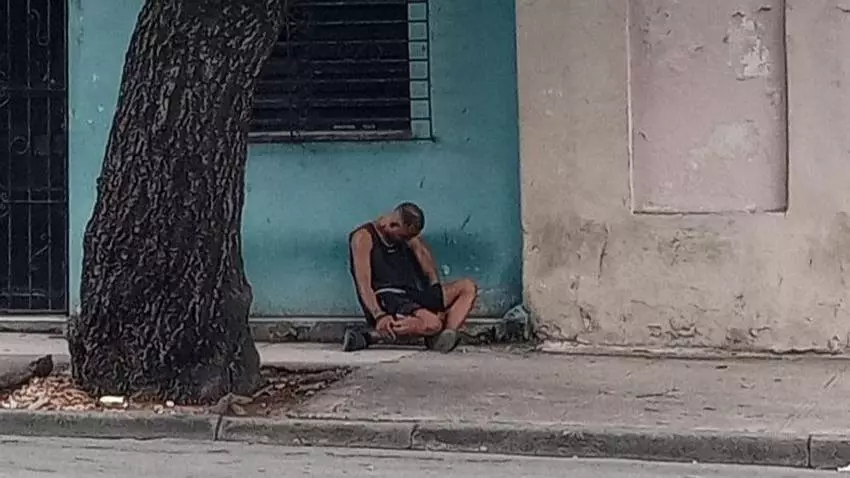
Next to a tree and against the blue wall of a house, a young man sits on the ground. He is strong, wearing a black T-shirt and shorts, but his body is slumped, his head bowed on his chest, in a posture that Havana residents have come to recognize. Lacking a diagnosis, those who pass by the area have a street word for situations like this: “on drugs.”
Life goes on just a few meters away. Pedestrians, classic cars, and tricycles pass by. No one seems too surprised. Perhaps that is the most unsettling thing: these scenes have ceased to be exceptional in some areas of Havana.
In the absence of a diagnosis, those who pass through the area already have a street word for situations like this: “enchemicado” (‘chemicaled’).
The list included neighborhoods in Playa, Marianao, La Lisa, Boyeros, Old Havana, San Miguel del Padrón, and Cerro. Central Havana needed no introduction: there, as even the official spokesman Humberto López admitted at the time, “drugs exist, everyone knows it, and they’ve existed for years.” Authorities also acknowledged their concern about drug use among minors.
Since then, the geography seems to have become less precise because the problem is now occurring in broad daylight and on busy avenues. Just a few weeks ago, at the corner of Reina and Galiano, two young men were collapsed under the influence of the drug. While they were incapacitated, a man took advantage of the situation to steal one of their backpacks and disappeared into the crowd. The incident happened the day after a drug raid on that same street.

Now the scene repeats itself, with different coordinates: San Lázaro. Few avenues could offer a more fitting backdrop for this young man paralyzed by the drug, because the entire street resembles an open wound that cuts through the city from Old Havana to Vedado. On both sides, are buildings surviving with amputated balconies, walls without plaster, boarded-up windows, and supports that long ago ceased to aspire to elegance, focusing instead simply on not collapsing.
On a corner, an old yellow car drives past a facade riddled with rubble. On the wall, bearing the street name, also mutilated, only one word survives: “Persevere.” A little further on, the young man will remain, for hours, slumped against a wall.
Read More Havana Chronicles Here
______________________
COLLABORATE WITH OUR WORK: The 14ymedio team is committed to practicing serious journalism that reflects Cuba’s reality in all its depth. Thank you for joining us on this long journey. We invite you to continue supporting us by becoming a member of 14ymedio now. Together we can continue transforming journalism in Cuba.