Pedro Monreal maintains that liberalization will remain limited as long as the State maintains control over the rules governing access and decision-making.
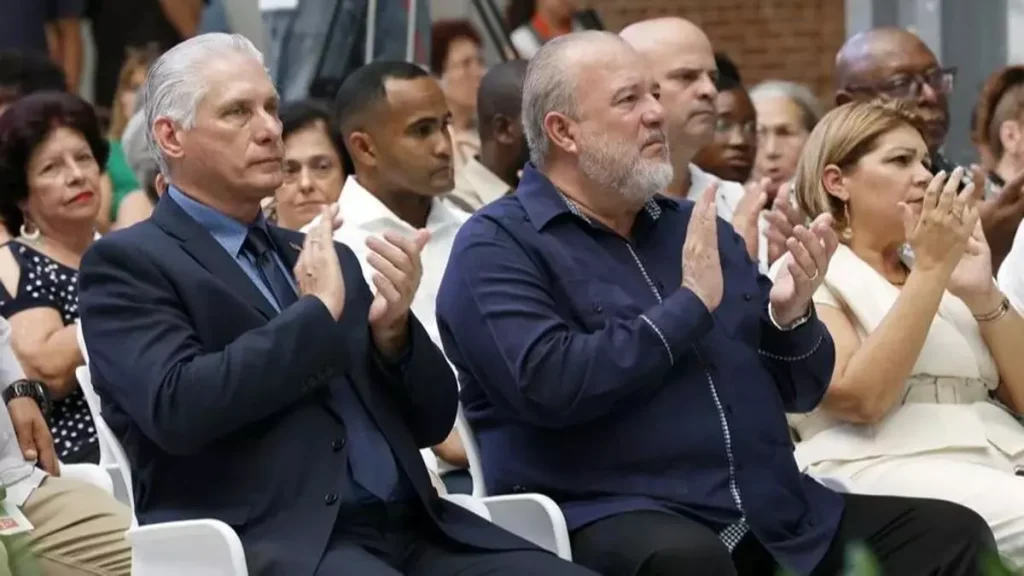
 EFE/14ymedio, Havana, September 28, 2026 – Cuba’s Prime Minister, Manuel Marrero, reported that, of the package of 176 economic and social reforms approved by the Government in June, 89% (158) are currently being implemented, with 197 supporting legal regulations, according to reports by Cuba’s official media on Sunday.
These measures seek to liberalize and decentralize the Cuban economy amid the profound polycrisis the Island has experienced for decades, attributed to both internal and external factors. The package of reforms has been criticized by independent economists, including Spain-based expert Pedro Monreal, who maintains that without political reforms, the economic ones are unlikely to be effective.
“The 176 measures start from a State-based foundation that remains essentially intact,” Monreal has pointed out. “If it retains control over licenses, foreign currency, and inputs, the State enterprise does not compete: it rations. The non-state sector may be authorized and still remain subordinate. Handing over the management of public assets without modifying the ownership structure, the residual capacity for decision-making, or the rules governing access does not create parity either, but rather guardianship over State assets.”
“If it retains control over licenses, foreign currency, and inputs, the State enterprise does not compete: it rations”
This Sunday, at the conclusion of a training session on the reforms with the presidents of state Business Groups and Boards of Directors, the Cuban prime minister declared that “changes that will boost productive capacities are already becoming apparent, and with this there will be greater supply, which going forward should contribute to a gradual reduction in prices and to containing inflation, which causes so much damage.”
Regarding the reforms, Marrero stressed that their objective is for the State enterprise to be “more agile, efficient, and coordinated” with the rest of the economy and insisted on “taking advantage of the opportunities” contained in Decree Law 114, which regulates associations between State and non-state business entities, with the aim of “increasing the production of goods and services, replacing imports, making use of available productive capacities, increasing business competitiveness, and generating jobs.”
The head of government also pointed out that transforming the State enterprise into a commercial company “through shares or ownership interests is not synonymous with privatization.” In this regard, he indicated that the aim is to “separate ownership and management, attract private, national, and foreign capital, and improve efficiency, competitiveness, and exports.”
The package of 176 economic and social reforms now underway, grouped into 23 thematic areas, focuses, among other aspects, on decentralizing to the municipal level a series of responsibilities, including administrative, human resources, budgetary, financial, local tax, environmental, and climate-change management, as well as project management, knowledge, and training. It also contemplates changes intended to stimulate agriculture, foreign trade, private and foreign investment, and the real estate sector, in addition to decentralizing decision-making, granting greater “autonomy” to State enterprises, and authorizing private capital to participate in financial activities.
“Coordinating an economy does not mean authorizing coexistence, but creating interdependence among actors under common rules governing access, contracting, risk, and decision-making”
Monreal’s criticisms, for their part, focus on the need for an economic model that coordinates, rather than merely “allows.” “Coordinating an economy does not mean authorizing coexistence, but creating interdependence among actors under common rules governing access, contracting, risk, and decision-making. That is where the main flaw lies. Easing an annex of permitted activities or granting permits unilaterally facilitates entry but does not create linkages,” the economist says.
The expert has also focused his criticism on the aforementioned Point 17, in which he sees “the ‘crony capitalism’ of the Russian transition.” “With the rule of law nonexistent, the accelerated privatization of State enterprises without robust legal safeguards usually ends with State assets being captured by insiders well connected to those in power. One thing leads to another without intermediate steps.”
These reforms have arrived at a time when Cuba is mired in a serious crisis that has lasted six years, during which the Island’s Gross Domestic Product has contracted by 15%, according to official figures. The situation has worsened since January, when the U.S. began applying a policy of “maximum pressure” on Cuba with an oil blockade and a series of additional sanctions aimed at bringing about political and economic changes by the regime.
Translated by Regina Anavy
______________________
COLLABORATE WITH OUR WORK: The 14ymedio team is committed to practicing serious journalism that reflects Cuba’s reality in all its depth. Thank you for joining us on this long journey. We invite you to continue supporting us by becoming a member of 14ymedio now. Together we can continue transforming journalism in Cuba.