The Portuguese construction company Engimov, in charge of the project, has fenced off the land next to the Tallapiedra thermoelectric plant in Havana
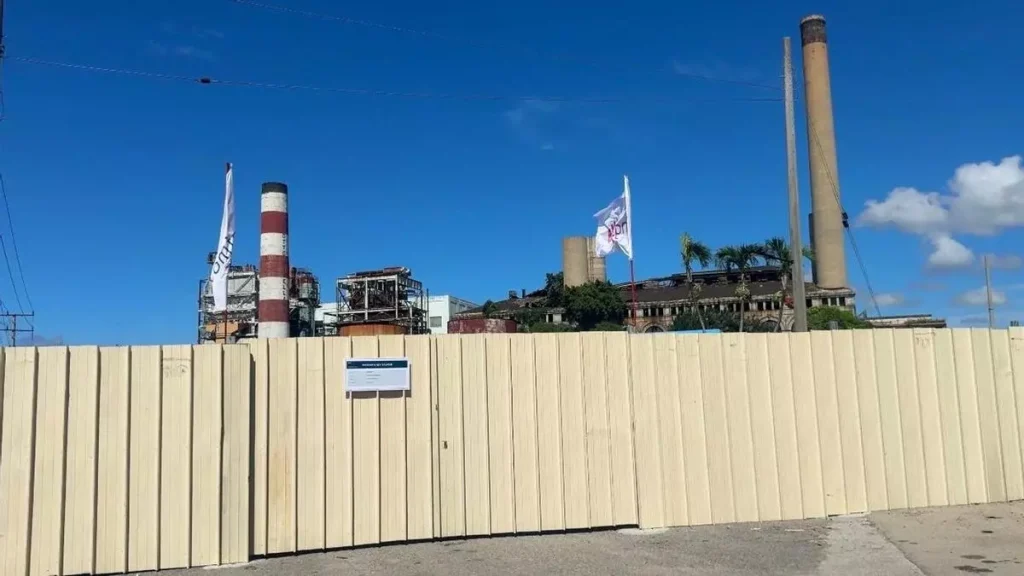
 14ymedio, Darío Hernández, Havana/Madrid, September 28, 2026 / The perimeter of the former Tallapiedra thermoelectric plant, in Old Havana, has finally been fenced off so that work announced almost ten years ago can begin. Over this decade, the plant’s old smokestacks have gone dark for good; one day they will stand in contrast to the minarets of the King Salman Mosque. The complex is expected to have prayer halls with capacity for some 500 people, a public library, a dining hall, green spaces and community rooms.
According to official sources, the estimated budget is $9.3 million, provided by Riyadh through the Saudi Fund for Development, although the investor is formally the Office of the Historian, which manages the funds.
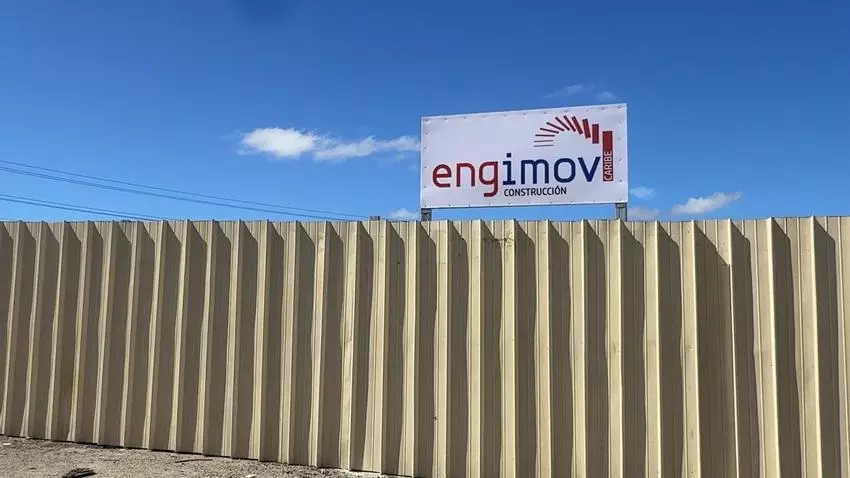
The site has recently been marked with signage, as this newspaper was able to verify, and a sign displays the name of the project – King Salman Mosque – the construction permit number and the names of the companies carrying out the project. The design is by Restaura, the specialized entity of the Office of the Historian of the City of Havana (Ohch) that carries out the main conservation, restoration and urban development work in the capital’s Historic Center. The construction itself is being carried out by the builder Engimov Caribe.
The company is headquartered in the Mariel Special Development Zone (ZEDM) and its capital is 100% Portuguese, as the builder states on its own website. In addition to civil works – including industrial and logistics buildings – it collaborates on residential buildings and hotels, and it also sells – through its own website – kitchen furniture and building materials.
The project’s file number indicates that the permit was obtained in 2020, although talk of this construction began almost four years earlier. As early as 2014, initial plans were circulating to build a mosque in Havana whose look would recall that of Ortaköy, in Istanbul.
The initiative came from Turkey, which was prepared to put up sufficient capital, and from the insistence of Recep Tayyip Erdogan, who at the end of that year insisted on a pre-Columbian Muslim presence on the island. “Muslims’ contact with America dates back to the 12th century. Muslims discovered America in 1178. It wasn’t Christopher Columbus. Islam spread across the American continent even before Columbus arrived,” he said. The president, who remains in office, stated: “Columbus recounts that there was a mosque on a hill on the coast of Cuba. I am going to talk with my Cuban brothers about how fitting it would be to build a mosque on top of that hill.”
It is not very clear why the plans came to nothing, since the Cuban government, which had initially given a flat no, later backtracked and gave the green light to a project that never materialized. At the time, the number of Muslims living on the island was estimated at about 5,000; their meeting and prayer place in the capital was the Abdallah Mosque, on Oficios Street. In 2016, the first plans for the new construction project began to circulate, by then financed by Saudi Arabia.
The idea was to build a large complex that could hold some 10,000 worshippers, the largest in Latin America. According to the ambassador in Riyadh, Vladimir González, the island had “a small Muslim community in the country; very organized. I feel honored to make life easier for them as Muslims in Cuba,” he said in 2022.
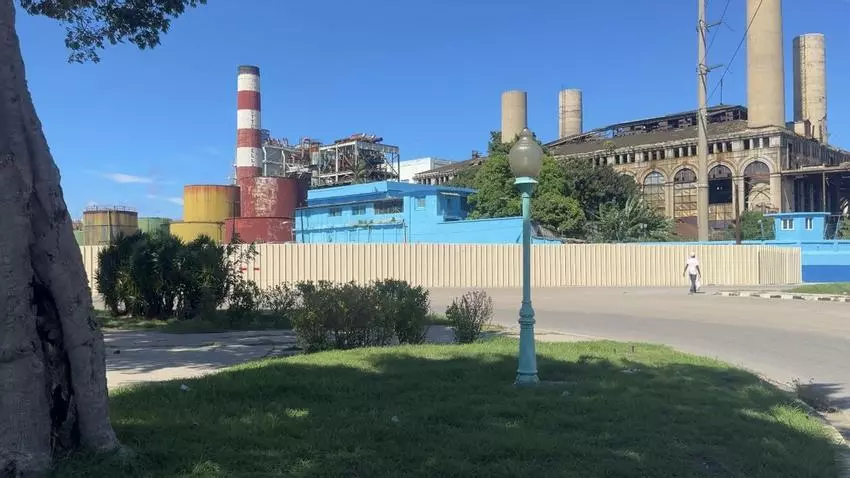
In recent years, the Saudi fund has financed seven projects on the island related to health, sanitation and infrastructure, with a total value of some $193.3 million, in addition to the amount earmarked for the mosque. Furthermore, in 2021, a source from the Office of the Historian of Havana told 14ymedio that there was a loan of $26.6 million for the Program for the Rehabilitation and Construction of Social Works, but that resources had been taken from it for the Fidel Castro Ruz Center, in El Vedado, which opened in December of that year.
“The loan was supposed to be for housing, but they took part of it for the Center and for the Capitol too,” said that source. This made it possible to raise the pharaonic building dedicated to Fidel Castro. In addition, part of the money went to the project for the future King Salman Mosque, which even now, in 2026, does not yet have its foundations laid.
Translated by GH.
______________________
COLLABORATE WITH OUR WORK: The 14ymedio team is committed to practicing serious journalism that reflects Cuba’s reality in all its depth. Thank you for joining us on this long journey. We invite you to continue supporting us by becoming a member of 14ymedio now. Together we can continue transforming journalism in Cuba.