Of the 40,000 migrants from the Island who have settled in that country over the past five years, 99% work illegally.
 14ymedio, Havana, August 19, 2026 – Suriname has begun to emerge as a migration destination for Cubans in 2026. The country, neighboring Guyana, where the oil boom caused more than 135,000 people from the Island to migrate in 2025, is becoming one of the most requested destinations at travel agencies in the country.
Pedro Escalante, Operations Director of DP Travels, based in Holguín, tells 14ymedio that the smallest country in South America began to attract interest among the Cuban population several months ago. “The increase in inquiries about Suriname has been clearer since May, although the interest did not appear overnight,” he says. “At first they were isolated inquiries and, later, we began receiving more questions related to flight availability, entry requirements and possibilities for traveling,” he adds.
Escalante emphasizes that “during 2025 and, especially, in 2026 we have noticed that the destination began to appear more frequently in conversations with clients.”
According to the agency’s figures, there has been steady growth and so far this year, through this Wednesday, August 19, the number of Cubans who traveled to Suriname with DP Travels already exceeds by almost one third those recorded throughout 2025, although the numbers remain small. “Our records show approximately that in 2024, 32 people traveled to that country; in 2025, 54, and in 2026, from January to August, 73,” Escalante details.
“Our records show approximately that in 2024, 32 people traveled to that country; in 2025, 54, and in 2026, from January to August, 73”
Guyana also shows a sustained increase in travel carried out by the agency since 2024. That year, 122 Cubans traveled with the company; a year later, 178, and so far this year, 224.
“We have begun to notice greater interest in Suriname,” he says, although the reasons, according to his experience, are different. “Some clients see it as a destination to remain in, while others consider it part of a broader route within South America,” he says.
In the case of those who arrive in the country to settle, most of the time they do so irregularly. They enter the country as tourists and begin looking for some kind of employment. In this regard, DP Travels points out that other services promise to obtain a visa, a job or residency in exchange for money, “when in reality no one can guarantee a decision that belongs to an immigration authority.”
In those cases, Cubans accept the work they find and receive whatever they are offered. Last May, Starnieuws, Suriname’s main media outlet, reported that 99% of Cubans living in that country work illegally.
Of the 40,000 Cubans who have settled in Suriname since 2020, according to the report, only 248 have applied for work permits, according to figures from that country’s Ministry of Health, Welfare and Labor.
Of the 40,000 Cubans who have settled in Suriname since 2020, according to the report, only 248 have applied for work permits
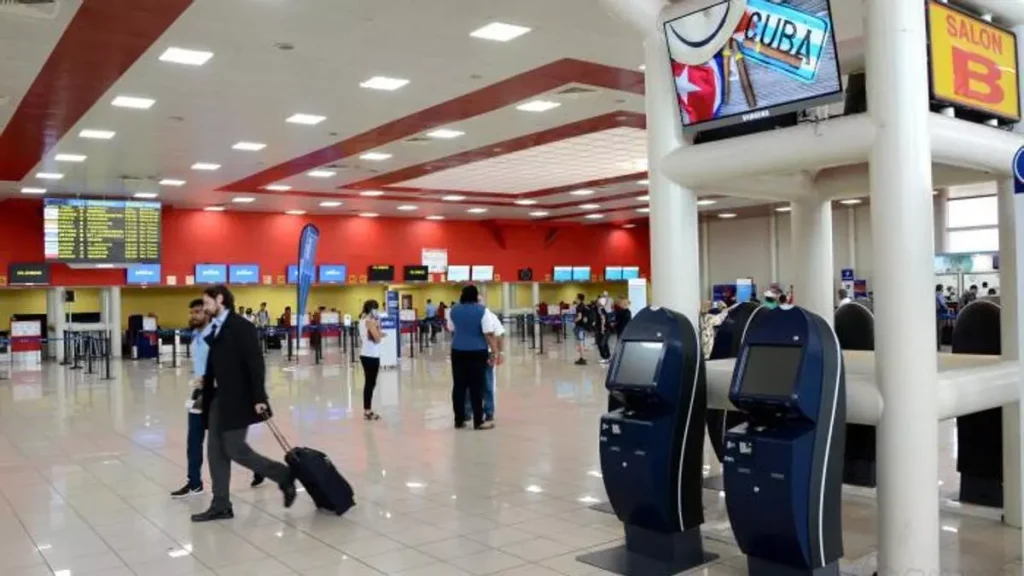
Most enter via Panama on flights operated by Copa. At Tocumen Airport, flights to Paramaribo are usually full, “mainly because of Cubans who frequently travel to Suriname with their entire families,” the outlet maintains, adding that of the 40,000 Cubans in the country, only 1,292 have legal status.
“In some cases, clients already have a trade before traveling and their intention is to use that experience to look for employment opportunities,” Escalante indicates, noting, based on the contact he has been able to establish with some of the travelers, that they try to enroll in sectors such as “construction, services, commerce, restaurants, transportation, informal work and other trades.”
If they do not take those jobs, the alternative is to return to an Island where opportunities are increasingly scarce and where a crisis is deepening rapidly and irreversibly. “We have seen an increase in inquiries and demand for certain destinations,” the agency says, emphasizing that, although “it is difficult to attribute each trip exclusively to Cuba’s economic or social situation, it would be naïve to ignore that the country’s current conditions influence the decisions of many people.”
The Operations Director of DP Travels asserts that in conversations with clients, “concerns related to the economic situation, employment, income, the possibility of providing financial assistance to their families and the search for better opportunities frequently arise.”
“Concerns related to the economic situation, employment, and income frequently arise”
“If I had to make an estimate based exclusively on what we see at our agency, I would say approximately that 70% travel with a primarily migratory intention or with the idea of exploring possibilities for settling, while 30% do so for tourism, family visits, business or other reasons,” Escalante indicates.
Finally, the agency, with 12 years of experience, points out that it faces some difficulties because “the Cuban context makes working with international travel particularly complex, and changes in departure and entry conditions, documentation and routes can directly affect both the client and the agency.”
It also faces problems in an environment filled with distrust due to the constant cases of fraud. Faced with a population seeking to leave the country, desperation has become fertile ground for dozens of Cubans to be scammed with fake tickets, nonexistent reservations, supposed agents, visas, lodging or immigration processes.
“We have received comments from many clients, as was the case with one who was scammed out of $7,500. She lost her house and, with two children, had to rent, and over time managed to leave the country again with our agency. Many, before reaching us, also recount negative experiences with people who offered supposed services related to travel,” he warns.
Translated by Regina Anavy
______________________
COLLABORATE WITH OUR WORK: The 14ymedio team is committed to practicing serious journalism that reflects Cuba’s reality in all its depth. Thank you for joining us on this long journey. We invite you to continue supporting us by becoming a member of 14ymedio now. Together we can continue transforming journalism in Cuba.