Absence Breakdown and an Unforgettable Brief Trip / Miriam Celaya

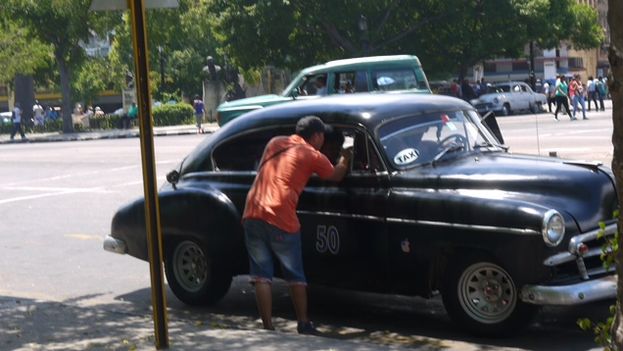
Miami. Image taken from the internet

Another absence breakdown in my old blog, once again abandoned for more demanding reasons: obligations I could not postpone, having to do with work, as happens to individuals whose income is dependent on their jobs, and a brief (very brief!) one-week trip to Miami, because I needed to finish several articles and a presentation at an event.

I could not relate how rushed my trip to the “endearing monster” was, though my Cuban friends in Miami assured me that I was not in the US, but “in Miami,” which feels the same but is not. And indeed, one feels so encircled by Cuban surroundings in Miami that –if not for such a difference in the setting–it would seem you haven’t left Havana.

I visited Radio and TV Marti, I was on various shows of their causes, I met some of the journalists, commentators and friends who were just voices on the phone up to then, and I reunited with colleagues, journalists and bloggers and other émigrés, like Luis Felipe and his wife, whom I was able to hug.

I was at Cubanet for a very short while, where I also felt welcomed by colleagues in the writing profession; I met again with my friend Hugo Landa, whom I had met in Stockholm in 2013. I spent a very enjoyable time with all of them.

I laughed and cried, when I was in Miami, overwhelmed by the emotions of long gatherings with cousins I grew up with, who left Cuba recently, and with very dear friends, one of whom I hadn’t seen in 20 years. I also had the privilege to visit my father’s favorite brother, his playmate as a child and a friend in their youth, who left Cuba for good 52 years ago and they never saw each other again.

It was at once moving and wonderful to see that over half a century of barbarism and separation imposed by the Cuban political power have not been able to erase the love between us. They wished to divide us and have only managed to multiply us beyond the Florida Straight. While it is true that it’s come at a high cost, the hatred has failed.

I haven’t been able to answer the question “how is Miami?” frequently asked by relatives and friends on my return to Cuba. Miami is indescribable, at least for me. It’s not my cradle and will never be my home, it is true, but in that city the energy and strength of the people of this Island vibrate, the people who have made Miami grow and contributed to its prosperity, with their tremendous capacity for work, so it will no longer be alien to me.

Miami surrounded me with sincere affection, I was not an intruder nor an outsider, and maybe that’s why I don’t know–nor can, nor want–to define it.

Just two words come to my lips when someone asks my impression of her: love and hope. That is what Miami means to me.

Translated by Norma Whiting

7 July 2014

The Maleconazo Seen Through the Blinds / 14ymedio, Ignacio Varona

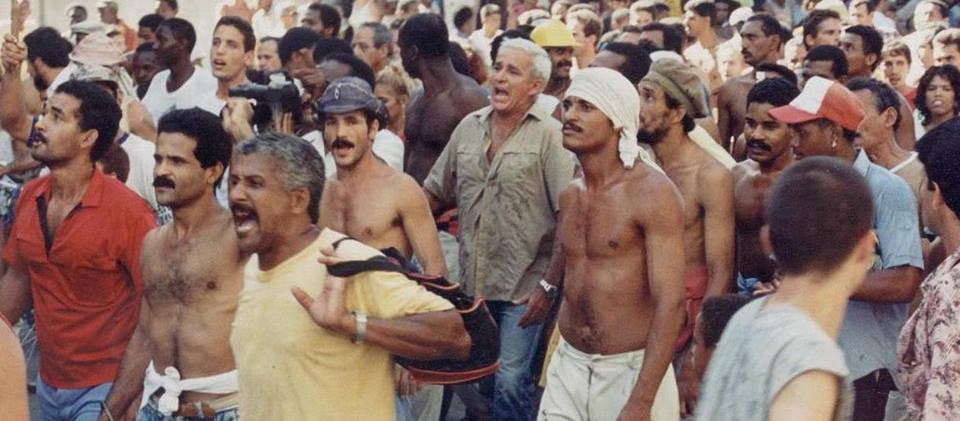
1000472_474759539275644_1332749336_n14ymedio, Ignacio Varona, 5 August, 2014 – Amalia Gutierrez was living on Gervasio Street in the San Leopoldo neighborhood when she heard the shouting on the other side of her blinds. Roberto Pascual was a patient waiting for dialysis outside the Hermanos Ameijeiras Hospital. And Vivian Bustamante sold illegal pizzas near the Spanish Embassy. They were three coincidental witnesses, that 5 August 1994, of the greatest social explosion in Cuba in the last 55 years. Nobody knew what was happening, but all three were afraid, curious and anxious.

“I saw a ton of people come running, scantily clad, the way we all dressed in those years,” said the illegal vendor. “I was afraid and took off running and hid myself in a stairwell right on the Malecon,” relates the woman who says she saw “the most amazing thing” in her life that Friday. At the entrance to an upstairs apartment she found a niche that had once held a water pump, and hid herself there. Through a slot in the door she could see “carrying on” and later the repression. She didn’t come out of that hole until nightfall

It all started days earlier. The boats that crossed Havana Bay to Regla and Casablanca were hijacked three times in a less than a fortnight, with the objective of emigrating to the United States. All over the city there was a rumor of another possible Mariel Boatlift and an opening of the borders to everyone who wanted to leave.

Vivian tells it in her own words. “We were living in a very hard time, I had the trick of brushing my teeth to make myself think I’d eaten so I could sleep on an empty stomach, but there was a time when there wasn’t even toothpaste.” Her story is common among those who lived through the Special Period. However, the social explosion caught her off guard. “I never imagined that this was a protest, I thought at first people were rushing to watch some brawl, but later I realized it was something more serious.”

“I thought at first people were rushing to watch some brawl, but later I realized it was something more serious.”

Roberto died ten years ago, but his story of those days continues to be told in the family. His son had never seen his father so frightened as on that 5th of August twenty years ago. “We were waiting for his dialysis when the nurses started to close the doors of the Emergency Room and they called the patients because we were waiting outside,” he explains about those first minutes in which they began to realize something was happening. A huge crowd was arming themselves and no one knew what to tell us about what was happening.”

Several doctors were coming and going whispering. A cleaning lady, who’d made friends with Roberto, called him aside. “The people have come out in the streets,” said the woman, smiling from ear to ear, “now they’ll have them on the run,” she finished. “Afterwards we knew that some doctors and employees in Cuba’s biggest hospital had gone to the highest floors to look out the windows at the pitched battle raging down there.” That day Roberto stayed until late, until they carried out his procedure.

Amalia experienced it with the greatest intensity. The windows of her house gave directly on the Gervasio Street near San Lazaro. Her door was open when she started to see people running and screaming. “The most recalcitrant members of the CDR (Committee for the Defense of the Revolution) were hiding themselves, a lot of people closed their doors so as not to have any trouble,” she remembers, speaking about that day when everything was about to change.

“There were a lot of very poor people in particular, you could see it in what they were wearing, they were shouting and some were carrying sticks or stones.” She thinks she recognized several neighbors from her area also in the crowd.

The repression was carried out by paramilitaries hiding under the clothes of construction workers.

The repression of that popular protest was carried out by the police and paramilitaries hiding under the clothes of construction workers. The Blas Roca Contingent played a leading role in putting down the rebellion. The construction workers went at it with blood and bricks, as they had been taught. “It was criminal what they did, beating people with iron rods, in front of the door of my house there was a young man who fell with his head all bloody, I never knew his name.” Amalia was one of those who didn’t dare go out.

One of the reasons for the failure of the Maleconazo was precisely the absence of many of the social actors in the popular explosion. Amalia’s, Roberto’s and Vivian’s reasons can be summarized as fear of being physically injured, lack of information about what was happening, and fear of losing the few belongings the Special Period hadn’t already deprived them of.

Coda and lessons

The Maleconazo was too brief for the news to get out in time. It happened in a Havana without mobile phones, with a totally collapsed transportation system and one where private vehicles had serious difficulty finding fuel to enable them get on the road. Neighborhoods with high poverty rates and dissatisfaction, such as San Miguel del Padrón, Cerro, Guanabacoa, Arroyo Naranjo and areas of Central Havana closest to Zanja Street, only found out what happened hours after the uprising had been smothered.

The lack of reinforcements exhausted those who set the spark and left them surrounded by a repressive pincer that closed around them, without new forces coming to their aid. The fact that the revolt started in a place as exposed as the Malecon demonstrates its spontaneity. Protesters were corralled against the sea wall. There was no way out. The place should have been their escape and its horizon were transformed into the worst trap.

If that uncontrolled mob had started on streets such as the Paseo del Prado, Galiano Avenue or Belascoaín it would have been fed by neighborhoods with high anti-government sentiment.

The driving engine of the revolt was not political change but emigration, and this weakened the Maleconazo. When many of those involved in the protest realized there wasn’t going to be any boat to leave on, they turned away from the crowd and in the worst cases turned to looting the stores and hotels. There wasn’t a united democratic goal, just the most basic human instincts: fear, hunger, flight as a form of protection.

The absence of an articulated leadership also conspired against the revolt. In the absence of a leader who would shout “This way!” or “Go over there!” the avalanche of people scattered and was an easy target for the repressive troops. Nor was an “open neck” possible in the middle of a crowd that stretched for miles along the Malecon and didn’t receive any directions.

The Maleconazo was doomed to be crushed. However, it was a wake-up call, a jolt that forced the government to open the borders to the mass exodus of some 30,000 people and to take a number of measures to ease the economy that gave people a break. We owe the small bubbles of autonomy and material development that came afterwards to these men and women who faced beatings and insults.

The Maleconazo also demonstrated the apathy of a lethargic population, who observed more than participated in those events. Instead of joining the revolt, Amalia, Robert and Vivian hid behind blinds and waited, “for what would happen, what had to happen.”

Angel Santiesteban and the Path of the Fugitive

By Armando Añel, July 30, 2014

The confused news that comes from Havana indicates that either Angel Santiesteban ran away from the prison-settlement where he was unjustly imprisoned or the political police have launched a fabrication to condemn him to a longer term of imprisonment and keep him isolated.

In any case, we must wait for specific statements from the novelist and blogger. Today we know that his children saw him in prison but they couldn’t speak freely with him: a member of State Security was with them the whole minuscule time they were with their father.

I don’t believe it, but if Santiesteban effectively took the decision to flee — in spite of the fact that, as his sister Maria de los Angeles Santiesteban said, at another time he could have remained in the exterior without major inconvenience and he didn’t do so — I congratulate him.

Begging pardon from friends and colleagues who disagree, one never should surrender to a delinquent regime. In Cuba no procedural guarantee exists, and we all know the degree of superlative helplessness that the citizenry suffers. A product that the Castro regime has exported to countries like Venezuela, where the case of Leopoldo Lopez shows that these gestures of chivalry are counterproductive in societies hijacked by the State.

I chatted with Idabell Rosales for a moment. Santiesteban never should go into prison voluntarily. Not only because of the rigged trial that he suffered previously and that made his sentence absolutely unjust, but also because in countries like Cuba all the gear of social coexistence, of daily structure, is flawed in advance and twists the logic of personal relations.

During these last months, in the face of the campaign for his freedom, he saw with clarity the degree of vilification by the Cuban intellectual class not only on the Island or among the pro-Castro creators, but also in the exterior and in a part of the media-oriented dissidence that he says “laments” his detention but travels half the world without advocating for his freedom.

To live in Cuba is to surrender to a darkly surrealist reality, and to yield to the jailers of the country as he did in 2013, seemed to me and seems to me to be doubly absurd. Fugitives don’t hand themselves over. But I respect, scrupulously, the author of The Summer God Slept and those who defend that type of attitude, brave like very few. It appears that God continues to sleep. Although, as Carlos Alberto Montaner said, we also know that He will wake up.

Published in NeoClub Press.

Have Amnesty International declare the dissident Cuban Angel Santiesteban a prisoner of conscience. Follow the link to sign the petition.

Translated by Regina Anavy

Cholera Spreading in All Cuban Provinces / 14ymedio

14ymedio, Havana, 7 August 2014 – Health authorities in Cuba are facing one of the most serious epidemiological situations in recent years, seeking curb the spread of cholera, dengue fever and the chikungunya viruses which are spreading to much of the country.

In Camagüey province the cholera outbreak has claimed the lives of at least 11 adults. According to the official press 530 cases of the disease have been detected in populations of Camagüey, Sierra de Cubitas and Sibanicú, in addition to at least 1,200 cases of dengue fever.

In Havana, the number of possible cases infected with the Vibrium Cholerae virus reaches 150. The Pedro Kouri Institute of Tropical Medicine reports that there are nine people currently hospitalized who have tested positive for the disease.

The warning is also in effect in Villa Clara, where cases of cholera have been recorded in more than half of the province during the last month, according to the official newspaper Vanguardia. Independent journalist, Yoel Espinosa Medrano told Radio Martí in July that at least three people have died in the town of Santo Domingo.

My Mother and the Onions / Yoani Sanchez

Onion seller (14ymedio)

14YMEDIO, Yoani Sanchez, 6 August 2014 – Who do I think about when I write? How does the reader imagine my texts come to me? Who do I want to shake up, move, reach… with my words? Such questions are common among those of us who devote ourselves to publishing our opinions and ideas. It is also a common question among those of us who engage in the informative work of the press. Defining the subject to which we turn our journalistic intentions is key to not falling into absurd generalizations, unintelligible language, or the tones of a training manual.

I do not write for academics or sages. Although I once graduated in Hispanic philology, the Latin declensions and text citations belong to a stage of my life I’ve left in the past. Nor do I think that my words reach people seated in the comfortable armchairs of power, nor specialists nor scholars who look for keys and messages in them. When I sit in front of the keyboard I think about people like my mother, who worked for more than 35 years in the taxi sector. It is to those people, tied to reality and dealing with adversity 24 hours a day, that I direct my words.

At times, when I talk to my mamá, I explain the need for Cuba to open itself up to democracy, to respect human rights and to establish freedom. She listens to me in silence for a while. After some minutes, she changes the conversation and tells me about the eggs that haven’t come, the bureaucrat who mistreated her, or the water leak at the corner of her house. Then, I ask her how much onions cost. My mother has to pay out three days worth of her pension to buy a pound of onions. I no longer have to say anything, she just concludes, “This country has to change.”

Che’s Daughter: Doctor and Tour Operator / Juan Juan Almeida

Aleida Guevara. Photo taken from Cubadebate

Perhaps motivated by the news confirming that the documentary series “The Life and Work of Ernesto Che Guevara (1928-1967)” will become part of UNESCO’s Memory of the World Register, the eccentric and daring Dr. Aleida Guevara, daughter of the Argentine guerrilla, published a verbal debauchery in the Bayamo newspaper La Demajagua, where she invites all Cubans to visit the Library of Alexandria.

Forgive my ignorance, but I can’t understand what Che Guevara has to do with Ptolemy; and, ignoring this trifle, her writing seems more like a travelogue written under the influence of mate de coca.

And if the doctor’s invitation is paid for by the government, as she is, then we’ll meet in Alexandria. I would like that.

31 July 2014

The Maleconazo in a Can of Condensed Milk / Yoani Sanchez

Photo: Karl Poort, 5 August 1994
Photo: Karl Poort 1994

14ymedio, YOANI SÁNCHEZ, Havana, 5 August 2014 – We had run around together in our Cayo Hueso neighborhood. His family put up several cardboard boxes in vacant lot near Zanja Street, similar to those they’d had in Palmarito del Cauto. His last name was Maceo and something in his face recalled that Titan of so many battles, except that his principal and only skirmish would entail not a horse, but a flimsy raft. When the Maleconazo broke out he joined in the shouting and escaped when the arrests started. He didn’t want to go home because he knew the police were looking for him.

He left alone on a monstrosity made of two inflated truck tires and boards, tied together with ropes. His grandmother prepared water for him in a plastic tank and gave him a can of condensed milk she’d been saving for five years. It was one of those products from the USSR whose contents arrived on the island congealed, after the long boat ride. My generation grew up drinking this sugary lactose mixed with whatever came to hand in the street. So Maceo added the can to his scanty stores—more as an amulet than as food—and departed from San Lazaro cove.

He never arrived. His family waited and waited and waited. His parents searched the lists of those held at the Guantanamo Naval Base, but his name was never on them. They asked others who capsized near the coast and tried to leave again. No one knew of Maceo. They inquired at the morgues where they kept the remains of the dead who washed up on shore. In those bleak places they looked at everyone, but never saw their son. A young man told them that near the first shelf he had come across a single raft, floating in nothingness. “It was empty,” he told them, “it only had a piece of a sweater and a can of condensed milk.”

Editor’s note: Today is the 20th anniversary of “The Maleconazo.” You can read more about this uprising and the subsequent Rafter Crisis in previous posts:

“We want to contribute to personal and community reflection of pastoral agents” / 14ymedio, Reinaldo Escobar

Erick Alvarez
Erick Alvarez

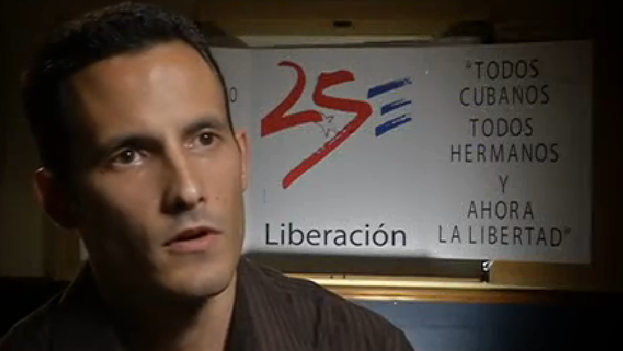
14ymedio, Reinaldo Escobar, Havana, 4 August 2014 – To mark the publication of a letter sent by five young Cubans to Pope Francisco, 14ymedio interviewed Erick Álvarez Gil, coordinator of the Christian Liberation Movement (MCL) in Havana. At just 28, this young man joined the organization in 2009, and holds a degree in Electronics and Telecommunications.

Question: What are the antecedents of this document?

Answer: This letter was sent on the second anniversary of the death of Oswaldo Paya and Harold Cepero, and also two years from the time Oswaldo handed a letter to the Cuban bishops in 2012, which reflected some of these concerns and also touched on the issues of relations between Church and State, and Church and Society. These ideas are still dormant and still a source of concern to us, so we went back to the idea of a letter and put it in the hands of the Pope and also sent it to the Cuban bishops, priests, religious, missionaries, and the most committed laypeople in the Cuban Church.

Q: As I understand it the letter is dated May 5 and was delivered to Pope Francisco on the 14th of that month, but only now has been disclosed to the public. Why the wait time between sending the letter and publication?

A: We didn’t send the letter to any media, the aim was not that the letter would be published openly. Our objective was to send it to the main actors of the Church in Cuba and the more committed lay people. We did that late last week and, as happens in these cases, it is already public. continue reading

Q: Have you received any response from anyone about this letter?

A: We have received no official response, but we have received feedback from other young Catholics who have had access to it. An official of the U.S. Conference of Catholic Bishops of Cuba has contacted us to meet and discuss some of the issues in the letter. That conversation should be this week. Also Monsignor Alfredo Petit Vergel, who is my pastor at the Church of San Francisco de Paula, and one of the two auxiliary bishops of Havana, saw me on Sunday and told me of his desire to sit down and talk about it.

Q: What are your expectations from this letter that has begun to spread?

A: Our expectations were never based on the public and mass distribution of the letter, even though we knew that it could happen when we sent out a lot of emails.
We want to contribute to the personal and community reflection of the pastoral agents with the greatest responsibility within the Church, those who can influence the pastoral action of the Church, especially in the political positions taken by the higher-ups in the Church hierarchy. This is the issue that most concerns us, in addition to all the general issues there may be at an ecclesiastical level.

We write from a political movement, we present ourselves this way from the beginning of the letter, which is eminently political. It deals with political issues and how the Church projects itself toward society.

Q: The letter also comes at a possible turning point, for renewal, for the Cuban Church.

A: The Church is now in the process of designing a new plan to guide pastoral action in the coming years and a dialog is imminent and necessary, with the laity as well, where these elements can be considered. There are also some Cuban bishops, such as Cardinal Jaime Ortega and Monsignor Alfredo Petit Vergel and perhaps others, who are finishing their time in episcopal government, and there are imminent handovers in the upper Catholic hierarchy and in the bishopric. The reflections arising from the opinions we offered in the letter might have some influence on the appointments made.

Cardinal Jaime Ortega calls for “deepening the reforms” / 14ymedio

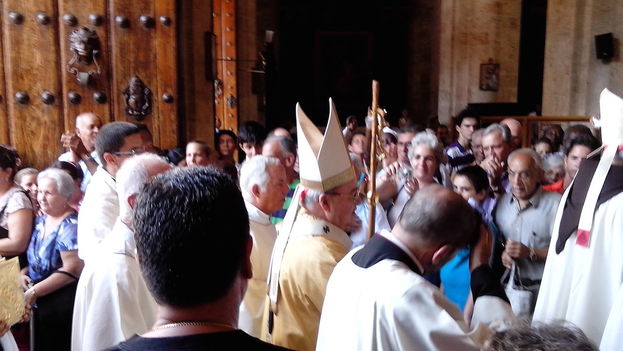
Cardinal Jaime Ortega entering the Cathedral of Havana

14YMEDIO, Havana, 2 August 2014 – This Saturday a Mass of Thanksgiving was held at the Cathedral in Havana for the 50th anniversary of the ordination of Cardinal Jaime Ortega. The Archbishop himself celebrated the Mass which was attended by other Cuban and foreign bishops.

Ortega Alamino made is entrance into the room at 10:20 in the morning, awaited by a crowd of worshipers, tourists and foreigners.

At the ceremony the prelate stressed that “the faith and hope promulgated by the Church do not defraud.” Moreover, he prayed that those governing the country “continue deepening the changes our country so badly needs.”

During the service a letter Pope Francisco sent to Cardinal Jaime Ortega was read, in which the Pope blessed his ministry. In addition, several speakers took the floor, either to celebrate Ortega’s work, as well as to remind the Cardinal that he still “has a long way to go.”

Jaime Ortega, 78, resigned almost three years ago, but still remains at the head of the Archdiocese of Havana.

The celebrations will include a Cultural Gala to be held tonight [August 2] at 8:30 in the Padre Felix Varela Center.

Chatting with One of Havana’s Entrepreneurs / Ivan Garcia

View from the Tower Restaurant in the Fosca Building

View from the Tower Restaurant in the Fosca Building

Humberto, a seventy-four-year old man, has the personality of both an entrepreneur and a smooth talker. At the moment he is relaxed and happy, willing to chat while having a Heineken and without having to keep track of the time.

And that is what he is doing. In the bar of the La Torre restaurant on the twenty-ninth floor of the Focsa building, Humberto is enjoying a very cold beer as he munches on bites of Gouda cheese and Serrano ham while looking out over the city.

At a height of 400 feet Havana looks like an architectural model. Staring at the intense blue of the sea creates the sensation of a bar floating in the middle of the Atlantic Ocean.

Up here things look different. There is no awareness of the poor condition of the streets and buildings below or the scramble of thousands of Havana residents looking for food at farmers’ markets in order to be able to prepare a decent meal.

Humberto knows how hard life in Cuba is. “But I like to enjoy myself and to spend money eating well, going out with beautiful women and drinking good-quality beverages,” he says.

continue reading

He is a cross between a tropical rogue and a guy with a nose for business. He is dressed in a Lacoste polo shirt and a pair of Timberland moccasins. A Swiss Tissot watch cost him six-hundred dollars at an airport duty-free shop.

“Money brings you neither health nor happiness but it makes you feel good, different. Knowing you have money in your wallet and enough to eat is a big deal in this country. Then, if you live in a nice house and own a car, you can afford certain luxuries, like drinking Scotch and sleeping with young girls without having to be a police informer or a senior official in the regime. Solvency raises your self-esteem,” says Humberto, who has wanted to be businessman since he was young.

“At the time of the Revolution I was the owner of an high-end apartment in Vedado. When communism came along, like everyone else I learned to fake it. I was never a member of the militia or a militant, so the goverment tried every trick it could to get me to give up my apartment. They wanted me to exchange it for an awful place in Alamar, as though I were crazy,” says Humberto. “These people,” he adds while making a gesture as though stroking an imaginary beard, “love to talk about the poor but they like to live like the bourgeoisie.”

“In the building where I live there are military officers and government leaders. During the Soviet era there were also technical specialists from the USSR, East Germany and North Korea living there. I have never known more savvy businesspeople than the ’comrades from the communist bloc.’ The used to buy and sell everything. They even set up a small bank,” he notes with a smile.

Things have not always gone so well. He was jailed in the 1980s, accused of illegal economic activity. “After my release from prison I had to sweep parks. When my children were grown, I got them out of the country. They have lived overseas for a long time. My grandchildren are foreigners. I stay here because I prefer to live in Havana, the city where I was born,” says Humberto.

During the 1990s — the tough years of the “Special Period” — Humberto began renting his apartment to foreigners. “Almost all private business was illegal, from dealing in art to buying and selling houses and cars. But after 2010 the government expanded the private sector and I got a hospitality license.”

He lives in a house with his wife and rents out his apartment. “The prices vary depending on the length of stay and the time of year. In peak season I rent it for 60 CUC a day. The apartment has four bedrooms, air-conditioning throughout, a big living room and remodeled bathrooms with hot and cold running water,” says Humberto.

In general he only rents to couples, women and older men. “I don’t like renting to young men or bachelors. They turn your house into a brothel. I don’t rent to Cubans because, on top of being messy, they walk off with things. They have stolen everything but the electricity itself from me. That’s why I only rent to foreigners.”

Humberto considers himself to be a good friend, a better father and a lousy husband. “I have never been stingy. I take care of my parents and I have discreetly helped dissident family members and friends. As long as this regime exists, business people like me will always be treated like suspects and possible criminals. To be a real small businessman you have to live in a climate of democracy.

The night has engulfed Havana. From the bar at La Torre the view is spectacular. You see all the lights but none of the misery.

Ivan Garcia

Video: Views of Havana from La Torre Restaurant where Ivan talked with Humberto. The video was made by Winston Smith and uploaded to YouTube in July 2013.
2 August 2014

Overstatement / Fernando Damaso

Photo: Rebeca

Typically, we Cubans are short on economic issues and pass on politics. At least that has been the case for the last fifty-six years. We veer between shortcomings and excesses, never finding a happy medium, as so many of the world’s nations and peoples do. We now seem to be in a period of unrestrained overstatement.

First there was the celebration of 61st anniversary of the assault on the Moncada and Carlos Manuel de Céspedes barracks. Given the hours devoted to scheduled programming on radio and television and the tons of paper and ink expended on this topic, one would think this event had completely changed the history of mankind, except that, so far, mankind has not noticed.

The series of neighborhood concerts given by the singer Silvio Rodriguez — which compelled him to say that, until giving them, he was not aware how bad (he used another word) Cubans were — was described as an epic accomplishment.

The summer road trip take by twenty or so young people from Sabaneta in Guantanamo province to Miraflores in Ciego de Avila — names which by sheer coincidence matched those of two places in Venezuela, recalling the last electoral campaign of that country’s late president — were part of an admirable campaign.

The victories by the Cuban baseball team — reinforced with professional players — against a team of American college students constitute a great accomplishment which swept aside memories of the defeat suffered the previous year by the Cubans at the hands of American team. The sliver and bronze medals which our athletes win are as valuable as those of gold and even shine more brightly because they were won with heart. Apparently, athletes from other countries do not have the heart to compete.

There are even dead people who go on living even after their deaths because they are eternal. It’s not that they get older every year but simply that their birthdays are remembered.

In any normal country the output of a factory or farm is not considered newsworthy. Here it represents a heroic labor achievement. One might add that our children are the happiest in the world, our women the most emancipated and that our citizens enjoy the best health and education systems in the world as well as the most generous social security benefits. The list goes on and on.

Superlatives on a daily basis have become a bad habit. Moderators of radio and television programs, journalists, artists, politicians and even national leaders all do it. Today’s sad reality must be masked with big-sounding words. The problem is that overstatement to the point of ridiculousness is only a step away.

2 August 2014

Once a Rafter… Always a Rafter / 14ymedio, Yoani Sanchez

Iliana Hernandez
Iliana Hernandez

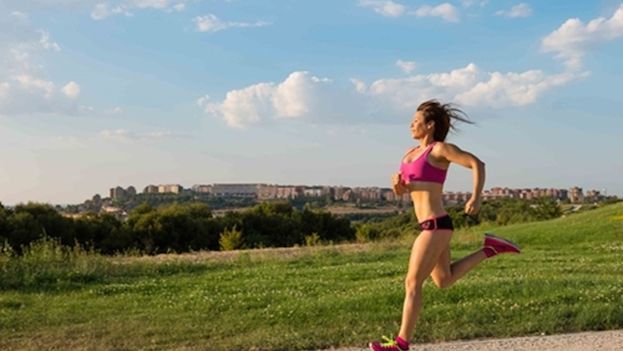
14ymedio, Yoani Sanchez, 1 August 2014 – A Cuban balsera, a rafter, has set herself a new challenge. This time it’s not about escaping Cuban on a fragile craft, but rather crossing the Sahara desert. Iliana Hernandez will cross 144 miles of sand dunes, luging food, water and a sleeping bag, over seven long days.

The Marathon des Sables will hold its next event from April 3-12, 2015. This intrepid Guantanameran will be the only Cuban put to the test, although before her another compatriot tried it in 2008. To overcome exhaustion and physical pain, Iliana is counting on her will, an impressive physical preparation and the experience of having been a Cuban rafter.

In the midst of her hard training the young woman took a few minutes to share the challenge that awaits her with the readers of 14ymedio.

Question: The Marathon des Sables has a long tradition and is considered one of the toughest races in the world. Can you tell us more about your organization, requirements and concept?

Answer: It started in 1985 and is indeed one of the most demanding races in the world.  It constitutes a great challenge for many elite athletes as well as for others who, without possessing excellent physical form, want to prove themselves in a fight where the most important thing is not the legs but the will.

The contest lasts for seven days during which there are six stages. It takes place in the Moroccan Sahara. Each runner must be self-sufficient in terms of their own food and everything they need along the 144 miles. Backpack, sleeping bag and other things for survival become your inseparable allies for one week. The contest is divided into six stages that range from 12 to 48 miles. The terrain is desert with many stones, areas of ancient dry lakes and sand dunes. And if that’s not enough, the runners must suffer temperatures that reach 120°F. continue reading

Patrick Bauer is the godfather of the event, its creator and director. He crossed the Sahara desert solo 30 years ago. His experience is reflected in an organization that dedicates the funds it raises to the villages located in the vicinity of the race.

Atlantide Organisation Internationale is like a small traveling town with 400 people who spread out to work each day. Fifty physicians supervise and care for runners, two helicopters fly over the route, 120 of the organization’s vehicles stay close to the participants, one team is in charge of assembling and dismantling the camp and there is even an incinerator garbage truck following along the competition to ensure that the desert is back to normal after the marathon is over.

Among the inescapable requirements each participant must have are the desire the willingness to perform this challenge, besides the money to pay the fee.

Q: Running along the desert with a backpack in tow requires intense physical training and also requires a strong will. What motivations and thoughts will it evoke when the heat, thirst and exhaustion make you feel your strength is giving out?

A: I’ll think about that girl who tried to leave Cuba once via the Guantanamo Naval Base. That was a very hard time and I spent more than three days without water, food, drifting, without doctors. Considering that, I can cross the desert, at least this time I will have water, food and medical attention. I will go back to that time when I craved liberty above all and, substituting the finish line for those dreams, I will be able to reach it.

We Cubans have tremendous willpower, having been born in the country where survival is constant, it is harder to withstand the strategies of 55 year dictatorship than six days in the desert. I will take with me, in my heart, the true desire of all Cubans. Of those of us who fought for the freedom of our country and those who—although fear holds them back—also desire it.

Q: So from rafter to a marathoner! Can you tell me more details of that frustrated escape?

A: It was a lot like the experience of the desert. I left the city of Guantánamo with 16 people, we went with a guide who knew the area. We arrived near the sea and waited for nightfall to launch ourselves into the water. We were a few miles from our final destination which was the Guantanamo Naval Base. We knew we were risking our lives but our dream was stronger than that.

When the sun fell we stripped away everything we had and slipped into the sea to get to the base. Together we headed for the barrier. The waves were high and at one point a very strong wave knocked me over. I banged my head and I thought it was all over, but I managed to come to the surface and see that I was alive.

Some of us decided to go out to see to avoid the dangers of the rocks but it was worse, we were swimming against the current. We spent the whole night swimming, but when we stopped to rest the current took us back to the starting point. It was a losing battle. At dawn, a friend and I made it to shore but it wasn’t the base.

I was willing to wait for nightfall to launch ourselves again, but he didn’t want to and we decided to go back and try another time. The return was without water or food, barefoot and half naked. We returned under a blazing sun in a semi-desert terrain full of thorns. We spent two days and night, walking, exhausted, resting only when exhaustion wouldn’t let us take another step.

We arrive in the vicinity of the town of Guantanamo, and as almost always happens, a snitch gave the alarm and the police arrested us. The first thing we did was ask for water. I was in jail for 37 days.

Fortunately, the penalties for illegal departure weren’t as strict then and I was sentenced to three years probation. Seven of us managed to make it, those who continued along the rocks. Some Spanish friends felt sorry for my failed attempts and helped me to leave Cuba. The third time was a charm and I boarded a plane direct to Madrid.

Q: Do you think we should expect the Cuban flag to wave on the podium of the winners of the Marathon des Sables ?

A: I’m training to win and make it to the podium. I am putting all my effort into it, but to reach it it would be ideal to be able to undertake the specific training this competition requires. That is, training on sandy soils, similar to those that will occur in the race. Right now I still don’t have sponsorships and I need to pay the fees out of my own pocket. This limits me a lot and I can’t travel to specific areas. My great desire now is to train on desert-like sites.

If I resolve my economic situation and I can dedicate myself fully to proper training, I can ensure that the Cuban flag will fly on the Marathon des Sables podium, and I dare say at the top.

Communication About the Situation of Angel Santiesteban

The truth is always above all and we must devote ourselves to it. And, before the accumulation of contradictory information about the actual status, location and circumstances that surround the case of the writer Angel Santiesteban, fulfilling the responsibility to be the voice of the writer and not adding our voice to any of the versions, rumors and speculations that are circulating, we have decided to wait to have direct news, hoping that he himself will communicate with us. We trust that he was soon find a channel to send us news.

The Editor

Please sign the petition at this link.

29 July 2014

The Many Faces of the Buquenque / 14ymedio, Reinaldo Escobar

Buquenque (14ymedio)

14ymedio, Reinaldo Escobar, 1 August 2014, Havana – When you walk through Fraternity Park, amid the bustle of Havana, you hear the cries of masculine voices calling out possible destinations for trips to diverse places in the capital. Near the Aldama Palace they shout out that there are two spaces left for Boyeros and Santiago de las Vegas. A little further on to the left, under the shade of the laurels, they invite you to go to Cotorro, and on nearly reaching the Capitol they announce cars for Alamar. For the most part they are American cars, Chevrolet, Ford, Plymouth, Oldsmobile, made before 1960, with the exception of the odd Lada or Moskvitch, devoted to the singular transport that combines the characteristics of a taxi and a bus.

This type of transport is popularly called almendrones [almonds – after the shape of the classic American cars], which for 10 or 20 Cuban pesos (depending on the distance) run on fixed routes. At the origin points a new figure appeared one day, a character whose job it is to attract clients for the almendrones and whom everyone knows as a “buquenque.”

For a long time buquenques thrived outside the law, charging (chiseling, some say) each driver 5 national pesos for the service of bringing him passengers, but recently the legislation that protects self-employment opened a space for them. Of course it didn’t call them buquenques, but the job appears as number 53 on a list of 201 activities as “Taxi trip manager.” In the “description of scope” the law defines the work content as: “Manages passengers to fill the capacity of vehicles at stops authorized by the corresponding Administrative Board.” If properly registered they should pay the national treasury 80 Cuban pesos every month.

Put this way, one imagines a coat and tie and even a web page to make reservations, but it’s not like that, rather it’s a shouted offer, often unnecessarily loud, where the volume of the shouts, and a certain authoritarian air, almost orders the passenger to get in the car. continue reading

A character whose job it is to attract clients for the almendrones and whom everyone knows as a “buquenque.”

The Cuban scholar Argelio Santiesteban, in his singular dictionary The Popular Cuban Speech Today (Editorial Ciencias Sociales, 1997), defines the word buquenque as “pimp, flatterer,” but some of the drivers might define them as a plague of parasites. At least that’s what Agustín Pérez thinks: “When I get to the end of the trip, I don’t stop at the initial stop, rather I pick up passengers along the road, there are always people who need to make a trip between intermediate places. That way I save five pesos and avoid dealing with those guys.”

Oscar Rodriguez doesn’t pay for a license as a taxi driver and so he avoids the inspectors, although he’s calculated that there’s more business along the authorized routes. “The buquenques don’t care if I have a license or if I’m working under the table, what they care about is that I give them five pesos and what I care about is not hanging around the stop.”

The activity of the “passenger manager” extends to the interprovincial environment. So, next to the Havana Bus Terminal you can see them shouting out cities in the interior. The most popular are Pinar del Río, Santa Clara and Matanzas, any further and the trip isn’t profitable. The buquenques are apparently more organized there and when coordinating travel to Pinar del Río, if they discover a passenger wants to go to Cienfuegos or Varadero, they advise the appropriate buquenque, more out of hope of reciprocity than solidarity.

Begging for trouble with drivers and passengers, the buquenque spends hours in the street, often without being able to count on a nearby public bathroom and having to eat whatever comes to hand. He is one of those characters of current times in which the slightest government opening has created mediocre escape valves.

Some accept it as a more or less entertaining opportunity in which they can show off their talent for marketing, as is the case with Leopoldo. “Fifteen days after leaving Guantanamo and without even having a place to sleep here in Havana, I found this job and I wouldn’t give it up for anything. Now I’m renting a room and by the end of a year I’m going to buy something. Then I’ll bring the rest of the family. Here, among these wolves, I’ve learned to defend myself.”

Pedestrians pass by indifferent to the dramas and comedies that are woven behind the curtains of this profession, where you have to know how to show a fierce face to your competitors and another, friendly one, to your customers, without ever confusing the roles.

Translator’s note: The word buquenque can be translated  for broader usage as “busybody.”