Venezuela Secretly Exports Sardines for Cuban Rations

Cans of Venezuelan sardines are delivered to Cubans through modules in warehouses or sold in shops with foreign currency cards. / 14ymedio

14ymedio bigger14ymedio, Havana, 27 April 2025 — No Cuban who has received the tiny tins of sardines from Venezuela for the basic food basket would think that behind the scarce food, with a strong flavour, there is a whole sordid web of Nicolás Maduro’s government endangering the species and keeping the fishermen starving. Venezuela takes sardines out of its own mouth to give them mainly to Cuba, headlines an article in an independent media on Sunday, showing that both countries have corruption and hunger in common.

In addition to the ban on sardine fishing that runs from December to March, Venezuela has also banned sardine exports. However, as Armando.info points out, the Ministry of Fisheries and Aquaculture has itself broken the rule and exported thousands of tonnes of the fish to the international market since at least 2021.

Between then and August 2024, 73% of these exports – some 1,409 tonnes – went to Cuba. The shipments were always of canned product and were mostly marketed by the Ministry of People’s Power for Fisheries and Aquaculture itself.

It is also surprising that the United States is the second largest buyer of sardines from Venezuela, although with just a third of the tonnage delivered to Cuba. continue reading

As cryptic as Havana, Caracas keeps many of its export records outdated.

As cryptic as Havana, Caracas keeps many of its export records outdated, and sardines are not included in its list of 24 marine species in the 2024 and 2025 Exportable Supply Catalog. On paper, everything seems to be operating according to the law, but statistics from other sources, such as the United Nations Comtrade, among others consulted by Armando.info , “unequivocally certify that Venezuela is indeed selling sardines to other countries,” the outlet reports.

The platform explains that both the ban and the sardine export ban were imposed in 2017 due to the species’ rapid decline in Caribbean waters since 2005. In addition to its use as bait for catching other species or for preparing certain foods, sardines represent “the most important source of low-cost animal protein for Venezuelans.” Therefore, it argues, their preservation was not just a whim.

Armando.info offers figures to prove it: according to the latest available official data, in the first half of 2023 Venezuela caught 29,000 tons of sardines, 15% more than a year earlier. But compared to the 200,000 obtained in 2005—when the so-called sardine crisis began—the number is minuscule.

The 1,932 tons exported between 2021 and 2024, valued at more than $1 million, were a small figure compared to the amount used for domestic consumption. However, Armando.info warns, they could have been used to produce canned food for a subsidized food program.

The Maduro government, a faithful apprentice of Havana, has covered up exports while promoting initiatives to achieve food sovereignty and protect the sardine population. Last April, the outlet reports, Vice President Delcy Rodríguez, along with the Minister of Fisheries and Aquaculture, announced the “Venezuela Eats More Fish” operation to stimulate “exclusive domestic consumption” of sardines.

“Behind the rhetoric, consumption was not ’exclusively national’: contrary to official regulations, exports were taking place.”

“However, behind the rhetoric, consumption was not ’exclusively national’: against official regulations, exports were taking place,” Armando.info reports.

The platform also highlights the opinion of Juan José Cárdenas, an oceanographer and fisheries expert who believes that it is “unacceptable that a country with high levels of malnutrition and a food crisis is exporting the main animal protein and the one with the most affordable price for Venezuelans.”

According to 2024 records from the Food and Agriculture Organization of the United Nations (FAO), 24% of Venezuelan women between the ages of 15 and 49 suffer from anemia, and the number has increased since 2021, when sardine exports began. The number in Cuba is similar, at 20%.

Venezuelan sardines arriving in Cuba are sold primarily through the rationed market in modules that sometimes include pasta or rice donated by other countries. It’s also common to find cans of the El Faro and Maripiar brands, yellow, red, or green, on the shelves of stores selling freely convertible currency (MLC). In tomato sauce or with vegetable oil, however, the product isn’t cheap when sold in foreign currency, at a price that exceeds two dollars per unit.

It’s not about robbing one saint to pay another, as the saying goes, because the sporadic canned goods distributed in Cuba and their meager contents do not solve the lack of protein on an island that, by definition, should have plenty of fish.

____________

COLLABORATE WITH OUR WORK: The 14ymedio team is committed to practicing serious journalism that reflects Cuba’s reality in all its depth. Thank you for joining us on this long journey. We invite you to continue supporting us by becoming a member of 14ymedio now. Together we can continue transforming journalism in Cuba.

Five Cuban Doctors in Sinaloa Are Facing the Same Health Crisis as the Island

Health workers complain of a lack of staff and medicines, too many patients to care for, and a terrible hygiene situation.

A Cuban anesthesiologist, an ophthalmologist, a nephrologist, a pathologist, and a cardiologist arrived at the Los Mochis General Hospital / Debate

14ymedio bigger14ymedio, Ángel Salinas, Mexico City, 30 May 2025 — Going on a mission doesn’t always mean an improvement. The five Cuban doctors who arrived several weeks ago at the Los Mochis General Hospital in the Mexican state of Sinaloa know this well. The facility faces numerous criticisms for its poor conditions, similar to those of medical centers on the island: it lacks staff and medications, there are too many patients to care for, and the hygiene situation is appalling.

Hortensia, a relative of a patient at the center, confirmed to 14ymedio how depressing the situation is in Los Mochis, which is also located in one of the most tense and violent states due to drug trafficking. In this context, the Cubans—an anesthesiologist, an ophthalmologist, a nephrologist, a pathologist, and a cardiologist—have been, she admits, a “palliative” in the face of the lack of personnel.

However, the woman warns, despite the fact that “you hear in the hallways that there is a Cuban cardiologist,” her father—who suffers from ventricular arrhythmia—has never seen her and he has not “had the opportunity” to consult with the professional. continue reading

Their presence there has not represented a significant improvement in hospital care nor has it resolved their logistical problems.

In an interview with the local newspaper Debate, the hospital director, Luisa Reyna Armenta, acknowledged that there were Cubans working in Los Mochis and that thanks to Havana, “we have complete coverage” of the staff. She also said they were “quite hardworking.” The source interviewed by 14ymedio does not deny this, but emphasizes that their presence there has not represented a significant improvement in hospital care nor has it resolved the logistical problems, which are just as urgent as the staffing problems.

“What is still lacking here are pediatricians and neonatologists,” he explains. “A niece had to see a doctor at a private clinic because they don’t have these specialists here.”

Hortensia complains that there is also a shortage of medications in Los Mochis, a shortage Cubans are more than accustomed to. These aren’t basic drugs—like paracetamol, which is often available—but specialized treatments. “They never have amiodarone for arrhythmia or sacubitril to lower blood pressure. Without patented medications, you spend between 2,500 ($130) and almost 3,000 pesos ($150).”

A patient’s relative reported finding cockroaches inside the Los Mochis General Hospital (Sinaloa). / Luz Noticias

The elderly relative’s pension “is not enough,” he summarizes, another situation with which it is not difficult to find a parallel between Mexico and Cuba.

Hortensia applauds the arrival of specialists, but states: “What are they going to do in a hospital where a few months ago, patients’ families had to bring their own fans because the air conditioning wasn’t working? It works now, but the cold season has arrived.”

The woman also reported a cockroach infestation. “The incident was a scandal. In a hospital that should have all the necessary hygiene protocols is unforgivable for this to happen,” she commented. The local press reported on the situation at the time. “A nurse went to apply medication and was surprised to see them on the bed, on the table where food is placed, and on top of my father,” a patient’s relative told a Sinaloa newspaper last April.

The hospital director acknowledges that “they still don’t have the necessary supplies,” but assures that patients are provided support in the blood bank, in the neonatal ward, in the intensive care unit, and in hemodialysis—”which is very expensive”—and that they treat between 18 and 20 chronically ill patients free of charge every day.

The hospital director acknowledges that “they still do not have the necessary supplies,” but assures that they treat between 18 and 20 chronic patients free of charge every day.

The Cuban doctors in Los Mochis are part of the more than 3,000 specialists Mexico has hired to care for the population of Guerrero Mountains, the area with the highest poverty rates and one of the most insecure, due to the presence of several criminal groups fighting over drug cultivation and trafficking.

An official from the 01 health jurisdiction, which is responsible for managing health resources, confirmed to 14ymedio that there are 82 Cuban doctors in Sinaloa. “In Baca, a community with 323 inhabitants, three were sent; in Choix, where fewer than 700 people live, there are another three; and in Chávez Talamantes, there are two general practitioners.”

At the end of September there were rising levels of violence in the state, where Los Chapitos—sons of drug trafficker Joaquín Guzmán Loera, sentenced to life in prison in the US—are fighting for control of the state with a faction of Ismael Zambada, known as El Mayo. The Cuban Embassy in Mexico recalled Cuban specialists who were in the Sinaloa town of Concordia, in the municipality of El Palmito. To date, they have not returned.

The Mexican government has been promoting the hiring of Cuban doctors for more than four years. The administration of Andrés Manuel López Obrador paid $5,188 per month to maintain each of the doctors on the island. This figure includes the salary—27,000 pesos ($1,351)—and the costs the government must cover for food, lodging, and transportation for approximately 966 healthcare workers. These travel expenses will also benefit the 2,135 specialists who arrived in the country this year, bringing the total number of doctors to 3,101.

____________

COLLABORATE WITH OUR WORK: The 14ymedio team is committed to practicing serious journalism that reflects Cuba’s reality in all its depth. Thank you for joining us on this long journey. We invite you to continue supporting us by becoming a member of 14ymedio now. Together we can continue transforming journalism in Cuba.

Exile as a Catalyst, A Cuban Perspective

Cubans on the island, not having full enjoyment of their rights, suffer from a social defenselessness that emigrants from other systems of government do not suffer.

Being away from one’s home country offers a panoramic view of national life, past and present. / 14ymedio

14ymedio bigger14ymedio, Pedro Corzo, Miami, 30 June 2025 — Many years ago, I came to the conclusion that leaving Cuba generates very significant personality transformations in many people. I have witnessed such radical changes. I know of heads of families, once strong-willed, demanding, and steadfast in their environment, who have given up the spaces they once zealously defended, having to assume the abandoned leadership role by someone of their own lineage. This reveals the great potential of every human being to rebuild their existence and the inability of others to cope with change.

I had a chance conversation about this with journalist Rolando Nápoles, an excellent reporter. Nápoles told me that these spontaneous changes could be identified as the Miami Syndrome, because he had also observed that people who in Cuba had held a certain position on the island’s reality and a different way of living life, changed completely abroad, regardless of the context in which they worked and regardless of any political commitments they may have had.

“Jumping the pond,” as writer Jose Antonio Albertini calls leaving Cuba, truly exerts a profound influence on expatriates. Life changes radically, the abusive paternalism of the totalitarian state disappears, and individuals fully assume their civic responsibilities for the first time. This demands a remarkable ability for reinvention, especially when a person is over forty and has a family to support. continue reading

The limitations imposed by the control that the system exercises over the person are so intense and unfathomable that the capacity for individual management is practically zero.

Cubans on the island, lacking full enjoyment of their rights, suffer from a social vulnerability that immigrants from other systems of government do not experience. The limitations imposed by the system’s control over individuals are so intense and unfathomable that one’s capacity for individual agency is practically nonexistent.

The relationship between individuals and their environment in a free society is open, with responsibility down to the smallest detail. In Cuba, this is not the case. The island citizen is burdened by the condition that only what is explicitly authorized can be undertaken; a simple thought, let alone an action, can constitute a crime.

There are many other characteristics that can impact Cuban emigrants, regardless of their ideological or political beliefs, such as the change in economic activity to support themselves or their families. Many professionals find themselves unable to perform the duties for which they were trained and are forced to take on tasks they may never have imagined. Others find themselves facing unplanned career and social opportunities, and even unimaginable health changes.

There is no lack of those who, far from their country and despite having been treated like sheep by the regime, are always ready to justify and serve it.

I know individuals who had a sympathetic view of totalitarianism, blaming foreign factors, and even those who had previously left the country, for the corrupt and inept actions of the island regime. However, new knowledge and experience led them to change their minds, taking a position of condemnation and rejection of the system. I have particularly appreciated this profound change of perspective among those who left Cuba for economic reasons and among those sectors on the island who worked in the arts and academia or carried out government activities.

However, there are those who, far from their country and despite having been treated like sheep by the regime, are always ready to justify and serve it. Unfortunately, there are individuals who use their privileges as free citizens to defend the dictatorship and despotism, to justify its depredations, however horrific they may be. However, most, based on the knowledge they have acquired, change their perspectives, no matter how blind they may have been.

On the other hand, and in all honesty, we all change, and most of us feel a closeness to the Island that fuels a nostalgia that never ceases to grow. Being away from one’s homeland offers anyone interested an almost unlimited panoramic view of national life, past and present. The emigrant or exile who loves their country seeks to treasure their homeland’s traditions and strives to ensure that new generations preserve their mother tongue. They love what they left behind, with the Martí-like hope of one day bidding farewell to the shores of exile.

____________

COLLABORATE WITH OUR WORK: The 14ymedio team is committed to practicing serious journalism that reflects Cuba’s reality in all its depth. Thank you for joining us on this long journey. We invite you to continue supporting us by becoming a member of 14ymedio now. Together we can continue transforming journalism in Cuba.

Cuban Journalist Henry Constantín Arrested in the City of Camagüey

The political police are increasing their repressive actions as the anniversary of 11J approaches.

Constantín was arrested while accompanying Iris Mariño to a police summons. / Facebook / Henry Constantín

14ymedio bigger14ymedio, Havana, 30 June 2025 — Independent journalist Henry Constantín Ferreiro was arrested this Sunday in the city of Camagüey. Shortly after his arrest the director of La Hora de Cuba was transferred to the State Security Operations Department, known as Villa María Luisa, according to his colleague, reporter Iris Mariño.

Constantín was arrested while accompanying Mariño to a meeting with the political police at the Third Police Unit in Camagüey. When they both arrived, the officers asked the journalist to show his ID and, minutes later, handcuffed him and put him in a patrol car with the number 230, Mariño explained in a video.

Constantín’s arrest comes just days before the country’s Independence Day celebration next Wednesday at the residence of the current U.S. Chargé d’Affaires in Cuba, Mike Hammer. The celebration, which annually attracts artists, cultural figures, and dissidents, is taking place this year amid a fierce official campaign against Washington’s representative on the island.

Some colleagues point to an attempt to prevent Constantín from traveling to Havana to attend the commemoration as the reason for his arrest, as well as an intention to neutralize him in view of the fourth anniversary of the Island-wide popular protests of 11 July 2021. Others, such as journalist José Raúl Gallego, a resident of Mexico, point to another motivation behind the arrest. continue reading

The State Security Officer known as “Luis” said that Constantín could be prosecuted for the crime of contempt because of his publication.

“Henry is being held, accused of denouncing a State Security officer in a Facebook post that appeared on the La Hora de Cuba page. They want to continue attacking in the shadows, without their names being known, and then, when push comes to shove, cross the border or become micro-enterprises,” he denounced. A criminal investigator, who identified himself as “Luis,” assured Mariño that Constantín could be prosecuted for the crime of contempt because of that post.

Cuban Opponents Proudly Celebrate Rosa María Payá’s Election to the IACHR

The Council for Democratic Transition in Cuba highlights the “tireless career” of Oswaldo Payá’s daughter as a defender of “human rights, freedom of expression, and human dignity.”

Cuban Rosa María Payá celebrates after being elected as a new member of the Inter-American Commission on Human Rights (IACHR) in Saint John’s (Antigua and Barbuda) / EFE/Bienvenido Velasco

14ymedio biggerEFE (via 14ymedio), Havana, 30 June 2025 — The opposition platform The Council for the Democratic Transition in Cuba (CTDC) celebrated this Monday with “pride” in the election of Cuban Rosa María Payá as a member of the Inter-American Commission on Human Rights (IACHR).

In a statement, the group highlighted Payá’s “tireless career” as a defender of “human rights, freedom of expression, and human dignity.”

“The election of Rosa María Payá reaffirms the independence, credibility, and courage of the IACHR to safeguard fundamental freedoms and promote democratic renewal in the hemisphere,” the opposition group stated.

Payá, nominated by the United States, was elected on Friday as a new member of the IACHR.

Her election occurred in a vote held at the 55th OAS General Assembly in Antigua and Barbuda to select three of the seven IACHR commissioners.

“The election of Rosa María Payá reaffirms the independence, credibility, and courage of the IACHR in safeguarding fundamental freedoms.”

Rosa María Payá, founder of the organization Cuba Decide and daughter of the opposition figure Oswaldo Payá — whose death in 2021 the Commission formally attributed to the Cuban State — was the first person elected, with 20 votes.

The Donald Trump administration had strongly emphasized the need to appoint Payá to the Commission due to his harsh stance toward Cuba, Venezuela, and Nicaragua.

For its part, the island’s regime called the new member of the IACHR a “mercenary” and claimed that she was elected under “pressure and blackmail” from the United States.

“Multiple pressures and threats, including blackmail claiming the United States would cut budgets for cooperation programs in the hemisphere, narrowly led to the election of notorious mercenary Rosa María Payá Acevedo,” the Cuban Foreign Ministry said in a statement.

____________

COLLABORATE WITH OUR WORK: The 14ymedio team is committed to practicing serious journalism that reflects Cuba’s reality in all its depth. Thank you for joining us on this long journey. We invite you to continue supporting us by becoming a member of 14ymedio now. Together we can continue transforming journalism in Cuba.

The Miami Political Asylum Hearing for Cuban Oscar Casanella Continues Without a Verdict

The defense will submit its briefs for the conclusion of the summary on July 11.

The hearing lasted almost seven hours, from 8:30 in the morning / Courtesy

14ymedio bigger14ymedio, Miami, June 24, 2025 — Cuban scientist Oscar Casanella, a member of the San Isidro Movement (MSI), had his political asylum hearing in Miami on Tuesday, three years after arriving as an exile in the United States. After the hearing, which lasted almost seven hours from 8:30 in the morning, the activist’s lawyers, Kenia García and Deliane Quiles, of the law firm García & Qayum Law Group, told the press gathered in front of the immigration court that there was still no verdict.

On July 11, the defense will hand in its closing briefs and then, within about two weeks, the judge in charge of the case will communicate her decision in writing, which will be published in the immigration system.

The magistrate “wants to evaluate all the evidence that was submitted in this case”

“The judge has definitely been very generous with her time and the prosecutor with his time, and they have heard all the arguments and all the testimony that Oscar wanted to give,” said García, who also explained that the magistrate “wants to evaluate all the evidence that was submitted in this case.”

Her view was somewhat more optimistic than that expressed by Casanella’s family, who, according to CubaNet, which was covering the case live, had complained that the questions were “a bit tough” for him to “answer yes or no,” without giving him a chance to explain himself at length. “What I told Oscar, who is a little dejected, is that it is not easy to say “yes,” especially in this administration, and it has to be well justified. This in my opinion is not bad news,” explained Kenia García in a first statement published on networks. She thought the process “was smooth” and the hearing “relaxed.” continue reading

If he is denied asylum, Casanella would have 30 days to appeal to the Virginia Court of Appeals.

In his statements to the media after the hearing, the activist said that he felt “well accompanied and advised by his lawyers” -who are providing him with services free of charge, as the opponent himself has said- but that “I would have liked everything to go faster and was hoping for an answer today.” The case, he added, “is open,” and no “particular details” can be provided.

If he is denied asylum, Casanella would have 30 days to appeal

Similarly, he referred to the assassination of the Nicaraguan opponent Roberto Samcam by hitmen in Costa Rica  as an example to the question of a journalist about the closing argument before the judge, in which he said that he felt safe in the US but not in another country, because the Cuban regime had “tentacles” everywhere, and his life “was in danger.”

Casanella, who entered the US on foot in 2022, received an I-220A form, which, as with other Cubans in the same situation, does not guarantee either asylum in a court or the granting of residence under the Cuban Adjustment Law. According to the same activist in an interview with CubaNet on Monday, immigration authorities did not allow him to conduct a credible-fear interview when crossing the border into El Paso, Texas.

His concern at this Tuesday’s hearing was that the court would dismiss his case and order his expulsion. “To deport myself to Cuba would mean that I would end up in prison, where anything could happen to me. It would also mean that my wife and eldest son would also be deported and left totally vulnerable to the harassment of the Cuban political police.”

Cuban State Security, claims Casanella, has been harassing him since 2013, for his proximity to dissident artists such as the group Porno para Ricardo and Tania Bruguera. In 2016, he was expelled from the National Institute of Oncology and Radiobiology (INOR), where he worked, allegedly for “ethical misconduct”, denied by the activist.

State Security, claims Casanella, has been harassing him since 2013

But the attacks escalated, he said, starting with his participation in the San Isidro Movement in November 2020, when 15 MSI members locked themselves inside their headquarters on Calle Damas 955 and went on a hunger strike to protest the arbitrary detention of rapper Denis Solís.

They were forcibly evicted by officers dressed as health personnel more than a week later, on 26 November — Oscar Casanella had already left two days before — which provoked the solidarity of more than 300 artists who gathered the next day in front of the Ministry of Culture to ask for a dialogue with the authorities. This was the origin of the 27N group.

In 2022, says Casanella, he was forced to leave Cuba. Before that, he told CubaNet, for the whole of 2021 — the year of the historic demonstrations of 11 July — he was almost “under house arrest”: surrounded by State Security. The state telecommunications monopoly Etecsa also denied them telephone and mobile data service, “so I was kind of dead in life.”

By then, the opponent also reported, the regime had a file on him “for sedition,” with which he was threatened if he did not leave: “We are going to let you out of the house for a month so that you can do your paperwork and leave the country. If you’re still in Cuba a month from now, you go to prison.”

Translated by Regina Anavy

____________

COLLABORATE WITH OUR WORK: The 14ymedio team is committed to practicing serious journalism that reflects Cuba’s reality in all its depth. Thank you for joining us on this long journey. We invite you to continue supporting us by becoming a member of 14ymedio now. Together we can continue transforming journalism in Cuba.

In the Port of Havana, a U.S. Luxury Ship Provokes Stares and Questions

“Who came on that yacht? There’s a ticket there,” curious people comment.

This type of boat usually is seen in the Marina Hemingway, a much more discreet place than the bay of Havana / 14ymedio

14ymedio bigger14ymedio, Natalia López Moya, Havana, 25 June 2025 — Unreachable and glistening under the sun of Havana, the luxury yacht First Lady, with the flag of the Cayman Islands, arrived this Wednesday in the bay of the Cuban capital. While people inland face an energy deficit of more than 1,700 MW, the dark grey hull of the boat is just a preview of the comforts enjoyed by its passengers. Nearby, punished by the heat and wearing uniforms soaked in sweat, several policemen guard the ship from early morning.

This type of boat usually is seen in the Marina Hemingway, a much more discreet place than the bay of Havana. “Who’s going on that yacht?” asks a woman sheltering herself in the shade, sitting on a wooden ramp across the street from the Customs Building. “Someone here has a ticket”, says a young man who also scrutinizes the boat, trying to decipher the name of the client who has paid more than $200,000 a week for ploughing through the sea while sitting on a comfortable sofa, filled with cushions, in the main lounge, or for showering while the bow of the First Lady cuts through the waters in its path.

The price of the ’First Lady’ is around $200,000 a week for cruising the sea / 14ymedio

With air conditioning, coffee machine, jacuzzi and a powerful wifi signal for internet connection, the boat was built in 2023, at the Italian shipyard of Riva, and has a capacity of 11 people and 7 crew. Satellite tracking sites located it just a few days ago in Key West, Florida; until June 16 it had been in Miami, the capital of the Cuban exile in the United States.

The trip is surprising because it is no longer the time of the diplomatic thaw between Washington and Havana, when that voyage was more common. Now, with declining tourism on the Island and the tone of confrontational discourse rising between both countries, the First Lady has a ghostly presence, an apparition from another time or dimension. continue reading

From the wall of the Malecon you can read, on one side of the yacht, a small inscription that confirms the pleasures enjoyed by its guests. “Dolce vita”, boasts the poster. Fanning herself with a piece of cardboard, an old woman and her grandson, from the opposite sidewalk, follow every detail of the sumptuous “flying saucer” that has not fallen from the sky but has arrived by sea and from the North.

Translated by Regina Anavy

____________

COLLABORATE WITH OUR WORK: The 14ymedio team is committed to practicing serious journalism that reflects Cuba’s reality in all its depth. Thank you for joining us on this long journey. We invite you to continue supporting us by becoming a member of 14ymedio now. Together we can continue transforming journalism in Cuba.

By Denying Visas to Women’s Volleyball Team, the US Creates a Precedent for Vetting Cuba in More Trials

Uncertainty grows regarding the participation of athletes from the island in the 2028 Los Angeles Olympics.

The US Embassy in Havana denied visas to 12 volleyball players, two coaches, one referee and a team manager / Norceca

14ymedio bigger14ymedio, Havana, June 27, 2025 — The Cuban Volleyball Federation (FCV) called “unjust and discriminatory” the refusal of the US to grant visas to the team of Cuban volleyball players who aspired to participate in the Final Four of Norceca, to be held in Puerto Rico from July 16-21. It also expressed “uncertainty” about what “may happen in the future in the conduct of the country that will host the Olympic Games Los Angeles 2028, for which Cuba plans to qualify.

The FCV also says that the measure “hinders” the presence of the new Morenas del Caribe -as they call the national volleyball team- in “a qualifying event for the Central American and Caribbean Games of Santo Domingo 2026 and for Norceca and world ranking eligibility.”

According to the sports agency, the US Embassy in Havana denied visas to 16 members of the delegation: 12 athletes, two coaches, a referee and a team manager.

Journalist Yasel Porto Gomez published on the Facebook page of DPorto Sports LLC: “The refusal of visas to the women’s volleyball team only makes it clear that the presence of Cuba in the World Classic 2026 is far from becoming a reality.”

The reporter warned that “if the MLB (Professional Baseball League) does not negotiate things in time with the government of Donald Trump, it will again experience the same suspense of 2006 when we didn’t know until the continue reading

last minute whether or not we would play.”.The difference, he estimated, is that there is a “greater chance now that for the first time in these events a team will lose all their games due to no-shows.”

Without visas, the new Morenas del Caribe are out of the Norceca Final Four in Puerto Rico / Jit

The Por la Goma sports portal also reported that “tension continues to grow” between the US and Cuba. “This political corrosion continues to generate bitter situations completely unrelated to the field of sports,” it stressed. What is desirable “would be for both nations to reach an understanding and to absolutely exclude politics from sports.”

Por la Goma added that “until that happens, uncertainty will continue to affect the participation of athletes and coaches residing in Cuba, even at very important events.”

For its part, the official organization insisted that the refusal of visas reflects a position “alien to the precepts of the sport, which adds to what has already happened this year against delegations from other disciplines.”

Last May, the US denied visas to Cuban Olympic Committee president Roberto León Richards, International Olympic Committee vice president and member María Caridad Colón, and secretary Ruperto Herrera.

Leon and Herrera were unable to attend the meeting of the Executive Committee of Panam Sports in Miami, held between May 13 and 15, and a parallel meeting in Puerto Rico. Colón was absent from the “Women in Sports” Commission event.

In April, the Cuban Athletics Federation (FCA) reported that the US denied visas to 14 of 16 Cuban athletes. The governing body considered that this “unacceptable action” prevented the country from having a full delegation at the 2025 World Indoor Athletics Masters Championships, which took place in Gainesville (Florida) between the 23rd and 30th of March.

Translated by Regina Anavy

____________

COLLABORATE WITH OUR WORK: The 14ymedio team is committed to practicing serious journalism that reflects Cuba’s reality in all its depth. Thank you for joining us on this long journey. We invite you to continue supporting us by becoming a member of 14ymedio now. Together we can continue transforming journalism in Cuba.

Cafés

The famous Mejunje was never a cafe, but rather a well-crafted platform for intersex hustlerism.

The Belgian comic book character Tintin, Cuban cigars, and a cup of coffee. / Author’s archive

14ymedio bigger14ymedio, Xavier Carbonell, Salamanca, 29 June 2025 — I go to the Novelty—I never go to the Novelty—the café owned by Unamuno and Torrente-Ballester, although I’m not a fan of either. Salamanca’s Plaza Mayor bustles with tourists and people who, like me, are desperately seeking a bit of air conditioning. I have a coffee with milk and open the issue of Letras Libres dedicated to Vargas Llosa. The usual tributes, tearful and almost identical evocations. The man with a million friends, I think, all close friends. In memories, an acquaintance elevates himself to the rank of soul brother, and the soul brother ascends to blood cousin.

I close the magazine, a little fed up with the Peruvian. Why do I never come to the Novelty? I like the atmosphere of an old café. The dark wood furniture, the huge mirror, the lecterns on which the newspapers hang. It’s barely changed in a hundred years. There’s a buzz of voices that would normally be unbearable, but here, now, it’s what gives me the peace of mind to read. I wish I had a novel or a notebook to write in, or a group of arguing friends, but I make do. From the front page, Mario looks at me mockingly.

I’m glad the Novelty exists and that every city in Spain has a café like it. There’s Gijón in Madrid and Pombo in Santander, and even some pastry shops that do the job, like Rialto in Oviedo or La Mallorquina in Puerta del Sol. I’m glad my coffee culture wasn’t born here but comes from Cuba, and that what I feel when I enter the Novelty isn’t exactly a novelty, but rather a reunion.

I’m glad the Novelty exists and that every city in Spain has a café like it.

George Steiner believed that among the handful of things that defined Europe was the café ritual. From Lisbon to St. Petersburg—not Moscow—and from Seville to Prague, almost everything was discussed, written, and thought about in cafés. Chess was played—the famous games of Lenin and Tristan Tzara in Zurich, or those of Napoleon, Rousseau, or Benjamin Franklin at the Café de la Régence—and conspiracies were hatched.

The fury of opening cafés in Cuba during my university years was one of the best things about my youth. We became accustomed to talking about everything in the cafés, where you could smoke freely—a habit inconceivable in Spain—and every conversation or infatuation was shielded continue reading

by the smoke. In Santa Clara, the bar was a café and the café was a bar, depending on the time of day. Lycanthropic, a café dimmed the lights and became a nightclub. In the morning, hungover waiters served us, and served themselves, a strong cup of coffee.

The famous Mejunje was never a café, but rather a well-crafted platform for intersex hustlerism with the Party’s blessing. If there was coffee, it was reheated grounds, and it was preferable to drop into other establishments if you weren’t seeking the company of unwelcome characters of all stripes and passports.

The Europa—Steiner would be horrified—was and perhaps still is the battleground where Italian settlers negotiate with their jineteras [hookers] for child support. I often saw a troubled Giuseppe or a sad Alessio suffer the consequences of a tropical night with those mulaticas, rarely mulatonas.

Not to be missed is the priceless Revolución, filled with communist memorabilia and located next to the Tren Blindado [Armored Train]. A Che Guevara fan could stop there, be overcome with emotion by a photo of Fidel with Hemingway, and spend a few dollars before making the pilgrimage to the mausoleum where the Argentine’s unlikely bones lie.

In the Obrador — with its white walls and tables — the few real Marxists in Santa Clara, always utopian and poor, met. They were more closely watched than the dissidents. I frequented their chess boards and always caught someone I knew who was off base.

We must not leave out the priceless Revolución, full of communist memorabilia and next to the Tren Blindado.

“I’m in a café,” Lezama says in at least a couple of texts, like a profession of faith. It’s not hard to imagine him sipping a daiquiri, his ears listening for voices and epiphanies, à la Joyce, like the resounding “Chinese Bride, Good Luck” from La cantidad hechizada*.

Cafés and bookstores always went hand in hand, and not far away was the little shop where I sometimes—on payday—bought cigars or cigarillos. How long did I spend going from café to café? When I went to Havana or Camagüey or Cienfuegos, I always looked for a place that served good drinks and had a cigar shop nearby. The one in Cienfuegos, where an ancestor of mine worked for decades, was staffed by a Mason whose golden ring—with the compass and set square—reverberated as he arranged the cigars in a glass pyramid

Old times and old things, like Steiner’s cafés. From another planet. A different life and faces, of whose whereabouts I have no idea. It all comes back when I go to the Novelty, and although Mario looks at me solemnly from the cover of Letras Libres, he knows better than anyone what the poor, happy life of a young writer is like.

*The Spellbound Quantity — A book of essays by José Lezama Lima

____________

COLLABORATE WITH OUR WORK: The 14ymedio team is committed to practicing serious journalism that reflects Cuba’s reality in all its depth. Thank you for joining us on this long journey. We invite you to continue supporting us by becoming a member of 14ymedio now. Together we can continue transforming journalism in Cuba.

Without Electricity and Air Conditioning, Cubans Sleep on Rooftops in Search of Cool Air

With a record electricity deficit, some hospitals, such as the Lidia and Clodomina polyclinic in Regla, look like ghost buildings.

Fuel scarcity remains the main problem of the SEN / 14ymedio

14ymedio bigger14ymedio, Juan D. Rodríguez/ Darío Hernández, Havana, 29 June 2025 — When Vladimir read that the Electric Company (UNE) was expected to have a deficit of 1,977 megawatts (MW) by Saturday night, he knew that it was not by chance that it would affect a neighborhood like his without hospitals or hotels. He went up to the roof of his house in Nuevo Vedado and reinstalled the hammock that, during the last week, had been his bed in the dark nights under the sky of Havana.

His prognosis hit the nail on the head while that of the UNE, although a little below, also came close. At the time of maximum affect, the national electric system (SEN) reported a shortage of 1,936 MW, the second record deficit in the last week, as last Tuesday’s of 1,901 MW.

For this Sunday, the authorities expect to lower the allocation with the entry of several units to the SEN [National Electrical System], and they predict a shortage of 1,753 MW in peak hours. It is expected that by then they will have already synchronized unit 6 of the thermoelectric power continue reading

plant of Mariel, with 80 MW; unit 6 of Nuevitas (Camagüey) with 100 MW, and two plants of Energas: Boca de Jaruco with 30 MW and Varadero with 30 MW.

Unit 2 of Santa Cruz (Mayabeque), 4 of Cienfuegos, 5 of Nuevitas and 5 of Renté in Santiago de Cuba are also under maintenance.

The authorities also want to incorporate 40 generating plants “which are out of fuel, because of the shortage.” These are, however, a small part of the total of 111 plants of this type that are out of service, leaving behind about 860 MW.

In the streets, the discomfort of the Cubans is seen in the faces of passers-by and despairing mothers who fan their children. “My neighbors are timid, they think that the UNE workers are having a hard time with this area,” says Vladimir, who from the sidewalk, where he sits to catch some fresh air, hears the comments of frustration.

“I went to buy cigarettes and the woman who sells them said she couldn’t grab a wink of sleep last night. She told me: ’This is criminal, boy.’ I felt sorry for her, but I’m the same way, walking like a zombie,” he confesses .

“I hear my neighbors complaining that they have sleepless nights, that they don’t have anything for breakfast and that the internet comes and goes,” he explains. Vladimir says that in the last few days the blackouts have given him no respite. “They put on the power on at night and remove it from 1:00 to 4:00 in the morning. Then, at 6:20, another blackout,” he says, frustrated.

The Habanero says that he barely has time to charge his devices and, although he has a small solar panel on his roof, the energy he manages to store is not enough to survive the hot nights.

“It would be much better to live near a hospital, because they always have power,” he says, but life is not easy for those who have the geographical position in their favor. “My aunt lives near a polyclinic, so she almost always has electricity, but yesterday she had to come here to rest for a while, because the neighbors are driving her crazy asking her to let them charge their cellphones,” he explains.

Nor does living near a medical center guarantee that there will be power. In a visit to Guanabacoa and Regla, this newspaper found that while an office of the State telecommunications company Etecsa and a gas station had electricity, the nearby neighborhoods were dark until 8:30 am. Even the Lidia and Clodomina polyclinics, with no one nearby, looked like a ghost building.

Meanwhile, the authorities are struggling to signal that the SEN is improving. In Rio Cauto, Granma province, they inaugurated a solar park last Tuesday, publicized this Sunday with a lot of fanfare. With a maximum contribution of 21.8 MW, it will be connected to the SEN on July 4, but its entry 10 days before is already cause for celebration by the official press.

Another photovoltaic park was launched yesterday in the municipality of Martí, in Matanzas, with the presence of Ramiro Valdés, a historic figure appointed to lead the program to stabilize the SEN. However, the 18 solar plants inaugurated since January with the help of China barely represent a power of 360 MW and only produce electricity in the optimal hours of sun.

Vladimir has no hope of those promises being fulfilled, and tonight, when the lights go out again, he will have no choice but to hang up his hammock on the roof.

Translated by Regina Anavy

____________

COLLABORATE WITH OUR WORK: The 14ymedio team is committed to practicing serious journalism that reflects Cuba’s reality in all its depth. Thank you for joining us on this long journey. We invite you to continue supporting us by becoming a member of 14ymedio now. Together we can continue transforming journalism in Cuba.

One Hundred Cubanisms Will Be Added to the Spanish Language Dictionary in 2026

A team of experts carried out a meticulous research process with various sources to select the Cubanisms representative of the Spanish of the Island.

The project is considered “an example of collaboration between traditional lexicography and modern digital tools” /14ymedio

14ymedio biggerEFE (via 14ymedio), Havana, 29 June 2025 — The Cuban Language Academy has completed a project to incorporate 100 Cubanisms into the next edition of the Spanish Language Dictionary (DLE) that will be presented in 2026, state media reported on Sunday.

A team of experts carried out a meticulous research process with various sources to select the Cubanisms representative of Cuban Spanish, according to local media.

Alexander Puente, professor of the Faculty of Arts and Letters (FAyL) of the University of Havana and part of the team, explained that the selection process began with a listing of the Dictionary of Americanisms focused on words used exclusively in Cuba.

In a first phase, each voice was verified and documented; undocumented voices were discarded, leading to the search for additional terms, he said. continue reading

Priority was given to editorial sources, such as the press and literature, avoiding blogs and oral records, as well as quotations with errors or controversial content

In addition, he explained that various categories of use were considered, including colloquial records, without restrictions on connotations, and even words with pejorative meanings were accepted, always with the appropriate lexicographic mark to contextualize their use.

Another participant in the project, professor Lydia Castro, said that for each word selected at least three examples of use in written texts from different eras were required.

Priority was also given to editorial sources, such as the press and literature, avoiding blogs and oral records, as well as quotations with errors or controversial content, she added.

The incorporation of these 100 Cubanisms into the DLE represents for its promoters a “significant step” in the recognition of the richness and diversity of Spanish spoken in Cuba, as well as contributing to a more complete and inclusive vision of the Spanish language.

The project is considered “an example of collaboration between traditional lexicography and modern digital tools,” reinforcing the commitment of the Cuban Language Academy to the preservation and dissemination of Cuba’s linguistic heritage, according to local media.

Translated by Regina Anavy

____________

COLLABORATE WITH OUR WORK: The 14ymedio team is committed to practicing serious journalism that reflects Cuba’s reality in all its depth. Thank you for joining us on this long journey. We invite you to continue supporting us by becoming a member of 14ymedio now. Together we can continue transforming journalism in Cuba.

Las Tunas Man Who Killed Pregnant Ex-Partner Sentenced to 28 Years in Prison in Cuba

Independent observatories confirmed the murder of Orlis Daniela, a nine-year-old girl, at the hands of a neighbor in Grito de Yara.

In addition to the prison sentence, the court applied accessory sanctions / Periódico 26

14ymedio bigger14ymedio, Havana, 28 June 2025 — The Provincial Court of Las Tunas on Friday sentenced a man accused of killing his former partner to 28 years in prison, the official press reported. “The accused, in the early hours of June 5, 2024, assaulted with a knife and took the life of the woman (…), with whom he had two children,” reported Periódico 26, which did not reveal the name of the victim or the aggressor.

However, the description of the crime coincides with the femicide of 25-year-old Katia Ortiz Figueredo on the same date last year. At that time, an aunt of the young woman told the Cuban journalist Alberto Arego that the murder occurred in the door of the pharmacy located on 11th street in the Aguilera neighborhood, close to 11:00 at night and in front of several people waiting to buy medicines.

“They were divorced a few months ago, but he had held her under threats for five days in her home and sexually abused her, making her pregnant, according to the forensic expert who examined the body. She left behind two children, a boy of eight and a three-year-old girl,” said a family member.

The newspaper also identified the killer with the initials, Y.V., who was arrested that same night. Asked by Arego whether the family was aware of the situation, the woman said that her niece was very afraid and did not want to “expose” her relatives to possible reprisals, so no complaint was made. Periódico 26 also pointed out that the aggressor “has previously been punished for other acts”, although it did not clarify whether they are related to machista violence or whether they were of a different nature. continue reading

The trial was held as part of the “third national exercise to prevent and combat crime, corruption, drugs, illegalities and social indiscipline”

In addition to the prison sentence, the court applied the additional penalties of deprivation of public rights, the prohibition of passport application and departure from the country during the serving of his sentence, and the duty to provide maintenance for the minor children until they reach the age of majority or until they complete their studies.

The trial was held as part of the “third national exercise to prevent and combat crime, corruption, drugs, illegalities and social indiscipline,” carried out this week by the Government. The official press report does not mention femicide or machista violence, but instead categorizes it as murder, as stated in the Penal Code.

This Friday, the observatories Alas Tensas and Yo Sí Te Creo in Cuba (YSTC) confirmed the death on June 20 of Orlis Daniela, a nine-year-old girl, at the hands of a neighbor in Grito de Yara, Granma province. “Orlis Daniela and her younger siblings were the ones who found the body of their mother, Yusmila Mayo Ruiz, a victim of femicide in 2024 in Las Tunas,” said the platforms, accusing authorities of failing to protect indirect victims of cases of machista violence.

However, the relationship between the girl and the aggressor is unknown, so the observatories classified the crime as a “social femicide.” 14ymedio, for its part, records these cases as homicides.

“The terrible story of this little girl is not a tragedy or fate; it is the consequence of a broken society and neglect of the State, which refuses to protect the lives of women and girls,” said the platforms, which asked for protection for the four younger siblings of Orlis Daniela.

“A total of 76 women aged 15 and over were victims of gender-related murder at the hands of their partners, former partners or other persons”

According to a recent report by Cuba’s state-run Observatory on Gender Equality, “a total of 76 women aged 15 and over were victims of gender-related murder at the hands of their partners, ex-partners or other persons,” as revealed in court proceedings held in 2024. The Observatory, established in 2023 to collect official data on women’s participation in various fields, including statistics of “women who have been victims of intentional homicide” by machista violence, cited that “in 73.7 per cent of the cases, the incident took place at home, and a total of 70 children were left without maternal care.”

Regarding the relationship between the victims and the aggressor, it pointed out that the number deaths of women by their partner or former partner totaled 50 in 2023 and 55 in 2024.

In Cuba, femicide is not criminalized, and there is little information about the machista murders in the official press. The Attorney General’s Office, the Ministry of the Interior, the Supreme Court and other institutions recently announced that they would jointly develop a computerized administrative register to collect data on femicides, but clarified that it would not be made public.

The register of machista murders by 14ymedio so far this year is 15 femicides.

Translated by Regina Anavy

____________

COLLABORATE WITH OUR WORK: The 14ymedio team is committed to practicing serious journalism that reflects Cuba’s reality in all its depth. Thank you for joining us on this long journey. We invite you to continue supporting us by becoming a member of 14ymedio now. Together we can continue transforming journalism in Cuba.
As of May, Cuba Hosted 26.6 Percent Fewer Tourists Compared to May of Last Year

The worst figure is for travelers from Russia, which fell by 45.5% compared to last year.

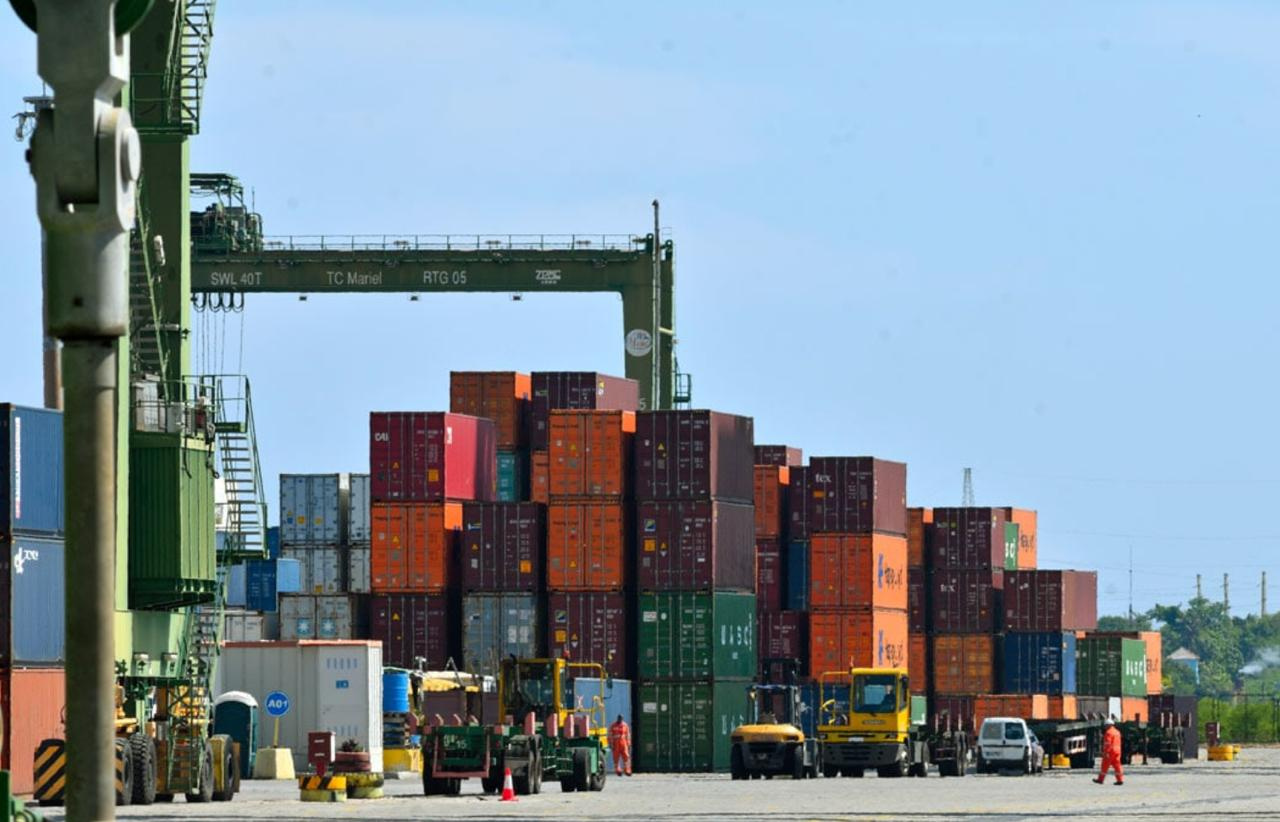
None of the nationalities listed in the Onei report experienced an increase in travelers. / 14ymedio

14ymedio bigger14ymedio, Havana, 28 June 2025 — Tourism data is being released for another month, and the plummeting statistics are no longer surprising. Compared to the same period in 2024, 862,343 travelers had arrived on the island as of May 31, a 26.6% decrease. In the fifth month of the year, the National Office of Statistics and Information (ONEI) recorded the arrival of some 120,000 tourists, a figure similar to that of 2022 at the same time, when the country was still suffering the consequences of the COVID-19 pandemic.

Last May’s performance was, in short, the worst in the last three years for that month, despite Havana’s efforts to encourage tourism to the island. At the top of the list is Canada, which continues to send the largest number of travelers—387,404 through May—but still saw nearly 30% fewer Canadians arriving than in 2024.

The worst figures come from travelers from Russia, a country that has pledged to the Cuban regime to improve tourism on the island, but whose efforts continue to fall on deaf ears. In total, only 56,089 Russians arrived in the first five months of 2025, a 45.5% decrease compared to the previous year.

The Russians are followed by Europeans: Germany (33% less), France (26.8%), Italy (25.7%) and Spain (25.4%), which confirms a trend that has been maintained for several months: the lack of interest in the Island on the continue reading

part of nationals of these countries, as Cuba continues to lose appeal in Europe.

Also in the Onei top 10 are Cubans abroad (22.6% less), the United States (20%), Mexico (11.1%) and, with the best data, Argentina, although it still registers a decrease, in this case of 7%.

Also in the Onei top 10 are Cubans living abroad (22.6% less), the United States (20%), Mexico (11.1%), and, with the best figure, Argentina, although it also recorded a 7% decrease. All countries in the Onei ranking, without exception, have registered a decrease, ranging from 7% to 45%.

Despite all this, the decline has slowed compared to previous months, although not significantly. At the end of February, for example, Cuba had received 30% fewer visitors than in the same period last year, a figure slightly worse than the 26.6% drop seen this May.

The state of the tourism sector, which is constantly shrinking despite significant investment, is a headache for the Havana government. Just three days ago, tourism minister Juan Carlos García Granda proposed the creation of a common space in Latin America accessible with a single visa. He outlined the idea in an interview with the Spanish newspaper El País during a meeting with industry leaders in Colombia held at the Dann Carlton Hotel, north of Bogotá.

“Perhaps we need to start talking about visas that can be used across multiple countries, as is the case with the Schengen Area in Europe. We need to see how the world has done it and apply it to the region to attract shared benefits from such distant tourist flows,” said García Granda.

He also acknowledged the lack of interest of the European market in the island, which has forced the country to look for other options in China or Russia.

He also acknowledged the European market’s lack of interest in the island, which has forced the Island to seek other options in China or Russia. “We already have better flows that we want to grow. And we want to do so by providing a unique offering as a region that benefits us and that we can share,” he added.

However, the proposal doesn’t seem likely to materialize in the immediate future, as Cuba is desperate to attract foreign currency in the midst of an economic crisis. At the same time, other destinations in the region are flourishing, leaving the island behind. In the first quarter of the year alone, the Dominican Republic , with cultural and sun-and-beach offerings similar to those in Cuba, had already broken a traveler record, with more than 3 million visits.

____________

COLLABORATE WITH OUR WORK: The 14ymedio team is committed to practicing serious journalism that reflects Cuba’s reality in all its depth. Thank you for joining us on this long journey. We invite you to continue supporting us by becoming a member of 14ymedio now. Together we can continue transforming journalism in Cuba.
Three Cubans in Mexico on Hunger Strike Over Delay in Asylum Procedures

A court gives Immigration ten days to grant permanent residency to Ghislayne Jiménez Moret, Luis García Ramirez, and Otmara Arencibia Bustamante.

Otmara Arencibia Bustamante, Ghislayne Jiménez Moret and Luis García Ramirez in Tapachula, Chiapas / UltimatumMx

14ymedio bigger14ymedio, Ángel Salinas, Mexico City, June 25, 2025 — The Cubans Ghislayne Jiménez Moret, Luis García Ramirez and Otmara Arencibia Bustamante began a hunger strike this Monday in front of the headquarters of the National Institute for Migration (INM) in Tapachula, Chiapas. The migrants blame the Mexican Commission for Aid to Refugees (COMAR) for delaying their asylum procedures.

“We will be here for as long as it takes,” says Luis García Ramirez, who left the island last October. The lack of documents has limited the possibilities for this young person to find a well-paid job. “It’s very difficult because they don’t accept you for any job,” he says.

García Ramírez tells this newspaper that because of their appointments with Migration, they have lost job opportunities. “They keep you there for five hours; they don’t attend to you, and then they return you home without your process advancing.”

Otmara Arencibia Bustamante, diagnosed with breast cancer, tells this newspaper that she started the process five months ago. Despite “getting the eight signatures required” by COMAR to conduct a final interview, “they don’t tell you” when it will be held. The woman showed the Amparo [protective order] 957/25 to which she resorted to expedite the procedure, but she still hasn’t received refugee status.

A source revealed that COMAR in Tapachula “has no operational staff, translators or interviewers”

The delay has affected her income; the little that she receives from family members helps her to survive in Tapachula. “I would like to have papers so that I can work,” she says. “If I don’t have papers from Mexico, they won’t continue reading

let me work.” Arencibia Bustamante says that, despite having a unique key of registration of temporary population (CURP)*, there have been sites indicating that “it is not sufficient” to get a job.

Currently, COMAR’s headquarters in Tapachula is only providing a CURP and scheduling appointments to have a final interview with the migrant to decide whether he or she can be a beneficiary of refuge. The migration process normally involves several formalities and takes a few months. During this period, a work permit is obtained while it is decided if the applicant can become a refugee, but at present this process is not being respected by the institution in the face of an influx of migrants.

Attorney José Luis Pérez points out to 14ymedio that this group of Cubans has faced apathy from the authorities. The lawyer confirmed that the Fourth District Court “gave the INM ten days to respond to its procedure of permanent resistance.”.

A source from Migration, who requested anonymity, revealed that COMAR is facing restructuring. “There is no operational staff, translators or interviewers in Chiapas,” he said. “At the moment there are hundreds of migrants in limbo. Procedures are taking up to a year.”

El Colectivo de Monitoreo-Frontera Sur denounced the accelerated institutional deterioration that directly affects thousands of migrants and asylum seekers on the border between Mexico and Guatemala.

The organization pointed out to Diario del Sur that due to the deterioration, “COMAR’s operational capacity has been reduced, in addition to the existence of a backlog in the humanitarian flights of the INM and forced evictions without minimum guarantees, which reflects a migration policy based on omission, criminalization and abandonment.

* CURP stands for Clave Única de Registro de Poblacíon para Extranjeros, or Unique Key of Registration of Foreign Population.

Translated by Regina Anavy
____________

COLLABORATE WITH OUR WORK: The 14ymedio team is committed to practicing serious journalism that reflects Cuba’s reality in all its depth. Thank you for joining us on this long journey. We invite you to continue supporting us by becoming a member of 14ymedio now. Together we can continue transforming journalism in Cuba.
In Holguín, the ‘Chemical’ Takes Over Marijuana Alley

  • Students from the two neighboring schools “get high in broad daylight”
  • Instead of prioritizing prevention, authorities mount exemplary trials with sentences of up to 20 years in prison.
Alberto Sosa González Secondary School, in Holguín / Facebook

14ymedio bigger14ymedio, Miguel García, Holguín, 26 June 2025 — Holguín’s Marijuana Alley earned its name years ago for the ease of finding someone to sell some “marijuana cigarettes.” But with the appearance of the ’químico’ – chemical – and its cheap and potent papers, cannabis is in retreat. The new king of drugs now passes from hand to hand, from high school students to younger boys, from the unemployed to housewives, while it continues to gain ground in the city.

A few meters from the alley there are two schools, says Susana, who used to attend both centers as a social worker. The secondary school is called Alberto Sosa González and has about 1,000 students. In an annex, “almost wall to wall,” she explains, there is also a pre-university. “With 150 or 200 pesos in hand, any of those boys can get a dose of chemical,” she says.

She has seen them herself, she confesses. “In the morning, before they go to school, you find them there, smoking cigarettes and something else. Then in the afternoon, when they leave class, they go back to the alley,” she says. A few years ago students were hiding while sharing marijuana cigarettes, but now they are completely uninhibited. “Even outside of school, while waiting for their girlfriends, many get high as if it were nothing, in broad daylight.” continue reading

Susana is no longer a social worker, but that hasn’t stopped her from noticing that drug use in Holguín is “rampant”

Susana is no longer a social worker, but that has not prevented her from noticing that the consumption of drugs in Holguín, especially in schools, is “rampant.” “Although they have not been made public, there have been several cases of boys being found with little bits of chemical in their rucksacks or uniforms. They have also been caught eating it,” she warns.

Parks, corners, specific streets or entire neighborhoods. The cannabinoid is present throughout the city, not only in schools. “A few months ago I myself witnessed a purchase,” says the Holguinera, who places the events in the so-called Chivos park, another enclave where drug “transactions” have become frequent.

“A man arrived on a bicycle and stopped in front of three young boys without getting off. The boys paid him, and he took out a sealed pack of cigarettes, gave each one a little piece of paper and left,” says Susana, who up until that point was not sure what she had witnessed.

“I immediately noticed when the boys started taking the tobacco out of the end of the cigarette to make room for the chemical. They lit up right there and started smoking.”

Susana has also heard of other methods of consumption. “To amplify the high of the chemical, they buy rum and instant soft drinks. After consuming the drug, they prepare a concentrate of the alcohol and powder that makes them feel good,” she explains.

In addition to Marijuana Alley, Susana relates the areas of greater presence of the chemical with the most marginal neighborhoods. “There is a place known as the Loma del Tanque where there is also a lot of drugs, especially among young people aged 15 to 25. There are very poor people who live there; they have come from other municipalities and the countryside trying to get close to the city,” she points out.

The 26 de Julio neighborhood, she adds, is another “red zone.” If she had to point out the “capital” of the consumption of chemical and marijuana, says Susana, it would be Chivos park.

Susana has learned of many trials and operations to combat the presence of narcotics in the city

Susana has learned of many trials and operations to combat the presence of narcotics in the city. “A few days ago they raided two places on 13th Street and seized químico,” she says. But the areas that are commonly known to be epicenters of narcotics sales continue to spread, and among consumers, although mostly still young people, there are also adults and the elderly, both men and women.

Far from focusing on prevention and rehabilitation, the Cuban Government has chosen to wage war against those involved in crimes of drug use and possession. It is a rare day when the official press or news does not speak of an exemplary trial against sellers and consumers. This same Wednesday, the official newspaper Granma reported the sanction of up to 20 years in prison for a resident in Ciego de Ávila for growing marijuana. Another person was sentenced to three years for knowing and not reporting the crime.

On the same day, the Prosecutor’s Office of Santiago de Cuba disclosed the case — without specifying the sentence — of a 64-year-old Venezuelan citizen, tried for “crime related to illicit drugs and substances with similar effects.”

Both trials were broadcast one day before the celebration on Thursday of the International Day Against Drug Abuse and Illicit Trafficking, a day that the Government has used to underline its “zero tolerance” towards narcotics.

Translated by Regina Anavy

____________

COLLABORATE WITH OUR WORK: The 14ymedio team is committed to practicing serious journalism that reflects Cuba’s reality in all its depth. Thank you for joining us on this long journey. We invite you to continue supporting us by becoming a member of 14ymedio now. Together we can continue transforming journalism in Cuba.