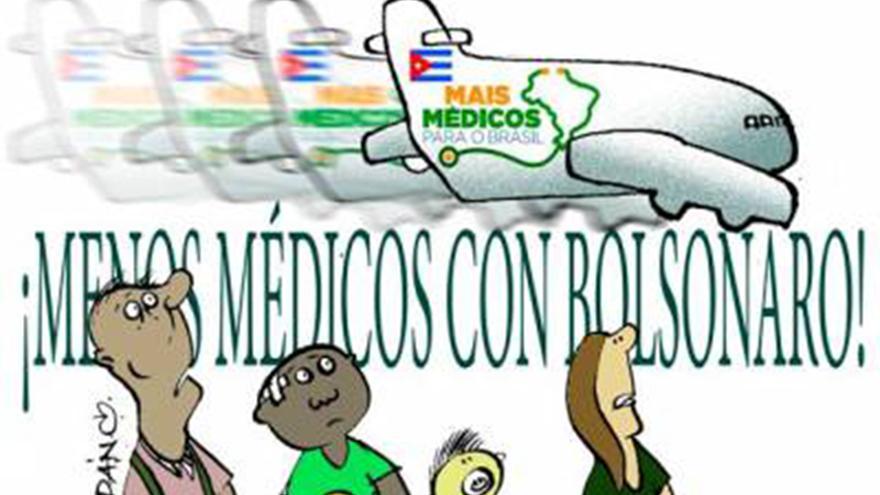

The Official Cuban Press Bares Its Teeth to Jair Bolsonaro

The official media has preferred to spread testimonies and stories about the return of the doctors as a very synchronized chorus and without different chords. Text: Fewer Doctors With Bolsonaro!

14ymedio bigger14ymedio, Marcelo Hernandez, Havana, 19 November 2018 — These days the official press controlled by the Communist Party has sharpened its rhetoric after the decision by the Ministry of Public Health (MINSAP) to close the door on the Mais Medicos (More Doctors) in Brazil program.  The Island’s press outlets have not spared insulting president-elect Jair Bolsonaro, who, under a humanitarian pretext by which in reality he sought to distance himself politically from Havana, conditioned the continued stay of the Cuban doctors on a series of measures that the Island’s authorities did not like.

The next leader of the South American giant combines characteristics that perfectly fit the mold of the adversary of Havana’s Revolution Plaza:  defender of the military dictatorship, ultra-rightist and very critical of the Island’s government.  His profile turns him into Ronald Reagan’s perfect successor for pro-government political forces. continue reading

“We get up and it’s Bolsonaro, we lie down and it’s still Bolsonaro,” complains Yanisbel, a Havana resident of 45 years who asserts that “recently it’s not worth it to turn on the television because it’s all the same.”  The news reports are filled with interviews of Cuban doctors who describe their sacrifices and achievements during the mission in Brazil and also attacks on the “new political shift” of the — for years — allied country.

Granma, the official mouthpiece of the Cuban Communist Party (PCC), has taken great pains in reports, opinion columns and bulletins in which it highlights the “lack of morality” of the next Brazilian government for questioning Havana’s actions and proclaims that “foolishness won” with the departure of the Island’s health professionals from the Mais Medicos program.

Among such profusion of words and adjectives, the readers and viewers have noticed that something important is missing.  “They have not told us the chicken of chicken with rice, and everyone knows it,” advises Duany, a self-employed barber who spent several days scrutinizing the topic with his customers.  “The Cuban press has not counted on Bolsonaro wanting our doctors to make their whole salaries and to be able to bring their relatives,” he opines.

In a country where new technologies put official censorship in check it is increasingly difficult to hide information.  “Everyone knows it, everyone talks about the same thing in the street, but the prime time newscast does not mention it,” complains Duany.  “That makes the press lose credibility and contradicts all the calls to end secrecy that some official makes from time to time on television.”

“This is the typical case that puts editorial policy to the test,” says a young graduate of the Havana Communications Department who asked for anonymity.  “The fact that the national press only reflects one opinion and one way of seeing the end of the agreement of the Ministry of Public Health with the Brazilian government is very significant.”

The young man rejects the idea that they have not interviewed “a single doctor among those who must return to Cuban who is not in agreement with MINSAP’s decision or who plans to seek the political asylum that Bolsonaro has offered.”  Nor “have they broadcast statements from relatives here who do not agree with the low salaries or the family separations that the mission imposes.”

Instead of that, the official media has preferred to broadcast statements and stories as a very synchronized chorus and without different chords.  “We fall again time after time into the same thing and later we are called to do journalism closer aligned with reality, but as if reality is not published,” complains the recent graduate.

Meanwhile, illegal parabolic antennas and other forms of information distribution are experiencing increasing usage.  “People are waiting for Bolsonaro to be able to widen the political asylum offer to other Cuban professionals or make more flexible the travel visa from the Island to that country,” speculates Ricardo, a distributor of several of the illegal signal antennas.

“Some days ago what was most in demand was the telenovelas and the series but in the last week they have asked me to transmit all the news from Florida and any program that touches on the topic of Bolsonaro,” he explains to this daily.  On the flat roof of his home in Central Havana, camouflaged behind a supposed dove cage, Ricardo has installed three antennas from which emerge yards and yards of cables that go to the living rooms of more than a hundred families.

In the official media, Bolsonaro’s counterpart is former Brazilian president Dilma Rousseff, who during her reign strengthened ties with Havana and provided the National Bank of Economic and Social Development with a loan of more than 680 million dollars to widen the Mariel port, the emblematic work of Raul Castro’s government.

“We have returned to the fable of the good and the bad, the hatchet man and the victim,” asserts Susana, a retiree who for more than a quarter of a century worked for the Ministry of Foreign Trade.  “This is going to last, and we are going to have Bolsonaro for a while,” says the woman with a daughter who is one of the more than 8,300 doctors who are still on Brazilian soil.

“This is like a Brazilian telanovela, by chapters, but it’s already known who is the bad guy and who plays the part of the slave Isaura,” says the woman.

Translated by Mary Lou Keel

__________________________

The 14ymedio team is committed to serious journalism that reflects the reality of deep Cuba. Thank you for joining us on this long road. We invite you to continue supporting us, but this time by becoming a member of 14ymedio. Together we can continue to transform journalism in Cuba.

A Woman Is In Charge of the University of Havana for the First Time In 290 Years

Miriam Nicado García is a member of the Communist Party of Cuba and, since April of this year, also of the Council of State. (Cubadebate)

14ymedio bigger14ymedio / EFE, Havana, 21 November 2018 – The University of Havana (UH) appointed Miriam Nicado García as the new rector of that institution, the first time that a woman holds the position in the center of higher education of the capital since its founding almost three centuries ago. The decision was announced Monday in an extraordinary session of the University Council of the UH, but was not divulged to the press until Wednesday.

Until now Nicado was the rector of the University of Information Sciences, created by the late leader Fidel Castro as a center of advanced technology to stimulate the national development of software.

The rector is a member of the Communist Party of Cuba and, since April of this year, also of the Council of State, in addition to being one of the deputies of the IX legislature in the National Assembly of People’s Power for the municipality of La Lisa, in Havana. continue reading

Full Professor, top level graduate and licensed in Applied Mathematics, Nicado is also a Doctor of Science in that specialty. Previously, she was dean of the Faculty of Mathematics, Physics and Computing at the Central University of Las Villas and vice-rector of that university.

As a professor she has taught in her field of study at universities in several countries in the region such as Mexico, Chile, Venezuela, Ecuador and the Dominican Republic. She has received the National and Provincial Vanguard award, a distinction granted by the Central de Trabajadores (Workers Center) of Cuba.

In the meeting where she was appointed it was also made known that Dr. Gustavo Cobreiro Suárez, rector who was in charge at the time of the announcement, “will assume other functions” from now on, the official press said without specifying more details.

Founded in 1728 by Dominican friars as the Royal and Pontifical University of San Geronimo de La Habana, UH now has 19 schools and 12 research centers.

It is the main center of higher learning on the island and was recently included in the list of the 20 best universities in Latin America, according to the London-based consultancy Quacquarelli Symonds (QS).

In September of this year Dr. Orquídea Urquiola Sánchez became the first woman to ever hold the position of rector in the country at the University of Cienfuegos.

Translated by Wilfredo Díaz Echevarria

_________________________

The 14ymedio team is committed to serious journalism that reflects the reality of deep Cuba. Thank you for joining us on this long road. We invite you to continue supporting us, but this time by becoming a member of 14ymedio. Together we can continue to transform journalism in Cuba.
Police Dogs

This graffiti has appeared in recent days on several buildings in Cuba’s capital. (14ymedio)

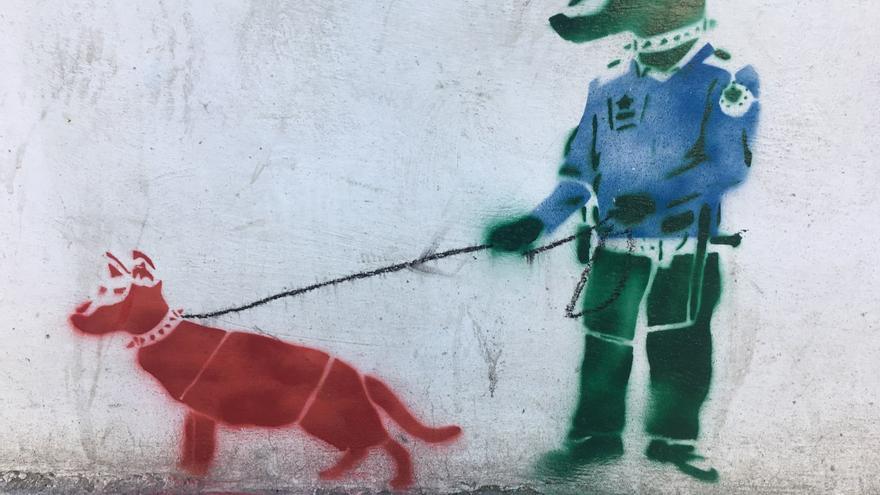
14ymedio bigger14ymedio, Marcelo Hernandez, Havana, 19 November 2018 — Several building facades of Central Havana display a very unique graffiti that has appeared in recent days. The image shows a uniformed National Revolutionary Police (PNR) officer accompanied by a dog with whom he shares the same face, snout, teeth and fierce gesture. Man and animal have the appearance of being alert, the ears attentive and an aggressive look, as if about to launch themselves on their prey. The graffiti alludes, without subtleties, to the police violence and aggression that characterizes this body of public order in Cuba.

For several years it has been common to see police accompanied by German shepherd dogs in the central zones of the Cuban capital. The area surrounding the Capitol, the areas near the Central Park, the busiest parts of Monte Street and even the most entertaining corners of La Rampa are a frequent stop for these officers accompanied by their dogs. Next to the whistle, the night stick and the walkie-talkie, the dog is already a distinctive sign of their presence. continue reading

That era during which television broadcast an announcement in which a small child claimed “police, police you are my friend”, has also been forgotten. Now, the members of the PNR are viewed with much distrust and fear by the population. The excesses committed during the arbitrary arrests, the fines and the detentions without cause have sufficiently stained their reputation, disseminated by the new technologies, have left testimony of the injustices or the excessive blows of these uniformed ones.

Part of that fear and suspicion has been captured by the graffiti artist in which the fierce irrationality of the animal is shared by a human being who should maintain order, not provoke violence or fear.

Translated by Wilfredo Díaz Echevarria

____________________________

The 14ymedio team is committed to serious journalism that reflects the reality of deep Cuba. Thank you for joining us on this long road. We invite you to continue supporting us, but this time by becoming a member of 14ymedio. Together we can continue to transform journalism in Cuba.

Dozens of Cubans Who Protested at UN Headquarters Detained in Trinidad and Tobago

According to Bárbara Enríquez, a member of the protest, some 80 Cubans have been arrested, including her. (Courtesy)

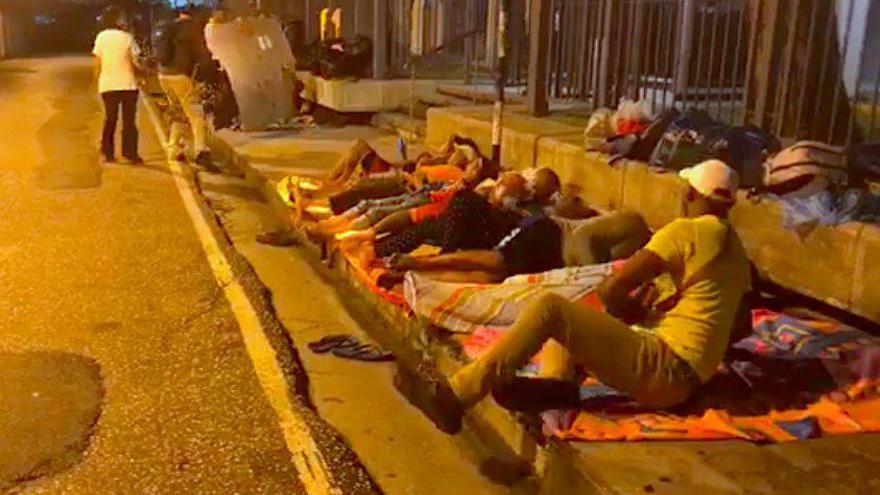
14ymedio bigger14ymedio, Luz Escobar, Miami, November 16, 2018 — A group of Cubans who had protested for days at the UN offices in Port of Spain, the capital of Trinidad and Tobago, were arrested by the authorities of that country on Friday, the police of the Caribbean island confirmed to 14ymedio. The migrants were unhappy with the United Nations High Commissioner for Refugees (UNHCR) after the agency withdrew monthly financial aid in October.

The migrants were arrested after a meeting yesterday afternoon, during which a UNHCR representative warned them that, if they did not abandon the protest so that their asylum requests could be processed, “they would be detained,” Yaquelin Vera  Morfa, one of the migrants arrested, told this newspaper today. continue reading

A worker who collaborates with UNHCR, and who prefers to remain anonymous, explained that the arrests took place at around six in the morning. “They are detained at a police precinct called Belmont,” she explained. According to Barbara Enríquez, one of the women arrested who was able to get in touch by telephone with this newspaper from the police station, some 70 Cubans are with her.

A part of the group of Cubans, who this Tuesday had used plastic bags to tie themselves to the fence of the UN compound in the capital in order to request a meeting with UNHCR officials to discuss their asylum requests, were interviewed this Thursday by the organization.

In that meeting, which took place in a courtyard near the Venezuelan embassy, the UNHCR representative “did not want to discuss any issues” with the 15 representatives of the more than a hundred Cubans who are protesting their situation, according to Vera Morfa, and he also told them that the agency’s office was going to be closed for the next two months.

The police have assured that all the Cubans are well and, although they have not provided more details, Bárbara Enríquez has commented that until now the treatment “has been good.” 14ymedio has tried to repeatedly contact, without success, the responsible parties from UNHCR to learn their version of what happened.

The migrants began the protest two weeks ago after UNHCR decided in October to withdraw the economic aid that they received monthly and that allowed many to pay rent for a place to live, said Vera Morfa.

Last Tuesday, the day the migrants tied themselves up at the UNHCR headquarters, the government of Trinidad and Tobago described the situation of the Cubans in that country as “very complex.” The Caribbean nation does not have legislation with respect to refugee matters and asylum claims, although it is a signatory to the Convention on the Status of Refugees. This prevents these Cuban migrants from working legally, having a bank account or obtaining a driver’s license, among other difficulties.

“Everything has been very hard here, from the first moment I arrived in this country and I realized that there was no legislation for refugees it was a blow, now I have refugee status from UNHCR but knowing that there is no legislation here they took back the aid and left me with nothing. It’s been a month already that we haven’t gotten it. Because of not having that money, many of us were unable to pay the rent and that’s why we’re here,” lamented Vera.

Translated by Wilfredo Díaz Echevarria

_______________________

The 14ymedio team is committed to serious journalism that reflects the reality of deep Cuba. Thank you for joining us on this long road. We invite you to continue supporting us, but this time by becoming a member of 14ymedio. Together we can continue to transform journalism in Cuba.

Intellectuals, Politicians and Activists Denounce Cuban Constitutional Reform Process

Clockwise from top left: Former president of Colombia Andrés Pastrana, leader of the Ladies in White Berta Soler, writer Mario Vargas Llosa and activist Guillermo Fariñas.

14ymedio bigger14ymedio, Havana, 12 November 2018 — The Madrid-based Cuban Observatory for Human Rights (OCDH) has released a letter, signed by over twenty intellectuals, politicians and activists, which denounces the country’s constitutional reform process for not addressing “either democratic principles or the political and social plurality of Cuban society,” noting that it has been drafted “solely by Cuban Communist Party and in response only to its interests.”

Among the letter’s twenty-six signatories, who also claim the new constitution does not respect basic human rights such as “the existence of political parties, freedom of the press and freedom of association,” are prominent political figures such as Albert Rivas, head of the Spanish political party Ciudadanos (Citizens), writers such as the nobel laureate Mario Vargas Llosa and human rights activists such as Berta Soler, leader of the Ladies in White. continue reading

Since the draft constitution was published, criticism has focused on two articles that establish the core principles of the new constitution. Article 3 declares that “socialism and the revolutionary political and social system, established by the constitution, are irrevocable”, while article 5 describes the Communist Party as “the principle guiding force of society and of the state.”

In the letter released by the OCDH, the signatories — they include the Andrei Sakharov Prize winner Guillermo Fariñas and former Colombian president Andrés Pastrana — express hope that there will be “a real transition towards democracy” in Cuba and urge the “government of (President) Miguel Díaz-Canel to not pass up this historic opportunity.”

According to official sources, more than 7.3 million people have participated in public debates, which will end on November 15, on the constitutional reforms. Among the most frequently discussed changes are the legalization of same-sex marriage and presidential term limits. Official organization such as the Cuban Union of Writers and Artists, however, have not allowed the proposed constitutional changes to be debated within the organization.

Though the proposed document, which was approved by the National Assembly in the summer, does not include significant changes to the country’s political system, it does legally recognize private property and establishes the office of prime minister. Once proposals arising out of popular debate are included, a new draft will be sent to the parliament, to be approved and voted on in popular referendum in 2019.

____________________

The 14ymedio team is committed to serious journalism that reflects the reality of deep Cuba. Thank you for joining us on this long road. We invite you to continue supporting us, but this time by becoming a member of 14ymedio. Together we can continue to transform journalism in Cuba.
Cuba, A Risky Trip For Pedro Sánchez

Pedro Sánchez during the XXVI Ibero-American Summit held last week in Guatemala. (Moncloa)

14ymedio bigger14ymedio Yoani Sánchez, Havana, 20 November 2018 – Pedro Sánchez will arrive in Cuba and will put an end to a long period of 32 years during which the island has not hosted an official visit by a President of the Government of Spain. The former Motherland hopes to reaffirm its business presence and reconquer the land that the United States won with a diplomatic thaw. The visit, however, planned as promenade of smiles and handshakes, presents many possibilities for failure.

During his stay in Havana, Sánchez will be surrounded by three fires whose flames will point at him from different positions. There is no way he will not be burned, or at least singed, on this trip, but it would be good if he knew the extent of the fire before delving into it. continue reading

If the Spanish president has chosen Cuba because it is a seemingly comfortable plaza that avoids his reaching nations that are nearer but with which there are too many outstanding issues, he may pay dearly for his mistake. As in 1898, this may be the place where the fleet of his illusions is sunk. Especially because it comes at a time when his visit may generate more resentment than benefits.

One of the fires that will burn the head of the Spanish Executive will be that of the almighty Government, a true master in diplomatic choreography, which designs every step so that the visitor does not depart from an agenda meticulously planned to the last detail. This itinerary has a clear purpose: to show the benefits of the Cuban system and, incidentally, to put a hand in the guest’s pocket so that he grants soft loans to the island’s ailing economy.

Miguel Diaz-Canel will show off the visit as an accolade to his Government and a success of his newly inaugurated mandate. If Madrid “sanctifies” this handpicked president, it is very likely that Sánchez will be followed by other European dignitaries who do not want to miss out on the red carpet in Havana. After all, many of them think that Cuba is a country of beautiful beaches and smiling people where a “heavy hand” is needed to keep things under control.

Ministers, officials and apparatchiks will surround Sánchez and, with a gesture of a hand or a raise of an eyebrow, they will drop the idea that soon, very soon, the country will enter on a path of deep reforms and that all of today’s deficiencies will be tomorrow’s achievements. Dressed in suits and ties or the traditional guayaberas, they will sell him the mirage of a change that is just around the corner, one for which only a little more money is needed.

Perhaps it will be a handshake with Raul Castro who, although he no longer sits in the presidential chair, continues to pull the nation’s strings from his watchtower as general secretary of the Communist Party. With a constitutional reform about to conclude, the octogenarian general may try to raise Sánchez’s arm with his fist raised, as fellow travelers, a gesture he has made with others.

To exorcise the demons that might manipulate his words, Sánchez should demand, as Barack Obama did, an opportunity to speak directly to the people of Cuba, live and in real time. Not the typical intervention of a press conference, where the official journalists will crowd the space asking him to speak out against the US embargo, but a speech without censorship or intermediaries.

Fleeing excessive protocol and guided tours will be another challenge. In this case, as well, he could learn from the experience of the former US president who tempered his more formal agenda with some escapes to several areas behind the curtains of propaganda. What he sees there will not resemble the tourist postcards but it will leave him with a more authentic impression of our reality.

The other burning coal that Pedro Sánchez will have in front of him is the political opposition and activism. So far, it has not been reported that he is going to meet with any opposition figures, nor whether the independent press will be able to cover some of the events in which he participates. Maybe that information has not been revealed yet, to avoid annoying the susceptible official hosts, but not announcing it generates strong criticism that would be worth tackling.

If the presidential plane takes off from this Island without the president having heard a version of Cuba other than that of the Palace of the Revolution, this will have been a useless and incomplete trip.

From the voice of the dissidents, Sánchez will be able to learn of the persistence of repression, now masked in subterfuges such as condemning opponents for “attack on authority” or “disrespect,” codified as common crimes. They can also detail how in recent years many activists have been “regulated,” a bureaucratic euphemism that hides a prohibition on leaving the island. That, together with the surveillance and the execution of critics’ reputations, remain common practices in this country.

But the flames do not end there. Sánchez lands in a nation where more than 150,000 citizens have become nationalized Spanish citizens thanks to the so-called law of grandchildren. These cubañoles are also waiting for a response to their demands on issues they assume as rights. Financial aid, greater support for food and medicine for the elderly, and intercessions so that the Plaza of the Revolution finally recognizes dual citizenship.

This community of cubañoles, the vast majority of which has never traveled to the Spain but rather has spent their entire lives in the island, will not speak to Sánchez as they might speak to a foreign visitor who arrives for a short time and whom one tries not to annoy, but as those who are addressing their representative, a public servant of a nation that owes them answers, protection and solutions.

Nor will Sánchez find rest outside of those three fiery tongues. Each commercial agreement that he signs during his visit, each loan that he grants, and each debt that he forgives to the Cuban Government, will be in direct contrast with the economic and business segregation to which the citizens of this country are subject.

Under current legislation, it is forbidden for a group of neighbors, who can range from prosperous owners of paladares – private restaurants – to owners of rental houses for tourists, to invest, for example, in fixing the paving of the street where they live. However, if a distant Asturian, Basque or Galician disembarks in that same block to erect a hotel, they will be allowed to do so.

Sánchez arrives at a moment when the piñata has already been shattered and the governing elite has divided the most succulent pieces of the national economy, in chicanery with foreign investors. Investors who close their eyes to the lack of rights of their employees and the absence of equity of opportunities for those born in this land, under the argument that “if we do not invest, others will.”

In this Cuba, fractured economically and politically, it will be a real miracle if this presidential visit does not end more in criticism than applause. The fire of public opinion waits to make firewood from this tree.

_______________________________

Editor’s Note: This text has been published this Tuesday, November 20 in the Spanish newspaper El País.

The 14ymedio team is committed to serious journalism that reflects the reality of deep Cuba. Thank you for joining us on this long road. We invite you to continue supporting us, but this time by becoming a member of 14ymedio. Together we can continue to transform journalism in Cuba.
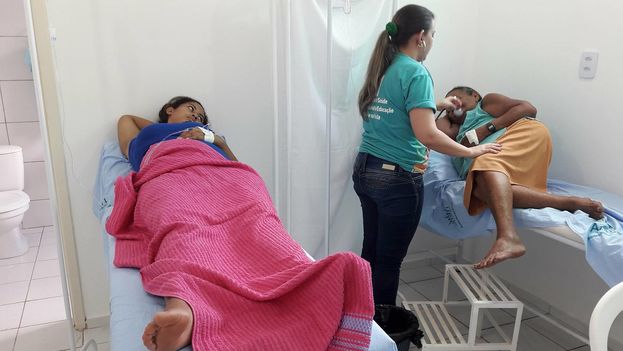
Cuba-Brazil: The Battle of the White Coats

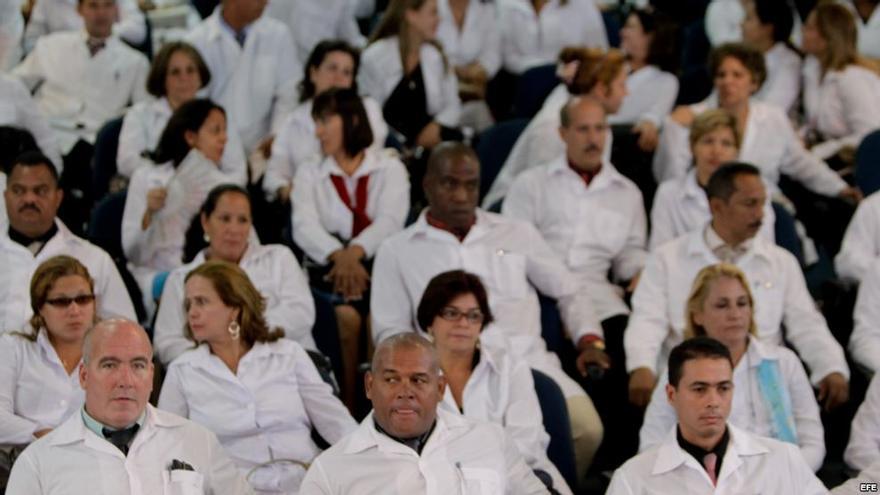
Cuban doctors who stay in Brazil will be forbidden entry to the island for eight years. (14ymedio)

14ymedio bigger14ymedio, Yoani Sanchez, Generation Y, Havana, 19 November 2018 – We saw the conflict coming. From the moment Jair Bolsonero won the elections in Brazil, Cuba’s official discourse increased in rhetoric against him and prepared public opinion for the rupture that was imminent.

The straw that broke the camel’s back for the Plaza of the Revolution was the statements by the president-elect in which he warned that he would change the conditions of the agreement under which more than 8,300 physicians from Cuba work in Brazil’s Mais Medicos (More Doctors) program.

Last Wednesday, tensions escalated to their highest point when the Cuban Minister of Public Health announced that he was cancelling the contract and removing his professionals from the South American country. The official notice, read out on all of the island’s the news programs, repeated that Bolsonaro’s threats would not be tolerated but deftly ignored some of his words. Particularly those where the rightist leader insisted that the Cuban doctors should receive their full salaries and be able to bring their families to stay with them while they were in the program. continue reading

The Cuban government has made medical missions a lucrative business. With professionals deployed in more than 60 countries, the money raised by this practice is Cuba’s largest source of foreign currency, estimated to exceed $11 billion annually.

In the case of Brazil, Havana pockets 75% of the 3,300 dollar salary Brazil pays for each doctor, while the health professionals only receive a quarter of the total. On the Island, in a bank account which they do not have access to, their “Cuban” monthly salary of about 60 dollars accumulates, which they can only collect if they return to the island.

Those who leave the Mais Medicos program under their own will are considered deserters and are banned from entering Cuba for eight years. During the time the Workers’ Party (PT) was at the head of the Brazilian government, the doctors who escaped from their contracts were pursued by the Brazilian police and could be returned to the Island if they were arrested. None were allowed to bring their family members to be with them during their missions, and they were often housed in overcrowded hostels shared with other doctors, nurses and hospital technicians.

Despite so many difficulties and the low earnings, the missions were very much desired by the doctors because they were able to buy goods that are not available in Cuban markets, and to make contacts that would later allow them to return to Brazil privately, with a contract to work in some clinic.

Beyond its ability to provide healthcare for many Brazilians in the poorest areas of the country, the Mais Medicos program hid a political operation to build support for the leftist Workers’ Party and guarantee it the votes of the lower classes. It was clear that Cuba’s interest in this outcome was not going to continue with Bolsonaro in charge, thus it was only a matter of time before Castroism removed its healthcare professionals from Brazil. It only remains now to ask how many of them will actually return to the island.

The president-elect of Brazil has announced that he will grant political asylum to all Cuban doctors who request it and it is expected that a considerable number will benefit from this offer. Those who do so will lose the right to return to their homeland for many long years, they will be called traitors and, most likely, their families on the island will be under pressure. The battle of the white coats has barely begun.

__________________

Note: This column was originally published in the Latin American edition of the Deutsche Welle chain.

The 14ymedio team is committed to serious journalism that reflects the reality of deep Cuba. Thank you for joining us on this long road. We invite you to continue supporting us, but this time by becoming a member of 14ymedio. Together we can continue to transform journalism in Cuba.
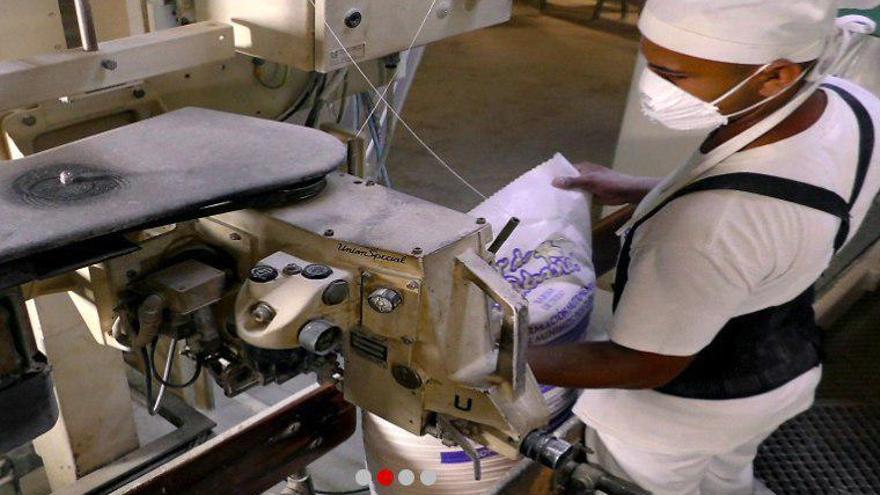
Flour Shortage Affects Thousands of Private Businesses in Cuba

The Cuban milling industry is going through a bad time because of the lack of raw material and problems with infrastructure. (Imsa)

14ymedio bigger14ymedio, Zunilda Mata, Havana, November 18, 2018 — First eggs went missing, then it was sugar’s turn, and now it’s wheat flour that has been added to the list of products that are lacking in Cuban markets. The valuable ingredient is the basis of many recipes that are sold in private businesses, like sweets, breads, and pizzas, and so its absence puts the menus of these cafes and private restaurants in crisis.

The problems started in the middle of this year, when the lack of spare parts for mills and a drop in the arrival of raw material caused a shortage of wheat flour, as Jesús Rodríguez, first vice president of the Business Group of Food Industry (GEIA), told the official press at that time.

After the crisis generated by the deficit of the product in the markets for several weeks, authorities decided to import 15,000 additional tons to guarantee the preparation of bread for the rationed market and bread bound for social assistance. However, the hard currency stores remained secondary in the distribution. continue reading

Without a wholesale market to go to, the self-employed must buy from the network of retail businesses. “A few months ago we could still find a 5-kilo bag of flour but now not even the 1-kilo is available,” laments Jesús Ruiz, a vendor of sweets on Calle Infanta in Havana.

“For our business flour is the main ingredient, because pastries, cakes, and all the other sweets that we sell are made from flour,” the entrepreneur explains to 14ymedio. “When there is none, we can only remain open selling soft drinks and shakes, so we have a lot of losses, it’s as if they have taken away the oxygen that allows us to breathe as a cafe,” he points out.

Traditionally many owners of private businesses go to the black market to stock up on flour. The product arrives in the informal business network after being diverted [i.e. stolen] from bakeries on the rationed system and other state centers. However, the deficit of the past few months has sharpened the administrative controls and notably diminished the illegal sale of flour.

The shortage of the crucial ingredient “isn’t going to have a short-term solution,” according to an employee of the José Antonio Echevarría mill in Havana, one of the principal wheat processing centers in the country. The source, who preferred to remain anonymous, attributes the deficit to the “terrible situation of the infrastructure” of the industry.

“The spare parts that we were waiting for haven’t arrived, and the mill is far below its capacity, it’s only milling to satisfy the demand of the subsidiary services, like the one-pound loaf and whatever is bound for schools or work centers,” he clarifies. “From the 500 tons daily that we were expecting to be processing by this time of the year, we aren’t doing even a fifth of that.”

“But it’s not only a problem of parts, but also that the transporting of cereals via Cuba Railways and other methods isn’t functioning well,” adds the mill worker. “Sometimes the merchandise stays in our warehouses and deteriorates because they don’t come to pick it up in time.” Nevertheless, he emphasizes that the whole situation has worsened in the past few weeks because of the lack of raw material.

“There’s no money to buy wheat and even if we had a great industry with all new equipment, we can’t make miracles if there aren’t products to put through the mills,” he specifies. “Wheat flour is considered a strategic line of goods and it is like this for us, what will remain for other industries that aren’t prioritized,” he questions.

Something similar is happening at the Turcios Lima plant, also in the capital, which for the past few years hasn’t managed to regain the 130 tons of wheat that it obtained once a day. The other three mills, out of the five in the country, are located in Matanzas, Cienfuegos, and Santiago de Cuba, all of them in a deteriorated technical state.

In the portfolio of opportunities for foreign investment is included the assembly of a wheat mill for processing 300,000 tons of flour each year at a cost of $120 million, but the offer has generated little interest until now.

“Most affected are the businesses that sell Italian food,” says Ricardo Valdés, courier at a restaurant specializing in pizza and pasta in Havana’s Chinatown. “The flour reserves that we had for some emergency are running out and we don’t know if we are going to be able to remain open by the end of the year,” he tells this newspaper.

In the Milling Factory of Havana, located in the Regla municipality, the telephones haven’t stopped ringing in the last few weeks with calls from self-employed people worried about the supply of the product. The joint-venture, specializing in flours, semolina, and wheat bran, processes the majority of the merchandise that ends up on the shelves of stores that sell in convertible pesos.

In the last year packages of flour of a foreign make, originating primarily in Italy and Spain but also Mexico, have also arrived at these businesses. “We don’t have foreign flour now, either, because we ran out even though it’s more expensive than the nationally produced kind,” assures an employee of La Puntilla market, one of the best stocked in the capital.

“When we put out a few packets they run out right away because the self-employed take them,” says the employee. “We’ve had to put limits on purchases so that people don’t take 10 or 20 packets at once, but this doesn’t solve the problem.”

A few meters away, a private business offers empanadas, pizzas, and churros. “We are going to stay open until we run out of our last bag of flour but after that we will have to close,” says the owner. The self-employed man believes that a solution could be allowing people to import the product in a private manner. “But that would be asking a lot because they don’t allow us commercial import.”

The entire vast framework of businesses, small shops, points of sale, and the most sophisticated restaurants that operate on a basis of flour wait for the state to manage to revive production or permit private people to bring in the basic ingredient from other countries.

Translated by: Sheilagh Carey

___________________

The 14ymedio team is committed to serious journalism that reflects the reality of deep Cuba. Thank you for joining us on this long road. We invite you to continue supporting us, but this time by becoming a member of 14ymedio. Together we can continue to transform journalism in Cuba.
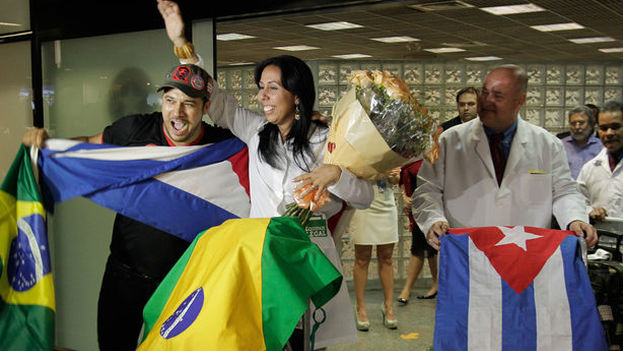
El Patrón Feels Wronged

Jair Bolsonaro conditioned Cubans remaining in the Mais Medicos program, to their receiving their total, among other measures. (EFE)

14ymedio bigger14ymedio, Reinaldo Escobar, Havana, 14 November 2018 — The most significant thing about the statement from Cuba’s Ministry of Health (Minsap) announcing the withdrawal rom Brazil’s Mais Medicos program is that it does not clearly mention the real causes of such a dramatic decision.

The angry reaction arose after Señor Bolsonaro, president-elect of the giant South American nation, announced that the new conditions for Cuba to remain in the collaborative program would be: first, that the Cuban doctors would have to revalidate their credentials according to Brazilian standards; second, that the collaborators would receive their full salary – that is the money that Brazil pays for their services would go entirely to them; and third, that they would have the right to bring their families with them to Brazil. continue reading

The official statement from Cuba’s Ministry of Health only mentions the need to revalidate the title, which is interpreted as disrespectful, as emphasized by the words: “It is not acceptable to question the dignity, professionalism and altruism of Cuban collaborators who, with the support of their families, currently provide services in 67 countries. ”

Another reason to terminate this collaboration which is not confessed in the Minsap statement, is that the Cuban government does not want a right-wing ruler to be able to show achievements in the health of his nation’s citizens. That was an advantage that Cuba was happy to offer to the Workers Party as part of the practices of political clientelism, which includes quotas for young Latin Americans to come to Cuba to study medicine.

Cuba today has about 8,300 doctors in Brazil for which Brazil pays a salary of 3,300 dollars a month, but in reality the doctors themselves receive only 25% of that because the rest goes into the coffers of the Cuban government. Hence, many doctors have been annoyed that Minsap’s statement announcing the withdrawal of the mission says, “Employees have been kept employed at all times and receive 100% of their salary in Cuba” without clarifying that the salary it is talking about is a monthly payment that seldom exceeds the equivalent of $60 US, insignificant when compared to the nearly $2,500 that the state receives for each doctor in Brazil.

On the national television midday news, where the statement was read in full, it was added that “Cuba’s medical collaboration in the world is used to pay for investments or programs that reach everyone on the Island, that generate income that contributes to the economic and social development and circumvents the United States blockade. ”

Since August 2013, when Dilma Rousseff organized this program in collaboration with the Pan American Health Organization, Cuban doctors were warned that they could not enter into contracts “freely” – that is on their own – and also since then they have been prohibited from taking revalidation exams.

Any “disobedients” caught in this “lack of discipline” were immediately returned to the island as punishment and if they dared to leave the mission they were defined as deserters and consequently were forbidden to return to Cuba for at least eight years.

In fact, the great offense that Bolsonaro has given the Cuban Government is to open the doors of his immense country to doctors who want to work there. Until now, the first reaction to the Cuban decision was a message on Mr. Bolsonaro’s Twitter account, where he lamented the withdrawal of Cuba from the Mais Medicos program; the second was his promise made at a press conference to give asylum to doctors who wanted to stay in Brazil.

In these critical moments for the Cuban economy, the annual 11.5 billion dollars that the country receives for the provision of professional services around the world, will be significantly reduced with the abrupt termination of the presence in Brazil, but in addition, the doctors who have to return to Cuba before their end of their “missions” in Brazil will be harmed.

Despite the difficult conditions that result from establishing themselves in places where no other medical professional wants to be and despite the burden of the low salary – from which the doctors had to cover their own living expenses – Brazil was one of the places most desired by Cuban doctors who, beyond their spirit of solidarity and altruism, wanted to fulfill a mission there to solve at least part that nation’s shortcomings in the provision of healthcare.

If something has been clear, it is that among the priorities of the Cuban government, rather than the humanitarian vocation to save lives, were to improve the image of a leftist party before its electorate and to earn money at the expense of the exploitation of professional work.

It is an indisputable sovereign right of Brazil to require any professional to revalidate their qualifications to practice in the country. It is a right of doctors to receive in full the salary that is being paid for them, and then pay the taxes on that salary that the law provides. It is also their right to be accompanied by family members if they wish.

Where is the offense?

_______________________

The 14ymedio team is committed to serious journalism that reflects the reality of deep Cuba. Thank you for joining us on this long road. We invite you to continue supporting us, but this time by becoming a member of 14ymedio. Together we can continue to transform journalism in Cuba.
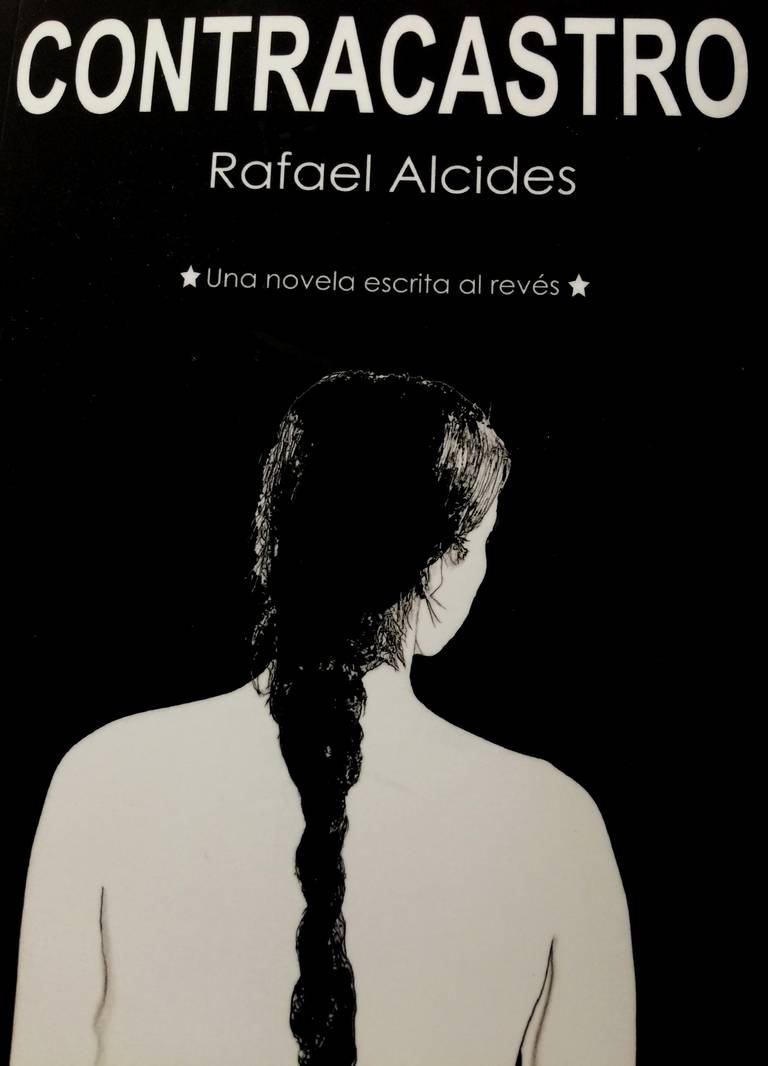
Posthumous Novel by Rafael Alcides, Against Death, Against Oblivion / Ramon Fernandez-Larrea

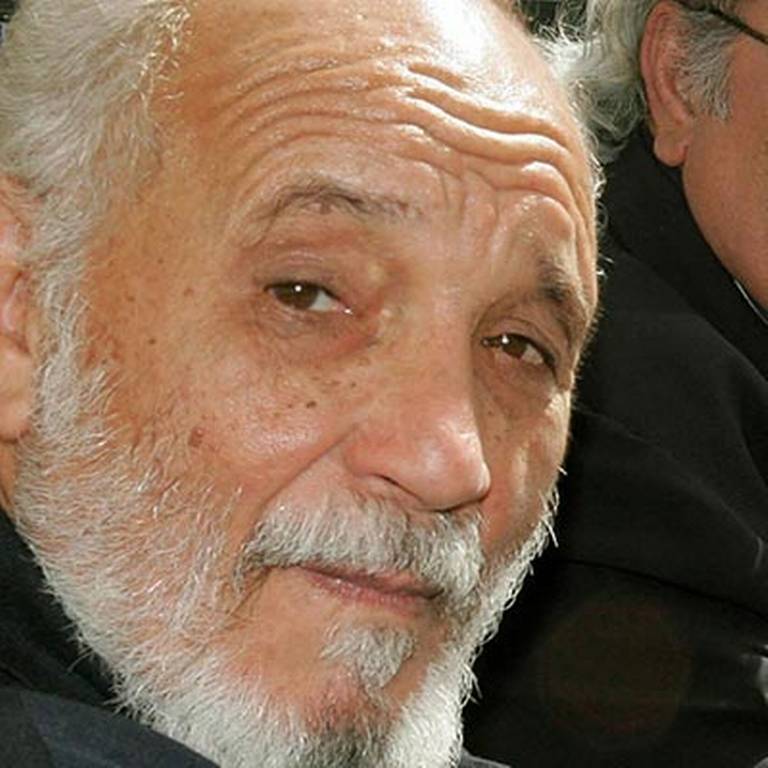
Rafael Alcides in a scene from the documentary “Nadie” (Nobody), by the filmmaker Miguel Coyula. (Courtesy)

Translated from* from El Nuevo Herald, Ramón Fernández-Larrea, 8 November 2018

When one receives a novel – written by a friend who is a poet, or by a friend who has been and is forever a great poet – with the title Contracastro, one could never imagine that it is a love story, and not a pamphlet of accusations against power, nor the political testament of a worthy man, with a vertical and honest position.

And if that novel is also the posthumous work of that poet friend, which is also like a last will, and also, a very old story that Rafael Alcides began to ruminate on in the convulsive first years of the 1960s, and which he spent his life writing and rewriting, the result is a kind of testament, because this novel could be, or is also, the novel of our lives.

On the cover of the print edition it is noted that Contracastro is “A novel written in reverse.” Why? I suspect that it has to do with what Alcides himself says in the public history of the book: “In this second version the old love story is supported with very slight additions. Not so the context, this time evoked from today by Tom, already an old man, in a mega-Miami where he has been among the city’s forgers… For that first version, consistent with my political views of the time, the novel was nothing more than the many other pamphleteering-style texts of the time, against capitalism and the bourgeoisie.” continue reading

And Rafael Alcides continues telling us that “because of its title it frightened the Casa de las Américas officials when they saw it appear in the Literary Contest of 1965,” where “The juror Mario Vargas Llosa, who nominated it for a Prize, managed to obtain an Honorary Mention.”

What changed then? The world changed, Alcides changed. The years passed and the luminous future never arrived on the coasts of the island. Fatigue and disappointment arrived. And the masks fell from those heroes who wanted us happy all the time. And then came the time to tell, openly, the rending of the protagonists’ journeys to nowhere, the many protagonists of the other major novel, the epic of a people who emigrate, of families that are torn apart and walk through these worlds, without being able to tell their loved ones in a letter, all the love they still have.

Contracastro, published today by Eriginal Ediciones, is an inquest into Cuban history after 1959, told in first person, but in two alternating times, but, always in the background, it is a passionate story of love, sex, disgust and illusions, especially of lost illusions that the protagonist is capable of shouting to the four winds: “Burn down the world if they want, I have you.”

Contracastro is that then and this now. They are Tom and Carla in a provincial Miami that has been filled with Cubans who expect life to change in the next sixty minutes so that they can return to their country. A country that has already been filled with Russians, Chinese, Americans, abandoned houses, streets that will be, from then on, only in a bloody memory.

“Even though here in Miami they hate the word revolution,” writes the author, “it is here, nevertheless, where the Revolution really is. The Revolution with capital letters. In Cuba, the Revolution has already passed and what there is is the complete opposite of the ideals of democracy, present since the Guáimaro Charter of 1869.” … And at the end of that statement made by Tom, the protagonist, thinking like Rafael Alcides, or Alcides himself stuck in the skin and blood of Tom, one can read: “So while we can not return to Cuba, I will continue to consider myself a man from Guáimaro, a follower of Agramonte, a soldier of Céspedes, that is, a revolutionary.”

Contracastro is, in short, the legacy of Rafael Alcides, a man who lived and died telling his truths in Cuba today, and that was uncomfortable for the authorities, because honesty, in times of disappointment, is, at the very least, suspicious. Here the poet leaves us this intense story of a love that was and was not. A testimony against death, against oblivion. And we must read with gratitude to its author, to discover who we have been or who we are now. To know which side of History we are on. Or, better, to check, with pain and bitterness, which side of this story is ours.

Rafael Alcides

Housing In Cuba / Somos+, German Gonzalez

Somos+, Germán M. González, 11 November 2018

Absolute power equals absolute responsibility: the socio-economic situation of the country is disastrous, party & government admits it: Who will answer for that?

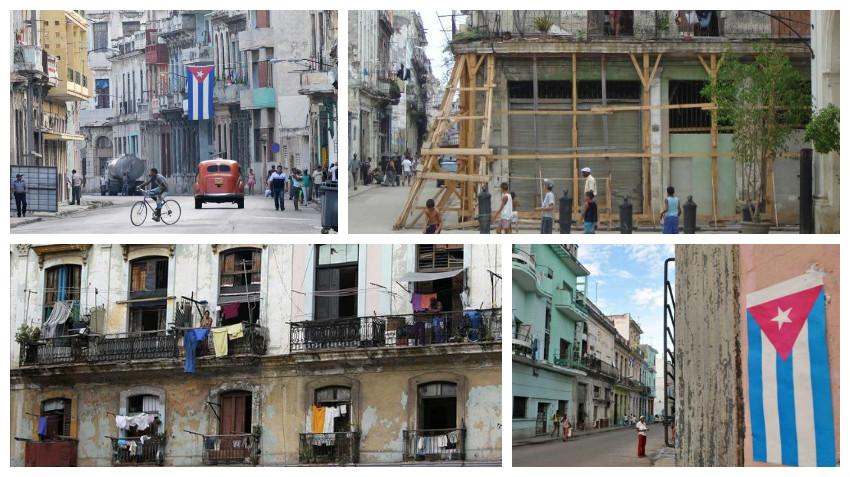
In the final days of this October, several references to the subject of housing appeared in the official Cuban media. Published first is that Pinar del Rio lacks more than ten thousand homes in order to fully recover from “prior hurricanes,” we are talking at a minimum of at least 10 years, and later, in the public version of a meeting of the council of ministers the “president” announced the proposal of building homes at a rate of 50 thousand per year. Let’s look at some background.

The universal right to decent and adequate housing is reflected in international and multilateral documents and agreements, as well as in the legislation of many countries, including national constitutions. Recognized in this manner, the human right to adequate housing — and its environment – is of fundamental importance for the enjoyment of all economic, social and cultural rights. Let’s look at the current situation in Cuba according to official sources.

The official newspaper Granma (January 25, 2018) reports that 47% of homes are inadequate, only exceeded in Latin America by Brazil (64%) and far higher than Argentina (22%) and Chile (23%). In addition, in the latter two countries, due to their climate, considering a home adequate implies many more requirements than in our sub-tropical archipelago. continue reading

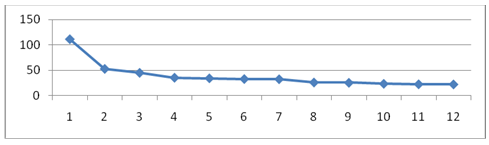
The pace of construction has declined in the last twelve years, from more than 111,000 units in 2006 to fewer than 22,000 in 2017 (denying the claimed efficiency of the raulista term of office) according to the Cuban Statistical Yearbook (AEC), the smallest amount since statistics became available. Graphic view:

In its June 1st edition, Granma offers chilling data:

Housing pending solution: Grand Total/Total Collapses — Hurricanes prior to Sandy (2012): 42,000/25,000; Hurricane Sandy (2012): 36,000/14,000; Hurricane Matthew (2016): 8,000/7,000; Hurricane Irma (2017): 115,000/15,000.

In total, there are 201,000 homes affected; of those 61,000 were total collapses; 42,000 and 25,000, respectively, occurred before 2012.

In summary, if the pace expected by Díaz-Canel is reached, it would take four years to replace the homes affected by hurricanes and then ten years to repair the “not adequate” ones, plus an indeterminate period for impacts from new hurricanes and the currently adequate homes that, due to the passage of time and the poor quality of construction of the last 60 years, will inevitably deteriorate.

Add to this that the projected Diaz-Canelian pace is 2-1/2 times greater than what was achieved in the last five years as an annual average, plus the aforementioned unpredictable destructions and deteriorations, and the hopes of decent housing for most Cubans is more than remote.

A problem without a solution? For sure, under the current mandate of the “five” and their dogmas that are only effective for maintaining power.

The liberalization of the economy, the creation of a real estate market with modern credit system included, and above all the restitution to millions of Cuban diaspora members of their civil, political and economic rights with the consequent financial injection would surely give better results — in this and any other socioeconomic spheres — than the diffuse Díaz-Canelian dreams, which are nothing more than a badly copied version of the thousands of similar promises made by the Castro brothers… and look where we are after sixty years of listening to them.

Translated by Wilfredo Díaz Echevarria

Nobody Knows How To Eradicate Pollution From Cuba’s Agabama and Sipiabo Rivers

The official press criticizes the obsolete infrastructure, which contributes to the poor state of the waters. (Escambray)

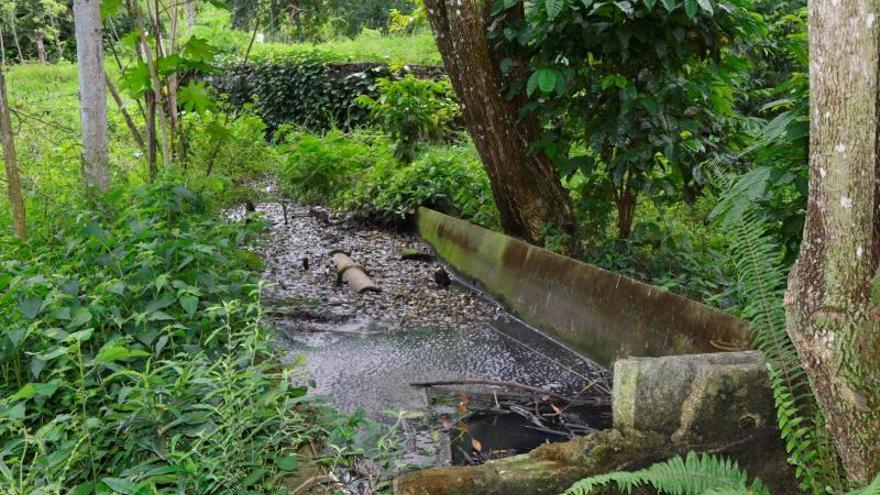
14ymedio bigger14ymedio, Havana, 14 November 2018 — Three months after the local press in Sancti Spíritus denounced the contamination of several tributaries of the Agabama and Sipiabo rivers, surrounding the municipality of Fomento, swimming has been banned in those waters by the authorities,  due to the lack of action and the exchange of accusations between different institutions that have not yet resolved the situation.

“What have the main entities done to take action to counteract the pollution of the aquifers? What factors have contributed to the phenomenon that instead of  improving it is getting worse?”, questions an article in the Escambray newspaper, which notes that about five years ago bacteriological analysis of the water began.

Last July, the Provincial Center of Hygiene, Epidemiology and Microbiology reported that they had carried out analyses of 10 water samples in the swimming areas of Balnerario, Ramblazo and Campismo Popular La Hormiga, whose waters are fed by the Agabama and Sipiabo rivers. In all of them  “the presence of total coliform bacteria and fecal coliform over the permissible parameters” were found, the official media reports. continue reading

Among the causes of the pollution reported by the Ministry of Public Health in October are the discharge of domestic wastewater and the excrement of pigs raised by individuals in their homes. Although experts from the Ministry of Science, Technology and Environment (Citma) maintain the hypothesis that the Agabama River is contaminated from Santa Clara.

The local press argues that, according to the provisions of Law No. 124 of Terrestrial Waters that governs the management of this resource and guarantees its protection and quality, the power to ensure the quality of water is the responsibility of the National Institute of Hydraulic Resources (INRH), Citma, the Ministry of Public Health, and the local bodies of the People’s Power. These organizations do not know how to come to agreement in order to to solve the water problem in Fomento.

“I was unaware of the magnitude of the closure of the swimming areas due to the contamination of surface waters,” the Provincial sub-delegate for Hydraulic Resources,Yusliadys Lorenzo Coca, told Escambray.

The Hydraulic Utilization Company does not seem to know anything about the situation, either. The technical director of the entity, Francisco Hernández Lorenzo, said that he also did not know about the imbalance, alleging that they are responsible for the sources of the supply. When the local journalists reminded him that the company is the owner of the water, the manager placed blame on a higher institution. “Public Health should have communicated to do a joint study, because this has an impact on the population,” he replied.

Citma, for its part, placed the responsibility on other institutions. “Who is responsible for taking action?, those who use the water and manage it: Hydraulic Resources, Agriculture, Azcuba, local bodies of the People’s Power,” said Néstor Álvarez Cruz, director of the Environmental Unit in Sancti Spíritus.

“While in the law there are many that bear responsibility, in practice few take action on the matter, and the solution may take as many years as the pollution lasts,” the Escambray article points out in conclusion, while denouncing the lack of knowledge on the part of the competent authorities, the lack of organization and the obsolescence of the infrastructure.

Translated by Wilfredo Díaz Echevarria

__________________________

The 14ymedio team is committed to serious journalism that reflects the reality of deep Cuba. Thank you for joining us on this long road. We invite you to continue supporting us, but this time by becoming a member of 14ymedio. Together we can continue to transform journalism in Cuba.
Cuba Slams the Door on the ‘More Doctors’ Program in Brazil

More than 8,300 Cuban healthcare professionals work in Brazil (CC)

14ymedio bigger14ymedio/EFE, Havana, 14 November 2018 — Cuba’s Ministry of Public Health (Minsap) reported on Wednesday in an official statement that it is withdrawing from the Mais Medicos social program in Brazil due to the “derogatory and threatening” words of president-elect Jair Bolsonaro, who announced modifications to this project that the Cuban Government considers “unacceptable.”

Minsap has also circulated a message among Cuban doctors who work in Brazil to continue working until their transportation is organized for their return to the island. The message specifies that doctors must “avoid provocations” and maintain “self-care and protection.”

In the official note published on Facebook on Wednesday, Minsap emphasizes that in the five years of work in that country “about 20,000 Cuban employees performed 113,359,000 patient consultation” serving a population of “up to 60 million Brazilians,” (out of a total population of about 209 million), at a time when the Cuban brigade represented 80 percent of all doctors participating in the program.

“It is not acceptable to question the dignity, professionalism and altruism of the Cuban collaborators who, with the support of their families, currently provide services in 67 countries,” the Cuban health authorities added.

Jair Bolsonaro’s reaction was immediate. In his Twitter account he said that Brazil had conditioned the continuation of the program on a validation of the credentials of the more than 8,500 Cuban doctors in the country according to Brazilian standards, along with a change that would allow them to personally receive the full salaries Brazil pays for them. He also demanded that they be free to bring their family members with them. “Unfortunately, Cuba did not accept,” he added.

Minsap affirms that the collaborators “have stayed at their jobs at all times and receive 100 percent of their salaries in Cuba,” without mentioning that the Cuban Government keeps at least three quarters of the amount received from Brazil for the services of Cuban health professionals.

“Those who come here from other countries earn the full salary [that Brazil pays for them]. The Cubans earn approximately 25% of the salary [Brazil pays for them]. Does the rest go to fuel the Cuban dictatorship?” Bolsonaro asked on November 3.

Before being elected president, Bolsonaro had been very critical of the agreement signed in 2013, under which more than 18,000 Cuban doctors were sent to Brazil under the government of Dilma Rousseff. At that time, the Workers Party, an ally of Havana, agreed that through the intermediation of the Pan American Health Organization, Cuba would keep about 75% of the 3,300 dollars a month that Brazil pays for each Cuban doctor.

After the impeachment of Dilma Rousseff, the Cuban government pressured the Brazilian authorities to renegotiate the contract for its doctors and obtained an increase of 9% in the payments for them. The Plaza of the Revolution also achieved an increase of 10% for feeding the doctors in indigenous areas. None of that money went to the doctors, according to several testimonies obtained by this newspaper.

In Cuba, where the average state salary barely exceeds $30 a month, a mission abroad is one of the most common legal channels for qualified professionals to increase their income, despite not receiving the full salary paid for their services.

The Cuban State has declared that it receives more than 11.5 billion dollars annually in income from professional services abroad, and that this income is the country’s main source of foreign currency.

 __________________________

The 14ymedio team is committed to serious journalism that reflects the reality of deep Cuba. Thank you for joining us on this long road. We invite you to continue supporting us, but this time by becoming a member of 14ymedio. Together we can continue to transform journalism in Cuba.
Keys To Understanding An Emergency Tour By Cuban President Miguel Diaz-Canel

Díaz-Canel did not choose to visit closer or more lucrative markets, in part because he is not looking for contracts but rather alms. (EFE)

14ymedio bigger14ymedio, Yoani Sanchez, Lima, 13 November 2018 — If it were not for the two stopovers, one in Paris and the other in London, which Miguel Díaz-Canel made during his first official foreign tour at the head of the Cuban government, the map of his trip would be reduced to a group of countries that share ideological similarities and that are, for the Plaza of the Revolution, old allies from lost political battles.

In “the world according to Diaz-Canel” there are only as few nations as fingers on a hand, Moscow is located a few kilometers from Havana, and both the Americas and Europe have disappeared from the map. It is a planet scuplted in the geology of authoritarianism and created at the will of all-powerful parties, a land where the fragile grass of democracy hardly grows.

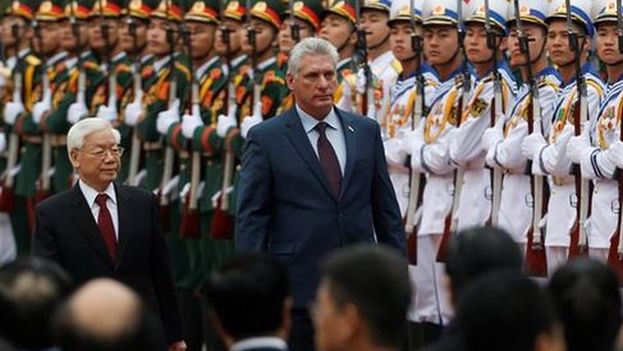
During his journey through that reduced world, the 58-year-old engineer was officially received by leaders from five countries: Russia, China, North Korea, Vietnam and Laos. The trip generated abundant declarations of “total support and solidarity” between the rulers, several visits to mausoleums housing the remains of controversial leaders, and the signing of some trade and cooperation agreements.

This latter seems to be the core of so much hectic activity, because beyond the official rituals, the journey was marked by urgency and driven by the despair of a leader at the head of a bankrupt nation. It was a trip in search of patrons, a “pass of the hat,” to achieve an economic relief from the tense situation on the island.

The scope of the agreements reached in this tour and their impact on the economy will only be verified in the coming months, but according to the headlines in the official newspaper Granma, we can already read that the compañeros visited on the trip have not been very benevolent. There has been no lack of agreements or signatures for exchanges, but there have been few loans or donations after so many handshakes, beyond having obtained 60 investment projects and a loan of 50 million dollars to buy weapons.

With productivity in the toilet, foreign tourism that will fail to reach the 5 million promised visitors, and the default of investors lacking enthusiasm to buy a piece of the Cuban pie, Havana is experiencing an acute lack of liquidity that is deepening the daily problems. Nevertheless, despite this tense situation, Díaz-Canel did not opt to visit closer or more lucrative markets, in part because he is not looking for contracts, but rather alms.

In addition to help and donations, the trip aimed to reaffirm the concept of “continuity” that has become the cornerstone of Cuba’s rulers. To reassure those who, like Kim Jong-un, could fear that, with the help of a younger leader, Havana might undertake economic and political reforms that would allow it to strengthen ties with Washington, Brussels and other democratic governments.

To all of them the message was clear. Nothing moves in the politics of the Island without the consent of the Communist Party and the generational change is totally under control. With this mantra, late Castroism tries to renew the support provided by these five nations in international forums, following the crisis facing regional entities such as the Bolivarian Alliance for the Peoples of Our America (ALBA) and the Community of Latin American and Caribbean States (CELAC).

A third reason to undertake this “path of complicity” has been to annoy the United States and to make it clear to the European Union that it is not a priority on the Cuban agenda. And, in passing, slam the door on Latin American administrations that believed that without a Castro in power dialogue with the island would be easier. By preferring not to travel through the countries of the area, Cuba’s government has shown its low regional spirit and its disdain for its

Now, once this tour of necessity and ideological myopia is over, it remains only to wait for the real benefits it will have in everyday life. The millions of dollars agreed upon in exchanges are just a drop in an ocean of needs and are unlikely to deter those who plan to escape the island. Those thousands of Cubans who each year set a course for countries not included in the small world preferred by Miguel Diaz-Canel.

_________________

The 14ymedio team is committed to serious journalism that reflects the reality of deep Cuba. Thank you for joining us on this long road. We invite you to continue supporting us, but this time by becoming a member of 14ymedio. Together we can continue to transform journalism in Cuba.