
"The Fight Against Decree 349 Will Continue," Insists Amaury Pacheco After Being Released

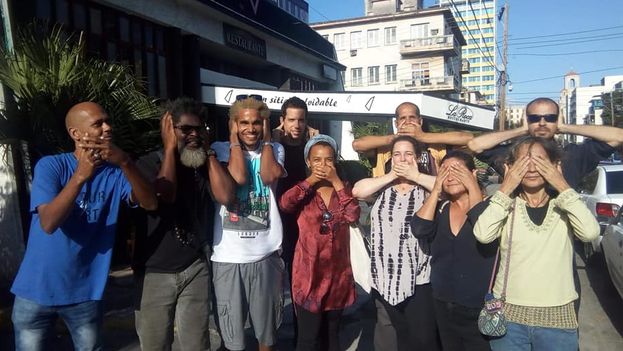
Group of artists who promote the campaign against Decree 349. (Courtesy)

14ymedio bigger14ymedio, Luz Escobar, Havana, 5 December 2018 — On Wednesday, around eight-thirty in the evening, Yanelys Núñez and Luis Manuel Otero were released, according to what they told 14ymedio when they left the Vivac de Calabazar Detention Center after protesting Decree 349.

“First we were in the eleventh unit of the San Miguel de Padrón police station, there we spent Monday night and on Tuesday they took us to Vivac (the State Security detention center), and when we arrived they did not want to accept us because Luis was on-strike and they returned us to the unit but in the night they accepted us (at Vivac) and we stayed there until they let us go. During the interrogations they told us that if we protested again in front of the Ministry of Culture they would accuse us of illegal association and demonstrating without permission.”

Núñez explained that Luis Manuel Otero, after leaving prison after more than 48 hours on hunger and thirst strike, had taken a soda. continue reading

On the other hand, on the night of Tuesday, the artists Amaury Pacheco and the producer Michel Matos were released, according to Pacheco himself, speaking to14ymedio after being released

Both were detained in the midst of a repressive wave by State Security against a peaceful sit-in in front of the Ministry of Culture (Mincuult) headquarters as a part of the campaign against Decree 349. Pacheco explained that his hunger strike will be maintained “as long as any artist is in prison” and he will return this morning to the Ministry of Culture if Yanelys Núñez and Luis Manuel Otero are not released during the night.

Pacheco said that when he arrived at the Ministry of Culture on November 3, both he and Matos were detained and that they spent most of their time in the police unit of the municipality of Regla. “Michel was taken first to Guanabacoa but then they brought him to the same jail where I was in Regla, there they interrogated us and told me that if I went back to Mincult I would be imprisoned for one to three years,” he said.

This newspaper was also able to speak with artist Tania Bruguera after she was released on Tuesday night after her third arrest, including her first arrest at the beginning of the protest. “They held me from nine in the morning until nine at night but they did not take me to a unit, they left me inside the car until three thirty in the afternoon at La Puntilla and then they took me to a house that is beyond Lenin Park, by way of Calvario,” explained the artist.

She says that at every moment the agents told her they would take her home but when she expressed her desire to return to the Ministry of Culture, that proposal was postponed until finally at nine o’clock in the evening they left her at the door of her house. During the detention in the house where the artist was taken, they offered her water and food, even though she had told her captors that she was on a hunger and thirst strike.

“They took me to a room with a table covered with food, I told them I was not going to eat, then they gave me a cold water bottle but I told him to keep it and later they also offered me ice cream but I also refused,” says the renowned artist.

“You know how I react when someone is imprisoned because it happened in 2014, I will talk with no problems when no one is being held prisoner,” Bruguera told the agent.

The musician Sandor Pérez Pita, from the reggae group Estudiantes sin Semilla (Students without Seed), was also released in the afternoon.

The artist Amaury Pacheco had affirmed that he maintained his hunger and thirst strike until they released the rest of the artists and that “the fight against Decree 349 continues.” In a video posted on his social networks he said this entire battle is being fought “for art, for freedom of expression.”

In conversation with 14ymedio, Tania Bruguera said that the intention was to return on Thursday to the Ministry of Culture to demand again the release of Yanelys Núñez Leyva and Luis Manuel Otero Alcántara to establish a dialogue with the institution and to ask for a response.

Artists from several countries have mobilized since Tuesday in favor of the release of the group of artists who oppose Decree 349. The director of the Tate Modern gallery in London, Frances Morris, expressed on Twitter that these arrests clearly illustrate the threats many artists around the world are facing.

Also this Wednesday afternoon a public session was held in the Turbine Hall to say “No to Decree 349” and provide support to detainees through an open microphone to those who wish to participate.

The Bureau of Human Rights, Democracy and Labor of the US State Department wrote on its Twitter account that “the Government of Cuba continues to criminalize freedom of expression while besieging artists and journalists to discourage protests against Decree 349.”

Meanwhile, Silvio Rodríguez wrote a comment on the blog Segunda Cita that “Decree 349 may have very good intentions but I’m sure it would be better if it were discussed with the artists.” He added that “it was something cooked up among the few” and that in his opinion “a disposition of this scopes must have a more democratic origin, and a purpose.”

“Perhaps there should be a moratorium on the decree, until an acceptable modification is discussed and resolved, and I do not know whether I will be able to work abroad as I have been doing, starting next year. I began to work on my own in the face of the very inefficient state contracting and coordination mechanisms,” the troubadour wrote.

Deborah Bruguera, Tania’s sister, wrote: “While on the phone with Tania Bruguera, Lt. Col. Kenia took her in a car, right at the corner of the MINCULT.” The artist sent a public statement “of the artists who have called for the sit-in at the Ministry of Culture of Cuba,” that her sister shared on social networks.

We reproduce the text in its entirety:

We have decided to make a call to sit peacefully and respectfully to camp, meditate, read poetry, dance, paint or perform any artistic activity in front of the Ministry of Culture because:

1: The artists of all the demonstrations, have carried them out in an organized way and through institutional channels to request the repeal of Decree 349 and its subsequent drafting with the assistance of the artists.

2: Even though these groups have met with leaders of the Ministry of Culture, the promises that they have made to respond have not been met and, failing that, a technical article was published in the Granma newspaper on November 30, justifying the validity of the current Decree 349, along with a bombardment on national television of programs with explanations in favor of 349 in its current format. This seems indicative to us that Decree 349 will not be repealed because this seems to be an action with the purpose of setting the population against our demands.

3: [The government] has commented that regulations and corrective rules will be made for the implementation of Decree 349. This seems insufficient because, given that the Decree has serious errors of representation and puts artists in a state of vulnerability, by criminalizing them and their works, we do not believe that it is appropriate to proceed with how to implement the Decree, if not the Decree itself.

4: December 7th is approaching, the date on which Decree Law 349 will become effective. We are asking for a meeting open to all with the Minister of Culture to inform us what has been the result of the meetings held with the artists and what will happen with Decree 349.

We want to receive from the Ministry of Culture the same respect towards us that we have had towards them. We will continue presenting ourselves to the Ministry of Culture to ask for our right to a response and open meeting with all the artists.

____________________

The 14ymedio team is committed to serious journalism that reflects the reality of deep Cuba. Thank you for joining us on this long road. We invite you to continue supporting us, but this time by becoming a member of 14ymedio. Together we can continue to transform journalism in Cuba.

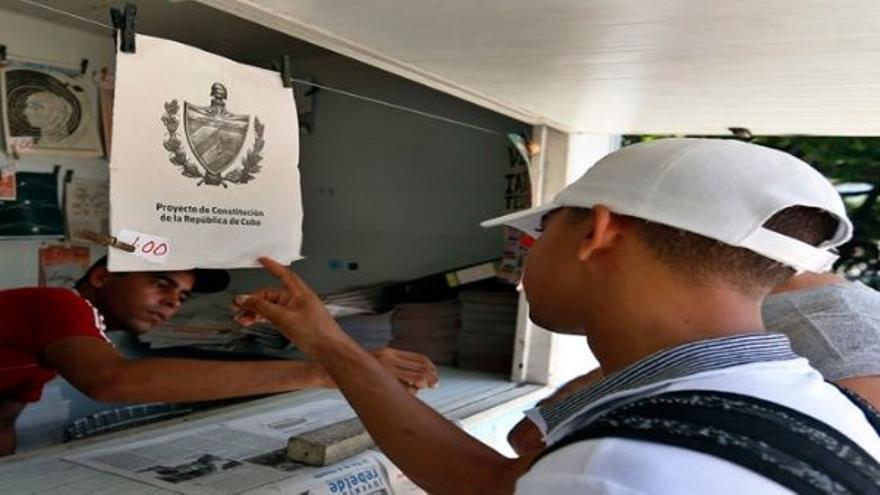
Two Deadly Sins / Fernando Damaso

Fernando Dámaso, 28 December 2018 — In democratic systems, Constitutions are drafted by a Constituent Assembly, formed by the most prepared representatives on the subject,from the different political parties that participate in their elections, whose number depends on the votes obtained according to the projects presented. The election, as is to be expected, is made by citizens according to their political, economic and social criteria.

In the current constitutional reform project in Cuba, the preparation was in the hands of a 33-member Commission, chaired by the First Secretary of the Communist Party of Cuba and made up of members of the pParty and of different State institutions, all committed to the socialist project and its implications, without any type of citizen participation in the choice of it.

This is the first deadly sin. continue reading

To try to present an impression of citizen participation, it was decided to submit the project, once approved in the first instance by the National Assembly of People’s Power, where the vote on everything is always unanimous, to the citizen consideration, through Assemblies, where everyone could give their personal opinion and this should be recorded in the corresponding minutes, but without submitting the proposal to a vote among the participants.

The trick is easy to detect: no matter how many citizens might agree or disagree with it, only one proposal was recorded since, once an opinion had been expressed, the repetition of it was not accepted.

This is the second deadly sin.

If the proposals had been put to vote and the number of votes for and against registered, a real indicator of the citizen opinion would have been obtained and not the figures of squalid percentages, made known by Señor Homero Acosta, in the session of the National Assembly where it was approved, also by the unanimous vote of the members.

This same gentleman pointed out that “This is the Constitution of the Revolution,” and he is absolutely right: it is the political testament of a phenomenon in extinction. Furthermore, it is not the Constitution of all Cubans, but that of the Communist Party, whose selective militancy does not exceed 0.7 percent of the eleven million Cubans living on the island and the almost three million Cubans residing abroad.

Although I do not question or stigmatize, as some representatives of the regime are already doing, the vote of every Cuban in the next referendum, on seeing violated many of the political, economic and social rights of citizens, with impositions and arbitrariness, my civic duty is to vote “NO.”

Is Fraud Possible in the February 24 Referendum?

The suspicion of a possible fraud has a demobilizing effect among the promoters of “No” in the Constitution referendum. (EFE)

14ymedio bigger14ymedio, Reinaldo Escobar, Havana, January 2, 2018 — The possibility that some type of fraud could be committed to distort the results of the constitutional referendum, which will take place on February 24 in Cuba, is one of the most frequent worries in conversations among activists.

The suspicion of a possible fraud has a demobilizing effect among the promoters of “No.” The most effective antidotes to cancel out this paralyzing pessimism are: assume that possibility as a reasonable risk or trust that fraud will not be committed.

The most effective vaccine to keep this threat from dissuading voters from visiting the ballot box to vote “No” is arriving to the understanding that little is risked and much can be gained. continue reading

After all, what is being risked (in addition to wasting a few minutes in vain at the ballot box) is that the Government is able to show the massive participation of citizens as a great success and that the “No” vote remains defeated in face of the crushing majority of the “Yes.” But those who propose abstaining, in order to not play into the hands of the feared fraud, should reason that it is much simpler to doctor the figure of participation than the number of negative votes.

Articles 116 and 117 of the current Electoral Law introduce an element that favors the lack of transparency in information of voting results. In both paragraphs the law obligates the members of the electoral tables, after finalizing the count, to place in the public view “a sample ballot” with the result of the vote count that exhibits how many votes each candidate received. The ballot does not have space for other information.

It is at least as striking that in a country where models and plans proliferate for any procedure, it has never occurred to anyone produce a document to dump all the information resulting from the suffrage. As a consequence of this “paper saving,” the data about how many voters attended each polling place and how many abstained did not remain in public view, nor did the number of canceled or blank ballots.

Only those voters who are present at the moment of the vote count in each polling place will be able to know those numbers. But after that process it is no longer possible to visit all of a municipality’s polling places with the intention of collecting data and being able to contrast it with the official information that is usually offered at the end of the process, broken down by municipalities and provinces. Those who do it will only find a ballot put up, probably on the door of the place, with the numbers obtained for either “Yes” or “No.”

The possibility of manipulating these data at the provincial or national level thus remains in the hands of a reduced group of people of the utmost trustworthiness to the Government.

In the electoral processes carried out for district representatives and members of the National Assembly, it’s unlikely that the result of the vote count will be the product of a fraud committed in the polling place.

The image of members of an electoral table shamelessly marking blank ballots, or changing what the will of voters reflects in the presence of witnesses, is difficult to believe. The massive complicity necessary to carry out an act of this nature in the almost 25,000 voting sites that could be authorized on February 24 requires a number of discreet and absolutely trustworthy persons that the Government does not currently have in its ranks.

The citizens who carry out the work at the election sites at a basic level can be docile, obedient, and absolutely convinced that socialism is what is best for the country; they can be “Fidelistas” and vehement admirers of the current president, but that doesn’t automatically make them into a multitude of inveterate cynics lacking ethics and decency.

That type of fraud does not seem to have occurred to date in the elections for representatives and assembly members, among other reasons, because it has not been necessary. For this something more sinister was invented: pre-fraud consisting of the intimidating nomination process which is carried out by a public show of hands for candidates for district representatives and the existence of the Candidacy Commissions that make up the list of names that will appear on the ballot for members of Parliament, with one name appearing for each open position.

When those tricks were not sufficient, then the activists of the neighborhood met to discredit “uncomfortable” candidates and, if persuasion was not enough, then the agents of State Security came out from their quarters to arrest the most dangerous.

The Government’s propagandists contrast these elections, guarded by young pioneers — that is elementary school children — with those from before 1959 which, they say, had to be guarded by armed men to prevent a party from assaulting a polling place with its supporters and stealing the ballot boxes.

If in the next referendum the results of the count are put up outside each polling place using one of the remaining ballots, the real number of absentees will never be able to be collected, nor will the blank or nullified sheets — it will only say how many votes for “Yes” and for “No.”

With a little perseverance and a minimum of organization, if the activists cover on foot or by bicycle the polling places of each municipality and leave graphic proof of public information, it will be very complicated for the Government to doctor the sum of votes obtained in each municipality. They would only be left with the ability to change the mathematics if they intended to distort the provincial and national data.

Is it perhaps impossible that fraud be committed? No, it is not impossible, but the risk that it would be discovered is enormous and it is unlikely that they dare to carry it out, even in the absence of independent observers.

It was they who created a mechanism of voting and counting practically armored, based on the popular belief that every civic act is useless and that they have it entirely under their control.

It’s enough for each nonconformist voter to have the minimum courage required to mark a vote for “No” in the intimacy of the voting cubicle. Obligating them to commit a shameless fraud would also be a victory.

Translated by: Sheilagh Carey

______________________

The 14ymedio team is committed to serious journalism that reflects the reality of deep Cuba. Thank you for joining us on this long road. We invite you to continue supporting us, but this time by becoming a member of 14ymedio. Together we can continue to transform journalism in Cuba.
14ymedio Faces of 2018: Chocolate, The Most Heard and the Most Hated

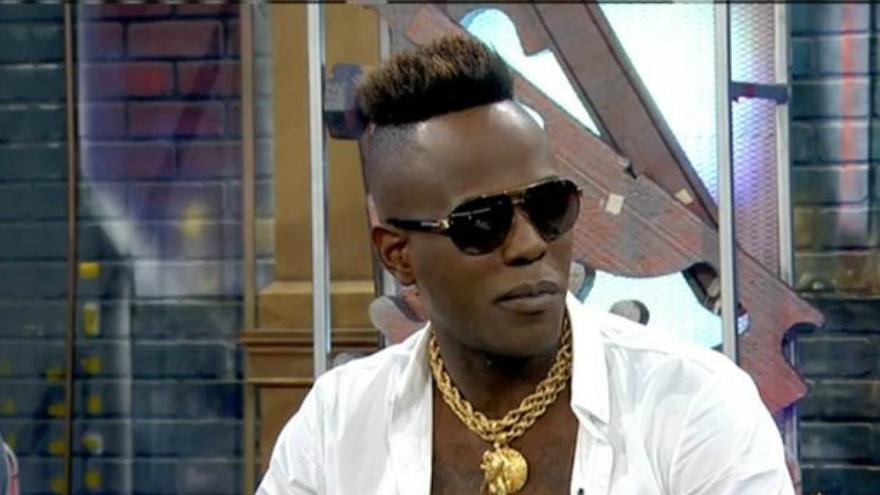
Chocolate,  Cuban reguetonero.

14ymedio bigger14ymedio, Havana, 30 December 2018 — The songs of Yosvanis Sierra Hernández, better known as Chocolate MC, leave no one indifferent: either they hate him or they adore him. Among the Cuban people, the author of songs like Guachineo and Palón Divino has been this year’s most listened to performer, whether at family parties or playing in the shared taxis or urban buses as they travel the streets.

Born in the neighborhood of Los Sitios, in Centro Habana, from the age of 13 he had to “put his body in the street,” as he said in an interview, to support his mother and sister. Also known as the king of the barrio, the singer of the urban genre has managed to climb to number one in alternative music despite not being broadcast on national radio or television.

One of Chocolate’s most recent songs of is called Bajanda and has become a hymn among the youngest Cubans. The lyrics speak of cats, rats, mice and, with its catchy rhythm, it has sneaked into the slang of the street.

His latest song, released on November 30, is called El Corral and, like most of his releases, was produced through an audio with a fixed image on his YouTube channel.

In the transcript of a meeting of a group of artists with authorities of the Ministry of Culture in which they expressed their rejection of Decree 349, the name of Chocolate appeared 16 times as an example of a very successful singer despite not having a musical company to support him.

His figure has also been touched with scandals. In 2017, in Miami, he spent several days in prison after an indictment by his partner for domestic violence and was released on bail after paying bond of 170,000 dollars.

He took up residence in Miami last year and has offered several concerts in the United States. Since then he has not returned to the Island.

See also: 14ymedio Faces of 2018

__________________________

The 14ymedio team is committed to serious journalism that reflects the reality of deep Cuba. Thank you for joining us on this long road. We invite you to continue supporting us, but this time by becoming a member of 14ymedio. Together we can continue to transform journalism in Cuba.

Brazil Freezes Export Insurance to Cuba due to Default

Brazil made million-dollar investments through BNDES to modernize the port of Mariel and to build the Mariel Special Development Zone (ZEDM). (14ymedio)

14ymedio bigger14ymedio, Havana, 28 December 2018 — The Brazilian government froze providing credit insurance to new exports to Cuba due to default, after taking the same steps in connection with Mozambique and Venezuela, as published by the Brazilian newspaper Folha de São Paulo.

The National Bank of Social and Economic Development (BNDES, by its Spanish acronym) has financed nearly $880 million worth of exports from 33 Brazilian companies to Cuba since 1998. The balance due by Havana is $597 million.

The current dispute concerns the arrears incurred by the Island on a $17.4 million payment of its debt in installments past due in June, July and August. continue reading

Out of the $10 million which Cuba should have paid by the June deadline, it barely paid $4 million. To cover the remaining balance, the Treasury must spend an amount equal to $6 million within the next few days to repay BNDES, which is insured by the Export Guarantee Fund (FGE, by its Spanish acronym).

According to Folha de São Paulo, Brazil will spend nearly 387 million in 2019 to cover the defaults by Cuba, Venezuela and Mozambique, and there will still remain a shortage of funds to provide insurance to new export credit operations.

Therefore, Cofig (Committee on Financing and Export Guarantees) decided not to provide insurance for new operations until budgetary coverage is assured by the forecasts to cover an eventual default.

“Historically, the dynamics of budget forecasting does not contemplate a budget for new insurance operations,” stated the Treasury.

“When the budget available for the financial year is lower than the expenditures forecast for the period, new operations are not approved for safety reasons.”

The cancellation will affect medium and small-sized companies, as large-sized companies have a larger negotiating margin and contracts with more extended periods of time.

________________________

The 14ymedio team is committed to serious journalism that reflects the reality of deep Cuba. Thank you for joining us on this long road. We invite you to continue supporting us, but this time by becoming a member of 14ymedio. Together we can continue to transform journalism in Cuba.
There Were Close to 3,000 Arbitrary Arrests in Cuba in 2018, According to CCDHRN

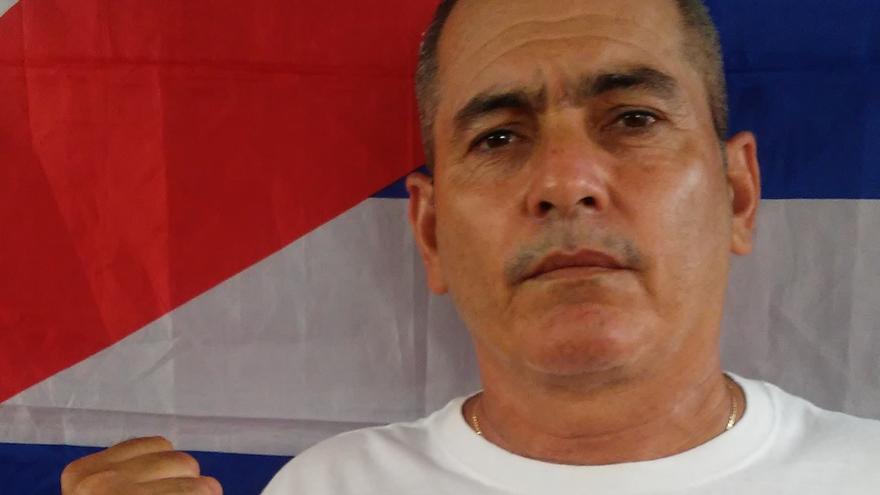
The activist Hugo Damián Prieto Blanco was tried for the crime of “precriminal dangerousness.” (Courtesy)

14ymedio bigger14ymedio, Havana, January 2, 2018 — In 2018 there were 2,873 arbitrary arrests counted in Cuba, some 240 each month, according to the report published this Wednesday by the Cuban Commission for Human Rights and National Reconciliation (CCDHRN). The independent entity condemns the harassment of activists who only “tried to exercise elemental civil and political rights.”

The report also includes data from December and confirms “at least 176 cases of arbitrary arrests, generally of a short duration” during the last month. The majority of the arrested were peaceful members of the opposition.

CCDHRN additionally documents “49 cases of police harassment against an equal number of opposition members and two cases of physical aggression against anti-totalitarian activists, ordered or executed by agents of the secret political police.” continue reading

The entity publishes a partial list of political prisoners, between “130 and 140 people” interned “under cruel, inhumane, and degrading conditions” in some of the 150 prisons and internment camps on the Island, specifies the text.

“Every month they release a small number of political prisoners and intern a somewhat higher number of opposition figures,” reveals CCDHRN. For example, it details that in the last month of December the activists Hugo Damián Prieto Blanco, Carlos Rafael Aguirre Lay, Omar Portieles Camejo, Glenda Lovaina Pérez, and Edilberto Arzuaga Alcalá were imprisoned.

Amnesty International and the Inter-American Commission on Human Rights have indicated that Cuban law punishes, with sentences of one to four years in prison, citizens for a supposed crime that they have not yet committed, according to articles 73 to 84 of the Penal Code.

According to the independent lawyer Laritza Diversent, the persons sanctioned under this legal concept “are not proven to have committed a crime [since] authorities, protected by subjective criteria and ideological parameters, judge that their conduct must be reformed.”

Translated by: Sheilagh Carey

________________________

The 14ymedio team is committed to serious journalism that reflects the reality of deep Cuba. Thank you for joining us on this long road. We invite you to continue supporting us, but this time by becoming a member of 14ymedio. Together we can continue to transform journalism in Cuba.
The 14 Events That Marked 2018

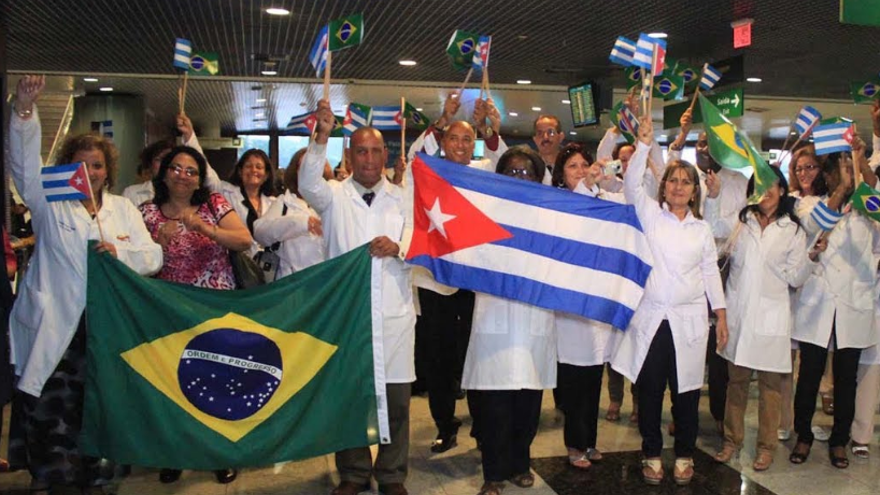
Thousands of doctors returned to the island after the cancellation of the Cuban participation of the Mais Medicos (More Doctors) program in Brazil. (EFE)

14ymedio bigger14ymedio, Havana, January 1, 2019


1. Return of the Mais Médicos doctors

The victory of Jair Bolsonaro in the Brazilian presidential elections will have economic consequences that are as yet unforeseeable for the Government’s coffers because of Cuba’s withdrawal from the program Mais Médicos (More Doctors), which has meant so much revenue for the Island since its beginning in 2013 under the mandate of former president Dilma Rousseff.

The export of Cuban doctors came to an end when the future Government of Brazil declared its will to change the current conditions of the agreement with Havana, among them stopping the paying of salaries to the Cuban State and paying the professionals directly.

Cuban authorities believed that the announcement harmed their interests and questioned the professionalism of their doctors and decided to break with the agreement by which more than 8,300 health workers provided medical assistance in the most remote areas of the country. The repercussions, additionally, affected migratory and legal aspects that will be defined in the new year.

2. Investiture of Miguel Díaz-Canel as president

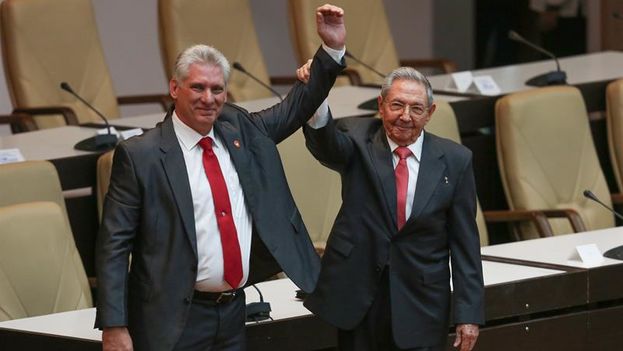
The first secretary of the Communist Party of Cuba and former president Raúl Castro raises the arm of Miguel Díaz-Canel after his appointment. (EFE / Alexandre Meneghini)

On April 19, 2018 the naming of Miguel Díaz-Canel as president of the Republic of Cuba, the first without the surname of Castro in 50 years, was formalized. His predecessor, Raúl Castro, who saved for himself the general secretaryship of the Communist Party, declared that the election of the new president had not been “a product of pressuring nor of chance.” Previously first vice president, Díaz-Canel headed the nomination list put forward by the Commission of National Candidacy, which was submitted to a vote in Parliament. The new president received 99.83% of votes, 603 of the 604 representatives. Díaz-Canel has slightly modified the style of the Government (he travels more, uses social media, and lets himself be seen frequently with his wife in official acts). Ethics, on the other hand, seem to remain unchanged in regard to the Castro dynasty. continue reading

3. Constitutional Reform and the campaign for “No”

The bill to reform the Cuban Constitution has been debated for months and will be voted on in a referendum in 2019. (EFE / Ernesto Mastrascusa)

In 2018, after a long wait, the process of constitutional reform began. The principal changes of the draft presented to the citizenry were the elimination of the term “communism” and the acceptance of private property and incorporation of certain economic reforms of “Raulism.” After the citizen debates, the text has passed to the Communist Party and must be approved and submitted to a vote in 2019. Various organizations of the opposition promote the campaign to vote “No” to not legitimize a system that continues to lack multiple parties and public liberties for its citizens.

4. Controversy over the inclusion of Article 68 in the constitutional reform

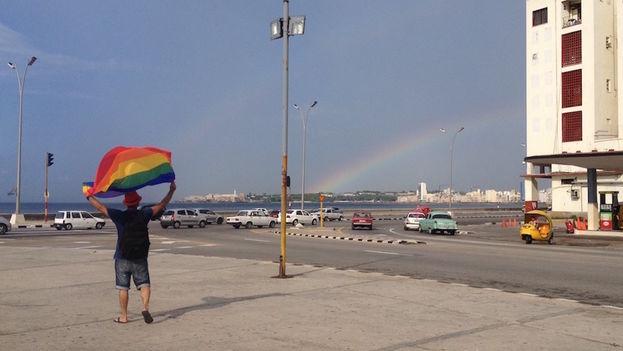
The LGBTI community will have to wait to see if the Family Code defines whether people of the same sex can marry. (14ymedio)

The draft of the Constitutional reform opens the door to marriage equality by modifying the definition of this type of unions, which would be between two persons rather than between man and woman. This change set off an important controversy between gay rights organizations and Christian churches. The Catholic church has positioned itself against it, but the evangelicals are the ones who have decided to mobilize more and start various campaigns and signature gathering to try to block this change. In the end, the draft will not include the planned change in the constitution, which establishes that marriage is a “social and legal institution.” The Family Code will be what establishes, in the future, who can engage in it.

5. The arrival of Alberto and Michael

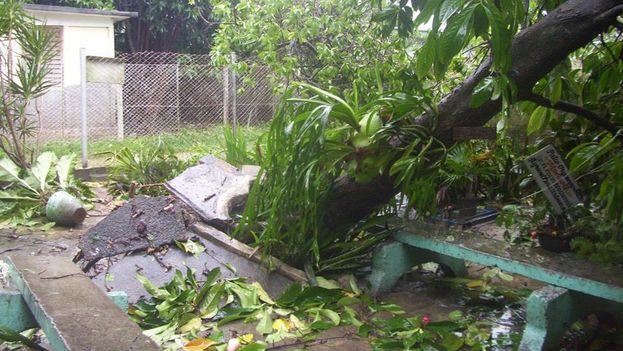
Hurricane Michael caused visible damage in the province of Pinar del Río. (Radio Sandino)

In May, the subtropical storm Albert flooded the central area of the Island, causing four deaths and grave damages to infrastructure, homes, and crops. The provinces of Cienfuegos, Sancti Spíritus, and Villa Clara received the worst of the flooding that left cuts in communication and the evacuation of thousands of residents.

Months later, at the beginning of October, Michael grazed one end of Cuba as a category 1 hurricane on the Saffir Simpson scale. The Island didn’t have to lament a single death, although numerous material damages were recorded, particularly in Pinar del Río, where 87% of the population was left without electricity and tobacco harvests were severely damaged. The floods delayed the sowing of the plant in the province with the greatest tobacco production.

Isla de la Juventud also suffered the battering of the cyclone, whose rains flooded homes, infrastructure, and crops and caused electricity cuts. On its route toward the United States the impact was greater and Michael left 18 deaths in Florida and Georgia.

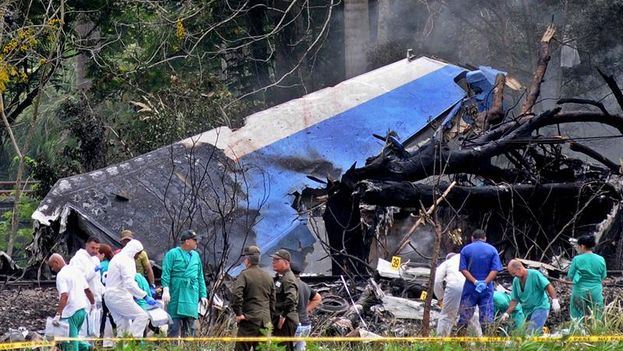
6. Cubana de Aviación flight crash with 112 deaths

The plane operated by Cubana de Aviación crashed when taking off from Havana airport when it was heading to Holguin. (EFE)

Fifteen minutes after taking off from José Martí International Airport in Havana en route to Holguín, Cubana de Aviación flight 972, operated by the Mexican airline Global Air, crashed with 113 occupants on board. Of the three initial survivors only one remains, young Maylén Díaz. The vast majority of the deceased were from Holguín, although also lost were the lives of two Argentineans, one Mexican, and two Sahara natives, one with Spanish nationality. The entire crew was Mexican. The company had been accused of various irregularities by some of its workers and the pilots’ union of that country. The causes of the accident are still to be determined and the investigation continues coordinated by Cuban, American, and Mexican authorities.

7. The controversial Decree 349

T-shirts against Decree 349 seized by Cuban Customs at the José Martí International Airport in Havana. (14ymedio)

Independent artists saw how their creative possibilities outside of State organizations were limited with the approval of Decree 349, which went into effect December 7 although pressures have obligated the government to not implement all the controls over the culture they were planning. Some of the artists decided to go to battle with protests that resulted in multiple arrests, but they had a small triumph when the minister of culture, Alpidio Alonso, announced a few days ago that the decree will be applied in an “agreed” and “gradual” manner.

8. Failure of the sugar harvest

The sugar distributed this September as a part of the basic market basket in the rationed market comes from France. (14ymedio)

The last sugar harvest produced a little more than a million tons of raw sugar, far from the 1.6 million that the sector’s authorities had suggested. The repercussions have not been small. Cuba, previously the sugar-producing country par excellence, has seen itself obligated to import this product from France for the basic market basket. The sector, whose weight was essential in the Cuban economy, has for years seen spectacular falls, remaining far behind revenues received from the export of medical services, remittances, and tourism.

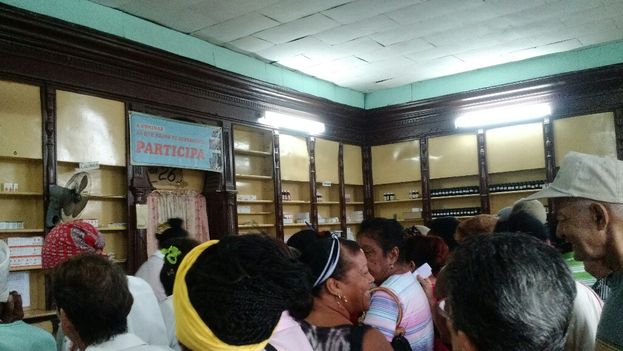
9. Increase of shortages in food and medicine

Customers at the pharmacies shout and shove each other in the face of the lack of medicines. (14ymedio)

Since the beginning of the past year the shortage of food and medicine has been worsening on the island. The lack of cash flow to buy raw material had a bearing on the lack of medicines in the network of state-owned pharmacies, especially those meant for chronic patients. Food products were also scarce and in the second half of 2018 flour, oil, and eggs were missing from the shelves of stores. Authorities blamed the problem on delays in imports and difficulties with infrastructure.

10. Stagnation of GDP

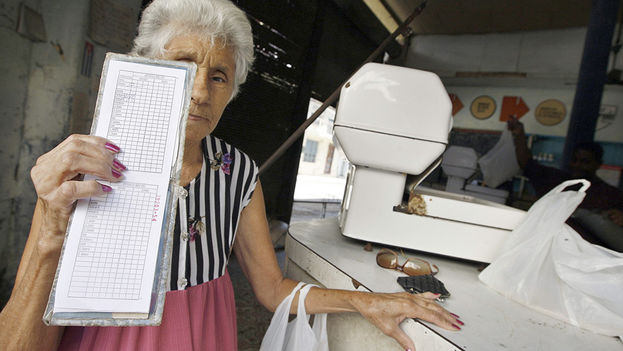
An old woman shows the ration card that every year has fewer products subsidized by the Government. (EFE)

The economy of Cuba, according to data released by the minister of economy and planning, Alejandro Gil, shows that the gross domestic product (GDP) has registered a growth of 1% in 2018, well below the 2% that was officially predicted. The Government attributes this poor result to the failure in export revenue, the high level of debt, the international context, and the weather, but independent experts think that the problems are deeper.

According to the Cuban economist Pavel Vidal, who lives in Colombia, “the shortage of basic products and the dynamic of prices of consumer goods match up less and less with the official statistics of GDP and of the Index of Consumer Prices.”

11. Arrival of internet to mobile phones

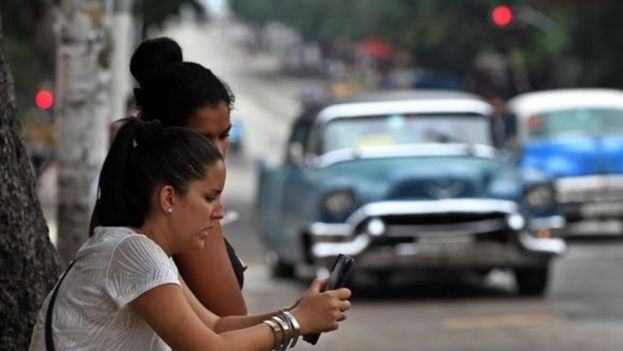
The Government fulfilled the promise to connect mobile phones to the internet in 2018, with barely 25 days left in the year. (EFE)

After years of waiting, on December 6 Cuba’s state communications company, Etecsa, fulfilled, almost at the last moment, its commitment to bring internet to mobile phones in 2018. During the summer various tests were done to check the functioning of the system, but it ended up being a fiasco that made people fear that the announcement wouldn’t meet the deadline. Although the price of navigation packages is rather high, 4 gigabytes of connection costs around 30 CUC, the equivalent of a monthly salary, the new functionality opens up a new path for activism and entrepreneurship.

12. Continuation of the “sonic attack” controversy

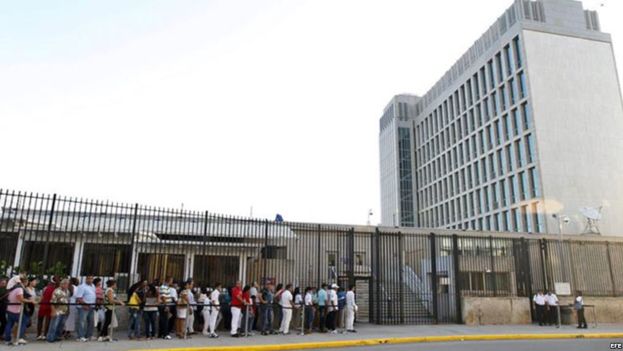
Lines have become common around the United States Embassy in Havana, due to the reduction in personnel staffing because of the alleged sonic attacks. (EFE)

The United States and Cuba remain entangled over the matter of the supposed “sonic attacks.” Throughout the year and after several investigations in both countries, the cause of the harm (which in fact was proven) suffered by various diplomats stationed in Havana between 2016 and 2017 has still not been able to be determined. Also this year complaints of affected Canadians have come to light, and the Canadians have lamented that their Government has not given them a treatment equal to that of Washington to its officials. The last episode of this crisis has been the closure of consular services in the US embassy on the Island, which have now come to be processed mainly in Guyana.

13. Visit of Pedro Sánchez

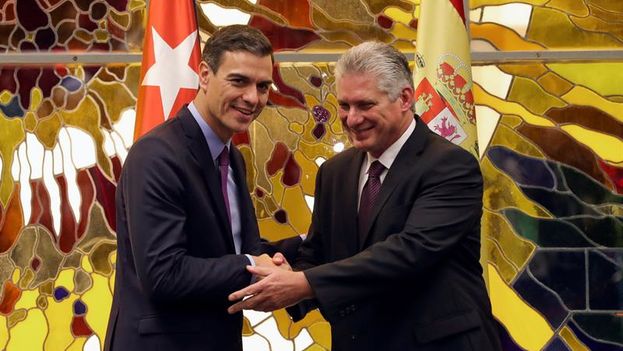
Pedro Sánchez and Miguel Díaz-Canel shake hands after the signing the memorandum for holding meetings that will address, among other things, human rights. (EFE / Juanjo Martín)

On December 22 and 23, Pedro Sánchez, president of the Spanish Government traveled to Cuba on an official visit, the first of this level from a leader of his country in 32 years. Although economic relations between both countries have been the best — under the mandates of José María Aznar, José Luis Rodríguez Zapatero, and Mariano Rajoy — political ties have been limited. In Cuba Sánchez had meetings with the president and authorities as well as with Spanish businessmen and part of civil society, but he did not meet with anyone from the opposition. Both parties agreed to meet annually to go over cultural cooperation agreements and bilateral reviews. Among the principal deals reached, the installation of farms to provide chicken to Cubans was one of the most discussed.

14. Historic agreement of the Cuban Baseball Federation with the Major Leagues of the United States

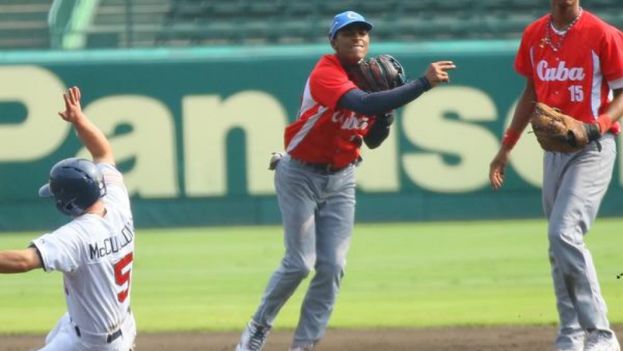
The U15 team fell unexpectedly and in a very bad performance against Panama, the United States and Taiwan. (Newspaper 26)

In the middle of December it was announced that the Cuban Baseball Federation (FCB) and Major League Baseball (MLB) signed a historic agreement so that the Island’s ballplayers could be signed in the United States. The agreement opens the doors so that athletes who play in the National Series and other local circuits can join the 30 teams of the MLB, and arrives during a year of disastrous results for Cuban baseball.

In 2018 Cubans won only a bronze in the Panamerican U-12 and a silver in the Games in Barranquilla. In U-15, Cuba came in fifth place. In the Caribbean Series, the Alazanes fell in the semifinals. In U-18 they didn’t manage to pass the super round of six in the Panamerican series and Cuba will not be in the next World Cup.

All the same, the public has attended with astonishing interest the National Series, filling the stadiums despite the apathy. On a more human level, sanctions and conflicts because of the bad conduct of some players and managers have not at all helped the image of the game.

Translated by: Sheilagh Carey

_________________________

The 14ymedio team is committed to serious journalism that reflects the reality of deep Cuba. Thank you for joining us on this long road. We invite you to continue supporting us, but this time by becoming a member of 14ymedio. Together we can continue to transform journalism in Cuba.
Six Decades of an Unattainable Utopia

This 2019, the process that delighted millions of Cubans reaches six decades of existence, without resembling the dreams generated in its early days. (Archive)

14ymedio bigger14ymedio, Yoani Sanchez, Generation Y, Havana, 2 January 2018 – Ramón, an old man now, was a smooth-cheeked teenager when Fidel Castro entered Havana on January 1959. Soon after, he decided to become a militiaman to defend what many Cubans then proudly called “the Revolution.” Today, with a pension that does not exceed the equivalent of 23 dollars a month, the retiree lives on the money sent to him by his grandchildren, emigrated to the other side of the Straits of Florida, to that country to which Ramón pointed his rifle while standing guard in a military unit in the midst of the Cold War.

This 2019, the process that delighted millions of Cubans reaches six decades of existence, without resembling the dreams imagined by young people like Ramón and without having managed to provide a dignified and free life to those who stayed on the island. Now there are few who call the political model established after the arrival of the “bearded ones” to power “Revolution”; instead they prefer to say “the system” or simply “this” or “this thing.” Of the leaders dressed in olive green who came down from the Sierra Maestra, there are only a few octogenarians left and they fail to arouse admiration or respect in the vast majority of people. continue reading

Of the initial promises, among which there was talk of opportunities for all and of civil liberties, almost nothing has survived. In place of these spaces of individual and collective realization, Castroism has maintained a strict framework of vigilance and control, the most complete of its “achievements” and the most permanent of its “results.” As for social justice, there is not much to celebrate. Evident in the streets is the economic abyss that separates government leaders from pensioners, the black population and residents in rural areas. The new rich mark a distance from those who are becoming poorer.

On the other hand, in recent years the Havana regime has had to give ground to the laws of the market so strongly criticized in its slogans. A private sector of half a million workers has made clear the inefficiency of the state apparatus and is pushing the limits of the restrictions that still remain on entrepreneurship and creativity. After having confiscated even the most humble food stalls in that distant year of 1968, the Plaza of the Revolution is now selling off the Island piece by piece to foreign investors.

Nor is there much to show of the “jewels in the crown” of the process: public education and healthcare. The extension of both systems continues to reach every corner of the country, but the deterioration of the infrastructure, the low salaries of teachers and doctors, together with the excesses of ideology and ethical gaps have meant that the classrooms and hospitals do not resemble the dream of an educated people, well-cared for with regards to health, that once drew the applause of thousands of Cubans who gathered to listen to the marathon speeches of the Commander in Chief.

Now, when the official celebrations speak of the 60th birthday of this political and social process that few dare to describe as “revolutionary,” people like Ramón and his grandchildren are appraising what they did not achieve, the dreams they had to park along the way, and the dysfunctional and authoritarian system that derived from all that utopia.

____________________

This text was originally published in the Deutsche Welle for Latin America.

The 14ymedio team is committed to serious journalism that reflects the reality of deep Cuba. Thank you for joining us on this long road. We invite you to continue supporting us, but this time by becoming a member of 14ymedio. Together we can continue to transform journalism in Cuba.
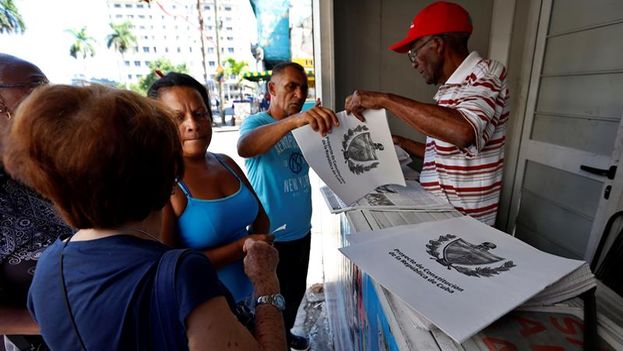
Cuban Government Assumes a Great Risk With Its Referendum

Enactment of the Constitution of 1976 (Granma)

14ymedio bigger14ymedio, Reinaldo Escobar, Havana, 31 December 2018 — The last referendum held in Cuba occurred on 15 February 1976. On that occasion, the electoral census registered 5,717,266 citizens with the right to vote. The results of the vote showed the following data:

Exercising the vote: 5,602,973 (98% of the list of voters). Leaving the ballot blank: 44,221 (0.8% of those who exercised the vote). Annulling the ballot: 31,148 (0.5% of those who exercised the vote). Marked ’NO’ on the ballot: 54,070 (1% of valid votes). Marked ’YES’ on the ballot: 5,473,534, 97.7% of the valid votes.

Adding abstentions, blank ballots, cancellations and negative votes, 243,732 citizens, that is, just over 4%, did not express their approval of that Constitution. Undoubtedly, an overwhelming triumph for the ruling party. continue reading

Almost every one of those participants, today, is over 60 years of age, which means that a good number of them have died and others (including many of those who voted Yes) may have made the decision in these 42 years to not continue living in Cuba.

Among the voters who will participate the next constitutional referendum, scheduled for February 24, 2019, those who are first-time voters in this type of popular consultation will be the majority. Among them is the current president Miguel Diaz-Canel, who turned the statutory 16 years to vote on April 20, 1976, two months after the previous referendum, so he was not able to vote in it.

Unlike the mass of voters who subscribed to the 1976 Constitution, in the consultation next year, the number of those who had some participation in the fight against the previous dictatorship of Fulgencio Batista will be very small, there will be very few who fought at Playa Girón (Bay of Pigs), or in the fight against the rebels, and there are also very few who had some experience in the internationalist missions of Angola or Ethiopia.

Of course, most of the more than eight and a half million Cubans who will have the right to vote in the next referendum have relatives outside the island and a relationship to them. Almost no salary is enough to support a family, and in both absolute and relative terms we can say that today there are more people who have traveled abroad, and who publicly express their religious beliefs or their sexual preferences, both inadmissible in 1976.

The Cubans of the 1970s depended exclusively on the salary provided by the State and on what was distributed by the rationed market in an equal manner. Any domestic appliance, from a washing machine, a refrigerator, or a Soviet television, could only be acquired through a bonus, granted by virtue of the social and labor merits accumulated during the year.

Those Cubans of the 1970s only knew what was happening in their country and in the world through what the state newspaper Granma told them, or from state radio and television, while they found some glimpses of criticism in the Noticiero del ICAIC by the curator Santiago Álvarez. At that time they were not able to listen, even with interference, to the US-based Radio Martí transmissions, and foreign publications were limited to those from the socialist countries, which were sold in the news kiosks in an authorized manner.

To put it briefly, today’s is another electorate, with greater economic independence arising from remittances from family abroad and self-employment; notably influenced by social networks, the weekly packet, independent journalism and with a greater amount of frustrations in the face of the accumulation of government promises unmet. An electorate happily freed from the hypnotic influences of its former charismatic leaders, increasingly critical of its rulers, with ever more appetite for freedoms.

It must be recognized that the Government assumes an enormous risk in submitting a referendum on a Constitution that does not satisfy the majority of Cubans, although they have been forced to do so for multiple reasons, some obvious, others not confessed. The truth is that the 1976 text, today, is incompatible with the reality of the country and with the timid reformist intentions.

The dirt already thrown on the 1976 Constitution, to justify the writing of a new text, makes it impossible to resuscitate it or stay with it in the event that the electors decide to say a massive and forceful ’NO’ to the new proposal.

The Constitution approved by Parliament on 22 December 2018 is a perfect fit for the Government’s plans, but it is far from satisfying the demands of citizens. It is true that the text has changed. What happens is that the electorate has changed more than the government.

 ____________________________

The 14ymedio team is committed to serious journalism that reflects the reality of deep Cuba. Thank you for joining us on this long road. We invite you to continue supporting us, but this time by becoming a member of 14ymedio. Together we can continue to transform journalism in Cuba.
Raul Castro: "The Transfer to the New Generations is Going Well"

Raúl Castro took advantage of the occasion also to support the management of Miguel Díaz-Canel. (EFE)

14ymedio bigger14ymedio/Ernesto Marín, Santiago de Cuba, 1 January 2018 —  On Tuesday afternoon, Raúl Castro delivered the main speech at the event for the 60th anniversary of the Cuban Revolution in Santa Ifigenia cemetery in Santiago de Cuba. The secretary of the Communist Party reviewed the history of the last six decades, criticized the policy of the United States and addressed the economic crisis the island is going through.

The ceremony, which was not attended by any foreign president, was held in front of the mausoleum with the remains of José Martí and a few yards from where the ashes of former president Fidel Castro are located. The current Cuban president, Miguel Diaz-Canel, was also present at the event, although he did not speak.

Castro, his voice breaking, reviewed the most important anniversaries and events of Revolution and alluded to the current moment of confrontation between Washington and Havana. “We are not intimidated by the threatening language of the United States,” adding that “Cubans are prepared to resist a scenario of confrontation that we do not want.” continue reading

The 87-year-old leader called on Cubans to prepare “meticulously for all scenarios, including the worst” and “not leave room for confusion and improvisation.” He harshly criticized Luis Almagro, secretary general of the Organization of American States (OAS), who hours earlier had said that “the dictatorship in Cuba is probably the most perfect example of mythology, misery and human rights violations.”

With regards to the economic crisis that the island is going through, stagnated with a poor growth of 1.1% in GDP and with a worsening of shortages, Castro called for “reducing all non-essential expenses,” “diversifying exports” and deepening the foreign investment policy.

“A challenge that we will face in the year that begins today is the situation of the economy,” a crisis that he blamed on the fall of exports and the strengthening of the US embargo. He also disapproved of “the foreign analysts who often criticize the performance of the economy” of the island and deny the effects of the US embargo.

The former president also took the opportunity to support the management of Miguel Diaz-Canel and said that the new Constitution that will be submitted to a referendum in February, will be approved with a “majority for the Revolution and socialism.”

“I can affirm that the process of transferring to the new generations (…) is going well, I can say more, very well, without any setbacks or shocks, and we are sure that we will continue that way,” said the Army General. “The Revolution has not aged, it is still young,” he emphasized at another point in the speech.

Castro expressed the support of the Communist Party for the management of the 48-year-old engineer who is now president and praised his working style, which includes “visits to the communities and direct exchanges with the people, the accountability of the leaders by means of press and social networks and the systematic control of development programs.”

With regards to the political setbacks suffered by several allied governments in Latin America, Castro attributed them to the “empire’s” siege. “The region resembles a large meadow where a spark could generate an uncontrollable fire that would harm the interests of everything.”

As of the previous day, Santiago de Cuba has been under a strong police operation that became more intense around the homes of opponents and activists. The activist Carlos Amel Oliva confirmed to this newspaper that the headquarters of the Patriotic Union of Cuba was under surveillance by the police and State Security.

Patria Avenue, which connects the city with the cemetery, also remained guarded and access to the cemetery during the time the ceremony lasted was exclusively by invitation. The act was broadcast live on a large screen at the Heredia theater before more than 2,000 people who also required invitations.

The local authorities placed kiosks selling food and drinks in Cespedes park, in the center of the city, while large speakers broadcast music from the City Hall building.

 __________________________________

The 14ymedio team is committed to serious journalism that reflects the reality of deep Cuba. Thank you for joining us on this long road. We invite you to continue supporting us, but this time by becoming a member of 14ymedio. Together we can continue to transform journalism in Cuba.
60 Years of Permanent War

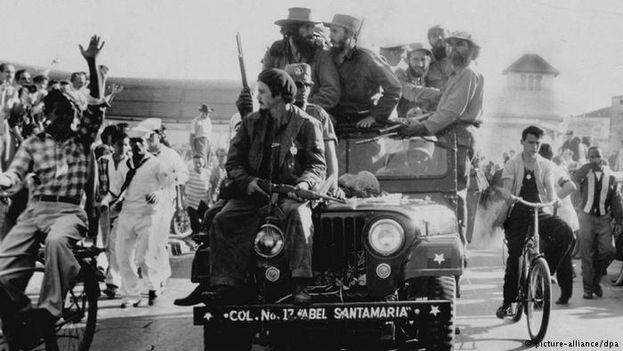
Fidel Castro entering Havana on January 8, 1959

14ymedio bigger14ymedio, Ariel Hidalgo, Miami, 1 January 2019 — A group of men — not a generation, but the so-called “historical leadership” along with their hand-picked successors — is celebrating 60 years in power this week,  without ever giving the Cuban people the right to choose another option.

They celebrate it without any modesty, when they should rather be ashamed. In their own official ’History’ program they insulted a president of the 1930s because he tried to extend his term for three or four more years, a president who industrialized the country, embellished the cities with beautiful buildings and roads, and who, when he left, he left behind — in what had been a country in foreign hands with sugar factories worked by semi-slaves — a modern and prosperous country that excited the admiration of all the foreigners who visited it, and that in many respects was at the head of all Latin America. continue reading

That president had been democratically elected, while those who today celebrate six decades of uninterrupted power came to it by violence, executing, without guarantees of due process, hundreds of soldiers, and perpetrating a vile betrayal of the ideals of many of their own comrades who had given their blood to restore the Constitution abolished after the 1952 military coup, in addition to celebrating the free elections that that coup had prevented. The caudillo himself had slammed the door on all those martyrs when he asked, during a public rally: “Elections, what for?”

This group has done the opposite of what that president from the 1930s did. It has turned its people into one of the poorest of the continent, as if we had just emerged from a devastating war, with ruins everywhere, including those of most of the sugar mills, after having been the first country in the world in that industry. Today the Cuban people must stand in long lines for a piece of bread and crowd the streets struggling to access any vehicle that moves, because public transport has almost disappeared.

The money obtained from the high prices of sugar in the 1970s and that paid by the inflated prices paid by the Soviet Union — tens of millions, hundreds, thousands of millions — were squandered in wars on other continents to the satisfaction of that leader’s narcissism, while his people suffered precariousness of all kinds.

Was it all the fault of the enemy of the North and its blockade? What kind of blockade is this that, despite itself, Cuba has maintained trade relations with almost every country in the world, and today, even with the farmers of the United States itself? The US embargo only served as an alibi to justify all the disasters provoked by the whims of an omnipotent ruler.

What war is that? What enemy confronts this people? Because he spent his life in an indefinite state of siege, in perpetual suspension of constitutional guarantees, and in a call to ’action stations’, one after the other, waiting for a foreign invasion that supposedly would arrive to ravage the country and seize our homeland. He warned that, if it happened, that enemy would only collect “the dust of our soil drowned in blood.”

Did that invasion ever happen? For almost the whole world it never came to pass. But I say yes, this invasion has been ongoing since the first of these 720 months, and still, to this day, continues to devastate the country.

Because the enemy of this nation is that group in power. The real blockade against this people is imposed by that group with all its bureaucratic obstacles, its prohibitions, its censorship, its persecutions and expropriations of hundreds of thousands of independent workers, and even the semi-slave exploitation of tens of thousands of employees and professionals from whom it takes more than 80% of their salaries.

Everything has been done in the name of “the Revolution.” During these 60 years there has been constant talk of “defending the Revolution,” the Revolution is alive, the Revolution first of all, “within the Revolution, everything, outside the Revolution, nothing,” and so on.

According to the most in vogue definition of that word — “violent change in the political institutions of a nation” — that revolution occurred in Cuba in the first nine years.

That is to say, more than 50 years ago it was over, despite the fact that it is still spoken of in the present, something that no longer exists — or never existed if we consider that it was the result of a betrayal — a ghost that presents itself everywhere like an embalmed corpse that is intended to be believed to still alive, as when Juana La Loca dragged the remains of her beloved Felipe el Hermoso throughout the kingdom of Spain.

It’s time to lay bare the lie once and for all. Here there is nothing revolutionary and much less an elite in power, only a group of reactionaries in a dictatorial cupula trying to perpetuate an unsustainable model that even the caudillo himself, shortly before dying, recognized was unviable: “This model doesn’t even work for Cubans,” he said.

The real war that has ravaged this nation is the one that this group has maintained against its own people for six decades with its insane decrees. And if it continues in power, the aforementioned warning will probably come true and our country will have nothing left but that: the dust of our soil drowned in blood.

 ________________________

The 14ymedio team is committed to serious journalism that reflects the reality of deep Cuba. Thank you for joining us on this long road. We invite you to continue supporting us, but this time by becoming a member of 14ymedio. Together we can continue to transform journalism in Cuba.
‘We Cannot Force’ the 18% of Cubans Who Don’t Want to Work, Says Labor Minister

The self-employed sector of the Cuban economy continues to grow. (14ymedio)

14ymedio bigger14ymedio, Havana, 27 December 2018 — Unemployment grew in 2018 in Cuba and stands at 1.7% of the country’s workforce, according to official data that takes into account only those people actively looking for work.

The Minister of Labor and Social Security, Margarita González Fernández, explained on Cuban TV’s Roundtable program that there are a total of 76,400 people on the island who do not work, 1,112 more than in 2017, when the number was 75,288.

According to the official, the figure includes people who can not find work, which are not the same as those who do not want to look for it. continue reading

“These figures should not be confused with people who are of working age but neither study nor work; those who are in this situation are about 567,000,” detailed the minister.

This figure is equivalent to 11% of the island’s workforce, well below the figure collected by other means. According to the National Occupation Survey, 18% of those interviewed said they did not have an interest in working. “[This] is very criticized by the population (…). The method is not to use force, you have to find ways to make these people feel the need to work,” said the minister.

González Fernández gave a review of some other figures related to her branch.

As of the end of this year, there are 4.5 million workers in Cuba, of which 3.1 million work in the state sector, compared to 1.4 million in the private sector, through cooperatives or on their own. By sectors, Education and Health comprise the majority of non-business public jobs, with 800,000 jobs out of a total of 1.5 million (48%).

In state enterprises, which account for 52% of employment in the public sector, those dedicated to the food industry, sugar, agriculture, livestock and construction have the highest numbers.

The minister said she is concerned about access to employment for young people who complete their higher education. “This is an area to which we must pay special attention because it can lead to fluctuation in the workforce and discouragement of young people with assigned employment in compliance with their social service.”

In addition, she detailed the priority groups for the authorities. “The attention of state agencies to the recent graduates is insufficient, priority is given to access to employment for graduates of the trade and speciality schools, graduates of Active Military Service and the Female Voluntary Service, people serving sentences on release, people with disabilities able to work and people without a job seeking employment, with special emphasis on young people and women,” said González.

With regards to the private sector, of the 1.4 million workers that make it up, 42% work on their own and the rest work in the cooperative sector.

New additions included 125,216 people who started working in 2018, 34% of them are women and 71% are young. “In the state sector, 93% found employment, with greater incidence in agricultural activities, construction and commercial and services,” said the minister.

 ___________________________

The 14ymedio team is committed to serious journalism that reflects the reality of deep Cuba. Thank you for joining us on this long road. We invite you to continue supporting us, but this time by becoming a member of 14ymedio. Together we can continue to transform journalism in Cuba.

14ymedio Faces of 2018: Tomas Nunez Magdariaga, Activist Released After a 62-Day Hunger Strike

Tomás Núñez Magdariaga was hospitalized in Santiago de Cuba and was not allowed to receive family visits as long as he refused to end his hunger strike. (Courtesy)

14ymedio bigger14ymedio, Havana, 26 December 2018 — Cuban Patriotic Union activist Tomás Núñez Magdariaga was released in mid-October after spending 62 days on a hunger strike to protest a one-year prison sentence.

Núñez Magdariaga had been convicted of threatening an informant from State Security who later retracted the accusation, alleging that he had not been provided with a job and housing in exchange, as been promised. At that time, the activist had been on a hunger strike for one month to protest his situation.

According to what the dissident later reported, the worst moment of his fast was when he was taken out of the hospital after 42 days without eating. “They took me to the prison of Boniatico, where they have the prisoners with life sentences, and they put me alone in a punishment cell and in underpants, with nothing else and nothing to put on the floor, with the cold and without a mattress.” continue reading

The archbishop of Santiago de Cuba, Dionisio García Ibáñez, visited the activist, which gave substantial support to the cause of his release. At the same time, the US government also expressed its “serious” concern for the health of the opposition figure and called for his immediate release.

In his last week of the strike, after 19 days handcuffed to a bed in the Juan Bruno Zayas Hospital, Núñez Magdariaga firmly rejected the serums that were keeping him alive.

It was then when Major Granja, deputy head of of Aguadores Prison where they had transferred the activist, went to the hospital and told him of his immediate release, which took place within a few minutes, with a list of medical recommendations for recovery and re-feeding.

On November 28 a group of judges of the Supreme Court went to Palma Soriano, where the activist lives, to hear the appeal that his family had made during the days he was in prison. At the hearing, his repentant accuser was presented as a witness who confirmed the withdrawal of his complaint. In this way his freedom was formalized.

Tomás Núñez Magdariaga continues today as an activist of the Patriotic Union of Cuba (UNPACU).

See also: 14ymedio Faces of 2018

______________________

The 14ymedio team is committed to serious journalism that reflects the reality of deep Cuba. Thank you for joining us on this long road. We invite you to continue supporting us, but this time by becoming a member of 14ymedio. Together we can continue to transform journalism in Cuba.

14ymedio Faces of 2018: Mailen Diaz, Only Survivor of Cubana de Aviacion Crash

Mailén Díaz Almaguer, sole survivor of the Cubana de Aviación flight accident. (Facebook)

14ymedio bigger14ymedio, Havana, 28 December 2018 — On that tragic day of 18 May 2018, the life of Mailén Díaz Almaguer changed forever. Since that day, the only survivor of the Cubana de Aviación crash has had to wage an intense battle for her physical recovery. Only three passengers, all women, arrived at the hospital alive after the crash and two of them died in the following days.

Born in Holguín on December 23, 1998, Díaz was traveling on the plane that crashed with her husband, Jean Michel López Salinas (b. 1987), one of the fatal victims of the crash.

Three months after her admission, Dr. Esteban Reyes, of the Calixto García hospital, where Diaz received first aid, explained that she suffered “injuries at the level of the spine, cervical, thoracic, dorsal, extremities, tibia, fibula, pelvis, burns, and injuries at the gluteal level, which required frequent drainages.” The doctor said that the young woman, then 19 years old, was a paraplegic. continue reading

The most recent medical news appeared in the national media on October 20. In that article it was reported that Díaz continues “the process of recovery and stabilization of organ functions, oral nutrition and infection control” and that her emotional state and level of cooperation were “adequate.”

In mid-December Díaz sent her first message through her Facebook account in which she stated that every day was better and thanked “all the people who have been concerned, the doctors, nurses, those people who have contributed one way or another” to her recovery and have helped her “with her prayers and good thoughts,” and her family in particular.

During these months of slow recovery thousands of people have left messages of encouragement and best wishes for her recovery on her Facebook account, which have been answered on occasion by her sister. Diaz’s profile on the social network has no details of her professional life but the young woman often published selfies and photos with friends.

Days later, on her 20th birthday, the first pictures of the survivor were published on social networks, where she appears with several members of her family. “We love you my queen, continue as beautiful as you are and with that smile and joy that motivates you to continue every day moving forward,” said her sister.

See also: 14ymedio Faces of 2018

____________________________

The 14ymedio team is committed to serious journalism that reflects the reality of deep Cuba. Thank you for joining us on this long road. We invite you to continue supporting us, but this time by becoming a member of 14ymedio. Together we can continue to transform journalism in Cuba.
We the ‘Bastards’


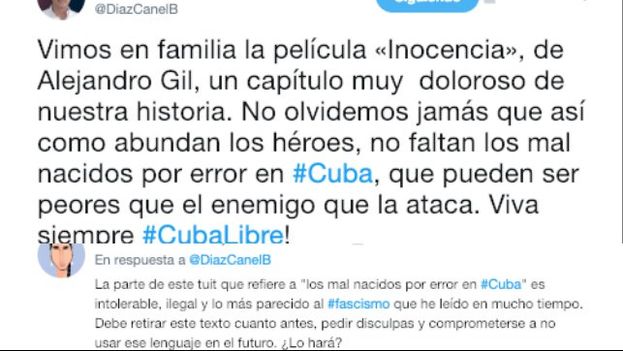
14ymedio biggerIn fewer than 280 characters, the Cuban president has put in writing his formula of governance. Translation of tweet: As a family, we watched the movie “Innocence” by Alejandro Gil, a very painful chapter in our history. Let us never forget that just as heroes abound, there is no lack of bastards in #Cuba, which can be worse than the enemy that attacks it. Viva forever #CubaLibre! [Yoani: The part of this tweet that refers to “the bastards in #Cuba” is intolerable, illegal and much closer to fascism than I have read in a long time. The text should be deleted immediately, he should apologize, and a commit to not using this language in the future. Will he do it?]
14ymedio, Yoani Sanchez, Generation Y, Havana, 31 December 2018 — Miguel Díaz-Canel is receiving a hazing on Twitter. He arrived so late to this social network, in use for more than a decade by Cuban activists, that he is tripping over the primeval stones we ourselves discovered along the way. The first lesson is that everything one says on the network of the little blue bird does not remain only there, but multiplies and grows throughout the virtual community.

This Sunday, the Cuban president commented that he watched the movie Inocencia, based on the history of medical students shot by the colonial regime, and he added to his message the phrase, “just as heroes abound, there is no shortage of bastards* in Cuba.” In addition to the grammatical nonsense of the phrase, the “hand-picked” president put his verbs in the present tense, suggesting that there are still people, here and how, who should not have been born on the island. continue reading

Revolutionary bravado prevents him from erasing his tweet. Bad for him because the blunders are accumulating, and there are already several messages which transmit an idea of hatred, polarization and intolerance. Instead of endeavoring to make it known that he governs for all Cubans, the new tenant of the Plaza of the Revolution seems determined to please his predecessors. This tweet is not directed so much as an insult to us, the critics of the system, as to ingratiate himself with the historic generation of Castroism.

In fewer than 280 characters, the Cuban president has put in writing his formula of governance. He is not going to represent all of us, he tends neither to conciliation nor harmony, rather he intends to confront us, polarize us and add more labels to the wide repertoire of insults this system has generated. Now, we are no longer only “worms,” “mercenaries” and “enemies,” but the attack has reached into the past, to the time of our birth, to that instant in which we drew breath for the first time.

Poor Díaz-Canel, he does not know that the tweets remain and he just delivered a phrase that defines him in his just measure as extremist, fascist and dogmatic. If he had the least capacity for self-criticism, he would erase that message right now… but I suspect he will not do so.

Translator’s note: The original wording is “los mal nacidos por error,” which in a literal English translation would read: “the badly born by mistake.” In Spanish, however, it is very strong expletive, and so has raised a correspondingly strong response across social networks.

______________________________

The 14ymedio team is committed to serious journalism that reflects the reality of deep Cuba. Thank you for joining us on this long road. We invite you to continue supporting us, but this time by becoming a member of 14ymedio. Together we can continue to transform journalism in Cuba.