Iberostar, the First International Chain Authorized to Rent Hotels in Cuba

Foreign companies will have more freedom to manage facilities and set wages


The first hotel on the island to implement the new formula will be the Iberostar Origin Laguna Azul in Varadero, starting January 1st. / Facebook/Magdiel Perez Martinez

14ymedio bigger14ymedio/EFE, Havana, October 17, 2025 / In its desperation to stem the sharp decline in tourism and foreign currency inflows, the Cuban government has taken a step it had long resisted: allowing international chains to rent out state-owned hotels and set employee salaries. According to EFE, sources familiar with the negotiations confirmed the first agreement was signed with the Spanish company Iberostar .

This represents a paradigm shift in a sector that until now had been tightly controlled by the Cuban State through the Ministry of Tourism and various companies in the Gaesa (Business Administration Group SA) business consortium, which is controlled by the Revolutionary Armed Forces.

The new management model, among other things, and according to the same sources, will allow hotel chains to set the salaries they pay their employees for the first time—although it is not specified whether they will be able to pay part of the wages in dollars or euros—instead of having to pay the very low salaries set by the State in pesos.

The new system aims to begin with pilot experiences in establishments of various large international hotel chains.

The first hotel on the island to implement this new formula is the Iberostar Origin Laguna Azul, located in Varadero. The agreement has already been signed and will begin operating on January 1, 2026.

Prime Minister Manuel Marrero, in advance, this year’s FITCuba trade fair, announced that among the measures the executive branch was considering to boost the sector, which is facing an unstoppable debacle, was the leasing of state-owned tourist facilities. These agreements, according to EFE, represent a qualitative leap forward compared to the first concrete announcement in this respect: the two letters of intent signed with Chinese counterparts “for the negotiation of a lease for the Copacabana Hotel” in Havana, as reported in late April by the official newspaper Granma.

The movement, sources consulted indicated, has a dual objective. On the one hand, it seeks to increase the country’s income, which is mired in a serious crisis and urgently needs foreign currency to import basic necessities such as food and fuel. continue reading

On the other, it seeks to provide the large hotel chains operating on the island with greater autonomy and flexibility to improve service—one of the main handicaps in the sector today—and, consequently, also improve the image of these establishments, which has suffered in recent years due to the country’s crisis.

According to EFE, the new system aims to begin with pilot projects in establishments belonging to several major international hotel chains. Cuban authorities are negotiating the terms of these agreements separately with each chain, and there are apparently no common scales for setting the rent or fixed fees. Neither party has agreed to disclose the agreed rental amounts.

With this decision, the Cuban government seeks to increase its foreign currency income in two ways. Directly, through the revenue it earns from renting out properties to hotel chains. Indirectly, this measure also seeks to boost a key economic sector for the country.

With this decision, the Cuban government seeks to increase its foreign currency income in two ways.

Tourism is also Cuba’s third largest source of foreign currency (behind professional services and remittances), which it needs because it imports 80% of what it consumes. This is intended to revitalize visitor numbers, which are currently at their lowest levels this century (excluding 2020 and 2021, due to COVID-19 restrictions).

So far this year, international tourist numbers have fallen compared to 2024, when they were already the lowest in 17 years. Industry sources expect the year to end at around 1.8 million visitors, compared to 2.2 million in 2024 and the 4.7 million—the island’s all-time high—reached in 2018.

The hotels also perceive the measure as beneficial, according to people involved in the negotiations with the Cuban government. First, because it allows them to have “totally autonomous” management for the first time. Until now, although they managed hotels owned by Gaesa, they had to follow multiple official guidelines and obtain state approval for many issues, from investments to menus, including salaries.

The plan, after these pilot tests, includes expanding the process of change in management to the country’s hotels, although no timeline has been set.

In a context of global tourism growth, Cuba’s figures are alarming and have been disastrous for Spanish hotel chains, such as Iberostar and Meliá. As the specialized media outlet Hosteltur recently pointed out, consistent with another article published by the economic daily Cinco Días, these companies have persisted in their commitment to Cuba despite it being the country that is going against all the positive global forecasts for the sector, especially its direct competitors, Mexico and the Dominican Republic.

In a context of global tourism growth, Cuba’s figures are alarming and have been disastrous for Spanish hotel chains.

At the end of August, the same outlet published graphs highlighting the situation of Spanish companies compared to the official figures reported by Cuba’s National Office of Statistics and Information (ONEI). Hosteltur notes that “in 2018 and 2019, the island received 4.6 and 4.2 million international tourists, respectively, driven by a more favorable context in relations with the US and greater openness to travel.” Although pre-pandemic rates have already been surpassed in other countries, this is not the case in Cuba by a long shot.

After hitting historic lows due to COVID-19, Cuba’s numbers slowly climbed to 2,436,980 tourists in 2023. Since then, it has been on a downward spiral. Last year, the number of foreign visitors fell to 2,203,117, and in the first half of 2025, only 981,856 were received, which proportionally amounts to fewer than two million a year.

The consequences for the interests of the Spanish chains have been catastrophic. They have 71 hotels on the island, primarily Meliá (34) and Iberostar (18). Further behind are Roc (with five establishments), Valentin Hotels (with four), Sirenis (with three), Barceló, Blau, and Minor (each with two), and Axel Hotels with one. In total, they have 27,679 rooms.

The island, in fact, is the third country in terms of the number of rooms offered by Spanish hotel chains, behind only Mexico (around 50,000 rooms in 125 hotels) and the Dominican Republic (36,000 rooms in 75 establishments). The significant difference is that in these two countries, the sector continues to set records for occupancy and profits.

Between January and July of this year, the Dominican Republic received almost 7,200,000 tourists, 3.2% more than the same period last year, and Mexico registered, from January to June, no less than 47.4 million international visitors, 13.8% more than in the same months of 2024.

Taking into account that only 981,856 were received in the first half of 2025, proportionally it would not even amount to two million annually.

Meanwhile, in Cuba, only 1,259,972 international visitors arrived as of August, representing a 21.64% drop compared to 2024.

Although this represents an improvement compared to July—when the drop reached 23.2% compared to 2024—the figures already make the government’s goal of reaching 2.6 million tourists this year unfeasible. Considering that only 981,856 tourists were received in the first half of 2025, proportionally, this would not even reach two million annually, which would surpass the record negative figure of 2024, when 2.2 million travelers were received.

It was the worst record in 17 years, excluding 2020 (with 1,085,920 foreign visitors), 2021 (with 356,470), and 2022 (with 1,614,087), the years affected by the COVID-19 pandemic.

Onei recorded that 135,985 international travelers arrived on the island in August, a lower number than in July, when 142,131 arrived.

On the other hand, according to the Onei semiannual report, between January and June of this year, revenues fell below one million ($981,856), a 25% decrease compared to the same period in 2024 ($1,309,655). Consequently, revenues plummeted by 20.6% (from almost 71 billion pesos to just over 56 billion).

Onei does not provide net income after deducting operating costs—very high in the tourism sector—but in Cuba’s case, it is estimated that these represent 70% of gross income, which would give a net income of $703 million, in the best-case scenario.

____________

COLLABORATE WITH OUR WORK: The 14ymedio team is committed to practicing serious journalism that reflects Cuba’s reality in all its depth. Thank you for joining us on this long journey. We invite you to continue supporting us by becoming a member of 14ymedio now. Together we can continue transforming journalism in Cuba.

Cuba Passes the Hat and Vietnam Deposits $21 Million

The campaign launched by the local Red Cross aims to “support the Cuban people,” although it is not known where the money will end up.

In the past, some international aid has been diluted by bureaucracy, giving priority to state-owned companies or institutions aligned with the government. / X / Rogelio Polanco

14ymedio bigger14ymedio, Havana, October 18, 2025 / More than 16,000 kilometers away from the island of blackouts, the Vietnamese have responded to the regime’s call for solidarity with the enthusiasm of a charity marathon. The campaign launched by the Vietnam Red Cross closed with more than $21 million raised to “support the Cuban people,” according to preliminary figures released Friday in Hanoi.

The collection, which began on August 13 to commemorate the late Fidel Castro’s 99th birthday, took place in the context of the so-called “Vietnam-Cuba Friendship Year” and the 65th anniversary of diplomatic relations between the two nations. The chosen date symbolically appeals to both sentiments and wallets.

According to the organizers, by 8:00 p.m. last Thursday, they had received more than two million individual and collective contributions, totaling approximately 555.8 billion Vietnamese dong (equivalent to more than $21.1 million US). The initial goal of 65 billion dong (approximately $2.4 million) was surpassed in just 30 hours. Cuba, accustomed to “passing the hat” in search of international solidarity, did not have to wait long this time to see the miracle. continue reading

In a Facebook post, the Vietnamese Red Cross spoke of a “special voyage” of compassion and gratitude between the two peoples. “The good emotions left behind will surely resonate long in the hearts of all Vietnamese people,” the organization wrote. However, when planning their trips, not many Vietnamese choose Cuba as a tourist destination.

No clear details have been offered on how or when these funds will be distributed.

On the same social network, Vietnamese citizens expressed their enthusiasm for participating in the collection. “The affection of the Vietnamese people toward the Cuban people is incredible and impressive,” wrote Pham Tran Hoa. The campaign will officially close this Saturday, when, in addition to acknowledging donations, the prizes for the musical composition contestL Vietnam-Cuba: Song of Friendship That Resounds Forever will be awarded.

During the competition’s announcement, Do Hong Quan, president of the Union of Literary and Arts Associations of Vietnam, said: “We have a priceless treasure: the talent, artistic creativity, heart, and emotion of the artist.” A treasure that, in his view, will serve to compose immortal songs and strengthen a bridge of friendship built for decades on slogans, symbolic exchanges, and speeches about “socialist brotherhood.”

The closing ceremony will be attended by Havana’s ambassador to Hanoi, Rogelio Polanco, who will not sing, but will make arrangements so that the Cuban people can enjoy the performance of revolutionary singer Nguyen Huong Giang, who is also a lieutenant colonel in his country’s Army.

Although officially the money raised is intended to “support the Cuban people,” no clear details have been offered about how or when these funds will be distributed. In the past, some of the international aid has ended up being diluted in bureaucracy, prioritizing state-owned companies or institutions aligned with the government, over the population. Experience has taught that the path between a donation and an empty refrigerator is often long and fraught with ideological obstacles.

____________

COLLABORATE WITH OUR WORK: The 14ymedio team is committed to practicing serious journalism that reflects Cuba’s reality in all its depth. Thank you for joining us on this long journey. We invite you to continue supporting us by becoming a member of 14ymedio now. Together we can continue transforming journalism in Cuba.

In Cuba There is Nothing to Celebrate on the International Day of Older Persons

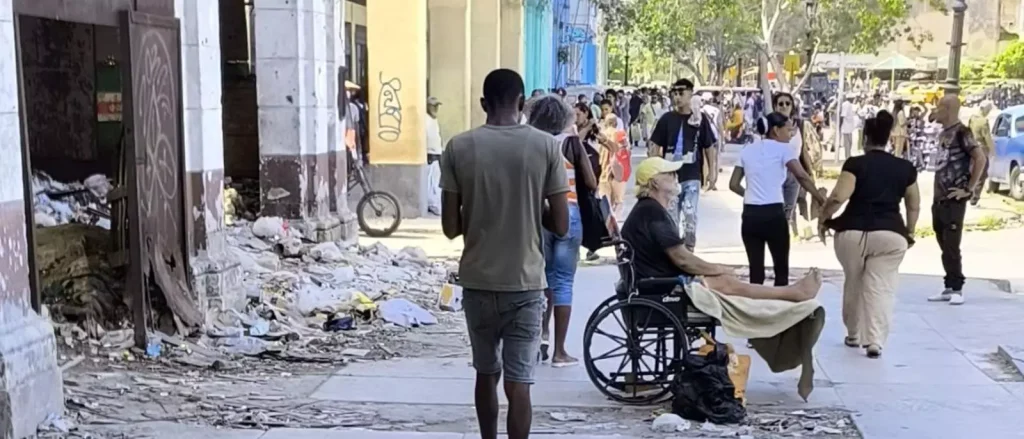
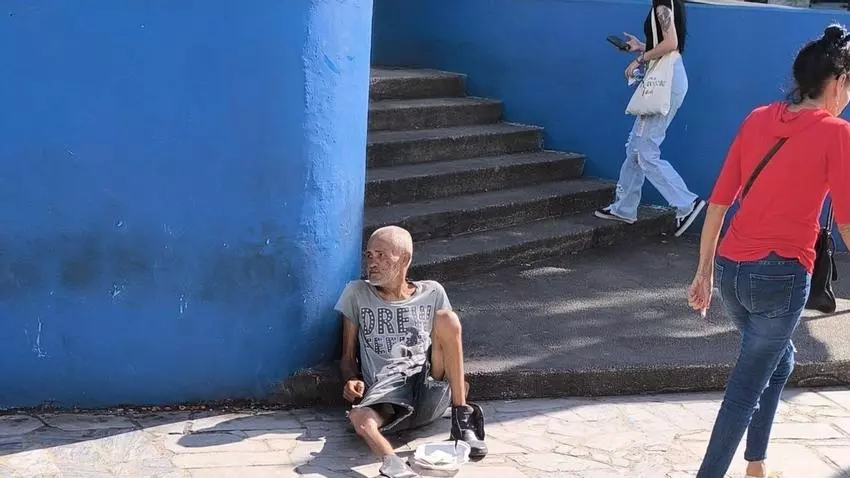
Sick and wheelchair-bound, an elderly man begs for money in front of a dilapidated building filled with trash. / 14ymedio

14ymedio, October 1, 2025

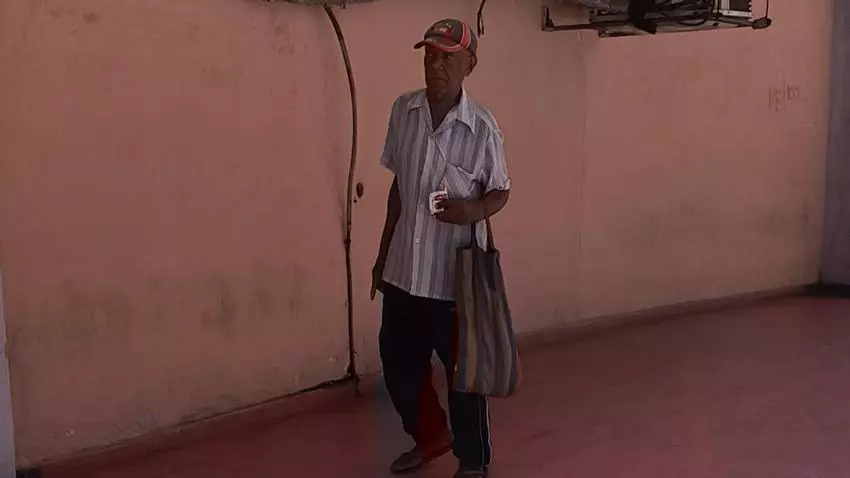
1/7 From his wheelchair, an elderly man makes a living selling pastries in the street. / 14ymedio
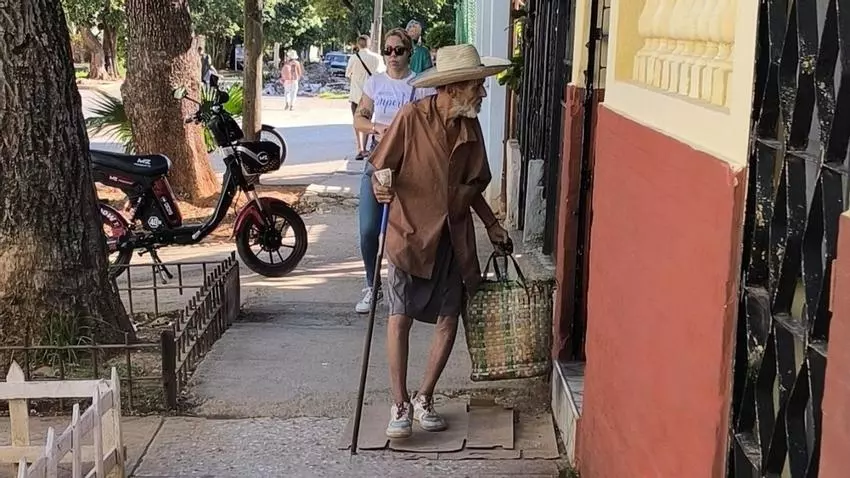
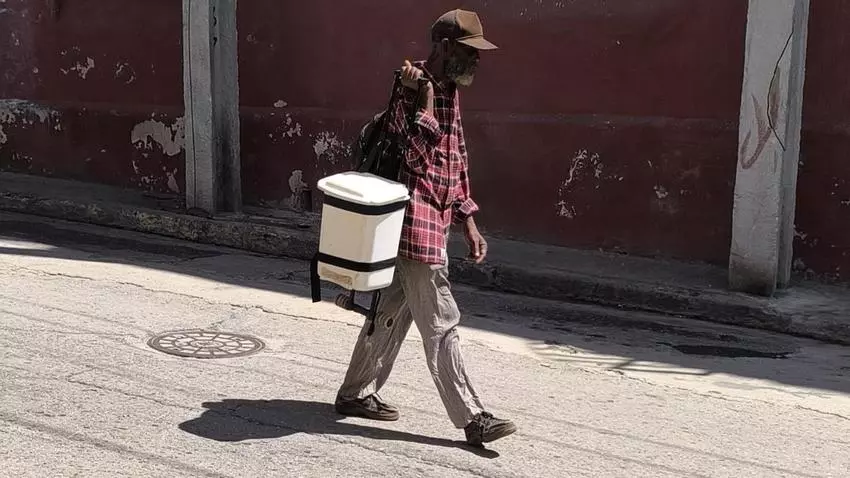
2/7 An elderly man laboriously carries a bag of groceries on a Havana street. / 14ymedio
3/7 Precariousness hits the elderly hardest: elderly in the daily struggle to survive. / 14ymedio
4/7 Many of the elderly who do not have remittances are destined to suffer hardship. / 14ymedio
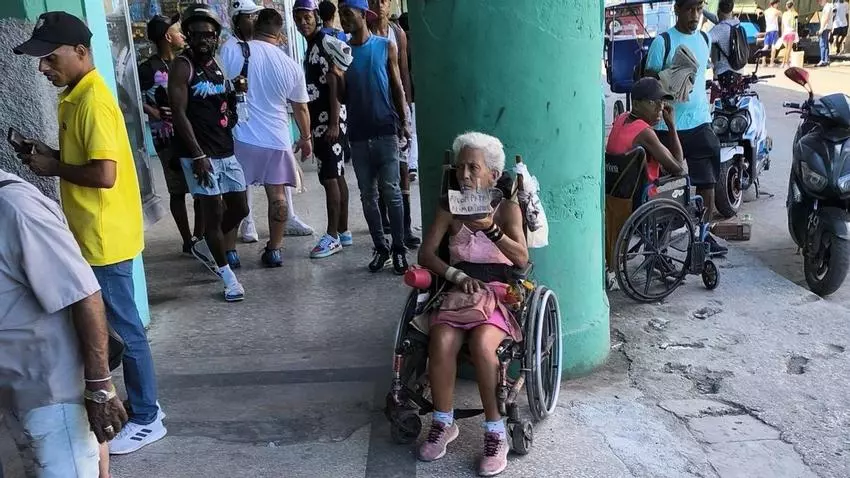
On Monte Street, sitting in her wheelchair, an elderly woman displays a sign that reads: Help feed me. / 14ymedio
6/7 Outside the Habana Libre Hotel, an elderly man waits patiently for someone to offer him a few coins. / 14ymedio
7/7 An elderly woman, a resident of Diez de Octubre, carries a bucket of water after spending days without service in her home. / 14ymedio

____________

COLLABORATE WITH OUR WORK: The 14ymedio team is committed to practicing serious journalism that reflects Cuba’s reality in all its depth. Thank you for joining us on this long journey. We invite you to continue supporting us by becoming a member of 14ymedio now. Together we can continue transforming journalism in Cuba.
The Dentists at a Clinic in Matanzas, Cuba, Have Disappeared

A patient in pain discovers that no one is caring for her any more

The woman waiting to be seen presses the ice cubes against her left cheek and looks up at the ceiling. / 14ymedio

14ymedio bigger14ymedio, Julio César Contreras, Matanzas, October 18, 2025 —  At the “César Escalante” Dental Clinic in the city of Matanzas, not even the characteristic smell of the dentist remains. The echo of the hallways replaces the hum of the switched-off equipment, and the silence is broken only when a frustrated patient leaves, despairing. Despite its status as a teaching center, not a single student can be seen wandering through its halls, where generations of dentists were once trained.

On the corner of Zaragoza and Contreras, the establishment—which should serve more than 19,000 people—looks empty. “I found the reception empty and the hallways deserted; it gives the impression of abandonment,” a Matanzas resident told 14ymedio. This Wednesday, she arrived with a damaged tooth and a cloth with some ice cubes, almost melted, to help her cope with the sharp pain caused by an inflamed nerve.

With her eyes turned upward every time the intense discomfort escalated, the patient ran into a young woman after a while who informed her that they were only seeing urgent cases. “In the end, I couldn’t tell if I was talking to an employee or a patient because I had nothing to identify her,” she says, unsure whether her situation would fall under the “urgent” category. continue reading

“We’re practically working the same way we did a century ago.” / 14ymedio

To ensure treatment, she has arrived with some supplies that are in short supply at the facility. “I brought sterile gloves, gauze, lidocaine, and a syringe with one of those little needles you use for your mouth,” she explains to this newspaper. A roll of ham and cheese, wrapped in paper, and a cola complete the supplies she keeps in her bag. “In case the person treating me hasn’t been able to eat lunch,” she adds.

For the staff, the critical situation at the clinic, including prolonged power outages and a lack of dental supplies, is a serious problem. “The dissatisfaction is not only felt by the public, but also by those of us who love our profession. We’re practically working the way we did a century ago,” acknowledges a dentist who mostly goes to work “to waste time because there’s either no electricity or no water.”

Virtually all the doors are closed and unmanned. / 14ymedio

In the long hallway leading to the consulting rooms, virtually all the doors are closed and unstaffed. A few years ago, the dreaded sound of dental drills, the clatter of metal instruments, and the dentist’s voices urging a patient in pain to calm down would come from inside those cubicles. All of that is missed amid the silence that now pervades the entire room.

The woman waiting to be seen presses the ice cubes against her left cheek and stares at the ceiling. Her lips move in a very low prayer. A murmur in which she asks for someone in a white coat, a smile on their face, and the ability to take away the pain that keeps her from sleeping or living.

____________

COLLABORATE WITH OUR WORK: The 14ymedio team is committed to practicing serious journalism that reflects Cuba’s reality in all its depth. Thank you for joining us on this long journey. We invite you to continue supporting us by becoming a member of 14ymedio now. Together we can continue transforming journalism in Cuba.
The “Grito de Baire” Resonates Again in Eastern Cuba

Dozens of residents of the Santiago neighborhood took to the streets banging their pots and pans and shouting “Freedom!”

The neighborhoods of La Salada, El Transformador, and Abisinia were the epicenter of the spontaneous mobilization. / Social media

14ymedio bigger14ymedio, Havana, October 17, 2025 – In Baire, a small town in the municipality of Contramaestre, Santiago de Cuba, dozens of residents took to the streets this Thursday to protest the prolonged blackouts, food shortages, and lack of drinking water that have affected the population for weeks. Although the crisis is affecting the entire island, its effects are often worse in the eastern part of the country.

Around 7:40 p.m., residents began banging on pots  and pans and shouting slogans such as “We are not afraid!” and “Freedom!” according to reports from journalist Yosmany Mayeta Labrada. The neighborhoods of La Salada, El Transformador, and Abisinia were the epicenter of the spontaneous mobilization, which quickly spread to other streets in the town.

Several residents documented the demonstration with their cell phones. The videos shared show people walking in groups, banging pots and pans, and shouting out anti-government messages like “Down with Díaz-Canel!”

The protest took place amid a power outage that had lasted more than 24 hours, with no drinking water, and an arbovirus outbreak worsening the local health crisis. “More than 30 hours without electricity or drinking water, several infected with the arbovirus,” said activist Yamilka Lafita, known online as Lara Crofs, who highlighted the exhaustion and frustration that motivated the march. continue reading

Authorities responded by cutting off internet access throughout the municipality.

During the first few minutes, the authorities responded with a familiar tactic, cutting off internet access throughout the municipality. This has become a common method to prevent images and videos of the protests from spreading and spurring repercussions in other areas. Connections were restored approximately 30 minutes later, allowing several residents to share evidence of their discontent. Following this, pro-regime social media profiles often displayed images of the protest sites, but now in a seemingly calm state, giving the impression that “nothing has happened” or that everything is “under control.”

The protesters avoided the main road to avoid police checkpoints and marched through inner streets, passing through Avenida 8 and Avenida Central (Avenida 4), until they reached Baire Central Park. There, they gathered in front of the police station and next to the residence of Salvador, president of the People’s Council, where they chanted slogans of freedom and justice.

Contramaestre woke up this Friday to police patrols and Interior Ministry vehicles surrounding the main streets and parks. The number of detainees is unknown, but local activists fear a new wave of arrests in the coming days, as has occurred during previous protests.

The town of Baire occupies an emblematic place in national history for being the scene of the Grito de Baire

Since the historic Island-wide demonstrations of 11 July 2021, popular unrest has been evident in various provinces across the country, fueled by prolonged blackouts, food shortages, and deteriorating basic services. However, the regime’s response continues to be repression and the criminalization of those demanding improvements.

The town of Baire holds an emblematic place in national history as the scene of the Grito de Baire (Cry of Baire) on February 24, 1895. That day marked the official beginning of the 1895 Cuban War of Independence against Spanish colonial rule, organized by José Martí. Although the insurrection occurred simultaneously in different parts of the country, it was in Baire where the uprising took on the greatest symbolic and political resonance, becoming one of the first places where patriots took up arms to conquer freedom.

That act of defiance against the Spanish metropolis became a milestone in the independence struggle and a symbol of popular resistance. Since then, Baire’s name has been associated with rebellion and the libertarian impulse, a historical memory that resonates again today in the streets of that same town, where more than a century later, Cubans once again raise their voices against oppression.

____________

COLLABORATE WITH OUR WORK: The 14ymedio team is committed to practicing serious journalism that reflects Cuba’s reality in all its depth. Thank you for joining us on this long journey. We invite you to continue supporting us by becoming a member of 14ymedio now. Together we can continue transforming journalism in Cuba.
A Dozen Women Close a Street in Regla, Havana, Due to the Lack of Water

Within a few minutes, uniformed police officers and plainclothes officers began to arrive on the block.

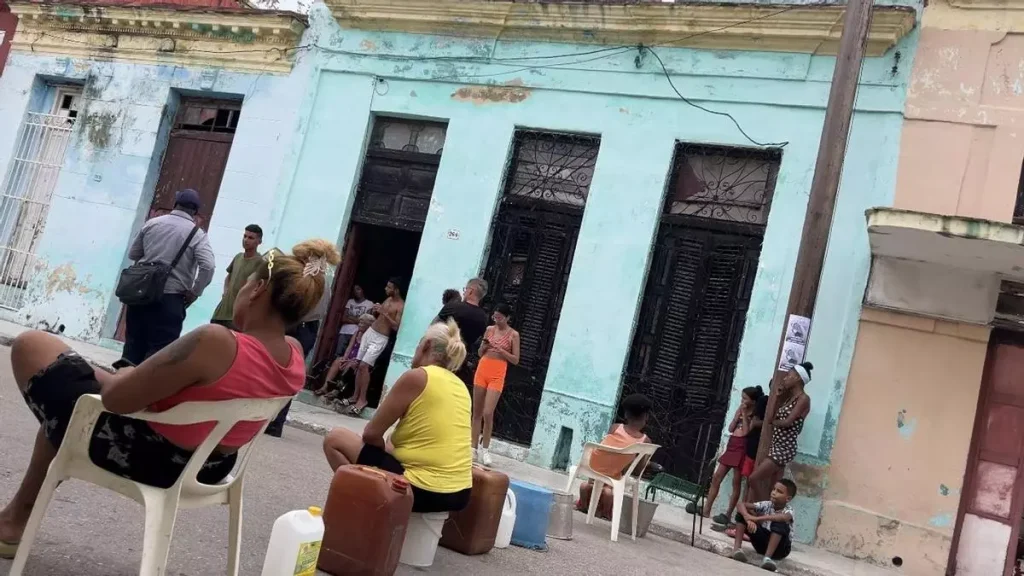
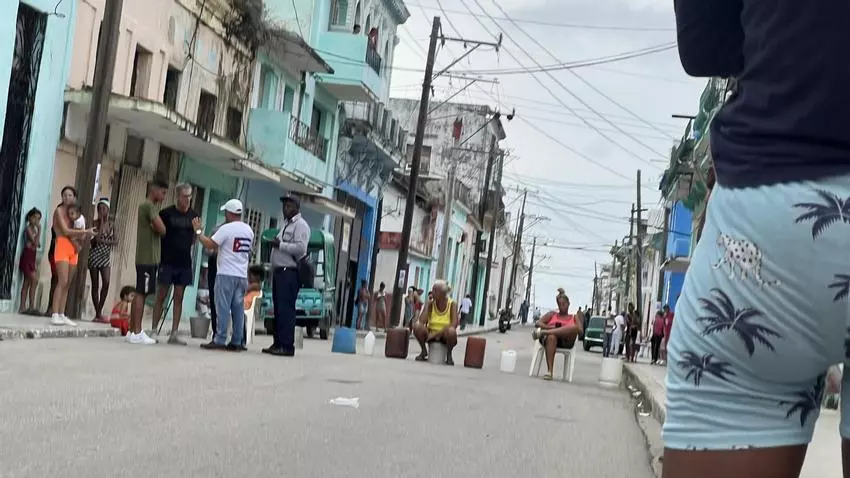
Residents of Martí Street, between Pereira and 27 de Noviembre, blocked the passage of vehicles with buckets, chairs, and empty containers. / 14ymedio

14ymedio bigger14ymedio, Darío Hernández, Havana, 17 October 2025 — A dozen women blocked a street in the municipality of Regla, Havana, on Friday afternoon to protest the lack of water. Residents of Martí Street, between Pereira and 27 de Noviembre, blocked vehicles with buckets, chairs, and empty containers after nearly a month without a water supply, according to 14ymedio.

“The only water here is delivered by truck,” a local resident told this newspaper, adding that water trucks don’t arrive frequently either. “One of those women is the mother of an 11J protester,” the resident said of one of the protesters. Within minutes, uniformed and plainclothes police officers began arriving on the block.

In a video posted on social media, a heavy police presence is seen, along with a uniformed officer arguing with one of the protesters. “You should have gone to the government, which is right there,” the officer claims, criticizing the woman for leaving the institutional site before being attended.

Street closures have become increasingly common in Cuba. / 14ymedio

Street closures, whether to protest the poor condition of housing or to denounce the lack of water supply, have become increasingly common in Cuba in recent years. In Havana, lines of people are frequently seen blocking traffic, demanding everything from a solution to their housing problems to the arrival of a water tanker truck to alleviate the water shortage. continue reading

At the end of September, a dozen women blocked Monte Street, just a few meters from Fraternidad Park. Magalys Anglada Mena, daughter of US-based activist Ariadna Mena Rubio, led the demonstration. Moments later, a truck arrived at the scene, guarded by police. Anglada subsequently received a police summons.

The protest was similar to one staged nearly two years ago by other mothers nearby, and for the same reason, it highlights the critical water supply situation in the capital, which has worsened in recent weeks and affects almost every municipality.

The women were outraged by a problem that affects every aspect of their lives.

Last July, also in Regla, a dozen women and their children blocked access to vehicles on Calzada Vieja between C and D, protesting the fact that water hadn’t reached the area for almost four months. After futile complaints and bureaucratic procedures, the protesters, from the Unión neighborhood, decided to take action.

Under the intense sun, with temperatures in Havana exceeding 30 degrees Celsius that day, women expressed outrage over a problem that affects every aspect of their lives, from food preparation and personal hygiene to caring for young children and the elderly.

Shortly after the protest began, a water tanker truck arrived at the scene to supply residents with supplies. This arrival helped break up the demonstration and allowed vehicle traffic to return to the street.

Protest in Regla, Havana, over the lack of water. / 14ymedio

____________

COLLABORATE WITH OUR WORK: The 14ymedio team is committed to practicing serious journalism that reflects Cuba’s reality in all its depth. Thank you for joining us on this long journey. We invite you to continue supporting us by becoming a member of 14ymedio now. Together we can continue transforming journalism in Cuba.
María Corina Machado, the Nobel of Perserverance

One doesn’t reach Machado’s current position without having suffered personal losses and difficult emotional trials along the way. / EFE

14ymedio bigger14ymedio, Yoani Sánchez, 10 October 2025 (delayed translation) — Friday could not have started better. The Norwegian Nobel Committee awarded opposition leader María Corina Machado the 2025 Nobel Peace Prize “for her tireless work promoting the democratic rights of the Venezuelan people.” The recognition puts the spotlight on Latin America, where three long-standing authoritarian regimes—in Caracas, Havana, and Managua—had come to believe that impunity and international silence would allow them to control their nations until the end of time.

In several government palaces, today’s coffee must be tasting much more bitter. The delay in the reactions of Nicolás Maduro and the Castro regime, who have not commented as of this writing, betrays the surprise they have felt at the announcement. Perplexed and annoyed, the spokespersons for both authoritarian regimes also seem to have frozen, waiting for their superiors to dictate the script they should follow in their statements. No wonder. Machado’s Nobel Prize is like salt in the wounds for all of them.

At just 58, the Venezuelan opposition leader has a long road ahead to do much for her country and the entire continent.

At just 58, the Venezuelan opposition leader has a long road ahead of her, and with the renewed prestige this award brings, she can do much for her country and the entire continent. Not only is the democratic opening in Venezuela ahead of her, which will inevitably come despite Maduro’s intentions, but she can also help drive political change in other countries in the region. For a long time the cause of peoples subjugated by totalitarian continue reading

regimes, supposedly leftist and wrapped in a rhetoric “of the humble and for the humble,” has merited a boost. What happened this Friday is that consecration. The plight of more than 40 million people, under the thumb of these three satrapies, will once again receive the attention it deserves.

But this is, especially, a personal gratification. One does not reach the position Machado holds today without suffering personal losses, harsh emotional trials, successive pressures to go into exile, and an intense boycott of her political career. An intense campaign of reputational destruction has been launched against her, attempting to paint her as a terrorist who called for social confrontation. Her actions before, during, and after the elections more than a year ago shattered the entire image that official Venezuelan propaganda tried to plaster on the minds of voters and the international media. Serene, firm, and with constant calls for calm and peaceful action, the Venezuelan established herself as a leader of nonviolence.

Perseverance has been her greatest virtue. While many grew weary along the way, the opposition leader continued her activism. When exile knocked on the door of so many, she stayed in her country. While the world looked the other way and Miraflores bathed in petrodollars, the industrial engineer never lost hope that Chavismo would not last forever. Her Nobel Prize is not just a medal of gleaming metal; it is an award forged in tenacity. The perseverance of María Corina Machado is a breath of hope for all of us who live under the long night of a dictatorship.

________________________

Editor’s Note: This article was originally published on DW.

____________

COLLABORATE WITH OUR WORK: The 14ymedio team is committed to practicing serious journalism that reflects Cuba’s reality in all its depth. Thank you for joining us on this long journey. We invite you to continue supporting us by becoming a member of 14ymedio now. Together we can continue transforming journalism in Cuba.
The Cuban Regime Survives Thanks to Our Paranoia

It is paradoxical that activists who proclaim “freedom for political prisoners” quickly join defamatory campaigns.

The regime fears that if it moves even a millimeter from its position, the entire building could collapse. / 14ymedio

14ymedio bigger14ymedio, Yunior García Aguilera, Madrid, 18 October 2025 —  In recent days, two Cuban political prisoners recently returned to exile—José Daniel Ferrer, leader of the Patriotic Union of Cuba, and Luis Robles, sentenced to five years in prison for holding a banner with the word “freedom”—have been targeted. What is most disturbing is that many of these attacks come from sectors of the opposition itself.

It is paradoxical that activists who proclaim “freedom for all political prisoners” quickly join campaigns of insults, suspicion, and conspiracy theories against those who paid for their dissent with years in prison.

In Ferrer’s case, it was predictable that State Security would attempt to undermine his leadership and prevent him from forging a consensus in exile. With the younger Robles, they seek to demotivate him, damage his testimony, and warn other Cubans that the community demanding your freedom today may tomorrow call you a “traitor” without considering your sacrifices.

The regime survives, in large part, thanks to this mutual distrust. Paranoia demobilizes, discredits, isolates, and causes both Cubans on the island and international institutions to lose confidence in the opposition. continue reading

In totalitarian contexts, distrust reaches extreme levels, as the fear of infiltration by regime agents is real.

During my interrogations in Cuba, my interrogators almost never sought concrete information: they wanted to sow discord. They tried to alienate me from activists like Luis Manuel Otero Alcántara, Maykel Osorbo, Tania Bruguera, Manuel Cuesta Morúa, and Ferrer, and I know they did the same with all the others.

In totalitarian contexts, mistrust reaches extreme levels, as the fear of infiltration by regime agents is real. Direct penetration by undercover agents is a constant and early practice, perfected by organizations such as the Soviet KGB and the Stasi in the German Democratic Republic. Beyond simple surveillance, these agents actively intervened in the internal dynamics of opposition groups, fostering rivalries, spreading rumors, and promoting tactics that compromised the anti-repression organization.

It is true that in the Soviet Union in the 1920s, the Cheka even created fake opposition organizations to attract, identify, and neutralize genuine dissidents, as occurred in the famous Operation Trust. These strategies sought not only to infiltrate but also to fabricate a controlled opposition. However, over time, counterintelligence evolved toward less daring methods. The greatest risk of fabricating a fake opposition lies in the ” boomerang effect,” losing control of the organization and its leaders.

One of the most notable examples of this effect is the terrorist Osama Bin Laden. During the 1980s, the CIA supported the Afghan mujahideen to weaken the USSR, creating an environment that allowed Bin Laden to consolidate his position and later found Al Qaeda. This temporary alliance later transformed into a direct threat to the US, demonstrating that strategies based on manipulation or instrumentalization can produce enemies more dangerous than the original objective.

State Security, a disciple of the KGB and the Stasi, doesn’t usually take too many risks. Every time I read about the “fake change” theory, I wonder if we are aware of the stale conservatism of the Cuban leadership, the advanced age of its leaders, and their innate rejection of any change, even if it’s “fake.” We forget that this regime hasn’t even been able to mutate toward the Chinese or Vietnamese models, that Díaz-Canel chose the word “continuity” as his motto, and that the “replacement cadres” are particularly mediocre, lacking in originality, and dogmatic.

Its undercover agents have been mostly “people in the line of fire,” whisperers, without much relevance or prominence.

I don’t rule out that, in the future, they could plan something similar to a “fraudulent change.” But, so far, neither the official rhetoric nor international alliances point in that direction. The regime fears that, if it shifts even a millimeter in its position, the entire edifice could collapse. That’s also why it takes decades to implement even less daring economic reforms.

Cuban counterintelligence agencies have preferred more orthodox tactics. They have avoided the direct creation of groups or leaders, preferring to infiltrate, gather information, generate rumors, influence decisions, and dynamite organizations to destroy them from within. Even the level of repression varies capriciously from one opposition figure to another, fueling theories and suspicions. Their undercover agents have mostly been “people in the ranks,” whisperers, without much relevance or prominence, precisely to avoid the boomerang effect.

Although all democratic movements in totalitarian contexts suffered from the problem of division, there are some examples of successful organizations. The cases of Solidarity in Poland and Charter 77 and the Civic Forum in Czechoslovakia demonstrated that alliances and consensus, regardless of political affiliation, can overcome the divisions fabricated by power.

The Cuban regime has transferred its strategy to social networks, creating not only defenders of the system, but also false “radicals,” from anonymous profiles.

These unifying agendas allowed ideological or social differences to take a backseat. The broadness of the coalition, combined with a nonviolent strategy and massive popular mobilization, largely neutralized the security apparatus’s ability to exploit internal fractures. Unity, in these cases, was not the product of deep ideological affinities, but of pragmatic negotiation around shared objectives.

The Cuban regime has studied these examples and is working to prevent us from putting them into practice. It has extended its strategy to social media, creating not only defenders of the system, but also fake “radicals” from anonymous profiles whose mission is to attack other opponents, promote conspiracy theories, and sabotage alliances.

After more than six decades of dictatorship, Cuban society faces enormous difficulties practicing tolerance, respect for differences, and consensus. And it does so in a world where extreme polarization threatens even consolidated democracies. It would be tragic if paranoia—that seed the regime cultivates with such precision—were to prevent us from achieving freedom in Cuba, before democracy, in other latitudes, begins to wither away.

____________

COLLABORATE WITH OUR WORK: The 14ymedio team is committed to practicing serious journalism that reflects Cuba’s reality in all its depth. Thank you for joining us on this long journey. We invite you to continue supporting us by becoming a member of 14ymedio now. Together we can continue transforming journalism in Cuba.
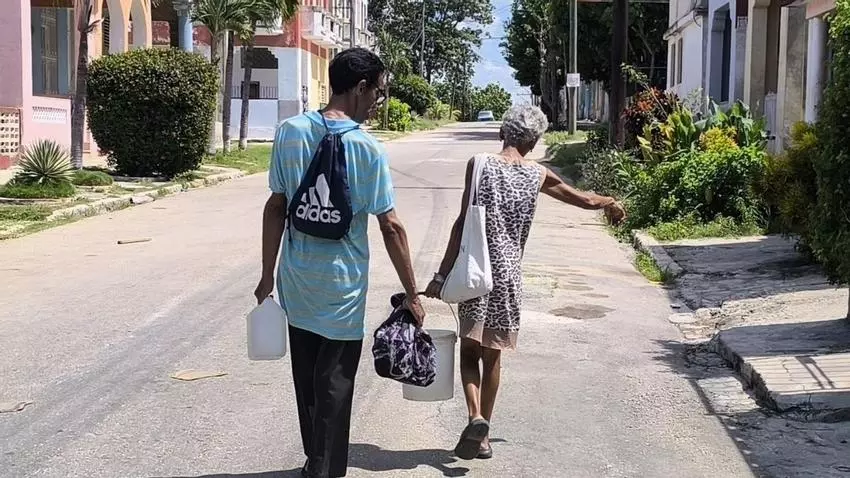
What is Happening to Cubans? The Deadly Price of Disunity

Breaking the communist siege will not be possible with hatred between brothers.

Our strength is wasted trying to find the speck in someone else’s eye. / Social Media

14ymedio bigger14ymedio, Jorge L. Léon, Houston, 17 October 2025 — It is our disgrace. Máximo Gómez, the Generalissimo, coined it in his famous phrase: “Cubans either never arrive or they go too far.” And it is true. In this long stretch of our history, we have never arrived on time.

Yesterday, José Martí was accused; today, insidious plots are launched against José Daniel Ferrer. What is happening to us? What mysterious inclination prevents us from uniting forces? Why, instead of supporting those who fight, do we always seek those who fall? Why do envy, suspicion, and gossip become more powerful tools than love of country?

History shows that intrigue has never led to freedom. Tyranny survives — and grows stronger — because we Cubans have not learned to unite. For more than six decades, this regime has survived by feeding off our divisions, our slander, and that sad obsession with looking for traitors around every corner.

If just one time we raised a single voice, if all our arms were raised in a single gesture, no wall would resist the thrust of the Cuban people. But our strength is wasted trying to find the speck in someone else’s eye. If anyone suspects a traitor, let them present proof. If they don’t have it, let them remain silent, because dishonoring a patriot—one who has suffered imprisonment, exile, and beatings—is an undignified act that only benefits the executioner. continue reading

But more terrible than poverty is the moral fracture, that habit of degrading one another.

I will never give in to intrigue. I will not listen to those who denigrated Martí yesterday and who denigrate José Daniel Ferrer today. Intrigue does not take sides; intrigue is treason.

Today the nation is bleeding. The prisons are full, hunger is suffocating, and hopelessness is multiplying. But more terrible than poverty is the moral fracture, this habit of degrading one another, of serving the enemy with rumors, with suspicion, with cowardice disguised as criticism.

Either we rise up now — all together — or we will die in the extreme misery imposed by this sick ideology of communism. Enough of the intrigues and the schemers. The sacred task of this hour is to rise up with one fist.

If someone works for the enemy and there iss evidence, report it. If there is no evidence, let your conscience be your guide. Because if we don’t unite, this breed of criminals will wipe out an entire people.

History does not forgive the tiid or the disunited. It is now up to us to rebuild the nation from the depths, to unite the campesino, the worker, the intellectual, the exile, and those who resist within. Breaking the communist siege will not be possible with hatred among brothers, but with the moral strength of a people who have decided to live free or die standing. As José Martí wrote: “When there is division among the good, the wicked triumph.”

____________

COLLABORATE WITH OUR WORK: The 14ymedio team is committed to practicing serious journalism that reflects Cuba’s reality in all its depth. Thank you for joining us on this long journey. We invite you to continue supporting us by becoming a member of 14ymedio now. Together we can continue transforming journalism in Cuba.
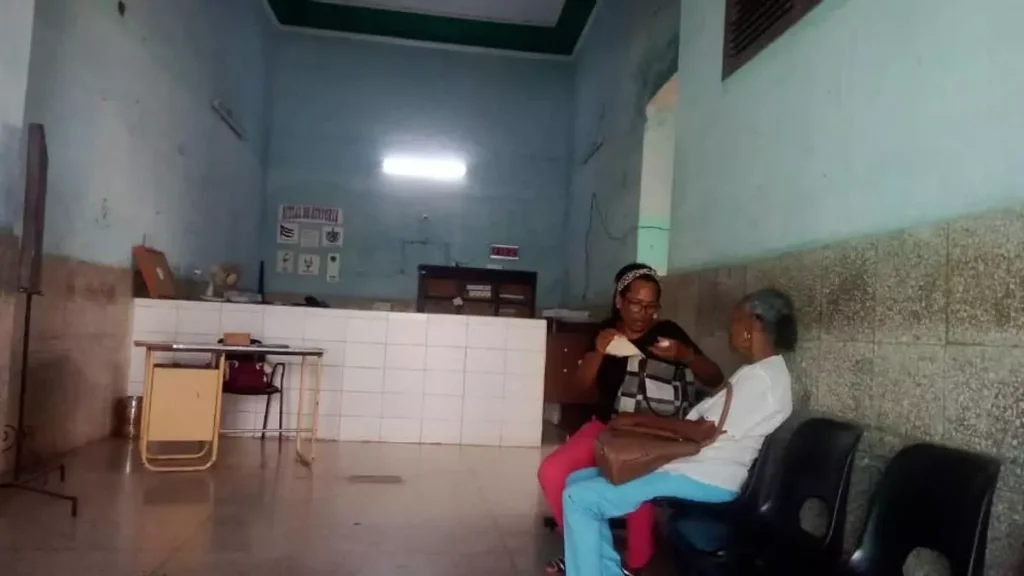
The Tobacco Growers of Pinar Del Río Are Leaving Tobacco and Planting Food

Farmers demand a share of the “fresh dollars that go into the State coffers”

We are experiencing one of the worst times in the sector in terms of farmers’ incomes, profitability and indebtedness.” / Cubadebate

14ymedio bigger14ymedio, Havana, October 18, 2025 — The month of October is an ordeal for the tobacco farmers (vergueros) of Pinar del Río. The heavy rains of recent weeks have complicated the early stages of the tobacco campaign, a battle now taking place in the seedbeds. The lack of inputs and the authorities’ refusal to pay producers in dollars also complicate the picture.

From the municipality of San Luis, Orestes predicts that they will have a diminished harvest when the campaign ends. ” We are experiencing one of the worst moments in the sector in terms of income, profitability and the indebtedness of farmers. Anyone here who is not committed on one side is committed on the other,” the farmer tells 14ymedio.

In addition to the rainfall that has flooded plots and compromised the development of seeds, Orestes points out the lack of foreign exchange as among the greatest difficulties he is experiencing on his farm. The land has been owned by his family for almost a century, and the planting of tobacco had been the main agricultural activity until reality forced them “to plant more food in order to survive.”

“We are still paid for part of the tobacco we deliver in MLC (freely convertible currency), and, of course, right now that currency is in the pits,” he says. This week the virtual currency is traded at 200 pesos, less than half the dollar exchange rate, which has now reached 468 pesos. Every day that passes means less for the MLC.”

The vegueros‘ constant demands that they be paid in dollars seem to have fallen on deaf ears, and the disappointment of the farmers is affecting their decision to use their tobacco plantations to sow other products that they can market more freely. continue reading

In 2024 the Spanish-Cuban company Habanos S.A managed to raise 827 million dollars

The hardships of the farmers contrasts with official figures, which point to tobacco as one of the few businesses that thrive on the Island despite the crisis, and the Regime’s propaganda claims to treat the sector with care. In 2024, the Spanish-Cuban company Habanos S.A managed to raise $827 million, $106 million more than a year earlier, which represented an increase of 14.7% in revenues shared by the two partners. The achievement was attributed to the more than 4,700 cigar sales points it has worldwide, the main ones in China, Spain, Switzerland, the UK and Germany.

“One thing is the international market and another is Cuba,” says Orestes. “Right now they are giving a stimulus in national currency and a small rebate to producers of shade-grown tobacco that is planted early.” In this technique, the leaves are crimped onto a string after being harvested and hung upside down on posts covered with translucent fabric so that they dry slowly in the sun. “But the Cuban peso is not encouraging.”

In San Juan y Martínez, another of the main tobacco growing centers of the province and part of the so-called Pinareño tobacco massif, the opinion is shared by Juan José and his family. “There is very little enthusiasm, because this stimulus that is being given — at most 30% above the gross value of sales from the producer to the State — is very little compared to the expenses we have to just begin planting.”

“There is a strike on the part of many farmers, who without solvency are unable to start the campaign and move to food crops,” he says. He sees a more profitable option in the cultivation of yucca, malanga, tomatoes and beans. The percentage of land devoted to these products is increasing on his farm, but this October, the penalization for those who choose to reduce the amount of land used for tobacco threatens to be harder.

“We have been told that the inspectors are going to check everything and fine those who are planting something else”

“The tobacco company intends to solve everything with threats of repressive actions against those who use the terrain destined for tobacco for something else,” warns the veguero. The message sent by the authorities in the sector is clear: “We have been told that the inspectors will check everything and impose fines on those who are planting something else. Even those with land in usufruct can lose it if they don’t comply with what is established.”

Another of the threats that have been received by tobacco companies in Pinar del Río is the cancelation of credits already approved if they insist on devoting part of their plots to other crops. “The truth is that the approval of credits goes very slowly, and the amounts are insufficient. On average, under the calculations that are made, they could cover more than 40% of a campaign’s expenses, but due to irregularities in the balance sheet and current inflation, they end up covering only 25% of the costs.”

Access to inputs also hampers the campaign. Recently, Marino Murillo Jorge, president of Tabacuba, opened a supply store in Las Ovas, in the municipality of Pinar del Río, with hardware, masonry and electrical components for sale in MLC. The authorities boast that the tools have a price “25-30% cheaper than the current domestic market,” but for Juan José the discount is insufficient.

“The Las Ovas store has many problems of access and connectivity to make payments in MLC”

“For this measure to be favorable, it must never be less than 70 per cent,” he states. The rebate should also include the cost of repairing the tobacco curing sheds.” The Las Ovas store has many problems of access to and connectivity to make payments in MLC,” explains the veguero, who has not seen the promise that this type of trade would also extend to San Luis and San Juan y Martínez.

“Here more than 50% of the producers intend to expand the planting of food and get rid of the tobacco, because they lack the fight to continue in the field,” he says. “Many are now planting the tobacco areas with food under the justification that they will join the late planting of tobacco, after January, but everyone knows that if we don’t get the food we need for the family first it is impossible to face the tobacco campaign.”

For Juan José, everything could change in the coming weeks if the sector authorities increase the incentives or decide to cross the red line they have maintained in relation to the payment in currencies. “This is the flagship of export, the item that brings fresh dollars to the State coffers, and we also want some of that money in a real currency.”

Translated by Regina Anavy

____________

COLLABORATE WITH OUR WORK: The 14ymedio team is committed to practicing serious journalism that reflects Cuba’s reality in all its depth. Thank you for joining us on this long journey. We invite you to continue supporting us by becoming a member of 14ymedio now. Together we can continue transforming journalism in Cuba.
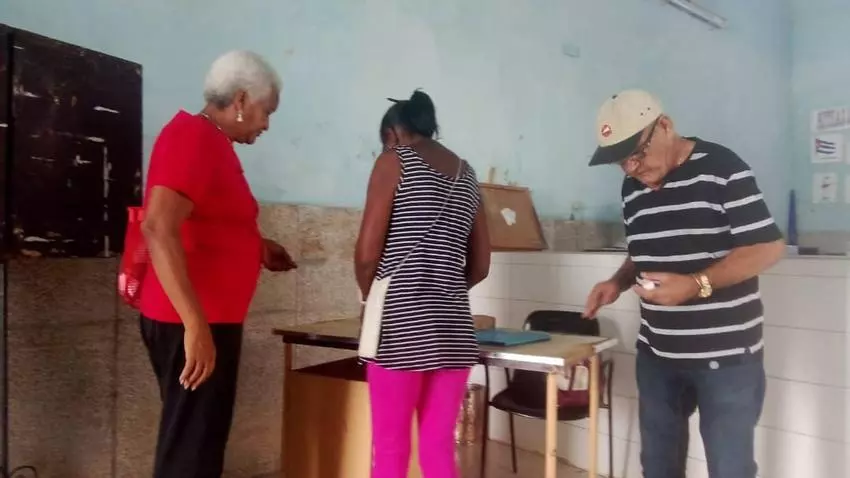
A Great-Nephew of Fidel and Raúl Castro Is Promoted to Deputy Prime Minister

  • Óscar Pérez-Oliva Fraga heads the strategic Ministry of Foreign Trade
  • A technocrat who combines family legacy, Party discipline and continuity
An important detail distinguishes Pérez-Oliva from most of his colleagues in the Council of Ministers: he is not a member of the National Assembly. / Cubadebate

14ymedio bigger14ymedio, Havana, October 18, 2024 — The Cuban government announced this Friday the promotion of Oscar Pérez-Oliva Fraga to the position of Deputy Prime Minister. The appointment, approved by the Council of State on the proposal of the President and with the approval of the Political Bureau, reinforces the trend that the highest responsibilities in the country are concentrated in figures closely linked to the political and economic power.

At the top of the Cuban regime there is no place for surprises or outsiders. Although official media have omitted any reference to his family ties, Pérez-Oliva is the grand-nephew of Fidel and Raúl Castro, son of biologist Mirsa Fraga Castro and grandson of Ángela Castro, sister of the founders of the Revolution. He is also the nephew of José Antonio Fraga Castro, who presided over the powerful company Labiofam until 2014.

His surnames, therefore, are not foreign to the upper power structure. The new generation of technocrats, to which Pérez-Oliva belongs, moves within a closed elite that combines family legacy, Party discipline and absence of public questioning of the prevailing model.

Now he assumes the responsibility of Deputy Prime Minister, replacing Ricardo Cabrisas Ruiz, who died in mid-September

With a degree in electronics engineering, Pérez-Oliva has spent his entire career within State structures. He headed the Maquimport Company – – one of the key State importers — subsequently took over the Business Evaluation Directorate in the Mariel Special Development Zone, and later was promoted to Deputy Minister and First Deputy Minister in the portfolio he has been directing since May 2024. Now, a little more than a year later, he adds the responsibility of Deputy Prime Minister, replacing Ricardo Cabrisas Ruiz, who died at the age of 88 in mid-September.

The area managed by Pérez-Oliva is strategic. In the midst of the productive decline and the collapse of government revenues, continue reading

the Government has relied on foreign capital as a lifeline. His portfolio is responsible for attracting investment, managing contracts and, above all, controlling the gateway of foreign exchange to a system that desperately needs it. In fact, it is a post with more real power than many social ministries.

An important detail distinguishes Pérez-Oliva from most of his colleagues in the Council of Ministers: he is not a member of the National Assembly. In a country where legislative “elections” are closed processes and controlled by the structure of the Party itself, this condition shows that its power does not come from any popular mandate — although symbolic — but directly from the Party leadership.

If this situation is maintained until the “elections” of 2028, Pérez-Oliva could become one of the most visible faces of the executive without having passed through Parliament. Nor would it be an isolated case, as several ministers and senior officials have held key positions without being deputies, confirming the practical irrelevance of the legislature in actual decision-making, although being a member of parliament would be indispensable to the office of President of the Republic.

His technical and reserved profile fits perfectly into the logic of “continuity”

Pérez-Oliva’s promotion does not point to a change of course. The Government maintains a strategy of recycling mid-level cadres who have grown up within State structures, without incorporating external voices or figures with some degree of autonomy. His technical and reserved profile fits perfectly into the logic of “continuity” that has dominated the political scene since Miguel Díaz-Canel Bermúdez took over as president.

During his ministerial tenure, Pérez-Oliva has not presented any proposals for significant opening or structural reforms. He has defended the policy of attracting foreign capital under iron State control and has reiterated the official discourse that the US embargo is responsible for domestic economic problems, avoiding any mention of planning errors and the lack of legal safeguards for investors.

In view of the renovations planned for 2028, the leadership is betting on managers who can guarantee the continuity of the model without internal challenges. In this sense, Pérez-Oliva is an ideal person: disciplined, with a family pedigree, without his own political base and with experience in a strategic economic area. He is a new face for an old structure that remains immovable.

Translated by Regina Anavy

____________

COLLABORATE WITH OUR WORK: The 14ymedio team is committed to practicing serious journalism that reflects Cuba’s reality in all its depth. Thank you for joining us on this long journey. We invite you to continue supporting us by becoming a member of 14ymedio now. Together we can continue transforming journalism in Cuba.
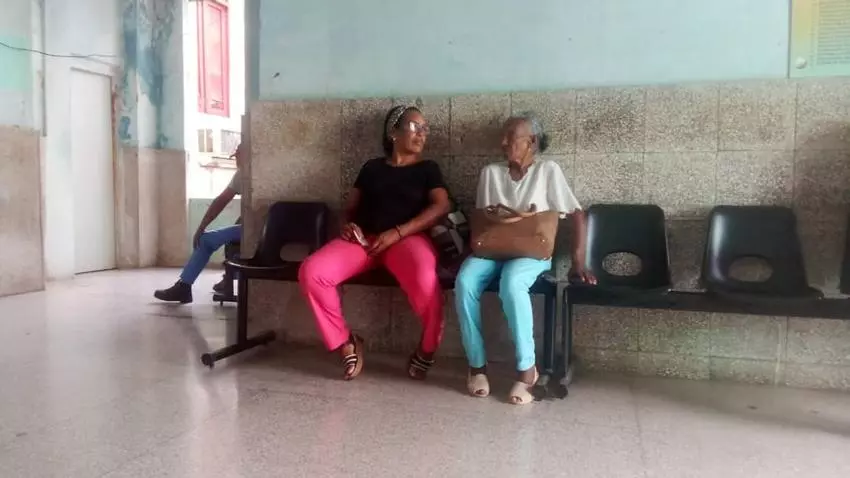
The U.S. Embassy Warns of Increased Robbery and Violence in Cuba Amid the Economic Crisis

The message includes a series of recommendations to avoid becoming a victim of crime.

The Embassy’s warning not only calls for caution, but also instructs its citizens to “be good witnesses.” / 14ymedio

14ymedio bigger14ymedio, Havana, October 18, 2025 /  Cuba’s economic crisis is reflected not only in shortages of food, fuel, and medicine. The collapse is also reflected in an increase in crime. This Friday, the U.S. Embassy in Havana issued a security alert on its official social media account, warning its citizens about an “increase in robberies and violent incidents” on the island.

The warning comes at a particularly sensitive time for the population, with increasingly prolonged power outages and inflation that has driven up the prices of basic goods. “The deteriorating economic conditions have led to an increase in robberies and violent incidents, including knife robberies, minor attacks on mission vehicles, and home invasions and theft of property,” the diplomatic note states.

The message includes a series of recommendations to avoid becoming a victim of crime: lock doors and windows at night, remove valuables from patios and balconies, keep cell phones charged, and avoid displaying cash in public places. The Embassy also advises people to “limit alcohol consumption” and “never accept drinks from strangers.”

Although the Cuban government avoids openly acknowledging the increase in violence and common crime, citizen reports and social media posts highlight a reality that many residents experience daily.

For months, users in various provinces have shared testimonies of street robberies, home burglaries, and assaults on drivers and passengers in private vehicles. The deterioration of public safety is exacerbated by fuel shortages and constant power outages. Power outages, which in many places have lasted for more than 30 hours at a time, create fertile ground for criminal activity.

The diplomatic headquarters in Havana maintains its emergency telephone line active.

Neither the Cuban Ministry of the Interior nor the state press have published recent statistics on violent crime. The most recent official figures correspond to previous years and tend to be fragmented. The regime’s usual strategy has been to minimize the problem or attribute it to “media campaigns” abroad.

However, even in state-controlled media, signs of concern have crept in indirectly. Reports on police operations, warnings to the public, and the insistence on “increasing public vigilance” demonstrate that authorities, internally, recognize a rise in crime. “The blackouts are being used as a pretext for criminal activity,” the U.S. Embassy warned directly, in a tone that contrasts with the silence of Cuban institutions.

The feeling of vulnerability isn’t limited to marginalized neighborhoods. Central areas of the capital, traditionally considered safer, have also experienced an increase in robberies. Several diplomats and workers from international organizations have reported incidents in recent months, according to sources close to the foreign community on the island.

Insecurity is closely linked to economic collapse. With soaring inflation, wages in devalued peso, and a growing informal economy, crime has become a desperate means of survival for some. The Embassy’s warning not only urges caution but also instructs its citizens to “be good witnesses,” meaning to observe details of appearance, clothing, vehicles, and license plates if they witness a crime. This recommendation reflects an implicit recognition that incidents could increase.

The diplomatic mission in Havana maintains its emergency telephone line and reminds U.S. citizens that they can contact their consular section for assistance.

____________

COLLABORATE WITH OUR WORK: The 14ymedio team is committed to practicing serious journalism that reflects Cuba’s reality in all its depth. Thank you for joining us on this long journey. We invite you to continue supporting us by becoming a member of 14ymedio now. Together we can continue transforming journalism in Cuba.

continue reading

Cuban Regime Censors a Tribute in Havana to Celia Cruz on Her Centenary.

Specialist Rosa Marquetti warns that what happened “adds another chapter to the history of the application of political commissioner methods within Cuban culture.”

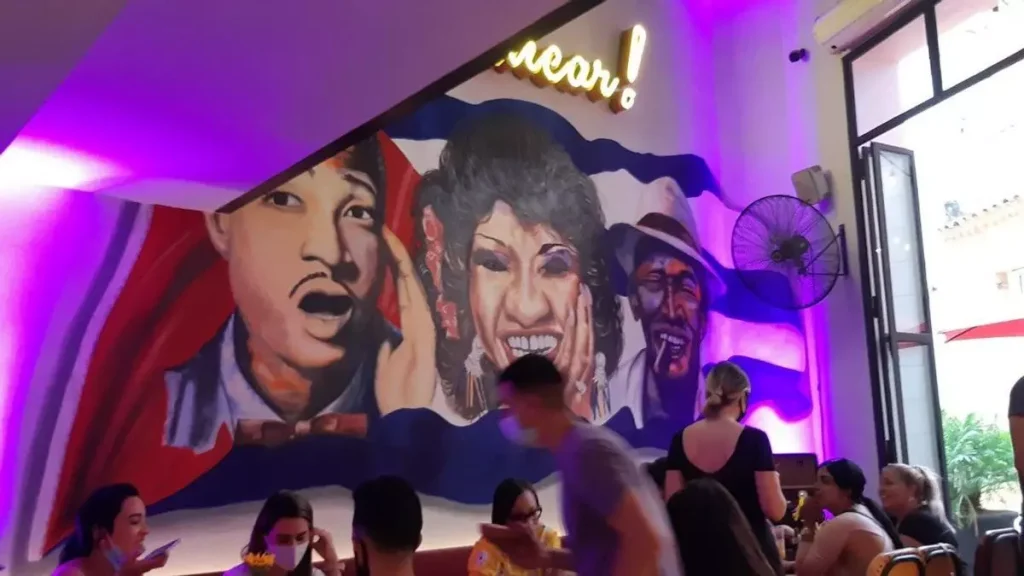
Mural of Celia Cruz, flanked by Benny Moré and Compay Segundo, at the Antojos restaurant in Old Havana. / 14ymedio

14ymedio bigger14ymedio, Madrid, 17 October 2025 — / The Celia Cruz centenary gala, organized this Sunday, October 19th, by the El Público theater group at the Cuban Art Factory (FAC) in Havana, has been canceled. The National Center for Popular Music announced this Thursday in a brief message that did not even mention the name of the Queen of Salsa.

“The programming subdirectorate of the National Center for Popular Music informs that the performance by the theater group El Público, scheduled for this Sunday the 19th at 8:30 p.m. in Nave 3 of the Fábrica de Arte Cubano, will not take place,” were the words chosen by the state agency.

Actor Danielito Tri-tri (Daniel Triana), who is part of the cast of the show, reproduced the official publication, attacking: “The tribute show to Celia has been censored, thanks to the same people as always.”

This Friday, Rosa Marquetti, a specialist in the life and work of the Guarachera de Cuba, who was born on 21 October 1925, commented on the cultural authorities’ decision in a long post, feeling “more pain than anger” about the incident and titling her text: Celia Cruz: the brilliance of a name in the face of cultural indigence. In it, she says that the “prohibition” of the tribute that El Público and the FAC intended to carry out “adds another chapter to the history of censorship and the application of political curatorial methods within Cuban culture.”

The musicologist reports that “some of those involved in this heartfelt initiative, after days of rehearsals and work, report incidents of personal summons, irrevocable orders, and threats anticipating negative continue reading

consequences for those who dare to disobey,” although none of those affected have yet published details of this pressure.

“They’ve been afraid of that voice for 60 years, trembling with fear at the mere mention or writing of its name.”

Likewise, she criticizes the “erratic statement from a bureaucratic entity that has nothing to do with the performing arts,” in which “they don’t even mention Celia Cruz’s name.” Regarding this, Marquetti adds: “They have been fearing that voice for 60 years, trembling with fear at the mere mention or writing of her name, terrified of her extraordinary power to summon people, knowing full well that her cry of “sugar!” and her joy are far more compelling and convincing than the bitterness and karmic negativity with which they impose orders, deal out blows, and threaten with the only thing they have: the force of the powers that be.”

Those same ones, the specialist continues, persist in trying “unsuccessfully” to tarnish Celia Cruz’s career, “attacking her, overwhelming her, inflicting upon her the misogyny and root racism that has characterized many of the decisions and policies in the cultural sphere, while she stood tall in the world as the greatest representation of all things Cuban, the most globally known, the most beloved, the most applauded, the most honored.”

They don’t forgive her, Marquetti explains, “her cimarronaje [‘runaway-slaveness’] in defending and displaying her right to think differently and act accordingly,” despite the fact that “the world today doesn’t remember, and many don’t even know, what her political stance was: they only remember her music, her voice, and her Cubanness, that is, her wonderful art.”

Directed by Carlos Díaz and written by Norge Espinosa, the show, announced by El Público, also featured the La Mansión Castillo restaurant. It was scheduled to take place in Nave 3 of the FAC. It would feature actors Estrellita, Lucho Calzadilla, Freddy Maragoto, Roberto Romero, Georbis Martínez, Brian Pérez, Chai Deivis Torres, and the aforementioned Danielito Tri-tri.

____________

COLLABORATE WITH OUR WORK: The 14ymedio team is committed to practicing serious journalism that reflects Cuba’s reality in all its depth. Thank you for joining us on this long journey. We invite you to continue supporting us by becoming a member of 14ymedio now. Together we can continue transforming journalism in Cuba.
Private Companies Have No Interest in Sponsoring Cuban Baseball

The Sports Law approved last July opened the door to investments, but no firm has approached the clubs

Sponsorships, in general, have not been successful in Cuban sports. / Jit

14ymedio bigger14ymedio, Havana, 16 October 2025 — The National Series baseball teams continue to fail to attract sponsors and advertising for uniforms and stadiums. More than two months after the Sports Law approved the opening of the program to state and private companies, none have approached the clubs. “The opportunity is legal,” Karel Pachot, legal director of the National Institute of Sports, Physical Education, and Recreation (Inder), told the program Bola Viva.

Pachot is certain that “if it is used as intended, it can yield the best results for all parties involved in this action.”

The current regulations, which were placed under the control of INDER, aim to generate revenue, a portion of which would be used to restore sports venues and guarantee resources to organize events, cover transportation costs, and provide food for baseball players.

For now, the outlook remains bleak. The lack of transportation, of water for the players, and of electricity has led to the suspension of games. Last June, the U-23 match between Cienfuegos and Mayabeque had to be canceled because “the bus that was supposed to take them to the stadium didn’t arrive,” according to reporter Fabián Morales. continue reading

“Theft, abuse, and constant problems are the daily bread of Cuban baseball. The incidents continue to accumulate, and it seems there’s no end to these evils,” explained the specialized media outlet Swing Completo.

Thus, Pachot appealed to companies, reminding them that they can all apply for advertising and sponsorship. “In the case of the National Baseball Series, the application is made through the Cuban Baseball Federation and the event’s Organizing Committee. These bodies submit the application to the appropriate authority.”

The [Cuban bottled water] company “Ciego Montero, for example, is a regular at some of our competitions, and has been a sponsor that has guaranteed the water,” explains Pachot.

The Cuban bottled water company “Ciego Montero, for example, is a regular at some of our competitions; it has been a sponsor that has guaranteed the water,” Pachot explains.

In the case of uniforms, the official emphasized that “they may allocate up to a third of their total surface area to sponsor logos, seeking to maintain a balance between team identity and economic needs.”

Based on the success of Cuban baseball, the measure is intended to be extended to other disciplines, including soccer, volleyball, and athletics.

Sponsorships, in general, have not borne fruit in Cuban sports. In 2021, authorities opened the door to privatizing the management of sports facilities. The first venue to pass into the hands of the “new forms of economic management,” as the federations called the non-state sector, was the iconic Estadio Latinoamericano, home of Havana’s  Industriales baseball team.

The goal is for these facilities to “be financially autonomous and self-sustaining,” said Juan Reinaldo Pérez, National Baseball Commissioner, at the time. The changes didn’t go as planned, and the facility underwent another renovation last March.

Now, work continues on the souvenir shops , restaurants, cafes, pizzerias, and ice cream parlors, as well as the arcade, screens, and tents in outdoor areas.

____________

COLLABORATE WITH OUR WORK: The 14ymedio team is committed to practicing serious journalism that reflects Cuba’s reality in all its depth. Thank you for joining us on this long journey. We invite you to continue supporting us by becoming a member of 14ymedio now. Together we can continue transforming journalism in Cuba.
As in Cuba’s Special Period, Authorities Hope the “Popular Rice” Will Reduce Imports

The Agricultural Group has set out to sow 200,000 hectares (494,212 acres), half of which are under the responsibility of “large enterprises and specialized centers”

Half of the projected figure -100,000 hectares- will be managed by “large enterprises and specialized centers” in Pinar del Río, Villa Clara, Sancti Spíritus, Camagüey and Granma. / Cubadebate

14ymedio bigger14ymedio, Havana, October 15, 2025 — The lack of production in Cuba is not easy to solve, but it usually finds compensation in a corresponding show of ‘voluntarism’. This is the case for rice, of which the Government intends to sow 200,000 hectares next year.

According to a note published this Wednesday in Granma, the task, “indicated by the highest leadership of the country” is of the “first order” and is expected to be launched this coming November. The program, reported the newspaper of the Communist Party of Cuba based on statements by Orlando Linares Morel, president of the Agricultural Group of the Ministry of Agriculture, aims to cover almost the entire country — 14 provinces, 133 municipalities and 23,000 producers.

Of the planned figure, half — 100,000 hectares — will be in the charge of “large companies and specialized centers” of Pinar del Río, Villa Clara, Sancti Spíritus, Camagüey and Granma. The rest will be devoted to the cultivation of the so-called “popular rice,” much criticized by experts for being inefficient, although the official report says nothing about this.

“Anyone can join this second modality,” says the official, “both for purposes of self-consumption and with intentions to contribute to industry and the national balance sheet.” The planting, he continues, “will be supported by national seed, while the Vietnamese side, which will participate in the program, will contribute its own seeds.” continue reading

The sowing, he continues, “will be supported by national seed, while the Vietnamese side, which will participate in the program, will contribute its own seeds.”

This refers to the projects in Pinar del Rio (in the municipalities of Los Palacios and Consolación del Sur) and in Artemisa Province, where the Vietnamese company Agri VMA is working on land under usufruct whose yields are much higher than those of the State: seven tons per hectare compared to the 1.5 average of the country..

The statements made by officials on October 7 in a meeting devoted to the subject made it clear that the private sector has become the main producer of rice on the Island, although the Round Table TV program acknowledged that, even with the non-State contribution, the future was bleak. According to the authorities, the current campaign will not be good, even with outside help.

In 2024, Cuba produced 80,000 tons of rice on 79,000 hectares, just over 10 per cent of its domestic consumption with a yield of just over one ton per hectare. By 2025, according to a report from Granma published last March, the goal was to plant 100,000 tons and obtain 100,000 tons of rice.

The latter would imply a growth of 20% compared to 2024, something complicated with the energy deficit. For the remaining 100,000 hectares of self-consumption and small production by 2026, the target seems unattainable under current conditions.

Last March, the Agricultural Group insisted on the need to develop, in some 70 municipalities, the cultivation of “popular rice,” a modality that “already proved its effectiveness during the hard years of the Special Period, in the 1990s.” The authorities’ aspire to return to agriculture with oxen because there is no fuel and no “technological package” to improve yields.

However, they acknowledged the inadequacy of domestic production to meet domestic demand and the need to import the product. “Last year, the rice harvested in the country was sold only in markets, fairs and some destinations of the Ministry of Internal Trade. But the basic basket [via the ration system] was 100% imported, and in 2025 it is also expected to be so,” said Orlando Linares.

That is why the fanciful intentions expressed in Granma this Tuesday are surprising. It also ensures that the State will provide the necessary fuel to producers, up to 70% “directly,” 10% in debit cards, and the rest in dollars, “in order to achieve deliveries and sales to industry, so they can count on cash to cover the high costs of cultivation and compensation for temporary workers.”

The plan even foresees the “accelerated introduction” of drones to increase performance and decrease water consumption. To “back up” the goal, they plan to use “the return of sales financing in US dollars from tourism and other sectors, which could help the rice program under current conditions, basically in the acquisition of tires, parts, tools and accessories for tractors, combine harvesters, industrial inputs and other resources.”

Today, the rice distributed in the basic basket comes from outside. On September 20, 19,000 tons of grain arrived at the port of Havana — without the national television revealing its origin — to be distributed throughout the country.

Translated by Regina Anavy

____________

COLLABORATE WITH OUR WORK: The 14ymedio team is committed to practicing serious journalism that reflects Cuba’s reality in all its depth. Thank you for joining us on this long journey. We invite you to continue supporting us by becoming a member of 14ymedio now. Together we can continue transforming journalism in Cuba.