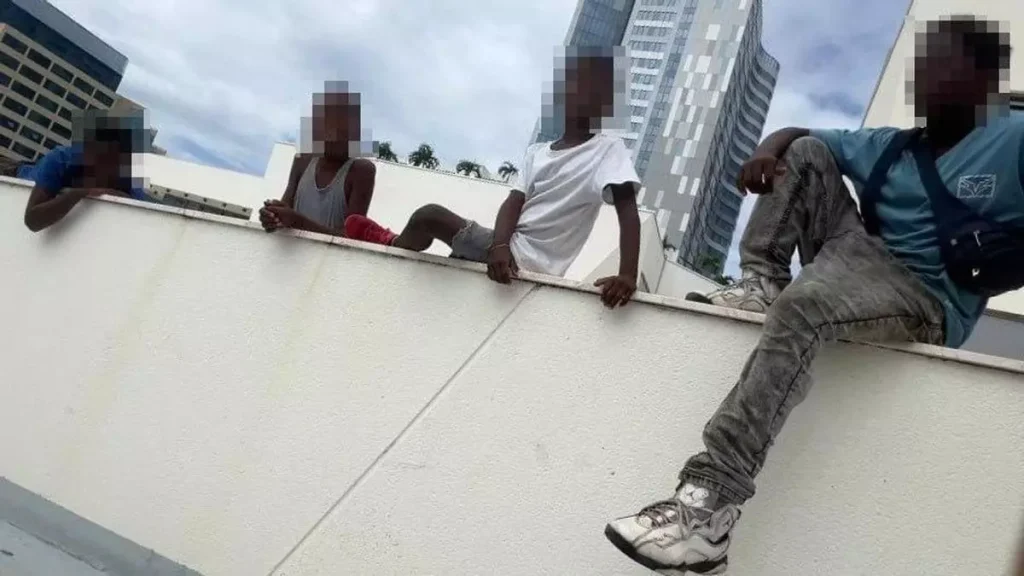
A Spanish Tourist Is Admitted to the Hospital in Cuba in Critical Condition and With a Deplorable Medical Setting

Pedro Daniel Bernad had to undergo two operations in Santa Clara due to an intestinal obstruction while pneumonia complicated his condition.
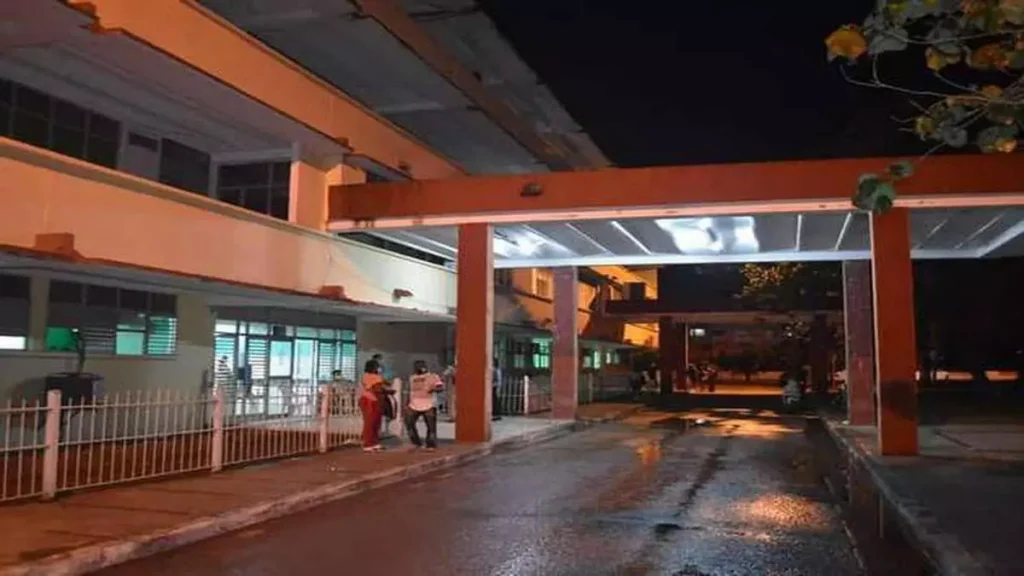

Pedro Daniel Bernad remains in the Intensive Care Unit of the Arnaldo Milián Castro hospital in Santa Clara. / Facebook

14ymedio bigger14ymedio, Havana, October 21, 2025 — The health of Spaniard Pedro Daniel Bernad, visiting Cuba, is critical. The tourist, originally from Épila, a small town in Zaragoza, arrived on the island on October 3 for what he thought would be a dream vacation, but a week later, he had to be admitted to the Arnaldo Milián Castro Hospital in Santa Clara due to an intestinal obstruction.

His family has told several Spanish media outlets about his medical situation. As if that weren’t enough, pneumonia complicated his recovery, and he remains in the Intensive Care Unit of the Santa Clara hospital.

Bernad’s sister and brother-in-law, Daniel Mosteo, traveled to the island to be near him, and the situation they have encountered in Cuba is terrifying. “It’s a country with very little health infrastructure,” the relatives told the Spanish newspaper La Razón .

“When you see the material and hygienic conditions of the hospital, your heart skips a beat,” Mosteo told the same outlet. The shortage of drugs is so acute that family members have had to obtain antibiotics continue reading
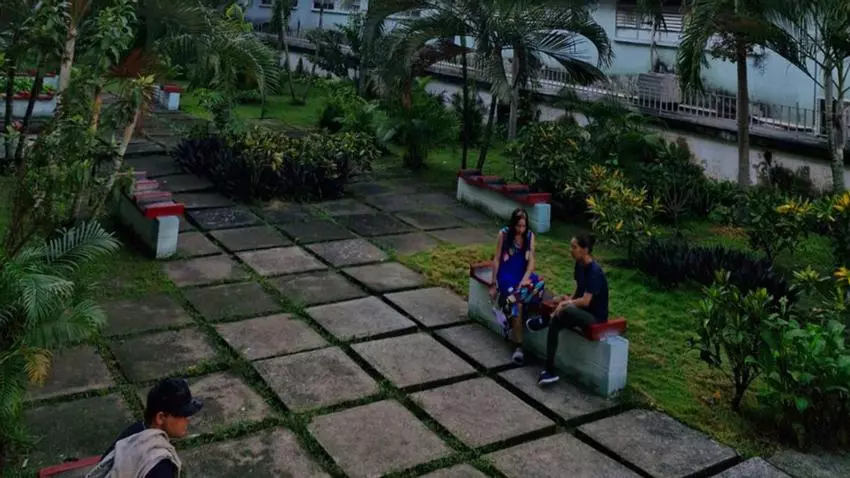
for Bernad through the Spanish consulate, but they only have enough for this Tuesday of the “seven days he needs to be given them.”

Corridors of the Arnaldo Milián Castro Hospital, in Santa Clara / Daniel Mosteo/Aragón Noticias

Given the deplorable situation at the hospital, Mosteo and his wife are trying to repatriate the 51-year-old man, but their efforts with the insurance company he hired for the trip and the Spanish consulate have been unsuccessful.

The insurer argued that repatriation in a “medicalized plane,” which costs 150,000 euros ($174,201), “is limited to certain countries.” Furthermore, Mosteo explained to La Razón, the Spanish embassy specified that official return “is only considered in situations of collective emergency.”

Bernad’s brother-in-law expressed his frustration with the system. “I don’t understand why it isn’t complementary for extremely serious situations. Why do we pay taxes if it doesn’t come back to you when you need it most? This is an extremely serious situation; it’s not a headache you get abroad, and you don’t receive support from your government,” he stressed.

The Épila City Council has joined the efforts to repatriate Bernad . In a brief statement, the organization states that it is taking “every possible step to help improve the situation and achieve his return as soon as possible.”

Family members fear it may be too late, but they continue to try to move “heaven and earth” to get the Spaniard back to Zaragoza, El Heraldo de Aragón reported.

Bernad’s case is not an isolated one. Last April, Canadians Christian Maurais and Caroline Tétrault had a similar experience when she underwent emergency surgery for appendicitis at the same Santa Clara hospital.

“There was no light, no basic conditions. It looked like a horror movie, but the doctors performed miracles with what they had,” Maurais told the Quebec press.

Their testimony, like Bernad’s, coincides with the lack of antibiotics, adequate nutrition, and basic resources. They even had to buy medicine and food on the black market, facing the risk of illegal currency exchange.

In March, another incident shocked the international community when Syrian-Canadian citizen Faraj Allah Jarjour died while on vacation in Cuba, and his family received the wrong body back. The Cuban government apologized, but the case remains unsolved.

Amid the health crisis experienced by visitors, the Ministry of Tourism highlighted this Monday that the World Travel Awards have awarded Cuba the prize for Best Cultural Destination in the Caribbean for the fifth consecutive time.

The official media outlet Adelante praised the award, which includes hotels, tourist accommodations, attractions, and airlines. “They’re considered the Oscars of the tourism industry,” it reaffirmed, without referring to the disastrous tourism figures or the increasingly frequent and harsh complaints from international visitors.

____________

COLLABORATE WITH OUR WORK: The 14ymedio team is committed to practicing serious journalism that reflects Cuba’s reality in all its depth. Thank you for joining us on this long journey. We invite you to continue supporting us by becoming a member of 14ymedio now. Together we can continue transforming journalism in Cuba.
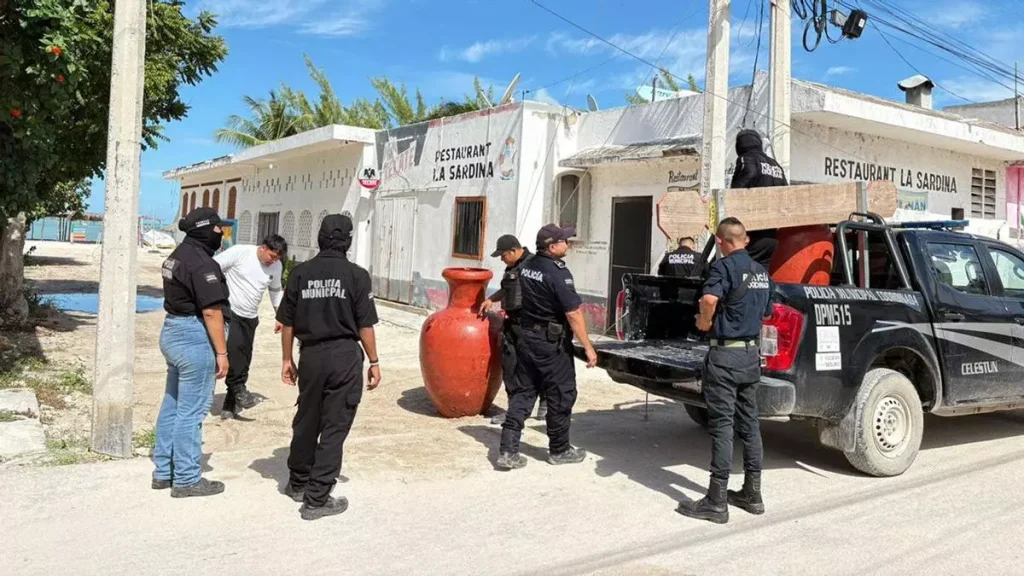
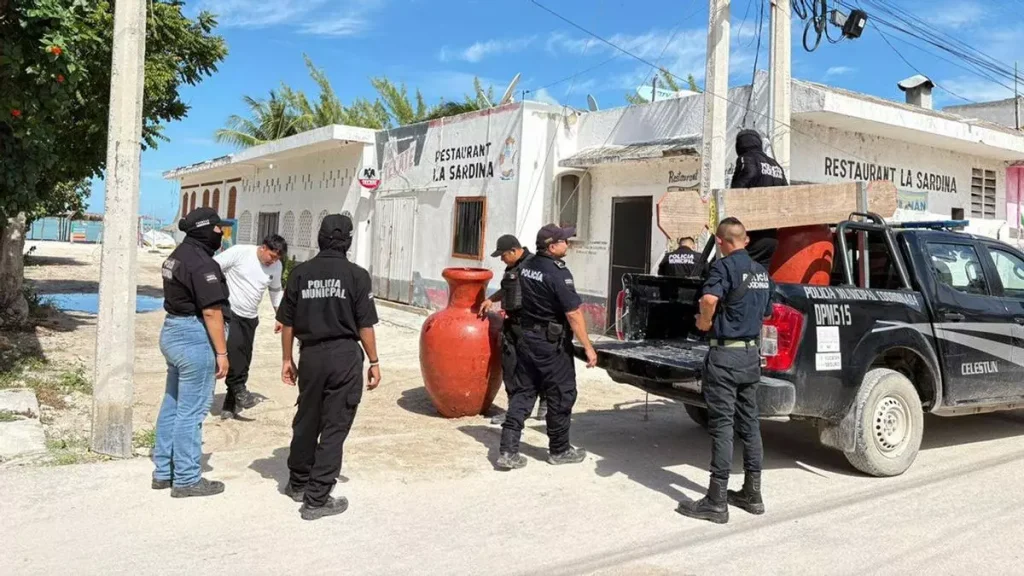
A Yucatan Town is Hiding 21 Cuban Rafters

The residents of Celestún demand that the INM issue safe-conduct passes to the island’s migrants.

Celestún municipal police officers with residents of the fishing village. / Celestún City Council

14ymedio bigger14ymedio, Angel Salinas, Mexico City, October 22, 2025 – The residents of Celestún (Yucatán), a fishing village of fewer than 8,000 inhabitants, have been hiding 21 Cuban rafters since October 16. “People want Immigration to personally deliver a safe-conduct pass to the migrants,” local police officer Dagoberto Canul tells 14ymedio.

According to the official, the island nationals, including four women, are being held on a property near the City Hall. However, residents have asked Mayor Germán Jesús Cauich Pinto to intervene with the National Migration Institute (INM) to obtain the document, because “there is a fear that the National Guard will detain and deport them.”

Although the INM maintains that Mexico does not deport, official data certifies that in the first half of this year, 21 Cubans were expelled for “providing false information and documents and for illegally re-entering the country.” During the same period, another 74 migrants and two children were returned to Cuba through “assisted returns.” The Mexican government has justified the returns of Cuban nationals and calls them “assisted returns” [a petition that migrants supposedly sign to return to their country of origin], lawyer José Luis Pérez Jiménez tells continue reading

this newspaper.

Canul says the population has offered support to the rafters who remained adrift for seven days in two rafts before landing on the beach.

Canul says the population has offered support to the rafters who remained adrift for seven days in two rafts before landing on the beach. “Immigration has explained that they cannot issue them a safe-conduct permit for a year, that everything depends on the procedures, and that what they would be given is a document that allows them to legally stay for 30 days, during which they should use the opportunity to apply for refuge with the Mexican Commission for Refugee Assistance (COMAR),” the police officer comments.

Ixchel, who had contact with one of the women from the Island, says there’s anger because Immigration demanded they hand over the Cubans or else there would be consequences. “They’re good people who don’t harm anyone; what they want is a better life.”

The arrival of this group of rafters was reported to the Pastoral de Migración* (Migration Pastoral) in Yucatán, Officer Canul stated. “This story was confirmed to us,” he stated. However, the person in charge of the facility denied the official’s claim and said he knew nothing about the migrants.

A source confirmed to this newspaper that Enrique Puc was in Celestún on Tuesday. The local police officer believes the pastoral manager’s presence is part of the ongoing negotiations, although he warns that there has been no progress. “They have hidden them well. There are no videos or photos of the Cubans. The only thing is the footage of their arrival, and the individuals cannot be identified.”

*The Catholic Church’s ministry dedicated to serving migrants.

____________

COLLABORATE WITH OUR WORK: The 14ymedio team is committed to practicing serious journalism that reflects Cuba’s reality in all its depth. Thank you for joining us on this long journey. We invite you to continue supporting us by becoming a member of 14ymedio now. Together we can continue transforming journalism in Cuba.
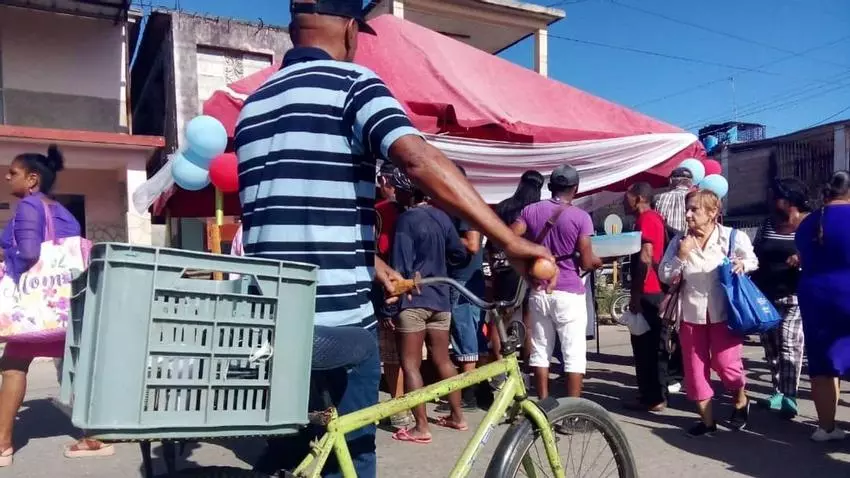
The Agricultural Fair in San José de las Lajas, Cuba, is Shrinking Every Day

With colorful awnings, balloons and recorded music, the initiative is reduced to a few platforms with wilted and reheated soupy food.

An agricultural fair with anemia, in one of Cuba’s most agricultural provinces, is a painful irony. / 14ymedio

14ymedio bigger14ymedio, Julio César Contreras, San José de las Lajas (Mayabeque), October 22, 2025 / The sun beats down on Avenida 40 in San José de las Lajas, Mayabeque, where a row of colorful awnings attempts to shade the shortages. Beneath the tarps, vendors fan themselves with pieces of cardboard, and shoppers amble along, carrying bags, umbrellas, and bottles of water. It is the third Saturday of the month, the day of the Provincial Agricultural Fair, although at first glance, you wouldn’t think the word “provincial” is so inappropriate.

The balloons tied to the tents fail to disguise the poverty of the scene. At one end, a blackboard announces the specials at La Casona kiosk: a soup for 40 pesos, a small pizza for 150, a pound of pre-boiled spaghetti with nothing added for 150. Behind the counter, the Cuban flag serves as a backdrop, and a small fan struggles to move the thick air.

“Anyone who wants to buy something good has to come early,” says Victor, a man who is already leaving with just a few yuccas and a bunch of plantains, speaking to 14ymedio. “At ten in the morning, this place is a desert,” he adds. “All that remains is what no one wanted.”

Years ago, he recalls, the fair took up six or seven blocks, from Camilo Cienfuegos School to the Youth Computer Club. Now, it only takes two to cover the entire area. “Before, there were trucks full of food, pallets of fresh produce, even pork. But with the price caps, the farmers don’t bring anything anymore. They come to comply,” explains the continue reading

university professor, wiping his sweat with a handkerchief.

Residents come more out of routine than hope. / 14ymedio

An agricultural fair with anemia, in one of Cuba’s most agricultural provinces, is a painful irony. But in San José de las Lajas, they’ve learned, through empty platforms and sky-high prices, that it’s not enough to select a space, give a rimbombante [flashy] name to a market day, and proclaim in the local media that there will be “a multitude of options” of available food.

In another tent in the run-down place, blue tarps flap over an empty table. The woman serving sighs. “If only we had electricity, we could sell cold sodas.” The phrase is lost in the murmur of recorded music distorted from a speaker. Neighbors come closer more out of routine than hope.

Nixa, a housewife from Mayabeque, examines some yuca with a distrustful expression. “At 17 pesos a pound, it’s not bad… if it were good,” she says, adding, after scanning the surroundings: “No rice, no beans, no oil. And this is a provincial fair? All they have here are squash and papayas, and all from the same truck in Güines.”

A few meters away, a man on a bicycle weaves through the crowd. He carries an empty plastic crate on the rear rack: he’ll use it if he can get his hands on some eggs. “I went to have a beer in the tent of El Chino restaurant,” he says, “but it wasn’t even cold.” “When I came to check, the eggs were gone. This can’t be fixed.”

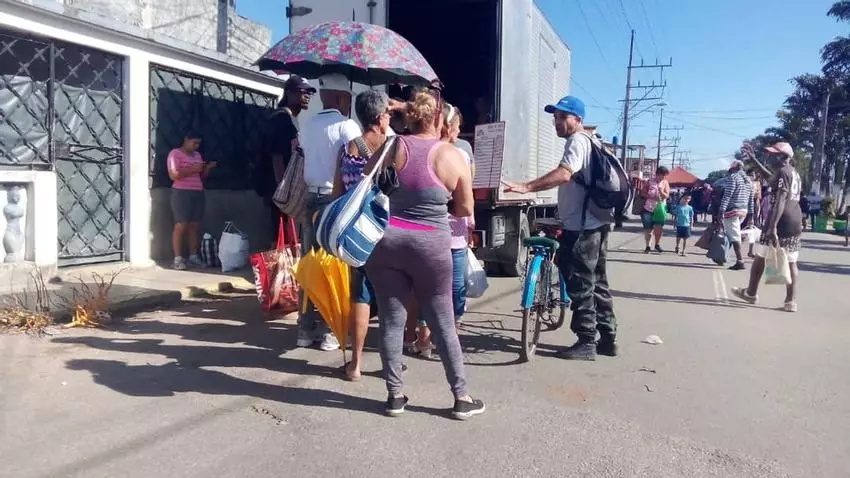
A truck parked in front of a house sells the last bunches of plantains while a group of women discuss the price. / 14ymedio

It’s eleven o’clock, and the heat forces people to seek shade. People protect themselves with umbrellas, some rest on the sidewalk curbs. The air smells of stale fried food and reheated broth. The vendors, resigned, begin to clear away. A truck, parked in front of a house, sells the last bunches of plantains while a group of women argue over the price. Behind them, a girl holds an empty bag, watching everything disappear.

Five blocks closed to traffic, yet two would be enough to contain the entire fair. The music keeps playing, but no one dances. “This doesn’t feed anyone,” says Félix before walking away. “People come looking for food, not reggaeton or rum. What they need isn’t for sale.”

As the sun sets, vehicular traffic starts up again on Avenida 40. Balloons hang limply, awnings come down, and the smell of burnt grease mingles with the dust. The fair fades, like so many other things in Cuba, leaving behind an echo of exhaustion and a handful of empty bags.

____________

COLLABORATE WITH OUR WORK: The 14ymedio team is committed to practicing serious journalism that reflects Cuba’s reality in all its depth. Thank you for joining us on this long journey. We invite you to continue supporting us by becoming a member of 14ymedio now. Together we can continue transforming journalism in Cuba.
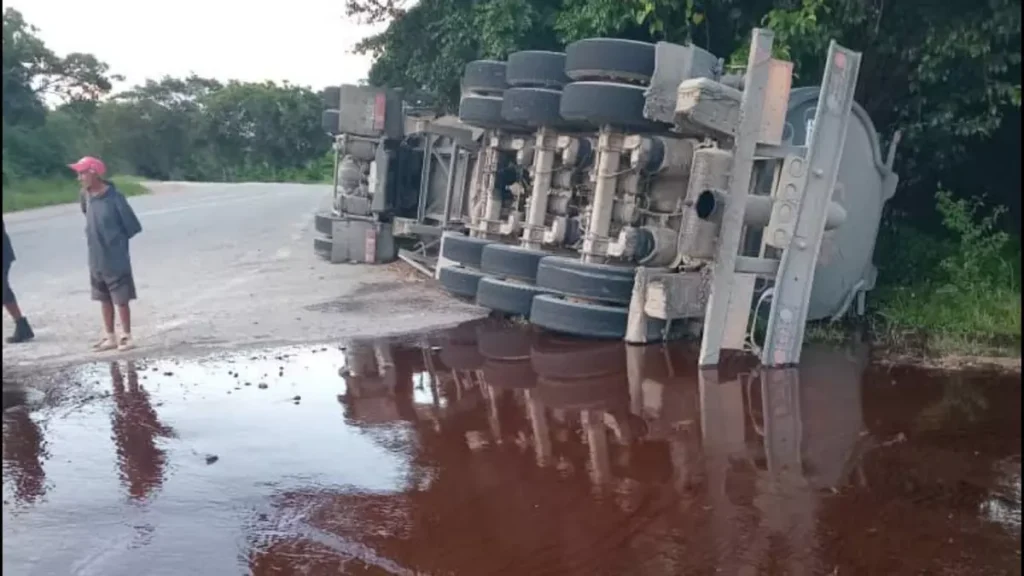
Cupet Tanker Truck With 31,000 Liters of Crude Oil Overturns on the Vía Blanca in Mayabeque, Cuba

The accident occurred around 6:40 p.m. this Monday, when the vehicle overturned in a dangerous area according to residents.

La carga procedía de los pozos y se dirigía a Puerto Escondido. / Cupet

14ymedio bigger14ymedio, Madrid, October 21, 2025 — The accident of a tanker truck caused a spill of part of the 31,000 liters of crude oil that it was carrying, around 6:40 pm this Monday. The vehicle of the Transportación Crudo Occidente company overturned on the Vía Blanca on the way to Puerto Escondido (Mayabeque).

The driver was taken to the town of Santa Cruz, where he was treated for his injuries, which were not life-threatening, according to the Cuba-Petróleo Union (Cupet), which announced the news on its social networks around midnight.

The vehicle was on its way from the oil wells to the processing plant at Puerto Escondido. Specialized teams went to the site trying to recover as much of the fuel as possible, in addition to mitigating “the consequences caused by the spill.” So far it is unknown how much oil has been lost definitively and the causes of the accident, although among the comments to the post, attention has been drawn to the dangers of the road on which it occurred.

“Accidents are common in that area. I worked for the company and saw that we lost colleagues in the same way,” wrote a user, identified as Carlos Manuel Martínez Peña. Another comment mentions the “huge pothole there,” and although some point to the possibility that the driver was speeding, road conditions and worn truck tires are among the most cited causes by users, who celebrate that at least nobody died this time. continue reading

“Accidents are common in that area. I worked at the company and saw that we lost colleagues in the same way,” wrote a user, identified as Carlos Manuel Martínez Peña

The accident occurred on the same day that an elevated power deficit, exceeding 1,800 megawatts (MW) at peak hours, had been forecast. According to the daily report of the Electric Union of Cuba, most of the power outages are due to the shortage of crude oil, responsible for the lack of at least 651 MW in the average hour, compared with the 395 MW of the thermal power plants. The loss of power in that time frame was almost 1,000 MW. The data, finally, must have been worse than expected, since, according to a State update, unit 1 of the CTE Ernesto Guevara De La Serna, in Santa Cruz, left the system because of a problem with the speed control valve.

The oil lost yesterday was predictably destined for any of the thermoelectric power plants, since it belonged to Cupet, which uses the highly corrosive national crude in these plants.

The most recent oil spill, albeit for very different reasons, occurred in Matanzas last May. The tank contained 500 cubic meters of fuel stored ten years earlier in two tanks of the old José Martí thermoelectric facility, and it was never known how much was recovered.

Another major loss occurred in a railway accident in Sancti Spíritus last December, when two trains collided. One was coming from Ciego de Ávila with a load of crude oil that would have been processed in the small Sancti Spíritus refinery, Sergio Soto.

Translated by Regina Anavy

____________

COLLABORATE WITH OUR WORK: The 14ymedio team is committed to practicing serious journalism that reflects Cuba’s reality in all its depth. Thank you for joining us on this long journey. We invite you to continue supporting us by becoming a member of 14ymedio now. Together we can continue transforming journalism in Cuba.
An Audit in Mexico Highlights Irregular Payments by the Government of López Obrador to INDER in Cuba

The Office of the Prosecutor has received three complaints for unsubstantiated payments in excess of $32 million

Ana Guevara during a visit to Cuba in 2019, the year of the reported audit in which the island appears. / Jit

14ymedio bigger14ymedio, Madrid, October 22, 2025 — Cuba is again involved in possible irregularities committed by the Mexican government of Andrés Manuel López Obrador (2018-2024). The former director of the National Commission for Physical Culture and Sports (CONADE), Ana Gabriela Guevara, accumulated several complaints from the administration itself, which does not manage to square the accounts. The Supreme Audit of the Federation has already filed three complaints with the Office of the Attorney-General of the Republic, finding unjustified payments, undocumented purchases and unsupported direct contracts. Among those involved is the National Institute of Sports, Physical Education and Recreation (INDER).

The finding belongs to the third (and most recent) complaint, filed because of lapses in the 2019 audit. That year, CONADE hired 29 Cuban coaches to train Mexican athletes, but it has not been proven that it complied with the law, since it was signed by the Deputy Director of Sports Quality of the organization, who did not have the power to do so. In addition, according to TV Azteca — which has put the focus on this point — the signed agreement did not go through the Ministry of Foreign Affairs for authorization, and the date when the coaches from Cuba arrived in the country could not be proven.

CONADE hired 29 Cuban coaches to train Mexican athletes, but it has not been proven that it complied with the law

The audit indicates that neither documentation of their stay in Mexico nor a report on their possible qualifications and activities were provided. No evidence has been found that the 1,200 anti-doping tests included in the agreement with INDER were carried out in a Cuban laboratory. Payments of 15 million pesos (more than $815,000 at current exchange rates) to the Cuban Embassy in Mexico were found, which were made through five bank transfers. According to TV Azteca, the audit considers that these facts caused damage to the public purse if they can’t be proven during the investigation, which is now underway. continue reading

The audit for 2019, in which this information appears, has prompted the third complaint about alleged commission charges and contract simulations against several CONADE officials. The unsubstantiated amount for that year is 60 million pesos (currently about $3.2 million), but there are two more complaints that in total now reach 524 million pesos ($28.5 million) between that year and 2022.

The complaint is based on evidence that bribes and commissions were collected to manipulate bids and award contracts to companies that did not have the technical or material capacity to provide the services. Among the most notorious cases is the hiring of a food service company for 17 million pesos, in which representatives of the company awarded the contract revealed that they had paid to secure the tender, a 15% commission demanded by the officials on the total amount invoiced and an increase in the tariff, so that the final price -and thus the commissions- were higher than expected.

The collaboration agreement and program of sports cooperation activities between Mexico and Cuba was signed in 2012 and resulted in the sending of a multitude of Cuban coaches to Mexico during the term of Enrique Peña Nieto

Before entering politics, Ana Guevara was an elite Mexican athlete, famous for track and field events. She was world champion in athletics in 2003 and Olympic silver medalist in Athens 2004 for the 400-meter race. Her work as director of the CONADE, which took place between 2018 and 2024, has been punctuated by various controversies. The most serious one has been her involvement in this possible case of corruption.

Last June, President Claudia Sheinbaum denied that there was an investigation into the former management. “What happens, as always, is that when there is a new year, the audits of previous years are decided, both of the Supreme Audit of the Federation and in this case of the Secretariat, which today is called Anti-Corruption and Good Government. Then the audits are done. If comments are found, the owner or owners of the entities have time to respond to those comments,” she said.

The collaboration agreement and program of sports cooperation between Mexico and Cuba was signed in 2012 and resulted in the sending of a multitude of Cuban coaches to the North American country during the term of Enrique Peña Nieto. What is currently in question is the so-called “supplement” to that contract, signed under the direction of Guevara, during the presidency of López Obrador, who was affiliated with the Cuban regime.

Translated by Regina Anavy

____________

COLLABORATE WITH OUR WORK: The 14ymedio team is committed to practicing serious journalism that reflects Cuba’s reality in all its depth. Thank you for joining us on this long journey. We invite you to continue supporting us by becoming a member of 14ymedio now. Together we can continue transforming journalism in Cuba.

A Mass in Havana Defies Official Censorship Against Celia Cruz

Artists, diplomats and faithful gathered at the parish to pay tribute to the Guarachera de Cuba on its centenary.

Smiling and dressed in sequins, the image of the Queen of Salsa presided over the altar of the church, located on Salud Street, between Manrique and Campanario. / 14ymedio

14ymedio bigger14ymedio, Darío Hernández, Havana, October 21, 2025 / At the parish of Our Lady of Charity of Cobre, in the heart of Centro Habana, the name of Celia Cruz was heard, despite the censorship the Cuban regime has unleashed against other tributes on the island for her centennial, which falls this Tuesday. La Guarachera de Cuba symbolically returned to the island that banished her from official memory, and she did so with music, faith, and a gesture of defiance against the silence imposed for decades.

A framed photo of the smiling, sequined Guarachera de Cuba presided over the altar of the church, located on Salud Street between Manrique and Campanario Streets, where 14ymedio approached. At her feet were white flowers and lit candles. In the pews, artists, worshippers, and diplomats shared the same space.

Parish priest Ariel Suárez, in a calm but firm tone, reminded everyone that “faith knows no censorship.” His words were met with a murmur of approval from the audience. “This Mass was a request from Cuban artists who wanted to pay tribute to a woman who brought Cuba’s name to the world,” he added, while the image of Our Lady of Charity—the same one to whom the performer was a devotee—dominated the back of the church.

Parish priest Ariel Suárez, in a calm but firm tone, reminded those present that “faith knows no censorship.” / 14ymedio

Among those present, Mike Hammer, the chargé d’affaires of the U.S. Embassy in Cuba, did not go unnoticed. “It is an honor to commemorate the life of Celia Cruz here, in her homeland,” he said after the Mass. “She wanted freedom for the Cuban people, and that desire lives on in her legacy.”

At his side, artists such as Alain Pérez and Haila María Mompié shared memories and gratitude. Pérez, who worked with the singer on international stages, didn’t hide his emotion: “Celia was pure light, an ambassador of our culture. Her love for Cuba never faded, not even when it was forbidden.”

The musician also lamented that, even today, tributes to the singer continue to run into institutional vetoes. “I would have loved to see all the Cuban artists gathered here, without fear, to sing to her. I feel sorry for continue reading

them, because they’re missing out on that blessing,” the artist said, seeing that many pews in the parish church remained empty, a fear that still persists among Cubans.

“I would have loved to see all the Cuban artists gathered here, without fear, to sing to him,” said musician Alain Pérez. / 14ymedio

Mompié, dressed in white, asserted that she carried “Celia’s legacy like a treasure.” The singer released a song in her honor, “Mi vida es cantar” [My life is to sing], a title that evokes the Queen of Salsa’s philosophy of life. “Celia was Caridad [charity]—her middle name—and this temple, dedicated to the Virgin, is the perfect place to remember her. Her spirit is here today,” she added.

The Mass took place in a peaceful atmosphere, although political tension hung over the prayers. Outside, several curious onlookers paused to watch from the sidewalk; inside, the timbre of the Queen of Salsa’s voice—banned from Cuban radio and television for half a century—seemed to fill the air.

Days earlier, the National Center for Popular Music had canceled a theatrical performance dedicated to the artist by the El Público company, scheduled at the Cuban Art Factory. The decision sparked a wave of outrage among musicians and citizens, who denounced the censorship as an act of cultural pettiness.

In response, the FAC performed a symbolic gesture: an empty armchair was lit up on the stage and an hour of silence followed by the music of Celia Cruz. “Celia lives,” read the letters of light. That same message was repeated again at the Mass, now transformed into a prayer: Celia lives in the hearts of her people.

“It is an honor to commemorate the life of Celia Cruz here, in her homeland,” said the U.S. ambassador upon leaving the mass. / 14ymedio

The young urban musician Yomil showed off his forearm tattoo of Celia’s face. “She’s the only artist I have on my skin. She represents the best of us: talent, joy, and resilience,” he told the media. “No censorship can stop that.”

Celia Cruz, who died in 2003 in New Jersey, was never able to return to Cuba. Her last wish—to be buried on the island—was also not fulfilled. However, her voice continued to reach us through informal channels, on cassettes, CDs brought back from exile, and family memoirs.

The Mass concluded with prolonged applause. There were no political speeches or slogans, but the meaning was evident. “Celia, Cuba embraces you,” was heard from the pews, while the first chords of “Life is a Carnival” quietly played. Some sang along, others wept.


A mass in Havana commemorates Celia Cruz on her centenary / 14ymedio

____________

COLLABORATE WITH OUR WORK: The 14ymedio team is committed to practicing serious journalism that reflects Cuba’s reality in all its depth. Thank you for joining us on this long journey. We invite you to continue supporting us by becoming a member of 14ymedio now. Together we can continue transforming journalism in Cuba.

Why Are There Sugar Mills in Operation if There Is No Cane To Process? Asks Cuba’s Official Press

  • The planting program in all the Las Tunas companies “is delayed”
  • In Sancti Spíritus, only 20 of the 106 planned “cage cars” are available for transport ahead of the next harvest, which begins next December.
“Cage cars” for transporting sugarcane by rail at the Melanio Hernández sugar mill in Sancti Spíritus. / Escambray

14ymedio bigger14ymedio, Madrid, October 21, 2025 — The provincial press is once again providing most of the clues to the disastrous state of Cuba’s sugar industry, once a jewel in the crown of the country’s economy. This Monday, Escambray reveals that of the 106 “cage cars” that take the cane by rail to the sugar mills, only 20 have been repaired of the ones planned for next December, when the harvest begins.

Of these, 14 are in the Melanio Hernández sugar mill in Tuinucú, and six are in the Uruguay, located in Jatibonico. The repairs in the workshop of this last mill, says the report, “have been slowed down by electricity problems associated with the lack of a transformer and the power blackouts that occur on work days.”

The Sancti Spíritus provincial newspaper reports that Ferroazuc, the State company in charge of transporting the raw material to the mills, “intends to get about 130 cars ready,” an effort which it recognizes is “challenging in the midst of limitations and the time remaining before the start of the harvest.” Escambray warns that “Ferroazuc’s efforts in Sancti Spíritus need to advance further.”

Periódico 26 is more direct about the outlook for sugar in Las Tunas, with an article entitled “Besides cane, planting needs greater willingness,” which directly questions why there are mills in operation if there is not enough cane to process and the industry is “totally obsolete.” “Why are there sugar mills and factories if their raison d’être — the cane itself — is in crisis?” This is the dilemma with continue reading

which the author, Juan Soto Cutiño, concludes the article.

“Given all the complexity of a harvest, it is not feasible to mobilize all that equipment”

The article explains why the provincial government put the Antonio Guiteras mill at the head of the campaign instead of the Majibacoa mill. The Guiteras is “in better technical condition and easier to repair, with a competent labor force and a history of producing that is recognized by the country.”

Eddy Felipe, a representative of Azcuba in the province, added that it was also because of the low availability of cane to harvest for the Majibacoa mill.” There are only 130,000 tons of cane considered “fit to be processed,” the article continues, a quantity that at a rate of 4,550 tons per day and with 70% of the potential capacity of the mill, “would last for only 24 days of operation.”

“Let’s face it,” says Periódico 26. “Assuming all the complexity of a harvest — from the preparations to the start-up of the large agro-industrial chain that it belongs to — it is not feasible to mobilize all this equipment with the high cost involved, just to work a few days and produce a little sugar.”

In addition, the Majibacoa is carrying out two campaigns in which it is not even producing sugar but cane syrup, the same as the Colombia mill, which has survived four campaigns on the basis of this unrefined mixture. Cane syrup is used to produce rum, says the newspaper, and with a classification that is very much in demand and well-priced. Considering current conditions, this is very healthy for the economy of this sugar company.”

The fourth sugar mill in Las Tunas, the Amancio Rodríguez, is, according to Periódico 26, “the most critical and worrying case. It has been completely inactive for several years, and as can be seen on the ground, this situation could last for who knows how long.”

Therefore, it proposes to establish as a priority the planting of sugarcane. But the progress of this activity is also a disaster. The program, which includes 97.8 hectares of the Colombia, 143.8 hectares of the Amancio Rodríguez, 562.6 hectares of the Majibacoa and 1,092.5 hectares of the Guiteras, “is experiencing delays, to a greater or lesser extent, in all these companies.”

Juan Soto Cutiño recalls with nostalgia “those times when the Sugar Union organized competitions on weekends, even in Boyeros, and there were frequent mobilizations in support of the planting. The political and administrative directors of the municipality demanded concrete figures from the agencies of the areas to be planted, and the Union of Young Communists took up the challenge as a shock task.” But he is not deceived: “I recognize that present circumstances are in no way similar to those in the past.” Then he concludes by referring to the US embargo: “It would be a mirage to imagine great results amid the circumstances aggravated by the blockade*.”

“It would be a mirage to imagine great results amid the circumstances aggravated by the blockade”

That there wasn’t enough cane was something the residents of Artemisa warned about last month. If “the routines” do not change there will be no sugar, they asserted. Then, the official press of the province found that “history repeats itself. A panoramic view in any municipality with the cane tradition of Artemisa shows hectares of weeds where yesterday there was cane, so that only 47% of the cane expected for this period has been planted, 814 hectares of a plan for more than 1,700,” detailed the report.

The 2024/2025 harvest turned out to be the worst in Cuba’s history, although the real figures are unknown because the regime does not provide them. Last August, the Spanish agency EFE made a count based on the provincial press and concluded that, at best, they are more than 10,000 tons below the terrible harvest of 160,000 tons produced the previous year.

Fifteen sugar mills participated in the campaign, and 10 reported their results to the official media: a total of 95,584 tons. The remaining five did not disclose their production figures, but it is known that they all targeted 52,068 tons of sugar. That is, if they had complied with the plan, the harvest would have amounted to 147,652 tons.

This is far from the 8.5 million tons that the Island produced in the mid-1980s, when there were Soviet subsidies and sugar was still considered an economic engine and its main export.

President Miguel Díaz-Canel’s late August meeting with Zhang Anming, deputy general manager of the giant Guangxi State-Controlled Capital Operations Group Limited — the leader in sugar production in China — with the goal of exploring “joint projects,” indicates that Cuba is also counting on China for the recovery of the sugar industry.

However, the officials have published nothing else about this.

______

*Translator’s note: There is, in fact, no US ‘blockade’ on Cuba, but this continues to be the term the Cuban government prefers to apply to the ongoing US embargo. During the Cuban Missile Crisis the US ordered a Naval blockade (which it called a ‘quarantine’) on Cuba in 1962, between 22 October and 20 November of that year. The blockade was lifted when Russia agreed to remove its nuclear missiles from the Island. The embargo had been imposed earlier in February of the same year, and although modified from time to time, it is still in force.

Translated by Regina Anavy

____________

COLLABORATE WITH OUR WORK: The 14ymedio team is committed to practicing serious journalism that reflects Cuba’s reality in all its depth. Thank you for joining us on this long journey. We invite you to continue supporting us by becoming a member of 14ymedio now. Together we can continue transforming journalism in Cuba.

The New York Mets Hire Cuban Baseball Player Roberto Peña and Give Him a $350,000 Bonus

The pitcher, who emigrated to the Dominican Republic in 2023, is part of the U15 team that qualified for the World Cup in 2022

In late September, the New York Mets approached Roberto Peña and offered to consolidate his dream of becoming a major league player. / Facebook/Francys Romero

14ymedio bigger14ymedio, Havana, October 19, 2025 — The US Major League team, the New York Mets, signed Cuban pitcher Roberto Peña. As part of the deal, the club awarded him a $350,000 bonus, the “highest incentive for a pitcher in the organization during the current period of international signatures 2024-2025,” journalist Francys Romero revealed.

Peña is part of a generation on the run. The athlete participated with the U15 team that qualified for the World Championship in 2022. More than 90 per cent of that team emigrated in 2023.

The player from Granma had outstanding performances on first base and as an outfielder with the Cuban national team. At the time of leaving the Island “he was among the top five batters in his class.” According to the reporter, he had gained in stature, muscle mass and physique, and had the attributes of a “power hitter.”

Peña arrived in early May in the Dominican Republic and after settling in was hosted by the Ray Baseball Academy of Edwin Castillo. For more than two years, he was followed by several talent scouts. At the end of September, the New York club approached the Cuban and offered to cement his dream in the major leagues. In an effort to formalize their relationship, they offered him $300,000 as an initial bonus but saw that other teams were interested and added another $50,000. continue reading

The ball player arrived in early May in the Dominican Republic and after settling in was hosted by the Ray Baseball Academy of Edwin Castillo

“The official signature will be for this international period, before December 15,” said Francys Romero on his social networks. At this time, the player has recorded straights of 93 miles per hour, change-ups of 83 miles per hour, a curve ball of 81 miles per hour and a sinker (fast ball) of 91 miles per hour.

Roberto Peña joins the Cubans who have previously played with the New York Mets, including Ed Bauta, Rey Ordóñez, José Candelita Iglesias, Yoenis Céspedes and the brothers Orlando El Duque Hernández and Livan Hernández, Raúl Valdés, Eli Marrero, Jorge Toca, Guillermo Heredia, Alay Soler, Yoan López and Adeiny Hechavarría.

Last Friday, a two-year contract extension was confirmed for Brayan Peña with the Detroit Tigers. The Cuban will return as a Minor League manager. “In 2025 he served as coordinator of the organization’s catchers, working with prospects like Thayron Liranzo and Josue Briceño.”

Francys Ramirez noted that “it is still unknown at which level Brayan will lead, and he currently is a bench coach for the Toros del Este in the Dominican Winter League.”

Translated by Regina Anavy

____________

COLLABORATE WITH OUR WORK: The 14ymedio team is committed to practicing serious journalism that reflects Cuba’s reality in all its depth. Thank you for joining us on this long journey. We invite you to continue supporting us by becoming a member of 14ymedio now. Together we can continue transforming journalism in Cuba.
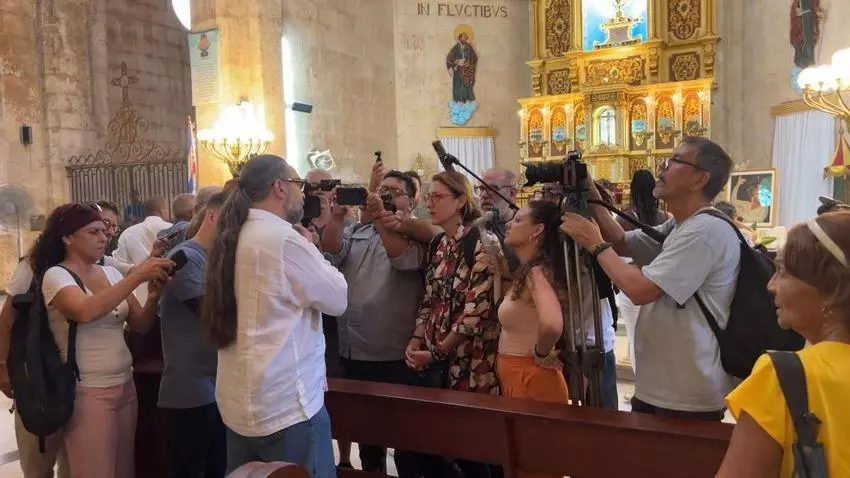
Tropical Storm Melissa Forms in the Caribbean and Puts Eastern Cuba on Edge

Preventive evacuations have already begun in the Dominican Republic

Some forecasts warn that it could reach hurricane status if it stays above the open sea long enough. / Insme

14ymedio bigger14ymedio, Havana, October 21, 2025 — The Cuban Meteorological Institute (INSMET) confirmed this Tuesday at 11 a.m. the official formation of tropical storm Melissa over the Caribbean. INSMET recognizes that there is “great uncertainty” about its trajectory. According to Tropical Cyclone Warning No. 1, the system was organized during the early morning from an activated tropical wave and already shows signs of strengthening.

“During the last few hours, the tropical wave action over the central-eastern Caribbean Sea has become better organized, concentrating areas of heavy rain and electrical storms, and becoming tropical storm Melissa, the thirteenth of the current hurricane season, says the alert.

At that time, the eye of Melissa was located at 14.3 degrees north latitude and 71.7 degrees west longitude, which is about 480 kilometres south of Port-au-Prince, Haiti.

The storm has sustained maximum winds of 85 km/h, with higher gusts and a central pressure of 1,003 hectopascals. It is moving westward at 22 km/h, although, according to Cuban meteorologists, its speed will begin to slow during the day as it gradually turns northwestward. continue reading

Official meteorologists say they are keeping “a close eye on the evolution and trajectory of this system”

The report adds that in the coming days, Melissa will move slowly over the central Caribbean Sea, south of the Greater Antilles, and that oceanic and atmospheric conditions will become more favorable for its intensification, making the phenomenon “a potential danger for the region.”

However, the fact that the system moves slowly and remains for several days in the central Caribbean increases the possibility of it affecting directly or indirectly the eastern half of Cuba, as previously warned by the Provincial Meteorological Center of Ciego de Avila.

Official meteorologists say they are “keeping a close eye on the evolution and trajectory of this system,” and have announced that the next official announcement will be issued at 6:00 in the evening this Tuesday.

The Dominican Republic has already begun evacuations: “First responders are activating their contingency plans to the maximum,” said Juan Manuel Méndez, director of the Center for Emergency Operations (COE).

This means that “preventive evacuations have been initiated” in vulnerable areas, added Méndez at a press conference with the meteorological and emergency authorities. According to what was said at that meeting by the director of Civil Defense operations, Delfín Rodríguez, the country has shelters for 600,000 people.

International sources, like the US National Hurricane Center (NHC), agree that Melissa could intensify in the coming days, with an erratic or almost stationary pattern south of Jamaica and Haiti, and a possible shift to the northwest as a mid-level trough strengthens over the western Caribbean.

Although there is not yet a forecast that places the center of Melissa over the national territory, the specialists stress that the associated rains, waves and coastal tides could be felt in coming days in the provinces of Guantánamo, Santiago de Cuba, Granma and Holguín.

Most models show that the system could be maintained in the central Caribbean for at least five days

In these regions, the structural vulnerability of rural dwellings and roads, together with problems accumulated from the lack of maintenance for dams, levees and drains, aggravates the risk.

International forecast models suggest that Melissa will move over very warm waters (between 30 and 31°C), with relatively weak wind shear, conditions that are conducive to further development. Most scenarios of the European model (ECMWF) and the American model (GFS) show that the system could be maintained in the central Caribbean for at least five days, with a gradual increase in intensity. Some forecasts warn that it could even reach hurricane status if it stays over the open sea long enough.

The NHC has warned that the indirect effects -tidal waves and heavy rains- will already be felt in the next 48 hours over Jamaica, Haiti and eastern Cuba, while surf and riptides could spread to the northern coast of Cuba during the weekend.

The lack of resources to repair roofs, reinforce housing and secure crops puts pressure on communities that face hurricanes every year with deteriorated infrastructure and few alternatives.

The experience of previous hurricanes in October -such as Sandy (2012) and Matthew (2016)- reminds us that tropical systems at this time are often treacherous. They advance slowly, discharge prolonged rains and cause more damage by flooding than by wind. Therefore, specialists recommend activating preventive measures now, even if the storm still remains far from the Island.

Translated by Regina Anavy

____________

COLLABORATE WITH OUR WORK: The 14ymedio team is committed to practicing serious journalism that reflects Cuba’s reality in all its depth. Thank you for joining us on this long journey. We invite you to continue supporting us by becoming a member of 14ymedio now. Together we can continue transforming journalism in Cuba.

Neither Meek nor Apolitical, Cubans of Generation Z Are at the Forefront of Discontent on the Island

The clash between these young people and power is inevitable and is getting closer every day.

Young Cubans Anna Sofía Benítez and Erlis Sierra. / Collage

14ymedio bigger14ymedio, Yoani Sánchez, 20 October 2025 — For several years now, they have positioned themselves at the center of popular protest and rebellion in Cuba. Born between the mid-1990s and 2010, they are known as Generation Z and are overthrowing authoritarian regimes, forcing openings, and filling the streets with their demands in countries as diverse as Nepal, Madagascar, Morocco, and Peru. On the island, they are currently leading the discontent, aware that the current political and economic model leaves them only two paths: emigration or perpetual crisis.

When pediatrician Erlis Sierra outlined the serious problems facing the residents of Baire, in Santiago de Cuba, last Friday, many were surprised by the combination of youth and consistency he displayed during that meeting with government officials. Digital natives, despite Cuba’s technological backwardness and the late adoption of the internet by its population, Cubans like this young doctor have grown up with a wealth of information and international political debate far removed from the monopoly that has prevailed in the country for decades.

Derided as indifferent, meek, and apolitical, Cuban zoomers have nonetheless taken the lead in the cacerolazos [pot-banging] that is shaking communities and the denunciations on social media. With a nimble thumb that glides across screens, a mind that works with TikTok, and technology intertwined with DNA, these youngsters are holding in check a power that, despite the proclaimed generational renewal, still has an outdated mentality, stuck in the mid-20th century.

They are also the ones who have suffered the most in terms of the quality of the Cuban education system and public health system.

They are also the ones who have suffered the most in terms of the quality of the Cuban education system and public health system. Since entering a classroom, Sierra has only known a shortage of teachers, a lack of supplies, high levels of indoctrination, and a rigid teaching system that contrasts with the increasingly high professional standards of today’s world. Without prospects and less well-educated than their parents, Cubans under 30 have not benefited from any of the so-called “achievements of the Revolution.”

As a result, many have had to manage their own knowledge acquisition, relying on their families’ tenacity and their families’ pockets to complete a university degree or learn another language. Anna Sofía Benítez, the young woman who recently described the island’s everyday situation with realism and grace on her Facebook page, is also one of those zoomers for continue reading

whom a printed book has become a luxury few students can afford, but the vastness of the internet has granted them, just a click away, millions of digital copies.

Benítez and Sierra belong to a generation that hasn’t fared well in terms of the housing crisis either. Most of them live under the same roof as their parents and grandparents, lack the resources to even consider renting something out of their own pockets, making one of the main reasons for emigrating is to have a roof over their heads where they don’t share a bathroom or bedroom with their siblings and nieces and nephews. They have lived a good part of their lives in a country where the buying and selling of houses was only authorized in 2011, but dreaming of buying a space sounds like something for the nouveau riche and micro-entrepreneurs.

They are also poorer than their parents were at that age, have eaten worse, struggled more with public transportation, seen the Cuban peso descend into the abyss, received worse dental care, and lived in dirtier, more run-down, and culturally dull cities. They know that when they reach retirement age, if the current regime continues, they will very likely live more miserably than their grandparents.

They are the ones who shout with the greatest force, “We are not afraid!” when the blackouts spread, the heat increases, and the lack of food brings residents to the streets.

Last may, when the telecommunications monopoly Etecsa announced the tarifazo, a massive rate hike, it was Generation Z that became embroiled in a bitter dispute with the state-owned company. From university classrooms, in WhatsApp groups, and with their Instagram posts, they made an entity — that believed it had a free pass to squeeze Cubans and, in return, provide them with terrible and overpriced service — sweat. To silence them, the offices of the Ministry of Communications had to rush to create navigation packages designed for university students, which have brought more dissatisfaction than results.

It is repeated everywhere that these zoomers aren’t interested in freedom, that individual independence isn’t among their priorities, and that they pay more attention to the virtual world than to what’s happening around them. But Cubans are shattering that broadly worded portrayal. They’re the ones shouting the loudest “We’re not afraid!” when blackouts spread, the heat intensifies, and the lack of food drives residents into the streets of Havana and Contramaestre.

They’ve said goodbye to so many friends who crossed the Darién jungle as children, left through the US Humanitarian Parole Program, or made the trek south, that these Cubans have ended up living an existence divided between inside and outside. Many live with their grandparents because their parents became cubañoles, crossing the southern U.S. border, and are now waiting to regularize their immigration status with an I-220A document. They’ve spent their adolescence seeing their mothers only through videoconferences and listening in on those conversations, from a distance, with the constantly repeated acronyms, like ICE or USCIS.

The chasm that separates their virtual, cosmopolitan, and diverse lives and the lack of freedoms they live under in Cuba has fueled their rebellion. The gap between their aspirations and what they can achieve in their own country is the main fuel for their insubordination. The clash between these Generation Z Cubans and those in power is inevitable and grows closer every day. We must all contribute to ensuring that this struggle is not won again by a stagnant and senile regime.

____________

COLLABORATE WITH OUR WORK: The 14ymedio team is committed to practicing serious journalism that reflects Cuba’s reality in all its depth. Thank you for joining us on this long journey. We invite you to continue supporting us by becoming a member of 14ymedio now. Together we can continue transforming journalism in Cuba.

An Umpire Offers Apologies to a Journalist He Called ‘Frigid’ and ‘Impertinent’

Luis Felipe Casañas told Brita García that he was “dismayed” and “sorry”

Umpire Luis Felipe Casañas told journalist Brita García that he was dismayed by what happened. / Brita García

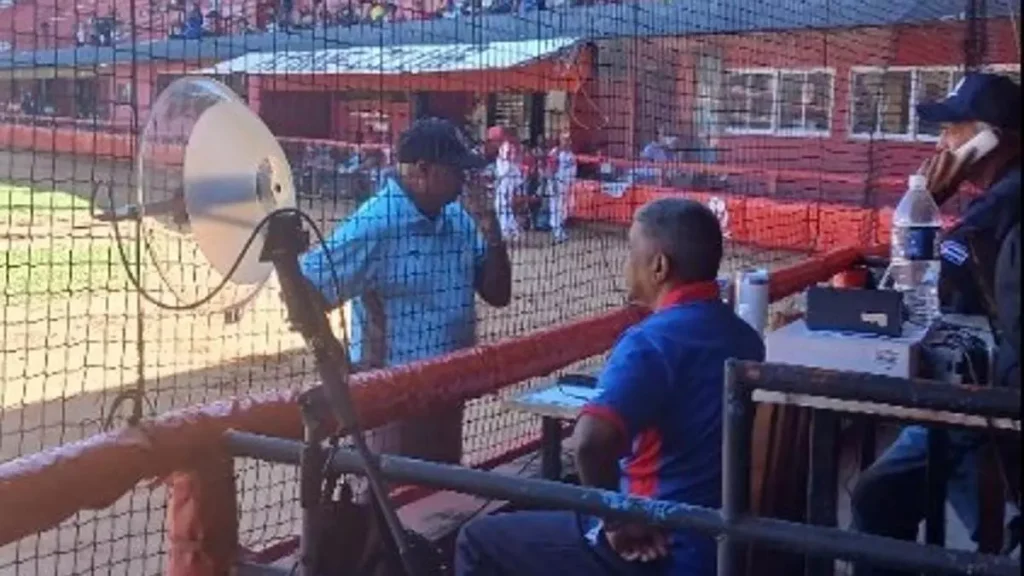
14ymedio bigger14ymedio, Havana, October 19, 2025 — Among the indiscipline and penalties happening in Cuban baseball, umpire Luis Felipe Casañas offered an apology to journalist Brita García. The apology came after she reported on her social networks that he called her “frigid” and “impertinent,” and he said that she “didn’t know anything” about baseball.

According to García, the umpire insulted her “in front of the Game Commissioner and all those present in the lower boxes of the Guillermón Moncada Stadium,” in the fifth inning of the game between Santiago de Cuba and Las Tunas.

García said that Casañas requested a meeting in which the rest of the umpires, the supervisor and the Game Commissioner were present. “Casañas was dismayed and sorry for his behavior,” she said. “The rest of his teammates showed respect for her work. All say that they work with respect and in order to to strengthen Cuban baseball, the Heritage of the Nation.”

The journalist said that she denounced the situation “in order to stop this type of behavior, which I have faced throughout my professional life.”

The journalist said that she denounced the situation “in order to stop this type of behavior, which I have faced throughout my professional life.” Machismo remains enthroned, and all the gender committees and other organizations for this purpose must be maintained and act with rigor,” she said.

Casañas’ annoyance was due to a Facebook post by the journalist. García considered excessive the seven-game suspension imposed by the continue reading

Commission on Santiago native Jeison Martínez for protesting two of the judges’ decisions.

News of the matter spread like wildfire. “Some of us showed solidarity with Brita, because we are her colleagues and know her, and others because these topics ‘sell’ well,” wrote the specialized media on Facebook, DPorto Sports LLC. “Between posts and comments, you could say that it was the ‘most clicked on’ in Cuban baseball this Friday,” it added.

The same post regretted the absolute silence after the apology. “This is more than a criticism, it is a call to attention about our reality and what we have become,” it said.

“We’re more interested in the problem than the solution. We look at and react more to an offense/mistake than when the one who is wrong recognizes what he did and repents. We are at a point, I think, where we prefer confrontation to understanding. Or the personal banalities and controversies rather than physical or virtual acts that highlight our ethical and moral principles. Which, unfortunately, fade more every day.”

The National Baseball Series has been plagued by scandals in recent weeks. The National Institute of Sports Physical Education and Recreation announced that the following were suspended for five games for indiscipline: manager Vicyohandri Odelín and players Yordanis Samón Matamoros and Eglis Eugellés Antunez, all from Camagüey, in addition to the provincial Commissioner, Roger Jesús Montada Feria.

Penalties were also given to the manager, Vicyohandri Odelín, and to players Yordanis Samón Matamoros and Eglis Eugellés Antunez, all from Camagüey

From the game between Mayabeque and Las Tunas last Sunday, Yoelkis Cruz and Deismel Hurtado were suspended for five games.

Rigoberto Hernandez, a coach for the Mayabeque team, was suspended for five games”for addressing an umpire with bad words” after a decision on first base. The manager of Granma, Jorge Miranda, received 10 suspended games for “protesting in a very rotten way over an arbitrated decision.”

Eriel Sánchez, manager of the Los Gallos de Sancti Spíritus team and former manager of the Cuba team, was penalized for hitting with a “wooden object” (in the first version it was a bat, but Sánchez denied it) Miguel Rojas Rodríguez, a National Baseball Commission official and Cuban sports celebrity in late September.

The National Baseball Commission suspended Eriel Sánchez and Miguel Rojas for five and three years, respectively.

Translated by Regina Anavy

____________

COLLABORATE WITH OUR WORK: The 14ymedio team is committed to practicing serious journalism that reflects Cuba’s reality in all its depth. Thank you for joining us on this long journey. We invite you to continue supporting us by becoming a member of 14ymedio now. Together we can continue transforming journalism in Cuba.

Repairing the La Coloma Disaster in Cuba Will Cost at Least 110 Million Pesos, Mostly in Foreign Currency

The lobster processing plant in Pinar del Río is still on a prioritized circuit and receives electricity all day despite its closure

The plant was reduced to ashes, and so far no one has explained the origin of the fire. / ACN]

14ymedio bigger14ymedio, Madrid, October 20, 2025 — There is unrest in La Coloma, Pinar del Río, after the fire that broke out on Saturday, October 11, in the facilities of the Industrial Fishing Company of the municipality, responsible for 45% of the lobster caught in Cuba and 80% of the tuna, both high-value products in the national and international markets. Despite the fact that at this time most of its employees cannot work, the entity has not lost its status of prioritized electricity and receives power constantly, complain residents in the area.

“I want to ask the director of the Electric Company, since he’s not facing up to it, why they are giving power to La Coloma if there is no lobster,” asks an anonymous person on the Facebook page of Ventas Pinar. The author accuses the director of the entity, Yordan Nogueira Tapia, of corruption, although he provides no other evidence than the strangeness of wasting electricity on a circuit that does not need it.

“Even being corrupt you must know and be smart. Now that’s enough, making us beg for a few hours of power that belongs to us by right. Electric power is not a luxury, it’s a necessity, so give us circuit P961,” he demands, adding that this same Saturday the entire city spent 16 hours in a blackout. “I’m not interested in your business, but do it on our behalf, okay? Face it, you ball of corruption, and do an analysis.”

“Electric power is not a luxury, it’s a necessity, so give us circuit P961”

According to the official press, “dozens” of employees are working on the company’s administrative tasks in an attempt to reorganize the reconstruction. Preliminary estimates indicate that some 110 million pesos — approximately $231,578 at the black market exchange rate — will be needed to clean up the mess, “much of it in foreign currency.” Nogueira Tapia, however, does not rule out a future increase in the amount as continue reading

demolition and waste collection progress.

At the moment, all production lines are affected, from preselection, peeling, cooking and packaging to precooking. The latter, which had already progressed, had the “latest generation machines” acquired in 2022: an automatic sorter and three bagging machines with their respective heat tunnels. The list of damages is never-ending, since not just the machines were affected. Also damaged were tables, stainless steel shelves, air conditioning equipment, walls and false ceilings, zinc covers and even some of the tanks. None of this was saved, and now efforts are being made to get the 44 working lobster boats to fish non-stop.

“That is the only way to overcome this situation, because most of the resources we need are imported, and today a considerable percentage of the currency generated by our business group and our Ministry comes from the lobster,” the director told the State newspaper Granma this weekend, saying that it shifted the responsibility to the fishermen. “They will have to spend more days away from home, because the transfer of what they catch will be to other territories. But we have explained to them that the recovery depends largely on what they are able to do,” he said.

There are 175 workers whose jobs are hanging by a thread: some of them will go to another plant — not specified — which is responsible for the processing of fish, conch and sea cucumber, as well as the preparation of some products not much appreciated by Cubans, like fish croquettes, fish medallions and chopped fish. Some employees will be engaged in the recovery of the burned plant and the rest will be “interrupted,” receiving 60% of their basic salary, which in practice leaves them in a very bad situation despite the fact that this plant was paying salaries far above the company average, 20,000 pesos versus Epicol’s 9,000.

According to a report published by the provincial newspaper Guerrillero, there is only one reason for optimism: “The freezing chambers did not suffer great deterioration, only the hinges and doors,” and three days after the fire they were already in operation, protecting part of the production.

“The freezing chambers did not suffer great deterioration, only the hinges and doors,” and three days after the fire they were already in operation.”

The destroyed plant was about to receive an online European inspection, thanks to the technology implemented, from wifi to ammonia detectors for water quality and temperature controllers monitored from the ice plant.

However, the fishing was no longer going well. Of the 2,700 tons that should have been fished up to the date of the disaster, at least 600 were missing, which the director attributed to such disparate causes as climate change and lack of fuel availability.

This weekend, workers got bogged down in the recovery of materials as some debris could be reused, even if it is in other places. The director, despite the drama, remains optimistic: “Now’s the time to have a better plant design. The one we had was very good, but the new one would be more in line with the latest requirements of the international market,” he said.

Lobster production, one of the most profitable sectors for the State, is already in sharp decline. In 2019, the fishermen of Isla de la Juventud obtained an average of 19 kilos (42 pounds) of lobster per boat, a quantity that fell to 5.8 kilos (13 pounds) in 2024.

As for the country, in the last five years, production has fallen by 84%, from 6,900 tons in 2019 to 1,100 last year. In addition, over five years the production of lobster tail also decreased by 45% (248,600 tons compared to 136,000) and by 9.2% for frozen whole lobster.

Translated by Regina Anavy

____________

COLLABORATE WITH OUR WORK: The 14ymedio team is committed to practicing serious journalism that reflects Cuba’s reality in all its depth. Thank you for joining us on this long journey. We invite you to continue supporting us by becoming a member of 14ymedio now. Together we can continue transforming journalism in Cuba.

A Conviction for Child Abuse in Order To Hide the Scandal of Street Children

A court in Havana sentences a couple to eight and ten years in prison for corruption of minors and sexual abuse

The well-timed coincidence with the scandal about children sleeping under the stairs of the dollar supermarket at 3rd and 70th does not go unnoticed. / 14ymedio

14ymedio bigger14ymedio, Havana, October 19, 2025 — The recent publication of a judicial report in official Cuban media, with full names of the defendants in a case of corruption and child abuse, breaks with the usual pattern of opacity by the authorities. While the country still comments on the scandal of children sleeping under the stairs of the supermarket on 3rd and 70th, the news reported by Canal Habana and reproduced by Cubadebate seems to respond to the need of the State to control the story about abandoned children with a carefully chosen show trial.

The official report says that on September 29, 2025, the People’s Municipal Court of Arroyo Naranjo held a hearing and public trial charging Daima Rodríguez Núñez and Carlos Díaz González with crimes of corruption of minors, acts contrary to the integral development of minors and sexual abuse.

In this case, four girls, aged 10, 7, 4 and 1, had been abandoned by their mother and abused by her partner. The court sentenced Rodríguez Núñez to eight years in prison and Díaz González to ten, as well as suspending the mother’s parental rights.

What is unusual about this news is not only the judicial process, but how it was communicated. The State media do not usually publish the names of defendants in such cases, even less when they involve minors. Nor do they usually give such specific details about the victims or the family dynamics. continue reading

This time, however, the report bears the institutional signature of the People’s Provincial Court of Havana and mentions without reservation the full names of those involved.

The response of the official apparatus has been to publish this court case as proof that “the system does act”

The well-timed coincidence with a scandal about children sleeping under the stairs of a dollar supermarket at 3rd and 70th does not go unnoticed. That story, published by this newspaper just a few days ago, highlighted the existence of minors abandoned in plain sight in the Cuban capital, sleeping between pieces of cardboard, asking for food and money, without visible intervention of child protection institutions. The image of these children, without official name or face, became evidence of an absent State in one of its most elementary duties: protecting children.

In the face of this media coup, the response of the official apparatus has been to publish this court case as proof that “the system does act.” The implicit message is that when a case of neglect and abuse is detected, the authorities respond firmly. But the reality on the streets of the Island contradicts the institutional narrative.

The communication strategy also seeks to shift responsibility for the tragedy of Cuban childhood to “deviant” or “antisocial” individuals, rather than recognizing a structural problem. The official speech portrays Daima Rodríguez Núñez and Carlos Díaz González as monstrous exceptions in a society where children are supposedly protected.

The mass exodus has aggravated the situation of thousands of children throughout the country, following the emigration of their parents

The emphasis on “due process” and application of the law “most beneficial to the accused” seems less directed at national public opinion, which has little access to real appeal mechanisms or judicial transparency, than at international observers. In other words, it is not just a matter of punishing two people, but of projecting an image of institutional legality.

In addition, the publication coincides with a context of increasing visibility of the phenomenon of abandoned children and extreme poverty in Cuba, an issue that for decades was swept under the rug of propaganda. The mass exodus has aggravated the situation of thousands of children throughout the country, following the emigration of their parents.

The visibility of the sentence in the official press — eight and ten years in prison — contrasts with the silence on dozens of other cases that never go to trial or remain in administrative obscurity. It also differs from the lack of effective public policies to prevent children from ending up living on the street. State abandonment is not a criminal offense under the Cuban Penal Code, but its consequences are visible and daily.

Translated by Regina Anavy

____________

COLLABORATE WITH OUR WORK: The 14ymedio team is committed to practicing serious journalism that reflects Cuba’s reality in all its depth. Thank you for joining us on this long journey. We invite you to continue supporting us by becoming a member of 14ymedio now. Together we can continue transforming journalism in Cuba.

The Cuban Regime Calls the Doctors Who Criticize the Medical Missions “Ungrateful, Resentful and Treacherous.”

“Do not spit on the dish that nourished you,” reads the headline in the Ministry of Public Health text disseminated on social networks

Cuban doctors assigned to the Vícam Switch rural community hospital in Sonora. / Facebook/IMSS Bienestar Health Services

14ymedio bigger14ymedio, Madrid, October 20, 2025 — There is no right to criticize according to the Cuban Ministry of Public Health. In a statement published on Facebook, it makes clear its thoughts about Cuba’s free education system: more than a citizen’s right is a mechanism to silence the population, it follows from the text. It states that the health workers who were trained on the Island say the most bitter things about the system. “They insist on insulting the medical education that made them doctors. It is not criticism; it’s ingratitude. It is not testimony: it’s treason.”

The post, originally taken from the profile of the Public Health Union in Santiago de Cuba, is signed in the name of the Ministry and has been disseminated by various social media accounts, including that of Santiago’s television. The title is forceful: “Do not spit on the dish that nourished you,” reads the headline. The text calls the doctors who criticize their working conditions “resentful,” among other things.

The publication recognizes that there is a lack of resources, workers are tired and many things need improvement, “but this does not erase the fact that the Cuban doctor is trained with excellence, ethics and vocation.” The main reproach includes that of having emigrated, an act which it considers “legitimate,” with a but. “Using your freedom to spit on what has educated you is wretched,” the text says, a phrase particularly striking by implying that only in exile is this freedom achieved. continue reading

“Not all who stay are accomplices. Not all who leave are brave.”

“Not all who stay are accomplices. Not all who leave are brave,” adds the message, which also deplores the accusation that weighs on the Cuban State of enslaving doctors on international missions based on these testimonies, although it does not do so clearly, but with hints.

In addition, it insists that those who speak against “Cuban medicine” –which they say “does not need propaganda” — “denigrate” it. “Do not destroy that which gave you the tools to be who you are. Be proud. Change it. But do not trample on it,” adds the text. It ends with: “Cuban medicine is a beacon, and the light is not extinguished by the poison of those who forget where they came from.”

The publication of this message occurs without an apparent reason to justify the unexpected attack, although doctors who decide to leave medical missions have been despised for decades by the official discourse. Not for nothing, all of them are subject to criminal proceedings, which may result in up to eight years’ imprisonment and a ban on returning to the country.

Cuban doctors who have worked abroad have for years been denouncing the practices of the Cuban regime, which, in addition to keeping the money that can reach 90% of their salary, confiscates their passports in order to prevent them from fleeing, prevents them from engaging with residents in the the country where they are working, and compels them to engage in government-friendly propaganda. To all this is added increasingly complex economic conditions, as the officials have tried to deposit the dollars owed the doctors on a Classic card instead of delivering the currencies in cash, as they expected.*

Because of these practices, the US government has considered for years that Cuba enslaves its doctors, and in recent months, the Trump administration has pressured several countries to modify their agreements with Havana and hire the doctors directly, something that has already been achieved with the Bahamas, Grenada and Jamaica.

*Translator’s note:In 2022, the Human Rights Foundation issued a report calling the Cuban doctors on international medical missions “victims of human trafficking.”

Translated by Regina Anavy

____________

COLLABORATE WITH OUR WORK: The 14ymedio team is committed to practicing serious journalism that reflects Cuba’s reality in all its depth. Thank you for joining us on this long journey. We invite you to continue supporting us by becoming a member of 14ymedio now. Together we can continue transforming journalism in Cuba.
A Young Doctor Arrested in Baire Reappears in a Video Made by State Security

Erlis Sierra says he has not been ill-treated and is currently in a “dialogue with the relevant institutions”

His ways and words in the film contrast with those of the passionate and energetic young man in another recording where he strongly criticized the inaction of the institutions. / Screen Capture

14ymedio bigger14ymedio, Havana, October 19, 2025 — In the worst style of the Moscow trials and the self-criticism of the poet Heberto Padilla, this Saturday a video circulated in which the young doctor Erlis Sierra, arrested after the protests of Baire, in Santiago de Cuba, says that he does not want to be a “leader of anything” nor did he consider himself a “counter-revolutionary.” In the clumsy beginning, before the pediatrician speaks, the voice of a State Security officer announcing that recording has begun is heard.

“I would like to inform you that I have not been mistreated,” says Sierra, who awakened a wave of solidarity after a film was broadcast of the moment when he demanded, in front of several local officials, an improvement in the living conditions in Baire, in the municipality of Contramaestre. The blackouts, lack of drinking water and high food prices are some of the reasons that brought the demonstrators to the streets last Thursday night.

Following peaceful protests in Baire, several arrests have been reported, including the arrest of Sierra by two police officers at his own home. Subsequently, his mother, Ania Gómez Leiva, denounced the incident in a video on social networks and called on “the Cuban people” for help, because her son had been handcuffed in the Police Unit of Contramaestre and was being transferred to the city of Santiago de Cuba. Following the dissemination of this complaint, Gómez was also detained for several hours.

Shortly after the demonstrations “a truck with milk powder appeared”

The mother stresses that her son was not among the people who beat on pots and pans at the demonstration and that his statements to the local Communist Party secretary were not disrespectful at all. Gómez also says that after three months without receiving milk from the rationed market for the children continue reading

of the community, shortly after the demonstrations “a truck with powdered milk appeared.”

Sierra’s arrest sparked a wave of solidarity among Baire residents and social media users, who demanded his immediate release. Internet users also recalled that the commitment made by the provincial authorities, who assured that no one would be arrested after the demonstrations, was being violated.

For its part, the video of Sierra during his arrest, published in the Facebook group Revolico Baire, was shared anonymously along with a message that hoped to bring calm: “Good night, brothers. Erlis is well, he sends his greetings to everyone. Thank you very much for the support,” the short text said.

In the recording, Sierra appears to read a script and states that he has not been mistreated “physically or verbally” and is currently in a “dialogue with the relevant institutions.” He also calls for channeling social grievances through “a respectful dialogue in order to not divide our people.”

The protest occurred in the middle of a blackout that exceeded 24 hours

His manner and words in the film contrast significantly with those of the passionate and energetic young man who reeled off the problems in Baire before local officials, in another recording that circulated hours before and was made last Friday after the protest. On that occasion, the young pediatrician strongly criticized the inaction of institutions in the face of serious problems affecting daily life, such as the poor condition of the streets and the accumulation of garbage.

His words to officials are in tune with the demands that were heard hours earlier on the streets of Baire, where on Thursday around 7:40 pm, residents began banging on pots and pans and shouting slogans like “We’re not afraid!” and “Freedom!” The neighborhoods of La Salada, El Transformador and Abisinia were the epicenter of the spontaneous mobilization that quickly spread to other streets of the village.

Several neighbors documented the demonstration with their mobile phones. The videos show people walking in groups, banging on pots and pans, and yelling phrases against the government, such as “Down with Díaz-Canel!”

The protest took place amid a 24-hour blackout, with no drinking water and an arbovirus outbreak that is worsening the local health crisis. The demonstrators avoided the main road to evade police checkpoints and walked through inner streets, passing by 8th Avenue and Central Avenue (4th Avenue), until they reached the Baire Central Park. There they concentrated in front of the police unit and next to the residence of Salvador Heredia, president of the People’s Council, where they chanted slogans of freedom and justice.

Translated by Regina Anavy

____________

COLLABORATE WITH OUR WORK: The 14ymedio team is committed to practicing serious journalism that reflects Cuba’s reality in all its depth. Thank you for joining us on this long journey. We invite you to continue supporting us by becoming a member of 14ymedio now. Together we can continue transforming journalism in Cuba.