The problem “has spread to several places, where children ask for money, even late at night,” admits deputy Carlos Miguel Pérez Reyes
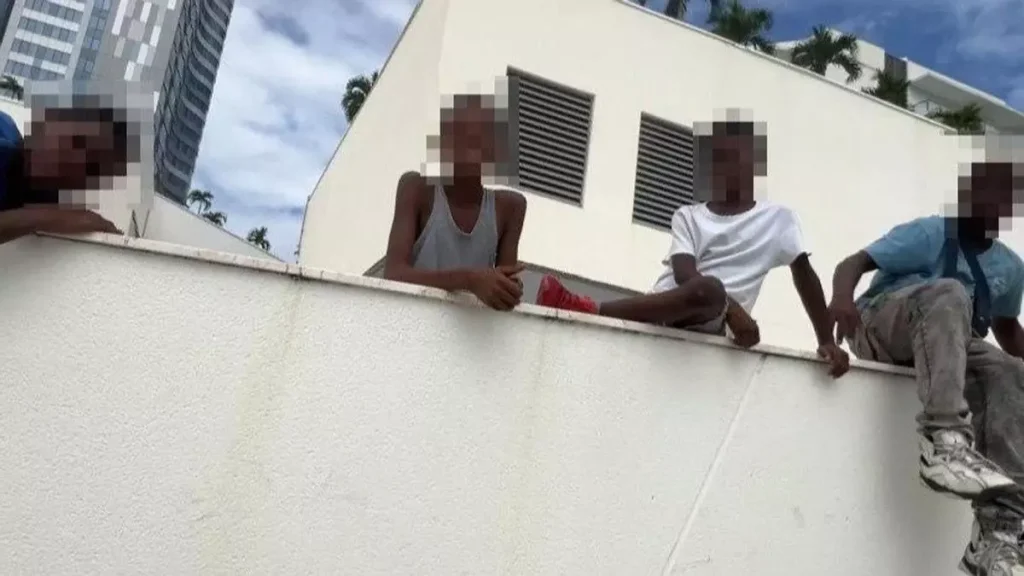
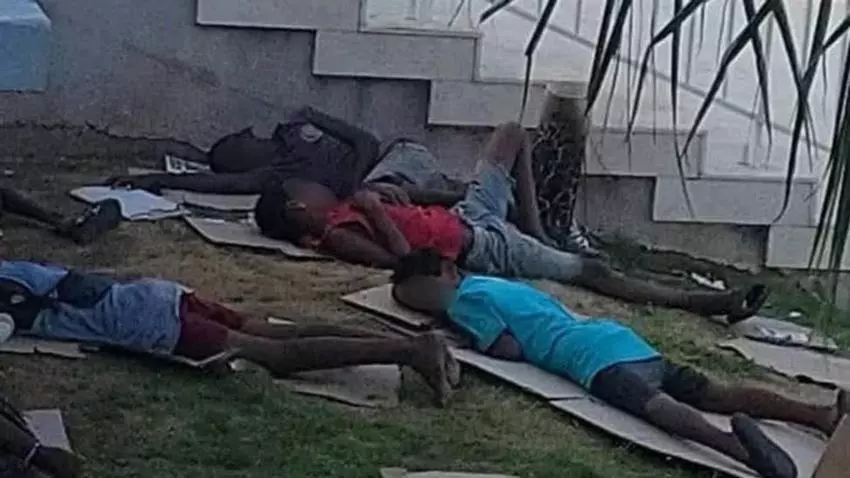
 14ymedio, Havana, October 16, 2025 — “Those from the Minors* go by here.” says one of the four children that 14ymedio interviewed this Wednesday after photos were published on social networks where they appear sleeping on cardboard in the basement of the Gran Muthu Habana. This luxury hotel is adjacent to the 3rd and 70th dollar supermarket, opened earlier this year in the affluent neighborhood of Miramar.
When asked if they sleep there, two say yes, that they do it “under the stairs” and have no parents or other adults to take care of them.
How do they eat? They reply that they “eat from the carts.” They watch the exit door of the market, where people leave with carts to go to their cars. They depend on charity, customers giving them some money or something from their purchases.
The image of these children sleeping on cardboard, at the foot of a hotel offering luxury tour packages, is a reality that the official discourse has always tried to deny. The humanitarian crisis on the Island can no longer be hidden behind the “We are happy here” or “Children are the hope of the world” signs.
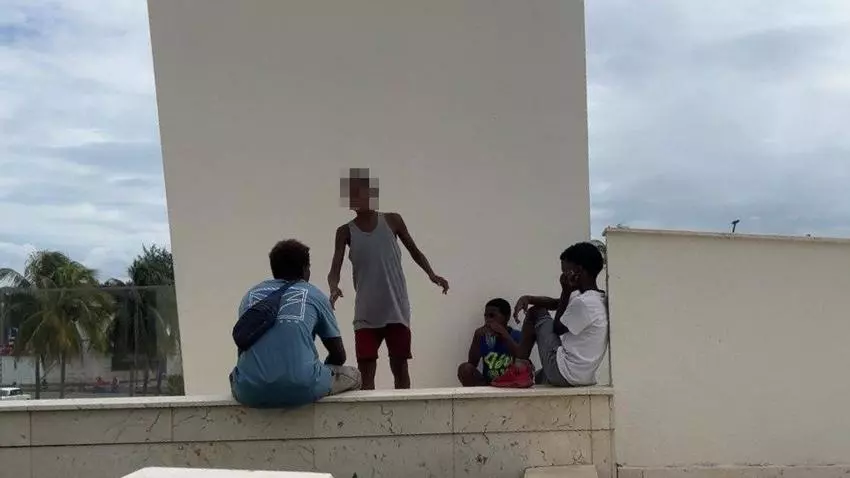
The children of the Gran Mathu are afraid, and when they speak of “the one from Minors,” they are referring to a worker from the Integral Training Schools or the driving schools, which depend on the Ministry of the Interior. There are 12 such institutions in Cuba, each with an average of 200 residents.
So far, on the official side, only the businessman Carlos Miguel Pérez Reyes, a member of Parliament for the municipality of Playa, has reacted to the complaint. “The Council for the Care of Minors of the Ministry of the Interior is the body responsible for these cases, and there are numerous complaints on file. This was confirmed to me by neighbors in the area, although I still have to review this issue in detail with the institution. The municipal authorities confirm that this is a recurring problem that requires a comprehensive response,” said the man, who is also president of a private business, Dofleini Software.
The deputy also acknowledged that the problem “has spread to several areas, where children ask for money on a daily basis, even late at night.” He called on institutions to “provide a comprehensive treatment to the situation,” since “reporting and rounding up minors does not solve, by itself, the root of the phenomenon.”
The original publication generated a wave of comments among Internet users. Some also warned about the risks faced by these children: violence, sexual abuse, exploitation, trafficking and criminalization. “They are completely exposed. There is no responsible adult, no authorities to deal with. They are easy prey for any exploitation,” warned one user who claimed to have also seen children in the area.
In July 2025, the then Minister of Labor and Social Security, Marta Elena Feitó, was dismissed after declaring on television that “there are no beggars in Cuba,” a phrase that caused outrage inside and outside the country. The statement, perceived as a blatant denial of reality, exposed the official strategy of making poverty invisible rather than confronting it.
The presence of people in street situations is neither new nor unique to Havana. In recent years, economic decline has pushed entire families to live in public spaces. The lack of housing is compounded by inflation, food shortages and the collapse of social care systems. According to independent organizations, there are more and more children on the streets, many of them orphans or children of emigrant parents, under the care of elderly people who are ill, or children who come from broken homes.

Child labor is also increasing in Cuba. Denied or officially minimized, this phenomenon has become a palpable reality, driven by the economic crisis, the black market and social deprivations. In Las Tunas, for example, children and adolescents sell sweets, food or various articles on the streets, something that even the local official press was forced to acknowledge.
Although the State has laws prohibiting child employment and allows some regulated exceptions, in practice these rules are broken, with a lack of protection, extreme poverty and institutional omission. This brutal contrast between the letter of the law and the daily life of hundreds of children highlights the fact that more than an anomaly, child begging in Cuba is already a proven fact and is spreading.
Luxury and poverty in Havana: abandoned children live outside the doors of a dollarized supermarket
*Explained later in the article
Translated by Regina Anavy
____________
COLLABORATE WITH OUR WORK: The 14ymedio team is committed to practicing serious journalism that reflects Cuba’s reality in all its depth. Thank you for joining us on this long journey. We invite you to continue supporting us by becoming a member of 14ymedio now. Together we can continue transforming journalism in Cuba.