
On Cuban Television, a Government Minister Does a Balancing Act To Guarantee the ‘Basic Family Basket’ in December

December rice deliveries will be made as the product arrives on the Island.

14ymedio bigger14ymedio, Havana, 17 November 2023 — A senior Cuban government official appeared this Thursday on State TV’s Roundtable program to try to reassure the population. Despite the widespread shortages in the country, the first deputy minister of the Ministry of Internal Trade, Yosvani Pupo, said that the ’basic family basket’ for the last weeks of the year is guaranteed, although there could be transport problems.

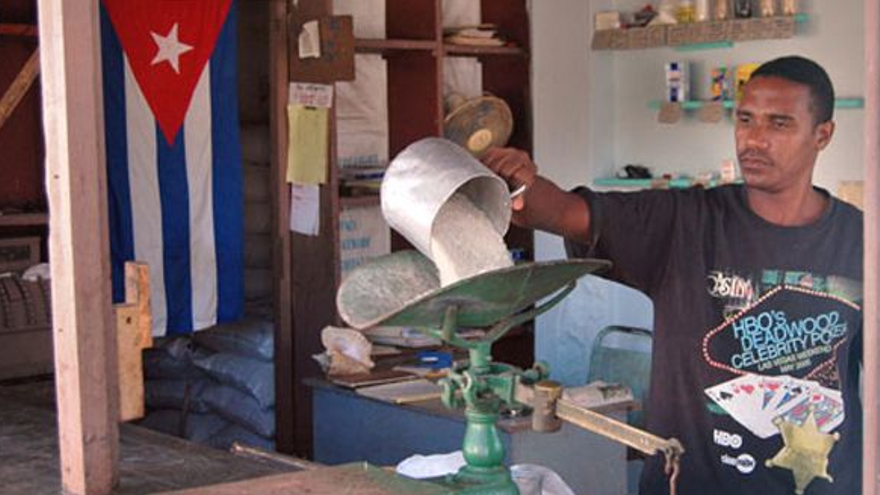
Pupo began his presentation by alluding to the most demanded product in recent months: rice, whose absence has caused discomfort among the population, which considers it an essential product. The outlook for the grain, however, does not bring good omens. In Pinar de Río, Camagüey and Granma, one pound per capita corresponding to October still remains to be delivered, of the seven that are delivered monthly.

By November, about to end, rice is still in the “distribution process.” The official tried to alleviate the news by insisting that in the ports of Nuevitas and Santiago de Cuba there are ships unloading the imported grain. He admitted that “delivery may be delayed” due to the heavy rains in the east of the country. “But the seven pounds of rice for the month of November are in the country and in the process of distribution,” he insisted. continue reading

In the ports of Nuevitas and Santiago de Cuba there are ships unloading the imported grain

In the case of the December quota, Pupo said that deliveries will be made that same month as the ships arrive on the Island, although he hopes that at the end of 2023 there will be no more “debts to the population” to be paid.

As for another missing product, coffee, the manager guaranteed the delivery of “November’s consumption within the month.” “The imported raw material in the country and the domestic production are enough to respond to December’s consumption. The coffee is totally safe for these months,” said the leader, who confirmed the start of distribution in Havana, Artemisa, Mayabeque, Cienfuegos, Sancti Spíritus and Santiago de Cuba.

The sugar, whose delivery went from four to three pounds per month in September, will return in December to the initial amount, because “there is a total guarantee of that product,” the minister stressed. The total of the three pounds planned in October was also delivered, and for November the quota of Pinar del Río, Artemisa and Havana is being “completed.” These delays, he justified, are due to the fact that the sugar must be transported to those provinces from the production site.

Also the quota of salt, nationally produced and usually transported from Granma or Las Tunas, is covered for the rest of the year, Pupo clarified. Although he did not reveal what stage of distribution the product is in, he did warn that in Santiago de Cuba they have “fallen behind” with the delivery.

“Depending on the logistics, 10 ounces per capita are guaranteed for the months of November and December, but we will deliver 20 ounces in unison,” he added speaking about the delivery of imported peas, absent at least since September in the bodegas (ration stores) of Pinar del Río, Camagüey, Holguín and Granma.

Finally, the minister referred to the deliveries of modules donated through the World Food Program

Finally, the minister referred to the deliveries of modules donated through the World Food Program, such as peas, rice and oil.

“Three distributions have been made, two of them to family nuclei, and the third to people in vulnerable situations and pregnant women. There is a fourth distribution in process, aimed at people in vulnerable situations, pregnant women and children, which have only to be completed by Pinar del Río and Matanzas; and a fifth delivery has also been scheduled, which must begin in the eastern provinces before the end of the year or in the first days of January,” he said, alluding as an achievement to the delivery of bags of up to 18 pounds of food.

What the Minister of Internal Trade did not make clear in his speech were the plans to guarantee the basic basket in 2024 – taking into account the poor performance of his portfolio – or if he plans to continue blaming the fuel crisis.

Translated by Regina Anavy

____________

COLLABORATE WITH OUR WORKThe 14ymedio team is committed to practicing serious journalism that reflects Cuba’s reality in all its depth. Thank you for joining us on this long journey. We invite you to continue supporting us by becoming a member of 14ymedio now. Together we can continue transforming journalism in Cuba.
A Fibre Optic Cable Breakage Worsens Cuba’s Internet Connection

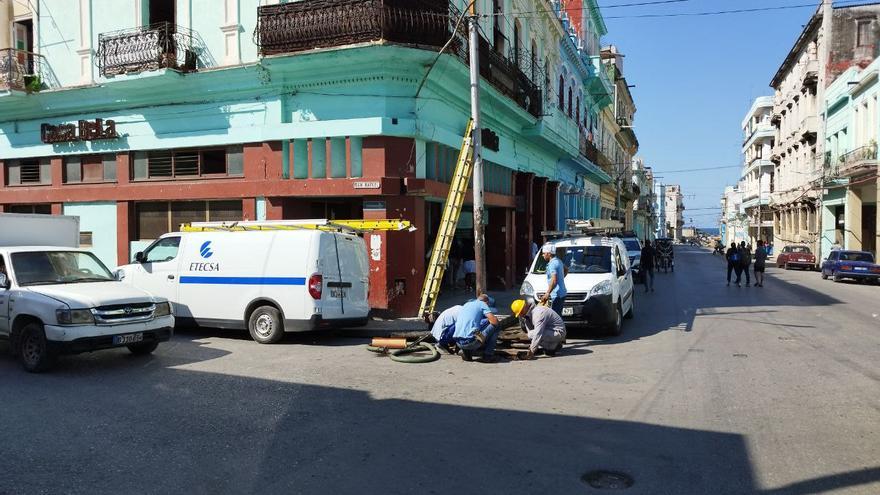
The poor quality of international communications from Cuba is a permanent source of complaints for users of the Cuban Telecoms Company Etecsa. (14ymedio)

14ymedio bigger14ymedio, Natalia López Moya, Havana, 14 November 2023 – Along with all their other routine problems, Cubans suffered major difficulties in connecting to the internet on Tuesday, owing to a “break in an underground fibre optic cable”, according to a brief announcement by the Cuban Telecoms Company, Etecsa.

The breakdown “has had an effect on internet services in different ways”, the state monopoly stated, recognising that “as a result users could see difficulties in accessing the service and a slowness of operation”.

Without giving any details of the location of the affected cable nor of the cause of the failure, Etecsa sought to assure the public that their specialists were working to restore service “in the shortest possible time”.

Since the early hours of the morning, Cubans began reporting the telecoms breakdown on social media across the country. “You can hardly get on the internet and your phone is constantly losing data signal”, a young resident of the Cayo Hueso district of Havana told this paper.

Nevertheless, he thought that it was just down to Etecsa’s routine problems: “As always, the connection is terrible. I didn’t think it was any continue reading

specific breakdown but just that they have congestion on the data antennae, which is what’s been happening anyway to us in this area recently”.

Many of the operations of electronic payments systems and of websites or mobile phone apps were paralized 

The poor quality of international communications from Cuba is a permanent source of complaints from users, which, according to official figures, number more than 7 million in the mobile phone service.

Many of the operations of electronic payment systems and of the websites that sell products on social media, digital portals, or mobile phone apps, were paralized on Tuesday because of the fault, 14ymedio was able to confirm.

In El Vedado, the family of Siro, a Habanero of 38, couldn’t order a cake for their mother’s birthday on the popular app Mandao because “there was no way of getting a data signal”. Eventually they bought one from a private cafeteria but couldn’t hide their frustration: “The point was to be at home and get the cake delivered, but with no internet, forget it”.

In October last year this paper revealed the paradoxical situation in which Etecsa found itself: being one of the few national concerns that generates huge income, but nevertheless is in financial difficulties.

“We are joining bits of cable together to try and solve the breakages”, said José Ángel, a worker for the company, which, he said was going through “its worst crisis since its creation”. This employee, who was working in the Revolution Square district, complained that “the managers carry on getting privileges but we at technician level have no resources to help us look after the customers”.

Every fifteen days, Etecsa launches a promotion of extra bonuses payed from abroad but most of this foreign currency is not invested in telecoms infrastructure. “Around 90% of what Etecsa raises leaves the company in a big consignment called “undefined”, explained another employee based in the accounts section. “With what’s left it’s very difficult to maintain a quality service because you can hardly make any large investments”.

Translated by Ricardo Recluso

____________

COLLABORATE WITH OUR WORKThe 14ymedio team is committed to practicing serious journalism that reflects Cuba’s reality in all its depth. Thank you for joining us on this long journey. We invite you to continue supporting us by becoming a member of 14ymedio now. Together we can continue transforming journalism in Cuba.
About Cuban Cooperatives: Playing With Fire

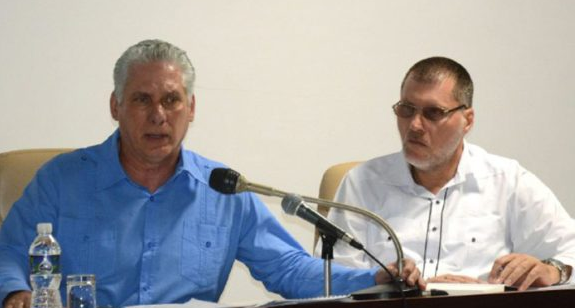
Cuban President Miguel Díaz-Canel attends the XIV International Meeting of Economists on Globalization and Problems of Development

14ymedio bigger14ymedio, Elías Amor Bravo, Economist, 16 November 2023 — The Cuban communists, since the early days of Fidel Castro, never willingly accepted the phenomenon of the cooperative movement and never gave it the deserved space it should have had, especially in the agricultural sector.

The origin of cooperativism in Cuba after the revolution was precarious. The few farmers who retained small plots of land, after the structural transformations of the so-called “agrarian reform,” understood that cooperativism could be a determinant of the productive efficiency of their lands.

And so a system of small cooperatives emerged on the Communist Island, of local implementation, which soon fell under the political control of the regime through the National Association of Small Farmers (ANAP). Immediately the communist leaders were at the head of these cooperatives, and any possibility of development, growth or improvement of these entities fell into oblivion. For more than 50 years, the Cuban cooperative sector was the closest thing to a private initiative in the Marxist interventionist desert, and therefore, it never managed to take off.

Sixty years later, the existing economic model on the Island still does not accommodate the cooperative movement, which struggles to occupy positions of power without success. And now, it has occurred to the communist leaders that cooperativism, in addition to being oriented to producing food and goods and services, has to be dedicated to a continue reading

participatory task that they call “community transformation.” To that end, “cooperatives must have a humanistic approach and social responsibility for the environment.” Unfortunately, we are very afraid this will give the death blow to the sector.

The hilarious idea that cooperatives be in charge of community transformation and that they are responsible for the environment, arose precisely during the second day of the XIV International Meeting of Economists on Globalization and Problems of Development, which is being held at the Convention Palace in Havana. Colleagues want to believe in it, but they can’t. They know that the economic model is useless, and they propose its replacement, but then they dedicate themselves to these flowery games that do not lead anywhere because they only serve those who run the country and reject any real change. It should not be expected that any leader put to sleep by these messages will take sides so that the cooperatives produce more and serve the interests of the population.

The Support for Agricultural Intercooperation (Apocoop) project cited by the state press, establishes a route “to strengthen the development of agriculture and the social responsibility of cooperatives for their environment” and has an active presence in four provinces of the country – Artemisa, Sancti Spíritus, Las Tunas and Guantánamo – benefiting a population of more than one million inhabitants, of which 46% are women.

The question is immediate: has anyone in those four provinces seen their diet improved with Apocoop? Do you eat more and better? It would be good to get that information, because otherwise, we return to the debate about the means or the ends, which the communists like so much, but which does not serve to produce more and better, which is what the country needs.

Apocoop has served to contribute, they say, about a million pesos, which has been destined to “improve the living conditions of the communities in which they are located, mainly with the rehabilitation of basic service spaces and the realization of local food self-sufficiency.”

The immediate question is, what about the necessary capitalization for cooperatives to be able to invest more and better, and continue to grow? Does it vanish in “help”? It should be remembered that nothing is free, and that if a group of workers join to promote a cooperative, their objective is to improve their economic and social situation; that is, to earn money and make their project profitable.

Let’s imagine what can happen if the local communist leader tells them to forget that, the money has to be allocated to social and community responsibility. When the cooperative members see that this happens two years in a row, the cooperative is over and everyone goes home. And then they talk about the blockade of the United States, when the real blockade is internal.

There was also talk of promoting “other regulatory frameworks that lead the path of cooperativism and the promotion of second-degree cooperatives with powers to diversify their activities.” As it is unknown what regulatory framework they are talking about, in these cases it is better to leave things as they are before embarking on changes that may end up giving worse results.

It seems to me that the representatives of cooperatives from Mexico and the Dominican Republic attending the event took a fairly objective impression of the daily reality of the Island, in case there was any doubt, along with the entrepreneurs who visit international fairs and competitions on the Island but never return.

Communist leaders have no remedy. They don’t even trust cooperatives anymore. They want them submissive and obedient. They play with fire.

Translated by Regina Anavy

____________

COLLABORATE WITH OUR WORKThe 14ymedio team is committed to practicing serious journalism that reflects Cuba’s reality in all its depth. Thank you for joining us on this long journey. We invite you to continue supporting us by becoming a member of 14ymedio now. Together we can continue transforming journalism in Cuba.
Faced With the Alarming Shortage of Rice, the Cuban Authorities Want To Prepare the Idle Land

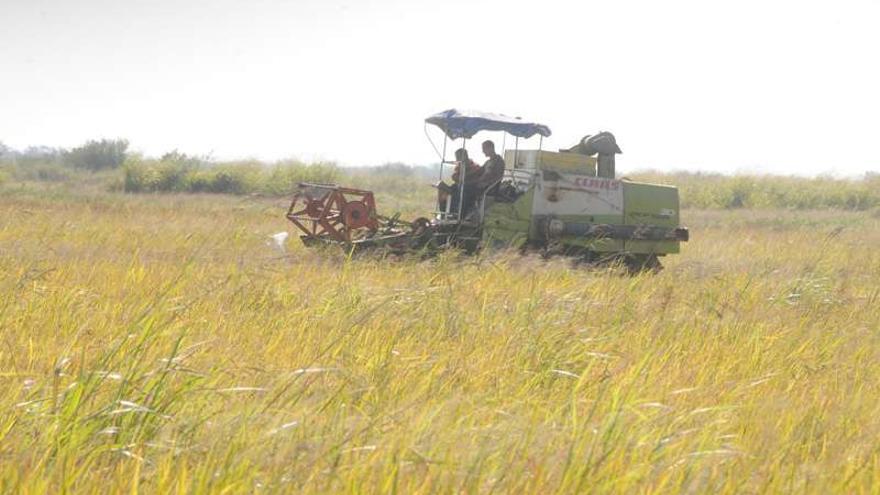
Of the 24,700 acres for rice planting in the province, the Agroindustrial Grain Company only has the capacity to attend to 17,300. (El Artemiseño)

14ymedio bigger14ymedio, Havana, November 16, 2023 — The rice production in Artemisa is barely enough to cover the “basic family basket” sold in the ration stores of two municipalities, Candelaria and San Cristóbal, and a part of the provincial capital, the local authorities recognized on Thursday. Officials no longer know what to do to get the 1,500 tons of grain they need monthly, in a context of everyone for himself, where the State has asked each locality to redouble its “self-management.”

According to El Artemiseño, it is expected that the collection, this winter, of what was sown during the last spring season (2,470 acres), will be about 2,000 tons. That amount, which barely covers a month’s consumption, will not be enough to feed the 454,741 consumers in the province, who require about 18,000 tons per year.

The missing amount, the officials assure, will be imported, but the lack of resources and financing make purchases in the international market irregular and dependent on the state budget that, reduced as it is, uses all kinds of methods to try to raise national production.

Hence, the Agroindustrial Grain Company José Martí (EAIG), located in Candelaria, and Azutecnia – a branch of the Azcuba sugar group – have sent their workers out to “weed” 38 miles of irrigation channels in the rice fields. continue reading

At the moment, 15.5 miles have been cleared, Ariagny Pérez, director of EAIG, told the newspaper, and he said that several farmers in the area have joined the task of reconditioning the fields.

It is expected that the collection, this winter, of what was sown during the last spring season (2,470 acres), will be a scarce 2,000 tons

Of the 24,700 acres available for rice planting in the province, EAIG only has the capacity to attend to 7,000, said Pérez, who did not explain why only 17,300 were planted last spring when the company has the resources to cover seven times that amount.

In total, Cuba needs about 700,000 tons of rice per year for the population’s consumption and, although the aspiration for 2025  is that more than half that amount (538,000 tons) will be produced in the country, the reality is still the importation of what’s missing, and Artemis, with its low productive capacity, is far from contributing to that reality.

In recent months, the shortage of rice in the ration stores has been one of the most frequent complaints of the population. At the beginning of November, only three pounds of sugar per person per month had arrived in several municipalities of Havana, while the rest of the products – including rice – were conspicuous by their absence.

Several articles published in the official newspapers were quickly launched to ensure that everything was fine and that the delay in the rice delivery was due to the distribution problems that, between the lack of fuel and the heavy rains in the eastern provinces, had prevented unloading the grain from the ship that supposedly was waiting for better weather in the Bay of Havana to go to Santiago de Cuba.

The promises of the regime, however, did not calm the population, which attributed the lack of the grain to the State’s custom of achieving “the day-to-day.” Another article published this week in Vanguardia reported another “contingent” and “solidarity” measure: at the request of the Communist Party, that the rice farmers of Villa Clara, with long faces, donate the pounds of rationed rice which would ordinarily be their share to a care center.

Translated by Regina Anavy

____________

COLLABORATE WITH OUR WORKThe 14ymedio team is committed to practicing serious journalism that reflects Cuba’s reality in all its depth. Thank you for joining us on this long journey. We invite you to continue supporting us by becoming a member of 14ymedio now. Together we can continue transforming journalism in Cuba.
Lobsters Flee the Isle of Youth Due to ‘Climate Change’ Says a Cuban Official

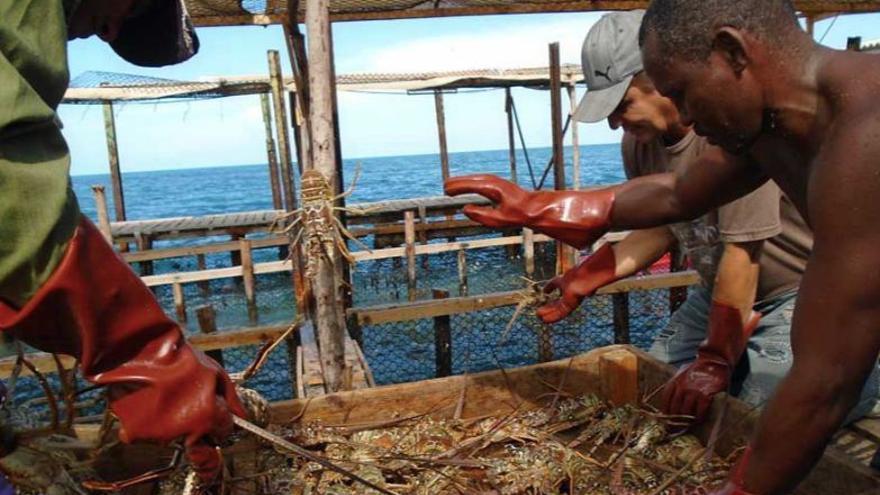
Not everything depends on Nature, but also on the “breakdown of the boats.” (OnCuba)

14ymedio bigger14ymedio, Havana, November 16, 2023 —  The explanation of the director of the Pescaisla company, Ramón Contino, for the debacle of lobster fishing on Cuba’s Isla de la Juventud [Isle of Youth] lasted a short time on the YouTube channel of the official telecenter Islavisión. The 50% drop in production, the official said, is due to the fact that seafood also “emigrate,” fleeing the unfavorable climate.

“It’s climate change, the high temperatures of our waters,” Contino explained in the recording, which was deleted by Islavisión. “The island’s continental shelf exceeds 95 degrees (F), and the lobster migrates to deeper waters,” he added.

Saddened by the failure of the company, Contino said that not everything depends only on the natural factor but also on the “breakdown of the boats,” which have been demanding maintenance for years. However, the “significant decrease in capture,” the manager insisted, has more to do with causes beyond his management or the workers’ effort, although, he acknowledged, the budget allocated to his company “has decreased.” continue reading

The seafood processing company on the Isle of Youth, which packs lobsters to export and supply hotels, has been the first to complain. Pescaisla has delivered half the product this year compared to other years — an amount that the official press did not reveal — which will have a notable impact on the economy, Contino lamented.

His strategy: “Betting on an improvement in weather conditions,” he concluded, shrugging his shoulders

The international market and Cuban hotels will be left without the three products offered by the Isle of Youth: pre-cooked and raw whole lobster, frozen tails, and tail and head combinations, sold mainly to Asian buyers.

His strategy: “Betting on an improvement in weather conditions,” he concluded, shrugging his shoulders while the report showed images of better times: hundreds of boxes of lobster, which in 2023 are not reaching the processor.

With the results exposed by its directors, the Isla de la Juventud has become the wallflower in Cuban lobster production, one of the few that goes at full speed in the country. Several reports in the official press, published in recent weeks, have celebrated the success of shellfish fishing on the coasts not far from the Isla.

At the antipodes of the situation exposed by Contino is the overcompliance of the Fishing Company of Santa Cruz del Sur, in Camagüey, which on November 6 was proud of having captured the 250 tons of lobster of its annual plan and being in search of more seafood.

With more than 10,000 pesos of monthly salary, in addition to additional payments, Camagüey fishermen say that they have also had difficulties. The obstacle, however, didn’t have to do with the “emigration” of the lobsters but with the lack of fuel, which affected fishing routines.

Despite everything, they clarified, the shrimp industry – and the fishing industry in general – can be considered successful. The explanation is the recipient of the merchandise, which rarely reaches the tables of Cubans: the binomial formed by tourism and export, which makes the profits translate into dollars and not into the squalid Cuban peso, unable to move the gears of any industry on the Island.

Translated by Regina Anavy 

____________

COLLABORATE WITH OUR WORKThe 14ymedio team is committed to practicing serious journalism that reflects Cuba’s reality in all its depth. Thank you for joining us on this long journey. We invite you to continue supporting us by becoming a member of 14ymedio now. Together we can continue transforming journalism in Cuba.
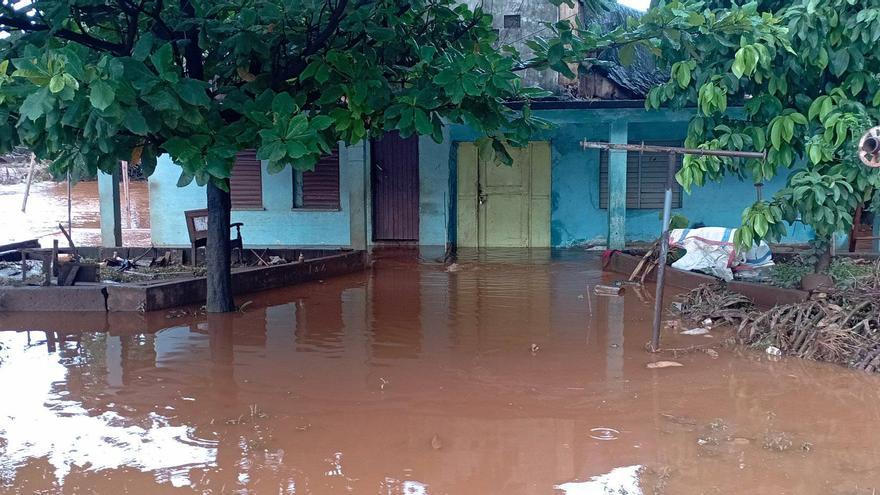
For the Second Time in Five Days, Flooding of Cuba’s Cabana River Forces the Evacuation of Moa Residents

Although heavy rainfall was forecast, the water level during Wednesday’s floods was low (Ale Céspedes/Facebook).

14ymedio bigger14ymedio, Havana, 16 November 2023 — The second flood in barely three days of the Cabaña River, in Holguín, has forced the evacuation of residents of several towns in the municipality of Moa on Wednesday. In just 45 minutes, the level of rainfall rose to 80 millimeters and caused serious damage in the communities near the Nuevo Mundo dam.

About 57 residents of the Pedro Soto Alba neighborhood – known as Ecrin – in Moa, were relocated from their homes, while another 317 were forced to take shelter in the homes of family and acquaintances in less damaged areas due to the rise in water level, as reported to the official press by Alexis Mejías, the First Secretary of the Communist Party in the municipality.

The authorities also emphasized that, in comparison with the previous flood, this time the water only reached a few centimeters.

Mejías assured that teams have been formed for the protection of the flooded homes and to assist in the evacuation of those affected, to relieve the sewer systems – which tend to break down easily on the Island, due to the lack of systematic maintenance – and to collect the waste generated by the swelling of the river. continue reading

Despite the seriousness of the situation, the official press has focused more on Moa’s ’spirit of solidarity.’

Despite the seriousness of the situation, the official press has focused more on Moa’s ’spirit of solidarity,’ which they attribute to the good work of the authorities, and has chosen to provide as few details as possible about the homes and lands damaged by the flood

In the early hours of Sunday, residents in the districts of Ecrin, Cabaña, and La Veguita were evacuated following the first rise of the river. “In a very short time, the surge of water raised the levels to never before seen limits and penetrated virtually all the homes in the Ecrin district,” detailed the official Tele Cristal at that time. The local media acknowledged that the damages ’were significant’ and affected 135 homes, in which a total of 374 people lived.

Residents of Moa, who took to social media to share their desperation, asserted that in previous years they have also suffered from the river’s overflow without any action being taken by the provincial administration to resolve the situation. On Cubadebate, where the news was also published, some readers regretted not having prior meteorological reports before the flood that would have warned them to take measures to safeguard their belongings and protect their homes

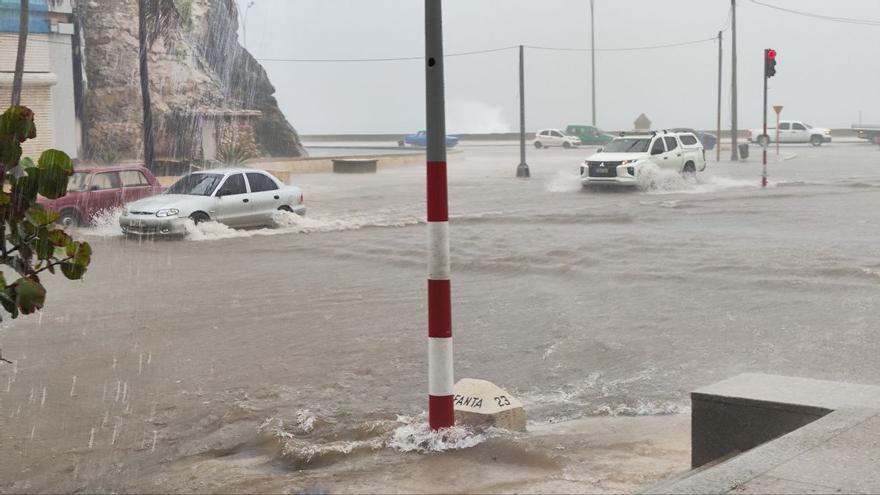
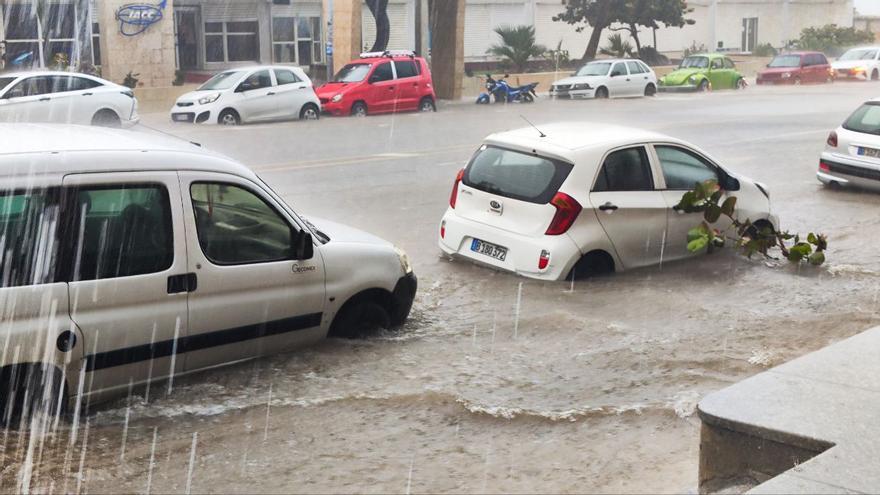
In other provinces, the consequences of the recent days’ intense rains have been felt as well, although not to the severity seen in Moa. Calle 23, the main avenue of El Vedado in Havana, turned into a river this Wednesday afternoon as a result of the rainfall. Just a few minutes of heavy downpour were enough for the sewer system to break down and La Rampa to be completely flooded, from the highest areas of the street to the Malecón.

Photographs of parked cars on 23rd street, with the current reaching their doors and windows, quickly began to spread – along with hundreds of criticisms and complaints towards the Government – on social media.

Translated by Jesus Tuñon as part of University of Miami/Spanish 321

____________

COLLABORATE WITH OUR WORKThe 14ymedio team is committed to practicing serious journalism that reflects Cuba’s reality in all its depth. Thank you for joining us on this long journey. We invite you to continue supporting us by becoming a member of 14ymedio now. Together we can continue transforming journalism in Cuba.

The Communist Party of Chile Tries to Torpedo the Cuban Athletes’ Request for Refuge

Cuban athletes are training in a gym in Santiago de Chile. (EFE)

14ymedio bigger 14ymedio, Havana, 16 November 2023 — Cuban emigration Cuban lawyer Mijail Bonito, who represents the 13 athletes who abandoned the Cuban delegation during the Pan American Games, accused the Communist Party of Chile on Wednesday of acting as Havana’s “interest office” to discredit his clients. The athletes, he emphasizes, now have temporary residence visas despite the fact that attempts have been made to “delegitimize their reasons.”

The athletes, mostly women, have settled in Santiago and “are looking for  work,” the lawyer said. He added, without mentioning names, that “there are many people who are looking for a way for them to integrate themselves into the Chilean sports world.”

The hockey players Yunia Milanés, Jennifer Martínez, Yakira Guillén, Lismary González, Helec Carta and Geidy Morales, and the bronze medalist in 400-meter hurdles, Yoao Illas, are currently training in a municipal gym, he added.

Bonito said that during the process to regularize the immigration status of the athletes, they have firmly based their efforts on Law 20.430 which offers refuge to those who flee their country because “their life, security or freedom have been threatened by widespread violence,” or they have experienced a massive violation of human rights. The Communist Party, however, has overlooked the legitimate reasons of the athletes to leave the Island and insists on discrediting the legal arguments that support them, Bonito said. continue reading

According to the president of the Party, Lautaro Carmona, the Cuban athletes entered the South American country with “official passports, official transfers and with the institutional representation of their country,” and specified that, under these conditions, “there is nothing to indicate that they suffer persecution.”

Carmona disqualified the statements of one of the escaped hockey players, Yunia Milanés, when she revealed the precarious conditions in which they trained on the Island: “We didn’t have shoes, equipment or protective gear. We had to wait for a donation and the approval of the sports authorities,” the athlete said at the time.

According to Carmona, “This precariousness that athletes have in preparing (to compete)” is the fault of what he called “the criminal economic blockade of the United States against Cuba.” Speaking to the newspaper La Tercera on November 9, the politician said that the issue was “part of a campaign” of “the right,” among which he included the Cuban lawyer.

Bonito did not take long to respond by reminding Carmona that Cuban laws sanction athletes who leave a delegation with “penalties of up to eight years of deprivation of liberty.”

According to the National Migration Service, between 2018 and 2021 – during the Administration of Sebastián Piñeira – 4,557 Cubans applied for refuge in Chile, but only one obtained it. During the government of the current president, Gabriel Boric, 345 people from the Island requested refuge and none were granted it. However, since the abandonments were announced, the opposition has called on the Government to speed up the processes and accept the request of the Cuban athletes.

So far, the Chilean president has not spoken about the escapes of Cuban athletes or their requests for refuge. His most recent speech on the Island was at the beginning of November, when in a meeting he asked his American counterpart, Joe Biden, to remove Cuba from the list of states sponsoring terrorism and to lift the sanctions.

The Boric Administration has granted a different status to Cuba and Venezuela than to other regimes such as Nicaragua, whose president persecutes “those who think differently.”

Translated by Regina Anavy 

____________

COLLABORATE WITH OUR WORKThe 14ymedio team is committed to practicing serious journalism that reflects Cuba’s reality in all its depth. Thank you for joining us on this long journey. We invite you to continue supporting us by becoming a member of 14ymedio now. Together we can continue transforming journalism in Cuba.
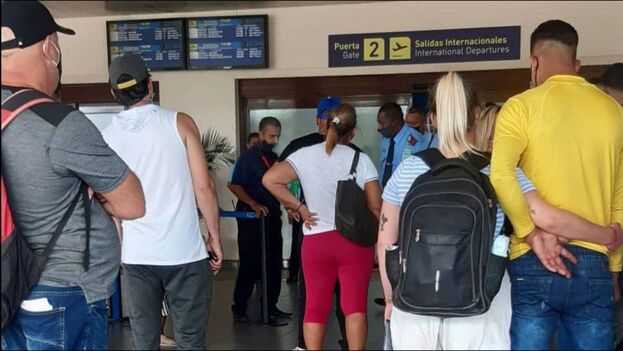
The ‘Regulated’ and the Banished: The Great Absentees from the Cuban Government’s Meeting with Emigrants

The objective of the regime is clear: to convince those it once called “scum” and “worms” to put their hands in their pocket and invest in Cuba. (14ymedio)

14ymedio bigger14ymedio, Yoani Sánchez, Generation Y, Havana, 16 November 2023 — Ten years have passed since the immigration reform came into effect, which abolished the unpresentable exit permit that Cubans needed to travel outside our country. However, the rights to free movement have not been fully restored and measures such as “regulation*” and forced exile have allowed the regime to use the prohibition of entering or leaving the country as a mechanism of political control and penalization against critics.

This weekend, at Havana’s Palace of Conventions, the Conference on the Nation and Migration will be in session. The event has not been held for 19 years, and dozens of emigrants residing in various countries are invited but united by the same posture: the lack of criticism of the authoritarianism of the Cuban regime and silence in the face of human rights violations on the Island. The representatives of the Ministry of Foreign Affairs will feel comfortable in front of an audience that will applaud a lot and demand little.

Although official voices have stressed that there will be no taboo topics at the Conference, it is likely that there will be any mention of the injustice suffered by dozens of activists, opponents and independent journalists who are “regulated” and prevented from leaving Cuba in retaliation for having exercised their right to dissent and free expression. Nor will the names be mentioned of those who, during a trip abroad, have encountered the enormous punishment of being prevented from boarding a plane back to their homeland, even though they had not been away more than the regulatory 24 months that current legislation establishes as a limit before losing residency on the Island. continue reading

Neither the regulated nor the exiled will have representation at the meeting and, almost certainly, none of the guests will dare to allude to their cases.

Neither the regulated nor the exiled will have representation at the meeting and, almost certainly, none of the guests will dare to allude to their cases and demand that such sanctions be put an end to. So, if two of the biggest violations of immigration rights that are committed on this Island are not going to be discussed and eliminated during the days of the Conference, what is the purpose of such a meeting?

The objective of officialdom is more than clear. Convince those it once called “escorias” [scum] and “gusanos” [worms] to reach into their pockets and invest in Cuba. To coax their money out of them, they will tell them that  changes in immigration policy are coming, that one day, even, the word “emigrant” will no longer be used to define compatriots who live scattered around the world, and they will enumerate all the supposed steps towards flexibility that have been taken in recent years to cross, in one direction or another, national borders.

Once the Conference is over, the Foreign Ministry will put aside its smiles and will return to talking about “the haters” and “the frustrated”, it will focus its attacks on that country that thousands of Cubans have chosen to live in, and of which so many already have citizenship, and will reinforce its speech in the plaza sitiada — the besieged square — in which dissent is treason. At home, dozens of Cubans will continue to postpone hugging their siblings, their children, their mothers, because an absurd system prevents them from boarding a plane to reach them.

*Translator’s note: The Cuban Government has chosen the term ‘regulated’ to refer to those who are forbidden to leave the Island.
____________

COLLABORATE WITH OUR WORKThe 14ymedio team is committed to practicing serious journalism that reflects Cuba’s reality in all its depth. Thank you for joining us on this long journey. We invite you to continue supporting us by becoming a member of 14ymedio now. Together we can continue transforming journalism in Cuba.
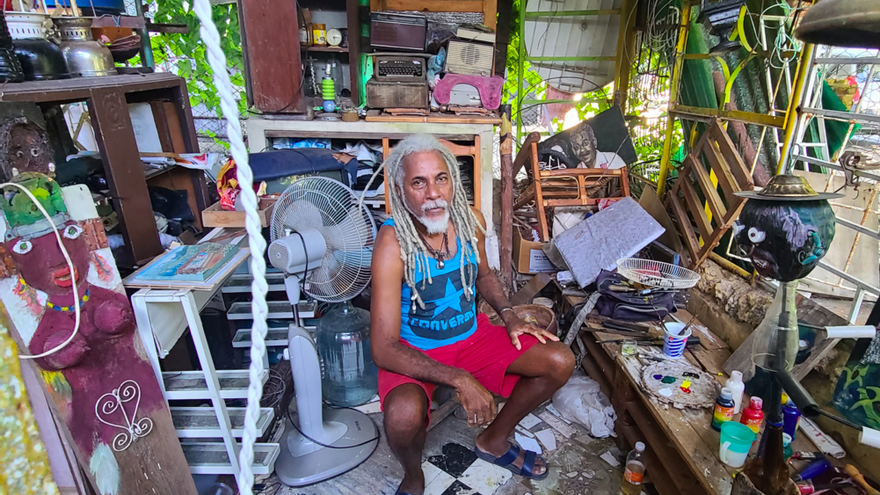
William Aguero, the Cuban Artist Who Transforms Garbage Into Art

Agüero has a certain Rastafarian air about him, he wears a blue T-shirt and likes to chat (14ymedio).

14ymedio bigger14ymedio, Nelson García/Juan Izquierdo, Havana, 26 October 2023 — William Agüero is sitting in the center of his workshop, which is also his world. The mess is noticeable. Masks, fans, a typewriter, tubes of oil paint, paint brushes, an old Philco refrigerator, skeletons of Soviet radios, and objects impossible to classify. If they call him an artist it is by chance; he prefers another definition: daring.

He has a certain Rastafarian air about him, is dressed in a blue T-shirt, and likes to chat. If rum is involved, so much the better. Some time ago, Agüero discovered that the true calling within his work was to avoid any confinement and go out in the open air. He started at home: 21st Street, between 8th and 10th, in Havana’s El Vedado district.

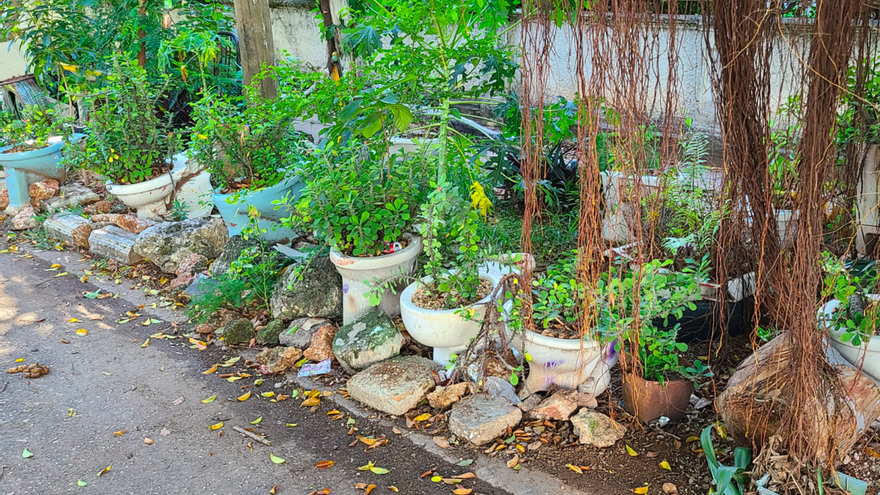
Even if they don’t know Agüero, everyone has visited his world: big open eyes on poles and trees, discs that turn into shiny scales, faces on burnt logs, toilets in which all kinds of plants grow. “In my head I have many more things,” he warns.

Agüero’s creative power does not rest. If he had money, more paint and materials, he would have already expanded his work throughout Havana. A city in ruins, where garbage dumps seem to have a life of their own, is the ideal terrain for his objective: to transform what everyone considers useless into art.

“I started out playing around,” he told 14ymedio. “I used to make shoes, but a painter friend of mine, by the last name of Miruelo, who died recently, asked me to sell some paintings. I knew a lot of people and I sold them all, except one.” That was enough to unleash the world that, according to Agüero, he carried hidden within. continue reading

A city in ruins, where garbage dumps seem to have a life of their own, is the ideal terrain for his objective (14ymedio).

When he had that revelation, his wife was hospitalized, so art was also a remedy to relieve the tension of those days. He began painting “his way,” but continued to sell the work of others – vinyl records of “some young guys, who are very good painters” – until he decided to make his first “masks.”

“I liked it and immersed myself in that world,” he recalls now. He bought canvases and some materials. He also saw some toilet bowls in the trash and said, “Let’s give them a use.” So it has been with all sorts of “tarecos,” or “pieces of junk,” as he calls the artifacts he has rescued from the garbage dump. He has become almost famous, he explains, and his work has been on television.

However, and despite the fact that many fellow painters have invited him to exhibit his work in various galleries, he has never received state aid. “I have done everything with my own resources and efforts,” he says proudly. If anything, friends and admirers stop by his studio and leave him “a little something over there,” which he later transforms into art.

“I eliminate garbage,” Agüero points out. “If it weren’t for this project, the garbage dump at the corner of my neighborhood would be reaching my house by now. One day they pick it up, and then they don’t come for a while.” Recycling is his counterattack and his way of showing his community that, despite Cuba’s unacceptable conditions, life doesn’t have to be depressing.

Of course, some have called him crazy or worse. The project has had its detractors. “But the vast majority,” he says with satisfaction, “is very pleased with what I’ve done in the neighborhood. There are those who are annoyed by it. What can we do? Criticism exists everywhere,” he says. The best part of the work is when the children come. Where others see only trash, they – like the artist – are able to see fantastic cars or imaginary motorcycles.

He is willing to do more, much more, but everything has “its economic part,” he reasons. “Everything is expensive, especially paint, and it’s difficult. Nevertheless, visitors from all over the world continue to pass through the neighborhood. People who explore the other Havana, the one that does not appear in the tourist guides, and discover the magical “tarecos” of Agüero.

Agüero discovered that the true calling within his work was to avoid any confinement and go out in the open air (14ymedio).

Translated by Allison Reyes as part of University of Miami/Spanish 321

____________

COLLABORATE WITH OUR WORKThe 14ymedio team is committed to practicing serious journalism that reflects Cuba’s reality in all its depth. Thank you for joining us on this long journey. We invite you to continue supporting us by becoming a member of 14ymedio now. Together we can continue transforming journalism in Cuba.
Twenty-third Street in Havana, Transformed Into a River by the Heavy Rains

23rd Street and Infanta, El Vedado, Havana, this Wednesday. (14ymedio)

14ymedio bigger14ymedio, Juan Diego Rodríguez, Havana, November 15, 2023 — Twenty-third Street, the main avenue of El Vedado, became a river on Wednesday afternoon as a result of the intense rains that are affecting western Cuba. Within a few minutes after the downpour began, it was barely possible to travel through La Rampa due to the current of water that descended from the highest areas towards the Malecón. The vehicles parked in the area, most of them modern cars belonging to officials of neighboring ministries, were pushed by the flow of water that increased with each minute.

“This happened before in other neighborhoods, but 23rd Street is ready for a boat race. I’ve never seen that before,” said a man who took refuge under the eaves of the Ministry of Foreign Trade. Problems with sewage affect the entire Cuban capital, and the water can’t drain through the sewage grids. It continue on its course, increasing in strength and dragging all kinds of things in its path. continue reading

In a few minutes, streets and sidewalks were completely flooded. (14ymedio)

From the nearby garden of the Hotel Nacional, located on a natural elevation, several tourists, with capes and umbrellas, took photos of the whirlwind that rolled down the street towards the sea. There were many, and the daring ones decided to cross the street, with water almost up to their knees; but most of the passers-by were more cautious, perhaps aware of the potholes that the water hid that can cause a twisted ankle or something worse.

“This happened before in other neighborhoods, but 23rd Street is ready for a boat race. I’ve never seen that before.” (14ymedio)

Not even the most glamorous area of Havana is saved from the crisis. A river of water and vehicles pushed by the current remind us of the fragility of a city in ruins before any whim of nature.

https://www.facebook.com/watch/?v=1539401443547499

Translated by Regina Anavy

____________

COLLABORATE WITH OUR WORKThe 14ymedio team is committed to practicing serious journalism that reflects Cuba’s reality in all its depth. Thank you for joining us on this long journey. We invite you to continue supporting us by becoming a member of 14ymedio now. Together we can continue transforming journalism in Cuba.

Cuban Families Denounce Mexico’s Immigration Authorities for Deception and Extortion

Lismaidy Portal Benacho, her children Adam Jesús and Andrea, and her husband Leynier Valle Machado are in Guadalajara. (José Luis Pérez)

14ymedio bigger14ymedio, Ángel Salinas, Mexico, 14 November 2023 — Despite numerous complaints, Mexico continues to extort money from migrants. On this occasion the victim was Mayelín Díaz Vargas, a Cuban. As attorney José Luis Pérez Jiménez told this newspaper, the woman was “coerced” by Jorge Rosalino Valencia, head of operational services of the immigration station of Las Agujas in Mexico City to “stop talking” about the 2,500 dollars that he demanded for not deporting her.

“Rosalino Valencia promised her a document in return for not ratifying the accusation and for not following up with the amparos (protection orders),” the lawyer tells 14ymedio. “The agents released her last Saturday. They took her from the facilities and told her to straighten it out, and if they arrested her again, they would deport her.”

Díaz Vargas is located in Mexico City. He doesn’t want to go out on the street or talk to strangers. He is afraid of being arrested. On Monday night he learned from television news that 246 migrants were arrested in what Migration called a “cleanup operation.” continue reading

Initially, the detainees were allowed to carry out their immigration procedures. “They were deceived and transferred to the states of Tabasco and Chiapas, where Migration denied them a safe-conduct to continue  to the border with the United States,” says the lawyer. These Central Americans, Venezuelans and Haitians, among whom there are 54 children, “have not received any documents.”

Rosalino Valencia promised her a document in exchange for not ratifyiing the accusation and not following up with the amparos.

In recent weeks, Mexico has tightened measures to stop the migratory flow. Between November 9 and 14, Migration recorded, as it usually calls it, the “rescue” (detentions) of 600 migrants, including 32 Cubans, who were trying to reach the United States by bus. The president of the Advisory Council of the National Institute of Migration, Mauro Pérez, complained about the “containment measures” used against irregular foreigners and the eviction of the 246 people at the Mexico City Bus Station.

In the vicinity of the bus terminal the Migration vans can be seen patrolling.  Inside, there are constant sweeps by the agents, which has prevented Mayelín Díaz from being able to buy a ticket to Tijuana. “She is suspicious of the airport authorities, who arrested her and handed her over to the agents be locked up,” says the lawyer.

On the other hand, after several days of pressure, a family of the group of Cubans injured in Pijijiapan, where 10 women from the Island died, managed to travel from Tapachula to Tuxtla Gutiérrez. Last Monday they boarded a flight to Guadalajara and plan to continue their journey to the United States.

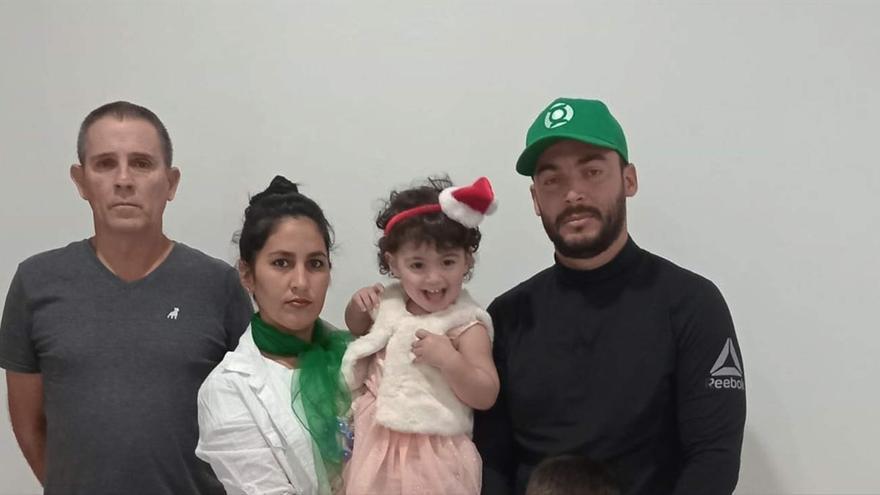
Lismaidy Portal Benacho, who is a doctor, has been in charge of curing the injuries of her children Adam Jesús and Andrea, who suffered burns in the accident, after they were denied medical attention and a humanitarian visa in Tapachula. Meanwhile, her husband, Leynier Valle Machado, has already recovered from his injuries.

No one in the Tapachula hospitals wanted to take care of the children, the lawyer says. The doctors closed the doors despite the fact that Portal Benacho asked that she be permitted to attend to them herself. “Migration also pressured these people and threatened to arrest them and separate the mother from the children,” says Pérez Jiménez.

On Tuesday, another 162 migrants, including seven Cubans, were arrested by the military in the state of Veracruz. The group was traveling on a bus that was intercepted on the Coast of the Gulf of Coatzacoalcos-Villahermosa highway, near the town of Nuevo Teapa.

The group of Cubans was detained in the Acayucan immigration station. The authorities refuse to give reports to this newspaper about the reason for the arrests .

Translated by Regina Anavy

____________

COLLABORATE WITH OUR WORKThe 14ymedio team is committed to practicing serious journalism that reflects Cuba’s reality in all its depth. Thank you for joining us on this long journey. We invite you to continue supporting us by becoming a member of 14ymedio now. Together we can continue transforming journalism in Cuba.

The Family Environment of the Dead Girl in Luyano Points to the Neglect of Cuba’s Social Services

Kamila Melit Alonso Ocampo, only 2 years old, was buried last Friday (Facebook).

14ymedio bigger14ymedio, Havana, October 24, 2023 — A fatal error led to the death of Kamila Melit Alonso Ocampo, only 2 years old, from one of the many blows that her mother’s partner frequently inflicted on her. The death of the minor last week in Luyanó, Havana, has unleashed a wave of indignation and differing accounts in which the Hijas de Galicia hospital is accused of neglect.

But the most serious failure, according to family sources that 14ymedio had access to, occurred just two days earlier, due to the lack of action on the part of the social worker dealing with the situation in which Kamila Melit and her older brother were living. Their parents had separated this year and their mother, Karla Ocampo, had started a new relationship.

In Luyanó, according to neighbors, it was known that the man had drug problems. Nor did it seem to be a secret that Karla’s two children were suffering abuse at the hands of both of them. Indeed, last Tuesday the girl was visited by a social worker who saw Kamila Melit’s black eye and asked her how it had happened. The little girl accused her brother of having thrown her into the baby carriage, but the minor — called in by the social worker — denied the incident and declared that it had been their mother’s fault. continue reading

The autopsy, according to sources from the medical center itself, states that blood and other liquids were found in the stomach of the minor

It is not known what could have occurred that led to there being no intervention by the social worker in a situation of evident risk for the children, but just two days later the tragedy was triggered. Karla Ocampo left her children with her partner to go out to the pharmacy and, according to the same sources familiar with the case, he kicked her in the stomach to push her out of his way as she was about to pass. When the mother returned, Karla was practically dead.

This was the state she was in, at least, when she was admitted to the hospital, where there was not even an opportunity to try to save her life. The autopsy, according to sources at the medical center itself, states that blood and other liquids were found in the stomach of the minor, who also showed signs of hypoglycemia and malnutrition.

The forensic examination also indicates that the girl had multiple contusions in several areas of her body and a damaged trachea, presumably because at some point she had been forcibly grabbed by the neck.

The incident occurred on Melones street in the Luyanó neighborhood. There both Karla Ocampo and Nelson Entunakua were arrested in connection with the death of the girl and after neighbors attempted to attack them.

Kamila Melit was buried last Friday and, for the moment, the case is being investigated by the police. The news has not emerged in the official press.

Translated by Sterling Cole – University of Miami/Spanish 321

____________

COLLABORATE WITH OUR WORKThe 14ymedio team is committed to practicing serious journalism that reflects Cuba’s reality in all its depth. Thank you for joining us on this long journey. We invite you to continue supporting us by becoming a member of 14ymedio now. Together we can continue transforming journalism in Cuba.
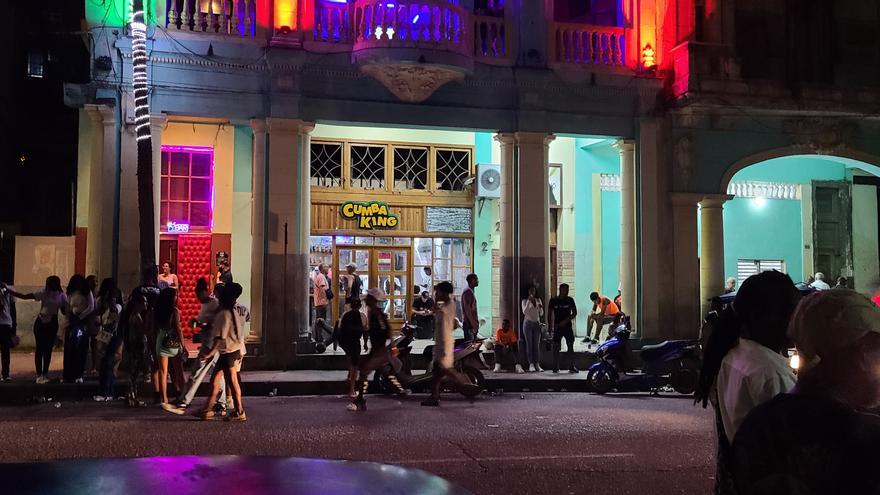
Nighttime Brawls, Drugs, Prostitution Spread in the Cuban Capital City

Cumbaking, on the ground floor of 212, serves as a hamburger and beer stand during the day. (14ymedio)

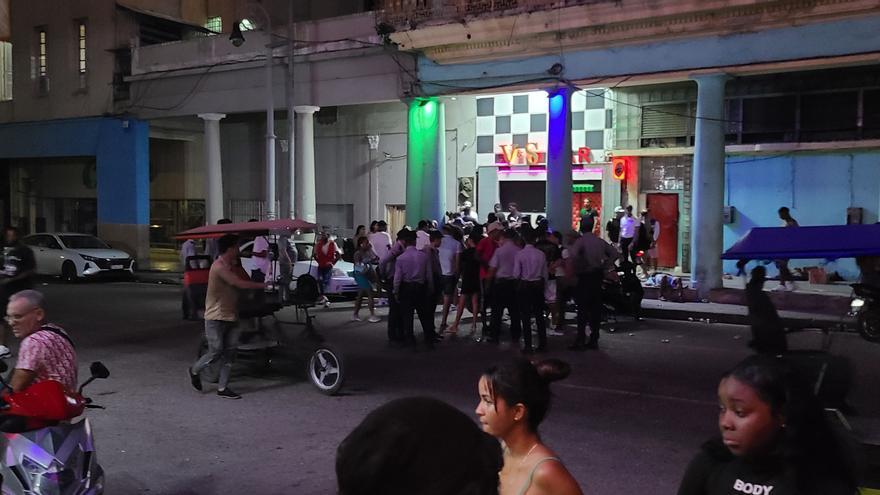
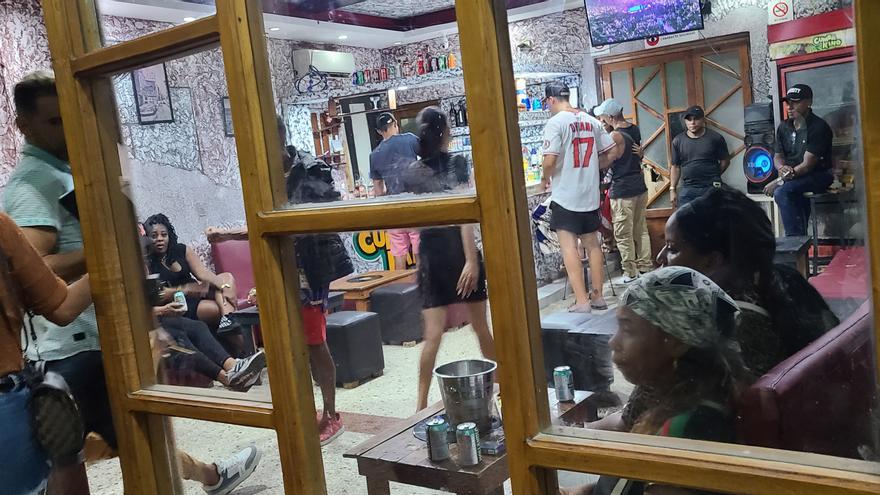
14ymedio bigger14ymedio, Nelson García, Havana, 14 November 2023 –Havana’s nightlife has its Bermuda Triangle on Galiano Street, where the Cumbaking*, 212 and V&S bars are concentrated. In that circuit of Central Havana, very close to the House of Music – the state establishment that many foreigners visit – handsome men and thugs, addicts and drunks, prostitutes and pole dancers stop by. The three establishments reach their boiling point at two in the morning, when security personnel prohibit customers from turning on their phone cameras.

In nightlife slang, places like this are still called “clubs,” and the name does them justice. In the surrounding area, everything – from a young body to a marijuana joint – is available for the right price and with the right signs. Precaution is essential: every night, half a dozen police officers stand guard in the vicinity, check identification cards and arrest some “character,” who disappears into a small gray truck.

“Of the three bars, 212 is the most ’quiet’,” insists Yoan, one of its employees, in conversation with 14ymedio. It is true that the hookers fight for their respect and that in the early morning – cell phones banished – two young people go up to the bar to dance while the public throws money at them, but even so, he believes, “there is not as much debauchery” as at the V&S or, down stairs, in the Cumbaking. continue reading

Caution is essential: every night, half a dozen police officers stand guard in the vicinity, check identification cards and arrest some “character”

The owner of 212 is called Ismael and he was imprisoned for two years. He had converted a house in Playa into a bar, which he called Las Piedras. It didn’t last long: the Police closed the business because drugs and prostitution had reached unacceptable levels, even for the underworld of Havana, they alleged.

“The authorities made a fool of themselves,” says Yoan, “and they couldn’t prove anything on him.” However, Ismael was imprisoned for two years. This did not prevent him, along with his wife, Yeni, from obtaining the license to open 212 in 2019.

Cumbaking, on the ground floor of 212, serves as a hamburger and beer stand during the day. At night, the loud music and the strongest alcohols – although never of good quality – lead the Police to take frequent “walks” through its doors.

Neighbors’ complaints about loud music reached the official press on November 9. In a note about the capital government’s agenda, a user residing in Galiano denounced “night brawls,” “ingestion of narcotics,” “insecurity,” and “prostitution” and demanded the “closure of all the bars on the block.” On their social media account the poster also lamented that the residents’ proposals have been presented without success to the authorities of Central Havana and various popular councils. The lack of solutions to such a scandalous reality could only have one explanation: “Our decision-makers have deaf ears.”

The neon lights of 212, the cheap wooden gate of Cumbaking and the black and white façade of V&S have become symbols of an increasingly harsh city. (14ymedio)

In theory, all bars in the capital must close their doors at three in the morning, explains Yoan. Only LM and Tuyo y Mío escape from this law, and can operate until six in the morning “because they are associated with El Cangrejo,” says Yoan, alluding to Raúl Guillermo Rodríguez Castro, Raúl Castro’s bodyguard grandson, whose nickname is “The Crab.”

However, the time of the “last bell” is the least relevant difference between Galiano’s “clubs” and the bars of the “good people” associated with the regime’s leadership. If in Playa and El Vedado you can get drugs and alcohol of superior quality – and no rank-and-file police officer would dare to show up there – in Central Havana the prostitutes have to “fight” to get in and the squabbles are resolved on the street.

Those who manage to “classify,” says Yoan, hug the customer as soon as she enters the V&S – the roughest of the three bars – and shoot him the offer point-blank: “Are you up for something, papi? For 5,000 I’ll go with you the whole night.”

“From there you can actually leave for the prostitute’s room, which for that price can be considered ’low cost’, but it can also be the beginning of a scam.” (14ymedio)

We know how that story begins, but not how it ends, says the employee of the neighboring bar. “From there you can actually leave for the prostitute’s room, which for that price can be considered ’low cost’, but it can also be the beginning of a scam.” She is just a bait for the client to let his guard down, go to a certain place and, once there, the woman’s “relative” appears, knife in hand and searches his pockets until he finds the wallet.

“Public fights” are the business of the security guards – when they occur inside the bar – and of the Police, when the “gorillas” lift the “troublemakers” and throw them onto the street, so that they can finish resolving their differences there. The agents finish the situation with tonfas, handcuffs and the little gray truck. “But the normal thing is that they don’t get involved,” says Yoan.

The neon lights of 212, the cheap wooden gate of Cumbaking and the black and white façade of V&S have become symbols of an increasingly harsh, decadent and dangerous city. They are the last station of a deterioration that not even all the alcohol in Havana can anesthetize.

Translator’s note: In the photo the venue appears to be named “Cumba King” but its Facebook page is titled “Cumbaking”

____________

COLLABORATE WITH OUR WORKThe 14ymedio team is committed to practicing serious journalism that reflects Cuba’s reality in all its depth. Thank you for joining us on this long journey. We invite you to continue supporting us by becoming a member of 14ymedio now. Together we can continue transforming journalism in Cuba.
Cuban Athletes Are Grateful to the ‘Undefeated Commander’ for Motivating Them with a Peugeot

17 athletes were awarded on this occasion, chosen from among 30.

14ymedio bigger14ymedio, Madrid, 13 October 2023 — The Coliseum of Havana’s “Sports City” hosted the ceremony on Thursday to present cars to Cuban athletes “for their significant results”, an event that is repeated almost annually and in which few of the winners are active athletes. Of the 17 who received a Peugeot yesterday, nine are retired athletes, five are coaches, and only three are currently competing, namely Rodolfo Falcón Cabrera, Olympic runner-up in swimming; Ambrosio Zaldívar Mesa, and Ana Ibis Jiménez Pérez, paralympic champions in track and field.

It was precisely the last of these who was in charge of the speech, which began by recalling the promoter of the idea of the “incentive” given. “Let our first words evoke the greatness of the Undefeated Commander, who conceived our sports system marked by the values that distinguish those of us who are incentivized today”.

Their athletic merit, integrity, political and social conduct, and participation in the activities of the Cuban sports system have been recognized.

Castro’s spirit hovered about throughout the ceremony. The general director of Physical Education and Sport for All, José Cedeño, who served as master of ceremonies, made it clear that this payment in kind does not simply recognize professional talent. “It has recognized athletic merit, their upstandingness, political and social conduct, and their participation in the activities of the Cuban sports system,” he stressed. continue reading

The official stated that the principle that the cars “are given as an incentive to retired athletes” is “traditional”, “but that exceptionally the board of directors of Inder — the national sports body — can also decide for active athletes, as well as to benefit coaches with exemplary trajectory and results of high significance”. Although the truth is that this is how it has always been done.

“What was indicated by our commander in chief Fidel Castro Ruz, to deliver the cars free of charge, remains in force, as an expression of exceptional recognition to the contributions made by our athletes and coaches, and the upstanding conduct maintained during all these years,” he said.

Athletes received Peugeot vehicles this year, as opposed to Mercedes in 2022 or Chinese cars in 2017. (Jit)

For this purpose, 30 people were evaluated and more than half of them received the award. In addition to the aforementioned, the retired Marielena Jiménez Pérez (basketball), Germán Mesa Fresneda (baseball), Yordanis Arencibia Verdecia (judo), Vicente La Guardia Llanso (sailing), José A. César Delgado (track and field), Jesús Sollet Tomasén (boxing), Juan Carlos Stevens Caminero (archery), Lourdes Milagros González Molina (diving) and Alfredo Duvergel Adam (boxing) also received awards.

Meanwhile, the lucky coaches were Benito P. Enríquez Gómez (fencing), Juan Arturo Molina González (wrestling), Leonardo Cárdenas Párez (softball), Gavino Arzola Valdés (track and field) and José Elosegui Sánchez (baseball).

In her speech, Ana Ibis Jiménez Pérez expressed her special gratitude for the award being presented “even in the midst of known limitations” and took the opportunity to commit herself, on behalf of everyone, “to be consistent” with the symbolism of an award that, she said, goes beyond the material.

However, nothing rules out the commitment breaking down sooner or later. Olympic boxing champion Andy Cruz starred in one of the most talked-about exits in 2022, including a botched exit due to the whistleblowing of his facilitator. Months earlier he had received a Mercedes-Benz for his victories at the Tokyo 2020 Olympics (held in 2021 because of the pandemic).

Olympic boxing champion Andy Cruz starred in one of the most talked-about departures in 2022, including a thwarted departure  caused by the betrayal of his ‘facilitator.’ Months earlier he had received a Mercedes-Benz

Canoeist Jorge Enriquez arrived in the U.S. in March 2022, just two months after receiving, in the same event as Cruz, his luxury vehicle.

Their cases were different, however, from that of Iván Pedroso, currently an elite trainer in Spain, who in 1995 received a Ferrari, won in a competition in Italy, which generated a serious dispute with the Cuban authorities, who wanted him to sell it and give part of the money to the regime. Castro himself intervened then, in view of the athlete’s outrage, to authorize the import and “discreet” use of the vehicle. Javier Sotomayor experienced a similar episode when he brought to the island a Mercedes won in Germany.

Less lucky than all of them were the 23 athletes who  received the reward in 2017, on that occasion, Chinese cars of an unknown brand. That time the authorities chose the winners from among 505 proposed, compared to 30 applicants this year. A symptom of the fact that these incentives do not help to contain the incessant flight of athletes.

Translated by Isabella as part of University of Miami/Spanish 321

____________

COLLABORATE WITH OUR WORKThe 14ymedio team is committed to practicing serious journalism that reflects Cuba’s reality in all its depth. Thank you for joining us on this long journey. We invite you to continue supporting us by becoming a member of 14ymedio now. Together we can continue transforming journalism in Cuba.
The US Humanitarian ‘Parole’ Has Benefited More Than 57,000 Cubans in 10 Months

Several people waiting for their families at Miami International Airport. (14ymedio)

14ymedio bigger14ymedio, Havana, 14 November 2023 — A total of 5,190 Cubans benefited in October from the humanitarian parole program established by the United States last January. According to figures from the Department of Customs and Border Protection (CBP), there was a minimum increase compared to the previous month, in which 5,053 beneficiaries were registered.

Haitians continue to be the main beneficiaries of parole with 11,252 favored last month, while, in the same period, 4,542 Nicaraguans were accepted and 3,929 Venezuelans. According to figures shared by the journalist from América TeVé, Mario J. Penton, a total of 269,744 migrants from the four nations have received this temporary permit to process their residence in the United States.

More than 57,000 Cubans were approved to enter the United States under the humanitarian parole between January and last October. Of these, 55,568 have already traveled to the United States, and the rest are expected to do so soon.

“Each individual was examined and authorized to travel, with specific figures of arrivals and grants of parole for each nationality,” Penton stressed. continue reading

In September, 15,677 Cubans entered with CBP One, while in October 18,083 Cubans entered

One of the Cubans who received her family in the United States under this program, Yadira Arcis, shared on her social networks the arrival of her nephew and 11 other compatriots on the same day. “At last they are all here. My nephew Michael is going to have so many opportunities; I don’t have room for so much happiness in my heart,” she said.

On the CBP One mobile application, which was implemented last January by Joe Biden’s government, almost 324,000 migrants have managed to schedule an appointment to show up at a U.S. port of entry. The predominant nationalities in these appointments are Venezuelan, Mexican and Haitian.

In October, about 44,000 migrants were processed. Through this process, 15,677 Cubans entered in September, while 18,083 entered in October.

A percentage of daily appointments are reserved for the first people registered in the CBP One application, giving priority to those non-citizens who have tried to get appointments for the longest time,” Pentón said.

Cubans who enter by this route are given the I-94 document that serves as a parole through which they can adjust their status after one year and a day. By applying under the Cuban Adjustment Law, they obtain a green card, in addition to the fact that from their entry into the country they can apply for a work permit.

Translated by Regina Anavy

____________

COLLABORATE WITH OUR WORKThe 14ymedio team is committed to practicing serious journalism that reflects Cuba’s reality in all its depth. Thank you for joining us on this long journey. We invite you to continue supporting us by becoming a member of 14ymedio now. Together we can continue transforming journalism in Cuba.