Cuban Citizens Submit a Petition to the National Assembly for an Amnesty Law

The initiative has verified more than 1,500 signatures out of the 10,000 required by the Cuban regulation.
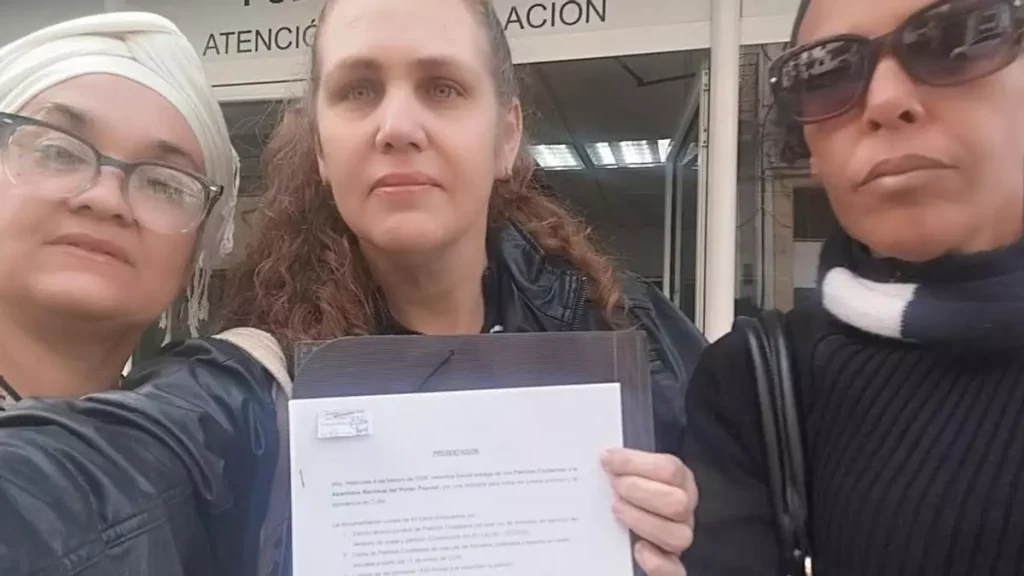

The documents were delivered this Wednesday by Yenisey Mercedes Taboada Ortiz, Jenny Pantoja, and Miryorly García Prieto. / Facebook

14ymedio bigger14ymedio, Havana, February 4, 2026 — A group of Cuban activists formally delivered a petition to the National Assembly in Havana on Wednesday, calling for an amnesty law to be passed, with the aim of freeing the nearly 1,200 political prisoners in the country. The documents, delivered by Yenisey Mercedes Taboada Ortiz—mother of political prisoner Duannis León TaboadaJenny Pantoja, and Miryorly García Prieto, include a legal brief and a citizen petition that has so far gathered 1,535 verified signatures.

To support their claim, the campaign points out that Law 131 of 2019 “grants members of parliament the power to propose bills,” and citizens the right to submit petitions. This initiative is similar to the one promoted by opposition leader Oswaldo Payá, who in 1998 presented his Varela Project based on Article 88 of the then-current Constitution, which allowed Cubans to propose laws if a minimum number of citizen signatures were gathered.

Current law allows Cuban citizens to petition the National Assembly to draft a law, requiring a minimum of 10,000 verified signatures, each accompanied by the signatories’ national identity numbers. In response, the “For Amnesty Now!” campaign has emphasized that “this petition can be signed by any Cuban citizen, whether residing in the country or not, as we all have the ethical and moral right to demand the freedom of our compatriots.” continue reading

59% of the total signatories in this first round declare that they maintain their permanent residence in Cuba

As of February 2nd, 2,514 signatures had been collected, although only 1,535 signatories provided their complete data or were completed and verified.

In a statement, the organization indicates that approximately 59% of the total signatories in this first round declare that they maintain their permanent residence in Cuba, and notes that 6% of those who subscribe are relatives of political prisoners.

The “For Amnesty Now!” campaign announced that the petition remains open to continue collecting signatures, which, “after verification of the completeness and credibility of the data, will be gradually delivered to the Assembly.” To this end, they have linked to a document so that citizens can sign and fulfill the requirement.

“The freedom of our political prisoners, amid the humanitarian crisis the country is experiencing, is an urgent issue that calls upon the responsibility, sense of justice and humanism of every Cuban today, and is also a point that has managed to bring together a very broad spectrum of opinions,” the statement indicates after the delivery of the documentation.

“This is not only a petition protected by law and the exercise of a right, but a symbolic and civic action that allows the expression of the will of the citizens to accompany the pain of hundreds of families and prevent that wound from remaining open, due to the non-acceptance of dissent, in the soul of the Cuban nation,” he adds.

In Cuba, “only one Amnesty Law has been drafted, in 1955, promulgated by the dictator Fulgencio Batista for the attackers of the Moncada Barracks.”

On the website collecting the signatures , the activists point out that the petition stems from “the urgent need for justice and the humanitarian importance of addressing it now, five years after the unjust imprisonment of many Cubans following the peaceful demonstrations of July 11 and 12, 2021 , which resulted in the death of only one protester, who was shot in the back by a police officer and has not received justice.”

“From then until now,” the text elaborates, “the situation of political prisoners in Cuba has continued to worsen. The arrests and convictions of innocent Cubans who have only persisted in exercising their right to free thought, free expression, and other fundamental human rights such as the right to association and demonstration, enshrined in our Constitution, have prevailed.”

The document recalls that in Cuba “only one Amnesty Law has been drafted in 1955, promulgated by the dictator Fulgencio Batista for the attackers of the Moncada barracks, using humanitarian criteria, which was made possible thanks to the popular support of the Cuban citizenry and the efforts led by the relatives of the political prisoners and other civil society organizations.”

In light of this, they point out that “it is at the very least contradictory from a historical, political and human point of view, that in a project founded and still directed by the beneficiaries and continuers of that popular support and that law, today the popular will and the arguments that the relatives of our current prisoners have to offer to the Assembly and the government of this country, with the intention of demanding a gesture of justice and humanism, are ignored.”

____________

COLLABORATE WITH OUR WORK: The 14ymedio team is committed to practicing serious journalism that reflects Cuba’s reality in all its depth. Thank you for joining us on this long journey. We invite you to continue supporting us by becoming a member of 14ymedio now. Together we can continue transforming journalism in Cuba.
Instead of Dialogue, the Cuban Regime Announces “A Very Difficult Reorganization Process for the Population”

There will be no releases of prisoners, nor political or economic reforms. There is no dialogue with the United States, although “messages have been exchanged.”

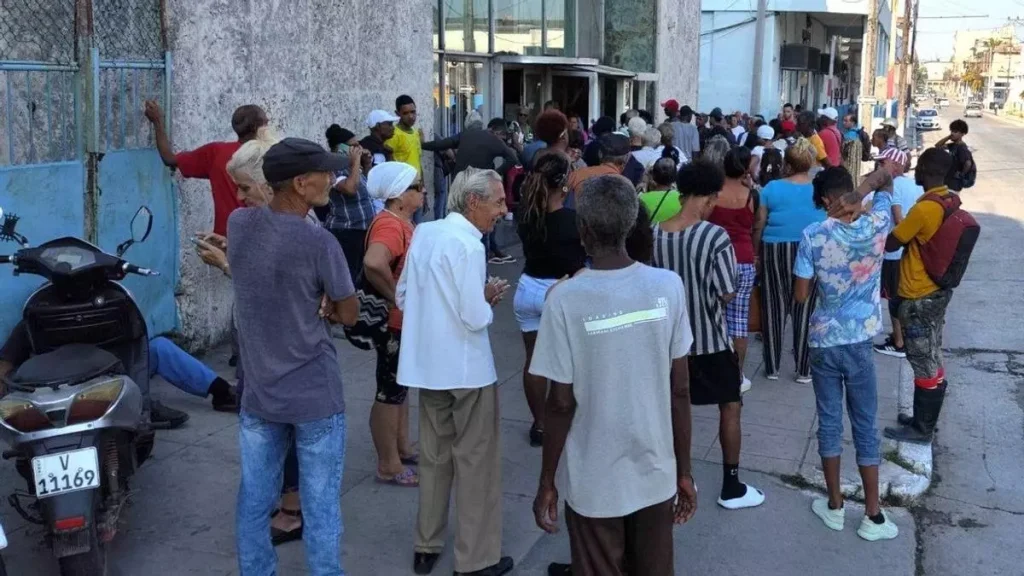
The Government announces more sacrifices for Cubans, who are already living at the limit. / 14ymedio

14ymedio bigger14ymedio, Havana, February 4, 2026 – A new Special Period? Another Ordering Task*? The “reorganization process that we have planned (…) and have been preparing” does not yet have a name. “It is not something simple; it is something difficult for government management and something very difficult for the population as a whole.” This is the message the Cuban regime is conveying to international media through one of its lesser spokespeople, Vice Foreign Minister Carlos Fernández de Cossío.

In an interview with EFE, the number two at the Ministry of Foreign Affairs once again denies statements by U.S. President Donald Trump about the existence of dialogue between the two countries. However, he qualifies this by saying that “messages have been exchanged” since the January 3 capture of Venezuelan President Nicolás Maduro.

In any case, “the Government of the United States knows perfectly well what Cuba’s position is regarding its willingness to hold a dialogue and has not rejected it,” adds the diplomat, who also denies that there could be indirect contacts through intermediaries such as Mexico or the Vatican.

The official insisted that, in addition to ruling out political and economic reforms, the release of prisoners cannot be “part of the bilateral dialogue between two countries”

The official insisted that, in addition to ruling out political and economic reforms, the release of prisoners (there are around 1,000 political prisoners in Cuba) cannot be “part of the bilateral dialogue between two countries,” unlike what is happening in Venezuela. continue reading

In the interview, Fernández de Cossío categorically rejected even the possibility that there might be a “traitor” to the regime, as, according to sources from The Wall Street Journal, the United States is allegedly seeking, in a manner similar to what occurred in Venezuela. “If one is thinking that there is fragmentation within the Cuban Government, fragmentation within the political forces in Cuba, and a willingness by a small group to give up Cuba’s sovereign rights—the prerogative of our country—and to capitulate in the face of the pressure and aggressiveness of the United States, unjustified and immoral, that is a mistaken interpretation,” he asserted.

The statement aligns with what Russia’s ambassador to the UN, Vasily Nebenzia, said this week,“That little act won’t work in Cuba,” but also with what some U.S. officials have stated regarding the matter. Ricardo Zúñiga, a former U.S. official who played a key role in the thaw and who has also worked with the Trump Administration, told the outlet: “These guys are much tougher to crack. No one would be tempted to collaborate with the United States.”

The vice foreign minister, on the contrary, claims that the Island is “preparing for defense,” to “resist a military aggression,” and believes that the Government’s responsibility is to defend the population “as Cubans, not as subjects of the United States.”

“The Government of the United States must know that a military aggression against Cuba is not simple, despite the absolutely asymmetrical superiority that the United States has over Cuba (…). But they would have to ask themselves what the goal is: to bomb and destroy Cuba and leave everything a desolate land, or to try to put soldiers in Cuba and wage a war here against the Cuban people,” he warned.

Fernández de Cossío said that Havana’s objective is for Washington to “understand the danger of an extreme military action on the Island”

Fernández de Cossío said that Havana’s objective is for Washington to “understand the danger of an extreme military action on the Island” and to “not listen to some politicians who have made a career and profited from hostile conduct toward Cuba.”

However, the message of resistance seems aimed more at the population than at Washington, since the Government announces more sacrifices for Cubans, who are already living at the limit, with blackouts of up to 24 consecutive hours, no fuel, food shortages, and catastrophic deterioration of the public health system.

“We have limited options and we also have a need for reorganization in the country that implies it will cost us a great deal of work and will require a lot of creativity.”

The vice foreign minister announced that in the coming days the contingency plan will be communicated to the population: “a reorganization process” that is going to be “very difficult” for the population, he insisted.

*Translator’s note: The Ordering Task was a collection of measures that included eliminating the Cuban Convertible Peso (CUC), leaving the Cuban peso (CUP) as the only national currency, raising prices, raising salaries (but not as much as prices), opening stores that take payment only in hard currency, which must be in the form of specially issued pre-paid debit cards, and a broad range of other measures targeted to different elements of the Cuban economy

Translated by Regina Anavy

____________

COLLABORATE WITH OUR WORK: The 14ymedio team is committed to practicing serious journalism that reflects Cuba’s reality in all its depth. Thank you for joining us on this long journey. We invite you to continue supporting us by becoming a member of 14ymedio now. Together we can continue transforming journalism in Cuba.
Cuban Bishops To Meet With Pope Leo XIV Amid Heightened Tensions Between the Island and the US

The prelates will be in Rome, for the traditional ‘Ad Limina’ visit, between February 16 and 20.

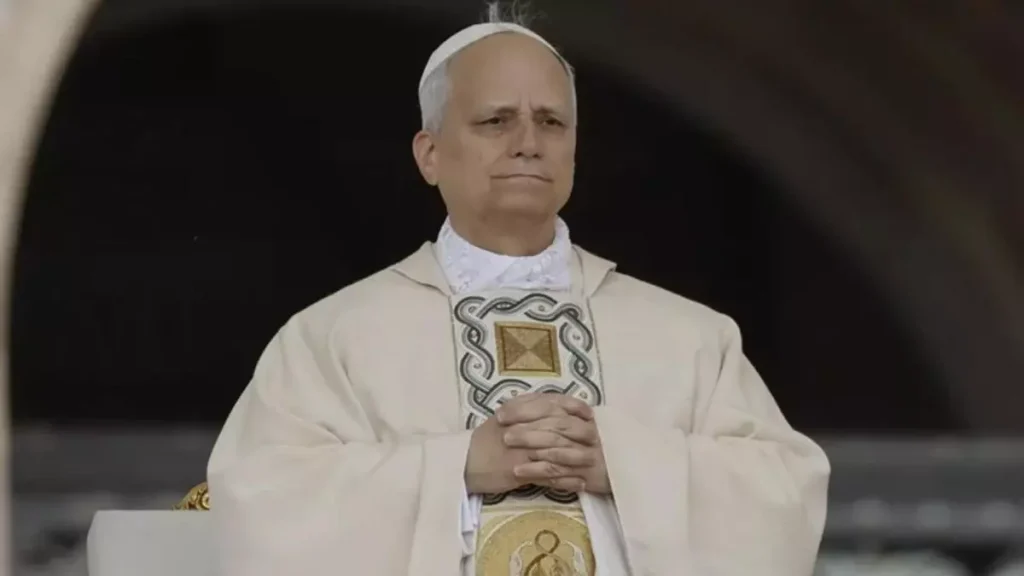
The Pope urged “all those in positions of responsibility to promote a sincere and effective dialogue, to avoid violence and any action that could increase the suffering of the Cuban people.” / EFE

14ymedio bigger14ymedio, Havana, February 3, 2026 — The Bishop of Holguín, Emilio Aranguren, confirmed this Monday on Radio Ángulo that the Catholic bishops of Cuba will meet with Pope Leo XIV for the first time during his upcoming trip to Rome, between February 16 and 20. This is the traditional Ad Limina Apostolorum visit, the meeting that the prelates make every five years at the Vatican, during which they present a report on the situation of their dioceses and make a pilgrimage to the tombs of the apostles Peter and Paul, as established by the Code of Canon Law.

However, the meeting is generating special anticipation at a moment when the Pope has spoken out about the escalating tensions between Cuba and the United States. From St. Peter’s Square, the Pope urged “all those responsible to promote a sincere and effective dialogue, to avoid violence and any action that could increase the suffering of the Cuban people.” He also invoked the Virgen de la Caridad del Cobre [Our Lady of Charity of El Cobre] to protect the citizens of the island.

The day before, the Cuban Episcopal Conference issued a statement warning that in the last six months, “the situation has worsened and anguish and despair have intensified” in the country. In a message on their website, the Cuban bishops indicated that, given the current situation, changes “are increasingly urgent.” continue reading

Both circumstances suggest that the Church may once again play a mediating role between Havana and Washington

Both circumstances suggest that the Church may once again play a mediating role between Havana and Washington, as has recently occurred with the distribution of aid for Hurricane Melissa or the release of political prisoners in 2025.

The last Ad Limina visit by Cuban bishops took place in 2017, during the pontificate of Francis. At that time, Cuba was experiencing a diplomatic rapprochement with the United States, which did not lead to significant structural changes.

Cuban bishops, for their part, tend to stay within established parameters when criticizing the government, but the same cannot be said of many Catholic priests, who have not only spoken out but have also suffered the consequences. Last December, Mexican priest José Ramírez, of the Congregation of the Mission, left the island after ringing the bells of Our Lady of the Miraculous Medal parish during a protest against power outages. Ramírez coordinated social programs in his parish, including visits to the elderly, home care for the sick, and a free school for children with Down syndrome.

Last Sunday, Mike Hammer, head of the U.S. mission in Cuba, met in Trinidad, Sancti Spíritus, with Father José Conrado Rodríguez, one of the most vocal critics of the Catholic Church in the country. Upon leaving the meeting, the diplomat encountered a group of people, likely members of the Communist Party, who shouted “all kinds of obscenities” at him, according to his own account. Just before that visit, he had suffered another act of repudiation in Camagüey.

____________

COLLABORATE WITH OUR WORK: The 14ymedio team is committed to practicing serious journalism that reflects Cuba’s reality in all its depth. Thank you for joining us on this long journey. We invite you to continue supporting us by becoming a member of 14ymedio now. Together we can continue transforming journalism in Cuba.
With 0º Celsius, Cuba Experiences Its Lowest Temperature Ever Recorded on Tuesday

Without proper clothing to go outside and with freezing houses, Cubans are having a very hard time, especially those with joint problems from chikungunya.

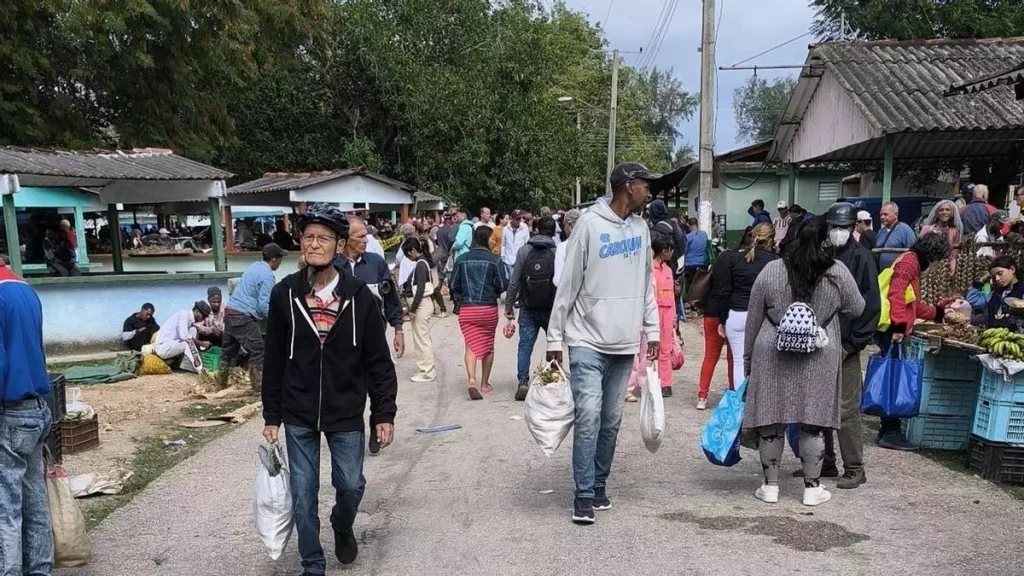
People bundled up in warm clothing at the Delio Luna Echemendía market in Sancti Spíritus, on Sunday. / 14ymedio

14ymedio bigger14ymedio, Olea Gallardo, Havana, February 3, 2026 — If it doesn’t rain iguanas in Cuba , as it does in Florida, making the old winter saying a reality, it is because there aren’t that many, because the cold these days is similar to that of the U.S. peninsula and reaching historic lows. This Tuesday, specifically, the lowest temperature ever recorded on the island was 0° Celsius (32° F), according to data from the Institute of Meteorology (Insmet). It occurred in Indio Hatuey, Matanzas, at seven in the morning.

As many as 32 weather stations reported temperatures of 10°C or lower, according to the report issued by the state agency at 10:00 a.m., which noted that the early morning was “very cold throughout the country and even noticeably cold in inland areas.” The thermometer registered an all-time record low temperature in Aguada de Pasajeros (Cienfuegos), at 3°C, and equaled the February record in the city of Pinar del Río, at 6.9°C.

The report indicates that it had never been so cold in February in several places, such as 6º in the city of Sancti Spíritus, 7.3º in Veguitas (Granma), 7.4º in Florida (Camagüey) or 8º in Palenque de Yateras (Guantánamo).

Over the past two days, hardly anyone has ventured out on the streets across the entire island, and those who do are participating in a unique “poor man’s carnival,” dressed in whatever clothing they can find to ward off the cold. Ignoring custom and the usual color combinations, their attire ranges from European football team sweaters to American university coats, French berets, and Russian hats with earflaps. continue reading

“It’s not the monkey whistling [esta chiflando el mono*], it’s the orangutan,” says a Havana resident with a touch of irony, having left his house in search of milk and chocolate to at least “warm himself up.” The chocolate, he says, “flew off the shelves at the small businesses,” despite being incredibly expensive: “more than a thousand pesos for a small package.” Powdered milk is no less than 2,000 CUP per kilogram. “People are scrambling to find something, but there are people who don’t even have enough to make soup or broth.”

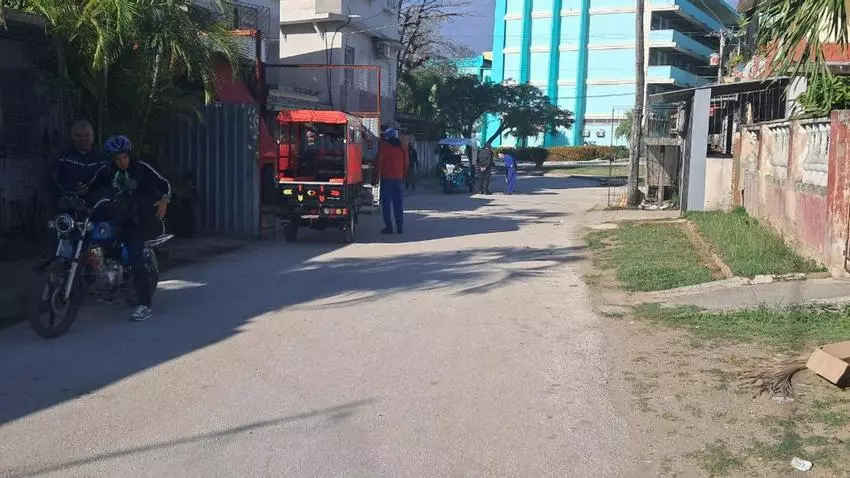
From Holguín, a young man who works as a private driver with his electric tricycle says that yesterday he was only able to pick up one passenger. “The air cuts you, it feels like a knife, my eyes burn, my nose itches, I have runny noses, my hands go stiff,” he explains. During his commute, he saw doors and windows closed like never before in Cuba, where the weather usually keeps residents out in the street. “Last week, everyone was cooking with firewood outside, and now it’s like nobody’s home.”

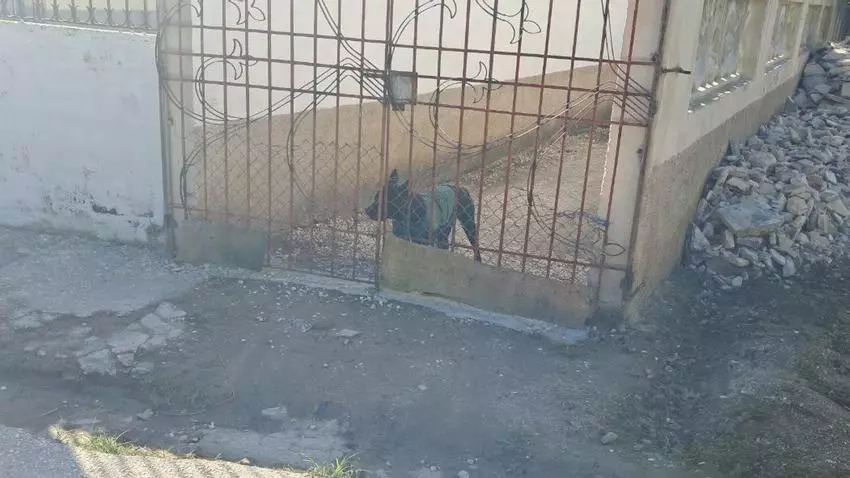
“Even the animals are trembling,” says Sandy from Holguín, who has her six dogs wearing “little sweaters” and yet they still hide under the blankets.

“Even the animals are trembling,” says Sandy from Holguín, who has her six dogs wearing sweaters, and yet they still hide under the blankets. / 14ymedio

“Even the animals are trembling,” says Sandy, from Holguín, who has her six dogs wearing sweaters, and yet they still hide under the blankets. “I feel sorry for the stray dogs. I even made a little bed for one of them, the one I usually feed, out of old rags, because he seemed so weak. We also hear the kittens crying.”

In Sancti Spíritus, the situation is very similar. “Around five in the afternoon, everyone is gone from the streets, holed up in their homes,” says Ernesto, who asserts that the worst part is the wind, which “is really hitting hard” and makes you feel a cold “that chills you to the bone.”  At 40 years old, and having never lived anywhere else, he doesn’t remember ever having felt anything like this before.

The houses, built for a year-round tropical climate and designed for airflow to keep them cool, are like iceboxes these days. “The cold is coming in from everywhere, a horrible cold that you can’t escape,” Ernesto laments.

“Last week, everyone was cooking with firewood outside, and now it’s like nobody’s around.” / 14ymedio

Having suffered from chikungunya a few months ago, Ernesto finds the pain intensifying with the current temperatures the worst part. A strong man in his prime, he reflects: “Older people, so vulnerable, living alone, with no one to offer them any help, must be going through hell, because they don’t have adequate shelter, proper clothing for this cold, or even enough food.”

Thousands of Cubans have been left with lasting effects from the arbovirus, especially joint problems, and these days they are suffering even more, if that were possible. “I’m locked in my room, covered with every rag I can find, in a lot of pain,” confesses María, a retiree from Luyanó (Havana), who also recently contracted the disease. This Tuesday, she refused to buy medicine from a street vendor who passed through the neighborhood. “I didn’t even want to ask the prices, because I know I can’t afford them.” And she sighs: “Everything we have to live through in Cuba is a disaster.”

To make matters worse, the energy crisis is adding to the problems. Without electricity for most of the day, the cold showers that Cubans are normally forced to take are unbearable, so many haven’t had one for days. “The little oil and coal that can be found is reserved for cooking,” explains Luis, another Havana resident, who has also seen his muscle pain worsen as a result of the arbovirus. “The pain and the cold keep me from sleeping.”

*The monkey whistling [esta chiflando el mono] – An expression meaning it’s very cold

____________

COLLABORATE WITH OUR WORK: The 14ymedio team is committed to practicing serious journalism that reflects Cuba’s reality in all its depth. Thank you for joining us on this long journey. We invite you to continue supporting us by becoming a member of 14ymedio now. Together we can continue transforming journalism in Cuba.
Cubans Are Runners-up in the Asian Handball Championship with Qatar

Frankis Carol Marzo was the team’s second-best scorer, while Rafael Capote added eight goals and two assists

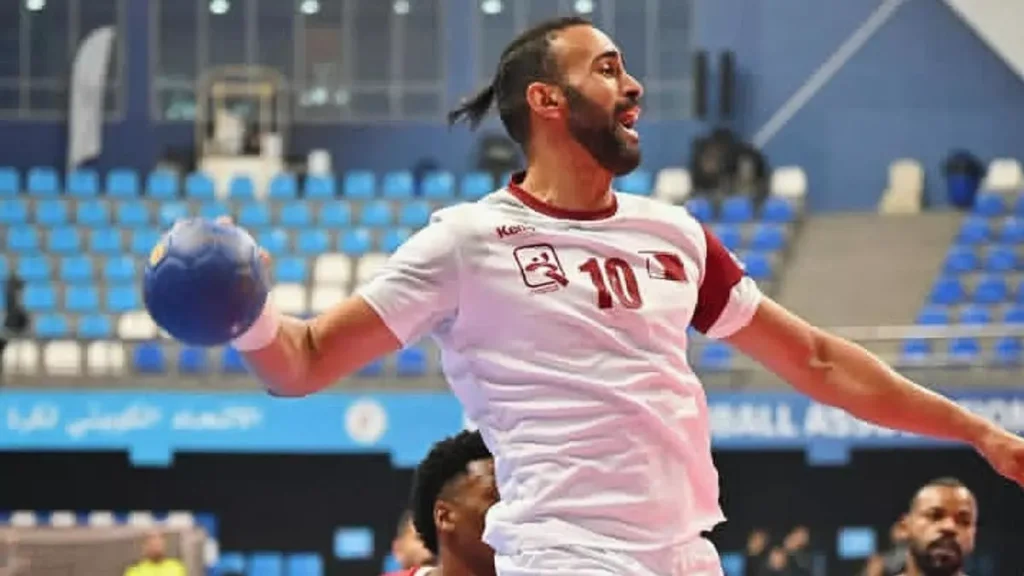
Frankis Carol Marzo records four titles in five participations at Asian Championships with Qatar / Instagram

14ymedio bigger14ymedio, Matanzas, Andy Lans, February 03, 2026 – Qatar’s handball team, with the Cubans Frankis Carol Marzo and Rafael Capote, finished second in the Asian Championship after losing their eighth consecutive final of the tournament with a score of 29-26 to Bahrain.

In this edition of the competition, held in the United Arab Emirates during the second half of January, Qatar beat Oman (27-15) and South Korea (32-31). Then, the Main Round gave them a pair of wins against Saudi Arabia (32-25) and the host country (25-20), but with a defeat against Bahrain itself (31-28). These results allowed them to enter the semi-final, where they won 27-26 against Kuwait.

Carol and Capote, both 38-year-old wing players, were able to bring Qatar into this edition of the competition. Carol Marzo was the team’s second-best scorer, with 29 goals, for a 57% ERA. He also recorded eight assists and three steals. His most outstanding match was in the Main Round against Bahrain, with 11 goals. In the case of Capote, with participation in five out of seven games played, he scored eight goals and two assists. However, it is worth noting that these Caribbean continue reading

exponents have already come a long way in this national team.

Frankis Carol Marzo signed for Catarí handball in 2021, after a decade at Sporting de Portugal. He currently plays in the Kuwait league. With the selection of Qatar he records four titles in five participations in Asian Championships, in addition to presence in the Worlds of 2019, 2021 and 2025.

Rafael Capote escaped from the Cuban national team during the Pan American Games Rio de Janeiro 2007

For his part, Rafael Capote escaped from the Cuban national team during the 2007 Pan American Games in Rio de Janeiro. He played professionally in Brazil, Italy and Spain until he moved to the Catarí league in 2013. There he was nationalized in 2014 to become a key part of that selection. With the Arab team he has participated in seven Asian Championships, between 2014 and 2026, of which he was champion six times; he attended six Worlds, with a final reached in 2015, and in some Olympic Games in 2016, again in Rio.

Years ago, the deliberate nationalizations of players by Qatar sowed controversy in public opinion of handball. The nation hosted the organization of the 2015 World Cup, and based on the naturalized players, set out to put together a representation full of stars. European elite ballers were usually lured into the Qatari league with exorbitant sums of money, and if they agreed to represent Qatar, they received extra bonuses for becoming nationalized. Over time, the International Federation tightened its eligibility rules for selections to regulate this phenomenon. Thanks to this, and the long-term investment in its internal infrastructure, today there are more Qataris by birth in its national pool.

For many, a selection of Qatar full of nationalized handball players was a serious alteration of the nature of competitions between countries, in which each seeks to bring the best of themselves. However, it is not uncommon for an athlete to come to feel genuinely grateful to and identify with a nation that can value him more than the land where he was born.

Translated by Regina Anavy

____________

COLLABORATE WITH OUR WORK: The 14ymedio team is committed to practicing serious journalism that reflects Cuba’s reality in all its depth. Thank you for joining us on this long journey. We invite you to continue supporting us by becoming a member of 14ymedio now. Together we can continue transforming journalism in Cuba.
The Castro Brothers and ‘Che’ Guevara Keep an Eye on the Cuban Vice Foreign Minister During His Interview With AP

Fernández de Cossío: Havana is open to dialogue with the US, but “the Constitution, the economy, and the country’s socialist system of government are off the table.”

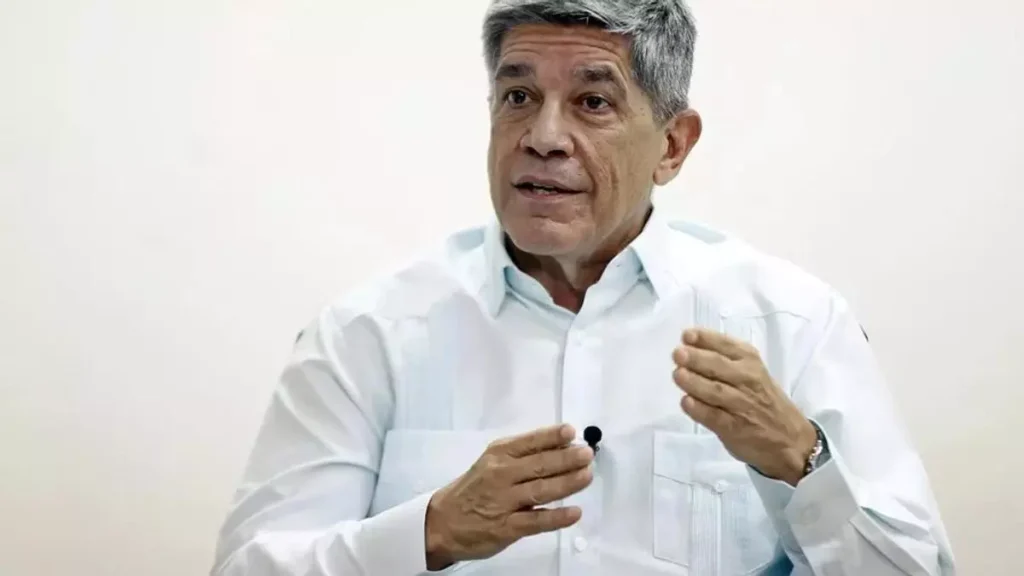
Archive photograph of the Deputy Minister of Foreign Affairs of Cuba, Carlos Fernández de Cossío, during an interview with EFE, in Havana. / EFE/Ernesto Mastrascusa

14ymedio bigger14ymedio, Madrid, February 3, 2026 – Vice Chancellor Carlos Fernández de Cossío positioned himself strategically in front of the photographs of Raúl Castro, Fidel Castro and Ernesto Che Guevara to launch a message to the U.S. during an interview given this Monday to the Associated Press (AP). The idea was simple: to convince people that dialogue is possible, provided it does not mean giving up the basics.

“If you ask me if we have a dialogue table today, we don’t have one,” the diplomat told AP. However, he said that there is a willingness “to maintain this informal dialogue with the U.S.” to discuss “differences.” He pointed out that “certain things are off the table for Cuba, including the constitution, economy and system of government of the country, which is socialist.”

The Vice-Chancellor stressed once again that contacts have been maintained over the years to address border issues, both with regard to emigration and drug trafficking. However, he contradicted the U.S. president, who in the last two days has insisted that talks are already underway with members of the Cuban government.

“Cuba is a peaceful country,” said Fernández de Cossío. “We only want to relate to the United States as we relate to the rest of the world. The U.S. is the exception today,” he reproached. continue reading

“We only wish to relate to America as we relate to the rest of the world. America is the exception today”

The agency specifically asked the diplomat how long the authorities estimate that Cuba could “endure the current conditions,” but Fernández de Cossío avoided answering and opened the door to speculation by saying he could not reveal “any way” to ensure the supply of oil.

“Cuba, of course, is preparing with creativity, stoicism and austerity,” he said. He then left an enigmatic phrase that can
also be interpreted as a bluff: “What can Cuba do? Watch us.”

Fernández de Cossío’s statements came on Monday, just one day after Trump said his pressure will force Cuba to negotiate. “I think they’ll probably come to us and want to make a deal. So Cuba will be free again,” said the president, who rejects the idea of a humanitarian crisis and is convinced that there will be an agreement.

Trump had already stated on two occasions in January that he was in talks with the Cuban regime, something that was denied by the authorities of the Island. Whether true or not, last Thursday he signed an executive order imposing tariffs on countries that supply oil to Cuba.

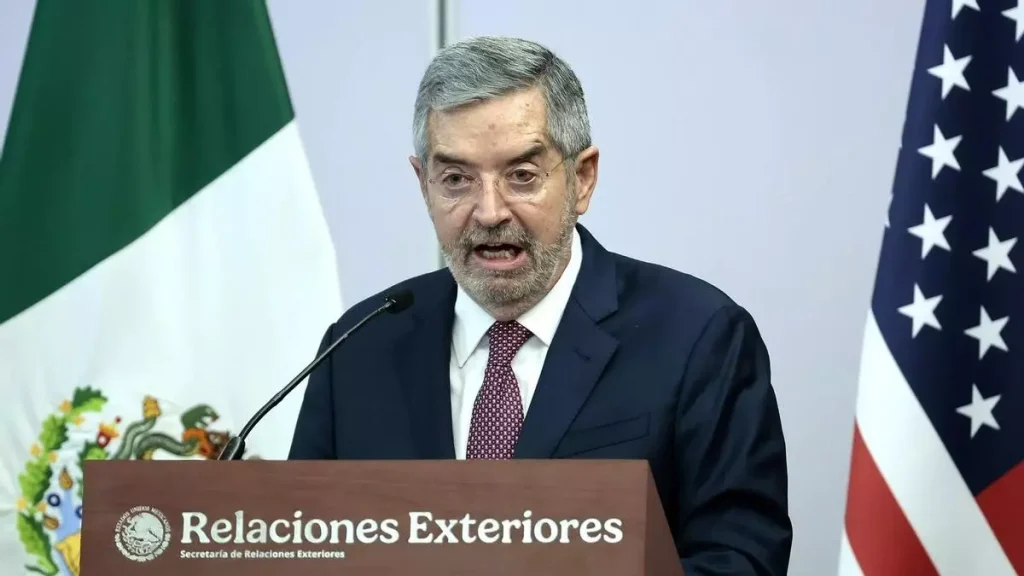
Among them is Mexico, whose president, Claudia Sheinbaum, has stated that the delivery of crude to Cuba is an issue she has never discussed with the United States. “We never talked to President Trump about the issue of oil with Cuba,” she said, although she did admit that her chancellor, Juan Ramón de la Fuente, discussed it with U.S. Secretary of State Marco Rubio.

The president announced on Sunday the imminent delivery of humanitarian aid, consisting of food and other basic commodities, to Cuba, while she is evaluating how to resume fuel deliveries. “The Secretary of Navy will deliver food and other products, in which we resolve diplomatically everything that has to do with the shipment of oil for humanitarian reasons,” she revealed.

Sheinbaum added on Monday that she is coordinating with the Cuban Embassy to define what is most needed. “We will report in full detail in due course,” she added.

Sheinbaum added on Monday that she is coordinating with the Cuban Embassy to define what is most needed. “We will report in full detail in due course,” she added

Trump closed that door, at least temporarily, on Monday. Although he did not refer to the statements of Fernández de Cossío to AP nor to the statement by the Ministry of Foreign Affairs in which Cuba reaffirmed “its commitment to cooperate with the U.S. and other nations to strengthen regional and international security.” he insisted on Monday that talks are already underway.

“Many (Cubans) would at least like to visit their relatives, and I think we are close to achieving it. The fact is that we are negotiating with the Cuban leaders right now,” he told the media in the Oval Office.

The president stressed that Cuba is “a failed nation, they do not receive money from Venezuela or anywhere else. It is a bankrupt nation.” He added that “Mexico will stop sending them oil.”

In addition, he made statements that have put some migrants waiting for their regularization on the spot and who fear that a possible dialogue with Havana will lead to their expulsion. “I would like to help the Cubans here. As you know, we have many people who came from Cuba, who were expelled from Cuba, who fled Cuba. They arrived on rafts. They crossed shark-infested waters. I don’t know how they did it. And that was many years ago. Many would want to return,” he said.

Translated by Regina Anavy

____________

COLLABORATE WITH OUR WORK: The 14ymedio team is committed to practicing serious journalism that reflects Cuba’s reality in all its depth. Thank you for joining us on this long journey. We invite you to continue supporting us by becoming a member of 14ymedio now. Together we can continue transforming journalism in Cuba.
Cuban State Security Detains Activists and Journalists Because of Mike Hammer’s Visits

Sol García Basulto and Mario Junquera are being questioned in Camagüey, and Taimir García Meriño and Ezequiel Morales Carmenate are being harassed in Las Tunas.

U.S. Embassy Chief of Mission in Cuba, Mike Hammer, with Father José Conrado Rodríguez in Trinidad, Sancti Spíritus, this Sunday. / Facebook/U.S. Embassy in Cuba

14ymedio bigger14ymedio, Madrid, 2 February 2026 — Independent journalist Sol García Basulto and playwright Mario Junquera were detained this Sunday by State Security in Camagüey, following a visit to the city by the US mission chief in Cuba, Mike Hammer, who was himself subjected to a protest on Saturday. Several other activists reported harassment by the Political Police in various locations.

A former contributor to 14ymedio and current member of the La Hora de Cuba [Cuba’s Hour] newsroom, García Basulto explained on her social media that she was arrested while walking down the street around noon by a traffic officer who demanded her documents. He then called a patrol car, which took her to a police station. There, two plainclothes State Security agents, Alberto and Kevin, subjected her to a three-hour interrogation, filled with “questions, silences, warnings, and extreme cold.”

According to García Basulto, an instructor from the Ministry of the Interior finally gave the young woman a “warning notice,” the contents of which she says she doesn’t remember. The journalist goes on to explain that the instructor told her she “had violated a perimeter that was under guard”— at that moment she was leaving the home of Henry Constantín, director of La Hora de Cuba —and that she was making “counterrevolutionary posts on social media.” continue reading

“In these moments, the actors of the dictatorship are unpredictable and dangerous.”

In her post , García Basulto believes that “they are really nervous” and “they don’t know what they’re doing.” She continues, “They’ve demonstrated this with their actions against the diplomat in question.” This was the first arrest “in more than five years” that the journalist has suffered , and she concludes: “In these moments, the actors of the dictatorship are unpredictable and dangerous. But as I always say, we are not afraid of them.”

The Cuban newspaper La Hora de Cuba reported details of Mario Junquer’s arrest: it also occurred around noon yesterday, as he was leaving the home of the newspaper’s director, Henry Constantín. The playwright was detained for two hours, though he has not provided any further details. In a Facebook reel, he posted a picture of himself with the words: “I’m free now. Well, not quite free yet. I’m home. Thanks to everyone. History will swallow them up.”

Constantin’s home, the newspaper he directs reported, has been surrounded since early Friday morning by patrols and motorcyclists of the National Revolutionary Police and plainclothes agents of State Security, “apparently to prevent any encounter between the journalist and his friends from Cuban civil society, and the head of the United States diplomatic mission in Cuba, Mike Hammer.”

Other activists from Camagüey were also harassed, such as actress Iris Mariño, deputy director of La Hora de Cuba. The media outlet also reports the arrest of a young man, whose name it does not give, “who apparently argued with Yoel Santiesteban, a government official who participated in the two acts of repudiation against Mike Hammer in front of the Santa María Hotel.”

The act of repudiation suffered by the diplomat, right in front of the place where he was staying, came to light through a video posted on the Facebook profile of a government supporter who only publishes official acts and commemorations on his wall.

“These threats came quickly, and I have been under surveillance and besieged since early this morning.”

Those involved were men and women who shouted “down with the blockade,” “puppets of Donald Trump,” “murderer,” “genocidal” and “bootlickers,” identical slogans to those used by the Cuban propaganda apparatus in acts of repudiation against opponents and dissidents.

Hammer, for his part, reported the incident on the US Embassy’s social media accounts with a smile, as usual, explaining that he had “insults shouted at him,” but stating that they were people who “belong to a certain party” and who “do not represent the Cuban people.”

At the time of that recording, Hammer was in the city of Trinidad, Sancti Spíritus, which is also part of his tour of the island these days, to “meet more ordinary Cubans.” In the central city, he met with Father José Conrado Rodríguez Alegre, one of the critical voices against the regime within the Church.

From Las Tunas, former political prisoner Taimir García Meriño also reported on Sunday the harassment by the political police, who had previously threatened her with “serious problems” if she received a visit from Hammer. “These threats came quickly, and I have been under surveillance and besieged since early this morning,” the opposition member denounced .

Similarly, State Security interrogated former political prisoner Ezequiel Morales Carmenate for several minutes in the city of Puerto Padre, Las Tunas province. Morales Carmenate had extended an invitation to the head of the U.S. mission to his home. In a video posted on social media, the activist reiterated his “open door” to Hammer, announcing to the regime: “I welcome whomever I want into my home.”

The U.S. Bureau of Western Hemisphere Affairs warned yesterday in X that “the illegitimate Cuban regime must immediately cease its repressive acts of sending individuals to interfere with the diplomatic work of Chargé d’Affaires Hammer and the Embassy staff. Our diplomats will continue to meet with the Cuban people, despite the regime’s failed intimidation tactics.”

____________

COLLABORATE WITH OUR WORK: The 14ymedio team is committed to practicing serious journalism that reflects Cuba’s reality in all its depth. Thank you for joining us on this long journey. We invite you to continue supporting us by becoming a member of 14ymedio now. Together we can continue transforming journalism in Cuba.
Trump Insists He Is Negotiating With the Cuban Government and Is “Close” to an Agreement

“Many (Cubans) would like to at least visit their relatives, and I think we are close to achieving that,” the president told the media in the Oval Office.

File photo of US President Donald Trump. / EFE/Graig Hudson/Pool. / EFE/Graig Hudson/Pool

14ymedio bigger14ymedio/EFE. Washington/Havana, 2 February 2026 — President Donald Trump insisted on Monday that Washington is in negotiations with the government in Havana to end the oil embargo on the island and that he believes an agreement is “close” that would allow Cubans in the US to visit their country again.

“Many (Cubans) would like to at least visit their relatives, and I think we are close to achieving that. The fact is that we are negotiating with Cuban leaders right now,” Trump told the media today in the Oval Office.

The president once again highlighted the harsh economic situation the country is going through due to the embargo he himself activated last week by signing an executive order that will punish any country that sends crude oil to the island with tariffs: “It is a failed nation, they do not receive money from Venezuela or anywhere else. It is a bankrupt nation.” continue reading

“I would like to help the Cubans who are here. As you know, we have many people who came from Cuba, who were expelled from Cuba, who fled Cuba.”

Trump also reiterated that “Mexico will stop sending them oil,” at a time when Claudia Sheinbaum’s government has said it will continue to send material aid to Cuba on humanitarian grounds while seeking “all diplomatic channels” to resume fuel shipments.

“I would like to help the Cubans who are here. As you know, we have many people who came from Cuba, who were expelled from Cuba, who fled Cuba. They arrived on rafts. They crossed shark-infested waters. I don’t know how they did it. And that was many years ago. Many would like to return,” added the Republican.

Trump already said over the weekend that Cuban authorities would be forced to seek an agreement with Washington due to the lack of oil.

Any agreement that Trump “closes” “will be good for the American people.”

For his part, US Energy Secretary Chris Wright confirmed that talks are taking place between Havana and Washington. Wright told Fox News on Monday that any agreement that Trump “closes” “will be good for the American people.”
“Trump understands that energy dominance leads to peace abroad, leads to prosperity at home, and energy dominance enables energy diplomacy,” Wright said, adding that the current US administration has “the ability to take a country like Cuba that was colluding with Venezuela and its corrupt government by providing security forces” to that South American country.

Cuba’s serious economic, energy and social crisis has been exacerbated since the island stopped receiving oil from Venezuela following the capture of Nicolás Maduro by the United States, an attack that the government in Havana strongly condemned.

Translated by GH

____________

COLLABORATE WITH OUR WORK: The 14ymedio team is committed to practicing serious journalism that reflects Cuba’s reality in all its depth. Thank you for joining us on this long journey. We invite you to continue supporting us by becoming a member of 14ymedio now. Together we can continue transforming journalism in Cuba.

The Cuban Foreign Minister Arrives in Vietnam With an Unknown Agenda

Everything seems to indicate that Bruno Rodríguez is seeking more economic aid from Hanoi to mitigate the effects of the conflict with Washington.

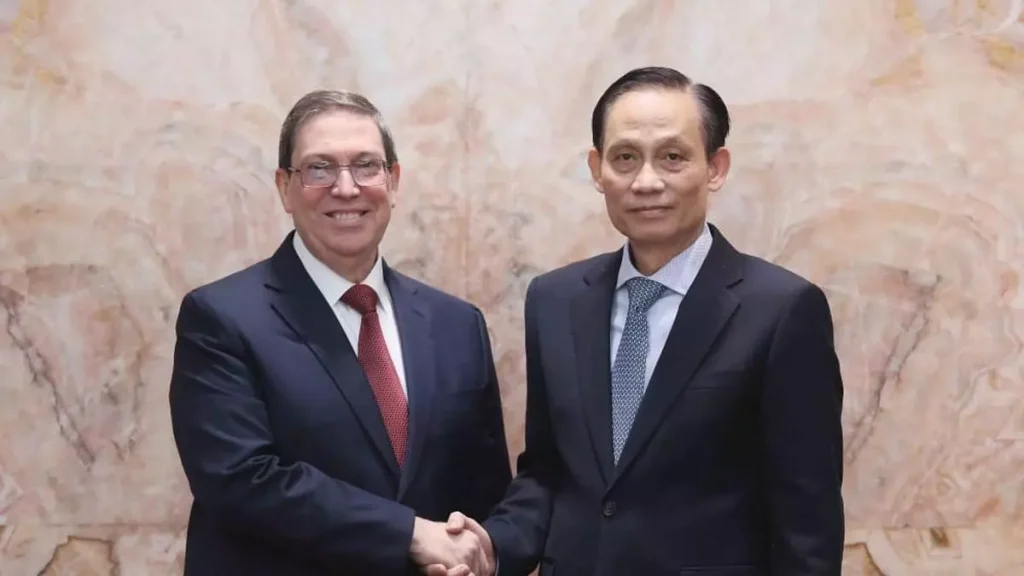
Cuban Foreign Minister Bruno Rodríguez with his Vietnamese counterpart Le Hoai Trung on Monday. / Bruno Rodríguez

14ymedio biggerThe Ilyushin needs more than 400,000 litres of kerosene for the round trip between Havana and Vietnam, where Cuban Foreign Minister Bruno Rodríguez arrived on Monday. Such an investment at a time when the country is experiencing an unprecedented energy crisis indicates that Havana has high expectations for this stopover – and perhaps another in neighbouring China – in a nation that has been a friend since the war against the US.

Although the trip was not announced in advance and no information was provided about the Cuban foreign minister’s agenda, there is no doubt that the current conflict with Washington will be the main topic of discussion. And its corollary can only be to seek more help from Vietnam, which has recently become one of Havana’s main benefactors.

Upon arriving in Hanoi, the foreign minister met with his counterpart, Le Hoai Trung, as well as with the general secretary of the Communist Party, To Lam, and the prime minister, Pham Minh Chinh. The visit comes just days after the congress in which the nation’s top leader was re-elected for the next five years.

The visit comes just days after the Congress in which the nation’s top leader was re-elected for the next five years.

The landing on Sunday in Hanoi of the Cubana de Aviación Ilyushin IL-96-300, which the government has been using recently to transport personnel to and from Venezuela, foreshadowed the trip before the foreign minister himself revealed it on social media. The aircraft made stopovers in Gambia and Kenya to refuel, as the Russian four-engine 300-passenger aircraft cannot cover the 15,000 kilometres between Havana and the Vietnamese capital in one go. continue reading

“I am deeply grateful to my dear comrade To Lam, General Secretary of the Communist Party of Vietnam, for receiving me as the special envoy of the Party and Government of Cuba, evidence of the historic brotherhood between both parties, governments and peoples. We recognised his involvement and strategic leadership in the results shown by the current state of bilateral cooperation and economic and trade relations,” the foreign minister wrote on social media.

It is noteworthy that Rodríguez first introduced himself as a “special envoy of the Party” and, secondly, as a representative of the Cuban Government. However, he did not say a word about the purpose of his mission in Vietnam.

He was also effusive in his thanks to his counterpart, especially for the involvement of the Vietnamese Foreign Ministry “in achieving the consensus reached between the leaders of both countries. We exchanged views on the international situation and its impact on Latin America and the Caribbean,” he added.

The message was echoed by his counterpart, as the Foreign Ministry spokeswoman said that Vietnam is “deeply concerned about the new US measure to impose additional tariffs on products from countries that supply oil to Cuba.” Pham Thu Hang considered that it is a decision that “will seriously affect the economic and social activities and the lives of the Cuban people.”

He also reiterated his condemnation of the embargo, which has been systematically ratified in the annual vote against this US policy promoted by the island in the United Nations General Assembly, and urged “measures to be taken to promote dialogue and improve relations”. The endorsement comes at a good time for the Cuban foreign minister, especially in the most specific part, referring to his meeting with the head of government, Pham Minh Chinh, with whom he discussed “progress in strategic projects in sectors such as agriculture, energy and medicine production, which are part of the consensus reached at the highest level between the two countries”.

Last Tuesday, To Lam spoke with Díaz-Canel, one of the first leaders to congratulate him after his re-election. In his call, the president “highly praised the achievements of the PCV,” whose policies “provided valuable experience for the economic reforms currently being implemented in Cuba.”

In his call, the president “highly praised the achievements of the PCV,” whose policies “provided valuable experience for the economic reforms currently being implemented in Cuba.”

Last September, the Vietnamese government made a donation of $15 million to the island, as announced after the Cuban president’s visit to the country as part of his Asian tour that month. During that tour, the president visited China and Laos, countries with which he also signed several agreements and to which he also promised special treatment for their companies, although those in Vietnam are undoubtedly the most advanced. Agri VMA was the first foreign company to obtain a land lease, specifically 1,000 hectares in Palacios (Pinar del Río), with the intention of reaching 5,000 in three years, where they are planting rice that is much more fruitful than that of their Cuban colleagues, as its yield exceeds 7.2 tonnes per hectare, compared to 2 or 2.5 tonnes for producers on the island.

In recent years, Vietnam has gone from being a country almost entirely dependent on Cuba to becoming its benefactor. In the 1960s, the island sent “annual aid of 10,000 tonnes of sugar, doctors and some advisers; and in the midst of the war, two poultry genetic centres and a cattle genetic centre were built,” as former ambassador Fredesmán Turró recalled in an interview with Cubadebate this September. However, the situation has completely reversed, and now it is Hanoi that sends rice donations to help sustain the island’s population.

Its ability to adapt to an economy open to the private sector and maintain good relations with the US, the European Union and China has been very useful for the rapid growth of its industries, in contrast to Cuban statism and immobility.

Translated by GH

____________

COLLABORATE WITH OUR WORK: The 14ymedio team is committed to practicing serious journalism that reflects Cuba’s reality in all its depth. Thank you for joining us on this long journey. We invite you to continue supporting us by becoming a member of 14ymedio now. Together we can continue transforming journalism in Cuba.
Cuba Softens Its Tone Toward the United States and Reaffirms ‘Its Commitment to Cooperate’

Donald Trump insisted that he is “talking with the highest levels” of the regime and declared: “I think we’re going to reach an agreement with Cuba.”

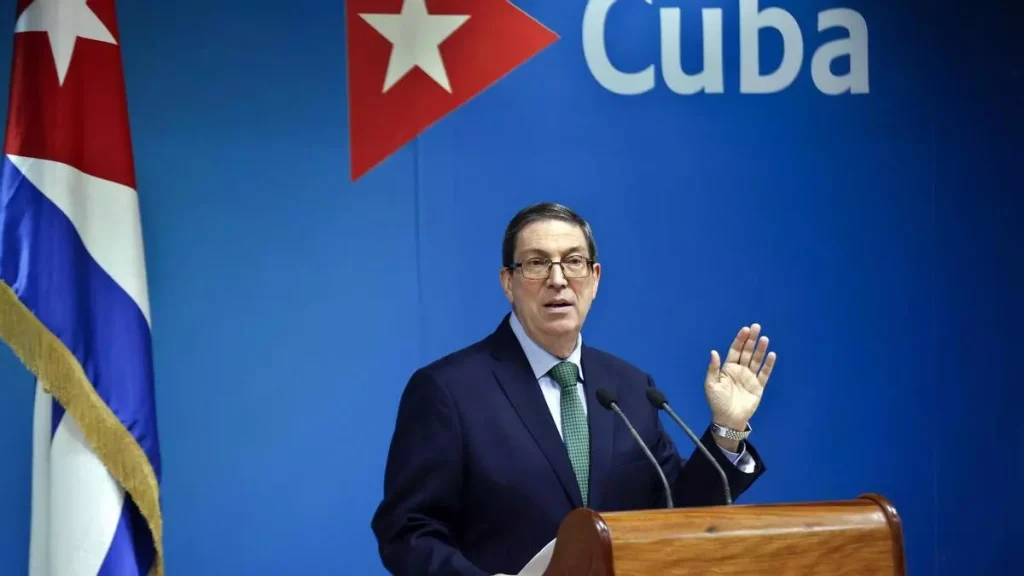
Cuba’s foreign minister, Bruno Rodríguez, in Havana (Cuba). / EFE/Ernesto Mastrascusa

14ymedio bigger14ymedio, Havana, February 2, 2026 — In a tone very different from that displayed by Miguel Díaz-Canel last Friday, and amid pressure from the Trump administration, Cuba’s Ministry of Foreign Affairs issued a statement on Sunday in which it “reaffirms its commitment to cooperate with the United States and other nations to strengthen regional and international security.”

Yesterday, reiterating what he had said the day before, Trump insisted that his government is “talking with the highest levels” of the regime and expressed optimism: “I think we’re going to reach an agreement with Cuba.”

The statement from the ministry headed by Bruno Rodríguez includes Cuba’s “unequivocal condemnation” of “terrorism in all its forms and manifestations,” an idea reiterated in the following paragraphs: “Cuba categorically declares that it does not harbor, support, finance, or allow terrorist or extremist organizations. Our country maintains a zero-tolerance policy toward the financing of terrorism and money laundering, and is committed to the prevention, detection, and confrontation of illicit financial activities, in line with international standards.”

“Any past interaction that involved individuals later designated as terrorists occurred solely in limited humanitarian contexts”

The Foreign Ministry also refers to the origin of Cuba’s inclusion on the U.S. list of state sponsors of terrorism in 2021, during Donald Trump’s first continue reading

administration—from which it was removed by the next president, Joe Biden—and “relisted” at the beginning of Trump’s second term. This refers to relations with the leadership of the National Liberation Army (ELN) during talks with the Colombian government in which Havana served as mediator, though without mentioning it explicitly. “Any past interaction that involved individuals later designated as terrorists occurred solely in limited humanitarian contexts, linked to internationally recognized peace processes, at the request of their respective governments, and in a fully transparent manner,” the statement says.

Guerrilla leaders have moved between Venezuela and Cuba, the country that hosted the talks between 2018 and 2019, the year they were frozen. Colombia then urged the United States to include Cuba on the list of state sponsors of terrorism for refusing to extradite members of the guerrilla group who were on its territory. The talks had stalled after a guerrilla attack on the Police Academy in Bogotá in January 2019, in which 23 people were killed and nearly a hundred injured.

None of this is mentioned in the statement, which maintains a consistently defensive tone: “Cuba does not host foreign military or intelligence bases and rejects the characterization of being a threat to the security of the United States. Nor has it supported any hostile activity against that country, nor will it allow its territory to be used against another nation.”

At the same time, the text highlights a “willingness to maintain respectful and reciprocal dialogue” with its northern neighbor, something Trump said on Saturday was already taking place and reaffirmed on Sunday. Thus, the Foreign Ministry states that Cuba “is willing to reactivate and expand bilateral cooperation with the United States to address shared transnational threats, without ever renouncing the defense of its sovereignty and independence.”

The tone softens even further in the final paragraphs, which underscore a proposal to “renew technical cooperation with the United States in areas that include the fight against terrorism, the prevention of money laundering, the fight against drug trafficking, cybersecurity, human trafficking, and financial crimes,” and assert that both nations “benefit from constructive engagement, cooperation in accordance with the law, and peaceful coexistence.”

According to independent journalist Carlos Cabrera, Cuba and the United States are negotiating in Mexico

Last Friday, the regime’s attitude was very different. In remarks widely disseminated by Cubadebate and later turned into an official statement, Díaz-Canel responded to U.S. pressure by saying: “The president of the Empire is behaving like a Hitler, with a criminal policy of contempt that aims to take over the world.” The official text revived the old Castro-era slogan, stating that “the decision is one: homeland or death.”

According to independent journalist Carlos Cabrera, Cuba and the United States are negotiating in Mexico. Citing a source “close to the government of Claudia Sheinbaum,” he said that the first talks concluded early Saturday morning, with “a preliminary agreement to begin a transition to democracy, pending final approval by the White House.”

According to the same source, General Alejandro Castro Espín, son of Raúl Castro, is participating in the talks and “conveyed to a senior CIA official the willingness of the Castro authorities to begin the democratization of Cuba, in exchange for ‘an amnesty’ for his father and other senior Castro officials.”

Similarly, Cabrera claims that a senior official at the Ministry of Justice revealed that the agency is working on “a process for the release of political prisoners, starting Wednesday, February 4,” which he described as a “gesture of goodwill, unilateral and sovereign” by the regime. The same was stated by a “senior officer” of the Ministry of the Interior, who announced the “imminent release, this week” of political prisoners, though he “refused to go into details.”

In a report published last week, The Wall Street Journal revealed that the Trump administration was seeking a figure within the Cuban regime with whom it could negotiate a democratic transition, similar to what it is doing in Venezuela following the capture of Nicolás Maduro, with Delcy Rodríguez.

Translated by Regina Anavy

____________

COLLABORATE WITH OUR WORK: The 14ymedio team is committed to practicing serious journalism that reflects Cuba’s reality in all its depth. Thank you for joining us on this long journey. We invite you to continue supporting us by becoming a member of 14ymedio now. Together we can continue transforming journalism in Cuba.
The U.S. Chargé d’Affaires in Cuba Is Targeted by an Act of Repudiation in Camagüey

“They shouted some insults,” said Mike Hammer, but “they do not represent the Cuban people”

Hammer (center), together with Cuban church authorities, assessing the progress of the distribution of humanitarian aid sent by the United States. / Facebook

14ymedio bigger14ymedio, Havana, February 1, 2026 – Mike Hammer, the United States chargé d’affaires in Havana, was subjected to an act of repudiation this Saturday outside a private guesthouse in the city of Camagüey, about 500 kilometers from the Cuban capital. The incident became public through a video posted on the Facebook profile of a government sympathizer who publishes only official events and commemorations on his page.

Those involved were men and women shouting “down with the blockade,” “puppets of Donald Trump,” “murderer,” “genocidal,” and “bootlickers.” The slogans are identical to those used by Cuba’s propaganda apparatus in acts of harassment against opponents and dissidents, as well as in marches and rallies convened by the Communist Party.

The street where the incident occurred was dark. For more than a year, the country has been suffering prolonged scheduled blackouts lasting more than 10 hours. Those staging the harassment shouted “they come to see the blackouts,” blaming the government represented by Hammer. The individuals approached the entrance of the guesthouse but did not attempt to cross the threshold of the tourist building.

Last Wednesday, Yoani Sánchez, director of 14ymedio, and Reinaldo Escobar, a columnist for this outlet, were detained and forced to return to their home by a guard stationed at the ground floor of the building where they live in Havana. The visibly nervous agent, who followed Sánchez, was unable to give the address of the place where he had encountered her, and she managed to walk several blocks before reinforcements arrived, including another agent who identified himself with an ID from the DSE (Department of State Security) and two women dressed continue reading

in civilian clothes.

“The illegitimate Cuban regime must immediately cease its repressive acts of sending individuals to interfere with the diplomatic work of the Chargé d’Affaires”

Sánchez and her husband were on their way to a meeting at Hammer’s residence. They had been invited to the start of the celebrations for the 250th anniversary of U.S. independence. At the same time, other political activists and opposition figures such as Boris González, Berta Soler, Ángel Moya, Manuel Cuesta Morúa, Marthadela Tamayo, Camila Acosta, Ángel Santiesteban, and Dagoberto Valdés were forced to remain inside their homes, without any judicial order.

Between Havana and Washington there has been an increase in hostile rhetoric following the removal of Nicolás Maduro and his wife, Cilia Flores, from their residence in Caracas, where they were sleeping surrounded by a guard of Cuban military personnel, 32 of whom were killed in the capture operation. Authorities on the island have spent four consecutive Saturdays calling for military exercises in anticipation of a possible similar action by the United States.

Such hostility, however, contrasts with the tour the head of the U.S. diplomatic mission has been making through central Cuba, where he is generally warmly received by residents. On the U.S. Embassy’s social media, Hammer said with a smile that “they yelled a few insults” at him and that he believes they came from people who “belong to ‘a certain party’ ” and who “do not represent the Cuban people.”

In the statement, Hammer films himself with a mobile phone from a rooftop and says he is in the city of Trinidad, traveling around the island, “getting to know more everyday Cubans,” with whom he has “been talking about their aspirations for a better Cuba.”

The U.S. Bureau of Western Hemisphere Affairs warned this Sunday on X that “the illegitimate Cuban regime must immediately cease its repressive acts of sending individuals to interfere with the diplomatic work of Chargé d’Affaires Hammer and members of the Embassy team. Our diplomats will continue meeting with the Cuban people, despite the regime’s failed tactics of intimidation.”

Translated by Regina Anavy

____________

COLLABORATE WITH OUR WORK: The 14ymedio team is committed to practicing serious journalism that reflects Cuba’s reality in all its depth. Thank you for joining us on this long journey. We invite you to continue supporting us by becoming a member of 14ymedio now. Together we can continue transforming journalism in Cuba.

Cold, Rain, and Strong Swells Hit Western Cuba and Complicate Daily Life

Rainfall and falling temperatures combine with flooding and strong winds

These conditions worsen the daily precariousness faced by thousands of Cubans. / Facebook

14ymedio bigger14ymedio, Havana, February 1, 2026 – Western Cuba woke up this Sunday to a meteorological scenario unusual for an island that prides itself on living in “eternal summer.” The arrival of the eighth cold front of the current winter season has brought coastal flooding, strong swells, and several flooded streets in Havana.

The phenomenon is accompanied by a marked drop in temperature. In the afternoon, thermometers will barely reach between 15 and 18 degrees Celsius [59F and 64F] in the west and center of the country, and between 18 and 21 degrees in the eastern region. At night, conditions will be even colder, with lows expected between 11 and 14 degrees in the west and center, and up to 16 degrees in the east, with lower temperatures in some localities in the central part of the island.

These conditions exacerbate the everyday precariousness faced by thousands of Cubans. In neighborhoods where cooking gas is scarce and power outages are the norm, the cold translates into difficult nights, especially for the elderly, children, and people living in homes with deteriorated roofs. The situation is also harsh for those forced to cook with firewood or charcoal, a practice that has become increasingly widespread amid the energy crisis.

Added to this are strong winds, with sustained speeds between 15 and 30 kilometers per hour and gusts that can exceed 35 km/h along the northern coast, intensifying the wind chill. Overnight, the wind will shift to the north, maintaining similar intensities and stronger gusts along the shoreline.

Flooding is another test of endurance, especially for those living in low-lying areas

For many Havana residents, flooding represents another test of endurance, especially for those living in low-lying zones. But those whose homes suffer from long-standing leaks and cracked walls are not spared either, as wind slips through uninvited. Many improvise with cardboard, plastic sheeting, or old sheets to cover gaps; others resort to continue reading

borrowed coats or multiple layers of clothing just to be able to sleep. In the poorest neighborhoods, dampness settles into mattresses and furniture, worsening respiratory problems and rheumatism that rarely find relief in an understocked health care system.

Among the risks accompanying these weather conditions are flooded basements, contamination of potable water cisterns, and uncovered sewer openings: hidden traps that have already proved deadly in previous floods. The day is also more difficult for those who depend on informal work or daily transportation to survive. Rain and flooded streets reduce the circulation of buses and shared taxis (almendrones), raise transportation costs, and force many to walk long distances in downpours, with the resulting loss of time and income.

For many, however, the greatest fear is not during the hours of rain or wind, but in the days that follow, when the sun returns and the accumulated moisture begins to seep out of aging walls that can no longer withstand decades of neglect and lack of maintenance. In Havana, the subsequent heat acts as a silent trigger that softens walls, opens cracks, and accelerates the deterioration of structures that have been at the limit for years. Partial or total collapses usually occur then, far from the drama of the storm, but with more serious and lasting consequences.

This permanent risk turns each cold front into a deferred threat for thousands of families living in shored-up buildings, tenements, and subdivided houses. Many sleep in fear of not hearing in time the creak of a wall or the collapse of a balcony. In a city where structural collapse has become normalized, the greatest threat does not come from outside, but from within the walls themselves.

Translated by Regina Anavy
____________

COLLABORATE WITH OUR WORK: The 14ymedio team is committed to practicing serious journalism that reflects Cuba’s reality in all its depth. Thank you for joining us on this long journey. We invite you to continue supporting us by becoming a member of 14ymedio now. Together we can continue transforming journalism in Cuba.

The Tanker Emilia Returned Empty to Cuba After Jamaica Refused to Sell Gas to the Island

Kingston is a regular supplier to Havana, but chose to comply with Trump’s decree threatening tariffs on countries that deliver fuel to the island

The Emilia approached Kingston with a draft of 8.4 meters and departed with exactly the same draft, a clear sign that it did not load fuel. / VesselFinder

14ymedio bigger14ymedio, Havana, February 1, 2026 – After weeks of apparent inactivity, the tanker Emilia, dedicated to transporting liquefied petroleum gas (LPG) under the Cuban flag, began moving again. However, far from bringing relief, its arrival at the port of Cienfuegos confirmed the worst possible scenario: the vessel arrived empty.

As confirmed to 14ymedio by expert Jorge Piñón, an energy expert at the University of Texas, the Emilia had departed from Santiago de Cuba with the intention of loading LPG in Jamaica, one of its regular suppliers. The destination was the port of Kingston. But the plan was derailed by a lethal combination of timing and politics. The ship reached Jamaican waters just hours before the new executive order by President Donald Trump went into effect. The decree, effective at 12:01 a.m. (Eastern Time) on January 30, 2026, sanctions all countries that send fuel to Cuba.

Maritime tracking data confirm the failure of the operation. VesselFinder records show that the Emilia never docked in Kingston. It approached with a draft of 8.4 meters and departed with exactly the same draft: an unmistakable sign that it did not load fuel. It entered Jamaican territorial waters at 08:35 UTC on January 29 and left at 10:48 UTC on the 30th, an interval insufficient to carry out a loading operation, even before the U.S. decree formally took effect at midnight. continue reading

For thousands of households, obtaining a 10-kilogram cylinder has become an obstacle course

The tanker then headed to Cienfuegos and entered the port with the same draft with which it had departed. It carried no LPG. The voyage, followed with anticipation for days by specialists and citizens alike, ended up being yet another demonstration that Cuba’s energy system operates day to day, without a safety net.

The Cienfuegos terminal concentrates key infrastructure for LPG storage and redistribution for the western part of the country. From there, provinces that have gone months without regular service are supplied. The lack of gas not only deprives families of an essential household fuel, but also forces them to improvise with firewood, charcoal, or intermittent electricity for cooking, fueling ongoing social and public health deterioration.

In 2025, the authorities themselves acknowledged near-total suspensions of gas sales due to depleted inventories. Each unloading allowed only a few days of sales before the small cylinders, the balitas, disappeared again. For thousands of households, obtaining a 10-kilogram cylinder has become an obstacle course with no guarantee of success.

In January 2026, a gas cylinder was resold for between 10,000 and 30,000 pesos

That is why every movement of the Emilia is tracked down to the minute. The ship has spent long periods anchored or inactive, behavior that some experts attribute less to technical failures than to financial constraints. Cuba purchases LPG through spot operations, without stable contracts, and depends on regional intermediaries willing to assume risks. The shortage of foreign currency, a history of nonpayment, and now the tightening of the sanctions make it increasingly difficult to close deals, even in the short term.

From Cienfuegos, when product is available, LPG is redistributed to provinces that are months behind. Then the lines reappear, appointment slots are exhausted within hours, and the informal market drives prices up. In January 2026, a gas cylinder was resold for between 10,000 and 30,000 pesos, several times a state worker’s monthly salary. The official price exists only for those who manage to reach the service window.

The Emilia episode also fits into a broader context of energy contraction. As early as 2025, fuel imports to Cuba fell significantly, affecting both electricity generation and household consumption. With less fuel for distributed generation plants, blackouts intensify and gas becomes a critical substitute. Shortages of one increase demand for the other, closing a vicious circle.

Translated by Regina Anavy

____________

COLLABORATE WITH OUR WORK: The 14ymedio team is committed to practicing serious journalism that reflects Cuba’s reality in all its depth. Thank you for joining us on this long journey. We invite you to continue supporting us by becoming a member of 14ymedio now. Together we can continue transforming journalism in Cuba.

Mexico and the US Dialog to Finalize Agendas on the Tariffs Linked to Oil Sent to Cuba

Sheinbaum ordered an investigation into the details of the decree and warned of its humanitarian consequences

The Mexican Foreign Ministry indicated that the conversation took place on Friday afternoon and that both officials agreed to strengthen cooperation. / EFE

14ymedio biggerEFE (via 14ymedio), Mexico City, 31 January 2026 — Mexican Foreign Minister Juan Ramón de la Fuente held a telephone call this Friday with U.S. Secretary of State Marco Rubio, in which both parties reiterated their willingness to strengthen bilateral cooperation on agendas of common interest, the Ministry of Foreign Affairs reported.

In a post on social networks, the Mexican Foreign Ministry indicated that the conversation took place on Friday afternoon and that both officials agreed to promote cooperation between their departments.

For its part, an official statement from the State Department – attributable to the principal deputy spokesman, Tommy Pigott – indicated that Rubio spoke with De la Fuente about “advancing shared priorities and regional security,” without offering further details on specific topics discussed.

The call comes a day after US President Donald Trump signed an executive order establishing a mechanism to impose additional tariffs on imports from countries that directly or indirectly sell or supply oil to Cuba.

At the end of 2025, Mexico became the main supplier of oil to Cuba after the collapse of shipments from Venezuela.

The decree stipulates that the U.S. Department of Commerce will determine whether a country supplies crude oil or petroleum products to the Island, and that the State Department will subsequently recommend whether and to what extent an additional tariff is warranted. continue reading

At the end of 2025, Mexico became the main supplier of oil to Cuba after the collapse of shipments from Venezuela.

Hours earlier, Mexican President Claudia Sheinbaum stated that her government would seek “different alternatives” to support the Cuban people and warned that the measure could “trigger a far-reaching humanitarian crisis” on the island, impacting hospitals, food, and basic services.

Sheinbaum said she instructed the Ministry of Foreign Affairs to contact the U.S. government to understand precisely the scope of the decree and raise the humanitarian risk, in line with Mexico’s historical stance of solidarity with Cuba.

Last Wednesday, Sheinbaum spoke by phone with her counterpart Trump, in a conversation of almost 40 minutes, which was described as cordial and productive.

____________

COLLABORATE WITH OUR WORK: The 14ymedio team is committed to practicing serious journalism that reflects Cuba’s reality in all its depth. Thank you for joining us on this long journey. We invite you to continue supporting us by becoming a member of 14ymedio now. Together we can continue transforming journalism in Cuba.
Trump Is Betting That Havana Will Make a “Deal” and That “Cuba Will Be Free Again”

The US president tightens oil sanctions and rules out a humanitarian crisis

“There doesn’t have to be a humanitarian crisis,” Trump said when asked about the Mexican president’s warning. / EFE

14ymedio bigger14ymedio, Havana, February 1, 2025 — US President Donald Trump asserted this Saturday that Cuba will ultimately seek a “deal” with Washington following the tightening of sanctions against countries that supply oil to the island, and affirmed that this process would allow the country to “be free again.” The declarations, made aboard Air Force One, confirm a strategy of direct pressure on a regime incapable of sustaining its energy system without external aid

“There doesn’t have to be a humanitarian crisis,” Trump said when asked about the warning from Mexican President Claudia Sheinbaum, who cautioned about the social impact of cutting off supplies. “I think they’ll probably come to us and want to make a deal. So Cuba will be free again,” the president added, convinced that the gravity of the situation and common sense will force Havana to the negotiating table.

Trump went further in describing the country’s current state. “Cuba is going to collapse pretty soon. Cuba is really a nation that is very close to collapse,” he stated, an assessment that aligns with daily reality: prolonged blackouts, paralyzed transportation, shut-down industries, and hospitals operating at their limits. However, the Cuban government persists with the rhetoric of “heroism” and the “besieged plaza.” President Miguel Díaz-Canel speaks of peace and dialogue, but “without concessions.”

“Cuba lived for many years off large amounts of oil and money from Venezuela… but not anymore.”

On Thursday, the White House formalized its offensive by signing an executive order imposing tariffs on countries that supply oil to Cuba. The measure seeks to cut off the regime’s last remaining energy supply channels and increase the political and economic cost for its allies. Trump made it clear that this was not a symbolic continue reading

warning. “No more oil or money going to Cuba—zero! I strongly suggest you make a deal, before it’s too late,” the president wrote on his social media platform, Truth Social.

In that same message, the president emphasized the structural dependence of Castroism. “Cuba lived for many years off large quantities of oil and money from Venezuela… but not anymore,” he stated. The national economy was never self-sufficient and was sustained, first, by Soviet subsidies and, later, by Venezuelan support.

Trump insisted that the island is in a “very bad” situation because that flow of resources has been interrupted. The collapse of the Chavista model and international pressure on Caracas have drastically reduced the shipment of subsidized crude oil, exposing the fragility of the Cuban energy system .

The opacity of the Cuban government makes it impossible to know whether it is willing to negotiate or whether, once again, it will choose to cling to the rhetoric of resistance.

The US president also referred to Mexico, stating that Sheinbaum was “very good” and that he asked her to stop sending oil to Cuba. Although the Mexican government has insisted that its aid is based on “humanitarian” reasons, it has acknowledged diplomatic contacts with Washington and the search for “alternatives” to support the Cuban people without exposing itself to sanctions.

From Havana, Díaz-Canel called the measure “fascist” and denounced an alleged attempt to provoke a deliberate crisis. But this tactic sounds worn out once again. After more than six decades of invoking the “blockade” as the automatic explanation for all its failures, the regime has robbed the word of its power and credibility. Like the boy who cried wolf, now that the net is finally closing in, the alarm no longer has any international impact.

Blackouts have become the most evident symbol of the system’s failure. During peak demand, more than half the country is plunged into darkness. The government manages the shortages with “scheduled” power cuts that paralyze daily life and deepen social discontent, while continuing to blame the embargo for all the country’s problems and avoiding accountability for its own mismanagement.

Trump’s strategy is to use economic pressure to force a change in the regime’s behavior. The Cuban government’s opacity makes it impossible to know whether it is willing to negotiate or whether, once again, it will cling to the rhetoric of resistance, shifting the cost of the crisis onto the population rather than relinquish power or introduce real reforms.

____________

COLLABORATE WITH OUR WORK: The 14ymedio team is committed to practicing serious journalism that reflects Cuba’s reality in all its depth. Thank you for joining us on this long journey. We invite you to continue supporting us by becoming a member of 14ymedio now. Together we can continue transforming journalism in Cuba.