The Colleagues of the Pediatrician Murdered in Artemisa Lament the Silence of the Cuban Authorities

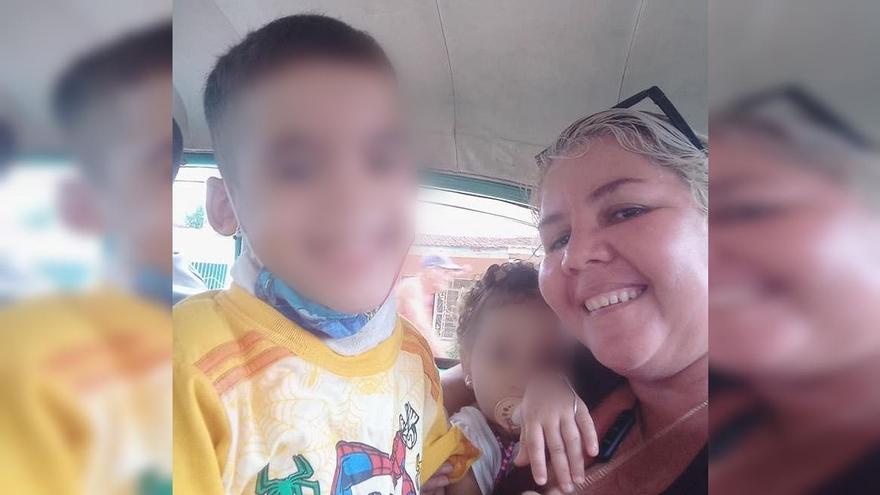
Padrón worked at the Comandante Pinares hospital, in San Cristóbal. (Facebook/Efrén Padrón)

14ymedio bigger14ymedio, Havana, 6 December 6, 2023 — The name of Efrén Padrón, a pediatrician murdered in his home in San Cristóbal, in Artemisa, is the most recent on the list of violent deaths that Cuban authorities rarely report on. A nebula of data surrounds the case. Depending on the source consulted and in the absence of an official version, two causes of death are indicated: asphyxiation or stabbing.

The crime scene, his house, is the only common factor in all versions of the murder. Padrón, who had recently arrived back on the island after being part of a medical mission abroad, was allegedly attacked by a young man who fled and was captured by the Police this Wednesday in Pinar del Río, according to the influencer Niover Licea. Despite sharing the same last name, the aggressor and the victim were not related.

The versions also agree that the attacker went to the doctor’s house to rob him, but ended up suffocating Padrón with a telephone cable and throwing him into a tank, to simulate a suicide. Others claim that, on the contrary, the pediatrician was stabbed. Neither the Police nor the hospital where Padrón, Commander Pinares, worked and taught, in San Cristóbal, have issued any statement regarding his death. continue reading

The versions agree that the attacker went to the doctor’s house to rob him

However, several of his colleagues at the hospital lamented his murder and published on their social media profiles the little they knew about the case. This was also done by the independent journalist Claudia Padrón Cueto, who claims to have communicated with the victim through social networks.

Other health workers, also hospital workers and those close to Padrón, commented that the “excellent pediatrician” had completed missions in countries such as Angola and Cape Verde.

The escalation of violence in Artemisa has already made headlines in the independent press. In November, this newspaper reported on the imposition of a curfew in Alquízar, where the proliferation of crimes keeps the residents of the municipality in suspense.

Contrary to the official version, which flatly denied the restriction of movement, several residents assured 14ymedio that the agents patrol the avenues and prevent citizens from leaving their homes after midnight. One of them even explained how his father, a farmer who usually returns late from the fields, ended up detained at the station for not following the rules.

Beyond the provincial borders, the situation is no different, and in large cities like the capital, news of armed robberies, assaults and violence in the streets are more frequent, although they are only reported by social networks and independent media.

In the early hours of last Thursday, a man in his 60s and of French nationality was murdered in a building on the corner of Industria and Virtudes, in Central Havana. According to what one of the building’s neighbors told this newspaper, the victim had gone up to a tourist rental apartment with two girls, who gagged and suffocated him with the alleged intention of robbing him.

_____________________

COLLABORATE WITH OUR WORKThe 14ymedio team is committed to practicing serious journalism that reflects Cuba’s reality in all its depth. Thank you for joining us on this long journey. We invite you to continue supporting us by becoming a member of 14ymedio now. Together we can continue transforming journalism in Cuba.

World’s Largest Tour Operator Will Not Fly to Cuba as of 2024

TUI will suspend flights between Manchester and Varadero. (Latin Press)

14ymedio bigger14ymedio, Havana, December 3, 2023 — The German company TUI, the largest tour operator in the world, will stop operating the route between Manchester, United Kingdom and Varadero, Cuba starting in April 2024, company sources reported. According to the specialized portal Reportur, the flights scheduled between the United Kingdom and Cuba for this winter – the only connection that currently exists between the two nations – will remain as planned.

“We periodically review our flight schedule and, as a result, we will no longer operate to Cuba as of the summer of 2024,” a TUI spokesperson told the tourism magazine Travel Weekly. He added that customers who already had reservations “will be contacted directly and offered a free change to another long-haul destination” or a 100% refund of their ticket.

With this suspension, a person can only fly from Europe to the Island through airlines such as World2Fly, Air France, Condor, Air Europa, KLM and Iberia, which work together with British Airways for this destination. continue reading

“We periodically review our flight schedule and, as a result, we will no longer operate to Cuba as of the summer of 2024”

A few weeks ago it was also learned that the Spanish company Iberojet will stop flying to Havana in 2024. As 14ymedio confirmed speaking to an employee of the company, they will have no connection with the Island starting January 15 and they do not know when they will resume operations. However, they will open two routes to Santa Clara, explained the same source, from Madrid and Lisbon, but “starting next summer.”

The airline had already canceled its Madrid-Santiago de Cuba route last September, barely a year after inaugurating it, but, on this occasion, it is a measure that will take place in the middle of the high season, which illustrates the debacle of foreign tourism the island.

Although some routes will stop operating in 2024, others will add service, as is the case of Saint Petersburg and Cayo Coco (Ciego de Ávila). The Island’s ambassador in Moscow, Julio Garmendia, informed the official press last Thursday about an agreement between Russia and the Island to establish this connection at the end of the year. The decision, which responds to the agreement between both nations to promote Russian tourism in Cuba, also includes a flight between Havana and the Russian capital.

“At the end of December, it is planned to resume direct Aeroflot trips, carried out by the Rossiya airline, between the capitals of both countries, as well as one every ten days from Saint Petersburg to Cayo Coco,” Garmendia said.

As of last October, the Island had received 1,973,085 international travelers since January, very far from the goal of 3.5 million set by the regime for 2023. In October only 158,935 tourists entered the country.

____________

COLLABORATE WITH OUR WORKThe 14ymedio team is committed to practicing serious journalism that reflects Cuba’s reality in all its depth. Thank you for joining us on this long journey. We invite you to continue supporting us by becoming a member of 14ymedio now. Together we can continue transforming journalism in Cuba.

Cuban Agents Threaten To Take Diasniurka Salcedo’s Five Children To Silence Her

The activist has taken in orphaned children, and children with parents in prison or in situations of abuse. (Facebook/Diasniurka Salcedo)

14ymedio bigger14ymedio, Havana, 9 December 9, 2023 —  Activist Diasniurka Salcedo Verdecia denounced this Friday that she has received threats from agents of the regime to snatch away five children who are in her care. The woman, who on November 24 reported the protest of a group of mothers in front of the Ministry of Public Health, took in several minors, children of parents who are in prison, deceased or abusive, and she is in the middle of a process to obtain legal custody of them.

In her Facebook post, Salcedo Verdecia explains that after launching a campaign to discredit her on social networks, representatives of the Federation of Cuban Women (FMC) and the Committees for the Defense of the Revolution, as well as several social workers, showed up at her home. The objective of the visit, she said, was to let her know that she was a “bad influence” on the minors and that she runs the risk of losing in the procedures to grant her custody of the minors, whom Salcedo defines at all times as “her children.”

“I don’t care about the Family Code, my children are happy and don’t lie, they know freedom and they have plenty of love, something that you don’t know. (…) I’m not going to stop supporting mothers because we don’t commit any crimes, much less am I going to be silent in exchange for my children. My fight is precisely for their future,” said the activist.

Salcedo has described on several occasions the cumbersome legal process she faces to achieve custody of the five minors

Salcedo has described on several occasions the cumbersome legal process she faces to gain custody of the five minors, who come from vulnerable contexts about which, generally, “the regime does not comment.”

The activist added that the children have been living with her for between three and four years and that during the formal visit, the agents told her that the oral hearing, in which she was to appear with regards to the situation of the children, is on hold.

Salcedo transmitted through her social networks the protests of several mothers in front of the Ministry of Public Health. As a result of her support for the mothers, who were demanding better quality care for their own children, both she and her husband, who was arrested that day, had a precautionary measure imposed on them.

After the protest, several mothers reported that the authorities offered their children medical care to “shush them.” However, in most cases, the caare provided was not up to the severity of the children’s conditions, which require long-term treatments.

Some of the parents, residents of Pinar del Río and Mayabeque, were detained before being able to reach the corner of 23rd and N, in Vedado, to demonstrate, according to what Salcedo herself reported that day.

___________

COLLABORATE WITH OUR WORKThe 14ymedio team is committed to practicing serious journalism that reflects Cuba’s reality in all its depth. Thank you for joining us on this long journey. We invite you to continue supporting us by becoming a member of 14ymedio now. Together we can continue transforming journalism in Cuba.

A Poster from Cuba’s Jewish Community for the Hostages in Gaza Demands ‘Free Them’

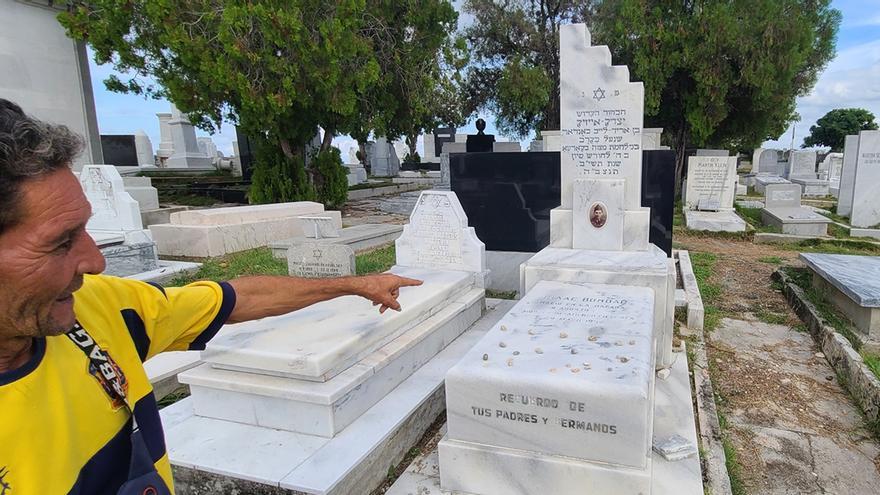
Jewish cemetery in Guanabacoa. (14ymedio)

14ymedio bigger14ymedio, Nelson Garcia/Juan Izquierdo, Havana, 4 December 4, 2023 — On the tombs of the two Jewish cemeteries of Guanabacoa there are no flowers, but rather stones. It is an ancient custom that has survived throughout the centuries and that represents the solidity of Jewish traditions in the world. The cemetery, several synagogues, a hostel, a kosher butcher’s shop and not a few family homes retain the imprint of the Jews in Havana, the capital of a country whose government is hostile to their cultural and religious homeland: Israel.

The 14ymedio tour of the Jewish map of Havana, where the majority of the one thousand Jews who have stayed on the Island are concentrated, in addition to small groups in Santa Clara and Cienfuegos, begins in its only kosher butchery, at number 708A Cuba Street.

The term “kosher” defines the food that, according to Jewish law, which has been practiced for several millennia, a Jew can eat. Pork and its derivatives are prohibited, for example, while beef, chicken and eggs are allowed. About 95% of the 15,000 members of Cuba’s Jewish community have left the country since 1959, almost all for the United States and Israel.

The difficulties in respecting that tradition are obvious in a country that is undersupplied, especially with meat. “The butcher shop opens once a month, without a fixed date, when the product arrives,” a worker from the Sephardic Center of Havana tells this newspaper. The meat is regulated, according to the number of Jews registered at the establishment. To consume it, it is necessary for a rabbi – the spiritual leader of the community – to certify that the meat meets the parameters of purity required by law. continue reading

The same source, in a community that is always suspicious of strangers, answers 14ymedio’s questions. In Cuba, he admits, the Jewish community has not had frontal attacks or felt watched, but the regime’s support for the Palestinians, and the terms it uses about Hamas’ terrorist attack on Israel, which triggered an armed conflict on October 7, are not welcome.

At the entrance of the Center and also in the Bet Shalom synagogue, a large poster has been installed with the photos of the more than 240 hostages kidnapped in Gaza: “Free them. Help us bring them home!”

“There have been many posts against Jews on social networks, which have bothered us, and although none of them refer directly to the Cuban Jewish community, it is known that the Government has a lot to do with those publications. We are disappointed and worried,” he says.

If someone wants to buy meat at the kosher establishment, they must first prove that they are Jewish. The community investigates, and if it’s true, the process is not difficult. If the shop is closed, it’s also a matter of survival: secrecy prevents informants of the regime and serves as a filter against unwanted visitors, especially after the conflict broke out in Gaza.

Like the stones on the tombs or the traditional diet, the hamsa — a hand-shaped symbol that Arabs and Jews share — is an everyday part of Jewish culture. These designs decorate the paintings and cushions of the Chateau Blanc hostel, near the Zoo on 26th Avenue, in the Nuevo Vedado neighborhood. They signify good fortune, divine protection and prosperity. The Raquel hotel and its restaurant, Garden of Eden, also serve Jewish clientele in a spectacular building built at the beginning of the 20th century in Old Havana and now owned by the Gaesa military conglomerate, which means it appears on the black list of accommodations published by the United States in 2020.

Highly recommended by several Jewish tourism magazines, Chateau Blanc — described on its website as a “Kosher Boutique Hotel” — was founded in 2018 by a Cuban-American who grew up in the Havana Jewish community and also offers a kosher diet to anyone who requests it. The kitchen, served by a Jewish baker and chef, offers fish, milk and vegetables. “We do not provide beef and chicken, because a rabbi must give the go-ahead,” explains the manager. On the wall, next to the newspaper clippings that praise the hostel, a letter signed by an American rabbi assures that the place is “strictly kosher.”

After Hamas missiles fell on Israel, many rabbis advised Jews around the world to be cautious. If they wanted to wear the kippa – the small ritual hat that orthodox Jewish men wear – it was advisable to put a cap on top. Take care of yourself, don’t expose yourself, walk with caution. The advice is also good for Cuban Jews, who watched with concern although without surprise, the recent march in support of Hamas called by the Government .

In Guanabacoa, the two adjacent Jewish cemeteries – one for the Ashkenazim, Jews who emigrated from Central Europe, and another Sephardic, for Jews of Spanish descent – are a haven of peace for those who visit them. Everything there invites you not to forget, especially the three-meter-high monument that pays tribute to the six million Jews who died during the Holocaust.

Under the stone lie six soaps, made with human fat from those killed by the Nazis in the concentration camp of Chelmno, Poland. For Roberto, caretaker of the “Polish cemetery” (Ashkenazi), the place has a special symbolism. For years, he has seen hundreds of families come to pay their respects to the deceased, or to put them in “the hole,” as he calls the grave.

The burial process is also unusual, Roberto says. The bodies are washed in a special room, dressed in white and make seven stops before reaching the grave. Along with the well-known Havana synagogues – two in El Vedado and one in Old Havana – the cemeteries have deep meaning for the Jewish community. Luckily, says Roberto, “no one has started desecrating tombs,” although an incident was reported in October 2013 when it was discovered that five tombs were opened to steal bones, probably for religious rituals.

The grave of Cuban filmmaker Saúl Yelin, who died in 1977 – visited by the film director Steven Spielberg – and that of the Cuban writer Jaime Sarusky are there

In his years as a caretaker, Roberto has seen important personalities pass through the cemetery, where about 1,100 people are buried, the same number of Jews who presently live in Havana. The grave of the Cuban filmmaker Saúl Yelin, who died in 1977 – which was visited by the film director Steven Spielberg – and that of the Cuban writer Jaime Sarusky, buried with his family, are there.

The Communal Services attend to the cemetery and pay the caretaker his salary. The Jews of Havana have wanted to pay him for his work, but the Government does not allow it, Roberto regrets. However, some foreign guests sometimes bring him “help and gifts.” And he is grateful as if he were part of them, even though, he admits, he is not Jewish.

There are hundreds of stories in the cemetery – such as that of the young Isaac Bondar, who died in the Korean War in 1952, fighting with American troops – and Roberto knows them all. Every stone on the graves, without going any further, is a life and a story.

Although the Jewish community in Havana has known better times, it does not renounce – in the face of the ruling party’s hostility – its best values: memory, tradition and a character as firm as the stones of the “Polish cemetery.”

Translated by Regina Anavy 

____________

COLLABORATE WITH OUR WORKThe 14ymedio team is committed to practicing serious journalism that reflects Cuba’s reality in all its depth. Thank you for joining us on this long journey. We invite you to continue supporting us by becoming a member of 14ymedio now. Together we can continue transforming journalism in Cuba.

The Refinery and Police Fines, the Main Sources of Income in Cienfuegos, Cuba

Cienfuegos Refinery. (5 de septiembre)

14ymedio bigger14ymedio, Havana, December 7, 2023 — The government of Cienfuegos has the province’s refinery to thank for more than 8.6 billion pesos in sales during the first half of 2023, 43.8% of all the money generated that year (about 20 billion). The data, one of the many that give the measure of the economic imbalance of Cienfuegos, appeared in the extensive accountability report that the provincial authorities published this Wednesday.

On the other hand, there was not a word about the 706,293 cubic feet per month of stone that the province uprooted from its El Cuero and Arriete quarries to send by boat for the 907 miles of ballast for the Maya Train, which will connect the main tourist cities of the Yucatan peninsula, in Mexico. It was a secret state agreement between the two leaders, Díaz-Canel and López Obrador, and the funds were sent directly to Havana.

The document covers all of 2022 and the first half of 2023. Dozens of meetings, hundreds of agreements and resolutions, and multiple debates demonstrate, according to the authorities, the seriousness of their work, even under two great challenges: blackouts and the “increase in political-ideological subversion.”

The refinery, subjected to repairs that ended last November, also led sales in 2022, when it was responsible for an even higher figure: of the 41,207 million pesos contributed by Cienfuegos to the State coffers, 24,284 million – 58% – came from the refinery. continue reading

Dozens of meetings, hundreds of agreements and resolutions, and multiple debates demonstrate, according to the authorities, the seriousness of their work

Despite the prominence of the factory, in whose port oil tankers with crude oil from Venezuela and Mexico dock, the provincial government refrains from offering other details on the subject in its report. “Without the refinery” – an expression that the text repeats to illustrate how bad the province would be if it did not have its services – the panorama is regrettable: from January to June, 27 state companies failed to meet the targets of their plans and delivered minimum profits.

The rest of the items are in the same situation: the province’s companies employ only 34,560 people, who recieve an average salary of 4,600 pesos per month. Between a rock and a hard place, the workers let the leaders know – and this is stated in the report – their problems: the deficit of inputs and raw materials, the breakage or lack of maintenance of the equipment, the poor quality of the tobacco in the province and the restrictions on the sale of the sugar that is manufactured (the government did not approve the sale of 5% of what was produced at a subsidized price, as the companies had requested).

As for the blackouts, the leaders said, the salvation was again the refinery: “The crude oil was productive,” they celebrated. Hence, the Carlos Manuel de Céspedes thermoelectric plant is “the most stable and efficient in the country.”

The strategy to get out of the debt hole?: “Charge” all the companies that owe them money

However, Cienfuegos owed the State 712,853 million pesos last June. The strategy to get out of the debt hole?: “Charge” all the companies that owe them money and think about what “potentialities” of the province can be exploited to oxygenate their income. In that plan, the police are a powerful ally: their “effectiveness” in the collection of fines – of 97.7%, they calculate – has recovered more than 1 billion pesos.

But the debacle of the province cannot be expressed only in numbers. The provincial government admits that it has received a barrage of requests, suggestions and complaints, although it does not have the means to resolve the situation. It is eloquent, for example, in the case of doctor’s offices. About 18 consultations must offer their services with “extended hours,” and patients do not stop complaining about the lack of “permanence of the doctor and the nurse.”

In the first half of this year, 11 children under age one died, which raised the infant mortality rate in the province to 8.3 per 1,000 live births. At the other end, it was detected that 9,641 elderly people in the province live alone. The so-called Grandparents’ Houses of several municipalities are already overflowing, and there is a lack of wheelchairs and hospital beds to guarantee a tolerable old age.

The situation of medicines is alarming: 196 are lacking, especially in hospitals where they are most used and in rural areas, where the distribution truck rarely arrives. The solution: to resort to “natural and traditional medicine,” whose plan targets, they say, are fulfilled by 105% in the cities and 143% in the countryside.

The authorities close the report with a detailed epigraph on “social illegalities and indisciplines,” in addition to supporting the police in “confronting crime and corruption.” The big problems, they say, are the “theft of livestock” and the illegal marketing of meat and other foods. In the crosshairs are Palmira and Rodas, two municipalities where criminals are active. But there is no need to worry, they emphasize, because soon there will be not only a “strengthening of investigations” but also an increase in the severity of convictions.

Translated by Regina Anavy

____________

COLLABORATE WITH OUR WORKThe 14ymedio team is committed to practicing serious journalism that reflects Cuba’s reality in all its depth. Thank you for joining us on this long journey. We invite you to continue supporting us by becoming a member of 14ymedio now. Together we can continue transforming journalism in Cuba.

Russian Mir Cards Give an ‘Error’ Message at the Store Where the Central Bank of Cuba Did the Tests

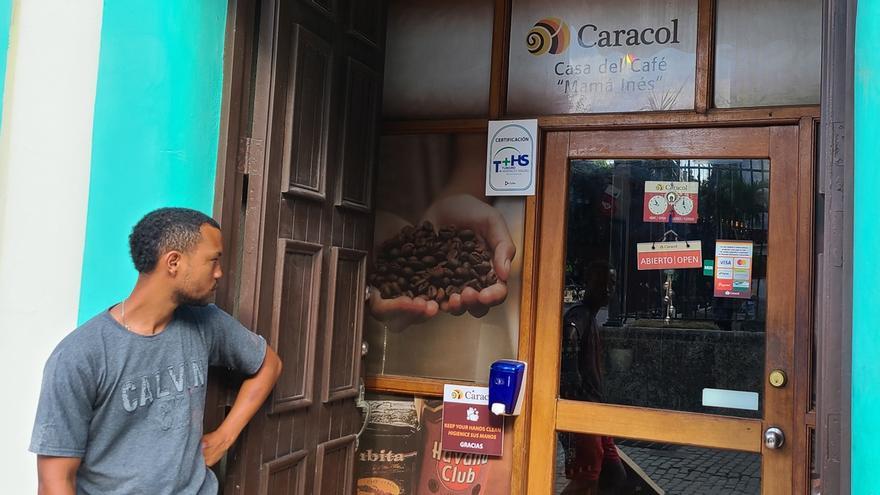
As indicated by the entrance sign, one can also pay with Visa, Mastercard or in hard currency (MLC). (14ymedio)

14ymedio bigger14ymedio, Havana, 6 December 2023 — “Error.” That word, appearing this Wednesday on the payment terminal screens at the Casa del Café Mamá Inés in Old Havana, destroys the illusions of the Central Bank of Cuba (BCC) about the effectiveness of the Russian Mir cards. Despite its commitment to the officials of the Russian National Card Payment System who visited this store belonging to the Caracol state group yesterday, electronic payment, according to its own employees, “is not working.”

“The cards are implemented,” clarifies an employee of Mamá Inés to 14ymedio. “The problem is that, when you pass them, they give an error.” Excited about the premiere of the Mir cards, the BCC authorities published photographs of the Russian envoys, whose “purchase actions” were “satisfactory” and culminated their visit by placing, on the door of the premises, the sticker that indicates that one can now pay with Russian cards.

“Mamá Inés does not accept cash rubles, only Russian tourist cards. Not as many people come as they would like, but they do come,” explains the worker. However, the employee acknowledges, unless the Cuban trying to us the Mir system has a bank account opened in Russia, the card doesn’t work.

As indicated by the entrance sign, a customer can also pay with Visa, Mastercard or in freely convertible currency (MLC). The only thing that has been banished in Mamá Inés – managed by a franchise of the Island’s military – is the Cuban peso. continue reading

Mama Inés does not accept rubles in cash, only Russian tourist cards. Not as many people come as they would like, but they do come 

What none of the employees of the Casa del Café has been able to determine is whether the failure that affects the Mir is general. The precariousness of the Internet connection, the blackouts and the slowness of electronic processes on the Island make every digital payment a nightmare. However, no foreign card has the political caliber of the Mir, in whose effective operation Havana plays one of the essential points of its alliance with Moscow: the digitization of the market, an indispensable step to better control it.

Decorated with photos of Ernesto Che Guevara, with shelves full of bottles of Cuban rum and some cartoonish images of a matriarch with a tray of cups and a coffee pot held above her head, the place includes all the stereotypes that have been used in Cuba for decades to widen the eyes of tourists. But, in addition to the clichés, this Wednesday’s customers were looking for realities.

El Galeón, a tobacco and coffee shop next to Mamá Inés, attests to this. A security agent, outside the establishment, prevents the passage of customers. As in the Casa del Café, there one can also pay with Russian cards, and a Cuban Television team is filming a report about the place.

There is no reason for Mir to be the exception to the disastrous panorama of electronic payment on the Island. It is common that, when using a Visa card issued by a European or American bank, customers are faced with the same error sign in the payment terminals. The Island’s bad connections prevents the purchase information from reaching the bank via the Internet, and it is common for devices to block the transaction for security reasons.

The Mir signal, which must travel over 6,200 miles from the tropics to Russia, is less likely to arrive than the signal of other cards, until Cuba has a less precarious telecommunications technology.

Whatever the reason, something is clear: Cuba is not ready for payment with Mir cards, and its infrastructure is not up to the aspirations of the authorities. The ideological vicinity of Havana and Moscow does not accelerate the speed of the transactions, which, at the moment of truth, are as slow as those activated with the “enemy” cards.

Translated by Regina Anavy 

____________

COLLABORATE WITH OUR WORKThe 14ymedio team is committed to practicing serious journalism that reflects Cuba’s reality in all its depth. Thank you for joining us on this long journey. We invite you to continue supporting us by becoming a member of 14ymedio now. Together we can continue transforming journalism in Cuba.

Public Indifference

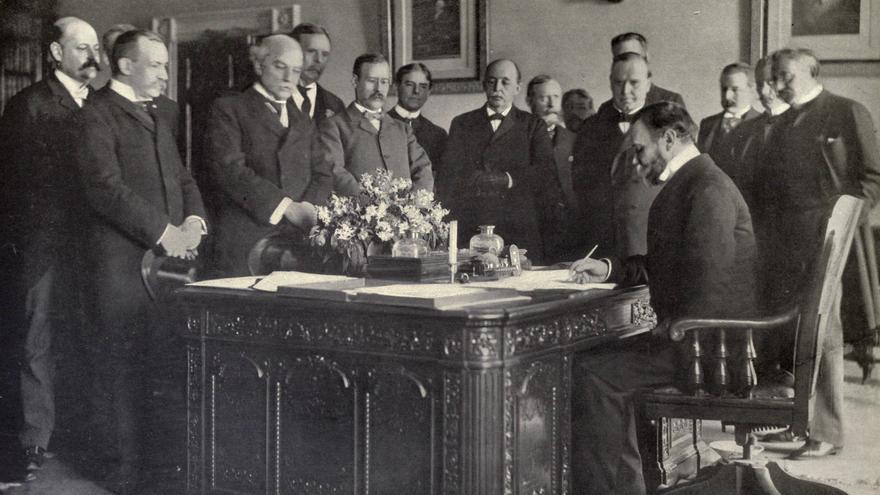
John Milton Hay, U.S. Secretary of State, signing the Treaty of Paris in 1899. (CC/Wikimedia)

14ymedio bigger14ymedio, Yunior García Aguilera, Madrid, December 6, 2023 — When Spain and the United States signed the Treaty of Paris, Cuba’s future was uncertain. The Americans had made it clear that they were not interested in annexation but there was no clear path to sovereignty either. The island’s fields had been torched by war, small landowners had no animals to plow them, and the railway infrastructure lay in ruins. What then did it mean for the majority of those we call “the public” or that other thing we call “freedom”?

The rebels’ machetes and bullets killed just over 3,000 Spaniards while various diseases claimed more than 40,000 lives. Some 80,000 Cubans fought on the Spanish side, either as volunteers or replacement troops. The Army of Liberation, however, never amounted to even half that number. Worst of all, most of its soldiers did not join the struggle until its final month, after the United States had already intervened in the conflict and it was clear that Spain would lose control of Cuba.

Jumping aboard the victory bandwagon has always been easy. At that point in the war, everyone on the island could sing “La Bayamesa”. On more than one occasion, the rebel commander Máximo Gómez became frustrated with the widespread public indifference to the conflict. At the end of the Ten Years’ War, as he was preparing to go into exile, a crowd gathered at the port of Santiago de Cuba. Gómez would later write in his diary, “I gaze out with great sorrow at a throng of more than 8,000 young Cubans who did not have the courage to take up arms to liberate their country.” It is understandable that he would choose not attend the ceremony transfering power from the panchos to the gringos on January 1, 1899. For him, peace often had a bitter taste. continue reading

Many Spanish officials remained in their posts. Today, some Twitter users would be scandalized and call this a fake change

Initially, the provisional government retained the same administrative system as well as the civil and criminal codes. Many Spanish officials even held onto their positions. Today, some Twitter users would be scandalized by this and call it a fake change. But the truth is that, as the Americans saw it, not everyone who could wield a machete was ready for a desk job. Their priority was to get a shattered economy back on track and maintain as much stability as possible.

Naturally, the radical nationalists were furious. They had not shed their blood in the mountains only to end up being ordered around by someone with a Castilian accent. America’s Secretary of War at the time, Elihu Root, admitted to leading a stressful life, afraid of finding out that his troops had been forced to shoot the former Cuban insurgents.

It became necessary to integrate the war veterans into the new government. Among those chosen were men with illustrious names. Men who had been trained in the United States or Europe, who had patriotic credentials and their own fortunes and thus would not be tempted to use the public purse to enrich themselves. It could be said that they were a thousand times more competent than the current Cuban government, staffed as it is with useless cadres trained in demagoguery and double-talk. However, history was not be kind to those first Cuban officials. They have been mostly ignored or branded with broad labels that did not take into account the historical context.

The same thing will probably happen to those brave enough to take on administrative responsibilities when the time comes for Cuba to transition to a free society. Accepting government postions at that point will involve making more complex, controversial and perhaps thankless decisions. It will be like setting oneself on fire. Quite possibly none of those who decide to participate in this process will be go on to play a role in the future democracy.

And while all this is going on, what role will the broader public play in the transition? It is likely that crowds will take to the streets in euphoria. One can assume that many will attack the symbols of Castroism as happened after the fall of Machado and Batista. We can even imagine Patria y Vida being sung on the major boulevards at full volume. But then most will go back to hiding behind their cell phone screens, onlookers to the change.

Most of us are on airplane mode, waiting for someone to bring out the body as we scroll past the inanities of some government minister, reports on the Cuban first lady’s latest  international first-class jaunt with her son — the unofficial bodyguard— and the viral videos of Yarelis and her boyfriends.

What we call the public is often an abstraction, a dream from which we awaken from time to time if something, or someone, shakes the bed forcefully enough.

____________

COLLABORATE WITH OUR WORKThe 14ymedio team is committed to practicing serious journalism that reflects Cuba’s reality in all its depth. Thank you for joining us on this long journey. We invite you to continue supporting us by becoming a member of 14ymedio now. Together we can continue transforming journalism in Cuba.

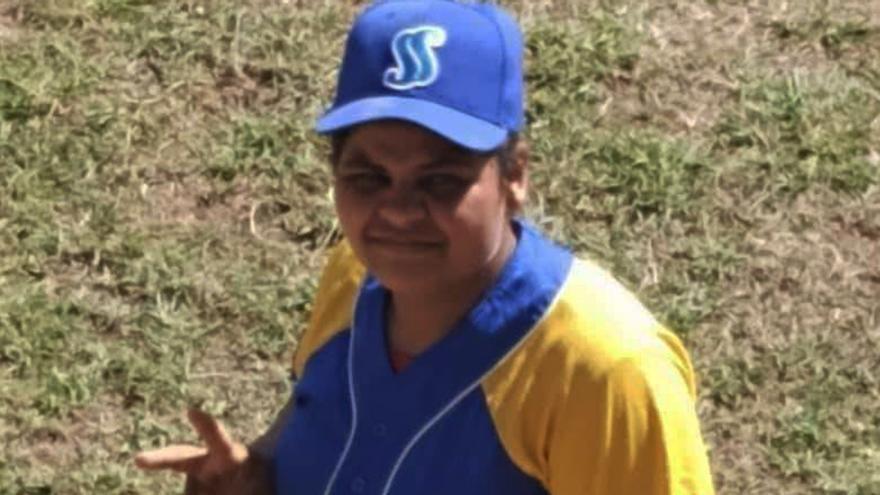
The Debut of a Woman Baseball Player on a Cuban Men’s Team Stirs Controversy Among Fans

Rosaly González Rodríguez debuted in a men’s team last Sunday. (Maikel Martín Gallego/Facebook)

14ymedio bigger14ymedio, Havana, December 7, 2023 —  The debut of Cuban Rosaly González on the baseball team of the Sancti Spiritus municipality of Jatibonico, traditionally made up of men, generated controversy among fans. The inclusion of the athlete not only represents the breaking of a pattern in the Island’s sport, but also Highlights the shortage of male baseball players, who have fled the country in recent years.

However, González’s debut in the stadium has motivated an avalanche of comments for and against. “There is a lot of division of opinion on whether this should be allowed, although little by little women have been gaining prominence in men’s baseball,” said the specialized media DPorto Sports.

González, according to Radio Sancti Spíritus journalist Maikel Martín Gallego , entered as a pinch hitter at the start of the eighth inning of Jatibonico’s game against Trinidad, during the Provincial Baseball Championship in the first category. “Although she struck out, she got to the even count (2 and 2), and she even fouled out behind,” he stressed.

The ballplayer ended up playing first base. “Curiosities and news about the Sancti Spiritus baseball,” commented the same communicator. The game was won by Trinidad with 11 runs against only one run from Jatibonico, in eight innings. continue reading

There is a lot of division of opinion about whether this should be allowed, although little by little women have been gaining prominence in men’s baseball

“As crazy as putting a man in a women’s 100-meter dash race,” Havana native Rogelio Torras Alvarez said. “Isn’t there men’s and women’s baseball, well, in all sports? Why mix them here?” he added.

Another of the fans, identified as Armando García Rivero, was happy for the baseball player’s participation, although he acknowledged not knowing if the rules allowed it. “In other sports like volleyball I have never seen mixed teams, and there have been high-quality women there.”

The 2023 National Series Regulations do not establish explicit prohibitions on the participation of a woman in a men’s team. Section 1.3 establishes that the teams will be made up of 40 players, who are asked to fill out an individual form, which requests “respect” for the sporting rules, in addition to providing personal data and a photo.

During the Technical Congress of the Provincial Championship, which took place last November, it was specified that each of the eight teams will have 25 players on a roster and for games away from their headquarters 20 may travel, but there is no impediment to the participation of a mixed team.

Pelota Cubana, another site specializing in baseball, described Rosaly González’s foray into men’s sports as “an unusual event.” However, on the Island, more than 10 years ago Janet Moreno broke the barrier among referees. A hyperactive girl, who came to the world of refereeing in 2000 with softball, Cubadebate said about her then: “In 2005 she became the first woman to administer justice in the highest baseball competition in Cuba.”

____________

COLLABORATE WITH OUR WORKThe 14ymedio team is committed to practicing serious journalism that reflects Cuba’s reality in all its depth. Thank you for joining us on this long journey. We invite you to continue supporting us by becoming a member of 14ymedio now. Together we can continue transforming journalism in Cuba.

‘It Was a Suicide’ Say the Neighbors of a Woman Who Died in a Fire in Central Havana

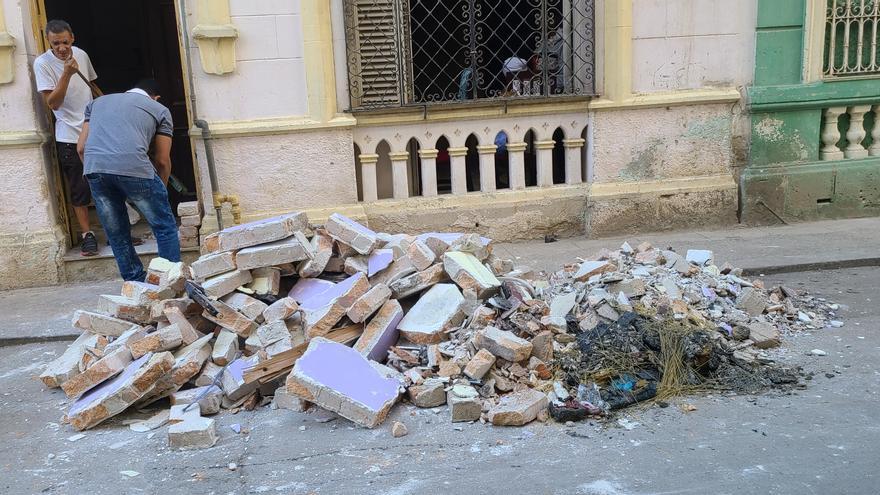
This morning, a pile of bricks and charred objects blocked the entrance to house 519. (14ymedio)
This morning, a pile of bricks and charred objects blocked the entrance to Number 519. (14ymedio)

14ymedio bigger14ymedio, Havana, 8 December 2023 — The fire that broke out at noon this Thursday at 519 San José, between Lealtad and Campanario, in Centro Habana, finally has a perpetrator: the owner of the house “took her own life by setting the fire.” This is what two neighbors on the block told 14ymedio, claiming that the woman had been suffering from depression for some time.  

“She was in her fifties. She was still young, but she was not well,” said one of the neighborhood residents, who explains that, after her mother’s death, the owner of the house “was no longer the same.” Another resident of San José, interviewed by this medium, confirmed that the cause of the fire was the same.

“When her mother died she began to change. She lost a lot of weight and seemed upset,” he says. “I know it wasn’t because of financial problems that she took her life. In fact, she had traveled abroad, I think to England,” she continues. continue reading

The Havana resident regrets the death, but says he feels relieved that the fire has not spread. “She was alone in the house, so no one else was injured. In addition, it took very little time for the firefighters to arrive because there is a station nearby,” he adds.

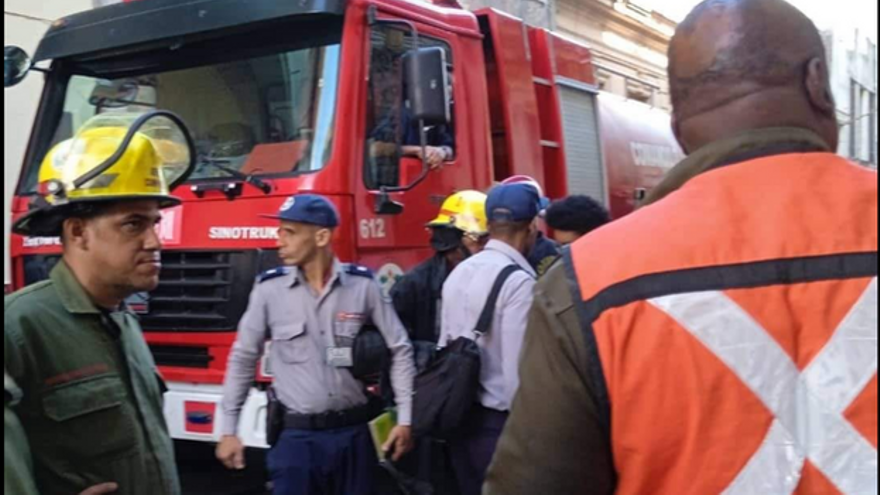
The official press has broadcast images of firefighters attending the scene. (Government of Havana)
The official press has broadcast images of firefighters attending the scene. (Government of Havana)

This morning, a pile of bricks and charred objects blocked the entrance to Number 519. From outside, through the window, several people could be seen in the room collecting the rubble after the fire.

Hours earlier, in its report on the event, the Provincial Government of Havana briefly reported the death of a woman, whose identity was unknown other than her sex, in a fire in her home. The causes of the fire are still being investigated, the authorities said then, with their usual terseness. Since then, no other report has revealed more details about the fire in Central Havana.

Several blocks from the scene of the accident, a fire occurred last June, caused by the explosion of two electric motorcycles in which a family of seven people, including two children, lost their lives.

Also in Central Havana, two people died in March of this year in a house fire. The poor condition of the homes in this area along with the structure, which favors the spread of fire and makes evacuations difficult, contributes to incidents like this being not uncommon.

____________

COLLABORATE WITH OUR WORKThe 14ymedio team is committed to practicing serious journalism that reflects Cuba’s reality in all its depth. Thank you for joining us on this long journey. We invite you to continue supporting us by becoming a member of 14ymedio now. Together we can continue transforming journalism in Cuba.

The Drastic Reduction in US Chicken Imports Aggravates the Food Crisis in Cuba

In just two months, chicken imports have fallen 76%. (14ymedio)

14ymedio bigger14ymedio, Madrid, 8 December 2023 — A kilo of American chicken reached its highest price in the last five years in October, with a value of $1.30. The high price may be the cause of a new collapse in imports of the poultry meat that Cuba buys from the neighboring country, which fell to figures never seen since June 2020, in the midst of the pandemic.

Havana bought 8,126.5 tons of chicken meat, 32% less than the previous month , when imports had already fallen enormously. In September, 11,954 tons were acquired, which represented 66% less than in August, with 35,117 tons. That is, in just two months, the purchase of chicken from the United States has fallen by 76.8%.

The decrease in the volume of imports is also reflected in the amount, although the sharp rise in price attenuates the difference. Cuba spent 26.5% less compared to the month of September, a total of 10.63 million dollars compared to 14.4 million dollars the previous month. That month, the price of a kilo of chicken had already increased considerably, going from $1.05 in August to $1.21.

“The food security crisis worsens due to ineffective economic policies,” says Cuban economist Pedro Monreal, who analyzes these data monthly. “With chicken being the main meat source of protein in Cuba, the recent problems are worse than those that the official story seems to recognize,” he added on his social networks. continue reading

Evolution of chicken meat imports from the US to Cuba. (Pedro Monreal)

Trade between Cuba and the United States is weakening as the year progresses and it is not just about chicken. The data from the US-Cuba Trade and Economic Council (CubaTrade) for the month of September – the latest report available, published in November – shows a drop of 47% compared to the previous year.

In September 2023, exports of food and agricultural products amounted to 20,317,573 dollars, compared to 38,167,679 in the same month of 2022. However, in the annual accumulated, the total value was 252,804,856 dollars, more than in the first nine months of 2022, when it stood at $235,204,923. According to the calculations of this organization, total US exports to Cuba of these products are valued at more than 7,156,531,222 dollars since exceptions were opened in 2001 for this type of sales, previously prohibited by the embargo.

By products, this September the majority of chicken parts once again topped the list, as well as the whole bird. Below this on the list are different types of pork and then decaffeinated roasted coffee. Apart from food products, there are others such as lactation nipples, umbrellas, freezers, chainsaws, grass and weed mowers, forklifts, electric mixers and various types of vehicles and their parts.

In 2023, the United States has granted licenses to several private companies to export vehicles that can be sold by MSMEs on the Island. One of them is Apacargo Express, based in Miami, authorized since April, and another Katapulk, owned by the well-known Cuban-American businessman Hugo Cancio, through whose website cars from brands such as Ford, BMW, Mercedes and even Tesla are available.

The latest data on vehicle sales from the US are from September ($593,526) and do not yet reflect a trend that has been noticeable for a couple of months on the streets of Havana.

____________

COLLABORATE WITH OUR WORKThe 14ymedio team is committed to practicing serious journalism that reflects Cuba’s reality in all its depth. Thank you for joining us on this long journey. We invite you to continue supporting us by becoming a member of 14ymedio now. Together we can continue transforming journalism in Cuba.

Cubans Who Leave the Country for More Than Two Months Will Lose Their Ration Book

The vast majority of Cubans have lived their entire lives with the ration book system. (La Demajagua)

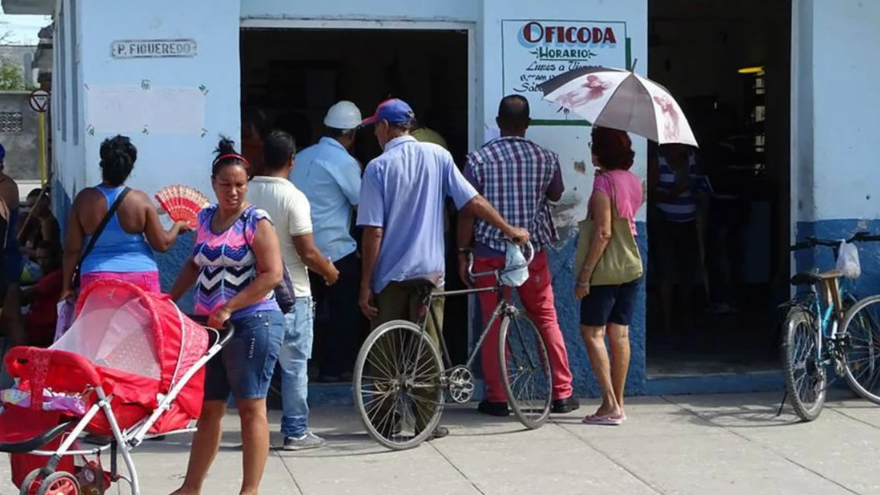
14ymedio bigger14ymedio, Madrid, 7 December 2023 — Cubans themselves have disdained the news of the resolution that came into force this Tuesday regarding the ration book with a devastating argument. “With all due respect, for what they give for the book, more is spent on paper and ink on cancellations and breakdowns,” reacts a reader of Tribuna de La Habana .

The news addresses only the reduction of the time that citizens can spend abroad without unsubscribing from the system. Until now, and since 2021, Cubans who left the country for at least three months had to go to the Consumer Registry Office (Oficoda) to communicate their new situation. Starting this Tuesday, with the rule going into effect immediately, it will be enough to spend two months outside the country to be withdrawn from the system.

The resolution, published in the Extraordinary Gazette of December 5, establishes the system to sign up in the registry, its rules and exceptions, but the only change in real terms is this. Meanwhile, due to the diminished supply of rationed goods that are sold through the document — which has controlled the registration system for the rationing in force on the Island since 1962 — there has been little interest in the change. Most of the reactions that have occurred – for now only on social networks and in the press – have more to do with the poor functioning of the system and its poverty. continue reading

“Just because I have traveled does not mean that my family is millionaires nor that I return to my country with a wallet full of euros. Everything is super expensive and I have no resources”

“Something is not working correctly,” explains a 70-year-old retiree in a detailed comment. The 70-year-old woman left the island to visit her grandchildren for five months, after five years without seeing them, “a trip which was made with a lot of sacrifice on the part of my daughter,” she explains. In compliance with the norm, this Havana woman registered before leaving the country and returned to her Office on her return to register again, but was told that she had to spend three months taking advantage of the “pilot voucher,” a temporary document that replaces the ration book while her new situation is being processed.

“I’ve been in my country for a month and they still haven’t given me any of the [items listed in the] November pilot voucher. I don’t even have the right to buy the daily bread that I am entitled to. Can someone tell me where what I am entitled to is? Can someone tell me where to go? Who cares if I eat or not? Just because I have traveled doesn’t mean that my family is millionaires or that I return to my country with a purse full of euros. Everything is super expensive and I don’t have the resources to shop at MSMEs [small (ostensibly) private businesses], which are the ones that have everything at exorbitant prices. Is this a punishment for having traveled?” she reproaches sadly.

Poor management in Oficode is not, in any case, new. Since the ration book digitization process began in 2018 – which has not yet been completed – disasters have accumulated, exposing a system that, far from benefiting from new technologies, has only gotten worse.

For more than three decades there has been an obligation to communicate the registrations and cancellations of deceased persons, residents abroad, changes in the home and other cases that alter the composition of family units, but non-compliance was very high, giving rise to the allocation of more resources than foreseen per family. Digitization supposedly came to increase control over changes, but the system’s own failures, together with corruption, kept thousands of consumers non-existent in the databases.

In 2021, information from the official press of Ciego de Ávila revealed that 15,000 of the 437,000 registered consumers no longer resided in the country. That year a problem began that continues today, the shortage of paper, which has prevented the delivery of physical ration books with the problems that this situation poses for thousands of people.

In 2021, information from the official press of Ciego de Ávila revealed that 15,000 of the 437,000 registered consumers no longer resided in the country

In December 2022, the problem was repeated, and the Ministry of Internal Trade had to guarantee that “the distribution of the regulated family basket” was assured but there were “affects with the timely availability of the ration books for 2023.” In the first months of the year, in at least nine provinces, purchases had to be recorded in an extension of the 2022 document until the preparation of this year’s document was completed.

Rumors about a possible disappearance of the document and the system, which is increasingly less useful on the Island, have grown since Raúl Castro stated in 2011, at the IV Congress of the Communist Party, that there was a firm decision to gradually eliminate the booklet. “The problem we face is not one of concept, but rather lies in how, when and with what gradualness we will eliminate this distribution instrument that has provided highly subsidized basic food to the more than eleven million Cubans,” he said.

The majority of the population, despite dissatisfaction with this method, is suffering from vertigo to think of the possible end of an instrument that has governed their lives for 60 years.

____________

COLLABORATE WITH OUR WORKThe 14ymedio team is committed to practicing serious journalism that reflects Cuba’s reality in all its depth. Thank you for joining us on this long journey. We invite you to continue supporting us by becoming a member of 14ymedio now. Together we can continue transforming journalism in Cuba.

More Cubans Stay in Nicaragua: ‘It is a Dictatorship, But it Offers Opportunities’

Currently, from Cuba only the Venezuelan state airline Conviasa makes direct flights to Managua. (Sputnik)

14ymedio bigger14ymedio, Havana, 4 December 2023 — Unlike Cuba, Nicaragua is “a dictatorship that offers opportunities,” says a Cuban interviewed on the streets of Managua by the opposition newspaper La Prensa. Róger, 27 and originally from Camagüey, has decided to stay in that Central American country where he had arrived to continue along the “volcano route” to the final destination of hundreds of thousands of migrants: the United States.

Given the high financial costs and risks of this long journey, which can end in deportation back to the Island, the number of Cubans who decide to try their luck in a country with a regime very similar to the one they left behind is growing: without political freedom and with a socialist discourse, but where the capitalist economy gives some play.

“In the supermarket the strange thing is to go and not find a Cuban,” says Julio, a 14ymedio contributor in Managua. “In the last 15 or 20 days I have also met them at the barbershop, in line at a Subway to order, in a toy store, at the cinema, taking photos in the old center. Without a doubt, the vast majority are passing by,” he explains, although he does not rule out that many end up staying. continue reading

The La Prensa article tells several stories of Cubans who have managed to settle in Managua and set up businesses. This is the case of Róger, who, after traveling as a mule, buying merchandise in Nicaragua to resell in Cuba, decided to settle in that country.

Marina also came to the conclusion that, upon arriving in the United States, it would be a long time before she would be able to see her two children, who she left in Cuba

“Nicaragua, although it is said to be in a dictatorship, is very different of my country. There are opportunities here and if you know how to take advantage of them you will do very well. The second time I came I brought my wife and we decided to stay,” says Róger.

Marina, another Cuban who landed in Managua with the idea of ​​continuing on to the United States, also decided to stay a few days in the country after noticing that the money she was carrying was not enough to cover the route, and she began selling sweets in a market in the the capital. “My goal was the United States, but I analyzed that with the sale I was doing well and I felt comfortable in Nicaragua (…). I still feel like I am in my country, but calmer,” she asserts.

Marina also came to the conclusion that, upon arriving in the United States, it would be a long time before she would be able to see her two children, who she left in Cuba. From Nicaragua, however, she has already traveled to the Island twice to see them.

Faced with the difficulties required to gather the funds to reach the southern border of the United States or start a business, staying in Nicaragua and trying to find work and get regular status has been presented as a third option, feasible for many.

Furthermore, with the recent cancellations of flights by several airlines that flew the route from Havana to Managua, many had to pay very high prices to get a ticket and have been left without enough money to continue their trip north.

“Now that the State has taken control of the matter, the transfer to the border is taking a little longer; so the Cubans have to spend two or three days in Managua”

Currently, from Cuba only the Venezuelan state airline Conviasa makes direct flights to Managua. Others such as Aruba Airlines, Air Century and Sky High have canceled their flights after Washington threatened to sanction those who encourage migration through Nicaragua.

Those who arrive in the country and intend to continue towards the border must assume a stay of several days in Managua, since, in an attempt to monopolize the profits generated by the transit of migrants, the Government of Daniel Ortega has prohibited private taxi drivers from transporting Cubans and Haitians to the border with Honduras.

“Now that the State has taken control of the matter, the transfer to the border is taking a little longer; so the Cubans have to spend two or three days in Managua,” says Julio.

“That is not from now, in any case what they are doing is finishing removing the private ones, because since the exodus began the Government has been directly involved in the transfer of the migrants,” the Nicaraguan argued then, adding he was not surprised by the measure.

Being so difficult to reach the border, it is natural that many have begun to settle in Nicaragua. While some even maintain the hope of one day raising the necessary capital to continue the route. Returning to Cuba, they say, is not even an option.

____________

COLLABORATE WITH OUR WORKThe 14ymedio team is committed to practicing serious journalism that reflects Cuba’s reality in all its depth. Thank you for joining us on this long journey. We invite you to continue supporting us by becoming a member of 14ymedio now. Together we can continue transforming journalism in Cuba.

Luxury Cigars for the World’s Princes, ‘Peso’ Tobacco for Cuban Beggars

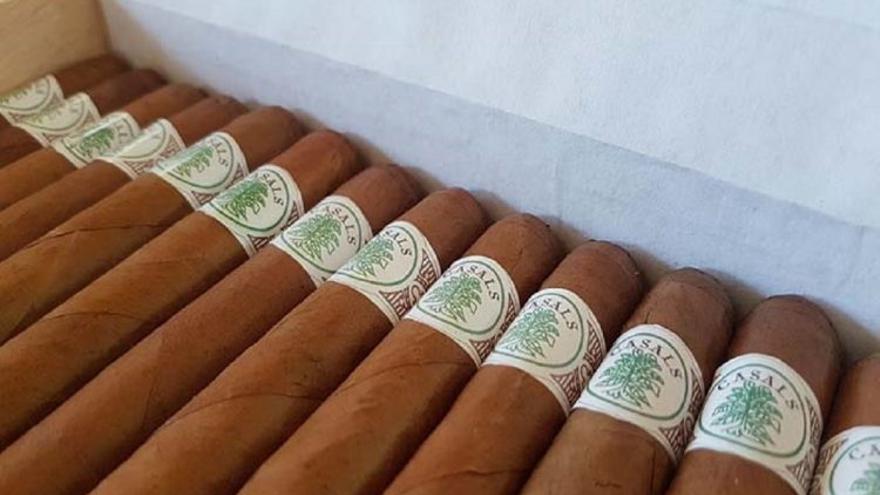
Compared to the big events that Habanos SA prepares, Casals’ presentation was rather humble. (ACN)

14ymedio bigger14ymedio, Havana, 6 December 2023 — The most recent cigar presented by the monopoly Habanos SA to its international clientele is the El Rey del Mundo Royal Series, a formidable medium-strength tobacco that is recommended to be paired with rum. Along with its impeccable presentation – cedar box, quality certificate and ring with gold details – the new Casals brand, manufactured in Las Tunas for the province’s bodegas, leaves much to be desired.

The story of both tobaccos is that of the prince and the pauper. The King of the World was launched in Cyprus this Saturday, at a luxury tasting for 450 guests organized by distributor Phoenicia T.A.A, a long-time business partner of the regime. The Casals, for its part, was only received by the officials of the Property Registry in Las Tunas who registered the product “for the retail market.”

Even in photos, the careful workmanship of the Royal Series says everything the connoisseur needs to know: it is a high-end cigar, whose price has not even been set yet, with all the prestige of a brand like El Rey del Mundo, founded in 1882. The box of 15 Casals is not made of cedar, but of a material similar to bagasse, and its fittings – the internal and external ornaments – are not gold and embossed, but rather mustard colored. continue reading

The box of 15 Casals is not made of cedar, but of a material similar to bagasse, and its qualifications are not gold and embossed, but rather mustard colored

The Las Las Tunas brand, its manufacturers claim, alludes to Enrique Casals, a former member of the 26th of July Movement who was charred to death in the municipality of Jobabo during the so-called Bloody Easter, in 1956. Carlos Betancourt, provincial director of Acopio, Beneficio y Torcido de Tabaco, has many plans for the product, however humble it may be, such as its “insertion in bars, shops and tourist spaces.”

However, he regretted that the production volumes “will not be considerable,” as long as there are not enough rollers – they are already “training” them – and Casals “increases its quality.” Not only will its marketing not reach Cyprus, but it will have to be limited to the stores of the so-called Balcón de Oriente [Las Tunas area].

The contrast between the “peso” tobaccos, as Cubans call the cylinder of poor quality that the bodegas offer – although it already costs five pesos – and the cigars marketed by Habanos SA is notable. The Habano Festival held annually in the Cuban capital, with the presence of many millionaires and specialists, is just one of the events – and not the most luxurious – that Habanos SA organizes around the world.

It is enough to review the official website of the monopoly, co-directed by Cuba and Spain, to verify the caliber of each presentation of new cigars, humidors, smoking implements and associated products, such as rum or coffee.

The Las Tunas brand, its manufacturers claim, alludes to Enrique Casals, a former member of the 26th of July Movement. (ACN)On November 1, the latest edition of the Por Larrañaga brand – an elongated Churchill-type vitola* – had 47 simultaneous presentations in the United Kingdom alone. In each one there were Cuban maestros to serve the clients. The event, which began in all locations at 6:30 in the afternoon, was sponsored by the Cuban cigar distributor in the UK, Hunters & Frankau.

At the end of September, the expensive Cohiba 55th Anniversary was presented in Caracas, a limited edition that no Venezuelan could afford. The launch, at the Robusto Bar – the first in Venezuela specialized in premium tobacco – celebrated that the alliance between both countries had one of its best results in the exchange of cigars. Not in vain, the organizers assured, the vitola – the format – of the new Cohiba is called Victorias. The guests toasted that night with Bicentenario rum, “a jewel of the house.”

Mexico, on the other hand, opened a luxurious Casa del Habano in the city of León, in the Mexican state of Guanajuato. With an 80 square meter terrace, a humidor with capacity for 50,000 cigars and “comfortable armchairs and amenities,” the establishment aims to become the headquarters of good tobacco “in the region and beyond.”

The cigar market, one of the most lucrative for the regime – it raised $545 million in international sales in 2022, more than nickel – despite the imminent debacle expected for the sector due to the impact of hurricanes and the delay in this year’s planting. It continues to have among its loyal clients the richest men in the world, whom it invites to the capital of the Island for dinners and auctions. To the disappointment of the director of Acopio in Las Tunas, Casals will never be able to aspire to a luxury tasting in London, Caracas or even Havana.

*Translator’s note: “Cigars come in a variety of shapes and sizes, which are often referred to as Vitolas.”

____________

COLLABORATE WITH OUR WORKThe 14ymedio team is committed to practicing serious journalism that reflects Cuba’s reality in all its depth. Thank you for joining us on this long journey. We invite you to continue supporting us by becoming a member of 14ymedio now. Together we can continue transforming journalism in Cuba.

The Central Bank of Cuba Takes Another Step with Russian Mir Bank Cards

The Cuban and Russian authorities clarified that the Mir system “will be implemented gradually, starting in the tourist centers.” (BCC)

14ymedio bigger14ymedio, Madrid, 6 December 2023 — The Central Bank of Cuba (BCC) made official this Tuesday the use of the Russian payment system Mir, a version similar to Visa or Mastercard launched by the Kremlin in 2016 to avoid economic sanctions. The island’s ATMs had already accepted Russian cards as of last March and, in those days, the official press anticipated that by the summer Russian tourists would be able to pay with that means at tourist sites.

We are in December and, according to the statement issued by the BCC, this is still not a reality. Bank officials met this Tuesday with representatives of the Russian National Card Payment System (NSPK), Payment Services (RED SA) and Fincimex, and although they declared that “the operation of Mir cards was made official” in ATMs and point-of-sale terminals (POS), they clarified that in these “it will be implemented gradually, starting in the tourist centers,” to later extend throughout the country.

Two weeks ago, Prensa Latina reported the “technological deployment” began in Havana, Varadero and the Ciego Ávila and Camagüey keys. At the meeting this Tuesday, the delegation of officials visited the state store Casa del Café Mamá Inés, in Old Havana, where “their purchasing actions were satisfactory” with the Russian cards. continue reading

  “The moment shows the good state of financial relations between both countries, which contributes to the economic development of the nation”

“The moment shows the good state of financial relations between both countries, which contributes to the economic development of the nation,” the report concludes.

Russia created the Mir system after the annexation of Crimea in 2014 and two years later began issuing the cards for internal operations. In 2022, it sought to extend the use of the cards abroad after its participation in the international banking system was prohibited following Vladimir Putin’s invasion of Ukraine.

Among the nations that accept Russian cards are Belarus, Kazakhstan, Kyrgyzstan, Tajikistan, Venezuela and Vietnam.

Since the tightening of sanctions against Russia, Cuba has advocated the use of Mir cards and pledged to accelerate the implementation of the system. Last March, the Russian ambassador in Havana, Andréi Guskov, said that the incorporation of Mir was part of “a considerable number of financial and energy projects” agreed upon during Miguel Díaz-Canel’s tour in November 2022 .

Russian plastics, in any case, may face the same problem on the Island as Visa or Mastercard in many small private businesses: they do not even have terminals, or if they do have terminals the lack of electricity prevents their use, which forces customers to pay for the goods or services in cash.

____________

COLLABORATE WITH OUR WORKThe 14ymedio team is committed to practicing serious journalism that reflects Cuba’s reality in all its depth. Thank you for joining us on this long journey. We invite you to continue supporting us by becoming a member of 14ymedio now. Together we can continue transforming journalism in Cuba.

Spy Detained by the FBI Was in Cuba When the Brothers to the Rescue Planes Were Shot Down

Former US diplomat Manuel Rocha, of Colombian origin, is accused of spying for the Cuban Government. (EFE/Orlando Barria)

14ymedio bigger14ymedio, Madrid, 5 December 2023 — The Prosecutor’s Office formally accused Manuel Rocha, former US diplomat, of having spied on his country for Cuba, which he called “the enemy” according to the information that intelligence had and that was revealed this Monday after the filing of the complaint before a federal court in Miami. The complaint is based on the sworn statement of FBI special agent Michael Haley, who managed to extract the information from the former official in several secret meetings.

According to the documentation, Rocha collaborated in a “clandestine mission to collect information from Cuba against the United States” since 1981, but his task has continued over time, since in 2017 he held a meeting with the Cuban Intelligence Directorate (DGI) in which he boasted of “having strengthened the Revolution” for 40 years at the service of the Government of the Island.

Rocha was working as Deputy Principal Officer of the then US Interests Section in Havana when the Brothers to the Rescue [Hermanos al Rescate] planes were shot down in February 1996, a time that he described in his meetings with the FBI as “very tense.”  “It was the time of the Brothers to the Rescue and other types of people who put political pressure through unnecessary provocations.” On one of the trips, on the orders of Raúl Castro, two small planes of the organization were attacked with missiles by a MiG fighter of the Cuban Air Force. All four crew members died. continue reading

“It was the time of the Brothers to the Rescue and other types of people who put political pressure through unnecessary provocations”

Rocha, who is currently 73 years old, faces very serious accusations, such as conspiring to act as an agent of a foreign government, acting as an agent in the service of a foreign government and having obtained a passport through a false declaration. But things could go further, as prosecutors warn that the investigation is not closed and new crimes may appear. A detention hearing is scheduled for this Wednesday.

Haley, posing as a member of Cuban intelligence, contacted Rocha in November 2022, with whom she arranged a meeting which the former diplomat attended, after carrying out a “surveillance detection route in accordance with DGI techniques.” The agent introduced himself as his new contact in Miami and Rocha thanked him for the exchange, adding that he had visited Havana for a meeting in 2016 or 2017, where he arrived with a Dominican passport. “I want you to tell my colleagues that I very much appreciate it and thank them for this alert,” he added.

“They were decades (…) intense. Almost 40 years (…) of great danger,” he confessed to his interlocutor, who used the name Miguel during his investigations. “This is an enormous sacrifice, with a lot of tension that you have to manage internally, with self-discipline, all the time,” he added.

In February 2023, there was a new meeting in which he revealed to Miguel how he obtained his job at the State Department: “I went little by little. It was a very meticulous, very disciplined process. I knew exactly how to do it and obviously la Dirección ’accompanied’ me.” It was at that meeting when he showed his full satisfaction for having contributed to the revolutionary cause. “We cannot jeopardize that,” he argued, lamenting the current “blows” by the enemy.

In the third meeting, Miguel launched into asking him if he was still loyal to “la Dirección”, to which, annoyed with the question, Rocha responded that he had “never put a colleague in danger in 40 years.”

In the third meeting, Miguel launched into asking him if he was still loyal to “the Management”, to which, annoyed with the question, Rocha responded that he had “never put a colleague in danger in 40 years” and promised to continue protecting what has been achieved. The former diplomat referred to Fidel Castro on several occasions as “the Commander,” according to the FBI agent’s statement.

The fourth meeting, scheduled for this December, did not take place, since the Diplomatic Security Service contacted Rocha for an interview in which he “lied repeatedly,” denying, among other things, having met Miguel, and varying his testimony little by little.

“This action reveals one of the most far-reaching and long-lasting infiltrations in the United States Government by a foreign agent,” acknowledged Attorney General Merrick Garland, before the press in Washington, where an investigation has been opened to determine the scope of the revelations and what failures could have occurred such that no one detected such a danger for so long. Garland stated that Rocha expressly sought a career in government institutions to have “access to non-public information and the ability to influence foreign policy.”

Rocha, who studied at the most prestigious universities in the United States – Yale, Harvard and Georgetown – began working as the person in charge of Honduras for the State Department in 1981, the same year that prosecutors consider that his collaboration with Cuba began, where he was Deputy Principal Officer of the US Interests Section in Havana.

He then passed through Mexico, Argentina and Bolivia – where his statements against the then candidate Evo Morales opened a crisis that was closed when the leader of the Movement Towards Socialism won the elections four years later; and through other delegations, such as the Dominican Republic, Italy or Panama.

While government records define him as a “fierce double agent,” his former colleagues consider him a “loquacious, charming and elegant man.”

While government records define him as a “fierce double agent,” his former colleagues consider him a “loquacious, charming and elegant” man. He had been, according to his friends, a socialist in his youth, but little by little he embraced conservatism and harsh criticism of the Cuban regime. “All the time he presented himself as a right-wing guy,” declared Eduardo Gamarra, a professor of International Relations at Florida International University and a friend of Rocha for forty years. “He became more and more Trumpist,” he added.

According to the Prosecutor’s Office, Havana urged him to appear in that way to clear up any shadow of doubt. In private, and according to the minutes of the complaint, Rocha took pride in his spying. “What we’ve done is enormous, more than a bases-loaded home run,” he goes so far as to say.

John Feeley, a former career diplomat who worked alongside Rocha decades ago, told The New York Times that the case could be among the worst intelligence leaks in recent history. “Manuel literally had the keys to the kingdom. If it had anything to do with Cuba, he saw it,” he declared.

The New York newspaper also spoke with Ricardo Zúniga, a retired senior official from the State Department and the White House, as well as Obama’s negotiator during the thaw, who described the case as “an incredible performance.” “It’s an extraordinary testament to how capable these guys are,” he said. “I was always extremely careful for that reason.”

____________

COLLABORATE WITH OUR WORKThe 14ymedio team is committed to practicing serious journalism that reflects Cuba’s reality in all its depth. Thank you for joining us on this long journey. We invite you to continue supporting us by becoming a member of 14ymedio now. Together we can continue transforming journalism in Cuba.