The tanker was intercepted by the U.S. Coast Guard after making a suspicious maneuver.
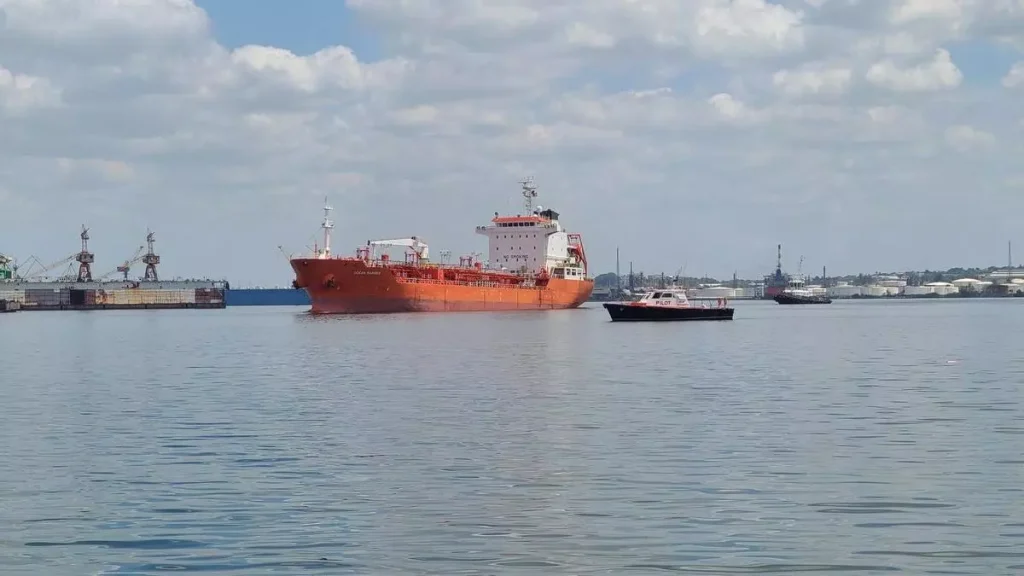
 14ymedio, Havana, February 22, 2026 – New details have emerged about the attempt by the Ocean Mariner, a tanker that usually transports Mexican fuel to Cuba, to circumvent the U.S. oil embargo on February 10 in order to deliver a shipment to the Island, after having declared that its destination was the Dominican Republic.
The fuel oil on board had three buyers since its origin in Colombia, the last being Trafigura Maritime Logistics, a Dutch multinational based in Singapore with commercial ties to the Cuban regime.
According to a report published Friday by Colombian outlet El Tiempo, the 84,579 barrels of fuel oil were originally sold by ISM Ingeniería Servicios, Montaje, Estaciones de Servicios SAS, and the initial buyer was Monarch Security Latin America Inc., based in Panama City. The Liberian-flagged ship docked at the Colombian port of Palermo in Barranquilla, Colombia, The New York Times also reported Friday, citing data released by the shipping company itself and satellite imagery. When it departed Colombia on February 5, it announced that its destination was the Dominican Republic, carrying fuel valued at $6.9 million.
After setting sail, the Ocean Mariner headed toward Dominican waters. However, on February 10 it changed course toward Cuba. A day later continue reading
The Ocean Mariner initially headed toward Dominican waters. However, on February 10 it changed course toward Cuba.
The following day, a U.S. Coast Guard vessel, the Stone, approached the tanker to ask where it was headed. The response was that it was bound for the Dominican Republic, despite being far off course, according to a U.S. official. Given the suspicious maneuver, the Coast Guard sailed alongside the tanker for nearly two days and escorted it to Dominican waters, where it remained for several days without unloading the fuel.
After the vessel’s interception, Trafigura appeared in the transaction network. The company holds a 49% stake in Empresa Minera del Caribe SA (Emincar), together with Cuba’s state-owned Geominera (51%), and operates the copper mines of Matahambre in Pinar del Río. The firm officially purchased the cargo after the Ocean Mariner incident with the Coast Guard. However, Trafigura did not buy directly from Monarch, the original buyer of the shipment, but from a third company whose name no one has disclosed.
El Tiempo reports that the original seller and buyer argued that their responsibility “for the cargo ended once the ship set sail, under the terms of the contract in the Free On Board (FOB) modality.” Additionally, they have not so far received any request from authorities. They also insist that the operation followed legal export procedures and that information about a possible diversion attempt to Cuba “is not official but based on press reports.”
“The destination of the product listed in the shipping documents corresponds to Río Haina, Dominican Republic. Since the operation was carried out under FOB terms, once the product was loaded and dispatched from the port of Palermo, the availability, control, and management of the cargo rests with the buyer,” said Iván Lombana, legal representative of ISM, the original seller. He also emphasized that the company does not receive operational updates on routes once ownership (of the fuel) and risk are transferred to the buyer.
Spokespersons for Trafigura interviewed by the Colombian outlet denied any connection to a shipment to the Island.
Spokespersons for Trafigura interviewed by the Colombian outlet denied any connection to a shipment to the Island. They stated that they agreed to purchase the Colombian-origin fuel oil transported on the Ocean Mariner for delivery in the Bahamas. “Trafigura had no prior involvement with this cargo or voyage and did not charter the vessel. As one of the world’s largest traders of oil and petroleum products, we are regularly contacted by counterparties seeking buyers for uncommitted cargoes,” they said, though they declined to reveal from whom they purchased it.
This Sunday at 1:24 a.m., Colombian President Gustavo Petro, through X, without mentioning the fuel sale process or the attempted breach of Washington’s oil embargo, stated: “I do not agree with blockading a country; what is needed is more freedom, not more chains.”
In the post, in which he spoke about Cuban music and Silvio Rodríguez, he added that “there is no crime in the free transport of oil in the Caribbean, but it is preferable that the Caribbean’s energy be provided by the sun that rises almost every day.” He also said that the United States “must change its policy toward Cuba” and called for “unleashing the solar energy program across the entire Island. In Latin America we can support this by manufacturing solar panels. Colombia can provide its silica sands and copper. We already produce panels for export if necessary.”
Meanwhile, in an interview with the Spanish newspaper ABC, Mike Hammer, chargé d’affaires at the U.S. Embassy in Havana, confirmed that the aim is to send fuel to “support the Cuban people without it being exploited by the regime and used to sustain itself, which is what they have done for 67 years.” The official added that they would seek to replicate the model used for food and medicine shipments after Hurricane Melissa, in which donations were channeled through the Catholic Church and Caritas Cuba, “because we want to ensure that any assistance to those affected actually reaches them.”
Translated by Regina Anavy
______________________
COLLABORATE WITH OUR WORK: The 14ymedio team is committed to practicing serious journalism that reflects Cuba’s reality in all its depth. Thank you for joining us on this long journey. We invite you to continue supporting us by becoming a member of 14ymedio now. Together we can continue transforming journalism in Cuba.