Cuban Citizenship May Be Lost for Acts Against the Regime, but Not for Being a Mercenary for Russia

A government spokesperson explains the advantages of the new Migration Law regarding property ownership for overseas residents
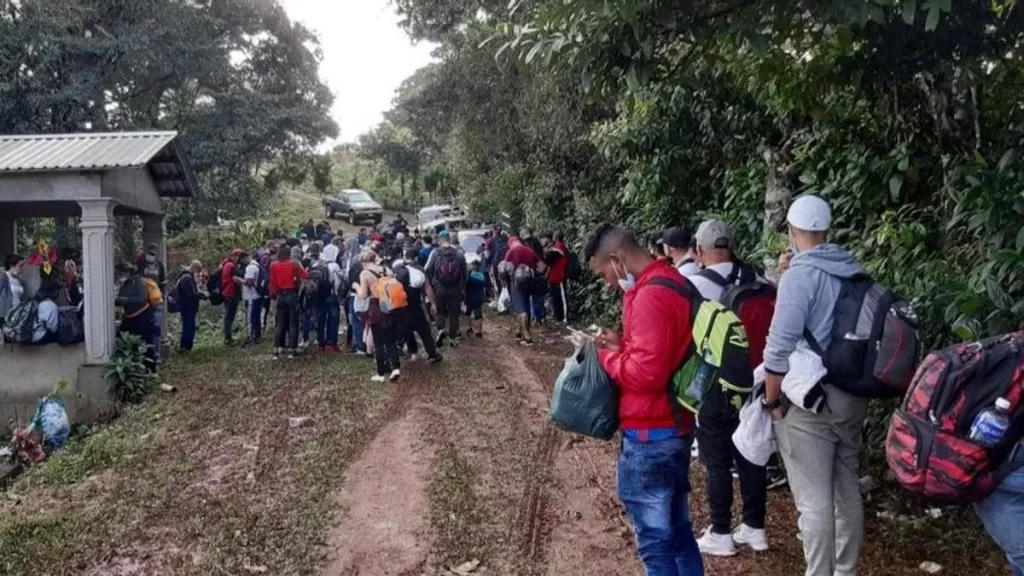

A group of Cubans making the journey through Central America to reach the USA / 14ymedio

14ymedio bigger14ymedio, Madrid, 27 June 2024 — Doubts have been raised in Cuba since the preliminary draft bills of the Migration, Immigration and Citizenship laws were published last week. Not yet passed in the National Assembly and the subsequent regulations that specify more specific issues, the Cuban authorities were under the scrutiny of international media on Wednesday, before whom they clarified issues such as putting an end to the loss of property.

“No one loses their home, no one loses their car, no one loses their property due to being residents abroad. That is not what the law says and we ratify that no one loses it. In that we are categorical,” said First Colonel Mario Méndez Mayedo, head of the Identification and Immigration Office of the Ministry of the Interior.

The future Migration Law, published on June 17, indicates that Cubans residing abroad will retain their rights as Cuban citizens – as long as they do not renounce their nationality – from which it followed that they would not lose their properties, as until now, if they had been out of the country for more than 24 months without returning.

Some people had expressed their doubts regarding, for example, real estate, for allegedly contradicting the current Housing Law, but yesterday Menéndez wanted to settle the matter. “All persons maintaining their residency in the country since 2013, although they also live abroad, are favored by this law and do not lose any property rights,” he insisted. continue reading

“All persons maintaining their residency in the country since 2013, although they also live abroad, are favored by this law and do not lose any property rights”

This meeting, aimed at explaining the regulations expected to be implemented in 2025 after their approval next July – during the National Assembly of People’s Power session- also addressed an issue that has caused heated reactions in recent days: the deprivation of Cuban nationality. The law grants the President of the Republic and the Minister of the Interior the authority in matters of citizenship, making them competent to resolve the administrative cases regarding its acquisition, loss, deprivation, renunciation and recovery.

That attribution had generated among public opinion the perception that both are empowered to arbitrarily withdraw citizenship status, something that, on paper, is not the case. Both are ultimately responsible for a case initiated by the Prosecutor’s Office which, at least in theory, must comply with the law.

However, the authorities retain power in extremis where arbitrariness is more likely to occur since it is expected that “the requirements and formalities in the processing of the case” can be skipped if it is necessary to withdraw citizenship from those who try to cause “serious damage to the country concerning national security, jeopardize the stability of the State, international relations or the general health of the population.”

It is “extraordinarily exceptional,” the officer stressed, “and we have only applied it exceptionally to the invaders of Girón,” he said to downplay the importance. In general terms, for the deprivation of citizenship, the causes are “to enlist in any type of armed organization aimed at undermining the territorial integrity of the Cuban State, its citizens and other persons residing in the country, or from abroad to carry out acts contrary to the high political, economic and social interests of the Republic of Cuba.”

“The Law specifies that it is to enlist in any type of armed organization with the aim of undermining the territorial integrity of the Cuban State”

That cause does not apply to Cubans fighting in Russia against Ukraine, the official said when asked by a correspondent of France Presse. “The Law specifies that it is to enlist in any type of armed organization aimed at undermining the territorial integrity of the Cuban State,” he explained, making it clear that, even in the case of those who are considered mercenaries according to Cuban legislation, fighting on the Russian side does not affect national interests.

The Associated Press also questioned the officer about the possible arbitrariness that can be committed by taking advantage of legal loopholes and other subterfuges. “The regulations will be consistent with what the Law establishes. There is no cunning, “he said.

The Citizenship Law leaves the thorny issue of statelessness in the air since the draft is clear when it comes to specifying that Cuban nationality cannot be renounced if it is not accredited to have another one (article 46) and Méndez elaborated on this. “We do not accept cases of stateless persons. No one can renounce Cuban citizenship if they don’t have another one, “he said.

However, this specification does not appear when dealing with cases of loss or deprivation of Cuban citizenship. The first one occurs in the event of fraudulent acquisition or non-ratification under Article 25 (you must go to a consulate within three years of leaving the country or a similar period from the last ratification to express the will to maintain it). In no case is it mentioned that having another citizenship is required to avoid its loss.

As for deprivation, the question seems even clearer. Article 55.2 indicates that the case to remove citizenship only ends when the causes are verified “in an undoubted way, the person in question has another citizenship or does not effectively reside in Cuba, and the ordinance is issued.” This makes it clear that the mere fact of being in a foreign country, with or without residency abroad is enough, without it being required to have another nationality.

This makes it clear that the mere fact of being in a foreign country, with or without residency abroad is enough, without it being required to have another nationality

All this contravenes the 1961 Convention on the Reduction of Statelessness, to which 64 countries adhere – neither Cuba nor the United States do -in order to prohibit the stripping of nationality, due to the lack of protection not having a nationality implies. In 2020, the UN Refugee Agency (UNHCR) issued new guidelines to renew this and other international agreements of its kind and reminded countries that there must be “very limited exceptions to this rule, even when nationality has been acquired through misrepresentation or fraud”.

Another issue that worries part of the population, as seen in the press conference, is the possibility of entering the country with a foreign passport while being Cuban. “To enter and leave the country, a Cuban passport is required, that is not negotiable. It is a constitutional and sovereign decision, “said Méndez, who added that in Cuba “all acts carried out with another citizenship to have effect in our country are null and void. ”

Therefore, those who acquired another citizenship – the United States and Spain being the most frequent among those who have dual nationality – must keep their passport in order and enter with it unless they have processed the renunciation of Cuban citizenship.

The changes in the Migration law will affect, the authorities estimate, 1.3 million Cubans, although the set of regulations (which includes five laws, those cited and two more that are not yet known) impact all of society, including foreigners. “Migration rules are incorporated to respond to the challenges of determining the residency of Cubans in Cuba and overseas, and in turn the exercise of rights related to the availability of the national territory’s heritage,” Méndez said.

Translated by LAR

____________

COLLABORATE WITH OUR WORKThe 14ymedio team is committed to practicing serious journalism that reflects Cuba’s reality in all its depth. Thank you for joining us on this long journey. We invite you to continue supporting us by becoming a member of 14ymedio now. Together we can continue transforming journalism in Cuba.

A 28-Year-Old Woman and Her Father Were Murdered in a Town in Ciego De Ávila, Cuba

The death of the young Yumary Morales Guerra was reported as a femicide by the Observatory of the magazine Alas Tensas

Yumary Morales Guerra was 28 years old / Facebook

14ymedio bigger14ymedio, Havana, July 30, 2024 — A new case of femicide was registered in Cuba in a multiple murder. Yumary Morales Guerra died after being attacked by her ex-partner in the town of Suferry, in Ciego de Ávila. The Observatory of the Cuban feminist magazine Alas Tensas confirmed this Monday the murder of the 28-year-old woman, who was attacked on July 8 and, several days later, on the 15th, died.

The case had already been reported by the Observatory on July 11, in its latest report on the femicide of Damaris Rondón.

According to the complaint filed at the time, on the night of July 8, the attacker, identified by Alas Tensas as Richard Sánchez Ferrales, entered Morales’ home with the intention of attacking her. Félix Morales, the young woman’s father, tried to defend her, but Sánchez attacked him with a knife. After killing the father, the attacker attacked his ex-partner, who was seriously injured and died days later. The victim’s sister and a neighbor who came to help the family were also injured.

Yumary Morales, who worked as a project technician at Dimarq, a design and engineering firm in Ciego de Ávila, is the 28th femicide this year, according to records kept by 14ymedio. In June alone, there were six cases of sexist murder in the country: in Las Tunas, Mayabeque, Pinar del Río, Havana, Holguín and Isla de la Juventud. continue reading

In 2023, 87 femicides were recorded by independent platforms and media. In fact, according to a count by the organization, 238 cases have occurred in Cuba from 2019 to July 2024.

De acuerdo con un recuento de la organización, en Cuba se han producido, desde 2019 hasta julio de 2024, 238 casos

Last Sunday, Cuba’s Council of Ministers approved a national system for “registration, attention, follow-up and monitoring” of gender-based violence on the island, although the authorities avoided clarifying whether the data it collects will be public. What they did mention were statistics that give an idea of ​​the situation of gender-based violence on the island: in 2023, 75% of these cases occurred in family homes – “a trend that continues this year” – 72% of the victims were between 25 and 59 years old, 45% are unpaid workers.

Measures to address gender-based violence have been in place for several years now, but, despite the constant recording of these cases, no public policy has yet been implemented on the subject. For example, in December 2021, the Extraordinary Gazette published that the Comprehensive Strategy for the Prevention and Response to Gender-Based Violence and Violence in the Family Setting would be launched, but that it will not come into force before 2026.

The Federation of Cuban Women also established an observatory to monitor the situation of women exposed to violence, some 16,000 according to official figures, but the data, if they exist, have never been made public.

Translated by Marvin McKemy Jr

____________

COLLABORATE WITH OUR WORKThe 14ymedio team is committed to practicing serious journalism that reflects Cuba’s reality in all its depth. Thank you for joining us on this long journey. We invite you to continue supporting us by becoming a member of 14ymedio now. Together we can continue transforming journalism in Cuba.

Prisoners Defenders Registers 1,119 Political Prisoners in Cuba in July

The organization has counted 1,731 people imprisoned at some point for political reasons / X / Salomé García

14ymedio biggerEFE (via 14ymedio), Madrid, 15 August 2024 — The NGO Prisoners Defenders (PD) reported on Wednesday that at the end of July it registered 1,119 people imprisoned for political reasons in Cuba, two more than those included in its monthly June report.

The organization, based in Madrid, explained, within the framework of the third anniversary of the anti-government protests on 11 July 2021 (11J), that the Cuban Government deployed “a repressive operation against activists and independent journalists throughout the Island.”

PD cited the case of independent journalist José Luis Tan Estrada, who was arrested on July 5, “interrogated and warned that on July 11 he should refrain from making any publication on his social networks.”

The NGO, which registered three new incarcerations and one release in June, explained that 30 minors are still on the list of prisoners, of which 28 are serving sentences and two are being prosecuted. The minimum criminal age in Cuba is 16 years old. It also stated that 15 of the minors have been convicted of sedition, with an average sentence of five years of deprivation of liberty.

The statement added that 224 people have been accused of sedition

The statement added that 224 people – mostly participants in the anti-government protests of 11J – have been accused of sedition, and at least 223 have already been convicted of that crime, with an average sentence of 10 years of deprivation of liberty.

The NGO reported that it has counted 1,731 people imprisoned at some point for political reasons in Cuba since 11J.

According to PD, at the end of June, the number of prisoners (including minors and two trans women) remained at 119. “All trans women of conscience in prison have been and are imprisoned among men, which also happens with common trans prisoners, suffering situations among men that are indescribable for their sexual condition,” the organization said.

Meanwhile, this Wednesday, the Inter-American Commission on Human Rights (IACHR) issued Resolution 48/2024, which granted precautionary measures in favor of the Cuban prisoner Joel Jardines Jardines, considering that he is in a serious and urgent situation of risk of irreparable damage to his rights in Cuba.

The IACHR reported that Jardines Jardines, detained in Aguacate prison, Quivican, in Mayabeque, has not received adequate medical attention, which aggravates his state of health. He suffers from a laryngeal carcinoma, and since 2021, should have undergone tests to start a possible chemotherapy treatment. The IACHR said that the prisoner lacks treatment for his ailments and suffered physical repression after requesting medical attention from the authorities. In view of this, the commission urged that they allow him to be diagnosed, provide sufficient and timely medical information and define his treatment.

Translated by Regina Anavy
____________

COLLABORATE WITH OUR WORKThe 14ymedio team is committed to practicing serious journalism that reflects Cuba’s reality in all its depth. Thank you for joining us on this long journey. We invite you to continue supporting us by becoming a member of 14ymedio now. Together we can continue transforming journalism in Cuba.

Electoral Autocracy and Totalitarian Elections in Cuba

Within the autocratic totalitarian framework, elections will always be a mechanism to reinforce the power of an illegitimate elite / Escambray

14ymedio bigger14ymedio, Mexico City, 15 August 2024 — The general election in Venezuela on July 28 and its outcome have had an important regional and international impact. Despite the existence of different options on the ballot, Venezuelans witnessed an election in clear conditions of competitive inequality, opacity and state control of the electoral, judicial and military authorities, as well as limited access to information and the financial resources of the opposition. This electoral authoritarianism has generated a critical reaction from important global powers (USA, Europe) and a majority of Latin American countries, and even from academic organizations of progressive orientation (LASA).

Cuba is perhaps the most atypical case of today’s Latin American autocracies. Its history of democratic elections dates back to the period from 1940 to 1950. From the democratic rupture of March 1952, the elections have been irregular, and from 1959 until the institutionalization of the pro-Soviet single-party political system in 1976, there were no elections. From this date the elections have been manipulated, with single-party candidates pre-selected by criteria of ideological fidelity.

The last general election for president in conditions of multi-party competition was held in Cuba on June 1, 1948

Strictly speaking, the last general election for president and 50% renewal of the House of Representatives and Senators, under conditions of multiparty competition, was held in Cuba on June 1, 1948. The Cuban electoral calendar of the time, governed by the Electoral Code of 1943, defined general and partial elections combining the rule of plurality with a system of provincial votes to elect a president with a system of relative majority in multi-member constituencies, with representation of minorities for the Senate and the election of representatives from proportional representation with the Hare formula of ranked choice voting with 50% renewal in midterm elections every two years. continue reading

The electoral results of the period were not only conditioned by this combination of electoral rules (P/RP) but also by the characteristics of the Cuban party system; that is, a moderate multiparty system without a predominant party to compete and win alone, which produced incentives for the establishment of broad electoral alliances. Unlike the two previous elections (1940 and 1944), the general elections of 1948 marked the end of the great centripetal bipolar coalitions and the beginning of the fragmentation and polarization of the party system.

In June 1948, the number of competing candidates increased to four, reducing the size of the first two coalitions that nominated the strong candidates. The winning candidate of the Authentic-Republican Alliance (PRC-A/PR) was Carlos Prío Socarrás (PRC-Authentic), who obtained 46%, followed by the candidate of the Democratic-Liberal Coalition (PD-PL), Ricardo Núñez Portuondo, with 30%. The remaining 24% went to the two candidates of independent parties, Eduardo Chibás, of the new Cuban People’s Party (Ortodoxox-PPC-O), with 16.5%, and Juan Marinello of the Popular Socialist Party (PSP), with 7%.

The plurality of the party system of the period can be appreciated. It is reflected in the midterm election of 1950 where the PPC-O acquired legislative force by obtaining 13.6% of the seats, above the traditional right-wing parties: the Liberal with 12.1%, and the Democrat with 9%. A new center-right party appears, the Party of Unitary Action (PAU) of Fulgencio Batista, which collects 6%.

The Socialist Constitution of 1976 and Electoral Law 72 of 1992 defined the foundations of the Cuban electoral system until its marginal reform in the 2019 Constitution

The Socialist Constitution of 1976 and Electoral Law 72 of 1992 defined the foundations of the Cuban electoral system until its marginal reform in the 2019 Constitution. In general, these electoral rules were an efficient mechanism for the selection and rotation of loyalties within a cohesive elite.

Designed to (re)produce consensus in a single party system, its functionality depends on a selective filter aimed at guaranteeing the continuity and governance of a totalitarian regime. While it is true that the nomination of candidates is direct at the constituency level, candidacies for municipal, provincial and deputy governments to the National Assembly are subject to a “double selective filter” based on criteria of ideological suitability. The Electoral and Candidacy Commissions in the various instances fulfill this function: the cohesion and loyalty of the candidates on the closed list that will be submitted to a (in)direct vote by a select group of elected with proven loyalty.

It is important to emphasize that since the ’election’ for president in 2016, a process of decrease in electoral participation has begun

Fifty percent of the candidacies proposed at the municipal level for election to the National Assembly emerge from proposals prepared by these Nomination Commissions and must be approved by the Electoral Commissions, which subverts the notion of popular representation. It is important to emphasize that since the ’election’ (sic) for president in 2016, a process of decrease in electoral participation and an increase in blank ballots, null votes and selective voting has begun.

Despite the fact that the new Electoral Law No. 127 of July 2019 proposes to professionalize and give greater autonomy to the Electoral Councils and the Nomination Commissions in the various instances, Article 86 recognizes the ethical principle of the electoral authorities “to make clear, at all times, their loyalty to the Homeland, to the Revolution and to the political, economic and social system that we defend” (sic). Within the autocratic totalitarian framework, elections will always be a mechanism to reinforce the power of an illegitimate elite.

Editor’s Note: The author is a research professor at the Ibero-American University in Mexico City and a contributor to the Cuban Latino Dialogue of Cadal.

Translated by Regina Anavy

____________

COLLABORATE WITH OUR WORKThe 14ymedio team is committed to practicing serious journalism that reflects Cuba’s reality in all its depth. Thank you for joining us on this long journey. We invite you to continue supporting us by becoming a member of 14ymedio now. Together we can continue transforming journalism in Cuba.

Cuba’s Private Sector Fears the Government Will Not Let Them Have U.S. Bank Accounts

Manuel Marrero’s announcements have generated both pessimism and uncertainty, the last thing the private business sector wants

Private companies are dealing with price controls that the government could decide to change at any moment. / 14ymedio

14ymedio bigger14ymedio, Madrid, 29 July 2024 — Fear has quickly spread among the island’s small business owners who, just a few months ago, were looking forward to a modest thaw in relations between Cuba and the United States. Prime Minister Manuel Marrero’s July 17 announcement of the government’s intention to “collect excess currency in circulation, advance the partial dollarization of the economy and banking, and increase tax and fiscal collection” generated not only pessimism but also the last thing the private sector wants: uncertainty.

“We are facing an incredibly difficult economy, with a legal framework that is constantly changing,” said Aldo Álvarez, founder of Mercatoria, in an interview with Bloomberg Linea a few days ago. His business is involved in the importation, distribution and production of food — specifically wheat, chicken and cooking oil — on the island. Last November, Álvarez was part of a delegation of Cuban business owners living on the island who attended an event in Miami sponsored by Cuban-Americans to promote Cuba’s private sector.

The new regulation could help mitigate the problems of inflation and make it easier to import products that our population so urgently needs”

Among the most talked-about initiatives at the meeting was the possibility that Cuban business owners could open accounts in U.S. banks, a measure that was approved by the Biden administration in May. Although there were still doubts about how the decision would be implemented without violating the embargo, the news encouraged not only the owners of small and medium-sized companies (SMSEs), but also some opposition groups such as D Frente. “The new regulation could help mitigate the problems of inflation and make it easier to import products that our population so urgently needs,” the platform noted, adding that it might also unravel some bottlenecks in production. continue reading

The package of measures announced by Marrero in the National Assembly states that all funds and payments from “non-state forms of management” — the government’s preferred euphemism for the private sector — will be collected from accounts in Cuban banks.

The measure “strikes at the heart of the island’s business community,” says Oniel Diaz from the consulting firm Auge, which has more than 300 clients in Cuba. He explains that Cuban businesses need foreign accounts in order to make payments abroad because they have no legal access to foreign currency on the island. Their only option is the black market, where the price of the dollar is skyrocketing despite having experienced a notable decline since hitting its peak in May and early June, when it it traded at 400 pesos.

Though both the dollar and the euro seemed to be in free fall on the informal exchange market throughout July, both appear to have stabilized. On Monday the European currency was at 340 pesos, while the dollar was at 330.

“The regulations have not yet been issued. No one knows how they will work but we are already seeing how people are cutting back on imports, especially of food,” Díaz told Bloomberg Línea.

The measure “strikes at the heart of the island’s business community,” says Oniel Diaz from the consulting firm Auge

Like his boss, Miguel Díaz-Canel, Marrero emphasized that they were not trying to harm the private sector but simply trying to “put it in order,” though Cuban businesspeople do not share this view.

“The perception of some people is that the government wants to put us out of business. Others think it just wants more control,” said the owner of Mercatoria, referring to efforts to curb tax evasion. In his address to the National Assembly the prime minister accused “non-state management” of avoiding payments totalling 50 billion pesos, noting that this accounted for a third of the country’s fiscal deficit, though the government itself puts the figure at 98 billion.

In addition to these measures, which have yet to be finalized, Cuban officials have already implemented other measures that have, to some degree, have partially paralyzed the private sector, which still has not figured out how to handle the situation. In addition to a 30% limit on retail profits, there are also price caps on six products, a measure whose rollout has been erratic. To make matters worse, it will be revised as events play out, which adds even more uncertainty to the situation. All this has led many businesspeople to horde food as they wait for greater clarity in the face of widespread inspections and sanctions, imposed at breakneck speed, which loom over them.

Mark Entwistle, former Canadian ambassador to Cuba and member of the Munk School of Global and Political Affairs at the University of Toronto, told Bloomberg Línea that, come what may, the government will not give up on the private sector because it is the only thing keeping economy afloat. “The private sector is here to stay in Cuba. It is widely supported by the government. Of course, the devil is always in the details.”

____________

COLLABORATE WITH OUR WORKThe 14ymedio team is committed to practicing serious journalism that reflects Cuba’s reality in all its depth. Thank you for joining us on this long journey. We invite you to continue supporting us by becoming a member of 14ymedio now. Together we can continue transforming journalism in Cuba.

African Snails and the Stench of Trash Dumps Extend to the Affluent Neighborhoods of Havana

Garbage dump on the corner of Pedro Pernas and Manuel Pruna, in Luyanó, municipality of Diez de Octubre / 14ymedio

14ymedio bigger14ymedio, Juan Diego Rodríguez, Havana, 13 August 2024 — Mayelín moved a week ago to the municipality of Diez de Octubre, and now that she walks daily on the Luyanó road, she says that all the neighbors live in a kind of “olfactory numbness.” According to the 28-year-old habanera, there are more trash dumps along the road than she can count, some even in a “wild” state, with small vermin and their own ecosystems. Living among the waste is already difficult, she says, but with the smell they give off “it’s impossible to breathe.”

On the pavement, says Mayelín, “a river of sewage passes through that comes out of a broken pipe, and, on its way, it collects all the liquid from the food, dirt and rot of the garbage dumps. The smell is unbearable, and it even upsets my stomach, but I have noticed that it only bothers me.” With little time living in Luyanó, the young woman has realized that her neighbors, although they complain about the garbage and other problems, don’t seem to care about the stench of the landfills.

“I think that living constantly among garbage, without a vehicle ever passing by to pick it up or an unobstructed pipe through which the water can leave, has forced them to adapt. I, who moved recently, am still sorry, but I am horrified by the idea that we can so easily normalize this situation because we have to,” she laments. continue reading

In Barrientos, as the area of the neighborhood sports complex is known, a huge garbage dump extends for several meters

In Barrientos, as the area of the neighborhood sports complex is known, a huge garbage dump extends for several meters – horizontally and vertically – on the corner formed by the streets of Pedro Pernas and Manuel Pruna. In the middle of the road where the waste does not reach, stagnant water prevents the passage of passers-by.

“Every morning when I take the dog for a walk I have to go around the pestilent mass to cross the street,” says Yunior, a resident of that area. According to the young man, the trash dump, one of the largest in Luyanó, has begun to attract its own fauna. Cockroaches, flies, mosquitoes and some rats that occasionally can be seen are not the only tenants. “African snails have also begun to appear. Wherever there is a piece of earth and grass, you’ll find one,” he says.

The invasive species, which years ago starred in the Public Health ads on Cuban Television for its danger to human life, has begun to roam freely throughout the Island. “Now that they are everywhere and there are no resources to kill them, the government has stopped talking about them, as if they were suddenly harmless. It’s obvious that they don’t want to create alarm,” Yunior reflects.

“The amount of bugs attracted by the garbage dump is so great that my dog, who likes to hunt flies, goes crazy chasing them. It’s funny, but when you think about where all that filth comes from, you lose the desire to laugh,” he explains.

On any piece of land that grows a little grass there are African snails / 14ymedio

While it is true that the less visible neighborhoods suffer the worst part of the garbage epidemic by being away from the eyes of foreigners and leaders, it is also a fact that, in the current state of the capital, not even the privileged areas are exempt. A video recently published by Martí Noticias showed the fountain of the National Hotel, one of the most emblematic sites in the city, right in front of the Malecón, where diplomats and guests of the regime go. In the images you can see a green crust of moss and garbage in a pool of fetid water.

The same happens with the bay of Havana , which is covered with cans, plastic cups and plastic bags when a storm removes the water.

The direct responsibility for this situation lies with the State’s Communal Services, but the truth is that company also does not know how – without the necessary resources – to deal with the garbage that accumulates throughout the Island. An almost pitiful example is that of Las Tunas, where the authorities have been trying to battle the waste for months, first by hiring private carts and then, when this measure did not work, by promoting voluntary work every Saturday.

This last proposal, as expected, did not go anywhere either, and now the province is trying to get Materias Primas [Raw Materials] to take action in the matter. The Reciclo mi Barrio [neighborhood recycling] plan, published on Tuesday in Periódico 26, suggests that the company collect “door by door” – in fact collection points were set in several neighborhoods – the waste donated or sold by the population. The official press applauded the initiative that, in addition to the main city, will begin in eight other municipalities.

Although the authorities promise that the initiative, which intends to reduce the amount of waste that ends up in the garbage dumps, “has arrived to stay,” we will have to see how long a plan that depends on the Achilles heel of the regime – fuel – lasts.

Translated by Regina Anavy

____________

COLLABORATE WITH OUR WORKThe 14ymedio team is committed to practicing serious journalism that reflects Cuba’s reality in all its depth. Thank you for joining us on this long journey. We invite you to continue supporting us by becoming a member of 14ymedio now. Together we can continue transforming journalism in Cuba.

The Crash of an ‘Almendrón’ Against a Tree Leaves Four Dead and Several Injured in Mayarí

The Chevrolet’s mishap was recorded last Saturday / Facebook

14ymedio bigger14ymedio, Havana, 13 August 2024 — Four people died last Saturday in a traffic accident in the city of Mayarí, in Holguín. Two of them died immediately, followed by the death of two women who were initially hospitalized after the crash was reported this Monday.The official journalist Emilio Rodríguez Pupo, who reported the fact, explained that the car, an old Chevrolet – known as an “almendrón” in Cuba – in which the victims were traveling hit a tree between the neighborhoods of Arroyo Blanco and El Solibano, in the town of Levisa, around 3:30 in the afternoon.

Yendri Saldaña Díaz, 40, and Alexander Santiago González Vera, 52, lost their lives instantly, and Yanet Rojas died hours later as did Maritza Paredes. Among the six injured were the two minor children of Yanet Rojas. Dailín Machado and Yurixan Ortiz Benítez are currently hospitalized.

The Chevrolet in which the victims were traveling hit a tree between the neighborhoods of Arroyo Blanco and El Solibano

So far, the two children are out of danger: Lisbeth Ávila Rojas, six years old, who had a fracture in her femur, and her brother Lázaro Ávila Rojas, eight years old. Both were admitted to the Children’s Hospital of Holguín. Meanwhile, Dailín Machado suffered head trauma, an occipital fracture, and is being evaluated for surgery. Yurixan Ortiz, 34 years old, has a fracture but is not in danger. continue reading

Many of the crashes that are reported on the Island occur because, as acknowledged by the Minister of Transport himself, Eduardo Rodríguez Dávila, some 75% of the roads are in poor or bad condition. The State has justified its nonexistent maintenance of the roads by referring to the low availability of raw materials and parts in asphalt factories. In addition, the country has a car fleet with a significant percentage of vehicles that have already been in operation for 40 to 70 years.

Some 75% of the roads are in poor or bad condition. The State has justified its nonexistent maintenance of the roads by referring to the limited availability of raw materials

According to the Transit authorities of the Ministry of the Interior, crashes on Cuban roads decreased in the first half of 2024 by 13% (543 fewer) compared to the same period last year, while the numbers of deaths and injuries fell respectively by 23% and 5%.

However, last year alone, 8,556 traffic crashes were recorded that left 729 dead and 5,938 injured. The authorities have stated that the main cause of accidents is the human factor, to which they attribute 91% of the mishaps. “The frequency and dynamics of the occurrence of traffic accidents in the country continues to be marked by the irresponsibility of drivers and pedestrians,” the ruling newspaper Granma said last January.

Translated by Regina Anavy

____________

COLLABORATE WITH OUR WORKThe 14ymedio team is committed to practicing serious journalism that reflects Cuba’s reality in all its depth. Thank you for joining us on this long journey. We invite you to continue supporting us by becoming a member of 14ymedio now. Together we can continue transforming journalism in Cuba.

In July, Prices Continued To Rise at an Annual Rate Just Over 30 Percent in Cuba

The Cuban State spent almost 39% more than it did in 2023, according to official figures

Tobacco, along with alcoholic beverages, had the largest year-on-year increase with 50.48% /Cubadebate

14ymedio biggerEFE/14ymedio, Havana, 15 August 2024 — Inflation remains unstoppable in Cuba and grew at an annual rate of 30.48% in July, according to data provided this Thursday by the National Office of Statistics and Information (Onei). The variation of the consumer price index (CPI) with respect to June was 0.83%, and the accumulated so far this year stands at 18.78%.

The official figure is not far from the one reported, independently by the American economist Steve Hanke, who places it at 32% per year and describes it as “crushing.”

The increase in tariffs on imported alcohol and tobacco, which entered into force in January, continues to leave its mark on the CPI that, for July, reports the largest year-on-year increase in alcoholic beverages and tobacco at 50.48%. It is followed by restaurants and hotels (36.71%), food and non-alcoholic beverages (35.17%) and transportation (32.58%). continue reading

The variation of the Consumer Price Index with respect to June was 0.83%, and the accumulated so far this year stands at 18.78%

As usual in monthly inflation reports, practically all items experienced year-on-year increases above 10%. During July, there were only three exceptions: recreation and culture (9.32%), communications (0.75%) and health (0.72%). The last two cases are state monopolies.

For the third consecutive month, the report emphasizes that the figures include the private sector, a clear boom since the legalization of MSMEs in 2021. Onei stated that 80.41% of the 8,176 establishments in the sample belong to the private sector, while the bulk of retail trade in the country is still in the hands of state companies.

In this context, the Cuban State spent 38.8% more than it earned in 2023, thus recording the highest fiscal deficit since 2020, according to official data published this Thursday by the Ministry of Finance and Prices. According to the figures collected in the Statistical Yearbook, the negative fiscal balance of the Cuban State amounted to 94,959 million pesos (3,798 million dollars, at the official exchange 24 CUP for one dollar).

Cuba spent 38.8% more than it earned in 2023

The income came mainly from the tax on utilities and other non-taxable revenues, while the main expenses were in the portfolios of Health, Social Assistance, Public Administration (which includes Defense) and Education.

Cuba accumulates five years of large fiscal deficits, and since the end of 2023, it has presented two adjustment plans to increase income – mainly in hard currency – and to cut expenses.

Total net income amounted to 245,076 million pesos, slightly more than in 2022, but less than in 2021. Total expenses rose to 340,492 million pesos, 8% and 6% more than in 2022 and 2021, respectively.

The country is immersed in a serious economic crisis that has worsened even more since four years ago, with the evident shortage of basics – including food, medicines and fuel; galloping inflation; the partial dollarization of the economy; and frequent power outages.

Translated by Regina Anavy

____________

COLLABORATE WITH OUR WORKThe 14ymedio team is committed to practicing serious journalism that reflects Cuba’s reality in all its depth. Thank you for joining us on this long journey. We invite you to continue supporting us by becoming a member of 14ymedio now. Together we can continue transforming journalism in Cuba.

Eight Hours Without Going to the Bathroom, the Daily Ordeal of Girls in Cuban Schools

The toilets are not only dirty, but they also lack toilet paper, water and soap, are poorly lit, poorly signposted and are often unsafe, Sign: “Please don’t do caca, this is only for peepee” / 14ymedio

14ymedio biggerNatalia López Moya, Havana, 14 August 2024 — It is time to prepare school supplies, to wait in long lines to buy the uniforms that students will wear to school in September, but also to start looking for solutions to alleviate one of the most serious problems in Cuban schools: the lack of hygiene and safety in the bathrooms. Girls are the ones who have it the worst.

“I prepare two bottles of water for her, one to drink and one to wash her hands when she goes to the bathroom, but she never uses it,” Dagmara, the mother of a teenager who is in elementary school in Old Havana, told 14ymedio. The girl, who will be entering ninth grade in a few days, has just had a kidney infection that is apparently related to the time she spends without urinating while at school.

“When she was taking her eighth grade final exams, she started to have a high fever and chills,” she explains. “The doctor told us that she was going to need antibiotics and that she seemed to spend a lot of time without drinking water or urinating.” Diannis, her name has been changed for this story, stays in the classroom for more than eight hours a day without going near the toilets. “They have a lot of stench and the doors to the stalls are broken.”

When I have my period I don’t go to school, I spend the whole week at home because I don’t have the conditions to change and clean myself there.”

Diannis describes the bathroom as a place that is best kept away from. “The sinks don’t have water, the toilets are almost always full because there is no way to flush them, sometimes people do their business outside the stalls because they don’t want to go in there, and to top it all off, the doors are broken or have been gone for a long time, so there is no privacy.” continue reading

“When I have my period I don’t go to school. I spend the whole week at home because I don’t have the conditions to change and clean myself there,” she admits. “I don’t go to school once a month and several of my friends do the same. The teachers know what it’s about and they don’t say anything to us because having your period at school is very hard. You can’t even wash your hands after changing your pad.”

The directors of the secondary school where Diannis studies know the problem. At every parent meeting, the teachers ask for help cleaning the bathrooms. “One or two of us step forward, we go, we do a deep cleaning and a month later everything is as always: dirty,” admits Dagmara. “Once my husband and I went and even fixed the door of a stall and put a lock and key on it so that the boys in our daughter’s classroom could use it. Shortly afterward we found out that that bathroom was now for ’municipal visits’ from Education and the students could no longer use it.”

The lack of cleaning staff, due to low wages and harsh working conditions, also influences the situation

The lack of cleaning staff, due to low wages and harsh working conditions, also contributes to the catastrophic situation in school toilets. On top of that, the toilets are not only dirty, but also lack toilet paper, water and soap, containers to dispose of sanitary pads, are poorly lit, poorly signposted and often unsafe.

“I have a younger daughter who is now in primary school and has already learned, from what her sister tells her, that she cannot go to the school bathroom,” laments Dagmara. “I cannot send her with a portable toilet but she cannot come to the house every time she needs to go to the bathroom either because there is a very busy street in between and it would be dangerous. We don’t know what we are going to do and nobody seems to care about this.”

However, the issue has had great relevance in campaigns by international organizations such as the United Nations Children’s Fund (UNICEF). “Hygiene is our right” promotes one of its initiatives that seeks to guarantee “menstrual hygiene, hand washing and health habits for girls, boys and adolescents at school, to encourage them to stay in class and promote their right to health.”

“We are measured by other parameters, class attendance, grades, the number of students who pass, but the issue of bathrooms is in no man’s land”

“We are measured by other parameters, such as class attendance, grades, the number of students who pass, but it is true that the issue of bathrooms is in no man’s land, it is not something that is monitored much,” admits a teacher from a primary school in the Havana neighborhood of El Cerro, near Calle Infanta. The premises where she teaches, a former teacher-training school, originally had large areas dedicated to toilets.

“There are many problems with blockages, so we have had to close some toilets. Right now the water is not arriving every day and when September starts and the students are already in the classrooms the situation will get worse,” warns the woman who has recently joined the brigades that try to get the schools ready for the imminent start of the school year. “They haven’t even given us detergent, we don’t even have brooms,” she laments.

For UNICEF, “access to water, sanitation and hygiene is essential to ensure the health of students,” but a good part of Cuban schools have problems with the supply due to issues ranging from the deterioration of the pipes to occasional breakages for which there are neither resources nor manpower to fix them. “The toilets are clogged, they don’t drain properly and the sinks are stolen” is how the teacher describes the situation at her school.

“I have children who can bring water from home to wash their hands, wet wipes and other resources to maintain their hygiene, but I have others who come to school to do their business because they don’t even have a latrine at home because they live in shelters or in lots with one communal toilet for many people. What can I say to these children when they ask me to let them go to the bathroom and I know the situation they are going to find?”

What can I say to these children when they ask me to let them go to the bathroom and I know the situation they are going to find?”

In El Cotorro, Yuri, 42, has gone several times to speak to the director of the secondary school where her son studies. “The bathroom is not safe, the windows face the street and they have already caught some men watching the children. My son began to reject school, he didn’t say anything to me but after asking him a lot he confessed to me that he is afraid to go to the bathroom, that adults who come from other places come or hang around there.”

“A year ago, two boys who were not from the school went into that bathroom and fought with knives, amid the children. Nobody went to separate them and the incident was not even reported to the police, but my son saw it and after that he doesn’t want to go near that place, which doesn’t even have doors,” she adds.

“Where there used to be toilets, there is now a hole in the floor where they have to urinate, but every time I raise the issue, they tell me that they are boys and that it doesn’t matter,” laments the father. “If one day they feel sick to their stomach, they can’t go to school that day or they have to go home and miss the rest of their classes.”

In the home of twins Paula and Natalia, the grandmother, who has played the role of mother and father since the parents of the teenagers left for Mexico via Managua to try to reach the United States, is clear in her warnings: “You don’t go to the bathroom at school. If you have an emergency, you tell the teacher to send you home.”

Before long, the girls’ emergencies are likely to multiply when they start their periods. By then, they’ll have to miss classes, they’ll stop listening to the math teacher explain fractions and the physics teacher detail the forces that act on certain objects. All that lost knowledge will be at the expense of the classroom bathrooms, those unsafe and dirty places.

____________

COLLABORATE WITH OUR WORKThe 14ymedio team is committed to practicing serious journalism that reflects Cuba’s reality in all its depth. Thank you for joining us on this long journey. We invite you to continue supporting us by becoming a member of 14ymedio now. Together we can continue transforming journalism in Cuba.

‘Calling People to Pray in Parks is a Pre-Criminal Activity,’ According to the Cuban Authorities

 State Security summoned priest Kenny Fernández for his call for peace in Venezuela

Kenny Fernandez Delgado, parish priest of the church of San Antonio de Padua, in Arroyo Naranjo. / Facebook / Kenny Fernandez Delgado

14ymedio bigger14ymedio, Havana, 12 August 2024 — The call to pray for peace in Venezuela made by Cuban priest Kenny Fernández Delgado on August 2nd set State Security in motion within a few hours. This weekend, seven days after an official summoned him to the office of the Directorate of Identification, Immigration and Foreigners at 17 and K, in the municipality of Plaza de la Revolución (Havana), the priest revealed that it was a maneuver by State Security to intimidate him.

As reported by Fernández in a Facebook post, the official summons for 10 a.m. – “at the same time as the prayer meeting, to avoid my participation,” he says – was followed by a call from a lieutenant colonel who insisted that there would be “consequences” if he did not appear at the office.

According to Fernández – the parish priest of the church of San Antonio de Padua, in Arroyo Naranjo – he has owned a house for years that he rents to Cubans and, although he does not manage it, he is listed as the owner, which served as a pretext for State Security to question him. “According to the two lieutenant colonels who spoke with me, it is only because of the remote possibility that I might ever decide to rent the apartment to a foreigner that the Immigration and Foreigners Department has the power to summon me as many times as it wants, even with less than 24 hours notice and at least once every six months, and without the need to present an official summons document,” he explains. continue reading

Fernandez insisted that he was not planning to rent to any tourists and from there the conversation took another direction

Fernández said that he was not planning to rent to any tourists, and from there the conversation took a different direction. “The ‘friendly policeman’ began to ask me many questions in the style of the State Security colleagues about my publications on social networks, as if someone with the possibility of renting to foreigners was prohibited from using their freedom of expression on social networks,” he summarizes.

The real reason behind the meeting, Fernández emphasizes, was to investigate the call that the priest had launched for that same day for any park on the Island in order to ask for peace for Venezuela and Cuba. “Then I discovered that Immigration and Foreigners has, among other functions, to do the same thing that State Security does in general with all citizens, but focused on tenants: repress anyone who expresses a different opinion to what they call the Revolution, and harass them over and over again until they shut up (…). I suppose to prevent them from being a ’bad ideological influence’ for foreigners,” he said.

The priest adds that the agents also warned him that “calling people to pray in parks is a pre-criminal activity” and is considered “incitement to commit crimes.” According to them, this type of meeting cannot be held without express permission from the Communist Party, since these are ideal times to “commit crimes against the Revolution.” Something that does not happen in official gatherings, since operations are carried out to guarantee security, the officers argued.

The warning went even further, with the authorities stating that, in addition to the fact that the call was prohibited, it had been politically motivated. “The intention was only to pray for a solution to the conflicts where peace and justice reign in Venezuela and Cuba, and I believe that this should be in the interest of all parties,” the priest reflected.

Another point of their conversation caught Fernández’s attention, and that is that the agents assert that all Cuban workers – including private ones – are state workers. “All self-employed workers are state workers. And therefore they must abide by all state laws like any state worker, which means that they cannot carry out acts that could be considered contrary to the Revolution, such as publishing messages on social networks that are critical of the revolutionary process or its allies,” was stressed.

According to the priest, “this is a great revelation because it means that in Cuba, regardless of whether you work in non-state forms of management, you are (…) a subject, vassal and servant of the PCC,” he said.

Kenny Fernández has been one of the priests who, due to his critical position against the regime, has suffered harassment and repression

Kenny Fernández has been one of the priests who, due to his critical position against the regime, has suffered harassment and repression. According to what he told the Catholic news channel EWTN, “every month, at least one stone, two stones, five stones are thrown at the windows of the church (San Antonio de Padua, in Arroyo Naranjo) at a time when the perpetrators cannot be seen.”

This method, along with the theft of articles from churches and parish houses, or attacks on the property of priests, have been denounced on various occasions as repressive tactics used by the political police to intimidate dissident religious people. Arrests, fines or arbitrary summons, strict surveillance in their daily lives and, in some cases, exile, are also part of the list of actions to silence them.

The Cuban regime has a long history of repression of priests and members of the Catholic Church – lay or religious – which intensified after the protests of 11 July 2021 (11J). Following the mass arrests, and even during the demonstrations, priests such as Lester Zayas, Alberto Reyes and José Castor Devesa, who spoke out in favor of citizens or marched alongside them, have frequently been called to account by State Security, harassed or reprimanded by their superiors due to government pressure.

____________

COLLABORATE WITH OUR WORKThe 14ymedio team is committed to practicing serious journalism that reflects Cuba’s reality in all its depth. Thank you for joining us on this long journey. We invite you to continue supporting us by becoming a member of 14ymedio now. Together we can continue transforming journalism in Cuba.

Police Arrest the Murderer of a 16-year-old Girl in Santiago de Cuba

The death of Yenifer Vargas, who was in tenth grade, is the 29th femicide this year in Cuba

Yenifer Vargas had previously been threatened by her ex-partner / Facebook

14ymedio bigger14ymedio, Havana, 14 August 2024 — Yenifer Vargas Gómez, just 16 years old, was murdered by her ex-partner this Tuesday in Santiago de Cuba. The incident was first reported by independent journalist Yosmany Mayeta and hours later was confirmed by the independent platform Yo Sí Te Creo en Cuba.

According to Mayeta, the attacker broke into the house where the young woman lived with her grandmother, in the Nuevo Vista Alegre neighborhood, around noon, and stabbed her. Vargas was sent to the Frank País García Teaching Polyclinic and then transferred to the Dr. Antonio María Béguez César Hospital, where she was in intensive care for injuries to different parts of her body, including her head. Finally, at around eight in the evening, she died.

The attacker, identified as Fabio Lamar, who fled to his aunt’s house in the town of San Juan after attacking the teenager, was arrested on Tuesday afternoon. The capture was made possible thanks to neighbors who alerted the authorities about his whereabouts. He is currently in police custody. continue reading

Lamar had already threatened Vargas. The police ignored him despite the numerous times the threats were reported. The last time was a month ago.

According to a relative of the young woman who spoke with Mayeta, Lamar had already threatened Vargas. The police ignored the threats despite the multiple times they were reported. The last time was a month ago: “We went to Micro 9, the complaint was filed for the threats; he said he was going to kill her. The police did not act or do anything. My husband even went to the police and the complaint that was filed never appeared,” said a relative of Vargas.

The murder of Vargas, who was in the tenth grade at the Rafael María de Mendive y Daumy Pre-University Institute, is the 29th femicide this year in the country, according to records kept by 14ymedio. Between June and July alone, there were seven cases: in Las Tunas, Mayabeque, Pinar del Río, Havana, Holguín, Isla de la Juventud and Ciego de Ávila.

Between June and July alone, there were seven cases: in Las Tunas, Mayabeque, Pinar del Río, Havana, Holguín, Isla de la Juventud and Ciego de Ávila

Although there is no official figure on deaths due to homicidal violence against women in Cuba, the number of femicide cases that were tried in 2023 was revealed. The Cuban Observatory on Gender Equality, dependent on the National Office of Statistics and Information (ONEI), published on August 2 that last year there were 110 trials for femicide in Cuba, six times more than in 2022, when 18 were counted.

The 110 cases give a rate of 2.16 femicides per 100,000 women. The figure places the island as the sixth country in the region with the highest number, according to the records of sexist murders from the Gender Equality Observatory of the Economic Commission for Latin America and the Caribbean (ECLAC) for 2022, the latest year available.

In the absence of information, independent platforms and media have kept a record of femicides. In 2023 alone, 87 were reported, while, according to a count by the Observatory of the Cuban feminist magazine Alas Tensas, 238 cases have been recorded in Cuba from 2019 to July 2024.

____________

COLLABORATE WITH OUR WORKThe 14ymedio team is committed to practicing serious journalism that reflects Cuba’s reality in all its depth. Thank you for joining us on this long journey. We invite you to continue supporting us by becoming a member of 14ymedio now. Together we can continue transforming journalism in Cuba.

Mexico Increased Its Oil Shipments to Cuba in Anticipation of the Venezuelan Crisis

The oil romance between Havana and Mexico continues to be strong / Pemex

14ymedio bigger14ymedio, Havana, August 10, 2024 — Gasolineras Bienestar, a subsidiary of the state-owned Petróleos Mexicanos (Pemex), sold 21,800 barrels of crude oil per day (bpd) to Cuba in the first quarter of this year. The amount represents an increase of 30% with respect to the 16,800 bpd that the Government of Andrés Manuel López Obrador sent to its Cuban ally between July and December 2023. The oil romance between Havana and Mexico – in the midst of the political tension of Venezuela, the island’s main supplier – will continue to be strong.

Pemex also sent 3,600 bpd of gasoline and other petroleum derivatives to Havana, which is an increase of 9% compared to last year, reports El Universal. The total value of the shipments was 200 million dollars – 3.3 billion Mexican pesos – according to a report that Pemex sent to the United States Securities and Exchange Commission, which does not welcome the growing closeness between the two countries and warned that Pemex could suffer sanctions. However, it is still not known if it is a sale, a donation or a barter in exchange for services, such as the sending of 5,000 Cuban doctors to Mexico.

Havana has enjoyed shipments of Mexican crude oil since July 2023, when the rapprochement between the regime of Miguel Díaz-Canel and the Administration of López Obrador was consolidated. According to Gonzalo Monroy, director of the energy consulting company GMEC, fuel shipments are part of a “political decision” by the Mexican Government, and the proof is that they use Gasolineras Bienestar and not PMI, the subsidiary of Pemex responsible for international trade. continue reading

The United States, Monroy believes, “can severely punish the Mexican oil company,” with “serious financial consequences.” On the other hand, López Obrador’s gesture “reflects the actions of support between similar regimes” and places Mexico in a status of alliance with Havana similar to that of Caracas.

López Obrador’s gesture places Mexico in a status of alliance with Havana similar to that of Caracas

An expert from the consultancy Perceptia 21, Abril Moreno, warned that “Pemex can suffer sanctions if it is declared that the relationship with Cuba violates the Cuban Democratic Freedom and Solidarity Act”; that is, the Helms-Burton Law, since Pemex imports gasoline from the United States and seeks financing in that country.

Last June, the expert from the University of Texas, Jorge Piñón, had estimated that Mexico was not only sending oil to Cuba, but also fuel (gasoline and diesel). Pemex’s report confirms the professor’s forecast, who had also noticed that the quantities exported to the Island were increasing.

The Ocean Mariner, a small Liberian-flagged tanker that is subleased by Cuba and has a capacity to carry about 83,000 barrels, is part of the fleet that comes and goes between the Island and Mexico. While the Vilma and Delsa load crude oil in the port of Pajaritos (Veracruz), the Ocean Mariner collects fuel in the port of Tampico, which serves the Ciudad Madero refinery.

Piñón explained at the time that Cuba was “storing strategic oil reserves” in case Caracas was destabilized after last July’s elections. The situation, in fact, has arrived, and it has not been possible to know how much oil Venezuela has sent to its ally, although the British agency Reuters said – without revealing numbers – that export levels had remained normal during the month.

It is still not known if it is a sale, a donation or a barter in exchange for services, such as the sending of 5,000 Cuban doctors to Mexico

In the homes of the Island, the benefits of this movement are barely felt in an August marked by scorching heat, blackouts, shortages and dengue and Oropouche infections. In an energy limbo for months, Cubans are anticipating a weekend of power cuts.

The state-owned Unión Eléctrica warned that an affect of 783 megawatts was estimated for this Friday, and that the rest of the weekend would be similar. The company reported that unit 4 of the thermal power plant of Cienfuegos, 2 of Felton (Holguín), 5 of Renté (Santiago de Cuba) and 5 of Nuevitas (Camagüey) were out of service due to breakdowns. In addition, 49 distributed generation plants are also shut down due to various types of failures or lack of fuel.

Translated by Regina Anavy

____________

COLLABORATE WITH OUR WORKThe 14ymedio team is committed to practicing serious journalism that reflects Cuba’s reality in all its depth. Thank you for joining us on this long journey. We invite you to continue supporting us by becoming a member of 14ymedio now. Together we can continue transforming journalism in Cuba.
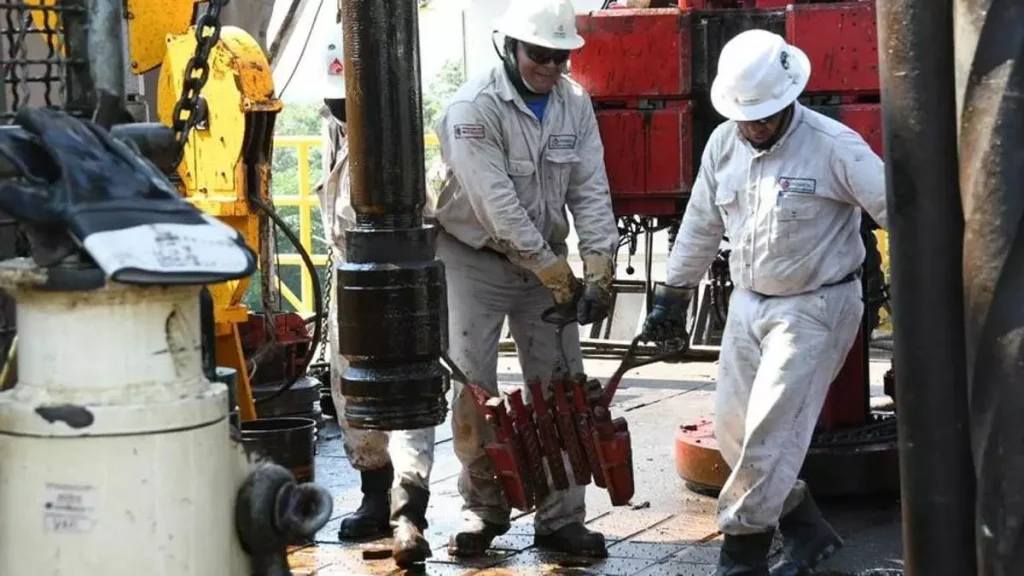
Despite the Controversy, Honduras Will Pay More Than One Million Dollars to Cuba for 170 Doctors

A group of 170 Honduran doctors will be awarded scholarships to study a specialty on the Island / El Libertador

14ymedio bigger14ymedio, Havana, 14 August 2024 — Honduras will send 170 general practitioners to Cuba to train in one of the 23 specialties offered by Cuban universities. The arrival of these health workers occurs through a scholarship program, similar to the one Cuba also has with other countries such as Mexico. For this first group, the Government of Xiomara Castro will disburse 30,000,000 lempiras (about $1,209,950), the newspaper La Prensa reported on Tuesday.

The Honduran doctors who will travel to Cuba were selected from 1,000 applicants. According to the same media, priority was given to recent graduates. “Young people are the ones who have the most time to serve,” said the Minister of the Secretariat of Social Development, José Cardona. What was stated by the official differs from the argument offered by the Ministry of Health (Sesal), which stated that “health workers were selected for their proximity to the areas where the new health system is being implemented.”

According to Sesal, the awarding of scholarships aims to have specialists who “are integrated into the new hospital network that is being built by the Administration of Honduras, which includes the construction of eight new hospitals.” continue reading

“Young people are the ones who have the most time to serve”

The measure takes place in the midst of the controversy over the hiring of 89 doctors in the Central American country. The Medical College of Honduras (CMH) claimed this provision from the Government of Xiomara Castro in November 2023, instead of employing the more than 11,000 Honduran doctors who are unemployed.

The CMH has expressed its dissatisfaction on several occasions. Last April, it denounced the Government for “violating the Constitution” by hiring health workers from Cuba without their having “the necessary accreditation to practice in the country.”

In addition, it noted that the Organic Law is very precise in pointing out that the CMH is the “only authorizing entity in the national territory of the Medical Brigades,” that they must provide their services free of charge and that their stay in the country must not be for more than 90 days.

Cuban specialists, the CMH said, not only do not comply with these requirements, they also violate Honduran labor regulations.

The method of operation is similar to that between Mexico and Cuba. The Government of Andrés Manuel López Obrador, according to official data up to January 2024, has 428 medical specialty students with scholarships, for which it pays Havana $27,914 (484,041 Mexican pesos) per year.

The Cuban specialists, the CMH said, not only do not comply with these requirements, they also violate Honduran labor regulations

Mexico’s support for the Island has been extended to the purchase of 16,000,000 doses of the Abdala vaccine, a drug that lacks the endorsement of the World Health Organization (WHO). Last February, a flight arrived with 4,530,600 bottles of the medicine for the National Vaccination Campaign against seasonal influenza and COVID-19. Many of these vaccines have been rejected by the population, and some of the doses have expired, despite which they are still being applied.

The agreement between Mexico and Cuba also includes the hiring of 5,000 Cuban specialists. Of them, more than 1,000 doctors have arrived, who have joined the Imss-Bienestar program to be sent to hospitals throughout the country.

For the services of the Cuban doctors, Mexico pledged to pay $1,308,922 per month to Neuronic Mexicana, which depends on Neuronic S.A. Cuba. Since 2018, this company has been the representative of the products and services of the biotechnology and pharmaceutical industries of the Island, under the presidency of the Cuban Tania Guerra.

Translated by Regina Anavy

____________

COLLABORATE WITH OUR WORKThe 14ymedio team is committed to practicing serious journalism that reflects Cuba’s reality in all its depth. Thank you for joining us on this long journey. We invite you to continue supporting us by becoming a member of 14ymedio now. Together we can continue transforming journalism in Cuba.

A Cuban Truck Driver Is Accused of Being a ‘Coyote’ in Texas; He Could Spend Five Years in Prison

A Cuban truck driver faces charges for migrant trafficking in Texas (USA) / Telemundo

14ymedio bigger14ymedio, Havana, 15 August 2024 — A Cuban man, Enrique Nerey Valdivia, was found guilty on Monday for the crime of “migrant trafficking” in the state of Texas. Federal prosecutor Alamdar Hamdani dismissed the evidence presented by the defendant’s defense lawyer, considering it “not very credible.” Judge David S. Morales, who presided over the trial, set sentencing for November 6.

Nerey Valdivia, 50, faces a sentence of up to five years in federal prison, in addition to a possible fine of up to $250,000, according to a statement from the Texas Southern District Attorney’s Office. The Cuban was allowed to remain free on bail pending sentencing.

The Cuban, a resident of Odessa, Texas, was arrested at the Border Patrol checkpoint near Falfurrias, after being discovered transporting five undocumented migrants in the back compartment of the truck.

During Monday’s hearing held in a court in Corpus Christi, the defense lawyer tried to convince the jury that Nerey Valdivia “had no knowledge of the people who were in the cabin of his truck.” continue reading

Nerey Valdivia “had no knowledge of the people who were in the cabin of his truck”

Upon arriving at the inspection point, agents of the U.S. Border Patrol inspected the truck when they noticed strange movements inside the cabin. Upon entering, they found five people covered with blankets in the bunk area.

This is not the first time that coyotes of Cuban nationality have been captured. Last March, two Cubans living in the United States were accused of migrant smuggling by the Border Patrol after being captured in the city of Las Cruces, New Mexico, while transporting 23 undocumented migrants inside a truck. According to Jason Owens, head of the police force of the small community near Ciudad Juárez in Mexico, after being prosecuted, they could “be expelled from the United States.”

In August of last year, Nahara Candelaria Milán, 26, was brought to justice for smuggling migrants. A traffic violation in Eagle Pass (Texas) and his nervousness when documents were requested betrayed the Cuban, who was inspected by the authorities. In his van he carried seven undocumented migrants.

In the same month, the Cuban Julio César Aspiazu Gómez was prosecuted for trying to take five undocumented migrants to Texas, who were later deported to Mexico.

Cubans Rainel Lázaro Silies and Lima Gálvez González were also intercepted in April 2023 for the crime of migrant smuggling in Kinney County, Texas, United States. The couple’s arrest took place in the town of Brackettville, when five undocumented people were transported in a vehicle with a license plate from the state of Kentucky.

According to the Kinney County office, the couple came from Louisville, a “Cuban settlement active since the 1990s,” which has doubled its population in the last decade.

Translated by Regina Anavy

____________

COLLABORATE WITH OUR WORKThe 14ymedio team is committed to practicing serious journalism that reflects Cuba’s reality in all its depth. Thank you for joining us on this long journey. We invite you to continue supporting us by becoming a member of 14ymedio now. Together we can continue transforming journalism in Cuba.

‘I Wanted To Give Chile a Medal,’ Says Cuban Yasmani Acosta When He Was Received by President Boric

Acosta was received by President Boric at the Palacio de La Moneda / Team Chile / X

14ymedio bigger14ymedio, Mexico City, August 14, 2024 — The images of Chilean President Gabriel Boric adjusting the microphone of the Cuban Olympic medalist Yasmani Acosta, who competed in Paris with the flag of the South American country, have gone around the world. His warm reception at the Palacio de la Moneda contrasted with the gloomy one that the athletes of the Island received in Havana; they had to settle for an airport in the dark and a rally without an audience.

Boric celebrated the athlete from Mantanzas, as one of the Chilean delegation also applauded Acosta, a silver medal winner in the 130 kg category of Greco-Roman wrestling. Along with the applause from his teammates, the Cuban hugged Boric too intensely. “And that’s why they didn’t give him a key,” immediately joked the gold medalist in skeet shooting, Francisca Crovetto.

Acosta stressed in his speech that he felt “welcomed” by the Chileans, without whose support he would not have been able to compete in the Olympic Games. “I felt indebted, and I wanted to give a medal to the country,” said Acosta in the Plaza de la Constitución at the end of the ceremony. continue reading

Boric celebrated the athlete from Mantanzas as one of the Chilean delegation

Jokes aside, it was the money earned by Acosta that most impressed Cuban fans in their home country. With the medal comes $46,000, Chile’s prize for its triumph in Paris. In addition, the Government will grant him a monthly scholarship of 2,692,303 Chilean pesos – about $3,000 – until the next Olympic Games in Los Angeles 2028.

“What a joy to see how the people of Chile are thanking Yasmani (…) They can’t imagine how our chests swell with pride when we see our athletes, and everyone, our entire Olympic delegation,” Boric said.

In Paris, Acosta was shot down by his fireproof compatriot Mijaín López, famous not only for his triumphs – five consecutive Olympic golds – but for dedicating them to Fidel Castro and other authorities of the regime. Miguel Díaz-Canel’s speech never explained how Cuba will reward its most loyal five-time champion. In the absence of money, there was talk of “patriotic pride,” and he announced that López will go “from champion to teacher,” by now dedicating himself to training young fighters.

In Spain, the Olympic medalists received a total of 2,892,000 euros divided among all, and part of the sum corresponds to the Spanish nationalized Cuban triple jumpers, Jordan Díaz and Emmanuel Reyes, who will receive 94,000 and 30,000 euros respectively.

The Spanish nationalized Cuban triple jumpers Jordan Díaz and Emmanuel Reyes will receive 94,000 and 30,000 euros respectively

Spanish President Pedro Sánchez congratulated Díaz on social networks after he won the triple-jump gold medal. The Cuban exiles, along with the rest of the medalists, have been honored without hesitation by the Spanish press, which calls them “Spaniards of Cuban origin.”

On the other hand, the absence of a mention of The Prophet, as Reyes is known, in Sánchez’s congratulatory messages has not gone unnoticed, and several Spanish media speculate that there could be an ideological motive behind it. Reyes is very critical of boxer Imane Khelif, the Algerian protagonist of the great gender controversy, after her victory over the Italian Angela Carina in 46 seconds.

In Poland, the Cuban volleyball player Wilfrido León, who guided his team to win the silver medal, will be awarded with 107,000 zlotys – which is equivalent to $27,000 – in addition to a diamond, a painting that he can choose to his liking and a vacation voucher, according to the Lublin ESKA radio station.

Despite the fact that the Santiagan Pedro Pablo Pichardo said he was “unmotivated” after obtaining the silver by falling in the triple jump final against Jordan Díaz and announcing his retirement, in Portugal, his host country, the press reports that on Monday the Olympic medalists had a welcome “apotheosis” at the Francisco Sá Carneiro Airport, in Porto.

In addition, more than 800,000 people watched the Cuban win his medal at the Olympic Games on public television. It was the most watched broadcast among the medalist athletes according to an audience analysis.

In Poland, the Cuban volleyball player Wilfrido León, will receive money, a diamond, a painting and a paid vacation

Andy Díaz, the other Cuban who mounted the triple jump podium, was greeted with applause at the Leonardo da Vinci International Airport in Rome for his bronze medal. Upon his arrival, people approached to greet him and ask him for a photograph, while he was escorted by a group of carabineros (gendarmes). “I promised Italy that I would get this medal, for everything they did to help me become an Italian citizen,” he told the press.

Meanwhile, the bronze medalist in boxing, Javier Ibáñez, said that he feels the affection and recognition of Bulgaria, his adoptive homeland. “Many people write to me and approach me on the street and say that they are proud of me. My family had mixed emotions,” he said at a press conference upon his arrival from Paris.

Translated by Regina Anavy

____________

COLLABORATE WITH OUR WORKThe 14ymedio team is committed to practicing serious journalism that reflects Cuba’s reality in all its depth. Thank you for joining us on this long journey. We invite you to continue supporting us by becoming a member of 14ymedio now. Together we can continue transforming journalism in Cuba.