Mexico Sends 23 Cuban Doctors to a Hospital Still Under Construction

Image of the back of the community hospital of Vícam Switch, in Sonora / Facebook/ Meganoticias Sur de Sonora

14ymedio bigger14ymedio, Ángel Salinas, Mexico City, 8 October 8, 2024 — A group of 23 Cuban doctors have been providing care since October 2 in a half-finished hospital in the municipality of Guaymas, state of Sonora (Mexico). At the same time as the consultations, the doctors have to endure the sounds of construction, and a pharmacy that provides an incomplete catalog of medications. A broken promise is behind the work, for which 26,014,316 dollars were invested, designed to serve 47,000 inhabitants of the Yaqui tribe, an indigenous community in the region.

The Government of Mexico, under Andrés Manuel López Obrador, granted a gift to Cuba with the hiring of doctors. At first it was said that they would be sent to the area of the Montaña de Guerrero, but in the eagerness to locate the Cuban specialists, against whom the national union and the opposition have raised their voices, they have been placed in hospitals in rural areas, and now even in clinics under construction, such as the one in the Yaqui area.

Several workers are observed in the background of the community hospital of Vícam Switch, in Sonora / Facebook / Meganoticias Sur de Sonora

“Governor Alfonso Durazo promised that the hospital would be finished in September. In addition, it would have an operating room and 28 beds,” a source told 14ymedio. Cuban doctors, along with nine Mexican doctors, offer consultations in internal medicine, ophthalmology, ear nose and throat diseases, pediatrics and gynecology, in addition to traditional medicine, according to Alejandro Burboa Luzanilla, director of the medical unit. continue reading

Consultations and other services are done while the hospital is being built, but in the media, the authorities show a different reality. “Everything has been done halfway. Smiling authorities appear in the videos, but everything is a facade,” adds the official.

The project includes two operating rooms, 30 beds, an emergency room, a shelter, pharmacy, X-rays and laboratory, but it does not advance at the pace that the authorities would like. “There are medications in the pharmacy, but some of the shelves are empty.” According to the hospital, the pharmacy has 98% of what is needed, including “antidiabetics, antidepressants and antibiotics.”

According to the official, the Yaquis must adapt to the Cubans, who “speak very fast and are little understood, although the Yaquis are grateful that they are in the region and are guided by the prescriptions they give them.” Official data indicate that in five days, doctors attended to more than 200 patients with diabetes, hypertension and digestive problems, even in the midst of the construction work.

Also, the Cuban specialists – the last ones arrived at the end of September – do not live near the hospital, as they should. “Apparently they still don’t have a house set up for them, so every day they are taken by official transport to cover the morning and afternoon shifts; there are no night shifts,” he said.

The authorities have assured that the work will be completed in December; in the meantime, the doctors will have to adapt and offer their services in the midst of the construction.

Regarding the per diem of Cuban doctors, at the beginning of October it was revealed that the Government of Mexico pays 5,188 dollars a month for salaries, transportation, food and lodging for each of the 3,101 specialists hired from Cuba to offer services in rural areas.

The governor of Sonora, Alfonso Durazo, in the community hospital of Vícam Switch / Facebook / Alfonso Durazo

This Tuesday, the arrival at the Imss-Bienestar unit of Tlaltenango, in the state of Zacatecas, of a geriatrician, gastroenterologist and family doctor was made official. Mayor Francisco Delgado Miramontes said that the specialists will begin to consult next week. The coordinator of the unit, Felipe Arreola Torres, said that with the arrival of the specialists, for the first time, it is guaranteed that there will be a doctor in each of the 484 health units.

Another group with 51 Cuban specialists was sent to the state of Hidalgo last Saturday, who were distributed to treat patients in 25 health units located in 16 municipalities of the state.

The arrival of these specialists is part of the agreement between the Government of Mexico and that of Cuba, through Comercializadora de Servicios Médicos Cubanos S.A. de C.V., a Cuban company internationally accused of human trafficking. For the 610 Cuban doctors sent between July 2022 and 2023, it pocketed 23,227,156 euros.

Translated by Regina Anavy

____________

COLLABORATE WITH OUR WORKThe 14ymedio team is committed to practicing serious journalism that reflects Cuba’s reality in all its depth. Thank you for joining us on this long journey. We invite you to continue supporting us by becoming a member of 14ymedio now. Together we can continue transforming journalism in Cuba.
After Two Months at 320 Cuban Pesos, the Dollar Begins To Rise on the Informal Market

Among the causes of the momentary exchange rate paralysis are the “disincentives to the growth of imports from the private sector

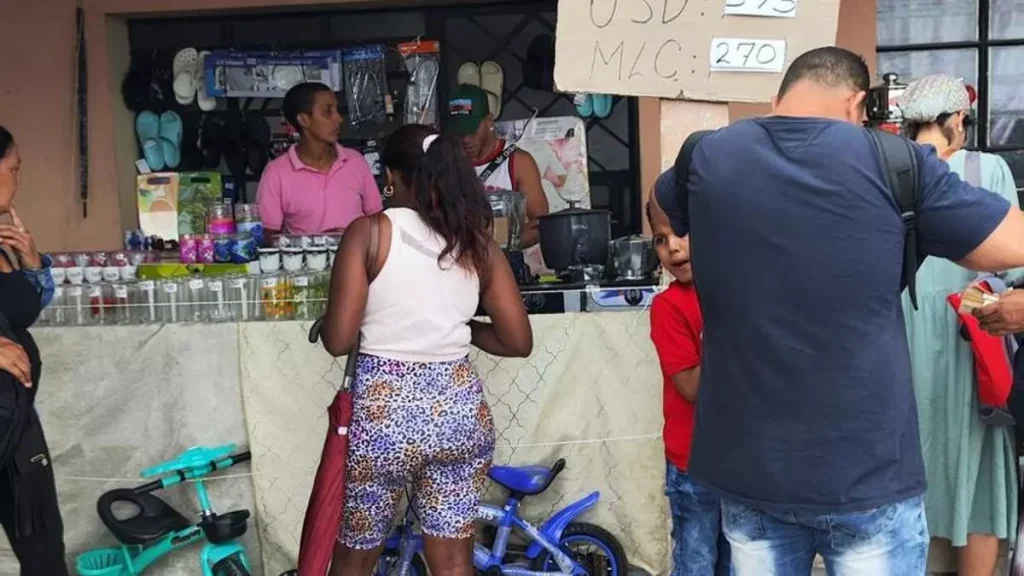
Informal currency purchase stands at the La Cuevita market, in Havana / 14ymedio

14ymedio bigger14ymedio, Madrid, October 11, 2024 — The exchange rate from the peso to the dollar on the informal market has set a record of stability during September and the first days of October. The Observatory of Coins and Finance of Cuba (OMFi), directed by the Cuban economist residing in Colombia, Pavel Vidal, states that the dollar was at 320 pesos for 59 days in a row, an unprecedented duration since this type of operation was recorded.

This Saturday will be a week since the exchange rate began to rise, very slowly, first to 322 and, from this Wednesday, to 323 pesos per dollar. The OMFi is, however, cautious, and although it contemplates another increase, the forecast is more discreet, with 326 to 339 pesos per dollar, an increase of between 1.5% and 4.4%.

“The signs of equilibrium persist,” says the report, which recalls, like the previous one, that it is not the first time there has been a pause. “However, this time a new mark of 59 days without variations is established, from August 4 to October 1, 2024. In 2021, the TRMI [exchange rate] had remained unchanged for 57 days, and in 2022 for 56 days.” The same as last month, the economist insists that periods of calm have always been preceded by others of instability. The dollar reached almost 400 pesos in May, to the point that the Government accused El Toque of manipulating the exchange rate with the aim of bringing it to 500 on July 11, to force a social explosion coinciding with the anniversary of the largest demonstrations against the Regime, in 2021. continue reading

 The Government has approved several measures to put the brakes on foreign purchases by private individuals

Among the causes of the momentary paralysis of the exchange rate in the parallel market, the report mentions the “disincentives to the growth of imports for the private sector.” The Government has approved several measures that can stop foreign purchases by private companies, such as capping the prices of six products considered basic necessities, and greater control over the main activity of MSMEs, but there are also others announced that keep the sector on guard.

In December, the authorities announced that the tax on imports of raw materials would go up by 50% to promote national production, while purchases of finished products would be penalized in the same amount. Although for now the rule applies only to tobacco and alcohol – presumably because of the fear of scarcity that the changes would produce – private businesses are not calm.

The increase in persecution of cash operations – for going against the government’s electronic payments policy – also appears in the OMFi report, which states that there are Cubans moving to the cryptocurrency market, with data on the rapid increase in the differential between the peso and the USDT (a cryptocurrency also known as Tether).

The OMFi report comes in the context of the dramatic economic crisis affecting Cuba, including the collapse of tourism. According to the text, the number of international visitors decreased by 3.5% at the end of August, compared to 2023, and is only 52% of those who arrived in the same period of 2019. “We would have to go back to 2002 (after the attack on the Twin Towers in New York) to have an eighth month with these levels, nothing more and nothing less than 22 years ago,” it explains.

In addition, even more serious, the report indicates that the number of rooms has doubled on the Island since that moment, and the investment (in tourism) does not stop.

Furthermore, for the OMFi, the lack of fuel is evidence of “the persistent financial problems and reflects the limits of the compensation that can be expected from allied countries”

It also emphasizes the decisive importance of the lack of energy on the economy, not to mention the quality of life of citizens. The document doubts the possibilities of the solar parks that are being built, at least for the moment, since at the end of the year, at best, only about 400 megawatts (MW) will be available, an insufficient amount given the deficits of more than 1,000 MW of the last month.

Furthermore, for the OMFi, the lack of fuel is evidence of “the persistent financial problems and reflects the limits of the compensation that can be expected from allied countries.”

The accumulated annual inflation, which is officially more than 19%, is barely 1.1% lower than for the same period in 2023, which does not detract from the severity of the panorama. “Prices grow less rapidly, but on an already very high level, along with incomes that remain lagging behind for a considerable part of the population.”

The report also reviews the negative fiscal deficit data (18% of GDP), the high issuance of currency (an error, according to most economists in an inflationary panorama), the fall in the value of the peso and a reduction in imports that threatens to restrict the precarious supply. In addition, the section closes with a revealing fact: the United States has surpassed Spain as a supplier to Cuba and is now second, behind China.

Translated by Regina Anavy

____________

COLLABORATE WITH OUR WORKThe 14ymedio team is committed to practicing serious journalism that reflects Cuba’s reality in all its depth. Thank you for joining us on this long journey. We invite you to continue supporting us by becoming a member of 14ymedio now. Together we can continue transforming journalism in Cuba.
Cubans Take Out Their Charcoal Stoves, Relics of the Special Period

Power cuts and fuel shortages make life more miserable for families every day

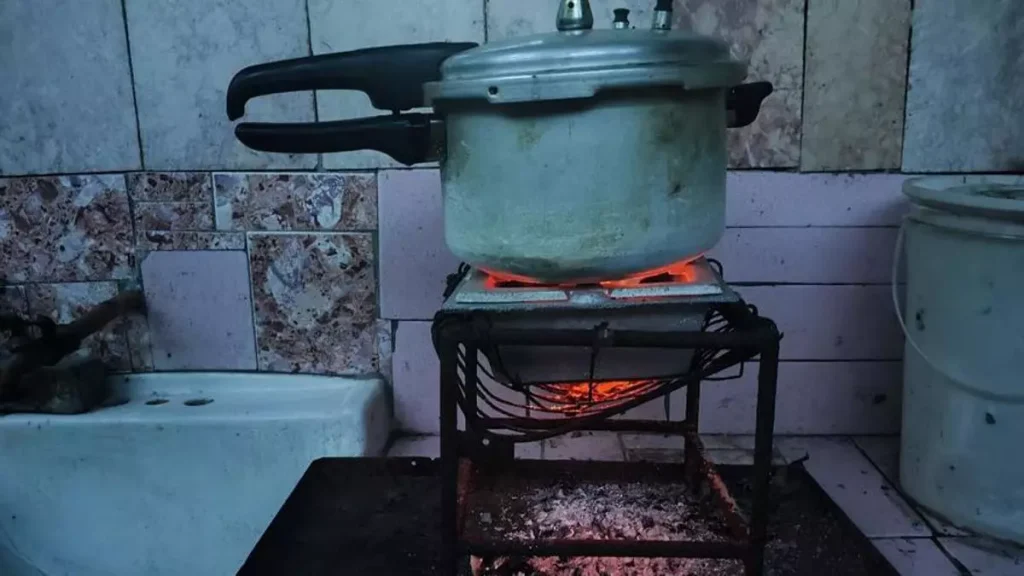
Demand for the stoves has skyrocketed, even on online sales sites / 14ymedio

14ymedio bigger14ymedio, Juan Diego Rodríguez/Mercedes García, Sancti Spiritus, 6 Ocotber 2024 — It is nighttime and – it is almost a truism when it comes to Cuba – there is a blackout. If a family wants to eat early, it is best to get going before the sun goes down. Those lucky enough to have an open patio will have less work to do and the stench of smoke and soot will not permeate the walls of the house. Those who are not lucky enough will have to set up the stove, with all the fanfare that it brings, on the counter. And resign themselves.

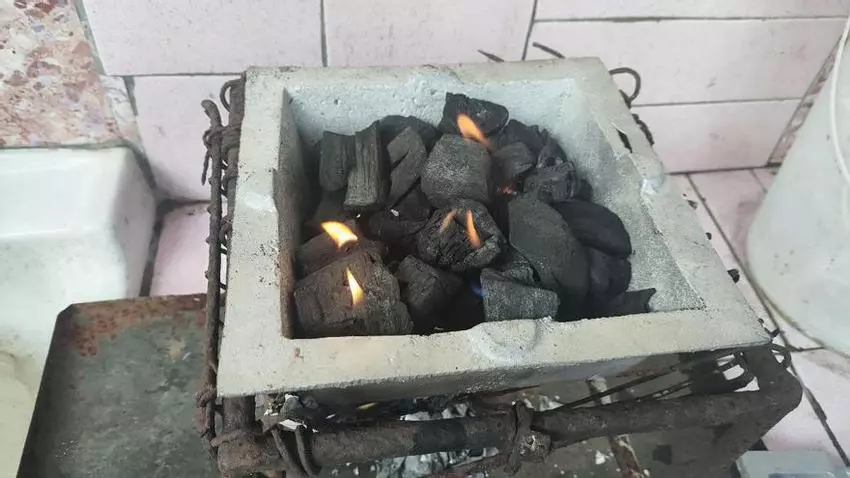
The design may vary – as the “veterans” of the Special Period know well, they were cautious and never got rid of them – but the principle is the same: a metal plate on the bottom or slab to contain the embers; an iron support; the stove itself, with its grate so that the fire can breathe; and the coal, true black gold now that there is no fuel.

It takes a lot of patience and practice not to burn yourself. A minimum of alcohol or gasoline is needed to light the embers, and if there are no matches, the procedure is even more cumbersome. At home, children stare at the flames in a daze. The flames crackle in the darkness under the cauldron. For adults, overwhelmed by the heat twice over – the tropical heat and that of the stove – it is a sad reminder that, in Cuba, even misery is recycled.

It takes a lot of patience and training to not burn yourself

Cooking with charcoal is one of the most degrading methods for Cuban families, not only because of the dirt and cumbersome process, but because it involves new expenses and more lines. The demand for stoves has skyrocketed, even on online sales sites. Not all homes have kept the iron utensils and there are young couples who are “initiating” themselves in the use of charcoal.

Pedro, a 32-year-old father in Sancti Spíritus, is desperately looking for a sack. When he went by bicycle to the place where he knew they were selling it, he found the gate closed and a sign: “There is a dog. And it bites.” He went closer, however, and saw another, smaller sign: “Tomorrow continue reading

afternoon.”

“I knocked on the door anyway to see if they would help me,” Pedro told 14ymedio. One of the employees opened the door. “We are closed,” he said, “and there is a line. When the coal arrives, people go nuts.” If he manages to catch it, it will cost him between 1,000 and 1,200 pesos a sack.

The charcoal they sell is of the third kind. On the international market, Cuba has made a good profit from its first-class marabou charcoal: it is used abroad for barbecues in the summer. Pedro has seen them on the internet: oval-shaped or rectangular smokers, in which juicy steaks and hamburgers are placed, meats that will never make it to his family’s cooker.

The design of each burner may vary, but the principle is the same. / 14ymedio

“Everyone here has rediscovered coal since the gas ran out,” he laments, bicycle in hand and heading to another post.

Pedro, at least, now has his stove. If he had to get a new one, it could cost up to 5,000 pesos. That was the price Ana, a housewife from Camagüey, paid for hers. Four twisted rebars serve as legs for the stand.

Towards the middle of the structure, a metal square collects the ashes and pieces that fall from the grill. He got a deep-bottomed burner, he says: “It can fit more coal.” Although that also has its drawbacks. It may increase the “power” of the cooking, but it will consume more wood.

Ana expects her grill, which is made of iron, to last longer than the modest aluminum burners that many Cubans are buying. They look shiny, but the strength and durability of the metal is not the same as older ones, she says. New ones without a stand cost around 1,800 pesos. They are not very deep either.

When it’s time to eat, Cuba is once again filled with small clouds of smoke in the courtyards. It is a time machine heading to the Special Period. The storage rooms, where for decades Cubans accumulated hundreds of bits of junk that they considered useless, are gradually emptied. The streetlights, the oil lamps, the little dynamo radios and the wood stoves return. And with them, sadness.

____________

COLLABORATE WITH OUR WORKThe 14ymedio team is committed to practicing serious journalism that reflects Cuba’s reality in all its depth. Thank you for joining us on this long journey. We invite you to continue supporting us by becoming a member of 14ymedio now. Together we can continue transforming journalism in Cuba.
In Four Years, Cuba Lost 62 Percent of Its Chickens and 72 Percent of Its Pigs

The Minister of Agriculture paints a much more dire picture than that of 2023, for which he still offers no solutions

The number of breeding pigs has increased from 96,000 to 26,000 in four years. / 14ymedio

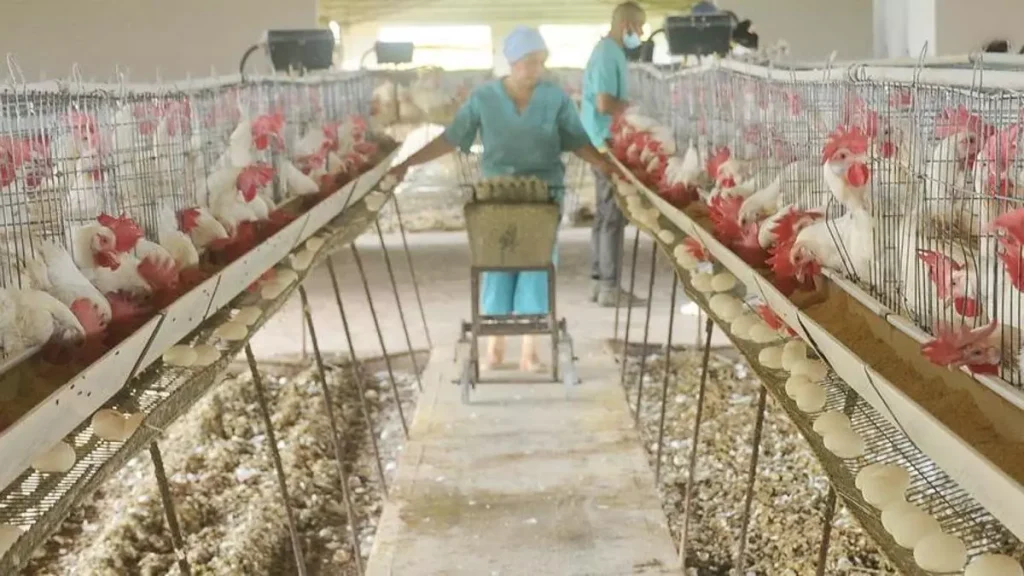
14ymedio bigger14ymedio, Madrid, 10 October 2024 — Until very recently, the most recent catastrophic official data available on chicken egg production was for 2023. It was known that Cuba went from producing five million units in 2020 to 2.2 million in 2023. The intervention of the Minister of Agriculture, Ydael Pérez Brito yesterday on television to explain the food situation on the Island shows that the well has no bottom. “Now, when we feed the mass that we have, 1,200,000 are produced, and at the moment it is less than 200,000,” he said, a figure consistent with the number of animals. Four years ago there were eight million hens in the country. Now there are only three, five million less.

The third example was rice. The minister said that there is capacity to plant some 200,000 hectares of the product. “But this year we have not surpassed the areas of specialized rice farms, which are approximately 60,000 hectares. It is very difficult to produce under these conditions,” he admitted.

These numbers could lead to the resignation of any political leader, but what economist Pedro Monreal predicted, moments before the start of State TV’s Roundtable program, happened. “The crisis began before the pandemic and agricultural policy has been unable to resolve it, but the absence of statistics for 2023, added to the usual low self-criticism of the ministry, seem to predict a new round of complaints, justifications and promises,” he wrote in X. His comments were illustrated by a spectacular graph of the food collapse since 2013 that indicates that only root vegetables maintain the level of that year, while the rest have been reduced, in some cases – such as citrus fruits – even by more than 75%. continue reading

Evolution of agricultural production in the last decade according to official data / Pedro Monreal

The economist was not wrong. Pérez Brito has no solution for the imminent food disaster affecting the country. He spoke of the tightening of the blockade*, which worsens access to financing, and an alleged international economic crisis to which he attributes higher prices for raw materials and transport. He also spoke of the fuel shortage – today people work on the Island with 10% less than before, he said – and what it entails, as well as the old machinery. He indicated that there is only 7% irrigation, and spoke about the aging of the workers, aggravated by the mass exodus that is reducing the population.

The minister then said that it was not a question of justifications, but of explaining the situation in order to find solutions, but he did not offer any solutions in the hour and a half of the program. Despite the mention of “offering more incentives to people to return to the countryside,” Pérez Brito did not make a single proposal for this nor did he point to the slightest change that the sector needs. On the contrary, he outlined all the mechanisms that exist and which – it is deduced – should be enough.

He pointed out that “institutionally, there are the necessary policies and legal norms that allow the advancement and organization of food production in the territories,” despite the stubbornness of the data he had presented and which he acknowledged when he said that “in 2024, most of the plans have not been fulfilled.” And although he pointed out that root vegetables – such as cassava and plantain – have better indicators, he was blunt: “We are not going to achieve what is needed.”

One of the objectives of the Minister of Agriculture’s presence was to talk about the agricultural census, which has been carried out since March and is now 66% complete. Inspectors have detected more than 100,000 irregularities, of which 60,000 are related to problems with improvements, at least 40% of which is having built houses on spaces that were previously dedicated to production. A few weeks ago the Government approved a law to legalize the existing homes – in view of the disaster that it would be to dismantle them – and to put a stop, in a decisive manner, to new illegalities in building.

The census has revealed that there are only 440,754 producers in the country – not enough to feed the island – of which 140,000 (32%) have less than one hectare, effectively for self-consumption, as the official pointed out.

The census has shown that there are only 440,754 producers in the country – not enough to feed the island – of which 140,000 (32%) have less than one hectare, effectively for self-consumption

Among the penalties, more than 9,600 usufruct leases have been cancelled due to non-compliance, contracts have been terminated and more than 172,000,000 pesos in fines have been applied. The minister assured that theft and illegal slaughter of cattle have a fundamental influence on production, although he did not provide data, and said that the greatest violations are the under-reporting of animals with regards to births, illegal sales, animals without markings and undocumented deaths or absences.

The discussion brought to light some other interesting data, such as the shortage of fertilizers after “four or five” years of no imports, except for the tobacco program or potatoes. As for rice, whose cultivation Pérez Brito discussed several times, there are two types of production on the Island: extensive, in rice fields and with all the technology – “today we have it very depressed” – and popular, which barely amounts to 36,000 hectares and, although it is mostly for self-consumption, “it can help.”

Pérez Brito spent time explaining to the TV audience the structure of the ministry and the number of companies and cooperatives that manage agricultural production, but interest in the program had already been lost due to the lack of proposals and the absence of the aforementioned incentives to attract people to the countryside. The end was the confirmation that, according to the authorities, everything is done by them.

“Our country has approved policies for land that no one else has, such as lending it free of charge for planting,” “We are granting cooperatives greater autonomy in their management,” “In Cuba, the destination of our production is guaranteed, but we have to produce more,” “We must continue to invest in the export of our production, so that this export can also finance the acquisition of inputs,” “We must continue working with foreign investment and collaborative projects, as well as linking with non-state forms of management.” This string of statements suggests that the country’s leaders do everything right and that the poor results are due to others.

*Translator’s note: There is, in fact, no US ‘blockade’ on Cuba, but this continues to be the term the Cuban government prefers to apply to the ongoing US embargo. During the Cuban Missile Crisis the US ordered a Naval blockade (which it called a ‘quarantine’) on Cuba in 1962, between 22 October and 20 November of that year. The blockade was lifted when Russia agreed to remove its nuclear missiles from the Island. The embargo had been imposed earlier in February of the same year, and although modified from time to time, it is still in force.

The Hens of Cuba’s Isla de la Juventud Went From Laying 42,000 Eggs a Day to Laying 1,000

The animals were put on a diet that reduced their food supply by 50%.

The hens of Isla de la Juventud have partially recovered production after months of decline. / Victoria

14ymedio bigger14ymedio, Madrid, 7 October 2024 — The hens of Isla de la Juventud (Isle of Youth) have had a disastrous summer, and with them the residents of the special municipality. Egg production is finally recovering after a few months of unmitigated collapse. From the 42,000 units a day that were regularly obtained until May, the number dropped to just 1,000. After that abyss, it can almost be described as a miracle that today they are obtaining some 22,000 a day, according to Frank Páez Martínez, director of the Poultry Base Business Unit (UEB).

The official gave all the details to the local official newspaper, Victoria , now that what he describes as a “slump” has been overcome and he can offer some good news, “a gradual recovery.” The inhabitants of Isla de la Juventud, who had 12 eggs in their ration book, saw their quota reduced by half, and that is in the best of cases, but the authorities are committed to gradually handing out six every 15 days.

The number is no small feat if one takes into account that in Havana the allocation is lower, five eggs per month, when they arrive at all. But the hens from Pinar del Río had shown themselves to be extraordinarily compliant in the midst of a resounding crisis in the sector at a national level. In May, according to Páez Martínez, total production rose to 1,140,000 units of the 1,104,000 planned, that is, 3% more than planned. continue reading

“In June we began to decline, many consumers did receive the dozen, while others barely received six”

“However, in June it began to decline; many consumers did receive the dozen, while others barely received six because there were no longer enough. The months went by because the production levels did not allow us to reach the usual figures,” describes the official, who attributes the bulk of the problem to “the difficulties” with the supply of feed.

The hens have had to face a radical diet, with a 50% reduction in feed. “It was a very difficult time because this feed shortage occurred repeatedly and made it impossible to stabilize the recovery we were achieving,” says the official.

And the “misfortune” did not come alone. Added to this was the inability to restore the animal population. “162,000 animals were supposed to arrive on the Island and we have only brought 20,000; these young birds were going to achieve better production and today they are not here, so we continue working with older hens,” laments Páez Martínez.

“Laying hens cannot be given an alternative feed because they do not produce. They receive a specific feed that is balanced by the national group with specificities such as minerals and essential amino acids for obtaining eggs, which is why we call it layer feed,” he explains.

This feed involves incorporating corn, wheat, soybeans, oil and other raw materials that Cuba must buy abroad. Importing them to make the feed on the Island, he explains, is cheaper, “but the obstacles imposed by the US blockade make this option difficult, causing it to be sought, paid for immediately and even having to import the feed, which is more expensive,” he complains. In fact, the chickens are currently eating imported feed.

The wind and heavy rains affected the entire process, not only the animals, but also the transportation of personnel

Páez believes that, despite the difficulties, the company has managed to organize itself and take care of the health of the hens while they have been “on a diet,” so that when the food arrived they could react appropriately. He does not explain how the matter was managed, but if his figures are correct, the workers have managed to recover production in a surprisingly short period of time.

The problems for the Cuban authorities never end, however. Then came “another problem, with the bad weather. The wind and the heavy rains affected the whole process, not only the animals, but also the transportation of the staff, the collection of the eggs, the distribution of the feed. These circumstances caused another drop in production that forced us to adopt strategies to ensure that the hens did not go hungry,” he continues.

Now, the problems seem to be coming to an end: feed – of high quality, he points out – is assured and production has multiplied by 22, a real milestone. “The response of the birds is noticeable. With the availability of the feed we have, we are going to recover. However, to satisfy the population with 12 eggs is still a long way off,” he admits.

In the short term, it will be essential to renew the animal population. The future layers arrive directly from Havana when they are barely a day old and there are two farms prior to the production farm: the start-up farm and the development farm, where there are 14,000 birds, which are later incorporated into the layer farm. The hens normally stay there for a year, although currently they stay for two years, one of the problems most referred to the authorities, who regret the aging of the poultry population, with logical repercussions on productivity.

“The direction of the flock should be younger,” laments the official, adding that the hens “are going to start hatching now, but the delays in flock movement extend to the whole nation. They are expected to arrive, but it will not be the number that we should get.”

Problems with feeding chickens and power outages that leave them without electricity and water for days have hampered egg production in Cuba, which fell from five million units per day in 2020 to 2.2 million in 2023.

Authorities have been forced to massively import eggs, as reflected by the expansion of exports from the Dominican Republic to the Island. Between June 2023 and August 2024 alone, the figure grew by 1,858.4% year-on-year. From July 2023, when eggs began to be purchased in the neighboring country, until the end of that year, the expenditure was 1.5 million dollars, while in the 8 months of this year, more than 5.2 million dollars have already been invested.

____________

COLLABORATE WITH OUR WORKThe 14ymedio team is committed to practicing serious journalism that reflects Cuba’s reality in all its depth. Thank you for joining us on this long journey. We invite you to continue supporting us by becoming a member of 14ymedio now. Together we can continue transforming journalism in Cuba.

The Cuban Regime Is Cruel to José Daniel Ferrer: 19 Months Without Family Visits

State Security threatens Luis Robles with taking “drastic measures” against him

José Daniel Ferrer has been in prison since 11 July 2021, before he could join the massive protests that day / X/@jdanielferrer/Archive

14ymedio bigger14ymedio, Madrid, 7 October 2024 — Once again, the officials at the Mar Verde prison in Santiago de Cuba, where José Daniel Ferrer is being held, prevented him from having the meeting he was supposed to have on Friday with his wife Nelva Ortega, and his children. For 19 months now, the regime has denied him the required family visit.

“They only accepted the bag of food and hygiene products,” Ana Belkis Ferrer, sister of the leader of the Patriotic Union of Cuba (UNPACU), told Martí Noticias on Sunday. The Cuban American National Foundation joined the activist’s family in denouncing it, “strongly” condemning, in a statement on Monday, “the continued abuses” of the regime against Ferrer, as well as “the more than a thousand Cubans imprisoned for demanding freedom, democracy and justice in Cuba.”

In its statement, the organization recalls the resolution issued by the European Parliament on September 19, which demanded the “immediate” release of the activist and “respect for his rights,” and which the Cuban regime “has blatantly ignored.”

José Daniel Ferrer has been in prison since July 11, 2021, before he could join the massive protests that day, although his history of repression began much earlier. The opposition leader was part of the group of prisoners of the Black Spring, with a death sentence commuted to 25 years in prison and released after eight years thanks to the efforts of the Vatican and the mediation of Spain.

The Cuban American National Foundation denounced in a statement on Monday “the continued abuses” of the regime against Ferrer

During these four years of imprisonment, he has suffered abuse and torture, as reported by international organisations such as Prisoners Defenders. For almost two years, his family has said, he has refused to wear the prison uniform, and the prison authorities have restricted his rights to the maximum. continue reading

After being held incommunicado for a year, during which time they could only deliver bags of supplies to the prison, Ferrer’s relatives began a campaign last March to demand a proof of life, which was joined by numerous Cuban politicians and activists from the island and in exile. The strategy, which had its precedent in a similar campaign in June 2023, managed to get Ferrer to see his daughter on March 19.

A month later, after standing in front of the prison, his wife managed to see him for “two miserable minutes.” “When they realized that I would remain stationary and that the only way to get me out was in a patrol car or by letting me see my husband, the same officer told me that they would give me two minutes, after discussing it with the Headquarters and State Security,” Nelva Ortega said at the time.

On September 7, the Archbishop of Santiago de Cuba, Dionisio García Ibáñez, and the priest Camilo de la Paz, in charge of the Penitentiary Pastoral of the diocese, visited the opponent.

Ten days later, when she announced the news, Nelva Ortega told Martí Noticias that she was glad that “after so much time,” a “person of God” had been able to visit Ferrer and offer him “encouragement.” His wife did not offer too many details of the visit, but explained that, according to what she was able to learn from the priest, the opposition leader is “stable” mentally and physically. His health, however, worried the archbishop and his companion.

“Specifically, the health part is not good,” Ortega told the media, and clarified that Ferrer told García Ibáñez and De la Paz that he suffered from heartburn, stomach pains and that his arm was “practically immobile.”

Although he did not give further details, he assured that he will continue to shout for his freedom “as long as he has a voice.”

However, he said that Ferrer remains firm: “The harassment, repression and threats have continued, reminding people that he could spend his whole life in prison if he does not decide to leave the country, and he has made it clear that he prefers to die inside rather than leave.”

On Sunday, Yindra Elizastigui, the mother of political prisoner Luis Robles, said that State Security threatened her son, the “young man with the placard,” that “drastic measures” would be taken if she continued to publicly denounce the situation of her son and all political prisoners.

Although he did not give further details, he said he would continue to shout for freedom “as long as he has a voice.”

Robles, who has been in prison since December 2020 when he demonstrated on San Rafael Boulevard in Havana with a banner calling for the release of rapper Denis Solís, was granted a prison permit earlier this year to serve the remainder of his five-year sentence – for enemy propaganda and disobedience – in a correctional labor camp. Solís was ultimately forced into exile in Serbia.

____________

COLLABORATE WITH OUR WORKThe 14ymedio team is committed to practicing serious journalism that reflects Cuba’s reality in all its depth. Thank you for joining us on this long journey. We invite you to continue supporting us by becoming a member of 14ymedio now. Together we can continue transforming journalism in Cuba.

Cuba and Hopelessness

The word that is most repeated in the talks of exile is not blackout, hunger or misery, but an even gloomier one

The few people who passed by had a lost look, with the resignation of someone who no longer expects anything / 14ymedio

14ymedio bigger 14ymedio, Yunior García Aguilera, Madrid, 10 October 2024 — From time to time I meet with Cubans who have just left the Island or are passing through Madrid. The word that is most repeated in our talks is not blackout, hunger, or misery, but an even gloomier one: despair. A friend who recently went to Cienfuegos showed me the photos he took during his visit. The streets were practically deserted, and the few people who passed by looked lost, not like those who wait for a miracle, but with the resignation of those who no longer expect anything.

Social networks do not show a very encouraging panorama either. It is true that the Facebook avenues seem busier than the real streets of Havana, but there we all coincide, those who left and those who stayed. And surfing the Internet is not a sailboat ride; it is rowing in turbulent waters, where the currents of opinion throw us from one side to the other, against the rocks. Fights between opponents are more frequent than concrete actions against the Regime. Disputes, insults and “friendly fire” are more abundant than consensus and strategic agendas.

Probably, Hatuey had no desire to meet in heaven, either with the Spaniards or with his own people

There is nothing new under the sun, as Solomon would say. Reviewing our history, this despair appears more than once. We all remember the first hero, Hatuey, the enigmatic cacique who came to alert us about the ambition of the conquerors and who led the first rebellion. Our textbooks have emphasized his last words at the stake, rejecting the ticket to paradise and becoming a paradigm of intransigence. But what they never mentioned was his mood at the time. And he was not only a human being condemned to die in a frightening way, but a disappointed leader. It was one of his own continue reading

men who betrayed him, revealing his location and facilitating his capture. Probably, Hatuey did not have the slightest desire to meet in heaven either with the Spaniards or with his own people.

The other great hero in a loincloth was Guamá, who resisted the conquerors for a decade, in what some call “our first ten-year war.” And after all that time, the great chief did not die at the hands of his enemies, but by someone who shared his own blood. They say it was a matter of “skirts” or rather of petticoats. Guamá had kidnapped his brother’s wife, and the brother was possessed by Cain. While Guamá slept in his hammock, his own natiao (brother, in Taíno language) stuck an axe in his forehead. After that it was relatively easy for the Spaniards to pacify the territory.

We all know the epic anecdote that turned Céspedes into the Father of the Homeland. The Bayamés preferred the death of his son rather than give up his fight. But, perhaps, that would be his last thought in San Lorenzo. Céspedes was haunted by the envy of other caudillos from the very cry of independence. And five years after the start of the fight, he would be betrayed by the House of Representatives of the Republic in Arms itself. It was not enough for them to remove him; they also needed to humiliate him.

They forced him to march in the rear of the troops for a month and withdrew his escort. They systematically violated his correspondence, denied him permission to meet his wife and twin children in New York and abandoned him in a remote area. Perhaps we will never know for sure if he was betrayed by his former companions or if his last shot was a suicide bullet. What I’m going to write could be politically incorrect, but, with Céspedes, that abstract illusion that we call Patria committed parricide.

With Céspedes, that abstract illusion that we call Patria committed parricide

Not to mention Martí’s last days and his unnecessary death in combat. Our story, read without patriotic hysteria, is full of despair. But the purpose of this article is not to disillusion you, dear reader, but to shake you.

I was recently talking to a diplomat, whose name and nationality I reserve, and he told me something alarming. According to his vision of Cuba, the degradation is so accelerated that there is a possibility that the damage will be irreparable. Perhaps, not even if it the dictatorship falls, will we be able to rebuild the body and soul of the country in a prudent time. In short, if the Regime survives for a further five-year period, we would be left with a permanently failed state, where it would be impossible to achieve the democracy and progress we so much desire. And this fatality worsens if we analyze the international context, because today’s world is not in a position to give us the help we would need to repair all the accumulated damage.

That said, tighten your belt, dry your tears and recover hope. We are not going to bequeath this fight to our children. It’s our turn… and it has to be now.

Translated by Regina Anavy

____________

COLLABORATE WITH OUR WORKThe 14ymedio team is committed to practicing serious journalism that reflects Cuba’s reality in all its depth. Thank you for joining us on this long journey. We invite you to continue supporting us by becoming a member of 14ymedio now. Together we can continue transforming journalism in Cuba.
Cuba Begins a Partial Unloading of the Liquefied Gas It Could Afford To Buy

The Minister of Energy and Mines revealed that the ship had been in the port for “several weeks” without being able to unload its cargo due to lack of payment

Ship monitoring pages indicate that the Cuban-flagged ’LPG Emilia’ arrived in Havana on September 27 / Vesselfinder

14ymedio bigger14ymedio, Havana, 8 October 2024 — The Government’s inability to pay for imports became evident again this Monday, when the Minister of Energy and Mines, Vicente de la O Levy, announced on social networks the beginning of the unloading of liquefied gas (propane), after several days with the ship in port for lack of funds. The unloading, however, will be partial, since the State cannot pay for the whole amount.

“After several weeks of having the ship in our port loaded with liquefied gas, the supplier has agreed to a partial unloading, based on the payments that have been made. The distribution of the propane begins in hours,” he wrote on his X account.

The minister has not given any details about the location of the ship, although the online ship monitoring pages indicate that the LPG Emilia, under the Cuban flag, arrived in Havana on September 27 and planned to travel to Matanzas three days later. According to Marine Traffic, that’s where it has been since the 30th. The other liquefied gas ship that visited the Island recently is the Fortunato, with a Panamanian flag and coming from the Mexican port of Coatzacoalcos, where it returned to three days ago.

The supply of liquefied gas had been in trouble recently. At least two provinces, Cienfuegos and Las Tunas, were forced to announce the suspension of distribution. The head of the Commercial Area of Cupet Las Tunas, Osmey Muñagorri, had to deny the rumors of a three-month continue reading

stoppage of deliveries, although he recognized that it was impossible to ensure an exact date to resume the sale. The official described the situation as “highly worrying” due to the uncertainty about imports of this product.

Many families are running out of cooking alternatives and have even resorted to the old charcoal burners / 14ymedio

As for Camagüey, Cupet has reported daily on its social networks about the absence of liquefied gas in the province, stating that as soon as it was available they would tell the population. At the same time, the State company insisted on explaining how the virtual sale will take place, which includes the possibility of receiving the product at home with an additional cost of 100 pesos, amounting to 280 for the total. The authorities also offered to explain how to “order the cylinders,” properly recording the number of each one in the purchase. The mere mention outraged the customers.

“At this point in the game you intend to organize what you knew was not organized. I think it would be very irresponsible to do that at this time, first worry about having the availability of gas that is your social objective,” claimed a user. “In the midst of the blackout crisis, it occurs to them to put in some order and make the cylinder numbers match, after years and years without taking this into account. In their analysis, did they realize how much discomfort they are causing? Is the goal to irritate us more? Many families help each other; if I have an extra propane tank I share it with my family. They are forcing us to pour the propane into another tank so as not to lose the precious liquid, with the risk that this entails,” says another person.

In other provinces, such as Havana, Holguín and Santiago de Cuba, the lack of propane has also been reported

In other provinces, such as Havana, Holguín and Santiago de Cuba, the lack of propane has also been reported, with the problems posed by a constant situation of energy deficit in which many families are running out of cooking alternatives and even end up resorting to the old charcoal burners.

Meanwhile, the electricity deficit has been undauntingly predicted above 1,000 megawatts (MW) daily. A shortage of 1,155 MW is expected for this Tuesday, but forecasts are constantly exceeded without fail. This same Monday, the Electric Union of Cuba had calculated a deficit of 1,150 MW that finally became 1,363 MW at peak hours, “higher than expected due to higher demand than planned,” in the words of the company.

Translated by Regina Anavy

____________

COLLABORATE WITH OUR WORKThe 14ymedio team is committed to practicing serious journalism that reflects Cuba’s reality in all its depth. Thank you for joining us on this long journey. We invite you to continue supporting us by becoming a member of 14ymedio now. Together we can continue transforming journalism in Cuba.

The Political Police Harass Independent Journalist José Luis Tan Estrada, Invoking the Social Communication Law

The agents urged the reporter to take his passport and go “on a trip,” adding that it would be best for him

Days before the last anniversary of the ’11J’ nationwide protests of 2021, the journalist was arrested and taken to a police station in Camagüey / Facebook/José Luis Tan Estrada

14ymedio bigger14ymedio, Havana, October 10, 2024 — Independent journalist José Luis Tan Estrada was questioned this Wednesday by State Security agents in the province of Camagüey. According to his post on social networks, the authorities warned him that “he was on his way to falling into the crimes of being a mercenary and writing propaganda against the Government,” and they threatened to prosecute him under the Social Communication Law.

The appointment, scheduled for 1:30 in the afternoon at the Third Police Unit, lasted almost two hours, the journalist said. During that time, Cristian and Laura – the names given by the agents – dedicated themselves to reviewing Tan Estrada’s “counterrevolutionary” trajectory, including his journalistic work and publications on social networks. Although the authorities cited the recently implemented Social Communication Law to intimidate the reporter, the truth is that non-State journalism was already punishable by the Constitution, the Criminal Code and Decree Law 370.

“Cristian, the repressor who has been responsible for several arbitrary arrests against me, showed me a file with all my publications and some alleged witness statements, which they did not show,” said the journalist.

Tan Estrada was questioned about several of his publications, both on independent media such as CubaNet – 0n which he collaborates – and on Facebook. “According to Cristian, I took advantage of the ’tamales boy’ to set up a whole enemy campaign and give a bad image of childhood in the country,” he explained, referring to a photo published by the journalist weeks ago in which a child was seen selling tamales on the street. At that time, the photo caused strong reactions among Cubans, who denounced the case as child labor and organized a collection to help the minor. continue reading

Tan Estrada was questioned about his publications, both on independent media and on social networks

The agents urged the reporter to take his passport and go “on a trip,” adding that it would be best for him. They also pointed out that his journalistic work and the media with which he collaborates are spaces “designed to degrade and demoralize the achievements of the Revolution.”

Likewise, the agents cited several names close to Tan Estrada. “They tried to turn me against Laritza Diversent, director of Cubalex, and her work team. ’If you have been given so much advice during this time, tell them that, if they are so sincere, to explain the Social Communication Law, because all of them are there (in exile)’,” said the opponent, and added: “They also mentioned Professor José Raúl Gallego and Lara Crofs, with whom I maintain very strong friendships, and of whom I am very proud to be their friend, and it is no secret to anyone. Cristian says that I have been trained by Professor Gallego and that the links arose when he was my professor at the university, and that I should distance myself from him, because he has shown aggressive behavior against the country on social networks’.”

About Crofs, the pseudonym on the networks of the activist Yamilka Lafita, who mainly denounces social problems, “they said that both Lara and I do not provide any help out of feeling or heart, but to contribute to social degradation,” said Tan Estrada.

After the “monologue” of the agents – as he described it after refusing to talk to State Security – the reporter insisted that he will not stop doing journalism or asking for “the freedom of the more than a thousand political prisoners” that the Regime maintains in its prisons.

After the “monologue” of the agents, the reporter insisted that he will not stop doing journalism

Last July, days before the anniversary of the 11J demonstrations, Tan Estrada was arrested in a park in Camagüey and transferred to the Third Unit. Laura, the same agent who now “interviewed” him, was the one who immobilized him and removed the cell phone with which the journalist was trying to connect to the Internet.

“They gave me a warning notice, which I did not sign and, in addition, they said that if I did not comply with it, I would be prosecuted for disobedience and contempt. I told them, and I say it again here, I will continue to do independent journalism, and I will not turn away my face from injustices,” he said a few hours after being released.

Months earlier, in April, the reporter was arrested after arriving in Havana and detained in Villa Marista, the main headquarters of State Security, where he remained for several days. According to several opponents and organizations, Tan Estrada, in the course of a month, had suffered two interrogations and had been fined 3,000 pesos for violating Decree-Law 370, aimed at controlling and penalizing independent journalistic activity on the Island, among other things.

Translated by Regina Anavy

____________

COLLABORATE WITH OUR WORKThe 14ymedio team is committed to practicing serious journalism that reflects Cuba’s reality in all its depth. Thank you for joining us on this long journey. We invite you to continue supporting us by becoming a member of 14ymedio now. Together we can continue transforming journalism in Cuba.

El Che Now Has Someone Who Overshadows Him

Vigils for El Taiger overshadow the official tribute to Che Guevara on the 57th anniversary of his death

Whether it was the loose chain or a puncture, it is not known: the fact is that the Heroic Guerrilla brought little luck to the journey / 14ymedio

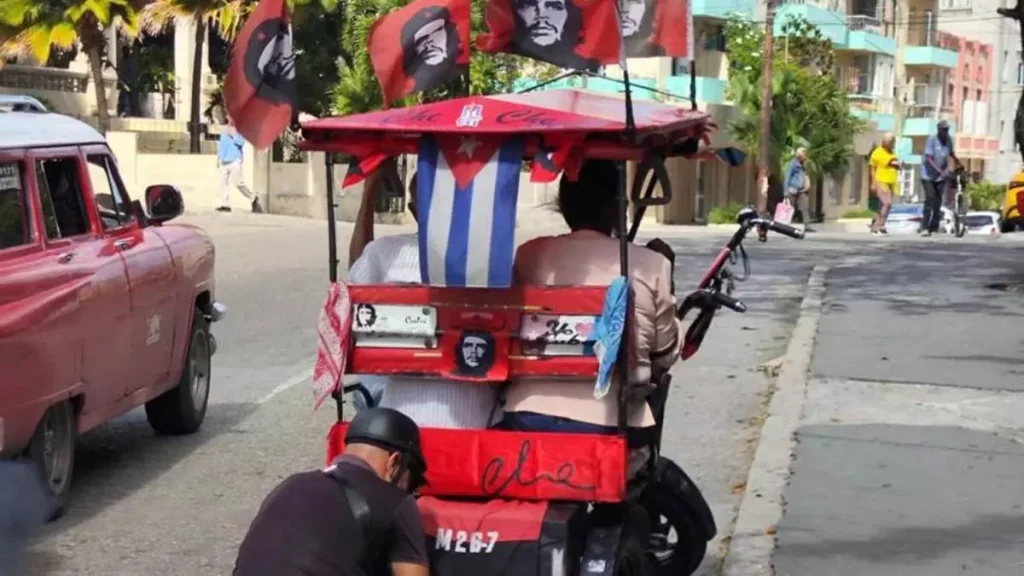
14ymedio bigger14ymedio, Juan Diego Rodríguez and Juan Izquierdo, Havana, 8 October 2024 — The pedicab travels through the streets of Havana with more Castro talismans than a May Day parade. It is of little use. The weight of the passengers, who are putting their backs against a banner of the 26th of July, plus that of the driver – the architect of the revolutionary float – soon causes the vehicle to collapse. To diagnose the damage, the tricycle makes a forced landing next to the curb.

Whether it was the loose chain or a puncture, no one knows: the fact is that the Heroic Guerrilla brought little luck to the journey. Five red flags with the face of Che flutter above the roof while, in a bad mood, the driver lowers his head to the chassis. His two customers do not flinch. They paid for the trip, not to show solidarity with the proletariat.

Guevara’s nickname, written over and over again in dubious handwriting on the bicycle taxi, makes it seem at times like a tribute to the cha-cha-chá. The driver, in fact, moves from one side to the other trying to detect the fault, but the carcass remains motionless. Two colorful handkerchiefs, on the port and starboard sides, complete the message: they represent the guapería [swagger], another “revolutionary” value that Miguel Díaz-Canel himself has praised. “I love Cuba” is the final slogan, an affection that the scene makes it more than difficult to share.

“Let’s go,” the driver finally says, and pedals off. Above his head, another “saint’s picture”: the umpteenth reproduction of Korda’s portrait of Che, which acts as a figurehead on the bicycle taxi.

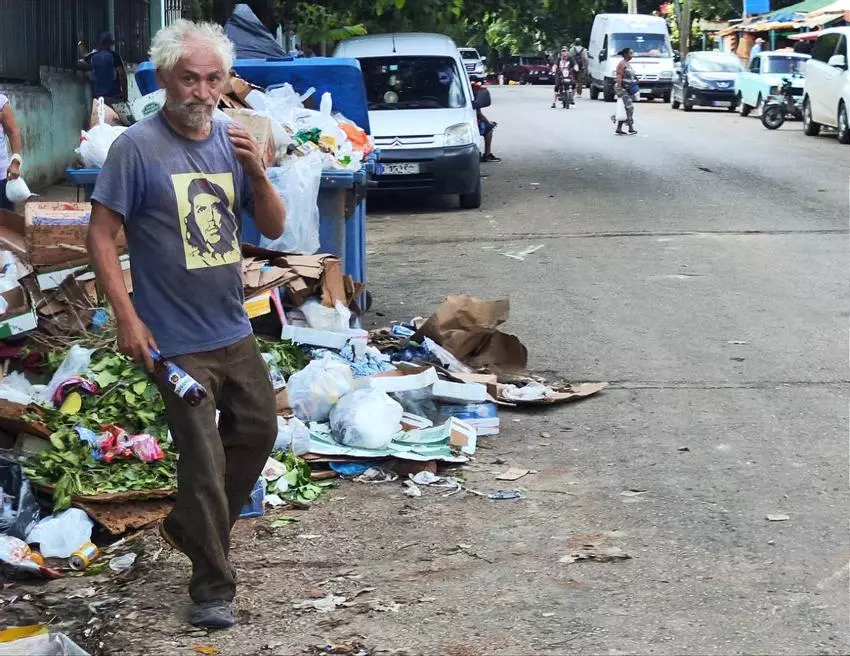
One of the ’dumpster divers’ who frequent the Key West garbage dumps, wearing a Che Guevara T-shirt / 14ymedio

On October 8, along with the usual, tasteless tributes that the official press pays to the Argentinean who died in 1967, the most unusual characters are wearing Che Guevara T-shirts. This is the case of one continue reading

of the dumpster divers who frequents the garbage dumps in Key West. One must be a “heroic guerrilla” to, like the old man is doing now, rummage through the garbage in search of food.

In his mind there is no cause-effect relationship between the regime that Guevara helped to establish and his misery. Like many other “faithful” people, he thinks that if Cuba is full of piled up garbage everywhere it is not because of Che or Fidel, but because of more abstract causes: the ‘blockade’, the situation or the circumstances. With Guevara’s face on his chest, the beggar kneels in the trash to earn his lunch: at least on the symbolic level, both faces see the same rot.

A Lada from Prensa Latina, the agency with which Che dreamed of bringing his and Castro’s “truth” to the entire continent / 14ymedio

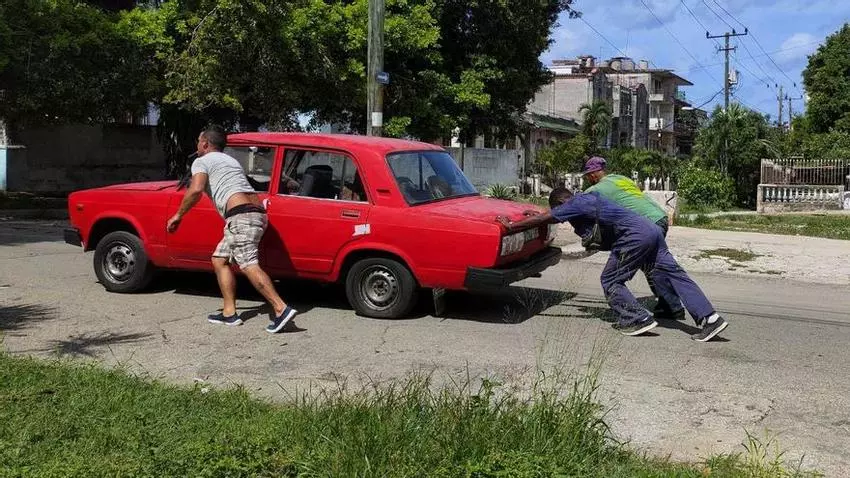
Not far from there, another vehicle – a Lada, also red from the hood to the windshield – is fighting paralysis and breakdowns. It is a Prensa Latina car, the agency through which Che dreamed of bringing the truth, his and Castro’s, to the entire continent. Leaning in through the front door, in shorts, with a cigarette in his mouth and his belly visible, the driver – together with a mechanic and another passenger – pushes the Lada.

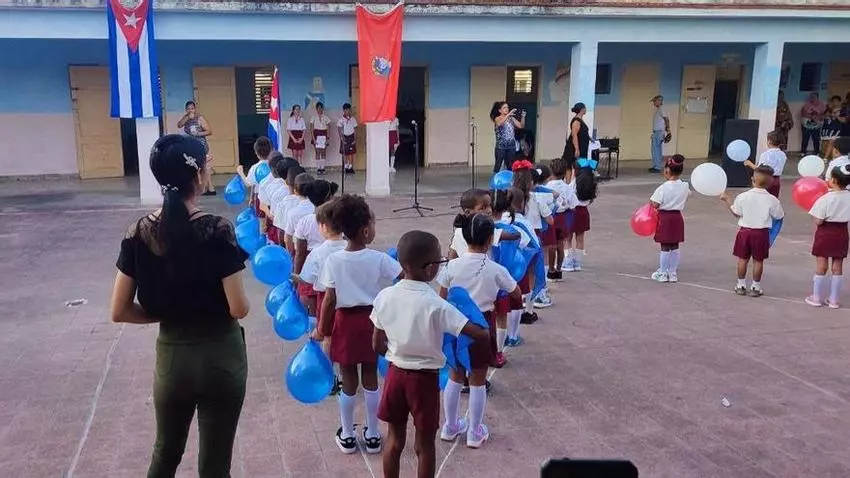
In Havana on October 8, where there is no shortage of scenes like these, Fidel’s words about Guevara in 1987 – which are now being retweeted by dozens of leaders, including Díaz-Canel – sound ironic: “If a paradigm is needed, if a model is needed, if an example to imitate is needed to reach such lofty goals, men like Che are essential.” But reality does not promise anything. The “initiation” of a small group of children, the ‘pioneers’ who received their blue scarves on Tuesday, contrasts with the lively vigils for the health of El Taiger, who is dying after being shot in Miami.

The “initiation” of a a small group of children, the ‘pioneers’ who received their scarves this Tuesday, contrasts with the lively vigils for the health of El Taiger / 14ymedio

Cubans do not aspire to be like Che, but rather like the repartero, the reggaeton singer. Although the official position has been to condemn the attack on El Taiger, the author of Washypupa and Me quemaste, many leaders have regretted that young people do not pay homage with the same fervor to the guerrilla or to the victims of the attack on Cubana flight 455, coming from Barbados, on October 6, 1976.

But these are no longer the days of “Pioneers for communism, we will be like Che.” Now we have the words of El Taiger, whose lyrics – and who would have repeated them to the regime – are not lacking in lucidity: “Your story is badly told / And nobody believes you.”

____________

COLLABORATE WITH OUR WORKThe 14ymedio team is committed to practicing serious journalism that reflects Cuba’s reality in all its depth. Thank you for joining us on this long journey. We invite you to continue supporting us by becoming a member of 14ymedio now. Together we can continue transforming journalism in Cuba.

A Crowd of Young People Hold a Vigil in Sancti Spíritus for the Health of El Taiger

Cuban State Security monitors Serafín Sánchez Park without intervening in the event

Dozens of young people gathered in the Serafín Sánchez park in Sancti Spíritus /14ymedio

14ymedio bigger14ymedio, Mercedes García, Sancti Spíritus, 8 October 2024 — At least a hundred people, most of them very young, gathered this Monday in the Serafín Sánchez park, in the heart of Sancti Spíritus, for an evening of prayer and tribute to José Manuel Carbajal Zaldívar, known as El Taiger. The musician, who was shot in the head last Thursday in Miami and is fighting for his life, has shown that there are young people willing to mobilize on the Island, even if it is not because of their difficult living conditions, but rather the health of a local singer.

The vigil began around 8 pm, in a square packed with young people between the ages of 14 and 20, who began to turn on their cellphone flashlights and sing some of El Taiger’s songs. The presence of State Security was perceptible to the most alert eyes, although this was not the case for most of the participants, who were more concerned with the emotion of the night than with whether someone was vigilantly watching them.

“They [the agents] were there more to calm a possible situation than to manage a gathering they had organized”

“They [the agents] were there more to calm a potential situation than to manage a rally they had organized,” said a 14ymedio contributor who attended the gathering. The government has been very supportive of the singer in recent days, considering him a “victim of a society as violent as the American one,” which includes statements by Abel Prieto, former Minister of Culture and current director of the Casa de las Américas.

“All Cubans wish for his recovery,” said the senior official on X, in a post in which he shared an informative note from the Cuban Institute of Music (ICM). Prieto also stressed that El Taiger “has not renounced his nationality or his love for Cuba.” continue reading

Hours earlier Lis Cuesta, the wife of Cuban president Miguel Díaz-Canel had expressed her solidarity with the artist. “Simultaneously, in several cities in Cuba and in Miami, there are people holding a vigil for the life of El Taiger, a very popular urban artist there and here, who was the victim of a violent crime in South Florida,” wrote Cuesta on social media. “The Cuban nation is one, even if hatred tries to divide it. We wish him recovery and strength to his family and friends,” she added.

These sentiments could lead one to think that the Government is behind the acts of solidarity with the musician, but this is not what could be seen in Sancti Spíritus, where the political police agents were constantly on the alert as they observed the crowd.

In the middle of the event, a police vehicle appeared on Independencia Street, next to the park, and two police officers walked around the area, where they talked with the State Security agents, without anything noteworthy happening despite the fact that a truck with special troops was located in front of the old Hotel Perla and several red berets got out to observe the scene.

The event was still going on around 11 pm, the same day it was learned that the artist was in stable condition. Marcel Reinosa, the Cuban reggaeton singer’s manager, said that “there is a small amount of progress,” although he remains in a very serious condition.

“Doctors announced that his kidneys began to function, and that his body began to control its temperature”

“Doctors announced that his kidneys had begun to function and that his body had begun to control its temperature,” a sign of a development that is, however, not very promising, given the severity of his injuries. On Tuesday, doctors at Jackson Memorial will carry out further tests on the artist to assess his clinical condition.

Miami Police Chief Manuel Morales confirmed on Monday that the case is being investigated as an attempted murder based on the forensic evidence found. The official confirmed that Cuban Damian Valdez Galloso is considered a “person of interest” in the investigation and $5,000 is being offered for his capture.

“This individual has relevant information about what happened with El Taiger,” said Morales, who asked for public collaboration.

____________

COLLABORATE WITH OUR WORKThe 14ymedio team is committed to practicing serious journalism that reflects Cuba’s reality in all its depth. Thank you for joining us on this long journey. We invite you to continue supporting us by becoming a member of 14ymedio now. Together we can continue transforming journalism in Cuba.

Not Even the Hospitals Are Spared From Blackouts in Cuba

La Dependiante, a hospital in Havana, has been without an elevator for more than a week

García Tuñón Pavilion of the Clinical Surgical Teaching Hospital Diez de Octubre in Havana, known as La Dependiente / 14ymedio

14ymedio bigger14ymedio, Juan Diego Rodríguez, Havana, 8 October 2024 — Until very recently, living near a hospital on the Island gave a little consolation: no matter how much the electricity deficit increased, it was unlikely to suffer a blackout. The Cuban Electric Union avoided turning off the circuits where the health centers are located on the Island.

However, the blackouts have also been affecting hospitals for days, the last stronghold that seemed to keep the lights on. Even those who have their own generators have run out of electricity since there is no fuel.

This is the case, for example, of the Diez de Octubre Clinical Surgical Teaching Hospital in Havana, known as La Dependiente. In front of the stopped elevator of the García Tuñón pavilion, a woman refused to go up the three flights of stairs to the pain clinic where she had an appointment this Tuesday. “What time do they turn on the electricity?” she asked desperately. “We don’t know,” the elevator operator replied. “Sometimes they take it away for five hours, sometimes six and sometimes eight, from what we understand.”

The patient was amazed: “How is it possible that they don’t have electricity in a hospital?” The employee encouraged her: “Be thankful that you weren’t locked inside. This morning I was stuck with an old man who couldn’t even move.” continue reading

“Sometimes they take [the electricity] away for five hours, sometimes six and sometimes eight, from what we understand”

Different patients, however, reported on social networks that the elevator has been broken for weeks, and that this has made them miss consultations and therapies. “It’s disrespectful, and I wonder where the bosses in charge are; it’s sad that no one cares about anything,” Elsa Alfonso said on Facebook in response to Nelson Ayala, a man who recently had an operation and complained about the same situation.

La Dependiente, an impoverished and precarious health center, located on Diez de Octubre Avenue, is not the only one that suffers power outages. The Calixto García hospital, in El Vedado, one of the most important in the capital, has also been affected by blackouts. Two weeks ago, journalist Ernesto Morales, a U.S. resident, released a video in which the dark corridors of the hospital were shown, illuminated only by the light of patients’ cellphones.

Complaints are also multiplying on social networks about the provincial clinics. A photo published on October 2 by the writer Ghabriel Pérez, from Holguín, showed the surroundings of the Lucía Íñiguez Landín Surgical Clinical Hospital in complete darkness, with no sign of light inside.

“What time do they turn on the electricity?” she asked desperately. “We don’t know,” the elevator operator replied / 14ymedio

The hospital of the municipality of Vertientes in Camagüey was the same, as shown in photos released by José Luis Tan Estrada, on September 19. “Here, right now, there are patients in serious condition, with shortness of breath, and pregnant women, and the power just went out at 1:30 in the morning,” an eyewitness told the reporter.

The situation in Cuba was fully revealed this Monday, when the Minister of Energy and Mines, Vicente de la O Levy, announced on social networks the start of the unloading of liquefied gas from a ship after it remained in port for several days, detained for lack of financing. Even more: the unloading would be partial, since the authorities did not have the full amount to pay for it.

On the other hand, oil is arriving in dribs and drabs. According to the latest Reuters report, Venezuela, the Island’s main supplier, sent 22,000 barrels of oil per day (bpd) in September, much less than the 33,700 bpd of June and even the 28,000 bpd of April.

Although last Wednesday the PVT Clara tanker arrived at the port of Havana, loaded with Russian fuel from Kaliningrad, and the previous Friday, the Ocean Mariner with Mexican oil arrived in Nuevitas, it does not seem to be enough. Cubans cannot escape from power cuts even in the operating room.

Translated by Regina Anavy

________________________

COLLABORATE WITH OUR WORKThe 14ymedio team is committed to practicing serious journalism that reflects Cuba’s reality in all its depth. Thank you for joining us on this long journey. We invite you to continue supporting us by becoming a member of 14ymedio now. Together we can continue transforming journalism in Cuba.

At Least a Thousand Cubans Are Among the Migrants Stranded in Tapachula Due to Delays in Procedures

Migrants of various nationalities in the Miguel Hidalgo Central Park in Tapachula, Chiapas / Facebook/Escenario Noticias

14ymedio bigger14ymedio, Ángel Salinas, Mexico City, 9 October 2024 — The delay in the response to appointments through the CBP One application keeps Cubans Alexander Mori and Bárbara García stranded since August in Tapachula, Chiapas. “Several Venezuelans received the answer in four days, but I, who carried out the procedure two months ago, have not had an answer,” Mori tells 14ymedio. The migrant defense lawyer for José Luis Pérez tells this newspaper that there are at least a thousand Cubans in the same situation.

This 27-year-old from Havana says that he has carried out the procedure up to three times; the last one was on Thursday, September 26. “We are desperate, people come and go, but we are still here, without moving.”

Pérez says that Mori, like other migrants, made a mistake: they have to wait for a response after making the appointment. “Every attempt starts from scratch; they must be patient,” he urges.

During his stay in Tapachula, Mori met Bárbara García in the Miguel Hidalgo Central Park. Originally from Matanzas and 29 years old, she was arrested in a raid by Immigration agents on September 2 and admitted to the Siglo XXI migratory station. The Matancera was traveling with her father and a nephew, but while she was detained they received a response to her CBP One appointment and moved her to the International Guardhouse in San Ysidro, Tijuana. continue reading

The parish priest Heyman Vázquez attributes the increase in the migratory flow to the “delay” in the procedures / EFE

“My family is already in Texas, they have managed to fulfill the dream, but I’m still here, waiting for an answer to the appointment,” he says. García spent 20 days locked up, “threatened with a deportation if she did not pay 1,000 dollars.” Her nephew was able to visit her after the National Institute of Migration (INM) granted him the multiple migratory form, a 20-day conditional stay permit that allowed him to travel to the border.

“One day the agents arrived, gave us a list and released us. I immediately completed the procedure and I am waiting for an answer,” he says.

The director of the Center for Human Dignity, Luis García Villagrán, told Diario del Sur that there are currently 45,000 migrants, most of them from Venezuela, Nicaragua, Guatemala and Cuba, stranded in Tapachula. The common denominator of these groups is “political and religious persecution, xenophobia, violence, insecurity, poverty and lack of opportunities.”

The parish priest of the municipality of Suchiate, Heyman Vázquez, attributes the increase in the migratory flow to the “delay” in the procedures. The religious leader denounced the lack of attention by the INM, which caused people to be exposed to gang violence.

“The State ignored the situation of violence in the region, as well as its obligation to investigate and sanction human rights violations,” says the parish priest. The “crimes of public agents” and Migration are widespread, both for “omissions and in collusion with criminal groups.”

Translated by Regina Anavy

____________

COLLABORATE WITH OUR WORKThe 14ymedio team is committed to practicing serious journalism that reflects Cuba’s reality in all its depth. Thank you for joining us on this long journey. We invite you to continue supporting us by becoming a member of 14ymedio now. Together we can continue transforming journalism in Cuba.
Cuba’s Official Press Presents El Taiger as a ‘Victim of the Violence’ Prevailing in the US

Despite its aversion to reggaeton, the Cuban regime allows rallies of support for El Taiger

Both in Miami and on the Island, Cubans have held several events in honor of the musician. / Instagram

14ymedio bigger14ymedio, Havana, 6 Oct0ber 2024 — In an unusual gesture, the Cuban official press covered the news this weekend of the attempted murder of the singer José Manuel Carbajal Zaldívar, known as El Taiger, last Thursday in Miami. The unusual interest of the state media comes despite the fact that the music of reggaeton singers is frequently censored and demonized on television and radio on the island.

Carbajal Zaldívar was found on Thursday shot in the head and lying in the back compartment of a black Mercedes Benz van, which was abandoned two blocks from Jackson Memorial Hospital in Miami. Paramedics had to remove him from the vehicle through the trunk and, according to local press, they also found two gallons of gasoline that they suspect could have been used to set the car on fire.

Since then, the reggaeton singer has been fighting between life and death at the Ryder Trauma Center of the same hospital, where he remains hospitalized in intensive care. The medical prognosis remains reserved due to the severity of his injuries, which forced him to undergo emergency surgery.

This Saturday, Cubadebate was quick to portray the singer as a “victim of a society as violent as the American one” and, with a marked ideological tone, emphasized that there was never a veto on the part of the Government to speak about the case. In the comments provided at the bottom of the article, some readers took continue reading

advantage of the space to wish the singer a speedy recovery and applauded the fact that the official newspaper addressed the issue.

In its Sunday edition, the also official ‘Vanguardia’ dedicated a space to talk about the musician

In its Sunday edition, the also official Vanguardia dedicated a space to talk about the musician regarding the incident, which is being investigated as an attempted murder. Through a column signed by Francisnet Díaz Rondón, the official newspaper highlighted the popularity of the artist’s songs among the public on the Island and recounted some little-known episodes of “altruism with the most needy and sick” carried out by the reggaeton singer “through sincere and authentic actions.”

Similarly, the regime was also unusually permissive in the face of a series of public displays of support by El Taiger’s followers on the island, who took to the streets on Friday and Saturday to show their affection for the singer and to pray for his speedy recovery.

In Havana, hundreds of people gathered at La Cascada on 23rd and Malecon carrying candles and praying for the singer’s health. Other Cuban reggaeton singers such as Mawell and Charly & Johayron were also present at the event. Similar scenes occurred in Santiago de Cuba and Guantanamo, where the musician’s followers walked and sang his songs in the streets. In Miami, another vigil took place outside the hospital where the reggaeton singer remains hospitalized.

Miami Police Chief Manuel Morales revealed during a press conference held on Friday that a man linked to the music industry and close to the reggaeton singer is the main suspect in the attack. He is Damian Valdés, better known as El Narra. According to preliminary reports from the authorities, the musician was one of the last people with whom the singer had contact before being attacked.

According to the motel registry where the victim stayed the night before the incident, it was Valdés who made the payment for the service. He has not been formally charged yet, but was declared a “person of interest.”

Miami Police informed the media that they know the identity of the owner of the car where Carbajal Zaldívar was found injured.

Miami Police informed the media that they know the identity of the owner of the car where Carbajal Zaldívar was found injured, but did not reveal more details to avoid compromising the progress of the case. “Our officers are investigating because we think this did not happen in the city of Miami. We are sure that it did not happen on that corner where the car was found. This happened somewhere else, someone took him there, left him and left on foot,” local police spokesman Mike Vega told Telemundo.

Miami-based lawyer Miguel Inda-Romero, who specializes in immigration issues, announced that he will process a humanitarian visa so that the reggaeton singer’s daughter, who lives in Cuba, can travel to the United States and be with her father. According to Telemundo, Inda-Romero emphasized that, despite not agreeing with some of the artist’s decisions in the past, she believes that “the girl is not to blame for anything, and it is our duty to help her.”

Before the attack, the artist led an ostentatious lifestyle and did not hesitate to boast about his money and his weapons on social media. He also bragged about his cocaine use and was involved in episodes of violence against other artists. In recent years, the singer was often featured in Cuban media based in Miami for his constant trips to and from prison, after facing charges for various crimes such as drug possession, armed robbery and assault.

Carbajal Zaldívar, who was part of the duo Los Desiguales with another artist nicknamed Damián, was especially popular in Cuba between 2014 and 2019. Back then, his stage name was El Príncipe. His music, mainly of the urban genre, was played at school parties and spaces for teenagers and young people.

____________

COLLABORATE WITH OUR WORKThe 14ymedio team is committed to practicing serious journalism that reflects Cuba’s reality in all its depth. Thank you for joining us on this long journey. We invite you to continue supporting us by becoming a member of 14ymedio now. Together we can continue transforming journalism in Cuba.
Three Garbage Dumps in Havana ‘Collapsed’ After Exceeding ‘Authorized Height Levels’

  • Tires, batteries and spare parts are lacking for the 28 garbage trucks donated by Japan
  • Due to the shortage of personnel, prisoners have been ordered to perform these tasks
  • The La Güinera market is closed for a month due to the poor sanitary conditions
Garbage accumulates in the streets of Havana, as the independent press has been denouncing for more than a year / 14ymedio

14ymedio bigger14ymedio, Madrid, 7 October 2024 — After rebuffing the insistent reports from the independent press for more than a year about the disastrous situation of garbage collection in Cuba – more specifically in Havana – the State media have begun to pay attention. This Monday they published their third consecutive analysis of the issue, which has become alarming, according to them. All three landfills in Havana, without exception, “collapsed,” admits Roberto Cárdenas Santos, technical deputy director of the Provincial Company of Communal Hygiene, who also confirms that they exceeded “the authorized height levels.”

His boss, Alberto Ernesto Rodríguez García, maintains that the main problem affecting the capital is “the technical coefficient of the collection equipment, mostly stopped due to lack of tires, batteries and spare parts that have been deteriorating.” The official told Cubadebate that an expenditure of seven million pesos has been approved to acquire between 300 and 400 tires and 126 batteries. “With these, all the equipment that is working in the city could be repaired, and we would have a better sanitation situation,” he says. In addition, a container of parts has been imported for the Narciso López Roselló Equipment and Applications Company, where specialized equipment and other trucks are repaired and maintained.

Nothing allows us to ensure that this is the end of the problem. The managers of Comunales maintain that fuel is not an inconvenience in this case, since the company has a guaranteed allocation. Trucks have an average of 1 or 1.2 liters of gasoline reserved for each cubic meter collected, which is no small thing taking into account the widespread shortage for most industries and homes. continue reading

Trucks have reserved an average of 1 or 1.2 liters of gasoline for each cubic meter collected

However, the 28 trucks that were donated from Japan in 2019 suffer pressing needs. “There is a significant deficit of parts to support this equipment. Although maintenance was done on time, several trucks began to fail, and those that were left had to replace the others and were overexploited,” adds Rodríguez García.

In addition, waste collection suffers from one of the great evils that weighs on the already impoverished national economy: the shortage of personnel. This Monday’s report in Cubadebate speaks of a “labor fluctuation,” as they have decided to designate this new euphemism for the lack of workers caused by the massive emigration of the last two years, especially among people of working age. Thus, “the court has given them the ability to hire prison inmates, the main workforce today that takes care of garbage collection activity,” reveals the newspaper.

There are two other difficult jobs that the prisoners must assume: the collection of charcoal made from the marabou plant and the cutting of sugar cane. The Cuban regime resorts to these prison workers to cover vacant positions, a fact that has been denounced by organizations such as Prisoner Defenders. Tomoya Obokata, special rapporteur on the UN’s Contemporary Forms of Slavery, deplored this method.

Although the Government approved new labor laws at the end of 2023 to regulate the working conditions of prisoners and guarantee them new rights, sentencing prisoners to “correctional” work – included in the Criminal Code – is prohibited in most Western countries.

Workers are not the only deficiency facing the Government. There is one that is even more worrisome: a lack of the faithful. “We are being affected by the deficit of professional staff for the management of communal services. Cerro, Centro Habana and Plaza are without directors. Arroyo Naranjo and Boyeros also have problems. With a lack of central personnel, the control structure crumbles. The rules are there for a reason, because you don’t collect just to collect; there is a mechanism for providing quality service,” says Rodríguez García.

“With a lack of central personnel, the control structure crumbles. The rules are there for a reason, because you don’t collect just to collect; there is a mechanism for providing quality service”

This absence, he insisted, affects the organization and the awareness of citizens, whom he also urged to do their part to maintain hygiene.

Among the most affected municipalities, Cubadebate deals specifically with Diez de Octubre, where this Friday Cuban President Miguel Díaz-Canel went in person to supervise the mountains of garbage. Arroyo Naranjo is also mentioned, among others, where the Municipal Administration Council has been forced to make an unprecedented decision: to close the La Güinera market for one month due to the sanitation conditions, although they also mention the importance of “individual activity.”

“During this period, actions will be carried out by the different entities involved in the repair of dumpsters, pipe leaks and roads in the area,” the government of Havana announced on social networks. Merchants have regretted the suddenness of the situation, which forces them to store merchandise that can be damaged during this time, although most users have applauded a decision that improves the precarious health situation in the area and ask that it be generalized throughout the capital.

This Monday’s report clarifies the seriousness of the situation when Cubadebate does not mince words to describe it: Stench, mountains of solid waste, rodents, diseases and garbage that “springs from the city like one more limb.” “It is an issue that concerns everyone,” it continues, “and if everyone, authorities and citizens, don’t add a grain of sand, Havana cannot be that marvelous city that it aspires to be.”

Translated by Regina Anavy

____________

COLLABORATE WITH OUR WORKThe 14ymedio team is committed to practicing serious journalism that reflects Cuba’s reality in all its depth. Thank you for joining us on this long journey. We invite you to continue supporting us by becoming a member of 14ymedio now. Together we can continue transforming journalism in Cuba.