The Cuban Regime Releases 21 Political Prisoners While Arresting 15 Protesters

The Cuban Observatory for Human Rights reports 35 repressive actions in just four days
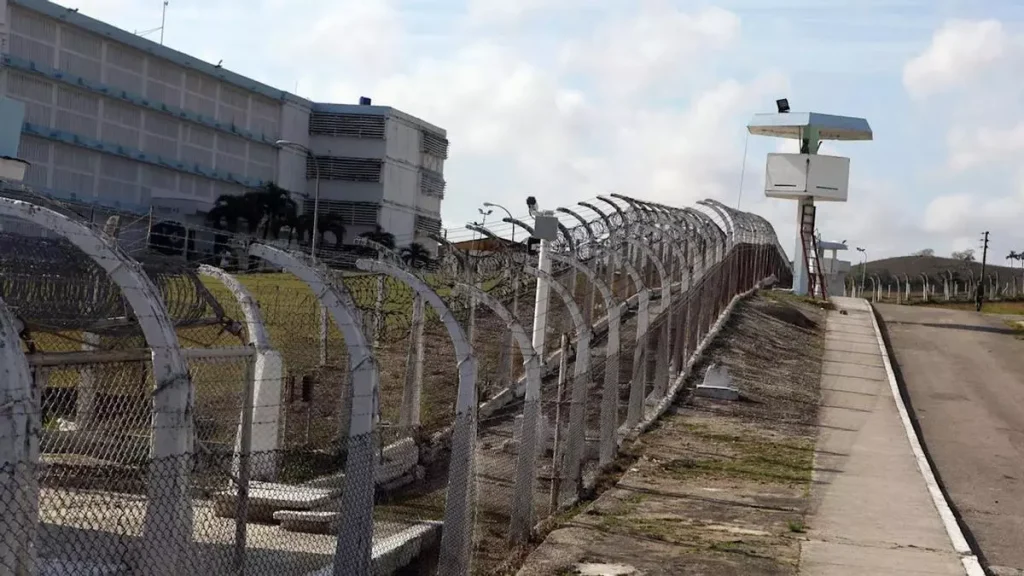

The regime maintains its repressive apparatus intact and activates it swiftly whenever it detects any expression of public discontent. / EFE

14ymedio bigger14ymedio, Havana, 17 March 2026 — The Cuban regime has released 21 political prisoners as part of an agreement reached with the Vatican, but this move—presented by the authorities as a gesture of easing tensions—has coincided with a new wave of repression on the island. While some inmates have been freed, at least 15 people have been arbitrarily detained for taking part in protests in various provinces across the country, according to a report issued this Tuesday by the Cuban Observatory of Human Rights (OCDH).

The organization warned that, far from pointing to any real political opening, the releases have been accompanied by a spike in surveillance, threats, and arrests. “Since the Cuban regime announced the release of 51 political prisoners, an increase in repressive actions has been observed. Between March 13 and 16, 2026, at least 35 repressive actions were documented, targeting protesters, journalists, activists, relatives of political prisoners, and opposition figures,” the observatory said.

The release of 21 political prisoners—many of them convicted for taking part in the Island-wide 11 July 2021 protests—has not meant any reduction in pressure on dissent or on the social discontent that continues to surface in different parts of the country. On the contrary, repression seems to have shifted from prisons to the streets and into the homes of those who dare to protest or speak out.

Two minors are also on the list: Jonathan Muir Burgos, 16, and Kevin Samuel Echeverría, 15, who was also shot in the leg.

Among the most recent incidents are the arrests following protests in Morón, in the province of Ciego de Ávila. According to the OCDH, many of the 15 arbitrary detentions recorded in recent days are linked to those demonstrations. Alongside the arrests, the organization documented threats, constant police surveillance outside homes, de facto house arrests, police brutality against protesters, summonses, harassment of activists and journalists, and fresh reports of abuse inside prisons. continue reading

“These events show a pattern of pressure and control aimed at silencing protest and limiting the exercise of fundamental rights,” the NGO warned. The regime keeps its repressive apparatus fully intact and activates it quickly whenever it detects any expression of public discontent.

According to the information released, 12 people remain detained or their release has not been confirmed. The list includes Ángel Baldomero Quintana Martínez, Bryan Pérez Muñoz, Erick Simón Toledano, Iledier Tabuada Machado, Juan Manuel Griñán Clemente, Raicer Crespo, Silvio de la Caridad Quintana Martínez, Vladimir Ortiz Ortiz, Yaisdely Castillo Hernández, and Yosuan Naranjo. It also includes two minors: Jonathan Muir Burgos, 16, and Kevin Samuel Echeverría, 15, who, as mentioned, was shot in the leg.

The presence of teenagers among those detained once again puts the spotlight on the disproportionate use of force and the criminalization even of minors in protest situations. The case of Kevin Samuel Echeverría, wounded by gunfire, adds a particularly serious element to a chain of events in which the authorities have failed to provide convincing public explanations.

The regime is trying to score political points from the prisoner releases while keeping up intimidation against those protesting now.

So far, those released after these arbitrary detentions are Catherine Gutiérrez Sánchez, Elier Muir Ávila, and Rolando Pérez Lora. Their release, however, does not change the overall picture of repression reported by human rights organizations, which stress that short-term detentions, threats, and constant surveillance are also forms of political punishment.

Meanwhile, the list of political prisoners released under the Vatican deal has now reached 21 names. Most were convicted of sedition, contempt, public disorder, assault, or resistance—charges routinely used by the Cuban justice system to punish protest. Among them are Adael Jesús Leyva Díaz, Frank Aldama Rodríguez, José Luis Sánchez Tito, Roberto Ferrer Gener, and Wilmer Moreno Suárez, several of whom were serving sentences of between 13 and 18 years in prison. Many are from Havana, though others come from Artemisa, Holguín, Villa Clara, Santiago de Cuba, Camagüey, and Mayabeque.

The disproportionate nature of these sentences, imposed in many cases on participants in the July 11, 2021 protests, has been denounced for years by international bodies and human rights platforms. Vatican mediation has now secured the release of a group of prisoners, but the Cuban government has shown no sign of revising the legal and policing framework that made those convictions possible, nor of abandoning repression as its go-to response to dissent.

The regime is trying to politically capitalize on the releases while continuing to intimidate those protesting today. The partial release of political prisoners does not amount to any real improvement in public freedoms when repression against dissent continues at the same time.

Translated by GH

______________________

COLLABORATE WITH OUR WORK: The 14ymedio team is committed to practicing serious journalism that reflects Cuba’s reality in all its depth. Thank you for joining us on this long journey. We invite you to continue supporting us by becoming a member of 14ymedio now. Together we can continue transforming journalism in Cuba.
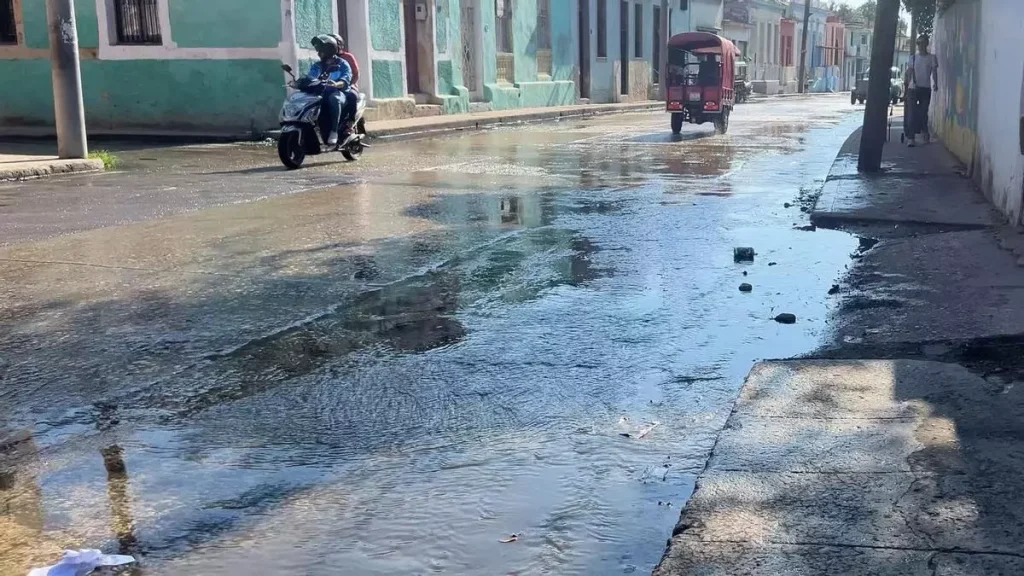
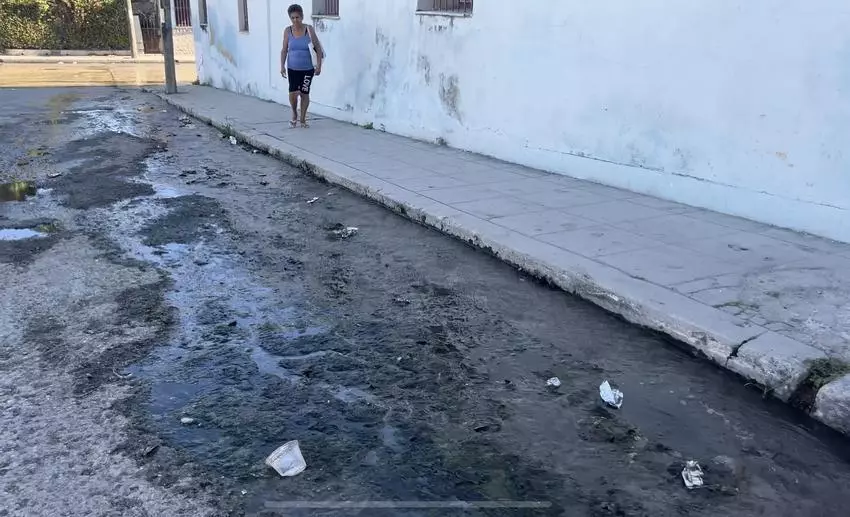
In Guanabacoa, Cuba, Multicolored Springs of Sewage Water Run Through the Streets

A neighbor improvised a bridge of blocks to be able to leave her house: “You can’t even go out in flip-flops if you don’t want to come back with dirty feet.”

The problem of sewage water in Havana goes back a long time. / 14ymedio

14ymedio bigger14ymedio, Darío Hernández, March 21, 2026 – Havana / Sewage water flows freely through the streets of Guanabacoa, to the point that Corral Falso, the municipality’s main avenue, is impossible to cross in stretches that span several blocks. Overflowing septic ditches have further undermined sanitation in the area, and residents are forced to live with a dark, green, viscous river up to 20 cm deep, under a blazing sun and temperatures above 30 degrees.

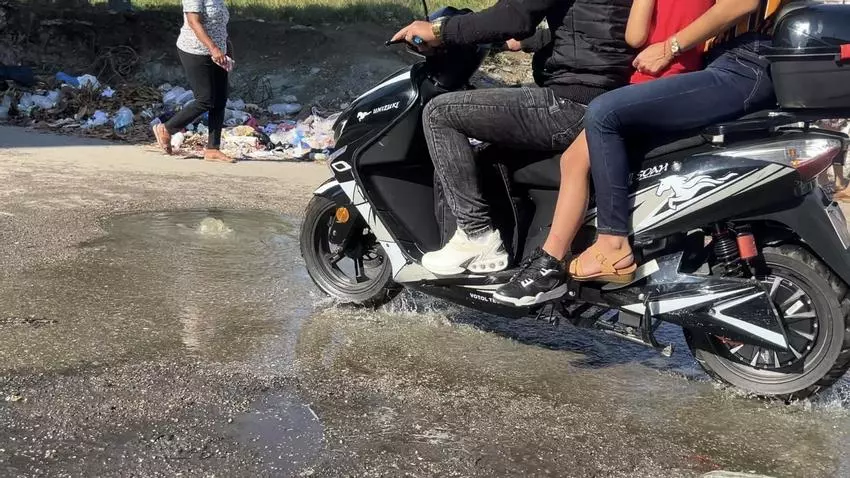
Overflowing drains can be seen even in the most unsuitable places. For example, on the corner by the Guillermo Tomás music school, which also has a garbage dump nearly 30 meters long in front of it. Or every weekend, around the agricultural markets, where trucks arrive and distribute food for the population on improvised platforms.

The problem of sewage water in Havana goes back a long time, and in most cases is due to breaks, lack of sanitation, and above all the poor condition of the capital’s sewer system. However, it has worsened with the unchecked proliferation of garbage dumps due to the lack of fuel.

“The stench, the flies, the mosquitoes, and everything that comes with it is something we have to live with.” / 14ymedio

“This is a never-ending war. You call Aguas de La Habana or Communal Services, and they come when they can and unclog the sewer in question, but as soon as the water starts flowing again, the blockage and the rot return,” says Zulema, who has one of those “multicolored springs,” as she ironically calls them,running in front of her doorway.

“That green stuff you see there shows you that the water stagnates here for weeks. The stench, the flies, the mosquitoes, and everything that comes with it is something we have to live with,” Zulema continues. The neighbor has had to improvise a “bridge” of blocks to be able to leave her house. “You can’t even go out in flip-flops if you don’t want to come back with dirty feet.”

Tricycles and electric motorcycles—because there are no longer cars—slow down on these blocks so as not to splash and dirty continue reading

their vehicles. On some corners and along the edges of sidewalks, plants of dubious origin have begun to grow.

Workers from Communal Services broke a pipe while carrying out cleaning work, “and now the sewer overflows more easily.” / 14ymedio

Lázaro, another affected resident, says the problem already existed before, but that “the water was more potable, not as unsanitary.” The problem worsened, he recounts, when workers from Communal Services recently broke a pipe while doing cleaning work, “and now the sewer overflows more easily.” Added to this, he continues, is that at every corner there is a “mini dump.” “If you put those two things together, the result is what we are living through,” he summarizes. “What are we living through? I can’t define it in words, but it’s profoundly immoral.”

“When the agricultural fairs began, I had my stall on that block. They were all around the Amphitheater, but we had to move over here,” says Miguel, who now sells root vegetables and produce on the block next to the Amphitheater. “There was one time when the entire fair was moved to another location, a few blocks from the Municipal Party headquarters, precisely because of this, because of the filth in this place. Apparently there were complaints from residents. It really was just one block that, although wide, was uncomfortable for everyone, and the following week we came back here. In other words, they know this is not the ideal place to sell food, but there’s no alternative.”

River of sewage in Guanabacoa: living among waste / 14ymedio

Translated by Regina Anavy
______________________

COLLABORATE WITH OUR WORK: The 14ymedio team is committed to practicing serious journalism that reflects Cuba’s reality in all its depth. Thank you for joining us on this long journey. We invite you to continue supporting us by becoming a member of 14ymedio now. Together we can continue transforming journalism in Cuba.
Cuban President Díaz-Canel Capitalizes on the Arrival of the Nuestra América Convoy Amid the Regime’s Erosion

The solidarity of discredited figures from the international left aligns with the dictatorship and its lack of response to the productive collapse and the hardship imposed on the population.

The Spaniard Pablo Iglesias asserted that the situation in Cuba is not as “it is being presented from outside.” / 14ymedio

14ymedio bigger14ymedio, March 21, 2026, Havana / Havana once again staged one of those events this Friday in which official rhetoric tries to prevail over a crisis that is already difficult to conceal. Miguel Díaz-Canel received at the Convention Palace the members of the Nuestra América Convoy, an international solidarity initiative that brings humanitarian aid to Cuba and that the Government has presented as proof of political backing amid the tightening of United States sanctions.

The event, laden with slogans, expressions of gratitude, and references to the “blockade,”* served the authorities to project an image of resistance and international support. But it also made clear the extent to which the country today depends on external aid to alleviate basic shortages, despite having presented itself for decades as a moral, medical, and political power of the continent. With an unproductive economy in ruins, the Island once again needs food, medicines, hygiene products, and solar panels arriving from abroad to meet urgent needs.

The arrival of the convoy, promoted by civil organizations and left-wing platforms such as the Progressive International, has been presented as a response to the economic and energy siege imposed by Washington. The Cuban Government has clung to that narrative to insist that the crisis the Island is experiencing is almost exclusively the result of the U.S. embargo*. However, the constant use of that argument contrasts with the lack of deep reforms and the persistence of internal obstacles that continue to limit economic development and hold back emerging sectors, such as small and medium-sized private enterprises.

Pablo Iglesias’s assessment came after listening in Havana almost exclusively to Communist Party leaders and without having set foot on the capital’s streets

Fernando González Llort, president of the Cuban Institute of Friendship with the Peoples (ICAP), was one of those tasked with opening the round of speeches. He spoke of “decency, morality, and dignity,” and asserted that the convoy is making history for Cuba and for the world. According to him, about 650 visitors from 33 countries and more than 140 social, cultural, and political organizations have joined the initiative.

International support was, indeed, the focus of the day. From Uruguay, the president continue reading

of the Broad Front, Fernando Pereira, condemned U.S. interference in Latin America and defended leftist internationalism. Medea Benjamin, American co-founder of Code Pink, said that Washington’s policy toward Cuba is “cruel and inhumane” and asserted that this stance does not represent all the people of the United States. The leader of the British left, Jeremy Corbyn, for his part called on Europe to take a firmer position against the oil blockade and maintained that there is no legal basis in international law that justifies the sanctions.

Pablo Iglesias, former vice president of the Spanish Government and founder of the Podemos political party, stated on El Tablero that the situation in Cuba is not as “it is being presented from outside.” His assessment came after listening in Havana almost exclusively to Communist Party leaders and without having set foot on the capital’s streets. He also said he was surprised by the following of Canal Red, his online television program, on the Island, although the example he gave was that of a Cuban woman residing in Germany for ten years.

The invited voices agreed on one idea: Cuba is not alone. However, that international support, staged alongside the ruling leadership, contrasts with the daily experience of millions of Cubans, marked by blackouts, shortages, high prices, lack of medicines, and the absence of effective channels to demand change. The event projected an image of political support for the Government but left out that other Cuba that survives amid deterioration and increasingly expresses its discontent.

A convoy does not change the structural deterioration of an economy that neither produces, exports, or pays its workers decently

In parallel with the political event in Havana, the material side of the initiative was advancing from Mexico. According to EFE, a first vessel departed from Puerto Progreso, in Yucatán, with about 30 tons of aid destined for Cuba. Two other smaller vessels, planned from Isla Mujeres, had to delay their departure due to bad weather. The maritime coordinator of the operation, Adnaan Stumo, explained that the change in wind direction and intermittent rains forced the postponement of the vessel’s departure, which would transport an additional three to four tons.

The cargo includes food, medicines, hygiene products, and solar panels. It is not insignificant, but it is not enough to alter the magnitude of the Cuban crisis. That a solidarity convoy brings 20 or 30 tons of aid has considerable political and symbolic weight, but it does not change the structural deterioration of an economy that neither produces, exports, or pay its workers decently, and also fails to guarantee essential services to its citizens.

Díaz-Canel, faithful to the official script, took advantage of the stage to insist that Cuba is facing a “fourth-generation war,” an offensive of disinformation aimed at breaking the country’s ties with its historical and cultural roots. He also rejected that the Revolution came to power illegitimately, denied that Cuba is a terrorist state, and maintained that the greatest human rights violation against Cubans is the embargo.

*Translator’s note: There is, in fact, no US ‘blockade’ on Cuba, but this continues to be the term the Cuban government prefers to apply to the ongoing US embargo. During the Cuban Missile Crisis the US ordered a Naval blockade (which it called a ‘quarantine’) on Cuba in 1962, between 22 October and 20 November of that year. The blockade was lifted when Russia agreed to remove its nuclear missiles from the Island. The embargo had been imposed earlier in February of the same year, and although modified from time to time, it is still in force.

Translated by Regina Anavy

______________________

COLLABORATE WITH OUR WORK: The 14ymedio team is committed to practicing serious journalism that reflects Cuba’s reality in all its depth. Thank you for joining us on this long journey. We invite you to continue supporting us by becoming a member of 14ymedio now. Together we can continue transforming journalism in Cuba.
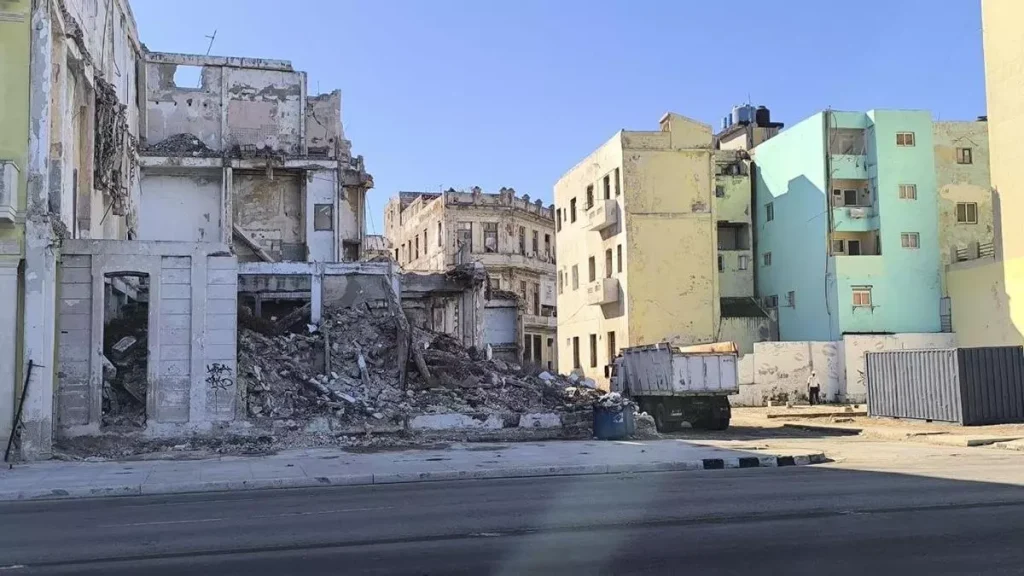
The U.S. Has Deported Nearly 500 Cubans to Mexico in the Last Month, an Activist Reports

“They are people who have been left in limbo,” says Luis Rey García Villagrán.

Mexican authorities have ignored the demands of Cubans deported by the US. / EFE

14ymedio bigger14ymedio, Ángel Salinas, March 19, 2026 – Mexico City / In Tapachula there are nearly 500 Cubans deported by the U.S. who have been “abandoned in the early morning over the last month in different locations,” reports Luis Rey García Villagrán, director of the Center for Human Dignification. “They are people who have been left in migratory limbo,” he says.

The activist tells 14ymedio that “these people have lost all their rights” and asserted that “they are in a situation of statelessness.” They are migrants, he said, whom Cuba does not want and who in the U.S. “have already lost their rights.”

Mexican authorities have ignored the demands of these deportees. The activist points out that when going to the offices of the Mexican Commission for Refugee Assistance (Comar), deported Cubans are allowed to fill out forms, and “in the best case they are asked to wait between three and four months to receive an email that will never arrive.”

With the closure of the U.S. border since Donald Trump assumed the presidency, García Villagrán says that around 30,000 Cubans have been stranded, to which must be added the people being deported, among whom “there are elderly people and others living on the streets.”

The director of the Center for Human Dignity, Luis Rey García Villagrán / EFE

The deputy secretary for Human Mobility of the Secretariat of the Southern Border, Eduardo Antonio Castillejos Argüello, acknowledged to local media that last year nearly 12,000 people deported from the United States were recorded, without continue reading

specifying their nationality.

In December of last year, Oliver, who is Cuban, told this newspaper that the U.S. was deporting criminals to Mexico and “erasing their records before they cross.”

Oliver, who had an I-220A form, reported that along with 37 other migrants from the Island he was expelled and abandoned “without documents or money” in the country, and his future was left in limbo. The man spent two days sleeping on the street, wandering  without eating because the rest of the deportees split up. “Here, friendship is nothing. It’s every man for himself.”

García Villagrán said they are seeking to pressure Comar and the National Migration Institute to assist migrants deported by the U.S., for which they have already gathered around 350 signatures. “Many of them remain in precarious conditions, sleeping in public spaces or carrying out informal activities to survive, while facing the lack of documents that define their migratory status.”

In migration offices “there are around 15,000 applications from Cubans” that have been pending for months without a solution, the activist added.

Translated by Regina Anavy

______________________

COLLABORATE WITH OUR WORK: The 14ymedio team is committed to practicing serious journalism that reflects Cuba’s reality in all its depth. Thank you for joining us on this long journey. We invite you to continue supporting us by becoming a member of 14ymedio now. Together we can continue transforming journalism in Cuba.
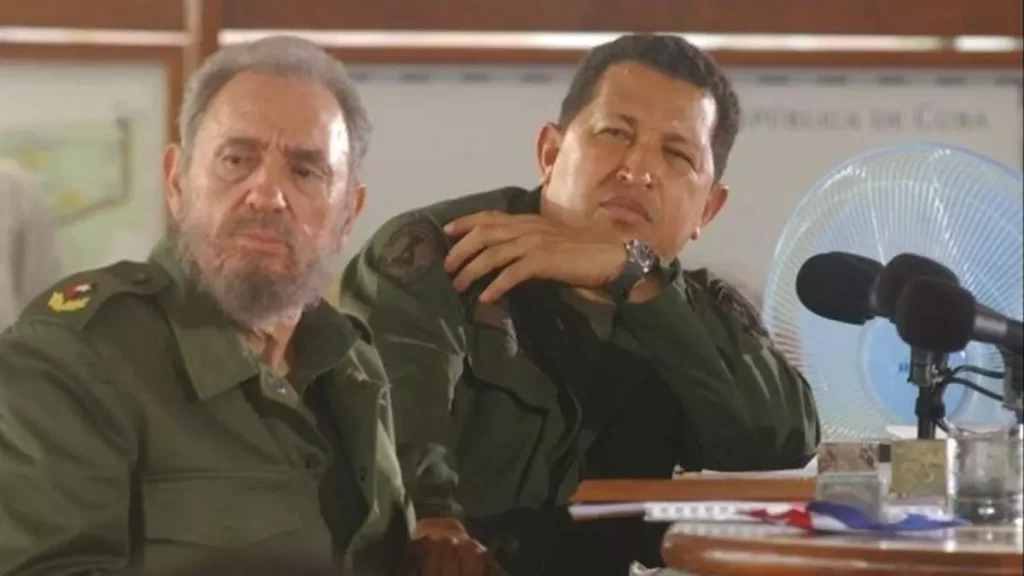
A Report Calls for a Full Clean-Up of Venezuela’s Defence Sector After Years of Cuban Infiltration

The document puts the cost to Caracas of trading oil for repression at 63.8 billion dollars

Fidel Castro and Hugo Chávez forged the oil alliance back in 2000. / Cubadebate

14ymedio bigger14ymedio, 19 March 2026, Madrid — The operational withdrawal of Cuban personnel from Venezuela isn’t enough if the country is to be democratized. That is the main conclusion of a report put together by the Miranda Center of Democracy, a US-based organization backed by the Republican Party, published this Wednesday. It recalls how chavismo has been swapping oil for repression—also the title of the report—to such an extent that a full purge of the security apparatus is being demanded if anything is to change in the country.

The document highlights the huge amount of money Venezuela has sent to Cuba since the 2000 agreements between Hugo Chávez and Fidel Castro. According to the text, the figure comes to 44.5 billion dollars at current prices, which in real (inflation-adjusted) terms is 63.8 billion dollars. That’s the estimate of what’s been transferred in oil to Havana over all these years in exchange for, among other things, personnel services—although back in 2016 Nicolás Maduro put Venezuela’s “investment” in that exchange at around 250 billion dollars, very likely an exaggeration.

According to the report, the 2000–2004 agreement involved sending 53,000 barrels of oil per day (bpd) on credit at 2% interest over 15 years, including a two-year grace period, with an official exchange of doctors and teachers. When it was renewed, the volumes stayed the same and a fixed price of 27 dollars per barrel was set, shielded from market increases.

The Group for Coordination and Liaison (Gruce) was set up between 2007 and 2008 when, fearing a coup after Chávez lost a referendum, he signed a secret deal with Castro

From 2005 to 2012, when oil production was strong, the amount rose to about 105,000 bpd on average, and the nominal value of the sales hit 3 billion dollars a year (thanks to high global oil prices, which Cuba didn’t have to suffer and even benefited from, since it resold part of that oil to other customers). During this period continue reading

, according to the report, the Group for Coordination and Liaison (Gruce) was created—a joint intelligence hub—and the “Cubanization” of Venezuelan services such as the Directorate General of Military Counterintelligence (Dgcim) and the Bolivarian National Intelligence Service (Sebin) took place.

In later years, oil shipments started to fall, averaging 69,000 bpd in 2016 and 55,000 bpd in 2017. Between 2020 and 2023, the estimated average was 30,000 to 40,000, years when Cuba’s power crisis went from bad to worse. The report says that in 2024 exports barely reached around 32,000 bpd, while in 2025 they rose to 52,000, to secure Gruce’s backing in case Maduro fell. However, tracking data suggests the real figure that year was much lower, around 27,400 bpd.

The Gruce is, in fact, the central focus of the report. According to available information, it was set up between 2007 and 2008 when, worried about a possible coup after losing a referendum, Chávez signed a secret agreement with Castro to lock in the regime’s survival. Its functions included monitoring both military personnel and civilians, training agents, and filtering out potential plans against the Government. It had a mixed composition of Cubans and Venezuelans.

“White rooms” were set up—interrogation centres where torture was carried out—documented by the UN—designed for the detainee’s “biological exhaustion”

The report mentions a group of about eight Cuban Armed Forces officers specializing in counterintelligence, psychological warfare and crowd control who operated out of Fuerte Tiuna, where 32 FAR soldiers died during the US attack aimed at capturing Maduro on January 3.

On the Venezuelan side, the visible figures were Iván Hernández Dala, described as having turned military intelligence into an internal repression body; Gustavo González López, seen as the main link with Cuba and appointed this week as Defence Minister; Alexander Granko Arteaga, in charge of tactical and shock operations; and Alexis Rodríguez Cabello, currently head of Sebin and, according to the report, a key figure in the Cabello family’s power circle and that of current president Delcy Rodríguez.

The Gruce, the document stresses, introduced three elements which, in the view of the Miranda Center of Democracy, are “irreparable.” First, they replaced Venezuelan military academy manuals with the Cuban doctrine of “War of the Entire People,” under which the opposition is considered an “internal enemy.” On the technological side, they control identity systems, registries and notaries, giving Cuba access to that key database. Lastly, they set up the “white rooms”—interrogation centres where torture was carried out, as documented by the UN, aimed at the detainee’s “biological exhaustion.”

“The deepest legacy of the Oil for Repression model is the total abdication of Venezuelan sovereignty through what is known as an ‘Invasion by invitation’”

Among the consequences of this system, up to 18,000 politically motivated detentions have been recorded since 2014, 2,000 of them during the protests following the 2024 elections, which were widely won by the opposition. There were also documented abuses in detention centres—El Helicoide (Sebin) and Boleíta (Dgcim)—including beatings, blows with blunt objects, suffocation with plastic bags, sexual violence and force-feeding. There are also two recorded deaths in custody: Fernando Albán (in 2018) and Alfredo Díaz at the end of 2025, due to lack of medical care.

“The deepest legacy of the Oil for Repression model is the total abdication of Venezuelan sovereignty through what is known as an ‘Invasion by invitation’,” the document states, accusing chavismo of allowing another State to penetrate the highest levels of national security and sensitive information.

“Any process of redemocratization must involve the expulsion of foreign actors operating under secret arrangements, as has occurred not only with Cuban actors but also with Iranian, Russian, Chinese or Belarusian ones, and the rebuilding of institutions that are beyond repair,” the text calls for. It was released the same day news broke of the replacement of Vladimir Padrino López after more than a decade as Defence Minister. Even so, Venezuela’s Armed Forces remain under the same senior military leadership and are commanded—with Washington’s blessing—by Delcy Rodríguez, identified in the report as a key figure in the civilian intelligence axis.

Translated by GH

______________________

COLLABORATE WITH OUR WORK: The 14ymedio team is committed to practicing serious journalism that reflects Cuba’s reality in all its depth. Thank you for joining us on this long journey. We invite you to continue supporting us by becoming a member of 14ymedio now. Together we can continue transforming journalism in Cuba.
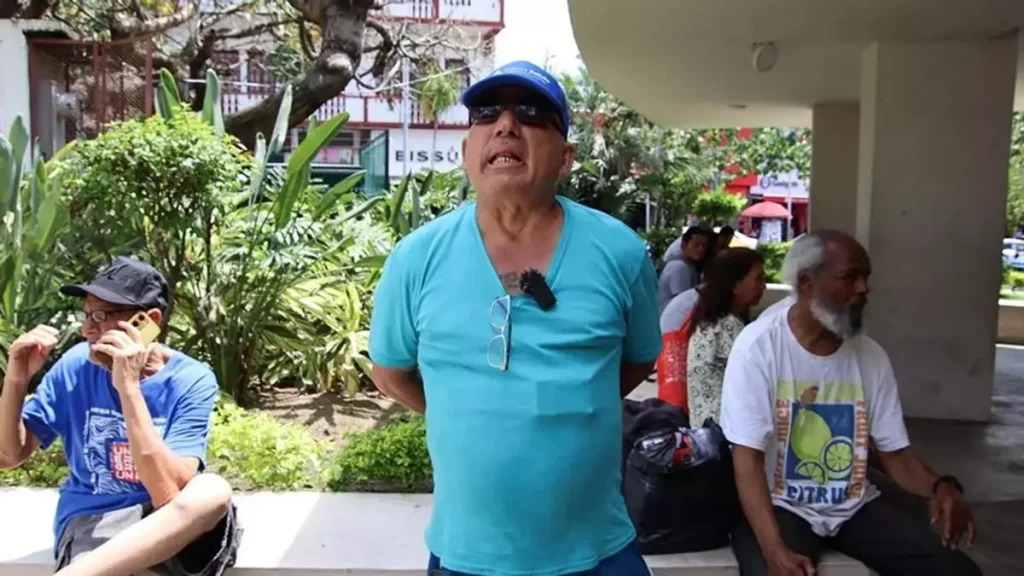
“Here, Every Little While They Are Banging on the Pots”

Residents in the Diez de Octubre neighborhood protests again while in Luyanó there are residents who have been without water for 30 days.

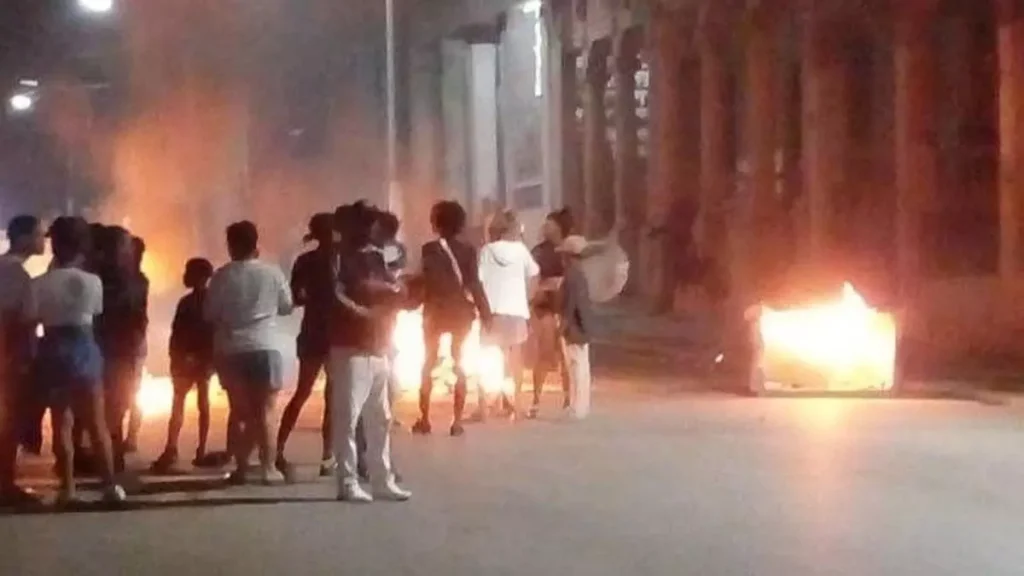
Residents of Diez de Octubre once again built barricades and bonfires on Thursday night. / 14ymedio

14ymedio bigger14ymedio, Juan Diego Rodríguez, March 20, 2026 – Havana / The protests, which in recent weeks have moved from social media to the streets, were very loud this Thursday in Havana. At the intersection of Santa Irene and Diez de Octubre Avenue, several bonfires were lit and barricades were built demanding electricity, images that have gone halfway around the world through social media. It was the most striking focal point of last night’s demonstrations, but in Alamar shouts of “Freedom” and “Down with the dictatorship” were also heard, banged out on pots and pans, mixed with demands for electricity.

“Here, every little while the pots are banging,” says María, a resident of Diez de Octubre, “but they have no shame anymore, they don’t care about the protests. And I don’t go outside because, where exactly are they banging? I hear them, and from my house I bang mine, I don’t care. The problem is that if I go out and the young guys come running…,” adds this retiree, who fears joining a protest and being injured in a bad fall that could land her in a precarious hospital.

According to her experience, after several days of hearing pot-banging protests, public lighting turns on quickly when there is a demonstration, but only in the streets and not in homes. “To sum it up: we are like in Peru, when there’s no water or electricity. And now we’re worse, because when there’s no water there’s no electricity, no gas, nothing. Not even shame in this country,” she complains. continue reading

“To sum it up: we are like in Peru, when there’s no water or electricity. And now we’re worse, because when there’s no water there’s no electricity, no gas, nothing. Not even shame in this country”

In Santos Suárez, Lawton and Víbora Park, where the protest caught on in a big way, they are more fortunate than in Luyanó, residents of this latter neighborhood believe, where in addition to problems with electricity there are also issues with water supply. Pedro, a resident of this area, tells 14ymedio that his cousin has been without water for a month. “Yesterday he spent the whole day holding back from going to the bathroom, until a bucket showed up that a neighbor gave him and he was able to go,” he complains.

The poor supply situation is not new for Pedro, but things have worsened in recent times, and small and medium private businesses have a lot to do with it, in his opinion. “Here where I live we are all elderly, physically disabled. There is a community cistern that supplies about eight or ten apartments. So we have requested a water truck, but they say they have a very long list. But water trucks are never lacking for the two or three most famous private businesses around here,” he says.

Pedro states that few have the possibility of paying the 26,000 pesos that the water truck driver demands, under the table. “I can’t. First of all, either I eat or I drink water.” The residents have the option, he says, of getting a bottle at a church “sponsored by some Canadians” that purifies it with a special filter, but there are “huge lines.”

Reality thus clashes, once again, with the epic narrative of the official press. The report that the State newspaper Granma dedicates to the return of unit 4 of the Carlos Manuel de Céspedes thermoelectric plant, in Cienfuegos, and the 158 megawatts – the same as block 3 – that were added to the system on Wednesday are completely overshadowed by deficits that continue hovering around obscene levels. The 316 megawatts (MW) now in the system corresponding to the entire plant have been of no use: for this Friday, the expected deficit is 1,864 MW. Little difference from the 1,960 MW on Monday, before the most recent addition.

Pedro states that few have the possibility of paying the 26,000 pesos that the water truck driver demands, under the table

On Tuesday the 17th, in the middle of the collapse of the national electric system (SEN), unit 4 synchronized with the rest of the grid after a year and four months of repairs. It still had a scare this Wednesday the 18th, when a failure in the feed pump ruined the triumphant debut, but it recovered a few hours later and the Electric Union was able to celebrate the return.

The population’s indifference was total: “So what? How does that benefit us? Circuit 1 of Palma Soriano was supposed to have power restored from 4 in the afternoon to 7 at night and they didn’t do it. According to information from a colleague at the electrical dispatch, there was no availability at that time, so we have to continue in blackout until they feel like it. Today it has rained all day, imagine cooking with charcoal or firewood under heavy downpours,” complained one user.

The day is expected to be hard again, since during peak hours it is forecast that only 60% of the electricity the country demands will be generated, 1,834 MW compared to the 3,050 needed. The UNE no longer has distributed generation due to the lack of diesel, and thermal generation has limitations of 437 MW, with units 6 of Mariel and 5 of Nuevitas under maintenance and units 5 and 6 of Mariel, 3 of Santa Cruz del Norte, 2 of Felton and 3 and 6 of Antonio Maceo out of service.

Photovoltaic parks, the Government’s great hope, are contributing more and more: 236 MW as the maximum power delivered yesterday Thursday. But when night falls, darkness returns to the Island.

Translated by Regina Anavy

______________________

COLLABORATE WITH OUR WORK: The 14ymedio team is committed to practicing serious journalism that reflects Cuba’s reality in all its depth. Thank you for joining us on this long journey. We invite you to continue supporting us by becoming a member of 14ymedio now. Together we can continue transforming journalism in Cuba.
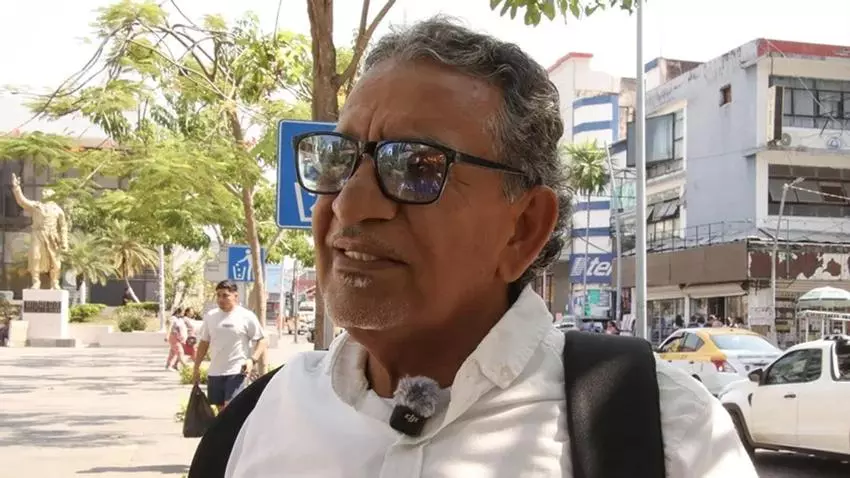
US Will Prevent the Arrival in Cuba of Two Oil Tankers Heading to the Island with Russian Fuel

• Faced with this ban, the Sea Horse has changed course and is now looking for another port in the Caribbean to sell its cargo
• The Anatoly Kolodkin, sanctioned by Washington, is continuing on its route and had a Russian Navy escort at the start of its voyage

US Will Prevent the Arrival in Cuba of Two Oil Tankers Heading to the Island with Russian Fuel

14ymedio biggerThe United States suddenly banned the sale of Russian crude to Cuba this Thursday. The Treasury Department, which on March 12 had issued a license authorizing the sale of Russian crude until April 11, added a new paragraph on Thursday listing countries where the transaction remains prohibited: Cuba, Iran, North Korea, and Russian-occupied Ukrainian territories.

In this way, the exception that had been agreed to try to ease the oil shortage caused by the closure of the Strait of Hormuz and the war in Iran does not apply to the Island—and the first consequences may already be playing out.

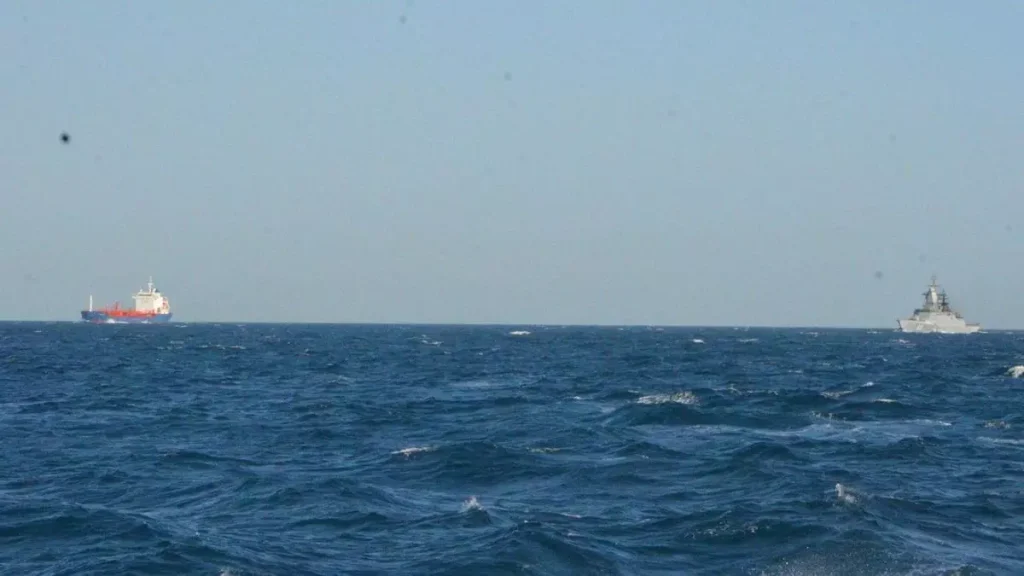
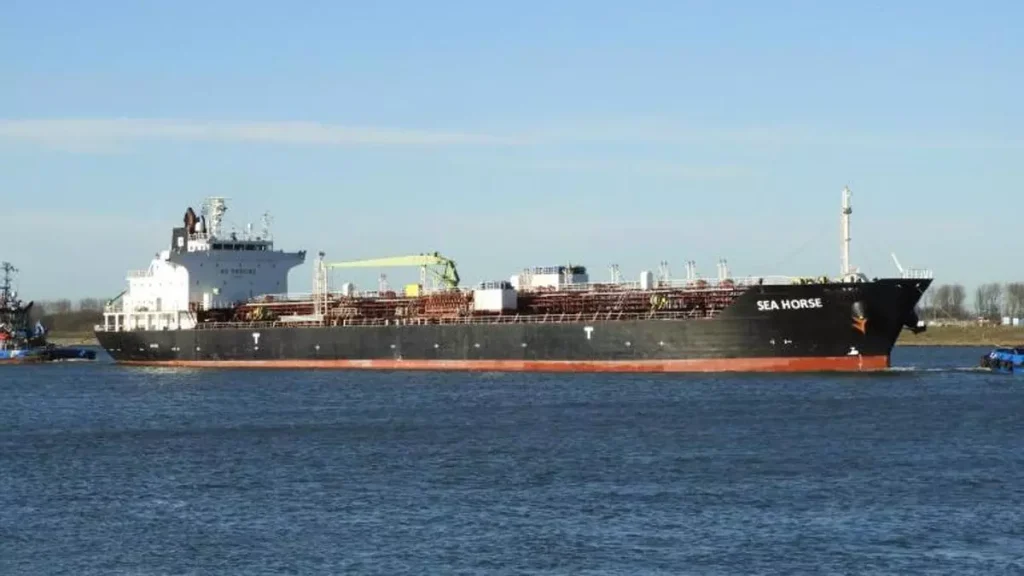
The tanker Sea Horse, flying the Hong Kong (China) flag, which until yesterday was heading to Cuba with 200,000 barrels of Russian diesel, has turned around and is now sailing toward Trinidad and Tobago. The vessel’s location—at 3:11 a.m. this Friday—was identified by New York Times (NYT) journalist Christiaan Triebert, a specialist in visual data investigations, who reports in the New York paper on the uncertain future that may also await the Anatoly Kolodkin, carrying around 730,000 barrels of Urals crude and expected to reach the port of Matanzas at the end of March.

Triebert questions the version put forward by Windward—reported Thursday by 14ymedio—and believes it’s not possible that the Sea Horse reached Cuba and delivered an initial cargo in early March. According to that maritime intelligence firm, the ship—having departed from the Baltic bound for the Island—carried out a deceptive maneuver between mid and late February to force other vessels to give way. With that trick, it allegedly managed to reach Cuba with 190,000 barrels of Russian diesel.

This newspaper contacted University of Texas expert Jorge Piñón, who cast doubt on that maneuver. “Anything is possible, but tracking services, Reuters, and Bloomberg don’t show it,” he continue reading

warned.

Still, the tanker had been spotted again heading toward Cuba with a very similar cargo. “Our calculations indicate it would take approximately five days to reach Cuba’s north coast, 1,146 nautical miles away,” the specialist told 14ymedio on Thursday.

The NYT maintains—along the same lines as Reuters and Bloomberg—that Windward’s analysis doesn’t seem credible. “Analysts were puzzled when the tanker spent three weeks drifting in the Atlantic. Some claimed it manipulated its signal and secretly docked in Cuba; we don’t believe that’s true. It stopped because its owners feared retaliation from the United States,” Triebert argued on social media Thursday.

“According to Marine Traffic, the Sea Horse has changed course and moved away from Cuba, heading somewhere else in the Caribbean in search of a buyer for its nearly 200,000 barrels of diesel. (It has also been at sea for weeks; it needs to dock somewhere),” he added. Hours later, he confirmed the rerouting noted by the same platform, which flagged: “Automatic Identification System (AIS) destination changed.”

The question now is what will happen to the Anatoly Kolodkin. The tanker, owned by the Russian government, left the port of Primorsk in the Baltic Sea on March 9 and was initially traveling escorted by the Soobrazitelniy, a Russian Navy vessel, according to a British military source.
The tanker passed through the English Channel this week and is now heading across the Atlantic, after listing the port of Atlantida (US) as its destination in what looks like a pretty obvious ruse.

Both the Anatoly Kolodkin and its owner—the state shipping company Sovcomflot—have been under US sanctions since 2024, so that destination can basically be ruled out. Kpler says its real destination is Matanzas, citing an industry expert.

The expert explained that the 730,000 barrels of crude—if they make it—would be used to produce diesel, gasoline, and jet fuel, as well as generate electricity. But first it would have to be refined, and in any case it would only be a temporary fix, giving Cuba breathing room for “no more than 30 days.”

The NYT also spoke with Jorge Piñón for its Thursday report. The expert reiterated that the crude would serve to produce fuels and electricity, but would require refining and would only provide short-term relief—again, “no more than 30 days.”

Still, it wouldn’t be the first time the US Coast Guard has forced a Russian tanker to change course despite having a naval escort. At the beginning of January, US forces began tracking the Bella-1 (later renamed Marinera), used to transport hydrocarbons from Russia, Iran, and Venezuela, which was heading to the latter. After two weeks under surveillance—and despite being accompanied by a submarine sent by Moscow—the vessel and its crew were detained, although the sailors were later released following an agreement between Trump and Putin.

Although the fleet operating in the Caribbean since the summer of 2025—when Washington stepped up pressure on Nicolás Maduro—has shrunk to support deployments in the Middle East, Coast Guard sources told the NYT there is “a continuous presence in the Florida Strait and the Caribbean.”
In that context, the head of Southern Command, Francis Donovan, told Congress on Thursday that the US military is not preparing for any takeover of Cuba, and added that he is unaware of any plan by the Trump administration to support Cuban opposition groups in exile in order to overthrow the government in Havana.

Translated by GH

______________________

COLLABORATE WITH OUR WORK: The 14ymedio team is committed to practicing serious journalism that reflects Cuba’s reality in all its depth. Thank you for joining us on this long journey. We invite you to continue supporting us by becoming a member of 14ymedio now. Together we can continue transforming journalism in Cuba.
Four State Security Agents Are Sent To Detain Jorge Fernández Era During a Peaceful Protest in Havana

State Security arrests the writer once again amid growing repression in Cuba.

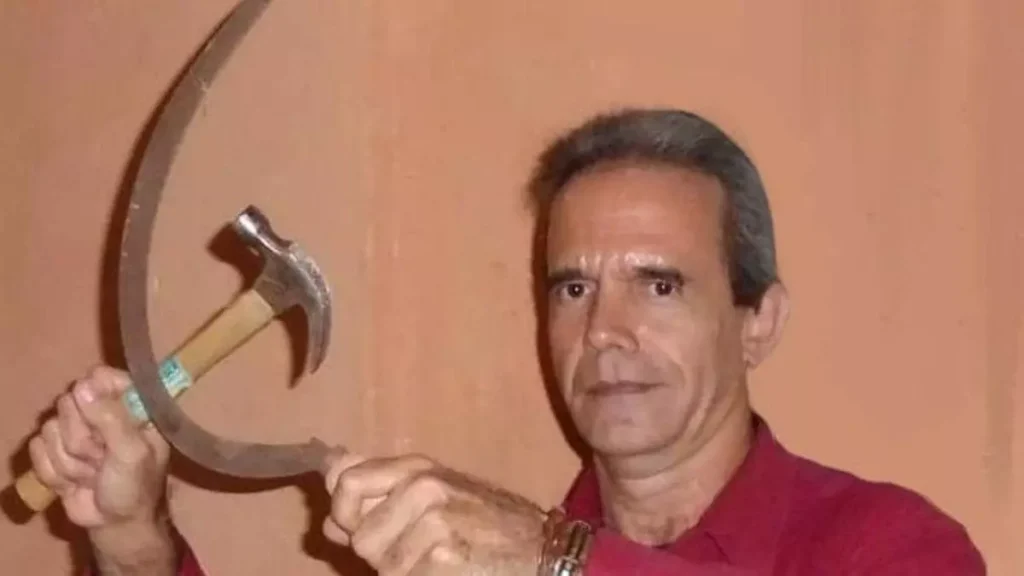
14ymedio bigger14ymedio, March 19, 2026, Havana / The writer and activist Jorge Fernández Era was detained this Wednesday in Havana for several hours after leaving his home to carry out his usual peaceful protest, which he holds on the 18th of each month.

The writer himself later posted that he remained detained between 3:13 pm and 11:33 pm at night in a cell at the Zanja police unit in Centro Habana.

Fernández Era recounted the details this Thursday in a Facebook post titled The Pact of Zanja, referring, with his usual humor, to the agreement that ended the Ten Years’ War between Cuba and Spain in 1878.

According to the writer, he was intercepted in the Santos Suárez neighborhood by a patrol car with four agents, two from State Security and two from the police and taken handcuffed—“of course,” he writes—to the station. “Given the deployment, people must have thought they had finally caught the second most wanted drug trafficker in the world,” he joked.

Given the deployment, people must have thought they had finally caught the second most wanted drug trafficker in the world

Fernández Era points out that the Zanja station brings back memories of the beating the police gave him last year in that same place. During his detention, he was interrogated by a lieutenant colonel from State Security, who allegedly suggested that he cease his activism: “In the style of Martínez Campos, between the lines he proposed surrender.” The writer rejected the proposal: “I replied that for a long time now the counterrevolution is represented by them and all those who live well at the expense of the sacrifice, silence, and double standards for the people. I told him that he should take me to trial if he felt like it for telling him what he was constantly writing down: I would go proudly to prison if continue reading

he proceeded that way.”

The activist also pointed out the ironic concern the Police had for his physical integrity when releasing him after 11:30 at night. According to his account, his release was not an act of goodwill but rather due to the authorities’ fear of a public reaction.

News of his arrest had been made public yesterday by his wife, Laideliz Herrera Laza, through a message on Facebook: “My husband, Jorge Fernández Era, left at 2:15 p.m. to exercise his right to peaceful protest, recognized in the Constitution, and has not yet returned home.” Hours later, she warned that the activist had not returned. After more than seven hours, she confirmed his release: “My husband is now home. Thank you all for your support.”

The detention occurred just two months after a similar arrest on January 18, when Fernández Era remained missing for 16 hours after attempting to carry out the same monthly protest. The writer has been detained on multiple occasions, and in several of them he has reported mistreatment, including beatings by authorities, who inflicted injuries he later showed to the media.

The writer has been detained on multiple occasions, and in several of them he has reported mistreatment, including beatings by authorities

The writer has participated in these actions since 2023, joining the initiative promoted by academic Alina Bárbara López Hernández, who has also been detained dozens of times for protesting peacefully and who has a pending trial, postponed without a date, for the crime of contempt and disobedience that, according to State Security, occurred during one of those arrests.

This detention takes place amid an intensification of police repression, which has worsened in recent days following protests over power outages. In this context, authorities have increased the use of short-term detentions without charges against activists and independent journalists, especially those who attempt to exercise the right to protest in public spaces.

Translated by Regina Anavy

______________________

COLLABORATE WITH OUR WORK: The 14ymedio team is committed to practicing serious journalism that reflects Cuba’s reality in all its depth. Thank you for joining us on this long journey. We invite you to continue supporting us by becoming a member of 14ymedio now. Together we can continue transforming journalism in Cuba.
Imported Beer and Other Alcoholic Beverages Will Increase in Price in Cuba

The Ministry of Finance and Prices establishes a tax of 0.30 USD per liter for all alcohol imports.

An imported 355 ml can of beer could increase in price by about 50 pesos if purchased from a mipyme. / 14ymedio

14ymedio bigger14ymedio, March 19, 2026, Havana / Starting today, imported alcoholic beverages will have a special tax of 0.30 dollars per liter. This is established by the Official Gazette published this Wednesday, signed last March 6 by the Ministry of Finance and Prices.

The list of items subject to the new rate includes malt beers, ethyl alcohol of various strengths, whisky, rum, vodka, gin, liqueurs, and other spirits.

The measure has generated rejection among the population, as can be seen in reactions to the publication on social media, since it implies the inevitable increase in the price of alcoholic beverages for consumers.

In practice, an imported 355 ml can of beer could increase in price by about 50 pesos if purchased from an MSME [mipyme]*, taking into account the current price of the dollar on the informal market. According to statistics published by the Ministry of Public Health in 2022, around 73% of Cubans consume alcohol regularly.

The Ministry of Finance and Prices emphasizes in the resolution that the revenue obtained will go directly to the State Budget “for its redistribution through social continue reading

spending programs in health, education, security, social assistance, and culture, among others.”

The measure has generated rejection among the population, since it implies the inevitable increase in the price of alcoholic beverages for consumers

Domestic production is excluded from the measure, where brands such as Bucanero and Parranda stand out, which could in theory benefit the local industry.

The tax will be applied to the tariff subheadings corresponding to these products and must be paid by both state entities and non-state economic actors that import them. The resolution is based on Decree Law 107 of April 2025 and entered into force on March 19, 2026.

Although the tax formally falls on importers, it will, as is natural, be passed on directly to consumers. A one-liter bottle could increase by at least 0.30 USD. In larger formats or sales in bars, the increase could accumulate significantly for logistical reasons.

The increase occurs in a context of limited access to imported alcoholic beverages, dependence on state stores and mipymes that sell in dollars, freely convertible currency (MLC), or their equivalent in Cuban pesos. A tax of 0.30 USD per liter may seem small, but it adds to high logistical costs and exchange rate volatility.

According to the National Office of Statistics and Information (Onei), alcoholic beverages and tobacco led price increases in 2025, with a year-on-year rise of 69.82%.

The informal foreign exchange market reflects a weakening of the Cuban peso, with the dollar surpassing 530 CUP at the end of March 2026. This, together with reduced imports by mipymes and the decline in tourism, contributes to a generalized increase in the price of imported products.

*Micro, Small, Medium Enterprises [mipyme in Spanish]

Translated by Regina Anavy

______________________

COLLABORATE WITH OUR WORK: The 14ymedio team is committed to practicing serious journalism that reflects Cuba’s reality in all its depth. Thank you for joining us on this long journey. We invite you to continue supporting us by becoming a member of 14ymedio now. Together we can continue transforming journalism in Cuba.
The U.S. Treasury Secretary Predicts a “Slow-Motion” Regime Change for Cuba

Scott Bessent links a potential transition on the Island to the collapse of Chavismo in Venezuela.

Bessent also described Iran as a “horrible sponsor of global terrorism.” / EFE

14ymedio bigger14ymedio /EFE, March 19, 2026 – NEW YORK/The United States Secretary of the Treasury, Scott Bessent, predicted this Thursday a process of “slow-motion” regime change in Cuba. “With Maduro out, Venezuela seems like there could be slow-motion regime change in Cuba. There may be a slow-motion regime change there,” Bessent said in an interview on the Fox Business network.

On Wednesday, the White House and the United States Secretary of State, Marco Rubio, rejected a report published by The New York Times according to which the government of Donald Trump is seeking the removal from power of Cuban president Miguel Díaz-Canel without demanding a regime change, as part of its negotiations with Havana.

“The reason so many U.S. media outlets keep publishing fake news like this is because they continue to rely on charlatans and liars who claim to be well informed,” Rubio said on continue reading

social media regarding the report.

“At some point, the situation with Russia and Ukraine will be resolved. I think gas and energy prices will be lower than they have been in a long time”

Bessent also referred today in the interview to the role of Iran, which he described as a “horrible sponsor of global terrorism,” assuring that its military capacity is “degraded” and that Tehran has lost its ability to “project power” in the region and the world.

Regarding the conflict in Eastern Europe, the secretary expressed optimism about a short- or medium-term resolution: “At some point, the situation with Russia and Ukraine will be resolved. I think gas and energy prices will be lower than they have been in a long time.”

Cuba has been in the midst of a deep economic and social crisis for six years, which has been worsened since January by the loss of its main benefactor, Nicolás Maduro’s Venezuela, in addition to the oil blockade by the U.S. government.

Translated by Regina Anavy

______________________

COLLABORATE WITH OUR WORK: The 14ymedio team is committed to practicing serious journalism that reflects Cuba’s reality in all its depth. Thank you for joining us on this long journey. We invite you to continue supporting us by becoming a member of 14ymedio now. Together we can continue transforming journalism in Cuba.
The Sea Horse Managed To Clandestinely Unload 190,000 Barrels of Russian Diesel in Cuba, According to Windward

The maritime intelligence agency asserts that the tanker manipulated positioning signals and entered a port on the Island at night in early March.

The Sea Horse, flying the Hong Kong flag, is not subject to sanctions but uses “deceptive” practices to transport sanctioned crude. / Vesselfinder

14ymedio bigger14ymedio, March 19, 2026 – Madrid/Despite the oil blockade imposed more than two months ago by the U.S. on Cuba, there is strong evidence that the tanker Sea Horse (also Seahorse), under the Hong Kong (China) flag, managed to clandestinely reach a port on the Island and unload about 190,000 barrels of Russian diesel. The arrival took place at the beginning of this month, according to the maritime intelligence agency Windward, which detected manipulation of the Automatic Identification System (AIS), which transmits the location, identity, course, and speed of vessels.

The tanker, which is not sanctioned according to Windward, loaded diesel using the ship-to-ship method in Cyprus in early February. It then indicated it was heading to Cuba but soon altered its route and reported “Gibraltar for orders,” a nautical instruction used to indicate that it will remain in that port (belonging to the United Kingdom and located in southern Spain) awaiting final orders.

Between mid- and late February, the Sea Horse was navigating the Atlantic, stopped 1,300 nautical miles from Cuban waters, and began drifting at speeds below one knot, with the warning “not under command,” a visual signal—black balls by day and red lights at night—normally used when, due to damage or malfunction, the captain cannot properly maneuver. In practical terms, this grants what is known as the right of way and requires other vessels to avoid it. Although the purpose is to prevent accidents, in this case the signal may have been used fraudulently to proceed without difficulty.

The Sea Horse was navigating the Atlantic, stopped 1,300 nautical miles from Cuban waters, and began drifting at speeds below one knot, with the warning “not under command”

According to Windward, this is one more of the deceptive techniques the tanker has used before, including switching off transponders during the transfer of Russian oil to evade sanctions against Moscow over its war of aggression in Ukraine. According to the information, this would be the first tanker to reach Cuba since early January, when the Ocean Mariner did so with a cargo of more than 80,000 barrels of Mexican fuel, even though Cuban President Miguel Díaz-Canel said at a press conference last Friday that not a single drop of crude had entered the Island in three months. continue reading

Asked about Windward’s information, University of Texas expert Jorge Piñón told 14ymedio: “Anything is possible, but tracking services, Reuters, and Bloomberg do not indicate it.” However, they do point out, as he himself confirmed again this Tuesday to this newspaper, that the tanker is once again heading toward the Island with some 200,000 barrels of Russian diesel. “Our calculations indicate it would take approximately five days to reach the north coast of Cuba, 1,146 nautical miles away,” the specialist said, after the ship had been drifting. It is now moving “under its own power” at a speed of 9.9 knots.

Added to that vessel is the Anatoly Kolodkin, loaded with Russian oil and heading toward Cuba, according to Bloomberg and the Financial Times, which cite information from the maritime intelligence firm Kpler. The tanker carries nearly 730,000 barrels of Urals crude on board and is scheduled to arrive at the port of Matanzas at the end of March.

The tanker carries nearly 730,000 barrels of Urals crude on board and is scheduled to arrive at the port of Matanzas at the end of March

Recent data indicate that the promised Russian aid, which until now had remained only words, may materialize or may have already done so. Since the Trump Administration announced at the end of January sanctions on countries that sold or supplied oil to Cuba, no country had defied the measure, which was technically neutralized by the Supreme Court’s decision declaring illegal the basis on which the White House planned to justify them: tariffs under presidential powers that the president does not possess under current circumstances. Despite this, the president could seek ways to penalize deliveries by resorting to another rule, which has so far functioned as a deterrent mechanism.

In recent days, due to the war in Iran affecting global hydrocarbon trade following the blockade of the Strait of Hormuz and attacks by both sides on gas and oil facilities, the U.S. has temporarily lifted sanctions on Russian crude in an attempt to ease a market whose prices are rising by the minute, a decision that could ultimately benefit Cuba.

Correction: A previous version of this article mistakenly included a reference to the sale of gasoline through the Ticket application. The text was corrected to eliminate confusion between gasoline and diesel.

Translated by Regina Anavy

______________________

COLLABORATE WITH OUR WORK: The 14ymedio team is committed to practicing serious journalism that reflects Cuba’s reality in all its depth. Thank you for joining us on this long journey. We invite you to continue supporting us by becoming a member of 14ymedio now. Together we can continue transforming journalism in Cuba.
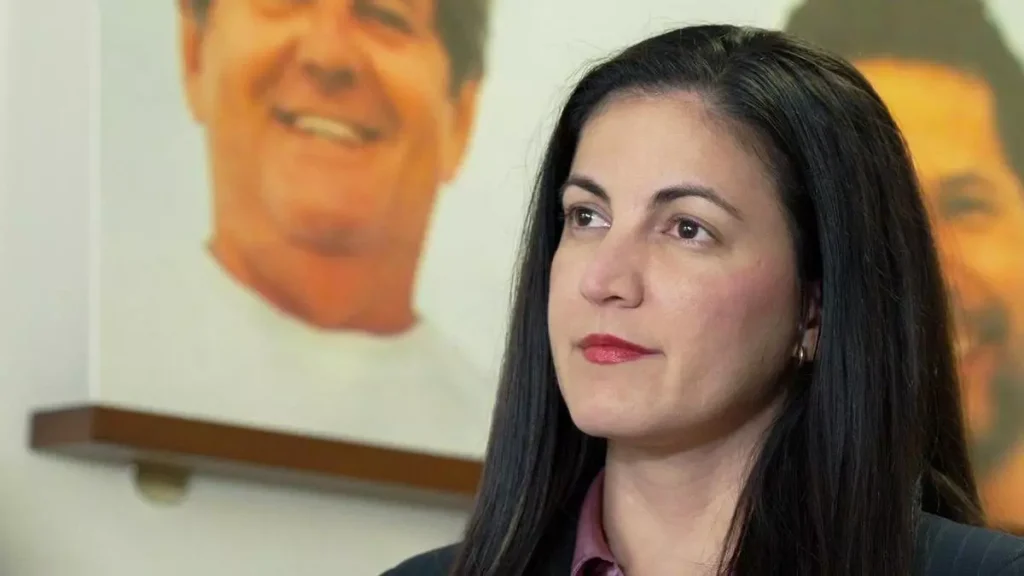
Rosa María Payá Says That Cuba Doesn’t Need a ‘Delcy Rodríguez’ For a Transition

“I believe the conditions are right for the country to be liberated,” she says.

Rosa María Payá emphasized that a real process of change requires “that the Castro family and the group of generals who have held power for 67 years leave” / EFE

14ymedio bigger EFE, (via 14ymedio), March 17, 2026, Miami / Cuban opposition leader Rosa María Payá stated in an interview with EFE that a possible democratic transition in Cuba does not require a figure from the current power structure, as happened in Venezuela with Delcy Rodríguez, and asserted that civil society and the opposition inside and outside the island have prepared themselves to lead that process without the Castros or the ruling elite.

“Cuba doesn’t need a Delcy Rodríguez. In fact, the process we have been carrying out from civic and opposition organizations, both inside and outside the island, is precisely to have a transition team ready that can lead this provisional period and take the country from totalitarian barbarism toward fair elections,” Payá stated in Miami.

The daughter of the late Cuban opposition leader Oswaldo Payá (1952-2012), who fought for the Varela Project to promote democratic changes in the country, emphasized that Cubans do not need a president like Rodríguez, who assumed interim power in Venezuela after the capture of Nicolás Maduro by the US on January 3.

The opposition leader asked President Donald Trump to maintain “pressure” on the government continue reading

of Miguel Díaz-Canel, and is confident that contacts between the two countries would contribute to freedom in Cuba, amid the country’s precarious energy situation, aggravated by the US oil embargo.

The opposition leader asked President Donald Trump to maintain “pressure” on the government of Miguel Díaz-Canel.

“I believe the conditions are right for the liberation of Cuba. And those conditions, first of all, are the widespread demand for change from the Cuban people,” she said.

However, Payá said that the regime “will not buy us off with old Castroist strategies, such as permitting its citizens abroad to invest in private businesses on the Island without political changes and without rights,” as it announced this week.

Cubans “don’t want a fraudulent change. They don’t want the Castro family, and the group of generals
in power, to keep buying time and lying to the world and to Cubans about the reality.”

According to The New York Times, the Trump Administration has raised the possibility of Miguel Díaz-Canel’s departure, although without necessarily demanding a complete overhaul of the system.

She believes that those in power will not make the transition to democracy on their own.

Payá, however, believes that those in power will not make the transition to democracy and the rule of law on their own. “We don’t understand a transitional process that ends in free elections with the Castro family still in power,” she reiterated.

“It is not true that the regime is going to change itself,” she added. In that sense, she emphasized that a real process of change requires “that the Castro family and the group of generals who have held power for 67 years and their representatives leave.”

On the other hand, she noted that she considers the pressure being exerted by the United States to be “decisive” and stated that it must be increased to stop the repression against the protesters in Cuba: “They must increase that pressure to stop the impunity with which the Cuban regime is carrying out repression to this day.”

She also called on the governments of the region to intercede for the Cuban people.

“We hope that the rest of the Western democracies will join this effort.”

“We hope that the rest of the Western democracies will join this effort. (…). The Cuban people expect it, as they are demanding in the streets at a very high cost, at the cost of their safety, of their very lives,” she said.

Payá asserted that “the rights and freedoms of all Cubans must be guaranteed; political prisoners must be released,” and that none of this “costs money; it can happen on the first day.”

“Cuban civic organizations, opposition organizations on the Island and in exile are united behind a transition plan and forming the transition team that will lead and can lead this provisional period,” she stated.

Payá stated that she understands that a transition process will have to work with some structures of the “bureaucracy” to avoid “chaos,” but that it will not be “negotiable” that “we Cubans recover our national sovereignty.”

______________________

COLLABORATE WITH OUR WORK: The 14ymedio team is committed to practicing serious journalism that reflects Cuba’s reality in all its depth. Thank you for joining us on this long journey. We invite you to continue supporting us by becoming a member of 14ymedio now. Together we can continue transforming journalism in Cuba.
In a Cuba Without Electricity and Without Water, the Government Press Defends Moringa as a Magical Solution

A doctor advises the use of this plant, which obsessed Fidel Castro, to purify murky water as a substitute for chlorine and boiling.

An elderly Fidel Castro touching a moringa plant / Cubadebate/Archive

14ymedio bigger14ymedio, March 18, 2026 – Madrid / With the energy crisis as a trigger, Cuba is moving at a rapid pace toward a public health crisis in which the inability to manage garbage collection and the lack of electricity to operate the water supply system are delivering the final blow. Two years ago, when the economic situation was not so alarming, barely half of the population had safe access to water, a figure that has dropped sharply in the current context and in the face of which, inexplicably, Cubadebate now offers a high-risk recipe: moringa seeds.

This Tuesday,  government newspaper published a text signed by Johann Perdomo Delgado, a doctor specializing in Natural and Traditional Medicine and head of the department and national group of that specialty at the Ministry of Public Health. With these credentials, the expert presents the natural properties of moringa as an almost magical solution for “the purification of drinking water” and places it practically on the same level as chlorination or even something much simpler and more economical: boiling.

The doctor reviews the medicinal uses of moringa, an invasive plant that grows without any control in Cuba and whose properties were an obsession of Fidel Castro, particularly in the last years of his life. Among them are “antioxidant, anti-inflammatory, antihypertensive, diuretic, antimicrobial, antipyretic, antidiabetic, hypolipidemic, anti-ulcer, antineoplastic, cardio, and hepatoprotective” properties. continue reading

There are up to 90 nutrients in the plant, including proteins, vitamins, and minerals, but its seeds also have, he adds, the ability to “reduce turbidity and eliminate up to 99% of the bacteria”

There are up to 90 nutrients in the plant, including proteins, vitamins, and minerals, but its seeds also have, he adds, the ability to “reduce turbidity and eliminate up to 99% of the bacteria” present in water in a “short settling period.” According to the text, this helps prevent several diseases transmitted by unsafe water, such as cholera, other diarrheal diseases, dysentery, hepatitis A, typhoid fever, and poliomyelitis.

Although the note admits that “for the prevention of infectious diseases transmitted by water, chlorination is a well-known and advisable method that makes it possible to eliminate harmful microorganisms,” it recklessly claims that with moringa seeds it is possible to “guarantee from home the consumption of safe water, through the use of this plant resource.”

In addition, it explains the recipe, as simple as removing the shell from about ten seeds of the plant, crushing them into a paste, and mixing them with 20 liters of water. After stirring and mixing for three minutes, it is enough to let it sit for between an hour and a half or two hours and filter it with a clean cloth. “With this method, according to studies carried out that have proven its harmlessness, it is possible to obtain water that is suitable for human and animal consumption. In this way, especially in the case of natural disasters or other emergencies, resorting to moringa seeds is a way in which we can guarantee the care of our health… all natural!” the text adds casually.

The World Health Organization (WHO) does indeed cite the many natural properties of moringa and has reviewed countless studies on the use of its seeds to purify water. There are at least 20 publications in the institution’s IRIS repository containing information on water treatment using this method, particularly for developing countries, but its benefits are more limited than Cubadebate suggests.

Although they observe that the results are promising, they note that “they still face significant limitations that restrict their widespread use”

The main property of the seeds for this use lies in coagulating cationic proteins, which have a positive surface charge, as a natural way to make dirty (turbid) water appear clear; they adhere to dirt like a magnet. The cleaning is real, but relative. As the doctor himself says, it can reach 99%, although the WHO considers it may be reduced to 90%, leaving enough margin for the consumed water to contain viruses and parasites capable of causing illness. For this reason, science always recommends that this be, at most, a preliminary step to chlorination or, in cases where that is not possible, boiling.

The Pan American Health Organization (PAHO) manuals for water treatment do recognize the use of moringa seeds for a first step: removing turbidity. But this must be followed necessarily by either of the two previously mentioned methods or, in more extreme cases, the SODIS method, widely used in emergency areas with considerable success and consisting of exposing water to sunlight for long hours with extreme precautions regarding the container used.

At the beginning of 2026, the WHO published a study conducted in Brazil on the “viability of plant-based coagulants, including moringa, in water purification,” which in turn reviewed previous publications, with the aim of “advancing sustainable, low-cost treatment solutions.” However, although they observe that the results are promising, they note that “they still face significant limitations that restrict their widespread use.”

Translated by Regina Anavy

______________________

COLLABORATE WITH OUR WORK: The 14ymedio team is committed to practicing serious journalism that reflects Cuba’s reality in all its depth. Thank you for joining us on this long journey. We invite you to continue supporting us by becoming a member of 14ymedio now. Together we can continue transforming journalism in Cuba.
Despite Popular Rejection and a Ruined Army, Cuban President Díaz-Canel Threatens With “An Impregnable Resistance”

“Cuba would not last even one night against a drone and satellite attack” from the U.S., notes an article in the Spanish press.

Díaz-Canel dressed in military attire during a National Defense Council in 2025 / Cubadebate

14ymedio bigger14ymedio, March 18, 2026 – Madrid / In the midst of the holding pattern affecting a Cuba that is at the center of conversations abroad, but immobile within its own borders, this Tuesday brought the bad news. While on Monday the deputy prime minister Oscar Pérez-Oliva delivered the good news by announcing to the media – of the U.S. first, the order also matters – the opening of the Island to investment by Cuban emigrants and Americans, yesterday his boss, Miguel Díaz-Canel, lashed out against the “empire.”

“The United States publicly threatens Cuba, almost daily, with overthrowing the constitutional order by force. And it uses an outrageous pretext: the severe limitations of the weakened economy that they have attacked and tried to isolate for more than six decades,” the president wrote on his X account.

The post came a day after the U.S. president told the press that it would be “a great honor” for him “to take Cuba.” “I think I can do whatever I want with it,” he snapped, after again referring to the economic collapse looming over the Island following the oil blockade decreed in January by his Administration. The statement is just one more among the nearly daily references by Donald Trump in the same vein, although it was followed by remarks from his Secretary of State, Marco Rubio, stating that the opening to investments announced by Pérez-Oliva the day before was insufficient and that Cuba needed “drastic changes” and “to put new people in charge.”

“They intend and announce plans to take over the country, its resources, its properties, and even the very economy they seek to suffocate. Only in this way can the fierce economic war applied as collective punishment against the entire people be explained. Faced with the worst scenario, Cuba is accompanied by one certainty: any external aggressor will clash with an impregnable resistance,” Díaz-Canel added, shortly after Rubio’s statements.

“They intend and announce plans to take over the country, its resources, its properties, and even the very economy they seek to suffocate”

One of the most visible faces of Díaz-Canel’s government is his foreign minister, Bruno Rodríguez, who repeated almost entirely his boss’s message. “The U.S. threatens Cuba with destroying continue reading

the constitutional order and taking control of the country. The collective punishment applied to us Cubans will not diminish the full exercise of sovereignty nor creativity in the face of the blockade and the energy siege. Any aggression from imperialism will clash with the irreducible will of the Cuban people in defense of the independence of the Homeland.”

The foreign minister – the space also matters – attended Díaz-Canel’s appearance on Friday with a shadow seated behind him: that of Raúl Rodríguez Castro, El Cangrejo, the grandson of Raúl Castro tasked by his grandfather with monitoring political personnel, who occupied a seat behind the minister of foreign affairs both at the president’s meeting with the rest of his cabinet and at the subsequent press conference.

Díaz-Canel and Rodríguez are the only ones who have come out to confront the U.S. at this crucial moment in the negotiations, while the prime minister, Manuel Marrero, remains silent, and although nothing is written, it may be a clue for those who see that there is already nothing left to lose. Both concluded their respective posts yesterday with a “Cuba stands firm,” but the truth is that the regime is at the limit in two key aspects at this moment: popular support and the capacity to face an aggression by force.

Evidence of the first is seen every day in the streets of the Island. When night falls, pots clang; when the sun rises, graffiti appears: “Down with the dictatorship” “Díaz Canel singao [motherfucker].” The blackouts exceeding 30 consecutive hours; the shortage of drinking water, the use of charcoal for cooking, and the improvised garbage dumps on every corner have eroded any trace, if any remained, of sovereign pride. Those who convincingly call to resist are conspicuously absent, while those who demand, publicly or privately, that something happen now, whatever it may be, are plentiful.

But even if there were hands to defend the regime, the means are more than deficient. Not only because it faces one of the largest and best-armed armies in the world, but because it could not even resist a modest one. This Wednesday, the Spanish sports newspaper – yes, sports – AS publishes an exhaustive special on the precariousness of the Revolutionary Armed Forces (FAR) that lays the situation bare.

According to the article, the Air Force barely maintains about twenty aircraft in flying condition and frequently resorts to dismantling old units for spare parts, while the Navy is limited to a coastal fleet of about 33 vessels without ocean-going capacity. As for defense capabilities, the Island has S-125 Pechora systems, Soviet missiles from the 1950s updated last year by Belarus, along with 144 launchers as its best asset, since the rest is standard artillery and there are no drones. “In a war of drones and satellites, the Island is still fighting with its grandparents’ binoculars,” the text says.

“In a war of drones and satellites, the Island is still fighting with its grandparents’ binoculars,” the text says

The ground weapons –around 300 tanks– are described by the writer as “a rolling Soviet museum that anywhere else in the world would be scrap, but in Cuba is the backbone of defense.” As with the aircraft, parts are cannibalized to keep them running.

The best asset is personnel, which in principle amounts to 50,000 active soldiers, 39,000 in reserve, and 90,000 paramilitaries, including Territorial Troops and Defense Committees. It is the only option to attempt to resist a land invasion, but as the article warns, “the theoretical mobilization capacity exceeds one million people. Feeding, moving, and sustaining that million is another story.” In addition, among the many striking lines scattered throughout the text, it adds: “Cuba would not last even one night against a drone and satellite attack.”

The epic of resistance that Díaz-Canel has once again resorted to, in contrast to the pragmatism with which the Castros conduct negotiations, clashes with reality. Although it may also be that this is precisely the last role he has been assigned.

Translated by Regina Anavy

______________________

COLLABORATE WITH OUR WORK: The 14ymedio team is committed to practicing serious journalism that reflects Cuba’s reality in all its depth. Thank you for joining us on this long journey. We invite you to continue supporting us by becoming a member of 14ymedio now. Together we can continue transforming journalism in Cuba.

Marco Rubio Dismisses the Reforms Announced by the Cuban Regime: “They Need To Put New People in Charge”

The US Secretary of State attributes the island’s crisis to the failure of the political model and calls for “drastic changes”

“That revolution isn’t even a revolution. What they have has survived thanks to subsidies from the Soviet Union and later from Venezuela,” Rubio stated. / EFE

14ymedio bigger14ymedio, Havana, March 17, 2026 — U.S. Secretary of State Marco Rubio, on Tuesday, dismissed the latest economic reforms announced by the Cuban government, making it clear that, in his view, the island’s problems cannot be solved with partial adjustments or limited openings. “Cuba has an economy that doesn’t work within a political and governmental system incapable of correcting it. Therefore, they have to make drastic changes,” Rubio stated.

The remarks were made to the press from the Oval Office during an appearance alongside Donald Trump, Vice President JD Vance, and Irish Prime Minister Micheál Martin. The Secretary of State added: “That revolution isn’t even a revolution. What they have has survived thanks to subsidies from the Soviet Union and [then] Venezuela. They no longer receive subsidies, so they are in serious trouble.”

Trump, for his part, did not develop a complete thesis on Cuba during that exchange, but he did introduce a phrase that points to the other historical support of the Cuban regime. “The relationship we have with Venezuela is, I would say, almost unbelievable,” the president commented.

“What they announced yesterday isn’t drastic enough; it’s not going to solve the problem.”

The day before, the Havana regime had announced new provisions to permit Cubans residing abroad, under certain immigration categories, to participate in private businesses on the island, including as owners, and to open foreign currency bank accounts in Cuban banks. For Washington, however, this opening does not alter the core of the problem: the system remains incapable of sustaining itself without external assistance, and the current leadership, according to Rubio, does not know how to pull it out of collapse. continue reading

The US Secretary of State went further: “What they announced yesterday isn’t drastic enough; it’s not going to solve the problem.” Rubio didn’t just say the reforms were insufficient, but presented the power structure itself as an obstacle: “Those in charge don’t know how to fix it. So they have to put new people in charge. That’s what I think.”

Adding to this hardening of rhetoric is another sign revealed Tuesday by The New York Times, according to which Washington has conditioned any eventual agreement with Cuba on the departure of Miguel Díaz-Canel. According to the report, U.S. officials conveyed to Cuban negotiators that the president should resign, although without demanding immediate changes to the rest of the power structure.

“They have important decisions to make there.”

Rubio’s words came at the worst possible time for Havana. Cuba continues its efforts this Tuesday to recover from yet another collapse of the national electrical system, the third in just four months, a sequence that has turned the exceptional into the routine.

The Ministry of Energy and Mines reported a “complete disconnection” of the system, while authorities tried to restore service piecemeal, with microsystems and the gradual start-up of some thermoelectric plants.

Regarding the possibility of easing the sanctions that Washington maintains on Cuba, the Secretary of State stressed that any relief will still be conditional on a political change on the island, given that the embargo is codified by law.

Despite the economic collapse, the blackouts, and the harsh statements made from the Oval Office, there is no sign of real political opening on the island. On the contrary, the repression of protests, the persecution of dissenting voices, and the surveillance of journalists, activists, and opposition members continue. Marco Rubio passed the buck to Cuba: “They have important decisions to make there.”

______________________

COLLABORATE WITH OUR WORK: The 14ymedio team is committed to practicing serious journalism that reflects Cuba’s reality in all its depth. Thank you for joining us on this long journey. We invite you to continue supporting us by becoming a member of 14ymedio now. Together we can continue transforming journalism in Cuba.