 14ymedio, Natalia López Moya, Havana, October 30, 2026 – A discharged phone, a piece of chicken beginning to thaw, and several empty containers waiting for water. In Cuba, the blackout is no longer measured solely in hours without electricity, but also in the number of problems it leaves in its wake. This Friday, numerous Havana neighborhoods had accumulated power cuts lasting more than 40 hours, during a week marked by the worsening energy crisis on the Island.
In Luyanó, Yusnel went out to charge his phone in another electrical circuit after more than 20 hours without power. “I have an EcoFlow, but it couldn’t hold out. With this many hours without electricity, no battery can hold up,” he tells 14ymedio. Portable power stations, which provide some relief amid the blackouts, also end up succumbing when the interruption lasts nearly two days.
In Nuevo Vedado, where this newspaper’s newsroom is located, the electricity was out for 41 consecutive hours. “Today I got up at four in the morning to cook the little piece of chicken I had left in the freezer because it wasn’t going to be in good condition by lunchtime,” says a woman who lives in a nearby high-rise building on Tulipán Street. She describes how the lack of electricity has also disrupted her family’s routines.
“My daughter, who is a doctor, didn’t go to the hospital today because she had no clean clothes to wear, and we didn’t send my little granddaughter to school. What for? To suffer through the heat and probably find that the teacher wasn’t there?” she asks.
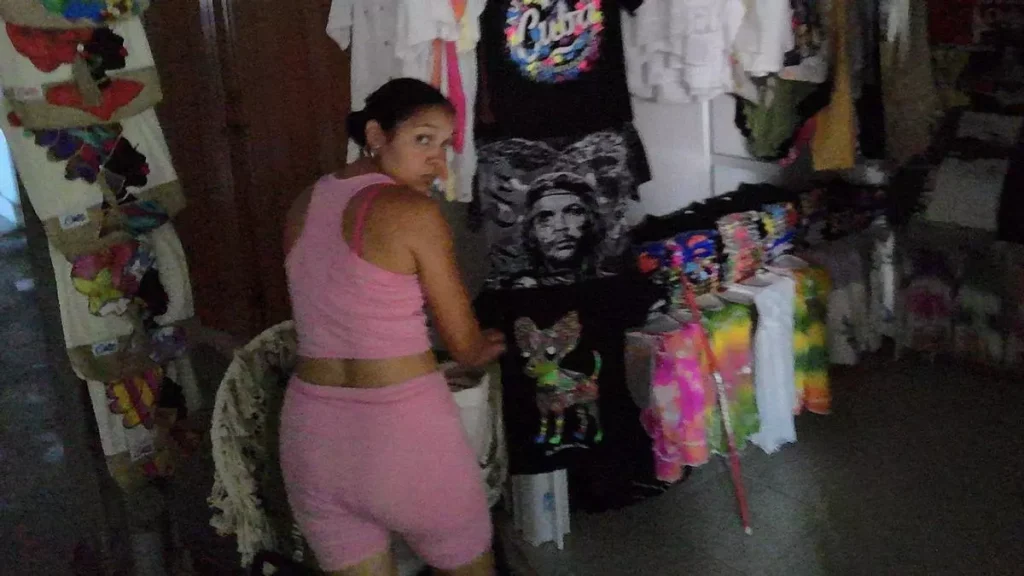
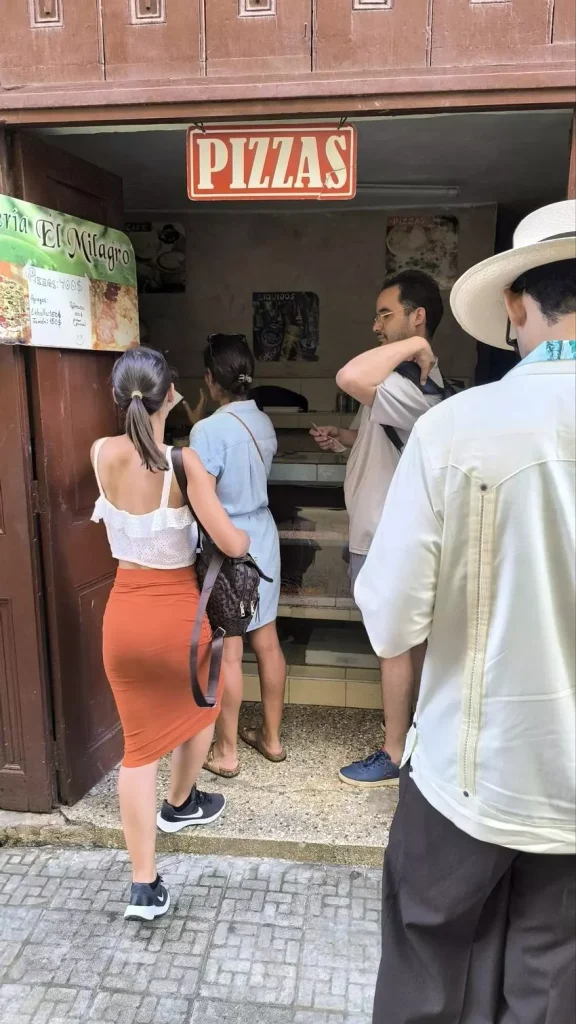
The power cuts offer no respite to small businesses either. At a pizzeria in Old Havana, several customers waited in front of the counter this morning while employees tried to bake and serve food using the scant natural light coming in from the street. At the San José warehouses, a saleswoman arranged souvenirs in the gloom, in front of a T-shirt bearing the face of Ernesto Che Guevara.
“Neither customers nor electricity,” declared a vendor selling paintings in the immense establishment, located in an old pier building, as he fanned away his sweat with a piece of cardboard. “When the day is cooler, you can put up with it and stay here for hours and hours without selling anything, but with the heat and no electricity to run the fan, and on top of that no tourists, it’s torture.”
The blackout comes as the tourism sector is experiencing one of its worst periods. According to official figures, just 27,354 international tourists arrived in Cuba in September, a collapse that leaves sellers of handicrafts and souvenirs with little chance of making up for the losses caused by the power cuts.

But the lack of electricity is only one part of Cubans’ harsh daily reality. This Friday, a man pedaled beneath the elevated railway tracks near the Ensenada de Atarés, carrying two large containers of drinking water on his bicycle. Scenes of handcarts, jerrycans, and tanks being hauled from one municipality to another have become increasingly common in the Cuban capital.
Aguas de La Habana acknowledged that the extensive power cuts on the 28th and 29th had affected practically all the main water supply sources, including Cuenca Sur, Ariguanabo, El Gato, and Palatino. The company warned of widespread delays and announced adjustments to distribution schedules. In high-rise buildings, where water also depends on internal pumping systems, the lack of electricity has multiplied the difficulties.
The national outlook offers no grounds for anticipating an immediate improvement either. The Electric Union (UNE) reported that this Friday the Antonio Guiteras power plant in Matanzas, the country’s most important thermoelectric plant, remained out of service, along with units at Santa Cruz, Felton, and Renté. For the period of peak demand, the UNE forecasts a shortfall of 1,990 megawatts, against an estimated demand of 2,800.
Translated by Regina Anavy
______________________
COLLABORATE WITH OUR WORK: The 14ymedio team is committed to practicing serious journalism that reflects Cuba’s reality in all its depth. Thank you for joining us on this long journey. We invite you to continue supporting us by becoming a member of 14ymedio now. Together we can continue transforming journalism in Cuba.