Inspectors keep watch, vendors hide their merchandise and neighbors know which doors to knock on to find what they need
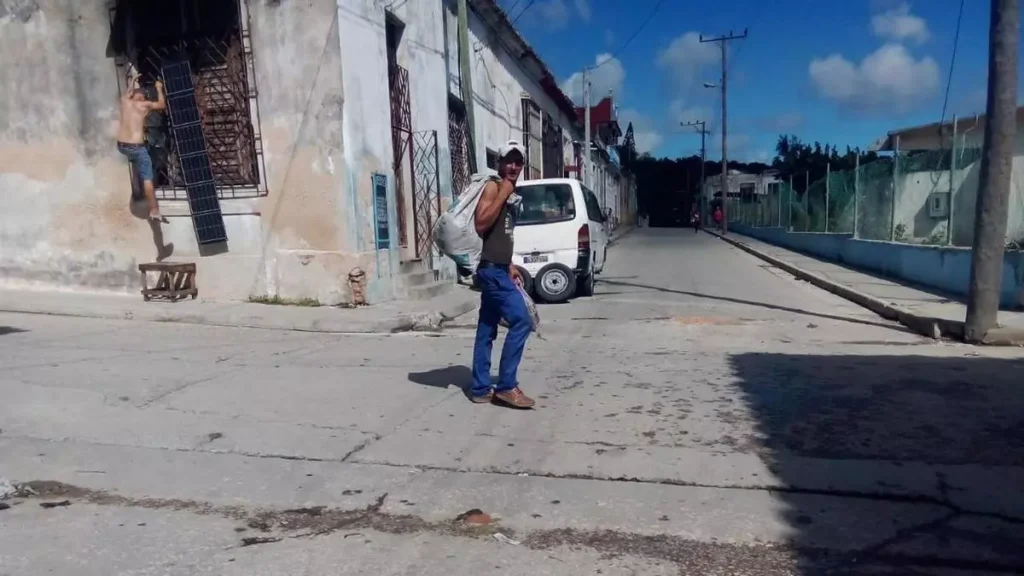
 14ymedio, Julio César Contreras, Matanzas, November 18, 2026 / On Santa Teresa, a street in the historic center of Matanzas, businesses have more passwords than signs. To buy a package of spaghetti, a bar of soap or a pound of beans, you have to know which door to knock on, who is sitting on the doorstep and which house is the right one. Inspectors can comb the area and not find much. Residents, on the other hand, know that behind the faded facades there is a market capable of solving almost any household emergency.
The street runs downhill alongside the Gener y del Monte Public Library, toward the Yumurí River. The asphalt is cracked, the sidewalks are patched and a mountain of garbage piles up on the corner of Velarde. Among cramped homes, wire fences and wooden poles, two words sum up the neighborhood’s economic activity: hustling and surviving.
“In this neighborhood you can buy anything from a pin to an apple,” says Yosvany, while he checks on his phone the names of those who signed up for the day’s charada [a Cuban numbers game in which each number is associated with an image]. His grandmother introduced him to that world when he was still in school, before he dropped out in ninth grade. Now he combines the numbers of the bolita [the island’s illegal lottery] with selling whatever products he can get his hands on.
“What works here is keeping the merchandise stored away. I myself sell detergent, bath soap and whatever comes my way, but I don’t have anything on display”
Government inspectors, he says, went after a cafeteria located across from the daycare center. The warnings and fines ended up forcing its owners to close. The lesson was learned all along the block: the less you show, the fewer problems come up.
“What works here is keeping the merchandise stored away. I myself sell detergent, bath soap and whatever comes my way, but I don’t have anything on display. Anyone who sees me thinks I’m just playing on my phone,” he explains. He interrupts the conversation to tell a man where they sell ground meat: the house with the black grille, next to the wooden pole.
Santa Teresa has its own business directory, even though no one has ever written it down. A retiree gets beans at a better price than at the farmers’ market, a housewife sells powdered soft drinks and the carpenter’s wife offers hair dyes. Every neighbor knows an address and, when they don’t have what people are looking for, they recommend another seller.
“When people know you sell a product, you don’t have to chase after them. They come on their own to buy it,” Yosvany says. That network of recommendations works like a cooperative without paperwork, where reciprocity helps keep the businesses going and discretion protects against inspections.
“Most of us who have these tiny businesses actually work just to eat, and if the owner sees that sales are slow, he takes the merchandise away from us”
Not everyone can hide their goods. Indira has laid several T-shirts and pairs of pants over a wire fence, turned into a shop window for a few hours. The garments hang next to a humble home while she calculates how much she will have to sell to make it to the end of the month.
“If I don’t sell all this, I don’t know what I’m going to do,” she confesses. She used to do nails, but the price of nail polish and other supplies ended up ruining the trade. She thought about switching to toiletries, until she discovered that five neighbors on her block were offering the same thing. In the end she agreed to sell bales of secondhand clothing supplied by a taxi driver.
“Most of us who have these tiny businesses actually work just to eat, and if the owner sees that sales are slow, he takes the merchandise away from us,” she laments. This month she has still not scraped together enough to buy her elderly mother’s medicines, also on the informal market.
Crackdowns can remove products from view, but they cannot erase the needs that feed this market. When one seller disappears, another takes their place or moves the merchandise to another room.
“What you can’t do is wait for things to fall from the sky. You have to hustle, because the situation is really bad,” declares Indira, who is also known for recommending numbers for the bolita, although luck almost never goes her way.
Translated by GH.
______________________
COLLABORATE WITH OUR WORK: The 14ymedio team is committed to practicing serious journalism that reflects Cuba’s reality in all its depth. Thank you for joining us on this long journey. We invite you to continue supporting us by becoming a member of 14ymedio now. Together we can continue transforming journalism in Cuba.