Some 13,000 spectators attended a basketball tournament featuring 24 ‘influencers’.
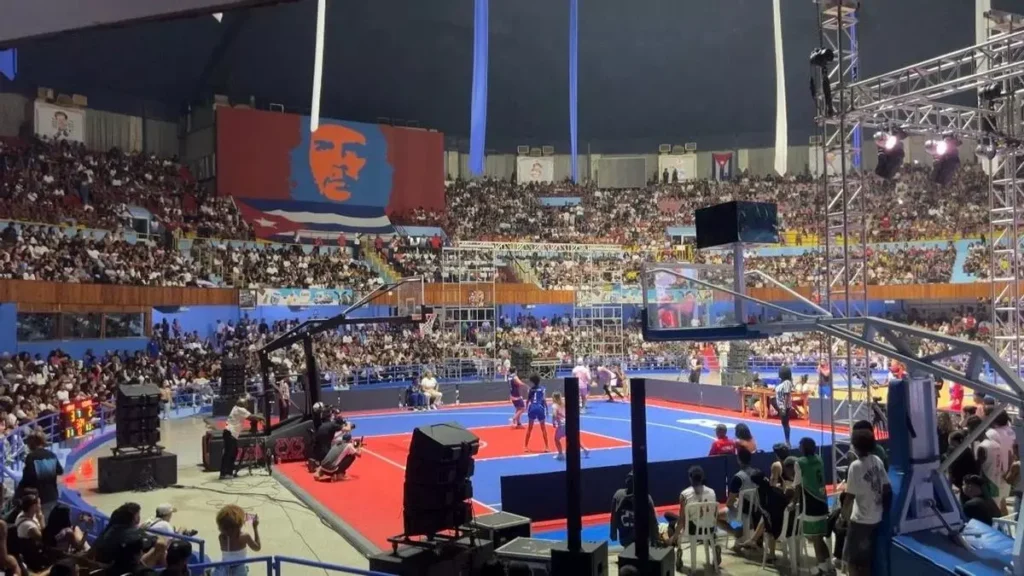
 14ymedio, Darío Hernández, Havana, November 9, 2026 – While Havana sank into yet another night of blackout, the Coliseum at the Ciudad Deportiva, in the heart of the capital, entertained some 13,000 people last Saturday with a full-scale spectacle of lights and sound. The State and several private companies joined hands in an unprecedented alliance for an event called 3×3 for Cuba, described as “charitable” by its organizers.
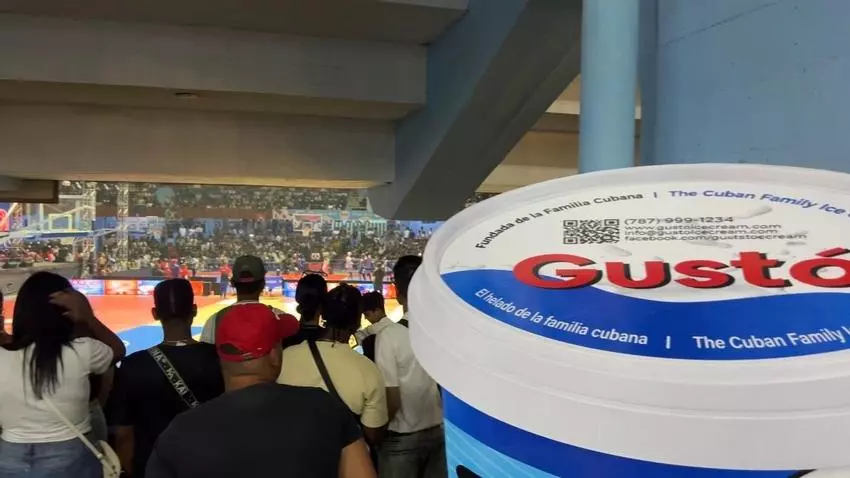
The event was sponsored by the private company Helados Gustó, from Artemisa, and promoted by actress Carla Cremata, the daughter of the creator of the pro-government artistic project La Colmenita. The show consisted of a basketball tournament featuring 24 influencers and cultural intermediaries from prominent organizations, along with concerts, including one by the Los Van Van orchestra.
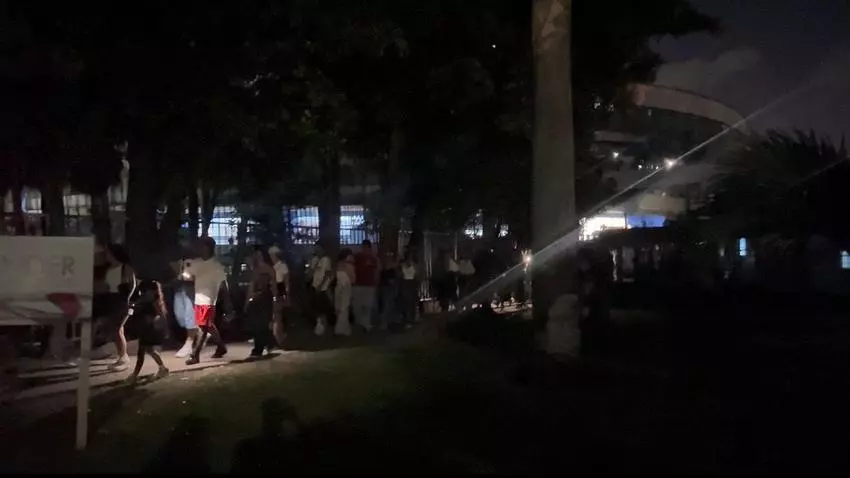
As soon as visitors arrived at the Ciudad Deportiva Coliseum, the headquarters of the National Institute of Sports, Physical Education and Recreation (Inder), the organizers’ ability to draw a crowd was immediately apparent. At 3:30 p.m., when the event was scheduled to begin, the line of spectators was already enormous. The parking lot was overflowing with motorcycles, three-wheeled vehicles, and cars, and the police presence was considerable.
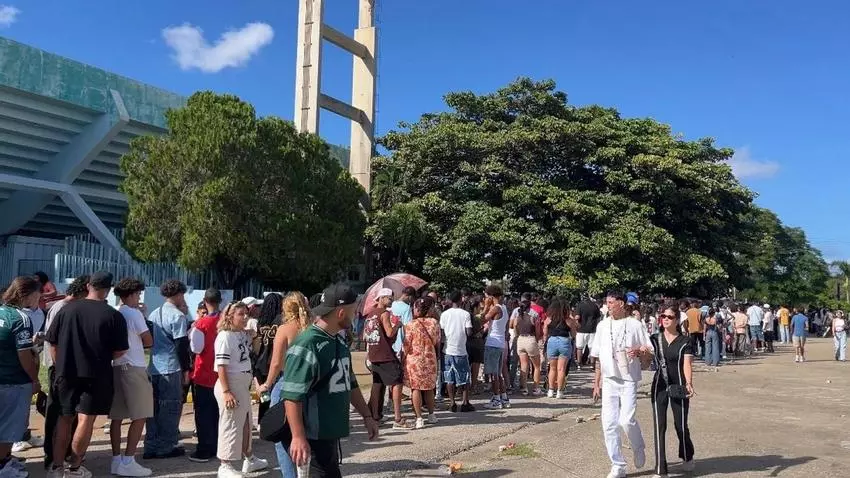
Some attendees had arrived as early as ten in the morning. At that hour, several side activities were beginning outside the Ciudad Deportiva, including a children’s show by La Colmenita itself, an animal adoption fair organized by the Bienestar Animal Cuba project, and a fitness experience hosted by the Vibe project and Viking Gym.
Tents were set up outside where chicken, soft drinks, and beer were sold. Inside the Coliseum, the companies sponsoring the event offered their various products, including cosmetics from the private Ocean Boutique store.
The regime’s contrast: Blackout in Havana, extravagance at the Ciudad Deportiva
The large number of attendees practically filled the Coliseum, which has a capacity of between 12,000 and 14,000 people, and, in general, the entire audience seemed to be having a great time. One spectator told this newspaper: “If you left this same event entirely up to Inder, it wouldn’t turn out nearly as well; they don’t have the same ability to draw a crowd.”
For the tournament, the 24 influencers were divided into eight teams of three, each one sponsored by a different company (state-owned or private), which gave its name to the team. At least two companies were state-owned: Eventos Palco and Los Portales, a joint venture between the state-owned Coralsa and Switzerland’s Nestlé. Six were private companies: Suncar, which specializes in renewable energy; the cleaning company La Poompa; the interprovincial transportation company PedroCarr; the beauty products store Ocean Boutique; the advertising agency Bazzo; and the sportswear company Confecciones Pío.
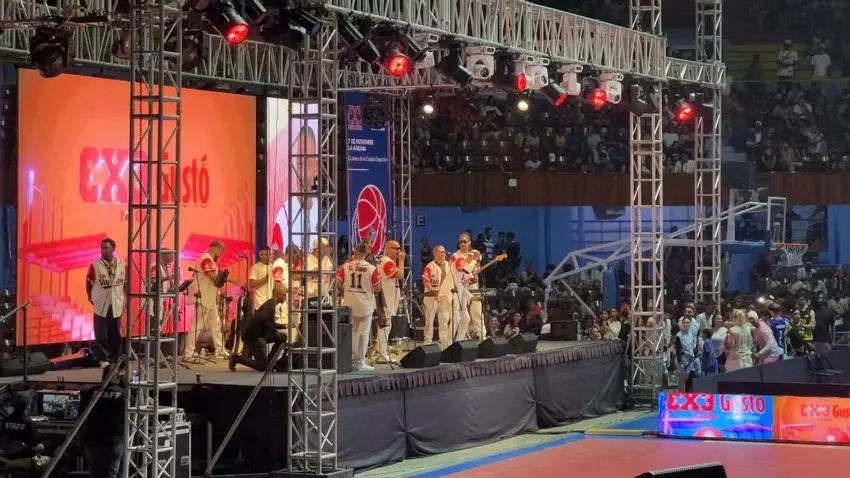
The influencers had been trained by none other than the Cuban women’s basketball team. The tournament began directly with the quarterfinals, and the games alternated with cultural performances, including appearances by the Liszt Alfonso ballet company and the National Circus of Cuba, comedian Yamira Díaz, and at least three urban music performers.
The La Poompa team emerged victorious and received a solar panel kit as its prize. As an example of its own work, the private company explained that it had cleaned the enormous Ciudad Deportiva Coliseum in just five days. The event was presented as “charitable” and as an “initiative of solidarity,” so it was announced that the panels would be donated to an institution, although no specific institution was identified. Organizers said they would reveal its identity soon on social media.
The Los Van Van orchestra performed the closing concert, although by that time the younger attendees had already left rather than stay for the show. Most of those remaining in the Coliseum were older people, whose musical tastes were closer to those of the historic band. While the lights and music continued inside, outside the Coliseum Havana was experiencing its scheduled blackouts for the day.
Preparations for the 3×3 for Cuba had been underway for weeks, combining the event arrangements and the influencers’ training with advertising campaigns for each private company. Although the event was presented as “charitable,” it remains unclear exactly how it will benefit social institutions.
In one of the videos posted by the host, Carla Cremata, she explains that the idea of making it “charitable” occurred to her only after the event had already been organized, when they calculated that they could fill the Coliseum.
“I didn’t want to leave it as just another event. I thought if there are so many of us with such a wide reach, why not do it for a good cause?” Cremata said. Rather than giving money to social institutions, the organizers would ask these organizations about “the needs of each place, and we will deliver what is so badly needed.”
On social media, criticism had been evident for weeks, as demonstrated by the comments on Cremata’s own promotional posts for the event, over the waste of resources on an advertising spectacle while the population suffers from the deterioration of the most essential services.
Most of the criticism, however, focused on the waste of electricity, since the event was taking place during peak demand hours, while the population was already suffering prolonged daily blackouts resulting from the deterioration of the national electric grid (SEN) and the fuel crisis. For the Saturday on which the event was held, the Cuban Electric Union (UNE) reported a deficit of 1,706 MW, against an anticipated demand of 2,830 MW during peak hours.
Another part of the criticism centered on the privileges enjoyed by the promoter, the daughter of Carlos Alberto Cremata, since the children’s company has been linked for decades to the Cuban government’s ideological propaganda and political activities.
Above all, the event is so far the most prominent example of a new collaboration between the State and certain private companies, which appear to be acting as a lifeline for the regime, severely weakened by U.S. sanctions. In this case, the participating businesses include visibly successful MSMEs, such as the transportation company PedroCarr and the renewable energy company Suncar.
Translated by Regina Anavy
______________________
COLLABORATE WITH OUR WORK: The 14ymedio team is committed to practicing serious journalism that reflects Cuba’s reality in all its depth. Thank you for joining us on this long journey. We invite you to continue supporting us by becoming a member of 14ymedio now. Together we can continue transforming journalism in Cuba.