The program was supposed to restore one hundred buses for Havana, but delays have left the project far behind schedule
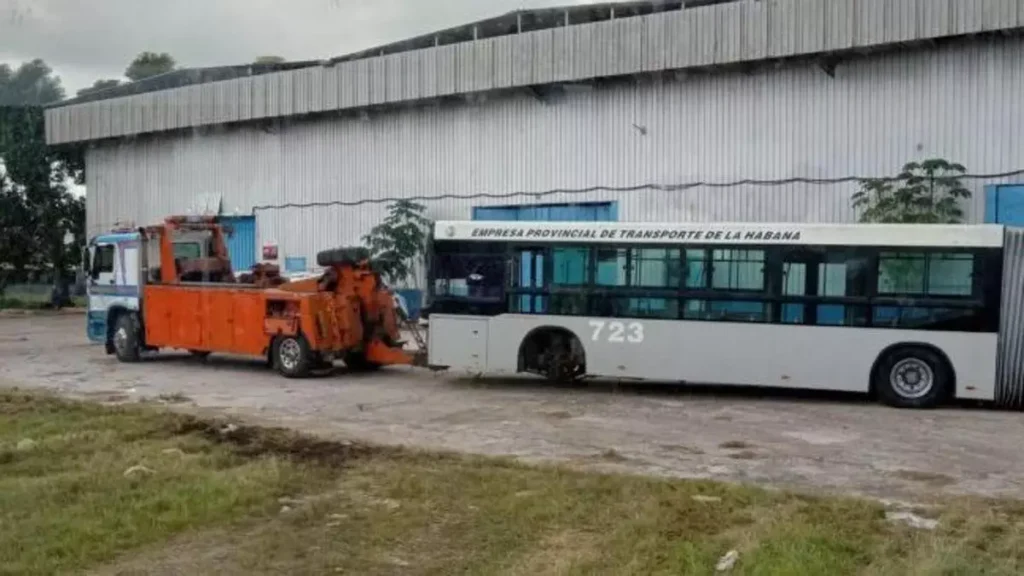
 14ymedio, Havana, November 8, 2026 / After more than a year of promises and delays, Cuba has managed to restore 20 of the 100 buses that were to return to service thanks to a donation of parts and components from the Chinese Government. The vehicles, repaired at the Evelio Prieto Guillama Bus Manufacturing Company (Caisa), located in Guanajay, Artemisa, will be allocated mainly to public transportation in Havana, although the authorities themselves acknowledge that they are still not clear on how to keep them running amid the fuel shortage.
The handover, announced this Saturday by the official press, comes much later than expected. In July 2025, when China delivered the first components, Caisa’s executives said they could repair five buses a month and deliver between 40 and 50 before the end of that year. However, more than fifteen months after that announcement, barely a fifth of the project has been completed.
The twenty restored vehicles are rigid buses made by the Chinese brand Yutong, model ZK6118. In total, the program envisages the rehabilitation of 60 units of this type and another 40 articulated buses, all belonging to the Havana Provincial Transportation Company and withdrawn from service due to breakdowns and deterioration.
The Chinese shipment included engines, tires, batteries and other accessories essential for putting the buses back into service
The buses will be assigned mainly to the Santiago de las Vegas terminal, from where the aim is to restore some routes. However, Henry Rodríguez Terrero, director of the capital’s Transportation Company, admitted that there is still no defined solution for keeping them running.
“It is very premature to say how we will make it sustainable in the face of so many limitations, but we are studying several options to stabilize the service,” said the official, who, despite that uncertainty, claimed that the vehicles had been left “practically new” and with “optimal vitality.”
The restoration began in 2024, when the hundred buses were transferred to the Caisa facilities, the only assembly plant for this type of vehicle in Cuba. There, work began on dismantling, bodywork, mechanical repair and painting, while awaiting the components donated by Beijing, which began to arrive in 2025.
The Chinese shipment included engines, tires, batteries and other accessories essential for putting the buses back into service. The aid was presented at the time as an opportunity to restore high-demand routes, especially those connecting hospitals, schools and communities.
However, the constant blackouts ended up frustrating the plans. As early as November 2025, power outages were preventing progress on the repairs. Three months later, in February 2026, the company had 60 vehicles in various stages of restoration, but only eight had reached an advanced stage.
China has sent Cuba more than 10,700 Yutong buses over the last two decades, but a large part of that fleet has ended up out of service
Now, Iosvany Frías Álvarez, general director of Caisa, says that the repairs have saved more than 2.5 million dollars by avoiding the purchase of new buses. The executive attributed the results to the efforts of the workers, who were forced to reorganize their shifts according to the availability of electricity. Some components that did not arrive with the donation had to be manufactured in the company’s own workshops, according to Yerandi Galá Trastoy, director of the Finishing Base Business Unit [Unidad Empresarial de Base Acabado].
The handover coincides with the collapse of Cuban public transportation. Minister Eduardo Rodríguez Dávila acknowledged that the number of passenger trips could fall by 75% this year compared to 2025. Daily bus departures from Havana to other provinces fell from 419 to just 11, while bus routes across the country went from more than a hundred to only 21.
The situation is no more encouraging within the capital, where long waits, the disappearance of routes and the rising cost of private transportation make getting around difficult every day for thousands of residents.
China has sent Cuba more than 10,700 Yutong buses over the last two decades, but a large part of that fleet has ended up out of service. The lack of maintenance, spare parts and fuel has turned the restoration of old vehicles into one of the authorities’ main gambles.
Translated by GH.
______________________
COLLABORATE WITH OUR WORK: The 14ymedio team is committed to practicing serious journalism that reflects Cuba’s reality in all its depth. Thank you for joining us on this long journey. We invite you to continue supporting us by becoming a member of 14ymedio now. Together we can continue transforming journalism in Cuba.