Now they’re charging $12 for every $100 sent, up from $10.
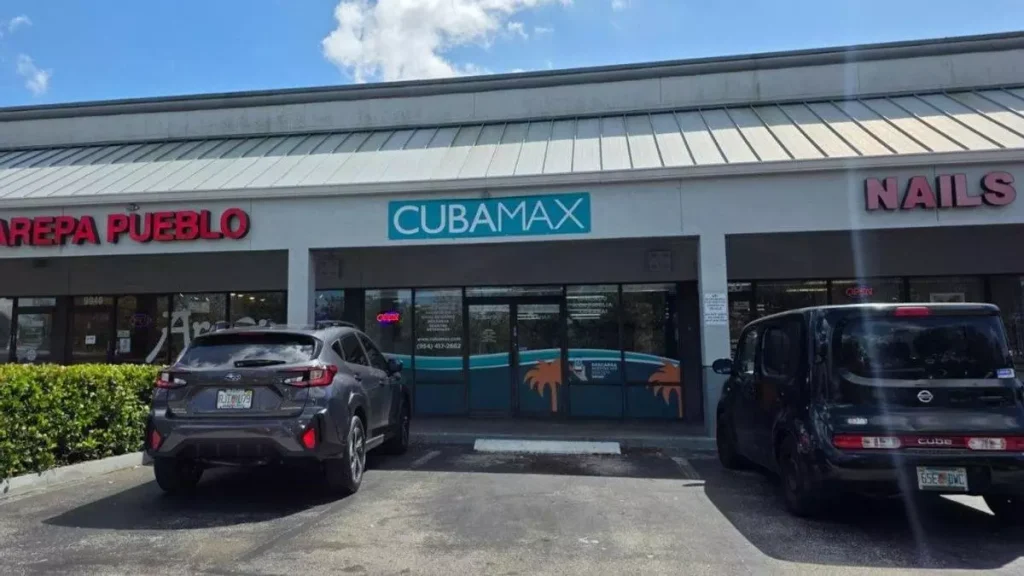
 14ymedio, Havana/Miami, 28 February 2026 — Cubamax has turned the home-delivery service back on in the western part of Cuba, but the comeback comes with a price hike that once again shines a spotlight on the island’s fuel crisis. According to people we talked to, the company bumped the cash-remittance fee from $10 to $12 per $100 sent. They blame it on the skyrocketing price of gasoline — which has basically become the new gold in a country where transportation is pretty much dead.
The service is coming back after several weeks of interruptions that hit both package delivery and cash-to-the-door remittances — a lifeline for thousands of Cuban families who depend on money sent from abroad. The move also underlines how much people are relying on private or semi-private operators to keep money flowing into the island amid sanctions, banking restrictions, and the total inefficiency of state-run systems.
A customer who dropped by a brand-new Cubamax location in Miami told us about the relaunch atmosphere. “This new office just opened like a week ago in an area full of Cubans. It was empty — only two super-nice employees,” he said. According to him, they’re still in client-hunting mode. “They’re basically begging for customers. They even gave us cards to hand out to friends.”
The new tariff fee is locked at $12 per every $100 sent.
The employees confirmed they’ve restarted door-to-door delivery in the west of the island. “They’ve already started dropping off at homes in Pinar del Río, Havana, Artemisa, Mayabeque, and Matanzas,” they told him.
The biggest sting for customers is the extra charge on cash remittances. “Before it was $10 per $100 sent. But the runners in Cuba were complaining that gas was too expensive. It wasn’t worth it anymore, so they decided to add two more bucks,” the workers explained. The new tariff fee is $12 per $100.
In recent weeks, 14ymedio has been reporting nonstop on the chronic fuel shortage, endless lines at gas stations, and the brutal cutback in both public and private transportation. In that mess, anything that requires moving around — from buses to courier services — has had to raise prices or just shut down.
The informal fuel market keeps running like a well-oiled machine, though.
Still, the fact that they’re restarting home delivery at all raises questions a lot of people are whispering. The same guy we talked to summed it up with classic Cuban sarcasm: “All of a sudden they have gas when every day there’s supposedly less, since no oil tanker has shown up?”
Another person inside Cuba gave a slightly different take on the supposed shutdown. When he asked at one of the Cubamax distributors, he got a telling answer: “They’re bringing the fuel in from over there.” The woman basically implied the company is running on its own private gasoline supply.
He pushed for more details. “I told her, ‘That sounds super risky, moving fuel around like that,’ and she just went, ‘They know what they’re doing, they’re real professionals.’” That line pretty much exposes the suspicion lots of people have: the black-market fuel business is still operating with crazy efficiency.
The packages that were supposedly stuck in collection centers ended up getting delivered right to people’s doors anyway.
The same source downplays how serious the “suspension” really was. In Havana, he says home deliveries barely stopped. Between the announcement of the pause and the official restart, the packages that were supposedly going to sit in warehouses ended up arriving at people’s houses anyway.
His own experience backs it up: almost all the shipments a relative sent have already arrived, and only one heavier one is still pending (it’s already in Cuba, just not distributed yet). Bottom line: the “delay” most people were complaining about hardly affected some households at all.
Recent ship-tracking data and energy reports show zero crude oil shipments to Cuba since January, except for a few isotanks (25,000-liter fuel containers) handled by small private companies (mipymes). In that context, the logistics muscle of remittance-linked companies always makes people raise an eyebrow.
For tons of families, though, the priority is still getting the money — even if it costs more. With inflation through the roof, everything getting dollarized, and the Cuban peso basically worthless, remittances are a must-have lifeline. From abroad, an extra $2 per $100 might seem like peanuts, but inside Cuba it means less cash for food, medicine, or just getting around.
Translated by GH
______________________
COLLABORATE WITH OUR WORK: The 14ymedio team is committed to practicing serious journalism that reflects Cuba’s reality in all its depth. Thank you for joining us on this long journey. We invite you to continue supporting us by becoming a member of 14ymedio now. Together we can continue transforming journalism in Cuba.