One of the alleged detainees in Cuba speaks from the United States to deny his involvement.
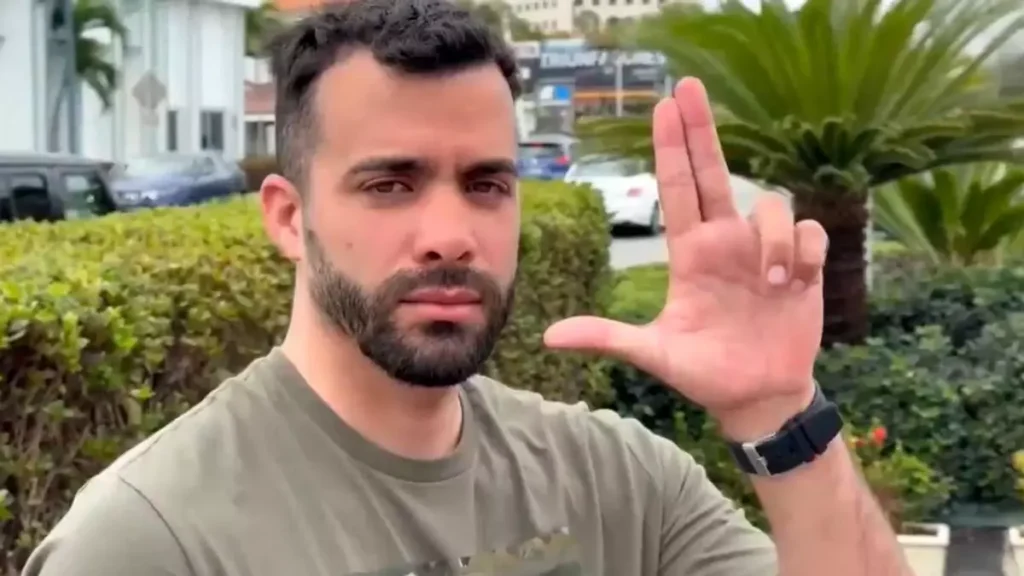
 14ymedio, Havana, February 26, 2026 – Roberto Azcorra Consuegra, one of the names included by the Ministry of the Interior on the list of alleged individuals involved in the incident with a boat intercepted in waters off Villa Clara that left four dead and seven injured, publicly denied any connection to the events and stated that he is not even in Cuba. In an interview with attorney Eloy Viera for El Toque, the young man from Cienfuegos said he has lived in the United States since 2017 and expressed astonishment at “how poorly they work” in State Security, referring to the inclusion of his name without any verification. Azcorra also suggested that the group had been infiltrated.
In another conversation with influencer Eliecer Ávila, Azcorra confirmed that he stole a vessel from the Border Guard Troops to escape the Island, that he was in the Bahamas, and that he currently has political asylum in the United States. In other words, he is not unknown to the Cuban authorities. The young man suggested that his name may have been sent previously to Cuba, and they assumed he was among the expedition members.
After Azcorra’s testimony was disseminated in multiple media outlets, Deputy Foreign Minister Carlos Fernández de Cossío corrected the record and removed his name from the list of those involved in an extensive statement. In that text, he also identified the four deceased: Michael Ortega Casanova—the only one initially mentioned—Pavel Alling Peña, Ledián Padrón Guevara, and Héctor Duani Cruz Correa.
As for the injured, five of the previously released names remain: Cristian Ernesto Acosta Guevara, Conrado Galindo Serrior, José Manuel Rodríguez Castelló, Leordán Cruz Gómez, and Amijail Sánchez González. Roberto Azcorra’s name is now replaced by Roberto Álvarez Ávila, although the deputy minister insists that Azcorra “is a person known for his background linked to violent actions and intentions against Cuba.”
Azcorra’s testimony introduced the first visible crack in the official version of the operation that took place near Cayo Falcones.
The official adds that “the Cuban Government is willing to engage with the U.S. Government” and assures that U.S. authorities “have shown willingness to cooperate in clarifying these regrettable events.”
In any case, Azcorra’s testimony introduced the first visible crack in the official account of the operation that occurred near Cayo Falcones, where the Border Guard Troops intercepted a speedboat coming from Florida. According to Havana, the occupants disobeyed the order to stop and opened fire, leading to a shootout that left four dead and six injured among the crew, as well as one wounded Cuban officer.
The doubts do not end there. The brother of the only fatal victim identified at first—Michel Ortega Casanova—told Martí Noticias that his relative, 54 years old, a member of the Republican Party of Cuba (PRC) and originally from Morón, had lived in the United States for more than two decades. “This is badly told,” he said, questioning how the Government has presented the events, portraying his brother as a “terrorist.” Ortega was also married and had his children living outside the country.
Miguel Díaz-Canel himself, in his appearance on February 5, foreshadowed the events.
Although several of the names have been linked to the PRC, its president, Ibrahim Bosch, distanced the organization from the armed incident, stating that the group “has nothing to do with this action.” Bosch reiterated that the organization does not promote armed actions nor control the individual decisions of its members. Although the group confirmed that one of the deceased, Ortega Casanova, belonged to its ranks, it said it was completely unaware of his alleged intentions and expressed condolences to the families, stressing that the case is still under investigation.
Questions also arise regarding the situation of Duniel Hernández Santos, identified by authorities as the alleged contact on land to receive the vessel. Although the Ministry of the Interior presents him as a key piece of the operation, it has so far provided little verifiable information about his specific role, background, or ties to the crew members. People who claim to know him maintain that he was deported to Cuba from the United States in 2024.
The political framing of the case has also fueled suspicions. It is noteworthy that the Cuban Government had been warning about alleged violent plans against the country, which has led to speculation about whether authorities knew in advance the details of the expedition, as well as the names of those involved. Miguel Díaz-Canel himself, in his February 5 appearance, stated: “Today we are aware of plans for terrorist acts that are being supported, financed, and prepared from the United States to attack Cuba.”
Rubio avoided speculating about responsibilities or possible responses until the facts are verified
U.S. Secretary of State Marco Rubio said Washington is independently investigating the boat incident off the Cuban coast after being notified by Havana, and emphasized that most of the available information still comes from Cuban authorities.
Rubio avoided speculating about responsibilities or possible responses until the facts are verified, confirmed that it did not involve U.S. Government personnel, and noted that the Coast Guard, the Department of Homeland Security, and the Embassy in Havana are working to determine the identity of the occupants and obtain access to them if they are U.S. citizens or residents. At the same time, he insisted that the United States will not make decisions based solely on the Cuban Government’s official version and indicated that it will respond once the facts are established with certainty.
From Florida, several members of Congress also demanded an independent investigation and made clear their distrust of the Cuban regime’s official reports. Political pressure suggests the episode could escalate diplomatically if irregularities are confirmed.
The Cuban Government defends its right to protect its territorial waters and maintains that it acted in self-defense. However, past precedents invite skepticism. The lack of transparency, the still incomplete identities, and the denial from U.S. territory keep the case open.
Translated by Regina Anavy
_______________________
COLLABORATE WITH OUR WORK: The 14ymedio team is committed to practicing serious journalism that reflects Cuba’s reality in all its depth. Thank you for joining us on this long journey. We invite you to continue supporting us by becoming a member of 14ymedio now. Together we can continue transforming journalism in Cuba.